

Fertility, mortality, migration, and population scenarios for 195 countries and territories from 2017 to 2100: a forecasting analysis for the Global Burden of Disease Study
Open accessThe DOI matches its Crossref record; 33 of the 34 references it cites were found in a registry or an index.
Abstract
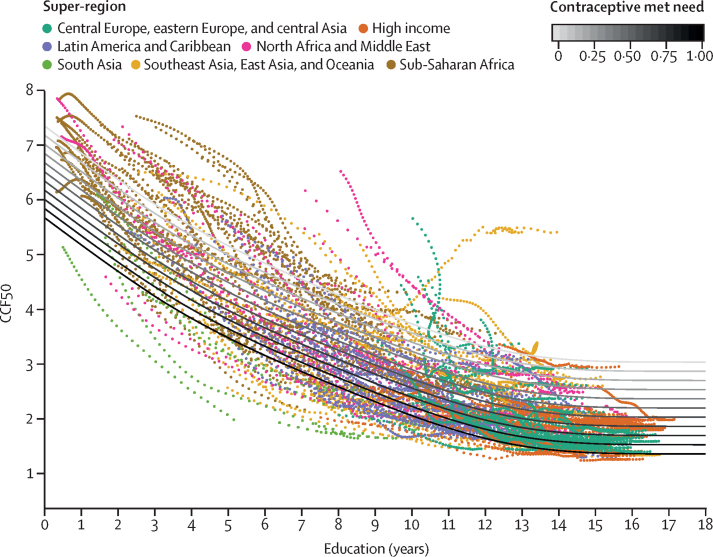
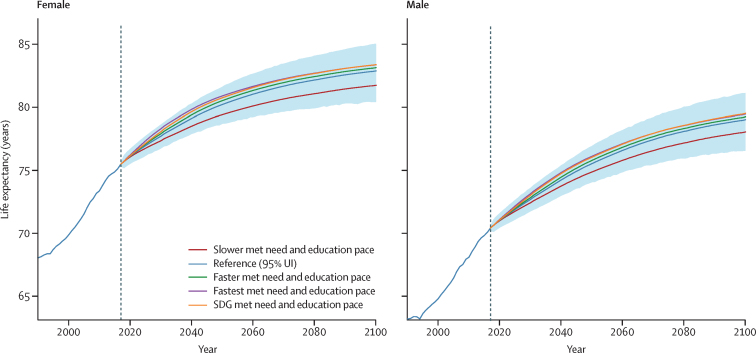
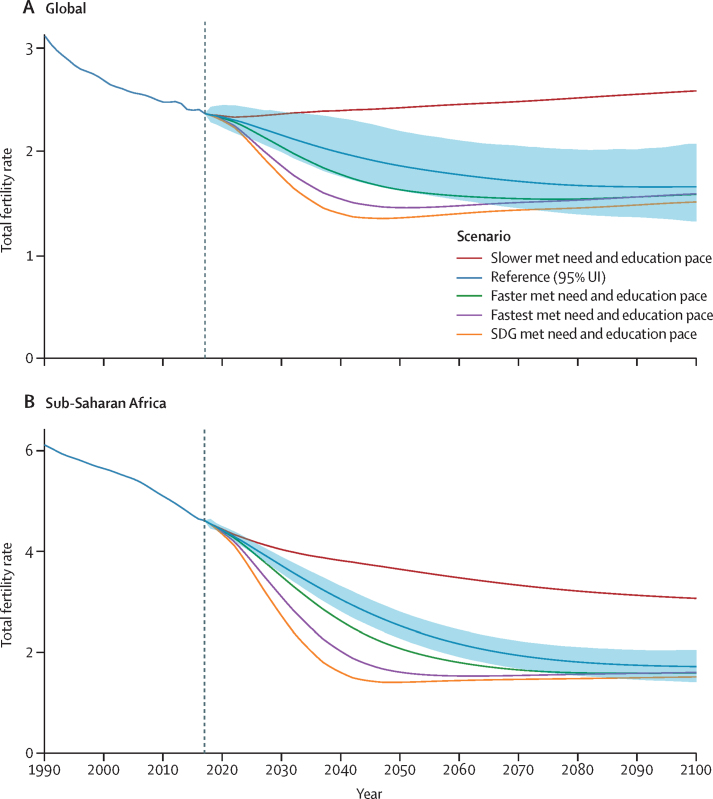
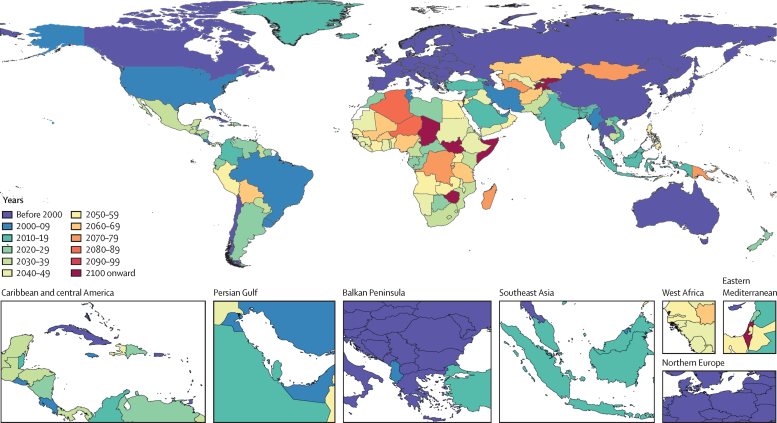
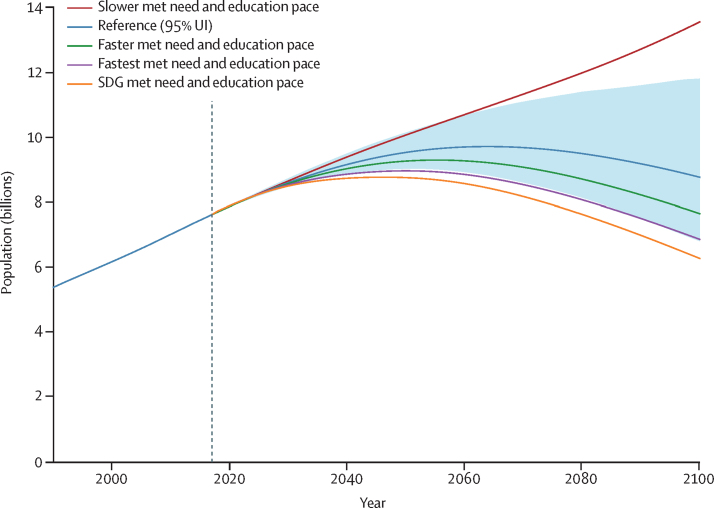
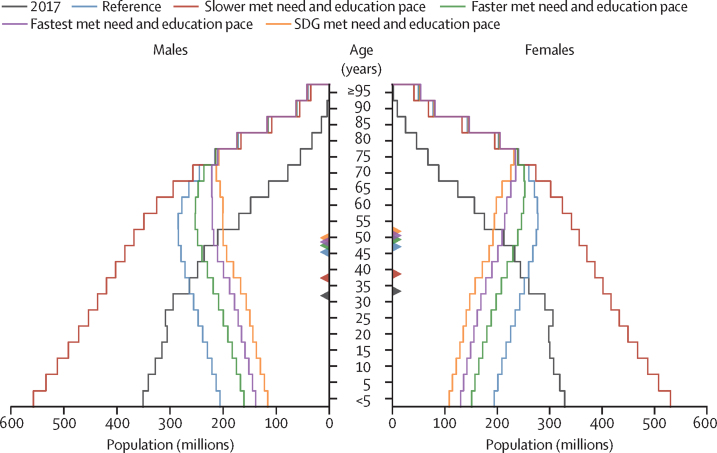
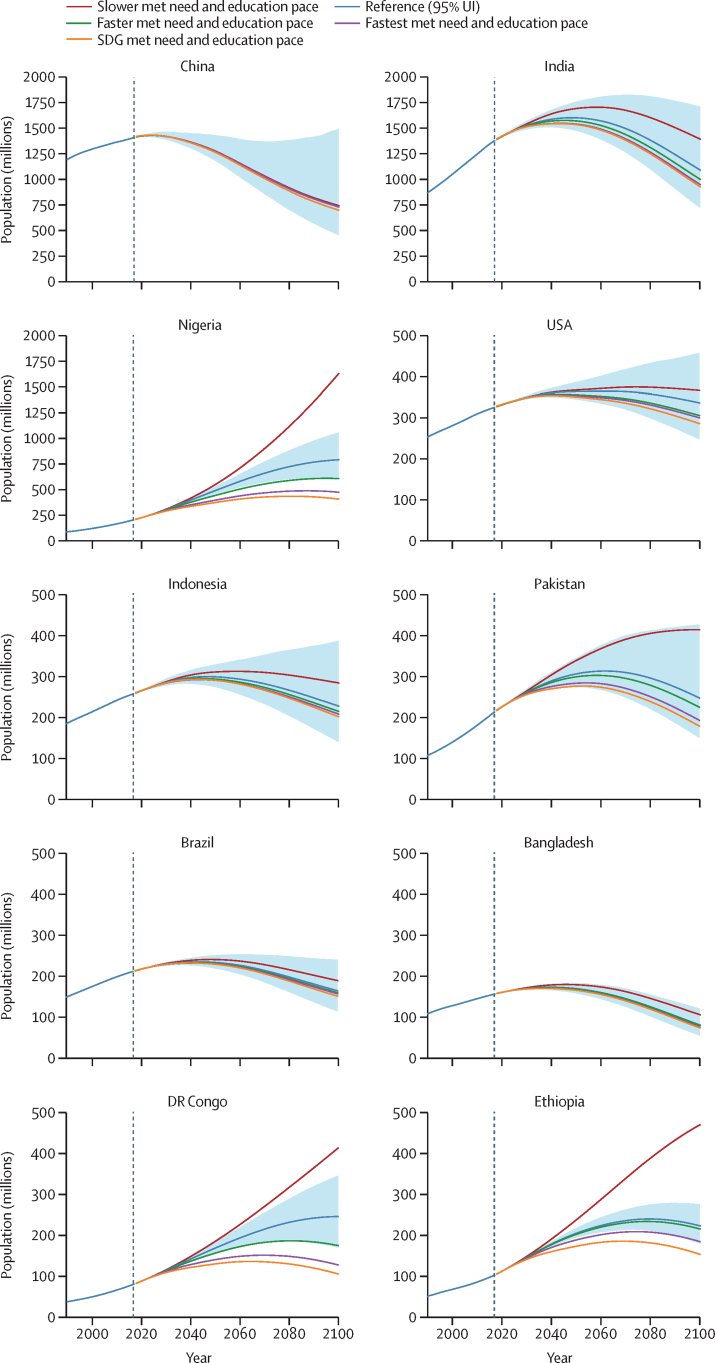
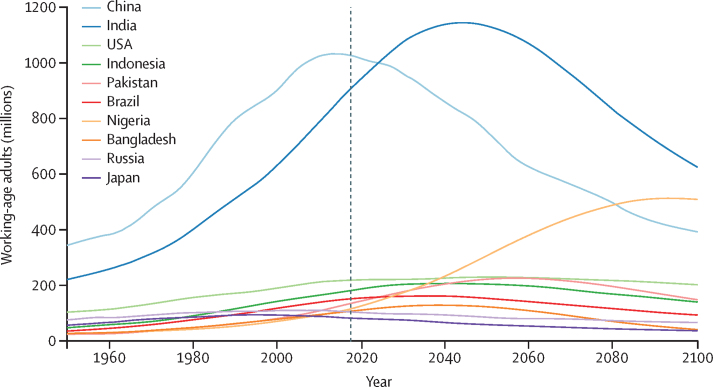
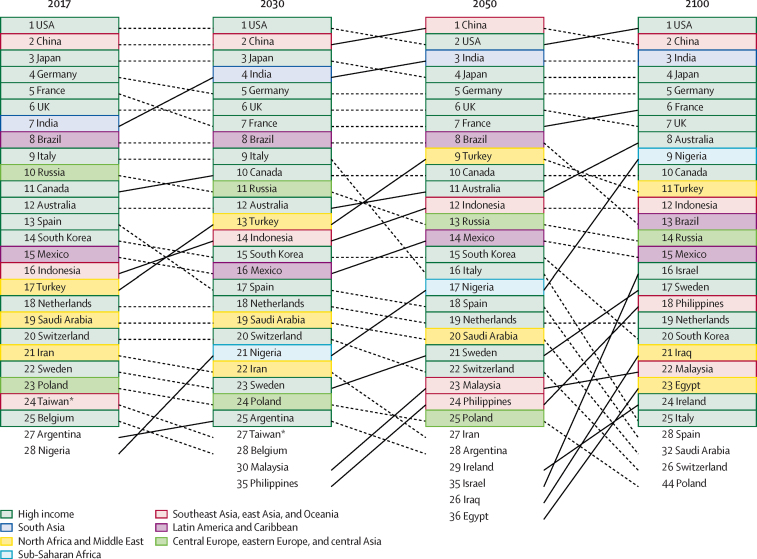
BACKGROUND: Understanding potential patterns in future population levels is crucial for anticipating and planning for changing age structures, resource and health-care needs, and environmental and economic landscapes. Future fertility patterns are a key input to estimation of future population size, but they are surrounded by substantial uncertainty and diverging methodologies of estimation and forecasting, leading to important differences in global population projections. Changing population size and age structure might have profound economic, social, and geopolitical impacts in many countries. In this study, we developed novel methods for forecasting mortality, fertility, migration, and population. We also assessed potential economic and geopolitical effects of future demographic shifts. METHODS: We modelled future population in reference and alternative scenarios as a function of fertility, migration, and mortality rates. We developed statistical models for completed cohort fertility at age 50 years (CCF50). Completed cohort fertility is much more stable over time than the period measure of the total fertility rate (TFR). We modelled CCF50 as a time-series random walk function of educational attainment and contraceptive met need. Age-specific fertility rates were modelled as a function of CCF50 and covariates. We modelled age-specific mortality to 2100 using underlying mortality, a risk factor scalar, and an autoregressive integrated moving average (ARIMA) model. Net migration was modelled as a function of the Socio-demographic Index, crude population growth rate, and deaths from war and natural disasters; and use of an ARIMA model. The model framework was used to develop a reference scenario and alternative scenarios based on the pace of change in educational attainment and contraceptive met need. We estimated the size of gross domestic product for each country and territory in the reference scenario. Forecast uncertainty intervals (UIs) incorporated uncertainty propagated from past data inputs, model estimation, and forecast data distributions. FINDINGS: The global TFR in the reference scenario was forecasted to be 1·66 (95% UI 1·33-2·08) in 2100. In the reference scenario, the global population was projected to peak in 2064 at 9·73 billion (8·84-10·9) people and decline to 8·79 billion (6·83-11·8) in 2100. The reference projections for the five largest countries in 2100 were India (1·09 billion [0·72-1·71], Nigeria (791 million [594-1056]), China (732 million [456-1499]), the USA (336 million [248-456]), and Pakistan (248 million [151-427]). Findings also suggest a shifting age structure in many parts of the world, with 2·37 billion (1·91-2·87) individuals older than 65 years and 1·70 billion (1·11-2·81) individuals younger than 20 years, forecasted globally in 2100. By 2050, 151 countries were forecasted to have a TFR lower than the replacement level (TFR <2·1), and 183 were forecasted to have a TFR lower than replacement by 2100. 23 countries in the reference scenario, including Japan, Thailand, and Spain, were forecasted to have population declines greater than 50% from 2017 to 2100; China's population was forecasted to decline by 48·0% (-6·1 to 68·4). China was forecasted to become the largest economy by 2035 but in the reference scenario, the USA was forecasted to once again become the largest economy in 2098. Our alternative scenarios suggest that meeting the Sustainable Development Goals targets for education and contraceptive met need would result in a global population of 6·29 billion (4·82-8·73) in 2100 and a population of 6·88 billion (5·27-9·51) when assuming 99th percentile rates of change in these drivers. INTERPRETATION: Our findings suggest that continued trends in female educational attainment and access to contraception will hasten declines in fertility and slow population growth. A sustained TFR lower than the replacement level in many countries, including China and India, would have economic, social, environmental, and geopolitical consequences. Policy options to adapt to continued low fertility, while sustaining and enhancing female reproductive health, will be crucial in the years to come. FUNDING: Bill & Melinda Gates Foundation.
Overview
The claims and statistics of this paper haven’t been checked yet.
Free: it reads the open-access text and checks the first 5 claims that cite a source we can check. Create a free account to check every claim.
Integrity signals
Registry
Cites
Statistics
Figures
Verification
Claims the paper makes
The claims and statistics of this paper haven’t been checked yet.
Free: it reads the open-access text and checks the first 5 claims that cite a source we can check. Create a free account to check every claim.
Claims other papers make about this one
Each is checked against this paper’s own text: does it say what the citing paper says it does?
The source backs part of the claim, not all of it — or backs it for a different population, condition or comparison.
In the citing paper
“Demographic data in the 5 years preceding 2021 demonstrate that the total fertility rate (TFR) in some countries has fallen below replacement levels—the minimum rate necessary for generational replacement of the population assuming no migration—with no evidence of this predicted rebound.”
From Global fertility in 204 countries and territories, 1950–2021, with forecasts to 2100: a comprehensive demographic analysis for the Global Burden of Disease Study 2021 (2024) · cites this paper as [4]
Experimental — accuracy not yet measuredThe source backs part of the claim, not all of it — or backs it for a different population, condition or comparison.
In the citing paper
“By 2050 and 2100, respectively, 77% of predominantly high-income countries and 93% of all countries will have a TFR below the replacement level of 2.1 children per woman.”
From Declining global fertility rates and the implications for family planning and family building: an IFFS consensus document based on a narrative review of the literature (2024) · cites this paper as Vollset et al., 2020
Experimental — accuracy not yet measuredThe source backs part of the claim, not all of it — or backs it for a different population, condition or comparison.
In the citing paper
“Not including the effects of migration, many countries are predicted to have a population decline of more than 50% from 2017 to 2100 (Vollset et al., 2020; Dao et al., 2021).”
From Declining global fertility rates and the implications for family planning and family building: an IFFS consensus document based on a narrative review of the literature (2024) · cites this paper as Vollset et al., 2020
Experimental — accuracy not yet measuredThe source backs part of the claim, not all of it — or backs it for a different population, condition or comparison.
In the citing paper
“Different TFRs among countries will promote immigration and emigration with important consequences for all countries, including increased political and social friction (Vollset et al., 2020).”
From Declining global fertility rates and the implications for family planning and family building: an IFFS consensus document based on a narrative review of the literature (2024) · cites this paper as Vollset et al., 2020
Experimental — accuracy not yet measured
6 more claims about this paper
Create a free account to see every claim other papers make about this one.
Self-check
Percentages, sums and reported differences re-computed from the paper’s own numbers.
The self-check needs the paper’s full text.
Citations
Cites
Planetary boundaries: Guiding human development on a changing planet
Steffen, W., Richardson, K., Rockström, J., Cornell, S. E., Fetzer, I., Bennett, E. M., Biggs, R., Carpenter, S. R., de Vries, W., de Wit, C. A., et al. (2015) · Science · doi:10.1126/science.1259855 · Cited by 12,527
Roth, G. A., Abate, D., Abate, K. H., Abay, S. M., Abbafati, C., Abbasi, N., Abbastabar, H., Abd-Allah, F., Abdela, J., Abdelalim, A., et al. (2018) · The Lancet · doi:10.1016/s0140-6736(18)32203-7 · Cited by 8,600
Planetary Boundaries: Exploring the Safe Operating Space for Humanity
Rockström, J., Steffen, W., Noone, K., Persson, Å., Chapin, F. S. I., Lambin, E., Lenton, T. M., Scheffer, M., Folke, C., Schellnhuber, H. J., et al. (2009) · Ecology and Society · doi:10.5751/es-03180-140232 · Cited by 7,187
Time Series: Theory and Methods
Ziegel, E. R., Brockwell, P., & Davis, R. (1992) · Technometrics · doi:10.2307/1270070 · Cited by 5,012
Stanaway, J. D., Afshin, A., Gakidou, E., Lim, S. S., Abate, D., Abate, K. H., Abbafati, C., Abbasi, N., Abbastabar, H., Abd-Allah, F., et al. (2018) · The Lancet · doi:10.1016/s0140-6736(18)32225-6 · Cited by 4,943
Self-citationThe second machine age: work, progress, and prosperity in a time of brilliant technologies
(2015) · Choice Reviews Online · doi:10.5860/choice.184834 · Cited by 4,381
Foreman, K. J., Marquez, N., Dolgert, A., Fukutaki, K., Fullman, N., McGaughey, M., Pletcher, M. A., Smith, A. E., Tang, K., Yuan, C.-W., et al. (2018) · The Lancet · doi:10.1016/s0140-6736(18)31694-5 · Cited by 2,994
Self-citationEssay on the Principle of Population: The 1803 Edition
Malthus, T. R. (2019) · Yale University Press eBooks · doi:10.12987/9780300231892 · Cited by 1,949
Guidelines for accurate and transparent health estimates reporting: the GATHER statement
Stevens, G. A., Alkema, L., Black, R. E., Boerma, J. T., Collins, G. S., Ezzati, M., Grove, J. T., Hogan, D. R., Hogan, M. C., Horton, R., et al. (2016) · The Lancet · doi:10.1016/s0140-6736(16)30388-9 · Cited by 1,798
Self-citationIPCC (2022) · Cambridge University Press eBooks · doi:10.1017/9781009157940 · Cited by 1,482
Research works printed but not linked: 1
- Lutz W Butz WP KC S World population and human capital in the twenty-first century 2014 2014 Oxford University Press Oxford
Cited by
Items 301–400 of 1,000
Husted, K. L. S., Brink-Kjær, A., Fogelstrøm, M., Hulst, P., Bleibach, A., Henneberg, K.-Å., Sørensen, H. B. D., Dela, F., Jacobsen, J. C., & Helge, J. W. (2022) · JMIR Aging · doi:10.2196/35696 · Cited by 30
“Increasing life expectancy and low fertility rates will have a profound impact on future resources and health care needs [17,18].”
BackgroundVillacis, A. H., Badruddoza, S., Mishra, A. K., & Mayorga, J. (2023) · Global Food Security · doi:10.1016/j.gfs.2023.100671 · Cited by 34
A Deep Learning Image System for Classifying High Oleic Sunflower Seed Varieties
Barrio-Conde, M., Zanella, M. A., Aguiar-Pérez, J. M., Ruiz-Gonzalez, R., & Gil, J. (2023) · Sensors · doi:10.3390/s23052471 · Cited by 24
Arora, J., Ramawat, K. G., & Mérillon, J. (2023) · Sustainable development and biodiversity · doi:10.1007/978-981-19-8774-8_1 · Cited by 31
Mahalik, M. K., Padhan, H., Patel, G., Mishra, S., & Chyrmang, R. (2023) · Environment Development and Sustainability · doi:10.1007/s10668-023-03097-0 · Cited by 24
An answer to everything? Four framings of girls’ schooling and gender equality in education
Unterhalter, E. (2023) · Comparative Education · doi:10.1080/03050068.2023.2202374 · Cited by 36
Arrival of Normative Power in Planetary Politics
Manners, I. (2023) · JCMS Journal of Common Market Studies · doi:10.1111/jcms.13505 · Cited by 39
Rahmat, M. A. A., Ibrahim, A. Q., Syafiq, U., Al-Aribe, K. M., Azeez, H. L., Din, S. I. U., Jaber, M., & Elmnifi, M. H. (2025) · Sustainable Energy Technologies and Assessments · doi:10.1016/j.seta.2025.104205 · Cited by 24
Siankwilimba, E., Hiddlestone‐Mumford, J., Hoque, M. E., Hang’ombe, B. M., Mumba, C., Hasimuna, O. J., Maulu, S., Mphande, J., & Prayitno, G. (2025) · Cogent Food & Agriculture · doi:10.1080/23311932.2025.2480266 · Cited by 27
The adult ovary at single cell resolution: an expert review
Rooda, I., Méar, L., Hassan, J., & Damdimopoulou, P. (2025) · American Journal of Obstetrics and Gynecology · doi:10.1016/j.ajog.2024.05.046 · Cited by 23
Global burden and health inequality of atrial fibrillation/atrial flutter from 1990 to 2021
Li, X., Li, Z., He, H., Wang, S., Su, H., & Kang, G. (2025) · Frontiers in Cardiovascular Medicine · doi:10.3389/fcvm.2025.1585980 · Cited by 35
Global burden of oral disorders with projections over the next 30 years
Yan, L., Xie, B., Li, Y., Li, H., Huang, Y., He, B., Qiu, Y., Luo, L., Yan, F., & Chen, F. (2025) · Journal of Periodontology · doi:10.1002/jper.24-0638 · Cited by 34
The Neo-Malthusian Reflex in Climate Politics: Technocratic, Right Wing and Feminist References
Schultz, S. U. (2021) · Australian Feminist Studies · doi:10.1080/08164649.2021.1995847 · Cited by 24
“Haraway does not take into account the fact that these long-term projections to 2100 are permanently being revised to lower levels and are highly speculative (see Stöcker 2019; Schultz 2019b; Vollset et al. 2020).”
BackgroundGlobal Warming: Is It (Im)Possible to Stop It? The Systems Thinking Approach
Mella, P. (2022) · Energies · doi:10.3390/en15030705 · Cited by 28
Masi, M., Pasquale, J. D., Vecchio, Y., Pauselli, G., Tribilustova, E., & Adinolfi, F. (2022) · Aquaculture Reports · doi:10.1016/j.aqrep.2022.101133 · Cited by 25
Effects of Housing Asset Deflation on Shrinking Cities: A Case of the Tokyo Metropolitan Area
Uto, M., Nakagawa, M., & Buhnik, S. (2022) · Cities · doi:10.1016/j.cities.2022.104062 · Cited by 23
Mealybug vectors: A review of their transmission of plant viruses and their management strategies
Ahmed, A. R., Apori, S. O., & Karim, A. A. (2023) · AIMS Agriculture and Food · doi:10.3934/agrfood.2023040 · Cited by 26
“With this growth rate, it is estimated that the world population will be around 9,782,061,758 in 2051 [3].”
Backgroundde Melo, P. C., Caldas, L. R., Masera, G., & Pittau, F. (2022) · Journal of Cleaner Production · doi:10.1016/j.jclepro.2023.139862 · Cited by 26
Demographic challenges and opportunities for child health programming in Africa and Asia
You, D., Beise, J., Lee, S., Requejo, J. H., & Strong, K. (2021) · BMJ · doi:10.1136/bmj.n19 · Cited by 23
Climate change and world population
O’Sullivan, J. (2021) · Elsevier eBooks · doi:10.1016/b978-0-12-822373-4.00008-2 · Cited by 26
Fonteyn, D., Vermeulen, C., Gorel, A., de Miranda, P. L. S., Lhoest, S., & Fayolle, A. (2023) · Diversity and Distributions · doi:10.1111/ddi.13677 · Cited by 26
“Nigeria is by now the most populous country in subSaharan Africa (Vollset et al., 2020) and has been significantly impacted by human activities (Venter et al., 2016), particularly by high volumes of bushmeat extraction from remnant forests (Fa et al., 2006).”
BackgroundXu, J., Liu, J., Li, X., Zhao, L., Shen, J., & Xia, X. (2025) · Journal of Advanced Research · doi:10.1016/j.jare.2025.06.021 · Cited by 29
“This approach aligns with prior studies that have successfully applied ARIMA to predict infectious disease trends and public health metrics [14,37,46].”
Prepare developed democracies for long-run economic slowdowns
Burgess, M. G., Carrico, A. R., Gaines, S. D., Peri, A., & Vanderheiden, S. (2021) · Nature Human Behaviour · doi:10.1038/s41562-021-01229-y · Cited by 32
Thornton, P. K., Dijkman, J. T., Herrero, M., Szilagyi, L., & Cramer, L. K. (2021) · Food Policy · doi:10.1016/j.foodpol.2021.102196 · Cited by 22
The Components of Change in Population Growth Rates
Canudas‐Romo, V., Shen, T., & Payne, C. (2022) · Demography · doi:10.1215/00703370-9765067 · Cited by 22
Liu, R., Dai, M., Gong, G., Chen, M., Cao, C., Wang, T., Hou, Z., Shi, Y., Guo, J., Zhang, Y., et al. (2022) · Journal of Leather Science and Engineering · doi:10.1186/s42825-022-00087-2 · Cited by 27
“8 billion by 2100, and the world’s working-age population has decreased significantly, which will also have a serious negative impact on the global economy [12].”
BackgroundCKD: The burden of disease invisible to research funders
AIRG-E, EKPF, ALCER, FRIAT, REDINREN, RICORS2040, SENEFRO, SET, & ONT (2022) · Nefrología (English Edition) · doi:10.1016/j.nefroe.2021.09.005 · Cited by 27
Yang, X., Chen, H., Sang, S., Chen, H., Li, L., & Yang, X. (2022) · Frontiers in Public Health · doi:10.3389/fpubh.2022.862165 · Cited by 24
A Transition to Sustainable Housing: Progress and Prospects for a Low Carbon Housing Future
Moore, T., & Doyon, A. (2023) · Springer eBooks · doi:10.1007/978-981-99-2760-9 · Cited by 33
Ganau, A., Orrù, M., Floris, M., Saba, P. S., Loi, F., Sanna, G. D., Marongiu, M., Balaci, L., Curreli, N., Ferreli, L. A. P., et al. (2023) · European Journal of Preventive Cardiology · doi:10.1093/eurjpc/zwad254 · Cited by 22
Guo, H.-X., Wang, Q., Wang, C., Yin, Q. C., 霍华志, & Yin, B. (2023) · JMIR Public Health and Surveillance · doi:10.2196/48449 · Cited by 22
“More details are provided in Multimedia Appendix 1 [13-22].”
RetractedCordell, G. A. (2024) · Natural Products and Bioprospecting · doi:10.1007/s13659-024-00431-5 · Cited by 28
“A different and rapidly evolving and relatively new economic factor of sustainable development is presently in play as countries experience a real, annual loss of population [52, 53].”
BackgroundFeng, H., Li, Z. Y., & Zheng, R. (2025) · BMC Public Health · doi:10.1186/s12889-025-21680-0 · Cited by 21
“The autoregressive integrated moving average (ARIMA) model is widely utilized in demographic and epidemiological trend analysis, leveraging historical time series data to project future patterns [13].”
Deng, T., Zi, H., Guo, X., Luo, L., Yang, Y., Hou, J., Zhou, R., Yuan, Q., Liu, Q., Huang, Q., et al. (2025) · Thoracic Cancer · doi:10.1111/1759-7714.70052 · Cited by 35
“The equation is expressed as is the MA model part, Yt − p is the observed value at the period of ( t − p ), p and q represent the model order of AR and MA, and et is the random error at the period of t [15].”
The story of critical care in Asia: a narrative review
Phua, J., Lim, C., Faruq, M. O., Nafees, K. M. K., Du, B., Gomersall, C. D., Ling, L., Divatia, J. V., Hashemian, S. M. R., Egi, M., et al. (2021) · Journal of Intensive Care · doi:10.1186/s40560-021-00574-4 · Cited by 26
The expression of ‘policy’ in palliative care: A critical review
Whitelaw, S., Bell, A., & Clark, D. (2022) · Health Policy · doi:10.1016/j.healthpol.2022.06.010 · Cited by 25
Mapping local variation in household overcrowding across Africa from 2000 to 2018: a modelling study
Chipeta, M. G., Kumaran, E. A. P., Browne, A. J., Hamadani, B. H. K., Haines–Woodhouse, G., Sartorius, B. K. D., Reiner, R. C., Dolecek, C., Hay, S. I., & Moore, C. E. (2022) · The Lancet Planetary Health · doi:10.1016/s2542-5196(22)00149-8 · Cited by 27
Self-citationSaraswati, C. M., Judge, M. A., Weeda, L. J. Z., Prata, N., Bassat, Q., Souëf, P. N. L., & Bradshaw, C. J. A. (2024) · Frontiers in Public Health · doi:10.3389/fpubh.2024.1339933 · Cited by 29
Gromski, P. S., Smith, A. D. A. C., Lawlor, D. A., Sharara, F. I., & Nelson, S. M. (2021) · Reproductive BioMedicine Online · doi:10.1016/j.rbmo.2021.03.017 · Cited by 21
Self-citationGietel‐Basten, S., & Sobotka, T. (2020) · SocArXiv (OSF Preprints) · doi:10.31235/osf.io/5syef · Cited by 24
Philip, G., Savundranayagam, M. Y., Kothari, A. R., & Orange, J. B. (2023) · Aging and Health Research · doi:10.1016/j.ahr.2023.100170 · Cited by 27
Mustafa, A.-R. A., Shokr, M. S., Alharbi, T. G., Abdelsamie, E. A., El‐Sorogy, A. S., & de Larriva, J. E. M. (2025) · Sustainability · doi:10.3390/su17083450 · Cited by 20
Online Data Migration Model and ID3 Algorithm in Sports Competition Action Data Mining Application
Ju, L., Huang, L., & Tsai, S. (2021) · Wireless Communications and Mobile Computing · doi:10.1155/2021/7443676 · Cited by 20
Practical management of older adults with cancer: geriatric oncology in Japan
Mizutani, T. (2022) · Japanese Journal of Clinical Oncology · doi:10.1093/jjco/hyac118 · Cited by 22
“These factors have increased the cost of maintaining the healthcare system and the burden on families (110).”
BackgroundRocha, R., Lopes, T., Fidalgo, C., Alves, A., Cardoso, P., & Figueira, E. M. D. A. P. (2022) · Microorganisms · doi:10.3390/microorganisms11010057 · Cited by 25
A New Landscape of Human Dental Aging: Causes, Consequences, and Intervention Avenues
Xie, Y., Chen, S., Sheng, L., Sun, Y., & Liu, S. (2022) · Aging and Disease · doi:10.14336/ad.2022.1224 · Cited by 34
Progress and major themes of research on urban shrinkage and its eco-environmental impacts
Chen, D., Fang, C., & Liu, Z. (2023) · Journal of Geographical Sciences · doi:10.1007/s11442-023-2122-x · Cited by 20
Chen, J., Qiu, Y., Wu, W., Yang, R., Li, L., Yang, Y., Yang, X., & Xu, L. (2023) · JMIR Public Health and Surveillance · doi:10.2196/48015 · Cited by 20
Long-term population projections: Scenarios of low or rebounding fertility
Spears, D., Vyas, S., Weston, G., & Geruso, M. (2024) · PLoS ONE · doi:10.1371/journal.pone.0298190 · Cited by 21
“Returning that world population will peak between 2060 and 2090 [3, 9, 10, 15].”
BackgroundHuang, G., Wang, Y., Qin, B., Zeng, J., tan, H., Zhang, D., & Wang, Q. (2024) · BMC Cancer · doi:10.1186/s12885-024-12480-7 · Cited by 22
“The Global Burden of Disease (GBD) 2019 framework calculates health metrics using detailed methodologies previously discussed [4–6].”
MethodNikolaou, M., Theodorakis, N., Feretzakis, G., Vamvakou, G. D., Hitas, C., Kalantzi, S., Spyridaki, A., Apostolos, A., Verykios, V. S., & Toutouzas, K. (2024) · Hellenic Journal of Cardiology · doi:10.1016/j.hjc.2024.08.009 · Cited by 28
Trends in population health and demography
Gietel‐Basten, S., & Sobotka, T. (2021) · The Lancet · doi:10.1016/s0140-6736(21)01051-5 · Cited by 20
Joshi, S. P., Ramarajan, L., Ramarajan, N., Lee, S. S., Deshpande, O., Fernandes, E., Engineer, M., Srivastava, G., Vanmali, V., Kannan, S., et al. (2023) · JAMA Network Open · doi:10.1001/jamanetworkopen.2023.35941 · Cited by 20
Altaee, H. H. A., Rahim, F., Dzhusupov, K. O., & Karlygash, T. (2025) · Global Transitions · doi:10.1016/j.glt.2025.04.005 · Cited by 25
Sprügel, M. I., Sembill, J. A., Kremer, S., Gerner, S. T., Knott, M., Hock, S. W., Engelhorn, T., Dörfler, A., Huttner, H. B., & Schwab, S. (2022) · JAMA Network Open · doi:10.1001/jamanetworkopen.2022.27139 · Cited by 21
Kaur, B., Sur, K., Verma, V. K., & Pateriya, B. (2022) · Water Conservation Science and Engineering · doi:10.1007/s41101-022-00170-z · Cited by 19
“Developing nations around the globe are more prone to the above challenges because of increasing population pressure, poverty, malnutrition, fragmented land holdings, poor administrative policies, and frequent crop failure [2, 3].”
BackgroundLiu, K., Zhang, Y., Martín, C., Ma, X., & Shen, B. (2022) · International Journal of Molecular Sciences · doi:10.3390/ijms24010004 · Cited by 23
“That is, human fertility is declining and will continue to fall [46].”
BackgroundThe future of migration, human populations, and global health in the Anthropocene
Abubakar, I. I. (2020) · The Lancet · doi:10.1016/s0140-6736(20)31523-3 · Cited by 22
Unlocking Wheat Drought Tolerance: The Synergy of Omics Data and Computational Intelligence
le Roux, M.-S. L., Kunert, K. J., Cullis, C. A., & Botha, A. (2024) · Food and Energy Security · doi:10.1002/fes3.70024 · Cited by 24
Li, J., Yang, Y., Huang, Z., Yuan, Y., Ren, Z., & Liang, B. (2025) · Injury · doi:10.1016/j.injury.2025.112296 · Cited by 20
Measuring performance within the ageing workforce
Varianou-Mikellidou, C., Boustras, G., Nicolaidou, O., Dimopoulos, C., & Mikellides, N. (2021) · Safety Science · doi:10.1016/j.ssci.2021.105286 · Cited by 21
Mulwa, S. N., Chimoyi, L., Agbla, S. C., Osindo, J., Wambiya, E. O. A., Gourlay, A. J., Birdthistle, I. J., Ziraba, A. K., & Floyd, S. (2021) · PLoS ONE · doi:10.1371/journal.pone.0255165 · Cited by 19
“needs of the youthful population are met [30, 31].”
BackgroundBane, S., Carmichael, S. L., Snowden, J. M., Liu, C., Lyndon, A., & Wall‐Wieler, E. (2021) · Annals of Epidemiology · doi:10.1016/j.annepidem.2021.08.017 · Cited by 20
Cirillo, J. (2021) · Experimental Brain Research · doi:10.1007/s00221-021-06218-1 · Cited by 28
“In contrast to neuroimaging techniques, such as functional magnetic resonance imaging, TMS is capable of assessing both excitatory and inhibitory processes of superficial cortical structures (Walsh and Cowey 2000).”
ResultMetabolic health status and fecundability in a Singapore preconception cohort study
Loy, S. L., Chan, D. W. K., Ku, C. W., Cheung, Y. B., Godfrey, K. M., Tan, K. M. L., Chong, Y. S., Shek, L. P., Tan, K. H., Chan, S., et al. (2021) · American Journal of Obstetrics and Gynecology · doi:10.1016/j.ajog.2021.11.1374 · Cited by 27
Soriano, J. B., Peláez, A., Fernández, E., Moreno-Bueno, L., & Ancochea, J. (2022) · Archivos de Bronconeumología · doi:10.1016/j.arbres.2022.03.001 · Cited by 19
De, A., Saha, A., Kumar, P., & Pal, G. (2022) · Multimedia Tools and Applications · doi:10.1007/s11042-022-11914-3 · Cited by 21
“Bill and Melinda Gates Foundation sponsored one study related to the population of senior citizens [41], where it is estimated that people above 80 years of age group will cross 866 million at the end of this century from 141 million in the year 2017.”
BackgroundRen, Z., Gui-xia, J., Liu, H., Li, P., Huang, J., & Lichtfouse, E. A. (2022) · Journal of environmental chemical engineering · doi:10.1016/j.jece.2022.107807 · Cited by 18
Exploring underutilization of skilled maternal healthcare in rural Edo, Nigeria: A qualitative study
Udenigwe, O., Okonofua, F. E., Ntoimo, L. F. C., & Yaya, S. (2022) · PLoS ONE · doi:10.1371/journal.pone.0272523 · Cited by 22
“11 (live births per woman) is projected to drive a population boom and make Nigeria the second largest country in the world by 2100 with a population of 790 million [31].”
BackgroundThe Connection between Climate Change, Surgical Care and Neglected Tropical Diseases
Shirley, H., Grifferty, G., Yates, E. F., Raykar, N. P., Wamai, R. G., & McClain, C. D. (2022) · Annals of Global Health · doi:10.5334/aogh.3766 · Cited by 20
Type 2 diabetes mellitus and the risk of abnormal spermatozoa: A Mendelian randomization study
Dai, M., Guo, W., Zhu, S., Gong, G., Chen, M., Zhong, Z., Guo, J., & Zhang, Y. (2022) · Frontiers in Endocrinology · doi:10.3389/fendo.2022.1035338 · Cited by 25
Hmoudah, M., Fortunato, M. E., Paparo, R., Trifuoggi, M., El‐Qanni, A., Tesser, R., Murzin, D. Y., Salmi, T., Russo, V., & Serio, M. D. (2023) · Langmuir · doi:10.1021/acs.langmuir.2c03350 · Cited by 18
Multidecadal dynamics project slow 21st-century economic growth and income convergence
Burgess, M. G., Langendorf, R. E., Moyer, J. D., Dancer, A., Hughes, B. B., & Tilman, D. G. (2023) · Communications Earth & Environment · doi:10.1038/s43247-023-00874-7 · Cited by 23
LaPointe, S., Lee, J. C., Nagy, Z. P., Shapiro, D. B., Chang, H. H., Wang, Y., Russell, A. G., Hipp, H. S., & Gaskins, A. J. (2023) · Environment International · doi:10.1016/j.envint.2023.108382 · Cited by 19
“Reproductive health has been a subject of increasing interest and concern in recent years given a worldwide decline in human fertility rates; most countries have rates far below replacement levels (Craig, 1994; Vollset et al., 2020).”
BackgroundGravity Models for Global Migration Flows: A Predictive Evaluation
Reina, J. C., Cuaresma, J. C., Fenz, K., Zellmann, J., Yankov, T., & Taha, A. (2024) · Population Research and Policy Review · doi:10.1007/s11113-024-09867-6 · Cited by 30
“According to Vollset et al. (2020, p. 1285), 23 countries including Spain, Japan and Thailand are forecast to undergo population declines larger than 50% between 2017 and 2100.”
BackgroundThapa, P., Torralba, M., Nölke, N., Chowdhury, K., Nagendra, H., & Plieninger, T. (2024) · Landscape Ecology · doi:10.1007/s10980-024-01937-6 · Cited by 18
“Although annual urban population growth rate is slowing globally (Vollset et al. 2020) from 2.7% in the 1980s to 1.6% in 2022, it remains high in the Global South, especially in South Asia (2.3%, 2022) and Sub-Saharan Africa (3.9%, 2022) (World Bank, 2023a).”
InfluentialZhang, Q., Yu, H., Zhong, J., Cheng, W., & Qi, Y. (2025) · International Journal of Surgery · doi:10.1097/js9.0000000000002359 · Cited by 18
“The anticipated reduction in disease burden highlights the potential impact of current public health initiatives and shows the importance of continued investment in research and health-care infrastructure to sustain these positive trends [ 9 ] .”
Axial length and its associations in the Ural Very Old Study
Bikbov, M. M., Kazakbaeva, G. M., Rakhimova, E. M., Rusakova, I. A., Fakhretdinova, A. A., Tuliakova, A. M., Panda‐Jonas, S., Риксович, Г. Т., Zainullin, R. M., Bolshakova, N. I., et al. (2021) · Scientific Reports · doi:10.1038/s41598-021-98039-z · Cited by 21
Kralik, J., & Kleinlogel, S. (2021) · International Journal of Molecular Sciences · doi:10.3390/ijms222111515 · Cited by 18
“Given the prolonged life expectancy [4] and prevalence of blindness in the aging population [5], the exploration of possible treatment strategies is essential not only to increase the quality of life in affected patients, but also to alleviate economic burdens linked to blindness [6–8].”
BackgroundLiu, L., Li, C., Cai, J., Kong, R., Wang, Y., Wang, Y., Li, S., Zhan, J., & Liu, Y. (2024) · Frontiers in Medicine · doi:10.3389/fmed.2024.1515961 · Cited by 20
Wang, Y., Wang, K., Cheng, W., & Zhang, Y. (2021) · Environmental Science and Pollution Research · doi:10.1007/s11356-021-16233-y · Cited by 18
Prevalência de multimorbidade em idosos em São Paulo, Brasil: um estudo com o ISA-Capital
Medeiros, K. K. A. S., Bousquat, A., & César, C. L. G. (2022) · Revista de Saúde Pública · doi:10.11606/s1518-8787.2022056004252 · Cited by 17
Fu, W., Zhao, W., & Deng, F. (2023) · Behavioral Sciences · doi:10.3390/bs13030256 · Cited by 20
“published an article on global fertility in The Lancet, noting the steady decline in global fertility and the continuing decline in fertility intentions [53].”
BackgroundLin, X., Liu, S., Hu, Z. Y., & Xu, H. (2023) · Frontiers in Psychiatry · doi:10.3389/fpsyt.2023.1131084 · Cited by 21
“(2) playing Mahjong, chess, or cards; (3) providing help to family, friends, or neighbors who did not pay for the help; and (4) going to a sport, social club, or another kind of club (e.”
BackgroundMethodInfluentialGrinin, L. E., & Леонидович, Г. А. (2023) · World-systems evolution and global futures · doi:10.1007/978-3-031-34999-7_21 · Cited by 16
Yang, Q., Chang, X., Li, S.-J., Li, X., Kang, C., Yuan, W., & Lv, G. (2024) · Neuroepidemiology · doi:10.1159/000542606 · Cited by 22
“Age-standardized data and demographic projections are also derived from GBD 2021 and the Global Population Forecast Study 2017 – 2100 [15, 16].”
Martinović, A., Mantovani, M., Trpchevska, N., Novak, E., Milev, N. B., Bode, L., Ewald, C. Y., Bischof, E. Y., Reichmuth, T., Lapides, R. A., et al. (2024) · Frontiers in Aging · doi:10.3389/fragi.2024.1495029 · Cited by 22
Li, J., Fan, H., Yang, Y., Huang, Z., Yuan, Y., & Liang, B. (2024) · BMC Cardiovascular Disorders · doi:10.1186/s12872-024-04402-z · Cited by 20
Morris, D. W. (2021) · PLoS ONE · doi:10.1371/journal.pone.0258087 · Cited by 18
“Ideally, one would like to meet the challenge by first identifying and quantifying the full list of causal mechanisms that link migration’s effects on human demography with economic, political and social strategies (the statistical model in [18] is a good start).”
BackgroundFilho, L. N. L. M., Roebeling, P. C., da Costa, L. F. C., & de Lima, L. T. (2022) · Ecosystem Services · doi:10.1016/j.ecoser.2022.101492 · Cited by 21
“Alternative socioeconomic scenarios point towards both a higher and lower population in 2100 than that used in the SSP scenarios (Vollset et al., 2020).”
BackgroundRejuvenation Biotechnology as a Civilizational SafeguardPreprint
Tqemaladze, J. (2025) · Preprints.org · doi:10.20944/preprints202511.1795.v1 · Cited by 17
Digital by Default? A Critical Review of Age-Driven Inequalities in Payment Innovation
Panetta, I. C., Anjomrouz, E., Paiardini, P., & Leo, S. (2025) · Journal of risk and financial management · doi:10.3390/jrfm18060313 · Cited by 21
Adu-Gyamfi, B., & Shaw, R. (2021) · International Journal of Environmental Research and Public Health · doi:10.3390/ijerph18084061 · Cited by 20
“The dynamics of the world’s population continues to evolve, and as studies show, mortality, fertility, and migration rates are the key factors driving population change in the world [1].”
BackgroundNioi, M., & Napoli, P. E. (2021) · Frontiers in Medicine · doi:10.3389/fmed.2021.756623 · Cited by 16
Susmann, H., Alexander, M. J., & Alkema, L. (2022) · International Statistical Review · doi:10.1111/insr.12491 · Cited by 21
Neurotology Workforce in the United States: Gender Diversity and Geographic Distribution
Choi, J. S., Ziltzer, R. S., Gadkaree, S. K., Adams, M. E., & Huang, T. C. (2023) · Otolaryngology · doi:10.1002/ohn.216 · Cited by 17
MODERN TECHNOLOGIES TO OVERCOME THE CHALLENGES OF GLOBALIZATION
Veshapidze, S., Otinashvili, R., Gvarutsidze, A., Abuselidze, G. D., & Zoidze, G. (2022) · Entrepreneurship · doi:10.37708/ep.swu.v10i2.2 · Cited by 16
Szczepura, A. K., Masaki, H., Wild, D., Nomura, T., Collinson, M. A., & Kneafsey, R. (2023) · International Journal of Environmental Research and Public Health · doi:10.3390/ijerph20146352 · Cited by 16
Diack, I., Diene, S. M., Leroux, L., Diouf, A. A., Heuclin, B., Roupsard, O., Letourmy, P., Audebert, A., Sarr, I., & Diallo, M. (2024) · IEEE Journal of Selected Topics in Applied Earth Observations and Remote Sensing · doi:10.1109/jstars.2024.3373508 · Cited by 20
“The SSA population is expected to reach 3.1 billion in 2100 [2] while the continent is also challenged by the need to reduce its footprint on the environment and increase food production without further encroachment of natural ecosystems [3] and comply with the sustainable development goals (SDG)…”
BackgroundInfluentialOffline social capital, online social capital, and fertility intentions: evidence from China
Zhao, J., Zou, Z., Chen, J., Chen, Y., Lin, W., Pei, X., Li, E., Dong, Y., & Chen, X. (2024) · Humanities and Social Sciences Communications · doi:10.1057/s41599-024-03643-9 · Cited by 21
“183 of 195 countries are predicted to have a TFR below the replacement level of 2.1 children per woman by the end of the century (Vollset et al. 2020).”
Influential
Metadata
- Authors
- Vollset, S. E., Goren, E., Yuan, C.-W., Cao, J., Smith, A. E., Hsiao, T., Bisignano, C., Azhar, G. S., Castro, E., Chalek, J., Dolgert, A. J., Frank, T., Fukutaki, K., Hay, S. I., Lozano, R., Mokdad, A. H., Nandakumar, V., Pierce, M., Pletcher, M., Robalik, T., Steuben, K. M., Wunrow, H. Y., Zlavog, B. S., & Murray, C. J. L.
- Affiliations
- University of Washington (US)
- Corresponding author
- Murray, Christopher J L
- ORCID
- Venue
- The Lancet
- Publisher
- Elsevier BV
- Published
- 2020-10
- Volume
- 396
- Issue
- 10258
- Pages
- 1285-1306
- ISSN
- 0099-5355 (ISSN-L)
- 0140-6736
- PMC
- PMC7561721
- OpenAlex
- W3043365850
- Cited by
- 1,506
- References
- 34
- Citations by year
- 2026: 195 · 2025: 279 · 2024: 266 · 2023: 276 · 2022: 247 · 2021: 197 · 2020: 45
- FWCI
- 288.65
- Type
- journal article
- Language
- en
- Open access
- hybrid
- doi.org
- Licence
- cc-by
- www.elsevier.com/tdm/userlicense/1.0/ (tdm)
- www.elsevier.com/legal/tdmrep-license (tdm)
- creativecommons.org/licenses/by/4.0/ (vor)
- Locations
- The Lancet (publishedVersion, cc-by)
- PubMed Central (publishedVersion, cc-by)
- PubMed (publishedVersion)
- FIU - Digital Commons (Florida International University) (submittedVersion)
- Funders
- Bill and Melinda Gates Foundation
- Topics
- Social Sciences › Demography › Insurance, Mortality, Demography, Risk Management
- Health Sciences › Medicine › Public Health, Environmental and Occupational Health › Reproductive Health and Contraception
- Social Sciences › Geography, Planning and Development › demographic modeling and climate adaptation
- Keywords
- population projections, fertility prediction, mortality forecasting, migration forecasting, age-specific fertility, age-specific mortality, net migration, educational attainment, gross domestic product, demographic scenarios, population decline, age structure, uncertainty intervals, Global Burden of Disease Study, socioeconomic determinants of fertility
- MeSH terms
- Global Burden of Disease, Birth Rate, Female, Forecasting, Humans, Male, Mortality, Population Growth, Human Migration
About these checks
Registry, retraction, Cites and statistics results are computed, not judged, with one exception: a printed reference that no index lists is read once by a model before it counts as a citation error. Claims are extracted by a model and kept only when their quote appears verbatim in the text; each cited source is then checked, with a model’s help, for whether it says what the claim relies on. Those verdicts can be wrong — read the claim’s quote and the cited source before relying on one.
Statistics and arithmetic are recomputed, not judged.
Confidence bands are shown only for fields calibrated on our annotated test set. None is calibrated yet, so no band is shown.
What counts as a claim ›How we measure confidence ›How we check this ›
Are you an author, or do you see a problem with this page? Request a review
Data sources
Bibliographic data: Semantic Scholar, OpenAlex, Crossref.
Contains information from the Semantic Scholar Academic Graph Datasets, made available under the ODC Attribution License (ODC-BY 1.0).
Semantic Scholar’s data is described in: Kinney, R., et al. (2023). The Semantic Scholar Open Data Platform. arXiv:2301.10140.
