

Fertility, mortality, migration, and population scenarios for 195 countries and territories from 2017 to 2100: a forecasting analysis for the Global Burden of Disease Study
Open accessThe DOI matches its Crossref record; 33 of the 34 references it cites were found in a registry or an index.
Abstract
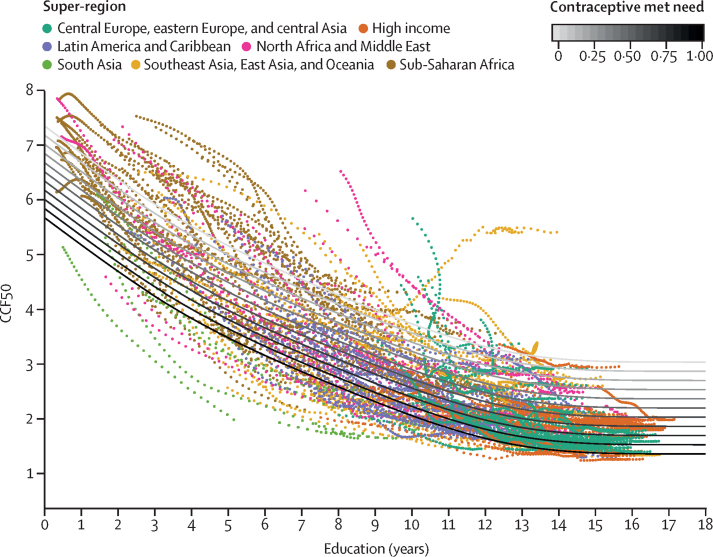
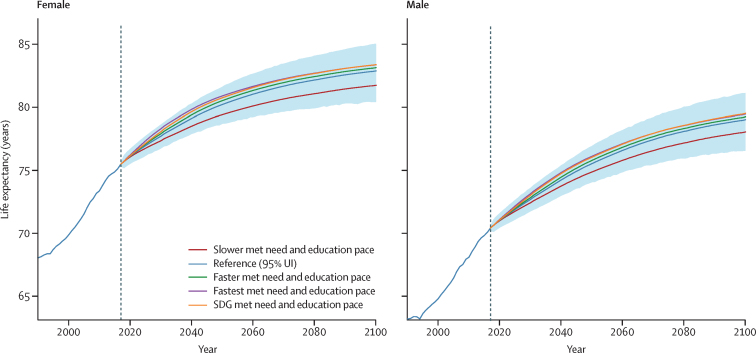
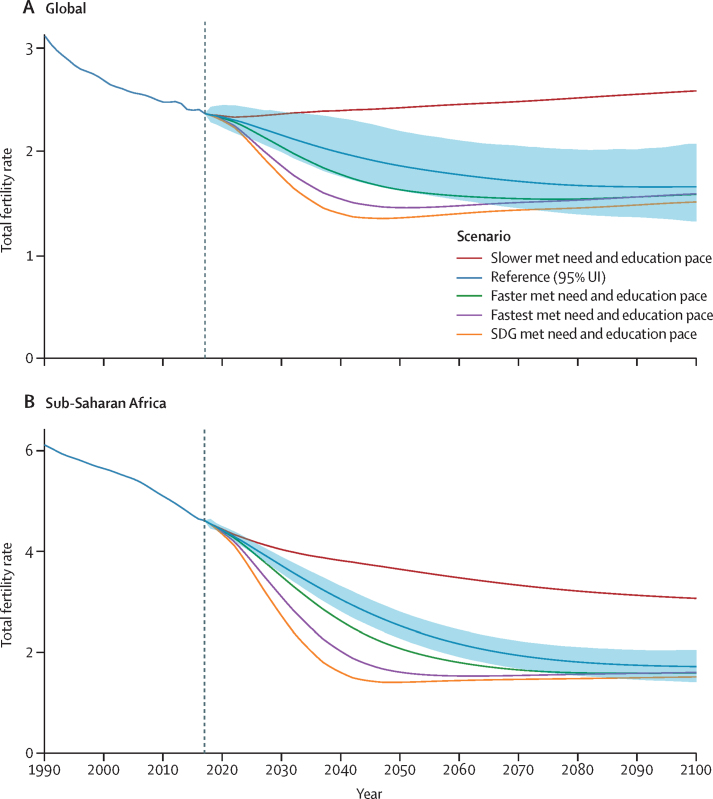
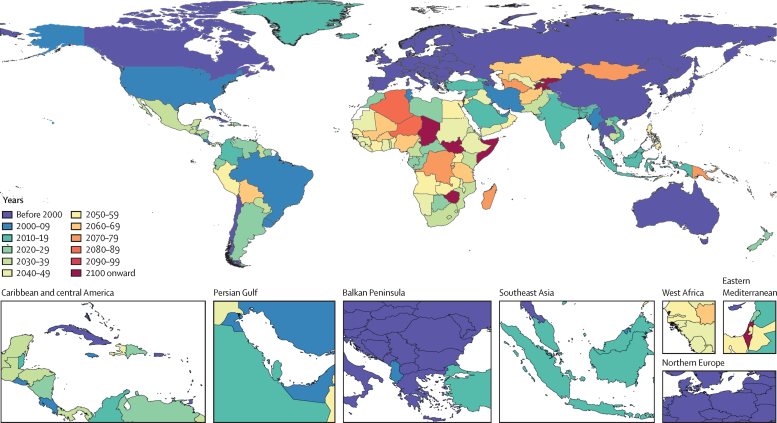
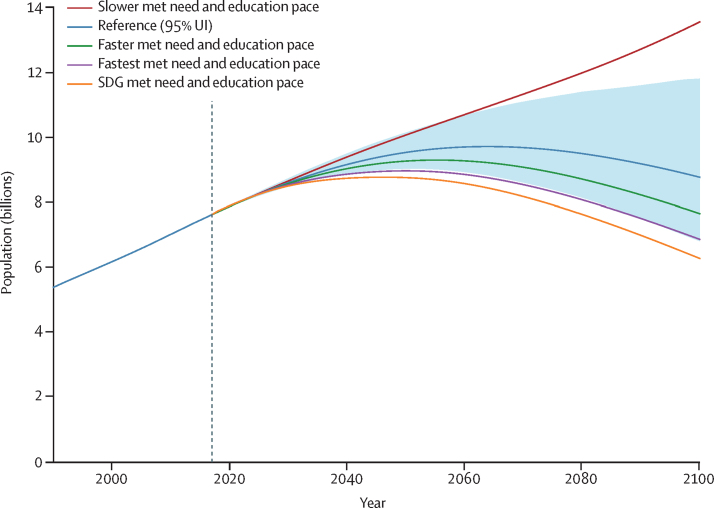
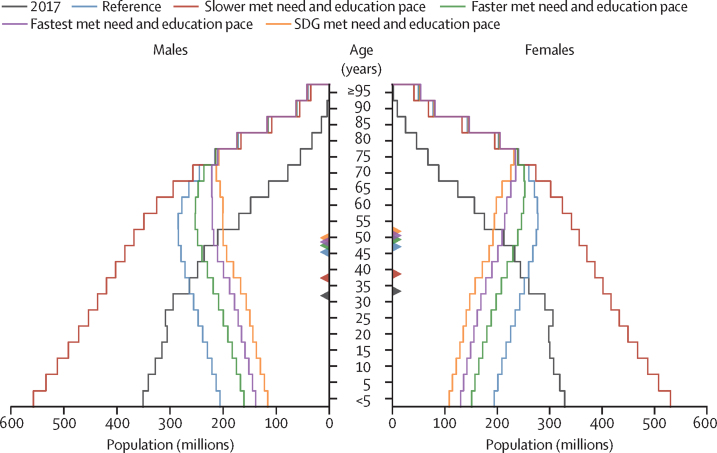
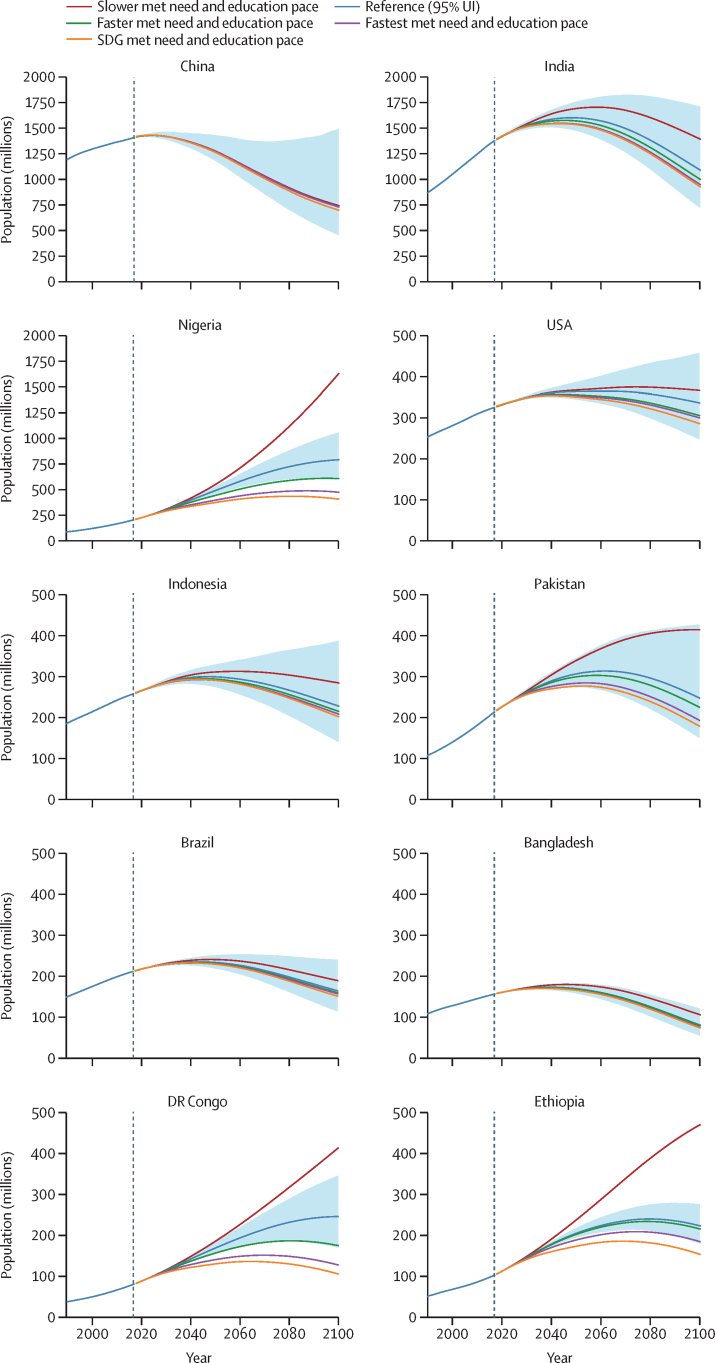
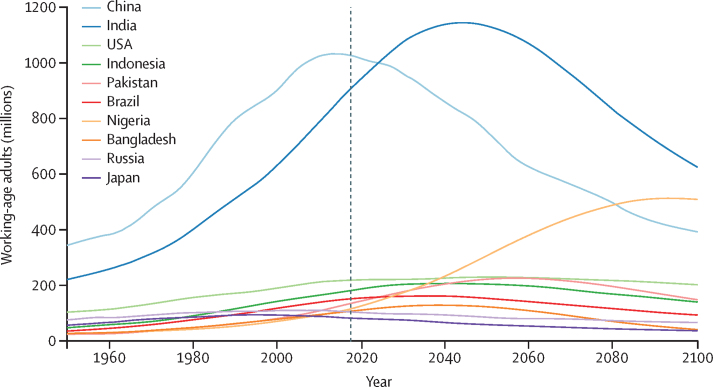
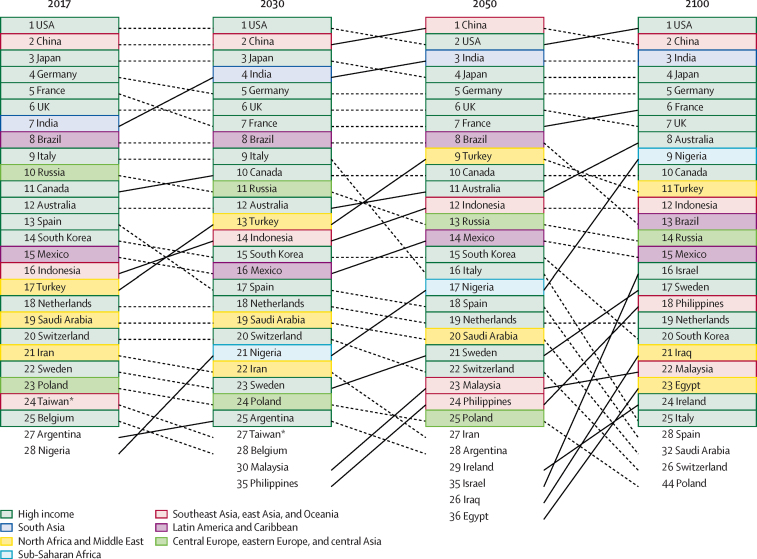
BACKGROUND: Understanding potential patterns in future population levels is crucial for anticipating and planning for changing age structures, resource and health-care needs, and environmental and economic landscapes. Future fertility patterns are a key input to estimation of future population size, but they are surrounded by substantial uncertainty and diverging methodologies of estimation and forecasting, leading to important differences in global population projections. Changing population size and age structure might have profound economic, social, and geopolitical impacts in many countries. In this study, we developed novel methods for forecasting mortality, fertility, migration, and population. We also assessed potential economic and geopolitical effects of future demographic shifts. METHODS: We modelled future population in reference and alternative scenarios as a function of fertility, migration, and mortality rates. We developed statistical models for completed cohort fertility at age 50 years (CCF50). Completed cohort fertility is much more stable over time than the period measure of the total fertility rate (TFR). We modelled CCF50 as a time-series random walk function of educational attainment and contraceptive met need. Age-specific fertility rates were modelled as a function of CCF50 and covariates. We modelled age-specific mortality to 2100 using underlying mortality, a risk factor scalar, and an autoregressive integrated moving average (ARIMA) model. Net migration was modelled as a function of the Socio-demographic Index, crude population growth rate, and deaths from war and natural disasters; and use of an ARIMA model. The model framework was used to develop a reference scenario and alternative scenarios based on the pace of change in educational attainment and contraceptive met need. We estimated the size of gross domestic product for each country and territory in the reference scenario. Forecast uncertainty intervals (UIs) incorporated uncertainty propagated from past data inputs, model estimation, and forecast data distributions. FINDINGS: The global TFR in the reference scenario was forecasted to be 1·66 (95% UI 1·33-2·08) in 2100. In the reference scenario, the global population was projected to peak in 2064 at 9·73 billion (8·84-10·9) people and decline to 8·79 billion (6·83-11·8) in 2100. The reference projections for the five largest countries in 2100 were India (1·09 billion [0·72-1·71], Nigeria (791 million [594-1056]), China (732 million [456-1499]), the USA (336 million [248-456]), and Pakistan (248 million [151-427]). Findings also suggest a shifting age structure in many parts of the world, with 2·37 billion (1·91-2·87) individuals older than 65 years and 1·70 billion (1·11-2·81) individuals younger than 20 years, forecasted globally in 2100. By 2050, 151 countries were forecasted to have a TFR lower than the replacement level (TFR <2·1), and 183 were forecasted to have a TFR lower than replacement by 2100. 23 countries in the reference scenario, including Japan, Thailand, and Spain, were forecasted to have population declines greater than 50% from 2017 to 2100; China's population was forecasted to decline by 48·0% (-6·1 to 68·4). China was forecasted to become the largest economy by 2035 but in the reference scenario, the USA was forecasted to once again become the largest economy in 2098. Our alternative scenarios suggest that meeting the Sustainable Development Goals targets for education and contraceptive met need would result in a global population of 6·29 billion (4·82-8·73) in 2100 and a population of 6·88 billion (5·27-9·51) when assuming 99th percentile rates of change in these drivers. INTERPRETATION: Our findings suggest that continued trends in female educational attainment and access to contraception will hasten declines in fertility and slow population growth. A sustained TFR lower than the replacement level in many countries, including China and India, would have economic, social, environmental, and geopolitical consequences. Policy options to adapt to continued low fertility, while sustaining and enhancing female reproductive health, will be crucial in the years to come. FUNDING: Bill & Melinda Gates Foundation.
Overview
The claims and statistics of this paper haven’t been checked yet.
Free: it reads the open-access text and checks the first 5 claims that cite a source we can check. Create a free account to check every claim.
Integrity signals
Registry
Cites
Statistics
Figures
Verification
Claims the paper makes
The claims and statistics of this paper haven’t been checked yet.
Free: it reads the open-access text and checks the first 5 claims that cite a source we can check. Create a free account to check every claim.
Claims other papers make about this one
Each is checked against this paper’s own text: does it say what the citing paper says it does?
The source backs part of the claim, not all of it — or backs it for a different population, condition or comparison.
In the citing paper
“Demographic data in the 5 years preceding 2021 demonstrate that the total fertility rate (TFR) in some countries has fallen below replacement levels—the minimum rate necessary for generational replacement of the population assuming no migration—with no evidence of this predicted rebound.”
From Global fertility in 204 countries and territories, 1950–2021, with forecasts to 2100: a comprehensive demographic analysis for the Global Burden of Disease Study 2021 (2024) · cites this paper as [4]
Experimental — accuracy not yet measuredThe source backs part of the claim, not all of it — or backs it for a different population, condition or comparison.
In the citing paper
“By 2050 and 2100, respectively, 77% of predominantly high-income countries and 93% of all countries will have a TFR below the replacement level of 2.1 children per woman.”
From Declining global fertility rates and the implications for family planning and family building: an IFFS consensus document based on a narrative review of the literature (2024) · cites this paper as Vollset et al., 2020
Experimental — accuracy not yet measuredThe source backs part of the claim, not all of it — or backs it for a different population, condition or comparison.
In the citing paper
“Not including the effects of migration, many countries are predicted to have a population decline of more than 50% from 2017 to 2100 (Vollset et al., 2020; Dao et al., 2021).”
From Declining global fertility rates and the implications for family planning and family building: an IFFS consensus document based on a narrative review of the literature (2024) · cites this paper as Vollset et al., 2020
Experimental — accuracy not yet measuredThe source backs part of the claim, not all of it — or backs it for a different population, condition or comparison.
In the citing paper
“Different TFRs among countries will promote immigration and emigration with important consequences for all countries, including increased political and social friction (Vollset et al., 2020).”
From Declining global fertility rates and the implications for family planning and family building: an IFFS consensus document based on a narrative review of the literature (2024) · cites this paper as Vollset et al., 2020
Experimental — accuracy not yet measured
6 more claims about this paper
Create a free account to see every claim other papers make about this one.
Self-check
Percentages, sums and reported differences re-computed from the paper’s own numbers.
The self-check needs the paper’s full text.
Citations
Cites
Planetary boundaries: Guiding human development on a changing planet
Steffen, W., Richardson, K., Rockström, J., Cornell, S. E., Fetzer, I., Bennett, E. M., Biggs, R., Carpenter, S. R., de Vries, W., de Wit, C. A., et al. (2015) · Science · doi:10.1126/science.1259855 · Cited by 12,527
Roth, G. A., Abate, D., Abate, K. H., Abay, S. M., Abbafati, C., Abbasi, N., Abbastabar, H., Abd-Allah, F., Abdela, J., Abdelalim, A., et al. (2018) · The Lancet · doi:10.1016/s0140-6736(18)32203-7 · Cited by 8,600
Planetary Boundaries: Exploring the Safe Operating Space for Humanity
Rockström, J., Steffen, W., Noone, K., Persson, Å., Chapin, F. S. I., Lambin, E., Lenton, T. M., Scheffer, M., Folke, C., Schellnhuber, H. J., et al. (2009) · Ecology and Society · doi:10.5751/es-03180-140232 · Cited by 7,187
Time Series: Theory and Methods
Ziegel, E. R., Brockwell, P., & Davis, R. (1992) · Technometrics · doi:10.2307/1270070 · Cited by 5,012
Stanaway, J. D., Afshin, A., Gakidou, E., Lim, S. S., Abate, D., Abate, K. H., Abbafati, C., Abbasi, N., Abbastabar, H., Abd-Allah, F., et al. (2018) · The Lancet · doi:10.1016/s0140-6736(18)32225-6 · Cited by 4,943
Self-citationThe second machine age: work, progress, and prosperity in a time of brilliant technologies
(2015) · Choice Reviews Online · doi:10.5860/choice.184834 · Cited by 4,381
Foreman, K. J., Marquez, N., Dolgert, A., Fukutaki, K., Fullman, N., McGaughey, M., Pletcher, M. A., Smith, A. E., Tang, K., Yuan, C.-W., et al. (2018) · The Lancet · doi:10.1016/s0140-6736(18)31694-5 · Cited by 2,994
Self-citationEssay on the Principle of Population: The 1803 Edition
Malthus, T. R. (2019) · Yale University Press eBooks · doi:10.12987/9780300231892 · Cited by 1,949
Guidelines for accurate and transparent health estimates reporting: the GATHER statement
Stevens, G. A., Alkema, L., Black, R. E., Boerma, J. T., Collins, G. S., Ezzati, M., Grove, J. T., Hogan, D. R., Hogan, M. C., Horton, R., et al. (2016) · The Lancet · doi:10.1016/s0140-6736(16)30388-9 · Cited by 1,798
Self-citationIPCC (2022) · Cambridge University Press eBooks · doi:10.1017/9781009157940 · Cited by 1,482
Research works printed but not linked: 1
- Lutz W Butz WP KC S World population and human capital in the twenty-first century 2014 2014 Oxford University Press Oxford
Cited by
Items 401–500 of 1,000
Xu, M., Tang, C., Shen, Y., Zhang, Y., & Bao, L. (2025) · Frontiers in Neurology · doi:10.3389/fneur.2025.1526524 · Cited by 19
“The ARIMA model was employed to forecast trends in four age-standardized indicators of ICH over the next 20 years (20).”
Liu, Z., Zhou, Q., Zan, J., Tian, J., Zhang, Y., Wu, F., Zhao, H., Peng, Q., Liu, S., Chen, Q., et al. (2025) · Molecular & Cellular Proteomics · doi:10.1016/j.mcpro.2025.100930 · Cited by 18
“Previous data have shown that the fertility rate of women worldwide signi fi cantly decreases with age, and a predictive model suggests that the global decrease in the fertility rate will continue until 2100 (28 – 30).”
Busnelli, A., Navarra, A., & Levi-Setti, P. E. (2021) · Antioxidants · doi:10.3390/antiox10010055 · Cited by 18
“Not surprisingly, studies aimed at forecasting future population characteristics showed that the steadily increasing education level on the one hand and contraceptives demand on the other will lead to a progressive decline in fertility and in population growth all around the world [3].”
BackgroundParenting Fears and Concerns during Pregnancy: A Qualitative Survey
Wilska, A., Rantanen, A., Botha, E., & Joronen, K. (2021) · Nursing Reports · doi:10.3390/nursrep11040082 · Cited by 17
“Continued trends in female educational attainment and access to contraception will hasten declines in fertility [2].”
BackgroundNdlela, S., Niassy, S., & Mohamed, S. A. (2022) · CABI Agriculture and Bioscience · doi:10.1186/s43170-022-00074-x · Cited by 19
Molist‐Brunet, N., Sevilla‐Sánchez, D., Juvanteny, E. P., Peñas, L. B., Cantizano-Baldo, I., Cabanas-Collell, L., & Espaulella‐Panicot, J. (2022) · International Journal of Environmental Research and Public Health · doi:10.3390/ijerph19063423 · Cited by 23
Szczepaniak, I., & Szajner, P. (2022) · Energies · doi:10.3390/en15239090 · Cited by 18
He, X., Su, J., Wang, K., Liang, Y., & Wang, L. (2025) · PLoS ONE · doi:10.1371/journal.pone.0329336 · Cited by 23
“This divergence is largely attributable to global population growth and shifts in age structure, particularly the expansion of the population of WCBA in low-and middle-income countries [30].”
Huang, Y., Lin, W., Chen, X., Zheng, X., Yi, H., & Zhang, L. (2025) · Journal of Advanced Research · doi:10.1016/j.jare.2025.09.038 · Cited by 19
“The Autoregressive Integrated Moving Average Model (ARIMA) is a statistical model widely employed for the analysis and forecasting of time series data, and has frequently been used in studies related to the Global Burden of Disease (GBD) [26,27].”
De, A., Saha, A., & Kumar, P. (2022) · Multimedia Tools and Applications · doi:10.1007/s11042-021-11646-w · Cited by 16
“In a recent study funded by Bill and Melinda Gates Foundation [33], citizens above 80 years are predicted to touch 866 million by the end of the century from around 141 million in 2017.”
BackgroundHou, X., Zhang, F., Ye, Z., Xu, Q. Y., Huang, L., Guo, Q., Liu, W. C., Wang, L., Zhou, M., Yin, P., et al. (2022) · BMC Public Health · doi:10.1186/s12889-022-13221-w · Cited by 15
“The temporal trend of the disease burden of AA in China in the next ten years was predicted by the Auto-Regressive Integrated Moving Average (ARIMA) model, which has been widely used to forecast the trend of epidemiologic data [19, 20].”
MethodDécada do Envelhecimento Saudável: Relatório de Linha de Base
da Saúde, O. P.-A. (2022) · Pan American Health Organization eBooks · doi:10.37774/9789275726587 · Cited by 28
Pirzada, T., Affokpon, A., Guenther, R. H., Mathew, R., Agate, S., Blevins, A., Byrd, M. V., Sit, T. L., Koenning, S. R., Davis, E., et al. (2023) · Nature Food · doi:10.1038/s43016-023-00695-z · Cited by 16
Development of the Longitudinal Study of Health and Ageing in Kenya (LOSHAK)
Nagarajan, N., Burns, S. D., Riang’a, R. M., Mwangi, E. M., Sayed, S., Gichu, M., Langa, K. M., Miguel, E. A., Ngugi, A. K., & Ehrlich, J. R. (2023) · Innovation in Aging · doi:10.1093/geroni/igad111 · Cited by 17
“Projections show that in SSA, 2.37 billion adults will be over the age of 60 by 2100, accounting for 63% of the region’s population (Vollset et al., 2020).”
BackgroundInfluentialNapitupulu, T. P. (2023) · Egyptian Journal of Biological Pest Control · doi:10.1186/s41938-023-00745-5 · Cited by 18
Which curve is better? A comparative analysis of trauma scoring systems in a South Asian country
Merchant, A. A. H., Shaukat, N., Ashraf, N., Hassan, S., Jarrar, Z., Abbasi, A., Ahmed, T., Atiq, H., Khan, U. R., Khan, N. U., et al. (2023) · Trauma Surgery & Acute Care Open · doi:10.1136/tsaco-2023-001171 · Cited by 15
Social robot for older adults with cognitive decline: a preliminary trial
Figueroa, D., Yamazaki, R., Nishio, S., Maalouly, E., Nagata, Y., Satake, Y., Yamakawa, M., Suzuki, M., Kanemoto, H., Ikeda, M., et al. (2023) · Frontiers in Robotics and AI · doi:10.3389/frobt.2023.1213705 · Cited by 17
Factors impacting fertility anxiety among Chinese young women with marital status differences
He, Y., Wahab, N. E. T. A., & Muhamad, H. B. (2023) · Heliyon · doi:10.1016/j.heliyon.2023.e23715 · Cited by 15
“These challenges include the ongoing shortage of social labor and the growing burden of elderly care [1,2].”
BackgroundРегиональная дифференциация рождаемости в Российской Федерации: оптика реальных поколений
Кишенин, П. А. (2023) · Демографическое обозрение · doi:10.17323/demreview.v10i4.18810 · Cited by 23
Fu, L., Liu, C., Dong, Y., Ma, X., Cai, Q., Li, D., & Di, K. (2024) · Journal of Medical Internet Research · doi:10.2196/49688 · Cited by 16
“With the extension of human life expectancy and the decline in birth rates, the global trend of population aging is becoming increasingly pronounced [1].”
The role of p53 in male infertility
Li, J., Huang, X., Lei, L., Sun, J., Guo, Q., Yang, X., Zhang, C., & Ni, B. (2024) · Frontiers in Endocrinology · doi:10.3389/fendo.2024.1457985 · Cited by 24
Lian, R., Tang, H., Chen, Z., Chen, X., Luo, S., Jiang, W., Jiang, J., & Yang, M. J. (2025) · Aging Clinical and Experimental Research · doi:10.1007/s40520-025-02975-z · Cited by 19
“The global demographic landscape is undergoing a significant transformation, with a substantial increase in the aging population, particularly among adults aged 65 years and older [1 ].”
A recommendation for suitable technologies for an indoor farming framework
Gnauer, C., Pichler, H., Schmittner, C., Tauber, M., Christl, K., Knapitsch, J., & Parapatits, M. (2020) · e+i Elektrotechnik und Informationstechnik · doi:10.1007/s00502-020-00824-7 · Cited by 17
Luintel, N., Ma, W., Ma, Y., Wang, B., Xu, J., Dawadi, B., & Mishra, B. (2021) · Agricultural and Forest Meteorology · doi:10.1016/j.agrformet.2021.108538 · Cited by 15
Disruption of a Planetary Nitrogen Cycle as Evidence of Extraterrestrial Agriculture
Haqq-Misra, J. D., Fauchez, T. J., Schwieterman, E. W., & Kopparapu, R. (2022) · The Astrophysical Journal Letters · doi:10.3847/2041-8213/ac65ff · Cited by 20
Methodology for assessing the agroecological adaptability of genotypes under global climate warming
Kincharov, A. I., Demina, E. A., Kincharova, M. N., Taranova, T. Y., Mullayanova, O. S., & Chekmasova, K. Y. (2022) · PROCEEDINGS ON APPLIED BOTANY GENETICS AND BREEDING · doi:10.30901/2227-8834-2022-4-39-47 · Cited by 21
Ambient NO2 exposure hinders long-term survival of Chinese middle-aged and older adults
Wang, Y., Luo, S., Wei, J., Yang, Z., Hu, K., Yao, Y., & Zhang, Y. (2022) · The Science of The Total Environment · doi:10.1016/j.scitotenv.2022.158784 · Cited by 15
Zhou, X., Ruan, W., Jie, H., Liu, H., Wang, T., Li, J., Lin, K., & Lin, J. (2025) · Global Heart · doi:10.5334/gh.1486 · Cited by 19
Mishra, R., Tripathi, A. D., Singh, R. B., Tomar, R. S. S., Wilson, D. W., & Smail, M. M. A. (2021) · Elsevier eBooks · doi:10.1016/b978-0-12-819815-5.00025-2 · Cited by 17
Life, Re-Scaled: The Biological Imagination in Twenty-First-Century Literature and Performance
Campos, L., & Patoine, P.-L. (2022) · Open Book Publishers · doi:10.11647/obp.0303 · Cited by 16
Consumption, Sustainability and Everyday Life
Hansen, A., & Nielsen, K. B. (2023) · Consumption and public life · doi:10.1007/978-3-031-11069-6 · Cited by 23
Yuan, L., Li, D., Tian, Y., & Sun, Y. (2022) · Environmental Science and Pollution Research · doi:10.1007/s11356-023-25952-3 · Cited by 14
Field management practices to produce nutritional and healthier main crops
Aćìn, V., Mirosavljević, M., Živančev, D. R., Jocković, B., Brbaklić, L., & Jačimović, G. (2023) · Elsevier eBooks · doi:10.1016/b978-0-323-90566-4.00006-0 · Cited by 17
Long-term air pollution exposure accelerates ageing-associated degradation of lung function
Kuang, Z., Wang, K., Ma, Z., Zhan, Y., Liu, R., Peng, M., Yang, J., & Zhang, Y. (2023) · Atmospheric Pollution Research · doi:10.1016/j.apr.2023.101899 · Cited by 14
Towards universal access: A review of global efforts in ear and hearing care
Patterson, R. H., Suleiman, O. A., Hapunda, R., Wilson, B. S., Chadha, S. K., & Tucci, D. L. (2024) · Hearing Research · doi:10.1016/j.heares.2024.108973 · Cited by 15
Tooth loss from the perspective of studies employing a life course approach: a systematic review
Drumond, V. Z., de Arruda, J. A. A., de Andrade, B. A. B., Silva, T. A., Mesquita, R. A., & Abreu, L. G. (2024) · Health Promotion International · doi:10.1093/heapro/daae112 · Cited by 15
Huang, Y., Tang, T., Wang, D., Gao, Y., & Zhang, M. (2024) · Frontiers in Public Health · doi:10.3389/fpubh.2024.1486168 · Cited by 15
Zhou, J., Chen, H., Zhou, S., Liu, A., Liang, S., Sun, X., & He, K. (2024) · Pediatric Allergy and Immunology · doi:10.1111/pai.14271 · Cited by 15
“20 We used the GBD 2021 data and GBD demography forecasting data 13 to generate age-specific and age-standardized projected rates.”
Qiao, Q., Wang, L., Xu, Q., Wu, X., Chen, Q., Sheng, T., Cui, M., Li, J., Pang, X., & Zhou, Y. (2025) · Journal of Applied Toxicology · doi:10.1002/jat.4765 · Cited by 16
“Declined fertility rates are a significant public health concern (Vollset et al. 2020).”
Chao, F., Gerland, P., Cook, A. R., & Alkema, L. (2021) · The Annals of Applied Statistics · doi:10.1214/20-aoas1436 · Cited by 25
“[40] Vollset SE, Goren E, Yuan CW, Cao J, Smith AE, Hsiao T, et al.”
BackgroundMethodSpanaki, C., Rodopaios, N. E., Koulouri, A. A., Pliakas, T., Papadopoulou, S. Κ., Vasara, E., Skepastianos, P., Serafeim, T., Boura, I., Dermitzakis, E. T., et al. (2021) · Nutrients · doi:10.3390/nu13020627 · Cited by 16
Advances in Nanomedicine Design: Multidisciplinary Strategies for Unmet Medical Needs
Ahmed, T., Liu, F.-C. F., Lu, B., Lip, H., Park, E., Alradwan, I. A., Liu, J. F., He, C., Zetrini, A., Zhang, T., et al. (2022) · Molecular Pharmaceutics · doi:10.1021/acs.molpharmaceut.2c00038 · Cited by 15
Sagnon, A., Iwasaki, S., Tibiri, E. B., Zongo, N. A., Compaoré, E., Bonkoungou, I. J. O., Nakamura, S., Traoré, M., Barro, N., Tiendrébéogo, F., et al. (2022) · Scientific Reports · doi:10.1038/s41598-022-18318-1 · Cited by 14
Connecting Africa and Asia: Afrasia As a Benign Community
Mine, Y. (2022) · Routledge eBooks · doi:10.4324/9781003229261 · Cited by 15
Ku, J. M., Cho, J. H., Kim, K., Kim, J. Y., Kim, J. Y., Kim, J., Cha, H., & Cheon, B. (2023) · Pharmacology Research & Perspectives · doi:10.1002/prp2.1090 · Cited by 16
Lundström, V. (2023) · The Holocene · doi:10.1177/09596836231185839 · Cited by 15
“Considering then that this dynamic resembles both current and predicted trends for the future (Vollset et al., 2020), a richer understanding of the inter-play between climate change, population dynamics and societal change can be gained by situating such trends in much deeper (pre)historic contexts…”
BackgroundLussi, C., Bickenbach, J., Halvorsen, R., & Sabariego, C. (2024) · BMC Geriatrics · doi:10.1186/s12877-024-05195-8 · Cited by 13
“The second most rapidly growing population category is the over 65-year-olds, predicted to grow 1.63 times by 2050 [2].”
BackgroundInfluentialKumurenzi, A., Richardson, J. A., Thabane, L., Kagwiza, J., Musabyemariya, I., & Bosch, J. (2022) · African Journal of Disability · doi:10.4102/ajod.v11i0.1004 · Cited by 19
“Life expectancy is 70 years for women and 66 years for men (Vollset et al. 2020).”
BackgroundAbdo, N. M., Ahmad, H., Loney, T., Zarmakoupis-Zavos, P. N., Aslam, I., Irfan, S., Grivna, M., Ahmed, L. A., & Al‐Rifai, R. H. (2023) · International Journal of Environmental Research and Public Health · doi:10.3390/ijerph20031692 · Cited by 15
“These findings are in line with global forecast analysis, suggesting that the worldwide reduction in fertility is associated with these factors [32].”
ResultLiang, Z., Wu, D., Guo, C., & Gu, J. (2023) · BMJ Open · doi:10.1136/bmjopen-2022-062091 · Cited by 14
Beltrán-Ontiveros, S. A., Contreras-Gutiérrez, J. A., Lizárraga-Verdugo, E. R., Gutiérrez‐Grijalva, E. P., López-López, K., Lora-Fierro, E. H., Trujillo-Rojas, M. Á., Moreno-Ortíz, J. M., Cardoso-Angulo, D. L., Leal-León, E., et al. (2023) · Cancers · doi:10.3390/cancers16010149 · Cited by 16
Yang, Y., Luo, Z., Yang, Y., & Wang, D. (2024) · Computers & Operations Research · doi:10.1016/j.cor.2024.106631 · Cited by 13
Thomas, Z., Bhurchandi, S. K., Saravanan, B., Christina, F., Volena, R., Rebekah, G. J., Samuel, V. M., Gaikwad, P., Chandy, B. R., Samuel, A., et al. (2024) · Diabetes & Metabolic Syndrome Clinical Research & Reviews · doi:10.1016/j.dsx.2024.103011 · Cited by 20
Sobrecarga del cuidador familiar en Colombia: revisión sistemática exploratoria
Gaviria, D. A. G., Carreño, S. P. M., & Chaparro-Diaz, O.-L. (2023) · Revista Colombiana de Enfermería · doi:10.18270/rce.v22i1.3754 · Cited by 26
Potter, R. W. K., Szomszor, M., & Adams, J. R. (2022) · Scientometrics · doi:10.1007/s11192-022-04303-y · Cited by 14
Chao, F., Samir, K. C., & Ombao, H. (2022) · BMC Public Health · doi:10.1186/s12889-022-12693-0 · Cited by 15
“The non-linear pattern is admittedly more complicated than the assumptions used in other studies: remain constant after a certain year [76] or increase linearly [77].”
M. King Hubbert and the rise and fall of peak oil theory
Deming, D. (2023) · AAPG Bulletin · doi:10.1306/03202322131 · Cited by 15
Революционные события XXI века: предварительный количественный анализ
Goldstone, J. Α., Grinin, L. E., Ustyuzhanin, V., & Коротаев, А. (2023) · Полис Политические исследования · doi:10.17976/jpps/2023.04.05 · Cited by 15
Diet and recreational drug use in relation to male reproductive health
LaPointe, S., Mehta, A., & Gaskins, A. J. (2023) · Fertility and Sterility · doi:10.1016/j.fertnstert.2023.10.013 · Cited by 15
Jin, W., Huang, K., Zhang, M., Gao, W., Luo, Q., Ye, X., & Yuan, Z. (2024) · Cancer Epidemiology · doi:10.1016/j.canep.2024.102583 · Cited by 15
Socioeconomic development predicts a weaker contraceptive effect of breastfeeding
Todd, N., & Lerch, M. (2021) · Proceedings of the National Academy of Sciences · doi:10.1073/pnas.2025348118 · Cited by 15
Population Numbers and Reproductive Health
Suvorov, A. (2021) · Endocrinology · doi:10.1210/endocr/bqab154 · Cited by 16
Jiang, H., Simonović, S. P., Yu, Z., & Wang, W. (2021) · Environmental Research Communications · doi:10.1088/2515-7620/ac35bd · Cited by 13
Population Projections and Population Policies
Buettner, T. (2022) · International handbooks of population · doi:10.1007/978-3-031-02040-7_21 · Cited by 13
Body mass and latitude as global predictors of vertebrate populations exposure to multiple threats
Capdevila, P., Noviello, N., McRae, L., Freeman, R., & Clements, C. F. (2022) · Ecography · doi:10.1111/ecog.06309 · Cited by 17
Nuñez, J. D., Sbragaglia, V., Spivak, E. D., Chiaradia, N. M., & Luppi, T. (2020) · Marine Environmental Research · doi:10.1016/j.marenvres.2020.105238 · Cited by 16
Adamson, G. D., Armstrong, H., Cheong, Y. C., Damato, E., Fatemi, H. M., Ferriani, R. A., Griesinger, G., Ledger, W. J., Pistollato, M., Pellicer, A., et al. (2025) · Frontiers in Reproductive Health · doi:10.3389/frph.2025.1605480 · Cited by 19
“Supplementary care refers to additional treatments to ART, such as preimplantation genetic testing (PGT) and add-ons, i.e., non-validated treatments that claim to improve ART treatment outcomes.”
Projecting the Impacts of a Changing Climate: Tropical Cyclones and Flooding
Anderson, G. B., Schumacher, A., Done, J., & Hurrell, J. W. (2022) · Current Environmental Health Reports · doi:10.1007/s40572-022-00340-0 · Cited by 13
Kühl, M.-J., Nkosi-Gondwe, T., Dhabangi, A., Kwambai, T. K., Mori, A. T., Opoka, R. O., John, C. C., Idro, R., ter Kuile, F. O., Phiri, K. S., et al. (2022) · EClinicalMedicine · doi:10.1016/j.eclinm.2022.101669 · Cited by 14
Duy, H. M., Lee, J., Han, W. M., Rajaguru, V., & Jang, S. (2023) · Healthcare · doi:10.3390/healthcare11040465 · Cited by 12
“Furthermore, the presence of health insurance appeared to mitigate the impact of economic considerations, in addition to enhancing access to health care services [25,43,48,49].”
BackgroundResultInfluentialLiang, Y., Mazlan, N. S., Mohamed, A. B., Bani, N. Y. M., & Liang, B. (2023) · PLoS ONE · doi:10.1371/journal.pone.0282913 · Cited by 17
Is US Fertility now Below Replacement? Evidence from Period vs. Cohort Trends
Wu, L., & Mark, N. D. E. (2023) · Population Research and Policy Review · doi:10.1007/s11113-023-09821-y · Cited by 17
“6 Very low fertility, as proxied by period TFRs, has been observed for an increasing number of countries (Kohler et al., 2002; Beaujouan, 2020; Vollset et al., 2020) In Japan, for example, period TFRs have fluctuated between 1.”
BackgroundYang, J. G., Alshaikh, E. S., Yu, D., Kerwin, T. F., Rundus, C. R. M., Zhang, F., Wrabel, C., Perry, L., & Lu, Z. (2024) · JMIR Formative Research · doi:10.2196/58465 · Cited by 12
“Such assessments may become imperative due to demographic changes (ie, longer life expectancy) compounded by increased dependency on private car journeys among older people [59,60].”
BackgroundGunerhan, A., Altuntaş, Ö., & Açıkkalp, E. (2024) · Biomass and Bioenergy · doi:10.1016/j.biombioe.2024.107510 · Cited by 15
Леонидович, Г. А., & Grinin, L. E. (2021) · Journal of Globalization Studies · doi:10.30884/jogs/2021.02.10 · Cited by 16
A global view of pediatric urology
deVries, C. R. (2022) · Journal of Pediatric Urology · doi:10.1016/j.jpurol.2022.02.002 · Cited by 12
“, in the last 25 years, even as the rate of population growth has flattened and declined, (51) the numbers of fellowship programs has more than doubled and the pediatric urology specialists continue to increase (Fig 2).”
BackgroundSemiconductor Catch-Up Is Not Enough: Twigging the Context of China's Ambitions
Kenney, M. F., & Lewin, A. Y. (2022) · Management and Organization Review · doi:10.1017/mor.2022.33 · Cited by 12
“…population (World Population Review, 2022a) with total population expected to peak this decade (Powell, 2022; World Population Review, 2022b) and then decline by half by the end of this century (Vollset et al., 2020), thus, transforming China ’ s demographic dividend into a demographic liability.”
BackgroundPu, T., Huang, C., Yang, J., & Huang, M. (2023) · Sustainability · doi:10.3390/su151310584 · Cited by 13
Analysis of Hotspots in Subsurface Drip Irrigation Research Using CiteSpace
Xiao, Y., Sun, C., Wang, D., Li, H., & Guo, W. (2023) · Agriculture · doi:10.3390/agriculture13071463 · Cited by 18
Whole Person Modeling: a transdisciplinary approach to mental health research
Felsky, D., Cannitelli, A., & Pipitone, J. (2023) · Discover Mental Health · doi:10.1007/s44192-023-00041-6 · Cited by 16
“will result in octogenarians outnumbering children under 5 by a ratio of two to one by the year 2100 [10].”
BackgroundThe Extent to Which Hemp Insulation Materials Can Be Used in Canadian Residential Buildings
Liu, C. H. J., Pomponi, F., & D’Amico, B. (2023) · Sustainability · doi:10.3390/su151914471 · Cited by 18
Sasmita, N. R., Ramadeska, S., Utami, R., Adha, Z., Putri, U., Syarafina, R. H., Reskiaddin, L. O., Kamal, S., Yarmaliza, Y., Muliadi, M., et al. (2023) · Infolitika Journal of Data Science · doi:10.60084/ijds.v1i1.88 · Cited by 13
“Birth rate is a measure that shows the population growth in a country [28].”
BackgroundCieślak, I., Jaworski, M., Pańczyk, M., Barzykowski, K., Majda, A., Theofanidis, D., & Gotlib, J. (2024) · Nurse Education Today · doi:10.1016/j.nedt.2024.106094 · Cited by 12
Dietary Diversity, Nutrition and Food Safety
Dev, S. M., & Pandey, V. L. (2022) · India studies in business and economics · doi:10.1007/978-981-19-0763-0_3 · Cited by 16
How Can the Global Ageing Affect the Global Value System? An Evolutionary Perspective
Korotayev, A., Butovskaya, M., Shulgin, S. G., & Zinkina, J. V. (2023) · Social Evolution & History · doi:10.30884/seh/2023.01.03 · Cited by 12
“…projections unanimously forecast dramatic aging of the world population in the forthcoming decades (Alkema et al. 2011; Grinin et al. 2017; Kaneda et al. 2016; Lutz et al. 2018; Raftery et al. 2012; UN Population Division 2022; Vollset et al. 2020; Wittgenstein Center 2020); see Figures 1 and 2.”
BackgroundPeng, Y., Han, L., Jiang, Q., Liu, J., Liu, X., Jiang, G., Li, Z., Qin, S., Zhuo, Y., & Su, W. (2026) · BMJ Open · doi:10.1136/bmjopen-2025-108975 · Cited by 18
“All analyses were performed in R V.4.4.2, employing a statistical significance threshold of p<0.05.”
InfluentialHay, S. I., Nam, P., Saqib, H., McLaughlin, S. A., Bisignano, C., Ostroff, S. M., Ng, M., Nomura, S., Schumacher, A. E., & Murray, C. J. L. (2026) · The Lancet Public Health · doi:10.1016/s2468-2667(26)00098-8 · Cited by 16
Self-citationBurden, Trends, and Inequality of Dental Caries in the U.S., 1990–2019
Zhao, G. N., Wong, H. M., Wen, Y. F., Wu, Y., Zhong, Y. J., & Jiang, Y. (2023) · American Journal of Preventive Medicine · doi:10.1016/j.amepre.2023.01.032 · Cited by 12
The burden of low back pain in adolescents and young adults
Wu, Z., Huang, G., Ai, J., Liu, Y., & Pei, B. (2024) · Journal of Back and Musculoskeletal Rehabilitation · doi:10.3233/bmr-230215 · Cited by 16
Yao, Y., Yuan, Y., Xia, R., Zhou, Y., Yuxia, Y., Tian, D., Ren, Y., Lin, Q., Cheng, M., Tan, P., et al. (2024) · Reproductive Health · doi:10.1186/s12978-024-01888-w · Cited by 11
“In recent years, declining birth rates have been observed in most countries worldwide and are also a key issue of national concern in China [1].”
BackgroundMazzoni, L., Naudé, W. A., & Innocenti, N. (2024) · Journal of Business Venturing Insights · doi:10.1016/j.jbvi.2024.e00512 · Cited by 13
Carrying capacity in human-environment interactions: a systematic review
Dupuy, P., Galaitsi, S., & Linkov, I. (2025) · Integrated Environmental Assessment and Management · doi:10.1093/inteam/vjaf021 · Cited by 14
Biswas, T., Raut, J., De, D., & Sahoo, P. (2025) · Dalton Transactions · doi:10.1039/d5dt00633c · Cited by 11
Liang, Y., Wang, J., Yang, J., Liu, J., & He, X. (2025) · Frontiers in Public Health · doi:10.3389/fpubh.2025.1578658 · Cited by 18
Barańska, D., Panek, J., Różalska, S., Turnau, K., & Frąc, M. (2025) · Scientia Horticulturae · doi:10.1016/j.scienta.2025.114303 · Cited by 15
Leta, T. B., Adeyemi, J. O., & Fawole, O. A. (2025) · Plants · doi:10.3390/plants14162523 · Cited by 14
A versatile cohesion manipulation system probes female reproductive age-related egg aneuploidy
Leem, J., Lemonnier, T., Khutsaidze, A., Tian, L., Xing, X., Bai, S., Nottoli, T., & Mogessie, B. (2025) · Nature Aging · doi:10.1038/s43587-025-00997-w · Cited by 14
Medication adherence among the older adults: challenges and recommendations
Huang, J., Wang, H., Zheng, Z., & Wong, M. C. S. (2020) · Hong Kong Medical Journal · doi:10.12809/hkmj205108 · Cited by 11
Pati, K., Behera, S., Ray, D. K., Behera, P. R., Sarkar, A., Chauhan, V. B. S., Bansode, V., & Nedunchezhiyan, M. (2021) · Journal of Food Composition and Analysis · doi:10.1016/j.jfca.2021.104006 · Cited by 12
Nisal, A., Diwekar, U. M., Hanumante, N. C., Shastri, Y., & Cabezas, H. (2022) · PLoS ONE · doi:10.1371/journal.pone.0267403 · Cited by 11
Metadata
- Authors
- Vollset, S. E., Goren, E., Yuan, C.-W., Cao, J., Smith, A. E., Hsiao, T., Bisignano, C., Azhar, G. S., Castro, E., Chalek, J., Dolgert, A. J., Frank, T., Fukutaki, K., Hay, S. I., Lozano, R., Mokdad, A. H., Nandakumar, V., Pierce, M., Pletcher, M., Robalik, T., Steuben, K. M., Wunrow, H. Y., Zlavog, B. S., & Murray, C. J. L.
- Affiliations
- University of Washington (US)
- Corresponding author
- Murray, Christopher J L
- ORCID
- Venue
- The Lancet
- Publisher
- Elsevier BV
- Published
- 2020-10
- Volume
- 396
- Issue
- 10258
- Pages
- 1285-1306
- ISSN
- 0099-5355 (ISSN-L)
- 0140-6736
- PMC
- PMC7561721
- OpenAlex
- W3043365850
- Cited by
- 1,506
- References
- 34
- Citations by year
- 2026: 195 · 2025: 279 · 2024: 266 · 2023: 276 · 2022: 247 · 2021: 197 · 2020: 45
- FWCI
- 288.65
- Type
- journal article
- Language
- en
- Open access
- hybrid
- doi.org
- Licence
- cc-by
- www.elsevier.com/tdm/userlicense/1.0/ (tdm)
- www.elsevier.com/legal/tdmrep-license (tdm)
- creativecommons.org/licenses/by/4.0/ (vor)
- Locations
- The Lancet (publishedVersion, cc-by)
- PubMed Central (publishedVersion, cc-by)
- PubMed (publishedVersion)
- FIU - Digital Commons (Florida International University) (submittedVersion)
- Funders
- Bill and Melinda Gates Foundation
- Topics
- Social Sciences › Demography › Insurance, Mortality, Demography, Risk Management
- Health Sciences › Medicine › Public Health, Environmental and Occupational Health › Reproductive Health and Contraception
- Social Sciences › Geography, Planning and Development › demographic modeling and climate adaptation
- Keywords
- population projections, fertility prediction, mortality forecasting, migration forecasting, age-specific fertility, age-specific mortality, net migration, educational attainment, gross domestic product, demographic scenarios, population decline, age structure, uncertainty intervals, Global Burden of Disease Study, socioeconomic determinants of fertility
- MeSH terms
- Global Burden of Disease, Birth Rate, Female, Forecasting, Humans, Male, Mortality, Population Growth, Human Migration
About these checks
Registry, retraction, Cites and statistics results are computed, not judged, with one exception: a printed reference that no index lists is read once by a model before it counts as a citation error. Claims are extracted by a model and kept only when their quote appears verbatim in the text; each cited source is then checked, with a model’s help, for whether it says what the claim relies on. Those verdicts can be wrong — read the claim’s quote and the cited source before relying on one.
Statistics and arithmetic are recomputed, not judged.
Confidence bands are shown only for fields calibrated on our annotated test set. None is calibrated yet, so no band is shown.
What counts as a claim ›How we measure confidence ›How we check this ›
Are you an author, or do you see a problem with this page? Request a review
Data sources
Bibliographic data: Semantic Scholar, OpenAlex, Crossref.
Contains information from the Semantic Scholar Academic Graph Datasets, made available under the ODC Attribution License (ODC-BY 1.0).
Semantic Scholar’s data is described in: Kinney, R., et al. (2023). The Semantic Scholar Open Data Platform. arXiv:2301.10140.
