

Fertility, mortality, migration, and population scenarios for 195 countries and territories from 2017 to 2100: a forecasting analysis for the Global Burden of Disease Study
Open accessThe DOI matches its Crossref record; 33 of the 34 references it cites were found in a registry or an index.
Abstract
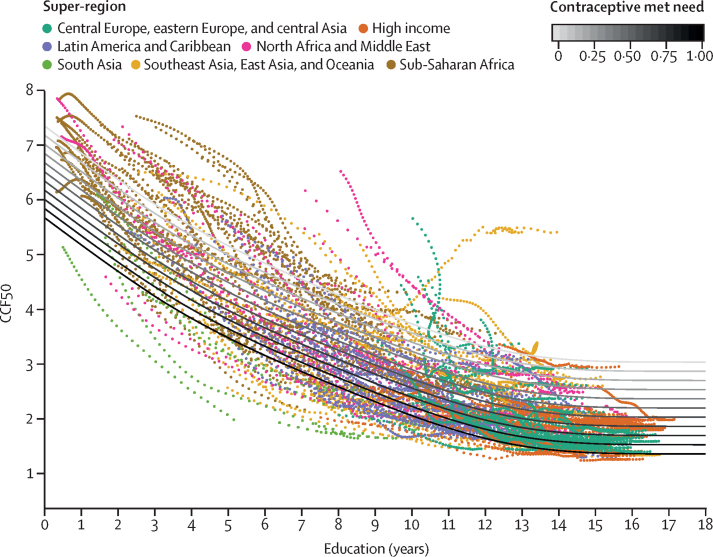
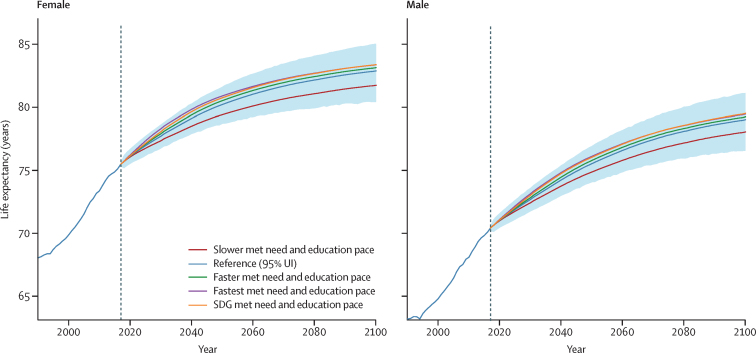
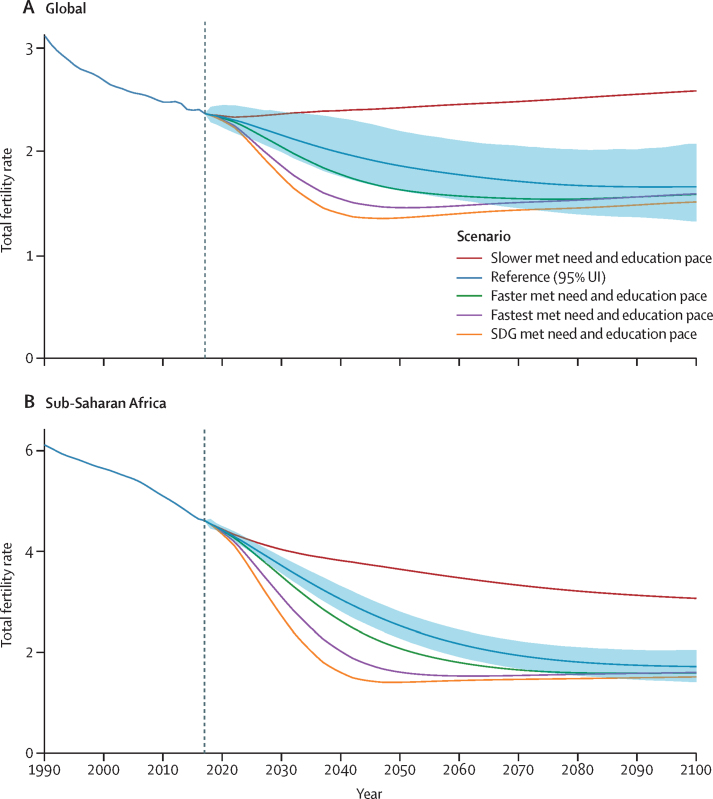
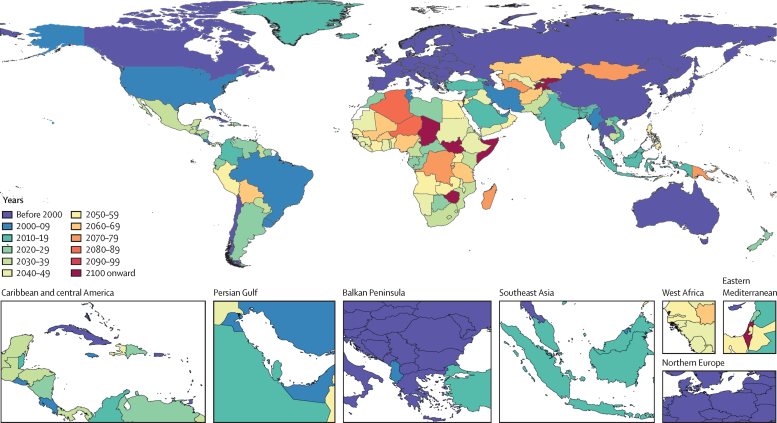
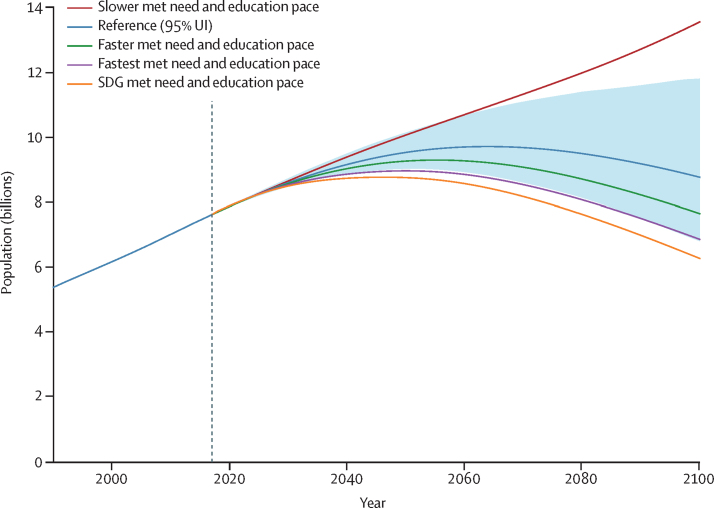
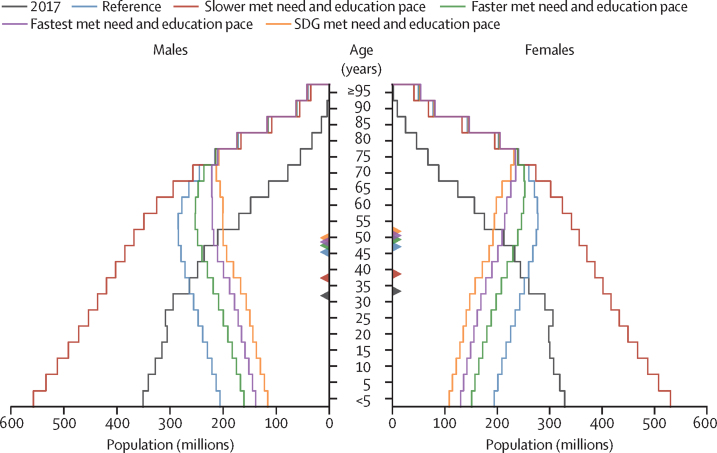
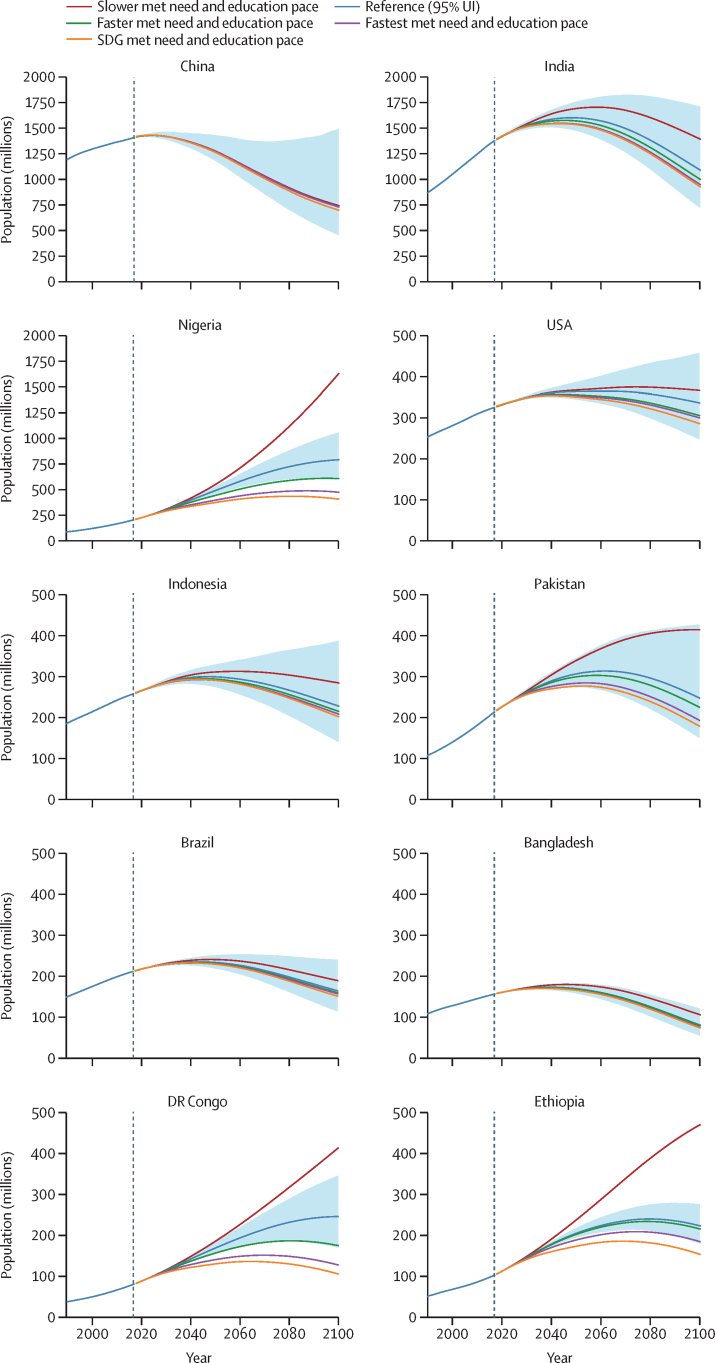
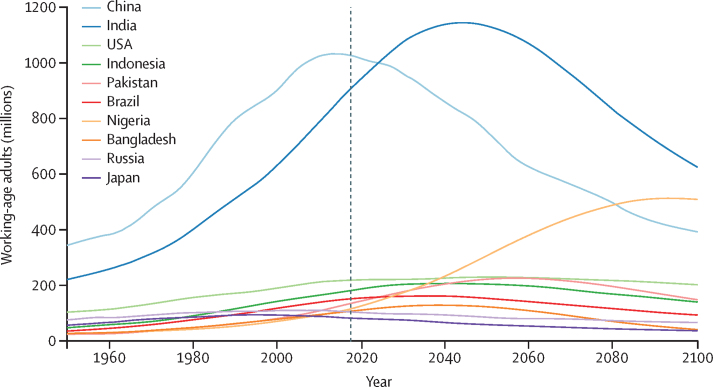
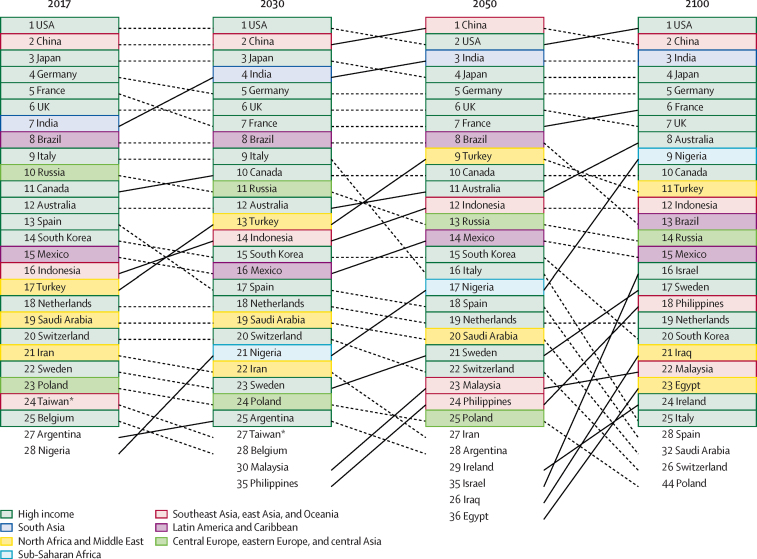
BACKGROUND: Understanding potential patterns in future population levels is crucial for anticipating and planning for changing age structures, resource and health-care needs, and environmental and economic landscapes. Future fertility patterns are a key input to estimation of future population size, but they are surrounded by substantial uncertainty and diverging methodologies of estimation and forecasting, leading to important differences in global population projections. Changing population size and age structure might have profound economic, social, and geopolitical impacts in many countries. In this study, we developed novel methods for forecasting mortality, fertility, migration, and population. We also assessed potential economic and geopolitical effects of future demographic shifts. METHODS: We modelled future population in reference and alternative scenarios as a function of fertility, migration, and mortality rates. We developed statistical models for completed cohort fertility at age 50 years (CCF50). Completed cohort fertility is much more stable over time than the period measure of the total fertility rate (TFR). We modelled CCF50 as a time-series random walk function of educational attainment and contraceptive met need. Age-specific fertility rates were modelled as a function of CCF50 and covariates. We modelled age-specific mortality to 2100 using underlying mortality, a risk factor scalar, and an autoregressive integrated moving average (ARIMA) model. Net migration was modelled as a function of the Socio-demographic Index, crude population growth rate, and deaths from war and natural disasters; and use of an ARIMA model. The model framework was used to develop a reference scenario and alternative scenarios based on the pace of change in educational attainment and contraceptive met need. We estimated the size of gross domestic product for each country and territory in the reference scenario. Forecast uncertainty intervals (UIs) incorporated uncertainty propagated from past data inputs, model estimation, and forecast data distributions. FINDINGS: The global TFR in the reference scenario was forecasted to be 1·66 (95% UI 1·33-2·08) in 2100. In the reference scenario, the global population was projected to peak in 2064 at 9·73 billion (8·84-10·9) people and decline to 8·79 billion (6·83-11·8) in 2100. The reference projections for the five largest countries in 2100 were India (1·09 billion [0·72-1·71], Nigeria (791 million [594-1056]), China (732 million [456-1499]), the USA (336 million [248-456]), and Pakistan (248 million [151-427]). Findings also suggest a shifting age structure in many parts of the world, with 2·37 billion (1·91-2·87) individuals older than 65 years and 1·70 billion (1·11-2·81) individuals younger than 20 years, forecasted globally in 2100. By 2050, 151 countries were forecasted to have a TFR lower than the replacement level (TFR <2·1), and 183 were forecasted to have a TFR lower than replacement by 2100. 23 countries in the reference scenario, including Japan, Thailand, and Spain, were forecasted to have population declines greater than 50% from 2017 to 2100; China's population was forecasted to decline by 48·0% (-6·1 to 68·4). China was forecasted to become the largest economy by 2035 but in the reference scenario, the USA was forecasted to once again become the largest economy in 2098. Our alternative scenarios suggest that meeting the Sustainable Development Goals targets for education and contraceptive met need would result in a global population of 6·29 billion (4·82-8·73) in 2100 and a population of 6·88 billion (5·27-9·51) when assuming 99th percentile rates of change in these drivers. INTERPRETATION: Our findings suggest that continued trends in female educational attainment and access to contraception will hasten declines in fertility and slow population growth. A sustained TFR lower than the replacement level in many countries, including China and India, would have economic, social, environmental, and geopolitical consequences. Policy options to adapt to continued low fertility, while sustaining and enhancing female reproductive health, will be crucial in the years to come. FUNDING: Bill & Melinda Gates Foundation.
Overview
The claims and statistics of this paper haven’t been checked yet.
Free: it reads the open-access text and checks the first 5 claims that cite a source we can check. Create a free account to check every claim.
Integrity signals
Registry
Cites
Statistics
Figures
Verification
Claims the paper makes
The claims and statistics of this paper haven’t been checked yet.
Free: it reads the open-access text and checks the first 5 claims that cite a source we can check. Create a free account to check every claim.
Claims other papers make about this one
Each is checked against this paper’s own text: does it say what the citing paper says it does?
The source backs part of the claim, not all of it — or backs it for a different population, condition or comparison.
In the citing paper
“Demographic data in the 5 years preceding 2021 demonstrate that the total fertility rate (TFR) in some countries has fallen below replacement levels—the minimum rate necessary for generational replacement of the population assuming no migration—with no evidence of this predicted rebound.”
From Global fertility in 204 countries and territories, 1950–2021, with forecasts to 2100: a comprehensive demographic analysis for the Global Burden of Disease Study 2021 (2024) · cites this paper as [4]
Experimental — accuracy not yet measuredThe source backs part of the claim, not all of it — or backs it for a different population, condition or comparison.
In the citing paper
“By 2050 and 2100, respectively, 77% of predominantly high-income countries and 93% of all countries will have a TFR below the replacement level of 2.1 children per woman.”
From Declining global fertility rates and the implications for family planning and family building: an IFFS consensus document based on a narrative review of the literature (2024) · cites this paper as Vollset et al., 2020
Experimental — accuracy not yet measuredThe source backs part of the claim, not all of it — or backs it for a different population, condition or comparison.
In the citing paper
“Not including the effects of migration, many countries are predicted to have a population decline of more than 50% from 2017 to 2100 (Vollset et al., 2020; Dao et al., 2021).”
From Declining global fertility rates and the implications for family planning and family building: an IFFS consensus document based on a narrative review of the literature (2024) · cites this paper as Vollset et al., 2020
Experimental — accuracy not yet measuredThe source backs part of the claim, not all of it — or backs it for a different population, condition or comparison.
In the citing paper
“Different TFRs among countries will promote immigration and emigration with important consequences for all countries, including increased political and social friction (Vollset et al., 2020).”
From Declining global fertility rates and the implications for family planning and family building: an IFFS consensus document based on a narrative review of the literature (2024) · cites this paper as Vollset et al., 2020
Experimental — accuracy not yet measured
6 more claims about this paper
Create a free account to see every claim other papers make about this one.
Self-check
Percentages, sums and reported differences re-computed from the paper’s own numbers.
The self-check needs the paper’s full text.
Citations
Cites
Planetary boundaries: Guiding human development on a changing planet
Steffen, W., Richardson, K., Rockström, J., Cornell, S. E., Fetzer, I., Bennett, E. M., Biggs, R., Carpenter, S. R., de Vries, W., de Wit, C. A., et al. (2015) · Science · doi:10.1126/science.1259855 · Cited by 12,527
Roth, G. A., Abate, D., Abate, K. H., Abay, S. M., Abbafati, C., Abbasi, N., Abbastabar, H., Abd-Allah, F., Abdela, J., Abdelalim, A., et al. (2018) · The Lancet · doi:10.1016/s0140-6736(18)32203-7 · Cited by 8,600
Planetary Boundaries: Exploring the Safe Operating Space for Humanity
Rockström, J., Steffen, W., Noone, K., Persson, Å., Chapin, F. S. I., Lambin, E., Lenton, T. M., Scheffer, M., Folke, C., Schellnhuber, H. J., et al. (2009) · Ecology and Society · doi:10.5751/es-03180-140232 · Cited by 7,187
Time Series: Theory and Methods
Ziegel, E. R., Brockwell, P., & Davis, R. (1992) · Technometrics · doi:10.2307/1270070 · Cited by 5,012
Stanaway, J. D., Afshin, A., Gakidou, E., Lim, S. S., Abate, D., Abate, K. H., Abbafati, C., Abbasi, N., Abbastabar, H., Abd-Allah, F., et al. (2018) · The Lancet · doi:10.1016/s0140-6736(18)32225-6 · Cited by 4,943
Self-citationThe second machine age: work, progress, and prosperity in a time of brilliant technologies
(2015) · Choice Reviews Online · doi:10.5860/choice.184834 · Cited by 4,381
Foreman, K. J., Marquez, N., Dolgert, A., Fukutaki, K., Fullman, N., McGaughey, M., Pletcher, M. A., Smith, A. E., Tang, K., Yuan, C.-W., et al. (2018) · The Lancet · doi:10.1016/s0140-6736(18)31694-5 · Cited by 2,994
Self-citationEssay on the Principle of Population: The 1803 Edition
Malthus, T. R. (2019) · Yale University Press eBooks · doi:10.12987/9780300231892 · Cited by 1,949
Guidelines for accurate and transparent health estimates reporting: the GATHER statement
Stevens, G. A., Alkema, L., Black, R. E., Boerma, J. T., Collins, G. S., Ezzati, M., Grove, J. T., Hogan, D. R., Hogan, M. C., Horton, R., et al. (2016) · The Lancet · doi:10.1016/s0140-6736(16)30388-9 · Cited by 1,798
Self-citationIPCC (2022) · Cambridge University Press eBooks · doi:10.1017/9781009157940 · Cited by 1,482
Research works printed but not linked: 1
- Lutz W Butz WP KC S World population and human capital in the twenty-first century 2014 2014 Oxford University Press Oxford
Cited by
Items 101–200 of 1,000
Salem, K. S., Clayson, K., Salas, M., Haque, N., Rao, R., Agate, S., Singh, A., Levis, J. W., Mittal, A., Yarbrough, J. M., et al. (2023) · Matter · doi:10.1016/j.matt.2023.08.003 · Cited by 102
Chowmasundaram, Y. A. P., Tan, T. L., Nulit, R., Jusoh, M., & Rashid, S. B. A. (2023) · RSC Advances · doi:10.1039/d3ra01217d · Cited by 102
Gong, Y., Jiang, Q. L., Zhai, M., Tang, T., & Liu, S. (2024) · Journal of Global Health · doi:10.7189/jogh.14.04131 · Cited by 101
“The ASIR and ASMR were predicted utilising an ARIMA model from 2020 to 2040 [23,24].”
MethodMorchid, A., Et-taibi, B., Oughannou, Z., Alami, R. E., Qjidaa, H., Jamil, M. O., Boufounas, E., & Abid, M. R. (2024) · Scientific African · doi:10.1016/j.sciaf.2024.e02527 · Cited by 92
Martinez, R., Morsch, P., Soliz, P. N., Hommes, C., Ordúñez, P., & Vega, E. (2021) · Revista Panamericana de Salud Pública · doi:10.26633/rpsp.2021.114 · Cited by 127
“The methods and data sources used in the GBD 2019 have been published elsewhere (3, 15, 18) and are summarized in the appendix.”
MethodThe emerging epidemic of inflammatory bowel disease in Asia and Iran by 2035: A modeling study
Olfatifar, M., Zali, M. R., Pourhoseingholi, M. A., Balaii, H., Ghavami, S. B., Іванчук, М. А., Іванчук, П. Р., Nazari, S. H., Shahrokh, S., Sabour, S., et al. (2021) · BMC Gastroenterology · doi:10.1186/s12876-021-01745-1 · Cited by 100
An ethical framework for human embryology with embryo models
Rivron, N. C., Arias, A. M., Pera, M. F., Moris, N., & M’hamdi, H. I. (2023) · Cell · doi:10.1016/j.cell.2023.07.028 · Cited by 94
“8 The biological definition of an embryo What is an embryo?”
Rural broadband speeds and business startup rates
Deller, S. C., Whitacre, B. E., & Conroy, T. (2021) · American Journal of Agricultural Economics · doi:10.1111/ajae.12259 · Cited by 99
Probabilistic population forecasting: Short to very long-term
Raftery, A. E., & Ševčíková, H. (2021) · International Journal of Forecasting · doi:10.1016/j.ijforecast.2021.09.001 · Cited by 115
Societal collapse: A literature review
Brozović, D. (2022) · Futures · doi:10.1016/j.futures.2022.103075 · Cited by 118
“On the other hand, current demographic trends indicate that the global human population will peak in the next 50 – 80 years (Lutz et al., 2018; Vollset et al., 2020), thus questioning overshoot.”
BackgroundMitigating tradeoffs in plant breeding
Dwivedi, S. L., Reynolds, M. P., & Ortiz, R. O. (2021) · iScience · doi:10.1016/j.isci.2021.102965 · Cited by 99
Global, regional, and national burdens of traumatic brain injury from 1990 to 2021
Yan, J., Wang, C., & Sun, B. (2025) · Frontiers in Public Health · doi:10.3389/fpubh.2025.1556147 · Cited by 121
Xi, J., Lin, X., & Hao, Y. (2022) · Journal of Global Health · doi:10.7189/jogh.12.04093 · Cited by 101
“The potential reasons for accelerated fertility declines and slower population growth probably are improved female education and the availability of contraception [51].”
BackgroundZhou, Y., Yu, Z., Chebotarov, D., Chougule, K. M., Lu, Z., Rivera, L. F., Kathiresan, N., Al-Bader, N., Mohammed, N., Alsantely, A., et al. (2023) · Nature Communications · doi:10.1038/s41467-023-37004-y · Cited by 92
Schiavina, M., Melchiorri, M., Corbane, C., Freire, S., & Silva, F. B. E. (2022) · Journal of Land Use Science · doi:10.1080/1747423x.2022.2055184 · Cited by 82
“…is particularly committed to supporting sustainable land use and urban development.1 The European context is characterised by lower demographic growth and more dispersed built-up patterns compared to other world regions (Alvarez Alvarez et al., 2021; Florczyk et al., 2019; Vollset et al., 2020).”
BackgroundSherman, P. J., Lin, H., & McElroy, M. B. (2022) · Energy and Buildings · doi:10.1016/j.enbuild.2022.112198 · Cited by 98
Wafa, H. A., Marshall, I. J., Wolfe, C. D. A., Xie, W., Johnson, C. O., Veltkamp, R. C., Wang, Y., Harvey, K., Korompoki, E., D’Anna, L., et al. (2024) · The Lancet Regional Health - Europe · doi:10.1016/j.lanepe.2024.100842 · Cited by 97
Climate change scenarios in fisheries and aquatic conservation research
Burgess, M. G., Becker, S. L., Langendorf, R. E., Fredston, A., & Brooks, C. M. (2023) · ICES Journal of Marine Science · doi:10.1093/icesjms/fsad045 · Cited by 96
The Next 2 Billion: Can the World Support 10 Billion People?
Lam, D. (2024) · Population and Development Review · doi:10.1111/padr.12685 · Cited by 102
Demographic perspectives in research on global environmental change
Muttarak, R. (2021) · Population Studies · doi:10.1080/00324728.2021.1988684 · Cited by 98
“…as a function of relevant covariates: for example educational attainment and contraceptive met need in the case of total fertility; risk factors in the case of age-specific mortality; and socio-demographic index and crude population growth rate in the case of net migration (Vollset et al. 2020).”
BackgroundOcean Solutions That Benefit People, Nature and the Economy
Stuchtey, M., Vincent, A., Merkl, A. A., Bucher, M., Haugan, P. M., Lubchenco, J., & Pangestu, M. E. (2023) · Springer eBooks · doi:10.1007/978-3-031-16277-0_20 · Cited by 85
Global Aging: An Integral Problem of the Future. How to Turn a Problem into a Development Driver?
Grinin, L. E., Леонидович, Г. А., & Korotayev, A. (2023) · World-systems evolution and global futures · doi:10.1007/978-3-031-34999-7_7 · Cited by 105
Modeling global 80-80-80 blood pressure targets and cardiovascular outcomes
Pickersgill, S. J., Msemburi, W., Cobb, L. K., Ide, N., Moran, A. E., Su, Y., Xu, X., & Watkins, D. (2022) · Nature Medicine · doi:10.1038/s41591-022-01890-4 · Cited by 100
Trends of gastric cancer burdens attributable to risk factors in China from 2000 to 2050
He, F., Wang, S., Zheng, R., Gu, J., Zeng, H., Sun, K., Chen, R., Li, L., Han, B., Li, X., et al. (2024) · The Lancet Regional Health - Western Pacific · doi:10.1016/j.lanwpc.2023.101003 · Cited by 109
“66 Our estimates were derived from the population projection of the World Population Prospects 2022, which provides the latest estimates on one-year age group of the population for each single year and shows more visible changes in the precise year of occurrence for the impact of natural disasters…”
Wen, Y. F., Chen, M., Yin, G., Lin, R., Zhong, Y. J., Dong, Q. Q., & Wong, H. M. (2021) · Journal of Hematology & Oncology · doi:10.1186/s13045-021-01093-3 · Cited by 80
Cardiovascular Disorders and Falls Among Older Adults: A Systematic Review and Meta-Analysis
Bourke, R., Doody, P., Pérez, S., Moloney, D. J., Lipsitz, L. A., & Kenny, R. A. (2023) · The Journals of Gerontology Series A · doi:10.1093/gerona/glad221 · Cited by 84
How many infants have been born with the help of assisted reproductive technology?
Adamson, G. D., Creighton, P., de Mouzon, J., Zegers-Hochschild, F., Dyer, S., & Chambers, G. M. (2025) · Fertility and Sterility · doi:10.1016/j.fertnstert.2025.02.009 · Cited by 93
Advances in sperm analysis: techniques, discoveries and applications
Dai, C., Zhang, Z., Shan, G., Chu, L.-T., Huang, Z., Moskovtsev, S. I., Librach, C. L., Jarvi, K. A., & Sun, Y. (2021) · Nature Reviews Urology · doi:10.1038/s41585-021-00472-2 · Cited by 81
Srikrishnan, V., Lafferty, D. C., Wong, T. E., Lamontagne, J., Quinn, J. D., Sharma, S., Molla, N., Herman, J. D., Sriver, R. L., Morris, J., et al. (2022) · Earth s Future · doi:10.1029/2021ef002644 · Cited by 78
“Methods employed to develop probability distributions for model inputs vary on a case-by-case basis and can involve time series forecasting (Keilman, 2020; Vollset et al., 2020), broader statistical approaches (Liu & Raftery, 2021; Raftery et al.”
BackgroundMethodKinge, J. M., Dieleman, J. L., Karlstad, Ø., Knudsen, A. K., Klitkou, S. T., Hay, S. I., Vos, T., Murray, C. J. L., & Vollset, S. E. (2023) · BMC Medicine · doi:10.1186/s12916-023-02896-6 · Cited by 78
“Looking forward, European countries face population aging, which -assuming morbidity by age is static- will result in more long-term illness, and problems in maintaining adequate care within the current health care budgets [37, 38].”
BackgroundSelf-citationVilela, A., Quingalahua, E. C., Vargas, A., Hawa, F. N., Shannon, C., Carpenter, E. S., Shi, J., Krishna, S. G., Lee, U.-J., Chalhoub, J. M., et al. (2024) · Clinical Gastroenterology and Hepatology · doi:10.1016/j.cgh.2024.02.018 · Cited by 85
Tqemaladze, J. (2026) · Longevity Horizon · doi:10.65649/8be27s21 · Cited by 72
Angell, B., Sanuade, O., Adetifa, I. M. O., Okeke, I. N., Adamu, A. L., Aliyu, M. H., Ameh, E. A., Kyari, F., Gadanya, M. A., Mabayoje, D. A., et al. (2022) · The Lancet · doi:10.1016/s0140-6736(21)02722-7 · Cited by 69
Mokdad, A. H., Bisignano, C., Hsu, J. M., Bryazka, D., Cao, S., Bhattacharjee, N. V., Dalton, B. E., Lindstedt, P. A., Smith, A. E., Ababneh, H. S., et al. (2024) · The Lancet · doi:10.1016/s0140-6736(24)02246-3 · Cited by 85
“12 As we continue to refine our forecasting methods and expand our knowledge of health trends, the importance of understanding the potential future scenarios facing the USA becomes increasingly apparent.”
Self-citationJin, W., Huang, K., Ding, Z., Zhang, M., Li, C., Yuan, Z., Ma, K., & Ye, X. (2025) · Biomarker Research · doi:10.1186/s40364-024-00718-2 · Cited by 88
Lamichhane, J. R., Alletto, L., Cong, W., Dayoub, E., Maury, P., Plaza‐Bonilla, D., Reckling, M., Saia, S., Soltani, E., Tison, G., et al. (2022) · Field Crops Research · doi:10.1016/j.fcr.2022.108795 · Cited by 80
Sustainable Food Security and Nutritional Challenges
Hussain, M. A., Li, L., Kalu, K. A., Wu, X., & Naumovski, N. (2025) · Sustainability · doi:10.3390/su17030874 · Cited by 84
The Global Syndemic of Modifiable Cardiovascular Risk Factors Projected From 2025 to 2050
Chong, B., Jayabaskaran, J., Jauhari, S. M., Chia, J., le Roux, C. W., Mehta, A., Dimitriadis, G. K., Chen, Y., Toh, S. A., Manla, Y., et al. (2025) · Journal of the American College of Cardiology · doi:10.1016/j.jacc.2025.04.061 · Cited by 81
Satellite monitoring of shrinking cities on the globe and containment solutions
Zhai, W., Jiang, Z., Meng, X., Zhang, X., Zhao, M., & Long, Y. (2022) · iScience · doi:10.1016/j.isci.2022.104411 · Cited by 75
The epidemiology of pregnancy loss: global burden, variable risk factors, and predictions
Tong, F., Wang, Y., Gao, Q., Zhao, Y., Zhang, X., Li, B., & Wang, X. (2024) · Human Reproduction · doi:10.1093/humrep/deae008 · Cited by 80
Vision Loss Expert Group of the Global Burden of Disease Study, Furtado, J. M., Jonas, J. B., Tapply, I. H., Fernandes, A. G., Cicinelli, M. V., Arrigo, A., Leveziel, N., Resnikoff, S., Taylor, H. R., et al. (2024) · Eye · doi:10.1038/s41433-024-03050-z · Cited by 86
“We age-standardised our estimates using the GBD standard population [14].”
MethodKik, A., Adamec, M., Aikhenvald, A. Y., Bajzeková, J., Baro, N., Bowern, C., Colwell, R. K., Drozd, P., Duda, P., Ibalim, S., et al. (2021) · Proceedings of the National Academy of Sciences · doi:10.1073/pnas.2100096118 · Cited by 87
“It is predicted to grow further to 27 million in 2100 (35).”
Wang, Y., Deng, C., Elmer, W. H., Dimkpa, C. O., Sharma, S., Navarro, G., Wang, Z., LaReau, J. C., Steven, B. T., Wang, Z., et al. (2022) · ACS Nano · doi:10.1021/acsnano.2c04073 · Cited by 67
Mwangi, M. N., Mzembe, G., Moya, E., & Verhoef, H. (2021) · The Lancet Haematology · doi:10.1016/s2352-3026(21)00193-9 · Cited by 80
Advanced Glycation End-Products in Skeletal Muscle Aging
Olson, L. C., Redden, J. T., Schwartz, Z., Cohen, D. J., & McClure, M. J. (2021) · Bioengineering · doi:10.3390/bioengineering8110168 · Cited by 74
“Musculoskeletal injury increases due to falls and other accidental injuries in old age, and age-dependent alterations to skeletal muscle structure and function are the primary causal factors of such incidents [1].”
BackgroundCohort Profile Update: The Norwegian Mother, Father and Child Cohort (MoBa)
Brandlistuen, R. E., Kristjansson, D., Alsaker, E. R., Valen, R., Birkeland, E., Røyrvik, E. C., Page, C. M., Aamelfot, M., Vangbæk, S. M., Ask, H., et al. (2025) · International Journal of Epidemiology · doi:10.1093/ije/dyaf139 · Cited by 74
Women’s reproductive health and economic activity: A narrative review
Finlay, J. E. (2021) · World Development · doi:10.1016/j.worlddev.2020.105313 · Cited by 74
Does artificial intelligence have a role in the IVF clinic?
Chow, D. J. X., Wijesinghe, P., Dholakia, K., & Dunning, K. R. (2021) · Reproduction and Fertility · doi:10.1530/raf-21-0043 · Cited by 65
Changes in marriage, divorce and births during the COVID-19 pandemic in Japan
Ghaznavi, C., Kawashima, T., Tanoue, Y., Yoneoka, D., Makiyama, K., Sakamoto, H., Ueda, P., Eguchi, A., & Nomura, S. (2022) · BMJ Global Health · doi:10.1136/bmjgh-2021-007866 · Cited by 74
Chen, H., Zhan, Y., Zhang, J., Cheng, S., Zhou, Y., Chen, L., & Zeng, Z. (2022) · JMIR Public Health and Surveillance · doi:10.2196/34809 · Cited by 66
“Interestingly, unlike the increased number of NAFLD cases, ASIR presented no marked upregulation, which might partly be associated with changes in sociodemographic structure in different areas and countries [30,31].”
BackgroundBhattacharya, S., Banerjee, R., Ramadesigan, V., Liebman, A., & Dargaville, R. (2023) · Renewable and Sustainable Energy Reviews · doi:10.1016/j.rser.2023.113954 · Cited by 65
The Environmental Impacts of Overpopulation
Tal, A. (2025) · Encyclopedia · doi:10.3390/encyclopedia5020045 · Cited by 69
“UN estimates, like other projections envisaging an imminent end to global population growth [36], involve many optimistic assumptions about future fertility declines in the Global South, assumptions that are challenged as excessively sanguine by many demogra-phers [37].”
Diminishing Opportunities for Sustainability of Coastal Cities in the Anthropocene: A Review
Day, J. W., Gunn, J. D., & Burger, J. R. (2021) · Frontiers in Environmental Science · doi:10.3389/fenvs.2021.663275 · Cited by 70
“Alternatively, Vollset et al. (2020) modeled future population on purely demographic drivers, fertility, migration, andmortality.”
BackgroundAntioxidants and Fertility in Women with Ovarian Aging: A Systematic Review and Meta-Analysis
Shang, Y., Song, N., He, R., & Wu, M. (2024) · Advances in Nutrition · doi:10.1016/j.advnut.2024.100273 · Cited by 63
“At present, the total fertility rate is far below the replacement level, which accelerates population aging worldwide and adversely affects public fi nances and social progress [1,2].”
BackgroundKaklauskas, A., Zavadskas, E. K., Lepkova, N., Raslanas, S., Dauksys, K., Vetloviene, I., & Ubartė, I. (2021) · Sustainability · doi:10.3390/su13137420 · Cited by 78
Quantifying Global Greenhouse Gas Emissions in Human Deaths to Guide Energy Policy
Pearce, J. M., & Parncutt, R. (2023) · Energies · doi:10.3390/en16166074 · Cited by 66
“Conversely, the final death toll in a 2 ◦ C warming scenario will certainly be much less than 10 billion, which is the predicted global human population in 2100 in the absence of AGW [64].”
BackgroundSummerauer, L., Baumann, P., Ramírez-López, L., Barthel, M., Bauters, M., Bukombe, B., Reichenbach, M., Boeckx, P., Kearsley, E., Oost, K. V., et al. (2021) · SOIL · doi:10.5194/soil-7-693-2021 · Cited by 64
Zhang, W., Surigaoge, S., Yang, H., Yu, R., Wu, J., Xing, Y., Chen, Y., & Li, L. (2024) · Plant and Soil · doi:10.1007/s11104-023-06464-y · Cited by 103
“The global population is projected to reach 8.79 billion (Vollset et al. 2020) or 11.2 billion by 2100 (United Nations 2017).”
InfluentialJacques, P., Delannoy, L., Andrieu, B., Yılmaz, D., Jeanmart, H., & Godin, A. (2022) · Ecological Economics · doi:10.1016/j.ecolecon.2023.107832 · Cited by 71
Ji, Y., Zhang, Y., Liu, S., Li, J., Jin, Q., Wu, J., Duan, H., Liu, X., Yang, L., & Huang, Y. (2025) · Journal of the National Cancer Center · doi:10.1016/j.jncc.2025.01.003 · Cited by 102
“…health services would not only be faced by populous countries, including India (with the estimates of population of 1.09 billion in 2100), Nigeria (791 million), the United States (336 million), and Pakistan (248 million), 43 but also would be faced by other countries with declined fertility rates.”
InfluentialMetrics for Measuring Sustainable Product Design Concepts
Han, J., Jiang, P., & Childs, P. (2021) · Energies · doi:10.3390/en14123469 · Cited by 64
The edge of the petri dish for a nation: Water resources carrying capacity assessment for Iran
Khorsandi, M., Homayouni, S., & van Oel, P. R. (2022) · The Science of The Total Environment · doi:10.1016/j.scitotenv.2022.153038 · Cited by 54
Kim, S., Oh, J. S., Shin, J. I., Aalruz, H., Abbas, N., Babatope, A. E., Aboagye, R. G., Abohashem, S., Abu‐Zaid, A., Addo, I. Y., et al. (2026) · The Lancet. Gastroenterology & hepatology · doi:10.1016/s2468-1253(26)00011-7 · Cited by 86
Sustainable welfare: Independence between growth and welfare has to go both ways
Büchs, M. (2021) · Global Social Policy · doi:10.1177/14680181211019153 · Cited by 51
“…growth rate of 0.8%.1 Growth resilience is also desirable because the future of growth in the Global North is uncertain for a range of reasons, including a deceleration of technological innovation, labour force participation rates and global population growth (Gordon, 2016; Vollset et al., 2020).”
BackgroundInfluentialCKD: The burden of disease invisible to research funders
AIRG-E, EKPF, ALCER, FRIAT, REDINREN, RICORS2040, SENEFRO, SET, & ONT (2021) · Nefrología · doi:10.1016/j.nefro.2021.09.004 · Cited by 54
The war, refugees, and the future of Ukraine's population
Kulu, H., Christison, S., Liu, C., & Mikolai, J. (2023) · Population Space and Place · doi:10.1002/psp.2656 · Cited by 60
Prebiotics and iron bioavailability? Unveiling the hidden association - A review
Ahmad, A. M. R., Ahmed, W., Iqbal, S., Javed, M., Rashid, S., & Ul‐Haq, I. (2021) · Trends in Food Science & Technology · doi:10.1016/j.tifs.2021.01.085 · Cited by 52
China’s Belt and Road Initiative and international business: The overlooked centrality of politics
Lewin, A. Y., & Witt, M. A. (2022) · Journal of International Business Policy · doi:10.1057/s42214-022-00135-y · Cited by 57
“China’s total population is expected to peak between 2022 and 2030 (Powell, 2022; Vollset, Goren, Yuan, Cao, Smith, Hsiao, Bisignano, Azhar, Castro, and Chalek, 2020; World Population Review, 2022), possibly to decline by half by end of this century (Vollset et al., 2020).”
BackgroundLi, X., Liu, Z., Jiang, X., Xia, R., Li, Y., Pan, X., Yan, Y., & Fan, X. (2023) · Journal of Global Health · doi:10.7189/jogh.13.04154 · Cited by 54
“As aging has become a major social issue in developed countries [13], atrial fibrillation-related mortality, which increases with age, has become one of the most important public health crises in Western countries.”
BackgroundHopsort, G., Carmo, D. P. D., Latapie, L., Loubière, K., Serrano, K. G., & Tzedakis, T. (2023) · Electrochimica Acta · doi:10.1016/j.electacta.2023.141898 · Cited by 56
Generating human blastoids modeling blastocyst-stage embryos and implantation
Khoei, H. H., Javali, A., Kagawa, H., Sommer, T. M., Sestini, G., David, L., Slováková, J., Novatchkova, M., Reimer, Y. S. O., & Rivron, N. C. (2023) · Nature Protocols · doi:10.1038/s41596-023-00802-1 · Cited by 56
Socio-economic impacts of agricultural land conversion: A meta-analysis
Zhang, Z., Ghazali, S., Miceikienė, A., Zejak, D., Choobchian, S., Pietrzykowski, M., & Azadi, H. (2023) · Land Use Policy · doi:10.1016/j.landusepol.2023.106831 · Cited by 64
Su, Y., Ngea, G. L. N., Wang, K., Lu, Y., Godana, E. A., Ackah, M., Yang, Q., & Zhang, H. (2024) · Plant Biotechnology Journal · doi:10.1111/pbi.14407 · Cited by 56
Zottl, J., Sebesta, C., Tomosel, E., Sebesta, M. C., & Sebesta, C. (2025) · Cancers · doi:10.3390/cancers17101607 · Cited by 60
Demand for ‘advantaged’ hydrocarbons during the 21st century energy transition
Davies, A., & Simmons, M. D. (2021) · Energy Reports · doi:10.1016/j.egyr.2021.07.013 · Cited by 74
Material flows and GHG emissions from housing stock evolution in US counties, 2020–60
Berrill, P., & Hertwich, E. G. (2021) · Buildings and Cities · doi:10.5334/bc.126 · Cited by 60
Liang, A. R.-D. (2021) · Journal of Hospitality Leisure Sport & Tourism Education · doi:10.1016/j.jhlste.2021.100332 · Cited by 58
A Circular Economy: Where Will It Take Us?
Hart, J., & Pomponi, F. (2021) · Circular Economy and Sustainability · doi:10.1007/s43615-021-00013-4 · Cited by 59
Evaluation and analysis of the projected population of China
Dai, K., Shen, S., & Cheng, C. (2022) · Scientific Reports · doi:10.1038/s41598-022-07646-x · Cited by 58
Saccone, D. (2021) · The European Journal of Health Economics · doi:10.1007/s10198-021-01311-2 · Cited by 51
“However, notwithstanding the many deaths caused by the pandemic, it seems unlikely that it will significantly change the ongoing demographic trends globally (see [78], and related audio and interviews), unless the subsequent economic uncertainty will affect birth rates in the medium–long-run.”
BackgroundRansohoff, J. I., Kumar, P. S., Flynn, D., & Rubenstein, E. (2022) · Journal of Applied Research in Intellectual Disabilities · doi:10.1111/jar.12977 · Cited by 51
Nano-bioformulations: emerging trends and potential applications in next generation crop protection
Vishnu, M., Kannan, M., Soundararajan, R. P., Suganthi, A., Subramanian, A., Senthilkumar, M., Rameash, K., Kamalakannan, M., & Govindaraju, K. (2024) · Environmental Science Nano · doi:10.1039/d4en00263f · Cited by 75
Deforestation triggered by artisanal mining in eastern Democratic Republic of the Congo
Ladewig, M., Angelsen, A., Masolele, R. N., & Chervier, C. (2024) · Nature Sustainability · doi:10.1038/s41893-024-01421-8 · Cited by 59
“Under the pressure of a growing population that is expected to triple by the end of the century 25 and related issues of land scarcity, declining soil fertility 11 and food insecurity, the increasing need for land leads to the expansion of rural complexes into surrounding forests 26 .”
Li, Y., Zou, C., Guo, W., Han, F., Fan, T., Zang, L., & Huang, G. (2024) · Frontiers in Public Health · doi:10.3389/fpubh.2024.1480779 · Cited by 58
Clarsen, B. M., Nylenna, M., Klitkou, S. T., Vollset, S. E., Baravelli, C. M., Bølling, A. K., Aasvang, G. M., Sulo, G., Naghavi, M., Pasovic, M., et al. (2022) · The Lancet Public Health · doi:10.1016/s2468-2667(22)00092-5 · Cited by 48
Self-citationVision Loss Expert Group of the Global Burden of Disease Study, Little, J., Congdon, N. G., Resnikoff, S., Braithwaite, T., Leasher, J. L., Naidoo, K. S., Fricke, T., Tapply, I. H., Fernandes, A. G., et al. (2024) · Eye · doi:10.1038/s41433-024-03106-0 · Cited by 64
“Model projection was to the year 2020, coincident with the end of VISION 2020: the Right to Sight initiative, and estimates were age-standardised using the GBD standard population [35].”
MethodHughes, A. C., Tougeron, K., Martin, D. A., Menga, F., Rosado, B. H. P., Villasante, S., Madgulkar, S., Gonçalves, F., Geneletti, D., Diele‐Viegas, L. M., et al. (2022) · Biological Conservation · doi:10.1016/j.biocon.2022.109841 · Cited by 56
Paz, S., Majeed, A., & Christophides, G. K. (2021) · Climatic Change · doi:10.1007/s10584-021-03300-z · Cited by 48
“In parallel with the projected continuing growth of the EMME population in the coming decades (Vollset et al. 2020) and the expected higher demand for water and land, different RCPs (representative concentration pathway) predict that the region will be warmer and dryer while climate warming will be much stronger in th…”
BackgroundChoi, S. K. Y., Venetis, C., Ledger, W., Havard, A., Harris, K., Norman, R. J., Jorm, L. R., & Chambers, G. M. (2022) · Human Reproduction · doi:10.1093/humrep/deac032 · Cited by 42
The contributory role of vascular health in age‐related anabolic resistance
Banks, N. F., Rogers, E. M., Church, D. D., Ferrando, A. A., & Jenkins, N. D. M. (2021) · Journal of Cachexia Sarcopenia and Muscle · doi:10.1002/jcsm.12898 · Cited by 44
Wang, Y., Deng, C., Shen, Y., Borgatta, J. R., Dimkpa, C. O., Xing, B., Dhankher, O. P., Wang, Z., White, J. C., & Elmer, W. H. (2022) · Journal of Agricultural and Food Chemistry · doi:10.1021/acs.jafc.2c05255 · Cited by 43
Ning, N., Tang, J., Huang, Y., Tan, X., Lin, Q., & Sun, M. (2022) · International Journal of Environmental Research and Public Health · doi:10.3390/ijerph192215412 · Cited by 42
Evidence for the role of selection for reproductively advantageous alleles in human aging
Long, E., & Zhang, J. (2023) · Science Advances · doi:10.1126/sciadv.adh4990 · Cited by 46
“Specifically, more than half of humans live in areas of the world where birth rates have declined, along with increased incidences of contra-ception, abortion, and reproductive disorder ( 47 ).”
BackgroundKapoor, R. T., & Zdarta, J. (2024) · Chemosphere · doi:10.1016/j.chemosphere.2024.142101 · Cited by 43
Global Trends and Forecasts of the 21st Century
Grinin, L. E., Леонидович, Г. А., & Korotayev, A. (2021) · World Futures · doi:10.1080/02604027.2021.1949939 · Cited by 57
“Note that a new global population forecast produced by the Institute for Health Metrics and Evaluation (Seattle) team (Vollset et al. 2020) predicts even more pronounced aging of the global population then the forecasts produced earlier by the UN.”
BackgroundInfluentialKoriche, S. A., Singarayer, J. S., & Cloke, H. (2021) · Environmental Research Letters · doi:10.1088/1748-9326/ac1af5 · Cited by 42
Conclusion. How Many Revolutions Will We See in the Twenty-First Century?
Goldstone, J. Α., Grinin, L. E., & Korotayev, A. (2022) · Societies and political orders in transition · doi:10.1007/978-3-030-86468-2_41 · Cited by 44
Ipinnimo, T. M., Durowade, K. A., Afolayan, C. A., Ajayi, P. O., & Akande, T. M. (2022) · Nigerian Postgraduate Medical Journal · doi:10.4103/npmj.npmj_216_22 · Cited by 41
“[44,45] Available data also showed that an average of 5 million people are added to the country every year [18] and enrolling extra 5 million people yearly in addition to meeting up with the current target may require much more planning and resources.”
BackgroundTransport and sources of nitrogen in stormwater runoff at the urban catchment scale
Wang, S., Ma, Y., Zhang, X., & Shen, Z. (2021) · The Science of The Total Environment · doi:10.1016/j.scitotenv.2021.150281 · Cited by 51
How well can we predict climate migration? A review of forecasting models
Schewel, K., Dickerson, S., Madson, B., & Nagle Alverio, G. (2024) · Frontiers in Climate · doi:10.3389/fclim.2023.1189125 · Cited by 40
Metadata
- Authors
- Vollset, S. E., Goren, E., Yuan, C.-W., Cao, J., Smith, A. E., Hsiao, T., Bisignano, C., Azhar, G. S., Castro, E., Chalek, J., Dolgert, A. J., Frank, T., Fukutaki, K., Hay, S. I., Lozano, R., Mokdad, A. H., Nandakumar, V., Pierce, M., Pletcher, M., Robalik, T., Steuben, K. M., Wunrow, H. Y., Zlavog, B. S., & Murray, C. J. L.
- Affiliations
- University of Washington (US)
- Corresponding author
- Murray, Christopher J L
- ORCID
- Venue
- The Lancet
- Publisher
- Elsevier BV
- Published
- 2020-10
- Volume
- 396
- Issue
- 10258
- Pages
- 1285-1306
- ISSN
- 0099-5355 (ISSN-L)
- 0140-6736
- PMC
- PMC7561721
- OpenAlex
- W3043365850
- Cited by
- 1,506
- References
- 34
- Citations by year
- 2026: 195 · 2025: 279 · 2024: 266 · 2023: 276 · 2022: 247 · 2021: 197 · 2020: 45
- FWCI
- 288.65
- Type
- journal article
- Language
- en
- Open access
- hybrid
- doi.org
- Licence
- cc-by
- www.elsevier.com/tdm/userlicense/1.0/ (tdm)
- www.elsevier.com/legal/tdmrep-license (tdm)
- creativecommons.org/licenses/by/4.0/ (vor)
- Locations
- The Lancet (publishedVersion, cc-by)
- PubMed Central (publishedVersion, cc-by)
- PubMed (publishedVersion)
- FIU - Digital Commons (Florida International University) (submittedVersion)
- Funders
- Bill and Melinda Gates Foundation
- Topics
- Social Sciences › Demography › Insurance, Mortality, Demography, Risk Management
- Health Sciences › Medicine › Public Health, Environmental and Occupational Health › Reproductive Health and Contraception
- Social Sciences › Geography, Planning and Development › demographic modeling and climate adaptation
- Keywords
- population projections, fertility prediction, mortality forecasting, migration forecasting, age-specific fertility, age-specific mortality, net migration, educational attainment, gross domestic product, demographic scenarios, population decline, age structure, uncertainty intervals, Global Burden of Disease Study, socioeconomic determinants of fertility
- MeSH terms
- Global Burden of Disease, Birth Rate, Female, Forecasting, Humans, Male, Mortality, Population Growth, Human Migration
About these checks
Registry, retraction, Cites and statistics results are computed, not judged, with one exception: a printed reference that no index lists is read once by a model before it counts as a citation error. Claims are extracted by a model and kept only when their quote appears verbatim in the text; each cited source is then checked, with a model’s help, for whether it says what the claim relies on. Those verdicts can be wrong — read the claim’s quote and the cited source before relying on one.
Statistics and arithmetic are recomputed, not judged.
Confidence bands are shown only for fields calibrated on our annotated test set. None is calibrated yet, so no band is shown.
What counts as a claim ›How we measure confidence ›How we check this ›
Are you an author, or do you see a problem with this page? Request a review
Data sources
Bibliographic data: Semantic Scholar, OpenAlex, Crossref.
Contains information from the Semantic Scholar Academic Graph Datasets, made available under the ODC Attribution License (ODC-BY 1.0).
Semantic Scholar’s data is described in: Kinney, R., et al. (2023). The Semantic Scholar Open Data Platform. arXiv:2301.10140.
