

Global impact of the first year of COVID-19 vaccination: a mathematical modelling study
Open accessThe DOI matches its Crossref record; 23 of the 26 references it cites were found in a registry or an index; 4 of the 8 sources its claims cite were checked for support.
Abstract
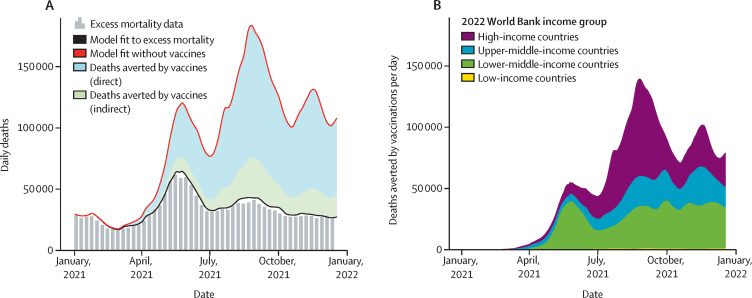
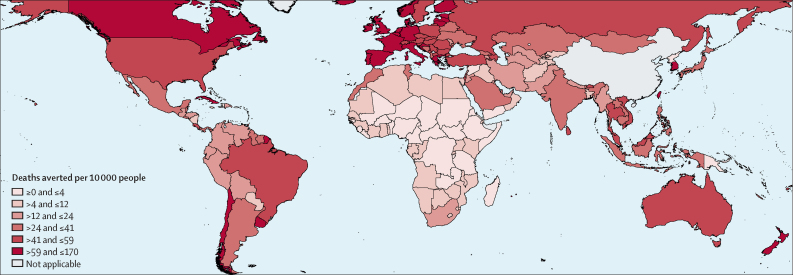
BACKGROUND: The first COVID-19 vaccine outside a clinical trial setting was administered on Dec 8, 2020. To ensure global vaccine equity, vaccine targets were set by the COVID-19 Vaccines Global Access (COVAX) Facility and WHO. However, due to vaccine shortfalls, these targets were not achieved by the end of 2021. We aimed to quantify the global impact of the first year of COVID-19 vaccination programmes. METHODS: A mathematical model of COVID-19 transmission and vaccination was separately fit to reported COVID-19 mortality and all-cause excess mortality in 185 countries and territories. The impact of COVID-19 vaccination programmes was determined by estimating the additional lives lost if no vaccines had been distributed. We also estimated the additional deaths that would have been averted had the vaccination coverage targets of 20% set by COVAX and 40% set by WHO been achieved by the end of 2021. FINDINGS: Based on official reported COVID-19 deaths, we estimated that vaccinations prevented 14·4 million (95% credible interval [Crl] 13·7-15·9) deaths from COVID-19 in 185 countries and territories between Dec 8, 2020, and Dec 8, 2021. This estimate rose to 19·8 million (95% Crl 19·1-20·4) deaths from COVID-19 averted when we used excess deaths as an estimate of the true extent of the pandemic, representing a global reduction of 63% in total deaths (19·8 million of 31·4 million) during the first year of COVID-19 vaccination. In COVAX Advance Market Commitment countries, we estimated that 41% of excess mortality (7·4 million [95% Crl 6·8-7·7] of 17·9 million deaths) was averted. In low-income countries, we estimated that an additional 45% (95% CrI 42-49) of deaths could have been averted had the 20% vaccination coverage target set by COVAX been met by each country, and that an additional 111% (105-118) of deaths could have been averted had the 40% target set by WHO been met by each country by the end of 2021. INTERPRETATION: COVID-19 vaccination has substantially altered the course of the pandemic, saving tens of millions of lives globally. However, inadequate access to vaccines in low-income countries has limited the impact in these settings, reinforcing the need for global vaccine equity and coverage. FUNDING: Schmidt Science Fellowship in partnership with the Rhodes Trust; WHO; UK Medical Research Council; Gavi, the Vaccine Alliance; Bill & Melinda Gates Foundation; National Institute for Health Research; and Community Jameel.
Overview
CoChat Summary
## TL;DR
This mathematical modelling study estimated that COVID-19 vaccination averted 14.4 million deaths based on reported deaths, or 19.8 million deaths when excess mortality was used, across 185 countries and territories during Dec 8, 2020–Dec 8, 2021. The paper argues that vaccine inequity limited impact in low-income settings and that reaching COVAX/WHO coverage targets could have saved substantially more lives.
## Key findings
- Using officially reported COVID-19 deaths, vaccination prevented 14.4 million deaths (95% CrI 13.7–15.9) in 185 countries and territories over the first year of vaccination.
- Using excess mortality, vaccination averted 19.8 million deaths (95% CrI 19.1–20.4), corresponding to a 63% reduction in total deaths (19.8 million of 31.4 million) during that year.
- In COVAX AMC countries, vaccinations averted 7.4 million deaths (95% CrI 6.8–7.7), representing 41% of estimated excess mortality (7.4 million of 17.9 million).
- If the WHO 40% target had been met in every country by the end of 2021, an additional 599,300 deaths (95% CrI 577,700–622,400) could have been averted; in low-income countries, meeting the COVAX 20% target could have averted an additional 45% of deaths, and the WHO 40% target an additional 111% of deaths.
## Methods
- The authors fit a previously published age-structured SEIRS transmission model with vaccination to reported COVID-19 mortality and to all-cause excess mortality in 185 countries and territories (excluding China), using country-level demography, mixing patterns, health-care capacity, and vaccination rollout data.
- Vaccination effects were modelled as protection against infection, severe disease, and onward transmission; the model also explicitly represented the delta variant and vaccine efficacy by country based on likely vaccine types used.
- They estimated deaths averted by comparing the fitted observed scenario against counterfactual scenarios with no vaccines, and with vaccines distributed to meet COVAX 20% and WHO 40% coverage targets by Dec 8, 2021, using Bayesian fitting with Metropolis-Hastings MCMC and 100 draws for uncertainty.
## Limitations
- The paper states that impact estimates were limited by uncertainty in excess mortality, gaps in genomic surveillance, and lack of detailed vaccination data for many countries; key inputs had to rely on working assumptions about vaccine type, rollout, and variant spread.
- The authors explicitly note a limitation of the COVAX/WHO target analysis: the targets were meant for the end of 2021, while the modelling endpoint was Dec 8, 2021, so some countries may have been closer to target by year-end than the model captured.
- Evident from the text: the counterfactual did not adjust for how governments or populations might have responded without vaccines, nor for possible changes in mobility, non-pharmaceutical interventions, or viral evolution, so the estimated deaths averted are model-dependent.
Model-written summary. Check it against the paper before relying on it.
Integrity signals
Registry
Cites
Statistics
Figures
Verification
Claims the paper makes
2 Valid · 2 Not valid · 4 Not checked · 48 Own results and interpretations
The cited sources that could be checked couldn’t confirm or dispute this claim.
In the paper
“In this analysis, we consequently focused on fitting to all-cause excess mortality, which provides a more complete description of the pandemic.15”
§ Global impact of the first year of COVID-19 vaccination: a mathematical modelling study > Discussion
What the sources say
- Could not verifycites [15] WHO Global excess deaths associated with COVID-19, January 2020–December 2021 https://www.who.int/data/stories/global-excess-deaths-associated-with-covid-19-january-2020-december-2021 May, 2022 sourceExperimental — accuracy not yet measured
The Methods (Statistical analysis) and Results examine hospital admission and emergency care attendance among people with delta versus alpha infections. The Discussion addresses limitations of those hospital-care data, but does not assess all-cause excess mortality or say that fitting to it gives a more complete description of the pandemic. Searches for “all-cause excess mortality” and “excess deaths” found no supporting passage; page numbers were not available in our copy. (LLM, conf=0.76)
plainstates a cause- Asserted: passes — The authors put it forward as true.
- Checkable: passes — It can be checked against evidence.
- Load-bearing: passes — The paper’s conclusions depend on it.
- Based: passes — The paper gives a reason why it holds.
- Could not verify
Every source the paper cites for this claim was checked and supports it.
In the paper
“Under-ascertainment of COVID-19 mortality is a known issue that has hindered our understanding of the pandemic.23”
§ Global impact of the first year of COVID-19 vaccination: a mathematical modelling study > Discussion
What the sources say
- Supportedcites [23] Whittaker C Walker PGT Alhaffar M Under-reporting of deaths limits our understanding of true burden of COVID-19 BMJ 375 2021 n2239 34642172 source
In “Renewed case for vaccine equity” (page unavailable), the paper calls it a myth that high-income countries were harder hit and shows that accounting for under-reporting changes the estimated share of COVID-19 mortality borne by low- and middle-income countries. This supports the claim that under-ascertainment has obscured understanding of the pandemic’s mortality burden. (LLM, conf=0.86)
boostedstates a cause- Asserted: passes — The authors put it forward as true.
- Checkable: passes — It can be checked against evidence.
- Load-bearing: passes — The paper’s conclusions depend on it.
- Based: passes — The paper gives a reason why it holds.
- Supported
The cited sources that could be checked couldn’t confirm or dispute this claim.
In the paper
“Our impact estimates were also limited by the inherent uncertainty in model-based estimates of excess mortality.13”
§ Global impact of the first year of COVID-19 vaccination: a mathematical modelling study > Discussion
What the sources say
- Could not verifycites [13] The Economist The pandemic's true death toll The Economist Nov 2, 2021 https://www.economist.com/graphic-detail/coronavirus-excess-deaths-estimates sourceExperimental — accuracy not yet measured
The Discussion describes limitations of estimates of vaccine effects on transmission, including testing behavior and previous infection status. A search for excess mortality, model-based mortality estimates, and deaths found no passage addressing uncertainty in excess-mortality estimates. Page numbers were not available in our copy. (LLM, conf=0.76)
plain- Asserted: passes — The authors put it forward as true.
- Checkable: passes — It can be checked against evidence.
- Load-bearing: unclear — It is unclear whether the paper’s conclusions depend on it.
- Based: passes — The paper gives a reason why it holds.
- Could not verify
The cited sources support only part of this claim — read each source’s verdict below.
In the paper
“Importantly, these estimates based on official reported COVID-19 deaths represent the lower bound of deaths averted at the global level due to the considerable levels of under-reporting of COVID-19 mortality documented worldwide.23”
§ Global impact of the first year of COVID-19 vaccination: a mathematical modelling study > Methods > Excess mortality and COVID-19 mortality data
What the sources say
- Partly supportedcites [23] Whittaker C Walker PGT Alhaffar M Under-reporting of deaths limits our understanding of true burden of COVID-19 BMJ 375 2021 n2239 34642172 sourceExperimental — accuracy not yet measured
In “Renewed case for vaccine equity” (page not provided), the paper says that under-reporting affects reported COVID-19 mortality and that excess-mortality estimates suggest a higher share of deaths in low- and middle-income countries. It also reports estimates of deaths that further vaccination could avert in those countries. It does not say that estimates based on officially reported deaths are a lower bound for deaths averted globally. (LLM, conf=0.83)
plainstates a cause- Asserted: passes — The authors put it forward as true.
- Checkable: passes — It can be checked against evidence.
- Load-bearing: passes — The paper’s conclusions depend on it.
- Based: passes — The paper gives a reason why it holds.
- Partly supported
A result the paper reports from its own data — it cites no other source for it, so there is none to check. The quote shows it is in the paper.
In the paper
“Notably, our model fits were unable to recreate excess mortality death tolls in recent epidemic waves in Iraq and Sudan because of the depletion of the susceptible population.”
§ Global impact of the first year of COVID-19 vaccination: a mathematical modelling study > Discussion
plainstates a cause- Asserted: passes — The authors put it forward as true.
- Checkable: passes — It can be checked against evidence.
- Load-bearing: unclear — It is unclear whether the paper’s conclusions depend on it.
- Based: passes — The paper gives a reason why it holds.
32 more claims
Create a free account to see all 56 claims and to verify the 3 references still open.
- It may state two separate claims as one. 14
- Probably not a substantial claim. 6
Claims other papers make about this one
Each is checked against this paper’s own text: does it say what the citing paper says it does?
The cited source says what the claim attributes to it.
In the citing paper
“Global COVID-19 vaccination programmes are estimated to have prevented 19.8 million deaths worldwide during the first year of roll-out(12)”
Citations
Cites
Estimated transmissibility and impact of SARS-CoV-2 lineage B.1.1.7 in England
Davies, N. G., Abbott, S., Barnard, R. C., Jarvis, C. I., Kucharski, A. J., Munday, J. D., Pearson, C. A. B., Russell, T. W., Tully, D. C., Washburne, A. D., et al. (2021) · Science · doi:10.1126/science.abg3055 · Cited by 2,581 · cited 1×
“20,21 Any epidemiological differences associated with previous variants were assumed to be reflected by their effects on mortality, 22 which were subsequently captured by the estimated R t trend.”
Estimated transmissibility and impact of SARS-CoV-2 lineage B.1.1.7 in England
Davies, N. G., Abbott, S., Barnard, R. C., Jarvis, C. I., Kucharski, A. J., Munday, J. D., Pearson, C. A. B., Russell, T. W., Tully, D. C., Washburne, A. D., et al. (2020) · doi:10.1101/2020.12.24.20248822 · Cited by 2,557
Wang, H., Paulson, K. R., Pease, S. A., Watson, S., Comfort, H., Zheng, P., Aravkin, A. Y., Bisignano, C., Barber, R. M., Alam, T., et al. (2022) · The Lancet · doi:10.1016/s0140-6736(21)02796-3 · Cited by 2,069
Wouters, O. J., Shadlen, K. C., Salcher-Konrad, M., Pollard, A. J., Larson, H. J., Teerawattananon, Y., & Jit, M. (2021) · The Lancet · doi:10.1016/s0140-6736(21)00306-8 · Cited by 1,288
Walker, P. G. T., Whittaker, C., Watson, O. J., Baguelin, M., Winskill, P., Hamlet, A., Djafaara, B. A., Cucunubá, Z., Olivera Mesa, D., Green, W., et al. (2020) · Science · doi:10.1126/science.abc0035 · Cited by 993
Self-citationTwohig, K. A., Nyberg, T., Zaidi, A., Thelwall, S., Sinnathamby, M. A., Aliabadi, S., Seaman, S. R., Harris, R. J., Hope, R., Lopez-Bernal, J., et al. (2022) · The Lancet Infectious Diseases · doi:10.1016/s1473-3099(21)00475-8 · Cited by 803 · cited 1×
“20,21 Any epidemiological differences associated with previous variants were assumed to be reflected by their effects on mortality, 22 which were subsequently captured by the estimated R t trend.”
Karlinsky, A., & Kobak, D. (2021) · eLife · doi:10.7554/elife.69336 · Cited by 772 · cited 1×
“11 Robust vital registration systems do not exist in many parts of the world, with WHO estimating that 40% of global deaths that occurred in 2020 were unregistered, 12 and therefore data on excess mortality are not available for every country.”
Understanding COVID-19 vaccine hesitancy
Machingaidze, S., & Wiysonge, C. S. (2021) · Nature Medicine · doi:10.1038/s41591-021-01459-7 · Cited by 590 · cited 1×
“7 This considerable heterogeneity in vaccination coverage has resulted in continued reliance on non-pharmaceutical interventions for pandemic management in some countries 8 but concomitantly enabled other nations to relax interventions as a route out of the pandemic.”
Twohig, K. A., Nyberg, T., Zaidi, A., Thelwall, S., Sinnathamby, M., Aliabadi, S., Seaman, S. R., Harris, R., Hope, R., Bernal, J. L., et al. (2021) · Northumbria Research Link (Northumbria University) · doi:10.17863/cam.76294 · Cited by 514
Effect of Covid-19 Vaccination on Transmission of Alpha and Delta Variants
Eyre, D. W., Taylor, D., Purver, M., Chapman, D., Fowler, T., Pouwels, K. B., Walker, A. S., & Peto, T. E. A. (2022) · New England Journal of Medicine · doi:10.1056/nejmoa2116597 · Cited by 464 · cited 2×
“19 We inferred vaccine efficacy for each country on the basis of vaccine types known to be predominantly used in each country.”
Cited by
Items 1,501–1,600 of 1,777
Parental hesitancy for pediatric COVID-19 vaccines in Chile
Cedillo, D., Godoy, M. J., Leal, P., et al. (2025) · Therapeutic Advances in Vaccines and Immunotherapy · doi:10.1177/25151355251322312
“Moreover, as COVID-19 vaccination behavior was assessed based on responses from 1 to 2 years ago, societal context and perceptions regarding vaccination might have evolved since then, especially those related to vaccination fatigue that has been reported from other countries.”
Lasagna, A., Gambini, G., Klersy, C., et al. (2025) · Cancers · doi:10.3390/cancers17060999
“Thanks to a mathematical model of COVID-19 transmission and vaccination, vaccines played an essential role in saving lives during the first year of their introduction [4].”
Imrie, R. M., Bissett, L. A., Raveendran, S., et al. (2025) · medRxiv · doi:10.1101/2025.03.17.25323820
NIH has cut one mRNA-vaccine grant. Will more follow?
Kozlov, M. (2025) · Nature · doi:10.1038/d41586-025-00828-3
Kansal, V., & Pandey, P. K. (2025) · IEEE Transactions on Computational Social Systems · doi:10.1109/tcss.2025.3552579
Hooker, C., Lavender, B., Frampton, C., et al. (2025) · Pathology · doi:10.1016/j.pathol.2024.12.642
The effect of COVID-19 vaccination on change in contact and implications for transmission
Liu, C. Y., Siegler, A. J., Sullivan, P. S., Jenness, S. M., Flasche, S., Lopman, B. A., & Nelson, K. (2025) · Epidemics · doi:10.1016/j.epidem.2025.100827 · Cited by 1
“COVID-19 vaccinations substantially reduced morbidity and mortality (Watson et al., 2022; Koelle et al., 2022; Telenti et al., 2021) and permitted the easing of the most stringent social distancing policies.”
Gheeraert, A., Leroux, V., Mias‐Lucquin, D., Karami, Y., Vuillon, L., de Beauchêne, I. C., Devignes, M., Rivalta, I., Maigret, B., & Chaloin, L. (2025) · Biomolecules · doi:10.3390/biom15040541 · Cited by 2
“Despite the successful development of an innovative vaccine [1] having had a decisive impact on the first two fronts [2,3], the virus is still spreading.”
T cell immunity induced by SARS-CoV-2 and flavivirus vaccination
Wullimann, D. (2025) · doi:10.69622/28287788.v1
Science in the U.S. Is Under Attack – What Can We Do?
(2025) · Journal of Molecular Biology · doi:10.1016/j.jmb.2025.169165
Palmer, P., Fedosyuk, S., Parthasarathy, S., Holbrook, J. A., George, C. L., O’Reilly, L., Wiegand, L., Carnell, G., Heeney, J. L., & Vishwanath, S. (2025) · bioRxiv (Cold Spring Harbor Laboratory) · doi:10.1101/2025.04.14.648815
Mathew, M., Narayanappa, D., Hussain, S., et al. (2025) · Journal of Primary Care & Community Health · doi:10.1177/21501319251332150
Rigorous Statistical Analysis of COVID-19 Vaccination Assures Appropriate Public Health PolicyPreprint
Šorli, A. (2025) · Preprints.org · doi:10.20944/preprints202503.0796.v2
Arutyunov, G., Tarlovskaya, E., Arutyunov, A. G., Polyakov, D., Lopatin, Y., Chesnikova, A., Balykova, L., Vaisberg, A., Galyavich, A., Grigorieva, N. V., et al. (2025) · Russian Journal of Cardiology · doi:10.15829/1560-4071-2025-6010
Croft, D. P., Johnston, C. J., Branche, A. R., Rich, D. Q., Hopke, P. K., Thevenet-Morrison, K. N., Thurston, S. W., Jusko, T. A., Islam, M. R., Bunce, C. A., et al. (2025) · PLOS Global Public Health · doi:10.1371/journal.pgph.0004609
“Beginning in the winter of 2020, COVID-19 vaccines were recommended as a means of primary prevention [3].”
Ahmed, M. N., Habib, U. S. A., Abdallah, A., Emara, M. M., Pain, A., Thani, A. A. A., Nasrallah, G. K., Yassine, H. M., & Al-Khatib, H. A. (2025) · Journal of General Virology · doi:10.1099/jgv.0.002108
“The implementation of vaccine programmes has successfully reduced the burden of the disease and saved millions of lives [2, 3].”
Gampoy, E. F. S., Salem, G. M., Galula, J. U., Climacosa, F. M. M., Dalmacio, L. M. M., & Chao, D. (2025) · Journal of Clinical Virology Plus · doi:10.1016/j.jcvp.2025.100217 · Cited by 1
Wełnicki, M. T., Mamcarz, A., Kuchar, E. P., Mitkowski, P. P., Jaroszewicz, J., Tomasiewicz, K., Gąsior, M., Leszek, P., Kamiński, K. A., & Wysocki, J. (2025) · Vaccines · doi:10.3390/vaccines13060554 · Cited by 1
“Ultimately, in 2021, universal vaccination contributed to an estimated 63% reduction in global mortality related to COVID-19 and prevented 19.8 million deaths worldwide [63].”
InfluentialMissing 14 Million People Saved by COVID-19 VaccinesPreprint
Šorli, A. (2025) · Preprints.org · doi:10.20944/preprints202503.0796.v3
Ubom, A. E., Topçu, E. G., Miskeen, E., et al. (2024) · Ethiopian Journal of Health Sciences · doi:10.4314/ejhs.v34i6.3
“Recent evidence during the COVID-19 pandemic highlights that vaccination can prevent millions of deaths (2).”
Averted mortality by COVID-19 vaccination in Belgium between 2021 and 2023
Stouten, V., Evercooren, I. V., Vernemmen, C., Braeye, T., Catteau, L., Roelants, M., Billuart, M., Lamot, T., Sierra, N. B., Hammami, N., et al. (2025) · Vaccine · doi:10.1016/j.vaccine.2025.127290
Chaufan, C., Hemsing, N., & Moncrieffe, R. (2025) · medRxiv · doi:10.1101/2025.05.27.25328450
“…early evidence of widespread community transmission (Bendavid et al. 2021; Majdoubi et al. 2021), benefits largely based on mathematical modelling (Watson et al. 2022) of questionable assumptions (Burch et al. 2024), and the well documented evidence of harms from Covid vaccination (Faksova et al.…”
Deb, S., Swathisha, P., Deb, S., Asharaf, S. S., & Ravichandran, K. S. (2025) · Spectrum of Decision Making and Applications. · doi:10.31181/sdmap31202638
Ying, T., Yang, Y., Luo, B., Lian, D., Weng, J., Li, F., Yan, J., & Chen, Y. (2025) · Journal of Evidence-Based Medicine · doi:10.1111/jebm.70040 · Cited by 1
Primary care as determinant of COVID-19 and influenza vaccine uptake
Kotherová, Z., & Premat, C. E. (2025) · Health Economics Policy and Law · doi:10.1017/s1744133125100108 · Cited by 1
Kabwama, S. N., Razaz, N., Ssenkusu, J. M., Lindgren, H. E., Wanyenze, R. K., Driwale, A., & Alfvén, T. (2025) · PLOS Global Public Health · doi:10.1371/journal.pgph.0004731 · Cited by 1
“COVID-19 vaccination outside of study settings started in December 2020 [5,6] and by January 2023, more than 13 billion doses of COVID-19 vaccines had been administered [2] globally.”
Fafangel, M., Žibert, J., & Fošnarič, M. (2026) · Scientific Reports · doi:10.21203/rs.3.rs-6829583/v1
Aqeel, I., Majid, A., Alahmadi, T. J., et al. (2025) · PLoS ONE · doi:10.1371/journal.pone.0325707
Swiderski, M., Lewis, S., Vinogradova, Y., Ridd, M. J., Yiu, Z. Z. N., Lloyd-Lavery, A., Prasad, V., & Gran, S. (2025) · British Journal of Dermatology · doi:10.1093/bjd/ljaf237 · Cited by 1
Ahmed, A. Y. (2025) · Science Journal of Public Health · doi:10.11648/j.sjph.20251303.15 · Cited by 1
Kamal, S. (2025) · National Journal of Health Sciences · doi:10.21089/njhs.102.0064
Disinformation From Within and Brandolini’s Law: A Call to Time-Consuming Action
Husser, C. S. (2025) · AJPM Focus · doi:10.1016/j.focus.2025.100389
High-tech Drugs Against COVID-19
Moingeon, P. E. (2025) · Springer eBooks · doi:10.1007/978-3-031-91668-7_1
An Evidence-Based Approach to Covid-19 Vaccination
Haidar, G., Hauschildt, K. E., & Michaels, M. G. (2025) · New England Journal of Medicine · doi:10.1056/nejmc2507760 · Cited by 2
Clemens, S. A. C., Bibi, S., Marchevsky, N. G., Aley, P. K., Cappuccini, F., Davies, S. A., Gonzalez, I., Kelly, S. C., Mujadidi, Y. F., Milan, E. P., et al. (2025) · Mayo Clinic Proceedings Innovations Quality & Outcomes · doi:10.1016/j.mayocpiqo.2025.100642
Regulatory sciences at the service of public health
Lamas, M. J. (2025) · Anales de la Real Academia Nacional de Farmacia · doi:10.53519/analesranf.2025.91.02.01
Schacht, C. D., Capitine, I. P. U., Lucas, C., et al. (2025) · Clinical Infectious Diseases · doi:10.1093/cid/ciaf054
“Despite unprecedented efforts and collaboration to produce and provide access to vaccines against COVID-19 [6], their access and distribution has challenged countries with limited resources and experience in vaccinating adult populations, such as Mozambique [7, 8].”
Campins, M. (2025) · Vacunas (English Edition) · doi:10.1016/j.vacune.2025.500462
Synergistic Effect of Guanidinium and Tertiary Amine Groups on Boosting Gene Delivery
Li, Y., Liu, J., Yao, L., Mao, T., Wang, X., He, Z., Lyu, J., & Wang, W. (2025) · JACS Au · doi:10.1021/jacsau.5c00592 · Cited by 2
Pani, P., Panda, S. K., & Rana, M. K. (2025) · Physical Chemistry Chemical Physics · doi:10.1039/d5cp01740h
Epidemicity conditions in spatial models of infectious diseases
Gatto, M., Trevisin, C., Mari, L., Pasetto, D., Bertuzzo, E., Casagrandi, R., & Rinaldo, A. (2025) · Bollettino Della Unione Matematica Italiana · doi:10.1007/s40574-025-00497-0
The Social Disvalue Misconception in Clinical Research
Eyal, N., Lipsitch, M., & Smith, P. G. (2025) · The American Journal of Bioethics · doi:10.1080/15265161.2025.2526758
Why Should Clinicians Care About Infectious Disease Existential Hazards?
Ball, R. T. (2025) · The AMA Journal of Ethic · doi:10.1001/amajethics.2025.593
La santé publique sans la pharmacie ?
Rayapoullé, A. V., Beaudevin, C., & Gaudillière, J. (2025) · Revue Française de Sociologie · doi:10.3917/rfs.654.0473
Poonawalla, A. C., Shaligram, U. S., Gairola, S., et al. (2025) · Springer eBooks · doi:10.1007/978-981-96-8122-8_9
Padmanaban, G. (2025) · Springer eBooks · doi:10.1007/978-981-96-8122-8_15
Souza, E. M. F., de Carvalho, N. C., Setti, I. B., et al. (2025) · COVID · doi:10.3390/covid5080130
Situação vacinal e desfecho clínico da COVID-19 em pacientes hospitalizados
Poli, P., Magno, G. D., & Uehara, S. C. D. S. A. (2025) · Rev Rene · doi:10.36517/2175-6783.20252695529
Overview of Advances in Vaccinology
Kaye, P. M. (2025) · Elsevier eBooks · doi:10.1016/b978-0-12-824465-4.00269-6
Oikawa, K., Murakami, M., Ochi, S., et al. (2025) · medRxiv · doi:10.1101/2025.08.06.25333101
“Vaccination against infectious diseases is effective at the individual level for reducing the risk of infection, disease severity, and death[1,2].”
Predicting Acceptance of COVID-19 Vaccination: Application of A Modified Health Belief Model
Chung, S., Zhang, H., & Kim, Y. (2025) · Asian Communication Research · doi:10.20879/acr.2025.22.013
The disproportionate toll that COVID-19 took on people with diabetes continues today
Hartmann‐Boyce, J. (2024) · The Conversation · doi:10.64628/aai.53rj9qdmy
Canadian scientists made life-saving contributions during the COVID-19 pandemic
Bergeron, J. J. M. (2022) · doi:10.64628/aam.4tut4jrhu
Estimating Population Immunity and Impact of COVID-19 Vaccination in Washington State and Oregon
Moore, M., Anderson, L. C., Bracis, C., Swan, D. A., Painter, I. S., Everson, E. M., Janes, H., Schiffer, J. T., Matrajt, L., & Dimitrov, D. (2025) · Open Forum Infectious Diseases · doi:10.1093/ofid/ofaf531 · Cited by 1
“To evaluate the real-world effectiveness of the mRNA vaccines, mathemat - ical modelers have created counterfactual scenarios in which vaccination was completely or partly eliminated [1–5].”
Evaluation for the Risk of Allergy to COVID-19 Vaccines in People with History of Allergy Diathesis
Soni, D., Shukla, S. C., Gogtay, N., Pandit, S., & Nadkar, M. (2025) · Journal of the Association of Physicians of India · doi:10.59556/japi.73.1041
Langer, C., Boo, I., Zakir, T., Mackenzie-Kludas, C., Samuel, J., Fabb, S. A., Lee, C., Aggarwal, A., Turville, S. G., Pouton, C. W., et al. (2025) · bioRxiv (Cold Spring Harbor Laboratory) · doi:10.1101/2025.09.14.676173
COVID-19 Vaccine Hesitancy and Barriers to Vaccination in South Africa
Runciman, C., Roberts, B. J., Alexander, K., & Bohler‐Muller, N. (2025) · South African Review of Sociology · doi:10.1080/21528586.2025.2553922 · Cited by 2
“Clinical trials of vaccines were swiftly underway towards the end of 2020 and the first vaccine to be delivered outside of a clinical trial was administered in the United Kingdom on 8 December 2020 (Watson et al. 2022).”
Narayanasamy, S., Gambanga, F., Boeke, C. E., Udayakumar, K., Brothers, L., Wolfe, C. R., Agwuocha, C., Asamoa-Amoakohene, M. N., Detleuxay, K., Griffith, B. C., et al. (2025) · BMJ Open · doi:10.1136/bmjopen-2024-088465 · Cited by 3
Instrumental variables analysis of COVID-19 vaccination in Moscow
Gordeev, I. (2025) · Applied Economics · doi:10.1080/00036846.2025.2559205
“As previously noted, Watson et al. (2022) present global estimates suggesting that vaccines prevented millions of deaths in 2021.”
Velasco, S. Á., Genova, N. D., & Scheel, S. (2025) · Environment and Planning C Politics and Space · doi:10.1177/23996544251383734
Alba-Cano, T., Alonso, R., Balastegui-Martín, H., Bravo‐Gallego, L. Y., Sánchez‐Mateos, P., Martín-López, M., & Gil-Herrera, J. (2025) · Frontiers in Immunology · doi:10.3389/fimmu.2025.1659259 · Cited by 5
Biomarkers, fatigue and long COVID
Solé, E., Clavero, H., Aali, F. M., et al. (2025) · Elsevier eBooks · doi:10.1016/b978-0-443-24080-5.00046-1
Exploring and Visualizing COVID-19 Trends in India: Vulnerabilities and Mitigation Strategies
Saha, S., Chatterjee, G., & Ghosh, K. (2025) · Lecture notes in networks and systems · doi:10.1007/978-981-96-6938-7_32
Khattak, M. N. K., Haß, J. P., Ittermann, T., Dörr, M., Sidahmed, O., Kristiansen, N. O., Ulm, L., Lehmann, K. R., Becker, K., Görig, T., et al. (2025) · Scientific Reports · doi:10.1038/s41598-025-22334-2 · Cited by 1
“Similar to other vaccines, COVID-19 vaccination saved millions of lives during the COVID-19 pandemic by reducing the incidence of severe COVID-19 cases 27 .”
Hung, T.-J., Kuo, C.-Y., Dai, H.-D., Chen, Y.-T., & Su, E. C. (2025) · BMC Public Health · doi:10.1186/s12889-025-24277-9
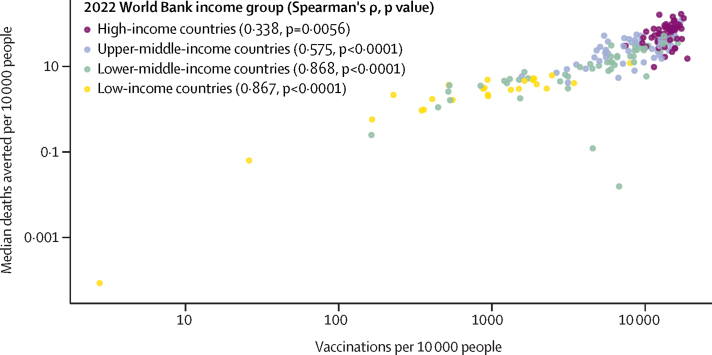
“Moreover, low-income counties have lower impacts due to the lower coverage of vaccine [10].”
Pandémies et antibiorésistance: Menaces sur la santé globale au temps de l’Anthropocène
Sansonetti, P. J. (2025) · médecine/sciences · doi:10.1051/medsci/2025127
Statistical Analysis of COVID-19 Vaccine Effectiveness:A Retrospective Study Based on Global Data
Xie, Z. (2025) · Transactions on Materials Biotechnology and Life Sciences · doi:10.62051/8b9wcy88
“This disparity has contributed to continued outbreaks and increased mortality in under-vaccinated regions, highlighting the urgent need for global vaccine distribution strategies [8].”
Dabilgou, A. A., Ouédraogo, É., Kyelem, J. M. A., Dravé, A., Wanré, O., Napon, C., & Millogo, A. (2025) · Journal of Neuroimmune Pharmacology · doi:10.1007/s11481-025-10249-8
Hammerschmidt, S. I., Jauregui, R. G., Barros‐Martins, J., et al. (2025) · medRxiv · doi:10.1101/2025.10.09.25337642
“In this context, we investigated the aerosol vaccination with an MVA-based COVID-19 vaccine candidate.”
InfluentialEfficacy and potential human and economic impact of a broadly protective betacoronavirus vaccinePreprint
Carnell, G., Vendramelli, R., Whittaker, C., Holbrook, J. A., Parthasarathy, S., Stewart, H., Olivier, J., Warner, B. M., Truong, T., George, C. L., et al. (2025) · medRxiv · doi:10.1101/2025.10.17.25338244
“…a previously published dynamical model of SARS-CoV-2 transmission used to evaluate and explore the impact of SARS-CoV-2 transmission on COVID-19 mortality during the pandemic 22,42 , and which has more recently been used to explore a range of different implementation strategies for a BPBV 43 .”
Fuller, J. (2025) · Oxford University Press eBooks · doi:10.1093/9780190066178.002.0004
Fuller, J. (2025) · Oxford University Press eBooks · doi:10.1093/9780190066178.003.0002
Medical Interventions and Risk
Fuller, J. (2025) · Oxford University Press eBooks · doi:10.1093/9780190066178.003.0009
Medical Evidence and Prediction
Fuller, J. (2025) · Oxford University Press eBooks · doi:10.1093/9780190066178.003.0008
The Nature of Chronic Diseases and Mental Disorders
Fuller, J. (2025) · Oxford University Press eBooks · doi:10.1093/9780190066178.003.0006
Fuller, J. (2025) · Oxford University Press eBooks · doi:10.1093/9780190066178.003.0011
Fuller, J. (2025) · Oxford University Press eBooks · doi:10.1093/9780190066178.003.0014
Causation and Classification of Disease
Fuller, J. (2025) · Oxford University Press eBooks · doi:10.1093/9780190066178.003.0005
Twenty-First-Century Medicine: Epidemiological, Personalized, or Postmodern?
Fuller, J. (2025) · Oxford University Press eBooks · doi:10.1093/9780190066178.003.0013
Theories of Contagion and Cancer
Fuller, J. (2025) · Oxford University Press eBooks · doi:10.1093/9780190066178.003.0003
Effect Measures and the Sufficient-Component Cause Model
Fuller, J. (2025) · Oxford University Press eBooks · doi:10.1093/9780190066178.005.0001
Fuller, J. (2025) · Oxford University Press eBooks · doi:10.1093/9780190066178.003.0010
Mahurkar, R. N., Bhave, K. A., Pandit, P. R., et al. (2025) · International Journal of Basic & Clinical Pharmacology · doi:10.18203/2319-2003.ijbcp20253382
Differential heterologous immunological effects induced by ChAdOx1-S and BNT162b2 COVID-19 vaccines
Dulfer, E. A., Geckin, B., Zoodsma, M., Helder, L. S., Li, W., van Crevel, R., van der Maat, J. S., Li, Y., Domínguez‐Andrés, J., & Netea, M. G. (2025) · Cellular Immunology · doi:10.1016/j.cellimm.2025.105038
Co-infection; A Neglected Health Condition in Northern Ghana in the Wake of COVID-19
Helegbe, G. K., Aryee, P. A., & Nyasulu, P. S. (2025) · Springer eBooks · doi:10.1007/978-981-95-0618-7_4
COVID-19 Vaccine and Mortality: Scoping Review with ☸️SAIMSARA
SAIMSARA (2025) · SAIMSARA Journal · doi:10.62487/saimsara047981e6
Ceolin, C., Liberati, V., Vergadoro, M., Simonato, C., Cazzavillan, S., Papa, M. V., Trapella, G. S., Marzio, B. D., Zanforlini, B. M., Curreri, C., et al. (2025) · Internal and Emergency Medicine · doi:10.1007/s11739-025-04178-w
(2025) · Elsevier eBooks · doi:10.1016/b978-0-443-29164-7.00012-1
Postinfection viral therapy to complement vaccinations against known and emerging viruses
Bakács, T., & Kovesdi, I. (2025) · Elsevier eBooks · doi:10.1016/b978-0-443-29164-7.00004-2
Using nonpathogenic picornaviruses to combat emerging viral infections
Kasman, L. M. (2025) · Elsevier eBooks · doi:10.1016/b978-0-443-29164-7.00003-0
The Current Status and Evolution of Vaccination Programs for Adults in Europe
Maltezou, H. C., Cassimos, D. C., & Medić, S. (2025) · Springer eBooks · doi:10.1007/978-3-032-04020-6_4
Bridging statistics and deep learning: a causal data-fusion framework for epidemic prediction
Papageorgiou, V. Ε., Πετμεζάς, Γ., Georgakis, A., Maglaveras, N., & Tsaklidis, G. M. (2025) · Communications in Statistics - Simulation and Computation · doi:10.1080/03610918.2025.2585395 · Cited by 1
Lu, M., Bu, Z., Xiang, N., & Yu, J. (2025) · PLoS ONE · doi:10.1371/journal.pone.0336698
“SARS-CoV-2 vaccinations were developed quickly, which was a turning point in the pandemic’s evolution and resulted in the saving of tens of millions of lives worldwide [1].”
Lokugamage, N., Choudhuri, S., Rayavara, K., Tseng, C.-T. K., Makino, S., & Garg, N. J. (2025) · Frontiers in Virology · doi:10.3389/fviro.2025.1691166
Carlson, N., Michalik, F., Gerds, T. A., Ballegaard, E. L. F., Jørgensen, M. B., Nelveg-Kristensen, K. E., Geldsetzer, P., Hornum, M., Feldt‐Rasmussen, B., & Torp-Pedersen, C. (2025) · Journal of General Internal Medicine · doi:10.1007/s11606-025-10033-7
The Importance of Demographic Data for Understanding the Covid-19 Pandemic
Hollingshaus, M., & Harris, E. (2023) · Emerald Group Publishing Limited eBooks · doi:10.1108/979-8-88730-348-220251005
Metadata
- Authors
- Watson, O. J., Barnsley, G., Toor, J., Hogan, A. B., Winskill, P., & Ghani, A. C.
- Affiliations
- Imperial College London (GB)
- Corresponding author
- Watson, Oliver J
- Venue
- The Lancet Infectious Diseases
- Publisher
- Elsevier BV
- Published
- 2022-09
- Volume
- 22
- Issue
- 9
- Pages
- 1293-1302
- ISSN
- 1473-3099 (ISSN-L)
- PMC
- PMC9225255
- OpenAlex
- W4283395367
- Semantic Scholar
- e048be45c9e0900c299d78c2cb327ce9afd77467
- Cited by
- 1,769
- References
- 26
- Citations by year
- 2026: 165 · 2025: 341 · 2024: 533 · 2023: 578 · 2022: 150
- FWCI
- 237.54
- Type
- journal article
- Language
- en
- Update notices
- erratum (2023-10-01)
- Open access
- hybrid
- doi.org
- Licence
- cc-by
- www.elsevier.com/tdm/userlicense/1.0/ (tdm)
- www.elsevier.com/legal/tdmrep-license (tdm)
- creativecommons.org/licenses/by/4.0/ (vor)
- Locations
- The Lancet Infectious Diseases (publishedVersion, cc-by)
- PubMed Central (publishedVersion, cc-by)
- PubMed (publishedVersion)
- LSHTM Research Online (London School of Hygiene and Tropical Medicine) (acceptedVersion)
- Spiral (Imperial College London) (submittedVersion, other-oa)
- Funders
- Bill and Melinda Gates Foundation
- GAVI Alliance
- National Institute for Health and Care Research
- Imperial College London
- Medical Research Council (MR/R015600/1, MC_PC_19012)
- Topics
- Physical Sciences › Mathematics › Modeling and Simulation › COVID-19 epidemiological studies
- Health Sciences › Medicine › Infectious Diseases › SARS-CoV-2 and COVID-19 Research
- Social Sciences › Health › Vaccine Coverage and Hesitancy
- Keywords
- COVID-19 vaccination, vaccine impact, COVID-19 mortality, excess mortality, mortality averted, COVAX, vaccine equity, low-income countries, mathematical transmission model, global health equity, SARS-CoV-2, advance market commitments
- MeSH terms
- COVID-19, COVID-19 Vaccines, Humans, Models, Theoretical, Vaccination, Vaccines, Global Health
About these checks
Registry, retraction, Cites and statistics results are computed, not judged, with one exception: a printed reference that no index lists is read once by a model before it counts as a citation error. Claims are extracted by a model and kept only when their quote appears verbatim in the text; each cited source is then checked, with a model’s help, for whether it says what the claim relies on. Those verdicts can be wrong — read the claim’s quote and the cited source before relying on one.
The claim verdicts this report counts are experimental: their accuracy is not yet measured.
A language model drew the claims from the paper on 2026-10-10, under version 3 of the claim definition (model deepseek-v4.1-flash, prompt extract-v3).
A second model labelled each claim on 2026-10-10 (model jev-1.13-20260917, definition revision gold-guideline-v0.2).
Cited sources are checked with a language model’s help (gpt-6-sol).
Statistics and arithmetic are recomputed, not judged.
Confidence bands are shown only for fields calibrated on our annotated test set. None is calibrated yet, so no band is shown.
What counts as a claim ›How we measure confidence ›How we check this ›
Are you an author, or do you see a problem with this page? Request a review
Data sources
Bibliographic data: Semantic Scholar, OpenAlex, Crossref.
Contains information from the Semantic Scholar Academic Graph Datasets, made available under the ODC Attribution License (ODC-BY 1.0).
Semantic Scholar’s data is described in: Kinney, R., et al. (2023). The Semantic Scholar Open Data Platform. arXiv:2301.10140.
