

Global impact of the first year of COVID-19 vaccination: a mathematical modelling study
Open accessThe DOI matches its Crossref record; 23 of the 26 references it cites were found in a registry or an index; 4 of the 8 sources its claims cite were checked for support.
Abstract
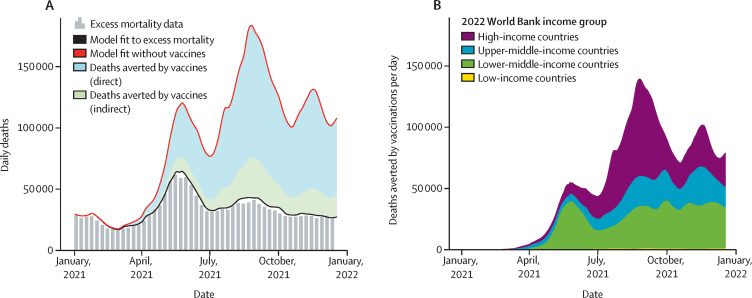
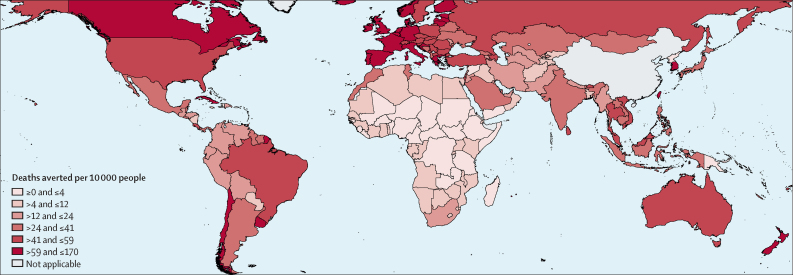
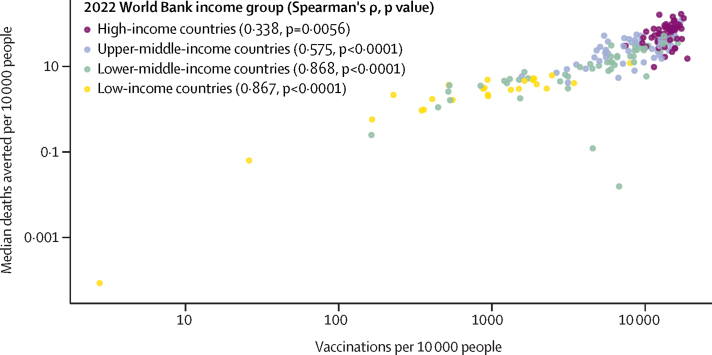
BACKGROUND: The first COVID-19 vaccine outside a clinical trial setting was administered on Dec 8, 2020. To ensure global vaccine equity, vaccine targets were set by the COVID-19 Vaccines Global Access (COVAX) Facility and WHO. However, due to vaccine shortfalls, these targets were not achieved by the end of 2021. We aimed to quantify the global impact of the first year of COVID-19 vaccination programmes. METHODS: A mathematical model of COVID-19 transmission and vaccination was separately fit to reported COVID-19 mortality and all-cause excess mortality in 185 countries and territories. The impact of COVID-19 vaccination programmes was determined by estimating the additional lives lost if no vaccines had been distributed. We also estimated the additional deaths that would have been averted had the vaccination coverage targets of 20% set by COVAX and 40% set by WHO been achieved by the end of 2021. FINDINGS: Based on official reported COVID-19 deaths, we estimated that vaccinations prevented 14·4 million (95% credible interval [Crl] 13·7-15·9) deaths from COVID-19 in 185 countries and territories between Dec 8, 2020, and Dec 8, 2021. This estimate rose to 19·8 million (95% Crl 19·1-20·4) deaths from COVID-19 averted when we used excess deaths as an estimate of the true extent of the pandemic, representing a global reduction of 63% in total deaths (19·8 million of 31·4 million) during the first year of COVID-19 vaccination. In COVAX Advance Market Commitment countries, we estimated that 41% of excess mortality (7·4 million [95% Crl 6·8-7·7] of 17·9 million deaths) was averted. In low-income countries, we estimated that an additional 45% (95% CrI 42-49) of deaths could have been averted had the 20% vaccination coverage target set by COVAX been met by each country, and that an additional 111% (105-118) of deaths could have been averted had the 40% target set by WHO been met by each country by the end of 2021. INTERPRETATION: COVID-19 vaccination has substantially altered the course of the pandemic, saving tens of millions of lives globally. However, inadequate access to vaccines in low-income countries has limited the impact in these settings, reinforcing the need for global vaccine equity and coverage. FUNDING: Schmidt Science Fellowship in partnership with the Rhodes Trust; WHO; UK Medical Research Council; Gavi, the Vaccine Alliance; Bill & Melinda Gates Foundation; National Institute for Health Research; and Community Jameel.
Overview
CoChat Summary
## TL;DR
This mathematical modelling study estimated that COVID-19 vaccination averted 14.4 million deaths based on reported deaths, or 19.8 million deaths when excess mortality was used, across 185 countries and territories during Dec 8, 2020–Dec 8, 2021. The paper argues that vaccine inequity limited impact in low-income settings and that reaching COVAX/WHO coverage targets could have saved substantially more lives.
## Key findings
- Using officially reported COVID-19 deaths, vaccination prevented 14.4 million deaths (95% CrI 13.7–15.9) in 185 countries and territories over the first year of vaccination.
- Using excess mortality, vaccination averted 19.8 million deaths (95% CrI 19.1–20.4), corresponding to a 63% reduction in total deaths (19.8 million of 31.4 million) during that year.
- In COVAX AMC countries, vaccinations averted 7.4 million deaths (95% CrI 6.8–7.7), representing 41% of estimated excess mortality (7.4 million of 17.9 million).
- If the WHO 40% target had been met in every country by the end of 2021, an additional 599,300 deaths (95% CrI 577,700–622,400) could have been averted; in low-income countries, meeting the COVAX 20% target could have averted an additional 45% of deaths, and the WHO 40% target an additional 111% of deaths.
## Methods
- The authors fit a previously published age-structured SEIRS transmission model with vaccination to reported COVID-19 mortality and to all-cause excess mortality in 185 countries and territories (excluding China), using country-level demography, mixing patterns, health-care capacity, and vaccination rollout data.
- Vaccination effects were modelled as protection against infection, severe disease, and onward transmission; the model also explicitly represented the delta variant and vaccine efficacy by country based on likely vaccine types used.
- They estimated deaths averted by comparing the fitted observed scenario against counterfactual scenarios with no vaccines, and with vaccines distributed to meet COVAX 20% and WHO 40% coverage targets by Dec 8, 2021, using Bayesian fitting with Metropolis-Hastings MCMC and 100 draws for uncertainty.
## Limitations
- The paper states that impact estimates were limited by uncertainty in excess mortality, gaps in genomic surveillance, and lack of detailed vaccination data for many countries; key inputs had to rely on working assumptions about vaccine type, rollout, and variant spread.
- The authors explicitly note a limitation of the COVAX/WHO target analysis: the targets were meant for the end of 2021, while the modelling endpoint was Dec 8, 2021, so some countries may have been closer to target by year-end than the model captured.
- Evident from the text: the counterfactual did not adjust for how governments or populations might have responded without vaccines, nor for possible changes in mobility, non-pharmaceutical interventions, or viral evolution, so the estimated deaths averted are model-dependent.
Model-written summary. Check it against the paper before relying on it.
Integrity signals
Registry
Cites
Statistics
Figures
Verification
Claims the paper makes
2 Valid · 2 Not valid · 4 Not checked · 48 Own results and interpretations
The cited sources that could be checked couldn’t confirm or dispute this claim.
In the paper
“In this analysis, we consequently focused on fitting to all-cause excess mortality, which provides a more complete description of the pandemic.15”
§ Global impact of the first year of COVID-19 vaccination: a mathematical modelling study > Discussion
What the sources say
- Could not verifycites [15] WHO Global excess deaths associated with COVID-19, January 2020–December 2021 https://www.who.int/data/stories/global-excess-deaths-associated-with-covid-19-january-2020-december-2021 May, 2022 sourceExperimental — accuracy not yet measured
The Methods (Statistical analysis) and Results examine hospital admission and emergency care attendance among people with delta versus alpha infections. The Discussion addresses limitations of those hospital-care data, but does not assess all-cause excess mortality or say that fitting to it gives a more complete description of the pandemic. Searches for “all-cause excess mortality” and “excess deaths” found no supporting passage; page numbers were not available in our copy. (LLM, conf=0.76)
plainstates a cause- Asserted: passes — The authors put it forward as true.
- Checkable: passes — It can be checked against evidence.
- Load-bearing: passes — The paper’s conclusions depend on it.
- Based: passes — The paper gives a reason why it holds.
- Could not verify
Every source the paper cites for this claim was checked and supports it.
In the paper
“Under-ascertainment of COVID-19 mortality is a known issue that has hindered our understanding of the pandemic.23”
§ Global impact of the first year of COVID-19 vaccination: a mathematical modelling study > Discussion
What the sources say
- Supportedcites [23] Whittaker C Walker PGT Alhaffar M Under-reporting of deaths limits our understanding of true burden of COVID-19 BMJ 375 2021 n2239 34642172 source
In “Renewed case for vaccine equity” (page unavailable), the paper calls it a myth that high-income countries were harder hit and shows that accounting for under-reporting changes the estimated share of COVID-19 mortality borne by low- and middle-income countries. This supports the claim that under-ascertainment has obscured understanding of the pandemic’s mortality burden. (LLM, conf=0.86)
boostedstates a cause- Asserted: passes — The authors put it forward as true.
- Checkable: passes — It can be checked against evidence.
- Load-bearing: passes — The paper’s conclusions depend on it.
- Based: passes — The paper gives a reason why it holds.
- Supported
The cited sources that could be checked couldn’t confirm or dispute this claim.
In the paper
“Our impact estimates were also limited by the inherent uncertainty in model-based estimates of excess mortality.13”
§ Global impact of the first year of COVID-19 vaccination: a mathematical modelling study > Discussion
What the sources say
- Could not verifycites [13] The Economist The pandemic's true death toll The Economist Nov 2, 2021 https://www.economist.com/graphic-detail/coronavirus-excess-deaths-estimates sourceExperimental — accuracy not yet measured
The Discussion describes limitations of estimates of vaccine effects on transmission, including testing behavior and previous infection status. A search for excess mortality, model-based mortality estimates, and deaths found no passage addressing uncertainty in excess-mortality estimates. Page numbers were not available in our copy. (LLM, conf=0.76)
plain- Asserted: passes — The authors put it forward as true.
- Checkable: passes — It can be checked against evidence.
- Load-bearing: unclear — It is unclear whether the paper’s conclusions depend on it.
- Based: passes — The paper gives a reason why it holds.
- Could not verify
The cited sources support only part of this claim — read each source’s verdict below.
In the paper
“Importantly, these estimates based on official reported COVID-19 deaths represent the lower bound of deaths averted at the global level due to the considerable levels of under-reporting of COVID-19 mortality documented worldwide.23”
§ Global impact of the first year of COVID-19 vaccination: a mathematical modelling study > Methods > Excess mortality and COVID-19 mortality data
What the sources say
- Partly supportedcites [23] Whittaker C Walker PGT Alhaffar M Under-reporting of deaths limits our understanding of true burden of COVID-19 BMJ 375 2021 n2239 34642172 sourceExperimental — accuracy not yet measured
In “Renewed case for vaccine equity” (page not provided), the paper says that under-reporting affects reported COVID-19 mortality and that excess-mortality estimates suggest a higher share of deaths in low- and middle-income countries. It also reports estimates of deaths that further vaccination could avert in those countries. It does not say that estimates based on officially reported deaths are a lower bound for deaths averted globally. (LLM, conf=0.83)
plainstates a cause- Asserted: passes — The authors put it forward as true.
- Checkable: passes — It can be checked against evidence.
- Load-bearing: passes — The paper’s conclusions depend on it.
- Based: passes — The paper gives a reason why it holds.
- Partly supported
A result the paper reports from its own data — it cites no other source for it, so there is none to check. The quote shows it is in the paper.
In the paper
“Notably, our model fits were unable to recreate excess mortality death tolls in recent epidemic waves in Iraq and Sudan because of the depletion of the susceptible population.”
§ Global impact of the first year of COVID-19 vaccination: a mathematical modelling study > Discussion
plainstates a cause- Asserted: passes — The authors put it forward as true.
- Checkable: passes — It can be checked against evidence.
- Load-bearing: unclear — It is unclear whether the paper’s conclusions depend on it.
- Based: passes — The paper gives a reason why it holds.
32 more claims
Create a free account to see all 56 claims and to verify the 3 references still open.
- It may state two separate claims as one. 14
- Probably not a substantial claim. 6
Claims other papers make about this one
Each is checked against this paper’s own text: does it say what the citing paper says it does?
The cited source says what the claim attributes to it.
In the citing paper
“Global COVID-19 vaccination programmes are estimated to have prevented 19.8 million deaths worldwide during the first year of roll-out(12)”
Citations
Cites
Estimated transmissibility and impact of SARS-CoV-2 lineage B.1.1.7 in England
Davies, N. G., Abbott, S., Barnard, R. C., Jarvis, C. I., Kucharski, A. J., Munday, J. D., Pearson, C. A. B., Russell, T. W., Tully, D. C., Washburne, A. D., et al. (2021) · Science · doi:10.1126/science.abg3055 · Cited by 2,581 · cited 1×
“20,21 Any epidemiological differences associated with previous variants were assumed to be reflected by their effects on mortality, 22 which were subsequently captured by the estimated R t trend.”
Estimated transmissibility and impact of SARS-CoV-2 lineage B.1.1.7 in England
Davies, N. G., Abbott, S., Barnard, R. C., Jarvis, C. I., Kucharski, A. J., Munday, J. D., Pearson, C. A. B., Russell, T. W., Tully, D. C., Washburne, A. D., et al. (2020) · doi:10.1101/2020.12.24.20248822 · Cited by 2,557
Wang, H., Paulson, K. R., Pease, S. A., Watson, S., Comfort, H., Zheng, P., Aravkin, A. Y., Bisignano, C., Barber, R. M., Alam, T., et al. (2022) · The Lancet · doi:10.1016/s0140-6736(21)02796-3 · Cited by 2,069
Wouters, O. J., Shadlen, K. C., Salcher-Konrad, M., Pollard, A. J., Larson, H. J., Teerawattananon, Y., & Jit, M. (2021) · The Lancet · doi:10.1016/s0140-6736(21)00306-8 · Cited by 1,288
Walker, P. G. T., Whittaker, C., Watson, O. J., Baguelin, M., Winskill, P., Hamlet, A., Djafaara, B. A., Cucunubá, Z., Olivera Mesa, D., Green, W., et al. (2020) · Science · doi:10.1126/science.abc0035 · Cited by 993
Self-citationTwohig, K. A., Nyberg, T., Zaidi, A., Thelwall, S., Sinnathamby, M. A., Aliabadi, S., Seaman, S. R., Harris, R. J., Hope, R., Lopez-Bernal, J., et al. (2022) · The Lancet Infectious Diseases · doi:10.1016/s1473-3099(21)00475-8 · Cited by 803 · cited 1×
“20,21 Any epidemiological differences associated with previous variants were assumed to be reflected by their effects on mortality, 22 which were subsequently captured by the estimated R t trend.”
Karlinsky, A., & Kobak, D. (2021) · eLife · doi:10.7554/elife.69336 · Cited by 772 · cited 1×
“11 Robust vital registration systems do not exist in many parts of the world, with WHO estimating that 40% of global deaths that occurred in 2020 were unregistered, 12 and therefore data on excess mortality are not available for every country.”
Understanding COVID-19 vaccine hesitancy
Machingaidze, S., & Wiysonge, C. S. (2021) · Nature Medicine · doi:10.1038/s41591-021-01459-7 · Cited by 590 · cited 1×
“7 This considerable heterogeneity in vaccination coverage has resulted in continued reliance on non-pharmaceutical interventions for pandemic management in some countries 8 but concomitantly enabled other nations to relax interventions as a route out of the pandemic.”
Twohig, K. A., Nyberg, T., Zaidi, A., Thelwall, S., Sinnathamby, M., Aliabadi, S., Seaman, S. R., Harris, R., Hope, R., Bernal, J. L., et al. (2021) · Northumbria Research Link (Northumbria University) · doi:10.17863/cam.76294 · Cited by 514
Effect of Covid-19 Vaccination on Transmission of Alpha and Delta Variants
Eyre, D. W., Taylor, D., Purver, M., Chapman, D., Fowler, T., Pouwels, K. B., Walker, A. S., & Peto, T. E. A. (2022) · New England Journal of Medicine · doi:10.1056/nejmoa2116597 · Cited by 464 · cited 2×
“19 We inferred vaccine efficacy for each country on the basis of vaccine types known to be predominantly used in each country.”
Cited by
Items 1,201–1,300 of 1,777
Šorli, S. (2023) · Preprints.org · doi:10.20944/preprints202304.0161.v1
Research on Covid-19 Vaccines’ Effectiveness is not using Appropriate Scientific MethodsPreprint
Šorli, A. (2023) · doi:10.32388/1vsx7z · Cited by 1
Capacity Analysis and Determinants of the Global Covid-19 Vaccine Distribution ProcessPreprint
Hegde, S. J., Ng, M. T. M., Rios, M. C. D. S. S., et al. (2023) · Research Square · doi:10.21203/rs.3.rs-2877405/v1 · Cited by 1
Więcek, W., Johnston, D., Dulka, T., Toomey, D., & Lewis, E. (2023) · medRxiv · doi:10.1101/2023.06.16.23291442 · Cited by 2
Ganser, I., Buckeridge, D. L., Heffernan, J. M., et al. (2023) · SSRN Electronic Journal · doi:10.2139/ssrn.4488069 · Cited by 1
Ortiz, A. M., & Nasri, B. (2023) · medRxiv · doi:10.1101/2023.08.04.23293662 · Cited by 1
“Although it has been estimated that so far COVID-19 vaccines have been able to prevent millions of deaths worldwide 9 , their implementation has faced multiple challenges across the world.”
An Assessment of Averted Mortality Modeling in the Context of COVID-19 VaccinesPreprint
Halma, M. T. J., Ahmed-Man, R., Plothe, C., & Šorli, A. (2023) · Preprints.org · doi:10.20944/preprints202309.0463.v1
Gampoy, E. F. S., Galula, J. U., Salem, G. M., et al. (2023) · SSRN Electronic Journal · doi:10.2139/ssrn.4574745 · Cited by 1
Inferring vaccine efficacy and mode of action from human challenge studiesPreprint
Miura, F., Klinkenberg, D., Ainslie, K. E. C., Backer, J. A., Leung, K. Y., McDonald, S., de Boer, P., & Wallinga, J. (2023) · medRxiv · doi:10.1101/2023.09.24.23296054 · Cited by 1
“Vaccination programmes for COVID-19 were a successful example of showing the effectiveness of speedy development of vaccines and their early implementations 4 .”
BackgroundJoffe, A. R., Kazemi, P., Eappen, R., & Milburn, C. (2023) · Preprints.org · doi:10.20944/preprints202310.1271.v1 · Cited by 1
Martin, R. (2023) · Preprints.org · doi:10.20944/preprints202312.0408.v1 · Cited by 1
Societal Factors Constraining the Control of COVID-19 and Mosquito and Tick-Borne DiseasesPreprint
Ramasamy, R. (2024) · Preprints.org · doi:10.20944/preprints202401.1971.v1 · Cited by 1
Garg, R., Liu, Q., van Kessel, J., et al. (2024) · SSRN Electronic Journal · doi:10.2139/ssrn.4793115 · Cited by 1
COVID-19 vaccination atlas: an integrative systems vaccinology approachPreprint
Prates-Syed, W. A., Fonseca, D. L. M., Pour, S. Z., Schimke, L. F., Lira, A. A. D. L., Côrtes, N., Silva, J. D. Q., Carvalho, E., Filgueiras, I. S., Vinces, T. G. C., et al. (2024) · medRxiv · doi:10.1101/2024.05.22.24307755 · Cited by 1
COVID-19 Vaccine Equity, Distribution, and Cases in Global and Non-Global South CountriesPreprint
Melesse, T. M., Nguyen, T. D., & Kassa, G. M. (2024) · Research Square · doi:10.21203/rs.3.rs-4402129/v1 · Cited by 1
Role of Vaccination on the Co-Infection Model with COVID-19 Associated with DiabetesPreprint
Hye, M. A., Biswas, M. H. A., & Uddin, M. F. (2024) · Preprints.org · doi:10.20944/preprints202406.1320.v1 · Cited by 1
Lin, L., Demirhan, H., & Stone, L. (2024) · SSRN Electronic Journal · doi:10.2139/ssrn.4940607 · Cited by 1
Olurotimi, S. A., Zaidat, M. A., Anthonia, I. F., Abdullahi, A., James, A. B., Sabdat, E., Oluwatosin, O., Idigbe, I. E., Olusola, A., Altaf, M., et al. (2024) · medRxiv · doi:10.1101/2024.11.21.24317533 · Cited by 1
Preface to the Revised (2024) Edition
Reddy, Y. V., Ray, P., & Chakraborty, P. (2024) · doi:10.1093/9780198934288.002.0005 · Cited by 1
Taefehshokr, N., Mertens, B., Beheshti, I., et al. (2024) · medRxiv · doi:10.1101/2024.12.28.24319727 · Cited by 1
“We trained the Prophet model using reported data from January 2020 to January 2021 [21] (https://github.com/mrc-ide/covid-vaccine-impact-orderly) and predicted the pattern of daily deaths for 100 days after the political decision in January 2021 (Figure 3B).”
Tsoleridis, T., Fan, C., Park, E. J., Duncan, J. D., Sharma, P., Wartnaby, S., Chappell, J. G., Kipar, A., Bentley, E. G., Kirby, A., et al. (2025) · bioRxiv (Cold Spring Harbor Laboratory) · doi:10.1101/2025.01.03.631215 · Cited by 1
Editorial: Building public confidence in innovative mRNA vaccines
Hu, J., Rabin, K. H., Constantinescu, C., et al. (2025) · Frontiers in Public Health · doi:10.3389/fpubh.2025.1557596 · Cited by 1
Sahoo, D. P. (2025) · Cureus · doi:10.7759/cureus.82121 · Cited by 1
Benjamin, H., Barnsley, G., Watson, O. J., & Jit, M. (2026) · PLoS Medicine · doi:10.1101/2025.09.02.25334932 · Cited by 2
“25 Differences are also due to the regression approach used in Sevilla et al., compared to the compartmental transmission model used by Watson et al. 1 Despite the health impact difference, Sevilla et al. estimated that COVID-19 vaccines generated $5.2 trillion in value in health gains and GDP impact, similar to our e…”
InfluentialSelf-citationCryptic spread of SARS-CoV-2 undermined targeted travel restrictions
Gangavarapu, P., Abdo, J., Parker, E., Zeller, M., Robles‐Sikisaka, R., Kurzban, E., Perkins, S. A., Schwab, M. A., Nguyen, K., McGraw, M., et al. (2026) · Genome Medicine · doi:10.1101/2025.08.29.25334701 · Cited by 1
Farzana, S., Rossi, F. M., Allen, K., et al. (2025) · SSRN Electronic Journal · doi:10.2139/ssrn.5641750 · Cited by 1
Nande, A., Larsen, S. L., Turtle, J., Davis, J. T., Bandekar, S. R., Lewis, B. L., Chen, S., Contamin, L., Jung, S.-M., Howerton, E., et al. (2026) · medRxiv · doi:10.64898/2026.04.07.26349269 · Cited by 1
Prodigios del escapulario del Carmen
López-Melús, R. M. (2000) · Dialnet (Universidad de la Rioja)
Aizenman, J., Cukierman, A., Jinjarak, Y., Nair-Desai, S., & Xin, W. (2022) · National Bureau of Economic Research · doi:10.3386/w29778 · Cited by 1
Olaiya, T. A. (2022) · Research Square · doi:10.21203/rs.3.rs-1797608/v1
COVID-19 Vaccinations, Business Activity, and Firm ValuePreprint
Bizjak, J. M., Kalpathy, S. L., Mihov, V. T., et al. (2022) · SSRN Electronic Journal · doi:10.2139/ssrn.4170990
COVID-19 Vaccines and Myopericarditis: A Nuanced Story
Jacobs, M., & Kalogeropoulos, A. P. (2022) · Journal of Personalized Medicine · doi:10.3390/jpm12081242
“8 million lives saved [1], as well as a safe one, with an estimated serious adverse event (SAE) rate of less than 0.”
BackgroundA Pedagogy of COVID-19: Facts from 30 Pandemic Months
Roccetti, M. (2022) · AHFE international · doi:10.54941/ahfe1002788
“If we want, just for a while, to get into the estimations, we should cite a study (Watson et al., 2022) whose main finding is that vaccinations prevented 14,4 million deaths in 185 countries, in the period December 8 2020 - December 8 2021 (with a 95% credible interval, 13,7–15,9).”
BA.5 and Monkeypox: A wakeup call for public health in Pakistan
Islam, M. B., Jawed, S., & Zeeshan, M. H. (2022) · Annals of Medicine and Surgery · doi:10.1016/j.amsu.2022.104413
“According to a study, there was a worldwide decrease in 63% of total death after the first year of covid vaccination which emphasizes the need for efficient vaccine administration [9] Additionally, Awareness of the signs and symptoms among the locals needs to be reinforced for timely”
BackgroundOutcomes of COVID-19 in Children After Wide Distribution of COVID Vaccine, Albaha, Saudi Arabia
Almawazini, A. M., Alghamdi, A. O., Alsharkawy, A. A., Sehemi, M. A. A., Alghamdi, M., Alghamdi, N. A., Alghamdi, K. M., Alsakka, L. M., Alghmadi, N. A., Almawazini, H. A., et al. (2022) · Journal of Health and Medical Sciences · doi:10.31014/aior.1994.05.03.229
COVID-19: lições de uma pandemia
Silva, W. D. S., & Barreto, D. P. S. (2022) · Brazilian Journal of Health Review · doi:10.34119/bjhrv5n4-228
Moore, K. A., Osterholm, M. T., Lackritz, E., & Poland, G. A. (2022) · Vaccine · doi:10.1016/j.vaccine.2022.08.071 · Cited by 1
“The global scientific community responded with remarkable speed and efficiency to create vaccines against SARS-CoV-2 in an unprecedented cooperative effort, which prevented an estimated 20 million deaths during the first year of the pandemic [11].”
COVID-19 Therapeutics: Improvise—Adapt—Learn
Abraham, J., Palaiodimos, L., & Arora, S. (2022) · Journal of Clinical Medicine · doi:10.3390/jcm11185312
Morena, D., Fazio, N. D., Delogu, G., et al. (2022) · Medico-Legal Journal · doi:10.1177/00258172221118409
Navigating Uncharted Waters: Could Certain COVID-19 Vaccines Promote Malignancy?Preprint
Angues, R. V., & Bustos, Y. P. (2022) · Authorea · doi:10.22541/au.166358581.18921295/v1
Four-wheel-drive immune protection
Heinrich, F., & Krasemann, S. (2022) · Signal Transduction and Targeted Therapy · doi:10.1038/s41392-022-01180-y
Kitajima, T., Funauchi, A., Nakajima, T., Marumo, S., Imura, Y., & Fukui, M. (2022) · The Journal of Rheumatology · doi:10.3899/jrheum.220777
Aerosol‐generating procedures: research, guidance and implementation
Harrison, S., Davies, E. A., & Shelton, C. (2022) · Anaesthesia · doi:10.1111/anae.15878
“The UK vaccination programme is modelled to have prevented an additional 427,900 deaths by the end of 2021 [17, 18].”
BackgroundKuo, T., Lien, C.-E., Lin, Y., Lin, M., Liu, L. T.-C., Wu, C.-C., Tang, W.-H., & Chen, C. (2022) · bioRxiv (Cold Spring Harbor Laboratory) · doi:10.1101/2022.10.07.511263
“8 million deaths from the disease in 185 countries and territories [1].”
BackgroundArinaminpathy, N., Reed, C., Biggerstaff, M., Nguyen, A., Athni, T. S., Arnold, B. F., Hubbard, A., Colford, J. M., Reingold, A. L., & Benjamin‐Chung, J. (2022) · medRxiv · doi:10.1101/2022.10.08.22280870
Macrophage Boolean networks in the time of SARS-CoV-2
de León, U. A.-P., & Reséndis-Antonio, O. (2022) · Frontiers in Immunology · doi:10.3389/fimmu.2022.997434
Lu, Q., Schulz, P. J., & Chang, A. (2022) · doi:10.2196/preprints.43625
Garza‐Castillon, R., & Bharat, A. (2022) · Current Opinion in Anaesthesiology · doi:10.1097/aco.0000000000001203
Marques, J. V. M., Ferreira, J. R. D. O., Veras, R. D. M. S., Araújo, F. H. D., Filho, A. O. D. C., & Silva, R. (2022) · Research Square · doi:10.21203/rs.3.rs-2227469/v1
Rapid onset of chronic urticaria after Moderna COVID-19 booster vaccinePreprint
Duperrex, O., Tommasini, F., & Müller, Y. D. (2022) · medRxiv · doi:10.1101/2022.11.03.22281730
Evaluation of the impact of the COVID-19 pandemic on nursesPreprint
Irmak, B., Gedık, H., & Yaşar, K. K. (2022) · Qeios · doi:10.32388/8sfn4p
“On the other hand, vaccines prevent fatal outcomes and reduce disease-related mortality in people who were at great risk due to advanced age and comorbid conditions [25].”
Zahra, A., Luijken, K., Abbink, E. J., et al. (2022) · Research Square · doi:10.21203/rs.3.rs-2258662/v1
The Need to Vaccinate Against COVID-19
Sim, T. C. (2022) · Journal of Medicine University of Santo Tomas · doi:10.35460/2546-1621.2022-0058
“[4] The researchers concluded that 600,000 more deaths could have been prevented if international immunization targets of 40% had been met by the end of 2021.”
BackgroundCappell, M. S. (2022) · Gastroenterology Clinics of North America · doi:10.1016/j.gtc.2022.12.004
Tracking the COVID-19 vaccine equity, distribution, and cases in the global southPreprint
Melesse, T. M., Nguyen, T. D., & Kassa, G. M. (2022) · medRxiv · doi:10.1101/2022.12.19.22283681
“Furthermore, a study that has been published in The Lancet Infectious Disease finds that if no vaccines had been distributed, an estimated number of 20 million lives will be lost in the first year (Watson et al. 2022).”
BackgroundMonkeypox Post COVID19: Knowledge, Worrying, and Vaccine Adoption of the Arabic General PopulationPreprint
Swed, S., Bohsas, H., Alibrahim, H., Rakab, A., Hafez, W., Sawaf, B., Rais, M. A., Motawei, A. S., Aljabali, A. S., shoib, S., et al. (2022) · medRxiv · doi:10.1101/2022.12.20.22283750
Tanrıverdi, M., & Gündoğdu, N. (2022) · Kocaeli Medical Journal · doi:10.5505/ktd.2022.93546
COVID-19 vaccination: Hesitancy, side effects and Homoeopathy
Kaushik, S. (2022) · Indian Journal of Research in Homoeopathy · doi:10.53945/2320-7094.1315
The Last Mile Problem—Coronavirus Disease 2019 Vaccine Coverage Among the Most Socially Vulnerable
Titanji, B. K. (2023) · Clinical Infectious Diseases · doi:10.1093/cid/ciad006
Factors influencing COVID-19 vaccine uptake among Nigerians: evidence from a national surveyPreprint
Ojo, T. O., Ojo, A. O., Olajumoke Elizabeth, O. J. O., et al. (2023) · Research Square · doi:10.21203/rs.3.rs-2443795/v1
Kyprianidou, M., Fakonti, G., Toumbis, G., & Giannakou, K. (2023) · Human Vaccines & Immunotherapeutics · doi:10.1080/21645515.2023.2171674
“Vaccination is an important public health initiative and a critical step in controlling the COVID-19 pandemic.(4) Currently, seven vaccines received marketing authorization by the European Medicines Agency (EMA), with the first vaccine receiving conditional marketing authorization in December 2020 and the most recent…”
BackgroundGlobal health and global governance of emerging biomedical technologies
Cwik, B. (2023) · Journal of Medical Ethics · doi:10.1136/jme-2022-108673
(2022) · American Public Health Association eBooks · doi:10.2105/9780875533339ch08
Andrade, M. M. D. S. (2022) · Digital Library of Theses and Dissertations (Universidade de São Paulo) · doi:10.11606/d.5.2022.tde-16022023-171516
Overview of COVID-19 mortality in Zoram Medical College, Mizoram: A hospital-based study
Laltlanzovi, C., Vankhuma, C., Vanlalduhsaki, et al. (2023) · Journal of Family Medicine and Primary Care · doi:10.4103/jfmpc.jfmpc_1251_22
“,[15] the estimated deaths averted in the first year of COVID‐19 vaccination worldwide based on fits to excess mortality in the South‐East Asian region was 31.”
BackgroundPraveen, S. V., Boby, R., Shaji, R., Chandran, D., Hussein, N. R., Ahmed, S. K., Akash, S., & Dhama, K. (2023) · Journal of Pure and Applied Microbiology · doi:10.22207/jpam.17.1.45 · Cited by 1
State-Level Excess Mortality in US Adults During the Delta and Omicron Waves of COVID-19Preprint
Renton, B., Du, C., Chen, A. J., et al. (2023) · medRxiv · doi:10.1101/2023.03.07.23286933
Impacto de la COVID-19 en la salud mental en el Perú
Feijoo, J. F. R. (2023) · Revista Iberoamericana de Bioética · doi:10.14422/rib.i21.y2023.004 · Cited by 12
Siewert, S., Kieslich, K., Braun, M., et al. (2023) · SpringerBriefs in philosophy · doi:10.1007/978-3-031-16004-2_1
Zamora, J. I., López-Martínez, M., Patricio-Liébana, M., León-Román, J. C., Bermejo, S., Vergara, A., Agraz, I., Ramos-Terrades, N., Azancot, M. A., Toapanta, N., et al. (2023) · Journal of Clinical Medicine · doi:10.3390/jcm12062420 · Cited by 1
“4 million deaths, representing a global reduction in mortality of 79% in the first year after vaccination [1].”
BackgroundProfiles of People Who Carried Out Late Primary Vaccination against COVID-19 in the Region of Murcia
Bernal-Alonso, A., Gómez-Moreno, M. C., Moreno, M. Z., et al. (2023) · Vaccines · doi:10.3390/vaccines11040732
“8 million lives all over the world and 456,200 lives in Spain [1].”
BackgroundInfluentialAnalyzing the impact of vaccinations and weather factors on the COVID-19 pandemic
Iloanusi, O. N., Iloanusi, N. I., & Ross, A. A. (2023) · Current Medical Research and Opinion · doi:10.1080/03007995.2023.2197493
“Since a bi-month set of data for a country has, say, 1 April–30 April 2021 and 1 April–30 April 2022, with eleven (11) months of data in-between missing, a scatter plot of these data would be polarized on both extremes of the x-axis.”
BackgroundLuisetto, M., Almukhtar, N., Edbey, K., et al. (2023) · International Journal of Advanced Research in Science Communication and Technology · doi:10.48175/ijarsct-9082
Nainu, F., Frediansyah, A., Salim, E., Chandran, D., Dhama, K., Rabaan, A. A., Harapan, H., & Emran, T. B. (2023) · Annals of Medicine and Surgery · doi:10.1097/ms9.0000000000000555 · Cited by 1
Legesse, T. K. (2023) · Ethiopian Journal of Health Sciences · doi:10.4314/ejhs.v33i2.22
“Since the introduction of the COVID-19 pandemic, there was rapid dissemination of the pandemic until the wide implementation of safety measures and the recent introduction of COVID vaccine which has resulted marked decline in both transmission and mortality (1-3).”
Public Health Strategies to Mitigate the Next Pandemic
Surana, R. (2022) · Journal of Student Research · doi:10.47611/jsrhs.v11i4.3801 · Cited by 2
Impactos do movimento antivacina frente ao combate da pandemia de COVID-19 no Brasil
Ferreira, F. C., Silveira, M. B., Teixeira, F. A. O., et al. (2023) · Research Society and Development · doi:10.33448/rsd-v12i5.41374
Liu, G. G., Yan, L. L., & Xu, M. Y. (2023) · Springer eBooks · doi:10.1007/978-981-19-9450-0_1
Revision des German Index of Socioeconomic Deprivation (GISD)
(2023) · Das Gesundheitswesen · doi:10.1055/a-2035-7576
Ipsilateral Upper-Limb Lymphedema After COVID-19 Vaccine Booster: Reply
Tang, C. Y. L., & Chua, W. M. (2023) · Clinical Nuclear Medicine · doi:10.1097/rlu.0000000000004741
Newly Diagnosed Systemic Lupus Erythematosus after Sars-Cov-2 Vaccination: Coincidental or Relevant?Preprint
Wu, Y. (2023) · SSRN Electronic Journal · doi:10.2139/ssrn.4468414
Ifakara MasterClasses: lessons from leading experts on the battle against malaria
Ciubotariu, I. I., Monroe, A. C., Williams, N. A., Ogoma, S. B., & Okumu, F. O. (2023) · Trends in Parasitology · doi:10.1016/j.pt.2023.05.008 · Cited by 1
COVID-19: révisionnisme associé au confinement
Murdoch, B., & Caulfield, T. (2023) · Canadian Medical Association Journal · doi:10.1503/cmaj.221543-f
India Unburdening the Pandemic: Jabs and Talks
Basu, E., Raj, M. P., & Krishnamurthy, V. (2023) · Cureus · doi:10.7759/cureus.40991
“These adequately signify the impact of COVID-19 on the worsening mental health among HCWs and its burden.”
BackgroundInfluentialTuite, A. R., Ng, V., Ximenes, R., Diener, A., Rafferty, E., Ogden, N. H., & Tunis, M. C. (2023) · Relevé des maladies transmissibles au Canada · doi:10.14745/ccdr.v49i06a03f
Becker, G., Ranta, E. K., Shah, R., Reyes, V., Sutphin, H. D., & Stoner, A. M. (2023) · International Journal of Medical Students · doi:10.5195/ijms.2023.2061 · Cited by 1
Khanna, R., Padhy, D., Mettla, A. L., Bhargava, A., Sharma, S., & Jalali, S. (2023) · Indian Journal of Ophthalmology · doi:10.4103/ijo.ijo_414_23
Anti‐SARS‐CoV ‐2 mRNA vaccines, their efficiency, side effects and controversies
Kuśnierczyk, P. (2023) · Scandinavian Journal of Immunology · doi:10.1111/sji.13310 · Cited by 2
Malik, F., Kalimuddin, M., Ishraquzzaman, M., Mamun, M. A. A., Dutta, A., Rahman, M. H., Kanungo, S., Laila, N., Chowdhury, M. S., & Choudhury, S. R. (2023) · Bangladesh Heart Journal · doi:10.3329/bhj.v38i1.67189
La vacunación contra COVID-19. Desarrollo y perspectivas
Cabrera, J. L., & Benavides, A. G. (2023) · Interciencia médica · doi:10.56838/icmed.v13i2.141
A Population Level Study on the Determinants of COVID-19 Vaccine Hesitancy at the U.S. County LevelPreprint
Dong, E., Nixon, K., & Gardner, L. (2023) · medRxiv · doi:10.1101/2023.07.12.23292582
Decline of COVID-19 Pandemic: Impacts of Vaccination in Brazil
da Hora, H. S., Fonseca, L. M. D. S., & Machado, B. A. S. (2023) · Journal of Bioengineering, Technologies and Health · doi:10.34178/jbth.v6i2.299
Ng, D.-L.-C., Jamalludin, M. A. B., Gan, X.-Y., et al. (2023) · Research Square · doi:10.21203/rs.3.rs-3149389/v1
Perlman, S. M., & Denison, M. R. (2023) · Elsevier eBooks · doi:10.1016/b978-0-323-79058-1.00017-7 · Cited by 3
A New Mindset about the Vaccination Allocation
Luo, G., Yan, J., & Guo, Y. (2022) · International Conference on Universal Village (UV) · doi:10.1109/uv56588.2022.10185482
“∗Corresponding author best way to characterize the variation [2] and reduce the prediction error as much as possible among the data using various type of functions.”
BackgroundGoodman, T., Desai, S. N., & Walldorf, J. A. (2023) · Elsevier eBooks · doi:10.1016/b978-0-323-99967-0.00043-0
Saraswati, P. (2023) · International Journal of Psychiatric Nursing · doi:10.37506/ijpn.v9i2.19607
Metadata
- Authors
- Watson, O. J., Barnsley, G., Toor, J., Hogan, A. B., Winskill, P., & Ghani, A. C.
- Affiliations
- Imperial College London (GB)
- Corresponding author
- Watson, Oliver J
- Venue
- The Lancet Infectious Diseases
- Publisher
- Elsevier BV
- Published
- 2022-09
- Volume
- 22
- Issue
- 9
- Pages
- 1293-1302
- ISSN
- 1473-3099 (ISSN-L)
- PMC
- PMC9225255
- OpenAlex
- W4283395367
- Semantic Scholar
- e048be45c9e0900c299d78c2cb327ce9afd77467
- Cited by
- 1,769
- References
- 26
- Citations by year
- 2026: 165 · 2025: 341 · 2024: 533 · 2023: 578 · 2022: 150
- FWCI
- 237.54
- Type
- journal article
- Language
- en
- Update notices
- erratum (2023-10-01)
- Open access
- hybrid
- doi.org
- Licence
- cc-by
- www.elsevier.com/tdm/userlicense/1.0/ (tdm)
- www.elsevier.com/legal/tdmrep-license (tdm)
- creativecommons.org/licenses/by/4.0/ (vor)
- Locations
- The Lancet Infectious Diseases (publishedVersion, cc-by)
- PubMed Central (publishedVersion, cc-by)
- PubMed (publishedVersion)
- LSHTM Research Online (London School of Hygiene and Tropical Medicine) (acceptedVersion)
- Spiral (Imperial College London) (submittedVersion, other-oa)
- Funders
- Bill and Melinda Gates Foundation
- GAVI Alliance
- National Institute for Health and Care Research
- Imperial College London
- Medical Research Council (MR/R015600/1, MC_PC_19012)
- Topics
- Physical Sciences › Mathematics › Modeling and Simulation › COVID-19 epidemiological studies
- Health Sciences › Medicine › Infectious Diseases › SARS-CoV-2 and COVID-19 Research
- Social Sciences › Health › Vaccine Coverage and Hesitancy
- Keywords
- COVID-19 vaccination, vaccine impact, COVID-19 mortality, excess mortality, mortality averted, COVAX, vaccine equity, low-income countries, mathematical transmission model, global health equity, SARS-CoV-2, advance market commitments
- MeSH terms
- COVID-19, COVID-19 Vaccines, Humans, Models, Theoretical, Vaccination, Vaccines, Global Health
About these checks
Registry, retraction, Cites and statistics results are computed, not judged, with one exception: a printed reference that no index lists is read once by a model before it counts as a citation error. Claims are extracted by a model and kept only when their quote appears verbatim in the text; each cited source is then checked, with a model’s help, for whether it says what the claim relies on. Those verdicts can be wrong — read the claim’s quote and the cited source before relying on one.
The claim verdicts this report counts are experimental: their accuracy is not yet measured.
A language model drew the claims from the paper on 2026-10-10, under version 3 of the claim definition (model deepseek-v4.1-flash, prompt extract-v3).
A second model labelled each claim on 2026-10-10 (model jev-1.13-20260917, definition revision gold-guideline-v0.2).
Cited sources are checked with a language model’s help (gpt-6-sol).
Statistics and arithmetic are recomputed, not judged.
Confidence bands are shown only for fields calibrated on our annotated test set. None is calibrated yet, so no band is shown.
What counts as a claim ›How we measure confidence ›How we check this ›
Are you an author, or do you see a problem with this page? Request a review
Data sources
Bibliographic data: Semantic Scholar, OpenAlex, Crossref.
Contains information from the Semantic Scholar Academic Graph Datasets, made available under the ODC Attribution License (ODC-BY 1.0).
Semantic Scholar’s data is described in: Kinney, R., et al. (2023). The Semantic Scholar Open Data Platform. arXiv:2301.10140.
