

Global impact of the first year of COVID-19 vaccination: a mathematical modelling study
Open accessThe DOI matches its Crossref record; 23 of the 26 references it cites were found in a registry or an index; 4 of the 8 sources its claims cite were checked for support.
Abstract
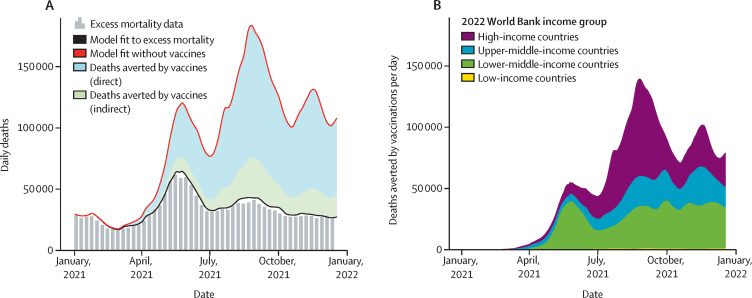
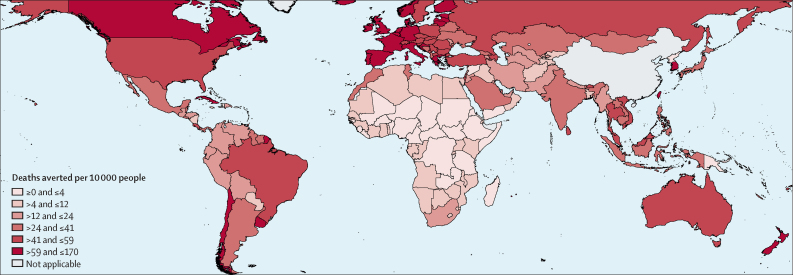
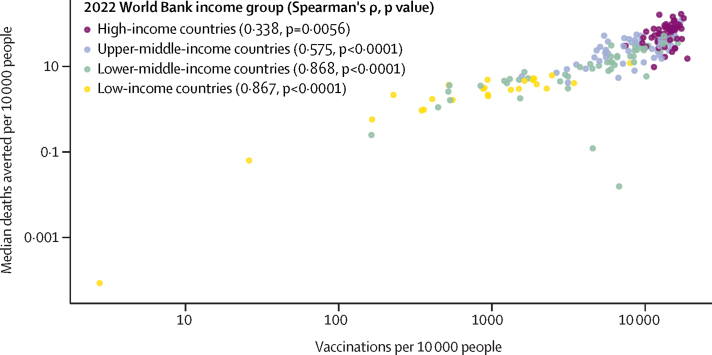
BACKGROUND: The first COVID-19 vaccine outside a clinical trial setting was administered on Dec 8, 2020. To ensure global vaccine equity, vaccine targets were set by the COVID-19 Vaccines Global Access (COVAX) Facility and WHO. However, due to vaccine shortfalls, these targets were not achieved by the end of 2021. We aimed to quantify the global impact of the first year of COVID-19 vaccination programmes. METHODS: A mathematical model of COVID-19 transmission and vaccination was separately fit to reported COVID-19 mortality and all-cause excess mortality in 185 countries and territories. The impact of COVID-19 vaccination programmes was determined by estimating the additional lives lost if no vaccines had been distributed. We also estimated the additional deaths that would have been averted had the vaccination coverage targets of 20% set by COVAX and 40% set by WHO been achieved by the end of 2021. FINDINGS: Based on official reported COVID-19 deaths, we estimated that vaccinations prevented 14·4 million (95% credible interval [Crl] 13·7-15·9) deaths from COVID-19 in 185 countries and territories between Dec 8, 2020, and Dec 8, 2021. This estimate rose to 19·8 million (95% Crl 19·1-20·4) deaths from COVID-19 averted when we used excess deaths as an estimate of the true extent of the pandemic, representing a global reduction of 63% in total deaths (19·8 million of 31·4 million) during the first year of COVID-19 vaccination. In COVAX Advance Market Commitment countries, we estimated that 41% of excess mortality (7·4 million [95% Crl 6·8-7·7] of 17·9 million deaths) was averted. In low-income countries, we estimated that an additional 45% (95% CrI 42-49) of deaths could have been averted had the 20% vaccination coverage target set by COVAX been met by each country, and that an additional 111% (105-118) of deaths could have been averted had the 40% target set by WHO been met by each country by the end of 2021. INTERPRETATION: COVID-19 vaccination has substantially altered the course of the pandemic, saving tens of millions of lives globally. However, inadequate access to vaccines in low-income countries has limited the impact in these settings, reinforcing the need for global vaccine equity and coverage. FUNDING: Schmidt Science Fellowship in partnership with the Rhodes Trust; WHO; UK Medical Research Council; Gavi, the Vaccine Alliance; Bill & Melinda Gates Foundation; National Institute for Health Research; and Community Jameel.
Overview
CoChat Summary
## TL;DR
This mathematical modelling study estimated that COVID-19 vaccination averted 14.4 million deaths based on reported deaths, or 19.8 million deaths when excess mortality was used, across 185 countries and territories during Dec 8, 2020–Dec 8, 2021. The paper argues that vaccine inequity limited impact in low-income settings and that reaching COVAX/WHO coverage targets could have saved substantially more lives.
## Key findings
- Using officially reported COVID-19 deaths, vaccination prevented 14.4 million deaths (95% CrI 13.7–15.9) in 185 countries and territories over the first year of vaccination.
- Using excess mortality, vaccination averted 19.8 million deaths (95% CrI 19.1–20.4), corresponding to a 63% reduction in total deaths (19.8 million of 31.4 million) during that year.
- In COVAX AMC countries, vaccinations averted 7.4 million deaths (95% CrI 6.8–7.7), representing 41% of estimated excess mortality (7.4 million of 17.9 million).
- If the WHO 40% target had been met in every country by the end of 2021, an additional 599,300 deaths (95% CrI 577,700–622,400) could have been averted; in low-income countries, meeting the COVAX 20% target could have averted an additional 45% of deaths, and the WHO 40% target an additional 111% of deaths.
## Methods
- The authors fit a previously published age-structured SEIRS transmission model with vaccination to reported COVID-19 mortality and to all-cause excess mortality in 185 countries and territories (excluding China), using country-level demography, mixing patterns, health-care capacity, and vaccination rollout data.
- Vaccination effects were modelled as protection against infection, severe disease, and onward transmission; the model also explicitly represented the delta variant and vaccine efficacy by country based on likely vaccine types used.
- They estimated deaths averted by comparing the fitted observed scenario against counterfactual scenarios with no vaccines, and with vaccines distributed to meet COVAX 20% and WHO 40% coverage targets by Dec 8, 2021, using Bayesian fitting with Metropolis-Hastings MCMC and 100 draws for uncertainty.
## Limitations
- The paper states that impact estimates were limited by uncertainty in excess mortality, gaps in genomic surveillance, and lack of detailed vaccination data for many countries; key inputs had to rely on working assumptions about vaccine type, rollout, and variant spread.
- The authors explicitly note a limitation of the COVAX/WHO target analysis: the targets were meant for the end of 2021, while the modelling endpoint was Dec 8, 2021, so some countries may have been closer to target by year-end than the model captured.
- Evident from the text: the counterfactual did not adjust for how governments or populations might have responded without vaccines, nor for possible changes in mobility, non-pharmaceutical interventions, or viral evolution, so the estimated deaths averted are model-dependent.
Model-written summary. Check it against the paper before relying on it.
Integrity signals
Registry
Cites
Statistics
Figures
Verification
Claims the paper makes
2 Valid · 2 Not valid · 4 Not checked · 48 Own results and interpretations
The cited sources that could be checked couldn’t confirm or dispute this claim.
In the paper
“In this analysis, we consequently focused on fitting to all-cause excess mortality, which provides a more complete description of the pandemic.15”
§ Global impact of the first year of COVID-19 vaccination: a mathematical modelling study > Discussion
What the sources say
- Could not verifycites [15] WHO Global excess deaths associated with COVID-19, January 2020–December 2021 https://www.who.int/data/stories/global-excess-deaths-associated-with-covid-19-january-2020-december-2021 May, 2022 sourceExperimental — accuracy not yet measured
The Methods (Statistical analysis) and Results examine hospital admission and emergency care attendance among people with delta versus alpha infections. The Discussion addresses limitations of those hospital-care data, but does not assess all-cause excess mortality or say that fitting to it gives a more complete description of the pandemic. Searches for “all-cause excess mortality” and “excess deaths” found no supporting passage; page numbers were not available in our copy. (LLM, conf=0.76)
plainstates a cause- Asserted: passes — The authors put it forward as true.
- Checkable: passes — It can be checked against evidence.
- Load-bearing: passes — The paper’s conclusions depend on it.
- Based: passes — The paper gives a reason why it holds.
- Could not verify
Every source the paper cites for this claim was checked and supports it.
In the paper
“Under-ascertainment of COVID-19 mortality is a known issue that has hindered our understanding of the pandemic.23”
§ Global impact of the first year of COVID-19 vaccination: a mathematical modelling study > Discussion
What the sources say
- Supportedcites [23] Whittaker C Walker PGT Alhaffar M Under-reporting of deaths limits our understanding of true burden of COVID-19 BMJ 375 2021 n2239 34642172 source
In “Renewed case for vaccine equity” (page unavailable), the paper calls it a myth that high-income countries were harder hit and shows that accounting for under-reporting changes the estimated share of COVID-19 mortality borne by low- and middle-income countries. This supports the claim that under-ascertainment has obscured understanding of the pandemic’s mortality burden. (LLM, conf=0.86)
boostedstates a cause- Asserted: passes — The authors put it forward as true.
- Checkable: passes — It can be checked against evidence.
- Load-bearing: passes — The paper’s conclusions depend on it.
- Based: passes — The paper gives a reason why it holds.
- Supported
The cited sources that could be checked couldn’t confirm or dispute this claim.
In the paper
“Our impact estimates were also limited by the inherent uncertainty in model-based estimates of excess mortality.13”
§ Global impact of the first year of COVID-19 vaccination: a mathematical modelling study > Discussion
What the sources say
- Could not verifycites [13] The Economist The pandemic's true death toll The Economist Nov 2, 2021 https://www.economist.com/graphic-detail/coronavirus-excess-deaths-estimates sourceExperimental — accuracy not yet measured
The Discussion describes limitations of estimates of vaccine effects on transmission, including testing behavior and previous infection status. A search for excess mortality, model-based mortality estimates, and deaths found no passage addressing uncertainty in excess-mortality estimates. Page numbers were not available in our copy. (LLM, conf=0.76)
plain- Asserted: passes — The authors put it forward as true.
- Checkable: passes — It can be checked against evidence.
- Load-bearing: unclear — It is unclear whether the paper’s conclusions depend on it.
- Based: passes — The paper gives a reason why it holds.
- Could not verify
The cited sources support only part of this claim — read each source’s verdict below.
In the paper
“Importantly, these estimates based on official reported COVID-19 deaths represent the lower bound of deaths averted at the global level due to the considerable levels of under-reporting of COVID-19 mortality documented worldwide.23”
§ Global impact of the first year of COVID-19 vaccination: a mathematical modelling study > Methods > Excess mortality and COVID-19 mortality data
What the sources say
- Partly supportedcites [23] Whittaker C Walker PGT Alhaffar M Under-reporting of deaths limits our understanding of true burden of COVID-19 BMJ 375 2021 n2239 34642172 sourceExperimental — accuracy not yet measured
In “Renewed case for vaccine equity” (page not provided), the paper says that under-reporting affects reported COVID-19 mortality and that excess-mortality estimates suggest a higher share of deaths in low- and middle-income countries. It also reports estimates of deaths that further vaccination could avert in those countries. It does not say that estimates based on officially reported deaths are a lower bound for deaths averted globally. (LLM, conf=0.83)
plainstates a cause- Asserted: passes — The authors put it forward as true.
- Checkable: passes — It can be checked against evidence.
- Load-bearing: passes — The paper’s conclusions depend on it.
- Based: passes — The paper gives a reason why it holds.
- Partly supported
A result the paper reports from its own data — it cites no other source for it, so there is none to check. The quote shows it is in the paper.
In the paper
“Notably, our model fits were unable to recreate excess mortality death tolls in recent epidemic waves in Iraq and Sudan because of the depletion of the susceptible population.”
§ Global impact of the first year of COVID-19 vaccination: a mathematical modelling study > Discussion
plainstates a cause- Asserted: passes — The authors put it forward as true.
- Checkable: passes — It can be checked against evidence.
- Load-bearing: unclear — It is unclear whether the paper’s conclusions depend on it.
- Based: passes — The paper gives a reason why it holds.
32 more claims
Create a free account to see all 56 claims and to verify the 3 references still open.
- It may state two separate claims as one. 14
- Probably not a substantial claim. 6
Claims other papers make about this one
Each is checked against this paper’s own text: does it say what the citing paper says it does?
The cited source says what the claim attributes to it.
In the citing paper
“Global COVID-19 vaccination programmes are estimated to have prevented 19.8 million deaths worldwide during the first year of roll-out(12)”
Citations
Cites
Estimated transmissibility and impact of SARS-CoV-2 lineage B.1.1.7 in England
Davies, N. G., Abbott, S., Barnard, R. C., Jarvis, C. I., Kucharski, A. J., Munday, J. D., Pearson, C. A. B., Russell, T. W., Tully, D. C., Washburne, A. D., et al. (2021) · Science · doi:10.1126/science.abg3055 · Cited by 2,581 · cited 1×
“20,21 Any epidemiological differences associated with previous variants were assumed to be reflected by their effects on mortality, 22 which were subsequently captured by the estimated R t trend.”
Estimated transmissibility and impact of SARS-CoV-2 lineage B.1.1.7 in England
Davies, N. G., Abbott, S., Barnard, R. C., Jarvis, C. I., Kucharski, A. J., Munday, J. D., Pearson, C. A. B., Russell, T. W., Tully, D. C., Washburne, A. D., et al. (2020) · doi:10.1101/2020.12.24.20248822 · Cited by 2,557
Wang, H., Paulson, K. R., Pease, S. A., Watson, S., Comfort, H., Zheng, P., Aravkin, A. Y., Bisignano, C., Barber, R. M., Alam, T., et al. (2022) · The Lancet · doi:10.1016/s0140-6736(21)02796-3 · Cited by 2,069
Wouters, O. J., Shadlen, K. C., Salcher-Konrad, M., Pollard, A. J., Larson, H. J., Teerawattananon, Y., & Jit, M. (2021) · The Lancet · doi:10.1016/s0140-6736(21)00306-8 · Cited by 1,288
Walker, P. G. T., Whittaker, C., Watson, O. J., Baguelin, M., Winskill, P., Hamlet, A., Djafaara, B. A., Cucunubá, Z., Olivera Mesa, D., Green, W., et al. (2020) · Science · doi:10.1126/science.abc0035 · Cited by 993
Self-citationTwohig, K. A., Nyberg, T., Zaidi, A., Thelwall, S., Sinnathamby, M. A., Aliabadi, S., Seaman, S. R., Harris, R. J., Hope, R., Lopez-Bernal, J., et al. (2022) · The Lancet Infectious Diseases · doi:10.1016/s1473-3099(21)00475-8 · Cited by 803 · cited 1×
“20,21 Any epidemiological differences associated with previous variants were assumed to be reflected by their effects on mortality, 22 which were subsequently captured by the estimated R t trend.”
Karlinsky, A., & Kobak, D. (2021) · eLife · doi:10.7554/elife.69336 · Cited by 772 · cited 1×
“11 Robust vital registration systems do not exist in many parts of the world, with WHO estimating that 40% of global deaths that occurred in 2020 were unregistered, 12 and therefore data on excess mortality are not available for every country.”
Understanding COVID-19 vaccine hesitancy
Machingaidze, S., & Wiysonge, C. S. (2021) · Nature Medicine · doi:10.1038/s41591-021-01459-7 · Cited by 590 · cited 1×
“7 This considerable heterogeneity in vaccination coverage has resulted in continued reliance on non-pharmaceutical interventions for pandemic management in some countries 8 but concomitantly enabled other nations to relax interventions as a route out of the pandemic.”
Twohig, K. A., Nyberg, T., Zaidi, A., Thelwall, S., Sinnathamby, M., Aliabadi, S., Seaman, S. R., Harris, R., Hope, R., Bernal, J. L., et al. (2021) · Northumbria Research Link (Northumbria University) · doi:10.17863/cam.76294 · Cited by 514
Effect of Covid-19 Vaccination on Transmission of Alpha and Delta Variants
Eyre, D. W., Taylor, D., Purver, M., Chapman, D., Fowler, T., Pouwels, K. B., Walker, A. S., & Peto, T. E. A. (2022) · New England Journal of Medicine · doi:10.1056/nejmoa2116597 · Cited by 464 · cited 2×
“19 We inferred vaccine efficacy for each country on the basis of vaccine types known to be predominantly used in each country.”
Cited by
Items 1,101–1,200 of 1,777
Seq2Seq Surrogates of Epidemic Models to Facilitate Bayesian Inference
Charles, G. D., Wolock, T. M., Winskill, P., Ghani, A. C., Bhatt, S., & Flaxman, S. R. (2023) · Proceedings of the AAAI Conference on Artificial Intelligence · doi:10.1609/aaai.v37i12.26658 · Cited by 7
Self-citationAteş, İ., Batırel, A. A., Aydın, M., Karadağ, F. Y., Erden, A., Küçükşahin, O., Armağan, B., Güven, S. C., Karakaş, Ö., Gökdemir, S., et al. (2023) · Vaccines · doi:10.3390/vaccines11071234 · Cited by 2
“Despite the significant number of deaths, the rapid development of COVID-19 vaccines reduced human-to-human transmission of infection and decelerated disease spread, resulting in millions of lives saved worldwide [3].”
BackgroundPashameah, R. A., Soltane, R., & Sayed, A. M. (2023) · International Journal of Biological Macromolecules · doi:10.1016/j.ijbiomac.2023.125818 · Cited by 2
Agsornwong, K., Morasert, T., Limsommut, K., Nitikaroon, P., Akaraborworn, O., Srisompong, J., Deesiri, D., Chuencharoensuk, K., Sangnak, K., Chierakul, N., et al. (2023) · Journal of Health Science and Medical Research · doi:10.31584/jhsmr.2023975 · Cited by 2
Renton, B., Du, C., Chen, A. J., Li, S., Lin, Z., Krumholz, H. M., & Faust, J. S. (2023) · Journal of General Internal Medicine · doi:10.1007/s11606-023-08374-2 · Cited by 1
Correlates of COVID-19 Vaccine Uptake in Black Adults Residing in Allegheny County, PA
Hill, A. V., Dyer, H. P., Gianakas, J. J., Howze, R., King, A. A., Gary‐Webb, T. L., & Méndez, D. D. (2023) · Health Equity · doi:10.1089/heq.2022.0215 · Cited by 1
Clarke, P., & Leigh, A. (2023) · BMJ Global Health · doi:10.1136/bmjgh-2023-013595 · Cited by 1
The impact of vaccinations and chronic disease on COVID death rates
Doti, J. L. (2023) · Journal of Bioeconomics · doi:10.1007/s10818-023-09339-5 · Cited by 1
Rethinking Knowledge in Global Health
Besson, E. K., & Pai, M. (2023) · Sustainable development goals series · doi:10.1007/978-3-031-33851-9_79 · Cited by 3
Hwang, E. (2023) · Applied Mathematical Modelling · doi:10.1016/j.apm.2023.09.004 · Cited by 1
Galvão-Lima, L. J., de Medeiros, N. F., Jesus, G. S., de Morais, A. H. F., Caldeira-Silva, G. J. P., dos Santos, J. P. Q., Rocha, M., dos Santos, M. M., Freire, P. A., Silva, R. D., et al. (2023) · IJID Regions · doi:10.1016/j.ijregi.2023.09.007 · Cited by 1
Immunogenicity of ChAdOx1 (Covishield) Booster Dose in Healthcare Providers: A Pre-Post Study
Meher, T., Pradhan, S. K., Hatei, S. P., Majhi, S. C., Panda, A., Mund, S. R., & Mishra, S. K. (2023) · Cureus · doi:10.7759/cureus.46370 · Cited by 1
Implementation of Vaccination in an Epidemic Model for COVID-19
Rao, Y. S. (2023) · Studies in computational intelligence · doi:10.1007/978-981-99-5001-0_10 · Cited by 1
Velez, A. P., Handley, G. H., Morison, A., et al. (2023) · Cancer Control · doi:10.1177/10732748231205864 · Cited by 1
“The development of vaccines may be attributed to the most significant mortality reduction in high-risk patients.(14) However, managing immunosuppressed patients remains challenging, particularly in patients not responding to remdesivir plus dexamethasone.”
BackgroundChopra, A., Rodríguez, A., Prakash, A., Raskar, R., & Kingsley, T. (2023) · Vaccine · doi:10.1016/j.vaccine.2023.08.060 · Cited by 6
“After one year of vaccine availability, less than half of the global population was vaccinated to COVID-19 [4].”
BackgroundJungbluth, S., Martin, W., Slezak, M., et al. (2023) · F1000Research · doi:10.12688/f1000research.141399.1 · Cited by 1
“The DALY decrease linked to vaccination can be anticipated to be in proportion to the ratio of deaths prevented to total projected deaths as modelled (Watson et al. , 2022) (72% in first year of vaccination accounting for vaccination coverage and efficacy).”
BackgroundFuture Pandemic Could Be Worse
Moyenuddin, M. (2023) · Infectious Diseases in Clinical Practice · doi:10.1097/ipc.0000000000001330 · Cited by 1
Nurmansyah, M. I., Samsudin, M. A., Listiowati, E., Nurjuman, H., Wulandari, Y., Asmawati, W. O., & Soularto, D. S. (2023) · World Medical & Health Policy · doi:10.1002/wmh3.592 · Cited by 3
Measuring mortality arising from the Covid-19 pandemic and the impact of vaccination
Anderson, R. M. (2023) · European Journal of Epidemiology · doi:10.1007/s10654-023-01066-5 · Cited by 1
“Based on a mathematical model-based analysis, a recent study suggested that the first year of Covid-19 vaccination, saved 17.9 million lives globally (estimates were based on model calculations of excess mortality) [5].”
MethodInfluentialAutumn 2023 SARS-CoV-2 immunization: Who should be vaccinated and how?
Llop, F. A. M., & Campins, M. (2023) · Vacunas (English Edition) · doi:10.1016/j.vacune.2023.10.003 · Cited by 1
Dors, J. B., Maestri, E., Galvan, A. C. L., Candido, T. F. S., Arisi, G. D. S. A., Soresina, L. J., Friestino, J. K. O., & Bitencourt, J. V. D. O. V. (2023) · Revista Foco · doi:10.54751/revistafoco.v16n11-049 · Cited by 1
Ávila‐Nieto, C., Vergara‐Alert, J., Amengual-Rigo, P., Ainsua‐Enrich, E., Brustolin, M., de la Concepción, M. L. R., Pedreño-López, N., Rodon, J., Urrea, V., Pradenas, E., et al. (2023) · Frontiers in Immunology · doi:10.3389/fimmu.2023.1291972 · Cited by 2
“To date, several COVID-19 vaccines are available and have contributed to the reduction of COVID-19 impact on public health[5,6].”
BackgroundLópez, D., & García-Peydró, M. (2023) · Biomedicines · doi:10.3390/biomedicines12010062 · Cited by 2
“The rapid development and distribution (at least in high-income countries) of these vaccines prevented the overwhelming number of infections and deaths from COVID-19 from being much higher [4–6].”
BackgroundAlmidani, L., Swenor, B. K., Ehrlich, J. R., & Varadaraj, V. (2024) · Ophthalmic Epidemiology · doi:10.1080/09286586.2023.2301587 · Cited by 1
de León, U. A.-P., Pérez, Á. G. C., & Avila-Vales, E. J. (2024) · Electronic Research Archive · doi:10.3934/era.2024053 · Cited by 1
“Vaccines against COVID-19 have become the best strategy to decrease hospitalizations and deaths caused by this virus [42], and Mexico is not the exception.”
BackgroundAssociation between Covid-19 Vaccines and Anxiety
Alsayed, R. H., Alsayed, O., Alnemari, S., Al-Towairqi, R., Alharthi, H. S., Alosaimi, F. S., Ismail, A. A., & Alnefaie, G. (2024) · Journal of Neurology and Experimental Neural Science · doi:10.29011/2577-1442.100051 · Cited by 1
Henin, D., Fappani, C., Carmagnola, D., et al. (2024) · Journal of Global Health · doi:10.7189/jogh.14.05004 · Cited by 1
“Watson et al. [32] estimated that vaccinations prevented 14.4 million deaths in 185 countries and territories between December 2022 and December 2021.”
BackgroundResultInfluentialHigh-Content Imaging-Based Assay for SARS-CoV-2-Neutralizing Antibodies
Rocha, V. P. C., Machado, B. A. S., Quadros, H. C., Fernandes, A. M. S., Fiuza, B. S. D., Meira, C. S., da Silva, V. T. B., Evangelista, A. F., Fonseca, L. M. D. S., Badaró, R. J. D. S., et al. (2024) · Vaccines · doi:10.3390/vaccines12030236 · Cited by 1
Challenges and Opportunities for Twenty First Century Bayesian Econometricians: A Personal View
van Dijk, H. K. (2024) · Studies in Nonlinear Dynamics and Econometrics · doi:10.1515/snde-2024-0003 · Cited by 1
Mugobera, N., Malasa, L., Amour, D., Fataki, M. R., Rutachunzibwa, F., & Kalabamu, F. S. (2024) · Global Journal of Health Science · doi:10.5539/gjhs.v16n4p13 · Cited by 1
“Furthermore, mathematical models have shown that effective use of COVID-19 vaccines averted around 14.4 millions deaths in several countries within one year of deployment (Watson et al., 2022).”
BackgroundInfluentialSARS-CoV-2-Specific Immune Responses in Vaccination and Infection during the Pandemic in 2020–2022
Inoue, W., Kimura, Y., Okamoto, S., Nogimori, T., Sakaguchi‐Mikami, A., Yamamoto, T., & Tsunetsugu‐Yokota, Y. (2024) · Viruses · doi:10.3390/v16030446
“Thus, although the natural infection appears to link to a lower incidence of SARS-CoV-2 infection than mRNA primary series vaccination [11], the reinfection frequently occurs after vaccinations and even after natural infections, probably associated with continuous virus mutations [7,8,10,12].”
BackgroundGoepfert, P. (2024) · Journal of Clinical Investigation · doi:10.1172/jci179149 · Cited by 1
Pandemic lessons learned and future public health strategies
Sutton, B. A. (2024) · Microbiology Australia · doi:10.1071/ma24011 · Cited by 1
Preclinical and clinical development for vaccines and formulations
Dave, S., & Patel, B. M. (2024) · Elsevier eBooks · doi:10.1016/b978-0-443-18564-9.00016-3 · Cited by 1
He, S., Zhou, W., Wang, X., & Tang, S. (2024) · Computational and Applied Mathematics · doi:10.1007/s40314-024-02658-x · Cited by 1
Alba-Cano, T., Fernández‐Cruz, E., Alonso, R., Muñoz-Gómez, S., de Diego, R. P., Martínez, E. G., Sánchez‐Mateos, P., Caspistegui, J. N., López, M. M., & Gil-Herrera, J. (2024) · Vaccines · doi:10.3390/vaccines12040386 · Cited by 1
“Vaccines against SARS-CoV-2 have been the most effective measure against the COVID-19 pandemic [1,2].”
BackgroundHolm, R. H., Rempała, G. A., Choi, B., Brick, J. M., Amraotkar, A. R., Keith, R. J., Rouchka, E. C., Chariker, J. H., Palmer, K. E., Smith, T., et al. (2024) · Communications Medicine · doi:10.1038/s43856-024-00494-y · Cited by 1
Menghini, G. M., Thurnheer, R., Kahlert, C. R., Kohler, P. P., Grässli, F., Stocker, R. A., Battegay, M., & Vuichard‐Gysin, D. (2024) · Swiss Medical Weekly · doi:10.57187/s.3708 · Cited by 1
Carnalla, M., Stern, D., Colchero, M. A., et al. (2024) · Vaccine · doi:10.1016/j.vaccine.2024.04.004 · Cited by 1
Sebbagh, A., Bencheriet, C. E., & Kechida, S. (2024) · IEEE Access · doi:10.1109/access.2024.3395544 · Cited by 3
“In studies like [13], [14], and [15], authors examine the impact of vaccination campaigns and shed light on the development of the epidemic in various countries, with particular emphasis on developing nations.”
BackgroundHayek, S., Levy, J., Shaham, G., Dagan, N., Serby, D., Duskin-Bitan, H., Yarden, A., Ferreira, C., Livnat, I., Dube, S., et al. (2024) · Infectious Diseases and Therapy · doi:10.1007/s40121-024-00981-8 · Cited by 2
Vieira, M. S., Beatrici, N. Z., Alexandrini, I. F., et al. (2024) · Revista Pró-UniverSUS · doi:10.21727/rpu.v15i1.3679 · Cited by 1
An Age of Disruption for European HE
Lohse, A. P. (2024) · Springer eBooks · doi:10.1007/978-3-031-57912-7_3 · Cited by 1
Letalidad por Covid-19 en indígenas y no indígenas en México, 2020 y 2022
Serrano-Avilés, T., Becerril, J. G. G., & Cenobio-García, F. D. J. (2024) · Papeles de Población · doi:10.22185/24487147.2023.116.14 · Cited by 1
COVID-19 in the Arab countries: Three-year study
Alwahaibi, N., Maskari, M. A., Al‐Jaaidi, S., Dhahli, B. A., Issaei, H. A., & Bahlani, S. A. (2024) · F1000Research · doi:10.12688/f1000research.142541.3 · Cited by 3
Atwongyeire, D., Tegegne, A. A., Ndenzako, F., et al. (2024) · BMC Infectious Diseases · doi:10.1186/s12879-024-09371-4 · Cited by 1
Tailoring COVID-19 Vaccination Strategies in High-Seroprevalence Settings: Insights from Ethiopia
Gudina, E. K., Elsbernd, K., Yilma, D., Kisch, R., Wallrafen-Sam, K., Abebe, G., Mekonnen, Z., Berhane, M., Gerbaba, M. J., Suleman, S., et al. (2024) · Vaccines · doi:10.3390/vaccines12070745 · Cited by 2
“More than three years since the approval of the vaccines, only around 39% of people living in Africa have received at least one dose [11], primarily due to limited access to the vaccines [2] and vaccine hesitancy [12].”
COVID-19 vaccination prevents venous thrombosis in patients with SARS-CoV-2 infection and thereafter
Lippi, G., & Favaloro, E. J. (2024) · Blood Coagulation & Fibrinolysis · doi:10.1097/mbc.0000000000001310 · Cited by 1
Post-COVID syndrome: Clinical pattern and impact on health related quality of life
El-Abdeen, A. Z., Shaaban, L. H., Attia, M. M., & Khaleel, W. G. E. (2024) · Egyptian Journal of Chest Diseases and Tuberculosis · doi:10.4103/ecdt.ecdt_6_24 · Cited by 2
Reported risk factors for COVID-19 infection in healthcare workers: A systematic review
Ferreira, W. B., de Souza, M. B. C. A., da Silva, C. A. A., et al. (2024) · Safety Science · doi:10.1016/j.ssci.2024.106615 · Cited by 1
Park, M.-B., & Lee, J.-H. (2024) · Archives of Medical Science · doi:10.5114/aoms/191563 · Cited by 1
“…the United States have reported lower incidence and mortality rates in areas with high vaccination coverage [37, 38], but the effectiveness of vaccines is limited or altered owing to different cultures, medical systems, vaccination rates, and inadequate vaccine systems in developing countries [39].”
Incidence of narcolepsy symptoms after taking COVID-19 vaccines: a Jordanian cross-sectional study
Katatbeh, M. A., Al-Mashakbeh, Y., Freihat, H., Gharam, H., Mohammad, R., Aldalki, R., Eid, S. S., Sharman, R., Heissat, N., Al-Samarraie, G., et al. (2024) · Clinical and Experimental Vaccine Research · doi:10.7774/cevr.2024.13.3.218 · Cited by 1
Spanehl, L., Walter, U., Thiele, T., et al. (2024) · Journal of Clinical Medicine · doi:10.3390/jcm13164778 · Cited by 1
“While overall, these vaccinations saved millions of lives [2], a rare but serious complication that has been reported almost exclusively after administration of the adenoviral vaccines from AstraZeneca-Oxford and Johnson & Johnson is vaccine-induced immune thrombotic thrombocytopenia and thrombosis…”
BackgroundImpactos da vacinação na morbimortalidade por COVID-19 entre pessoas idosas
Poli, P., Ribeiro, A. C., & Uehara, S. C. D. S. A. (2024) · Rev Rene · doi:10.15253/2175-6783.20242593302 · Cited by 2
Robust immune response to COVID-19 vaccination in the island population of Greenland
Møller, M., Friis-Hansen, L. J., Kirkby, N. S., Dilling-Hansen, C., Andersson, M., Vedsted, P., Mølbak, K., & Koch, A. (2024) · Communications Medicine · doi:10.1038/s43856-024-00602-y · Cited by 1
Ghannam, Y. P. (2024) · Advances in business strategy and competitive advantage book series · doi:10.4018/979-8-3693-9168-6.ch004 · Cited by 1
Castro, P. Á. D. S., Vegas, C. D. P., Arribas, L. T. P., et al. (2024) · Scientific Reports · doi:10.1038/s41598-024-73664-6 · Cited by 1
Baldovin, T., Leoni, D., Geppini, R., et al. (2024) · Vaccines · doi:10.3390/vaccines12101172 · Cited by 1
“During the COVID-19 pandemic, the early and widespread distribution of anti-SARS-CoV-2 vaccines showed its paramount importance in reducing COVID-19 mortality among the general population [24].”
BackgroundMöckel, M., Pudasaini, S., Le, N. H., Huscher, D., Holert, F., Hillus, D., Tober-Lau, P., Kurth, F., & Sander, L. E. (2024) · Frontiers in Cardiovascular Medicine · doi:10.3389/fcvm.2024.1435038 · Cited by 2
Gandhi, A. P., Thakur, J., Gupta, M., et al. (2024) · The Indian Journal of Medical Research · doi:10.25259/ijmr_1014_2024 · Cited by 1
Abuyadek, R. M., ElHafeez, S. A., Tahoun, M. M., Othman, S. S., Omran, A., Fathy, N., & Ghazy, R. M. (2024) · Journal of the Egyptian Public Health Association · doi:10.1186/s42506-024-00174-8 · Cited by 2
“A study using mathematical modelling estimated that COVID-19 vaccination has saved 14.4 million lives worldwide [8].”
InfluentialFiscal Implications and Central Banking
Reddy, Y. V., Ray, P., & Chakraborty, P. (2024) · doi:10.1093/9780198934288.003.0010 · Cited by 1
Design and rationale of the COVID vaccine-associated myocarditis/pericarditis (CAMP) study
Truong, D. T., Harty, B. J., Bainton, J., Baker, A., Bradford, T. T., Cai, B., Coleman, J., de Luise, C., Dionne, A., Friedman, K. G., et al. (2024) · American Heart Journal · doi:10.1016/j.ahj.2024.11.008 · Cited by 2
The Impact of Vaccination on COVID-19 Outcomes in Vietnam
Nguyen, N.-L. T., Nguyen, H. T. T., Le, V. Q., et al. (2024) · Diagnostics · doi:10.3390/diagnostics14242850 · Cited by 1
“One year after the outbreak, the availability of approved vaccines had alleviated the pandemic by successfully preventing COVID-19 propagation in society and effectively reducing the severity and mortality in hospitalized patients [7–9].”
Grimes, D. R. (2024) · Vaccine · doi:10.1016/j.vaccine.2024.126657 · Cited by 1
Bennett, N. C., Bambra, C. L., Sinclair, D. R., Todd, A., & Matthews, F. E. (2025) · BMJ Open · doi:10.1136/bmjopen-2024-085195 · Cited by 1
Morens, D. M., & Kang, G. (2025) · doi:10.1093/oso/9780197687420.003.0011 · Cited by 1
Behavioural Public Health? Experts’ Biases and Responses to Pandemics
Galizzi, M. M. (2024) · Cambridge University Press eBooks · doi:10.1017/9781009438438.015 · Cited by 1
Debie, Y., Garcia-Fogeda, I., Willem, L., Roelant, E., Verbruggen, L., Vanhoutte, G., Croes, L., Vulsteke, C., Demey, W., Lybaert, W., et al. (2025) · Scientific Reports · doi:10.1038/s41598-025-92254-8 · Cited by 3
“Several studies also indicated reduced vaccine efficacy against Omicron compared to the wild type Wuhan-1 variant, leading to an increased number of breakthrough infections 9,10,19,44 .”
Rashid, T., Arefin, S., Bhattacharjee, M., & Islam, M. A. (2025) · BMC Infectious Diseases · doi:10.1186/s12879-025-10734-8 · Cited by 1
COVID-19 vaccine uptake and associated factors among health workers in Kampala city, Uganda
Ocan, M., Katusiime, M., Kyabayinze, D. J., et al. (2025) · Journal of Public Health in Africa · doi:10.4102/jphia.v16i1.720 · Cited by 1
Scaling COVID-19 rates with population size in the United States
Cruz, A. R., Enquist, B. J., & Burger, J. R. (2025) · Journal of The Royal Society Interface · doi:10.1098/rsif.2024.0839 · Cited by 2
Mendes, L. F. B., Dal-Pizzol, H. R., Prestes, G. D. S., Girardi, C. S., Santos¹, L. F. D. S., Gelain, D. P., Westphal, G. A., Walz, R., Ritter, C., Dal‐Pizzol, F., et al. (2025) · Medicina Intensiva · doi:10.1016/j.medine.2025.502200 · Cited by 2
In danger: HIV vaccine research and development in Europe
Tatoud, R., Lévy, Y., Grand, R. L., Alcamı́, J., Barbareschi, G., Brander, C., Cara, A., Combadière, B., Dabis, F., Fidler, S. J., et al. (2025) · PLOS Global Public Health · doi:10.1371/journal.pgph.0004364 · Cited by 1
“For example, COVID-19 vaccines have without doubt changed the course of the COVID-19 pandemic and saved tens of millions of lives globally [12].”
Matovelo, S. A., Bintabara, D., Nyundo, A., & Yahaya, J. J. (2025) · Discover Public Health · doi:10.1186/s12982-025-00606-6 · Cited by 1
“Several vaccines, most novel plat-formed, gained approval for public use by various international and national regulators and their worldwide distribution began, albeit inequitably [8–10].”
Living Along COVID-19: Assessing Contention Policies Through Agent-Based Models
Baccega, D., Pernice, S., Castagno, P., et al. (2025) · Lecture notes in computer science · doi:10.1007/978-3-031-90714-2_11 · Cited by 1
Roh, G., Lee, J., Park, H., Kwak, W., Park, H., Oh, A., Na, Y., Ha, D., Lee, Y., Bae, S., et al. (2025) · Animal Cells and Systems · doi:10.1080/19768354.2025.2510984 · Cited by 1
Warren, J., Cheng, D. R., Crawford, N. W., Jones, B., Ng, R. L., Alafaci, A., Stub, D. A., Lew, P., & Taylor, A. J. (2025) · Open Heart · doi:10.1136/openhrt-2025-003333 · Cited by 2
Young, B. R., Ho, F. C. S., Lin, Y., Lau, E. H. Y., Wu, P., Cowling, B. J., & Tsang, T. K. (2025) · Journal of Infection and Public Health · doi:10.1016/j.jiph.2025.102972 · Cited by 1
Chemaitelly, H. S., Ayoub, H. H., Coyle, P. V., Tang, P., Hasan, M. R., Yassine, H. M., Thani, A. A. A., Kanaani, Z. A., Al‐Kuwari, E., Jeremijenko, A. M., et al. (2025) · PLoS ONE · doi:10.1371/journal.pone.0331654 · Cited by 1
“A mathematical modelling analysis suggested that, in the first year of vaccination, vaccinations averted around 20 million COVID-19-related deaths globally [9].”
Spatial Data Application on Health (COVID-19) in Health Region 6 of Thailand
Laoluekiat, S., Chottanapund, S., Iabchoon, S., et al. (2022) · Open Journal of Applied Sciences · doi:10.4236/ojapps.2022.128096 · Cited by 1
MacDonald, N. E., Dubé, È., & Comeau, J. L. (2022) · International Journal of Health Policy and Management · doi:10.34172/ijhpm.2022.7572 · Cited by 5
Experton, B., Elena, A., Hein, C. S., Nordenberg, D. F., Walker, P., Schwendiman, B., & Burrow, C. R. (2022) · Biology · doi:10.3390/biology11121700 · Cited by 1
Cappell, M. S. (2022) · Gastroenterology Clinics of North America · doi:10.1016/j.gtc.2022.12.003 · Cited by 1
Almutairi, B. S., Etonyeaku, A. C., Al-Riyaee, A. A., AlHarbi, A., Alahmari, D. A., & Alazmi, A. (2022) · Journal of Healthcare Sciences · doi:10.52533/johs.2022.21125
In silico analysis of Osciallatoria sp. for SARS-CoV-2 protease inhibiting bioactive compounds
Mohideen, A. P., Shamna, K. P., & Alfaki, M. A. (2022) · Annals of Phytomedicine An International Journal · doi:10.54085/ap.2022.11.2.36 · Cited by 1
Prediction of corona anxiety based on self-diagnosis in vaccinated people
Bariamnejad, L., Banisi, P., Barkhordari, F., Haghani, S., Afshar, P. F., Jalilzade, M., & Delfanazari, G. A. (2022) · journal of Adolescent and Youth Psychological Studies · doi:10.52547/jspnay.3.2.433
An Improved Granulated Convolutional Neural Network Data Analysis Model for COVID-19 Prediction
Wu, M., Tang, L., Zhang, Q., & Yan, K. (2023) · Intelligent Automation & Soft Computing · doi:10.32604/iasc.2023.036684 · Cited by 1
Recalde, C. L. (2023) · Tsafiqui - Revista Científica en Ciencias Sociales · doi:10.29019/tsafiqui.v13i21.1161 · Cited by 1
Riminton, S. (2023) · Immunology and Cell Biology · doi:10.1111/imcb.12695 · Cited by 1
Social representation and identity processes in relation to COVID-19 reactions: an introduction
Jaspal, R. (2023) · Journal of the British Academy · doi:10.5871/jba/011s5.001 · Cited by 1
Ryan, F., Norton, T. S., McCafferty, C., Blake, S., Stevens, N. E., James, J., Eden, G., Yee, T. C., Benson, S. C., Masavuli, M., et al. (2022) · medRxiv · doi:10.1101/2022.09.22.22280180
“Vaccination is a cornerstone of the global strategy to control the spread of SARS-CoV-2 with tens of millions of lives saved to date (Watson et al., 2022).”
BackgroundKerr, G. H., Badr, H. S., Barbieri, A. F., et al. (2022) · doi:10.1002/essoar.10512574.1 · Cited by 1
Suparak, S., Bumroongthai, K., Jantapalaboon, D., Pairoung, P., Wongkidakarn, S., Yodtub, C., Puangtubtim, W., Pimpapai, W., Soonthorncharttrawat, S., Dhepaksorn, P., et al. (2022) · bioRxiv (Cold Spring Harbor Laboratory) · doi:10.1101/2022.10.18.512323 · Cited by 1
Don’t Hesitate to Vaccinate—The Safety of Covid-19 Vaccination and Epilepsy
Widdess‐Walsh, P. (2022) · Epiliepsy currents/Epilepsy currents · doi:10.1177/15357597221135964 · Cited by 1
The Year of the Rabbit and the COVID Pandemic
Binns, C. W., Low, W. Y., & Shunnmugam, B. (2023) · Asia Pacific Journal of Public Health · doi:10.1177/10105395221150836 · Cited by 1
[The experience of community pharmacy in SARS-CoV-2 antigen detection tests programs.]
Moriano, C. F., Zorrilla, T. P., Ibáñez, I. E., et al. (2023) · PubMed · Cited by 1
Pro-religion attitude predicts lower vaccination coverage at country levelPreprint
Mao, Z., Li, Q., 王伊明, et al. (2023) · doi:10.31234/osf.io/geqz3 · Cited by 1
Newman, P. A., Nyoni, T., Allan, K., Fantus, S., Dinh, D. A., Tepjan, S., Reid, L., & Guţă, A. (2023) · medRxiv · doi:10.1101/2023.02.23.23286342 · Cited by 1
The gray swan: model-based assessment of the risk of sudden failure of hybrid immunity to SARS-CoV-2Preprint
Stoddard, M., Lin, Y., Sarkar, S., Egeren, D. V., White, L. F., & Chakravarty, A. (2023) · medRxiv · doi:10.1101/2023.02.26.23286471 · Cited by 2
Metadata
- Authors
- Watson, O. J., Barnsley, G., Toor, J., Hogan, A. B., Winskill, P., & Ghani, A. C.
- Affiliations
- Imperial College London (GB)
- Corresponding author
- Watson, Oliver J
- Venue
- The Lancet Infectious Diseases
- Publisher
- Elsevier BV
- Published
- 2022-09
- Volume
- 22
- Issue
- 9
- Pages
- 1293-1302
- ISSN
- 1473-3099 (ISSN-L)
- PMC
- PMC9225255
- OpenAlex
- W4283395367
- Semantic Scholar
- e048be45c9e0900c299d78c2cb327ce9afd77467
- Cited by
- 1,769
- References
- 26
- Citations by year
- 2026: 165 · 2025: 341 · 2024: 533 · 2023: 578 · 2022: 150
- FWCI
- 237.54
- Type
- journal article
- Language
- en
- Update notices
- erratum (2023-10-01)
- Open access
- hybrid
- doi.org
- Licence
- cc-by
- www.elsevier.com/tdm/userlicense/1.0/ (tdm)
- www.elsevier.com/legal/tdmrep-license (tdm)
- creativecommons.org/licenses/by/4.0/ (vor)
- Locations
- The Lancet Infectious Diseases (publishedVersion, cc-by)
- PubMed Central (publishedVersion, cc-by)
- PubMed (publishedVersion)
- LSHTM Research Online (London School of Hygiene and Tropical Medicine) (acceptedVersion)
- Spiral (Imperial College London) (submittedVersion, other-oa)
- Funders
- Bill and Melinda Gates Foundation
- GAVI Alliance
- National Institute for Health and Care Research
- Imperial College London
- Medical Research Council (MR/R015600/1, MC_PC_19012)
- Topics
- Physical Sciences › Mathematics › Modeling and Simulation › COVID-19 epidemiological studies
- Health Sciences › Medicine › Infectious Diseases › SARS-CoV-2 and COVID-19 Research
- Social Sciences › Health › Vaccine Coverage and Hesitancy
- Keywords
- COVID-19 vaccination, vaccine impact, COVID-19 mortality, excess mortality, mortality averted, COVAX, vaccine equity, low-income countries, mathematical transmission model, global health equity, SARS-CoV-2, advance market commitments
- MeSH terms
- COVID-19, COVID-19 Vaccines, Humans, Models, Theoretical, Vaccination, Vaccines, Global Health
About these checks
Registry, retraction, Cites and statistics results are computed, not judged, with one exception: a printed reference that no index lists is read once by a model before it counts as a citation error. Claims are extracted by a model and kept only when their quote appears verbatim in the text; each cited source is then checked, with a model’s help, for whether it says what the claim relies on. Those verdicts can be wrong — read the claim’s quote and the cited source before relying on one.
The claim verdicts this report counts are experimental: their accuracy is not yet measured.
A language model drew the claims from the paper on 2026-10-10, under version 3 of the claim definition (model deepseek-v4.1-flash, prompt extract-v3).
A second model labelled each claim on 2026-10-10 (model jev-1.13-20260917, definition revision gold-guideline-v0.2).
Cited sources are checked with a language model’s help (gpt-6-sol).
Statistics and arithmetic are recomputed, not judged.
Confidence bands are shown only for fields calibrated on our annotated test set. None is calibrated yet, so no band is shown.
What counts as a claim ›How we measure confidence ›How we check this ›
Are you an author, or do you see a problem with this page? Request a review
Data sources
Bibliographic data: Semantic Scholar, OpenAlex, Crossref.
Contains information from the Semantic Scholar Academic Graph Datasets, made available under the ODC Attribution License (ODC-BY 1.0).
Semantic Scholar’s data is described in: Kinney, R., et al. (2023). The Semantic Scholar Open Data Platform. arXiv:2301.10140.
