

Global impact of the first year of COVID-19 vaccination: a mathematical modelling study
Open accessThe DOI matches its Crossref record; 23 of the 26 references it cites were found in a registry or an index; 4 of the 8 sources its claims cite were checked for support.
Abstract
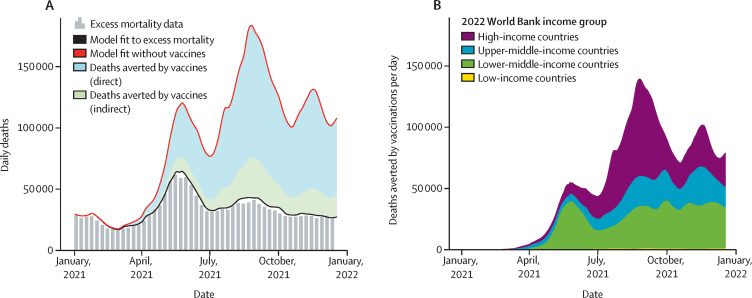
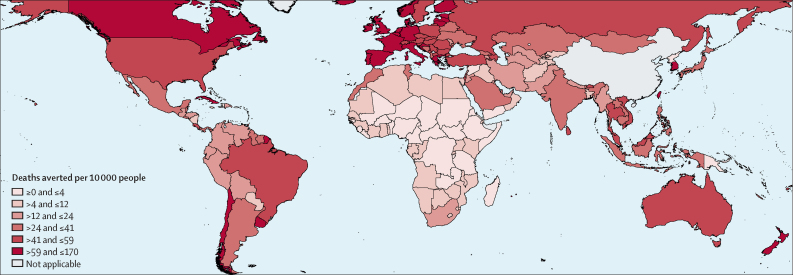
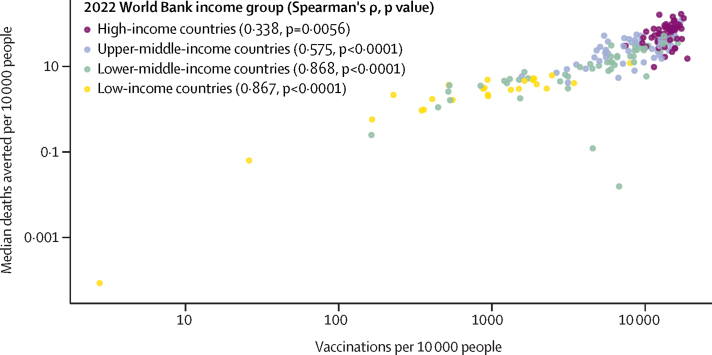
BACKGROUND: The first COVID-19 vaccine outside a clinical trial setting was administered on Dec 8, 2020. To ensure global vaccine equity, vaccine targets were set by the COVID-19 Vaccines Global Access (COVAX) Facility and WHO. However, due to vaccine shortfalls, these targets were not achieved by the end of 2021. We aimed to quantify the global impact of the first year of COVID-19 vaccination programmes. METHODS: A mathematical model of COVID-19 transmission and vaccination was separately fit to reported COVID-19 mortality and all-cause excess mortality in 185 countries and territories. The impact of COVID-19 vaccination programmes was determined by estimating the additional lives lost if no vaccines had been distributed. We also estimated the additional deaths that would have been averted had the vaccination coverage targets of 20% set by COVAX and 40% set by WHO been achieved by the end of 2021. FINDINGS: Based on official reported COVID-19 deaths, we estimated that vaccinations prevented 14·4 million (95% credible interval [Crl] 13·7-15·9) deaths from COVID-19 in 185 countries and territories between Dec 8, 2020, and Dec 8, 2021. This estimate rose to 19·8 million (95% Crl 19·1-20·4) deaths from COVID-19 averted when we used excess deaths as an estimate of the true extent of the pandemic, representing a global reduction of 63% in total deaths (19·8 million of 31·4 million) during the first year of COVID-19 vaccination. In COVAX Advance Market Commitment countries, we estimated that 41% of excess mortality (7·4 million [95% Crl 6·8-7·7] of 17·9 million deaths) was averted. In low-income countries, we estimated that an additional 45% (95% CrI 42-49) of deaths could have been averted had the 20% vaccination coverage target set by COVAX been met by each country, and that an additional 111% (105-118) of deaths could have been averted had the 40% target set by WHO been met by each country by the end of 2021. INTERPRETATION: COVID-19 vaccination has substantially altered the course of the pandemic, saving tens of millions of lives globally. However, inadequate access to vaccines in low-income countries has limited the impact in these settings, reinforcing the need for global vaccine equity and coverage. FUNDING: Schmidt Science Fellowship in partnership with the Rhodes Trust; WHO; UK Medical Research Council; Gavi, the Vaccine Alliance; Bill & Melinda Gates Foundation; National Institute for Health Research; and Community Jameel.
Overview
CoChat Summary
## TL;DR
This mathematical modelling study estimated that COVID-19 vaccination averted 14.4 million deaths based on reported deaths, or 19.8 million deaths when excess mortality was used, across 185 countries and territories during Dec 8, 2020–Dec 8, 2021. The paper argues that vaccine inequity limited impact in low-income settings and that reaching COVAX/WHO coverage targets could have saved substantially more lives.
## Key findings
- Using officially reported COVID-19 deaths, vaccination prevented 14.4 million deaths (95% CrI 13.7–15.9) in 185 countries and territories over the first year of vaccination.
- Using excess mortality, vaccination averted 19.8 million deaths (95% CrI 19.1–20.4), corresponding to a 63% reduction in total deaths (19.8 million of 31.4 million) during that year.
- In COVAX AMC countries, vaccinations averted 7.4 million deaths (95% CrI 6.8–7.7), representing 41% of estimated excess mortality (7.4 million of 17.9 million).
- If the WHO 40% target had been met in every country by the end of 2021, an additional 599,300 deaths (95% CrI 577,700–622,400) could have been averted; in low-income countries, meeting the COVAX 20% target could have averted an additional 45% of deaths, and the WHO 40% target an additional 111% of deaths.
## Methods
- The authors fit a previously published age-structured SEIRS transmission model with vaccination to reported COVID-19 mortality and to all-cause excess mortality in 185 countries and territories (excluding China), using country-level demography, mixing patterns, health-care capacity, and vaccination rollout data.
- Vaccination effects were modelled as protection against infection, severe disease, and onward transmission; the model also explicitly represented the delta variant and vaccine efficacy by country based on likely vaccine types used.
- They estimated deaths averted by comparing the fitted observed scenario against counterfactual scenarios with no vaccines, and with vaccines distributed to meet COVAX 20% and WHO 40% coverage targets by Dec 8, 2021, using Bayesian fitting with Metropolis-Hastings MCMC and 100 draws for uncertainty.
## Limitations
- The paper states that impact estimates were limited by uncertainty in excess mortality, gaps in genomic surveillance, and lack of detailed vaccination data for many countries; key inputs had to rely on working assumptions about vaccine type, rollout, and variant spread.
- The authors explicitly note a limitation of the COVAX/WHO target analysis: the targets were meant for the end of 2021, while the modelling endpoint was Dec 8, 2021, so some countries may have been closer to target by year-end than the model captured.
- Evident from the text: the counterfactual did not adjust for how governments or populations might have responded without vaccines, nor for possible changes in mobility, non-pharmaceutical interventions, or viral evolution, so the estimated deaths averted are model-dependent.
Model-written summary. Check it against the paper before relying on it.
Integrity signals
Registry
Cites
Statistics
Figures
Verification
Claims the paper makes
2 Valid · 2 Not valid · 4 Not checked · 48 Own results and interpretations
The cited sources that could be checked couldn’t confirm or dispute this claim.
In the paper
“In this analysis, we consequently focused on fitting to all-cause excess mortality, which provides a more complete description of the pandemic.15”
§ Global impact of the first year of COVID-19 vaccination: a mathematical modelling study > Discussion
What the sources say
- Could not verifycites [15] WHO Global excess deaths associated with COVID-19, January 2020–December 2021 https://www.who.int/data/stories/global-excess-deaths-associated-with-covid-19-january-2020-december-2021 May, 2022 sourceExperimental — accuracy not yet measured
The Methods (Statistical analysis) and Results examine hospital admission and emergency care attendance among people with delta versus alpha infections. The Discussion addresses limitations of those hospital-care data, but does not assess all-cause excess mortality or say that fitting to it gives a more complete description of the pandemic. Searches for “all-cause excess mortality” and “excess deaths” found no supporting passage; page numbers were not available in our copy. (LLM, conf=0.76)
plainstates a cause- Asserted: passes — The authors put it forward as true.
- Checkable: passes — It can be checked against evidence.
- Load-bearing: passes — The paper’s conclusions depend on it.
- Based: passes — The paper gives a reason why it holds.
- Could not verify
Every source the paper cites for this claim was checked and supports it.
In the paper
“Under-ascertainment of COVID-19 mortality is a known issue that has hindered our understanding of the pandemic.23”
§ Global impact of the first year of COVID-19 vaccination: a mathematical modelling study > Discussion
What the sources say
- Supportedcites [23] Whittaker C Walker PGT Alhaffar M Under-reporting of deaths limits our understanding of true burden of COVID-19 BMJ 375 2021 n2239 34642172 source
In “Renewed case for vaccine equity” (page unavailable), the paper calls it a myth that high-income countries were harder hit and shows that accounting for under-reporting changes the estimated share of COVID-19 mortality borne by low- and middle-income countries. This supports the claim that under-ascertainment has obscured understanding of the pandemic’s mortality burden. (LLM, conf=0.86)
boostedstates a cause- Asserted: passes — The authors put it forward as true.
- Checkable: passes — It can be checked against evidence.
- Load-bearing: passes — The paper’s conclusions depend on it.
- Based: passes — The paper gives a reason why it holds.
- Supported
The cited sources that could be checked couldn’t confirm or dispute this claim.
In the paper
“Our impact estimates were also limited by the inherent uncertainty in model-based estimates of excess mortality.13”
§ Global impact of the first year of COVID-19 vaccination: a mathematical modelling study > Discussion
What the sources say
- Could not verifycites [13] The Economist The pandemic's true death toll The Economist Nov 2, 2021 https://www.economist.com/graphic-detail/coronavirus-excess-deaths-estimates sourceExperimental — accuracy not yet measured
The Discussion describes limitations of estimates of vaccine effects on transmission, including testing behavior and previous infection status. A search for excess mortality, model-based mortality estimates, and deaths found no passage addressing uncertainty in excess-mortality estimates. Page numbers were not available in our copy. (LLM, conf=0.76)
plain- Asserted: passes — The authors put it forward as true.
- Checkable: passes — It can be checked against evidence.
- Load-bearing: unclear — It is unclear whether the paper’s conclusions depend on it.
- Based: passes — The paper gives a reason why it holds.
- Could not verify
The cited sources support only part of this claim — read each source’s verdict below.
In the paper
“Importantly, these estimates based on official reported COVID-19 deaths represent the lower bound of deaths averted at the global level due to the considerable levels of under-reporting of COVID-19 mortality documented worldwide.23”
§ Global impact of the first year of COVID-19 vaccination: a mathematical modelling study > Methods > Excess mortality and COVID-19 mortality data
What the sources say
- Partly supportedcites [23] Whittaker C Walker PGT Alhaffar M Under-reporting of deaths limits our understanding of true burden of COVID-19 BMJ 375 2021 n2239 34642172 sourceExperimental — accuracy not yet measured
In “Renewed case for vaccine equity” (page not provided), the paper says that under-reporting affects reported COVID-19 mortality and that excess-mortality estimates suggest a higher share of deaths in low- and middle-income countries. It also reports estimates of deaths that further vaccination could avert in those countries. It does not say that estimates based on officially reported deaths are a lower bound for deaths averted globally. (LLM, conf=0.83)
plainstates a cause- Asserted: passes — The authors put it forward as true.
- Checkable: passes — It can be checked against evidence.
- Load-bearing: passes — The paper’s conclusions depend on it.
- Based: passes — The paper gives a reason why it holds.
- Partly supported
A result the paper reports from its own data — it cites no other source for it, so there is none to check. The quote shows it is in the paper.
In the paper
“Notably, our model fits were unable to recreate excess mortality death tolls in recent epidemic waves in Iraq and Sudan because of the depletion of the susceptible population.”
§ Global impact of the first year of COVID-19 vaccination: a mathematical modelling study > Discussion
plainstates a cause- Asserted: passes — The authors put it forward as true.
- Checkable: passes — It can be checked against evidence.
- Load-bearing: unclear — It is unclear whether the paper’s conclusions depend on it.
- Based: passes — The paper gives a reason why it holds.
32 more claims
Create a free account to see all 56 claims and to verify the 3 references still open.
- It may state two separate claims as one. 14
- Probably not a substantial claim. 6
Claims other papers make about this one
Each is checked against this paper’s own text: does it say what the citing paper says it does?
The cited source says what the claim attributes to it.
In the citing paper
“Global COVID-19 vaccination programmes are estimated to have prevented 19.8 million deaths worldwide during the first year of roll-out(12)”
Citations
Cites
Estimated transmissibility and impact of SARS-CoV-2 lineage B.1.1.7 in England
Davies, N. G., Abbott, S., Barnard, R. C., Jarvis, C. I., Kucharski, A. J., Munday, J. D., Pearson, C. A. B., Russell, T. W., Tully, D. C., Washburne, A. D., et al. (2021) · Science · doi:10.1126/science.abg3055 · Cited by 2,581 · cited 1×
“20,21 Any epidemiological differences associated with previous variants were assumed to be reflected by their effects on mortality, 22 which were subsequently captured by the estimated R t trend.”
Estimated transmissibility and impact of SARS-CoV-2 lineage B.1.1.7 in England
Davies, N. G., Abbott, S., Barnard, R. C., Jarvis, C. I., Kucharski, A. J., Munday, J. D., Pearson, C. A. B., Russell, T. W., Tully, D. C., Washburne, A. D., et al. (2020) · doi:10.1101/2020.12.24.20248822 · Cited by 2,557
Wang, H., Paulson, K. R., Pease, S. A., Watson, S., Comfort, H., Zheng, P., Aravkin, A. Y., Bisignano, C., Barber, R. M., Alam, T., et al. (2022) · The Lancet · doi:10.1016/s0140-6736(21)02796-3 · Cited by 2,069
Wouters, O. J., Shadlen, K. C., Salcher-Konrad, M., Pollard, A. J., Larson, H. J., Teerawattananon, Y., & Jit, M. (2021) · The Lancet · doi:10.1016/s0140-6736(21)00306-8 · Cited by 1,288
Walker, P. G. T., Whittaker, C., Watson, O. J., Baguelin, M., Winskill, P., Hamlet, A., Djafaara, B. A., Cucunubá, Z., Olivera Mesa, D., Green, W., et al. (2020) · Science · doi:10.1126/science.abc0035 · Cited by 993
Self-citationTwohig, K. A., Nyberg, T., Zaidi, A., Thelwall, S., Sinnathamby, M. A., Aliabadi, S., Seaman, S. R., Harris, R. J., Hope, R., Lopez-Bernal, J., et al. (2022) · The Lancet Infectious Diseases · doi:10.1016/s1473-3099(21)00475-8 · Cited by 803 · cited 1×
“20,21 Any epidemiological differences associated with previous variants were assumed to be reflected by their effects on mortality, 22 which were subsequently captured by the estimated R t trend.”
Karlinsky, A., & Kobak, D. (2021) · eLife · doi:10.7554/elife.69336 · Cited by 772 · cited 1×
“11 Robust vital registration systems do not exist in many parts of the world, with WHO estimating that 40% of global deaths that occurred in 2020 were unregistered, 12 and therefore data on excess mortality are not available for every country.”
Understanding COVID-19 vaccine hesitancy
Machingaidze, S., & Wiysonge, C. S. (2021) · Nature Medicine · doi:10.1038/s41591-021-01459-7 · Cited by 590 · cited 1×
“7 This considerable heterogeneity in vaccination coverage has resulted in continued reliance on non-pharmaceutical interventions for pandemic management in some countries 8 but concomitantly enabled other nations to relax interventions as a route out of the pandemic.”
Twohig, K. A., Nyberg, T., Zaidi, A., Thelwall, S., Sinnathamby, M., Aliabadi, S., Seaman, S. R., Harris, R., Hope, R., Bernal, J. L., et al. (2021) · Northumbria Research Link (Northumbria University) · doi:10.17863/cam.76294 · Cited by 514
Effect of Covid-19 Vaccination on Transmission of Alpha and Delta Variants
Eyre, D. W., Taylor, D., Purver, M., Chapman, D., Fowler, T., Pouwels, K. B., Walker, A. S., & Peto, T. E. A. (2022) · New England Journal of Medicine · doi:10.1056/nejmoa2116597 · Cited by 464 · cited 2×
“19 We inferred vaccine efficacy for each country on the basis of vaccine types known to be predominantly used in each country.”
Cited by
Covid-19 Vaccines — Immunity, Variants, Boosters
Barouch, D. H. (2022) · New England Journal of Medicine · doi:10.1056/nejmra2206573 · Cited by 442
A survey of COVID-19 vaccine acceptance across 23 countries in 2022
Lazarus, J. V., Wyka, K., White, T. M., Picchio, C. A., Gostin, L. O., Larson, H. J., Rabin, K., Ratzan, S. C., Kamarulzaman, A., & El-Mohandes, A. (2023) · Nature Medicine · doi:10.1038/s41591-022-02185-4 · Cited by 439
Vaccine Hesitancy: Contemporary Issues and Historical Background
Nuwarda, R. F., Ramzan, I., Weekes, L., & Kayser, V. (2022) · Vaccines · doi:10.3390/vaccines10101595 · Cited by 282
Irrgang, P., Gerling, J., Kocher, K., Lapuente, D., Steininger, P., Habenicht, K., Wytopil, M., Beileke, S., Schäfer, S., Zhong, J., et al. (2023) · Science Immunology · doi:10.1126/sciimmunol.ade2798 · Cited by 264
A multinational Delphi consensus to end the COVID-19 public health threat
Lazarus, J. V., Romero, D., Kopka, C. J., Karim, S. A., Abu-Raddad, L. J., Almeida, G., Baptista-Leite, R., Barocas, J. A., Barreto, M. L., Bar-Yam, Y., et al. (2022) · Nature · doi:10.1038/s41586-022-05398-2 · Cited by 226
T Cell Responses to SARS-CoV-2
Sette, A., Sidney, J., & Crotty, S. (2023) · Annual Review of Immunology · doi:10.1146/annurev-immunol-101721-061120 · Cited by 186
Outlook of pandemic preparedness in a post-COVID-19 world
Williams, B. A., Jones, C. H., Welch, V., & True, J. M. (2023) · npj Vaccines · doi:10.1038/s41541-023-00773-0 · Cited by 186
Scholkmann, F., & May, C.-A. (2023) · Pathology - Research and Practice · doi:10.1016/j.prp.2023.154497 · Cited by 187
“from COVID-19 in 185 countries and territories [30] (but see also a critical evaluation of the methodology of this study [31]), the efficacy of”
Knife’s edge: Balancing immunogenicity and reactogenicity in mRNA vaccines
Lee, J., Woodruff, M. C., Kim, E. H., & Nam, J. (2023) · Experimental & Molecular Medicine · doi:10.1038/s12276-023-00999-x · Cited by 149
Influenza-associated and COVID-19-associated pulmonary aspergillosis in critically ill patients
Feys, S., Carvalho, A., Clancy, C. J., Gangneux, J., Hoenigl, M., Lagrou, K., Rijnders, B. J. A., Seldeslachts, L., Vanderbeke, L., van de Veerdonk, F. L., et al. (2024) · The Lancet Respiratory Medicine · doi:10.1016/s2213-2600(24)00151-6 · Cited by 151
Lundberg, D. J., Wrigley‐Field, E., Cho, A., Raquib, R. V., Nsoesie, E. O., Paglino, E., Chen, R., Kiang, M. V., Riley, A. R., Chen, Y., et al. (2023) · JAMA Network Open · doi:10.1001/jamanetworkopen.2023.11098 · Cited by 119
Surie, D., DeCuir, J., Zhu, Y., Gaglani, M., Ginde, A. A., Douin, D. J., Talbot, H. K., Casey, J. D., Mohr, N. M., Zepeski, A. E., et al. (2022) · MMWR Morbidity and Mortality Weekly Report · doi:10.15585/mmwr.mm715152e2 · Cited by 111
Retrospectively modeling the effects of increased global vaccine sharing on the COVID-19 pandemic
Moore, S., Hill, E. M., Dyson, L., Tildesley, M. J., & Keeling, M. J. (2022) · Nature Medicine · doi:10.1038/s41591-022-02064-y · Cited by 131
SARS-CoV-2 viral clearance and evolution varies by type and severity of immunodeficiency
Li, Y., Choudhary, M. C., Regan, J., Boucau, J., Nathan, A., Speidel, T., Liew, M. Y., Edelstein, G. E., Kawano, Y., Uddin, R., et al. (2024) · Science Translational Medicine · doi:10.1126/scitranslmed.adk1599 · Cited by 114
Piechotta, V., Siemens, W., Thielemann, I., Toews, M., Koch, J., Vygen-Bonnet, S., Kothari, K. U., Grummich, K., Braun, C., Kapp, P., et al. (2023) · The Lancet Child & Adolescent Health · doi:10.1016/s2352-4642(23)00078-0 · Cited by 109
Beladiya, J., Kumar, A., Vasava, Y., Parmar, K., Patel, D., Patel, S., Dholakia, S., Sheth, D., Boddu, S. H. S., & Patel, C. (2024) · Reviews in Medical Virology · doi:10.1002/rmv.2507 · Cited by 96
Meslé, M. M. I., Brown, J., Mook, P., Katz, M. A., Hagan, J., Pastore, R., Benka, B., Redlberger‐Fritz, M., Bossuyt, N., Stouten, V., et al. (2024) · The Lancet Respiratory Medicine · doi:10.1016/s2213-2600(24)00179-6 · Cited by 156
Vaccine access, equity and justice: COVID-19 vaccines and vaccination
Privor-Dumm, L. A., Excler, J., Gilbert, S. E., Karim, S. S. A., Hotez, P. J., Thompson, D., & Kim, J. H. (2023) · BMJ Global Health · doi:10.1136/bmjgh-2023-011881 · Cited by 114
‘Spikeopathy’: COVID-19 Spike Protein Is Pathogenic, from Both Virus and Vaccine mRNA
Parry, P. I., Lefringhausen, A., Turni, C., Neil, C., Cosford, R., Hudson, N. J., & Gillespie, J. (2023) · Biomedicines · doi:10.3390/biomedicines11082287 · Cited by 125
“, (2022) in “Global impact of the first year of COVID-19 vaccination: a mathematical modelling study”, published in The Lancet Infectious Diseases [14].”
BackgroundIn search of a pan-coronavirus vaccine: next-generation vaccine design and immune mechanisms
Cankat, S., Demael, M. U., & Swadling, L. (2023) · Cellular & Molecular Immunology · doi:10.1038/s41423-023-01116-8 · Cited by 84
Weidenbacher, P. A. B., Sanyal, M., Friedland, N., Tang, S., Arunachalam, P. S., Hu, M., Kumru, O. S., Morris, M. K., Fontenot, J. A., Shirreff, L., et al. (2023) · Nature Communications · doi:10.1038/s41467-023-37417-9 · Cited by 85
Anti-PEG antibodies before and after a first dose of Comirnaty® (mRNA-LNP-based SARS-CoV-2 vaccine)
Bavli, Y., Chen, B., Gross, G., Hershko, A. Y., Turjeman, K., Roffler, S. R., & Barenholz, Y. (2023) · Journal of Controlled Release · doi:10.1016/j.jconrel.2022.12.039 · Cited by 84
“During the COVID-19 pandemic, Pfizer-BioNTech and Moderna mRNA- lipid nanoparticles (LNP) vaccines saved the lives of millions [1,2].”
BackgroundSARS-CoV-2 evolution on a dynamic immune landscape
Raharinirina, N. A., Gubela, N., Börnigen, D., Smith, M. R., Oh, D., Budt, M., Mache, C., Schillings, C., Fuchs, S., Dürrwald, R., et al. (2025) · Nature · doi:10.1038/s41586-024-08477-8 · Cited by 100
The impact of delayed access to COVID-19 vaccines in low- and lower-middle-income countries
Duroseau, B., Kipshidze, N. N., & Limaye, R. J. (2023) · Frontiers in Public Health · doi:10.3389/fpubh.2022.1087138 · Cited by 100
Seasonality of endemic COVID-19
Townsend, J. P., Lamb, A. D., Hassler, H. B., Sah, P., Nishio, A. A., Nguyen, C., Tew, A. D., Galvani, A. P., & Dornburg, A. (2023) · mBio · doi:10.1128/mbio.01426-23 · Cited by 94
Wagner, C., Griesel, M., Mikołajewska, A., Metzendorf, M., Fischer, A.-L., Stegemann, M. S., Spagl, M., Nair, A. A., Daniel, J., Fichtner, F., et al. (2022) · Cochrane Database of Systematic Reviews · doi:10.1002/14651858.cd014963.pub2 · Cited by 96
Krauson, A. J., Casimero, F. V. C., Siddiquee, Z., & Stone, J. R. (2023) · npj Vaccines · doi:10.1038/s41541-023-00742-7 · Cited by 85
Global Excess Mortality during COVID-19 Pandemic: A Systematic Review and Meta-Analysis
Shang, W., Wang, Y., Yuan, J., Guo, Z., Liu, J., & Liu, M. (2022) · Vaccines · doi:10.3390/vaccines10101702 · Cited by 89
“At the beginning of the outbreak, developed countries had better access to the COVID-19 vaccine and higher public accessibility to vaccination, so their vaccine coverage was higher than that of developing countries [62].”
Lei, J., Qi, S., Yu, X., Gao, X., Yang, K., Zhang, X., Cheng, M., Bai, B., Feng, Y., Lu, M., et al. (2024) · Angewandte Chemie International Edition · doi:10.1002/anie.202318515 · Cited by 77
Global Estimates of Lives and Life-Years Saved by COVID-19 Vaccination During 2020-2024
Ioannidis, J. P. A., Pezzullo, A. M., Cristiano, A., & Boccia, S. (2025) · JAMA Health Forum · doi:10.1001/jamahealthforum.2025.2223 · Cited by 100
Institutional trust is a distinct construct related to vaccine hesitancy and refusal
Krastev, S., Krajden, O., Vang, Z. M., Juárez, F. P.-G., Solomonova, E., Goldenberg, M. J., Weinstock, D., Smith, M. J., Dervis, E., Pilat, D., et al. (2023) · BMC Public Health · doi:10.1186/s12889-023-17345-5 · Cited by 92
“More recently, Watson and colleagues estimate that 14.4 million COVID-19-related deaths were prevented globally by vaccines between December 2020 and December 2021 alone [3].”
BackgroundInfluentialmRNA vaccines: The future of prevention of viral infections?
Rzymski, P., Szuster‐Ciesielska, A., Dzieciątkowski, T., Gwenzi, W., & Fal, A. (2023) · Journal of Medical Virology · doi:10.1002/jmv.28572 · Cited by 79
“which has also been attributed to higher access and uptake of the more efficacious mRNA vaccines.(33) Moreover, studies show that scaling up mRNA vaccinations against COVID‐19 in lower‐to‐middle‐”
BackgroundResultPathogens and planetary change
Carlson, C. J., Brookson, C. B., Becker, D. J., Cummings, C. A., Gibb, R., Halliday, F. W., Heckley, A. M., Huang, Z. Y. X., Lavelle, T. E., Robertson, H., et al. (2025) · Nature Reviews Biodiversity · doi:10.1038/s44358-024-00005-w · Cited by 94
“Although climate change has not been the primary driver, the growing burden of Lyme disease in the northeastern USA is at least partially attributable”
Defending against SARS-CoV-2: The T cell perspective
Almendro-Vázquez, P., Laguna‐Goya, R., & Paz‐Artal, E. (2023) · Frontiers in Immunology · doi:10.3389/fimmu.2023.1107803 · Cited by 76
Proactive vaccination using multiviral Quartet Nanocages to elicit broad anti-coronavirus responses
Hills, R. A., Tan, T. K., Cohen, A. A., Keeffe, J. R., Keeble, A. H., Gnanapragasam, P. N. P., Storm, K. N., Rorick, A. V., West, A. P., Hill, M. L., et al. (2024) · Nature Nanotechnology · doi:10.1038/s41565-024-01655-9 · Cited by 84
Tseng, H. F., Ackerson, B. K., Sy, L. S., Tubert, J. E., Luo, Y., Qiu, S., Lee, G. S., Bruxvoort, K. J., Ku, J. H., Florea, A., et al. (2023) · Nature Communications · doi:10.1038/s41467-023-41537-7 · Cited by 71
Fast-track development of vaccines for SARS-CoV-2: The shots that saved the world
Chavda, V. P., Yao, Q., Vora, L. K., Apostolopoulos, V., Patel, C. A., Bezbaruah, R., Patel, A., & Chen, Z. (2022) · Frontiers in Immunology · doi:10.3389/fimmu.2022.961198 · Cited by 67
Gleeson, D., Townsend, B., Tenni, B. F., & Phillips, T. (2023) · Health & Place · doi:10.1016/j.healthplace.2023.103051 · Cited by 74
Parthasarathi, A., Padukudru, S., Arunachala, S., Basavaraj, C. K., Krishna, M. T., Ganguly, K., Upadhyay, S., & Mahesh, P. A. (2022) · Vaccines · doi:10.3390/vaccines10081233 · Cited by 68
Janssen, C., Mosnier, A., Gavazzi, G., Combadière, B., Crépey, P., Gaillat, J., Launay, O., & Botelho-Nevers, É. (2022) · Human Vaccines & Immunotherapeutics · doi:10.1080/21645515.2022.2131166 · Cited by 60
The mRNA-LNP vaccines – the good, the bad and the ugly?
Igyártó, B. Z., & Qin, Z. (2024) · Frontiers in Immunology · doi:10.3389/fimmu.2024.1336906 · Cited by 73
33 Unresolved Questions in Nanoscience and Nanotechnology
Mirkin, C. A., Petrosko, S. H., Artzi, N., Aydın, K., Biaggne, A., Brinker, C. J., Bujold, K. E., Cao, Y. C., Chan, R. R., Chen, C., et al. (2025) · ACS Nano · doi:10.1021/acsnano.5c12854 · Cited by 69
Nebulised delivery of RNA formulations to the lungs: From aerosol to cytosol
Neary, M. T., Mulder, L. M., Kowalski, P. S., MacLoughlin, R. J., Crean, A. M., & Ryan, K. B. (2024) · Journal of Controlled Release · doi:10.1016/j.jconrel.2023.12.012 · Cited by 70
The Future of Epidemic and Pandemic Vaccines to Serve Global Public Health Needs
Farlow, A. W. K., Torreele, E., Gray, G., Ruxrungtham, K., Rees, H., Prasad, S. D., Gómez, C., Sall, A. A., de Magalhães, J. L., Olliaro, P., et al. (2023) · Vaccines · doi:10.3390/vaccines11030690 · Cited by 66
Pérez‐Alós, L., Hansen, C. B., Armenteros, J. J. A., Madsen, J. R., Heftdal, L. D., Hasselbalch, R. B., Pries‐Heje, M. M., Bayarri‐Olmos, R., Jarlhelt, I., Hamm, S. R., et al. (2023) · Nature Communications · doi:10.1038/s41467-023-41342-2 · Cited by 59
Bifidobacteria support optimal infant vaccine responses
Ryan, F. J., Clarke, M. F., Lynn, M. A., Benson, S. C., McAlister, S. M., Giles, L. C., Choo, J. M., Rossouw, C., Ng, Y. Y., Semchenko, E. A., et al. (2025) · Nature · doi:10.1038/s41586-025-08796-4 · Cited by 71
“Global immunization programmes prevent millions of deaths per year 5,6 ; however, for reasons that are unclear, immune responses to vaccination exhibit substantial interindividual variation and are frequently suboptimal in the populations at most risk from infectious disease 7 .”
Ryan, F. J., Norton, T. S., McCafferty, C., Blake, S. J., Stevens, N. E., James, J., Eden, G. L., Tee, Y. C., Benson, S. C., Masavuli, M. G., et al. (2023) · Cell Reports Medicine · doi:10.1016/j.xcrm.2023.100971 · Cited by 63
“Vaccination is a cornerstone of the global strategy to control the spread of SARS-CoV-2 with tens of millions of lives saved to date.(36) While randomized controlled trials have demonstrated the efficacy of both mRNA and adenoviral vectored vaccines against severe COVID-19,(2,3,37,38) such trials typically do not incl…”
Advances in lipid nanoparticle mRNA therapeutics beyond COVID-19 vaccines
Wu, Y., Yu, S., & de Lázaro, I. (2024) · Nanoscale · doi:10.1039/d4nr00019f · Cited by 58
Ogunleye, O. O., Godman, B., Fadare, J. O., Mudenda, S., Adeoti, A. O., Yinka-Ogunleye, A. F., Ogundele, S. O., Oyawole, M. R., Schönfeldt, M., Rashed, W. M., et al. (2022) · Vaccines · doi:10.3390/vaccines10091553 · Cited by 55
“Overall, a considerable number of deaths could have been averted if target vaccination rates had been achieved, especially among low- and middle-income countries, including African countries [101].”
BackgroundNewman, P. A., Dinh, D. A., Nyoni, T., Allan, K., Fantus, S., Williams, C. C., Tepjan, S., Reid, L., & Guţă, A. (2023) · Journal of Racial and Ethnic Health Disparities · doi:10.1007/s40615-023-01882-1 · Cited by 60
“Vaccination reduced Covid-19-related morbidity and mortality in the United States (U.S.) [1], and globally—with an estimated 63% (14.4–19.8 million) reduction in deaths in the first year of Covid-19 vaccination alone [2].”
InfluentialHuman type I IFN deficiency does not impair B cell response to SARS-CoV-2 mRNA vaccination
Sokal, A., Bastard, P., Chappert, P., Spaeth, G. B., Fourati, S., Vandenberghe, A., Lagouge-Roussey, P., Meyts, I., Gervais, A., Bouvier‐Alias, M., et al. (2022) · The Journal of Experimental Medicine · doi:10.1084/jem.20220258 · Cited by 50
de Figueiredo, A., Simas, C., & Larson, H. J. (2022) · Vaccine · doi:10.1016/j.vaccine.2022.10.051 · Cited by 48
“Immunisation against COVID-19 can substantially reduce hospitalisations and severe disease [2,3] with a recent modelling study estimating that over 14 million deaths have been adverted due to COVID-19 vaccines within the first year of their rollout.[4].”
BackgroundEvolutionary implications of SARS-CoV-2 vaccination for the future design of vaccination strategies
Rouzine, I. M., & Rozhnova, G. (2023) · Communications Medicine · doi:10.1038/s43856-023-00320-x · Cited by 54
Islam, M. A. (2023) · Infectious Medicine · doi:10.1016/j.imj.2023.08.005 · Cited by 51
Broad-spectrum pan-genus and pan-family virus vaccines
Tan, C. W., Valkenburg, S., Poon, L. L. M., & Wang, L. (2023) · Cell Host & Microbe · doi:10.1016/j.chom.2023.05.017 · Cited by 49
“The success has undoubtedly savedmillions of lives.(73) In this section, wewill discuss the vaccine type and protective efficacy of the currently developed SARSCoV-2vaccines (summarized inTable1).”
Kalimuddin, S., Tham, C. Y. L., Chan, Y. F. Z., Hang, S. K., Kunasegaran, K., Chia, A., Chan, C. Y. Y., Ng, D. H. L., Sim, J. X. Y., Tan, H.-C., et al. (2025) · Nature Microbiology · doi:10.1038/s41564-024-01903-7 · Cited by 60
“Their effectiveness was emphatically demonstrated during the recent COVID-19 pandemic, in which the use of vaccines helped neutralize the sting of the pandemic 1 .”
The Platform Technology Approach to mRNA Product Development and Regulation
Skerritt, J. H., Tucek, C. L., Sutton, B. A., & Nolan, T. M. (2024) · Vaccines · doi:10.3390/vaccines12050528 · Cited by 55
“mRNA vaccines have been instrumental in significantly reducing global mortality and morbidity from SARS-CoV-2 infection [1].”
BackgroundMcDonald, K., Seltzer, E. W., Lu, M., et al. (2023) · Trials · doi:10.1186/s13063-023-07277-1 · Cited by 45
“4 million lives in 185 countries between December 2020 and December 2021 [8].”
BackgroundSARS-CoV-2 correlates of protection from infection against variants of concern
Sun, K., Bhiman, J. N., Tempia, S., Kleynhans, J., Madzorera, V. S., Mkhize, Q., Kaldine, H., McMorrow, M., Wolter, N., Moyes, J., et al. (2024) · Nature Medicine · doi:10.1038/s41591-024-03131-2 · Cited by 51
“Owing to the unprecedented speed of SARS-CoV-2 vaccine development and distribution 3 , considerable numbers of people were primed by vaccination, averting substantial morbidity and mortality 4 .”
Fernández-García, S., del Campo-Albendea, L., Sambamoorthi, D., Sheikh, J., Lau, K. M., Osei-Lah, N., Ramkumar, A., Naidu, H., Stoney, N., Sundaram, P., et al. (2024) · BMJ Global Health · doi:10.1136/bmjgh-2023-014247 · Cited by 56
Hyldbakk, A., Hansen, T., Hak, S., & Borgos, S. E. (2024) · Journal of Controlled Release · doi:10.1016/j.jconrel.2024.01.016 · Cited by 44
Olukitibi, T. A., Ao, Z., Warner, B. M., Unat, R., Kobasa, D., & Yao, X. (2023) · Vaccines · doi:10.3390/vaccines11030545 · Cited by 43
Akahata, W., Sekida, T., Nogimori, T., Ode, H., Tamura, T., Kono, K., Kazami, Y., Washizaki, A., Masuta, Y., Suzuki, R., et al. (2023) · Cell Reports Medicine · doi:10.1016/j.xcrm.2023.101134 · Cited by 41
Drug treatment of COVID-19 infection
Lui, G. C.-Y., & Guaraldi, G. (2023) · Current Opinion in Pulmonary Medicine · doi:10.1097/mcp.0000000000000953 · Cited by 52
Li, H., Komori, A., Li, M., Chen, X., Yang, A. W. H., Sun, X., Liu, Y., Hung, A., Zhao, X., & Zhou, L. (2023) · Journal of Molecular Liquids · doi:10.1016/j.molliq.2023.121253 · Cited by 48
“For treatment options, a number of vaccines have since been established, resulting in reductions in the likelihood of severe illnesses [10].”
Vaccination-Associated Myocarditis and Myocardial Injury
Altman, N. L., Berning, A. A., Mann, S., Quaife, R. A., Gill, E. A., Auerbach, S. R., Campbell, T., & Bristow, M. R. (2023) · Circulation Research · doi:10.1161/circresaha.122.321881 · Cited by 50
Zou, Y., Weng, J., Qin, Z., Zhang, Y., Ji, S., & Zhang, H. (2023) · Chemical Engineering Journal · doi:10.1016/j.cej.2023.145365 · Cited by 46
The COVID-19, tuberculosis and HIV/AIDS: Ménage à Trois
Udoakang, A. J., Zune, A. L. D., Tapela, K., Nganyewo, N. N., Olisaka, F. N., Anyigba, C. A., Tawiah-Eshun, S., Owusu, I. A., Paemka, L., Awandare, G. A., et al. (2023) · Frontiers in Immunology · doi:10.3389/fimmu.2023.1104828 · Cited by 46
Appaneal, H. J., Lopes, V., Puzniak, L., Zasowski, E. J., Jódar, L., McLaughlin, J. M., & Caffrey, A. R. (2025) · Nature Communications · doi:10.1038/s41467-025-59344-7 · Cited by 40
Molecular Evolution of SARS-CoV-2 during the COVID-19 Pandemic
González-Vázquez, L. D., & Arenas, M. (2023) · Genes · doi:10.3390/genes14020407 · Cited by 51
Tian, F., Chen, Z., & Feng, Q. (2023) · Journal of Medical Virology · doi:10.1002/jmv.28732 · Cited by 37
“8 million fatalities were prevented globally in the first year of COVID‐19 vaccination (from December 8, 2020 to December 8, 2021).(4) The COVID‐19 vaccine has significantly altered the pandemic's trajectory and saved”
BackgroundThe global impact of disproportionate vaccination coverage on COVID-19 mortality
Wells, C. R., & Galvani, A. P. (2022) · The Lancet Infectious Diseases · doi:10.1016/s1473-3099(22)00417-0 · Cited by 38
Effectiveness of BNT162b2 XBB vaccine in the US Veterans Affairs Healthcare System
Caffrey, A. R., Appaneal, H. J., Lopes, V., Puzniak, L., Zasowski, E. J., Jódar, L., LaPlante, K. L., & McLaughlin, J. M. (2024) · Nature Communications · doi:10.1038/s41467-024-53842-w · Cited by 41
SARS-CoV-2 vaccination enhances the effector qualities of spike-specific T cells induced by COVID-19
Cai, C., Gao, Y., Adamo, S., Rivera‐Ballesteros, O., Hansson, L., Österborg, A., Bergman, P., Sandberg, J. K., Ljunggren, H., Björkström, N. K., et al. (2023) · Science Immunology · doi:10.1126/sciimmunol.adh0687 · Cited by 47
“Using this combined dataset as a basis for exploration, we hypothesized that stepwise changes in gene expression from day 35 to 6–9M and from 6–9M to 18M might reflect the sequential effects of long-term memory formation and vaccination, respectively.”
MethodSFTSV Gn‐Head mRNA vaccine confers efficient protection against lethal viral challenge
Kim, D.-K., Lai, C., Cha, I., Kang, S., Yang, W., Choi, Y., & Jung, J. U. (2023) · Journal of Medical Virology · doi:10.1002/jmv.29203 · Cited by 39
“40,41 While the sGn ‐”
Tan, N. H., Geers, D., Sablerolles, R. S. G., Rietdijk, W. J. R., Goorhuis, A., Postma, D. F., Visser, L. G., Bogers, S., van Dijk, L. L. A., Gommers, L., et al. (2023) · The Lancet Infectious Diseases · doi:10.1016/s1473-3099(23)00140-8 · Cited by 37
Ip, S., North, T.-L., Torabi, F., Li, Y., Abbasizanjani, H., Akbari, A., Horne, E. M. F., Denholm, R., Keene, S. J., Denaxas, S., et al. (2024) · Nature Communications · doi:10.1038/s41467-024-49634-x · Cited by 49
Aboshi, M., Matsuda, K., Kawakami, D., Kono, K., Kazami, Y., Sekida, T., Komori, M., Morey, A. L., Suga, S., Smith, J. F., et al. (2024) · iScience · doi:10.1016/j.isci.2024.108964 · Cited by 36
mRNA vaccines against respiratory viruses
Whitaker, J. A., Sahly, H. M. E., & Healy, C. M. (2023) · Current Opinion in Infectious Diseases · doi:10.1097/qco.0000000000000948 · Cited by 40
Ursini, F., Ruscitti, P., Addimanda, O., Foti, R., Raimondo, V., Murdaca, G., Caira, V., Pigatto, E., Cuomo, G., Gullo, A. L., et al. (2023) · RMD Open · doi:10.1136/rmdopen-2023-003022 · Cited by 40
Direct and indirect effects of the COVID-19 pandemic on mortality in Switzerland
Riou, J., Hauser, A., Fesser, A., Althaus, C. L., Egger, M., & Konstantinoudis, G. (2023) · Nature Communications · doi:10.1038/s41467-022-35770-9 · Cited by 44
Does education influence COVID-19 vaccination? A global view
Lupu, D., & Țigănașu, R. (2024) · Heliyon · doi:10.1016/j.heliyon.2024.e24709 · Cited by 48
“Watson et al. [60] conclude that if, in the poor countries, the vaccination coverage rate of 20 %, established by COVAX, had been reached by the end of 2021, then around 45 % of COVID-19 deaths could have been prevented [60].”
BackgroundStudy of a mathematical model of COVID-19 outbreak using some advanced analysis
Shah, K., & Abdeljawad, T. (2022) · Waves in Random and Complex Media · doi:10.1080/17455030.2022.2149890 · Cited by 36
“The traditional models under fractional order derivatives of the singular and nonsingular kernel have been studied in [30–32], while models involving COVID-19 vaccinated classes have recently been considered [33].”
Misinformation in the media: global coverage of GMOs 2019-2021
Lynas, M., Adams, J., & Conrow, J. (2022) · GM crops & food · doi:10.1080/21645698.2022.2140568 · Cited by 56
Estimating long-term vaccine effectiveness against SARS-CoV-2 variants: a model-based approach
Hogan, A. B., Doohan, P., Wu, S. L., Mesa, D. O., Toor, J., Watson, O. J., Winskill, P., Charles, G. D., Barnsley, G., Riley, E. M., et al. (2023) · Nature Communications · doi:10.1038/s41467-023-39736-3 · Cited by 34
Self-citationCardiovascular disease and covid-19: A systematic review
Krishna, B. A., Metaxaki, M., Sithole, N., Jiménez, P. L., Martín, P., & Salinas-Botrán, A. (2024) · IJC Heart & Vasculature · doi:10.1016/j.ijcha.2024.101482 · Cited by 65
Maintenance and functional regulation of immune memory to COVID-19 vaccines in tissues
Davis‐Porada, J., George, A. B., Lam, N., Caron, D. P., Gray, J. I., Huang, J., Hwu, J., Wells, S. B., Matsumoto, R., Kubota, M., et al. (2024) · Immunity · doi:10.1016/j.immuni.2024.10.003 · Cited by 44
Geiger, S., & Gross, N. (2023) · Organization · doi:10.1177/13505084221145666 · Cited by 38
“Even when accounting for other factors such as health systems readiness, it is now clear that vaccine supply shortages and manufacturing concentration cost millions of lives during the pandemic (Watson et al., 2022).”
BackgroundOECD Science, Technology and Innovation Outlook
OECD (2016) · OECD science, technology and innovation outlook · doi:10.1787/25186167 · Cited by 36
Vaccine process technology—A decade of progress
Buckland, B. C., Sanyal, G., Ranheim, T., Pollard, D. J., Searles, J. A., Behrens, S., Pluschkell, S. B., Josefsberg, J. O., & Roberts, C. J. (2024) · Biotechnology and Bioengineering · doi:10.1002/bit.28703 · Cited by 37
Sulaiman, S. K., Musa, M. S., Tsiga-Ahmed, F. I., Sulaiman, A. K., & Bako, A. T. (2023) · Nature Human Behaviour · doi:10.1038/s41562-023-01733-3 · Cited by 35
Characterization of BNT162b2 mRNA to Evaluate Risk of Off-Target Antigen Translation
Patel, H. K., Zhang, K., Utegg, R., Stephens, E., Salem, S., Welch, H., Grobe, S., Schlereth, J., Kuhn, A. N., Ryczek, J., et al. (2023) · Journal of Pharmaceutical Sciences · doi:10.1016/j.xphs.2023.01.007 · Cited by 36
“In the first year of vaccination, it is estimated that up to 20 million deaths were averted globally.(5) One study estimated that COVID-19 vaccination prevented approximately 27 million infections, 1.”
BackgroundSafety, efficacy, and immunogenicity of the NVX-CoV2373 vaccine
Underwood, E., Dunkle, L. M., Madhi, S. A., Gay, C. L., Heath, P. T., Kotloff, K. L., Smith, K., Chau, G., Galbiati, S., McGarry, A., et al. (2023) · Expert Review of Vaccines · doi:10.1080/14760584.2023.2218913 · Cited by 36
“Thereby, an estimated 20 million deaths were averted in the first year of vaccination against SARS-CoV-2 [4].”
BackgroundYang, J., Vaghela, S., Yarnoff, B., de Boisvilliers, S., Fusco, M. D., Wiemken, T. L., Kyaw, M. H., McLaughlin, J. M., & Nguyen, J. L. (2022) · Expert Review of Vaccines · doi:10.1080/14760584.2023.2157817 · Cited by 33
“[17] assumed a vaccination scenario that prioritized individuals most at risk (e.g. healthcare workers), whereas we relied solely on observed vaccine roll-out data and did not differentiate groups based on clinical risk factors, occupation or age.”
BackgroundMethodInfluentialNabia, S., Wonodi, C. B., Vilajeliu, A., Sussman, S., Olson, K., Cooke, R., Udayakumar, K., Twose, C., Ezeanya, N., Adefarrell, A. A., et al. (2023) · Vaccines · doi:10.3390/vaccines11050974 · Cited by 37
“Of the world’s population, 63% had completed the COVID-19 vaccination primary series and 34% of the world’s population had received a booster dose as of December 2022 [1], and as a result, an estimated 20 million deaths have been averted [2].”
BackgroundDrury, R. E., Camara, S., Chelysheva, I., Bibi, S., Sanders, K. A., Felle, S., Emary, K. R. W., Phillips, D. J., Voysey, M., Ferreira, D. M., et al. (2024) · Nature Communications · doi:10.1038/s41467-024-47463-6 · Cited by 35
Papageorgiou, V. Ε., & Tsaklidis, G. M. (2022) · Chaos Solitons & Fractals · doi:10.1016/j.chaos.2022.112914 · Cited by 40
“[46] mention that the vaccination campaign resulted in a 63 % reduction in expected total deaths, while Moghadas et al.”
Rzymski, P., Pokorska‐Śpiewak, M., Jackowska, T., Kuchar, E. P., Nitsch-Osuch, A. S., Pawłowska, M., Babicki, M., Jaroszewicz, J., Szenborn, L., Wysocki, J., et al. (2023) · Vaccines · doi:10.3390/vaccines11091502 · Cited by 32
“It is estimated that COVID-19 vaccines prevented 19.8 million deaths in 2021 alone [30].”
InfluentialCaì, Y., Diallo, S., Rosenthal, K., Ren, K., Flores, D. J., Dippel, A. B., Oganesyan, V., van Dyk, N., Chen, X., Cantu, E. N., et al. (2024) · Science Translational Medicine · doi:10.1126/scitranslmed.ado2817 · Cited by 30
Kayano, T., Ko, Y., Otani, K., Kobayashi, T., Suzuki, M., & Nishiura, H. (2023) · Scientific Reports · doi:10.1038/s41598-023-44942-6 · Cited by 32
Metadata
- Authors
- Watson, O. J., Barnsley, G., Toor, J., Hogan, A. B., Winskill, P., & Ghani, A. C.
- Affiliations
- Imperial College London (GB)
- Corresponding author
- Watson, Oliver J
- Venue
- The Lancet Infectious Diseases
- Publisher
- Elsevier BV
- Published
- 2022-09
- Volume
- 22
- Issue
- 9
- Pages
- 1293-1302
- ISSN
- 1473-3099 (ISSN-L)
- PMC
- PMC9225255
- OpenAlex
- W4283395367
- Semantic Scholar
- e048be45c9e0900c299d78c2cb327ce9afd77467
- Cited by
- 1,769
- References
- 26
- Citations by year
- 2026: 165 · 2025: 341 · 2024: 533 · 2023: 578 · 2022: 150
- FWCI
- 237.54
- Type
- journal article
- Language
- en
- Update notices
- erratum (2023-10-01)
- Open access
- hybrid
- doi.org
- Licence
- cc-by
- www.elsevier.com/tdm/userlicense/1.0/ (tdm)
- www.elsevier.com/legal/tdmrep-license (tdm)
- creativecommons.org/licenses/by/4.0/ (vor)
- Locations
- The Lancet Infectious Diseases (publishedVersion, cc-by)
- PubMed Central (publishedVersion, cc-by)
- PubMed (publishedVersion)
- LSHTM Research Online (London School of Hygiene and Tropical Medicine) (acceptedVersion)
- Spiral (Imperial College London) (submittedVersion, other-oa)
- Funders
- Bill and Melinda Gates Foundation
- GAVI Alliance
- National Institute for Health and Care Research
- Imperial College London
- Medical Research Council (MR/R015600/1, MC_PC_19012)
- Topics
- Physical Sciences › Mathematics › Modeling and Simulation › COVID-19 epidemiological studies
- Health Sciences › Medicine › Infectious Diseases › SARS-CoV-2 and COVID-19 Research
- Social Sciences › Health › Vaccine Coverage and Hesitancy
- Keywords
- COVID-19 vaccination, vaccine impact, COVID-19 mortality, excess mortality, mortality averted, COVAX, vaccine equity, low-income countries, mathematical transmission model, global health equity, SARS-CoV-2, advance market commitments
- MeSH terms
- COVID-19, COVID-19 Vaccines, Humans, Models, Theoretical, Vaccination, Vaccines, Global Health
About these checks
Registry, retraction, Cites and statistics results are computed, not judged, with one exception: a printed reference that no index lists is read once by a model before it counts as a citation error. Claims are extracted by a model and kept only when their quote appears verbatim in the text; each cited source is then checked, with a model’s help, for whether it says what the claim relies on. Those verdicts can be wrong — read the claim’s quote and the cited source before relying on one.
The claim verdicts this report counts are experimental: their accuracy is not yet measured.
A language model drew the claims from the paper on 2026-10-10, under version 3 of the claim definition (model deepseek-v4.1-flash, prompt extract-v3).
A second model labelled each claim on 2026-10-10 (model jev-1.13-20260917, definition revision gold-guideline-v0.2).
Cited sources are checked with a language model’s help (gpt-6-sol).
Statistics and arithmetic are recomputed, not judged.
Confidence bands are shown only for fields calibrated on our annotated test set. None is calibrated yet, so no band is shown.
What counts as a claim ›How we measure confidence ›How we check this ›
Are you an author, or do you see a problem with this page? Request a review
Data sources
Bibliographic data: Semantic Scholar, OpenAlex, Crossref.
Contains information from the Semantic Scholar Academic Graph Datasets, made available under the ODC Attribution License (ODC-BY 1.0).
Semantic Scholar’s data is described in: Kinney, R., et al. (2023). The Semantic Scholar Open Data Platform. arXiv:2301.10140.
