

Global impact of the first year of COVID-19 vaccination: a mathematical modelling study
Open accessThe DOI matches its Crossref record; 23 of the 26 references it cites were found in a registry or an index; 4 of the 8 sources its claims cite were checked for support.
Abstract
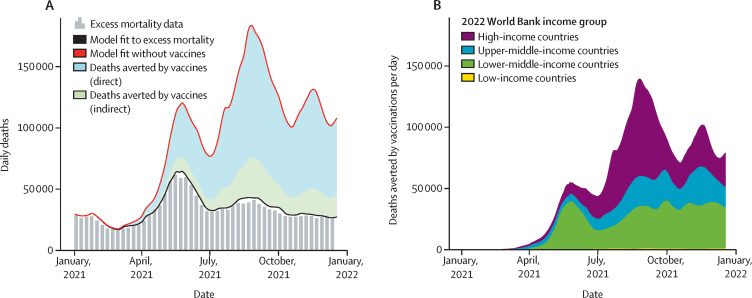
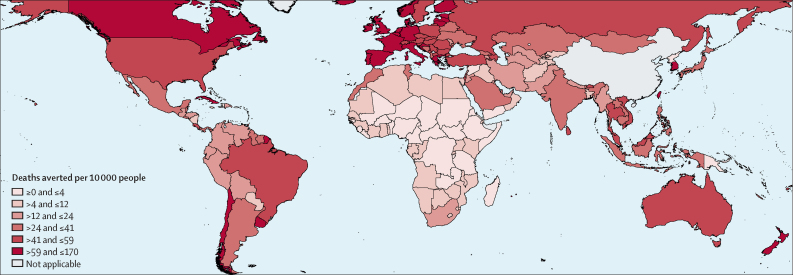
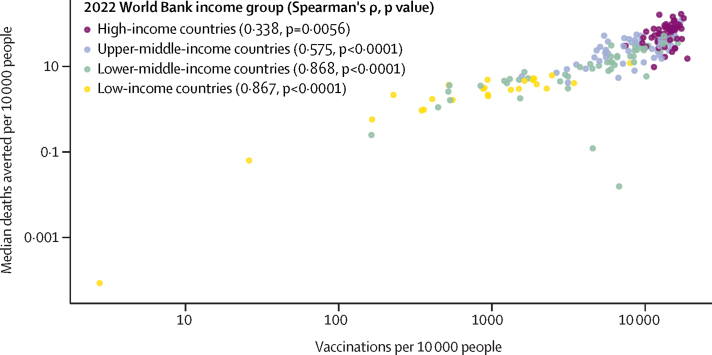
BACKGROUND: The first COVID-19 vaccine outside a clinical trial setting was administered on Dec 8, 2020. To ensure global vaccine equity, vaccine targets were set by the COVID-19 Vaccines Global Access (COVAX) Facility and WHO. However, due to vaccine shortfalls, these targets were not achieved by the end of 2021. We aimed to quantify the global impact of the first year of COVID-19 vaccination programmes. METHODS: A mathematical model of COVID-19 transmission and vaccination was separately fit to reported COVID-19 mortality and all-cause excess mortality in 185 countries and territories. The impact of COVID-19 vaccination programmes was determined by estimating the additional lives lost if no vaccines had been distributed. We also estimated the additional deaths that would have been averted had the vaccination coverage targets of 20% set by COVAX and 40% set by WHO been achieved by the end of 2021. FINDINGS: Based on official reported COVID-19 deaths, we estimated that vaccinations prevented 14·4 million (95% credible interval [Crl] 13·7-15·9) deaths from COVID-19 in 185 countries and territories between Dec 8, 2020, and Dec 8, 2021. This estimate rose to 19·8 million (95% Crl 19·1-20·4) deaths from COVID-19 averted when we used excess deaths as an estimate of the true extent of the pandemic, representing a global reduction of 63% in total deaths (19·8 million of 31·4 million) during the first year of COVID-19 vaccination. In COVAX Advance Market Commitment countries, we estimated that 41% of excess mortality (7·4 million [95% Crl 6·8-7·7] of 17·9 million deaths) was averted. In low-income countries, we estimated that an additional 45% (95% CrI 42-49) of deaths could have been averted had the 20% vaccination coverage target set by COVAX been met by each country, and that an additional 111% (105-118) of deaths could have been averted had the 40% target set by WHO been met by each country by the end of 2021. INTERPRETATION: COVID-19 vaccination has substantially altered the course of the pandemic, saving tens of millions of lives globally. However, inadequate access to vaccines in low-income countries has limited the impact in these settings, reinforcing the need for global vaccine equity and coverage. FUNDING: Schmidt Science Fellowship in partnership with the Rhodes Trust; WHO; UK Medical Research Council; Gavi, the Vaccine Alliance; Bill & Melinda Gates Foundation; National Institute for Health Research; and Community Jameel.
Overview
CoChat Summary
## TL;DR
This mathematical modelling study estimated that COVID-19 vaccination averted 14.4 million deaths based on reported deaths, or 19.8 million deaths when excess mortality was used, across 185 countries and territories during Dec 8, 2020–Dec 8, 2021. The paper argues that vaccine inequity limited impact in low-income settings and that reaching COVAX/WHO coverage targets could have saved substantially more lives.
## Key findings
- Using officially reported COVID-19 deaths, vaccination prevented 14.4 million deaths (95% CrI 13.7–15.9) in 185 countries and territories over the first year of vaccination.
- Using excess mortality, vaccination averted 19.8 million deaths (95% CrI 19.1–20.4), corresponding to a 63% reduction in total deaths (19.8 million of 31.4 million) during that year.
- In COVAX AMC countries, vaccinations averted 7.4 million deaths (95% CrI 6.8–7.7), representing 41% of estimated excess mortality (7.4 million of 17.9 million).
- If the WHO 40% target had been met in every country by the end of 2021, an additional 599,300 deaths (95% CrI 577,700–622,400) could have been averted; in low-income countries, meeting the COVAX 20% target could have averted an additional 45% of deaths, and the WHO 40% target an additional 111% of deaths.
## Methods
- The authors fit a previously published age-structured SEIRS transmission model with vaccination to reported COVID-19 mortality and to all-cause excess mortality in 185 countries and territories (excluding China), using country-level demography, mixing patterns, health-care capacity, and vaccination rollout data.
- Vaccination effects were modelled as protection against infection, severe disease, and onward transmission; the model also explicitly represented the delta variant and vaccine efficacy by country based on likely vaccine types used.
- They estimated deaths averted by comparing the fitted observed scenario against counterfactual scenarios with no vaccines, and with vaccines distributed to meet COVAX 20% and WHO 40% coverage targets by Dec 8, 2021, using Bayesian fitting with Metropolis-Hastings MCMC and 100 draws for uncertainty.
## Limitations
- The paper states that impact estimates were limited by uncertainty in excess mortality, gaps in genomic surveillance, and lack of detailed vaccination data for many countries; key inputs had to rely on working assumptions about vaccine type, rollout, and variant spread.
- The authors explicitly note a limitation of the COVAX/WHO target analysis: the targets were meant for the end of 2021, while the modelling endpoint was Dec 8, 2021, so some countries may have been closer to target by year-end than the model captured.
- Evident from the text: the counterfactual did not adjust for how governments or populations might have responded without vaccines, nor for possible changes in mobility, non-pharmaceutical interventions, or viral evolution, so the estimated deaths averted are model-dependent.
Model-written summary. Check it against the paper before relying on it.
Integrity signals
Registry
Cites
Statistics
Figures
Verification
Claims the paper makes
2 Valid · 2 Not valid · 4 Not checked · 48 Own results and interpretations
The cited sources that could be checked couldn’t confirm or dispute this claim.
In the paper
“In this analysis, we consequently focused on fitting to all-cause excess mortality, which provides a more complete description of the pandemic.15”
§ Global impact of the first year of COVID-19 vaccination: a mathematical modelling study > Discussion
What the sources say
- Could not verifycites [15] WHO Global excess deaths associated with COVID-19, January 2020–December 2021 https://www.who.int/data/stories/global-excess-deaths-associated-with-covid-19-january-2020-december-2021 May, 2022 sourceExperimental — accuracy not yet measured
The Methods (Statistical analysis) and Results examine hospital admission and emergency care attendance among people with delta versus alpha infections. The Discussion addresses limitations of those hospital-care data, but does not assess all-cause excess mortality or say that fitting to it gives a more complete description of the pandemic. Searches for “all-cause excess mortality” and “excess deaths” found no supporting passage; page numbers were not available in our copy. (LLM, conf=0.76)
plainstates a cause- Asserted: passes — The authors put it forward as true.
- Checkable: passes — It can be checked against evidence.
- Load-bearing: passes — The paper’s conclusions depend on it.
- Based: passes — The paper gives a reason why it holds.
- Could not verify
Every source the paper cites for this claim was checked and supports it.
In the paper
“Under-ascertainment of COVID-19 mortality is a known issue that has hindered our understanding of the pandemic.23”
§ Global impact of the first year of COVID-19 vaccination: a mathematical modelling study > Discussion
What the sources say
- Supportedcites [23] Whittaker C Walker PGT Alhaffar M Under-reporting of deaths limits our understanding of true burden of COVID-19 BMJ 375 2021 n2239 34642172 source
In “Renewed case for vaccine equity” (page unavailable), the paper calls it a myth that high-income countries were harder hit and shows that accounting for under-reporting changes the estimated share of COVID-19 mortality borne by low- and middle-income countries. This supports the claim that under-ascertainment has obscured understanding of the pandemic’s mortality burden. (LLM, conf=0.86)
boostedstates a cause- Asserted: passes — The authors put it forward as true.
- Checkable: passes — It can be checked against evidence.
- Load-bearing: passes — The paper’s conclusions depend on it.
- Based: passes — The paper gives a reason why it holds.
- Supported
The cited sources that could be checked couldn’t confirm or dispute this claim.
In the paper
“Our impact estimates were also limited by the inherent uncertainty in model-based estimates of excess mortality.13”
§ Global impact of the first year of COVID-19 vaccination: a mathematical modelling study > Discussion
What the sources say
- Could not verifycites [13] The Economist The pandemic's true death toll The Economist Nov 2, 2021 https://www.economist.com/graphic-detail/coronavirus-excess-deaths-estimates sourceExperimental — accuracy not yet measured
The Discussion describes limitations of estimates of vaccine effects on transmission, including testing behavior and previous infection status. A search for excess mortality, model-based mortality estimates, and deaths found no passage addressing uncertainty in excess-mortality estimates. Page numbers were not available in our copy. (LLM, conf=0.76)
plain- Asserted: passes — The authors put it forward as true.
- Checkable: passes — It can be checked against evidence.
- Load-bearing: unclear — It is unclear whether the paper’s conclusions depend on it.
- Based: passes — The paper gives a reason why it holds.
- Could not verify
The cited sources support only part of this claim — read each source’s verdict below.
In the paper
“Importantly, these estimates based on official reported COVID-19 deaths represent the lower bound of deaths averted at the global level due to the considerable levels of under-reporting of COVID-19 mortality documented worldwide.23”
§ Global impact of the first year of COVID-19 vaccination: a mathematical modelling study > Methods > Excess mortality and COVID-19 mortality data
What the sources say
- Partly supportedcites [23] Whittaker C Walker PGT Alhaffar M Under-reporting of deaths limits our understanding of true burden of COVID-19 BMJ 375 2021 n2239 34642172 sourceExperimental — accuracy not yet measured
In “Renewed case for vaccine equity” (page not provided), the paper says that under-reporting affects reported COVID-19 mortality and that excess-mortality estimates suggest a higher share of deaths in low- and middle-income countries. It also reports estimates of deaths that further vaccination could avert in those countries. It does not say that estimates based on officially reported deaths are a lower bound for deaths averted globally. (LLM, conf=0.83)
plainstates a cause- Asserted: passes — The authors put it forward as true.
- Checkable: passes — It can be checked against evidence.
- Load-bearing: passes — The paper’s conclusions depend on it.
- Based: passes — The paper gives a reason why it holds.
- Partly supported
A result the paper reports from its own data — it cites no other source for it, so there is none to check. The quote shows it is in the paper.
In the paper
“Notably, our model fits were unable to recreate excess mortality death tolls in recent epidemic waves in Iraq and Sudan because of the depletion of the susceptible population.”
§ Global impact of the first year of COVID-19 vaccination: a mathematical modelling study > Discussion
plainstates a cause- Asserted: passes — The authors put it forward as true.
- Checkable: passes — It can be checked against evidence.
- Load-bearing: unclear — It is unclear whether the paper’s conclusions depend on it.
- Based: passes — The paper gives a reason why it holds.
32 more claims
Create a free account to see all 56 claims and to verify the 3 references still open.
- It may state two separate claims as one. 14
- Probably not a substantial claim. 6
Claims other papers make about this one
Each is checked against this paper’s own text: does it say what the citing paper says it does?
The cited source says what the claim attributes to it.
In the citing paper
“Global COVID-19 vaccination programmes are estimated to have prevented 19.8 million deaths worldwide during the first year of roll-out(12)”
Citations
Cites
Estimated transmissibility and impact of SARS-CoV-2 lineage B.1.1.7 in England
Davies, N. G., Abbott, S., Barnard, R. C., Jarvis, C. I., Kucharski, A. J., Munday, J. D., Pearson, C. A. B., Russell, T. W., Tully, D. C., Washburne, A. D., et al. (2021) · Science · doi:10.1126/science.abg3055 · Cited by 2,581 · cited 1×
“20,21 Any epidemiological differences associated with previous variants were assumed to be reflected by their effects on mortality, 22 which were subsequently captured by the estimated R t trend.”
Estimated transmissibility and impact of SARS-CoV-2 lineage B.1.1.7 in England
Davies, N. G., Abbott, S., Barnard, R. C., Jarvis, C. I., Kucharski, A. J., Munday, J. D., Pearson, C. A. B., Russell, T. W., Tully, D. C., Washburne, A. D., et al. (2020) · doi:10.1101/2020.12.24.20248822 · Cited by 2,557
Wang, H., Paulson, K. R., Pease, S. A., Watson, S., Comfort, H., Zheng, P., Aravkin, A. Y., Bisignano, C., Barber, R. M., Alam, T., et al. (2022) · The Lancet · doi:10.1016/s0140-6736(21)02796-3 · Cited by 2,069
Wouters, O. J., Shadlen, K. C., Salcher-Konrad, M., Pollard, A. J., Larson, H. J., Teerawattananon, Y., & Jit, M. (2021) · The Lancet · doi:10.1016/s0140-6736(21)00306-8 · Cited by 1,288
Walker, P. G. T., Whittaker, C., Watson, O. J., Baguelin, M., Winskill, P., Hamlet, A., Djafaara, B. A., Cucunubá, Z., Olivera Mesa, D., Green, W., et al. (2020) · Science · doi:10.1126/science.abc0035 · Cited by 993
Self-citationTwohig, K. A., Nyberg, T., Zaidi, A., Thelwall, S., Sinnathamby, M. A., Aliabadi, S., Seaman, S. R., Harris, R. J., Hope, R., Lopez-Bernal, J., et al. (2022) · The Lancet Infectious Diseases · doi:10.1016/s1473-3099(21)00475-8 · Cited by 803 · cited 1×
“20,21 Any epidemiological differences associated with previous variants were assumed to be reflected by their effects on mortality, 22 which were subsequently captured by the estimated R t trend.”
Karlinsky, A., & Kobak, D. (2021) · eLife · doi:10.7554/elife.69336 · Cited by 772 · cited 1×
“11 Robust vital registration systems do not exist in many parts of the world, with WHO estimating that 40% of global deaths that occurred in 2020 were unregistered, 12 and therefore data on excess mortality are not available for every country.”
Understanding COVID-19 vaccine hesitancy
Machingaidze, S., & Wiysonge, C. S. (2021) · Nature Medicine · doi:10.1038/s41591-021-01459-7 · Cited by 590 · cited 1×
“7 This considerable heterogeneity in vaccination coverage has resulted in continued reliance on non-pharmaceutical interventions for pandemic management in some countries 8 but concomitantly enabled other nations to relax interventions as a route out of the pandemic.”
Twohig, K. A., Nyberg, T., Zaidi, A., Thelwall, S., Sinnathamby, M., Aliabadi, S., Seaman, S. R., Harris, R., Hope, R., Bernal, J. L., et al. (2021) · Northumbria Research Link (Northumbria University) · doi:10.17863/cam.76294 · Cited by 514
Effect of Covid-19 Vaccination on Transmission of Alpha and Delta Variants
Eyre, D. W., Taylor, D., Purver, M., Chapman, D., Fowler, T., Pouwels, K. B., Walker, A. S., & Peto, T. E. A. (2022) · New England Journal of Medicine · doi:10.1056/nejmoa2116597 · Cited by 464 · cited 2×
“19 We inferred vaccine efficacy for each country on the basis of vaccine types known to be predominantly used in each country.”
Cited by
Items 1,001–1,100 of 1,777
Bayrak, A., Tıngır, M., Aslantaş, F. Ç., Kural, C., Kantarcı, M., & Çatal, T. (2023) · International Orthopaedics · doi:10.1007/s00264-023-05966-9 · Cited by 1
Hasankhani, M. B., Jahani, Y., Sharifi, H. P., Jafari-Khounigh, A., & Khorrami, Z. (2023) · The Open Public Health Journal · doi:10.2174/0118749445260995230925103838 · Cited by 1
Immigration and the Economic Freedom of Natives
Somin, I. (2023) · Public Affairs Quarterly · doi:10.5406/21520542.37.3.06 · Cited by 2
Acceptability, hesitancy and willingness to pay for COVID-19 vaccine among Lagos residents
Akinyinka, M., Olofin, O., Fadeyi, B. O., Bakare, O. Q., Odugbemi, B. A., Adebayo, B. I., Durojaiye, T. O., Adeniran, A., Goodman, O., Kuyinu, Y., et al. (2023) · Journal of Community Medicine and Primary Health Care · doi:10.4314/jcmphc.v35i3.4 · Cited by 1
Predicting COVID-19 pandemic waves including vaccination data with deep learning
Begga, A., Garibo‐i‐Orts, Ò., de María-García, S., Escolano, F., Lozano, M. Á., Oliver, N., & Conejero, J. A. (2023) · Frontiers in Public Health · doi:10.3389/fpubh.2023.1279364 · Cited by 2
Effects of antivirals on patients with COVID-19 breakthrough
Pham, H. T., Mai-Phan, T.-A., Truong‐Nguyen, K., et al. (2024) · BMC Infectious Diseases · doi:10.1186/s12879-023-08952-z · Cited by 1
“Following the global vaccination roll-outs, mortality rates have reduced significantly [3–6].”
BackgroundGlobal agendas aim for equity but instead push people behind
Silva, M. R. C. E. (2024) · Nature Human Behaviour · doi:10.1038/s41562-023-01778-4 · Cited by 1
Percepção de risco e engajamento nas redes sociais
Massarani, L., Waltz, I., & Medeiros, A. (2024) · Revista FAMECOS · doi:10.15448/1980-3729.2024.1.44004 · Cited by 5
Intradermal Fractional ChAdOx1 nCoV-19 Booster Vaccine Induces Memory T Cells: A Follow-Up Study
Sophonmanee, R., Preampruchcha, P., Ongarj, J., Seeyankem, B., Intapiboon, P., Surasombatpattana, S., Uppanisakorn, S., Sangsupawanich, P., Chusri, S., & Pinpathomrat, N. (2024) · Vaccines · doi:10.3390/vaccines12020109 · Cited by 2
“The decline in vaccine efficacy results from the emergence of novel variants that are highly transmissible and partially escape neutralizing antibodies [11].”
BackgroundOmar, M. S. F., Tajuddin, S. N. M., Noor, S. M., et al. (2023) · Malaysian Journal of Medicine and Health Sciences · doi:10.47836/mjmhs.19.s16.4 · Cited by 1
Corona – Skandal, Krise, Katastrophe
Frindte, W. (2024) · Springer eBooks · doi:10.1007/978-3-658-43713-8_16 · Cited by 1
Ahorsu, D. K., Potenza, M. N., Lin, C., & Pakpour, A. H. (2024) · Human Vaccines & Immunotherapeutics · doi:10.1080/21645515.2024.2325230 · Cited by 1
COVID-19 and the Heart: Lessons Learned and Future Research Directions
Lee, T. C., Omar, A. M. S., & Bella, J. N. (2024) · Cardiogenetics · doi:10.3390/cardiogenetics14010004 · Cited by 2
Aşı Nedeniyle Özellikle COVID-19 Aşısı Sonrasında Ortaya Çıkan Zarardan İdarenin Sorumluluğu
Paksoy, M. S., & Kağıtçıoğlu, M. (2024) · Marmara Üniversitesi Hukuk Fakültesi Hukuk Araştırmaları dergisi · doi:10.33433/maruhad.1451076 · Cited by 1
Principles of Pharmacovigilance and Drug Regulation
Bloem, L. T., van der Elst, M. E., & Klungel, O. H. (2024) · Springer eBooks · doi:10.1007/978-3-031-51089-2_6 · Cited by 4
Kayano, T., Sasanami, M., & Nishiura, H. (2024) · Vaccine X · doi:10.1016/j.jvacx.2024.100547 · Cited by 4
“Prior to the Omicron period, the primary series vaccination program had prevented over 14 million deaths across 185 countries and territories during 2021, thanks to both indirect and direct vaccine effects [39].”
BackgroundPalazzo, L., Lindblom, J., Olsson, E. K., Nikiphorou, E., Wincup, C., Saha, S., Shaharir, S. S., Katchamart, W., Goo, P. A., Traboco, L. S., et al. (2024) · Rheumatology International · doi:10.1007/s00296-024-05682-6 · Cited by 3
Hoyois, A., Gulkilik, C., Mekkaoui, L., Dahma, H., Wambacq, V., Minsart, C., Rosewick, N., Liefferinckx, C., Amininejad, L., Gossum, A. V., et al. (2024) · Acta gastro-enterologica belgica · doi:10.51821/87.2.12805 · Cited by 1
Franco, C. D., Cornejo, A., Rodríguez, M., García, A. H., Belisario, I., Mayora, S. J., García, A., Jaspe, R. C., Hidalgo, M., Parra-Giménez, N., et al. (2024) · Viruses · doi:10.3390/v16091480 · Cited by 4
Lin, Y., Cho, S., Hsieh, Y.-L., Chuang, Y., Hsu, C.-E., Liu, Y.-C., Sung, C.-C., Huang, Y.-H., Ku, W. L., Hsieh, M., et al. (2024) · Frontiers in Psychiatry · doi:10.3389/fpsyt.2024.1402194 · Cited by 1
A Population-Based Study of SARS-CoV-2 IgG Antibody Responses to Vaccination in Manitoba
Martens, B., Caeseele, P. G. V., Bullard, J., Loeppky, C., Wei, Y., Reimer, J., McKinnon, L. R., Shaw, S. Y., Kindrachuk, J., & Stein, D. R. (2024) · Vaccines · doi:10.3390/vaccines12101095 · Cited by 2
“Rapid vaccine deployment and uptake were an integral component that reduced the burden of COVID-19 [2].”
BackgroundSARS-CoV-2 Vaccination Coverage in Italian Children with Celiac Disease
Pepino, C., Malerba, F., Biagioli, V., D’Ambrosio, T., Zampatti, N., Canzoneri, F., Ferro, J., & Crocco, M. (2024) · Journal of Clinical Medicine · doi:10.3390/jcm13195851 · Cited by 1
“The development of safe and effective SARS-CoV-2 vaccines was crucial to reduce COVID-19 mortality rates and, eventually, the social restrictions [20–22].”
BackgroundLooking Backward, Looking Forward
Nordhaus, W. D. (2024) · Annual Review of Resource Economics · doi:10.1146/annurev-resource-112223-091502 · Cited by 2
Selbe, J., & Podlutsky, A. J. (2024) · Advances in Aging Research · doi:10.4236/aar.2024.136009 · Cited by 2
Reddy, Y. V., Ray, P., & Chakraborty, P. (2024) · doi:10.1093/9780198934288.001.0001 · Cited by 1
Evaluating the effectiveness of vaccination campaigns: Insights from unvaccinated mortality data
Lin, L., Demirhan, H., & Stone, L. (2024) · Infectious Disease Modelling · doi:10.1016/j.idm.2024.12.004 · Cited by 2
Devi, A., & Gupta, P. K. (2024) · Mathematics and Computers in Simulation · doi:10.1016/j.matcom.2024.12.009 · Cited by 1
Guerini, A. E., Marvaso, G., Tonoli, S., Corrao, G., Teriaca, M. A., Sepulcri, M., Scricciolo, M., Gava, A., MONTRONE, S., Giaj‐Levra, N., et al. (2024) · Cancers · doi:10.3390/cancers17010086 · Cited by 1
“…against COVID-19 in December 2020 [23] that, as described in the literature, limited COVID-19 incidence and consequent hospitalization and death [24–26] and proved to be safe in cancer patients [27], although antibody and neutralization titers could be lower in subjects receiving radiotherapy [28].”
Kishimoto, T., Tasato, D., Nagasawa, Y., Yamashiro, A., & Shokita, H. (2025) · Journal of Clinical Virology Plus · doi:10.1016/j.jcvp.2025.100205 · Cited by 1
Nowak, A., Caldinelli, A., Segelmark, M., Rydell, H., Artborg, A., Bellocco, R., Stendahl, M., Lindholm, B., Wijkström, J., & Evans, M. (2025) · Clinical Kidney Journal · doi:10.1093/ckj/sfaf030 · Cited by 2
“The introduction of COVID-19 vaccines in 2021 and booster vaccine programs have influenced the COVID-19 pandemic, reducing hospitalizations and altering the course of SARS-CoV-2 infection [7 ].”
Harrison, T. M. (2025) · International Geology Review · doi:10.1080/00206814.2025.2463690 · Cited by 1
Serum SARS-CoV-2-Specific Antibodies and Neutralization Capacity Following Vaccination
Nguyen‐Hoang, L., Leung, M. B., Leung, H. H. Y., et al. (2025) · Maternal-Fetal Medicine · doi:10.1097/fm9.0000000000000251 · Cited by 1
Parida, S. P., Singh, A. K., Mishra, A., et al. (2025) · Indian Journal of Community Medicine · doi:10.4103/ijcm.ijcm_86_24 · Cited by 1
“[2] The rollout of the world’s biggest COVID-19 vaccination drive started in India on January 16, 2021.”
Next-Generation Coronavirus Disease 2019 Vaccines
Stephenson, K. E. (2025) · Infectious Disease Clinics of North America · doi:10.1016/j.idc.2025.02.003 · Cited by 2
The mRNA vaccine contributors: Assessing their impact through a mainstream lens
Ho, M. H., Liu, J. S., Wang, W., & Chuang, T. C. (2025) · Technological Forecasting and Social Change · doi:10.1016/j.techfore.2025.124200 · Cited by 1
COVID-19 vaccination atlas using an integrative systems vaccinology approach
Prates-Syed, W. A., Fonseca, D. L. M., Pour, S. Z., Lira, A. A. D. L., Côrtes, N., Silva, J. D. Q., Carvalho, E., Filgueiras, I. S., Vinces, T. G. C., Schimke, L. F., et al. (2025) · npj Vaccines · doi:10.1038/s41541-025-01148-3 · Cited by 4
Jäckle, S., & Timmis, J. K. (2025) · BMC Public Health · doi:10.1186/s12889-025-23279-x · Cited by 2
“By the same token, a recent study estimated that, in the year between 12.2020 and 12.2021, vaccines against SARS-CoV-2 prevented up to 20 million deaths globally that would have otherwise resulted from COVID-19 [6].”
InfluentialBaxter, W., Echávarri, I. V., & Porat, T. (2025) · Human Vaccines & Immunotherapeutics · doi:10.1080/21645515.2025.2513721 · Cited by 1
Campins, M. (2025) · Vacunas · doi:10.1016/j.vacun.2025.500462 · Cited by 1
Varshney, K., Skakic, I., Ghosh, P., Raj, M. V., & Shet, D. (2025) · COVID · doi:10.3390/covid5070103 · Cited by 1
Estimating behavioural relaxation induced by COVID-19 vaccines in the first months of their rollout
Li, Y., Gozzi, N., & Perra, N. (2025) · PLoS Computational Biology · doi:10.1371/journal.pcbi.1013266 · Cited by 1
Woelfel, S., Dütschler, J., Junker, D., König, M., Leinenkugel, G., Krieger‐Grübel, C., Truniger, S., Franke, A., Koller, S., Metzger‐Peter, K., et al. (2025) · Vaccines · doi:10.3390/vaccines13070759 · Cited by 1
“Notably, several studies have highlighted the great value of mRNA vaccines in preventing COVID-19-associated mortality [6,38,39].”
Partey, F. D., Pobee, A. N. A., Damptey, I. K., Osei, F., Owusu-Amponsah, M. M. A. K., Ansah, Y. A. A., Ye, C., Bradfute, S. B., Hurwitz, I., Quashie, P. K., et al. (2025) · Experimental Biology and Medicine · doi:10.3389/ebm.2025.10440 · Cited by 2
Lidström, A.-K., Albinsson, B., Sund, F., Lindbäck, J., van Hunsel, F. P. A. M., Fall, T., & Westman, G. (2025) · Vaccine · doi:10.1016/j.vaccine.2025.127553 · Cited by 1
“It is estimated that the different vaccines saved more than 20 million lives already in the first year of use [6] and according to WHO, more than 13.5 billion doses from around 40 different vaccines have been administered worldwide up until the beginning of October 2023 [1].”
InfluentialBoosting epidemic forecasting performance with enhanced RNN-type models
Papageorgiou, V. Ε. (2025) · Operational Research · doi:10.1007/s12351-025-00957-7 · Cited by 4
Global research hotspots and trends of the vaccines: Based on ESI hot papers
He, M., Shi, R., Cao, H., Wang, Y., Zhu, Y., Wang, X., Liang, L., & Xu, X. (2025) · Human Vaccines & Immunotherapeutics · doi:10.1080/21645515.2025.2546195 · Cited by 1
“16 Meanwhile, the Omicron mutant strain significantly escapes BA.1 infection-induced humoral immunity through mutations in the spiking protein, suggesting that the vaccine needs to be updated to achieve broad-spectrum protection against the new Omicron mutant strain.”
Peptide immunoarrays for rationale development of vaccines with enhanced cross-reactivity
Cates, Z. P., Facciuolo, A., Scruten, E., KUSALIK, A. J., & Napper, S. (2025) · PLoS ONE · doi:10.1371/journal.pone.0330741 · Cited by 1
“The emergence of severe acute respiratory syndrome coronavirus 2 (SARS-CoV-II) was responsible for an estimated 7 million deaths, an outcome which would have been far worse if not for the rapid development of safe and effective vaccines [1,2].”
The Impacts of COVID-19 Vaccines on Mental Health Outcomes
Agrawal, V., Cantor, J., Sood, N., & Whaley, C. (2025) · American Journal of Health Economics · doi:10.1086/738494 · Cited by 1
Patel, S., Leeman, B. M., Botros, P. J., Folta, J., Shahid, D., Rocque, A. I., Joyal, A. S., Vecchio, J., Passell, E. J., Tien, D., et al. (2025) · Vaccines · doi:10.3390/vaccines13090949 · Cited by 1
Roy, D. N., Rashid, M., Aktar, A., Parvin, M. S., & Islam, M. E. (2025) · Vaccine · doi:10.1016/j.vaccine.2025.127693 · Cited by 2
Wen, G., Wang, Y., Wang, M.-M., Wang, W., Wang, S., Wang, Z., Tang, Z., Luo, Z.-Y., Chen, Z., Chen, J., et al. (2025) · Molecular Medicine · doi:10.1186/s10020-025-01357-5 · Cited by 1
“COVID-19 vaccines have been crucial in controlling the spread of SARS-CoV-2 infection, especially in the early stages of the pandemic [37].”
Ramadan, M. N., Davidovski, F. S., Espersen, C., Al‐Rubai, A. H., Khoraizat, A., Johansen, N. D., Skaarup, K. G., Lassen, M. C. H., Hviid, A. P., Grove, T., et al. (2025) · Open Heart · doi:10.1136/openhrt-2025-003584 · Cited by 3
Expression and characterization of SARS-CoV-2 spike protein in Thermothelomyces heterothallica C1
Ophir, Y., Wong, J., Haddad, K. R., Huuskonen, A., Karmaker, A., Gore, V., Jung, S., Oloumi, A., Liu, Y., Fu, J., et al. (2025) · Vaccine · doi:10.1016/j.vaccine.2025.127784 · Cited by 3
Patterns of restricted TCR usage following SARS-CoV-2 vaccination and severe disease
Parsons, E. L., Lu, Z., Richard, S. A., Zelkoski, A. E., Le, J., Palanikumar, N., Nguyen, P., Alba, C., Sukumar, G., Rosenberger, J. G., et al. (2025) · Frontiers in Immunology · doi:10.3389/fimmu.2025.1576903 · Cited by 1
Hiraga, K., Momose, H., Kuribayashi, W., Uemura, M., Sakuragi, S., Nojima, K., Ishii, M., Imai, K., Maeyama, J., Nakano, K., et al. (2025) · Vaccine · doi:10.1016/j.vaccine.2025.127805 · Cited by 1
The efficacy and effectiveness of COVID-19 vaccines in Iran: a systematic review and meta-analysis
Mousavi, S. M., Younesian, S., Yunesian, M., & Fotouhi, A. (2025) · BMC Infectious Diseases · doi:10.1186/s12879-025-11716-6 · Cited by 1
“Vaccines averted at least 14.4 million global deaths attributable to COVID-19 within their first year of rollout [8].”
InfluentialOikawa, K., Murakami, M., Ochi, S., Yamagata, M., & Miura, A. (2025) · Vaccine · doi:10.1016/j.vaccine.2025.127869 · Cited by 2
Aarstad, J. (2025) · F1000Research · doi:10.12688/f1000research.160980.3 · Cited by 1
Precise control of branch unit location and its impact on gene delivery
Li, Y., Qiu, B., Yao, L., Wei, J., Mao, T., Yu, M., Wang, X., Benedetto, A., Zhang, Z., Lyu, J., et al. (2025) · Chemical Engineering Journal · doi:10.1016/j.cej.2025.170828 · Cited by 1
On the dynamics of a COVID-19 model with vaccination and social processes
Juga, M. L., & Nyabadza, F. (2025) · Scientific Reports · doi:10.1038/s41598-025-24606-3 · Cited by 1
Blachier, S., Vaney, M. C., Conquet, L., Staropoli, I., Fernández, I., Giraud, É., Arbabian, A., Michel, V., Szilagyi, F., Guez, S., et al. (2025) · Nature Communications · doi:10.1038/s41467-025-65144-w · Cited by 4
Masika, H., Cherniak, M., Britan‐Rosich, E., Oster, Y., Grupel, D., Nama, A., Nissan, B., Planer, D., Strahilevitz, J., Israeli, E., et al. (2025) · Scientific Reports · doi:10.1038/s41598-025-26000-5 · Cited by 1
Parr, J., Chen, Y., Damery, S. L., Chaudhuri, P., & Grove, A. (2025) · Public Health · doi:10.1016/j.puhe.2025.106055 · Cited by 1
Ernst, F. R., McGrath, L. J., Reimbaeva, M., et al. (2025) · Infectious Diseases and Therapy · doi:10.1007/s40121-025-01259-3 · Cited by 1
Zinaic, R., & Wong, J. P. (2025) · International Journal of Social Determinants of Health and Health Services · doi:10.1177/27551938251400901 · Cited by 1
Impact of obesity on COVID-19 CoronaVac and ChAdOx1-S vaccine efficacy
Cortez, M. V., Martins, A., Nascimento, J. R., Chui, F. M. D. S., Rodrigues, M., Bastos, T. X., Lemos, S. M., Honorato, E. J. S., Gomes, E., Netto, R. L. A., et al. (2025) · BMC Infectious Diseases · doi:10.1186/s12879-025-12295-2 · Cited by 3
“Vaccination emerged as a pivotal tool in controlling the spread of COVID-19 and mitigating its impact on public health [2, 15].”
A Social Media Campaign to Promote COVID-19 Vaccination: Cost-Effectiveness Analysis
Long, M. W., Bingenheimer, J. B., Ndiaye, K., Donati, D., Rao, N., Akaba, S., Agha, S., & Evans, W. D. (2025) · JMIR Public Health and Surveillance · doi:10.2196/84540 · Cited by 3
“To further contextualize the value of the social media campaign evaluated in this study, vaccination against COVID-19 in LMICs was estimated to prevent 20.39 deaths per 10,000 people vaccinated; each death from COVID-19 was separately estimated to lead to 16 years of life lost [33,34].”
InfluentialTime series analysis and seasonality trends of SARS-CoV-2 in Ecuador (2020–2024): a four-year study
Espinosa, P. M., Amores, P. Q., Asqui, S. L., & Terán, E. (2025) · Frontiers in Public Health · doi:10.3389/fpubh.2025.1621873 · Cited by 1
Farzana, S., Rossi, F. M., Allen, K. S., Luo, Q., Whittle, J., McGUrk, K., Weston, B. W., Yuan, Y., Moghtaderi, A., Atanasov, V. A., et al. (2025) · Vaccines · doi:10.3390/vaccines13121235 · Cited by 2
“COVID-19 vaccination has markedly reduced COVID-19 mortality and prevented millions of deaths worldwide [1–3].”
Xu, H., Wang, T., Zhang, Y., Wang, H., Yu, S., Hou, X., Zhang, B., Sun, P., Wu, J., & Liu, B. (2025) · Glycoscience & Therapy · doi:10.1016/j.glycos.2025.100019 · Cited by 4
Moreno‐Agostino, D., & Gessa, G. D. (2025) · Journal of Affective Disorders Reports · doi:10.1016/j.jadr.2025.101012 · Cited by 2
“The approval and authorisation by health authorities to use COVID-19 vaccines changed the course of the pandemic (Watson et al. 2022).”
Adigwe, O. P., Onavbavba, G., Wilson, D. O.-M., Adebola, O. J., Ayeke, A., & Agu, K. A. (2025) · BMC Public Health · doi:10.1186/s12889-025-24949-6 · Cited by 2
“Further assessment revealed that the efficacy of immunisations in protecting against COVID-19-related mortality was about 63%, preventing 19.8 million deaths in 185 countries and territories during the first year of COVID-19 vaccination [6].”
InfluentialBreznik, J. A., Ang, J. C., Bhakta, H., Liu, L.-M., Bilaver, L., Kennedy, A. E., Cowbrough, B., Rahim, A., Clare, R., Bramson, J. L., et al. (2025) · Vaccine · doi:10.1016/j.vaccine.2025.128160 · Cited by 1
Willemin, T., Guinchard, F., Marmey, J., Chareyre, A., Aguesse, A., Peronin, S., Bouhired, M., Malburet, C., Talaga, P., Abachin, É., et al. (2026) · Vaccine · doi:10.1016/j.vaccine.2025.128180 · Cited by 2
Zhou, Z., Zhang, Y., Rahbari, A., Chalermsinsuwan, B., Zhai, X., & Wang, X. (2026) · International Communications in Heat and Mass Transfer · doi:10.1016/j.icheatmasstransfer.2025.110428 · Cited by 1
Te, N., Chin, A. W. H., Gu, H., Jia, J. Z., Huang, Y., Cheng, S. M. S., Tan, C. W., Zhao, J., Hui, K. P. Y., Chan, M. C. W., et al. (2026) · Proceedings of the National Academy of Sciences · doi:10.1073/pnas.2518645123 · Cited by 1
Slurink, I. A. L., de Boer, A. R., Bonten, M. J. M., Sturkenboom, M., & Bruijning-Verhagen, P. C. J. L. (2026) · European Journal of Epidemiology · doi:10.1007/s10654-025-01334-6 · Cited by 5
Infectious disease outbreak controllability: biological, social and public health factors
Thompson, R. N., Bansal, S., Clapham, H., Dyson, L., Gutierrez, M. A., Hadley, L., Hart, W. S., Heesterbeek, H., Hollingsworth, T. D., House, T., et al. (2026) · Proceedings of the Royal Society B Biological Sciences · doi:10.1098/rspb.2025.2848 · Cited by 7
Rafieiyan, M., Badami, G. D., Scichilone, N., Corrao, S., Restivo, V., Farinella, E. M., Bottone, M., Pietra, G., Fallo, M., Aglio, A. M., et al. (2026) · Journal of Translational Medicine · doi:10.1186/s12967-026-07825-8 · Cited by 1
“The advent of SARS-CoV-2 vaccines has significantly reduced the incidence of severe COVID-19 cases and reduced the mortality rate worldwide [31].”
Konrath, K. M., Liaw, K., Tursi, N. J., McCanna, M. E., Warner, B. M., Gary, E. N., Zhu, X., Livingston, C., Monastra, C., Frase, D. M., et al. (2026) · PLoS Pathogens · doi:10.1371/journal.ppat.1013905 · Cited by 1
Wasilewski, A., & Serrafi, A. (2026) · Frontiers in Immunology · doi:10.3389/fimmu.2026.1783878 · Cited by 1
Fujisawa, A., Kodama, S., Konishi, N., Ueda, J., Kitagawa, A., Okada, E., Miyokawa, M., Hirai, Y., Nakatani, E., & Fukushima, M. (2026) · Scientific Reports · doi:10.1038/s41598-026-43949-z · Cited by 2
Imrie, R. M., Bissett, L. A., Raveendran, S., Manali, M., Amat, J. A. R., Mojsiejczuk, L. N., Logan, N. A., PARK, A. W., Baguelin, M., Viana, M., et al. (2026) · Nature Communications · doi:10.1038/s41467-026-69988-8 · Cited by 2
Updated profiling of COVID-19 vaccine adverse events using VAERS case reports
He, A., Hur, K., Li, X., Zheng, J., Hur, J., & He, Y. (2026) · Frontiers in Pharmacology · doi:10.3389/fphar.2026.1741967 · Cited by 1
“…been strongly supported with real-world evidence that COVID-19 vaccines have substantially reduced mortality and saved millions of lives globally (Watson et al., 2022; Zheng et al., 2022; Ioannidis et al., 2025), and the vaccines targeting earlier SARS-CoV strains might induce cross-reactive…”
The Respiratory Triple Pandemic in the Intensive Care Unit
Sweeney, D. A., Wittebole, X., & Kalil, A. C. (2026) · Critical Care Clinics · doi:10.1016/j.ccc.2026.01.007 · Cited by 1
Jäckle, S., & Timmis, J. K. (2026) · Statistics Politics and Policy · doi:10.1515/spp-2025-0049 · Cited by 1
Aging and the Ethics of Longevity Science
Farrelly, C. (2026) · doi:10.1093/9780197830062.001.0001 · Cited by 2
Pilania, R. K., Basu, S., Sharma, Y., et al. (2026) · Cardiology in the Young · doi:10.1017/s1047951126123683 · Cited by 1
From PEG to randomized PEG: a macromolecular strategy tackling PEG immunogenicity
Schmidt, J., Bockhard, C., Simon, L., Linden, G. M., Scheiger, J. M., & Frey, H. (2026) · Advanced Drug Delivery Reviews · doi:10.1016/j.addr.2026.115943 · Cited by 5
Hygiene, J. O. P. M. A. (2022) · PubMed Central · doi:10.15167/2421-4248/jpmh2022.63.2s2 · Cited by 2
Smart Nanostructured Materials for SARS-CoV-2 and Variants Prevention, Biosensing and Vaccination
Wang, L., & Li, Z. (2022) · Biosensors · doi:10.3390/bios12121129 · Cited by 1
de Carvalho, H. F. N., de Morais, T. R., Albuquerque, L. P., et al. (2022) · Brazilian Journal of Health Review · doi:10.34119/bjhrv5n6-078 · Cited by 1
The Use of Synchrotron Radiation in Virology
Kondranova, A. M., Gladysheva, A. A., Gladysheva, A. V., et al. (2022) · ЗДОРОВЬЕ НАСЕЛЕНИЯ И СРЕДА ОБИТАНИЯ - ЗНиСО / PUBLIC HEALTH AND LIFE ENVIRONMENT · doi:10.35627/2219-5238/2022-30-12-81-88 · Cited by 1
The Application of Statistical and Mathematical Models to Pandemics--Taking COVID-19 as an Example
Zhang, B. (2023) · SHS Web of Conferences · doi:10.1051/shsconf/202315403015 · Cited by 1
Polok, K., Iwaniec, T., Stachura, T., Górka, K., Celejewska‐Wójcik, N., Kania, A., Ząbczyk, M., Szczeklik, W., & Sładek, K. (2023) · Polskie Archiwum Medycyny Wewnętrznej · doi:10.20452/pamw.16446 · Cited by 4
Bilateral Serous Detachments with Roth Spots after COVID-19 Vaccination: A Case Report
Jalink, M. B., & Thesingh, R. G. (2023) · Case Reports in Ophthalmology · doi:10.1159/000529668 · Cited by 1
COVID-19 vaccination uptake and hesitancy reasons in food production workers
Haire, G., Gleeson, D., & Reid, A. J. (2023) · Irish Journal of Medical Science (1971 -) · doi:10.1007/s11845-023-03342-5 · Cited by 1
“1 3 pandemic with a significant associated reduction in severe disease [8].”
BackgroundGeorge, T. K., Nair, N. P., Singh, A. K., Kumar, A., Roy, A. D., Mohan, V. N., & Kang, G. (2023) · Vaccine · doi:10.1016/j.vaccine.2023.04.062 · Cited by 3
“studies suggested that COVID-19 vaccines were pivotal in modifying the disease course by preventing hospitalisation, morbidity and mortality due to COVID-19 infections [3,4].”
BackgroundSalmen, A., Marti, S., Hoepner, A. G. F., Chan, A., & Hoepner, R. (2023) · Frontiers in Pharmacology · doi:10.3389/fphar.2023.1186404 · Cited by 1
“Despite those initial limitations in vaccination availability, already in the first year after market launch SARS-CoV-2 vaccinations have saved an estimated number of 14.4 million lives worldwide (Watson et al., 2022).”
BackgroundInfluentialEffectiveness of inactivated COVID-19 vaccine against the severity of Omicron variant
Wang, H., Liu, L., & Wu, T. (2023) · Frontiers of Medicine · doi:10.1007/s11684-023-0991-0 · Cited by 2
“More than 90% of people over the age of 60 years in some developed countries have received a booster dose (such as Japan, Belgium, Italy) as of November 2022 [2], while in most African countries, more than 50% of people over the age of 60 years have not yet received any dose [11].”
Background
Metadata
- Authors
- Watson, O. J., Barnsley, G., Toor, J., Hogan, A. B., Winskill, P., & Ghani, A. C.
- Affiliations
- Imperial College London (GB)
- Corresponding author
- Watson, Oliver J
- Venue
- The Lancet Infectious Diseases
- Publisher
- Elsevier BV
- Published
- 2022-09
- Volume
- 22
- Issue
- 9
- Pages
- 1293-1302
- ISSN
- 1473-3099 (ISSN-L)
- PMC
- PMC9225255
- OpenAlex
- W4283395367
- Semantic Scholar
- e048be45c9e0900c299d78c2cb327ce9afd77467
- Cited by
- 1,769
- References
- 26
- Citations by year
- 2026: 165 · 2025: 341 · 2024: 533 · 2023: 578 · 2022: 150
- FWCI
- 237.54
- Type
- journal article
- Language
- en
- Update notices
- erratum (2023-10-01)
- Open access
- hybrid
- doi.org
- Licence
- cc-by
- www.elsevier.com/tdm/userlicense/1.0/ (tdm)
- www.elsevier.com/legal/tdmrep-license (tdm)
- creativecommons.org/licenses/by/4.0/ (vor)
- Locations
- The Lancet Infectious Diseases (publishedVersion, cc-by)
- PubMed Central (publishedVersion, cc-by)
- PubMed (publishedVersion)
- LSHTM Research Online (London School of Hygiene and Tropical Medicine) (acceptedVersion)
- Spiral (Imperial College London) (submittedVersion, other-oa)
- Funders
- Bill and Melinda Gates Foundation
- GAVI Alliance
- National Institute for Health and Care Research
- Imperial College London
- Medical Research Council (MR/R015600/1, MC_PC_19012)
- Topics
- Physical Sciences › Mathematics › Modeling and Simulation › COVID-19 epidemiological studies
- Health Sciences › Medicine › Infectious Diseases › SARS-CoV-2 and COVID-19 Research
- Social Sciences › Health › Vaccine Coverage and Hesitancy
- Keywords
- COVID-19 vaccination, vaccine impact, COVID-19 mortality, excess mortality, mortality averted, COVAX, vaccine equity, low-income countries, mathematical transmission model, global health equity, SARS-CoV-2, advance market commitments
- MeSH terms
- COVID-19, COVID-19 Vaccines, Humans, Models, Theoretical, Vaccination, Vaccines, Global Health
About these checks
Registry, retraction, Cites and statistics results are computed, not judged, with one exception: a printed reference that no index lists is read once by a model before it counts as a citation error. Claims are extracted by a model and kept only when their quote appears verbatim in the text; each cited source is then checked, with a model’s help, for whether it says what the claim relies on. Those verdicts can be wrong — read the claim’s quote and the cited source before relying on one.
The claim verdicts this report counts are experimental: their accuracy is not yet measured.
A language model drew the claims from the paper on 2026-10-10, under version 3 of the claim definition (model deepseek-v4.1-flash, prompt extract-v3).
A second model labelled each claim on 2026-10-10 (model jev-1.13-20260917, definition revision gold-guideline-v0.2).
Cited sources are checked with a language model’s help (gpt-6-sol).
Statistics and arithmetic are recomputed, not judged.
Confidence bands are shown only for fields calibrated on our annotated test set. None is calibrated yet, so no band is shown.
What counts as a claim ›How we measure confidence ›How we check this ›
Are you an author, or do you see a problem with this page? Request a review
Data sources
Bibliographic data: Semantic Scholar, OpenAlex, Crossref.
Contains information from the Semantic Scholar Academic Graph Datasets, made available under the ODC Attribution License (ODC-BY 1.0).
Semantic Scholar’s data is described in: Kinney, R., et al. (2023). The Semantic Scholar Open Data Platform. arXiv:2301.10140.
