

Global impact of the first year of COVID-19 vaccination: a mathematical modelling study
Open accessThe DOI matches its Crossref record; 23 of the 26 references it cites were found in a registry or an index; 4 of the 8 sources its claims cite were checked for support.
Abstract
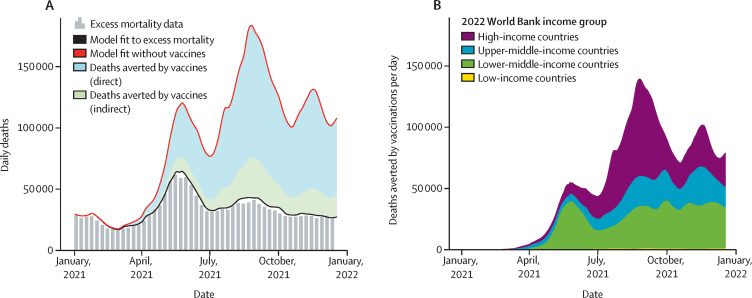
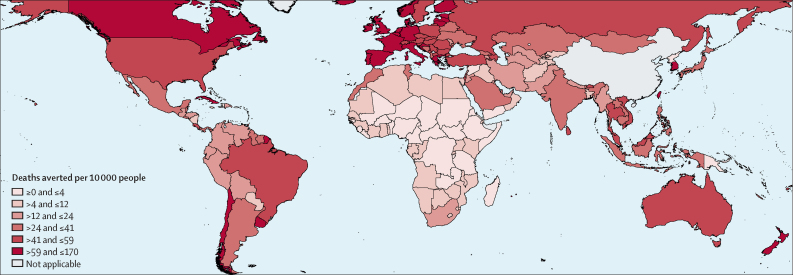
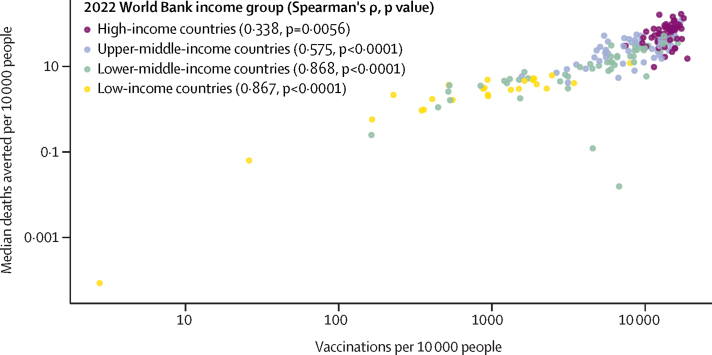
BACKGROUND: The first COVID-19 vaccine outside a clinical trial setting was administered on Dec 8, 2020. To ensure global vaccine equity, vaccine targets were set by the COVID-19 Vaccines Global Access (COVAX) Facility and WHO. However, due to vaccine shortfalls, these targets were not achieved by the end of 2021. We aimed to quantify the global impact of the first year of COVID-19 vaccination programmes. METHODS: A mathematical model of COVID-19 transmission and vaccination was separately fit to reported COVID-19 mortality and all-cause excess mortality in 185 countries and territories. The impact of COVID-19 vaccination programmes was determined by estimating the additional lives lost if no vaccines had been distributed. We also estimated the additional deaths that would have been averted had the vaccination coverage targets of 20% set by COVAX and 40% set by WHO been achieved by the end of 2021. FINDINGS: Based on official reported COVID-19 deaths, we estimated that vaccinations prevented 14·4 million (95% credible interval [Crl] 13·7-15·9) deaths from COVID-19 in 185 countries and territories between Dec 8, 2020, and Dec 8, 2021. This estimate rose to 19·8 million (95% Crl 19·1-20·4) deaths from COVID-19 averted when we used excess deaths as an estimate of the true extent of the pandemic, representing a global reduction of 63% in total deaths (19·8 million of 31·4 million) during the first year of COVID-19 vaccination. In COVAX Advance Market Commitment countries, we estimated that 41% of excess mortality (7·4 million [95% Crl 6·8-7·7] of 17·9 million deaths) was averted. In low-income countries, we estimated that an additional 45% (95% CrI 42-49) of deaths could have been averted had the 20% vaccination coverage target set by COVAX been met by each country, and that an additional 111% (105-118) of deaths could have been averted had the 40% target set by WHO been met by each country by the end of 2021. INTERPRETATION: COVID-19 vaccination has substantially altered the course of the pandemic, saving tens of millions of lives globally. However, inadequate access to vaccines in low-income countries has limited the impact in these settings, reinforcing the need for global vaccine equity and coverage. FUNDING: Schmidt Science Fellowship in partnership with the Rhodes Trust; WHO; UK Medical Research Council; Gavi, the Vaccine Alliance; Bill & Melinda Gates Foundation; National Institute for Health Research; and Community Jameel.
Overview
CoChat Summary
## TL;DR
This mathematical modelling study estimated that COVID-19 vaccination averted 14.4 million deaths based on reported deaths, or 19.8 million deaths when excess mortality was used, across 185 countries and territories during Dec 8, 2020–Dec 8, 2021. The paper argues that vaccine inequity limited impact in low-income settings and that reaching COVAX/WHO coverage targets could have saved substantially more lives.
## Key findings
- Using officially reported COVID-19 deaths, vaccination prevented 14.4 million deaths (95% CrI 13.7–15.9) in 185 countries and territories over the first year of vaccination.
- Using excess mortality, vaccination averted 19.8 million deaths (95% CrI 19.1–20.4), corresponding to a 63% reduction in total deaths (19.8 million of 31.4 million) during that year.
- In COVAX AMC countries, vaccinations averted 7.4 million deaths (95% CrI 6.8–7.7), representing 41% of estimated excess mortality (7.4 million of 17.9 million).
- If the WHO 40% target had been met in every country by the end of 2021, an additional 599,300 deaths (95% CrI 577,700–622,400) could have been averted; in low-income countries, meeting the COVAX 20% target could have averted an additional 45% of deaths, and the WHO 40% target an additional 111% of deaths.
## Methods
- The authors fit a previously published age-structured SEIRS transmission model with vaccination to reported COVID-19 mortality and to all-cause excess mortality in 185 countries and territories (excluding China), using country-level demography, mixing patterns, health-care capacity, and vaccination rollout data.
- Vaccination effects were modelled as protection against infection, severe disease, and onward transmission; the model also explicitly represented the delta variant and vaccine efficacy by country based on likely vaccine types used.
- They estimated deaths averted by comparing the fitted observed scenario against counterfactual scenarios with no vaccines, and with vaccines distributed to meet COVAX 20% and WHO 40% coverage targets by Dec 8, 2021, using Bayesian fitting with Metropolis-Hastings MCMC and 100 draws for uncertainty.
## Limitations
- The paper states that impact estimates were limited by uncertainty in excess mortality, gaps in genomic surveillance, and lack of detailed vaccination data for many countries; key inputs had to rely on working assumptions about vaccine type, rollout, and variant spread.
- The authors explicitly note a limitation of the COVAX/WHO target analysis: the targets were meant for the end of 2021, while the modelling endpoint was Dec 8, 2021, so some countries may have been closer to target by year-end than the model captured.
- Evident from the text: the counterfactual did not adjust for how governments or populations might have responded without vaccines, nor for possible changes in mobility, non-pharmaceutical interventions, or viral evolution, so the estimated deaths averted are model-dependent.
Model-written summary. Check it against the paper before relying on it.
Integrity signals
Registry
Cites
Statistics
Figures
Verification
Claims the paper makes
2 Valid · 2 Not valid · 4 Not checked · 48 Own results and interpretations
The cited sources that could be checked couldn’t confirm or dispute this claim.
In the paper
“In this analysis, we consequently focused on fitting to all-cause excess mortality, which provides a more complete description of the pandemic.15”
§ Global impact of the first year of COVID-19 vaccination: a mathematical modelling study > Discussion
What the sources say
- Could not verifycites [15] WHO Global excess deaths associated with COVID-19, January 2020–December 2021 https://www.who.int/data/stories/global-excess-deaths-associated-with-covid-19-january-2020-december-2021 May, 2022 sourceExperimental — accuracy not yet measured
The Methods (Statistical analysis) and Results examine hospital admission and emergency care attendance among people with delta versus alpha infections. The Discussion addresses limitations of those hospital-care data, but does not assess all-cause excess mortality or say that fitting to it gives a more complete description of the pandemic. Searches for “all-cause excess mortality” and “excess deaths” found no supporting passage; page numbers were not available in our copy. (LLM, conf=0.76)
plainstates a cause- Asserted: passes — The authors put it forward as true.
- Checkable: passes — It can be checked against evidence.
- Load-bearing: passes — The paper’s conclusions depend on it.
- Based: passes — The paper gives a reason why it holds.
- Could not verify
Every source the paper cites for this claim was checked and supports it.
In the paper
“Under-ascertainment of COVID-19 mortality is a known issue that has hindered our understanding of the pandemic.23”
§ Global impact of the first year of COVID-19 vaccination: a mathematical modelling study > Discussion
What the sources say
- Supportedcites [23] Whittaker C Walker PGT Alhaffar M Under-reporting of deaths limits our understanding of true burden of COVID-19 BMJ 375 2021 n2239 34642172 source
In “Renewed case for vaccine equity” (page unavailable), the paper calls it a myth that high-income countries were harder hit and shows that accounting for under-reporting changes the estimated share of COVID-19 mortality borne by low- and middle-income countries. This supports the claim that under-ascertainment has obscured understanding of the pandemic’s mortality burden. (LLM, conf=0.86)
boostedstates a cause- Asserted: passes — The authors put it forward as true.
- Checkable: passes — It can be checked against evidence.
- Load-bearing: passes — The paper’s conclusions depend on it.
- Based: passes — The paper gives a reason why it holds.
- Supported
The cited sources that could be checked couldn’t confirm or dispute this claim.
In the paper
“Our impact estimates were also limited by the inherent uncertainty in model-based estimates of excess mortality.13”
§ Global impact of the first year of COVID-19 vaccination: a mathematical modelling study > Discussion
What the sources say
- Could not verifycites [13] The Economist The pandemic's true death toll The Economist Nov 2, 2021 https://www.economist.com/graphic-detail/coronavirus-excess-deaths-estimates sourceExperimental — accuracy not yet measured
The Discussion describes limitations of estimates of vaccine effects on transmission, including testing behavior and previous infection status. A search for excess mortality, model-based mortality estimates, and deaths found no passage addressing uncertainty in excess-mortality estimates. Page numbers were not available in our copy. (LLM, conf=0.76)
plain- Asserted: passes — The authors put it forward as true.
- Checkable: passes — It can be checked against evidence.
- Load-bearing: unclear — It is unclear whether the paper’s conclusions depend on it.
- Based: passes — The paper gives a reason why it holds.
- Could not verify
The cited sources support only part of this claim — read each source’s verdict below.
In the paper
“Importantly, these estimates based on official reported COVID-19 deaths represent the lower bound of deaths averted at the global level due to the considerable levels of under-reporting of COVID-19 mortality documented worldwide.23”
§ Global impact of the first year of COVID-19 vaccination: a mathematical modelling study > Methods > Excess mortality and COVID-19 mortality data
What the sources say
- Partly supportedcites [23] Whittaker C Walker PGT Alhaffar M Under-reporting of deaths limits our understanding of true burden of COVID-19 BMJ 375 2021 n2239 34642172 sourceExperimental — accuracy not yet measured
In “Renewed case for vaccine equity” (page not provided), the paper says that under-reporting affects reported COVID-19 mortality and that excess-mortality estimates suggest a higher share of deaths in low- and middle-income countries. It also reports estimates of deaths that further vaccination could avert in those countries. It does not say that estimates based on officially reported deaths are a lower bound for deaths averted globally. (LLM, conf=0.83)
plainstates a cause- Asserted: passes — The authors put it forward as true.
- Checkable: passes — It can be checked against evidence.
- Load-bearing: passes — The paper’s conclusions depend on it.
- Based: passes — The paper gives a reason why it holds.
- Partly supported
A result the paper reports from its own data — it cites no other source for it, so there is none to check. The quote shows it is in the paper.
In the paper
“Notably, our model fits were unable to recreate excess mortality death tolls in recent epidemic waves in Iraq and Sudan because of the depletion of the susceptible population.”
§ Global impact of the first year of COVID-19 vaccination: a mathematical modelling study > Discussion
plainstates a cause- Asserted: passes — The authors put it forward as true.
- Checkable: passes — It can be checked against evidence.
- Load-bearing: unclear — It is unclear whether the paper’s conclusions depend on it.
- Based: passes — The paper gives a reason why it holds.
32 more claims
Create a free account to see all 56 claims and to verify the 3 references still open.
- It may state two separate claims as one. 14
- Probably not a substantial claim. 6
Claims other papers make about this one
Each is checked against this paper’s own text: does it say what the citing paper says it does?
The cited source says what the claim attributes to it.
In the citing paper
“Global COVID-19 vaccination programmes are estimated to have prevented 19.8 million deaths worldwide during the first year of roll-out(12)”
Citations
Cites
Estimated transmissibility and impact of SARS-CoV-2 lineage B.1.1.7 in England
Davies, N. G., Abbott, S., Barnard, R. C., Jarvis, C. I., Kucharski, A. J., Munday, J. D., Pearson, C. A. B., Russell, T. W., Tully, D. C., Washburne, A. D., et al. (2021) · Science · doi:10.1126/science.abg3055 · Cited by 2,581 · cited 1×
“20,21 Any epidemiological differences associated with previous variants were assumed to be reflected by their effects on mortality, 22 which were subsequently captured by the estimated R t trend.”
Estimated transmissibility and impact of SARS-CoV-2 lineage B.1.1.7 in England
Davies, N. G., Abbott, S., Barnard, R. C., Jarvis, C. I., Kucharski, A. J., Munday, J. D., Pearson, C. A. B., Russell, T. W., Tully, D. C., Washburne, A. D., et al. (2020) · doi:10.1101/2020.12.24.20248822 · Cited by 2,557
Wang, H., Paulson, K. R., Pease, S. A., Watson, S., Comfort, H., Zheng, P., Aravkin, A. Y., Bisignano, C., Barber, R. M., Alam, T., et al. (2022) · The Lancet · doi:10.1016/s0140-6736(21)02796-3 · Cited by 2,069
Wouters, O. J., Shadlen, K. C., Salcher-Konrad, M., Pollard, A. J., Larson, H. J., Teerawattananon, Y., & Jit, M. (2021) · The Lancet · doi:10.1016/s0140-6736(21)00306-8 · Cited by 1,288
Walker, P. G. T., Whittaker, C., Watson, O. J., Baguelin, M., Winskill, P., Hamlet, A., Djafaara, B. A., Cucunubá, Z., Olivera Mesa, D., Green, W., et al. (2020) · Science · doi:10.1126/science.abc0035 · Cited by 993
Self-citationTwohig, K. A., Nyberg, T., Zaidi, A., Thelwall, S., Sinnathamby, M. A., Aliabadi, S., Seaman, S. R., Harris, R. J., Hope, R., Lopez-Bernal, J., et al. (2022) · The Lancet Infectious Diseases · doi:10.1016/s1473-3099(21)00475-8 · Cited by 803 · cited 1×
“20,21 Any epidemiological differences associated with previous variants were assumed to be reflected by their effects on mortality, 22 which were subsequently captured by the estimated R t trend.”
Karlinsky, A., & Kobak, D. (2021) · eLife · doi:10.7554/elife.69336 · Cited by 772 · cited 1×
“11 Robust vital registration systems do not exist in many parts of the world, with WHO estimating that 40% of global deaths that occurred in 2020 were unregistered, 12 and therefore data on excess mortality are not available for every country.”
Understanding COVID-19 vaccine hesitancy
Machingaidze, S., & Wiysonge, C. S. (2021) · Nature Medicine · doi:10.1038/s41591-021-01459-7 · Cited by 590 · cited 1×
“7 This considerable heterogeneity in vaccination coverage has resulted in continued reliance on non-pharmaceutical interventions for pandemic management in some countries 8 but concomitantly enabled other nations to relax interventions as a route out of the pandemic.”
Twohig, K. A., Nyberg, T., Zaidi, A., Thelwall, S., Sinnathamby, M., Aliabadi, S., Seaman, S. R., Harris, R., Hope, R., Bernal, J. L., et al. (2021) · Northumbria Research Link (Northumbria University) · doi:10.17863/cam.76294 · Cited by 514
Effect of Covid-19 Vaccination on Transmission of Alpha and Delta Variants
Eyre, D. W., Taylor, D., Purver, M., Chapman, D., Fowler, T., Pouwels, K. B., Walker, A. S., & Peto, T. E. A. (2022) · New England Journal of Medicine · doi:10.1056/nejmoa2116597 · Cited by 464 · cited 2×
“19 We inferred vaccine efficacy for each country on the basis of vaccine types known to be predominantly used in each country.”
Cited by
Items 801–900 of 1,777
Patient Experiences after Physical Trauma: The Negative Effect of the COVID-19 Pandemic on Recovery
Finstad, J., Clausen, T., Rosseland, L. A., Røise, O., & Havnes, I. A. (2022) · International Journal of Environmental Research and Public Health · doi:10.3390/ijerph191912258 · Cited by 3
“The coronavirus disease 2019 (COVID-19) pandemic, which remains of significant public health concern worldwide [1], reached Norway in February 2020.”
BackgroundPopulism, Neoliberalism, and the Pandemic: The Tragedy of U.S. Policy
Cafruny, A. W. (2023) · International political economy series · doi:10.1007/978-3-031-23914-4_2 · Cited by 3
Changes in the national prevalence of asthma and coronavirus disease 2019 fatality
Bedolla‐Barajas, M., Morales‐Romero, J., Robles‐Figueroa, M., et al. (2023) · Annals of Allergy Asthma & Immunology · doi:10.1016/j.anai.2023.04.028 · Cited by 3
“This trend was observed among both children and adults and patients with and without COVID-19.”
InfluentialSoftič, A., Omeragić, E., Kondža, M., Srabović, N., Smajlović, A., Dautović, E., Pajić, N. B., Bego, T., Gagić, Ž., Brizić, I., et al. (2023) · Acta Medica Academica · doi:10.5644/ama2006-124.396 · Cited by 6
“The Coronavirus Disease 2019 (COVID-19) pandemic has persisted despite reductions in disease severity, hospitalizations and deaths since the introduction of multiple vaccines that protect against COVID-19 and pharmaceuticals to treat its symptoms (24, 25).”
Zhao, T., Wang, C., Zhang, S., Chen, L., Han, B., Liu, H., Xie, M., Cai, X., Zhang, S., Zhou, Y., et al. (2023) · Journal of Epidemiology and Global Health · doi:10.1007/s44197-023-00122-3 · Cited by 5
“[2] The coverage rate of administering about 80% can sustain a reduction of confirmed cases and number of deaths [3].”
BackgroundRetinal Changes After COVID-19 Infection and COVID-19 Vaccination
Leite, J., Abreu, A. C., Furtado, M. J., et al. (2023) · International Medical Case Reports Journal · doi:10.2147/imcrj.s408306 · Cited by 3
“The first COVID-19 vaccine, outside of a clinical trial setting, was administered in December 2020.(25) With the exception of rare cases of anaphylaxis, no episodes of thrombosis have been reported in early Phase III clinical trials.”
BackgroundMutation Analysis of SARS-CoV-2 Variants Isolated from Symptomatic Cases from Andhra Pradesh, India
Mudhigeti, N., Sireesha, K., Srikar, A., Katari, S. K., Mohan, A., Vengamma, B., Tirumala, C., Verma, A., & Kalawat, U. (2023) · Viruses · doi:10.3390/v15081656 · Cited by 6
“After successful clinical trials, the first COVID-19 vaccine (Pfizer BioNTech, New York, USA) was introduced on 8 December 2023 [39].”
BackgroundNabirova, D., Horth, R., Kasabekova, L. K., Henderson, A. K., Yesmagambetova, A., Alaverdyan, S., Nuorti, J. P., & Smagul, M. (2023) · Frontiers in Public Health · doi:10.3389/fpubh.2023.1245750 · Cited by 7
“Median [Min, Max] 10 [1, 44] 7 [1, 46] 6 [1, 41] 8 [1, 46] <0.”
Rivera, T., Brustrom, J. E., Antelo, M. V., et al. (2023) · Vaccines · doi:10.3390/vaccines11091471 · Cited by 3
“Although COVID-19 vaccination has saved tens of millions of lives worldwide [1], vaccination coverage varies tremendously across regions, with many countries falling far short of the World Health Organization’s (WHO) vaccination coverage target of 70% [2].”
BackgroundHsu, F.-C., Pan, L., Huang, Y., Yang, C.-H., Shiu, M., & Lin, H. (2023) · The Journal of Infectious Diseases · doi:10.1093/infdis/jiad431 · Cited by 3
Bosankic-Cmajcanin, N., Musa, S., & Draganović, S. (2023) · International Journal of Public Health · doi:10.3389/ijph.2023.1606411 · Cited by 4
“It is estimated that COVID-19 vaccinations prevented 14.4 million (95% Crl 13.7 – 15.9) deaths from COVID-19 across 185 countries and territories in the fi rst year that vaccines were available [1].”
BackgroundMethodInfluentialHall, A. J., Clement, N. D., MacLullich, A. M. J., White, T. O., & Duckworth, A. D. (2023) · Osteoporosis International · doi:10.1007/s00198-023-06954-w · Cited by 3
Evaluation of Students' Difficulties in Learning Mathematics in Complex Variable Material
Lumbantoruan, J. H. (2023) · Journal of Education Research and Evaluation · doi:10.23887/jere.v7i3.60532 · Cited by 6
“This finding is in line with the opinion that the previous mathematics course had an impact on the mathematics course being worked on while studying (Booth et al., 2017; Csapó, 2022; Schukajlow et al., 2022; Watson et al., 2022).”
ResultKijak, G. H., Ahani, B., Arbetter, D. F., Chuecos, F., Gopalakrishnan, V., Beloor, J., Brady, T. M., Nguyen, A., Roe, T. L., Schuko, N., et al. (2023) · Infectious Diseases and Therapy · doi:10.1007/s40121-023-00882-2 · Cited by 3
COVID-19 vaccines should be evaluated from the societal perspective
Sevilla, J. P. (2023) · Journal of Medical Economics · doi:10.1080/13696998.2023.2287935 · Cited by 3
Soubgui, A. F. M., Foko, L. P. K., Enyegue, E. L. E., Mboussi, W. S. N., & Mogtomo, M. L. K. (2023) · Trends in Medical Research · doi:10.3923/tmr.2023.122.135 · Cited by 2
Vaccination policy and mortality from COVID-19 in the European Union
Agostini, E., Bloise, F., & Tancioni, M. (2024) · Econometrics Journal · doi:10.1093/ectj/utae005 · Cited by 8
An Investigation on Use of Traditional Medicine during COVID-19 and Post-COVID-19
Kamoka, H. M. E., & Elengoe, A. (2024) · International Journal of Advancement in Life Sciences Research · doi:10.31632/ijalsr.2024.v07i01.010 · Cited by 6
Celebrating vaccines: The 2023 Nobel prize in medicine or physiology
Poland, G. A., & MacIntyre, C. R. (2024) · Vaccine · doi:10.1016/j.vaccine.2023.10.056 · Cited by 3
The COVID-19 Vaccine Gamble—By luck they worked in the oldest, frailest people
Soiza, R. L., & Niven, M. (2024) · Revista Española de Geriatría y Gerontología · doi:10.1016/j.regg.2023.101427 · Cited by 3
Association of COVID-19 vaccination with duration of hospitalization in older adults in Hong Kong
Chen, D., Cowling, B. J., Ainslie, K. E. C., Lin, Y., Wong, J. Y., Lau, E. H. Y., Wu, P., & Nealon, J. (2024) · Vaccine · doi:10.1016/j.vaccine.2024.02.074 · Cited by 3
Sulcebe, G., Kurti-Prifti, M., Shyti, E., Dashi-Pasholli, J., Cenko, F., & Ylli, A. (2024) · Clinical and Experimental Vaccine Research · doi:10.7774/cevr.2024.13.1.63 · Cited by 3
Musa, S., Merdrignac, L., Skočibušić, S., Nedic, R., Cilović‐Lagarija, Š., & Kissling, E. (2024) · Vaccine · doi:10.1016/j.vaccine.2024.04.047 · Cited by 3
Wilpstra, C. D., Morrell, S., Mirza, N. A., & Ralph, J. (2024) · Canadian Journal of Nursing Research · doi:10.1177/08445621241251711 · Cited by 4
Cárdenas, V., Gars, M. L., Truyers, C., Ruiz‐Guiñazú, J., Struyf, F., Colfer, A., Bonten, M. J. M., Borobia, A. M., Reisinger, E. C., Kamerling, I. M. C., et al. (2024) · Vaccine · doi:10.1016/j.vaccine.2024.04.059 · Cited by 4
Humoral Immunity across the SARS-CoV-2 Spike after Sputnik V (Gam-COVID-Vac) Vaccination
Cornejo, A., Franco, C. D., Rodríguez, M., García, A. H., Belisario, I., Mayora, S. J., Garzaro, D. J., Zambrano, J. L., Jaspe, R. C., Hidalgo, M., et al. (2024) · Antibodies · doi:10.3390/antib13020041 · Cited by 4
“Nonetheless, SARS-CoV-2 vaccines have contributed to attenuate such a burden by promoting the development of effective immune responses, thus reducing the spread of the pandemic, the severity of the disease, hospitalizations and deaths [2].”
BackgroundEvidence of quality of life for hospitalised patients with COVID-19: a scoping review
Webb, E., King, N. V., Howdon, D., Carrol, E. D., Euden, J., Howard, P., Pallmann, P., Llewelyn, M., Thomas‐Jones, E., Shinkins, B., et al. (2023) · Health Technology Assessment · doi:10.3310/atpr4281 · Cited by 3
“Thanks to the delivery of large, rapid randomised controlled trials, 7, 8 there is now much more knowledge about how best to prevent and treat COVID-19, including widespread vaccination, 9 , 10 and the distribution of disease severity in hospitals has consequently changed over time.”
BackgroundQin, Q., Temkin‐Greener, H., Veazie, P. J., & Cai, S. (2024) · Journal of the American Geriatrics Society · doi:10.1111/jgs.19039 · Cited by 3
“55 However, such trends varied by individual race, ethnicity, and community.”
Amstutz, A., Chammartin, F., Audigé, A., Eichenberger, A. L., Braun, D. L., Amico, P., Stoeckle, M. P., Hasse, B. K., Papadimitriou‐Olivgeris, M., Manuel, O., et al. (2024) · The Journal of Infectious Diseases · doi:10.1093/infdis/jiae291 · Cited by 7
Microneedle-mediated vaccine delivery
Nguyen, T. T., & Vo, G. V. (2024) · Elsevier eBooks · doi:10.1016/b978-0-443-13881-2.00016-3 · Cited by 4
Relative Effectiveness of the NVX-CoV2373 Vaccine Compared With the BNT162b2 Vaccine in Adolescents
Lee, E. S., Choe, Y. J., Choe, S., Gwak, E. S., & Kwon, D. (2024) · The Pediatric Infectious Disease Journal · doi:10.1097/inf.0000000000004463 · Cited by 3
Exploiting the Affimer platform against influenza A virus
Debski-Antoniak, O., Flynn, A., Klebl, D. P., Rojas Rechy, M. H., Tiede, C., Wilson, I. A., Muench, S. P., Tomlinson, D., & Fontana, J. (2024) · mBio · doi:10.1128/mbio.01804-24 · Cited by 3
“manufacturing alongside the cost of production and distribution is a major bottleneck for both vaccines and antibodies (33,34).”
BackgroundShoemaker, K., Soboleva, K., Branche, A. R., Shankaran, S., Theodore, D., Bari, M., Ezeh, V., Green, J. A., Kelly, E. J., Lan, D., et al. (2024) · Vaccines · doi:10.3390/vaccines12080883 · Cited by 5
Top, K. A., Shulha, H. P., Muller, M. P., Valiquette, L., Vanderkooi, O. G., Kellner, J. D., Sadarangani, M., Irvine, M. A., McGeer, A., Isenor, J. E., et al. (2024) · Vaccine · doi:10.1016/j.vaccine.2024.126445 · Cited by 4
Amodio, D., Angelidou, A., Cotugno, N., Sherman, A. C., Levy, O., Palma, P., Pollard, A. J., Damme, P. V., Rappuoli, R., Goulder, P., et al. (2024) · Vaccine · doi:10.1016/j.vaccine.2024.126477 · Cited by 6
“The presentation addressed the ethical distribution of vaccines and the impact on global mortality, emphasizing the need to prioritize older adults and vulnerable populations [8].”
Scaglione, V., Gardin, S., Sasset, L., et al. (2024) · European journal of medical research · doi:10.1186/s40001-024-02154-2 · Cited by 3
“…confounders and mitigators of effect must be considered, including the protective effect of vaccination in reducing the COVID-19 progression [3], the generally milder disease associated with the Omicron variant [6, 12–15, 18 From an economic perspective, despite a lower number of total…”
Vaccine Knowledge and Acceptance Among Hadzabe Hunter‐Gatherers in Tanzania
Shattuck, E. C., Forman, J., Shiju, S., Herlosky, K. N., Mabulla, I. A., & Crittenden, A. N. (2025) · American Journal of Human Biology · doi:10.1002/ajhb.70007 · Cited by 4
Cilović‐Lagarija, Š., Rantzau, J. T. M., Skočibušić, S., Musa, S., Sprečo, A., Isaković, A., Palo, M., Dizdar, F., Čolović, H., Sawin, V. I., et al. (2025) · Influenza and Other Respiratory Viruses · doi:10.1111/irv.70086 · Cited by 3
“In addition, we observed a significant difference between official number of deaths attributed to COVID-19 compared to all-cause excess number of deaths in 2020 and 2021, an observation made in most countries globally [40, 41].”
Top, K. A., Bettinger, J. A., Embree, J. E., Jadavji, T., Purewal, R., Sauve, L. J., Papenburg, J., Deeks, S. L., Wilson, S. E., Dahdah, N., et al. (2025) · The Journal of Pediatrics · doi:10.1016/j.jpeds.2025.114642 · Cited by 5
Hamonic, G., Pastural, É., Arora, S., Lew, J. M., Cai, Y., Scruten, E., Buchanan, R. M., ElSherif, M. S., Ye, L., Courant, T., et al. (2025) · Vaccine · doi:10.1016/j.vaccine.2025.127748 · Cited by 3
Zalewska−Ziob, M., Fus, W., Konka, A., Wystyrk, K., Bochenek, A., Botor, H., Fronczek, M., Zembala-John, J., & Adamek, B. (2022) · Vaccines · doi:10.3390/vaccines10091546 · Cited by 6
“The first vaccines outside clinical trials were administered in the United Kingdom on 8 December 2020 [12].”
BackgroundSaif‐Ur‐Rahman, K., Kothari, K. U., Sadlier, C., Moriarty, F., Movsisyan, A., Whelan, S. O., Taneri, P. E., Blair, M., Guyatt, G. H., & Devane, D. (2023) · Cochrane Evidence Synthesis and Methods · doi:10.1002/cesm.12001 · Cited by 3
“The development and rollout of COVID ‐ 19 vaccines across many countries have substantially improved outcomes further [4].”
VACCINES VERSUS COVID-19 VACCINES: MANEUVER TIMELINE OF DEVELOPMENT AND TRIAL DESIGNS
Gaddam, S., Pasupulati, H., & Padi, S. S. V. (2023) · World Journal of Current Medical and Pharmaceutical Research · doi:10.37022/wjcmpr.v5i3.265 · Cited by 6
“111% of deaths could have been prevented if the 20% vaccination coverage target set by the COVID-19 Vaccines Global Access (COVAX) Facility and the 40% target set by the WHO, respectively had been met by low-income countries (LICs) by the end of 2021 [15].”
BackgroundAlfonso, R., Lin, J., Lei, J., Liu, J., Roche, M., Oliveira, A. D., Raisingani, A., Kumar, A., Kirschner, V., Feuer, G., et al. (2023) · Frontiers in Immunology · doi:10.3389/fimmu.2023.1194671 · Cited by 4
Physician stress in the era of COVID-19 vaccine disparity: a multi-institutional survey
Zahl, S. B., Mondal, D., Tolentino, D., Fischer, J. A., & Jimenez, S. (2023) · Journal of Osteopathic Medicine · doi:10.1515/jom-2022-0194 · Cited by 4
Huang, Y., Chen, Y.-C., Chuang, C.-H., Chang, S., & Chiu, C. (2023) · Vaccines · doi:10.3390/vaccines11091441 · Cited by 3
Effects of Biological Sex and Pregnancy on SARS-CoV-2 Pathogenesis and Vaccine Outcomes
Shapiro, J. R., Roberts, C. W., Arcovio, K., Reade, L., Klein, S. L., & Dhakal, S. (2023) · Current topics in microbiology and immunology · doi:10.1007/978-3-031-35139-6_4 · Cited by 8
Riou, J., Hauser, A., Fesser, A., Althaus, C. L., Egger, M., & Konstantinoudis, G. (2022) · medRxiv · doi:10.1101/2022.08.05.22278458 · Cited by 3
Booster mRNA vaccination post-SARS-CoV-2 infection enhances functional qualities of T cell immunityPreprint
Buggert, M., Cai, C., Gao, Y., Rivera‐Ballesteros, O., Hansson, L., Österborg, A., Sandberg, J. K., Ljunggren, H., Björkström, N. K., Strålin, K., et al. (2023) · Research Square · doi:10.21203/rs.3.rs-2587292/v1 · Cited by 3
Excess Mortality in the Vaccination Era in the United States, By State and 6-Month PeriodPreprint
Faust, J. S., Renton, B., Du, C., Chen, A. J., Li, S., Lin, Z., & Krumholz, H. M. (2023) · medRxiv · doi:10.1101/2023.03.07.23286927 · Cited by 2
“Introduction Vaccination has been shown to reduce COVID-19 mortality, the major driver of all-cause excess mortality.(1) Both vaccination rates and excess mortality has varied across the US.”
BackgroundCOVID-19 and policy for science
OECD (2023) · OECD science, technology and industry policy papers · doi:10.1787/8f86e60b-en · Cited by 10
Finch, E., Nilles, E. J., Paulino, C. T., Skewes-Ramm, R., Lau, C. L., Lowe, R., & Kucharski, A. J. (2023) · medRxiv · doi:10.1101/2023.10.05.23296586 · Cited by 4
Bakács, T., Fehér, L. Z., & Puskás, L. G. (2024) · Qeios · doi:10.32388/s7smjs.2 · Cited by 3
Quantifying the impact of a broadly protective sarbecovirus vaccine in a future SARS-X pandemicPreprint
Whittaker, C. A., Barnsley, G., Mesa, D. O., et al. (2024) · medRxiv · doi:10.1101/2024.08.12.24311730 · Cited by 3
Self-citationA Historical Overview on mRNA Vaccine Development
Verbeke, R., Cheng, M. H. Y., & Cullis, P. R. (2024) · Wiley eBooks · doi:10.1002/9783527838394.ch1 · Cited by 9
Zheng, J., Lin, Y., Huffman, A., Masci, A. M., Racz, R., Wu, G., Roan, K., Ong, E., Sarntivijai, S., Hu, J., et al. (2026) · Scientific Data · doi:10.1038/s41597-026-07298-w · Cited by 5
“Recently, vaccines have played a crucial role in combating the COVID-19 pandemic, reducing global deaths by over 60% during the first year of COVID-19 vaccination 3 .”
Exploiting the Affimer platform against influenza A virus
(2023) · doi:10.1101/2023.08.22.554342 · Cited by 3
Employment Anxiety among College Students During COVID-19: A Systematic Review
Linge, D., & Kosnin, A. M. (2024) · International Journal of Academic Research in Progressive Education and Development · doi:10.6007/ijarped/v13-i1/20124 · Cited by 3
“Vaccination has contributed to slowing down the development of the pandemic (Watson, 2022; Dye, 2022; Fan et al., 2022), and many countries have no longer imposed traffic restrictions or travel restrictions on the pandemic of coronaviruses.”
BackgroundA Dialogue about Vaccine Side Effects: Understanding Difficult Pandemic Experiences
Hammarlin, M.-M., & Dellson, P. (2024) · Journal of Medical Humanities · doi:10.1007/s10912-024-09850-4 · Cited by 2
Ibrahim, F. M., Elmawla, D. A., Elgarhy, S. M. A., Ibrahim, A. M., & Fadila, D. E. S. (2024) · Gerontology and Geriatric Medicine · doi:10.1177/23337214241273292 · Cited by 3
“According to the analysis of the global impact of COVID-19 immunization, many fatalities were prevented following the administration of vaccines (Watson et al., 2022).”
BackgroundLapo, H. M., Sardeli, A. V., Mariano, L. O., Howroyd, F., Sokoll, P. R., Sapey, E., & Chacon‐Mikahil, M. P. T. (2024) · Experimental Gerontology · doi:10.1016/j.exger.2024.112617 · Cited by 4
“It is known that deaths from COVID-19 have been decreasing since vaccination (Watson et al., 2022), but prior to this period, five to 20 % of those infected developed severe COVID-19 and required hospital care (Cummings et al., 2020).”
Impact of COVID-19 Vaccination in Thailand: Averted Deaths and Severe Infections Across Age Groups
Wilasang, C., Suttirat, P., Wannigama, D. L., Amarasiri, M., Chadsuthi, S., & Modchang, C. (2024) · Tropical Medicine and Infectious Disease · doi:10.3390/tropicalmed9120286 · Cited by 4
“…vaccine efficacy against infection 60% [27] Mean vaccine efficacy against disease 70% [27] Mean duration of naturally acquired immunity 365 days [27] Vaccine duration of protection 446 days Estimated from [23] Probability of death if require critical care but do not receive it 90.5% (range 85–95”
InfluentialPuga, M. A. M., de Oliveira, R. D., da Silva, P. V., Charu, V., Hedlin, H., Lu, D., Zhang, C. A., Shaw, B. J., Rosser, J. I., Seidman, J. C., et al. (2025) · The Lancet Regional Health - Americas · doi:10.1016/j.lana.2025.101031 · Cited by 5
Muttamba, W., Touré, A., Wayengera, M., et al. (2025) · Trials · doi:10.1186/s13063-025-08805-x · Cited by 2
The Impact of Vaccination Frequency on COVID-19 Public Health Outcomes: A Model-Based Analysis
Stoddard, M., Yuan, L., Sarkar, S., Egeren, D. V., Mangalaganesh, S., Nolan, R. P., Rogers, M. S., Hather, G., White, L. F., & Chakravarty, A. (2025) · Vaccines · doi:10.3390/vaccines13040368 · Cited by 8
“As vaccinal efficacy against severe disease (VEs) was initially very high [1–3], this strategy contributed to a lowering of the infection fatality rate for SARS-CoV-2 [14].”
Zaid, S. N. A., Kadir, A. A., Norhayati, M. N., Ahmad, B., Yusoff, M. S. B., Ramli, A. S., & Yan, J. L. S. (2025) · PeerJ · doi:10.7717/peerj.19318 · Cited by 2
Adaptive strategies for the deployment of rapid diagnostic tests for COVID-19: a modelling study
Cilloni, L., Kendall, E. A., Dowdy, D. W., & Arinaminpathy, N. (2023) · Gates Open Research · doi:10.12688/gatesopenres.14202.2 · Cited by 3
Burhan, E., Azzumar, F., Sinuraya, F. A. G., Prasetyo, S., Gayatri, D., Ariawan, I., Rakasiwi, M. I. D., Afladhia, H. L., Ilham, A. F., Akbar, I., et al. (2025) · PLoS ONE · doi:10.1371/journal.pone.0320779 · Cited by 2
“From the first year of the vaccination campaign, global COVID-19 vaccination had changed the trajectory of the pandemic and was expected to prevent 63% of total excess deaths between December 2020 to December 2021 [2].”
Tate, M., Illingworth, C. J. R., MacGregor, G., et al. (2025) · Antimicrobial Agents and Chemotherapy · doi:10.1128/aac.00054-25 · Cited by 2
Chemaitelly, H. S., Ayoub, H. H., Coyle, P. V., Tang, P., Hasan, M. R., Yassine, H. M., Thani, A. A. A., Kanaani, Z. A., Al‐Kuwari, E., Jeremijenko, A. M., et al. (2025) · Vaccine · doi:10.1016/j.vaccine.2025.127556 · Cited by 3
Nojković, A., Arsić, M., & Milošević, E. (2025) · Empirica · doi:10.1007/s10663-025-09660-4 · Cited by 2
Mass Vaccination Scheduling: Trading Off Infections, Throughput, and Overtime
Luo, S., & Shechter, S. M. (2025) · Management Science · doi:10.1287/mnsc.2023.02958 · Cited by 2
Pencelli, V., Clemens, R. L., Bica, M. A., et al. (2025) · Frontiers in Public Health · doi:10.3389/fpubh.2025.1617066 · Cited by 2
The New Modern Medicine: Disease, Evidence, and Epidemiological Medicine
Fuller, J. (2025) · doi:10.1093/9780190066178.001.0001 · Cited by 7
COVID-19 in retrospect: Public health lessons from a global crisis
Bratzler, D. W. (2025) · The American Journal of the Medical Sciences · doi:10.1016/j.amjms.2025.10.008 · Cited by 7
Chappell, K. J., Mordant, F. L., Amarilla, A. A., Modhiran, N., Liang, B., Li, Z., Lackenby, J. A., Jaberolansar, N., O’Donnell, J. S., Kienzle, V., et al. (2025) · The Journal of Infectious Diseases · doi:10.1093/infdis/jiaf568 · Cited by 2
“The rapid development and deployment of vaccines for SARS-CoV-2 played a critical role in bringing the COVID-19 pandemic under control and is estimated to have saved tens of millions of lives [12].”
Muangnoicharoen, S., Lawpoolsri, S., Cowan, J., Luvira, V., Jongkaewwattana, A., Nanthapisal, S., Phumratanaprapin, W., Kamolratanakul, S., Thanthamnu, N., Duangdee, C., et al. (2025) · Scientific Reports · doi:10.1038/s41598-025-29686-9 · Cited by 2
Ordóñez-Mena, J. M., Gu, X., Joy, M., Fan, X., Meza-Torres, B., Hinton, W., Wimalaratna, R., Jamie, G., Forbes, A., Kar, D., et al. (2025) · International Journal of Infectious Diseases · doi:10.1016/j.ijid.2025.108289 · Cited by 3
Estimation of undetected asymptomatic infections of COVID-19: a mathematical modeling approach
Choi, Y., Kim, P., & Lee, C. H. (2025) · Scientific Reports · doi:10.1038/s41598-025-28374-y · Cited by 3
“This observation aligns with previous studies suggesting that while vaccination effectively reduces the risk of severe disease 42–46 , it may also alter the clinical manifestation, leading to a greater proportion of mild or asymptomatic infections.”
Sparkes, D., Munro, K., Kamal, A., Haywood, J., Howells, A., Foulkes, S., Russell, S., Platt, N., Broad, J., Brown, C. S., et al. (2025) · BMJ Open · doi:10.1136/bmjopen-2025-113889 · Cited by 2
Ciaffi, J., Torrigiani, G., Ruscitti, P., Zambon, A., & Ursini, F. (2026) · Seminars in Arthritis and Rheumatism · doi:10.1016/j.semarthrit.2025.152911 · Cited by 2
Aboshi, M., Kawakami, D., Kono, K., Nishiyama, A., Nogimori, T., Sunada, Y., Matsuda, K., Sekida, T., Suga, S., Smith, J., et al. (2026) · iScience · doi:10.1016/j.isci.2026.114766 · Cited by 3
“3,4 While no longer considered a global public health emergency, vaccination against SARS-CoV-2 will be critical for continued disease prevention in the future, whereby it will be important to deploy variant-adapted vaccines in response to the emergence of new variants.”
Ghahremani, M., & Kargaripadar, L. (2026) · Roeper Review · doi:10.1080/02783193.2025.2593025 · Cited by 3
“By 2023, over 13 billion doses had been administered globally, preventing an estimated 20 million deaths (Watson et al., 2022).”
Whitaker, J. A., Rebolledo, P. A., Abate, G., Babu, T. M., Rouphael, N. G., Wald, A. P., Sahly, H. M. E., Jooss, K. U., Hart, M. G., Makowski, M., et al. (2026) · Vaccine · doi:10.1016/j.vaccine.2026.128358 · Cited by 2
“The authorized and approved COVID-19 vaccines were successful in preventing severe COVID-19 and saving millions of lives [2].”
Liu, Q., Liu, Y., Li, J., Huang, S. J., Chen, Z., Li, J., Wang, T., Zhou, P., Huo, J., & Li, D. R. (2026) · Vaccines · doi:10.3390/vaccines14030239 · Cited by 4
“Notably, the Pfizer/BioNTech and Moderna mRNA vaccines proved to be efficacious and saved millions of lives during the COVID-19 pandemic [23].”
Foundation models for time series forecasting and policy evaluation in infectious disease epidemics
Kalahasti, S., Faucher, B., Wang, B., Ascione, C., Carbajal, R., Enault, M., Vincent‐Cassy, C., Launay, T., Guerrisi, C., Boëlle, P., et al. (2026) · Epidemics · doi:10.1016/j.epidem.2026.100916 · Cited by 21
Baffoe-Bonnie, A., Swann, M. C., & Kim, H. S. (2023) · Open Forum Infectious Diseases · doi:10.1093/ofid/ofad114 · Cited by 2
COVID-19 vaccination status and its effect on outcome and disease severity
Andrews, A., Mathew, A. C., & Mathew, T. (2023) · International Journal of Community Medicine and Public Health · doi:10.18203/2394-6040.ijcmph20230016 · Cited by 3
Domestic violence and mental health during COVID ‐19
Keynejad, R. C. (2023) · Progress in Neurology and Psychiatry · doi:10.1002/pnp.783 · Cited by 3
Orun, A., & Kurugöllü, F. (2023) · Journal of Imaging Informatics in Medicine · doi:10.1007/s10278-023-00795-z · Cited by 2
“According to the global health studies [1], those vaccines prevented an additional 14.4 million to 19.8 million deaths between 2020 and 2021.”
BackgroundInfluentialEffectiveness of BNT162b2 vaccination in preventing COVID-19–associated death in Poland
Pietrzak, Ł., Polok, K., Halik, R., Szuster‐Ciesielska, A., & Szczeklik, W. (2023) · Polskie Archiwum Medycyny Wewnętrznej · doi:10.20452/pamw.16453 · Cited by 4
Bansal, A., Pusey, J., Shah, R. A., & Tolley, A. (2023) · PLoS ONE · doi:10.1371/journal.pone.0284856 · Cited by 2
Pei, L., & Liu, D. (2023) · Journal of Physics A Mathematical and Theoretical · doi:10.1088/1751-8121/acd233 · Cited by 2
“Watson et al developed mathematical models of COVID-19 transmission and vaccination to fit the reported COVID-19 mortality in 185 countries and regions, respectively [34].”
Yang, L., Xu, L., Guo, Q., Deng, B., Hong, Y., Wang, L., Wang, Y., Jiang, D., & Ren, H. (2023) · International Journal of Medical Sciences · doi:10.7150/ijms.78766 · Cited by 4
Breastfeeding during the COVID-19 pandemic
Chanda, B., & Chen, X.-Q. (2023) · Frontiers in Pediatrics · doi:10.3389/fped.2023.1120763 · Cited by 3
An investigation of the effects of lockdowns and COVID-19 vaccinations in Ireland
Sefidi, N. P., Nejad, A. S., & Mooney, P. (2023) · AGILE GIScience Series · doi:10.5194/agile-giss-4-37-2023 · Cited by 3
The community acceptance of COVID-19 vaccines in Rakhine State: A cross-sectional study in Myanmar
Simon, S., Min, K. M., Latt, T. Z., Moe, P. P., & Tun, K. M. (2023) · PLOS Global Public Health · doi:10.1371/journal.pgph.0002162 · Cited by 2
Customizably designed multibodies neutralize SARS-CoV-2 in a variant-insensitive manner
Abreu, C., Ortega, C., Olivero‐Deibe, N., Carrión, F., Gaete-Argel, A., Valiente‐Echeverría, F., Soto‐Rifo, R., Bonotto, R. M., Marcello, A., & Pantano, S. (2023) · Frontiers in Immunology · doi:10.3389/fimmu.2023.1226880 · Cited by 3
Yang, J., McClymont, H., Warne, D. J., Wang, L., & Hu, W. (2023) · China CDC Weekly · doi:10.46234/ccdcw2023.139 · Cited by 3
Brehm, T. T., Heyer, A., Woo, M. S., Fischer, M., van der Meirschen, M., Wichmann, D., Jarczak, D., Roedl, K., Schmiedel, S., Addo, M. M., et al. (2023) · Journal of Infection and Public Health · doi:10.1016/j.jiph.2023.08.010 · Cited by 2
Metadata
- Authors
- Watson, O. J., Barnsley, G., Toor, J., Hogan, A. B., Winskill, P., & Ghani, A. C.
- Affiliations
- Imperial College London (GB)
- Corresponding author
- Watson, Oliver J
- Venue
- The Lancet Infectious Diseases
- Publisher
- Elsevier BV
- Published
- 2022-09
- Volume
- 22
- Issue
- 9
- Pages
- 1293-1302
- ISSN
- 1473-3099 (ISSN-L)
- PMC
- PMC9225255
- OpenAlex
- W4283395367
- Semantic Scholar
- e048be45c9e0900c299d78c2cb327ce9afd77467
- Cited by
- 1,769
- References
- 26
- Citations by year
- 2026: 165 · 2025: 341 · 2024: 533 · 2023: 578 · 2022: 150
- FWCI
- 237.54
- Type
- journal article
- Language
- en
- Update notices
- erratum (2023-10-01)
- Open access
- hybrid
- doi.org
- Licence
- cc-by
- www.elsevier.com/tdm/userlicense/1.0/ (tdm)
- www.elsevier.com/legal/tdmrep-license (tdm)
- creativecommons.org/licenses/by/4.0/ (vor)
- Locations
- The Lancet Infectious Diseases (publishedVersion, cc-by)
- PubMed Central (publishedVersion, cc-by)
- PubMed (publishedVersion)
- LSHTM Research Online (London School of Hygiene and Tropical Medicine) (acceptedVersion)
- Spiral (Imperial College London) (submittedVersion, other-oa)
- Funders
- Bill and Melinda Gates Foundation
- GAVI Alliance
- National Institute for Health and Care Research
- Imperial College London
- Medical Research Council (MR/R015600/1, MC_PC_19012)
- Topics
- Physical Sciences › Mathematics › Modeling and Simulation › COVID-19 epidemiological studies
- Health Sciences › Medicine › Infectious Diseases › SARS-CoV-2 and COVID-19 Research
- Social Sciences › Health › Vaccine Coverage and Hesitancy
- Keywords
- COVID-19 vaccination, vaccine impact, COVID-19 mortality, excess mortality, mortality averted, COVAX, vaccine equity, low-income countries, mathematical transmission model, global health equity, SARS-CoV-2, advance market commitments
- MeSH terms
- COVID-19, COVID-19 Vaccines, Humans, Models, Theoretical, Vaccination, Vaccines, Global Health
About these checks
Registry, retraction, Cites and statistics results are computed, not judged, with one exception: a printed reference that no index lists is read once by a model before it counts as a citation error. Claims are extracted by a model and kept only when their quote appears verbatim in the text; each cited source is then checked, with a model’s help, for whether it says what the claim relies on. Those verdicts can be wrong — read the claim’s quote and the cited source before relying on one.
The claim verdicts this report counts are experimental: their accuracy is not yet measured.
A language model drew the claims from the paper on 2026-10-10, under version 3 of the claim definition (model deepseek-v4.1-flash, prompt extract-v3).
A second model labelled each claim on 2026-10-10 (model jev-1.13-20260917, definition revision gold-guideline-v0.2).
Cited sources are checked with a language model’s help (gpt-6-sol).
Statistics and arithmetic are recomputed, not judged.
Confidence bands are shown only for fields calibrated on our annotated test set. None is calibrated yet, so no band is shown.
What counts as a claim ›How we measure confidence ›How we check this ›
Are you an author, or do you see a problem with this page? Request a review
Data sources
Bibliographic data: Semantic Scholar, OpenAlex, Crossref.
Contains information from the Semantic Scholar Academic Graph Datasets, made available under the ODC Attribution License (ODC-BY 1.0).
Semantic Scholar’s data is described in: Kinney, R., et al. (2023). The Semantic Scholar Open Data Platform. arXiv:2301.10140.
