

Global impact of the first year of COVID-19 vaccination: a mathematical modelling study
Open accessThe DOI matches its Crossref record; 23 of the 26 references it cites were found in a registry or an index; 4 of the 8 sources its claims cite were checked for support.
Abstract
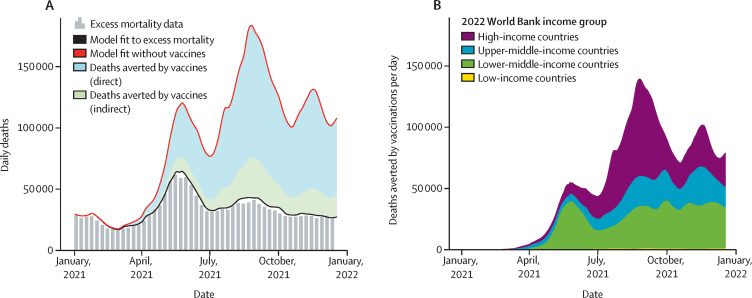
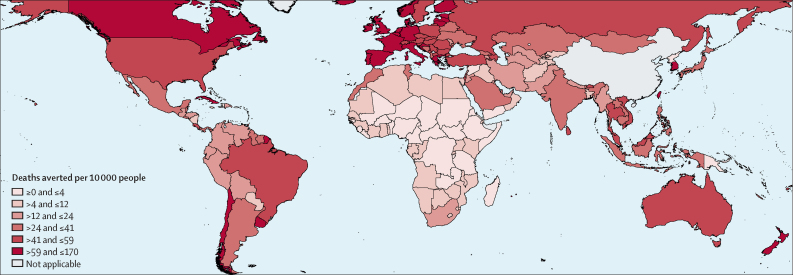
BACKGROUND: The first COVID-19 vaccine outside a clinical trial setting was administered on Dec 8, 2020. To ensure global vaccine equity, vaccine targets were set by the COVID-19 Vaccines Global Access (COVAX) Facility and WHO. However, due to vaccine shortfalls, these targets were not achieved by the end of 2021. We aimed to quantify the global impact of the first year of COVID-19 vaccination programmes. METHODS: A mathematical model of COVID-19 transmission and vaccination was separately fit to reported COVID-19 mortality and all-cause excess mortality in 185 countries and territories. The impact of COVID-19 vaccination programmes was determined by estimating the additional lives lost if no vaccines had been distributed. We also estimated the additional deaths that would have been averted had the vaccination coverage targets of 20% set by COVAX and 40% set by WHO been achieved by the end of 2021. FINDINGS: Based on official reported COVID-19 deaths, we estimated that vaccinations prevented 14·4 million (95% credible interval [Crl] 13·7-15·9) deaths from COVID-19 in 185 countries and territories between Dec 8, 2020, and Dec 8, 2021. This estimate rose to 19·8 million (95% Crl 19·1-20·4) deaths from COVID-19 averted when we used excess deaths as an estimate of the true extent of the pandemic, representing a global reduction of 63% in total deaths (19·8 million of 31·4 million) during the first year of COVID-19 vaccination. In COVAX Advance Market Commitment countries, we estimated that 41% of excess mortality (7·4 million [95% Crl 6·8-7·7] of 17·9 million deaths) was averted. In low-income countries, we estimated that an additional 45% (95% CrI 42-49) of deaths could have been averted had the 20% vaccination coverage target set by COVAX been met by each country, and that an additional 111% (105-118) of deaths could have been averted had the 40% target set by WHO been met by each country by the end of 2021. INTERPRETATION: COVID-19 vaccination has substantially altered the course of the pandemic, saving tens of millions of lives globally. However, inadequate access to vaccines in low-income countries has limited the impact in these settings, reinforcing the need for global vaccine equity and coverage. FUNDING: Schmidt Science Fellowship in partnership with the Rhodes Trust; WHO; UK Medical Research Council; Gavi, the Vaccine Alliance; Bill & Melinda Gates Foundation; National Institute for Health Research; and Community Jameel.
Overview
CoChat Summary
## TL;DR
This mathematical modelling study estimated that COVID-19 vaccination averted 14.4 million deaths based on reported deaths, or 19.8 million deaths when excess mortality was used, across 185 countries and territories during Dec 8, 2020–Dec 8, 2021. The paper argues that vaccine inequity limited impact in low-income settings and that reaching COVAX/WHO coverage targets could have saved substantially more lives.
## Key findings
- Using officially reported COVID-19 deaths, vaccination prevented 14.4 million deaths (95% CrI 13.7–15.9) in 185 countries and territories over the first year of vaccination.
- Using excess mortality, vaccination averted 19.8 million deaths (95% CrI 19.1–20.4), corresponding to a 63% reduction in total deaths (19.8 million of 31.4 million) during that year.
- In COVAX AMC countries, vaccinations averted 7.4 million deaths (95% CrI 6.8–7.7), representing 41% of estimated excess mortality (7.4 million of 17.9 million).
- If the WHO 40% target had been met in every country by the end of 2021, an additional 599,300 deaths (95% CrI 577,700–622,400) could have been averted; in low-income countries, meeting the COVAX 20% target could have averted an additional 45% of deaths, and the WHO 40% target an additional 111% of deaths.
## Methods
- The authors fit a previously published age-structured SEIRS transmission model with vaccination to reported COVID-19 mortality and to all-cause excess mortality in 185 countries and territories (excluding China), using country-level demography, mixing patterns, health-care capacity, and vaccination rollout data.
- Vaccination effects were modelled as protection against infection, severe disease, and onward transmission; the model also explicitly represented the delta variant and vaccine efficacy by country based on likely vaccine types used.
- They estimated deaths averted by comparing the fitted observed scenario against counterfactual scenarios with no vaccines, and with vaccines distributed to meet COVAX 20% and WHO 40% coverage targets by Dec 8, 2021, using Bayesian fitting with Metropolis-Hastings MCMC and 100 draws for uncertainty.
## Limitations
- The paper states that impact estimates were limited by uncertainty in excess mortality, gaps in genomic surveillance, and lack of detailed vaccination data for many countries; key inputs had to rely on working assumptions about vaccine type, rollout, and variant spread.
- The authors explicitly note a limitation of the COVAX/WHO target analysis: the targets were meant for the end of 2021, while the modelling endpoint was Dec 8, 2021, so some countries may have been closer to target by year-end than the model captured.
- Evident from the text: the counterfactual did not adjust for how governments or populations might have responded without vaccines, nor for possible changes in mobility, non-pharmaceutical interventions, or viral evolution, so the estimated deaths averted are model-dependent.
Model-written summary. Check it against the paper before relying on it.
Integrity signals
Registry
Cites
Statistics
Figures
Verification
Claims the paper makes
2 Valid · 2 Not valid · 4 Not checked · 48 Own results and interpretations
The cited sources that could be checked couldn’t confirm or dispute this claim.
In the paper
“In this analysis, we consequently focused on fitting to all-cause excess mortality, which provides a more complete description of the pandemic.15”
§ Global impact of the first year of COVID-19 vaccination: a mathematical modelling study > Discussion
What the sources say
- Could not verifycites [15] WHO Global excess deaths associated with COVID-19, January 2020–December 2021 https://www.who.int/data/stories/global-excess-deaths-associated-with-covid-19-january-2020-december-2021 May, 2022 sourceExperimental — accuracy not yet measured
The Methods (Statistical analysis) and Results examine hospital admission and emergency care attendance among people with delta versus alpha infections. The Discussion addresses limitations of those hospital-care data, but does not assess all-cause excess mortality or say that fitting to it gives a more complete description of the pandemic. Searches for “all-cause excess mortality” and “excess deaths” found no supporting passage; page numbers were not available in our copy. (LLM, conf=0.76)
plainstates a cause- Asserted: passes — The authors put it forward as true.
- Checkable: passes — It can be checked against evidence.
- Load-bearing: passes — The paper’s conclusions depend on it.
- Based: passes — The paper gives a reason why it holds.
- Could not verify
Every source the paper cites for this claim was checked and supports it.
In the paper
“Under-ascertainment of COVID-19 mortality is a known issue that has hindered our understanding of the pandemic.23”
§ Global impact of the first year of COVID-19 vaccination: a mathematical modelling study > Discussion
What the sources say
- Supportedcites [23] Whittaker C Walker PGT Alhaffar M Under-reporting of deaths limits our understanding of true burden of COVID-19 BMJ 375 2021 n2239 34642172 source
In “Renewed case for vaccine equity” (page unavailable), the paper calls it a myth that high-income countries were harder hit and shows that accounting for under-reporting changes the estimated share of COVID-19 mortality borne by low- and middle-income countries. This supports the claim that under-ascertainment has obscured understanding of the pandemic’s mortality burden. (LLM, conf=0.86)
boostedstates a cause- Asserted: passes — The authors put it forward as true.
- Checkable: passes — It can be checked against evidence.
- Load-bearing: passes — The paper’s conclusions depend on it.
- Based: passes — The paper gives a reason why it holds.
- Supported
The cited sources that could be checked couldn’t confirm or dispute this claim.
In the paper
“Our impact estimates were also limited by the inherent uncertainty in model-based estimates of excess mortality.13”
§ Global impact of the first year of COVID-19 vaccination: a mathematical modelling study > Discussion
What the sources say
- Could not verifycites [13] The Economist The pandemic's true death toll The Economist Nov 2, 2021 https://www.economist.com/graphic-detail/coronavirus-excess-deaths-estimates sourceExperimental — accuracy not yet measured
The Discussion describes limitations of estimates of vaccine effects on transmission, including testing behavior and previous infection status. A search for excess mortality, model-based mortality estimates, and deaths found no passage addressing uncertainty in excess-mortality estimates. Page numbers were not available in our copy. (LLM, conf=0.76)
plain- Asserted: passes — The authors put it forward as true.
- Checkable: passes — It can be checked against evidence.
- Load-bearing: unclear — It is unclear whether the paper’s conclusions depend on it.
- Based: passes — The paper gives a reason why it holds.
- Could not verify
The cited sources support only part of this claim — read each source’s verdict below.
In the paper
“Importantly, these estimates based on official reported COVID-19 deaths represent the lower bound of deaths averted at the global level due to the considerable levels of under-reporting of COVID-19 mortality documented worldwide.23”
§ Global impact of the first year of COVID-19 vaccination: a mathematical modelling study > Methods > Excess mortality and COVID-19 mortality data
What the sources say
- Partly supportedcites [23] Whittaker C Walker PGT Alhaffar M Under-reporting of deaths limits our understanding of true burden of COVID-19 BMJ 375 2021 n2239 34642172 sourceExperimental — accuracy not yet measured
In “Renewed case for vaccine equity” (page not provided), the paper says that under-reporting affects reported COVID-19 mortality and that excess-mortality estimates suggest a higher share of deaths in low- and middle-income countries. It also reports estimates of deaths that further vaccination could avert in those countries. It does not say that estimates based on officially reported deaths are a lower bound for deaths averted globally. (LLM, conf=0.83)
plainstates a cause- Asserted: passes — The authors put it forward as true.
- Checkable: passes — It can be checked against evidence.
- Load-bearing: passes — The paper’s conclusions depend on it.
- Based: passes — The paper gives a reason why it holds.
- Partly supported
A result the paper reports from its own data — it cites no other source for it, so there is none to check. The quote shows it is in the paper.
In the paper
“Notably, our model fits were unable to recreate excess mortality death tolls in recent epidemic waves in Iraq and Sudan because of the depletion of the susceptible population.”
§ Global impact of the first year of COVID-19 vaccination: a mathematical modelling study > Discussion
plainstates a cause- Asserted: passes — The authors put it forward as true.
- Checkable: passes — It can be checked against evidence.
- Load-bearing: unclear — It is unclear whether the paper’s conclusions depend on it.
- Based: passes — The paper gives a reason why it holds.
32 more claims
Create a free account to see all 56 claims and to verify the 3 references still open.
- It may state two separate claims as one. 14
- Probably not a substantial claim. 6
Claims other papers make about this one
Each is checked against this paper’s own text: does it say what the citing paper says it does?
The cited source says what the claim attributes to it.
In the citing paper
“Global COVID-19 vaccination programmes are estimated to have prevented 19.8 million deaths worldwide during the first year of roll-out(12)”
Citations
Cites
Estimated transmissibility and impact of SARS-CoV-2 lineage B.1.1.7 in England
Davies, N. G., Abbott, S., Barnard, R. C., Jarvis, C. I., Kucharski, A. J., Munday, J. D., Pearson, C. A. B., Russell, T. W., Tully, D. C., Washburne, A. D., et al. (2021) · Science · doi:10.1126/science.abg3055 · Cited by 2,581 · cited 1×
“20,21 Any epidemiological differences associated with previous variants were assumed to be reflected by their effects on mortality, 22 which were subsequently captured by the estimated R t trend.”
Estimated transmissibility and impact of SARS-CoV-2 lineage B.1.1.7 in England
Davies, N. G., Abbott, S., Barnard, R. C., Jarvis, C. I., Kucharski, A. J., Munday, J. D., Pearson, C. A. B., Russell, T. W., Tully, D. C., Washburne, A. D., et al. (2020) · doi:10.1101/2020.12.24.20248822 · Cited by 2,557
Wang, H., Paulson, K. R., Pease, S. A., Watson, S., Comfort, H., Zheng, P., Aravkin, A. Y., Bisignano, C., Barber, R. M., Alam, T., et al. (2022) · The Lancet · doi:10.1016/s0140-6736(21)02796-3 · Cited by 2,069
Wouters, O. J., Shadlen, K. C., Salcher-Konrad, M., Pollard, A. J., Larson, H. J., Teerawattananon, Y., & Jit, M. (2021) · The Lancet · doi:10.1016/s0140-6736(21)00306-8 · Cited by 1,288
Walker, P. G. T., Whittaker, C., Watson, O. J., Baguelin, M., Winskill, P., Hamlet, A., Djafaara, B. A., Cucunubá, Z., Olivera Mesa, D., Green, W., et al. (2020) · Science · doi:10.1126/science.abc0035 · Cited by 993
Self-citationTwohig, K. A., Nyberg, T., Zaidi, A., Thelwall, S., Sinnathamby, M. A., Aliabadi, S., Seaman, S. R., Harris, R. J., Hope, R., Lopez-Bernal, J., et al. (2022) · The Lancet Infectious Diseases · doi:10.1016/s1473-3099(21)00475-8 · Cited by 803 · cited 1×
“20,21 Any epidemiological differences associated with previous variants were assumed to be reflected by their effects on mortality, 22 which were subsequently captured by the estimated R t trend.”
Karlinsky, A., & Kobak, D. (2021) · eLife · doi:10.7554/elife.69336 · Cited by 772 · cited 1×
“11 Robust vital registration systems do not exist in many parts of the world, with WHO estimating that 40% of global deaths that occurred in 2020 were unregistered, 12 and therefore data on excess mortality are not available for every country.”
Understanding COVID-19 vaccine hesitancy
Machingaidze, S., & Wiysonge, C. S. (2021) · Nature Medicine · doi:10.1038/s41591-021-01459-7 · Cited by 590 · cited 1×
“7 This considerable heterogeneity in vaccination coverage has resulted in continued reliance on non-pharmaceutical interventions for pandemic management in some countries 8 but concomitantly enabled other nations to relax interventions as a route out of the pandemic.”
Twohig, K. A., Nyberg, T., Zaidi, A., Thelwall, S., Sinnathamby, M., Aliabadi, S., Seaman, S. R., Harris, R., Hope, R., Bernal, J. L., et al. (2021) · Northumbria Research Link (Northumbria University) · doi:10.17863/cam.76294 · Cited by 514
Effect of Covid-19 Vaccination on Transmission of Alpha and Delta Variants
Eyre, D. W., Taylor, D., Purver, M., Chapman, D., Fowler, T., Pouwels, K. B., Walker, A. S., & Peto, T. E. A. (2022) · New England Journal of Medicine · doi:10.1056/nejmoa2116597 · Cited by 464 · cited 2×
“19 We inferred vaccine efficacy for each country on the basis of vaccine types known to be predominantly used in each country.”
Cited by
Items 901–1,000 of 1,777
Gould, S., Wrzesinski, C., Stebbings, R., & Segal, L. M. (2023) · Vaccine · doi:10.1016/j.vaccine.2023.08.040 · Cited by 2
Personalized federated learning for the detection of COVID-19
Dharwada, S., Ranjan, A., Ghuge, V., Rathore, N., Agarwal, R., Diwan, T., & Tembhurne, J. V. (2023) · Multimedia Tools and Applications · doi:10.1007/s11042-023-16810-y · Cited by 2
Bridging the Gap: Can COVID-19 Research Help Combat African Swine Fever?
Pakotiprapha, D., Kuhaudomlarp, S., Tinikul, R., & Chanarat, S. (2023) · Viruses · doi:10.3390/v15091925 · Cited by 5
Juggling risks: A social representations investigation of women, pregnancy and COVID ‐19 vaccination
Walker‐Jones, S., Moloney, G., & Hutchinson, M. (2023) · Journal of Community & Applied Social Psychology · doi:10.1002/casp.2744 · Cited by 3
Burhan, E., Liu, K., Marwali, E. M., Huth, S. F., Wulung, N. G. H. M. L., Juzar, D. A., Taufik, M. A., Wijaya, S. O., Wati, D. K., Kusumastuti, N. P., et al. (2023) · PLoS ONE · doi:10.1371/journal.pone.0290964 · Cited by 5
Saleem, M., Marimuthu, J., & Gandhi, A. P. (2023) · Journal of Rural Medicine · doi:10.2185/jrm.2023-008 · Cited by 2
Tharkar, S., Alduraywish, S. A., Nishat, A. A., et al. (2023) · Cureus · doi:10.7759/cureus.47042 · Cited by 2
“Saudi Arabia achieved one of the highest rates of coverage of the COVID-19 vaccination and is one among very few countries that mandated third booster doses [16,17].”
BackgroundCytokine Response to Nanoparticles Bearing Nucleic Acid Cargo
Sundaram, D. N. M., Nasrullah, M., & Uludağ, H. (2023) · Studies in mechanobiology, tissue engineering and biomaterials · doi:10.1007/978-981-99-6564-9_10 · Cited by 2
Brunialti, M. K. C., Leite, G. G. F., Eburneo, G. S., de Araújo, O. R., Pietrobom, P. M. P., Ferreira, P. R. A., Bellei, N., Arakaki, J. S. O., Medina-Pestana, J. O., Requião‐Moura, L., et al. (2023) · Viruses · doi:10.3390/v15112166 · Cited by 1
Equity and technology in the pandemic treaty
Kavanagh, M. M., Abinader, L. G., & Banda, A. (2023) · BMJ · doi:10.1136/bmj.p2533 · Cited by 2
COVID-19 in the Arab countries: Three-year review
Alwahaibi, N., Maskari, M. A., Al‐Jaaidi, S., Dhahli, B. A., Issaei, H. A., & Bahlani, S. A. (2023) · F1000Research · doi:10.12688/f1000research.142541.1 · Cited by 2
Santoro, F. R., Chaves, L. D. S., & Toledo, B. A. (2023) · Ethnobiology and Conservation · doi:10.15451/ec2023-11-12.22-1-25 · Cited by 3
Pashameah, R. A., Soltane, R., & Sayed, A. M. (2023) · Heliyon · doi:10.1016/j.heliyon.2023.e23222 · Cited by 2
“As of June 2023, the pandemic has led to over 690 million cases and an estimated 6.8 million fatalities [1,2].”
BackgroundInfluentialHijano, D. R., Dennis, S. R., Hoffman, J. M., Tang, L., Hayden, R. T., St. Jude COVID-19 Case Investigation and Contact Tracing Team, Gaur, A. H., & Hakim, H. (2024) · Frontiers in Public Health · doi:10.3389/fpubh.2023.1304072 · Cited by 3
“Higher rates of vaccination have been associated with decrease community transmission, COVID-19 associated hospitalization, and deaths (34–36).”
BackgroundA COVID-19 perspective of multiple evanescent white dot syndrome (MEWDS)
Kashyap, H., Manoharan, A., Mahendradas, P., Agarwal, A. K., & Majumder, P. D. (2024) · Indian Journal of Ophthalmology · doi:10.4103/ijo.ijo_2029_23 · Cited by 4
“[50] Inflammatory responses are crucial to the growth of adaptive immunity despite being the root cause of vaccine‑induced adverse outcomes.”
BackgroundProfile, performance, and perception of pharmacist preparedness for the COVID-19 pandemic
dos Santos, S. C. M., Erbisti, R. S., Calil-Eliás, S., & Miranda, E. S. (2024) · Research in Social and Administrative Pharmacy · doi:10.1016/j.sapharm.2024.01.011 · Cited by 3
Promoting healthy populations as a pandemic preparedness strategy: a simulation study from Mexico
Johnson, R., Carnalla, M., Basto-Abreu, A. C., Haw, D., Morgenstern, C., Doohan, P., Forchini, G., Hauck, K., & Barrientos‐Gutiérrez, T. (2024) · The Lancet Regional Health - Americas · doi:10.1016/j.lana.2024.100682 · Cited by 5
A Brief History of the Science of Vaccine Passports and What the Future Holds
Wilson, K. R. (2024) · Routledge eBooks · doi:10.4324/9781003394006-22 · Cited by 3
Rocha, V. P. C., Machado, B. A. S., Barreto, B. C., Quadros, H. C., Fernandes, A. M. S., Lima, E. D. S., Bandeira, M. E., Meira, C. S., Fonseca, L. M. D. S., Erasmus, J. H., et al. (2024) · Heliyon · doi:10.1016/j.heliyon.2024.e25539 · Cited by 3
“…coronavirus) vaccines currently used stimulate the production of neutralizing antibodies targeting the viral spike glycoprotein and have changed the pandemic course, avoiding the development of the severe acute respiratory syndrome and preventing more than 14.4 million deaths in 185 countries [2].”
InfluentialDeadly places: The role of geography in Aboriginal and Torres Strait Islander COVID-19 vaccination
Soares, G. H., Hedges, J., Poirier, B., Sethi, S., & Jamieson, L. (2024) · Australian and New Zealand Journal of Public Health · doi:10.1016/j.anzjph.2024.100130 · Cited by 3
Nsp1 facilitates SARS-CoV-2 replication through calcineurin-NFAT signaling
Lui, W., Ong, C. P., Cheung, P. H., Ye, Z., Chan, C., To, K. K., Yuen, K., & Jin, D. (2024) · mBio · doi:10.1128/mbio.00392-24 · Cited by 2
The Demographic Future of Western Balkans: Between Depopulation and Immigration
Nikitović, V., Magdalenić, I., & Arsenović, D. (2024) · European studies of population · doi:10.1007/978-3-031-53088-3_2 · Cited by 4
Vaccine Hesitancy in the Nordic Countries: Trust and Distrust During the COVID-19 Pandemic
Borin, L., Hammarlin, M.-M., Kokkinakis, D., & Miegel, F. (2024) · Routledge eBooks · doi:10.4324/9781003305859 · Cited by 6
Impact of Mathematical Models in IT System Design and Optimization
Veeranan, K., Vaidhyanathan, P., ., T., & Martin, A. (2024) · International Journal of Information Technology Research and Applications · doi:10.59461/ijitra.v3i1.83 · Cited by 2
Walach, H., & Klement, R. J. (2024) · Journal of Scientific Exploration · doi:10.31275/20243249 · Cited by 4
de Oliveira, L. A. R., Correa, A. S., de Jesus, T. A., Bortolini, M. J. S., Taketomi, E. A., & Resende, R. (2024) · Vaccines · doi:10.3390/vaccines12040408 · Cited by 2
“…by the administration of other vaccines, such as the inactivated virus vaccine CoronaVac (Sinovac), which has primarily been distributed in low-and middle-income nations [8,9]; together, they markedly reduced the infection rates, severity, and mortality, preventing millions of deaths [10].”
BackgroundJannat, Z., Das, H., Ali, M. W., et al. (2024) · PLoS ONE · doi:10.1371/journal.pone.0302056 · Cited by 2
Nzaji, M. K., Kapit, A. M., Stolka, K., et al. (2024) · Journal of Multidisciplinary Healthcare · doi:10.2147/jmdh.s450699 · Cited by 2
Kammala, A. K., Tatiparthy, M., Thomas, T. J., Bonam, S. R., Boldogh, I. R., Hu, H., Sharma, S., & Menon, R. (2024) · American Journal of Reproductive Immunology · doi:10.1111/aji.13861 · Cited by 2
Orandi, A., Iravani, M. M., Mansouri, M., Salajegheh, M., Jalili, M., Zali, M. E., Babaei, H., Malekabad, E. S., & Khorramnia, S. (2024) · Studies in Medical Sciences · doi:10.61186/umj.34.11.8 · Cited by 2
Anti-COVID-19 Vaccination Alters the Menstrual Cycle and Dose Accumulation Enhances the Effect
Licona-Meníndez, R. D., & Peón, A. N. (2024) · Medicina · doi:10.3390/medicina60060956 · Cited by 3
“And, interestingly, the vaccination efforts made a year later, against only COVID-19, were estimated to have prevented 14.4 million additional deaths [3].”
BackgroundInfluentialNdejjo, R., Chen, N., Kabwama, S. N., Bamgboye, E. A., Bosonkie, M. M., Bassoum, O., Kiwanuka, S. N., Salawu, M. M., Egbende, L., Sougou, N. M., et al. (2024) · Frontiers in Global Women s Health · doi:10.3389/fgwh.2024.1356609 · Cited by 4
A longitudinal mixed effects model for assessing mortality trends during vaccine rollout
Shao, Q., Polavarapu, M., Small, L., Singh, S., Nguyen, Q., & Shao, K. (2024) · Healthcare Analytics · doi:10.1016/j.health.2024.100347 · Cited by 3
Fuenmayor-González, L., Vera-Ormaza, J., Shen, H., Corella-Ortega, B., Fajardo-Loaiza, T., Borja-Pérez, C., Ochoa-Godoy, N., Vásquez-Barzallo, S., Díaz-Rodríguez, J., Díaz, A. M., et al. (2024) · Medicine · doi:10.1097/md.0000000000038776 · Cited by 2
“[31] To mitigate the impact of different emerging severe acute respiratory syndrome virus 2 variants, further booster schemes were administered, and nearly 50% of Ecuadorians received the first booster and over 12% the second booster.”
BackgroundStrategies to reduce vaccine hesitancy in the context of the Covid-19 pandemic: scoping review
Maciel, A. P. F., Macedo, O. H. O., da Silva, R. F., et al. (2024) · Cuadernos de Educación y Desarrollo · doi:10.55905/cuadv16n8-139 · Cited by 2
Quantifying the social value of a universal COVID-19 vaccine and incentivizing its development
Glennerster, R., Kelly, T., McMahon, C., & Snyder, C. M. (2024) · Review of Economic Design · doi:10.1007/s10058-024-00363-z · Cited by 2
Laemmle‐Ruff, I., Fryk, J. J., Shenton, P., et al. (2024) · Vaccine · doi:10.1016/j.vaccine.2024.126368 · Cited by 2
Esperatti, M., Olmos, M., Busico, M., Gallardo, A., Vitali, A., Quintana, J., Kakisu, H., Ferreyro, B. L., Fuentes, N. A., Osatnik, J., et al. (2024) · PubMed Central · doi:10.62675/2965-2774.20240065-en · Cited by 4
Woelfel, S., Junker, D., Bergamin, I., Meyer-Herbon, P., Stillhard, R., Graf, N., Leinenkugel, G., Dütschler, J., König, M., Kammerlander, L., et al. (2024) · Vaccines · doi:10.3390/vaccines12111241 · Cited by 2
Lee, R. C., Nicolò, M., Kawaguchi, E. S., Hu, H., Ghanem-Uzqueda, A., Gilliland, F. D., Klausner, J. D., Baezconde-Garbanati, L. A., Kovács, A., Orman, S. V., et al. (2024) · Journal of American College Health · doi:10.1080/07448481.2024.2440756 · Cited by 2
Reflections on COVID-19: A Literature Review of SARS-CoV-2 Testing
Lau, C. S., Oh, H. M., & Aw, T. C. (2024) · Vaccines · doi:10.3390/vaccines13010009 · Cited by 2
“As mass vaccination became widely implemented, vaccination programs undoubtedly saved many lives, with some estimates in the millions [83].”
Social capital and vaccination compliance: Evidence from Italy
Montresor, G., & Schiavon, L. (2024) · Economics & Human Biology · doi:10.1016/j.ehb.2024.101462 · Cited by 2
A Mathematical Model Evaluating the Impact of Asymptomatic COVID-19 Cases and Reinfection
Devi, A., Adak, A., & Gupta, P. K. (2025) · Critical Reviews in Biomedical Engineering · doi:10.1615/critrevbiomedeng.2024056294 · Cited by 2
Saavedra, R. D. C., Paixão, E. S., Ichihara, M. Y., Costa, M. D. C. N., Carvalho-Sauer, R., de Castro, C. T., & Teixeira, M. G. (2025) · Vaccines · doi:10.3390/vaccines13020161 · Cited by 5
“Furthermore, for each death due to a serious adverse event with a causal relationship compatible with vaccination, approximately 50 thousand other deaths were prevented by vaccination [27].”
Hagiya, H., Fujita, Y., Kiguchi, T., & Manabe, Y. (2025) · Journal of Infection and Chemotherapy · doi:10.1016/j.jiac.2025.102660 · Cited by 2
Immunological memory to COVID-19 vaccines in immunocompromised and immunocompetent children
Russo, C., Otero, A., Uranga, M., Seery, V., Raiden, S., Algieri, S., Carli, N. D., Borda, M., Albistur, M. F., Heinitz, L., et al. (2025) · Frontiers in Cellular and Infection Microbiology · doi:10.3389/fcimb.2025.1527573 · Cited by 3
Vrabie, D., Abalașei, B. A., & Neculăeş, M. (2025) · Life · doi:10.3390/life15030355 · Cited by 3
“This may be related to the increased number of deaths recorded, given that the average values of BMI in Europe and America register values specific to being overweight.”
Sola, D., Tonello, S., Casciaro, G. F., Rizzi, E., D’Onghia, D., Pirisi, M., Caldera, F., Rizzi, M., Colangelo, D., Duca, N. D., et al. (2025) · International Journal of Molecular Sciences · doi:10.3390/ijms26062452 · Cited by 2
“In spite of the mass vaccination campaign role in reducing severe COVID-19, the in-hospital mortality for unvaccinated subjects remains quite high [6,7], thus fostering the search for new targeted therapeutic approaches as well as for preventive agents able to reduce infection risk.”
Walewangko, O. C., Purnomo, J. S., Jo, P. A., Vidian, V., & Jo, J. (2025) · Clinical and Experimental Vaccine Research · doi:10.7774/cevr.2025.14.e11 · Cited by 3
“It is important to appreciate that without the swift development of various vaccines against SARS-CoV-2 as well as the mass vaccination worldwide, the SARS-CoV-2 infection could cause higher numbers of severe COVID-19 and mortality globally [54,55].”
Conceição, C. C. S., Martins, C. M., Silva, M. M., Castro-Faria-Neto, H. C., Chiumello, D., Rocco, P. R. M., Cruz, F. F., & Silva, P. L. (2025) · Frontiers in Medicine · doi:10.3389/fmed.2025.1561980 · Cited by 2
“…with a population of patients with COVID-19 with some clinical information, such as age (39), absence of co-morbidity (40), presence of vaccine (41), we may use fewer and simpler variables selected by the LASSO analysis to identify likely truly positive case for clinical improvement; LASSO…”
Ullah, S., Arif, M. S., Din, R. U., et al. (2025) · International Journal of Applied and Computational Mathematics · doi:10.1007/s40819-025-01914-w · Cited by 2
Protective Potential and Functional Role of Antibodies Against SARS-CoV-2 Nucleocapsid Protein
Rak, A. Y., Bazhenova, E. A., Prokopenko, P., Matyushenko, V., Orshanskaya, Y. R., Сивак, К. В., Kostromitina, A. D., Георгиевна, Р. Л., & Isakova–Sivak, I. (2025) · Antibodies · doi:10.3390/antib14020045 · Cited by 8
“…vaccines was able to contain the spread of the original SARS-CoV-2 strain and minimize the impact of the early phase of the COVID-19 pandemic [28,29], they predominantly targeted the coronavirus spike protein, which has led to the global spread of SARS-CoV-2 antigenic variants and a significant…”
Negru, P. A., Ţiţ, D. M., Radu, A.-F., Bungau, G. S., Aron, R. A. C., & Marin, R. C. (2025) · Biomedicines · doi:10.3390/biomedicines13061387 · Cited by 4
Salako, A. O., Musa, A. Z., Ige, F. A., Abdullahi, A., James, A. B., Ekama, S., Odubela, O., Idigbe, I. E., Ajibaye, O., Altaf, M., et al. (2025) · Scientific Reports · doi:10.1038/s41598-025-06536-2 · Cited by 5
Meaning Beyond Numbers: Introducing the Plot Staircase to Measure Graphical Preferences
Andrews, T. M., Curl, J., & Prior, M. (2025) · Political Analysis · doi:10.1017/pan.2025.10015 · Cited by 2
Bui, N. D., Nguyen, H. T., Duong, B. T., Susilawati, T. N., Thai, T. T., Vu, M. T., Lin, J., Bui, T. A., & Duong, M. C. (2025) · Frontiers in Public Health · doi:10.3389/fpubh.2025.1633756 · Cited by 2
Induction and subsequent decline of S1-specific T cell reactivity after COVID-19 vaccination
Törnell, A., Wiktorin, H. G., Ringlander, J., Arabpour, M., Nilsson, S., Lindh, M., Lagging, M., Hellstrand, K., & Martner, A. (2023) · Clinical Immunology · doi:10.1016/j.clim.2023.109248 · Cited by 2
“While these vaccines are estimated to have spared tens of millions of lives during the COVID-19 pandemic [1], there remains uncertainty regarding the duration of protection after vaccination.”
BackgroundSinghal, J., Goel, C., Gupta, V., Sachdeva, M., Sanjappa, S., Koushal, V., Singh, I., & Tripathi, A. (2022) · Cureus · doi:10.7759/cureus.30724 · Cited by 2
“8 million deaths globally by the end of the first year of vaccine rollout [12].”
BackgroundMedical Residents’ Behaviours toward Compulsory COVID-19 Vaccination in a Tertiary Hospital in Italy
Beccia, F., Aulino, G., Amantea, C., et al. (2022) · International Journal of Environmental Research and Public Health · doi:10.3390/ijerph192315985 · Cited by 2
Praveen, S. V., Sundar, R., Vajrobol, V., et al. (2023) · Journal of Pure and Applied Microbiology · doi:10.22207/jpam.17.1.54 · Cited by 2
“20 However, the global vaccination drive was impacted by vaccine inequity (in terms of availability, accessibility, and affordability due to socio-economic reasons) and vaccine hesitancy (reluctance to get inoculated).”
BackgroundLife expectancy trends in China in the post-COVID-19 era
Yao, Y., Hu, B., & Liu, X. (2023) · The Lancet Public Health · doi:10.1016/s2468-2667(23)00074-9 · Cited by 2
Sayan, M., Arıkan, A., & Sanlidag, E. (2023) · Viruses · doi:10.3390/v15051066 · Cited by 2
“therapeutic approaches to limit morbidity and mortality in the different stages of the infection [6].”
BackgroundLi, Q., Bai, Y., & Tang, B. (2023) · BMC Infectious Diseases · doi:10.1186/s12879-023-08265-1 · Cited by 2
“Mathematical models are frequently used as the powerful tools to study the transmission dynamics of COVID-19 [1, 2], evaluate the effectiveness of control interventions [19, 20] or the mass vaccination program [21, 22].”
MethodCARACTERIZAÇÃO DOS PACIENTES INTERNADOS EM UTI-COVID COM EVOLUÇÃO A ÓBITO
Costenaro, R. R., Kroth, A., Marmitt, L. P., & Xavier, P. B. (2023) · Arquivos de Ciências da Saúde da UNIPAR · doi:10.25110/arqsaude.v27i6.2023-051 · Cited by 2
Isba, R., Brennan, L., Egboko, F., Edge, R., Davies, N., & Knight, J. (2023) · BMJ Open · doi:10.1136/bmjopen-2023-072053 · Cited by 3
A quantum chemical study on the anti-SARS-CoV-2 activity of TMPRSS2 inhibitors
Kondo, A., Fujimoto, K. J., & Yanai, T. (2023) · Physical Chemistry Chemical Physics · doi:10.1039/d3cp01723k · Cited by 2
A novel adaptation of spatial interpolation methods to map health attitudes related to COVID-19
Behal, R., Davis, K., & Doering, J. (2023) · BMC Proceedings · doi:10.1186/s12919-023-00264-z · Cited by 4
“During the first 12 months that the vaccine was available, vaccines yielded an estimated 14.4 million deaths averted, based on official COVID-19 mortality counts, or 19.8 million deaths averted using excess death figures across 185 countries globally [2].”
BackgroundInfluentialXie, Z., Lau, J. T. F., Liang, Y., Ouyang, Q., Chen, J., Lin, S., Yao, K., Hu, X., Lin, H., Yu, Y., et al. (2023) · Frontiers in Public Health · doi:10.3389/fpubh.2023.1236376 · Cited by 3
Baglivo, F., Magrì, M., Angelis, L. D., Aprile, V., Minelli, M., Stifini, R., Lopalco, P., Rizzo, C., & Fedele, A. (2023) · Vaccine · doi:10.1016/j.vaccine.2023.07.055 · Cited by 2
THE GORDON WILSON LECTURE: RAPID COVID-19 VACCINE DEVELOPMENT AND THE FUTURE OF VACCINOLOGY.
Graham, B. S. (2023) · PubMed Central · Cited by 2
Ndung’u, F. N., Nyanjom, S. G., Omari, S., Wainaina, E., Mugasiali, R., & Kimotho, J. H. (2023) · F1000Research · doi:10.12688/f1000research.138418.1 · Cited by 3
(2023) · Medical & Clinical Research · doi:10.33140/mcr.07.047 · Cited by 2
Li, Y., Samreen, S., Zada, L., Ismail, E. A. A., Awwad, F. A. A., & Hassan, A. M. (2023) · Mathematics · doi:10.3390/math11204253 · Cited by 2
Peterson, K. L., Snyder, J. P., Despres, H. W., Schmidt, M. M., Eckstrom, K. M., Unger, A. L., Carmolli, M. P., Sevigny, J. L., Shirley, D. J., Dragon, J. A., et al. (2023) · Access Microbiology · doi:10.1099/acmi.0.000597.v3 · Cited by 3
“The arrival of effective vaccines, including both viral vectored and mRNA COVID-19 vaccines, in late 2020, led to a significant decline in symptomatic disease, hospitalizations and mortality among vaccinated individuals [2–4].”
BackgroundIdentifying beliefs driving COVID-19 vaccination: Lessons for effective messaging
MacEwan, S. R., Kenah, E., Dixon, G., Stevens, J. H., Eiterman, L. P., Powell, J. R., Gage, C. B., Rush, L. J., Panchal, A. R., & McAlearney, A. S. (2023) · Human Vaccines & Immunotherapeutics · doi:10.1080/21645515.2023.2266929 · Cited by 2
Analysis of the yearly transition function in measles disease modeling
Davila-Payan, C., Hill, A. N., Kayembe, L., Alexander, J. P., Lynch, M., & Pallas, S. W. (2023) · Statistics in Medicine · doi:10.1002/sim.9951 · Cited by 2
Causes of death among international travellers in Peru, 2017 to 2021
Allel, K., Cabada, M. M., Lau, C., et al. (2023) · Journal of Travel Medicine · doi:10.1093/jtm/taad163 · Cited by 2
Association Between the “We Can Do This” Campaign and COVID-19 Booster Uptake, U.S., 2021–2022
Denison, B., Bennett, M., Kim, J.-E. C., Dahlen, H. M., Williams, C., Luchman, J. N., Kranzler, E. C., Trigger, S., Nighbor, T. D., Marshall, M. C., et al. (2024) · AJPM Focus · doi:10.1016/j.focus.2024.100183 · Cited by 2
What COVID-19 Vaccine Distribution Disparity Reveals About Solidarity
Ewuoso, C. (2024) · Voices in Bioethics · doi:10.52214/vib.v10i.12042 · Cited by 5
Kharazmi, E., Bayati, M., & Shirazi, A. M. A. (2024) · Health Science Reports · doi:10.1002/hsr2.1914 · Cited by 2
“21 Magazzino et al.'s machine learning analysis demonstrated a decrease in COVID ‐ 19 fatalities as a result of successful vaccination campaigns and high public participation.”
BackgroundPedhambkar, R. B., Salgotra, K., & Bhusare, D. B. (2024) · International Journal of Community Medicine and Public Health · doi:10.18203/2394-6040.ijcmph20240891 · Cited by 1
Fan, Q., Hu, W., Han, X., Henderson, S. L., & Geng, Y. (2024) · Journal of Health Psychology · doi:10.1177/13591053241242526 · Cited by 2
Batchi-Bouyou, A. L., Djontu, J. C., Ingoba, L. L., Mougany, J. S., Mouzinga, F. H., Ntabi, J. D. M., Kouikani, F. Y., Ndala, A. C. M., Diafouka-Kietela, S., Ampa, R., et al. (2024) · BMC Immunology · doi:10.1186/s12865-024-00625-z · Cited by 2
“High coverage in COVID-19 vaccination is required to mitigate transmission [11], especially in fragile groups such as people living with HIV (PLWH) [10, 12].”
BackgroundSalman, M., Mallhi, T. H., Khan, Y. H., Mustafa, Z. U., Tanweer, A., Ikram, M., Hussain, K., Butt, M. H., Ramdas, N., Meyer, J. C., et al. (2024) · BMJ Open · doi:10.1136/bmjopen-2024-086877 · Cited by 5
Holm, R. H., Rempała, G. A., Choi, B., Brick, J. M., Amraotkar, A. R., Keith, R. J., Rouchka, E. C., Chariker, J. H., Palmer, K. E., Smith, T., et al. (2023) · medRxiv · doi:10.1101/2023.01.06.23284260 · Cited by 2
Comparative Effectiveness of BNT162b2 and NVX-CoV2373 Vaccines in Korean AdultsPreprint
Park, S. K., Choe, Y. J., Choe, S., Cowling, B. J., Hwang, J. H., Lee, J. H., Lee, K. H., Yi, S., Lee, S., Kwon, G., et al. (2023) · medRxiv · doi:10.1101/2023.02.18.23286136 · Cited by 2
Klein, D. J., Yang, L., Kerr, C. C., Fowler, G., & Cohen, J. A. (2023) · medRxiv · doi:10.1101/2023.03.15.23287285 · Cited by 1
“9 million deaths by the end of 2021 (4), vaccine distribution throughout the pandemic has been highly unequal and inequitable.”
BackgroundEvolution of Myocarditis Incidence at a Large Healthcare System Before and During COVID-19 PandemicPreprint
Case, B. C., Waksman, O., Rappaport, H., Zhang, C., & Waksman, R. (2023) · medRxiv · doi:10.1101/2023.08.11.23294002 · Cited by 2
Enhancing self-medication practices in the era of infodemic: the role of pharmacovigilance
Calderón‐Ospina, C. (2023) · Therapeutic Advances in Drug Safety · doi:10.1177/20420986231194754 · Cited by 3
Aboshi, M., Matsuda, K., Kawakami, D., Kono, K., Kazami, Y., Sekida, T., Komori, M., Morey, A. L., Suga, S., Smith, J., et al. (2023) · medRxiv · doi:10.1101/2023.09.04.23294493 · Cited by 2
Finch, E., Nilles, E. J., Paulino, C. T., et al. (2023) · SSRN Electronic Journal · doi:10.2139/ssrn.4579871 · Cited by 2
Recognition and cleavage of human tRNA methyltransferase TRMT1 by the SARS-CoV-2 main protease
D'Oliviera, A., Dai, X., Mottaghinia, S., Olson, S., Geissler, E. P., Etienne, L., Zhang, Y., & Mugridge, J. S. (2025) · eLife · doi:10.7554/elife.91168 · Cited by 2
Bakács, T. (2023) · Qeios · doi:10.32388/s7smjs · Cited by 2
Franco, C., Cornejo, A., Rodríguez, M., et al. (2024) · Preprints.org · doi:10.20944/preprints202407.0308.v1 · Cited by 2
Editorial: Mechanisms of Guillain-Barré syndrome and its link with COVID-19 and COVID-19 vaccination
Shang, P., Zhu, M., & Zhang, H. (2024) · Frontiers in Neurology · doi:10.3389/fneur.2024.1459464 · Cited by 2
Recognition and Cleavage of Human tRNA Methyltransferase TRMT1 by the SARS-CoV-2 Main ProteasePreprint
D′Oliviera, A., Dai, X., Mottaghinia, S., et al. (2024) · eLife · doi:10.7554/elife.91168.2 · Cited by 2
Slurink, I. A. L., de Boer, A. R., Bonten, M. J. M., et al. (2024) · medRxiv · doi:10.1101/2024.12.11.24318790 · Cited by 2
Bettencourt, P. J. G. (2025) · Human Vaccines & Immunotherapeutics · doi:10.1080/21645515.2025.2536909 · Cited by 2
Miliband, D., & Sofer, K. (2023) · Daedalus · doi:10.1162/daed_e_01989 · Cited by 1
Yusuf, M., Ajayi, A., Essiet, U. U., Oduyebo, O., Adeleye, A. I., & Smith, S. I. (2023) · Bioinformatics and Biology Insights · doi:10.1177/11779322231176131 · Cited by 1
Metadata
- Authors
- Watson, O. J., Barnsley, G., Toor, J., Hogan, A. B., Winskill, P., & Ghani, A. C.
- Affiliations
- Imperial College London (GB)
- Corresponding author
- Watson, Oliver J
- Venue
- The Lancet Infectious Diseases
- Publisher
- Elsevier BV
- Published
- 2022-09
- Volume
- 22
- Issue
- 9
- Pages
- 1293-1302
- ISSN
- 1473-3099 (ISSN-L)
- PMC
- PMC9225255
- OpenAlex
- W4283395367
- Semantic Scholar
- e048be45c9e0900c299d78c2cb327ce9afd77467
- Cited by
- 1,769
- References
- 26
- Citations by year
- 2026: 165 · 2025: 341 · 2024: 533 · 2023: 578 · 2022: 150
- FWCI
- 237.54
- Type
- journal article
- Language
- en
- Update notices
- erratum (2023-10-01)
- Open access
- hybrid
- doi.org
- Licence
- cc-by
- www.elsevier.com/tdm/userlicense/1.0/ (tdm)
- www.elsevier.com/legal/tdmrep-license (tdm)
- creativecommons.org/licenses/by/4.0/ (vor)
- Locations
- The Lancet Infectious Diseases (publishedVersion, cc-by)
- PubMed Central (publishedVersion, cc-by)
- PubMed (publishedVersion)
- LSHTM Research Online (London School of Hygiene and Tropical Medicine) (acceptedVersion)
- Spiral (Imperial College London) (submittedVersion, other-oa)
- Funders
- Bill and Melinda Gates Foundation
- GAVI Alliance
- National Institute for Health and Care Research
- Imperial College London
- Medical Research Council (MR/R015600/1, MC_PC_19012)
- Topics
- Physical Sciences › Mathematics › Modeling and Simulation › COVID-19 epidemiological studies
- Health Sciences › Medicine › Infectious Diseases › SARS-CoV-2 and COVID-19 Research
- Social Sciences › Health › Vaccine Coverage and Hesitancy
- Keywords
- COVID-19 vaccination, vaccine impact, COVID-19 mortality, excess mortality, mortality averted, COVAX, vaccine equity, low-income countries, mathematical transmission model, global health equity, SARS-CoV-2, advance market commitments
- MeSH terms
- COVID-19, COVID-19 Vaccines, Humans, Models, Theoretical, Vaccination, Vaccines, Global Health
About these checks
Registry, retraction, Cites and statistics results are computed, not judged, with one exception: a printed reference that no index lists is read once by a model before it counts as a citation error. Claims are extracted by a model and kept only when their quote appears verbatim in the text; each cited source is then checked, with a model’s help, for whether it says what the claim relies on. Those verdicts can be wrong — read the claim’s quote and the cited source before relying on one.
The claim verdicts this report counts are experimental: their accuracy is not yet measured.
A language model drew the claims from the paper on 2026-10-10, under version 3 of the claim definition (model deepseek-v4.1-flash, prompt extract-v3).
A second model labelled each claim on 2026-10-10 (model jev-1.13-20260917, definition revision gold-guideline-v0.2).
Cited sources are checked with a language model’s help (gpt-6-sol).
Statistics and arithmetic are recomputed, not judged.
Confidence bands are shown only for fields calibrated on our annotated test set. None is calibrated yet, so no band is shown.
What counts as a claim ›How we measure confidence ›How we check this ›
Are you an author, or do you see a problem with this page? Request a review
Data sources
Bibliographic data: Semantic Scholar, OpenAlex, Crossref.
Contains information from the Semantic Scholar Academic Graph Datasets, made available under the ODC Attribution License (ODC-BY 1.0).
Semantic Scholar’s data is described in: Kinney, R., et al. (2023). The Semantic Scholar Open Data Platform. arXiv:2301.10140.
