

Global impact of the first year of COVID-19 vaccination: a mathematical modelling study
Open accessThe DOI matches its Crossref record; 23 of the 26 references it cites were found in a registry or an index; 4 of the 8 sources its claims cite were checked for support.
Abstract
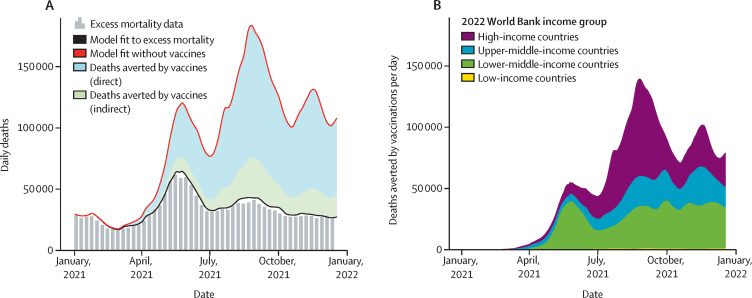
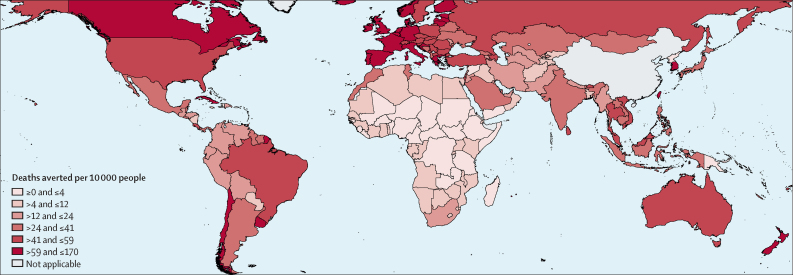
BACKGROUND: The first COVID-19 vaccine outside a clinical trial setting was administered on Dec 8, 2020. To ensure global vaccine equity, vaccine targets were set by the COVID-19 Vaccines Global Access (COVAX) Facility and WHO. However, due to vaccine shortfalls, these targets were not achieved by the end of 2021. We aimed to quantify the global impact of the first year of COVID-19 vaccination programmes. METHODS: A mathematical model of COVID-19 transmission and vaccination was separately fit to reported COVID-19 mortality and all-cause excess mortality in 185 countries and territories. The impact of COVID-19 vaccination programmes was determined by estimating the additional lives lost if no vaccines had been distributed. We also estimated the additional deaths that would have been averted had the vaccination coverage targets of 20% set by COVAX and 40% set by WHO been achieved by the end of 2021. FINDINGS: Based on official reported COVID-19 deaths, we estimated that vaccinations prevented 14·4 million (95% credible interval [Crl] 13·7-15·9) deaths from COVID-19 in 185 countries and territories between Dec 8, 2020, and Dec 8, 2021. This estimate rose to 19·8 million (95% Crl 19·1-20·4) deaths from COVID-19 averted when we used excess deaths as an estimate of the true extent of the pandemic, representing a global reduction of 63% in total deaths (19·8 million of 31·4 million) during the first year of COVID-19 vaccination. In COVAX Advance Market Commitment countries, we estimated that 41% of excess mortality (7·4 million [95% Crl 6·8-7·7] of 17·9 million deaths) was averted. In low-income countries, we estimated that an additional 45% (95% CrI 42-49) of deaths could have been averted had the 20% vaccination coverage target set by COVAX been met by each country, and that an additional 111% (105-118) of deaths could have been averted had the 40% target set by WHO been met by each country by the end of 2021. INTERPRETATION: COVID-19 vaccination has substantially altered the course of the pandemic, saving tens of millions of lives globally. However, inadequate access to vaccines in low-income countries has limited the impact in these settings, reinforcing the need for global vaccine equity and coverage. FUNDING: Schmidt Science Fellowship in partnership with the Rhodes Trust; WHO; UK Medical Research Council; Gavi, the Vaccine Alliance; Bill & Melinda Gates Foundation; National Institute for Health Research; and Community Jameel.
Overview
CoChat Summary
## TL;DR
This mathematical modelling study estimated that COVID-19 vaccination averted 14.4 million deaths based on reported deaths, or 19.8 million deaths when excess mortality was used, across 185 countries and territories during Dec 8, 2020–Dec 8, 2021. The paper argues that vaccine inequity limited impact in low-income settings and that reaching COVAX/WHO coverage targets could have saved substantially more lives.
## Key findings
- Using officially reported COVID-19 deaths, vaccination prevented 14.4 million deaths (95% CrI 13.7–15.9) in 185 countries and territories over the first year of vaccination.
- Using excess mortality, vaccination averted 19.8 million deaths (95% CrI 19.1–20.4), corresponding to a 63% reduction in total deaths (19.8 million of 31.4 million) during that year.
- In COVAX AMC countries, vaccinations averted 7.4 million deaths (95% CrI 6.8–7.7), representing 41% of estimated excess mortality (7.4 million of 17.9 million).
- If the WHO 40% target had been met in every country by the end of 2021, an additional 599,300 deaths (95% CrI 577,700–622,400) could have been averted; in low-income countries, meeting the COVAX 20% target could have averted an additional 45% of deaths, and the WHO 40% target an additional 111% of deaths.
## Methods
- The authors fit a previously published age-structured SEIRS transmission model with vaccination to reported COVID-19 mortality and to all-cause excess mortality in 185 countries and territories (excluding China), using country-level demography, mixing patterns, health-care capacity, and vaccination rollout data.
- Vaccination effects were modelled as protection against infection, severe disease, and onward transmission; the model also explicitly represented the delta variant and vaccine efficacy by country based on likely vaccine types used.
- They estimated deaths averted by comparing the fitted observed scenario against counterfactual scenarios with no vaccines, and with vaccines distributed to meet COVAX 20% and WHO 40% coverage targets by Dec 8, 2021, using Bayesian fitting with Metropolis-Hastings MCMC and 100 draws for uncertainty.
## Limitations
- The paper states that impact estimates were limited by uncertainty in excess mortality, gaps in genomic surveillance, and lack of detailed vaccination data for many countries; key inputs had to rely on working assumptions about vaccine type, rollout, and variant spread.
- The authors explicitly note a limitation of the COVAX/WHO target analysis: the targets were meant for the end of 2021, while the modelling endpoint was Dec 8, 2021, so some countries may have been closer to target by year-end than the model captured.
- Evident from the text: the counterfactual did not adjust for how governments or populations might have responded without vaccines, nor for possible changes in mobility, non-pharmaceutical interventions, or viral evolution, so the estimated deaths averted are model-dependent.
Model-written summary. Check it against the paper before relying on it.
Integrity signals
Registry
Cites
Statistics
Figures
Verification
Claims the paper makes
2 Valid · 2 Not valid · 4 Not checked · 48 Own results and interpretations
The cited sources that could be checked couldn’t confirm or dispute this claim.
In the paper
“In this analysis, we consequently focused on fitting to all-cause excess mortality, which provides a more complete description of the pandemic.15”
§ Global impact of the first year of COVID-19 vaccination: a mathematical modelling study > Discussion
What the sources say
- Could not verifycites [15] WHO Global excess deaths associated with COVID-19, January 2020–December 2021 https://www.who.int/data/stories/global-excess-deaths-associated-with-covid-19-january-2020-december-2021 May, 2022 sourceExperimental — accuracy not yet measured
The Methods (Statistical analysis) and Results examine hospital admission and emergency care attendance among people with delta versus alpha infections. The Discussion addresses limitations of those hospital-care data, but does not assess all-cause excess mortality or say that fitting to it gives a more complete description of the pandemic. Searches for “all-cause excess mortality” and “excess deaths” found no supporting passage; page numbers were not available in our copy. (LLM, conf=0.76)
plainstates a cause- Asserted: passes — The authors put it forward as true.
- Checkable: passes — It can be checked against evidence.
- Load-bearing: passes — The paper’s conclusions depend on it.
- Based: passes — The paper gives a reason why it holds.
- Could not verify
Every source the paper cites for this claim was checked and supports it.
In the paper
“Under-ascertainment of COVID-19 mortality is a known issue that has hindered our understanding of the pandemic.23”
§ Global impact of the first year of COVID-19 vaccination: a mathematical modelling study > Discussion
What the sources say
- Supportedcites [23] Whittaker C Walker PGT Alhaffar M Under-reporting of deaths limits our understanding of true burden of COVID-19 BMJ 375 2021 n2239 34642172 source
In “Renewed case for vaccine equity” (page unavailable), the paper calls it a myth that high-income countries were harder hit and shows that accounting for under-reporting changes the estimated share of COVID-19 mortality borne by low- and middle-income countries. This supports the claim that under-ascertainment has obscured understanding of the pandemic’s mortality burden. (LLM, conf=0.86)
boostedstates a cause- Asserted: passes — The authors put it forward as true.
- Checkable: passes — It can be checked against evidence.
- Load-bearing: passes — The paper’s conclusions depend on it.
- Based: passes — The paper gives a reason why it holds.
- Supported
The cited sources that could be checked couldn’t confirm or dispute this claim.
In the paper
“Our impact estimates were also limited by the inherent uncertainty in model-based estimates of excess mortality.13”
§ Global impact of the first year of COVID-19 vaccination: a mathematical modelling study > Discussion
What the sources say
- Could not verifycites [13] The Economist The pandemic's true death toll The Economist Nov 2, 2021 https://www.economist.com/graphic-detail/coronavirus-excess-deaths-estimates sourceExperimental — accuracy not yet measured
The Discussion describes limitations of estimates of vaccine effects on transmission, including testing behavior and previous infection status. A search for excess mortality, model-based mortality estimates, and deaths found no passage addressing uncertainty in excess-mortality estimates. Page numbers were not available in our copy. (LLM, conf=0.76)
plain- Asserted: passes — The authors put it forward as true.
- Checkable: passes — It can be checked against evidence.
- Load-bearing: unclear — It is unclear whether the paper’s conclusions depend on it.
- Based: passes — The paper gives a reason why it holds.
- Could not verify
The cited sources support only part of this claim — read each source’s verdict below.
In the paper
“Importantly, these estimates based on official reported COVID-19 deaths represent the lower bound of deaths averted at the global level due to the considerable levels of under-reporting of COVID-19 mortality documented worldwide.23”
§ Global impact of the first year of COVID-19 vaccination: a mathematical modelling study > Methods > Excess mortality and COVID-19 mortality data
What the sources say
- Partly supportedcites [23] Whittaker C Walker PGT Alhaffar M Under-reporting of deaths limits our understanding of true burden of COVID-19 BMJ 375 2021 n2239 34642172 sourceExperimental — accuracy not yet measured
In “Renewed case for vaccine equity” (page not provided), the paper says that under-reporting affects reported COVID-19 mortality and that excess-mortality estimates suggest a higher share of deaths in low- and middle-income countries. It also reports estimates of deaths that further vaccination could avert in those countries. It does not say that estimates based on officially reported deaths are a lower bound for deaths averted globally. (LLM, conf=0.83)
plainstates a cause- Asserted: passes — The authors put it forward as true.
- Checkable: passes — It can be checked against evidence.
- Load-bearing: passes — The paper’s conclusions depend on it.
- Based: passes — The paper gives a reason why it holds.
- Partly supported
A result the paper reports from its own data — it cites no other source for it, so there is none to check. The quote shows it is in the paper.
In the paper
“Notably, our model fits were unable to recreate excess mortality death tolls in recent epidemic waves in Iraq and Sudan because of the depletion of the susceptible population.”
§ Global impact of the first year of COVID-19 vaccination: a mathematical modelling study > Discussion
plainstates a cause- Asserted: passes — The authors put it forward as true.
- Checkable: passes — It can be checked against evidence.
- Load-bearing: unclear — It is unclear whether the paper’s conclusions depend on it.
- Based: passes — The paper gives a reason why it holds.
32 more claims
Create a free account to see all 56 claims and to verify the 3 references still open.
- It may state two separate claims as one. 14
- Probably not a substantial claim. 6
Claims other papers make about this one
Each is checked against this paper’s own text: does it say what the citing paper says it does?
The cited source says what the claim attributes to it.
In the citing paper
“Global COVID-19 vaccination programmes are estimated to have prevented 19.8 million deaths worldwide during the first year of roll-out(12)”
Citations
Cites
Estimated transmissibility and impact of SARS-CoV-2 lineage B.1.1.7 in England
Davies, N. G., Abbott, S., Barnard, R. C., Jarvis, C. I., Kucharski, A. J., Munday, J. D., Pearson, C. A. B., Russell, T. W., Tully, D. C., Washburne, A. D., et al. (2021) · Science · doi:10.1126/science.abg3055 · Cited by 2,581 · cited 1×
“20,21 Any epidemiological differences associated with previous variants were assumed to be reflected by their effects on mortality, 22 which were subsequently captured by the estimated R t trend.”
Estimated transmissibility and impact of SARS-CoV-2 lineage B.1.1.7 in England
Davies, N. G., Abbott, S., Barnard, R. C., Jarvis, C. I., Kucharski, A. J., Munday, J. D., Pearson, C. A. B., Russell, T. W., Tully, D. C., Washburne, A. D., et al. (2020) · doi:10.1101/2020.12.24.20248822 · Cited by 2,557
Wang, H., Paulson, K. R., Pease, S. A., Watson, S., Comfort, H., Zheng, P., Aravkin, A. Y., Bisignano, C., Barber, R. M., Alam, T., et al. (2022) · The Lancet · doi:10.1016/s0140-6736(21)02796-3 · Cited by 2,069
Wouters, O. J., Shadlen, K. C., Salcher-Konrad, M., Pollard, A. J., Larson, H. J., Teerawattananon, Y., & Jit, M. (2021) · The Lancet · doi:10.1016/s0140-6736(21)00306-8 · Cited by 1,288
Walker, P. G. T., Whittaker, C., Watson, O. J., Baguelin, M., Winskill, P., Hamlet, A., Djafaara, B. A., Cucunubá, Z., Olivera Mesa, D., Green, W., et al. (2020) · Science · doi:10.1126/science.abc0035 · Cited by 993
Self-citationTwohig, K. A., Nyberg, T., Zaidi, A., Thelwall, S., Sinnathamby, M. A., Aliabadi, S., Seaman, S. R., Harris, R. J., Hope, R., Lopez-Bernal, J., et al. (2022) · The Lancet Infectious Diseases · doi:10.1016/s1473-3099(21)00475-8 · Cited by 803 · cited 1×
“20,21 Any epidemiological differences associated with previous variants were assumed to be reflected by their effects on mortality, 22 which were subsequently captured by the estimated R t trend.”
Karlinsky, A., & Kobak, D. (2021) · eLife · doi:10.7554/elife.69336 · Cited by 772 · cited 1×
“11 Robust vital registration systems do not exist in many parts of the world, with WHO estimating that 40% of global deaths that occurred in 2020 were unregistered, 12 and therefore data on excess mortality are not available for every country.”
Understanding COVID-19 vaccine hesitancy
Machingaidze, S., & Wiysonge, C. S. (2021) · Nature Medicine · doi:10.1038/s41591-021-01459-7 · Cited by 590 · cited 1×
“7 This considerable heterogeneity in vaccination coverage has resulted in continued reliance on non-pharmaceutical interventions for pandemic management in some countries 8 but concomitantly enabled other nations to relax interventions as a route out of the pandemic.”
Twohig, K. A., Nyberg, T., Zaidi, A., Thelwall, S., Sinnathamby, M., Aliabadi, S., Seaman, S. R., Harris, R., Hope, R., Bernal, J. L., et al. (2021) · Northumbria Research Link (Northumbria University) · doi:10.17863/cam.76294 · Cited by 514
Effect of Covid-19 Vaccination on Transmission of Alpha and Delta Variants
Eyre, D. W., Taylor, D., Purver, M., Chapman, D., Fowler, T., Pouwels, K. B., Walker, A. S., & Peto, T. E. A. (2022) · New England Journal of Medicine · doi:10.1056/nejmoa2116597 · Cited by 464 · cited 2×
“19 We inferred vaccine efficacy for each country on the basis of vaccine types known to be predominantly used in each country.”
Cited by
Items 401–500 of 1,777
Pharmaceutical and non-pharmaceutical interventions for controlling the COVID-19 pandemic
Molla, J., Farhang‐Sardroodi, S., Moyles, I. R., & Heffernan, J. M. (2023) · Royal Society Open Science · doi:10.1098/rsos.230621 · Cited by 13
Zhou, Z., Zheng, H., Xiao, G., Xie, X., Rang, J., & Peng, D. (2024) · BMC Infectious Diseases · doi:10.1186/s12879-023-08944-z · Cited by 12
“No TRAEs or SAEs during hospitalization were reported. vaccines play a major role in the control of the COVID-19 pandemic [27, 28].”
BackgroundLuo, W., Gan, J., Luo, Z., Li, S., Wang, Z., Wu, J., Zhang, H., Xian, J., Cheng, R., Tang, X., et al. (2024) · Signal Transduction and Targeted Therapy · doi:10.1038/s41392-024-01751-1 · Cited by 9
Hofmeyer, K. A., Ventura, C. L., Armstrong, K. L., et al. (2024) · Clinical Infectious Diseases · doi:10.1093/cid/ciae073 · Cited by 9
“The first generation of COVID-19 vaccines prevented an estimated 14.4 million deaths worldwide through 2021 [12].”
BackgroundInfluentialBielecka-Dabrowa, A. M., Sakowicz, A., Gryglewska-Wawrzak, K., Kapusta, J., Banach, M., Jankowski, P., & Chudzik, M. (2024) · Journal of Clinical Medicine · doi:10.3390/jcm13061559 · Cited by 12
Brault, A., Hart, A. G., Uribe, P., Prado, J., Martı́n, J. S., Maass, A., & Canals, M. (2024) · BMC Infectious Diseases · doi:10.1186/s12879-024-09304-1 · Cited by 14
“One international study has estimated the number of lives saved during the first year of global vaccination with a particular focus on Chile [16], but it drew upon limited data from Chile and made substantial assumptions about vaccine effectiveness, which is challenging to determine in Chile due to…”
BackgroundKling, K., Janulis, P. F., Demonbreun, A. R., Sancilio, A., Berzins, B., Krueger, K., Achenbach, C. J., Price, R., Sullivan, M., Caputo, M., et al. (2023) · Frontiers in Immunology · doi:10.3389/fimmu.2022.1048776 · Cited by 9
Lee, S., Muccilli, A. D., Schneider, R., Selchen, D. H., & Krysko, K. M. (2023) · Multiple Sclerosis Journal · doi:10.1177/13524585231154780 · Cited by 9
Das, M. K. (2023) · The Indian Journal of Pediatrics · doi:10.1007/s12098-023-04555-3 · Cited by 15
“8 million deaths during the year 2021 globally [5].”
BackgroundCROI 2025: Acute and Postacute COVID-19
Antar, A. A. R., & Peluso, M. J. (2025) · Topics in antiviral medicine · doi:10.68040/2025333.555568 · Cited by 10
Hernández‐Ávila, M., Ortíz‐Brizuela, E., Tamayo‐Ortiz, M., Zepeda‐Tello, R., Gutiérrez-Díaz, H., Cordera, D. B. S., Vieyra-Romero, W. I., Real-Ornelas, G. A., Méndez-Aranda, M., & Gómez, A. H. (2023) · The Lancet Regional Health - Americas · doi:10.1016/j.lana.2023.100612 · Cited by 10
Jennewein, M. F., Schultz, M. D., Beaver, S., Battisti, P., Bakken, J., Hanson, D., Akther, J., Zhou, F., Mohamath, R., Singh, J., et al. (2022) · bioRxiv (Cold Spring Harbor Laboratory) · doi:10.1101/2022.11.10.515993 · Cited by 9
Mühlemann, B., Trimpert, J., Walper, F., et al. (2023) · bioRxiv (Cold Spring Harbor Laboratory) · doi:10.1101/2023.07.02.547076 · Cited by 9
Coombes, N. S., Bewley, K. R., Duff, Y. L., Alami-Rahmouni, N., Ryan, K. A., Kempster, S. L., Ferguson, D., Davies, E. R., Weldon, T. M., Cross, E. S., et al. (2023) · bioRxiv (Cold Spring Harbor Laboratory) · doi:10.1101/2023.10.21.563398 · Cited by 9
Highlighting models of Indigenous leadership and self-governance for COVID-19 vaccination programmes
Clark, K. K., Crooks, K., Jeyanathan, B., Ahmed, F., Kataquapit, G., Sutherland, C., Tsuji, L. J. S., Moriarity, R. J., Spence, N. D., Şekercioğlu, F., et al. (2024) · AlterNative An International Journal of Indigenous Peoples · doi:10.1177/11771801241235418 · Cited by 12
“Rapidly vaccinating the global population has been an important pillar of the pandemic response to reduce transmission and severe outcomes, and prevent millions of deaths (Watson et al., 2022).”
BackgroundBinyaruka, P., Mtenga, S., Mashasi, I., et al. (2023) · BMJ Open · doi:10.1136/bmjopen-2023-073668 · Cited by 8
Drug repurposing platform for deciphering the druggable SARS-CoV-2 interactome
Bogacheva, M. S., Kuivanen, S. H., Potdar, S., Hassinen, A., Huuskonen, S., Pöhner, I., Luck, T. J., Turunen, L., Feodoroff, M., Szirovicza, L., et al. (2024) · Antiviral Research · doi:10.1016/j.antiviral.2024.105813 · Cited by 11
Gan, J., Zhang, H., Wu, J., Liu, Y., Liu, P., Cheng, R., Tang, X., Yang, L., Luo, W., & Li, W. (2024) · Journal of Medical Virology · doi:10.1002/jmv.29402 · Cited by 7
Bouloukaki, I., Christodoulakis, A., Papageorgakopoulou, S., & Tsiligianni, I. (2024) · Vaccines · doi:10.3390/vaccines12040414 · Cited by 10
Neto, F. L., Hitchings, M. D. T., Amin, A. B., de França, G. V. A., Lind, M. L., Torres, M. S. S., Tsuha, D. H., de Oliveira, R. D., Cummings, D. A. T., Dean, N. E., et al. (2024) · The Lancet Regional Health - Americas · doi:10.1016/j.lana.2024.100755 · Cited by 17
Lathrop, S. K., Clark, J. J., Siram, K., Andreata‐Santos, R., Yong, J. S., Tee, R. D., Davison, C. J., Singh, G., Burkhart, D. J., Krammer, F., et al. (2024) · npj Viruses · doi:10.1038/s44298-024-00038-0 · Cited by 9
The global health and economic value of COVID-19 vaccination
Sevilla, J. P., Burnes, D., Knee, J. S., Fusco, M. D., Kyaw, M. H., Yang, J., Nguyen, J. L., & Bloom, D. E. (2024) · BMJ Global Health · doi:10.1136/bmjgh-2024-015031 · Cited by 13
“We found only three studies that quantified the global health and/or economic impact of CV. Watson et al 3 estimated the impact of CV solely in terms of averted global COVID- 19-related deaths.”
Chalupka, A., Riedmann, U., Richter, L., Chakeri, A., El‐Khatib, Z., Sprenger, M., Theiler‐Schwetz, V., Trummer, C., Willeit, P., Schennach, H., et al. (2024) · Open Forum Infectious Diseases · doi:10.1093/ofid/ofae547 · Cited by 8
“Vaccinations against severe acute respiratory syndrome corona-virus 2 (SARS-CoV-2) were critical to mitigate adverse health consequences of the coronavirus disease 2019 (COVID-19) pandemic [ 1].”
BackgroundO’Reilly, S. R., Byrne, J., Feeney, E. R., Mallon, P. W. G., & Gautier, V. (2024) · Vaccines · doi:10.3390/vaccines12101089 · Cited by 11
“These campaigns have been hugely successful, estimated to have saved 14.4 million lives globally in the first year [1] and 1.4 million lives to date in Europe alone [2].”
BackgroundInfluentialAchore, M., Braimah, J. A., Dowou, R. K., Kuuire, V. Z., Ayanore, M. A., & Bisung, E. (2024) · PLOS Global Public Health · doi:10.1371/journal.pgph.0003852 · Cited by 13
“Following their approvals for use as a COVID-19 containment measure, COVID-19 vaccines have been reported to save 14.4 billion deaths [1] with over 13 billion vaccine doses administered [2].”
InfluentialAljehani, N. D., Tamming, L. A., Khan, M. Y., Abdulal, R. H., Alfaleh, M. A., Ghazwani, A. H., Helal, A., Alsulaiman, R. M., Sanki, M. A., Alluhaybi, K. A., et al. (2024) · mBio · doi:10.1128/mbio.02170-24 · Cited by 9
Slamanig, S., Lemus, N., Lai, T. Y., Singh, G., Mishra, M., Abdeljawad, A., Boza, M., Dolange, V., Singh, G., Lee, B., et al. (2024) · Vaccine · doi:10.1016/j.vaccine.2024.126586 · Cited by 9
Humoral responses to SARS-CoV-2 vaccine in vasculitis-related immune suppression
Kamelian, K., Sievers, B. L., Chen-Xu, M., Turner, S., Cheng, M. T. K., Altaf, M., Kemp, S. A., Abdullahi, A., Csiba, K., Collier, D. A., et al. (2025) · Science Advances · doi:10.1126/sciadv.adq3342 · Cited by 8
Dasti, L., Giampiccolo, S., Pettinà, E., Fiandaca, G., Zangani, N., Leonardelli, L., Hedayioglu, F. D. L., Campanile, E., & Marchetti, L. (2025) · CPT Pharmacometrics & Systems Pharmacology · doi:10.1002/psp4.70041 · Cited by 10
Ostrowsky, J., Vestin, N. C., Mehr, A. J., et al. (2025) · Vaccine · doi:10.1016/j.vaccine.2025.127431 · Cited by 8
Real-time monitoring of SARS-CoV-2 evolution during the COVID-19 pandemic
Korber, B., Fischer, W., & Theiler, J. P. (2025) · Cell Host & Microbe · doi:10.1016/j.chom.2025.10.013 · Cited by 8
Vaccine Hesitancies Across the World in the Era of COVID-19
Emery, N., Dugerdil, A., & Flahault, A. (2022) · American Journal of Public Health · doi:10.2105/ajph.2022.307087 · Cited by 6
Joshi, K., Rumpler, É., Kennedy‐Shaffer, L., Bosan, R., & Lipsitch, M. (2023) · Vaccine · doi:10.1016/j.vaccine.2022.12.053 · Cited by 10
“Vaccines are currently the most effective public health intervention available against emerging pathogens and have greatly reduced severe disease outcomes [4].”
Pan‐Hammarström, Q., & Casanova, J. (2023) · Journal of Internal Medicine · doi:10.1111/joim.13628 · Cited by 11
Yen, F., Wang, S., Lin, S., & Wei, J. C. (2023) · Diabetes Research and Clinical Practice · doi:10.1016/j.diabres.2023.110692 · Cited by 7
“The first year of COVID-19 vaccination was estimated to avert more than 14 million deaths from COVID-19 [6,26].”
BackgroundPetito, E., & Gresele, P. (2023) · Thrombosis and Haemostasis · doi:10.1055/a-2107-0891 · Cited by 10
Country-level predictors of COVID-19 mortality
Brown, P. A. (2023) · Scientific Reports · doi:10.1038/s41598-023-36449-x · Cited by 11
“Similarly, although the global analysis included a diverse range of covariates, the data was from late 2021/early 2022 50 , in proximity to the delta wave 4 .”
Meeraus, W. H., de Munter, L., Gray, C. M., Dwivedi, A., Wyndham-Thomas, C., Ouwens, M., Hartig-Merkel, W., Drikite, L., Rebry, G., Carmona, A., et al. (2023) · The Lancet Regional Health - Europe · doi:10.1016/j.lanepe.2023.100675 · Cited by 13
Rojas-Botero, M. L., Fernández-Niño, J. A., Arregocés-Castillo, L., Palacios-Clavijo, A. F., Pinto-Álvarez, M., & Gómez, F. R. (2023) · PLOS Global Public Health · doi:10.1371/journal.pgph.0001845 · Cited by 10
Vinzón, S. E., Lopez, M. V., Cafferata, E. G. A., Soto, A. S., Berguer, P. M., Vázquez, L., Nusblat, L., Pontoriero, A., Belotti, E. M., Salvetti, N. R., et al. (2023) · npj Vaccines · doi:10.1038/s41541-023-00737-4 · Cited by 8
Machado, A. V., Ferreira, W. E., Vitória, M. A. D. Á., Magalhães, H. M., Jardim, L. L., Menezes, M. A. C., Santos, R. P. D. O., Vargas, F. L., & Pereira, E. J. (2023) · Ciência & Saúde Coletiva · doi:10.1590/1413-812320232810.10102023en · Cited by 6
Chen, Z., & Tian, F. (2023) · Annals of Medicine · doi:10.1080/07853890.2023.2274511 · Cited by 9
“a total of 19.8 million fatalities were avoided globally in the first year of the cOViD-19 vaccine (from 8 December 2020 to 8 December 2021) [26], suggesting that vaccination may be the best method of managing cOViD-19. the cOViD-19 vaccine drastically changed the course of the pandemic and helped…”
MethodInfluentialKilleen, T., Saxer, R. T., & Kermer, V. (2023) · Journal of Pharmaceutical Policy and Practice · doi:10.1186/s40545-023-00652-y · Cited by 9
“The availability of mRNA COVID-19 vaccines was a major positive milestone in the pandemic and, along with other measures, has saved millions of lives[21], relieved pressure on the healthcare system and allowed a gradual return to normality.”
BackgroundMahadhika, C. K., & Aldila, D. (2024) · Mathematical Biosciences & Engineering · doi:10.3934/mbe.2024219 · Cited by 8
Abbad, A., Yellin, T., Singh, G., Fried, M., Raskin, A. J., Tcheou, J., Monahan, B., Gleason, C., Andre, D., Bermúdez-González, M. C., et al. (2024) · Cell Reports Medicine · doi:10.1016/j.xcrm.2024.101474 · Cited by 9
Miguel, L. A., Mendez-Lizarraga, C. A., Rojo, E. M., et al. (2024) · PLOS Global Public Health · doi:10.1371/journal.pgph.0002921 · Cited by 8
“…vaccines have played a crucial role in reducing COVID morbidity and mortality worldwide since their rollout, preventing an estimated 14.4 million deaths globally within the first year of availability, with this number rising to nearly 20 million when using excess mortality data estimates [24].”
BackgroundInfluentialWong, I. O. L., Wong, C., Mak, N., Dai, A., Xiao, J., Wu, P., Ni, M. Y., Liao, Q., & Cowling, B. J. (2024) · Vaccine · doi:10.1016/j.vaccine.2024.04.035 · Cited by 7
Recombinant vaccines: Current updates and future prospects
Kumar, V., Verma, A., Singh, R., Garg, P., Sharma, S. K., Singh, H. N., Mishra, S. K., & Kumar, S. (2024) · Asian Pacific Journal of Tropical Medicine · doi:10.4103/apjtm.apjtm_854_23 · Cited by 10
Bakács, T., Sandig, V., & Kovesdi, I. (2022) · Cureus · doi:10.7759/cureus.28467 · Cited by 7
Lau, C. S., Thundyil, J., Oh, M. L. H., Phua, S. K., Liang, Y. L., Li, Y., Huo, J., Huang, Y., Zhang, B., Xu, S., et al. (2022) · Antibodies · doi:10.3390/antib11040070 · Cited by 8
“A mathematical modeling study [1] concluded that vaccinations prevented 14.”
BackgroundThe Impact of COVID-19 Quarantine on Tuberculosis and Diabetes Mellitus Cases: A Modelling Study
Nuraini, N., Fauzi, I. S., Lestari, B. W., & Rizqina, S. (2022) · Tropical Medicine and Infectious Disease · doi:10.3390/tropicalmed7120407 · Cited by 11
COVID and Gender: A Narrative Review of the Asia-Pacific Region
Binns, C. W., Lee, M. K., Duong, D. T. T., Lee, A. H., Pham, N. M., & Zhao, Y. (2022) · International Journal of Environmental Research and Public Health · doi:10.3390/ijerph20010245 · Cited by 9
“Nonetheless, even more lives could have been saved by ensuring equitable worldwide vaccination coverage [4,93].”
BackgroundNekrasova, L. A., Shmakova, A., Samokhodskaya, L. M., Kirillova, K. I., Stoyanova, S. S., Mershina, E. A., Nazarova, G. B., Rubina, K. A., Semina, E. V., & Kamalov, A. A. (2022) · International Journal of Molecular Sciences · doi:10.3390/ijms232416210 · Cited by 9
“A global vaccination campaign has played a positive role in the dramatic decrease of COVID-19-related mortality [11]; however, studies revealing the predictors of COVID-19 disease severity are still in demand.”
BackgroundWassif, M., Lo, P., Satouris, P., Swan, L., Tardo, D. T., Kovacic, J. C., Muller, D. W., Muthiah, K., Kotlyar, E., & Bart, N. (2023) · Heart Lung and Circulation · doi:10.1016/j.hlc.2023.01.002 · Cited by 11
“8 million deaths from COVID-19 averted as a result of vaccination [2].”
BackgroundBaharani, A., & Reddy, R. R. (2023) · Ocular Immunology and Inflammation · doi:10.1080/09273948.2023.2192271 · Cited by 8
“8 million deaths in 185 countries and territories from December 2020 to December 2021.(21) Therefore, the benefits of taking approved COVID-19 vaccines, irrespective of manufacturer, clearly outweigh the risks, both at the individual and community levels.”
de Oliveira, J. F. A., Zhao, Z., Xiang, Y., Shin, M. D., Villaseñor, K. E., Deng, X., Shukla, S., Chen, S., & Steinmetz, N. F. (2023) · Frontiers in Microbiology · doi:10.3389/fmicb.2023.1117494 · Cited by 8
“, 2022), present drawback as of need for a cold chain due to their poor stability (Burki, 2021; Sah et al., 2021; Watson et al., 2022).”
BackgroundPushpakumara, P. D., Jeewandara, C., Bary, F., Madushanka, D., Perera, L., Aberathna, I. S., Nimasha, T., Jayamali, J., Ranasinghe, T., Kuruppu, H., et al. (2023) · Clinical & Experimental Immunology · doi:10.1093/cei/uxad066 · Cited by 8
Meredith, R. T., Bermingham, M. D., Bentley, K., Agah, S., Aboagye-Odei, A., Yarham, R. A. R., Mills, H., Shaikh, M. M., Hoye, N. A., Stanton, R. J., et al. (2023) · Frontiers in Cellular and Infection Microbiology · doi:10.3389/fcimb.2023.1207313 · Cited by 7
Atkinson, M., Ntontis, E., Neville, F., & Reicher, S. D. (2023) · Social and Personality Psychology Compass · doi:10.1111/spc3.12837 · Cited by 8
“Widespread and rapid vaccination can play a crucial role in reducing pandemic-related deaths (Watson et al., 2022), but public perceptions of vaccines can play a role in facilitating uptake or increasing hesitancy.”
BackgroundA Call for an Evidence-Based Strategy Against the Overdose Crisis
Krausz, M. R., Westenberg, J. N., Tai, A. M. Y., Fadakar, H., Seethapathy, V., Mathew, N., Azar, P., Phillips, A. G., Schütz, C. G., Choi, F., et al. (2023) · The Canadian Journal of Psychiatry · doi:10.1177/07067437231188202 · Cited by 8
Ercoli, T., Barbato, F., Bombaci, A., Cuffaro, L., Lorenzo, F. D., Iodice, F., Romoli, M., Solla, P., & Defazio, G. (2023) · Brain Sciences · doi:10.3390/brainsci13081188 · Cited by 8
“The global crisis has dramatically changed with the spread of vaccines all over the world [6]; however, the implications and consequences of the outbreak in the healthcare system are still important points to investigate.”
BackgroundSARS-CoV-2 Vaccination and the Multi-Hit Hypothesis of Oncogenesis
Angues, R. V., & Bustos, Y. P. (2023) · Cureus · doi:10.7759/cureus.50703 · Cited by 14
Clerici, B., Pontisso, E., Aloise, C., et al. (2023) · Thrombosis and Haemostasis · doi:10.1055/s-0043-1777134 · Cited by 8
Health Care Access and COVID-19 Vaccination in the United States: A Cross-Sectional Analysis
Guzman, C. D., Thomas, C. A., Wiwanto, L., Hu, D., Henriquez-Rivera, J. A., Gage, L., Perreault, J. C., Harris, E., Rastas, C., McCormick, D., et al. (2024) · Medical Care · doi:10.1097/mlr.0000000000002005 · Cited by 9
COVID-19 and the ecological crisis: What do they have in common?
Vogli, R. D. (2022) · Scandinavian Journal of Public Health · doi:10.1177/14034948221134339 · Cited by 9
“[22] Watson O, Barnsley G, Toor J, et al.”
BackgroundResolving the patents paradox in the era of COVID-19 and climate change: Towards a patents taxonomy
Bustamante, J., Oughton, C., Pesqué‐Cela, V., & Tobin, D. (2023) · Research Policy · doi:10.1016/j.respol.2023.104850 · Cited by 7
Information processing style and institutional trust as factors of COVID vaccine hesitancy
Zhao, W., Russell, C. M., Jankovsky, A., Cannon, T. D., Pittenger, C., & Pushkarskaya, H. (2024) · Scientific Reports · doi:10.1038/s41598-024-60788-y · Cited by 14
Garg, R., Liu, Q., van Kessel, J., Asavajaru, A., Uhlemann, E.-M. E., Joessel, M., Hamonic, G., Khatooni, Z., Kroeker, A., Lew, J. M., et al. (2024) · Vaccine · doi:10.1016/j.vaccine.2024.05.028 · Cited by 9
Fernández, S. G., Rodríguez-Grande, J., Siller, M., et al. (2024) · International Journal of Antimicrobial Agents · doi:10.1016/j.ijantimicag.2024.107257 · Cited by 7
Nagata, M., Okada, Y., & Nishiura, H. (2024) · Infectious Disease Modelling · doi:10.1016/j.idm.2024.08.002 · Cited by 13
Choi, Y., Lee, J. S., Choe, Y. J., Lee, H., Yoon, Y., Shin, S. H., Hwang, M.-J., Choi, H., Na, S., Kim, J. H., et al. (2024) · Pediatric Cardiology · doi:10.1007/s00246-024-03618-2 · Cited by 7
Okoro, E., Ikoba, N. A., Okoro, B., Akpila, A. S., & Salihu, M. O. (2025) · International Journal of Risk & Safety in Medicine · doi:10.1177/09246479251336610 · Cited by 13
Risk factors for severe COVID-19 outcomes in the Asia-Pacific region: a literature review
Thompson, M., Buttery, A. K., Oh, S. X., et al. (2025) · Frontiers in Public Health · doi:10.3389/fpubh.2025.1562179 · Cited by 7
Advances in Biotechnology and the Development of Novel Human Vaccines
Papadatou, I., & Michos, A. G. (2025) · Vaccines · doi:10.3390/vaccines13090989 · Cited by 11
“During the COVID-19 pandemic, vaccination with SARS-CoV-2 vaccines was estimated to prevent over ten million deaths globally, largely due to the unprecedented speed at which mRNA vaccines were developed [8].”
The Role and Safety of Aluminum Adjuvants in Childhood Vaccines
Nirenberg, E., Maldonado, Y., & Hoffman, S. A. (2026) · PEDIATRICS · doi:10.1542/peds.2025-074874 · Cited by 9
Wagatsuma, K., Koolhof, I. S., & Saito, R. (2022) · Viruses · doi:10.3390/v14102232 · Cited by 8
Addressing vaccine-preventable encephalitis in vulnerable populations
Piamonte, B. L. C., Easton, A., Wood, G. K., Davies, N. W. S., Granerød, J., Michael, B. D., Solomon, T., & Thakur, K. T. (2023) · Current Opinion in Neurology · doi:10.1097/wco.0000000000001158 · Cited by 7
Ishikawa, K., Nascimento, M., Asano, M., Hirata, H., Itoh, Y., Kelly, E. J., Matsui, A., Olsson, U., Shoemaker, K., & Green, J. A. (2023) · Vaccine · doi:10.1016/j.vaccine.2023.05.015 · Cited by 7
“Thus, this work may inform the potential impact of the ongoing challenges in vaccine availability that persist in many areas of the world [5].”
Backgroundda Silva, F. F., de Abreu, L. C., Daboin, B. E. G., Morais, T. C., Cavalcanti, M. P. E., Bezerra, Í. M. P., da Silva, C. G., Figueira, F. A. M. D. S., Guedes, V. V. D. C., & Pérez‐Riera, A. R. (2023) · Viruses · doi:10.3390/v15102016 · Cited by 8
Hamaluba, M., Sang, S., Orindi, B., Njau, I., Karanja, H., Kamau, N., Gitonga, J. N., Mugo, D., Wright, D., Nyagwange, J., et al. (2023) · Wellcome Open Research · doi:10.12688/wellcomeopenres.19150.2 · Cited by 8
Islam, M. K., Rahman, M. M., Ali, M. S., Miah, M. S., & Rahman, M. H. (2023) · BioMed Research International · doi:10.1155/2023/6341259 · Cited by 8
Epilepsy and the risk of COVID ‐19‐related hospitalization and death: A population study
Strafford, H., Hollinghurst, J., Lacey, A., Akbari, A., Watkins, A. J., Paterson, J., Jennings, D., Lyons, R. A., Powell, R., Kerr, M., et al. (2024) · Epilepsia · doi:10.1111/epi.17910 · Cited by 7
“17 However, given the significant morbidity and mortality that COVID-19 has caused, and the potential for further COVID-19 and other pan-demics with new variants and pathogens, it is important to accurately quantify COVID-19 risks in specific populations.”
BackgroundNewman, P. A., Dinh, D. A., Massaquoi, N., Williams, C. C., Lacombe‐Duncan, A., Tepjan, S., & Nyoni, T. (2024) · Human Vaccines & Immunotherapeutics · doi:10.1080/21645515.2023.2301189 · Cited by 9
Costantino, C., Mazzucco, W., Conforto, A., et al. (2024) · Human Vaccines & Immunotherapeutics · doi:10.1080/21645515.2024.2327229 · Cited by 7
Analysis of National Institutes of Health Funding for the COVID-19 Pandemic
Narahari, A. K., Horgan, T. M., Chandrabhatla, A. S., et al. (2024) · Open Forum Infectious Diseases · doi:10.1093/ofid/ofae064 · Cited by 7
“For example, Watson et al. predict that 14.4 million lives were saved because of COVID-19 vaccines [ 18].”
BackgroundInfluentialAgbayani, G., Akache, B., Renner, T. M., et al. (2024) · European Journal of Immunology · doi:10.1002/eji.202350620 · Cited by 7
“In the first year of the COVID-19 vaccine roll-Correspondence out (December 2020 to December 2021), it was estimated that vaccination reduced the number of deaths globally by approximately 63% (19.8 million out of 31.4 million potential deaths) [1].”
BackgroundInfluentialAvoidable COVID-19-related deaths and hospitalizations in Brazil, 2020–2023
Kupek, E. (2024) · Vaccine · doi:10.1016/j.vaccine.2024.04.041 · Cited by 9
Evaluation of an RBD-nucleocapsid fusion protein as a booster candidate for COVID-19 vaccine
Valiate, B. V. S., de Castro, J. T., Marçal, T. G., Andrade, L. A. F., Oliveira, L. I., MAIA, G. B. F., Faustino, L., Hojo-Souza, N. S., dos Reis, M. A. A., Bagno, F. F., et al. (2024) · iScience · doi:10.1016/j.isci.2024.110177 · Cited by 7
Clemens, S. A. C., Jepson, B. M., Bhorat, Q. E., Ahmad, A., Akhund, T., Aley, P. K., Bansal, H., Bibi, S., Kelly, E. J., Khan, M., et al. (2024) · The Lancet Microbe · doi:10.1016/s2666-5247(24)00078-8 · Cited by 7
Jäckle, S., & Timmis, J. K. (2024) · npj Vaccines · doi:10.1038/s41541-024-00928-7 · Cited by 10
Safety of COVID-19 Vaccination in Pregnancy: A Systematic Review
Gerede, A., Daskalakis, G., Mikos, T., Chatzakis, C., Vavoulidis, Ε., Eleftheriades, M. I., Domali, E., Nikolettos, K., Oikonomou, E., Antsaklis, P. G., et al. (2024) · Diagnostics · doi:10.3390/diagnostics14161775 · Cited by 9
Savinkina, A. A., Weinberger, D. M., Toscano, C. M., & Oliveira, L. H. D. (2024) · Open Forum Infectious Diseases · doi:10.1093/ofid/ofae528 · Cited by 6
“…impact of COVID-19 vaccination on deaths during the first year of the COVID-19 vaccination rollout globally during the first year of vaccine availability from December 8, 2020, through December 8, 2021, was reported to be 14.4 million (95% credible interval [Crl], 13.7–15.9) in 185 countries [28].”
InfluentialLee, J. A., Jang, H., Ahn, S. M., Seong, J. E., Kim, Y. K., Sohn, Y., Jung, S., Jeong, H. W., Kim, S., Lee, J. S., et al. (2024) · International Journal of Infectious Diseases · doi:10.1016/j.ijid.2024.107249 · Cited by 8
Aizenman, J., Cukierman, A., Jinjarak, Y., Nair-Desai, S., & Xin, W. (2022) · Economic Modelling · doi:10.1016/j.econmod.2022.105990 · Cited by 9
Murari, T. B., Fonseca, L. M. D. S., Pereira, H. B. D. B., Filho, A. S. N., Saba, H. C., Scorza, F. A., de Almeida, A.-C. G., Maciel, E. L. N., Mendes, J. F. F., Filho, T. M. R., et al. (2022) · Vaccines · doi:10.3390/vaccines10091504 · Cited by 9
“It is esteemed that vaccination measures were able to prevent over 14 million deaths from COVID-19 worldwide during the first year of the beginning of immunization [7].”
BackgroundMajer, J., Elhissi, J. H., Mousa, N., & Kostandova, N. (2022) · Conflict and Health · doi:10.1186/s13031-022-00477-7 · Cited by 7
“Disparities nonetheless became apparent within the first year [26].”
BackgroundGuimarães, R. A., Pinheiro, R. S., de Paula, H. D. S. C., de Araújo, L. A., Gonçalves, I. A. D. J., Pedroso, C. F., Guilarde, A. O., de Oliveira, G. A., & Batista, K. D. A. (2022) · International Journal of Environmental Research and Public Health · doi:10.3390/ijerph192114074 · Cited by 10
“Unvaccinated people and those with incomplete vaccination status have a greater severity of the disease and, consequently, longer hospital stays and a higher mortality rate [18].”
BackgroundAntibody Titer Correlates with Omicron Infection in Vaccinated Healthcare Workers
Mollura, M., Sarti, R., Levi, R., Pozzi, C., Azzolini, E., Politi, L. S., Mantovani, A., Barbieri, R., & Rescigno, M. (2022) · Viruses · doi:10.3390/v14122605 · Cited by 7
Obeid, D. A., Al-Qahtani, A. A., Almaghrabi, R. S., Alghamdi, S., Alsanea, M. S., Alahideb, B. M., Almutairi, S. M., Alsuwairi, F. A., AlAbdulkareem, M. A., Asiri, M. D., et al. (2022) · Journal of Infection and Public Health · doi:10.1016/j.jiph.2022.12.007 · Cited by 8
Determinants of COVID-19 cases and deaths in OECD countries
Tekerek, B., Günaltay, M. M., ÖZLER, G., et al. (2023) · Journal of Public Health · doi:10.1007/s10389-023-01820-9 · Cited by 7
“Because vaccines began receiving authorization in late 2020, most countries started to implement around 2020 and to spread in 2021 (OECD 2021; Prüβ 2021; Watson et al. 2022).”
Metadata
- Authors
- Watson, O. J., Barnsley, G., Toor, J., Hogan, A. B., Winskill, P., & Ghani, A. C.
- Affiliations
- Imperial College London (GB)
- Corresponding author
- Watson, Oliver J
- Venue
- The Lancet Infectious Diseases
- Publisher
- Elsevier BV
- Published
- 2022-09
- Volume
- 22
- Issue
- 9
- Pages
- 1293-1302
- ISSN
- 1473-3099 (ISSN-L)
- PMC
- PMC9225255
- OpenAlex
- W4283395367
- Semantic Scholar
- e048be45c9e0900c299d78c2cb327ce9afd77467
- Cited by
- 1,769
- References
- 26
- Citations by year
- 2026: 165 · 2025: 341 · 2024: 533 · 2023: 578 · 2022: 150
- FWCI
- 237.54
- Type
- journal article
- Language
- en
- Update notices
- erratum (2023-10-01)
- Open access
- hybrid
- doi.org
- Licence
- cc-by
- www.elsevier.com/tdm/userlicense/1.0/ (tdm)
- www.elsevier.com/legal/tdmrep-license (tdm)
- creativecommons.org/licenses/by/4.0/ (vor)
- Locations
- The Lancet Infectious Diseases (publishedVersion, cc-by)
- PubMed Central (publishedVersion, cc-by)
- PubMed (publishedVersion)
- LSHTM Research Online (London School of Hygiene and Tropical Medicine) (acceptedVersion)
- Spiral (Imperial College London) (submittedVersion, other-oa)
- Funders
- Bill and Melinda Gates Foundation
- GAVI Alliance
- National Institute for Health and Care Research
- Imperial College London
- Medical Research Council (MR/R015600/1, MC_PC_19012)
- Topics
- Physical Sciences › Mathematics › Modeling and Simulation › COVID-19 epidemiological studies
- Health Sciences › Medicine › Infectious Diseases › SARS-CoV-2 and COVID-19 Research
- Social Sciences › Health › Vaccine Coverage and Hesitancy
- Keywords
- COVID-19 vaccination, vaccine impact, COVID-19 mortality, excess mortality, mortality averted, COVAX, vaccine equity, low-income countries, mathematical transmission model, global health equity, SARS-CoV-2, advance market commitments
- MeSH terms
- COVID-19, COVID-19 Vaccines, Humans, Models, Theoretical, Vaccination, Vaccines, Global Health
About these checks
Registry, retraction, Cites and statistics results are computed, not judged, with one exception: a printed reference that no index lists is read once by a model before it counts as a citation error. Claims are extracted by a model and kept only when their quote appears verbatim in the text; each cited source is then checked, with a model’s help, for whether it says what the claim relies on. Those verdicts can be wrong — read the claim’s quote and the cited source before relying on one.
The claim verdicts this report counts are experimental: their accuracy is not yet measured.
A language model drew the claims from the paper on 2026-10-10, under version 3 of the claim definition (model deepseek-v4.1-flash, prompt extract-v3).
A second model labelled each claim on 2026-10-10 (model jev-1.13-20260917, definition revision gold-guideline-v0.2).
Cited sources are checked with a language model’s help (gpt-6-sol).
Statistics and arithmetic are recomputed, not judged.
Confidence bands are shown only for fields calibrated on our annotated test set. None is calibrated yet, so no band is shown.
What counts as a claim ›How we measure confidence ›How we check this ›
Are you an author, or do you see a problem with this page? Request a review
Data sources
Bibliographic data: Semantic Scholar, OpenAlex, Crossref.
Contains information from the Semantic Scholar Academic Graph Datasets, made available under the ODC Attribution License (ODC-BY 1.0).
Semantic Scholar’s data is described in: Kinney, R., et al. (2023). The Semantic Scholar Open Data Platform. arXiv:2301.10140.
