

Global impact of the first year of COVID-19 vaccination: a mathematical modelling study
Open accessThe DOI matches its Crossref record; 23 of the 26 references it cites were found in a registry or an index; 4 of the 8 sources its claims cite were checked for support.
Abstract
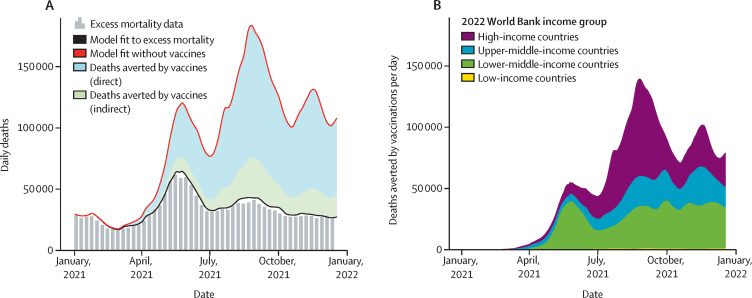
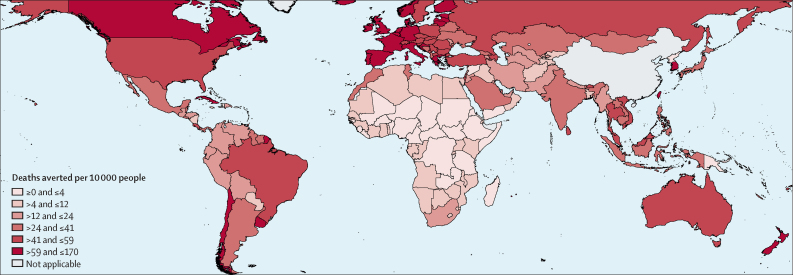
BACKGROUND: The first COVID-19 vaccine outside a clinical trial setting was administered on Dec 8, 2020. To ensure global vaccine equity, vaccine targets were set by the COVID-19 Vaccines Global Access (COVAX) Facility and WHO. However, due to vaccine shortfalls, these targets were not achieved by the end of 2021. We aimed to quantify the global impact of the first year of COVID-19 vaccination programmes. METHODS: A mathematical model of COVID-19 transmission and vaccination was separately fit to reported COVID-19 mortality and all-cause excess mortality in 185 countries and territories. The impact of COVID-19 vaccination programmes was determined by estimating the additional lives lost if no vaccines had been distributed. We also estimated the additional deaths that would have been averted had the vaccination coverage targets of 20% set by COVAX and 40% set by WHO been achieved by the end of 2021. FINDINGS: Based on official reported COVID-19 deaths, we estimated that vaccinations prevented 14·4 million (95% credible interval [Crl] 13·7-15·9) deaths from COVID-19 in 185 countries and territories between Dec 8, 2020, and Dec 8, 2021. This estimate rose to 19·8 million (95% Crl 19·1-20·4) deaths from COVID-19 averted when we used excess deaths as an estimate of the true extent of the pandemic, representing a global reduction of 63% in total deaths (19·8 million of 31·4 million) during the first year of COVID-19 vaccination. In COVAX Advance Market Commitment countries, we estimated that 41% of excess mortality (7·4 million [95% Crl 6·8-7·7] of 17·9 million deaths) was averted. In low-income countries, we estimated that an additional 45% (95% CrI 42-49) of deaths could have been averted had the 20% vaccination coverage target set by COVAX been met by each country, and that an additional 111% (105-118) of deaths could have been averted had the 40% target set by WHO been met by each country by the end of 2021. INTERPRETATION: COVID-19 vaccination has substantially altered the course of the pandemic, saving tens of millions of lives globally. However, inadequate access to vaccines in low-income countries has limited the impact in these settings, reinforcing the need for global vaccine equity and coverage. FUNDING: Schmidt Science Fellowship in partnership with the Rhodes Trust; WHO; UK Medical Research Council; Gavi, the Vaccine Alliance; Bill & Melinda Gates Foundation; National Institute for Health Research; and Community Jameel.
Overview
CoChat Summary
## TL;DR
This mathematical modelling study estimated that COVID-19 vaccination averted 14.4 million deaths based on reported deaths, or 19.8 million deaths when excess mortality was used, across 185 countries and territories during Dec 8, 2020–Dec 8, 2021. The paper argues that vaccine inequity limited impact in low-income settings and that reaching COVAX/WHO coverage targets could have saved substantially more lives.
## Key findings
- Using officially reported COVID-19 deaths, vaccination prevented 14.4 million deaths (95% CrI 13.7–15.9) in 185 countries and territories over the first year of vaccination.
- Using excess mortality, vaccination averted 19.8 million deaths (95% CrI 19.1–20.4), corresponding to a 63% reduction in total deaths (19.8 million of 31.4 million) during that year.
- In COVAX AMC countries, vaccinations averted 7.4 million deaths (95% CrI 6.8–7.7), representing 41% of estimated excess mortality (7.4 million of 17.9 million).
- If the WHO 40% target had been met in every country by the end of 2021, an additional 599,300 deaths (95% CrI 577,700–622,400) could have been averted; in low-income countries, meeting the COVAX 20% target could have averted an additional 45% of deaths, and the WHO 40% target an additional 111% of deaths.
## Methods
- The authors fit a previously published age-structured SEIRS transmission model with vaccination to reported COVID-19 mortality and to all-cause excess mortality in 185 countries and territories (excluding China), using country-level demography, mixing patterns, health-care capacity, and vaccination rollout data.
- Vaccination effects were modelled as protection against infection, severe disease, and onward transmission; the model also explicitly represented the delta variant and vaccine efficacy by country based on likely vaccine types used.
- They estimated deaths averted by comparing the fitted observed scenario against counterfactual scenarios with no vaccines, and with vaccines distributed to meet COVAX 20% and WHO 40% coverage targets by Dec 8, 2021, using Bayesian fitting with Metropolis-Hastings MCMC and 100 draws for uncertainty.
## Limitations
- The paper states that impact estimates were limited by uncertainty in excess mortality, gaps in genomic surveillance, and lack of detailed vaccination data for many countries; key inputs had to rely on working assumptions about vaccine type, rollout, and variant spread.
- The authors explicitly note a limitation of the COVAX/WHO target analysis: the targets were meant for the end of 2021, while the modelling endpoint was Dec 8, 2021, so some countries may have been closer to target by year-end than the model captured.
- Evident from the text: the counterfactual did not adjust for how governments or populations might have responded without vaccines, nor for possible changes in mobility, non-pharmaceutical interventions, or viral evolution, so the estimated deaths averted are model-dependent.
Model-written summary. Check it against the paper before relying on it.
Integrity signals
Registry
Cites
Statistics
Figures
Verification
Claims the paper makes
2 Valid · 2 Not valid · 4 Not checked · 48 Own results and interpretations
The cited sources that could be checked couldn’t confirm or dispute this claim.
In the paper
“In this analysis, we consequently focused on fitting to all-cause excess mortality, which provides a more complete description of the pandemic.15”
§ Global impact of the first year of COVID-19 vaccination: a mathematical modelling study > Discussion
What the sources say
- Could not verifycites [15] WHO Global excess deaths associated with COVID-19, January 2020–December 2021 https://www.who.int/data/stories/global-excess-deaths-associated-with-covid-19-january-2020-december-2021 May, 2022 sourceExperimental — accuracy not yet measured
The Methods (Statistical analysis) and Results examine hospital admission and emergency care attendance among people with delta versus alpha infections. The Discussion addresses limitations of those hospital-care data, but does not assess all-cause excess mortality or say that fitting to it gives a more complete description of the pandemic. Searches for “all-cause excess mortality” and “excess deaths” found no supporting passage; page numbers were not available in our copy. (LLM, conf=0.76)
plainstates a cause- Asserted: passes — The authors put it forward as true.
- Checkable: passes — It can be checked against evidence.
- Load-bearing: passes — The paper’s conclusions depend on it.
- Based: passes — The paper gives a reason why it holds.
- Could not verify
Every source the paper cites for this claim was checked and supports it.
In the paper
“Under-ascertainment of COVID-19 mortality is a known issue that has hindered our understanding of the pandemic.23”
§ Global impact of the first year of COVID-19 vaccination: a mathematical modelling study > Discussion
What the sources say
- Supportedcites [23] Whittaker C Walker PGT Alhaffar M Under-reporting of deaths limits our understanding of true burden of COVID-19 BMJ 375 2021 n2239 34642172 source
In “Renewed case for vaccine equity” (page unavailable), the paper calls it a myth that high-income countries were harder hit and shows that accounting for under-reporting changes the estimated share of COVID-19 mortality borne by low- and middle-income countries. This supports the claim that under-ascertainment has obscured understanding of the pandemic’s mortality burden. (LLM, conf=0.86)
boostedstates a cause- Asserted: passes — The authors put it forward as true.
- Checkable: passes — It can be checked against evidence.
- Load-bearing: passes — The paper’s conclusions depend on it.
- Based: passes — The paper gives a reason why it holds.
- Supported
The cited sources that could be checked couldn’t confirm or dispute this claim.
In the paper
“Our impact estimates were also limited by the inherent uncertainty in model-based estimates of excess mortality.13”
§ Global impact of the first year of COVID-19 vaccination: a mathematical modelling study > Discussion
What the sources say
- Could not verifycites [13] The Economist The pandemic's true death toll The Economist Nov 2, 2021 https://www.economist.com/graphic-detail/coronavirus-excess-deaths-estimates sourceExperimental — accuracy not yet measured
The Discussion describes limitations of estimates of vaccine effects on transmission, including testing behavior and previous infection status. A search for excess mortality, model-based mortality estimates, and deaths found no passage addressing uncertainty in excess-mortality estimates. Page numbers were not available in our copy. (LLM, conf=0.76)
plain- Asserted: passes — The authors put it forward as true.
- Checkable: passes — It can be checked against evidence.
- Load-bearing: unclear — It is unclear whether the paper’s conclusions depend on it.
- Based: passes — The paper gives a reason why it holds.
- Could not verify
The cited sources support only part of this claim — read each source’s verdict below.
In the paper
“Importantly, these estimates based on official reported COVID-19 deaths represent the lower bound of deaths averted at the global level due to the considerable levels of under-reporting of COVID-19 mortality documented worldwide.23”
§ Global impact of the first year of COVID-19 vaccination: a mathematical modelling study > Methods > Excess mortality and COVID-19 mortality data
What the sources say
- Partly supportedcites [23] Whittaker C Walker PGT Alhaffar M Under-reporting of deaths limits our understanding of true burden of COVID-19 BMJ 375 2021 n2239 34642172 sourceExperimental — accuracy not yet measured
In “Renewed case for vaccine equity” (page not provided), the paper says that under-reporting affects reported COVID-19 mortality and that excess-mortality estimates suggest a higher share of deaths in low- and middle-income countries. It also reports estimates of deaths that further vaccination could avert in those countries. It does not say that estimates based on officially reported deaths are a lower bound for deaths averted globally. (LLM, conf=0.83)
plainstates a cause- Asserted: passes — The authors put it forward as true.
- Checkable: passes — It can be checked against evidence.
- Load-bearing: passes — The paper’s conclusions depend on it.
- Based: passes — The paper gives a reason why it holds.
- Partly supported
A result the paper reports from its own data — it cites no other source for it, so there is none to check. The quote shows it is in the paper.
In the paper
“Notably, our model fits were unable to recreate excess mortality death tolls in recent epidemic waves in Iraq and Sudan because of the depletion of the susceptible population.”
§ Global impact of the first year of COVID-19 vaccination: a mathematical modelling study > Discussion
plainstates a cause- Asserted: passes — The authors put it forward as true.
- Checkable: passes — It can be checked against evidence.
- Load-bearing: unclear — It is unclear whether the paper’s conclusions depend on it.
- Based: passes — The paper gives a reason why it holds.
32 more claims
Create a free account to see all 56 claims and to verify the 3 references still open.
- It may state two separate claims as one. 14
- Probably not a substantial claim. 6
Claims other papers make about this one
Each is checked against this paper’s own text: does it say what the citing paper says it does?
The cited source says what the claim attributes to it.
In the citing paper
“Global COVID-19 vaccination programmes are estimated to have prevented 19.8 million deaths worldwide during the first year of roll-out(12)”
Citations
Cites
Estimated transmissibility and impact of SARS-CoV-2 lineage B.1.1.7 in England
Davies, N. G., Abbott, S., Barnard, R. C., Jarvis, C. I., Kucharski, A. J., Munday, J. D., Pearson, C. A. B., Russell, T. W., Tully, D. C., Washburne, A. D., et al. (2021) · Science · doi:10.1126/science.abg3055 · Cited by 2,581 · cited 1×
“20,21 Any epidemiological differences associated with previous variants were assumed to be reflected by their effects on mortality, 22 which were subsequently captured by the estimated R t trend.”
Estimated transmissibility and impact of SARS-CoV-2 lineage B.1.1.7 in England
Davies, N. G., Abbott, S., Barnard, R. C., Jarvis, C. I., Kucharski, A. J., Munday, J. D., Pearson, C. A. B., Russell, T. W., Tully, D. C., Washburne, A. D., et al. (2020) · doi:10.1101/2020.12.24.20248822 · Cited by 2,557
Wang, H., Paulson, K. R., Pease, S. A., Watson, S., Comfort, H., Zheng, P., Aravkin, A. Y., Bisignano, C., Barber, R. M., Alam, T., et al. (2022) · The Lancet · doi:10.1016/s0140-6736(21)02796-3 · Cited by 2,069
Wouters, O. J., Shadlen, K. C., Salcher-Konrad, M., Pollard, A. J., Larson, H. J., Teerawattananon, Y., & Jit, M. (2021) · The Lancet · doi:10.1016/s0140-6736(21)00306-8 · Cited by 1,288
Walker, P. G. T., Whittaker, C., Watson, O. J., Baguelin, M., Winskill, P., Hamlet, A., Djafaara, B. A., Cucunubá, Z., Olivera Mesa, D., Green, W., et al. (2020) · Science · doi:10.1126/science.abc0035 · Cited by 993
Self-citationTwohig, K. A., Nyberg, T., Zaidi, A., Thelwall, S., Sinnathamby, M. A., Aliabadi, S., Seaman, S. R., Harris, R. J., Hope, R., Lopez-Bernal, J., et al. (2022) · The Lancet Infectious Diseases · doi:10.1016/s1473-3099(21)00475-8 · Cited by 803 · cited 1×
“20,21 Any epidemiological differences associated with previous variants were assumed to be reflected by their effects on mortality, 22 which were subsequently captured by the estimated R t trend.”
Karlinsky, A., & Kobak, D. (2021) · eLife · doi:10.7554/elife.69336 · Cited by 772 · cited 1×
“11 Robust vital registration systems do not exist in many parts of the world, with WHO estimating that 40% of global deaths that occurred in 2020 were unregistered, 12 and therefore data on excess mortality are not available for every country.”
Understanding COVID-19 vaccine hesitancy
Machingaidze, S., & Wiysonge, C. S. (2021) · Nature Medicine · doi:10.1038/s41591-021-01459-7 · Cited by 590 · cited 1×
“7 This considerable heterogeneity in vaccination coverage has resulted in continued reliance on non-pharmaceutical interventions for pandemic management in some countries 8 but concomitantly enabled other nations to relax interventions as a route out of the pandemic.”
Twohig, K. A., Nyberg, T., Zaidi, A., Thelwall, S., Sinnathamby, M., Aliabadi, S., Seaman, S. R., Harris, R., Hope, R., Bernal, J. L., et al. (2021) · Northumbria Research Link (Northumbria University) · doi:10.17863/cam.76294 · Cited by 514
Effect of Covid-19 Vaccination on Transmission of Alpha and Delta Variants
Eyre, D. W., Taylor, D., Purver, M., Chapman, D., Fowler, T., Pouwels, K. B., Walker, A. S., & Peto, T. E. A. (2022) · New England Journal of Medicine · doi:10.1056/nejmoa2116597 · Cited by 464 · cited 2×
“19 We inferred vaccine efficacy for each country on the basis of vaccine types known to be predominantly used in each country.”
Cited by
Items 701–800 of 1,777
Eisfeld, R.-K., & Just, T. (2024) · Sustainable Cities and Society · doi:10.1016/j.scs.2024.105503 · Cited by 4
Sritharan, H. P., Bhatia, K. S., van Gaal, W., Kritharides, L., Chow, C. K., & Bhindi, R. (2024) · The Medical Journal of Australia · doi:10.5694/mja2.52307 · Cited by 5
“3,5 In contrast, vaccination did not influence the likelihood of clinical cardiovascular events or troponin elevation.”
BackgroundStanley, A. M., Aksyuk, A. A., Wilkins, D. E., Green, J. A., Lan, D., Shoemaker, K., Tieu, H., Sobieszczyk, M. E., Falsey, A. R., & Kelly, E. J. (2024) · Frontiers in Immunology · doi:10.3389/fimmu.2024.1401728 · Cited by 5
Khatiwada, M., Nugraha, R. R., Dochez, C., Harapan, H., Mutyara, K., Rahayuwati, L., Syukri, M., Wardoyo, E. H., Suryani, D., Que, B. J., et al. (2024) · Vaccines · doi:10.3390/vaccines12060654 · Cited by 6
“A modeling study indicated that COVID-19 vaccinations prevented approximately 14.4 million deaths across 185 countries and territories between December 2020 and December 2021 [5].”
MethodInfluentialChoi, Y.-S., Ryu, S., Kim, R. K., Achangwa, C., Baek, S., Nam, H., Park, E., Kim, E. K., Choe, Y. J., Kwon, D., et al. (2024) · Journal of Korean Medical Science · doi:10.3346/jkms.2024.39.e258 · Cited by 4
Cytokine Profile in Patients with Postacute Sequelae of COVID-19
Ghorra, N., Popotas, A., Besse‐Hammer, T., Rogiers, A., Corazza, F., & Nagant, C. (2024) · Viral Immunology · doi:10.1089/vim.2024.0025 · Cited by 5
Li, H., Terrando, N., & Gelbard, H. A. (2024) · Advances in neurobiology · doi:10.1007/978-3-031-55529-9_24 · Cited by 4
Predictors of the willingness to accept a free COVID-19 vaccine among households in Nigeria
Eyawo, O., Ugoji, U. C., Pan, S., Oyibo, P. G., Rehman, A., Mahboob, M., & Esimai, O. A. (2024) · Vaccine · doi:10.1016/j.vaccine.2024.126225 · Cited by 6
Katz, M. A., Castro, M. Y. R., Chakhunashvili, G., Chitadze, N., Ward, C. L., McKnight, C. J., Lucaccioni, H., Finci, I., Zardiashvili, T., Pebody, R. G., et al. (2024) · PLoS ONE · doi:10.1371/journal.pone.0307805 · Cited by 3
Etienne‐Mesubi, M., Oni, B., Labbe-Coq, N. R., et al. (2024) · PLOS Global Public Health · doi:10.1371/journal.pgph.0002864 · Cited by 4
“Vaccine distribution and delivery infrastructure as well as misinformation were some factors resulting in poor vaccine uptake in many low-income countries [19].”
BackgroundDarko, D. M., Seaneke, S. K., Karikari-Boateng, E., Nkansah, E., Amponsa-Achiano, K., Mohamed, N. T., Bonful, H. A., Buabeng, R. O., Ashie, A., Asamoa-Amoakohene, A., et al. (2024) · Vaccine · doi:10.1016/j.vaccine.2024.126460 · Cited by 4
Who made the mRNA vaccine? Measuring division of labor in therapeutic innovation
Ho, M., Price, H. C. W., Evans, T., & O’Sullivan, E. (2024) · Nature Biotechnology · doi:10.1038/s41587-024-02441-7 · Cited by 4
Syncopes, paresis and loss of vision after COVID-19 mRNA-based vaccination and SARS-CoV-2 infection
Weirauch, T., Schüttfort, G., & Vehreschild, M. J. G. T. (2024) · Infection · doi:10.1007/s15010-024-02439-y · Cited by 5
“Using a mathematical model, this study estimates that the global vaccination campaign prevented more than 14.4 million deaths in the first year of vaccination [8].”
InfluentialZhang, S., & Gu, X. (2024) · BMJ Leader · doi:10.1136/leader-2024-001041 · Cited by 4
Vaccine policies in France and Europe
Fischer, A., Peretti‐Watel, P., & Ward, J. K. (2024) · Current Opinion in Immunology · doi:10.1016/j.coi.2024.102513 · Cited by 4
Jia, K. M., Boyer, C., Wallinga, J., & Lipsitch, M. (2025) · Epidemiology · doi:10.1097/ede.0000000000001839 · Cited by 9
“5,7,18,19 Overall Impact For α 0 < α 1 , overall impact is defined as: For α 2 > α 1 , overall impact is defined as: Overall impact directly answers the two aforementioned causal questions on quantifying vaccine-averted and -avertible outcomes.”
Wang, Y., Wang, H., Chen, J., Wei, Y., & Li, Y. (2025) · Atmospheric Pollution Research · doi:10.1016/j.apr.2025.102502 · Cited by 4
McCormack, M. J., Scott, S., Logan, N., Raveendran, S., Newman, J., Santos, I. A., Bailey, D., Murcia, P. R., Thomson, E. C., Hosie, M. J., et al. (2025) · EBioMedicine · doi:10.1016/j.ebiom.2025.105760 · Cited by 3
Cost-Utility Analysis of COVID-19 Vaccination Strategies for Endemic SARS-CoV-2
Miranda, R. N., Simmons, A. E., Li, M., Gebretekle, G. B., Xi, M., Salvadori, M. I., Warshawsky, B. F., Wong, E., Ximenes, R., Andrew, M. K., et al. (2025) · JAMA Network Open · doi:10.1016/j.jvacx.2025.100660 · Cited by 10
COVID-19 convalescent plasma therapy through the lens of the third year of the pandemic
Pirofski, L. (2022) · Clinical Microbiology and Infection · doi:10.1016/j.cmi.2022.10.033 · Cited by 4
“The endogenous spike-proteineantibody response limits COVID-19 progression and severity, as evidenced by the stunning success of spike-protein-based vaccines [5,6].”
BackgroundThe societal value of SARS-CoV-2 booster vaccination in Indonesia
Johnson, R., Djaafara, B. A., Haw, D., Doohan, P., Forchini, G., Pianella, M., Ferguson, N. M., Smith, P., & Hauck, K. (2023) · Vaccine · doi:10.1016/j.vaccine.2023.01.068 · Cited by 7
“Often, the assumption made is that behaviour and other factors would be exactly the same as in the intervention scenario [35].”
BackgroundInfluentialTreating COVID-19: Targeting the Host Response, Not the Virus
Fedson, D. S. (2023) · Life · doi:10.3390/life13030712 · Cited by 5
“They are estimated to have saved tens of millions of lives [5].”
BackgroundApplication of Object Mask Detection Using the Convolution Neural Network (CNN)
Yuhandri, Yanto, M., & Novri, E. N. (2023) · Jurnal RESTI (Rekayasa Sistem dan Teknologi Informasi) · doi:10.29207/resti.v7i4.5059 · Cited by 5
“As a result of the spread of the Covid-19 virus, it has had a fairly broad impact on all sectors [4], [5].”
BackgroundCOVID-19 vaccination: Effects of immunodominant peptides of SARS-CoV-2
de Andrade, A. G., Comberlang, F. C., Silva, L. H. A. C., et al. (2023) · Cytokine · doi:10.1016/j.cyto.2023.156339 · Cited by 4
Gallo, A., Covino, M., Lipari, A., Pellegrino, S., Ibba, F., Agnitelli, M. C., Tosato, M., Landi, F., Montalto, M., & Gemelli against COVID-19 Post-Acute Care Team (2023) · Journal of Personalized Medicine · doi:10.3390/jpm13091321 · Cited by 4
Sanayei, A. M., Montalvan, A., Faria, I. M. D. F., Ochalla, J., Pavlakis, M., Blair, B. M., Alonso, C. D., Curry, M. P., & Saberi, B. (2023) · Transplantation Proceedings · doi:10.1016/j.transproceed.2023.07.011 · Cited by 4
A multi-country analysis of COVID-19 hospitalizations by vaccination status
Gonçalves, B. P., Jassat, W., Baruch, J., Hashmi, M., Rojek, A. M., Dasgupta, A., Martín‐Loeches, I., Reyes, L. F., Piubelli, C., Citarella, B. W., et al. (2023) · Med · doi:10.1016/j.medj.2023.08.005 · Cited by 4
The role of delay in vaccination rate on Covid-19
Salman, M., Mohanty, S. K., Nayak, C., et al. (2023) · Heliyon · doi:10.1016/j.heliyon.2023.e20688 · Cited by 4
Kayano, T., & Nishiura, H. (2023) · BMC Infectious Diseases · doi:10.1186/s12879-023-08748-1 · Cited by 4
“One of the advantages of studies using mathematical models is that the parameters can be changed, and hypothetical scenarios can be examined [4, 10, 27–29].”
BackgroundSchrimpf, A. M., Jentzsch, A., Geier, A.-K., & Bleckwenn, M. (2023) · Patient Preference and Adherence · doi:10.2147/ppa.s433331 · Cited by 5
Effectiveness of COVID-19 vaccines in Ecuador: A test-negative design
Pérez‐Tasigchana, R. F., Valcárcel-Pérez, I., Arias-Quispe, M., Astudillo, L., Bruno, A., Marco Herrera, G., Armas-González, R., de Mora, D., Pinos, J., Olmedo, A., et al. (2023) · Vaccine X · doi:10.1016/j.jvacx.2023.100404 · Cited by 6
Tseng, P., Zeng, B., Hsu, C., Thompson, T., Stubbs, B., Hsueh, P., Su, K., Chen, Y., Chen, T., Wu, Y., et al. (2023) · Journal of the Royal Society of Medicine · doi:10.1177/01410768231202657 · Cited by 4
Ng, D.-L.-C., Jamalludin, M. A. B., Gan, X.-Y., Ng, S.-Y., Rasidin, M. Z. B. M., Felix, B., Jagang, N. M., Sindeh, W., Rahim, M. A. H. B. M. A., Beng, T. S., et al. (2023) · Risk Management and Healthcare Policy · doi:10.2147/rmhp.s439530 · Cited by 5
Cao, H., & Cao, L. (2024) · Scientific Reports · doi:10.1038/s41598-023-50421-9 · Cited by 4
Maruyama, J. M., Tovo‐Rodrigues, L., Santos, I. S., Murray, J., & Matijasevich, A. (2024) · Journal of Adolescent Health · doi:10.1016/j.jadohealth.2023.10.016 · Cited by 5
Ziakas, P. D., & Mylonakis, E. E. (2024) · PLOS Digital Health · doi:10.1371/journal.pdig.0000462 · Cited by 6
Zapf, A. J., Schuh, H. B., Dudley, M. Z., Rimal, R. N., Harvey, S. A., Shaw, J., Balgobin, K. R., & Salmon, D. A. (2024) · Patient Education and Counseling · doi:10.1016/j.pec.2024.108258 · Cited by 4
Keinan‐Boker, L., Fluss, R., Dichtiar, R., Rosenberg, A., Lassan, M. B., & Huppert, A. (2024) · Israel Journal of Health Policy Research · doi:10.1186/s13584-024-00609-9 · Cited by 4
“The speedy development of safe and efficient COVID19 messenger-RNA vaccines [3, 4], was a game changer in the current pandemic [5].”
BackgroundKaba, M., Koyuncu, M., Schneider, S. O., & Sutter, M. (2024) · European Economic Review · doi:10.1016/j.euroecorev.2024.104818 · Cited by 5
“Second, Covid-19 vaccinations had the utmost potential to greatly benefit the society by halting the pandemic and saving lives with minimal risks on the vaccinated (Polack et al., 2020; Liu et al., 2021; Barro, 2022; Watson et al., 2022).”
BackgroundControl, bi-stability, and preference for chaos in time-dependent vaccination campaign
Gabrick, E. C., Brugnago, E. L., de Moraes, A. L. R., Protachevicz, P. R., da Silva, S. T., Borges, F. S., Caldas, I. L., Batista, A. M., & Kurths, J. (2024) · Chaos An Interdisciplinary Journal of Nonlinear Science · doi:10.1063/5.0221150 · Cited by 4
Kamalrathne, T., Jayasekara, R. U., Amaratunga, D., et al. (2024) · International Journal of Environmental Research and Public Health · doi:10.3390/ijerph21101268 · Cited by 4
“Using mathematical modelling, a study emphasised that COVID-19 vaccination prevented approximately 14.4–19.8 million deaths in around 185 countries and territories during only the first year of the global vaccination programme [6].”
BackgroundMethodInfluentialTownsley, H., Gahir, J., Russell, T., et al. (2024) · UCL Discovery (University College London) · doi:10.25418/crick.25472410.v1 · Cited by 4
Bispo, E. C. I., Silva-Carvalho, A. É., Sousa, M. R. R., Neves, F. D. A. R., Carvalho, J. L., Argañaraz, E. R., & Saldanha‐Araújo, F. (2022) · Clinical Immunology Communications · doi:10.1016/j.clicom.2022.11.004 · Cited by 4
“However, this decline in vaccine efficacy and the risks associated with the emergence of new variants of SARS-CoV-2, keep the world on alert regarding the risks that still exist due to the COVID-19 pandemic [9].”
Tada, T., Murao, H., Shiratani, R., Park, J., Hideshima, M., Kanki, H., Ishikawa, N., Shibahara, T., Fujimoto, J., & Higa, S. (2023) · Modern Rheumatology Case Reports · doi:10.1093/mrcr/rxad022 · Cited by 3
Roche, R., Odeh, N., Andar, A. U., Tulapurkar, M. E., & Roche, J. A. (2023) · Microorganisms · doi:10.3390/microorganisms11081963 · Cited by 4
Nationwide analysis of COVID-19 death rate throughout the pandemic in ItalyPreprint
Mattiuzzi, C., & Lippi, G. (2022) · Research Square · doi:10.21203/rs.3.rs-2264024/v1 · Cited by 4
Changes in life expectancy and life span equality during the COVID-19 epidemic in Japan up to 2022Preprint
Okada, Y., & Nishiura, H. (2024) · medRxiv · doi:10.1101/2024.04.18.24306049 · Cited by 3
Foundation time series models for forecasting and policy evaluation in infectious disease epidemicsPreprint
Kalahasti, S., Faucher, B., Wang, B., et al. (2025) · medRxiv · doi:10.1101/2025.02.24.25322795 · Cited by 4
Vanamail, P. (2023) · Bulletin of the National Research Centre/Bulletin of the National Research Center · doi:10.1186/s42269-023-01071-4 · Cited by 3
“Vaccination impact evaluation Studies conducted in various countries have demonstrated the beneficial effects of the vaccination programme on mortality and other factors (Moghadas et al. 2021; Rovetta 2022; Chen et al. 2022; Watson et al. 2022; Notarte et al. 2022).”
BackgroundEspinosa, O., Mora, L., Sanabria, C., Ramos, A., Rincón, D., Bejarano, V., Rodríguez, J., Barrera, N., Álvarez, C., Cortés, J. A., et al. (2024) · Systematic Reviews · doi:10.1186/s13643-023-02411-1 · Cited by 7
Kobayashi, T., Tokiya, M., Matsumoto, A., Nakano, T., Hirota, Y., & Hara, M. (2024) · Frontiers in Public Health · doi:10.3389/fpubh.2024.1348170 · Cited by 3
Vaccination decisions and social capital in Japan
Okubo, T., & Noy, I. (2025) · SSM - Population Health · doi:10.1016/j.ssmph.2025.101769 · Cited by 3
“…an estimated 1.6 million additional deaths in Europe alone (Mesl ´ e et al., 2024) or 2.3 million globally (Agrawal, & Whaley, 2023) but computer modelling of the disease spread typically identified much bigger numbers (up to 20 million deaths in the vaccine ’ s first year; in Watson et al., 2022).”
InfluentialPorta, V., Connolly-Andersen, A.-M., Rod, N. H., Hoeyer, K., Hoyweghen, I. V., Botrugno, C., Lucivero, F., Testa, G., & Marelli, L. (2025) · Policy Studies · doi:10.1080/01442872.2025.2486159 · Cited by 5
“COVID-19 data was also used for real-time surveillance of vaccine safety (Watson et al. 2022); the identification of COVID-19 as an independent risk factor for cardiovascular diseases (Katsoularis et al. 2023; 2022; 2021); and the impact of disease severity on health outcomes (Katsoularis et al.…”
Young, B. E., Giubilini, A., Sam, X. H., Lysaght, T., Tambyah, P. A., Schaefer, G. O., & Savulescu, J. (2025) · Asian Bioethics Review · doi:10.1007/s41649-024-00335-z · Cited by 3
Impact of COVID-19 vaccination coverage on global disability burden of Guillain-Barré syndrome
Gao, X. Y., Zhao, C., Yang, J., Yang, Z., Feng, J., Zhan, S., Fan, D., & Liu, Z. (2025) · npj Vaccines · doi:10.1038/s41541-025-01239-1 · Cited by 3
Ciaffi, J., Torrigiani, G., Ruscitti, P., Zambon, A., & Ursini, F. (2025) · Seminars in Arthritis and Rheumatism · doi:10.1016/j.semarthrit.2025.152827 · Cited by 3
Virus-associated pulmonary aspergillosis: A rising challenge in respiratory infections
Pervaiz, A., & Soubani, A. O. (2025) · The American Journal of the Medical Sciences · doi:10.1016/j.amjms.2025.10.021 · Cited by 5
Carbone-Schellman, J., Fontecilla-Escobar, J., Sales-Salinas, N., Chaparro-Pico, W. F., Molina‐Berríos, A., Ruete, M. C., González, P. A., Machuca, M. A., Opazo, M. C., Ezquer, M., et al. (2025) · Frontiers in Immunology · doi:10.3389/fimmu.2025.1677433 · Cited by 3
Ramasamy, R. (2025) · Pathogens · doi:10.3390/pathogens14121197 · Cited by 5
“…year of vaccination, 14.4 million (95% confidence interval or CI of 13.7–15.9 million) officially reported COVID-19 deaths, and 19.8 million (95% CI 19.1–20.4 million) deaths from the more reliable excess mortality data, were estimated to have been averted by vaccination in 185 countries [27].”
InfluentialEffective Antivirals in Pandemic Preparedness: Past Mistakes, Future Needs
Panagiotopoulos, A.-P., Anastassopoulou, C. G., Tsakris, A., & Ioannidis, J. P. A. (2025) · Clinical Infectious Diseases · doi:10.1093/cid/ciaf648 · Cited by 4
Natural and hybrid immunity: A comparative study of T cell response against SARS-CoV-2
de Andrade, A. G., Comberlang, F. C., Peixoto, R. F., Palmeira, P. H. D. S., Aureliano, F. S., Csordas, B. G., Silva, L. H. A. C., & Keesen, T. S. L. (2025) · Clinical Immunology Communications · doi:10.1016/j.clicom.2025.07.001 · Cited by 6
Abdel-Qadir, H. M., Bhatt, H. A., Swayze, S., Paterson, J. M., Ko, D. T., Juurlink, D. N., & Kwong, J. C. (2026) · PLoS Medicine · doi:10.1371/journal.pmed.1004924 · Cited by 4
da Silva, S. J. R., Matthews, Q., Cazaux, S., Vigar, J. R. J., Santos, B. N. R., Carvalho, D. C. M., Cranmer, L. A., Duplat, D., Singh, S., Simchi, M., et al. (2026) · Science Advances · doi:10.1126/sciadv.aeb7039 · Cited by 3
“Vaccines are among the most effective tools for reducing disease burden ( 61 ).”
Arbuthnot, P. B., Bloom, K. M., Kairuz, D., et al. (2026) · Communications Medicine · doi:10.1038/s43856-026-01768-3 · Cited by 3
Johnston, T. S., Li, S. H., Painter, M. M., Swaminathan, D., Atkinson, R. K., Dadonaite, B., Wang, S., Douek, N. R., Kampman, L., Schlesinger, R., et al. (2026) · Nature Immunology · doi:10.1038/s41590-026-02613-4 · Cited by 4
“These vaccines demonstrated high early efficacy, preventing an estimated 19.8 million deaths in their first year of use 4,5 .”
InfluentialZhu, P., Tatar, O., Haward, B., Steck, V., Griffin-Mathieu, G., Perez, S., Dubé, È., Zimet, G. D., & Rosberger, Z. (2023) · Vaccines · doi:10.3390/vaccines11030628 · Cited by 7
Zahra, A., Luijken, K., Abbink, E. J., van den Berg, J. M., Blom, M. T., Elders, P. J. M., Festen, J., Gussekloo, J., Joling, K. J., Melis, R. J. F., et al. (2023) · Diagnostic and Prognostic Research · doi:10.1186/s41512-023-00144-2 · Cited by 5
“Similarly, predictor measurements and incidence of mortality due to COVID-19 can vary over time due to newer variants, better medical management, and improved vaccination coverage [43].”
Backgroundvan Bilsen, C. J. A., Stabourlos, C., Moonen, C. P. B., Brinkhues, S., Demarest, S. S., Hanssen, D. A. T., van Loo, I. H. M., Savelkoul, P. H. M., Philippsen, D., van der Zanden, B., et al. (2023) · Vaccine X · doi:10.1016/j.jvacx.2023.100306 · Cited by 5
“In 2021, vaccination campaigns worldwide were a breakthrough in the battle against coronavirus disease 2019 (COVID19) [1].”
de Barros, S. G., Cruz, D. N., Souza, J. C., et al. (2023) · Ciência & Saúde Coletiva · doi:10.1590/1413-81232023285.10732022en · Cited by 3
The Case for Human Challenge Trials in COVID-19
Drewett, G. P. (2023) · Journal of Bioethical Inquiry · doi:10.1007/s11673-023-10309-9 · Cited by 3
Technical Efficiency of North Eastern Region of India Health Systems in Combating COVID-19
Singh, S. A., & Singh, E. B. (2023) · Indian Journal of Science and Technology · doi:10.17485/ijst/v16i38.1639 · Cited by 3
Meyer, B. K., Nahas, D. D., An, M., Danziger, A., Smith, J. S., Patel, M., Lin, S.-A., Gleason, A., Cox, K., Capen, R. C., et al. (2023) · Vaccine X · doi:10.1016/j.jvacx.2023.100420 · Cited by 5
“The implementation of an RSV vaccine is believed to have the potential to reduce disease burden. mRNA/LNP-based vaccines are now considered an essential tool for combating disease as demonstrated with the COVID-19 vaccines [31].”
MethodAlexNet for Image-Based COVID-19 Diagnosis
Tang, M., Peng, Y., Wang, S., Chen, S., & Zhang, Y. (2024) · Lecture notes in electrical engineering · doi:10.1007/978-981-97-1335-6_16 · Cited by 4
Yeh, Y., Lin, T.-Y., Yao, Y.-C., Hsu, C.-Y., Yen, A. M., Chen, S. L., & Chen, T. H.-H. (2024) · Journal of Infection and Public Health · doi:10.1016/j.jiph.2024.03.006 · Cited by 4
Khorramnia, S., Jalili, M., Salajegheh, M., & Mansouri, M. (2023) · Studies in Medical Sciences · doi:10.61186/umj.34.8.461 · Cited by 3
Nassoro, A. A., Millanzi, W. C., & Herman, P. Z. (2024) · Nursing Open · doi:10.1002/nop2.2171 · Cited by 3
Aboulela, A., Taha, M. Y. M., Ghazal, A. A. E. R., Baess, A. I., & Elsheredy, A. G. (2024) · Molecular Biology Reports · doi:10.1007/s11033-024-09630-2 · Cited by 4
Liu, R., Li, J., Wen, Y., Li, H., Zhang, P., Sheng, B., & Feng, D. D. (2024) · Journal of Healthcare Informatics Research · doi:10.1007/s41666-024-00167-4 · Cited by 6
Sejdic, A., Hartling, H. J., Holler, J. G., Gjærde, L. K., Lindegaard, B., Dungu, A. M., Gnesin, F., Møller, M. E. E., Teglgaard, R. S., Niemann, C. U., et al. (2024) · Frontiers in Immunology · doi:10.3389/fimmu.2024.1360843 · Cited by 3
Geiger, S., Prainsack, B., & Wagenaar, H. (2024) · Health Policy · doi:10.1016/j.healthpol.2024.105112 · Cited by 3
Rashiti-Bytyçi, A., Johansson, E. W., Kaçaniku‐Gunga, P., Danis, K., Schoeps, A., Dörre, A., Fetaj, F., & Kalaveshi, A. (2024) · PLoS ONE · doi:10.1371/journal.pone.0305629 · Cited by 4
“Additionally, as vaccine supply was constrained, most countries opted to prioritize vaccination in high-risk populations [4].”
BackgroundRudling, A., Sesay, M. G., Wiebelhaus‐Brahm, E., & Rettberg, A. (2024) · Qualitative Research · doi:10.1177/14687941241264677 · Cited by 3
A descriptive review on the real-world impact of Moderna, Inc. COVID-19 vaccines
Bausch-Jurken, M. T., Dawson, R. S., Ceddia, F., Urdaneta, V., Marks, M. A., & Doi, Y. (2024) · Expert Review of Vaccines · doi:10.1080/14760584.2024.2402955 · Cited by 3
“Globally, COVID-19 vaccination averted an estimated 19.8 million (95% credible interval [CrI], 19.1–20.4 million) COVID-19 deaths in the first year since authorization was received for the original vaccines, reflecting a 63% reduction in total deaths [8].”
InfluentialMüller, S., Wachinger, J., Jiao, L., Bärnighausen, T., Chen, S., & McMahon, S. A. (2024) · Qualitative Health Research · doi:10.1177/10497323241277107 · Cited by 4
Razzaq, A., Disoma, C., Iqbal, S., Nisar, A., Hameed, M., Qadeer, A., Waqar, M., Mehmood, S. A., Gao, L., Khan, S., et al. (2024) · Frontiers in Cellular and Infection Microbiology · doi:10.3389/fcimb.2024.1484637 · Cited by 4
Nikooyeh, B., Ghodsi, D., Amini, M., Rabiei, S., Rasekhi, H., Motlagh, M. E., & Neyestani, T. R. (2024) · Frontiers in Public Health · doi:10.3389/fpubh.2024.1485423 · Cited by 4
Gudina, E. K., Muro, F. J., Kyala, N. J., Melaku, T., Sørensen, J. B., Meyrowitsch, D. W., Mekonnen, Z., & Dræbel, T. A. (2024) · Frontiers in Public Health · doi:10.3389/fpubh.2024.1422673 · Cited by 7
Simonovic, N., Gesser‐Edelsburg, A., & Taber, J. M. (2025) · Frontiers in Public Health · doi:10.3389/fpubh.2024.1480419 · Cited by 3
Self-affine analysis and the universal crossover behavior of COVID-19 daily cases
Murari, T. B., Naziazeno, R., Machado, B. A. S., Filho, T. M. R., Pereira, H. B. D. B., & Moret, M. A. (2025) · Chaos Solitons & Fractals · doi:10.1016/j.chaos.2025.116062 · Cited by 3
Kitano, T., Salmon, D. A., Dudley, M. Z., Saldanha, I. J., Thompson, D. A., & Engineer, L. D. (2025) · Value in Health · doi:10.1016/j.jval.2025.02.007 · Cited by 5
Priorities for rapid and cost-effective vaccines to improve outbreak responses
Gilbert, S. C. (2025) · PLoS Biology · doi:10.1371/journal.pbio.3003114 · Cited by 3
“Together, the mRNA vaccines and adenoviral-vectored vaccines saved an estimated 16 million lives in the first year of use during the COVID-19 pandemic [1].”
Spike protein-related proteinopathies: A focus on the neurological side of spikeopathies
Posa, A. (2025) · Annals of Anatomy - Anatomischer Anzeiger · doi:10.1016/j.aanat.2025.152662 · Cited by 4
Unraveling Rising Mortality: Statistical Insights from Japan and International Comparisons
Kusunoki, H. (2025) · Healthcare · doi:10.3390/healthcare13111305 · Cited by 7
“It should be noted that much of the positive evidence regarding COVID-19 vaccines was generated in the early phase of their introduction (2021–2022) and primarily focused on populations in Western countries [9,40].”
Xhaferi, A., Bino, S., Daja, R., et al. (2025) · Clinical Infectious Diseases · doi:10.1093/cid/ciaf202 · Cited by 3
van Dijk, W., Kant, A. C., Vlieg, A. V. H., & Rosendaal, F. R. (2025) · Thrombosis and Haemostasis · doi:10.1055/a-2665-2400 · Cited by 3
Chaufan, C. (2025) · AIMS Allergy and Immunology · doi:10.3934/allergy.2025015 · Cited by 2
COVID-19 vaccine-induced autoimmune hyperthyroidism: Graves’ disease
Murugan, A. K., & Alzahrani, A. S. (2025) · Frontiers in Immunology · doi:10.3389/fimmu.2025.1699210 · Cited by 3
Smither, S. J., Kempster, S. L., Priestnall, S. L., Suárez‐Bonnet, A., Stapleton, H. L., Laws, T. R., Ferguson, D., Almond, N. M., Lever, M. S., & Williamson, E. D. (2022) · Viruses · doi:10.3390/v14081769 · Cited by 2
“Vaccination against SARS-CoV-2 has been extremely successful in preventing hospitalisation or death, with some estimates indicating that over 10 million lives were saved in the first year of vaccination [4], across the world, but the remarkable ability of SARS-CoV-2 for human-tohuman transmission and its capacity to m…”
Background
Metadata
- Authors
- Watson, O. J., Barnsley, G., Toor, J., Hogan, A. B., Winskill, P., & Ghani, A. C.
- Affiliations
- Imperial College London (GB)
- Corresponding author
- Watson, Oliver J
- Venue
- The Lancet Infectious Diseases
- Publisher
- Elsevier BV
- Published
- 2022-09
- Volume
- 22
- Issue
- 9
- Pages
- 1293-1302
- ISSN
- 1473-3099 (ISSN-L)
- PMC
- PMC9225255
- OpenAlex
- W4283395367
- Semantic Scholar
- e048be45c9e0900c299d78c2cb327ce9afd77467
- Cited by
- 1,769
- References
- 26
- Citations by year
- 2026: 165 · 2025: 341 · 2024: 533 · 2023: 578 · 2022: 150
- FWCI
- 237.54
- Type
- journal article
- Language
- en
- Update notices
- erratum (2023-10-01)
- Open access
- hybrid
- doi.org
- Licence
- cc-by
- www.elsevier.com/tdm/userlicense/1.0/ (tdm)
- www.elsevier.com/legal/tdmrep-license (tdm)
- creativecommons.org/licenses/by/4.0/ (vor)
- Locations
- The Lancet Infectious Diseases (publishedVersion, cc-by)
- PubMed Central (publishedVersion, cc-by)
- PubMed (publishedVersion)
- LSHTM Research Online (London School of Hygiene and Tropical Medicine) (acceptedVersion)
- Spiral (Imperial College London) (submittedVersion, other-oa)
- Funders
- Bill and Melinda Gates Foundation
- GAVI Alliance
- National Institute for Health and Care Research
- Imperial College London
- Medical Research Council (MR/R015600/1, MC_PC_19012)
- Topics
- Physical Sciences › Mathematics › Modeling and Simulation › COVID-19 epidemiological studies
- Health Sciences › Medicine › Infectious Diseases › SARS-CoV-2 and COVID-19 Research
- Social Sciences › Health › Vaccine Coverage and Hesitancy
- Keywords
- COVID-19 vaccination, vaccine impact, COVID-19 mortality, excess mortality, mortality averted, COVAX, vaccine equity, low-income countries, mathematical transmission model, global health equity, SARS-CoV-2, advance market commitments
- MeSH terms
- COVID-19, COVID-19 Vaccines, Humans, Models, Theoretical, Vaccination, Vaccines, Global Health
About these checks
Registry, retraction, Cites and statistics results are computed, not judged, with one exception: a printed reference that no index lists is read once by a model before it counts as a citation error. Claims are extracted by a model and kept only when their quote appears verbatim in the text; each cited source is then checked, with a model’s help, for whether it says what the claim relies on. Those verdicts can be wrong — read the claim’s quote and the cited source before relying on one.
The claim verdicts this report counts are experimental: their accuracy is not yet measured.
A language model drew the claims from the paper on 2026-10-10, under version 3 of the claim definition (model deepseek-v4.1-flash, prompt extract-v3).
A second model labelled each claim on 2026-10-10 (model jev-1.13-20260917, definition revision gold-guideline-v0.2).
Cited sources are checked with a language model’s help (gpt-6-sol).
Statistics and arithmetic are recomputed, not judged.
Confidence bands are shown only for fields calibrated on our annotated test set. None is calibrated yet, so no band is shown.
What counts as a claim ›How we measure confidence ›How we check this ›
Are you an author, or do you see a problem with this page? Request a review
Data sources
Bibliographic data: Semantic Scholar, OpenAlex, Crossref.
Contains information from the Semantic Scholar Academic Graph Datasets, made available under the ODC Attribution License (ODC-BY 1.0).
Semantic Scholar’s data is described in: Kinney, R., et al. (2023). The Semantic Scholar Open Data Platform. arXiv:2301.10140.
