

Global impact of the first year of COVID-19 vaccination: a mathematical modelling study
Open accessThe DOI matches its Crossref record; 23 of the 26 references it cites were found in a registry or an index; 4 of the 8 sources its claims cite were checked for support.
Abstract
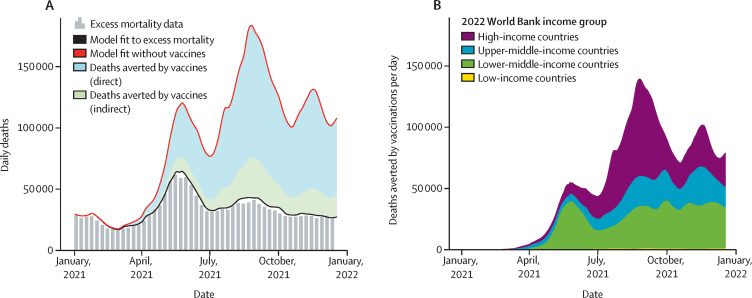
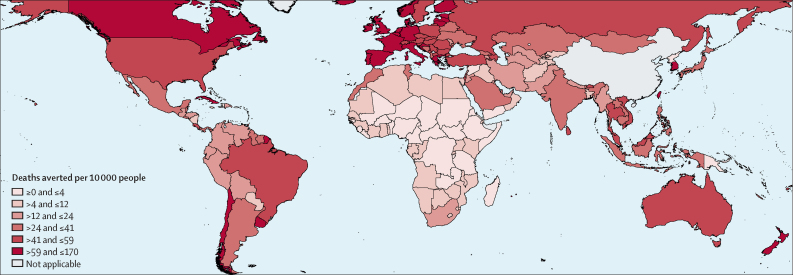
BACKGROUND: The first COVID-19 vaccine outside a clinical trial setting was administered on Dec 8, 2020. To ensure global vaccine equity, vaccine targets were set by the COVID-19 Vaccines Global Access (COVAX) Facility and WHO. However, due to vaccine shortfalls, these targets were not achieved by the end of 2021. We aimed to quantify the global impact of the first year of COVID-19 vaccination programmes. METHODS: A mathematical model of COVID-19 transmission and vaccination was separately fit to reported COVID-19 mortality and all-cause excess mortality in 185 countries and territories. The impact of COVID-19 vaccination programmes was determined by estimating the additional lives lost if no vaccines had been distributed. We also estimated the additional deaths that would have been averted had the vaccination coverage targets of 20% set by COVAX and 40% set by WHO been achieved by the end of 2021. FINDINGS: Based on official reported COVID-19 deaths, we estimated that vaccinations prevented 14·4 million (95% credible interval [Crl] 13·7-15·9) deaths from COVID-19 in 185 countries and territories between Dec 8, 2020, and Dec 8, 2021. This estimate rose to 19·8 million (95% Crl 19·1-20·4) deaths from COVID-19 averted when we used excess deaths as an estimate of the true extent of the pandemic, representing a global reduction of 63% in total deaths (19·8 million of 31·4 million) during the first year of COVID-19 vaccination. In COVAX Advance Market Commitment countries, we estimated that 41% of excess mortality (7·4 million [95% Crl 6·8-7·7] of 17·9 million deaths) was averted. In low-income countries, we estimated that an additional 45% (95% CrI 42-49) of deaths could have been averted had the 20% vaccination coverage target set by COVAX been met by each country, and that an additional 111% (105-118) of deaths could have been averted had the 40% target set by WHO been met by each country by the end of 2021. INTERPRETATION: COVID-19 vaccination has substantially altered the course of the pandemic, saving tens of millions of lives globally. However, inadequate access to vaccines in low-income countries has limited the impact in these settings, reinforcing the need for global vaccine equity and coverage. FUNDING: Schmidt Science Fellowship in partnership with the Rhodes Trust; WHO; UK Medical Research Council; Gavi, the Vaccine Alliance; Bill & Melinda Gates Foundation; National Institute for Health Research; and Community Jameel.
Overview
CoChat Summary
## TL;DR
This mathematical modelling study estimated that COVID-19 vaccination averted 14.4 million deaths based on reported deaths, or 19.8 million deaths when excess mortality was used, across 185 countries and territories during Dec 8, 2020–Dec 8, 2021. The paper argues that vaccine inequity limited impact in low-income settings and that reaching COVAX/WHO coverage targets could have saved substantially more lives.
## Key findings
- Using officially reported COVID-19 deaths, vaccination prevented 14.4 million deaths (95% CrI 13.7–15.9) in 185 countries and territories over the first year of vaccination.
- Using excess mortality, vaccination averted 19.8 million deaths (95% CrI 19.1–20.4), corresponding to a 63% reduction in total deaths (19.8 million of 31.4 million) during that year.
- In COVAX AMC countries, vaccinations averted 7.4 million deaths (95% CrI 6.8–7.7), representing 41% of estimated excess mortality (7.4 million of 17.9 million).
- If the WHO 40% target had been met in every country by the end of 2021, an additional 599,300 deaths (95% CrI 577,700–622,400) could have been averted; in low-income countries, meeting the COVAX 20% target could have averted an additional 45% of deaths, and the WHO 40% target an additional 111% of deaths.
## Methods
- The authors fit a previously published age-structured SEIRS transmission model with vaccination to reported COVID-19 mortality and to all-cause excess mortality in 185 countries and territories (excluding China), using country-level demography, mixing patterns, health-care capacity, and vaccination rollout data.
- Vaccination effects were modelled as protection against infection, severe disease, and onward transmission; the model also explicitly represented the delta variant and vaccine efficacy by country based on likely vaccine types used.
- They estimated deaths averted by comparing the fitted observed scenario against counterfactual scenarios with no vaccines, and with vaccines distributed to meet COVAX 20% and WHO 40% coverage targets by Dec 8, 2021, using Bayesian fitting with Metropolis-Hastings MCMC and 100 draws for uncertainty.
## Limitations
- The paper states that impact estimates were limited by uncertainty in excess mortality, gaps in genomic surveillance, and lack of detailed vaccination data for many countries; key inputs had to rely on working assumptions about vaccine type, rollout, and variant spread.
- The authors explicitly note a limitation of the COVAX/WHO target analysis: the targets were meant for the end of 2021, while the modelling endpoint was Dec 8, 2021, so some countries may have been closer to target by year-end than the model captured.
- Evident from the text: the counterfactual did not adjust for how governments or populations might have responded without vaccines, nor for possible changes in mobility, non-pharmaceutical interventions, or viral evolution, so the estimated deaths averted are model-dependent.
Model-written summary. Check it against the paper before relying on it.
Integrity signals
Registry
Cites
Statistics
Figures
Verification
Claims the paper makes
2 Valid · 2 Not valid · 4 Not checked · 48 Own results and interpretations
The cited sources that could be checked couldn’t confirm or dispute this claim.
In the paper
“In this analysis, we consequently focused on fitting to all-cause excess mortality, which provides a more complete description of the pandemic.15”
§ Global impact of the first year of COVID-19 vaccination: a mathematical modelling study > Discussion
What the sources say
- Could not verifycites [15] WHO Global excess deaths associated with COVID-19, January 2020–December 2021 https://www.who.int/data/stories/global-excess-deaths-associated-with-covid-19-january-2020-december-2021 May, 2022 sourceExperimental — accuracy not yet measured
The Methods (Statistical analysis) and Results examine hospital admission and emergency care attendance among people with delta versus alpha infections. The Discussion addresses limitations of those hospital-care data, but does not assess all-cause excess mortality or say that fitting to it gives a more complete description of the pandemic. Searches for “all-cause excess mortality” and “excess deaths” found no supporting passage; page numbers were not available in our copy. (LLM, conf=0.76)
plainstates a cause- Asserted: passes — The authors put it forward as true.
- Checkable: passes — It can be checked against evidence.
- Load-bearing: passes — The paper’s conclusions depend on it.
- Based: passes — The paper gives a reason why it holds.
- Could not verify
Every source the paper cites for this claim was checked and supports it.
In the paper
“Under-ascertainment of COVID-19 mortality is a known issue that has hindered our understanding of the pandemic.23”
§ Global impact of the first year of COVID-19 vaccination: a mathematical modelling study > Discussion
What the sources say
- Supportedcites [23] Whittaker C Walker PGT Alhaffar M Under-reporting of deaths limits our understanding of true burden of COVID-19 BMJ 375 2021 n2239 34642172 source
In “Renewed case for vaccine equity” (page unavailable), the paper calls it a myth that high-income countries were harder hit and shows that accounting for under-reporting changes the estimated share of COVID-19 mortality borne by low- and middle-income countries. This supports the claim that under-ascertainment has obscured understanding of the pandemic’s mortality burden. (LLM, conf=0.86)
boostedstates a cause- Asserted: passes — The authors put it forward as true.
- Checkable: passes — It can be checked against evidence.
- Load-bearing: passes — The paper’s conclusions depend on it.
- Based: passes — The paper gives a reason why it holds.
- Supported
The cited sources that could be checked couldn’t confirm or dispute this claim.
In the paper
“Our impact estimates were also limited by the inherent uncertainty in model-based estimates of excess mortality.13”
§ Global impact of the first year of COVID-19 vaccination: a mathematical modelling study > Discussion
What the sources say
- Could not verifycites [13] The Economist The pandemic's true death toll The Economist Nov 2, 2021 https://www.economist.com/graphic-detail/coronavirus-excess-deaths-estimates sourceExperimental — accuracy not yet measured
The Discussion describes limitations of estimates of vaccine effects on transmission, including testing behavior and previous infection status. A search for excess mortality, model-based mortality estimates, and deaths found no passage addressing uncertainty in excess-mortality estimates. Page numbers were not available in our copy. (LLM, conf=0.76)
plain- Asserted: passes — The authors put it forward as true.
- Checkable: passes — It can be checked against evidence.
- Load-bearing: unclear — It is unclear whether the paper’s conclusions depend on it.
- Based: passes — The paper gives a reason why it holds.
- Could not verify
The cited sources support only part of this claim — read each source’s verdict below.
In the paper
“Importantly, these estimates based on official reported COVID-19 deaths represent the lower bound of deaths averted at the global level due to the considerable levels of under-reporting of COVID-19 mortality documented worldwide.23”
§ Global impact of the first year of COVID-19 vaccination: a mathematical modelling study > Methods > Excess mortality and COVID-19 mortality data
What the sources say
- Partly supportedcites [23] Whittaker C Walker PGT Alhaffar M Under-reporting of deaths limits our understanding of true burden of COVID-19 BMJ 375 2021 n2239 34642172 sourceExperimental — accuracy not yet measured
In “Renewed case for vaccine equity” (page not provided), the paper says that under-reporting affects reported COVID-19 mortality and that excess-mortality estimates suggest a higher share of deaths in low- and middle-income countries. It also reports estimates of deaths that further vaccination could avert in those countries. It does not say that estimates based on officially reported deaths are a lower bound for deaths averted globally. (LLM, conf=0.83)
plainstates a cause- Asserted: passes — The authors put it forward as true.
- Checkable: passes — It can be checked against evidence.
- Load-bearing: passes — The paper’s conclusions depend on it.
- Based: passes — The paper gives a reason why it holds.
- Partly supported
A result the paper reports from its own data — it cites no other source for it, so there is none to check. The quote shows it is in the paper.
In the paper
“Notably, our model fits were unable to recreate excess mortality death tolls in recent epidemic waves in Iraq and Sudan because of the depletion of the susceptible population.”
§ Global impact of the first year of COVID-19 vaccination: a mathematical modelling study > Discussion
plainstates a cause- Asserted: passes — The authors put it forward as true.
- Checkable: passes — It can be checked against evidence.
- Load-bearing: unclear — It is unclear whether the paper’s conclusions depend on it.
- Based: passes — The paper gives a reason why it holds.
32 more claims
Create a free account to see all 56 claims and to verify the 3 references still open.
- It may state two separate claims as one. 14
- Probably not a substantial claim. 6
Claims other papers make about this one
Each is checked against this paper’s own text: does it say what the citing paper says it does?
The cited source says what the claim attributes to it.
In the citing paper
“Global COVID-19 vaccination programmes are estimated to have prevented 19.8 million deaths worldwide during the first year of roll-out(12)”
Citations
Cites
Estimated transmissibility and impact of SARS-CoV-2 lineage B.1.1.7 in England
Davies, N. G., Abbott, S., Barnard, R. C., Jarvis, C. I., Kucharski, A. J., Munday, J. D., Pearson, C. A. B., Russell, T. W., Tully, D. C., Washburne, A. D., et al. (2021) · Science · doi:10.1126/science.abg3055 · Cited by 2,581 · cited 1×
“20,21 Any epidemiological differences associated with previous variants were assumed to be reflected by their effects on mortality, 22 which were subsequently captured by the estimated R t trend.”
Estimated transmissibility and impact of SARS-CoV-2 lineage B.1.1.7 in England
Davies, N. G., Abbott, S., Barnard, R. C., Jarvis, C. I., Kucharski, A. J., Munday, J. D., Pearson, C. A. B., Russell, T. W., Tully, D. C., Washburne, A. D., et al. (2020) · doi:10.1101/2020.12.24.20248822 · Cited by 2,557
Wang, H., Paulson, K. R., Pease, S. A., Watson, S., Comfort, H., Zheng, P., Aravkin, A. Y., Bisignano, C., Barber, R. M., Alam, T., et al. (2022) · The Lancet · doi:10.1016/s0140-6736(21)02796-3 · Cited by 2,069
Wouters, O. J., Shadlen, K. C., Salcher-Konrad, M., Pollard, A. J., Larson, H. J., Teerawattananon, Y., & Jit, M. (2021) · The Lancet · doi:10.1016/s0140-6736(21)00306-8 · Cited by 1,288
Walker, P. G. T., Whittaker, C., Watson, O. J., Baguelin, M., Winskill, P., Hamlet, A., Djafaara, B. A., Cucunubá, Z., Olivera Mesa, D., Green, W., et al. (2020) · Science · doi:10.1126/science.abc0035 · Cited by 993
Self-citationTwohig, K. A., Nyberg, T., Zaidi, A., Thelwall, S., Sinnathamby, M. A., Aliabadi, S., Seaman, S. R., Harris, R. J., Hope, R., Lopez-Bernal, J., et al. (2022) · The Lancet Infectious Diseases · doi:10.1016/s1473-3099(21)00475-8 · Cited by 803 · cited 1×
“20,21 Any epidemiological differences associated with previous variants were assumed to be reflected by their effects on mortality, 22 which were subsequently captured by the estimated R t trend.”
Karlinsky, A., & Kobak, D. (2021) · eLife · doi:10.7554/elife.69336 · Cited by 772 · cited 1×
“11 Robust vital registration systems do not exist in many parts of the world, with WHO estimating that 40% of global deaths that occurred in 2020 were unregistered, 12 and therefore data on excess mortality are not available for every country.”
Understanding COVID-19 vaccine hesitancy
Machingaidze, S., & Wiysonge, C. S. (2021) · Nature Medicine · doi:10.1038/s41591-021-01459-7 · Cited by 590 · cited 1×
“7 This considerable heterogeneity in vaccination coverage has resulted in continued reliance on non-pharmaceutical interventions for pandemic management in some countries 8 but concomitantly enabled other nations to relax interventions as a route out of the pandemic.”
Twohig, K. A., Nyberg, T., Zaidi, A., Thelwall, S., Sinnathamby, M., Aliabadi, S., Seaman, S. R., Harris, R., Hope, R., Bernal, J. L., et al. (2021) · Northumbria Research Link (Northumbria University) · doi:10.17863/cam.76294 · Cited by 514
Effect of Covid-19 Vaccination on Transmission of Alpha and Delta Variants
Eyre, D. W., Taylor, D., Purver, M., Chapman, D., Fowler, T., Pouwels, K. B., Walker, A. S., & Peto, T. E. A. (2022) · New England Journal of Medicine · doi:10.1056/nejmoa2116597 · Cited by 464 · cited 2×
“19 We inferred vaccine efficacy for each country on the basis of vaccine types known to be predominantly used in each country.”
Cited by
Items 601–700 of 1,777
Ludwikowska, K. M., Popiel, A., Matkowska‐Kocjan, A., Olbromski, M., Biela, M., Wójcik, M., Szenborn, F., Wielgos, K., Pielka-Markiewicz, E., Zaryczański, J., et al. (2023) · Vaccine · doi:10.1016/j.vaccine.2023.02.072 · Cited by 6
The COVID-19 pandemic and life expectancy among older adults in Asian countries
Feng, Q., & Gu, D. (2023) · Asian Population Studies · doi:10.1080/17441730.2023.2193483 · Cited by 7
“pandemic, Asian countries adopted different containment measures, and had varying prevalence rates of vaccinations and mortality rates (Watson et al., 2022).”
BackgroundNew Onset Glomerular Disease Post–COVID-19 Vaccination: Is There a Link?
Radhakrishnan, Y., & Zand, L. (2023) · Kidney360 · doi:10.34067/kid.0000000000000073 · Cited by 5
“12 (2) Are these de novo GN diagnoses truly new diagnoses or did the patient already have the disease that went unrecognized and only came to medical attention because the patient was vaccinated? In this study, 16% of the patients had a diagnosis of CKD before vaccination, and although the CKD diagnosis was not attrib…”
BackgroundLiu, J., Bai, Y., Liu, M., et al. (2023) · Signal Transduction and Targeted Therapy · doi:10.1038/s41392-023-01389-5 · Cited by 5
The Prevalence of Side Effects of Sinopharm COVID-19 Vaccine: An Experience From Pakistan
Haider, T., Abidi, S. R. Z., Fatima, M., Zafar, A., Siddiqui, R. Q. U., Khan, W., Saeed, T., Anwar, A., & Hashmi, A. A. (2023) · Cureus · doi:10.7759/cureus.38180 · Cited by 9
“Discussion The COVID-19 vaccinations have changed the epidemic's trajectory, prevented the loss of tens of millions of lives worldwide, and reduced morbidity and disabilities brought on by COVID-19 infection and its complications [14].”
BackgroundDiniz, J. M., Vasconcelos, H., Souza, J., Rb-Silva, R., Ameijeiras-Rodriguez, C., & Freitas, A. (2023) · JMIR Research Protocols · doi:10.2196/45823 · Cited by 4
“Thus, access to data has been the foundation for better health models, both in their precision and validity to represent different medical conditions [12,13] and patients [14,15].”
Barnes, B., Anokye, M., Iddrisu, M. M., Gawu, B., & Afrifa, E. (2023) · Advances in Mathematical Physics · doi:10.1155/2023/5578900 · Cited by 5
Ziakas, P. D., & Mylonakis, E. E. (2023) · PLOS Digital Health · doi:10.1371/journal.pdig.0000271 · Cited by 7
Hydrogen Sulfide Ameliorates SARS-CoV-2-Associated Lung Endothelial Barrier Disruption
Escaffre, O., Szaniszlo, P., Törő, G., Vilas, C. L., Servantes, B. J., Lopez, E., Juelich, T. L., Levine, C. B., McLellan, S., Cardenas, J. C., et al. (2023) · Biomedicines · doi:10.3390/biomedicines11071790 · Cited by 4
“In the fight against COVID-19, vaccine development and distribution, together with other preventive measures, are used as the first line of defense with limited success around the world [74,75].”
BackgroundMongin, D., Buclin, C. P., Cullati, S., & Courvoisier, D. S. (2023) · Vaccines · doi:10.3390/vaccines11071149 · Cited by 7
“Vaccination is an important tool to mitigate COVID-19 [7], with efficient reduction in transmission, morbidity, and mortality [8], and reduction in the probability of antigenic evolution.”
MethodMondaca, S., Walbaum, B., Corre, N. L., Marcela Ferrés, G., Valdés, A., Martínez-Valdebenito, C., Ruiz-Tagle, C., Macanas-Pirard, P., Ross, P., Cisternas, B., et al. (2023) · Vaccines · doi:10.3390/vaccines11071193 · Cited by 4
“These efforts have resulted in the prevention of more than 14 million COVID-19 deaths during the first year of COVID-19 vaccination, amounting to an estimated 63% reduction in total deaths [9].”
BackgroundHedberg, P., Sotoodeh, A., Askling, H. H., et al. (2023) · Journal of Internal Medicine · doi:10.1111/joim.13700 · Cited by 5
Global Inequities in COVID-19 Vaccination: Associated Factors and Tools to Measure Inequality
Miranda-Soberón, U., Pino-Arana, I., Rio-Mendoza, J. D., & Chauca, M. (2023) · Vaccines · doi:10.3390/vaccines11071245 · Cited by 4
“Vaccines protect against COVID-19 because they induce immunity against the SARS-CoV-2 virus, that is, they reduce the risks of contagion, becoming symptomatic, developing severe forms of the disease, and dying [12].”
BackgroundUsing Non-Standard Finite Difference Scheme to Study Classical and Fractional Order SEIVR Model
Din, R. U., Khan, K. A., Aloqaily, A., Mlaiki, N. M., & Alrabaiah, H. (2023) · Fractal and Fractional · doi:10.3390/fractalfract7070552 · Cited by 11
Tseng, P., Zeng, B., Thompson, T., Stubbs, B., Hsueh, P., Su, K., Chen, Y., Chen, T., Wu, Y., Lin, P., et al. (2023) · Psychiatry and Clinical Neurosciences · doi:10.1111/pcn.13592 · Cited by 5
AbdelWareth, L., Alhousani, F., Abuyadek, R., Donnelly, J., Leinberger-Jabari, A., Atef, S., & Al-Rifai, R. H. (2023) · Frontiers in Immunology · doi:10.3389/fimmu.2023.1230974 · Cited by 5
Krithika, B., & Tamilalagan, P. (2023) · The European Physical Journal Special Topics · doi:10.1140/epjs/s11734-023-00995-2 · Cited by 5
Quinn, K. G., Hunt, B. R., Jacobs, J., Valencia, J., Hirschtick, J. L., & Walsh, J. L. (2023) · Journal of Racial and Ethnic Health Disparities · doi:10.1007/s40615-023-01837-6 · Cited by 10
“Additionally, given the complexity of the COVID-19 pandemic and vaccination rollout (e.g., the global toll of the pandemic [55], the skepticism and mistrust of the vaccine [56], the mandates surrounding the vaccine [57]), there are likely a multitude of factors that influenced COVID-19 vaccine…”
Hsiao, H., DiMaggio, L. S., Perez, M. A., Chen, X., Stephens, K., Gibson, T., Anderson, E. J., & Rostad, C. A. (2023) · Vaccines · doi:10.3390/vaccines11111643 · Cited by 5
Zurlo, M., Gasparello, J., Verona, M., Papi, C., Cosenza, L. C., Finotti, A., Marzaro, G., & Gambari, R. (2023) · Experimental Cell Research · doi:10.1016/j.yexcr.2023.113853 · Cited by 6
The importance of increasing primary vaccinations against COVID-19 in Europe
Boëlle, P., & Valdano, E. (2023) · Infectious Disease Modelling · doi:10.1016/j.idm.2023.11.008 · Cited by 7
mRNA Vaccines, Public Health, and the Nobel Prize
Binns, C. W., & Low, W. Y. (2023) · Asia Pacific Journal of Public Health · doi:10.1177/10105395231223284 · Cited by 5
Addressing vaccine hesitancy using local ambassadors: A randomized controlled trial in Indonesia
Islam, A., Kusnadi, G., Rezki, J. F., Sim, A., van Empel, G., Vlassopoulos, M., & Zénou, Y. (2024) · European Economic Review · doi:10.1016/j.euroecorev.2024.104683 · Cited by 8
Miao, Y., Shen, Z., Li, Q., Ma, M., Xu, D., Tarimo, C. S., Gu, J., Wei, W., Zhou, X., Zhao, L., et al. (2024) · Journal of Clinical Nursing · doi:10.1111/jocn.16958 · Cited by 6
Bennett, J. C., Luiten, K. G., O’Hanlon, J., Han, P. D., McDonald, D., Wright, T., Wolf, C. R., Lo, N. K., Acker, Z., Regelbrugge, L., et al. (2024) · Vaccine · doi:10.1016/j.vaccine.2024.01.080 · Cited by 5
Mathematical modelling of COVID-19 dynamics using SVEAIQHR model
Venkatesh, A., Rao, M. A., Raj, M. P., et al. (2024) · Computational and Mathematical Biophysics · doi:10.1515/cmb-2023-0112 · Cited by 5
An age‐structured SVEAIR epidemiological model
Bitsouni, V., Gialelis, N., & Tsilidis, V. (2024) · Mathematical Methods in the Applied Sciences · doi:10.1002/mma.10165 · Cited by 6
“With the emergence of the COVID-19 pandemic, the importance of these models has been highlighted as they have been used to assess the anticipated spread of the virus and inform strategies to mitigate its impact [1, 18, 29].”
BackgroundMorgenstern, C., Laydon, D. J., Whittaker, C., Mishra, S., Haw, D., Bhatt, S., & Ferguson, N. M. (2024) · PLoS ONE · doi:10.1371/journal.pone.0301785 · Cited by 8
“By the end of the PHEIC, over 13.38 billion doses of COVID-19 vaccines have been administered, enabling societies to gradually return to normal life and significantly lessen the health and economic burden of COVID-19 [12].”
InfluentialRegulation in the age of calamity: Changing the regulatory paradigm
Hatchett, R. J., Chan, M. X. J., Hacker, A., et al. (2024) · Clinical and Translational Science · doi:10.1111/cts.13882 · Cited by 5
Wang, N., Wu, J., Gao, J., & Lin, N. (2024) · Nano Today · doi:10.1016/j.nantod.2024.102414 · Cited by 6
Singh, S., Kumar, B. V., Jitender, Mishra, P. M., Verma, G., Kumar, S., Pandit, S., Kumar, R., Ringe, R. P., Tripathi, S., et al. (2024) · Process Biochemistry · doi:10.1016/j.procbio.2024.08.022 · Cited by 6
Advanced neural network-based model for predicting court decisions on child custody
Abrar, M. Y. B. T., Salam, A., Ullah, F., Nadeem, M., AlSalman, H., Mukred, M., & Amin, F. (2024) · PeerJ Computer Science · doi:10.7717/peerj-cs.2293 · Cited by 8
COVID-19 and pregnancy: a comprehensive study of comorbidities and outcomes
Zhou, S., Ahmadi, H., Huo, L., Lix, L. M., Maslin, K., Latour, J. M., & Shawe, J. (2024) · BMC Public Health · doi:10.1186/s12889-024-20416-w · Cited by 7
“The novel coronavirus disease COVID-19 can be fatal for susceptible populations such as the elderly, patients with comorbidities, and pregnant women (PW) [1].”
A review of mathematical researches on the COVID-19 pandemic
Chen, Y., Pei, L., & Lei, Y. (2025) · International Journal of Dynamics and Control · doi:10.1007/s40435-024-01519-z · Cited by 4
SARS-CoV-2 Vaccine-Induced Humoral Immunity in Immunocompetent European Adults: A Systematic Review
Bylica, I., Jachowicz-Matczak, E., Brodowicz, J., Sułkowska, J., Bociąga‐Jasik, M., Heczko, P. B., Gagatek, S. G., Bylica, J., & Wójkowska‐Mach, J. (2025) · Microorganisms · doi:10.3390/microorganisms13030535 · Cited by 4
“Today, despite improved evidence-based medicine for COVID-19 and the availability of antiviral drugs, vaccination as a primary prevention strategy is the cornerstone of protection against SARS-CoV-2 infection, saving many lives [33].”
Suomenrinne-Nordvik, A., Leino, T. M., Shubin, M., Auranen, K. J., & Vänskä, S. (2025) · Epidemiology and Infection · doi:10.1017/s0950268825000354 · Cited by 6
Kapur, S., Cantor, Z., Bishop, P., Benjaram, S., & Lohia, P. (2023) · Annals of Palliative Medicine · doi:10.21037/apm-22-858 · Cited by 5
Dual duties to patient and planet: time to revisit the ethical foundations of healthcare?
Bhopal, A. S., & Bærøe, K. (2022) · Journal of Medical Ethics · doi:10.1136/jme-2022-108847 · Cited by 6
Park, J. K., & Bhandari, S. (2023) · Frontiers in Medicine · doi:10.3389/fmed.2023.1103699 · Cited by 5
Kara, A., Coşkun, A., Temel, F., Özelçi, P., Topal, S., & Ateş, İ. (2023) · Vaccines · doi:10.3390/vaccines11020437 · Cited by 6
“The rapid development of COVID-19 vaccines for Severe Acute Respiratory Syndrome Coronavirus 2 (SARS-CoV-2) is a milestone that changed the course of the pandemic, saving tens of millions of lives globally [3].”
BackgroundHitch, G., & Zaman, S. (2023) · Frontiers in Psychiatry · doi:10.3389/fpsyt.2022.1078479 · Cited by 10
Hall, A. J., Clement, N. D., Kay, R. S., Penfold, R., MacLullich, A. M. J., White, T. O., & Duckworth, A. D. (2023) · Musculoskeletal Care · doi:10.1002/msc.1753 · Cited by 6
Williams, A. H., & Zhan, C. (2023) · BioDrugs · doi:10.1007/s40259-023-00611-8 · Cited by 5
“5 million deaths caused by this disease [1, 2].”
BackgroundChen, Y.-C., Chuang, C.-H., Shen, T.-F., et al. (2023) · Human Vaccines & Immunotherapeutics · doi:10.1080/21645515.2023.2237387 · Cited by 5
“COVID-19 vaccines have shown their effectiveness by preventing severe illness and death related to the disease, contributing to a minimum reduction of 63% in global COVID-19 associated deaths in the first year of their distribution.(1) However, several uncertainties persist around vaccine usage, including the efficacy…”
BackgroundGagneux‐Brunon, A., Botelho-Nevers, É., Verger, P., Gauna, F., Launay, O., & Ward, J. K. (2023) · Health Policy and Technology · doi:10.1016/j.hlpt.2023.100812 · Cited by 7
Airway and Systemic Immune Responses Following the Third COVID-19 Vaccination in COPD Patients
Southworth, T. W., Jackson, N. A., & Singh, D. (2023) · International Journal of COPD · doi:10.2147/copd.s433269 · Cited by 5
COVID-19 vaccine acceptance and its associated factors in the Western Pacific Region
Jin, S., Lin, L. K., Larson, H. J., & Cook, A. R. (2024) · The Lancet Regional Health - Western Pacific · doi:10.1016/j.lanwpc.2023.100840 · Cited by 10
Charmasson, A., Ecollan, M., Jaury, P., Partouche, H., Frachon, A., & Pinot, J. (2024) · Human Vaccines & Immunotherapeutics · doi:10.1080/21645515.2024.2307735 · Cited by 7
Kim, H. K., Park, S. K., Choe, S., Gwak, E. S., Cowling, B. J., Kim, Y., Lee, S., Lee, S. W., Kwon, G.-Y., Jang, E. J., et al. (2024) · Vaccine · doi:10.1016/j.vaccine.2024.02.021 · Cited by 5
Lorent, D., Nowak, R., Figlerowicz, M., Handschuh, L., & Zmora, P. (2024) · Vaccines · doi:10.3390/vaccines12050475 · Cited by 6
“Finally, it was estimated that vaccinations prevented almost 20 million deaths from coronavirus disease 2019 (COVID-19) worldwide in the first year after vaccine approval [4].”
BackgroundModelling on COVID-19 control with double and booster-dose vaccination
Kalra, P., Ali, S., & Ocen, S. (2024) · Gene · doi:10.1016/j.gene.2024.148795 · Cited by 4
The impact of vaccination frequency on COVID-19 public health outcomes: A model-based analysisPreprint
Stoddard, M., Lin, Y., Sarkar, S., Egeren, D. V., Mangalaganesh, S., Nolan, R. P., Rogers, M. S., Hather, G., White, L. F., & Chakravarty, A. (2023) · medRxiv · doi:10.1101/2023.01.26.23285076 · Cited by 5
Stern, P. L. (2023) · Tumour Virus Research · doi:10.1016/j.tvr.2023.200263 · Cited by 5
Antifouling Surface Coatings for the Next Generation of Nanomedicine: Toward in Vivo Immune Evasion
Forgham, H., Liu, L., Davis, T. P., & Qiao, R. (2023) · Nanomedicine · doi:10.2217/nnm-2023-0316 · Cited by 5
DeCuir, J., Surie, D., Zhu, Y., Lauring, A. S., Gaglani, M., McNeal, T., Ghamande, S. A., Peltan, I. D., Brown, S. M., Ginde, A. A., et al. (2024) · medRxiv · doi:10.1101/2024.01.07.24300910 · Cited by 5
Development and Validation of the Evidence Intuition ScalePreprint
Abels, C. M., & Lewandowsky, S. (2024) · PsyArXiv (OSF Preprints) · doi:10.31234/osf.io/u4xka · Cited by 9
Narayanasamy, S., Gambanga, F., Boeke, C. E., et al. (2024) · medRxiv · doi:10.1101/2024.10.25.24316111 · Cited by 5
Baruwa, O. J., Akokuwebe, M. E., Adeleye, O. J., & Gbadebo, B. M. (2025) · BMC Public Health · doi:10.1186/s12889-025-22143-2 · Cited by 6
“Additionally, the COVID-19 pandemic further disrupted routine immunization and sensitization campaigns, hindering progress toward IA2030 goals [18–20].”
Obermannova, R. L., Selingerová, I., Demlová, R., et al. (2025) · Therapeutic Advances in Medical Oncology · doi:10.1177/17588359251316224 · Cited by 4
Unveiling the silent threat: COVID-19 and myocardial injury
Xu, K., He, W., Yu, B., Wang, J. J., Wu, J., & Wang, D. W. (2025) · Pharmacology & Therapeutics · doi:10.1016/j.pharmthera.2025.108904 · Cited by 4
Ponce, L. J., Wang, Y., Singh, A., Chua, H. C., Chen, M., Hor, P. X., Loh, C. Y., Poh, X. Y., Rao, S., Chia, P. Y., et al. (2025) · Journal of Medical Virology · doi:10.1002/jmv.70521 · Cited by 5
“Since the COVID ‐ 19 pandemic began in early 2020, in addition to contact tracing and isolation measures, the global burden of severe COVID ‐ 19 was significantly mitigated by widespread population immunity from mass vaccinations [4].”
Global Estimates of COVID‐19 Morbidity and Mortality: A Cohort Study and Mathematical Model Analysis
Ayoub, H. H., Chemaitelly, H. S., & Abu-Raddad, L. J. (2025) · Influenza and Other Respiratory Viruses · doi:10.1111/irv.70154 · Cited by 7
“…[50], but broadly consistent with our own early projections [3] and within the range of other assessments, Public health interventions such as vaccination campaigns, social and physical distancing measures, and improved case management likely contributed to this reduced disease burden [51–54].”
The journey towards mRNA vaccine technology transfer: From knowledge to implementation
Fenner, C., Grilo, A. L., James, I., Nannei, C., Friede, M., Gore, C., Kiény, M. P., & Terblanche, P. (2026) · Vaccine X · doi:10.1016/j.jvacx.2026.100787 · Cited by 6
Petersen, E., Marais, B. J., Koopmans, M., Mwaba, P., Asogun, D., Bockarie, M. J., Blumberg, L. H., Goletti, D., Abri, S. A., Scagliarini, A., et al. (2026) · International Journal of Infectious Diseases · doi:10.1016/j.ijid.2026.108472 · Cited by 4
Luo, S., Huang, S., Lee, E. W. J., Jiang, H., Xie, L., Ye, X., Lee, H. H., Hui, K. H., Phoenix, K. H. M., & Xin, M. (2026) · npj Vaccines · doi:10.1038/s41541-026-01398-9 · Cited by 7
Gaythorpe, K. A. M., Li, X., Shankar, M., Hartner, A.-M., Gibney, Z., Abbas, K., Abeysuriya, R., Alam, C., Auzenbergs, M., Azman, A. S., et al. (2026) · The Lancet · doi:10.1016/s0140-6736(26)00555-6 · Cited by 6
Aubourg, M. A., Bisimwa, L., Bisimwa, J., Sanvura, P., Williams, C., Boroto, R., Lunyelunye, C., Timsifu, J., Munyerenkana, B., Endres, K., et al. (2022) · International Journal of Environmental Research and Public Health · doi:10.3390/ijerph192013424 · Cited by 5
“Vaccination is undoubtedly a critical element of population-level COVID-19 prevention, as described by study participants and previous studies [51].”
BackgroundStructural features of sensory two component systems: a synthetic biology perspective
Nieves, M., Buschiazzo, A., & Trajtenberg, F. (2023) · Biochemical Journal · doi:10.1042/bcj20210798 · Cited by 4
Yang, H., Zhu, X., Fang, Z., Qiu, D., Hu, Y., Tian, C., & Ming, F. (2024) · Atmosphere · doi:10.3390/atmos15020240 · Cited by 4
Impact of the first year of COVID-19 vaccination strategy in Brazil: an ecological study
Aguilar, S., Bastos, L. D. S. L., Maçaira, P., Baião, F., Simões, P., Cerbino-Neto, J., Ranzani, O., Hamacher, S., & Bozza, F. A. (2022) · BMJ Open · doi:10.1136/bmjopen-2023-072314 · Cited by 6
Khanam, S. J., Rana, M. S., Islam, M. M., & Khan, M. N. (2024) · BMC Public Health · doi:10.1186/s12889-024-20096-6 · Cited by 5
“However, the widespread distribution of COVID-19 vaccines since December 2020, particularly in the first half of 2021, marked a turning point in the global pandemic, paving the way for a gradual return to normalcy [12, 13].”
BackgroundBatra, R., Tatar, O., Zhu, P., Perez, S., Haward, B., Zimet, G. D., & Rosberger, Z. (2024) · Frontiers in Public Health · doi:10.3389/fpubh.2024.1414345 · Cited by 4
Riemann, L., Weskamm, L. M., Mayer, L., Odak, I., Hammerschmidt, S. I., Sandrock, I., Friedrichsen, M., Ravens, I., Fuß, J., Hansen, G., et al. (2024) · European Journal of Immunology · doi:10.1002/eji.202451236 · Cited by 5
Dinga, J. N., Akinbobola, J. S., Afolayan, F. I. D., Njoh, A. A., Kassa, T., Lazarus, D. D., Dièye, Y., Mamo, G., Duedu, K. O., Tshifhiwa, N., et al. (2025) · BMJ Global Health · doi:10.1136/bmjgh-2024-015693 · Cited by 4
Gambari, R., Papi, C., Gasparello, J., Agostinelli, E., & Finotti, A. (2025) · Experimental and Therapeutic Medicine · doi:10.3892/etm.2025.12835 · Cited by 4
“Despite the development, validation, approval and worldwide use of anti‑SARS‑CoV‑2 vaccines (4,5), specific anti‑viral agents targeting the life cycle of SARS‑CoV‑2 and improving COVID‑19‑related clinical manifestations are still needed (6‑9).”
van Bilsen, C. J. A., Steijvers, L. C., Wagner, S., Pagen, D. M. E., Wijnen, S. M. C. E., Konings, K., Hoebe, C. J. P. A., Koster, A., & Dukers–Muijrers, N. H. T. M. (2025) · Vaccine X · doi:10.1016/j.jvacx.2025.100626 · Cited by 8
Palmowski, L., Hagedorn, A., Witowski, A., Haberl, H., Kraft, F., Achtzehn, U., Kindgen‐Milles, D., Zacharowski, K. D., Nierhaus, A., Dietrich, M., et al. (2025) · Scientific Reports · doi:10.1038/s41598-025-94483-3 · Cited by 6
“While vaccination was not available during the early phase and population immunity was low, the situation changed in December 2020 with the introduction of vaccines 27 .”
Zhan, J., Zhong, F., Dai, L., Ma, J., Chai, Y., Zhao, X., Lu, C., Zhang, Y., Wang, J., Tang, Y., et al. (2025) · BMJ Open · doi:10.1136/bmjopen-2024-093044 · Cited by 4
Longitudinal Meta-cohort study protocol using systems biology to identify vaccine safety biomarkers
Diray‐Arce, J., Chang, A. C., Moradipoor, S., Amodio, D., Carleton, B., Chang, W., Crawford, N. W., Karoly, M., Hoch, A., McEnaney, K., et al. (2025) · Vaccine · doi:10.1016/j.vaccine.2025.127504 · Cited by 5
“These vaccines have been credited with preventing up to 20 million deaths from COVID-19 in the first year after their roll-out [6].”
Racial and ethnic disparities in COVID-19 vaccination: a systematic review and meta-analysis
Iezadi, S., Kolivand, P., Namdar, P., Saberian, P., Gholipour, K., & Azari, S. (2025) · Archives of Public Health · doi:10.1186/s13690-025-01740-y · Cited by 8
“COVID-19 vaccines have saved over 19 million lives across 185 countries, thereby reducing global fatalities from the virus by 63% during the first year of vaccination [3].”
Mocanu, V., Verhoeff, K. K., Dang, J. T., Birch, D. W., Karmali, S., & Switzer, N. J. (2023) · Obesity Surgery · doi:10.1007/s11695-023-06506-5 · Cited by 5
Alrabaiah, H., Din, R. U., Ansari, K. J., et al. (2023) · Results in Physics · doi:10.1016/j.rinp.2023.106536 · Cited by 4
“In this regards we refer some work, where various analysis and numerical scheme have been used to study different kinds of problems as [39, 40, 41, 42, 43, 44, 45, 46, 47, 48, 49, 50].”
Hwang, J. H., Lee, J. H., Jang, E. J., Kim, R. K., Lee, K. H., Park, S. K., Lee, S.-E., Chae, C., Lee, S., & Park, Y.-J. (2023) · Osong Public Health and Research Perspectives · doi:10.24171/j.phrp.2023.0096 · Cited by 4
Machine Learning and COVID-19: Lessons from SARS-CoV-2
de León, U. A.-P., Vázquez-Jiménez, A., Cervera, A., Resendis-González, G., Neri-Rosario, D., & Reséndis-Antonio, O. (2023) · Advances in experimental medicine and biology · doi:10.1007/978-3-031-28012-2_17 · Cited by 4
Wu, Y., Wei, M., Wang, R., Guo, X., Pan, H., Gao, Y., Li, X., Wang, X., Ma, X., Wan, P., et al. (2023) · Expert Review of Vaccines · doi:10.1080/14760584.2023.2234997 · Cited by 4
“An estimated 19.8 million deaths averted by vaccinations from December 2020 to December 2021 were observed [3].”
BackgroundInfluentialTanzarella, E. S., Vargas, J., Menghini, M., Postorino, S., Pozzana, F., Vallecoccia, M. S., Matteis, F. L. D., Franchi, F., Infante, A., Larosa, L., et al. (2023) · Journal of Clinical Medicine · doi:10.3390/jcm12144688 · Cited by 4
“Currently, despite the extraordinary impact of vaccination programs on the course of the COVID-19 pandemic, certain populations are still at risk of developing life-threatening complications of the disease [1].”
BackgroundImpact of the COVID-19 Pandemic on Routine Immunization Programs in Northern Nigeria
Aigbogun, E., Ibrahim, R., Yusufari, Y., Igbokwe, U., Okongwu, C., Abdulkarim, A., Tijanni, H., Modu, M., Fagge, R., & Aina, M. (2023) · Sustainability · doi:10.3390/su151712966 · Cited by 3
The response to COVID-19 in Timor-Leste: lessons learnt
Francis, J. R., de Araújo, R. M., Viegas, O. D. S., Lobo, S., Coelho, D., Mathur, A., Bothra, V., Yu, D., Draper, A. D. K., Yan, J., et al. (2023) · BMJ Global Health · doi:10.1136/bmjgh-2023-013573 · Cited by 7
“26 Despite this success of scientific innovation and discovery, the impact of vaccine initiatives globally was limited by poor uptake and delays in vaccine delivery in some settings.”
BackgroundCosenza, L. C., Marzaro, G., Zurlo, M., Gasparello, J., Zuccato, C., Finotti, A., & Gambari, R. (2023) · Experimental Hematology · doi:10.1016/j.exphem.2023.11.002 · Cited by 6
Flynn, M., & da Fonseca, E. M. (2023) · Studies in Comparative International Development · doi:10.1007/s12116-023-09403-1 · Cited by 6
Review of short-term and long-term adverse effects of covid-19 vaccination during pregnancy
Ramašauskaitė, D., & Grinciūtė, D. (2023) · Travel Medicine and Infectious Disease · doi:10.1016/j.tmaid.2023.102667 · Cited by 7
Mohr, N. M., Plumb, I. D., León, E. S., Harland, K. K., Krishnadasan, A., Nandi, U., Hoth, K. F., Smithline, H. A., & Talan, D. A. (2023) · Human Vaccines & Immunotherapeutics · doi:10.1080/21645515.2023.2284471 · Cited by 3
Stefani, S., Buti, N., Hart, A., Paul, D., Rizvi, N., Ragoonanan, V., Vladescu, C., Szydlo, R., Ademokun, C., Jansen, A. J. G., et al. (2023) · British Journal of Haematology · doi:10.1111/bjh.19212 · Cited by 4
Javadian, P., Fadaei-Tirani, N., Amoosoltani-Forooshani, Z., Reisi‐Vanani, V., & Borran, M. (2023) · Clinical Infection in Practice · doi:10.1016/j.clinpr.2023.100337 · Cited by 4
Development and Assessment of a Six-Item Index to Gauge Motivation to Receive COVID-19 Vaccination
Pedersen, B., Thompson, G. H., Kouakou, A. Y., Mujinga, M., Nicholes, S., Martínez, A., Agha, S., Thanel, K., Ouattara, M. L., Gbeke, D., et al. (2023) · Vaccines · doi:10.3390/vaccines12010006 · Cited by 4
The function of competitive intelligence in South African insurance post-COVID-19 outbreak
Maluleka, M. L., & Chummun, B. Z. (2024) · South African journal of information management · doi:10.4102/sajim.v26i1.1738 · Cited by 9
Mundo Ortiz, A., & Nasri, B. (2024) · Vaccine · doi:10.1016/j.vaccine.2024.02.045 · Cited by 4
A Commentary on Multi-omics Data Integration in Systems Vaccinology
Shannon, C. P., Lee, A. H., Tebbutt, S. J., & Singh, A. (2024) · Journal of Molecular Biology · doi:10.1016/j.jmb.2024.168522 · Cited by 4
Zahrádka, I., Tichánek, F., Magicová, M., Módos, I., Viklický, O., & Petr, V. (2024) · American Journal of Transplantation · doi:10.1016/j.ajt.2024.03.004 · Cited by 5
Школьников, В. М., Jdanov, D. A., Majeed, A., & Islam, N. (2024) · BMJ Global Health · doi:10.1136/bmjgh-2024-015737 · Cited by 3
Metadata
- Authors
- Watson, O. J., Barnsley, G., Toor, J., Hogan, A. B., Winskill, P., & Ghani, A. C.
- Affiliations
- Imperial College London (GB)
- Corresponding author
- Watson, Oliver J
- Venue
- The Lancet Infectious Diseases
- Publisher
- Elsevier BV
- Published
- 2022-09
- Volume
- 22
- Issue
- 9
- Pages
- 1293-1302
- ISSN
- 1473-3099 (ISSN-L)
- PMC
- PMC9225255
- OpenAlex
- W4283395367
- Semantic Scholar
- e048be45c9e0900c299d78c2cb327ce9afd77467
- Cited by
- 1,769
- References
- 26
- Citations by year
- 2026: 165 · 2025: 341 · 2024: 533 · 2023: 578 · 2022: 150
- FWCI
- 237.54
- Type
- journal article
- Language
- en
- Update notices
- erratum (2023-10-01)
- Open access
- hybrid
- doi.org
- Licence
- cc-by
- www.elsevier.com/tdm/userlicense/1.0/ (tdm)
- www.elsevier.com/legal/tdmrep-license (tdm)
- creativecommons.org/licenses/by/4.0/ (vor)
- Locations
- The Lancet Infectious Diseases (publishedVersion, cc-by)
- PubMed Central (publishedVersion, cc-by)
- PubMed (publishedVersion)
- LSHTM Research Online (London School of Hygiene and Tropical Medicine) (acceptedVersion)
- Spiral (Imperial College London) (submittedVersion, other-oa)
- Funders
- Bill and Melinda Gates Foundation
- GAVI Alliance
- National Institute for Health and Care Research
- Imperial College London
- Medical Research Council (MR/R015600/1, MC_PC_19012)
- Topics
- Physical Sciences › Mathematics › Modeling and Simulation › COVID-19 epidemiological studies
- Health Sciences › Medicine › Infectious Diseases › SARS-CoV-2 and COVID-19 Research
- Social Sciences › Health › Vaccine Coverage and Hesitancy
- Keywords
- COVID-19 vaccination, vaccine impact, COVID-19 mortality, excess mortality, mortality averted, COVAX, vaccine equity, low-income countries, mathematical transmission model, global health equity, SARS-CoV-2, advance market commitments
- MeSH terms
- COVID-19, COVID-19 Vaccines, Humans, Models, Theoretical, Vaccination, Vaccines, Global Health
About these checks
Registry, retraction, Cites and statistics results are computed, not judged, with one exception: a printed reference that no index lists is read once by a model before it counts as a citation error. Claims are extracted by a model and kept only when their quote appears verbatim in the text; each cited source is then checked, with a model’s help, for whether it says what the claim relies on. Those verdicts can be wrong — read the claim’s quote and the cited source before relying on one.
The claim verdicts this report counts are experimental: their accuracy is not yet measured.
A language model drew the claims from the paper on 2026-10-10, under version 3 of the claim definition (model deepseek-v4.1-flash, prompt extract-v3).
A second model labelled each claim on 2026-10-10 (model jev-1.13-20260917, definition revision gold-guideline-v0.2).
Cited sources are checked with a language model’s help (gpt-6-sol).
Statistics and arithmetic are recomputed, not judged.
Confidence bands are shown only for fields calibrated on our annotated test set. None is calibrated yet, so no band is shown.
What counts as a claim ›How we measure confidence ›How we check this ›
Are you an author, or do you see a problem with this page? Request a review
Data sources
Bibliographic data: Semantic Scholar, OpenAlex, Crossref.
Contains information from the Semantic Scholar Academic Graph Datasets, made available under the ODC Attribution License (ODC-BY 1.0).
Semantic Scholar’s data is described in: Kinney, R., et al. (2023). The Semantic Scholar Open Data Platform. arXiv:2301.10140.
