

Global, regional, and national burden of neurological disorders during 1990–2015: a systematic analysis for the Global Burden of Disease Study 2015
Open accessThe DOI matches its Crossref record; 64 of the 65 references it cites were found in a registry or an index; 9 of the 47 sources its claims cite were checked for support.
Abstract
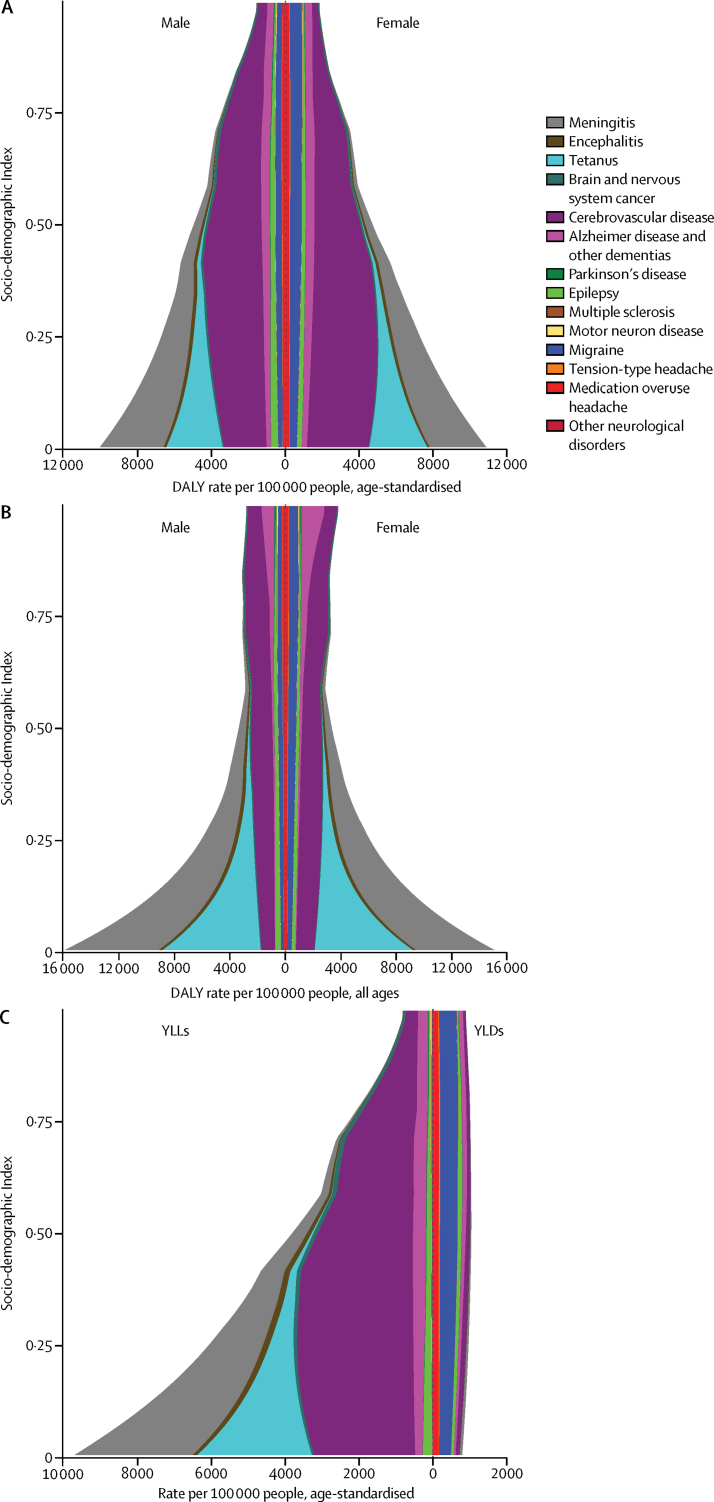
BACKGROUND: Comparable data on the global and country-specific burden of neurological disorders and their trends are crucial for health-care planning and resource allocation. The Global Burden of Diseases, Injuries, and Risk Factors (GBD) Study provides such information but does not routinely aggregate results that are of interest to clinicians specialising in neurological conditions. In this systematic analysis, we quantified the global disease burden due to neurological disorders in 2015 and its relationship with country development level. METHODS: We estimated global and country-specific prevalence, mortality, disability-adjusted life-years (DALYs), years of life lost (YLLs), and years lived with disability (YLDs) for various neurological disorders that in the GBD classification have been previously spread across multiple disease groupings. The more inclusive grouping of neurological disorders included stroke, meningitis, encephalitis, tetanus, Alzheimer's disease and other dementias, Parkinson's disease, epilepsy, multiple sclerosis, motor neuron disease, migraine, tension-type headache, medication overuse headache, brain and nervous system cancers, and a residual category of other neurological disorders. We also analysed results based on the Socio-demographic Index (SDI), a compound measure of income per capita, education, and fertility, to identify patterns associated with development and how countries fare against expected outcomes relative to their level of development. FINDINGS: Neurological disorders ranked as the leading cause group of DALYs in 2015 (250·7 [95% uncertainty interval (UI) 229·1 to 274·7] million, comprising 10·2% of global DALYs) and the second-leading cause group of deaths (9·4 [9·1 to 9·7] million], comprising 16·8% of global deaths). The most prevalent neurological disorders were tension-type headache (1505·9 [UI 1337·3 to 1681·6 million cases]), migraine (958·8 [872·1 to 1055·6] million), medication overuse headache (58·5 [50·8 to 67·4 million]), and Alzheimer's disease and other dementias (46·0 [40·2 to 52·7 million]). Between 1990 and 2015, the number of deaths from neurological disorders increased by 36·7%, and the number of DALYs by 7·4%. These increases occurred despite decreases in age-standardised rates of death and DALYs of 26·1% and 29·7%, respectively; stroke and communicable neurological disorders were responsible for most of these decreases. Communicable neurological disorders were the largest cause of DALYs in countries with low SDI. Stroke rates were highest at middle levels of SDI and lowest at the highest SDI. Most of the changes in DALY rates of neurological disorders with development were driven by changes in YLLs. INTERPRETATION: Neurological disorders are an important cause of disability and death worldwide. Globally, the burden of neurological disorders has increased substantially over the past 25 years because of expanding population numbers and ageing, despite substantial decreases in mortality rates from stroke and communicable neurological disorders. The number of patients who will need care by clinicians with expertise in neurological conditions will continue to grow in coming decades. Policy makers and health-care providers should be aware of these trends to provide adequate services. FUNDING: Bill & Melinda Gates Foundation.
Overview
CoChat Summary
TL;DR
In GBD 2015, an expanded grouping of neurological disorders was the leading cause group of DALYs and the second-leading cause group of deaths worldwide. Absolute deaths and DALYs rose from 1990 to 2015 despite declines in age-standardised death and DALY rates.
Key findings
- Neurological disorders caused 250·7 million (95% UI 229·1–274·7) DALYs, 10·2% of global DALYs, and 9·4 million (9·1–9·7) deaths, 16·8% of global deaths, in 2015.
- The most prevalent neurological disorders were tension-type headache (1505·9 million cases), migraine (958·8 million), medication overuse headache (58·5 million), and Alzheimer’s disease and other dementias (46·0 million).
- Between 1990 and 2015, deaths from neurological disorders increased by 36·7% and DALYs by 7·4%, even though age-standardised death and DALY rates decreased by 26·1% and 29·7%, respectively.
- Stroke accounted for the largest proportion of DALYs (47·3%) and deaths (67·3%) among neurological disorders; communicable neurological disorders were the largest cause of DALYs in low-SDI countries, and stroke rates were highest at middle SDI levels.
Methods
- Systematic analysis for GBD 2015 estimating prevalence, mortality, DALYs, YLLs, and YLDs for an expanded neurological disorder category across 195 countries and territories from 1990 to 2015.
- Included stroke, meningitis, encephalitis, tetanus, Alzheimer’s disease and other dementias, Parkinson’s disease, epilepsy, multiple sclerosis, motor neuron disease, migraine, tension-type headache, medication overuse headache, brain and nervous system cancers, and a residual other neurological disorders category.
- Used systematic review of epidemiological data, vital registration and verbal autopsy data, DisMod-MR 2.1 and CODEm modelling, and SDI quintiles with spline regression to examine burden by development level.
Limitations
- Stated: the analysis assumed that excess mortality in Alzheimer’s disease and other dementias derived from high-quality vital registration countries applied to all other countries and periods.
- Stated: cause-specific death estimates in most low-income and middle-income countries rely on verbal autopsy, which can identify some neurological disorders but not others; data gaps remain, and epilepsy was the only neurological disorder with data sources for all 21 GBD regions.
- Stated: secondary epilepsy, long-term neurological consequences of neonatal disorders, traumatic brain injury, and spinal cord injury were excluded; sparse severity data prevented differentiating severity by location or over time except for epilepsy. Evident from the text: estimates depend on modelled adjustments and generalisations from few studies, with uncertainty intervals reported throughout.
Model-written summary. Check it against the paper before relying on it.
Integrity signals
Registry
Cites
Statistics
Figures
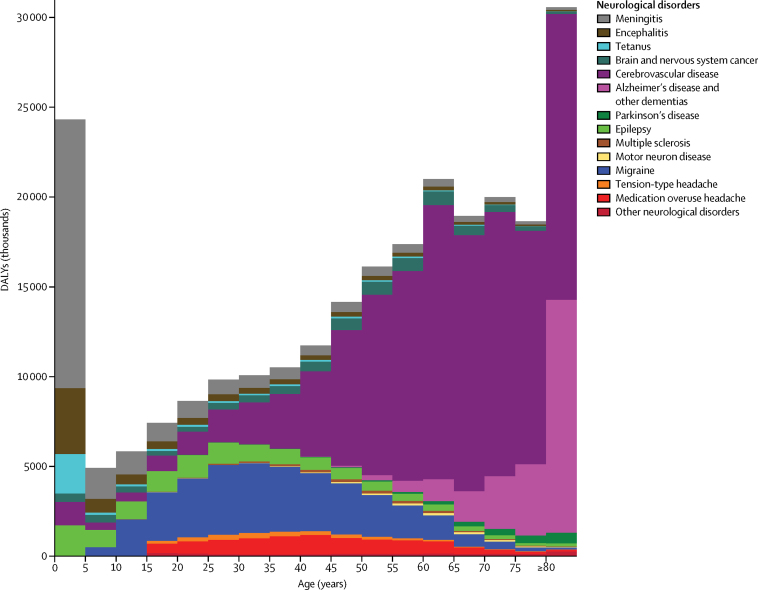
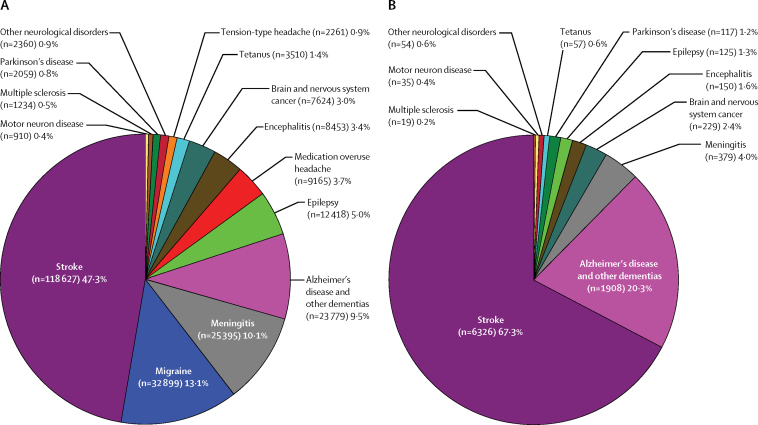
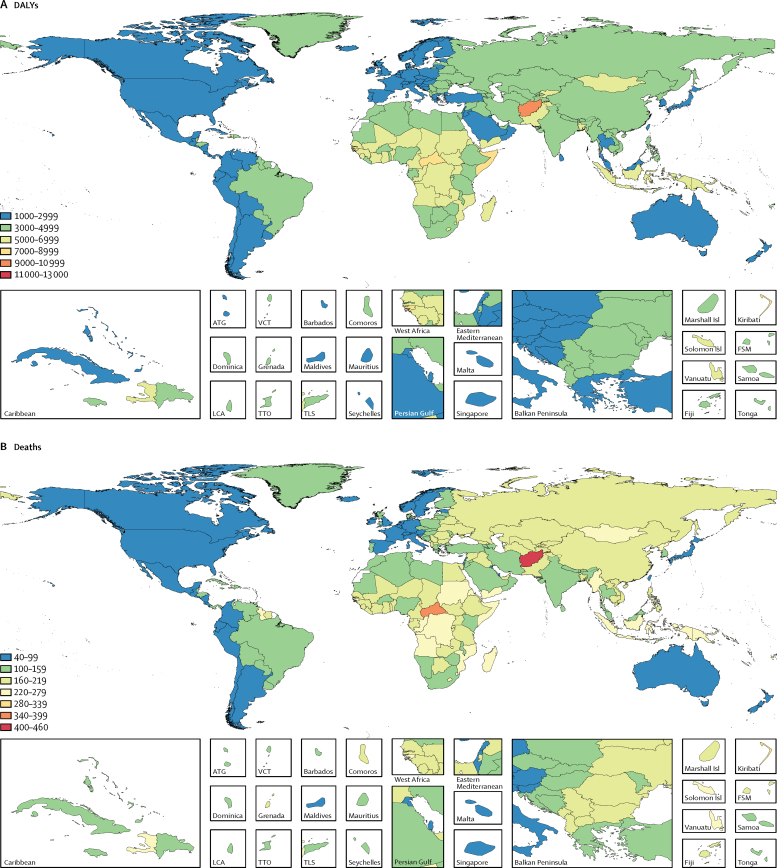
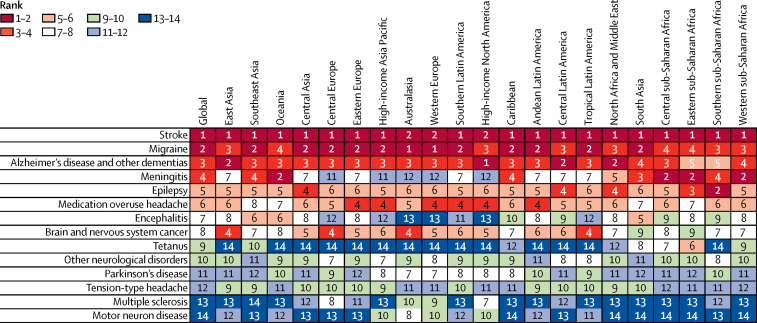
Verification
Claims the paper makes
6 Valid · 1 Not valid · 22 Not checked · 136 Own results and interpretations
The cited sources support only part of this claim — read each source’s verdict below.
In the paper
“However, aggregated estimates in the category of neurological disorders did not include stroke, brain and nervous system cancer, or communicable neurological disorders, which are of great relevance to neurologists.”
§ Global, regional, and national burden of neurological disorders during 1990–2015: a systematic analysis for the Global Burden of Disease Study 2015 > Introduction
What the sources say
- Partly supportedcites [3] GBD 2015 DALYs and HALE Collaborators Global, regional, and national disability-adjusted life-years (DALYs) for 315 diseases and injuries and healthy life expectancy (HALE), 1990–2015: a systematic analysis for the Global Burden of Disease Study 2015 Lancet 388 2016 1603 1658 27733283 PMC5388857 sourceExperimental — accuracy not yet measured
Our copy supports the structural part of the claim: Methods > Overview states the GBD cause hierarchy 'has four levels of classification... mutually exclusive and collectively exhaustive', and Results > Global causes of DALYs treats 'neurological disorders' (exemplified by Alzheimer's disease and other dementias, Parkinson's disease) as a grouping distinct from 'cardiovascular diseases' and 'cancers', while Results > Changes in leading causes of disease burden over time lists meningitis among the Group 1 (communicable) causes and Results > Observed versus expected burden reports stroke as a leading cause alongside ischaemic heart disease — i.e. these conditions are reported in other categories, not in neurological disorders. However, no passage of our copy explicitly states that the aggregated neurological disorders estimate excluded stroke, brain and nervous system cancers, or communicable neurological disorders; 'brain and nervous system cancers' is not mentioned at all (searched: 'brain and nervous system cancers', neurological disorder composition, cause-hierarchy levels), and the full cause list is referred out to companion publications 12 and 20. So the exclusions are implicit in the hierarchy rather than stated by this paper. (LLM, conf=0.68)
- Partly supportedcites [4] GBD 2015 Disease and Injury Incidence and Prevalence Collaborators Global, regional, and national incidence, prevalence, and years lived with disability for 310 diseases and injuries, 1990–2015: a systematic analysis for the Global Burden of Disease Study 2015 Lancet 388 2016 1545 1602 27733282 PMC5055577 sourceExperimental — accuracy not yet measured
Our copy establishes the GBD 2015 cause structure but never states the composition of the neurological disorders aggregate: Methods > List of causes and sequelae describes the Level 1–6 hierarchy and defers the actual cause list to the methods appendix (pp 625–53). Two of the three exclusions are supported indirectly — Discussion > Cardiovascular diseases estimates incident ischaemic stroke inside the cardiovascular grouping, and Results > Global causes of disability places rabies, diphtheria, neonatal encephalopathy and meningitis among Group 1 (communicable, maternal, neonatal and nutritional) causes, i.e. outside neurological disorders; Discussion > Future directions only names 'other neurological disorders' as a residual category. Nothing in our copy addresses brain and nervous system cancer being outside the neurological aggregate, so that element of the claim is unsupported here. (LLM, conf=0.65)
plain- Asserted: passes — The authors put it forward as true.
- Checkable: passes — It can be checked against evidence.
- Load-bearing: passes — The paper’s conclusions depend on it.
- Based: passes — The paper gives a reason why it holds.
- Partly supported
The sources with a verdict support this claim; the rest weren’t checked yet, have no full text we could read, or their verdicts aren’t rated yet.
In the paper
“The high prevalence of epilepsy in low-income and middle-income countries can partly be accounted for by the greater number of cases with communicable causes in these countries.38, 39”
§ Global, regional, and national burden of neurological disorders during 1990–2015: a systematic analysis for the Global Burden of Disease Study 2015 > Discussion
What the sources say
- Supportedcites [38] Ngugi AK Bottomley C Kleinschmidt I Sander JW Newton CR Estimation of the burden of active and life-time epilepsy: a meta-analytic approach Epilepsia 51 2010 883 890 20067507 PMC3410521 source
The Discussion of Ngugi et al. (2010) states that the higher life-time prevalence estimates in developing countries are likely due to higher incidence, 'which could in turn be attributable to infectious etiology, particularly in rural areas' — matching the claim's attribution of the higher prevalence in low-/middle-income countries partly to communicable causes, at the same hedged level. The same section reinforces the infectious/parasitic element ('spatial clustering of risk factors, particularly parasites ... associated with development of epilepsy'), and the Results confirm the higher prevalence in developing (especially rural) areas that the claim presupposes. The source phrases the exposure as 'infectious etiology' rather than 'communicable causes' and speaks of developing/rural settings, but the content attributed is present. (LLM, conf=0.85)
- Not checked yetcites [39] Preux P-M Druet-Cabanac M Epidemiology and aetiology of epilepsy in sub-Saharan Africa Lancet Neurol 4 2005 21 31 15620854 source
plainstates a possible cause- Asserted: passes — The authors put it forward as true.
- Checkable: passes — It can be checked against evidence.
- Load-bearing: unclear — It is unclear whether the paper’s conclusions depend on it.
- Based: passes — The paper gives a reason why it holds.
- Supported
The cited sources support only part of this claim — read each source’s verdict below.
In the paper
“Our findings of large geographical variations in the burden of stroke, dementias, Parkinson's disease, epilepsy, migraine, medication overuse headache, motor neuron disease, and brain and nervous system cancers concur with previous observations.17, 24, 26, 38, 45, 46, 48, 54, 55, 56, 57, 58”
§ Global, regional, and national burden of neurological disorders during 1990–2015: a systematic analysis for the Global Burden of Disease Study 2015 > Discussion
What the sources say
- Not checked yetcites [17] Feigin VL Lawes CMM Bennett DA Barker-Collo SL Parag V Worldwide stroke incidence and early case fatality reported in 56 population-based studies: a systematic review Lancet Neurol 8 2009 355 369 19233729 source
- Not checked yetcites [24] Pringsheim T Jette N Frolkis A Steeves TDL The prevalence of Parkinson's disease: a systematic review and meta-analysis Mov Disord 29 2014 1583 1590 24976103 source
- Partly supportedcites [26] Prince M Ali G-C Guerchet M Prina AM Albanese E Wu Y-T Recent global trends in the prevalence and incidence of dementia, and survival with dementia Alzheimers Res Ther 8 2016 23 27473681 PMC4967299 sourceExperimental — accuracy not yet measured
Prince et al. (2016) is a review of secular (over-time) trends in dementia prevalence, incidence and survival, not an analysis of geographical variation in dementia burden; no passage in our copy states or reports 'large geographical variations' in the burden of dementias. The closest content is generic and hedged — the Background notes that 'secular trends may vary among world regions, and among different population subgroups within one country' and that 'geographic or year of birth variations in adult disease occurrence can be explained by differential exposure', framed by experience with cardiovascular disease, obesity, diabetes and cancer rather than by dementia data. Regional material that does exist concerns trends and survival rather than burden levels: no trend in prevalence in European meta-analyses versus a 46–171 % increase in East Asia/China (Results, 'Secular trends within regions estimated from meta-analyses of individual studies'), and slightly higher dementia mortality ratios in low- and middle-income countries than in high-income ones (Background). The Discussion also concludes there is 'no clear evidence... to justify a departure from the current position of assuming constant age-specific dementia prevalence', so the specific cross-national burden-variation claim attributed to this source is unsupported. (LLM, conf=0.68)
plain- Asserted: passes — The authors put it forward as true.
- Checkable: passes — It can be checked against evidence.
- Load-bearing: unclear — It is unclear whether the paper’s conclusions depend on it.
- Based: passes — The paper gives a reason why it holds.
The cited sources support only part of this claim — read each source’s verdict below.
In the paper
“In terms of absolute number of people affected by neurological disorders, most of the increase in the burden was associated with ageing of the population and population growth.9”
§ Global, regional, and national burden of neurological disorders during 1990–2015: a systematic analysis for the Global Burden of Disease Study 2015 > Discussion
What the sources say
- Partly supportedcites [9] GBD 2015 Mortality and Causes of Death Collaborators Global, regional, and national life expectancy, all-cause mortality, and cause-specific mortality for 249 causes of death, 1980–2015: a systematic analysis for the Global Burden of Disease Study 2015 Lancet 388 2016 1459 1544 27733281 PMC5388903 sourceExperimental — accuracy not yet measured
Our copy of the GBD 2015 mortality analysis supports the demographic mechanism but at a different level: the Abstract Interpretation states that 'population growth and ageing mean that the number of deaths from most non-communicable causes are increasing', and the Discussion (Non-communicable diseases) attributes the ~40% rise in total deaths from Alzheimer's disease and other dementias to 'population increases and ageing', with the Results decomposition quantifying ageing's contribution at 29·6% for dementia. However, this paper reports deaths and YLLs only — it contains no estimate of the absolute number of people affected by (i.e., living with) neurological disorders as a disease group, and no neurological cluster-level prevalence/burden decomposition. The part of the claim about 'people affected by neurological disorders' is therefore not supported by this source. (LLM, conf=0.70)
plainstates an association- Asserted: passes — The authors put it forward as true.
- Checkable: passes — It can be checked against evidence.
- Load-bearing: unclear — It is unclear whether the paper’s conclusions depend on it.
- Based: passes — The paper gives a reason why it holds.
- Partly supported
A result the paper reports from its own data — it cites no other source for it, so there is none to check. The quote shows it is in the paper.
In the paper
“and the second-leading cause group of deaths (9·4 [9·1 to 9·7] million], comprising 16·8% of global deaths).”
§ Global, regional, and national burden of neurological disorders during 1990–2015: a systematic analysis for the Global Burden of Disease Study 2015 > Abstract > Findings
plain- Asserted: passes — The authors put it forward as true.
- Checkable: passes — It can be checked against evidence.
- Load-bearing: unclear — It is unclear whether the paper’s conclusions depend on it.
- Based: passes — The paper gives a reason why it holds.
104 more claims
Create a free account to see all 165 claims and to verify the 38 references still open.
- Probably not a substantial claim. 21
- It may state two separate claims as one. 40
Claims other papers make about this one
Each is checked against this paper’s own text: does it say what the citing paper says it does?
In the citing paper
“These results are consistent with international research that highlights the mortality linked to neurological and cardiovascular disorders because of their rapid advancement and the complexity of care needed [24], [25].”
From The Burden of Hospital Morbidity and Mortality in Ghana: A Four-Year Retrospective Analysis of National Data (2026) · cites this paper as [25]
Self-check
Percentages, sums and reported differences re-computed from the paper’s own numbers.
Each contradiction between two passages listed here was confirmed by an independent check.
Rated minor: it would not touch a result — a value no result rests on, a p-value that stays on the same side of the significance level, or a conflict that is clerical, resolved elsewhere in the paper, or outside its own findings.
In the paper
§ Global, regional, and national burden of neurological disorders during 1990–2015: a systematic analysis for the Global Burden of Disease Study 2015 > Discussion
“Our 2015 prevalence estimates are within the ranges reported for Parkinson's disease (51–177 per 100 000 people),40 motor neuron disease (1·9–3·9 per 100 000 people),41, 42 tension-type headache (21–27%),43, 44”
§ Global, regional, and national burden of neurological disorders during 1990–2015: a systematic analysis for the Global Burden of Disease Study 2015 > Results > Global burden
“| Prevalence | 1 505 892 (1 337 310 to 1 681 575) | 49·2% (46·1 to 52·5) | 20 121 (17 924 to 22 442) | 0·0 (−1·1 to 1·2) |”
Citations
Cites
Lozano, R., Naghavi, M., Foreman, K., Lim, S., Shibuya, K., Aboyans, V., Abraham, J., Adair, T., Aggarwal, R., Ahn, S. Y., et al. (2012) · The Lancet · doi:10.1016/s0140-6736(12)61728-0 · Cited by 14,070
Self-citationVos, T., Allen, C., Arora, M., Barber, R. M., Bhutta, Z. A., Brown, A., Carter, A., Casey, D. C., Charlson, F. J., Chen, A. Z., et al. (2016) · The Lancet · doi:10.1016/s0140-6736(16)31678-6 · Cited by 7,253
Self-citation(1996) · Cited by 6,884
Self-citationWang, H., Naghavi, M., Allen, C., Barber, R. M., Bhutta, Z. A., Carter, A., Casey, D. C., Charlson, F. J., Chen, A. Z., Coates, M. M., et al. (2016) · The Lancet · doi:10.1016/s0140-6736(16)31012-1 · Cited by 6,596
Self-citationVos, T., Barber, R. M., Bell, B., Bertozzi-Villa, A., Biryukov, S., Bolliger, I., Charlson, F., Davis, A., Degenhardt, L., Dicker, D., et al. (2015) · The Lancet · doi:10.1016/s0140-6736(15)60692-4 · Cited by 6,414
Self-citationFeigin, V. L., Lawes, C. M., Bennett, D. A., Barker-Collo, S. L., & Parag, V. (2009) · The Lancet Neurology · doi:10.1016/s1474-4422(09)70025-0 · Cited by 2,855
Self-citationThe global burden of headache: A documentation of headache prevalence and disability worldwide
Stovner, L., Hagen, K., Jensen, R., Katsarava, Z., Lipton, R., Scher, A., Steiner, T., & Zwart, J.-A. (2007) · Cephalalgia · doi:10.1111/j.1468-2982.2007.01288.x · Cited by 2,444
The prevalence of Parkinson's disease: a systematic review and meta-analysis
Pringsheim, T., Jette, N., Frolkis, A., & Steeves, T. D. L. (2014) · Movement Disorders · doi:10.1002/mds.25945 · Cited by 2,188
Kassebaum, N. J., Arora, M., Barber, R. M., Bhutta, Z. A., Brown, J., Carter, A., Casey, D. C., Charlson, F. J., Coates, M. M., Coggeshall, M., et al. (2016) · The Lancet · doi:10.1016/s0140-6736(16)31460-x · Cited by 2,163
Self-citation
Research works printed but not linked: 2
- Flaxman AD Vos T Murray CJ An integrative metaregression framework for descriptive epidemiology 2015 University of Washington Press Seattle
- Turnbull F Baker M Tsang B Jarman J Epidemiology of tetanus in New Zealand reinforces value of vaccination NZ Public Health Rep 8 2001 57 60
Cited by
James, S. L., Abate, D., Abate, K. H., Abay, S. M., Abbafati, C., Abbasi, N., Abbastabar, H., Abd-Allah, F., Abdela, J., Abdelalim, A., et al. (2018) · The Lancet · doi:10.1016/s0140-6736(18)32279-7 · Cited by 13,867
Self-citationFeigin, V. L., Nichols, E., Alam, T., Bannick, M. S., Beghi, E., Blake, N., Culpepper, W. J., Dorsey, E. R., Elbaz, A., Ellenbogen, R. G., et al. (2019) · The Lancet Neurology · doi:10.1016/s1474-4422(18)30499-x · Cited by 5,644
Self-citationJohnson, C. O., Nguyen, M., Roth, G. A., Nichols, E., Alam, T., Abate, D., Abd-Allah, F., Abdelalim, A., Abraha, H. N., Abu-Rmeileh, N. M., et al. (2019) · The Lancet Neurology · doi:10.1016/s1474-4422(19)30034-1 · Cited by 3,264
Self-citationDorsey, E. R., Elbaz, A., Nichols, E., Abbasi, N., Abd-Allah, F., Abdelalim, A., Adsuar, J. C., Ansha, M. G., Brayne, C., Choi, J.-Y. J., et al. (2018) · The Lancet Neurology · doi:10.1016/s1474-4422(18)30295-3 · Cited by 2,816
Self-citationReich, D. S., Lucchinetti, C. F., & Calabresi, P. A. (2018) · New England Journal of Medicine · doi:10.1056/nejmra1401483 · Cited by 2,491
Katan, M., & Luft, A. (2018) · Seminars in Neurology · doi:10.1055/s-0038-1649503 · Cited by 2,137
The Emerging Evidence of the Parkinson Pandemic
Dorsey, E. R., Sherer, T., Okun, M. S., & Bloem, B. R. (2018) · Journal of Parkinson’s Disease · doi:10.3233/jpd-181474 · Cited by 1,977
Self-citationSteinmetz, J. D., Seeher, K. M., Schiess, N., Nichols, E., Cao, B., Servili, C., Cavallera, V., Cousin, E., Hagins, H., Moberg, M. E., et al. (2024) · The Lancet Neurology · doi:10.1016/s1474-4422(24)00038-3 · Cited by 2,019
Self-citationNeuroinflammation: friend and foe for ischemic stroke
Jayaraj, R. L., Azimullah, S., Beiram, R., Jalal, F. Y., & Rosenberg, G. A. (2019) · Journal of Neuroinflammation · doi:10.1186/s12974-019-1516-2 · Cited by 1,428
Parkinson disease-associated cognitive impairment
Aarsland, D., Batzu, L., Halliday, G. M., Geurtsen, G. J., Ballard, C., Ray Chaudhuri, K., & Weintraub, D. (2021) · Nature Reviews Disease Primers · doi:10.1038/s41572-021-00280-3 · Cited by 1,371
Wallin, M. T., Culpepper, W. J., Nichols, E., Bhutta, Z. A., Gebrehiwot, T. T., Hay, S. I., Khalil, I. A., Krohn, K. J., Liang, X., Naghavi, M., et al. (2019) · The Lancet Neurology · doi:10.1016/s1474-4422(18)30443-5 · Cited by 1,134
Self-citationThe prevalence of MS in the United States: A population-based estimate using health claims data
Wallin, M. T., Culpepper, W. J., Campbell, J. D., Nelson, L. M., Langer-Gould, A., Marrie, R. A., Cutter, G. R., Kaye, W. E., Wagner, L., Tremlett, H., et al. (2019) · Neurology · doi:10.1212/wnl.0000000000007035 · Cited by 1,098
Self-citationBeghi, E., Giussani, G., Nichols, E., Abd-Allah, F., Abdela, J., Abdelalim, A., Abraha, H. N., Adib, M. G., Agrawal, S., Alahdab, F., et al. (2019) · The Lancet Neurology · doi:10.1016/s1474-4422(18)30454-x · Cited by 1,036
“In a recent GBD report 9 on the burden of neurological diseases, idiopathic epilepsy (ie, epilepsy of genetic origin or without a definite structural, metabolic, infective, or immune cause) accounted for 5·0% of total neurological DALYs and 1·3% of all deaths.”
Self-citationAilani, J., Burch, R. C., Robbins, M. S., & the Board of Directors of the American Headache Society (2021) · Headache: The Journal of Head and Face Pain · doi:10.1111/head.14153 · Cited by 766
Oxidative stress in the aging substantia nigra and the etiology of Parkinson's disease
Trist, B. G., Hare, D. J., & Double, K. L. (2019) · Aging Cell · doi:10.1111/acel.13031 · Cited by 778
“The global prevalence of PD is predicted to dou‐ ble by 2,040 (Dorsey & Bloem, 2018), making it the fastest growing neurodegenerative disorder ahead of Alzheimer's disease (Feigin et al., 2017).”
Ou, Z., Pan, J., Tang, S., Duan, D., Yu, D., Nong, H., & Wang, Z. (2021) · Frontiers in Public Health · doi:10.3389/fpubh.2021.776847 · Cited by 729
Patel, A. P., Fisher, J. L., Nichols, E., Abd-Allah, F., Abdela, J., Abdelalim, A., Abraha, H. N., Agius, D., Alahdab, F., Alam, T., et al. (2019) · The Lancet Neurology · doi:10.1016/s1474-4422(18)30468-x · Cited by 647
Self-citationDeuschl, G., Beghi, E., Fazekas, F., Varga, T., Christoforidi, K. A., Sipido, E., Bassetti, C. L., Vos, T., & Feigin, V. L. (2020) · The Lancet Public Health · doi:10.1016/s2468-2667(20)30190-0 · Cited by 628
Self-citationSu, D., Cui, Y., He, C., Yin, P., Bai, R., Zhu, J., Lam, J. S. T., Zhang, J., Yan, R., Zheng, X., et al. (2025) · BMJ · doi:10.1136/bmj-2024-080952 · Cited by 611
American Headache Society (2019) · Headache: The Journal of Head and Face Pain · doi:10.1111/head.13456 · Cited by 567
Dodick, D. W. (2018) · The Lancet · doi:10.1016/s0140-6736(18)30478-1 · Cited by 557
Stauffer, V. L., Dodick, D. W., Zhang, Q., Carter, J. N., Ailani, J., & Conley, R. R. (2018) · JAMA Neurology · doi:10.1001/jamaneurol.2018.1212 · Cited by 559
Avan, A., Digaleh, H., Di Napoli, M., Stranges, S., Behrouz, R., Shojaeianbabaei, G., Amiri, A., Tabrizi, R., Mokhber, N., Spence, J. D., et al. (2019) · BMC Medicine · doi:10.1186/s12916-019-1397-3 · Cited by 514
Self-citationLow‐field MRI: Clinical promise and challenges
Arnold, T. C., Freeman, C. W., Litt, B., & Stein, J. M. (2023) · Journal of Magnetic Resonance Imaging · doi:10.1002/jmri.28408 · Cited by 374
Li, X.-Y., Kong, X.-M., Yang, C.-H., Cheng, Z.-F., Lv, J.-J., Guo, H., & Liu, X.-H. (2024) · eClinicalMedicine · doi:10.1016/j.eclinm.2024.102758 · Cited by 377
Buse, D. C., Fanning, K. M., Reed, M. L., Murray, S., Dumas, P. K., Adams, A. M., & Lipton, R. B. (2019) · Headache: The Journal of Head and Face Pain · doi:10.1111/head.13613 · Cited by 311
Fann, J. R., Ribe, A. R., Pedersen, H. S., Fenger-Grøn, M., Christensen, J., Benros, M. E., & Vestergaard, M. (2018) · The Lancet Psychiatry · doi:10.1016/s2215-0366(18)30065-8 · Cited by 322
CNS Infection and Immune Privilege
Forrester, J. V., McMenamin, P. G., & Dando, S. J. (2018) · Nature Reviews Neuroscience · doi:10.1038/s41583-018-0070-8 · Cited by 313
The Therapeutic Potential of Metformin in Neurodegenerative Diseases
Rotermund, C., Machetanz, G., & Fitzgerald, J. C. (2018) · Frontiers in Endocrinology · doi:10.3389/fendo.2018.00400 · Cited by 304
Zhu, J., Cui, Y., Zhang, J., Yan, R., Su, D., Zhao, D., Wang, A., & Feng, T. (2024) · The Lancet Healthy Longevity · doi:10.1016/s2666-7568(24)00094-1 · Cited by 299
A narrative review on the burden of migraine: when the burden is the impact on people’s life
Leonardi, M., & Raggi, A. (2019) · The Journal of Headache and Pain · doi:10.1186/s10194-019-0993-0 · Cited by 289
Lipton, R. B., Dodick, D. W., Ailani, J., Lu, K., Finnegan, M., Szegedi, A., & Trugman, J. M. (2019) · JAMA · doi:10.1001/jama.2019.16711 · Cited by 279
Polymer-based composites by electrospinning: Preparation & functionalization with nanocarbons
Lee, J. K. Y., Chen, N., Peng, S., Li, L., Tian, L., Thakor, N., & Ramakrishna, S. (2018) · Progress in Polymer Science · doi:10.1016/j.progpolymsci.2018.07.002 · Cited by 284
The burden of Parkinson's disease: a worldwide perspective
Rocca, W. A. (2018) · The Lancet Neurology · doi:10.1016/s1474-4422(18)30355-7 · Cited by 270
Gut-Brain Psychology: Rethinking Psychology From the Microbiota–Gut–Brain Axis
Liang, S., Wu, X., & Jin, F. (2018) · Frontiers in Integrative Neuroscience · doi:10.3389/fnint.2018.00033 · Cited by 263
Anionic nanoplastic contaminants promote Parkinson’s disease–associated α-synuclein aggregation
Liu, Z., Sokratian, A., Duda, A. M., Xu, E., Stanhope, C., Fu, A., Strader, S., Li, H., Yuan, Y., Bobay, B. G., et al. (2023) · Science Advances · doi:10.1126/sciadv.adi8716 · Cited by 262
Teleneurology and mobile technologies: the future of neurological care
Dorsey, E. R., Glidden, A. M., Holloway, M. R., Birbeck, G. L., & Schwamm, L. H. (2018) · Nature Reviews Neurology · doi:10.1038/nrneurol.2018.31 · Cited by 258
Self-citationBaron, E. P. (2018) · Headache: The Journal of Head and Face Pain · doi:10.1111/head.13345 · Cited by 251
The Growing Incidence of Bullous Pemphigoid: Overview and Potential Explanations
Kridin, K., & Ludwig, R. J. (2018) · Frontiers in Medicine · doi:10.3389/fmed.2018.00220 · Cited by 248
on behalf of the European Headache Federation School of Advanced Studies (EHF-SAS), Dresler, T., Caratozzolo, S., Guldolf, K., Huhn, J.-I., Loiacono, C., Niiberg-Pikksööt, T., Puma, M., Sforza, G., Tobia, A., et al. (2019) · The Journal of Headache and Pain · doi:10.1186/s10194-019-0988-x · Cited by 243
Ko, F., Muthy, Z. A., Gallacher, J., Sudlow, C., Rees, G., Yang, Q., Keane, P. A., Petzold, A., Khaw, P. T., Reisman, C., et al. (2018) · JAMA Neurology · doi:10.1001/jamaneurol.2018.1578 · Cited by 241
Agrawal, M., Saraf, S., Saraf, S., Dubey, S. K., Puri, A., Patel, R. J., Ajazuddin, Ravichandiran, V., Murty, U. S., & Alexander, A. (2020) · Journal of Controlled Release · doi:10.1016/j.jconrel.2020.02.020 · Cited by 230
Wang, Z., Xiong, G., Tsang, W. C., Schätzlein, A. G., & Uchegbu, I. F. (2019) · The Journal of Pharmacology and Experimental Therapeutics · doi:10.1124/jpet.119.258152 · Cited by 231
Owolabi, M. O., Thrift, A. G., Martins, S., Johnson, W., Pandian, J., Abd-Allah, F., Varghese, C., Mahal, A., Yaria, J., Phan, H. T., et al. (2021) · International Journal of Stroke · doi:10.1177/17474930211019568 · Cited by 214
Self-citationLee, K. K., Miller, M. R., & Shah, A. S. V. (2018) · Journal of Stroke · doi:10.5853/jos.2017.02894 · Cited by 209
Yuan, R., Tiw, P. J., Cai, L., Yang, Z., Liu, C., Zhang, T., Ge, C., Huang, R., & Yang, Y. (2023) · Nature Communications · doi:10.1038/s41467-023-39430-4 · Cited by 211
Disability, quality of life, productivity impairment and employer costs of migraine in the workplace
Shimizu, T., Sakai, F., Miyake, H., Sone, T., Sato, M., Tanabe, S., Azuma, Y., & Dodick, D. W. (2021) · The Journal of Headache and Pain · doi:10.1186/s10194-021-01243-5 · Cited by 188
Buckley, C., Alcock, L., McArdle, R., Rehman, R., Del Din, S., Mazzà, C., Yarnall, A., & Rochester, L. (2019) · Brain Sciences · doi:10.3390/brainsci9020034 · Cited by 197
Myofascial trigger points in migraine and tension-type headache
Do, T. P., Heldarskard, G. F., Kolding, L. T., Hvedstrup, J., & Schytz, H. W. (2018) · The Journal of Headache and Pain · doi:10.1186/s10194-018-0913-8 · Cited by 200
Lactobacillus reuteri tryptophan metabolism promotes host susceptibility to CNS autoimmunity
Montgomery, T. L., Eckstrom, K., Lile, K. H., Caldwell, S., Heney, E. R., Lahue, K. G., D’Alessandro, A., Wargo, M. J., & Krementsov, D. N. (2022) · Microbiome · doi:10.1186/s40168-022-01408-7 · Cited by 198
Autophagic and endo-lysosomal dysfunction in neurodegenerative disease
Malik, B. R., Maddison, D. C., Smith, G. A., & Peters, O. M. (2019) · Molecular Brain · doi:10.1186/s13041-019-0504-x · Cited by 184
Parkinson disease therapy: current strategies and future research priorities
Stocchi, F., Bravi, D., Emmi, A., & Antonini, A. (2024) · Nature Reviews Neurology · doi:10.1038/s41582-024-01034-x · Cited by 204
Artificial intelligence as an emerging technology in the current care of neurological disorders
Patel, U. K., Anwar, A., Saleem, S., Malik, P., Rasul, B., Patel, K., Yao, R., Seshadri, A., Yousufuddin, M., & Arumaithurai, K. (2021) · Journal of Neurology · doi:10.1007/s00415-019-09518-3 · Cited by 197
Role of Kynurenine Pathway in Oxidative Stress during Neurodegenerative Disorders
Mor, A., Tankiewicz-Kwedlo, A., Krupa, A., & Pawlak, D. (2021) · Cells · doi:10.3390/cells10071603 · Cited by 187
Gonçalves, J., Rosado, T., Soares, S., Simão, A. Y., Caramelo, D., Luís, Â., Fernández, N., Barroso, M., Gallardo, E., & Duarte, A. P. (2019) · Medicines · doi:10.3390/medicines6010031 · Cited by 189
Precision medicine in stroke: towards personalized outcome predictions using artificial intelligence
Bonkhoff, A. K., & Grefkes, C. (2022) · Brain · doi:10.1093/brain/awab439 · Cited by 193
Mithaiwala, M. N., Santana-Coelho, D., Porter, G. A., & O’Connor, J. C. (2021) · Cells · doi:10.3390/cells10061548 · Cited by 190
Migraine Burden of Disease: From the Patient's Experience to a Socio‐Economic View
Agosti, R. (2018) · Headache: The Journal of Head and Face Pain · doi:10.1111/head.13301 · Cited by 180
Gautam, R., & Sharma, M. (2020) · Journal of Medical Systems · doi:10.1007/s10916-019-1519-7 · Cited by 175
Antidiabetic agents as a novel treatment for Alzheimer’s and Parkinson’s disease
Nowell, J., Blunt, E., Gupta, D., & Edison, P. (2023) · Ageing Research Reviews · doi:10.1016/j.arr.2023.101979 · Cited by 179
“Of all neurological disorders considered in the Global Burden Disease Study 2015, PD had the greatest increase in prevalence, disability, and deaths between 1990 and 2015 (Collaborators, 2019b; GBD, 2015).”
Takeshima, T., Wan, Q., Zhang, Y., Komori, M., Stretton, S., Rajan, N., Treuer, T., & Ueda, K. (2019) · The Journal of Headache and Pain · doi:10.1186/s10194-019-1062-4 · Cited by 165
Morya, E., Monte-Silva, K., Bikson, M., Esmaeilpour, Z., Biazoli, C. E., Fonseca, A., Bocci, T., Farzan, F., Chatterjee, R., Hausdorff, J. M., et al. (2019) · Journal of NeuroEngineering and Rehabilitation · doi:10.1186/s12984-019-0581-1 · Cited by 166
Age‐ and disease‐specific changes of the kynurenine pathway in Parkinson’s and Alzheimer’s disease
Sorgdrager, F. J. H., Vermeiren, Y., Van Faassen, M., van der Ley, C., Nollen, E. A. A., Kema, I. P., & De Deyn, P. P. (2019) · Journal of Neurochemistry · doi:10.1111/jnc.14843 · Cited by 151
“As global life-expectancy rises, age-related neurodegenerative diseases including Parkinson’s disease (PD) and Alzheimer’s disease (AD) become a substantial burden to our healthcare systems (Feigin et al. 2017).”
Brain–computer interfaces: the innovative key to unlocking neurological conditions
Zhang, H., Jiao, L., Yang, S., Li, H., Jiang, X., Feng, J., Zou, S., Xu, Q., Gu, J., Wang, X., et al. (2024) · International Journal of Surgery · doi:10.1097/js9.0000000000002022 · Cited by 169
“The Global Burden of Disease Study in 2015 revealed that diseases of the nervous system – excluding stroke, brain and nervous system cancers, and communicable neurological disorders – ranked as the second leading cause of mortality worldwide, responsible for 16.8% of all deaths [1] .”
InfluentialRahimi Darehbagh, R., Seyedoshohadaei, S. A., Ramezani, R., & Rezaei, N. (2024) · European Journal of Medical Research · doi:10.1186/s40001-024-01987-1 · Cited by 167
“Neurological disorders pose a significant burden on global health, affecting millions of individuals worldwide and leading to substantial healthcare costs and societal impact [7, 8].”
Current understanding of meningeal and cerebral vascular function underlying migraine headache
Levy, D., Labastida‐Ramírez, A., & MaassenVanDenBrink, A. (2018) · Cephalalgia · doi:10.1177/0333102418771350 · Cited by 156
Ginsenoside Rd: A promising natural neuroprotective agent
Chen, Y.-Y., Liu, Q.-P., An, P., Jia, M., Luan, X., Tang, J.-Y., & Zhang, H. (2022) · Phytomedicine · doi:10.1016/j.phymed.2021.153883 · Cited by 162
Muir, K. W., Bulters, D., Willmot, M., Sprigg, N., Dixit, A., Ward, N., Tyrrell, P., Majid, A., Dunn, L., Bath, P., et al. (2020) · Journal of Neurology, Neurosurgery & Psychiatry · doi:10.1136/jnnp-2019-322515 · Cited by 161
Peterson, C. T. (2020) · Journal of Evidence-Based Integrative Medicine · doi:10.1177/2515690x20957225 · Cited by 160
Short-chain fatty acids-producing probiotics: A novel source of psychobiotics
Cheng, Y., Liu, J., & Ling, Z. (2021) · Critical Reviews in Food Science and Nutrition · doi:10.1080/10408398.2021.1920884 · Cited by 169
Immunological Aspects of Approved MS Therapeutics
Rommer, P. S., Milo, R., Han, M. H., Satyanarayan, S., Sellner, J., Hauer, L., Illés, Z., Warnke, C., Laurent, S. A., Weber, M. S., et al. (2019) · Frontiers in Immunology · doi:10.3389/fimmu.2019.01564 · Cited by 174
Lanctôt, K. L., Hahn‐Pedersen, J. H., Eichinger, C. S., Freeman, C. S., Clark, A., Tarazona, L. R. S., & Cummings, J. L. (2023) · The Journal of Prevention of Alzheimer s Disease · doi:10.14283/jpad.2023.61 · Cited by 189
“…of Disease analyses have shown that dementia is a major contributor to mortality and disability in older patient populations in the USA , Europe and worldwide (15, 107-109), the grouping of AD with other dementias means that its specific impact on these factors remains less well characterized.”
Is Alzheimer’s Disease Risk Modifiable?
Serrano-Pozo, A., & Growdon, J. H. (2019) · Journal of Alzheimer's Disease · doi:10.3233/jad181028 · Cited by 154
Lower-Limb Medical and Rehabilitation Exoskeletons: A Review of the Current Designs
Plaza, A., Hernández, M., Puyuelo, G., Garces, E., & García, E. (2021) · IEEE Reviews in Biomedical Engineering · doi:10.1109/rbme.2021.3078001 · Cited by 153
The Role of Diet as a Modulator of the Inflammatory Process in the Neurological Diseases
Kurowska, A., Ziemichód, W., Herbet, M., & Piątkowska‐Chmiel, I. (2023) · Nutrients · doi:10.3390/nu15061436 · Cited by 183
Neuronal autophagy and mitophagy in Parkinson's disease
Lizama, B. N., & Chu, C. T. (2021) · Molecular Aspects of Medicine · doi:10.1016/j.mam.2021.100972 · Cited by 161
Leng, Y., Blackwell, T., Cawthon, P. M., Ancoli-Israel, S., Stone, K. L., & Yaffe, K. (2020) · JAMA Neurology · doi:10.1001/jamaneurol.2020.1623 · Cited by 142
Truijen, S., Abdullahi, A., Bijsterbosch, D., van Zoest, E., Conijn, M., Wang, Y., Struyf, N., & Saeys, W. (2022) · Neurological Sciences · doi:10.1007/s10072-021-05855-2 · Cited by 213
Shoeibi, A., Ghassemi, N., Alizadehsani, R., Rouhani, M., Hosseini‐Nejad, H., Khosravi, A., Panahiazar, M., & Nahavandi, S. (2020) · Expert Systems with Applications · doi:10.1016/j.eswa.2020.113788 · Cited by 161
Bhatti, G. K., Reddy, A. P., Reddy, P. H., & Bhatti, J. S. (2020) · Frontiers in Aging Neuroscience · doi:10.3389/fnagi.2019.00369 · Cited by 145
Loh, H. W., Ooi, C. P., Palmer, E., Barua, P. D., Dogan, S., Tuncer, T., Baygin, M., & Acharya, U. R. (2021) · Electronics · doi:10.3390/electronics10141740 · Cited by 144
Cano, A., Sánchez-López, E., Ettcheto, M., López-Machado, A., Espina, M., Souto, E. B., Galindo, R., Camins, A., García, M. L., & Turowski, P. (2020) · Nanomedicine · doi:10.2217/nnm-2019-0443 · Cited by 144
Ruiz‐González, D., Hernández‐Martínez, A., Valenzuela, P. L., Morales, J. S., & Soriano‐Maldonado, A. (2021) · Neuroscience & Biobehavioral Reviews · doi:10.1016/j.neubiorev.2021.05.025 · Cited by 172
Pyatha, S., Kim, H., Lee, D., & Kim, K. (2022) · Antioxidants · doi:10.3390/antiox11122467 · Cited by 170
Pradhan, B., Patra, S., Nayak, R., Behera, C., Dash, S. R., Nayak, S., Sahu, B. B., Bhutia, S. K., & Jena, M. (2020) · International Journal of Biological Macromolecules · doi:10.1016/j.ijbiomac.2020.09.019 · Cited by 147
Jesus, T. S., Landry, M. D., & Hoenig, H. (2019) · International Journal of Environmental Research and Public Health · doi:10.3390/ijerph16060980 · Cited by 165
Stem cell therapy for neurological disorders
Alessandrini, M., Preynat‐Seauve, O., Briun, K. D., & Pepper, M. S. (2019) · South African Medical Journal · doi:10.7196/samj.2019.v109i8b.14009 · Cited by 159
Therapeutic Advances in Multiple Sclerosis
Yang, J. H., Rempe, T., Whitmire, N., Dunn‐Pirio, A., & Graves, J. (2022) · Frontiers in Neurology · doi:10.3389/fneur.2022.824926 · Cited by 179
Rehman, M. U., Sehar, N., Dar, N. J., Khan, A., Arafah, A., Rashid, S., Rashid, S. M., & Ganaie, M. A. (2023) · Neuroscience & Biobehavioral Reviews · doi:10.1016/j.neubiorev.2022.104961 · Cited by 130
PLGA-Based Nanoparticles for Neuroprotective Drug Delivery in Neurodegenerative Diseases
Cunha, A., Gaubert, A., Latxague, L., & Dehay, B. (2021) · Pharmaceutics · doi:10.3390/pharmaceutics13071042 · Cited by 142
The Promise of Telemedicine for Movement Disorders: an Interdisciplinary Approach
the International Parkinson and Movement Disorder Society Telemedicine Task Force, Ben‐Pazi, H., Browne, P. J., Chan, P., Cubo, E., Guttman, M., Hassan, A., Hatcher-Martin, J. M., Mari, Z. K., Moukheiber, E. S., et al. (2018) · Current Neurology and Neuroscience Reports · doi:10.1007/s11910-018-0834-6 · Cited by 136
Shekhar, S., Cunningham, M., Pabbidi, M. R., Wang, S., Booz, G. W., & Fan, F. (2018) · European Journal of Pharmacology · doi:10.1016/j.ejphar.2018.06.028 · Cited by 137
A review of the pharmacology and toxicology of aucubin
Zeng, X., Guo, F., & Ouyang, D. (2019) · Fitoterapia · doi:10.1016/j.fitote.2019.104443 · Cited by 128
Mediterranean Diet in Preventing Neurodegenerative Diseases
Gardener, H., & Caunca, M. R. (2018) · Current Nutrition Reports · doi:10.1007/s13668-018-0222-5 · Cited by 124
Shin, U., Ding, C., Zhu, B., Vyza, Y., Trouillet, A., Revol, E. C. M., Lacour, S. P., & Shoaran, M. (2022) · IEEE Journal of Solid-State Circuits · doi:10.1109/jssc.2022.3204508 · Cited by 153
“NEUROLOGICAL disorders are the second leading cause 37 of global deaths and the leading cause of disability 38 worldwide [1].”
Feigin, V. L., Norrving, B. G., Sudlow, C. L. M., & Sacco, R. L. (2018) · Stroke · doi:10.1161/strokeaha.118.022161 · Cited by 138
Self-citationUllah, M. F., Ahmad, A., Bhat, S. H., Abu-Duhier, F. M., Barreto, G. E., & Ashraf, G. M. (2019) · Neuroscience & Biobehavioral Reviews · doi:10.1016/j.neubiorev.2019.04.003 · Cited by 113
Ginsenoside Rg1 in neurological diseases: From bench to bedside
Yang, S., Wang, J.-J., Cheng, P., Chen, L.-X., Hu, J., & Zhu, G. (2022) · Acta Pharmacologica Sinica · doi:10.1038/s41401-022-01022-1 · Cited by 132
Hsu, C., Xu, J., Brinkhof, B., Wang, H., Cui, Z., Huang, W. E., & Ye, H. (2020) · Proceedings of the National Academy of Sciences · doi:10.1073/pnas.2001906117 · Cited by 123
AlAmmar, W. A., Albeesh, F. H., Ibrahim, L. M., Algindan, Y. Y., Yamani, L. Z., & Khattab, R. Y. (2021) · Nutritional Neuroscience · doi:10.1080/1028415x.2019.1659560 · Cited by 116
Metadata
- Authors
- Feigin, V. L., Abajobir, A. A., Abate, K. H., Abd-Allah, F., Abdulle, A. M., Abera, S. F., Abyu, G. Y., Ahmed, M. B., Aichour, A. N., Aichour, I., Aichour, M. T. E., Akinyemi, R. O., Alabed, S., Al-Raddadi, R., Alvis-Guzman, N., Amare, A. T., Ansari, H., Anwari, P., Ärnlöv, J., Asayesh, H., Asgedom, S. W., Atey, T. M., Avila-Burgos, L., Frinel, E., Avokpaho, G. A., Azarpazhooh, M. R., Barac, A., Barboza, M., Barker-Collo, S. L., Bärnighausen, T., Bedi, N., Beghi, E., Bennett, D. A., Bensenor, I. M., Berhane, A., Betsu, B. D., Bhaumik, S., Birlik, S. M., Biryukov, S., Boneya, D. J., Bulto, L. N. B., Carabin, H., Casey, D., Castañeda-Orjuela, C. A., Catalá-López, F., Chen, H., Chitheer, A. A., Chowdhury, R., Christensen, H., Dandona, L., Dandona, R., de Veber, G. A., Dharmaratne, S. D., Do, H. P., Dokova, K., Dorsey, E. R., Ellenbogen, R. G., Eskandarieh, S., Farvid, M. S., Fereshtehnejad, S.-M., Fischer, F., Foreman, K. J., Geleijnse, J. M., Gillum, R. F., Giussani, G., Goldberg, E. M., Gona, P. N., Goulart, A. C., Gugnani, H. C., Gupta, R., Hachinski, V., Gupta, R., Hamadeh, R. R., Hambisa, M., Hankey, G. J., Hareri, H. A., Havmoeller, R., Hay, S. I., Heydarpour, P., Hotez, P. J., Jakovljevic, M. (. B., Javanbakht, M., Jeemon, P., Jonas, J. B., Kalkonde, Y., Kandel, A., Karch, A., Kasaeian, A., Kastor, A., Keiyoro, P. N., Khader, Y. S., Khalil, I. A., Khan, E. A., Khang, Y.-H., Tawfih, A., Khoja, A., Khubchandani, J., Kulkarni, C., Kim, D., Kim, Y. J., Kivimaki, M., Kokubo, Y., Kosen, S., Kravchenko, M., Krishnamurthi, R. V., Defo, B. K., Kumar, G. A., Kumar, R., Kyu, H. H., Larsson, A., Lavados, P. M., Li, Y., Liang, X., Liben, M. L., Lo, W. D., Logroscino, G., Lotufo, P. A., Loy, C. T., Mackay, M. T., El Razek, H. M. A., El Razek, M. M. A., Majeed, A., Malekzadeh, R., Manhertz, T., Mantovani, L. G., Massano, J., Mazidi, M., McAlinden, C., Mehata, S., Mehndiratta, M. M., Memish, Z. A., Mendoza, W., Mengistie, M. A., Mensah, G. A., Meretoja, A., Mezgebe, H. B., Miller, T. R., Mishra, S. R., Ibrahim, N. M., Mohammadi, A., Mohammed, K. E., Mohammed, S., Mokdad, A. H., Moradi-Lakeh, M., Velasquez, I. M., Musa, K. I., Naghavi, M., Ngunjiri, J. W., Nguyen, C. T., Nguyen, G., Le Nguyen, Q., Nguyen, T. H., Nichols, E., Ningrum, D. N. A., Nong, V. M., Norrving, B., Noubiap, J. J. N., Ogbo, F. A., Owolabi, M. O., Pandian, J. D., Parmar, P. G., Pereira, D. M., Petzold, M., Phillips, M. R., Piradov, M. A., Poulton, R. G., Pourmalek, F., Qorbani, M., Rafay, A., Rahman, M., Rahman, M. H., Rai, R. K., Rajsic, S., Ranta, A., Rawaf, S., Renzaho, A. M. N., Rezai, M. S., Roth, G. A., Roshandel, G., Rubagotti, E., Sachdev, P., Safiri, S., Sahathevan, R., Sahraian, M. A., Samy, A. M., Santalucia, P., Santos, I. S., Sartorius, B., Satpathy, M., Sawhney, M., Saylan, M. I., Sepanlou, S. G., Shaikh, M. A., Shakir, R., Shamsizadeh, M., Sheth, K. N., Shigematsu, M., Shoman, H., Silva, D. A. S., Smith, M., Sobngwi, E., Sposato, L. A., Stanaway, J. D., Stein, D. J., Steiner, T. J., Stovner, L. J., Abdulkader, R. S., EI Szoeke, C., Tabarés-Seisdedos, R., Tanne, D., Theadom, A. M., Thrift, A. G., Tirschwell, D. L., Topor-Madry, R., Tran, B. X., Truelsen, T., Tuem, K. B., Ukwaja, K. N., Uthman, O. A., Varakin, Y. Y., Vasankari, T., Venketasubramanian, N., Vlassov, V. V., Wadilo, F., Wakayo, T., Wallin, M. T., Weiderpass, E., Westerman, R., Wijeratne, T., Wiysonge, C. S., Woldu, M. A., Wolfe, C. D. A., Xavier, D., Xu, G., Yano, Y., Yimam, H. H., Yonemoto, N., Yu, C., Zaidi, Z., El Sayed Zaki, M., Zunt, J. R., Murray, C. J. L., & Vos, T.
- Affiliations
- Auckland University of Technology (NZ)
- The University of Queensland (AU)
- Jimma University (ET)
- University of Peradeniya (LK)
- Mekelle University (ET)
- Zahedan University of Medical Sciences (IR)
- Uppsala University (SE)
- Qom University of Medical Science and Health Services (IR)
- Harvard University (US)
- Jazan University (SA)
- Instituto Nacional de Salud (CO)
- International Institute for Population Sciences (IN)
- Universitat de València (ES)
- Bispebjerg Hospital (DK)
- University of Washington (US)
- Public Health Foundation of India (IN)
- University of Groningen (NL)
- Centre for Chronic Disease Control (IN)
- Northeastern University (US)
- University of Louisville (US)
- Baylor College of Medicine (US)
- University of Salerno (IT)
- Tehran University of Medical Sciences (IR)
- Eduardo Mondlane University (MZ)
- Mayo Clinic (US)
- The University of Melbourne (AU)
- Mizan Tepi University (ET)
- Mansoura University (EG)
- Wuhan University (CN)
- University of Massachusetts Boston (US)
- ORCID
- Feigin, Valery L
- Abajobir, Amanuel Alemu
- Abate, Kalkidan Hassen
- Abd-Allah, Foad
- Abdulle, Abdishakur M
- Abera, Semaw Ferede
- Ahmed, Muktar Beshir
- Akinyemi, Rufus Olusola
- Alabed, Samer
- Al-Raddadi, Rajaa
- Amare, Azmeraw T.
- Ansari, Hossein
- Anwari, Palwasha
- Ärnlöv, Johan
- Asayesh, Hamid
- Asgedom, Solomon Weldegebreal
- Atey, Tesfay Mehari
- Barac, Aleksandra
- Barboza, Miguel
- Barker-Collo, Suzanne L
- Bärnighausen, Till
- Bedi, Neeraj
- Beghi, Ettore
- Bennett, Derrick A
- Berhane, Adugnaw
- Betsu, Balem Demtsu
- Bhaumik, Soumyadeep
- Birlik, Sait Mentes
- Boneya, Dube Jara
- Bulto, Lemma Negesa Bulto
- Carabin, Hélène
- Castañeda-Orjuela, Carlos A.
- Catalá-López, Ferrán
- Chen, Honglei
- Chitheer, Abdulaal A
- Chowdhury, Rajiv
- Christensen, Hanne
- Dandona, Lalit
- Dandona, Rakhi
- Dharmaratne, Samath D
- Do, Huyen Phuc
- Dokova, Klara
- Ellenbogen, Richard G
- Eskandarieh, Sharareh
- Farvid, Maryam S
- Fereshtehnejad, Seyed-Mohammad
- Fischer, Florian
- Geleijnse, Johanna M
- Giussani, Giorgia
- Goldberg, Ellen M
- Gona, Philimon N
- Goulart, Alessandra Carvalho
- Gugnani, Harish Chander
- Gupta, Rahul
- Hachinski, Vladimir
- Gupta, Rajeev
- Hamadeh, Randah Ribhi
- Hambisa, Mitiku
- Hankey, Graeme J
- Hay, Simon I
- Heydarpour, Pouria
- Hotez, Peter J
- Javanbakht, Mehdi
- Jeemon, Panniyammakal
- Jonas, Jost B
- Kalkonde, Yogeshwar
- Kandel, Amit
- Karch, André
- Kasaeian, Amir
- Kastor, Anshul
- Khader, Yousef Saleh
- Khan, Ejaz Ahmad
- Khang, Young-Ho
- Khoja, Abdullah
- Khubchandani, Jagdish
- Kim, Daniel
- Kim, Yun Jin
- Kokubo, Yoshihiro
- Kosen, Soewarta
- Kravchenko, Michael
- Krishnamurthi, Rita Vanmala
- Kumar, G Anil
- Kumar, Rashmi
- Kyu, Hmwe H
- Lavados, Pablo M
- Li, Yongmei
- Liang, Xiaofeng
- Liben, Misgan Legesse
- Lo, Warren D
- Logroscino, Giancarlo
- Lotufo, Paulo A
- Loy, Clement T
- Mackay, Mark T
- Majeed, Azeem
- Malekzadeh, Reza
- Mantovani, Lorenzo G
- Massano, João
- Mazidi, Mohsen
- McAlinden, Colm
- Mehata, Suresh
- Memish, Ziad A
- Mensah, George A
- Meretoja, Atte
- Miller, Ted R
- Mishra, Shiva Raj
- Ibrahim, Norlinah Mohamed
- Mohammadi, Alireza
- Mohammed, Shafiu
- Mokdad, Ali H
- Musa, Kamarul Imran
- Naghavi, Mohsen
- Nguyen, Cuong Tat
- Nguyen, Trang Huyen
- Nichols, Emma
- Ningrum, Dina Nur Anggraini
- Nong, Vuong Minh
- Noubiap, Jean Jacques N
- Ogbo, Felix Akpojene
- Owolabi, Mayowa O
- Pandian, Jeyaraj D.
- Pereira, David M
- Petzold, Max
- Poulton, Richie G.
- Pourmalek, Farshad
- Qorbani, Mostafa
- Ranta, Annemarei
- Rawaf, Salman
- Rezai, Mohammad Sadegh
- Roth, Gregory A
- Roshandel, Gholamreza
- Rubagotti, Enrico
- Sachdev, Perminder
- Safiri, Saeid
- Sahathevan, Ramesh
- Sahraian, Mohammad Ali
- Samy, Abdallah M.
- Santos, Itamar S
- Sartorius, Benn
- Satpathy, Maheswar
- Sepanlou, Sadaf G
- Shamsizadeh, Morteza
- Sheth, Kevin N
- Shoman, Haitham
- Silva, Diego Augusto Santos
- Sposato, Luciano A
- Stanaway, Jeffrey D
- Stein, Dan J
- Steiner, Timothy J
- Stovner, Lars Jacob
- Abdulkader, Rizwan Suliankatchi
- Theadom, Alice M
- Thrift, Amanda G
- Tirschwell, David L
- Tran, Bach Xuan
- Tuem, Kald Beshir
- Ukwaja, Kingsley Nnanna
- Uthman, Olalekan A
- Vasankari, Tommi
- Venketasubramanian, Narayanaswamy
- Wadilo, Fiseha
- Wallin, Mitchell T
- Weiderpass, Elisabete
- Westerman, Ronny
- Wijeratne, Tissa
- Wiysonge, Charles Shey
- Woldu, Minyahil Alebachew
- Wolfe, Charles D A
- Xavier, Denis
- Xu, Gelin
- Yano, Yuichiro
- Yonemoto, Naohiro
- Yu, Chuanhua
- Zaidi, Zoubida
- Zunt, Joseph R
- Murray, Christopher J L
- Vos, Theo
- Venue
- The Lancet Neurology
- Publisher
- Elsevier BV
- Published
- 2017-11
- Volume
- 16
- Issue
- 11
- Pages
- 877-897
- ISSN
- 1474-4422 (ISSN-L)
- PMC
- PMC5641502
- OpenAlex
- W3157419554
- Cited by
- 2,275
- References
- 65
- Citations by year
- 2026: 129 · 2025: 239 · 2024: 264 · 2023: 262 · 2022: 291 · 2021: 328 · 2020: 311 · 2019: 277 · 2018: 159 · 2017: 11
- FWCI
- 284.95
- Type
- journal article
- Language
- en
- Open access
- hybrid
- doi.org
- Licence
- cc-by
- www.elsevier.com/tdm/userlicense/1.0/ (tdm)
- creativecommons.org/licenses/by/4.0/ (vor)
- Locations
- The Lancet Neurology (publishedVersion, cc-by)
- PubMed Central (publishedVersion, cc-by)
- UWA Profiles and Research Repository (UWA) (publishedVersion, cc-by)
- LA Referencia (Red Federada de Repositorios Institucionales de Publicaciones Científicas) (publishedVersion, cc-by-nc-nd)
- PubMed (publishedVersion)
- White Rose Research Online (University of Leeds, The University of Sheffield, University of York) (acceptedVersion)
- Socio-Environmental Systems Modeling (acceptedVersion, cc-by)
- LSHTM Research Online (London School of Hygiene and Tropical Medicine) (acceptedVersion)
- Minerva Access (University of Melbourne) (submittedVersion, cc-by)
- Monash University Research Portal (Monash University) (submittedVersion, cc-by)
- Research Bank (Australian Catholic University) (submittedVersion, cc-by)
- Homo Politicus (Academy of Humanities and Economics in Lodz) (submittedVersion, cc-by-nc-nd)
- Jagiellonian University Repository (Jagiellonian University) (submittedVersion, cc-by-nc-nd)
- KTH Publication Database DiVA (KTH Royal Institute of Technology) (submittedVersion, other-oa)
- Americanae (AECID Library) (submittedVersion, cc-by-nc-nd)
- BOA (University of Milano-Bicocca) (submittedVersion)
- BOA (University of Milano-Bicocca) (submittedVersion, other-oa)
- Adelaide Research & Scholarship (AR&S) (University of Adelaide) (submittedVersion, cc-by)
- UCL Discovery (University College London) (submittedVersion)
- eSpace (Curtin University) (submittedVersion)
- Figshare (submittedVersion, cc-by)
- Työväentutkimus Vuosikirja (submittedVersion)
- HZI (Helmholtz Centre for Infection Research) (submittedVersion, cc-by-nc-sa)
- Lund University Publications (Lund University) (submittedVersion)
- Tuwhera (Auckland University of Technology) (submittedVersion, cc-by)
- PUB – Publications at Bielefeld University (Bielefeld University) (submittedVersion, cc-by)
- CINECA IRIS Institutional Research Information System (University of Bari Aldo Moro) (submittedVersion)
- Seoul National University Open Repository (Seoul National University) (submittedVersion)
- Spiral (Imperial College London) (submittedVersion, other-oa)
- UniSA Research Outputs Repository (University of South Australia) (submittedVersion, other-oa)
- Data Archiving and Networked Services (DANS) (submittedVersion, cc-by)
- Funders
- U.S. Department of Health and Human Services
- Bill and Melinda Gates Foundation
- Amgen
- AstraZeneca
- Massachusetts General Hospital
- Michigan State University
- University of Washington
- University of Oklahoma
- University of Rochester
- Ottawa Hospital Research Institute
- Arabian Gulf University
- Wellcome Trust
- University of Massachusetts Boston
- Institute for Health Metrics and Evaluation
- Trường Đại học Duy Tân
- National Institute for Health and Care Research (ACF-2014-04-008)
- Imperial College London
- University of Oxford
- Public Health Foundation of India
- Universidad Nacional de Colombia
- Universitat de València
- Ministry of Business, Innovation and Employment
- University of Toronto
- Haramaya University
- Universidade de São Paulo
- Universität Bielefeld
- Hospital for Sick Children
- Centro de Investigación Biomédica en Red de Salud Mental
- University of Peradeniya
- Brain Research New Zealand
- INCLIVA Instituto de Investigación Sanitaria
- Debre Markos University
- National Institutes of Health
- College of Engineering, Michigan State University
- University of Oklahoma Health Sciences Center
- Medical Center, University of Rochester
- Medical Research Council (MR/K013351/1)
- Health Research Council of New Zealand
- Wageningen University and Research
- National Heart, Lung, and Blood Institute
- National Institute on Minority Health and Health Disparities
- Topics
- Health Sciences › Medicine › Public Health, Environmental and Occupational Health › Global Health and Epidemiology
- Health Sciences › Medicine › Psychiatry and Mental health › Mental Health Treatment and Access
- Health Sciences › Medicine › Psychiatry and Mental health › Dementia and Cognitive Impairment Research
- Keywords
- neurological disorders, disease burden, disability-adjusted life years, years of life lost, years lived with disability, stroke, meningitis, encephalitis, tetanus, Alzheimer's disease, Parkinson's disease, epilepsy, multiple sclerosis, motor neuron disease, migraine, tension-type headache, medication overuse headache, socio-demographic index, country development level
- MeSH terms
- Global Burden of Disease, Cause of Death, Female, Humans, Male, Nervous System Diseases, Global Health, Quality-Adjusted Life Years
About these checks
Registry, retraction, Cites and statistics results are computed, not judged, with one exception: a printed reference that no index lists is read once by a model before it counts as a citation error. Claims are extracted by a model and kept only when their quote appears verbatim in the text; each cited source is then checked, with a model’s help, for whether it says what the claim relies on. Those verdicts can be wrong — read the claim’s quote and the cited source before relying on one.
The claim verdicts this report counts are experimental: their accuracy is not yet measured.
A language model drew the claims from the paper on 2026-10-04, under version 3 of the claim definition (model deepseek-v4.1-flash, prompt extract-v3).
A second model labelled each claim on 2026-10-04 (model jev-1.13-20260917, definition revision gold-guideline-v0.2).
Cited sources are checked with a language model’s help (qwen3.8-omni-flash).
Statistics and arithmetic are recomputed, not judged.
Confidence bands are shown only for fields calibrated on our annotated test set. None is calibrated yet, so no band is shown.
What counts as a claim ›How we measure confidence ›How we check this ›
Are you an author, or do you see a problem with this page? Request a review
Data sources
Bibliographic data: Semantic Scholar, OpenAlex, Crossref.
Contains information from the Semantic Scholar Academic Graph Datasets, made available under the ODC Attribution License (ODC-BY 1.0).
Semantic Scholar’s data is described in: Kinney, R., et al. (2023). The Semantic Scholar Open Data Platform. arXiv:2301.10140.
