

Global, regional, and national burden of neurological disorders during 1990–2015: a systematic analysis for the Global Burden of Disease Study 2015
Open accessThe DOI matches its Crossref record; 64 of the 65 references it cites were found in a registry or an index; 9 of the 47 sources its claims cite were checked for support.
Abstract
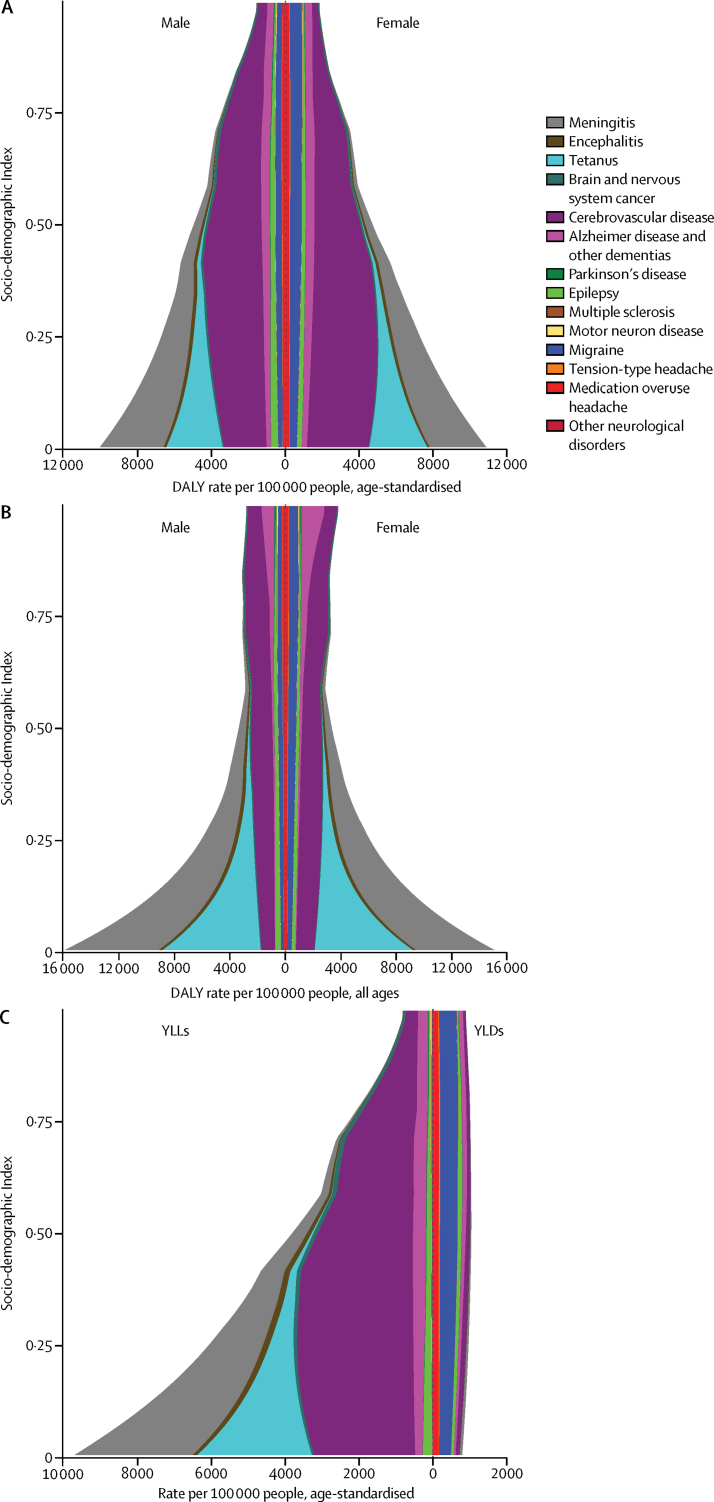
BACKGROUND: Comparable data on the global and country-specific burden of neurological disorders and their trends are crucial for health-care planning and resource allocation. The Global Burden of Diseases, Injuries, and Risk Factors (GBD) Study provides such information but does not routinely aggregate results that are of interest to clinicians specialising in neurological conditions. In this systematic analysis, we quantified the global disease burden due to neurological disorders in 2015 and its relationship with country development level. METHODS: We estimated global and country-specific prevalence, mortality, disability-adjusted life-years (DALYs), years of life lost (YLLs), and years lived with disability (YLDs) for various neurological disorders that in the GBD classification have been previously spread across multiple disease groupings. The more inclusive grouping of neurological disorders included stroke, meningitis, encephalitis, tetanus, Alzheimer's disease and other dementias, Parkinson's disease, epilepsy, multiple sclerosis, motor neuron disease, migraine, tension-type headache, medication overuse headache, brain and nervous system cancers, and a residual category of other neurological disorders. We also analysed results based on the Socio-demographic Index (SDI), a compound measure of income per capita, education, and fertility, to identify patterns associated with development and how countries fare against expected outcomes relative to their level of development. FINDINGS: Neurological disorders ranked as the leading cause group of DALYs in 2015 (250·7 [95% uncertainty interval (UI) 229·1 to 274·7] million, comprising 10·2% of global DALYs) and the second-leading cause group of deaths (9·4 [9·1 to 9·7] million], comprising 16·8% of global deaths). The most prevalent neurological disorders were tension-type headache (1505·9 [UI 1337·3 to 1681·6 million cases]), migraine (958·8 [872·1 to 1055·6] million), medication overuse headache (58·5 [50·8 to 67·4 million]), and Alzheimer's disease and other dementias (46·0 [40·2 to 52·7 million]). Between 1990 and 2015, the number of deaths from neurological disorders increased by 36·7%, and the number of DALYs by 7·4%. These increases occurred despite decreases in age-standardised rates of death and DALYs of 26·1% and 29·7%, respectively; stroke and communicable neurological disorders were responsible for most of these decreases. Communicable neurological disorders were the largest cause of DALYs in countries with low SDI. Stroke rates were highest at middle levels of SDI and lowest at the highest SDI. Most of the changes in DALY rates of neurological disorders with development were driven by changes in YLLs. INTERPRETATION: Neurological disorders are an important cause of disability and death worldwide. Globally, the burden of neurological disorders has increased substantially over the past 25 years because of expanding population numbers and ageing, despite substantial decreases in mortality rates from stroke and communicable neurological disorders. The number of patients who will need care by clinicians with expertise in neurological conditions will continue to grow in coming decades. Policy makers and health-care providers should be aware of these trends to provide adequate services. FUNDING: Bill & Melinda Gates Foundation.
Overview
CoChat Summary
TL;DR
In GBD 2015, an expanded grouping of neurological disorders was the leading cause group of DALYs and the second-leading cause group of deaths worldwide. Absolute deaths and DALYs rose from 1990 to 2015 despite declines in age-standardised death and DALY rates.
Key findings
- Neurological disorders caused 250·7 million (95% UI 229·1–274·7) DALYs, 10·2% of global DALYs, and 9·4 million (9·1–9·7) deaths, 16·8% of global deaths, in 2015.
- The most prevalent neurological disorders were tension-type headache (1505·9 million cases), migraine (958·8 million), medication overuse headache (58·5 million), and Alzheimer’s disease and other dementias (46·0 million).
- Between 1990 and 2015, deaths from neurological disorders increased by 36·7% and DALYs by 7·4%, even though age-standardised death and DALY rates decreased by 26·1% and 29·7%, respectively.
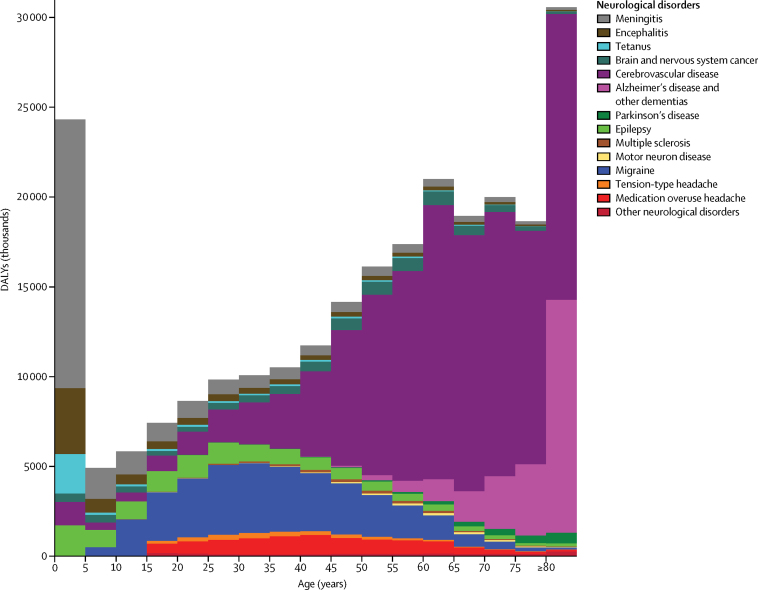
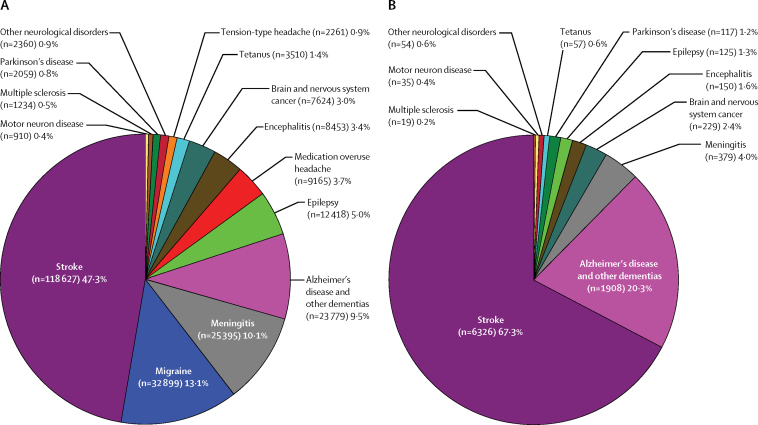
- Stroke accounted for the largest proportion of DALYs (47·3%) and deaths (67·3%) among neurological disorders; communicable neurological disorders were the largest cause of DALYs in low-SDI countries, and stroke rates were highest at middle SDI levels.
Methods
- Systematic analysis for GBD 2015 estimating prevalence, mortality, DALYs, YLLs, and YLDs for an expanded neurological disorder category across 195 countries and territories from 1990 to 2015.
- Included stroke, meningitis, encephalitis, tetanus, Alzheimer’s disease and other dementias, Parkinson’s disease, epilepsy, multiple sclerosis, motor neuron disease, migraine, tension-type headache, medication overuse headache, brain and nervous system cancers, and a residual other neurological disorders category.
- Used systematic review of epidemiological data, vital registration and verbal autopsy data, DisMod-MR 2.1 and CODEm modelling, and SDI quintiles with spline regression to examine burden by development level.
Limitations
- Stated: the analysis assumed that excess mortality in Alzheimer’s disease and other dementias derived from high-quality vital registration countries applied to all other countries and periods.
- Stated: cause-specific death estimates in most low-income and middle-income countries rely on verbal autopsy, which can identify some neurological disorders but not others; data gaps remain, and epilepsy was the only neurological disorder with data sources for all 21 GBD regions.
- Stated: secondary epilepsy, long-term neurological consequences of neonatal disorders, traumatic brain injury, and spinal cord injury were excluded; sparse severity data prevented differentiating severity by location or over time except for epilepsy. Evident from the text: estimates depend on modelled adjustments and generalisations from few studies, with uncertainty intervals reported throughout.
Model-written summary. Check it against the paper before relying on it.
Integrity signals
Registry
Cites
Statistics
Figures
Verification
Claims the paper makes
6 Valid · 1 Not valid · 22 Not checked · 136 Own results and interpretations
The cited sources support only part of this claim — read each source’s verdict below.
In the paper
“However, aggregated estimates in the category of neurological disorders did not include stroke, brain and nervous system cancer, or communicable neurological disorders, which are of great relevance to neurologists.”
§ Global, regional, and national burden of neurological disorders during 1990–2015: a systematic analysis for the Global Burden of Disease Study 2015 > Introduction
What the sources say
- Partly supportedcites [3] GBD 2015 DALYs and HALE Collaborators Global, regional, and national disability-adjusted life-years (DALYs) for 315 diseases and injuries and healthy life expectancy (HALE), 1990–2015: a systematic analysis for the Global Burden of Disease Study 2015 Lancet 388 2016 1603 1658 27733283 PMC5388857 sourceExperimental — accuracy not yet measured
Our copy supports the structural part of the claim: Methods > Overview states the GBD cause hierarchy 'has four levels of classification... mutually exclusive and collectively exhaustive', and Results > Global causes of DALYs treats 'neurological disorders' (exemplified by Alzheimer's disease and other dementias, Parkinson's disease) as a grouping distinct from 'cardiovascular diseases' and 'cancers', while Results > Changes in leading causes of disease burden over time lists meningitis among the Group 1 (communicable) causes and Results > Observed versus expected burden reports stroke as a leading cause alongside ischaemic heart disease — i.e. these conditions are reported in other categories, not in neurological disorders. However, no passage of our copy explicitly states that the aggregated neurological disorders estimate excluded stroke, brain and nervous system cancers, or communicable neurological disorders; 'brain and nervous system cancers' is not mentioned at all (searched: 'brain and nervous system cancers', neurological disorder composition, cause-hierarchy levels), and the full cause list is referred out to companion publications 12 and 20. So the exclusions are implicit in the hierarchy rather than stated by this paper. (LLM, conf=0.68)
- Partly supportedcites [4] GBD 2015 Disease and Injury Incidence and Prevalence Collaborators Global, regional, and national incidence, prevalence, and years lived with disability for 310 diseases and injuries, 1990–2015: a systematic analysis for the Global Burden of Disease Study 2015 Lancet 388 2016 1545 1602 27733282 PMC5055577 sourceExperimental — accuracy not yet measured
Our copy establishes the GBD 2015 cause structure but never states the composition of the neurological disorders aggregate: Methods > List of causes and sequelae describes the Level 1–6 hierarchy and defers the actual cause list to the methods appendix (pp 625–53). Two of the three exclusions are supported indirectly — Discussion > Cardiovascular diseases estimates incident ischaemic stroke inside the cardiovascular grouping, and Results > Global causes of disability places rabies, diphtheria, neonatal encephalopathy and meningitis among Group 1 (communicable, maternal, neonatal and nutritional) causes, i.e. outside neurological disorders; Discussion > Future directions only names 'other neurological disorders' as a residual category. Nothing in our copy addresses brain and nervous system cancer being outside the neurological aggregate, so that element of the claim is unsupported here. (LLM, conf=0.65)
plain- Asserted: passes — The authors put it forward as true.
- Checkable: passes — It can be checked against evidence.
- Load-bearing: passes — The paper’s conclusions depend on it.
- Based: passes — The paper gives a reason why it holds.
- Partly supported
The sources with a verdict support this claim; the rest weren’t checked yet, have no full text we could read, or their verdicts aren’t rated yet.
In the paper
“The high prevalence of epilepsy in low-income and middle-income countries can partly be accounted for by the greater number of cases with communicable causes in these countries.38, 39”
§ Global, regional, and national burden of neurological disorders during 1990–2015: a systematic analysis for the Global Burden of Disease Study 2015 > Discussion
What the sources say
- Supportedcites [38] Ngugi AK Bottomley C Kleinschmidt I Sander JW Newton CR Estimation of the burden of active and life-time epilepsy: a meta-analytic approach Epilepsia 51 2010 883 890 20067507 PMC3410521 source
The Discussion of Ngugi et al. (2010) states that the higher life-time prevalence estimates in developing countries are likely due to higher incidence, 'which could in turn be attributable to infectious etiology, particularly in rural areas' — matching the claim's attribution of the higher prevalence in low-/middle-income countries partly to communicable causes, at the same hedged level. The same section reinforces the infectious/parasitic element ('spatial clustering of risk factors, particularly parasites ... associated with development of epilepsy'), and the Results confirm the higher prevalence in developing (especially rural) areas that the claim presupposes. The source phrases the exposure as 'infectious etiology' rather than 'communicable causes' and speaks of developing/rural settings, but the content attributed is present. (LLM, conf=0.85)
- Not checked yetcites [39] Preux P-M Druet-Cabanac M Epidemiology and aetiology of epilepsy in sub-Saharan Africa Lancet Neurol 4 2005 21 31 15620854 source
plainstates a possible cause- Asserted: passes — The authors put it forward as true.
- Checkable: passes — It can be checked against evidence.
- Load-bearing: unclear — It is unclear whether the paper’s conclusions depend on it.
- Based: passes — The paper gives a reason why it holds.
- Supported
The cited sources support only part of this claim — read each source’s verdict below.
In the paper
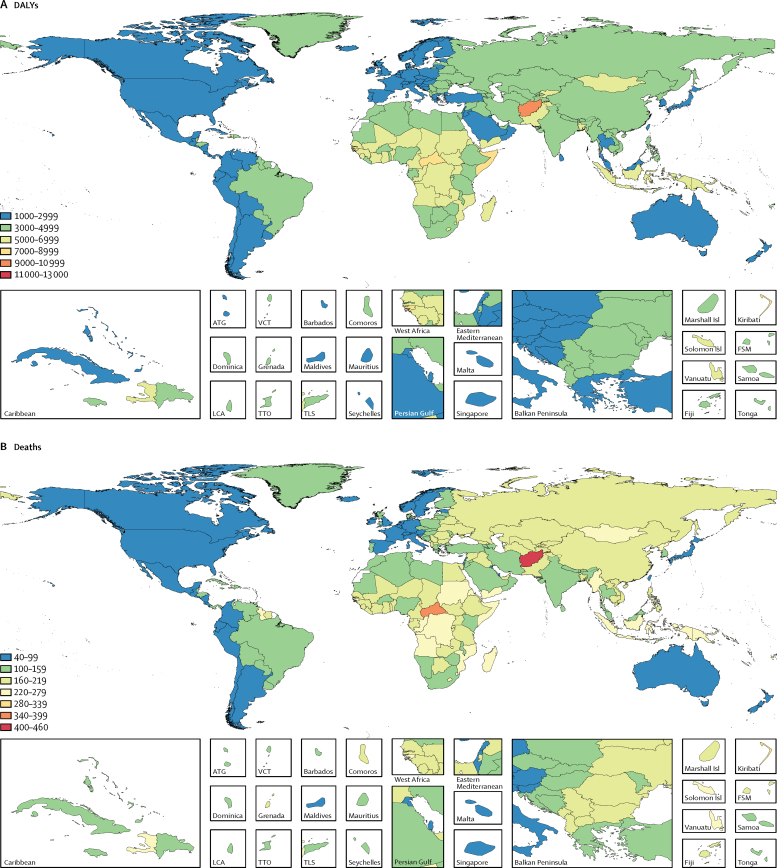
“Our findings of large geographical variations in the burden of stroke, dementias, Parkinson's disease, epilepsy, migraine, medication overuse headache, motor neuron disease, and brain and nervous system cancers concur with previous observations.17, 24, 26, 38, 45, 46, 48, 54, 55, 56, 57, 58”
§ Global, regional, and national burden of neurological disorders during 1990–2015: a systematic analysis for the Global Burden of Disease Study 2015 > Discussion
What the sources say
- Not checked yetcites [17] Feigin VL Lawes CMM Bennett DA Barker-Collo SL Parag V Worldwide stroke incidence and early case fatality reported in 56 population-based studies: a systematic review Lancet Neurol 8 2009 355 369 19233729 source
- Not checked yetcites [24] Pringsheim T Jette N Frolkis A Steeves TDL The prevalence of Parkinson's disease: a systematic review and meta-analysis Mov Disord 29 2014 1583 1590 24976103 source
- Partly supportedcites [26] Prince M Ali G-C Guerchet M Prina AM Albanese E Wu Y-T Recent global trends in the prevalence and incidence of dementia, and survival with dementia Alzheimers Res Ther 8 2016 23 27473681 PMC4967299 sourceExperimental — accuracy not yet measured
Prince et al. (2016) is a review of secular (over-time) trends in dementia prevalence, incidence and survival, not an analysis of geographical variation in dementia burden; no passage in our copy states or reports 'large geographical variations' in the burden of dementias. The closest content is generic and hedged — the Background notes that 'secular trends may vary among world regions, and among different population subgroups within one country' and that 'geographic or year of birth variations in adult disease occurrence can be explained by differential exposure', framed by experience with cardiovascular disease, obesity, diabetes and cancer rather than by dementia data. Regional material that does exist concerns trends and survival rather than burden levels: no trend in prevalence in European meta-analyses versus a 46–171 % increase in East Asia/China (Results, 'Secular trends within regions estimated from meta-analyses of individual studies'), and slightly higher dementia mortality ratios in low- and middle-income countries than in high-income ones (Background). The Discussion also concludes there is 'no clear evidence... to justify a departure from the current position of assuming constant age-specific dementia prevalence', so the specific cross-national burden-variation claim attributed to this source is unsupported. (LLM, conf=0.68)
plain- Asserted: passes — The authors put it forward as true.
- Checkable: passes — It can be checked against evidence.
- Load-bearing: unclear — It is unclear whether the paper’s conclusions depend on it.
- Based: passes — The paper gives a reason why it holds.
The cited sources support only part of this claim — read each source’s verdict below.
In the paper
“In terms of absolute number of people affected by neurological disorders, most of the increase in the burden was associated with ageing of the population and population growth.9”
§ Global, regional, and national burden of neurological disorders during 1990–2015: a systematic analysis for the Global Burden of Disease Study 2015 > Discussion
What the sources say
- Partly supportedcites [9] GBD 2015 Mortality and Causes of Death Collaborators Global, regional, and national life expectancy, all-cause mortality, and cause-specific mortality for 249 causes of death, 1980–2015: a systematic analysis for the Global Burden of Disease Study 2015 Lancet 388 2016 1459 1544 27733281 PMC5388903 sourceExperimental — accuracy not yet measured
Our copy of the GBD 2015 mortality analysis supports the demographic mechanism but at a different level: the Abstract Interpretation states that 'population growth and ageing mean that the number of deaths from most non-communicable causes are increasing', and the Discussion (Non-communicable diseases) attributes the ~40% rise in total deaths from Alzheimer's disease and other dementias to 'population increases and ageing', with the Results decomposition quantifying ageing's contribution at 29·6% for dementia. However, this paper reports deaths and YLLs only — it contains no estimate of the absolute number of people affected by (i.e., living with) neurological disorders as a disease group, and no neurological cluster-level prevalence/burden decomposition. The part of the claim about 'people affected by neurological disorders' is therefore not supported by this source. (LLM, conf=0.70)
plainstates an association- Asserted: passes — The authors put it forward as true.
- Checkable: passes — It can be checked against evidence.
- Load-bearing: unclear — It is unclear whether the paper’s conclusions depend on it.
- Based: passes — The paper gives a reason why it holds.
- Partly supported
A result the paper reports from its own data — it cites no other source for it, so there is none to check. The quote shows it is in the paper.
In the paper
“and the second-leading cause group of deaths (9·4 [9·1 to 9·7] million], comprising 16·8% of global deaths).”
§ Global, regional, and national burden of neurological disorders during 1990–2015: a systematic analysis for the Global Burden of Disease Study 2015 > Abstract > Findings
plain- Asserted: passes — The authors put it forward as true.
- Checkable: passes — It can be checked against evidence.
- Load-bearing: unclear — It is unclear whether the paper’s conclusions depend on it.
- Based: passes — The paper gives a reason why it holds.
104 more claims
Create a free account to see all 165 claims and to verify the 38 references still open.
- Probably not a substantial claim. 21
- It may state two separate claims as one. 40
Claims other papers make about this one
Each is checked against this paper’s own text: does it say what the citing paper says it does?
In the citing paper
“These results are consistent with international research that highlights the mortality linked to neurological and cardiovascular disorders because of their rapid advancement and the complexity of care needed [24], [25].”
From The Burden of Hospital Morbidity and Mortality in Ghana: A Four-Year Retrospective Analysis of National Data (2026) · cites this paper as [25]
Self-check
Percentages, sums and reported differences re-computed from the paper’s own numbers.
Each contradiction between two passages listed here was confirmed by an independent check.
Rated minor: it would not touch a result — a value no result rests on, a p-value that stays on the same side of the significance level, or a conflict that is clerical, resolved elsewhere in the paper, or outside its own findings.
In the paper
§ Global, regional, and national burden of neurological disorders during 1990–2015: a systematic analysis for the Global Burden of Disease Study 2015 > Discussion
“Our 2015 prevalence estimates are within the ranges reported for Parkinson's disease (51–177 per 100 000 people),40 motor neuron disease (1·9–3·9 per 100 000 people),41, 42 tension-type headache (21–27%),43, 44”
§ Global, regional, and national burden of neurological disorders during 1990–2015: a systematic analysis for the Global Burden of Disease Study 2015 > Results > Global burden
“| Prevalence | 1 505 892 (1 337 310 to 1 681 575) | 49·2% (46·1 to 52·5) | 20 121 (17 924 to 22 442) | 0·0 (−1·1 to 1·2) |”
Citations
Cites
Lozano, R., Naghavi, M., Foreman, K., Lim, S., Shibuya, K., Aboyans, V., Abraham, J., Adair, T., Aggarwal, R., Ahn, S. Y., et al. (2012) · The Lancet · doi:10.1016/s0140-6736(12)61728-0 · Cited by 14,070
Self-citationVos, T., Allen, C., Arora, M., Barber, R. M., Bhutta, Z. A., Brown, A., Carter, A., Casey, D. C., Charlson, F. J., Chen, A. Z., et al. (2016) · The Lancet · doi:10.1016/s0140-6736(16)31678-6 · Cited by 7,253
Self-citation(1996) · Cited by 6,884
Self-citationWang, H., Naghavi, M., Allen, C., Barber, R. M., Bhutta, Z. A., Carter, A., Casey, D. C., Charlson, F. J., Chen, A. Z., Coates, M. M., et al. (2016) · The Lancet · doi:10.1016/s0140-6736(16)31012-1 · Cited by 6,596
Self-citationVos, T., Barber, R. M., Bell, B., Bertozzi-Villa, A., Biryukov, S., Bolliger, I., Charlson, F., Davis, A., Degenhardt, L., Dicker, D., et al. (2015) · The Lancet · doi:10.1016/s0140-6736(15)60692-4 · Cited by 6,414
Self-citationFeigin, V. L., Lawes, C. M., Bennett, D. A., Barker-Collo, S. L., & Parag, V. (2009) · The Lancet Neurology · doi:10.1016/s1474-4422(09)70025-0 · Cited by 2,855
Self-citationThe global burden of headache: A documentation of headache prevalence and disability worldwide
Stovner, L., Hagen, K., Jensen, R., Katsarava, Z., Lipton, R., Scher, A., Steiner, T., & Zwart, J.-A. (2007) · Cephalalgia · doi:10.1111/j.1468-2982.2007.01288.x · Cited by 2,444
The prevalence of Parkinson's disease: a systematic review and meta-analysis
Pringsheim, T., Jette, N., Frolkis, A., & Steeves, T. D. L. (2014) · Movement Disorders · doi:10.1002/mds.25945 · Cited by 2,188
Kassebaum, N. J., Arora, M., Barber, R. M., Bhutta, Z. A., Brown, J., Carter, A., Casey, D. C., Charlson, F. J., Coates, M. M., Coggeshall, M., et al. (2016) · The Lancet · doi:10.1016/s0140-6736(16)31460-x · Cited by 2,163
Self-citation
Research works printed but not linked: 2
- Flaxman AD Vos T Murray CJ An integrative metaregression framework for descriptive epidemiology 2015 University of Washington Press Seattle
- Turnbull F Baker M Tsang B Jarman J Epidemiology of tetanus in New Zealand reinforces value of vaccination NZ Public Health Rep 8 2001 57 60
Cited by
Items 101–140 of 140
Wanneveich, M., Moisan, F., Jacqmin‐Gadda, H., Elbaz, A., & Joly, P. (2018) · Movement Disorders · doi:10.1002/mds.27447 · Cited by 117
Wu, X., Ji, G.-J., Geng, Z., Wang, L., Yan, Y., Wu, Y., Xiao, G., Gao, L., Wei, Q., Zhou, S., et al. (2022) · Brain Stimulation · doi:10.1016/j.brs.2021.11.007 · Cited by 109
Potential roles of gut microbiota and microbial metabolites in Parkinson’s disease
Zheng, S.-Y., Li, H.-X., Xu, R.-C., Miao, W.-T., Dai, M.-Y., Ding, S.-T., & Liu, H.-D. (2021) · Ageing Research Reviews · doi:10.1016/j.arr.2021.101347 · Cited by 101
Using a smartwatch and smartphone to assess early Parkinson’s disease in the WATCH-PD study
Adams, J. L., Kangarloo, T., Tracey, B., O’Donnell, P., Volfson, D., Latzman, R. D., Zach, N., Alexander, R., Bergethon, P., Cosman, J., et al. (2023) · npj Parkinson's Disease · doi:10.1038/s41531-023-00497-x · Cited by 98
van der Willik, K. D., Fani, L., Rizopoulos, D., Licher, S., Fest, J., Schagen, S. B., Ikram, M. K., & Ikram, M. A. (2019) · Journal of Neuroinflammation · doi:10.1186/s12974-019-1454-z · Cited by 96
Oral and Gut Dysbiosis Leads to Functional Alterations in Parkinson’s Disease
Jo, S., Kang, W., Hwang, Y. S., Lee, S. H., Park, K. W., Kim, M. S., Lee, H., Yoon, H. J., Park, Y. K., Chalita, M., et al. (2022) · npj Parkinson s Disease · doi:10.1038/s41531-022-00351-6 · Cited by 85
“Parkinson ’ s disease (PD) is a chronic progressive neurodegenerative disease affecting more than 6 million people worldwide 1 .”
Li, J., Wei, Y., Zhang, C., Bi, R., Qiu, Y., Li, Y., & Hu, B. (2023) · Pharmaceutics · doi:10.3390/pharmaceutics15020621 · Cited by 85
Artificial Intelligence for Clinical Decision Support in Acute Ischemic Stroke: A Systematic Review
Akay, E. M. Z., Hilbert, A., Carlisle, B. G., Madai, V. I., Mutke, M. A., & Frey, D. (2023) · Stroke · doi:10.1161/strokeaha.122.041442 · Cited by 77
Synaptic vesicle protein 2A as a potential biomarker in synaptopathies
Heurling, K., Ashton, N. J., Leuzy, A., Zimmer, E. R., Blennow, K., Zetterberg, H., Eriksson, J., Lubberink, M., & Schöll, M. (2019) · Molecular and Cellular Neuroscience · doi:10.1016/j.mcn.2019.02.001 · Cited by 77
Pentón-Rol, G., Marín-Prida, J., & McCarty, M. F. (2021) · Current Neuropharmacology · doi:10.2174/1570159x19666210408123807 · Cited by 73
Repurposing of the β-Lactam Antibiotic, Ceftriaxone for Neurological Disorders: A Review
Yimer, E. M., Hishe, H. Z., & Tuem, K. B. (2019) · Frontiers in Neuroscience · doi:10.3389/fnins.2019.00236 · Cited by 72
“During the period of 1990–2015, the overall mortality from neurological illnesses was increased by 37% (Feigin et al., 2017).”
A proteogenomic view of Parkinson’s disease causality and heterogeneity
Kaiser, S., Zhang, L., Mollenhauer, B., Jacob, J., Longerich, S., Del-Aguila, J., Marcus, J., Raghavan, N., Stone, D., Fagboyegun, O., et al. (2023) · npj Parkinson's Disease · doi:10.1038/s41531-023-00461-9 · Cited by 68
Genome Editing in iPSC-Based Neural Systems: From Disease Models to Future Therapeutic Strategies
McTague, A., Rossignoli, G., Ferrini, A., Barral, S., & Kurian, M. A. (2021) · Frontiers in Genome Editing · doi:10.3389/fgeed.2021.630600 · Cited by 67
Machine learning‐based multimodal prediction of language outcomes in chronic aphasia
Kristinsson, S., Zhang, W., Rorden, C., Newman‐Norlund, R., Basilakos, A., Bonilha, L., Yourganov, G., Xiao, F., Hillis, A., & Fridriksson, J. (2021) · Human Brain Mapping · doi:10.1002/hbm.25321 · Cited by 64
“First, although stroke rates have declined in older populations, younger populations have experienced a rise in stroke rates in high-income countries (Feigin et al., 2014; Feigin et al., 2017; Giroud, Jacquin, & Béjot, 2014; Kissela et al., 2012; Ramirez et al., 2016).”
The Role of the Microbiota–Gut–Brain Axis and Antibiotics in ALS and Neurodegenerative Diseases
Obrenovich, M., Jaworski, H., Tadimalla, T., Mistry, A., Sykes, L., Perry, G., & Bonomo, R. (2020) · Microorganisms · doi:10.3390/microorganisms8050784 · Cited by 62
Behavioral Interventions for Migraine
Pérez-Muñoz, A., Buse, D. C., & Andrasik, F. (2019) · Neurologic Clinics · doi:10.1016/j.ncl.2019.07.003 · Cited by 58
Yang, X., Qiang, Q., Li, N., Feng, P., Wei, W., & Hölscher, C. (2022) · Frontiers in Neurology · doi:10.3389/fneur.2022.844697 · Cited by 58
Progression subtypes in Parkinson’s disease identified by a data-driven multi cohort analysis
Hähnel, T., Raschka, T., Sapienza, S., Klucken, J., Glaab, E., Corvol, J.-C., Falkenburger, B. H., & Fröhlich, H. (2024) · npj Parkinson's Disease · doi:10.1038/s41531-024-00712-3 · Cited by 58
Mapping the serum proteome to neurological diseases using whole genome sequencing
Png, G., Barysenka, A., Repetto, L., Navarro, P., Shen, X., Pietzner, M., Wheeler, E., Wareham, N. J., Langenberg, C., Tsafantakis, E., et al. (2021) · Nature Communications · doi:10.1038/s41467-021-27387-1 · Cited by 55
Interleukin-10 Level Is Associated with Post-Stroke Depression in Acute Ischaemic Stroke Patients
Chi, C.-H., Huang, Y.-Y., Ye, S.-Z., Shao, M.-M., Jiang, M.-X., Yang, M.-Y., Wu, Q., Shao, B., & Li, X.-M. (2021) · Journal of Affective Disorders · doi:10.1016/j.jad.2021.06.037 · Cited by 50
Innate immunity and cellular senescence: The good and the bad in the developmental and aged brain
Santoro, A., Spinelli, C. C., Martucciello, S., Nori, S. L., Capunzo, M., Puca, A. A., & Ciaglia, E. (2018) · Journal of Leukocyte Biology · doi:10.1002/jlb.3mr0118-003r · Cited by 50
Ma, L.-Z., Zhang, Y.-R., Li, Y.-Z., Ou, Y.-N., Yang, L., Chen, S.-D., Dong, Q., Feng, J.-F., Cheng, W., Tan, L., et al. (2023) · Biological Psychiatry · doi:10.1016/j.biopsych.2022.06.005 · Cited by 46
Galvez-Sánchez, C. M., Montoro, C. I., Moreno-Padilla, M., Reyes del Paso, G. A., & de la Coba, P. (2021) · Journal of Clinical Medicine · doi:10.3390/jcm10122706 · Cited by 45
Neuroprotective mechanisms of mangiferin in neurodegenerative diseases
Liu, T., Song, Y., & Hu, A. (2021) · Drug Development Research · doi:10.1002/ddr.21783 · Cited by 43
Yıldız, E. (2020) · Perspectives In Psychiatric Care · doi:10.1111/ppc.12482 · Cited by 40
Kulcsarova, K., Bang, C., Berg, D., & Schaeffer, E. (2023) · Journal of Parkinson’s Disease · doi:10.3233/jpd-230206 · Cited by 40
Applying Deep Neural Network Analysis to High-Content Image-Based Assays
Yang, S. J., Lipnick, S. L., Makhortova, N. R., Venugopalan, S., Fan, M., Armstrong, Z., Schlaeger, T. M., Deng, L., Chung, W. K., O’Callaghan, L., et al. (2019) · SLAS DISCOVERY · doi:10.1177/2472555219857715 · Cited by 36
Ferroptosis and central nervous system demyelinating diseases
Qin, D., Li, D., Wang, C., & Guo, S. (2023) · Journal of Neurochemistry · doi:10.1111/jnc.15831 · Cited by 36
Alzheimer’s disease: From basic science to precision medicine approach
Forloni, G. (2020) · BMJ Neurology Open · doi:10.1136/bmjno-2020-000079 · Cited by 33
Chen, Y.-Y., Wang, M.-C., Wang, Y.-N., Hu, H.-H., Liu, Q.-Q., Liu, H.-J., & Zhao, Y.-Y. (2020) · Biomarker Research · doi:10.1186/s40364-020-00218-z · Cited by 33
Rapid Diagnostic Tests for Meningitis and Encephalitis—BioFire
Fleischer, E., & Aronson, P. L. (2020) · Pediatric Emergency Care · doi:10.1097/pec.0000000000002180 · Cited by 28
Patel, S., Achana, F., Carnes, D., Eldridge, S., Ellard, D. R., Griffiths, F., Haywood, K., Hee, S. W., Mistry, D., Mistry, H., et al. (2020) · BMJ Open · doi:10.1136/bmjopen-2019-033520 · Cited by 24
Tan, K. P., Ang, J. K., Koh, E. B. Y., Pang, N. T. P., & Mat Saher, Z. (2023) · International Journal of Environmental Research and Public Health · doi:10.3390/ijerph20054232 · Cited by 23
Luthra, N. S., Clow, A., & Corcos, D. M. (2022) · Brain Sciences · doi:10.3390/brainsci12121695 · Cited by 20
Identification and functional analysis of specific MS risk miRNAs and their target genes
Luo, D., Wang, J., Zhang, X., Rang, X., Xu, C., & Fu, J. (2020) · Multiple Sclerosis and Related Disorders · doi:10.1016/j.msard.2020.102044 · Cited by 12
Dobrynina, L. A., Zabitova, M. R., Kalashnikova, L. A., Gnedovskaya, E. V., & Piradov, M. A. (2018) · Acta Naturae · doi:10.32607/20758251-2018-10-2-4-15 · Cited by 11
1,5-Benzodiazepin-2(3H)-ones: In Vitro Evaluation as Antiparkinsonian Agents
Ortíz de Zárate, A., Pérez-Torralba, M., Bonet Isidro, I., López, C., Claramunt, R. M., Martínez-Casanova, D., Sánchez-Vera, I., Jiménez-González, J., & Lavandera, J. L. (2021) · Antioxidants · doi:10.3390/antiox10101584 · Cited by 11
Zhou, L., Li, Y., Wang, M., Han, W., Chen, Q., Zhang, J., Sun, B., & Fan, Y. (2023) · Neuroscience · doi:10.1016/j.neuroscience.2023.05.013 · Cited by 10
Chan, L. M. L., Choi, E. P. H., Wayne, P. M., & Kwok, J. Y. Y. (2026) · Geriatric Nursing · doi:10.1016/j.gerinurse.2026.104172
Manyeh, A. K., Odopey, C. T., Ackon, A. N. E., Gmayinaam, V. U., Dzissem, P., Acquah, E., & Immurana, M. (2026) · doi:10.64898/2026.01.13.26344071
Metadata
- Authors
- Feigin, V. L., Abajobir, A. A., Abate, K. H., Abd-Allah, F., Abdulle, A. M., Abera, S. F., Abyu, G. Y., Ahmed, M. B., Aichour, A. N., Aichour, I., Aichour, M. T. E., Akinyemi, R. O., Alabed, S., Al-Raddadi, R., Alvis-Guzman, N., Amare, A. T., Ansari, H., Anwari, P., Ärnlöv, J., Asayesh, H., Asgedom, S. W., Atey, T. M., Avila-Burgos, L., Frinel, E., Avokpaho, G. A., Azarpazhooh, M. R., Barac, A., Barboza, M., Barker-Collo, S. L., Bärnighausen, T., Bedi, N., Beghi, E., Bennett, D. A., Bensenor, I. M., Berhane, A., Betsu, B. D., Bhaumik, S., Birlik, S. M., Biryukov, S., Boneya, D. J., Bulto, L. N. B., Carabin, H., Casey, D., Castañeda-Orjuela, C. A., Catalá-López, F., Chen, H., Chitheer, A. A., Chowdhury, R., Christensen, H., Dandona, L., Dandona, R., de Veber, G. A., Dharmaratne, S. D., Do, H. P., Dokova, K., Dorsey, E. R., Ellenbogen, R. G., Eskandarieh, S., Farvid, M. S., Fereshtehnejad, S.-M., Fischer, F., Foreman, K. J., Geleijnse, J. M., Gillum, R. F., Giussani, G., Goldberg, E. M., Gona, P. N., Goulart, A. C., Gugnani, H. C., Gupta, R., Hachinski, V., Gupta, R., Hamadeh, R. R., Hambisa, M., Hankey, G. J., Hareri, H. A., Havmoeller, R., Hay, S. I., Heydarpour, P., Hotez, P. J., Jakovljevic, M. (. B., Javanbakht, M., Jeemon, P., Jonas, J. B., Kalkonde, Y., Kandel, A., Karch, A., Kasaeian, A., Kastor, A., Keiyoro, P. N., Khader, Y. S., Khalil, I. A., Khan, E. A., Khang, Y.-H., Tawfih, A., Khoja, A., Khubchandani, J., Kulkarni, C., Kim, D., Kim, Y. J., Kivimaki, M., Kokubo, Y., Kosen, S., Kravchenko, M., Krishnamurthi, R. V., Defo, B. K., Kumar, G. A., Kumar, R., Kyu, H. H., Larsson, A., Lavados, P. M., Li, Y., Liang, X., Liben, M. L., Lo, W. D., Logroscino, G., Lotufo, P. A., Loy, C. T., Mackay, M. T., El Razek, H. M. A., El Razek, M. M. A., Majeed, A., Malekzadeh, R., Manhertz, T., Mantovani, L. G., Massano, J., Mazidi, M., McAlinden, C., Mehata, S., Mehndiratta, M. M., Memish, Z. A., Mendoza, W., Mengistie, M. A., Mensah, G. A., Meretoja, A., Mezgebe, H. B., Miller, T. R., Mishra, S. R., Ibrahim, N. M., Mohammadi, A., Mohammed, K. E., Mohammed, S., Mokdad, A. H., Moradi-Lakeh, M., Velasquez, I. M., Musa, K. I., Naghavi, M., Ngunjiri, J. W., Nguyen, C. T., Nguyen, G., Le Nguyen, Q., Nguyen, T. H., Nichols, E., Ningrum, D. N. A., Nong, V. M., Norrving, B., Noubiap, J. J. N., Ogbo, F. A., Owolabi, M. O., Pandian, J. D., Parmar, P. G., Pereira, D. M., Petzold, M., Phillips, M. R., Piradov, M. A., Poulton, R. G., Pourmalek, F., Qorbani, M., Rafay, A., Rahman, M., Rahman, M. H., Rai, R. K., Rajsic, S., Ranta, A., Rawaf, S., Renzaho, A. M. N., Rezai, M. S., Roth, G. A., Roshandel, G., Rubagotti, E., Sachdev, P., Safiri, S., Sahathevan, R., Sahraian, M. A., Samy, A. M., Santalucia, P., Santos, I. S., Sartorius, B., Satpathy, M., Sawhney, M., Saylan, M. I., Sepanlou, S. G., Shaikh, M. A., Shakir, R., Shamsizadeh, M., Sheth, K. N., Shigematsu, M., Shoman, H., Silva, D. A. S., Smith, M., Sobngwi, E., Sposato, L. A., Stanaway, J. D., Stein, D. J., Steiner, T. J., Stovner, L. J., Abdulkader, R. S., EI Szoeke, C., Tabarés-Seisdedos, R., Tanne, D., Theadom, A. M., Thrift, A. G., Tirschwell, D. L., Topor-Madry, R., Tran, B. X., Truelsen, T., Tuem, K. B., Ukwaja, K. N., Uthman, O. A., Varakin, Y. Y., Vasankari, T., Venketasubramanian, N., Vlassov, V. V., Wadilo, F., Wakayo, T., Wallin, M. T., Weiderpass, E., Westerman, R., Wijeratne, T., Wiysonge, C. S., Woldu, M. A., Wolfe, C. D. A., Xavier, D., Xu, G., Yano, Y., Yimam, H. H., Yonemoto, N., Yu, C., Zaidi, Z., El Sayed Zaki, M., Zunt, J. R., Murray, C. J. L., & Vos, T.
- Affiliations
- Auckland University of Technology (NZ)
- The University of Queensland (AU)
- Jimma University (ET)
- University of Peradeniya (LK)
- Mekelle University (ET)
- Zahedan University of Medical Sciences (IR)
- Uppsala University (SE)
- Qom University of Medical Science and Health Services (IR)
- Harvard University (US)
- Jazan University (SA)
- Instituto Nacional de Salud (CO)
- International Institute for Population Sciences (IN)
- Universitat de València (ES)
- Bispebjerg Hospital (DK)
- University of Washington (US)
- Public Health Foundation of India (IN)
- University of Groningen (NL)
- Centre for Chronic Disease Control (IN)
- Northeastern University (US)
- University of Louisville (US)
- Baylor College of Medicine (US)
- University of Salerno (IT)
- Tehran University of Medical Sciences (IR)
- Eduardo Mondlane University (MZ)
- Mayo Clinic (US)
- The University of Melbourne (AU)
- Mizan Tepi University (ET)
- Mansoura University (EG)
- Wuhan University (CN)
- University of Massachusetts Boston (US)
- ORCID
- Feigin, Valery L
- Abajobir, Amanuel Alemu
- Abate, Kalkidan Hassen
- Abd-Allah, Foad
- Abdulle, Abdishakur M
- Abera, Semaw Ferede
- Ahmed, Muktar Beshir
- Akinyemi, Rufus Olusola
- Alabed, Samer
- Al-Raddadi, Rajaa
- Amare, Azmeraw T.
- Ansari, Hossein
- Anwari, Palwasha
- Ärnlöv, Johan
- Asayesh, Hamid
- Asgedom, Solomon Weldegebreal
- Atey, Tesfay Mehari
- Barac, Aleksandra
- Barboza, Miguel
- Barker-Collo, Suzanne L
- Bärnighausen, Till
- Bedi, Neeraj
- Beghi, Ettore
- Bennett, Derrick A
- Berhane, Adugnaw
- Betsu, Balem Demtsu
- Bhaumik, Soumyadeep
- Birlik, Sait Mentes
- Boneya, Dube Jara
- Bulto, Lemma Negesa Bulto
- Carabin, Hélène
- Castañeda-Orjuela, Carlos A.
- Catalá-López, Ferrán
- Chen, Honglei
- Chitheer, Abdulaal A
- Chowdhury, Rajiv
- Christensen, Hanne
- Dandona, Lalit
- Dandona, Rakhi
- Dharmaratne, Samath D
- Do, Huyen Phuc
- Dokova, Klara
- Ellenbogen, Richard G
- Eskandarieh, Sharareh
- Farvid, Maryam S
- Fereshtehnejad, Seyed-Mohammad
- Fischer, Florian
- Geleijnse, Johanna M
- Giussani, Giorgia
- Goldberg, Ellen M
- Gona, Philimon N
- Goulart, Alessandra Carvalho
- Gugnani, Harish Chander
- Gupta, Rahul
- Hachinski, Vladimir
- Gupta, Rajeev
- Hamadeh, Randah Ribhi
- Hambisa, Mitiku
- Hankey, Graeme J
- Hay, Simon I
- Heydarpour, Pouria
- Hotez, Peter J
- Javanbakht, Mehdi
- Jeemon, Panniyammakal
- Jonas, Jost B
- Kalkonde, Yogeshwar
- Kandel, Amit
- Karch, André
- Kasaeian, Amir
- Kastor, Anshul
- Khader, Yousef Saleh
- Khan, Ejaz Ahmad
- Khang, Young-Ho
- Khoja, Abdullah
- Khubchandani, Jagdish
- Kim, Daniel
- Kim, Yun Jin
- Kokubo, Yoshihiro
- Kosen, Soewarta
- Kravchenko, Michael
- Krishnamurthi, Rita Vanmala
- Kumar, G Anil
- Kumar, Rashmi
- Kyu, Hmwe H
- Lavados, Pablo M
- Li, Yongmei
- Liang, Xiaofeng
- Liben, Misgan Legesse
- Lo, Warren D
- Logroscino, Giancarlo
- Lotufo, Paulo A
- Loy, Clement T
- Mackay, Mark T
- Majeed, Azeem
- Malekzadeh, Reza
- Mantovani, Lorenzo G
- Massano, João
- Mazidi, Mohsen
- McAlinden, Colm
- Mehata, Suresh
- Memish, Ziad A
- Mensah, George A
- Meretoja, Atte
- Miller, Ted R
- Mishra, Shiva Raj
- Ibrahim, Norlinah Mohamed
- Mohammadi, Alireza
- Mohammed, Shafiu
- Mokdad, Ali H
- Musa, Kamarul Imran
- Naghavi, Mohsen
- Nguyen, Cuong Tat
- Nguyen, Trang Huyen
- Nichols, Emma
- Ningrum, Dina Nur Anggraini
- Nong, Vuong Minh
- Noubiap, Jean Jacques N
- Ogbo, Felix Akpojene
- Owolabi, Mayowa O
- Pandian, Jeyaraj D.
- Pereira, David M
- Petzold, Max
- Poulton, Richie G.
- Pourmalek, Farshad
- Qorbani, Mostafa
- Ranta, Annemarei
- Rawaf, Salman
- Rezai, Mohammad Sadegh
- Roth, Gregory A
- Roshandel, Gholamreza
- Rubagotti, Enrico
- Sachdev, Perminder
- Safiri, Saeid
- Sahathevan, Ramesh
- Sahraian, Mohammad Ali
- Samy, Abdallah M.
- Santos, Itamar S
- Sartorius, Benn
- Satpathy, Maheswar
- Sepanlou, Sadaf G
- Shamsizadeh, Morteza
- Sheth, Kevin N
- Shoman, Haitham
- Silva, Diego Augusto Santos
- Sposato, Luciano A
- Stanaway, Jeffrey D
- Stein, Dan J
- Steiner, Timothy J
- Stovner, Lars Jacob
- Abdulkader, Rizwan Suliankatchi
- Theadom, Alice M
- Thrift, Amanda G
- Tirschwell, David L
- Tran, Bach Xuan
- Tuem, Kald Beshir
- Ukwaja, Kingsley Nnanna
- Uthman, Olalekan A
- Vasankari, Tommi
- Venketasubramanian, Narayanaswamy
- Wadilo, Fiseha
- Wallin, Mitchell T
- Weiderpass, Elisabete
- Westerman, Ronny
- Wijeratne, Tissa
- Wiysonge, Charles Shey
- Woldu, Minyahil Alebachew
- Wolfe, Charles D A
- Xavier, Denis
- Xu, Gelin
- Yano, Yuichiro
- Yonemoto, Naohiro
- Yu, Chuanhua
- Zaidi, Zoubida
- Zunt, Joseph R
- Murray, Christopher J L
- Vos, Theo
- Venue
- The Lancet Neurology
- Publisher
- Elsevier BV
- Published
- 2017-11
- Volume
- 16
- Issue
- 11
- Pages
- 877-897
- ISSN
- 1474-4422 (ISSN-L)
- PMC
- PMC5641502
- OpenAlex
- W3157419554
- Cited by
- 2,275
- References
- 65
- Citations by year
- 2026: 129 · 2025: 239 · 2024: 264 · 2023: 262 · 2022: 291 · 2021: 328 · 2020: 311 · 2019: 277 · 2018: 159 · 2017: 11
- FWCI
- 284.95
- Type
- journal article
- Language
- en
- Open access
- hybrid
- doi.org
- Licence
- cc-by
- www.elsevier.com/tdm/userlicense/1.0/ (tdm)
- creativecommons.org/licenses/by/4.0/ (vor)
- Locations
- The Lancet Neurology (publishedVersion, cc-by)
- PubMed Central (publishedVersion, cc-by)
- UWA Profiles and Research Repository (UWA) (publishedVersion, cc-by)
- LA Referencia (Red Federada de Repositorios Institucionales de Publicaciones Científicas) (publishedVersion, cc-by-nc-nd)
- PubMed (publishedVersion)
- White Rose Research Online (University of Leeds, The University of Sheffield, University of York) (acceptedVersion)
- Socio-Environmental Systems Modeling (acceptedVersion, cc-by)
- LSHTM Research Online (London School of Hygiene and Tropical Medicine) (acceptedVersion)
- Minerva Access (University of Melbourne) (submittedVersion, cc-by)
- Monash University Research Portal (Monash University) (submittedVersion, cc-by)
- Research Bank (Australian Catholic University) (submittedVersion, cc-by)
- Homo Politicus (Academy of Humanities and Economics in Lodz) (submittedVersion, cc-by-nc-nd)
- Jagiellonian University Repository (Jagiellonian University) (submittedVersion, cc-by-nc-nd)
- KTH Publication Database DiVA (KTH Royal Institute of Technology) (submittedVersion, other-oa)
- Americanae (AECID Library) (submittedVersion, cc-by-nc-nd)
- BOA (University of Milano-Bicocca) (submittedVersion)
- BOA (University of Milano-Bicocca) (submittedVersion, other-oa)
- Adelaide Research & Scholarship (AR&S) (University of Adelaide) (submittedVersion, cc-by)
- UCL Discovery (University College London) (submittedVersion)
- eSpace (Curtin University) (submittedVersion)
- Figshare (submittedVersion, cc-by)
- Työväentutkimus Vuosikirja (submittedVersion)
- HZI (Helmholtz Centre for Infection Research) (submittedVersion, cc-by-nc-sa)
- Lund University Publications (Lund University) (submittedVersion)
- Tuwhera (Auckland University of Technology) (submittedVersion, cc-by)
- PUB – Publications at Bielefeld University (Bielefeld University) (submittedVersion, cc-by)
- CINECA IRIS Institutional Research Information System (University of Bari Aldo Moro) (submittedVersion)
- Seoul National University Open Repository (Seoul National University) (submittedVersion)
- Spiral (Imperial College London) (submittedVersion, other-oa)
- UniSA Research Outputs Repository (University of South Australia) (submittedVersion, other-oa)
- Data Archiving and Networked Services (DANS) (submittedVersion, cc-by)
- Funders
- U.S. Department of Health and Human Services
- Bill and Melinda Gates Foundation
- Amgen
- AstraZeneca
- Massachusetts General Hospital
- Michigan State University
- University of Washington
- University of Oklahoma
- University of Rochester
- Ottawa Hospital Research Institute
- Arabian Gulf University
- Wellcome Trust
- University of Massachusetts Boston
- Institute for Health Metrics and Evaluation
- Trường Đại học Duy Tân
- National Institute for Health and Care Research (ACF-2014-04-008)
- Imperial College London
- University of Oxford
- Public Health Foundation of India
- Universidad Nacional de Colombia
- Universitat de València
- Ministry of Business, Innovation and Employment
- University of Toronto
- Haramaya University
- Universidade de São Paulo
- Universität Bielefeld
- Hospital for Sick Children
- Centro de Investigación Biomédica en Red de Salud Mental
- University of Peradeniya
- Brain Research New Zealand
- INCLIVA Instituto de Investigación Sanitaria
- Debre Markos University
- National Institutes of Health
- College of Engineering, Michigan State University
- University of Oklahoma Health Sciences Center
- Medical Center, University of Rochester
- Medical Research Council (MR/K013351/1)
- Health Research Council of New Zealand
- Wageningen University and Research
- National Heart, Lung, and Blood Institute
- National Institute on Minority Health and Health Disparities
- Topics
- Health Sciences › Medicine › Public Health, Environmental and Occupational Health › Global Health and Epidemiology
- Health Sciences › Medicine › Psychiatry and Mental health › Mental Health Treatment and Access
- Health Sciences › Medicine › Psychiatry and Mental health › Dementia and Cognitive Impairment Research
- Keywords
- neurological disorders, disease burden, disability-adjusted life years, years of life lost, years lived with disability, stroke, meningitis, encephalitis, tetanus, Alzheimer's disease, Parkinson's disease, epilepsy, multiple sclerosis, motor neuron disease, migraine, tension-type headache, medication overuse headache, socio-demographic index, country development level
- MeSH terms
- Global Burden of Disease, Cause of Death, Female, Humans, Male, Nervous System Diseases, Global Health, Quality-Adjusted Life Years
About these checks
Registry, retraction, Cites and statistics results are computed, not judged, with one exception: a printed reference that no index lists is read once by a model before it counts as a citation error. Claims are extracted by a model and kept only when their quote appears verbatim in the text; each cited source is then checked, with a model’s help, for whether it says what the claim relies on. Those verdicts can be wrong — read the claim’s quote and the cited source before relying on one.
The claim verdicts this report counts are experimental: their accuracy is not yet measured.
A language model drew the claims from the paper on 2026-10-04, under version 3 of the claim definition (model deepseek-v4.1-flash, prompt extract-v3).
A second model labelled each claim on 2026-10-04 (model jev-1.13-20260917, definition revision gold-guideline-v0.2).
Cited sources are checked with a language model’s help (qwen3.8-omni-flash).
Statistics and arithmetic are recomputed, not judged.
Confidence bands are shown only for fields calibrated on our annotated test set. None is calibrated yet, so no band is shown.
What counts as a claim ›How we measure confidence ›How we check this ›
Are you an author, or do you see a problem with this page? Request a review
Data sources
Bibliographic data: Semantic Scholar, OpenAlex, Crossref.
Contains information from the Semantic Scholar Academic Graph Datasets, made available under the ODC Attribution License (ODC-BY 1.0).
Semantic Scholar’s data is described in: Kinney, R., et al. (2023). The Semantic Scholar Open Data Platform. arXiv:2301.10140.
