

Psychological and pharmacological interventions for social anxiety disorder in adults: a systematic review and network meta-analysis
Open accessThe DOI matches its Crossref record; 37 of the 37 references it cites were found in a registry or an index; 3 of the 15 sources its claims cite were checked for support.
Abstract
BACKGROUND: Social anxiety disorder-a chronic and naturally unremitting disease that causes substantial impairment-can be treated with pharmacological, psychological, and self-help interventions. We aimed to compare these interventions and to identify which are most effective for the acute treatment of social anxiety disorder in adults. METHODS: We did a systematic review and network meta-analysis of interventions for adults with social anxiety disorder, identified from published and unpublished sources between 1988 and Sept 13, 2013. We analysed interventions by class and individually. Outcomes were validated measures of social anxiety, reported as standardised mean differences (SMDs) compared with a waitlist reference. This study is registered with PROSPERO, number CRD42012003146. FINDINGS: We included 101 trials (13 164 participants) of 41 interventions or control conditions (17 classes) in the analyses. Classes of pharmacological interventions that had greater effects on outcomes compared with waitlist were monoamine oxidase inhibitors (SMD -1·01, 95% credible interval [CrI] -1·56 to -0·45), benzodiazepines (-0·96, -1·56 to -0·36), selective serotonin-reuptake inhibitors and serotonin-norepinephrine reuptake inhibitors (SSRIs and SNRIs; -0·91, -1·23 to -0·60), and anticonvulsants (-0·81, -1·36 to -0·28). Compared with waitlist, efficacious classes of psychological interventions were individual cognitive-behavioural therapy (CBT; SMD -1·19, 95% CrI -1·56 to -0·81), group CBT (-0·92, -1·33 to -0·51), exposure and social skills (-0·86, -1·42 to -0·29), self-help with support (-0·86, -1·36 to -0·36), self-help without support (-0·75, -1·25 to -0·26), and psychodynamic psychotherapy (-0·62, -0·93 to -0·31). Individual CBT compared with psychological placebo (SMD -0·56, 95% CrI -1·00 to -0·11), and SSRIs and SNRIs compared with pill placebo (-0·44, -0·67 to -0·22) were the only classes of interventions that had greater effects on outcomes than appropriate placebo. Individual CBT also had a greater effect than psychodynamic psychotherapy (SMD -0·56, 95% CrI -1·03 to -0·11) and interpersonal psychotherapy, mindfulness, and supportive therapy (-0·82, -1·41 to -0·24). INTERPRETATION: Individual CBT (which other studies have shown to have a lower risk of side-effects than pharmacotherapy) is associated with large effect sizes. Thus, it should be regarded as the best intervention for the initial treatment of social anxiety disorder. For individuals who decline psychological intervention, SSRIs show the most consistent evidence of benefit. FUNDING: National Institute for Health and Care Excellence.
Overview
CoChat Summary
## TL;DR
This systematic review and network meta-analysis found that both psychological and pharmacological treatments improve acute outcomes for adult social anxiety disorder, with individual CBT showing the largest and most consistent effects. The authors conclude that individual CBT should be the initial treatment of choice, while SSRIs are the most consistent drug option for people who decline psychological treatment.
## Key findings
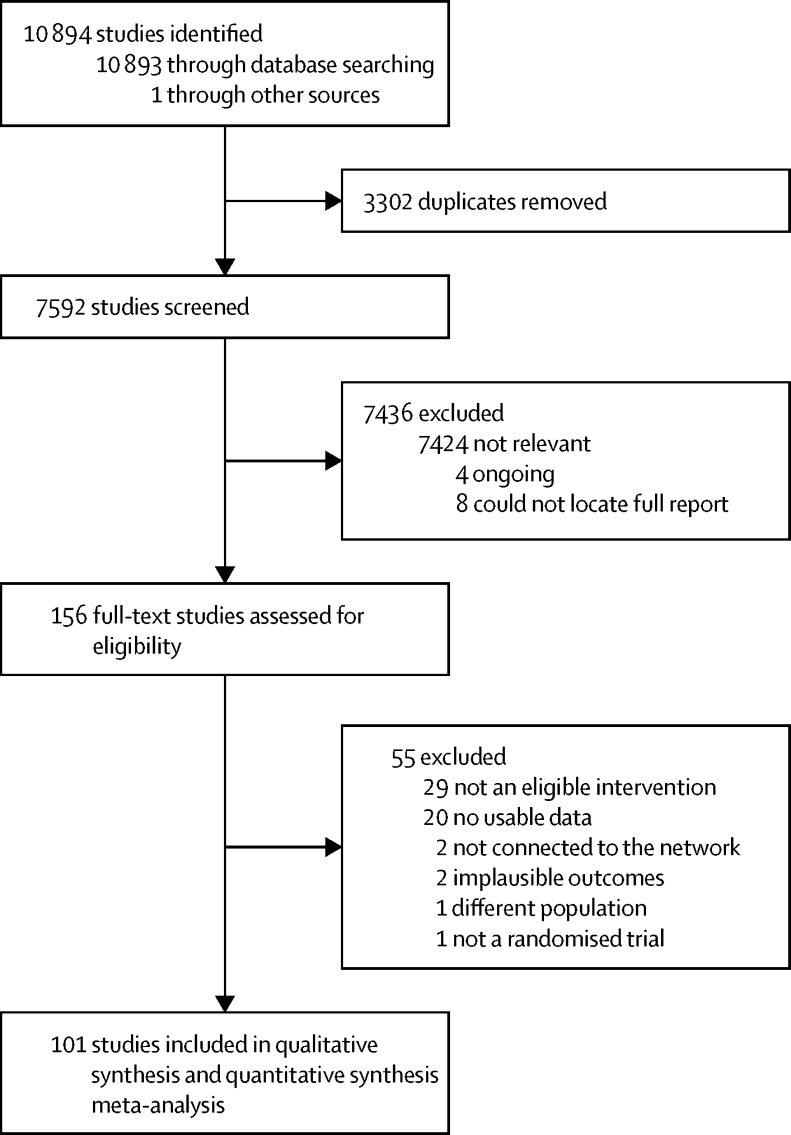
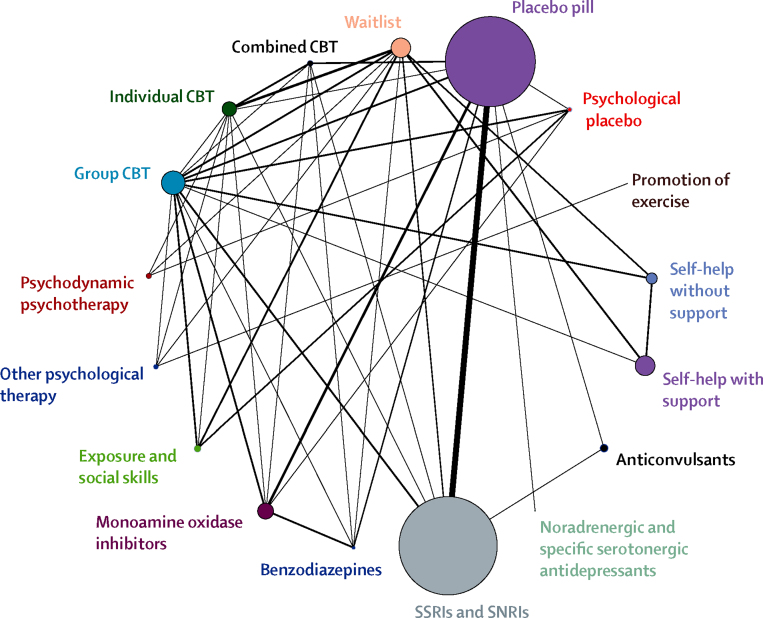
- The review included 101 trials with 13,164 participants and 41 interventions or control conditions grouped into 17 classes.
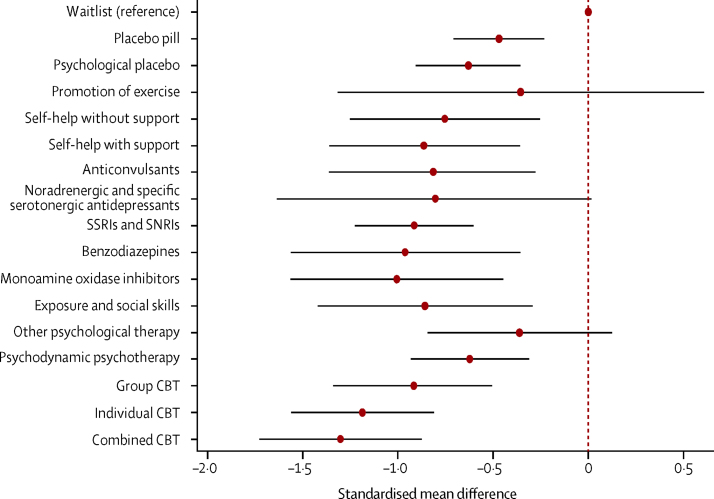
- Compared with waitlist, the largest class-level effects were for individual CBT (SMD −1.19, 95% CrI −1.56 to −0.81), group CBT (−0.92, −1.33 to −0.51), and pharmacological classes including MAOIs (−1.01, −1.56 to −0.45), benzodiazepines (−0.96, −1.56 to −0.36), and SSRIs/SNRIs (−0.91, −1.23 to −0.60).
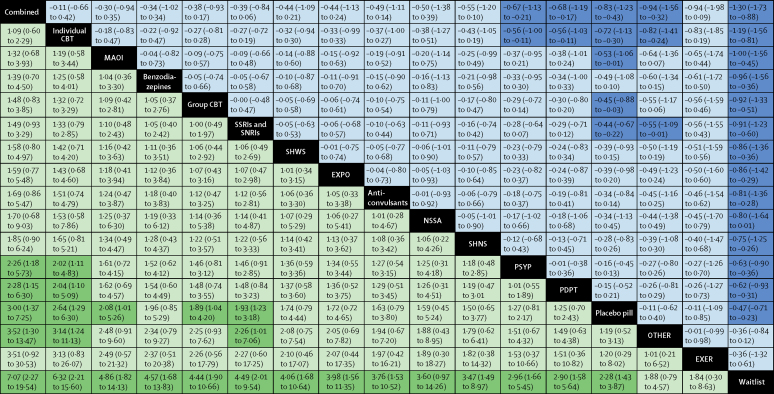
- Against appropriate placebo, only individual CBT versus psychological placebo (SMD −0.56, 95% CrI −1.00 to −0.11) and SSRIs/SNRIs versus pill placebo (−0.44, −0.67 to −0.22) showed clear benefit.
- Individual CBT outperformed several other psychological interventions, including psychodynamic psychotherapy (SMD −0.56, 95% CrI −1.03 to −0.11) and interpersonal psychotherapy, mindfulness, and supportive therapy (−0.82, −1.41 to −0.24).
## Methods
- Systematic review and Bayesian random-effects network meta-analysis of adult randomized clinical trials for social anxiety disorder, using waitlist as the main reference condition.
- Searched published and unpublished sources from 1988 to Sept 13, 2013, with no language limits; included adults aged at least 18 years who met diagnostic criteria for social anxiety disorder.
- Outcomes were validated measures of social anxiety, analyzed as standardised mean differences (SMDs); the paper also estimated recovery where reported and compared interventions both by class and individually.
## Limitations
- The paper states that only a few studies of moderate size were available for several interventions, and some had been tested by only one or two research groups.
- Control conditions were heterogeneous and rarely described in detail, and the authors note that better reporting of what was intended and received is needed.
- The study included only end-of-treatment outcomes; the authors say they could not assess whether effects persist long term because most trials stopped at the end of treatment.
- Evident from the text: there was substantial risk of bias/reporting bias in the evidence base, including many unregistered trials, incomplete outcome data in some trials, and only 28 trials at low risk of bias for all non-masking domains.
Model-written summary. Check it against the paper before relying on it.
Integrity signals
Registry
Cites
Statistics
Figures
Verification
Claims the paper makes
2 Valid · 1 Not valid · 8 Not checked · 78 Own results and interpretations
The cited sources support only part of this claim — read each source’s verdict below.
In the paper
“the effects of psychological interventions are generally well maintained at follow-up,23”
§ Psychological and pharmacological interventions for social anxiety disorder in adults: a systematic review and network meta-analysis > Discussion
What the sources say
- Partly supportedcites [23] Haug TTB Exposure therapy and sertraline in social phobia: 1-year follow-up of a randomised controlled trial Br J Psychiatry 182 2003 312 318 12668406 sourceExperimental — accuracy not yet measured
The Clinical Implications section says exposure therapy alone for social phobia appeared to produce further improvement after treatment, supporting maintenance at follow-up for that intervention. The paper does not establish that psychological interventions generally have well-maintained effects; its finding concerns exposure therapy in this population, and the combined sertraline-plus-exposure group fared less well. (LLM, conf=0.86)
plainstates a cause- Asserted: passes — The authors put it forward as true.
- Checkable: passes — It can be checked against evidence.
- Load-bearing: passes — The paper’s conclusions depend on it.
- Based: passes — The paper gives a reason why it holds.
- Partly supported
The cited sources support only part of this claim — read each source’s verdict below.
In the paper
“SSRIs and SNRIs with a short half-life (eg, paroxetine and venlafaxine) are associated with the greatest risk of discontinuation effects, including effects during the treatment period and after the end of treatment.18, 19”
§ Psychological and pharmacological interventions for social anxiety disorder in adults: a systematic review and network meta-analysis > Discussion
What the sources say
- Not checked yetcites [18] Rosenbaum JF Fava M Hoog SL Ascroft RC Krebs WB Selective serotonin reuptake inhibitor discontinuation syndrome: a randomized clinical trial Biol Psychiatry 44 1998 77 87 9646889 source
- Partly supportedcites [19] Sir A D'Souza RF Uguz S Randomized trial of sertraline versus venlafaxine XR in major depression: efficacy and discontinuation symptoms J Clin Psychiatry 66 2005 1312 1320 16259546 sourceExperimental — accuracy not yet measured
Our copy supports only the venlafaxine half of the claim and only partially: the Discussion (post hoc analyses, p-values unadjusted) reports 'sertraline was associated with a lower burden of discontinuation symptoms compared with venlafaxine XR' and 'early reports suggesting the possibility of a clinically relevant discontinuation syndrome with venlafaxine XR and a relatively benign one with sertraline,' and Signs and Symptoms of Discontinuation / Table 4 list more discontinuation-emergent symptoms (dizziness, fatigue, vertigo, vivid dreams; tremor, confusion, impaired coordination) in the venlafaxine XR group, with the Safety and Tolerability section also noting 13 vs 3 treatment-related discontinuations in the first calendar week of treatment. The rest of the claim is not in this paper: no passage mentions paroxetine, no passage discusses elimination half-life or attributes discontinuation risk to short half-life, and the study compares only two agents (sertraline vs venlafaxine XR) so it never ranks them as carrying the 'greatest risk' among SSRIs/SNRIs, nor does it assess symptoms after the end of the taper (assessment ran only to week 10). The citing sentence also states as established fact what the paper hedges ('may be associated with a lower symptom burden'; a priori analyses showed no difference). (LLM, conf=0.68)
plainstates an association- Asserted: passes — The authors put it forward as true.
- Checkable: passes — It can be checked against evidence.
- Load-bearing: passes — The paper’s conclusions depend on it.
- Based: passes — The paper gives a reason why it holds.
The cited sources that could be checked couldn’t confirm or dispute this claim.
In the paper
“suggesting the network better estimates treatment effects than pairwise analyses alone with no evidence of inconsistency.9”
§ Psychological and pharmacological interventions for social anxiety disorder in adults: a systematic review and network meta-analysis > Results
What the sources say
- Could not verifycites [9] Dias S Sutton AJ Ades AE Welton NJ Evidence synthesis for decision making 2: a generalized linear ehaviour framework for pairwise and network meta-analysis of randomized controlled trials Med Decis Making 33 2013 607 617 23104435 PMC3704203 sourceExperimental — accuracy not yet measured
The ‘Extension to NMA’ section says that evidence consistency needs to be checked in all networks, but does not report a finding of no inconsistency in the citing authors’ network. A search for ‘no evidence of inconsistency’ found no such result in our copy. Page numbers were not provided. (LLM, conf=0.76)
hedgedn = 148- Asserted: passes — The authors put it forward as true.
- Checkable: passes — It can be checked against evidence.
- Load-bearing: passes — The paper’s conclusions depend on it.
- Based: passes — The paper gives a reason why it holds.
- Could not verify
A result the paper reports from its own data — it cites no other source for it, so there is none to check. The quote shows it is in the paper.
In the paper
“The largest effects were for MAOIs (class effect SMD −1·01, 95% CrI −1·56 to −0·45)”
§ Psychological and pharmacological interventions for social anxiety disorder in adults: a systematic review and network meta-analysis > Results
plainstates a cause- Asserted: passes — The authors put it forward as true.
- Checkable: passes — It can be checked against evidence.
- Load-bearing: passes — The paper’s conclusions depend on it.
- Based: passes — The paper gives a reason why it holds.
- Rests on 5 assumptions not shown here.
A result the paper reports from its own data — it cites no other source for it, so there is none to check. The quote shows it is in the paper.
In the paper
“Of the psychological interventions, only individual CBT had a greater effect on outcomes than psychological placebo (SMD −0·56, 95% CrI −1·00 to −0·11).”
§ Psychological and pharmacological interventions for social anxiety disorder in adults: a systematic review and network meta-analysis > Results
plainstates a cause- Asserted: passes — The authors put it forward as true.
- Checkable: passes — It can be checked against evidence.
- Load-bearing: passes — The paper’s conclusions depend on it.
- Based: passes — The paper gives a reason why it holds.
- Rests on 5 assumptions not shown here.
50 more claims
Create a free account to see all 89 claims and to verify the 12 references still open.
- It may state two separate claims as one. 26
- The quote only partly states this claim. 3
- Probably not a substantial claim. 12
Claims other papers make about this one
Each is checked against this paper’s own text: does it say what the citing paper says it does?
The cited source doesn’t support the claim as written.
In the citing paper
“The efficacy of pharmacotherapies also appears dependent on continued adherence to medication, with as many as 25% of people reporting relapse after discontinuation of the drug.”
From MDMA-Assisted Therapy as a Means to Alter Affective, Cognitive, Behavioral, and Neurological Systems Underlying Social Dysfunction in Social Anxiety Disorder (2021) · cites this paper as [15]
Checked by a reasoning model — may be wrong.
Experimental — accuracy not yet measuredThe source backs part of the claim, not all of it — or backs it for a different population, condition or comparison.
In the citing paper
“In terms of psychotherapies, cognitive-behavioral therapy has shown strong evidence for treatment efficacy and superior longevity to pharmacotherapy (15).”
From MDMA-Assisted Therapy as a Means to Alter Affective, Cognitive, Behavioral, and Neurological Systems Underlying Social Dysfunction in Social Anxiety Disorder (2021) · cites this paper as [15]
Experimental — accuracy not yet measuredThe source backs part of the claim, not all of it — or backs it for a different population, condition or comparison.
In the citing paper
“Yet, in the case of both medication and psychotherapy a significant proportion of patients remain considerably symptomatic at the end of treatment (15), with social anxiety often assuming a chronic course in spite of intervention (16).”
From MDMA-Assisted Therapy as a Means to Alter Affective, Cognitive, Behavioral, and Neurological Systems Underlying Social Dysfunction in Social Anxiety Disorder (2021) · cites this paper as [15]
Experimental — accuracy not yet measuredThe source backs part of the claim, not all of it — or backs it for a different population, condition or comparison.
In the citing paper
“Meta-analytic data on medication-based therapies suggests that SSRIs and SNRIs are associated favorable outcomes compared to placebo yet are also associated with higher dropout rates over the treatment course (14, 15).”
From MDMA-Assisted Therapy as a Means to Alter Affective, Cognitive, Behavioral, and Neurological Systems Underlying Social Dysfunction in Social Anxiety Disorder (2021) · cites this paper as [15]
Experimental — accuracy not yet measuredThe source backs part of the claim, not all of it — or backs it for a different population, condition or comparison.
In the citing paper
“for many common mental health conditions, particularly anxiety disorders, evidence-based psychological treatments are both the best treatment option2 and the preference of patients.3”
From Automated psychological therapy using immersive virtual reality for treatment of fear of heights: A single-blind, parallel-group, randomised controlled trial (2018) · cites this paper as [2]
Experimental — accuracy not yet measured
7 more claims about this paper
Create a free account to see every claim other papers make about this one.
Citations
Cites
Preferred Reporting Items for Systematic Reviews and Meta-Analyses: the PRISMA statement
Moher, D., Liberati, A., Tetzlaff, J., Altman, D. G., & for the PRISMA Group (2009) · BMJ · doi:10.1136/bmj.b2535 · Cited by 83,823
Preferred reporting items for systematic reviews and meta-analyses: the PRISMA Statement.
(2009) · PubMed Central · Cited by 44,859
Cochrane Handbook for Systematic Reviews of Interventions: Cochrane Book Series
(2008) · doi:10.1002/9780470712184 · Cited by 25,048
Cochrane Handbook for Systematic Reviews of Interventions Version 5.0.1. The Cochrane Collaboration
Higgins, J. P. T., Green, S. R., & Higgins, J. P. T. (2008) · Cited by 7,247
WinBUGS - A Bayesian modelling framework: Concepts, structure, and extensibility
Lunn, D. J., Thomas, A., Best, N., & Spiegelhalter, D. (2000) · Statistics and Computing · doi:10.1023/a:1008929526011 · Cited by 5,368
A cognitive-behavioral model of anxiety in social phobia
Rapee, R. M., & Heimberg, R. G. (1997) · Behaviour Research and Therapy · doi:10.1016/s0005-7967(97)00022-3 · Cited by 2,987
A cognitive model of social phobia
Adrian Wells, A. (1995) · Research Explorer (The University of Manchester) · Cited by 2,701
Social Phobia: Diagnosis, Assessment, and Treatment
Amada, G. (1996) · American Journal of Psychotherapy · doi:10.1176/appi.psychotherapy.1996.50.3.373 · Cited by 1,248
Dias, S., Sutton, A. J., Ades, A. E., & Welton, N. J. (2013) · Medical Decision Making · doi:10.1177/0272989x12458724 · Cited by 1,207
Self-citationStein, M. B., & Stein, D. J. (2008) · The Lancet · doi:10.1016/s0140-6736(08)60488-2 · Cited by 1,137
Cited by
Items 101–200 of 676
Rouse, B., Cipriani, A., Shi, Q., Coleman, A. L., Dickersin, K., & Li, T. (2016) · Annals of Internal Medicine · doi:10.7326/m15-2367 · Cited by 43
A brief introduction of meta‐analyses in clinical practice and research
Wang, X., Zhang, X., Li, Z., Zhong, W., Yang, P., & Mao, C. (2021) · The Journal of Gene Medicine · doi:10.1002/jgm.3312 · Cited by 45
“tions, most of them compare the effectiveness of an intervention with a placebo, and there is almost no direct comparison between different interventions.(29,30) Network meta-analyses comprise a”
BackgroundVázquez, C. (2017) · Cognitive Therapy and Research · doi:10.1007/s10608-017-9847-8 · Cited by 48
González-Robles, A., Díaz-García, A., García-Palacios, A., Roca, P., Ramos-Quiroga, J. A., & Botella, C. (2020) · Journal of Medical Internet Research · doi:10.2196/18220 · Cited by 40
“Second, this RCT was not powered to detect differences in disorder-specific measures (ie, for GAD, PD or AG, SAD, and OCD).”
BackgroundInfluentialMavranezouli, I., Mayo-Wilson, E., Dias, S., Kew, K., Clark, D. M., Ades, A. E., & Pilling, S. (2015) · PLOS ONE · doi:10.1371/journal.pone.0140704 · Cited by 40
Self-citationAssessing Change in Intervention Research: The Benefits of Composite Outcomes
Moreau, D., & Wiebels, K. (2021) · Advances in Methods and Practices in Psychological Science · doi:10.1177/2515245920931930 · Cited by 44
Butler, R. M., O’Day, E. B., Swee, M. B., Horenstein, A., & Heimberg, R. G. (2021) · Behavior Therapy · doi:10.1016/j.beth.2020.06.002 · Cited by 39
Safety behaviours in social anxiety: An examination across adolescence
Evans, R. C., Chiu, K., Clark, D. M., Waite, P., & Leigh, E. (2021) · Behaviour Research and Therapy · doi:10.1016/j.brat.2021.103931 · Cited by 59
“…a range of empirically-supported cognitive behavioural models of the maintenance of SAD in adults (Clark & Wells, 1995; Heimberg et al., 2010; Hofmann, 2007; Moscovitch, 2009; Rapee & Heimberg, 1997) which have led to the development of effective psychological treatments (Mayo-Wilson et al., 2014).”
BackgroundSelf-citationNeufeld, C. B., Palma, P. C., Caetano, K. A. S., Brust-Renck, P. G., Curtiss, J., & Hofmann, S. G. (2020) · International Journal of Clinical and Health Psychology · doi:10.1016/j.ijchp.2019.11.004 · Cited by 33
“Overall, results appear to be in the same direction as hose found in the literature regarding the high efficacy f CBT in the treatment of SAD, which is considered the old standard (Barkowski et al., 2016; Cuijpers et al., 2016; ayo-Wilson et al., 2014).”
ResultThe Prevalence of Adolescent Social Fears and Social Anxiety Disorder in School Contexts
Alves, F., Figueiredo, D. V., & Vagos, P. (2022) · International Journal of Environmental Research and Public Health · doi:10.3390/ijerph191912458 · Cited by 38
“Cognitive therapy was found to be effective in adult SAD [70] as well as promising in adolescent SAD, whether when delivered in person [71,72] or remotely [73].”
BackgroundDryman, M. T., McTeague, L. M., Olino, T. M., & Heimberg, R. G. (2017) · Journal of Consulting and Clinical Psychology · doi:10.1037/ccp0000232 · Cited by 38
Spain, D., Blainey, S. H., & Vaillancourt, K. (2017) · Research in Autism Spectrum Disorders · doi:10.1016/j.rasd.2017.07.005 · Cited by 38
“The evidence for SSI for social anxiety is equivocal in typically developing samples (Mayo-Wilson et al., 2014), but it does seem likely that”
BackgroundSocial anxiety disorder: looking back and moving forward
Hyett, M. P., & McEvoy, P. M. (2018) · Psychological Medicine · doi:10.1017/s0033291717003816 · Cited by 38
“In terms of treatment, cognitive–behavioural therapy (CBT), particularly individual-based, has the strongest evidence base, compared with other psychotherapies (Mayo-Wilson et al. 2014).”
Nordahl, H., & Wells, A. (2018) · Frontiers in Psychology · doi:10.3389/fpsyg.2018.00540 · Cited by 43
“The treatment of choice for SAD is Cognitive therapy (CBT) based on the model by Clark and Wells (1995; National Institute for Health and Care Excellence, 2013) and it has been found to be superior to other psychological treatments and drugs (Mayo-Wilson et al., 2014).”
MethodYang, L., Zhou, X., Pu, J., Liu, L., Cuijpers, P. J., Zhang, Y., Zhang, H., Yuan, S., Teng, T., Tian, L., et al. (2018) · European Child & Adolescent Psychiatry · doi:10.1007/s00787-018-1189-x · Cited by 51
“The difference between the previous meta-analysis [50] and our findings may be due to children and adolescents with SAD having poor social skills and marked fear or anxiety when individually participating in classroom activities and joining activities with peers [28].”
BackgroundResultTosuntaş, Ş. B., Karadağ, E., Emirtekin, E., Kırcaburun, K., & Griffiths, M. D. (2020) · The Social Science Journal · doi:10.1080/03623319.2020.1809900 · Cited by 47
“More specifically, there have been several interventions for social anxiety including pharmacotherapy, cognitive-behavioral therapy, psychodynamic psychotherapy, and interpersonal psychotherapy (Mayo-Wilson et al., 2014).”
BackgroundMontero-Marin, J., Garcia-Campayo, J., López-Montoyo, A., Zabaleta-del-Olmo, E., & Cuijpers, P. (2018) · Psychological Medicine · doi:10.1017/s0033291717003099 · Cited by 37
“Finally, different effects were found depending on the anxiety disorder, being that PTSD, OCD and any phobia may be more treatable by using (C)BT, the latter in line with what was pointed for social anxiety (Mayo-Wilson et al. 2014), although panic might also benefit from (C)BT, as previously proposed (Pompoli et al.”
BackgroundBiofeedback to treat anxiety in young people at clinical high risk for developing psychosis
McAusland, L., & Addington, J. (2018) · Early Intervention in Psychiatry · doi:10.1111/eip.12368 · Cited by 37
“Other studies have found CBT and pharmacological approaches to be the most efficacious in treating social anxiety.(51,52) To the best of our knowledge, HRV biofeedback has not been examined for the treatment of social phobia.”
BackgroundCavalcante, R. D. S., Banin, V. B., Padula, N. A. D. M. R., Daher, S. R., Habermann, M. C., Habermann, F., Bravin, A. M., da Silva, C. E. C., & de Andrade, L. G. M. (2016) · Complementary Therapies in Medicine · doi:10.1016/j.ctim.2016.05.002 · Cited by 37
Furmark, T., Marteinsdottir, I., Frick, A., Heurling, K., Tillfors, M., Appel, L., Antoni, G., Hartvig, P., Fischer, H., Långström, B., et al. (2016) · Journal of Psychopharmacology · doi:10.1177/0269881116648317 · Cited by 37
“Pharmaceuticals targeting the serotonin system are widely used for the treatment of anxiety, in particular selective serotonin reuptake inhibitors (SSRIs) are effective in SAD (Blanco et al., 2013; Mayo-Wilson et al., 2014).”
MethodStevenson, J., Mattiske, J. K., & Nixon, R. D. V. (2019) · Behaviour Research and Therapy · doi:10.1016/j.brat.2019.103492 · Cited by 36
Herbert, J. D., Forman, E. M., Kaye, J. L., Gershkovich, M., Goetter, E., Yuen, E. K., Glassman, L., Goldstein, S., Hitchcock, P., Tronieri, J. S., et al. (2018) · Journal of Contextual Behavioral Science · doi:10.1016/j.jcbs.2018.07.008 · Cited by 36
Neural effects of a short-term virtual reality self-training program to reduce social anxiety
Kim, M.-K., Eom, H., Kwon, J. H., Kyeong, S., & Kim, J.-J. (2022) · Psychological Medicine · doi:10.1017/s0033291720003098 · Cited by 36
“Symptoms of SAD can be improved through appropriate pharmacological treatment or psychological interventions such as cognitive-behavioral therapy (CBT) (Mayo-Wilson et al., 2014).”
Backgrounddu Toit, S. A., Kade, S. A., Danielson, C. T., Schweizer, S., Han, J., Torok, M. H., & Wong, Q. J. J. (2019) · Journal of Affective Disorders · doi:10.1016/j.jad.2019.09.085 · Cited by 39
McEvoy, P. M., Hyett, M. P., Bank, S. R., Erceg‐Hurn, D. M., Johnson, A. R., Kyron, M. J., Saulsman, L. M., Moulds, M. L., Grisham, J. R., Holmes, E. A., et al. (2020) · Psychological Medicine · doi:10.1017/s0033291720003001 · Cited by 41
“, 2017), and within and between effect sizes for CBT are large compared to a range of inert and active control conditions (Barkowski et al., 2016; Mayo-Wilson et al., 2014; Steinert et al., 2017).”
BackgroundInfluentialFrederiksen, K. P., Stavestrand, S. H., Venemyr, S. K., Sirevåg, K., & Hovland, A. (2021) · Behavioural and Cognitive Psychotherapy · doi:10.1017/s1352465821000126 · Cited by 48
“…treatments are the treatments of choice for anxiety disorders (National Institute for Health and Clinical Excellence, 2011, 2013), with both yielding significant symptom reduction for all anxiety disorders compared with control conditions (Bandelow et al., 2015; Mayo-Wilson et al., 2014).”
BackgroundHow is the Big Five related to college students' anxiety: The role of rumination and resilience
Liu, A., Yu, Y., & Sun, S. (2022) · Personality and Individual Differences · doi:10.1016/j.paid.2022.111901 · Cited by 49
Social Anxiety Among Sexual Minority Individuals: A Systematic Review
Mahon, C. P., Lombard-Vance, R., Kiernan, G., Pachankis, J. E., & Gallagher, P. (2021) · Psychology and Sexuality · doi:10.1080/19419899.2021.1936140 · Cited by 41
“Research evidence highlights effective psychological interventions for SAD in the general population, such as cognitive behavioural therapy (CBT; for meta-analysis see Mayo-Wilson et al., 2014).”
BackgroundAn open trial of mindfulness-based stress reduction for young adults with social anxiety disorder.
Hjeltnes, A., Molde, H., Schanche, E., Vøllestad, J., Lillebostad Svendsen, J., Moltu, C., & Binder, P. (2017) · Scandinavian Journal of Psychology · doi:10.1111/sjop.12342 · Cited by 34
Effect of Acute Exercise on Fatigue in People with ME/CFS/SEID: A Meta-analysis
Loy, B. D., O’Connor, P. J., & Dishman, R. K. (2016) · Medicine & Science in Sports & Exercise · doi:10.1249/mss.0000000000000990 · Cited by 40
“The initial treatment of anxiety disorders with selective serotonin reuptake inhibitors (SSRI) can produce an increase in anxiety symptoms and the processing of anxiety-related stimuli (4), but over time, the SSRI are effective for the treatment of anxiety disorders (40).”
BackgroundInclusion and exclusion strategies for conducting meta-analyses
Swift, J. K., & Wampold, B. E. (2017) · Psychotherapy Research · doi:10.1080/10503307.2017.1405169 · Cited by 53
“Mayo-Wilson et al. (2014) in a network meta-analysis of treatments (psychotherapy and psychopharmacology) for social anxiety, included only “first-line” treatments, which was an ill-defined term, but for which consensus was reached.”
BackgroundLindegaard, T., Hesslow, T., Nilsson, M., Johansson, R., Carlbring, P., Lilliengren, P., & Andersson, G. (2020) · Internet Interventions · doi:10.1016/j.invent.2020.100316 · Cited by 38
“receiving evidence-based treatment (Mayo-Wilson et al., 2014).”
BackgroundBarnett, P., Oshinowo, I. D., Cooper, C., Taylor, C. J., Smith, S. M., & Pilling, S. (2022) · Social Psychiatry and Psychiatric Epidemiology · doi:10.1007/s00127-022-02378-9 · Cited by 46
“Given the vast body of literature on efficacy of pharmacological interventions [57, 58], surprisingly few reported social mobility outcomes.”
BackgroundSelf-citationDomhardt, M., Nowak, H., Engler, S., Baumel, A., Grund, S., Mayer, A., Terhorst, Y., & Baumeister, H. (2021) · Clinical Psychology Review · doi:10.1016/j.cpr.2021.102084 · Cited by 32
Leigh, E., & Clark, D. M. (2022) · Journal of Child Psychology and Psychiatry · doi:10.1111/jcpp.13680 · Cited by 46
“For example, cognitive therapy for SAD (CT-SAD), based on the Clark and Wells (1995) model, stands out by its superiority to other active treatments (Mayo-Wilson et al., 2014) and it is a firstline NICE recommended treatment (National Institute for Health and Care Excellence, 2013).”
MethodSelf-citationAngelini, F., & Gini, G. (2023) · Journal of Adolescence · doi:10.1002/jad.12256 · Cited by 51
Modini, M., & Abbott, M. J. (2016) · Journal of Behavior Therapy and Experimental Psychiatry · doi:10.1016/j.jbtep.2016.12.002 · Cited by 38
A Cross-Cultural Comparison of the Bivalent Fear of Evaluation Model for Social Anxiety
Okawa, S., Arai, H., Sasagawa, S., Ishikawa, S., Norberg, M. M., Schmidt, N. B., Kwon, J., Rapee, R. M., & Shimizu, E. (2021) · Journal of Behavioral and Cognitive Therapy · doi:10.1016/j.jbct.2021.01.003 · Cited by 39
Modini, M., & Abbott, M. J. (2016) · Behaviour Change · doi:10.1017/bec.2016.10 · Cited by 37
“CBT has also been shown to have greater treatment effect sizes compared to other psychological therapies, as well as pharmacological interventions (Mayo-Wilson et al., 2014).”
Processes and pathways mediating the experience of social anxiety and negative rumination
Modini, M., Rapee, R. M., & Abbott, M. J. (2018) · Behaviour Research and Therapy · doi:10.1016/j.brat.2018.01.009 · Cited by 39
“…behavioural therapy (CBT) techniques have long been the most efficacious treatment for SAD (Acarturk, Cuijpers, van Straten, & de Graaf, 2009; Mayo-Wilson et al., 2014), the need to understand and target the cognitive processes proposed by cognitive models of SAD has more recently been…”
BackgroundBlay, Y., Keshet, H., Friedman, L., & Gilboa‐Schechtman, E. (2020) · Personality and Individual Differences · doi:10.1016/j.paid.2020.110449 · Cited by 33
Identification and Treatment of Peripartum Anxiety Disorders
Williams, K. E., & Koleva, H. K. (2018) · Obstetrics and Gynecology Clinics of North America · doi:10.1016/j.ogc.2018.04.001 · Cited by 35
Nordahl, H., & Wells, A. (2017) · PLoS ONE · doi:10.1371/journal.pone.0177109 · Cited by 44
Vigne, P., Fortes, P., Dias, R. V., Laurito, L. D., Loureiro, C. P., de Menezes, G. B., Stangier, U., & Fontenelle, L. F. (2018) · CNS Spectrums · doi:10.1017/s1092852918001281 · Cited by 23
“In the latter study, symptom fluctuation and the prospect of using medication chased away some poor insight OCD patients, who also had longer DUI.6 DUI in panic disorder (PD) patients was associated with greater rates of depression but had no impact on treatment response.7 Finally, depression,8 OCD,9 and number of fea…”
MethodInfluentialClinical management of withdrawal from benzodiazepine anxiolytic and hypnotic medications
Baldwin, D. S. (2022) · Addiction · doi:10.1111/add.15695 · Cited by 28
Scholten, W., Seldenrijk, A., Hoogendoorn, A. W., Bosman, R. C., Muntingh, A., Karyotaki, E., Andersson, G., Berger, T., Carlbring, P., Furmark, T., et al. (2023) · JAMA Psychiatry · doi:10.1001/jamapsychiatry.2023.1291 · Cited by 33
Cuijpers, P. J., Harrer, M., & Furukawa, T. A. (2026) · World Psychiatry · doi:10.1002/wps.70002 · Cited by 37
Linde, K., Rücker, G., Schneider, A., & Kriston, L. (2016) · Journal of Clinical Epidemiology · doi:10.1016/j.jclinepi.2015.10.010 · Cited by 28
Nordahl, H., Nordahl, H. M., Hjemdal, O., & Wells, A. (2017) · Clinical Psychology & Psychotherapy · doi:10.1002/cpp.2083 · Cited by 34
New Developments in Emotion-Focused Therapy for Social Anxiety Disorder
Shahar, B. (2020) · Journal of Clinical Medicine · doi:10.3390/jcm9092918 · Cited by 45
Huppert, J. D., Kivity, Y., Cohen, L., Strauss, A. Y., Elizur, Y., & Weiss, M. (2018) · Journal of Anxiety Disorders · doi:10.1016/j.janxdis.2018.08.002 · Cited by 31
Gjengedal, R. G. H., Rème, S. E., Osnes, K., Lagerfeld, S. E., Blonk, R. W. B., Sandin, K., Berge, T., & Hjemdal, O. (2020) · Work · doi:10.3233/wor-203208 · Cited by 30
Comorbidity of loneliness and social anxiety in adolescents: Bridge symptoms and peer relationships
Chen, J., Wang, Q., Liang, Y., Chen, B., & Ren, P. (2023) · Social Science & Medicine · doi:10.1016/j.socscimed.2023.116195 · Cited by 35
How Avatar Customization Affects Fear in a Game-based Digital Exposure Task for Social Anxiety
Dechant, M., Birk, M. V., Shiban, Y., Schnell, K., & Mandryk, R. L. (2021) · Proceedings of the ACM on Human-Computer Interaction · doi:10.1145/3474675 · Cited by 32
Fogarty, C., Hevey, D., & McCarthy, O. (2019) · Behavioural and Cognitive Psychotherapy · doi:10.1017/s1352465819000079 · Cited by 31
The influences of virtual social feedback on social anxiety disorders
Kishimoto, T., & Ding, X. (2019) · Behavioural and Cognitive Psychotherapy · doi:10.1017/s1352465819000377 · Cited by 26
“…interventions for SAD; the result revealed that individual CBT had a greater effect than psychodynamic psychotherapy, interpersonal psychotherapy, mindfulness and supportive therapy, and was the only psychotherapy that had the same effects as pharmacological intervention (Mayo-Wilson et al., 2014).”
BackgroundLaser Trabeculoplasty for Open-Angle Glaucoma: A Systematic Review and Network Meta-Analysis
Zhou, R., Sun, Y., Chen, H., Sha, S., He, M., & Wang, W. (2020) · American Journal of Ophthalmology · doi:10.1016/j.ajo.2020.07.046 · Cited by 37
Jeong, H. S., Lee, J. H., Kim, H. E., & Kim, J.-J. (2021) · Journal of Clinical Medicine · doi:10.3390/jcm10050915 · Cited by 26
“Cognitive behavioral therapy (CBT) has been used as a major tool for the treatment of SAD [4,5].”
MethodMånsson, K. N. T., Lindqvist, D., Yang, L. L., Svanborg, C., Isung, J., Nilsonne, G., Bergman-Nordgren, L., El Alaoui, S., Hedman-Lagerlöf, E., Kraepelien, M., et al. (2019) · Translational Psychiatry · doi:10.1038/s41398-019-0668-2 · Cited by 25
Strauss, B. M., Koranyi, S., Altmann, U., Nolte, T., Beutel, M. E., Wiltink, J., Herpertz, S., Hiller, W., Hoyer, J., Joraschky, P., et al. (2017) · Psychotherapy · doi:10.1037/pst0000129 · Cited by 27
Matsumoto, K., Hamatani, S., Nagai, K., Sutoh, C., Nakagawa, A., & Shimizu, E. (2020) · JMIR Mental Health · doi:10.2196/17157 · Cited by 31
Luoma, J. B., Shahar, B., Lear, M. K., Pilecki, B. C., & Wagner, A. (2021) · Human Psychopharmacology Clinical and Experimental · doi:10.1002/hup.2824 · Cited by 29
Thew, G. R., Powell, C. L., Kwok, A. P., Lissillour Chan, M. H., Wild, J., Warnock-Parkes, E., Leung, P. W., & Clark, D. M. (2019) · JMIR Formative Research · doi:10.2196/13446 · Cited by 24
“CT-SAD has strong empirical support for the treatment of SAD, showing efficacy superior to that of various alternative treatments in RCTs [15-18] and a network meta-analysis [19].”
ResultSelf-citationKoszycki, D., Guérin, E., DiMillo, J., & Bradwejn, J. (2021) · Clinical Psychology & Psychotherapy · doi:10.1002/cpp.2502 · Cited by 24
Help seeking for social anxiety: A pilot randomised controlled trial
Griffiths, K. M., Walker, J., & Batterham, P. J. (2017) · DIGITAL HEALTH · doi:10.1177/2055207617712047 · Cited by 24
Khakpoor, S., Saed, O., & Shahsavar, A. (2019) · Cogent Psychology · doi:10.1080/23311908.2019.1617658 · Cited by 33
Wong, Q. J. J., Gregory, B., McLellan, L. F., Kangas, M., Abbott, M. J., Carpenter, L., McEvoy, P. M., Peters, L., & Rapee, R. M. (2017) · Behavior Therapy · doi:10.1016/j.beth.2017.03.004 · Cited by 33
Nordahl, H., & Wells, A. (2017) · Journal of Mental Health · doi:10.1080/09638237.2017.1340622 · Cited by 29
“These factors are the targets of higherlevel treatments implemented under the IAPT initiative, and whilst this treatment can be effective for the individual (Mayo-Wilson et al., 2014) there is currently no research on the relationship between the psychological factors targeted in this model and work status.”
BackgroundGregory, B., Wong, Q. J. J., Marker, C. D., & Peters, L. (2018) · Cognitive Therapy and Research · doi:10.1007/s10608-017-9882-5 · Cited by 29
Network meta-analysis in health psychology and behavioural medicine: a primer
Molloy, G. J., Noone, C., Caldwell, D. M., Welton, N. J., & Newell, J. (2018) · Health Psychology Review · doi:10.1080/17437199.2018.1457449 · Cited by 25
“Mayo-Wilson et al. (2014) examined the comparative efficacy of psychological and pharmacological interventions for social anxiety disorder in adults.”
BackgroundKrans, J., Peeters, M., Näring, G. W. B., Brown, A. D., de Bree, J., & van Minnen, A. (2017) · Journal of Anxiety Disorders · doi:10.1016/j.janxdis.2017.09.007 · Cited by 28
Williams, T., Stein, D. J., & Ipser, J. (2018) · Evidence-Based Mental Health · doi:10.1136/eb-2017-102718 · Cited by 23
Wada, T., Sameshima, A., Yonezawa, R., Morita, M., Sawakawa, K., Tsuneki, H., Sasaoka, T., & Saito, S. (2018) · PLoS ONE · doi:10.1371/journal.pone.0209859 · Cited by 23
Peters, L., Romano, M., Byrow, Y., Gregory, B., McLellan, L. F., Brockveld, K., Baillie, A., Gaston, J., & Rapee, R. M. (2019) · Journal of Affective Disorders · doi:10.1016/j.jad.2019.05.042 · Cited by 23
Increase value and reduce waste in research on psychological therapies
Cristea, I. A., & Naudet, F. (2019) · Behaviour Research and Therapy · doi:10.1016/j.brat.2019.103479 · Cited by 22
Mental Imagery in Social Anxiety in Children and Young People: A Systematic Review
Chapman, J., Halldorsson, B., & Creswell, C. (2020) · Clinical Child and Family Psychology Review · doi:10.1007/s10567-020-00316-2 · Cited by 22
Schwob, J. T., & Newman, M. G. (2023) · Journal of Anxiety Disorders · doi:10.1016/j.janxdis.2023.102749 · Cited by 28
Aunjitsakul, W., McGuire, N., McLeod, H. J., & Gumley, A. I. (2021) · Schizophrenia Bulletin · doi:10.1093/schbul/sbab026 · Cited by 31
Wechsler, T. F., Pfaller, M., Eickels, R. E. V., Schulz, L. H., & Mühlberger, A. (2021) · Frontiers in Psychiatry · doi:10.3389/fpsyt.2021.751272 · Cited by 21
Remote cognitive behaviour therapy for social anxiety disorder: A meta-analysis
Winter, H. R., Norton, A. R., Burley, J., & Wootton, B. M. (2023) · Journal of Anxiety Disorders · doi:10.1016/j.janxdis.2023.102787 · Cited by 31
Ponzini, G. T., & Schofield, C. A. (2019) · Stigma and Health · doi:10.1037/sah0000163 · Cited by 25
Abeditehrani, H., Dijk, C., Toghchi, M. S., & Arntz, A. R. (2020) · Clinical Psychology in Europe · doi:10.32872/cpe.v2i1.2693 · Cited by 25
“The effect of CBGT on social anxiety symptoms has been demonstrated in meta-analyses (Barkowski et al., 2016; Mayo-Wilson et al., 2014).”
Samantaray, N. N., Nath, B., Behera, N., Mishra, A., Singh, P., & Sudhir, P. M. (2020) · Asian Journal of Psychiatry · doi:10.1016/j.ajp.2020.102526 · Cited by 29
Arad, G., Azriel, O., Pine, D. S., Lazarov, A., Sol, O., Weiser, M., Garber, E., Bloch, M., & Bar‐Haim, Y. (2023) · American Journal of Psychiatry · doi:10.1176/appi.ajp.20220533 · Cited by 22
Dechant, M., Poeller, S., Johanson, C., Wiley, K., & Mandryk, R. L. (2020) · CHI Conference on Human Factors in Computing Systems · doi:10.1145/3313831.3376734 · Cited by 28
Jain, N., Stech, E., Grierson, A. B., Sharrock, M. J., Li, I., Mahoney, A. E. J., & Newby, J. M. (2021) · Journal of Anxiety Disorders · doi:10.1016/j.janxdis.2021.102473 · Cited by 21
Baljé, A. E., Greeven, A., Deen, M., van Giezen, A. E., Arntz, A., & Spinhoven, P. (2024) · Journal of Anxiety Disorders · doi:10.1016/j.janxdis.2024.102860 · Cited by 20
“In a meta-analysis on treatments for SAD, Mayo-Wilson et al. (2014) found CBT in a group format almost as effective as individual CBT.”
InfluentialMorrison, A. S., Goldin, P. R., & Gross, J. J. (2024) · Journal of Anxiety Disorders · doi:10.1016/j.janxdis.2024.102874 · Cited by 25
Mechler, J., Lindqvist, K., Magnusson, K., Ringström, A., Krafman, J. D., Alvinzi, P., Kassius, L., Sowa, J., Andersson, G., & Carlbring, P. (2024) · npj Mental Health Research · doi:10.1038/s44184-024-00063-0 · Cited by 24
“Fortunately,bothpsychotherapyandpharmacotherapyhaveprovento be effective in the treatment of SAD 5 , with Cognitive Behavioral Therapy (CBT) often being described as the gold standard treatment 6 .”
BackgroundRapee, R. M., McLellan, L. F., Carl, T., Trompeter, N., Hudson, J. L., Jones, M. P., & Wuthrich, V. M. (2023) · Journal of the American Academy of Child & Adolescent Psychiatry · doi:10.1016/j.jaac.2022.08.003 · Cited by 20
Bafkar, N., Zeraattalab-Motlagh, S., Jayedi, A., & Shab‐Bidar, S. (2024) · BMC Psychiatry · doi:10.1186/s12888-024-05881-2 · Cited by 29
“Propranolol has the advantage of being used on an as-needed basis without the risk of developing dependence and tolerance, as exists with benzodiazepines [6].”
BackgroundNew Developments in Cognitive-Behavioral Therapy for Social Anxiety Disorder
Stangier, U. (2016) · Current Psychiatry Reports · doi:10.1007/s11920-016-0667-4 · Cited by 25
Hunger‐Schoppe, C., Hilzinger, R., Klewinghaus, L., Deußer, L., Sander, A., Mander, J., Bents, H., Ditzen, B., & Schweitzer, J. (2019) · Family Process · doi:10.1111/famp.12492 · Cited by 34
Wootton, B. M., Steinman, S. A., Czerniawski, A., Norris, K., Baptie, C., Diefenbach, G., & Tolin, D. F. (2018) · Cognitive Therapy and Research · doi:10.1007/s10608-018-9921-x · Cited by 19
Cognitive therapy compared with CBT for social anxiety disorder in adolescents: a feasibility study
Creswell, C., Leigh, E., Larkin, M., Stephens, G., Violato, M., Brooks, E., Pearcey, S., Taylor, L. M. W., Stallard, P. N., Waite, P., et al. (2021) · Health Technology Assessment · doi:10.3310/hta25200 · Cited by 26
Self-citationThe efficacy of psychotherapy for social anxiety disorder, a systematic review and meta-analysis
de Ponti, N., Matbouriahi, M., Franco, P., Harrer, M., Miguel, C., Papola, D., Sicimoğlu, A., Cuijpers, P. J., & Karyotaki, E. (2024) · Journal of Anxiety Disorders · doi:10.1016/j.janxdis.2024.102881 · Cited by 37
Systematic Review of Cognitive-Behavioural Therapy for Social Anxiety Disorder in Psychosis
Michail, M., Birchwood, M. J., & Tait, L. (2017) · Brain Sciences · doi:10.3390/brainsci7050045 · Cited by 26
“Although CBT has shown to be effective for the treatment of social anxiety disorder in non-psychotic populations [20], there is lack of evidence on the clinical effectiveness and cost-effectiveness of CBT for the treatment of social anxiety when this is co-morbid in psychosis.”
BackgroundKählke, F., Berger, T., Schulz, A., Baumeister, H., Berking, M., Cuijpers, P. J., Bruffaerts, R., Auerbach, R. P., Kessler, R. C., & Ebert, D. D. (2019) · BMC Psychiatry · doi:10.1186/s12888-019-2125-4 · Cited by 20
“Conclusion To the best of our knowledge, this study will have the largest unguided RCT intervention group recruited for SAD treatment so far [15, 102].”
BackgroundKuo, J. R., Zeifman, R. J., Morrison, A. S., Heimberg, R. G., Goldin, P. R., & Gross, J. J. (2021) · Journal of Affective Disorders · doi:10.1016/j.jad.2021.02.022 · Cited by 24
Pharmacotherapy for Anxiety Disorders.
O’Leary, K. B., & Khan, J. S. (2024) · Psychiatric Clinics of North America · doi:10.1016/j.psc.2024.04.012 · Cited by 22
Metadata
- Authors
- Mayo-Wilson, E., Dias, S., Mavranezouli, I., Kew, K., Clark, D. M., Ades, A. E., & Pilling, S.
- Affiliations
- University of Bristol (GB)
- University College London (GB)
- University of London (GB)
- University of Oxford (GB)
- Venue
- The Lancet Psychiatry
- Publisher
- Elsevier BV
- Published
- 2014-10
- Volume
- 1
- Issue
- 5
- Pages
- 368-376
- ISSN
- 2215-0366 (ISSN-L)
- PMC
- PMC4287862
- OpenAlex
- W2151428461
- Cited by
- 680
- References
- 36
- Citations by year
- 2026: 41 · 2025: 50 · 2024: 61 · 2023: 65 · 2022: 97 · 2021: 84 · 2020: 58 · 2019: 49 · 2018: 62 · 2017: 44 · 2016: 45 · 2015: 23 · 2014: 1
- FWCI
- 5.06
- Type
- journal article
- Language
- en
- Open access
- hybrid
- doi.org
- Licence
- cc-by
- www.elsevier.com/tdm/userlicense/1.0/ (tdm)
- creativecommons.org/licenses/by/3.0/ (vor)
- Locations
- The Lancet Psychiatry (publishedVersion, cc-by)
- PubMed Central (publishedVersion, cc-by)
- PubMed (publishedVersion)
- UCL Discovery (University College London) (submittedVersion)
- Bristol Research (University of Bristol) (submittedVersion)
- Funders
- Wellcome Trust (069777)
- Topics
- Social Sciences › Psychology › Experimental and Cognitive Psychology › Anxiety, Depression, Psychometrics, Treatment, Cognitive Processes
- Social Sciences › Psychology › Clinical Psychology › Psychological Treatments and Assessments
- Social Sciences › Psychology › Clinical Psychology › Psychotherapy Techniques and Applications
- Keywords
- social anxiety disorder, adults, pharmacological interventions, psychological intervention, cognitive behavioral therapy, group cognitive behavioral therapy, exposure therapy, social skills training, self-help, psychodynamic psychotherapy, monoamine oxidase inhibitors, benzodiazepines, selective serotonin reuptake inhibitors, serotonin-norepinephrine reuptake inhibitors, antiepileptic drugs, treatment efficacy comparison
About these checks
Registry, retraction, Cites and statistics results are computed, not judged, with one exception: a printed reference that no index lists is read once by a model before it counts as a citation error. Claims are extracted by a model and kept only when their quote appears verbatim in the text; each cited source is then checked, with a model’s help, for whether it says what the claim relies on. Those verdicts can be wrong — read the claim’s quote and the cited source before relying on one.
The claim verdicts this report counts are experimental: their accuracy is not yet measured.
A language model drew the claims from the paper on 2026-10-11, under version 3 of the claim definition (model deepseek-v4.1-flash, prompt extract-v3).
A second model labelled each claim on 2026-10-11 (model jev-1.13-20260917, definition revision gold-guideline-v0.2).
Cited sources are checked with a language model’s help (gpt-6-sol and qwen3.8-omni-flash).
Statistics and arithmetic are recomputed, not judged.
Confidence bands are shown only for fields calibrated on our annotated test set. None is calibrated yet, so no band is shown.
What counts as a claim ›How we measure confidence ›How we check this ›
Are you an author, or do you see a problem with this page? Request a review
Data sources
Bibliographic data: Semantic Scholar, OpenAlex, Crossref.
Contains information from the Semantic Scholar Academic Graph Datasets, made available under the ODC Attribution License (ODC-BY 1.0).
Semantic Scholar’s data is described in: Kinney, R., et al. (2023). The Semantic Scholar Open Data Platform. arXiv:2301.10140.
