

Psychological and pharmacological interventions for social anxiety disorder in adults: a systematic review and network meta-analysis
Open accessThe DOI matches its Crossref record; 37 of the 37 references it cites were found in a registry or an index; 3 of the 15 sources its claims cite were checked for support.
Abstract
BACKGROUND: Social anxiety disorder-a chronic and naturally unremitting disease that causes substantial impairment-can be treated with pharmacological, psychological, and self-help interventions. We aimed to compare these interventions and to identify which are most effective for the acute treatment of social anxiety disorder in adults. METHODS: We did a systematic review and network meta-analysis of interventions for adults with social anxiety disorder, identified from published and unpublished sources between 1988 and Sept 13, 2013. We analysed interventions by class and individually. Outcomes were validated measures of social anxiety, reported as standardised mean differences (SMDs) compared with a waitlist reference. This study is registered with PROSPERO, number CRD42012003146. FINDINGS: We included 101 trials (13 164 participants) of 41 interventions or control conditions (17 classes) in the analyses. Classes of pharmacological interventions that had greater effects on outcomes compared with waitlist were monoamine oxidase inhibitors (SMD -1·01, 95% credible interval [CrI] -1·56 to -0·45), benzodiazepines (-0·96, -1·56 to -0·36), selective serotonin-reuptake inhibitors and serotonin-norepinephrine reuptake inhibitors (SSRIs and SNRIs; -0·91, -1·23 to -0·60), and anticonvulsants (-0·81, -1·36 to -0·28). Compared with waitlist, efficacious classes of psychological interventions were individual cognitive-behavioural therapy (CBT; SMD -1·19, 95% CrI -1·56 to -0·81), group CBT (-0·92, -1·33 to -0·51), exposure and social skills (-0·86, -1·42 to -0·29), self-help with support (-0·86, -1·36 to -0·36), self-help without support (-0·75, -1·25 to -0·26), and psychodynamic psychotherapy (-0·62, -0·93 to -0·31). Individual CBT compared with psychological placebo (SMD -0·56, 95% CrI -1·00 to -0·11), and SSRIs and SNRIs compared with pill placebo (-0·44, -0·67 to -0·22) were the only classes of interventions that had greater effects on outcomes than appropriate placebo. Individual CBT also had a greater effect than psychodynamic psychotherapy (SMD -0·56, 95% CrI -1·03 to -0·11) and interpersonal psychotherapy, mindfulness, and supportive therapy (-0·82, -1·41 to -0·24). INTERPRETATION: Individual CBT (which other studies have shown to have a lower risk of side-effects than pharmacotherapy) is associated with large effect sizes. Thus, it should be regarded as the best intervention for the initial treatment of social anxiety disorder. For individuals who decline psychological intervention, SSRIs show the most consistent evidence of benefit. FUNDING: National Institute for Health and Care Excellence.
Overview
CoChat Summary
## TL;DR
This systematic review and network meta-analysis found that both psychological and pharmacological treatments improve acute outcomes for adult social anxiety disorder, with individual CBT showing the largest and most consistent effects. The authors conclude that individual CBT should be the initial treatment of choice, while SSRIs are the most consistent drug option for people who decline psychological treatment.
## Key findings
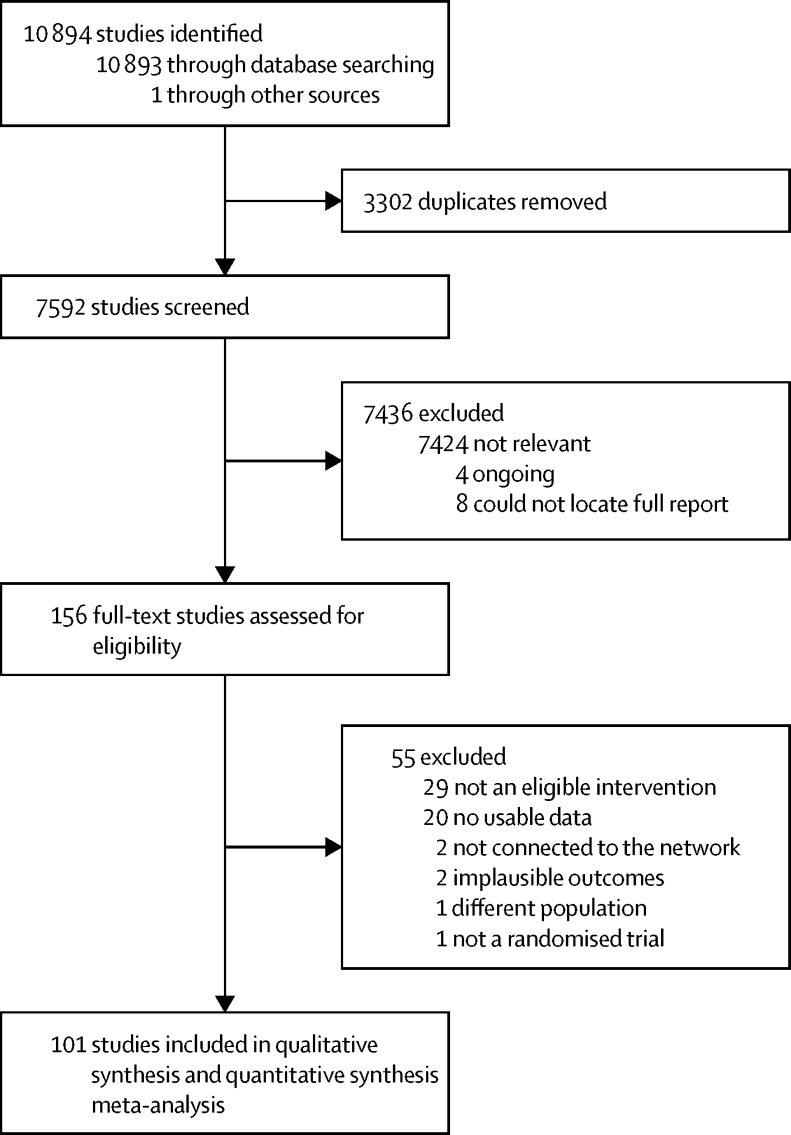
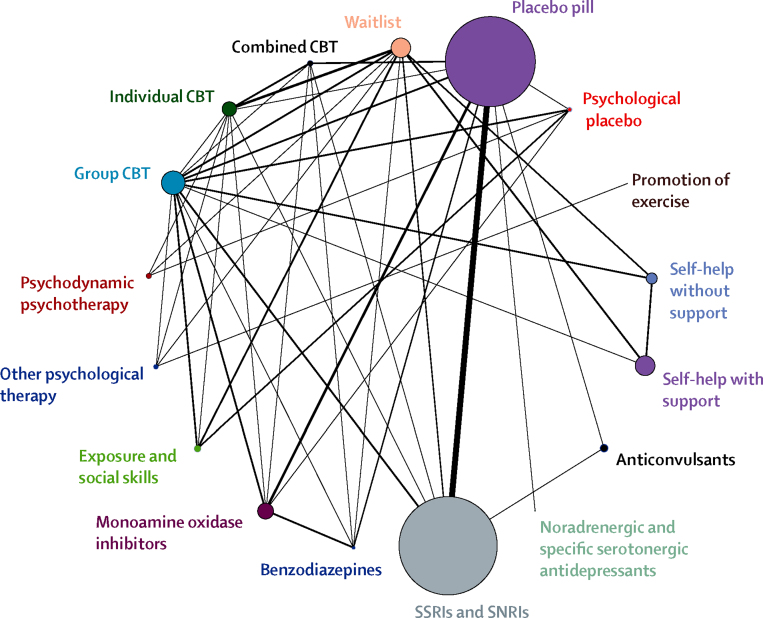
- The review included 101 trials with 13,164 participants and 41 interventions or control conditions grouped into 17 classes.
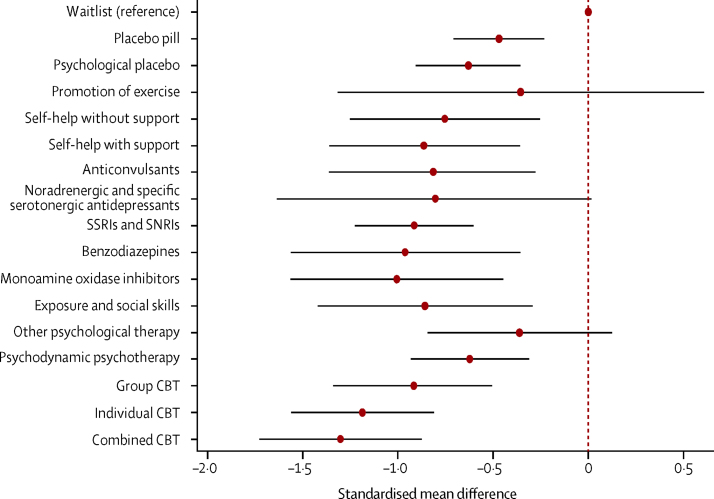
- Compared with waitlist, the largest class-level effects were for individual CBT (SMD −1.19, 95% CrI −1.56 to −0.81), group CBT (−0.92, −1.33 to −0.51), and pharmacological classes including MAOIs (−1.01, −1.56 to −0.45), benzodiazepines (−0.96, −1.56 to −0.36), and SSRIs/SNRIs (−0.91, −1.23 to −0.60).
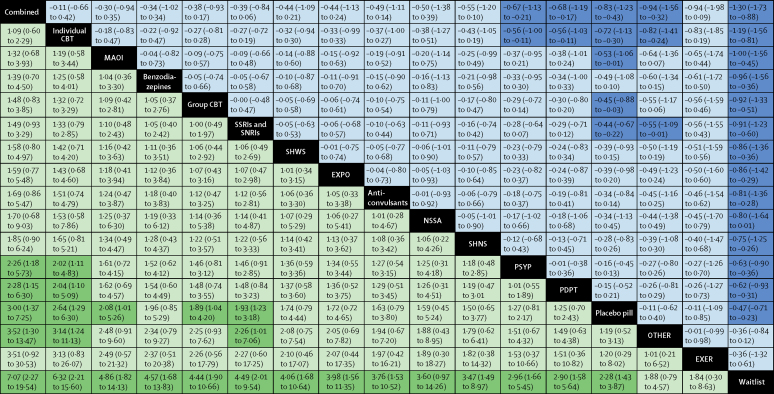
- Against appropriate placebo, only individual CBT versus psychological placebo (SMD −0.56, 95% CrI −1.00 to −0.11) and SSRIs/SNRIs versus pill placebo (−0.44, −0.67 to −0.22) showed clear benefit.
- Individual CBT outperformed several other psychological interventions, including psychodynamic psychotherapy (SMD −0.56, 95% CrI −1.03 to −0.11) and interpersonal psychotherapy, mindfulness, and supportive therapy (−0.82, −1.41 to −0.24).
## Methods
- Systematic review and Bayesian random-effects network meta-analysis of adult randomized clinical trials for social anxiety disorder, using waitlist as the main reference condition.
- Searched published and unpublished sources from 1988 to Sept 13, 2013, with no language limits; included adults aged at least 18 years who met diagnostic criteria for social anxiety disorder.
- Outcomes were validated measures of social anxiety, analyzed as standardised mean differences (SMDs); the paper also estimated recovery where reported and compared interventions both by class and individually.
## Limitations
- The paper states that only a few studies of moderate size were available for several interventions, and some had been tested by only one or two research groups.
- Control conditions were heterogeneous and rarely described in detail, and the authors note that better reporting of what was intended and received is needed.
- The study included only end-of-treatment outcomes; the authors say they could not assess whether effects persist long term because most trials stopped at the end of treatment.
- Evident from the text: there was substantial risk of bias/reporting bias in the evidence base, including many unregistered trials, incomplete outcome data in some trials, and only 28 trials at low risk of bias for all non-masking domains.
Model-written summary. Check it against the paper before relying on it.
Integrity signals
Registry
Cites
Statistics
Figures
Verification
Claims the paper makes
2 Valid · 1 Not valid · 8 Not checked · 78 Own results and interpretations
The cited sources support only part of this claim — read each source’s verdict below.
In the paper
“the effects of psychological interventions are generally well maintained at follow-up,23”
§ Psychological and pharmacological interventions for social anxiety disorder in adults: a systematic review and network meta-analysis > Discussion
What the sources say
- Partly supportedcites [23] Haug TTB Exposure therapy and sertraline in social phobia: 1-year follow-up of a randomised controlled trial Br J Psychiatry 182 2003 312 318 12668406 sourceExperimental — accuracy not yet measured
The Clinical Implications section says exposure therapy alone for social phobia appeared to produce further improvement after treatment, supporting maintenance at follow-up for that intervention. The paper does not establish that psychological interventions generally have well-maintained effects; its finding concerns exposure therapy in this population, and the combined sertraline-plus-exposure group fared less well. (LLM, conf=0.86)
plainstates a cause- Asserted: passes — The authors put it forward as true.
- Checkable: passes — It can be checked against evidence.
- Load-bearing: passes — The paper’s conclusions depend on it.
- Based: passes — The paper gives a reason why it holds.
- Partly supported
The cited sources support only part of this claim — read each source’s verdict below.
In the paper
“SSRIs and SNRIs with a short half-life (eg, paroxetine and venlafaxine) are associated with the greatest risk of discontinuation effects, including effects during the treatment period and after the end of treatment.18, 19”
§ Psychological and pharmacological interventions for social anxiety disorder in adults: a systematic review and network meta-analysis > Discussion
What the sources say
- Not checked yetcites [18] Rosenbaum JF Fava M Hoog SL Ascroft RC Krebs WB Selective serotonin reuptake inhibitor discontinuation syndrome: a randomized clinical trial Biol Psychiatry 44 1998 77 87 9646889 source
- Partly supportedcites [19] Sir A D'Souza RF Uguz S Randomized trial of sertraline versus venlafaxine XR in major depression: efficacy and discontinuation symptoms J Clin Psychiatry 66 2005 1312 1320 16259546 sourceExperimental — accuracy not yet measured
Our copy supports only the venlafaxine half of the claim and only partially: the Discussion (post hoc analyses, p-values unadjusted) reports 'sertraline was associated with a lower burden of discontinuation symptoms compared with venlafaxine XR' and 'early reports suggesting the possibility of a clinically relevant discontinuation syndrome with venlafaxine XR and a relatively benign one with sertraline,' and Signs and Symptoms of Discontinuation / Table 4 list more discontinuation-emergent symptoms (dizziness, fatigue, vertigo, vivid dreams; tremor, confusion, impaired coordination) in the venlafaxine XR group, with the Safety and Tolerability section also noting 13 vs 3 treatment-related discontinuations in the first calendar week of treatment. The rest of the claim is not in this paper: no passage mentions paroxetine, no passage discusses elimination half-life or attributes discontinuation risk to short half-life, and the study compares only two agents (sertraline vs venlafaxine XR) so it never ranks them as carrying the 'greatest risk' among SSRIs/SNRIs, nor does it assess symptoms after the end of the taper (assessment ran only to week 10). The citing sentence also states as established fact what the paper hedges ('may be associated with a lower symptom burden'; a priori analyses showed no difference). (LLM, conf=0.68)
plainstates an association- Asserted: passes — The authors put it forward as true.
- Checkable: passes — It can be checked against evidence.
- Load-bearing: passes — The paper’s conclusions depend on it.
- Based: passes — The paper gives a reason why it holds.
The cited sources that could be checked couldn’t confirm or dispute this claim.
In the paper
“suggesting the network better estimates treatment effects than pairwise analyses alone with no evidence of inconsistency.9”
§ Psychological and pharmacological interventions for social anxiety disorder in adults: a systematic review and network meta-analysis > Results
What the sources say
- Could not verifycites [9] Dias S Sutton AJ Ades AE Welton NJ Evidence synthesis for decision making 2: a generalized linear ehaviour framework for pairwise and network meta-analysis of randomized controlled trials Med Decis Making 33 2013 607 617 23104435 PMC3704203 sourceExperimental — accuracy not yet measured
The ‘Extension to NMA’ section says that evidence consistency needs to be checked in all networks, but does not report a finding of no inconsistency in the citing authors’ network. A search for ‘no evidence of inconsistency’ found no such result in our copy. Page numbers were not provided. (LLM, conf=0.76)
hedgedn = 148- Asserted: passes — The authors put it forward as true.
- Checkable: passes — It can be checked against evidence.
- Load-bearing: passes — The paper’s conclusions depend on it.
- Based: passes — The paper gives a reason why it holds.
- Could not verify
A result the paper reports from its own data — it cites no other source for it, so there is none to check. The quote shows it is in the paper.
In the paper
“The largest effects were for MAOIs (class effect SMD −1·01, 95% CrI −1·56 to −0·45)”
§ Psychological and pharmacological interventions for social anxiety disorder in adults: a systematic review and network meta-analysis > Results
plainstates a cause- Asserted: passes — The authors put it forward as true.
- Checkable: passes — It can be checked against evidence.
- Load-bearing: passes — The paper’s conclusions depend on it.
- Based: passes — The paper gives a reason why it holds.
- Rests on 5 assumptions not shown here.
A result the paper reports from its own data — it cites no other source for it, so there is none to check. The quote shows it is in the paper.
In the paper
“Of the psychological interventions, only individual CBT had a greater effect on outcomes than psychological placebo (SMD −0·56, 95% CrI −1·00 to −0·11).”
§ Psychological and pharmacological interventions for social anxiety disorder in adults: a systematic review and network meta-analysis > Results
plainstates a cause- Asserted: passes — The authors put it forward as true.
- Checkable: passes — It can be checked against evidence.
- Load-bearing: passes — The paper’s conclusions depend on it.
- Based: passes — The paper gives a reason why it holds.
- Rests on 5 assumptions not shown here.
50 more claims
Create a free account to see all 89 claims and to verify the 12 references still open.
- It may state two separate claims as one. 26
- The quote only partly states this claim. 3
- Probably not a substantial claim. 12
Claims other papers make about this one
Each is checked against this paper’s own text: does it say what the citing paper says it does?
The cited source doesn’t support the claim as written.
In the citing paper
“The efficacy of pharmacotherapies also appears dependent on continued adherence to medication, with as many as 25% of people reporting relapse after discontinuation of the drug.”
From MDMA-Assisted Therapy as a Means to Alter Affective, Cognitive, Behavioral, and Neurological Systems Underlying Social Dysfunction in Social Anxiety Disorder (2021) · cites this paper as [15]
Checked by a reasoning model — may be wrong.
Experimental — accuracy not yet measuredThe source backs part of the claim, not all of it — or backs it for a different population, condition or comparison.
In the citing paper
“In terms of psychotherapies, cognitive-behavioral therapy has shown strong evidence for treatment efficacy and superior longevity to pharmacotherapy (15).”
From MDMA-Assisted Therapy as a Means to Alter Affective, Cognitive, Behavioral, and Neurological Systems Underlying Social Dysfunction in Social Anxiety Disorder (2021) · cites this paper as [15]
Experimental — accuracy not yet measuredThe source backs part of the claim, not all of it — or backs it for a different population, condition or comparison.
In the citing paper
“Yet, in the case of both medication and psychotherapy a significant proportion of patients remain considerably symptomatic at the end of treatment (15), with social anxiety often assuming a chronic course in spite of intervention (16).”
From MDMA-Assisted Therapy as a Means to Alter Affective, Cognitive, Behavioral, and Neurological Systems Underlying Social Dysfunction in Social Anxiety Disorder (2021) · cites this paper as [15]
Experimental — accuracy not yet measuredThe source backs part of the claim, not all of it — or backs it for a different population, condition or comparison.
In the citing paper
“Meta-analytic data on medication-based therapies suggests that SSRIs and SNRIs are associated favorable outcomes compared to placebo yet are also associated with higher dropout rates over the treatment course (14, 15).”
From MDMA-Assisted Therapy as a Means to Alter Affective, Cognitive, Behavioral, and Neurological Systems Underlying Social Dysfunction in Social Anxiety Disorder (2021) · cites this paper as [15]
Experimental — accuracy not yet measuredThe source backs part of the claim, not all of it — or backs it for a different population, condition or comparison.
In the citing paper
“for many common mental health conditions, particularly anxiety disorders, evidence-based psychological treatments are both the best treatment option2 and the preference of patients.3”
From Automated psychological therapy using immersive virtual reality for treatment of fear of heights: A single-blind, parallel-group, randomised controlled trial (2018) · cites this paper as [2]
Experimental — accuracy not yet measured
7 more claims about this paper
Create a free account to see every claim other papers make about this one.
Citations
Cites
Preferred Reporting Items for Systematic Reviews and Meta-Analyses: the PRISMA statement
Moher, D., Liberati, A., Tetzlaff, J., Altman, D. G., & for the PRISMA Group (2009) · BMJ · doi:10.1136/bmj.b2535 · Cited by 83,823
Preferred reporting items for systematic reviews and meta-analyses: the PRISMA Statement.
(2009) · PubMed Central · Cited by 44,859
Cochrane Handbook for Systematic Reviews of Interventions: Cochrane Book Series
(2008) · doi:10.1002/9780470712184 · Cited by 25,048
Cochrane Handbook for Systematic Reviews of Interventions Version 5.0.1. The Cochrane Collaboration
Higgins, J. P. T., Green, S. R., & Higgins, J. P. T. (2008) · Cited by 7,247
WinBUGS - A Bayesian modelling framework: Concepts, structure, and extensibility
Lunn, D. J., Thomas, A., Best, N., & Spiegelhalter, D. (2000) · Statistics and Computing · doi:10.1023/a:1008929526011 · Cited by 5,368
A cognitive-behavioral model of anxiety in social phobia
Rapee, R. M., & Heimberg, R. G. (1997) · Behaviour Research and Therapy · doi:10.1016/s0005-7967(97)00022-3 · Cited by 2,987
A cognitive model of social phobia
Adrian Wells, A. (1995) · Research Explorer (The University of Manchester) · Cited by 2,701
Social Phobia: Diagnosis, Assessment, and Treatment
Amada, G. (1996) · American Journal of Psychotherapy · doi:10.1176/appi.psychotherapy.1996.50.3.373 · Cited by 1,248
Dias, S., Sutton, A. J., Ades, A. E., & Welton, N. J. (2013) · Medical Decision Making · doi:10.1177/0272989x12458724 · Cited by 1,207
Self-citationStein, M. B., & Stein, D. J. (2008) · The Lancet · doi:10.1016/s0140-6736(08)60488-2 · Cited by 1,137
Cited by
Loneliness: clinical import and interventions
Cacioppo, S., Grippo, A. J., London, S., Goossens, L., & Cacioppo, J. T. (2015) · Perspectives on Psychological Science · doi:10.1177/1745691615570616 · Cited by 1,206
Carpenter, J. K., Andrews, L. A., Witcraft, S. M., Powers, M. B., Smits, J. A. J., & Hofmann, S. G. (2018) · Depression and Anxiety · doi:10.1002/da.22728 · Cited by 846
“, 2014), social anxiety disorder (SAD; Mayo-Wilson et al., 2014), obsessivecompulsive disorder (OCD;Öst, Havnen,Hansen, &Kvale, 2015), panic disorder (PD; Pompoli et al.”
BackgroundResultInfluentialThe Role of Common Factors in Psychotherapy Outcomes
Cuijpers, P., Reijnders, M., & Huibers, M. J. H. (2019) · Annual Review of Clinical Psychology · doi:10.1146/annurev-clinpsy-050718-095424 · Cited by 748
“…can effectively treat mental disorders, including depression (Barth et al. 2013, Mohr et al. 2014), anxiety disorders (Cuijpers et al. 2014a, 2016a; Mayo-Wilson et al. 2014; Pompoli et al. 2018), posttraumatic stress disorder (PTSD; Cusack et al. 2016, Gerger et al. 2014), obsessive–compulsive…”
BackgroundPenninx, B. W., Pine, D. S., Holmes, E. A., & Reif, A. (2021) · The Lancet · doi:10.1016/s0140-6736(21)00359-7 · Cited by 740
Cognitive-behavioral therapy for anxiety disorders: An update on the empirical evidence
Kaczkurkin, A. N., & Foa, E. B. (2015) · Dialogues in Clinical Neuroscience · doi:10.31887/dcns.2015.17.3/akaczkurkin · Cited by 523
Leichsenring, F., Steinert, C., Rabung, S., & Ioannidis, J. P. A. (2022) · World Psychiatry · doi:10.1002/wps.20941 · Cited by 485
Catalá-López, F., Hutton, B., Núñez-Beltrán, A., Page, M. J., Ridao, M., Macías Saint-Gerons, D., Catalá, M. A., Tabarés-Seisdedos, R., & Moher, D. (2017) · PLOS ONE · doi:10.1371/journal.pone.0180355 · Cited by 396
Freeman, D., Haselton, P., Freeman, J., Spanlang, B., Kishore, S., Albery, E., Denne, M., Brown, P., Slater, M., & Nickless, A. (2018) · The Lancet Psychiatry · doi:10.1016/s2215-0366(18)30226-8 · Cited by 377
Wechsler, T. F., Kümpers, F., & Mühlberger, A. (2019) · Frontiers in Psychology · doi:10.3389/fpsyg.2019.01758 · Cited by 282
Leigh, E., & Clark, D. M. (2018) · Clinical Child and Family Psychology Review · doi:10.1007/s10567-018-0258-5 · Cited by 260
“In contrast to the limited evidence for treatment specificity in adolescents, substantial evidence for specific treatment effects has been observed in adults (Mayo-Wilson et al. 2014), including CBT treatment based on the Heimberg model (Rapee and Heimberg 1997).”
ResultSelf-citationAndrews, G., Bell, C., Boyce, P., Gale, C., Lampe, L., Marwat, O., Rapee, R., & Wilkins, G. (2018) · Australian & New Zealand Journal of Psychiatry · doi:10.1177/0004867418799453 · Cited by 243
“Another meta-analysis (Mayo-Wilson et al., 2014) estimated the combined SMD as –0.”
BackgroundInfluentialFreedland, K. E., King, A. C., Ambrosius, W. T., Mayo-Wilson, E., Mohr, D. C., Czajkowski, S. M., Thabane, L., Collins, L. M., Rebok, G. W., Treweek, S. P., et al. (2019) · Journal of Clinical Epidemiology · doi:10.1016/j.jclinepi.2019.02.011 · Cited by 218
“interventions for depression [47] and social anxiet y disorder [48] found greater improvement in participants who were assigned to no-treatment or p lacebo than in those who were assigned to”
BackgroundSelf-citationSteinert, C., Munder, T., Rabung, S., Hoyer, J., & Leichsenring, F. (2017) · American Journal of Psychiatry · doi:10.1176/appi.ajp.2017.17010057 · Cited by 244
“The two further meta-analyses that found CBT to be superior to psychodynamic therapy are both based on only three studies of psychodynamic therapy and are therefore not representative (12, 14).”
BackgroundKampmann, I. L., Emmelkamp, P. M. G., Hartanto, D., Brinkman, W.-P., Zijlstra, B. J. H., & Morina, N. (2016) · Behaviour Research and Therapy · doi:10.1016/j.brat.2015.12.016 · Cited by 226
“CBT aims at modifying maladaptive cognitions and behavior using both cognitive (e.g., cognitive restructuring) and behavioural (e.g., exposure) strategies (Hofmann & Smits, 2008; Mayo-Wilson et al., 2014).”
Domhardt, M., Geßlein, H., von Rezori, R. E., & Baumeister, H. (2019) · Depression and Anxiety · doi:10.1002/da.22860 · Cited by 218
“Of the 34 eligible studies, 16 investigated SAD, six PD/A, five GAD, and seven included more than one anxiety disorder.”
InfluentialA Meta-Analysis of Placebo-Controlled Trials of Psychedelic-Assisted Therapy
Luoma, J. B., Chwyl, C., Bathje, G. J., Davis, A. K., & Lancelotta, R. (2020) · Journal of Psychoactive Drugs · doi:10.1080/02791072.2020.1769878 · Cited by 212
“Meta-analyses comparing gold standard psychotherapy treatments to control treatments have found moderate effect sizes: .53 for depression (Cuijpers et al. 2013), .56 for social anxiety disorder (Mayo-Wilson et al. 2014), and .65 for PTSD (Powers Halpern Ferenschak Gillihan and Foa 2010).”
BackgroundTargets and Outcomes of Psychotherapies for Mental Disorders: An Overview
Cuijpers, P. (2019) · World Psychiatry · doi:10.1002/wps.20661 · Cited by 206
Maes, M., Nelemans, S. A., Danneel, S., Fernández-Castilla, B., Van den Noortgate, W., Goossens, L., & Vanhalst, J. (2019) · Developmental Psychology · doi:10.1037/dev0000719 · Cited by 207
A primer on network meta-analysis with emphasis on mental health
Mavridis, D., Giannatsi, M., Cipriani, A., & Salanti, G. (2015) · Evidence Based Mental Health · doi:10.1136/eb-2015-102088 · Cited by 198
Network meta-analysis explained
Dias, S., & Caldwell, D. M. (2019) · Archives of Disease in Childhood - Fetal and Neonatal Edition · doi:10.1136/archdischild-2018-315224 · Cited by 172
Self-citationPsychodynamic therapy meets evidence-based medicine: a systematic review using updated criteria
Leichsenring, F., Luyten, P., Hilsenroth, M. J., Abbass, A., Barber, J. P., Keefe, J. R., Leweke, F., Rabung, S., & Steinert, C. (2015) · The Lancet Psychiatry · doi:10.1016/s2215-0366(15)00155-8 · Cited by 161
Culturally Responsive Cognitive Behavioral Therapy for Ethnically Diverse Populations
Huey, S. J., Park, A. L., Galán, C. A., & Wang, C. X. (2023) · Annual Review of Clinical Psychology · doi:10.1146/annurev-clinpsy-080921-072750 · Cited by 192
Chapter 33. Neuroscience of Psychotherapy
Vaughan, S., & Ahmed, M. (2022) · American Psychiatric Association Publishing eBooks · doi:10.1176/appi.books.9781615375233.gg33 · Cited by 151
Barkowski, S., Schwartze, D., Strauss, B., Burlingame, G. M., Barth, J., & Rosendahl, J. (2016) · Journal of Anxiety Disorders · doi:10.1016/j.janxdis.2016.02.005 · Cited by 134
“These findings are in line with earlier meta-analyses, which found that exposure produced equivalent outcomes to full CBT (Feske & Chambless, 1995; Powers et al., 2008; Mayo-Wilson et al., 2014) for SAD.”
BackgroundResultInfluentialIn pursuit of truth: A critical examination of meta-analyses of cognitive behavior therapy
Wampold, B. E., Flückiger, C., Del Re, A. C., Yulish, N. E., Frost, N. D., Pace, B. T., Goldberg, S. B., Miller, S. D., Baardseth, T. P., Laska, K. M., et al. (2017) · Psychotherapy Research · doi:10.1080/10503307.2016.1249433 · Cited by 131
“Mayo-Wilson et al. (2014) made a distinction between CBT and other closely related treatments, including exposure, applied relaxation, social skills training (SST), and mindfulness based treatments.”
BackgroundMethodResultInfluentialVirtual Reality Relaxation for People with Mental Health Conditions: A Systematic Review
Riches, S., Jeyarajaguru, P., Taylor, L., Fialho, C., Little, J., Ahmed, L., O’Brien, A., van Driel, C., Veling, W., & Valmaggia, L. (2023) · Social Psychiatry and Psychiatric Epidemiology · doi:10.1007/s00127-022-02417-5 · Cited by 128
Freeman, D., Emsley, R., Diamond, R., Collett, N., Bold, E., Chadwick, E., Isham, L., Bird, J. C., Edwards, D., Kingdon, D., et al. (2021) · The Lancet Psychiatry · doi:10.1016/s2215-0366(21)00158-9 · Cited by 127
Stolz, T., Schulz, A., Krieger, T., Vincent, A., Urech, A., Moser, C., Westermann, S., & Berger, T. (2018) · Journal of Consulting and Clinical Psychology · doi:10.1037/ccp0000301 · Cited by 102
Sharma, S., Hucker, A., Matthews, T., Grohmann, D., & Laws, K. R. (2021) · BMC Psychology · doi:10.1186/s40359-021-00658-8 · Cited by 109
A systematic review of adult attachment and social anxiety
Manning, R. P. C., Dickson, J. M., Palmier-Claus, J., Cunliffe, A., & Taylor, P. J. (2017) · Journal of Affective Disorders · doi:10.1016/j.jad.2016.12.020 · Cited by 107
“…for pharmacological (Standardised Mean Difference [SMD] = −.91, 95% CI = −1.23 to −.60) and psychological treatment (SMD = −1.19, 95% CI = −1.56 to −.81; Mayo-Wilson et al., 2014), understanding underlying psychological mechanisms associated with the development and maintenance of social anxiety…”
BackgroundInfluentialApolinário-Hagen, J., Drüge, M., & Fritsche, L. (2020) · Advances in Experimental Medicine and Biology · doi:10.1007/978-981-32-9705-0_17 · Cited by 100
Visser, R. M., Lau-Zhu, A., Henson, R. N., & Holmes, E. A. (2018) · Philosophical Transactions of the Royal Society B: Biological Sciences · doi:10.1098/rstb.2017.0209 · Cited by 95
Twenty years of network meta‐analysis: Continuing controversies and recent developments
Ades, A. E., Welton, N. J., Dias, S., Phillippo, D., & Caldwell, D. M. (2024) · Research Synthesis Methods · doi:10.1002/jrsm.1700 · Cited by 127
“227 They are a compromise between assuming that a class of different treatments all have the same effect, which may result in excessive heterogeneity, and assuming they all have independent and different effects which can lead to uncertain estimates.”
Self-citationAvoidant personality disorder: current insights
Lampe, L. A., & Malhi, G. S. (2018) · Psychology Research and Behavior Management · doi:10.2147/prbm.s121073 · Cited by 120
Mindfulness-based interventions for social anxiety disorder: A systematic review and meta-analysis
Liu, X., Yi, P., Ma, L., Liu, W., Deng, W., Yang, X., Liang, M., Luo, J., Li, N., & Li, X. (2021) · Psychiatry Research · doi:10.1016/j.psychres.2021.113935 · Cited by 95
Efficacy of group psychotherapy for anxiety disorders: A systematic review and meta-analysis
Barkowski, S., Schwartze, D., Strauss, B., Burlingame, G. M., & Rosendahl, J. (2020) · Psychotherapy Research · doi:10.1080/10503307.2020.1729440 · Cited by 95
“…single anxiety disorders, i.e. GAD (Cuijpers et al., 2014; Hunot, Churchill, Silva de Lima, & Teixeira, 2007) and SAD (Acarturk, Cuijpers, van Straten, & de Graaf, 2009; Barkowski et al., 2016; Mayo-Wilson et al., 2014; Powers, Sigmarsson, & Emmelkamp, 2008; Wersebe, Sijbrandij, & Cuijpers, 2013).”
BackgroundResultThe use of waitlists as control conditions in anxiety disorders research
Patterson, B., Boyle, M. H., Kivlenieks, M., & Van Ameringen, M. (2016) · Journal of Psychiatric Research · doi:10.1016/j.jpsychires.2016.08.015 · Cited by 94
de Villiers, B., Lionetti, F., & Pluess, M. (2018) · Social Psychiatry and Psychiatric Epidemiology · doi:10.1007/s00127-017-1471-0 · Cited by 93
Matsumoto, K., Sutoh, C., Asano, K., Seki, Y., Urao, Y., Yokoo, M., Takanashi, R., Yoshida, T., Tanaka, M., Noguchi, R., et al. (2018) · Journal of Medical Internet Research · doi:10.2196/12091 · Cited by 83
Effects of cognitive bias modification on social anxiety: A meta-analysis
Liu, H., Li, X., Han, B., & Liu, X. (2017) · PLOS ONE · doi:10.1371/journal.pone.0175107 · Cited by 90
“A recent meta-analysis of interventions for adults with SAD uncovered the interesting finding that a number of psychological treatment methods, including psychodynamic psychotherapy, interpersonal psychotherapy, cognitive behavioral therapy (CBT), mindfulness, and supportive therapy, were all effective to varying degr…”
BackgroundThe challenger app for social anxiety disorder: New advances in mobile psychological treatment
Miloff, A., Marklund, A., & Carlbring, P. (2015) · Internet Interventions · doi:10.1016/j.invent.2015.08.001 · Cited by 89
Kim, H. E., Hong, Y.-J., Kim, M.-K., Jung, Y. H., Kyeong, S., & Kim, J.-J. (2017) · Computers in Human Behavior · doi:10.1016/j.chb.2017.04.017 · Cited by 86
“…behavioral therapy (CBT) has been the most researched and effective nonpharmacological approach to the treatment of SAD (Heimberg et al., 1998; Mayo-Wilson et al., 2014), inwhich exposure is one of the frequently used techniques (Craske, Treanor, Conway, Zbozinek, & Vervliet, 2014; Hofmann &…”
MethodSteinert, C., Stadter, K., Stark, R., & Leichsenring, F. (2017) · Clinical Psychology & Psychotherapy · doi:10.1002/cpp.2032 · Cited by 83
Pilot randomized trial of self-guided virtual reality exposure therapy for social anxiety disorder
Zainal, N. H., Chan, W. W., Saxena, A. P., Taylor, C. B., & Newman, M. G. (2021) · Behaviour Research and Therapy · doi:10.1016/j.brat.2021.103984 · Cited by 84
“The job interview exposure therapy theme consisted of seven scenes developed based on empirically-supported exposure therapy and related CBT protocols for SAD (Hope, Heimberg, & Turk, 2019; Mayo-Wilson et al., 2014).”
MethodGeraets, C. N. W., Veling, W., Witlox, M., Staring, A. B. P., Matthijssen, S. J. M. A., & Cath, D. (2019) · Behavioural and Cognitive Psychotherapy · doi:10.1017/s1352465819000225 · Cited by 73
“Cognitive behavioural therapy (CBT) is the most effective psychological treatment for SAD (Mayo-Wilson et al., 2014).”
BackgroundSalomonsson, S., Hedman-Lagerlöf, E., & Öst, L.-G. (2018) · Psychological Medicine · doi:10.1017/s0033291718000065 · Cited by 80
“…size is d = 0.71 (Cuijpers et al. 2013), for generalized anxiety disorder d = 0.87 (Cuijpers et al. 2014), for social anxiety disorder d = 0.93 (Mayo-Wilson et al. 2014), for panic disorder d = 1.02 (Sanchez-Meca et al. 2010), for posttraumatic stress disorder d = 1.22 (Cusack et al. 2016) and…”
BackgroundInfluentialEbert, D. D., Harrer, M., Apolinário-Hagen, J., & Baumeister, H. (2019) · Advances in Experimental Medicine and Biology · doi:10.1007/978-981-32-9721-0_29 · Cited by 76
Hjorth, O. R., Frick, A., Gingnell, M., Hoppe, J. M., Faria, V., Hultberg, S., Alaie, I., Månsson, K. N. T., Wahlstedt, K., Jonasson, M., et al. (2019) · Molecular Psychiatry · doi:10.1038/s41380-019-0618-7 · Cited by 81
Medicinal herbs for the treatment of anxiety: a systematic review and network meta-analysis
Zhang, W., Yan, Y., Wu, Y., Yang, H., Zhu, P., Yan, F., Zhao, R., Tian, P., Wang, T., Fan, Q., et al. (2022) · Pharmacological Research · doi:10.1016/j.phrs.2022.106204 · Cited by 75
The influence of fear on risk taking: a meta-analysis
Wake, S., Wormwood, J. B., & Satpute, A. B. (2020) · Cognition & Emotion · doi:10.1080/02699931.2020.1731428 · Cited by 95
“…28,585 in the search (Morina, Koerssen, & Pollet, 2016), 13 from 3,292 (Dowling et al., 2017), 6 from 634 (Piet & Hougaard, 2011), 101 from 10,894 (Mayo-Wilson et al., 2014), 40 from 5,384 (Bolier et al., 2013), etc. Coding A coding scheme was devised by surveying the literature and identifying…”
MethodPhillippo, D. M., Dias, S., Welton, N. J., Caldwell, D. M., Taske, N., & Ades, A. E. (2019) · Annals of Internal Medicine · doi:10.7326/m18-3542 · Cited by 72
Self-citationPsychedelics and psychotherapy
Nayak, S., & Johnson, M. W. (2021) · Pharmacopsychiatry · doi:10.1055/a-1312-7297 · Cited by 71
Emotion-focused therapy for social anxiety disorder: results from a multiple-baseline study
Shahar, B., Bar-Kalifa, E., & Alon, E. (2017) · Journal of Consulting and Clinical Psychology · doi:10.1037/ccp0000166 · Cited by 69
Social anxiety disorder: a critical overview of neurocognitive research
Cremers, H. R., & Roelofs, K. (2016) · WIREs Cognitive Science · doi:10.1002/wcs.1390 · Cited by 69
“A recent meta-analysis showed that individual cognitive behavioral therapy, compared to other psychological and pharmacological treatment had the largest symptom reduction effect.(35) Nonetheless, a considerable number of patients does not respond adequately to treatment.”
MethodSeeing Is Believing: Using Video Feedback in Cognitive Therapy for Social Anxiety Disorder
Warnock-Parkes, E., Wild, J., Stott, R., Grey, N., Ehlers, A., & Clark, D. M. (2017) · Cognitive and Behavioral Practice · doi:10.1016/j.cbpra.2016.03.007 · Cited by 69
“A recent network meta-analysis (Mayo-Wilson et al.,2014) has established that cognitive therapy for social anxiety disorder (CT-SAD) is an effective treatment that compares favorably with a range of other psychological and pharmacological interventions, including group CBT, exposure therapy,…”
BackgroundSelf-citationNoone, C., Leahy, J., Morrissey, E. C., Newell, J., Newell, M., Dwyer, C. P., Murphy, J., Doyle, F., Murphy, A. W., & Molloy, G. J. (2020) · European Journal of Preventive Cardiology · doi:10.1177/2047487319879786 · Cited by 84
“This preponderance of pharmacological RCTs can be seen in network meta-analyses of common psychological health problems of adulthood, for example, major depressive disorder(28) and social anxiety disorder.(29) In this context, it follows that healthcare providers will be more likely to focus their management of hypert…”
BackgroundGregory, B., & Peters, L. (2017) · Clinical Psychology Review · doi:10.1016/j.cpr.2016.11.008 · Cited by 68
Kindred, R., Bates, G. W., & McBride, N. L. (2022) · Journal of Anxiety Disorders · doi:10.1016/j.janxdis.2022.102640 · Cited by 88
Cognitive-Behavioral Therapy: Nature and Relation to Non-Cognitive Behavioral Therapy
Lorenzo‐Luaces, L., Keefe, J. R., & DeRubeis, R. J. (2016) · Behavior Therapy · doi:10.1016/j.beth.2016.02.012 · Cited by 82
“Another exception is that, in social anxiety, the CT component appears to add to the efficacy of exposure (Hofmann, 2004; Mayo-Wilson et al., 2014; Ougrin, 2011; but see Chambless & Gillis, 1993).”
BackgroundAlyami, M., Giri, B., Alyami, H., & Sundram, F. (2017) · Evidence Based Mental Health · doi:10.1136/eb-2017-102664 · Cited by 66
Nordahl, H. M., Vogel, P. A., Morken, G., Stiles, T. C., Sandvik, P., & Wells, A. (2016) · Psychotherapy and Psychosomatics · doi:10.1159/000447013 · Cited by 64
Cognitive Therapy for Social Anxiety Disorder in Adolescents: A Development Case Series
Leigh, E., & Clark, D. M. (2016) · Behavioural and Cognitive Psychotherapy · doi:10.1017/s1352465815000715 · Cited by 64
Self-citationEmergent approaches to the meta-analysis of multiple heterogeneous complex interventions
Melendez-Torres, G. J., Bonell, C., & Thomas, J. (2015) · BMC Medical Research Methodology · doi:10.1186/s12874-015-0040-z · Cited by 64
Westwood, H., Lawrence, V. C., Fleming, C., & Tchanturia, K. (2016) · PLoS ONE · doi:10.1371/journal.pone.0163528 · Cited by 78
“Cognitive behavioural approaches may be used to address social anxiety [68] or negative beliefs about body image or social comparison [69,70].”
BackgroundLi, J., Cai, Z., Li, X., Du, R., Shi, Z., Hua, Q., Zhang, M., Zhu, C., Zhang, L., & Zhan, X. (2021) · Annals of Palliative Medicine · doi:10.21037/apm-21-1212 · Cited by 59
“Therapies based on mindfulness are effective for the treatment of many psychological disorders (12) and especially for reducing anxiety and depression (9,10,12).”
BackgroundYoshinaga, N., Matsuki, S., Niitsu, T., Sato, Y., Tanaka, M., Ibuki, H., Takanashi, R., Ohshiro, K., Ohshima, F., Asano, K., et al. (2016) · Psychotherapy and Psychosomatics · doi:10.1159/000444221 · Cited by 60
Modified CBT for social anxiety and social functioning in young adults with autism spectrum disorder
Bemmer, E. R., Boulton, K. A., Thomas, E. E., Larke, B., Lah, S., Hickie, I. B., & Guastella, A. J. (2021) · Molecular Autism · doi:10.1186/s13229-021-00418-w · Cited by 59
“The lack of change on mood outcomes across GSSIs for adults with ASD is inconsistent with other literature demonstrating the efficacy of group interventions (especially CBT-based) in improving mental health outcomes for adults with SAD [25, 26].”
BackgroundResultWilliams, T., McCaul, M., Schwarzer, G., Cipriani, A., Stein, D. J., & Ipser, J. (2020) · Acta Neuropsychiatrica · doi:10.1017/neu.2020.6 · Cited by 59
Schulz, A., Stolz, T., Vincent, A., Krieger, T., Andersson, G., & Berger, T. (2016) · Behaviour Research and Therapy · doi:10.1016/j.brat.2016.07.001 · Cited by 64
Higher- and lower-order personality traits and cluster subtypes in social anxiety disorder
Costache, M. E., Frick, A., Månsson, K. N. T., Engman, J., Faria, V., Hjorth, O. R., Hoppe, J. M., Gingnell, M., Frans, Ö., Björkstrand, J., et al. (2020) · PLoS ONE · doi:10.1371/journal.pone.0232187 · Cited by 70
Therapeutic strategies for social anxiety disorder: where are we now?
Pelissolo, A., Abou Kassm, S., & Delhay, L. (2019) · Expert Review of Neurotherapeutics · doi:10.1080/14737175.2019.1666713 · Cited by 57
“Meta-analyses and guidelines tend to propose psychotherapy as the first line treatment, essentially based on a long-term perspective [15,19,26].”
BackgroundAddressing Loneliness in Complex PTSD
Dagan, Y., & Yager, J. (2019) · The Journal of Nervous and Mental Disease · doi:10.1097/nmd.0000000000000992 · Cited by 73
“…behavior, and fear response through elevated corticolimbic levels of allopregananolone (ALLO) and brain-derived neurotrophic factor mRNA expression (Mayo-Wilson et al., 2014; Pinna, 2010); the neurosteroid ALLO plays a major role in a few physiological processes involved in loneliness such as…”
BackgroundYu, Y., Mo, P. K. H., Zhang, J., Li, J., & Lau, J. T. F. (2022) · Addictive Behaviors · doi:10.1016/j.addbeh.2022.107239 · Cited by 63
Rudaz, M., Ledermann, T., Margraf, J., Becker, E. S., & Craske, M. G. (2017) · PLOS ONE · doi:10.1371/journal.pone.0180298 · Cited by 55
Caletti, E., Massimo, C., Magliocca, S., Moltrasio, C., Brambilla, P., & Delvecchio, G. (2022) · Journal of Affective Disorders · doi:10.1016/j.jad.2022.05.008 · Cited by 54
von Glischinski, M., Willutzki, U., Stangier, U., Hiller, W., Hoyer, J., Leibing, E., Leichsenring, F., & Hirschfeld, G. (2018) · Clinical Psychology & Psychotherapy · doi:10.1002/cpp.2179 · Cited by 54
Papola, D., Ostuzzi, G., Tedeschi, F., Gastaldon, C., Purgato, M., Giovane, C. D., Pompoli, A., Pauley, D., Karyotaki, E., Sijbrandij, M., et al. (2021) · The British Journal of Psychiatry · doi:10.1192/bjp.2021.148 · Cited by 71
The future of psychological treatments: The Marburg Declaration
Rief, W., Asmundson, G. J. G., Bryant, R. A., Clark, D. M., Ehlers, A., Holmes, E. A., McNally, R. J., Neufeld, C. B., Wilhelm, S., Jaroszewski, A. C., et al. (2024) · Clinical Psychology Review · doi:10.1016/j.cpr.2024.102417 · Cited by 54
Self-citationSteiger, V. R., Brühl, A. B., Weidt, S., Delsignore, A., Rufer, M., Jäncke, L., Herwig, U., & Hänggi, J. (2016) · Molecular Psychiatry · doi:10.1038/mp.2016.217 · Cited by 61
Chen, T.-R., Huang, H.-C., Hsu, J.-H., Ouyang, W.-C., & Lin, K.-C. (2019) · Journal of Psychiatric Research · doi:10.1016/j.jpsychires.2019.08.014 · Cited by 54
“Outcome measured using validated instruments including Hamilton Anxiety Rating Scale (HAM-A) (Hamilton, 1959), Generalized Anxiety Disorder 7 (GAD-7) (Spitzer et al., 2006), Penn State Worry Questionnaire (PSWQ) (Meyer et al., 1990).”
MethodThe effects of imagery rescripting on memory outcomes in social anxiety disorder
Romano, M., Moscovitch, D. A., Huppert, J. D., Reimer, S. G., & Moscovitch, M. (2020) · Journal of Anxiety Disorders · doi:10.1016/j.janxdis.2019.102169 · Cited by 54
Morris, L., Lovell, K., McEvoy, P., Emsley, R., Carter, L., Edge, D., Bates, R., Wallwork, T., & Mansell, W. (2023) · Cognitive Behaviour Therapy · doi:10.1080/16506073.2022.2143418 · Cited by 55
“Comparative studies of patients with anxiety are even more limited, but indicate that an individual format maybe more effective (Mayo-Wilson et al., 2014; Tucker & Oei, 2007).”
BackgroundFreeman, D., Yu, L.-M., Kabir, T., Martin, J., Craven, M., Leal, J., Lambe, S., Brown, S., Morrison, A., Chapman, K., et al. (2019) · BMJ Open · doi:10.1136/bmjopen-2019-031606 · Cited by 52
“Appropriate treatment, as seen in the anxiety disorders, 6 can produce excellent outcomes.”
BackgroundSelf-citationHeinig, I., Pittig, A., Richter, J., Hummel, K., Alt, I., Dickhöver, K., Gamer, J., Hollandt, M., Koelkebeck, K., Maenz, A., et al. (2017) · International Journal of Methods in Psychiatric Research · doi:10.1002/mpr.1560 · Cited by 52
“Several meta‐analyses of randomized clinical trials (RCTs) (Butler, Chapman, Forman, & Beck, 2006; Hofmann & Smits, 2008; Norton & Price, 2007) have shown large and long‐term effects for various ADs such as panic disorder and agoraphobia (Mitte, 2005; Sánchez‐Meca, Rosa‐Alcázar, Marín‐Martínez, & Gómez‐Conesa, 2010),…”
BackgroundRisk and Protective Factors for Social Anxiety Among Sexual Minority Individuals
Mahon, C. P., Pachankis, J. E., Kiernan, G., & Gallagher, P. (2021) · Archives of Sexual Behavior · doi:10.1007/s10508-020-01845-1 · Cited by 61
Arad, G., Shamai‐Leshem, D., & Bar‐Haim, Y. (2021) · Cognitive Therapy and Research · doi:10.1007/s10608-021-10231-7 · Cited by 60
Reddy, Y. C., Sudhir, P., Manjula, M., Arumugham, S., & Narayanaswamy, J. (2020) · Indian Journal of Psychiatry · doi:10.4103/psychiatry.indianjpsychiatry_773_19 · Cited by 48
“Efficacy of cognitive behavioral therapy in social anxiety disorder Among the various interventions, individual CBT appears to have the largest effect size for the treatment of SAD.[52] The most frequently examined components of CBT for SAD include exposure therapies, cognitive restructuring (with and without exposure…”
BackgroundMonoamine Oxidase Inhibitors (MAOIs) in Psychiatric Practice: How to Use them Safely and Effectively
Chamberlain, S. R., & Baldwin, D. S. (2021) · CNS Drugs · doi:10.1007/s40263-021-00832-x · Cited by 60
“MAOIs are valuable medicines in the treatment of several common mental disorders, including treatment-resistant depression and certain anxiety disorders (especially social phobia and PTSD).”
BackgroundMethodInfluentialMoment-to-Moment Brain Signal Variability Reliably Predicts Psychiatric Treatment Outcome
Månsson, K. N. T., Waschke, L., Manzouri, A., Furmark, T., Fischer, H., & Garrett, D. D. (2022) · Biological Psychiatry · doi:10.1016/j.biopsych.2021.09.026 · Cited by 49
Hoyer, J., Čolić, J., Pittig, A., Crawcour, S. C., Moeser, M., Ginzburg, D. M., Lin, J., Wiltink, J., Leibing, E., & Stangier, U. (2017) · Behaviour Research and Therapy · doi:10.1016/j.brat.2017.05.012 · Cited by 51
“A recent meta-analysis (Mayo-Wilson et al., 2014) showed that, among the various types of interventions, CBT based on the Clark-Wells approach (referred to as cognitive therapy, CT; Clark, 2005; Clark & Wells, 1995) yielded the highest effect sizes in randomized controlled trials (Clark et al.,…”
MethodResultSensitivity of Treatment Recommendations to Bias in Network Meta-Analysis
Phillippo, D., Dias, S., Ades, A. E., Didelez, V., & Welton, N. J. (2017) · Journal of the Royal Statistical Society Series A (Statistics in Society) · doi:10.1111/rssa.12341 · Cited by 52
“7 shows the network for an NMA of 41 interventions for social anxiety from 100 studies (National Collaborating Centre for Mental Health, 2013; Mayo-Wilson et al. , 2014).”
InfluentialSelf-citationBoettcher, J., Magnusson, K., Marklund, A., Berglund, E., Blomdahl, R., Braun, U., Delin, L., Lundén, C., Sjöblom, K., Sommer, D., et al. (2018) · Computers in Human Behavior · doi:10.1016/j.chb.2018.04.052 · Cited by 47
Curtiss, J., Andrews, L., Davis, M., Smits, J., & Hofmann, S. G. (2017) · Expert Opinion on Pharmacotherapy · doi:10.1080/14656566.2017.1285907 · Cited by 46
Hjorth, O. R., Frick, A., Gingnell, M., Hoppe, J. M., Faria, V., Hultberg, S., Alaie, I., Månsson, K. N. T., Rosén, J., Reis, M., et al. (2021) · Translational Psychiatry · doi:10.1038/s41398-021-01682-3 · Cited by 46
“Meta-analyses support that SSRIs are efficacious for these disorders [10, 11] but the clinical effect of SSRIs in double-blind RCTs may, at least partly, reflect an enhanced placebo response because of perceived side effects by participants in the active drug arm, compromising the integrity of the blind and increasing…”
BackgroundGingnell, M., Frick, A., Engman, J., Alaie, I., Björkstrand, J., Faria, V., Carlbring, P., Andersson, G., Reis, M., Larsson, E.-M., et al. (2016) · British Journal of Psychiatry · doi:10.1192/bjp.bp.115.175794 · Cited by 44
Gaskell, C., Simmonds‐Buckley, M., Kellett, S., Stockton, C., Somerville, E., Rogerson, E., & Delgadillo, J. (2022) · Administration and Policy in Mental Health and Mental Health Services Research · doi:10.1007/s10488-022-01225-y · Cited by 71
“Large clinical improvements are also consistent with many meta-analyses of psychotherapy controlled trials (e.g., Cuijpers et al., 2008, 2014a; Mayo-Wilson et al., 2014; Olatunji et al., 2014).”
ResultEmotion-focused therapy for social anxiety (EFT-SA)
Elliott, R., & Shahar, B. (2017) · Person-Centered & Experiential Psychotherapies · doi:10.1080/14779757.2017.1330701 · Cited by 45
Powell, J., Williams, V., Atherton, H., Bennett, K., Yang, Y., Davoudianfar, M., Hellsing, A., Martin, A., Mollison, J., Shanyinde, M., et al. (2020) · Journal of Medical Internet Research · doi:10.2196/16804 · Cited by 44
“This study adds to the body of work showing small positive effects for unguided digital self-help for social anxiety [5,9-14] and a range of other mental health problems [29].”
BackgroundResultThe relationship between self-esteem and self-compassion in socially anxious
Holas, P., Kowalczyk, M., Krejtz, I., Wisiecka, K., & Jankowski, T. (2021) · Current Psychology · doi:10.1007/s12144-021-02305-2 · Cited by 85
Scheurich, J. A., Beidel, D. C., & Vanryckeghem, M. (2019) · Journal of Fluency Disorders · doi:10.1016/j.jfludis.2018.12.001 · Cited by 42
Metadata
- Authors
- Mayo-Wilson, E., Dias, S., Mavranezouli, I., Kew, K., Clark, D. M., Ades, A. E., & Pilling, S.
- Affiliations
- University of Bristol (GB)
- University College London (GB)
- University of London (GB)
- University of Oxford (GB)
- Venue
- The Lancet Psychiatry
- Publisher
- Elsevier BV
- Published
- 2014-10
- Volume
- 1
- Issue
- 5
- Pages
- 368-376
- ISSN
- 2215-0366 (ISSN-L)
- PMC
- PMC4287862
- OpenAlex
- W2151428461
- Cited by
- 680
- References
- 36
- Citations by year
- 2026: 41 · 2025: 50 · 2024: 61 · 2023: 65 · 2022: 97 · 2021: 84 · 2020: 58 · 2019: 49 · 2018: 62 · 2017: 44 · 2016: 45 · 2015: 23 · 2014: 1
- FWCI
- 5.06
- Type
- journal article
- Language
- en
- Open access
- hybrid
- doi.org
- Licence
- cc-by
- www.elsevier.com/tdm/userlicense/1.0/ (tdm)
- creativecommons.org/licenses/by/3.0/ (vor)
- Locations
- The Lancet Psychiatry (publishedVersion, cc-by)
- PubMed Central (publishedVersion, cc-by)
- PubMed (publishedVersion)
- UCL Discovery (University College London) (submittedVersion)
- Bristol Research (University of Bristol) (submittedVersion)
- Funders
- Wellcome Trust (069777)
- Topics
- Social Sciences › Psychology › Experimental and Cognitive Psychology › Anxiety, Depression, Psychometrics, Treatment, Cognitive Processes
- Social Sciences › Psychology › Clinical Psychology › Psychological Treatments and Assessments
- Social Sciences › Psychology › Clinical Psychology › Psychotherapy Techniques and Applications
- Keywords
- social anxiety disorder, adults, pharmacological interventions, psychological intervention, cognitive behavioral therapy, group cognitive behavioral therapy, exposure therapy, social skills training, self-help, psychodynamic psychotherapy, monoamine oxidase inhibitors, benzodiazepines, selective serotonin reuptake inhibitors, serotonin-norepinephrine reuptake inhibitors, antiepileptic drugs, treatment efficacy comparison
About these checks
Registry, retraction, Cites and statistics results are computed, not judged, with one exception: a printed reference that no index lists is read once by a model before it counts as a citation error. Claims are extracted by a model and kept only when their quote appears verbatim in the text; each cited source is then checked, with a model’s help, for whether it says what the claim relies on. Those verdicts can be wrong — read the claim’s quote and the cited source before relying on one.
The claim verdicts this report counts are experimental: their accuracy is not yet measured.
A language model drew the claims from the paper on 2026-10-11, under version 3 of the claim definition (model deepseek-v4.1-flash, prompt extract-v3).
A second model labelled each claim on 2026-10-11 (model jev-1.13-20260917, definition revision gold-guideline-v0.2).
Cited sources are checked with a language model’s help (gpt-6-sol and qwen3.8-omni-flash).
Statistics and arithmetic are recomputed, not judged.
Confidence bands are shown only for fields calibrated on our annotated test set. None is calibrated yet, so no band is shown.
What counts as a claim ›How we measure confidence ›How we check this ›
Are you an author, or do you see a problem with this page? Request a review
Data sources
Bibliographic data: Semantic Scholar, OpenAlex, Crossref.
Contains information from the Semantic Scholar Academic Graph Datasets, made available under the ODC Attribution License (ODC-BY 1.0).
Semantic Scholar’s data is described in: Kinney, R., et al. (2023). The Semantic Scholar Open Data Platform. arXiv:2301.10140.
