

The Political Salience of Cultural Difference: Why Chewas and Tumbukas Are Allies in Zambia and Adversaries in Malawi
Open accessThe DOI matches its Crossref record; 52 of the 54 references it cites were found in a registry or an index, and 1 are not checked yet; none of the 26 sources its claims cite is checked for support yet.
Abstract
This paper explores the conditions under which cultural cleavages become politically salient. It does so by taking advantage of the natural experiment afforded by the division of the Chewa and Tumbuka peoples by the border between Zambia and Malawi. I document that, while the objective cultural differences between Chewas and Tumbukas on both sides of the border are identical, the political salience of the division between these communities is altogether different. I argue that this difference stems from the different sizes of the Chewa and Tumbuka communities in each country relative to each country's national political arena. In Malawi, Chewas and Tumbukas are each large groups vis-à-vis the country as a whole and, thus, serve as viable bases for political coalition-building. In Zambia, Chewas and Tumbukas are small relative to the country as a whole and, thus, not useful to mobilize as bases of political support. The analysis suggests that the political salience of a cultural cleavage depends not on the nature of the cleavage itself (since it is identical in both countries) but on the sizes of the groups it defines and whether or not they will be useful vehicles for political competition.
Checked 2026-11-22 · 1 reference not checked yet
Overview
CoChat Summary
## TL;DR
Posner argues that a cultural cleavage becomes politically and socially salient when the groups it defines are large enough to be useful coalitional building blocks in a given political arena. Using survey evidence from Chewa and Tumbuka villages in Zambia and Malawi, he shows that the same cultural differences are politically and socially much more salient in Malawi than in Zambia because of differences in group size relative to the national arena.
## Key findings
- In the border-area survey, respondents in all four villages identified the same Chewa-Tumbuka cultural differences; 83% overall could name at least one difference, with an average of 1.36 differences mentioned, and the average among those naming at least one was nearly identical across borders (1.66 in Zambia, 1.70 in Malawi).
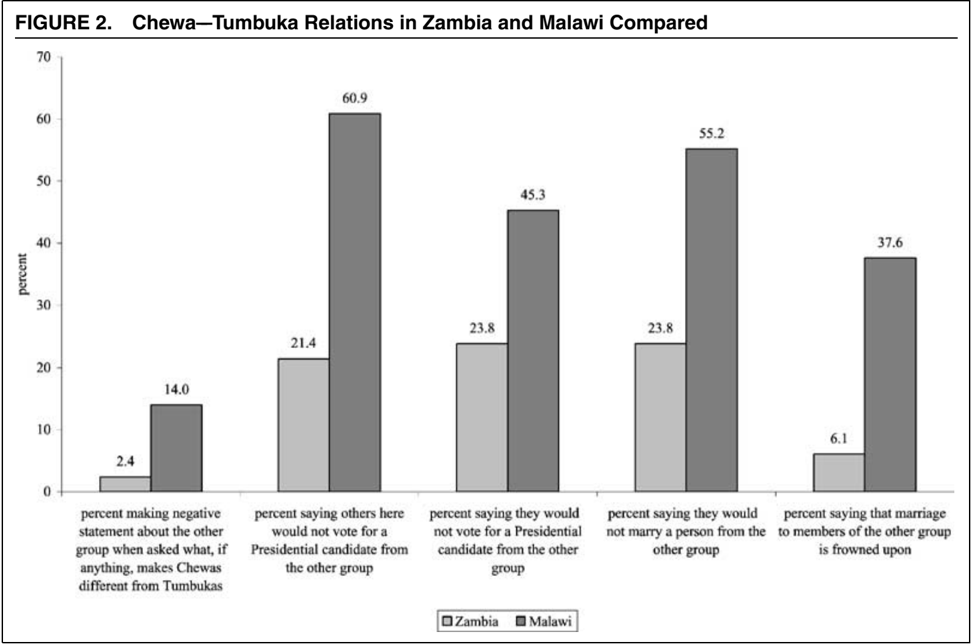
- Yet the cleavage was much more socially and politically salient in Malawi: 61% of Malawians versus 21% of Zambians said others in their village would be unwilling to vote for a candidate from the other group; 45% of Malawians versus 24% of Zambians said they themselves would not vote for such a candidate.
- On marriage, 55% of Malawians versus 24% of Zambians said they would not marry a member of the other group, and 38% of Malawians versus 6% of Zambians said intermarriage was frowned upon.
- The paper’s regressions find that the perceived number of cultural differences is not a significant predictor of attitudes in any of the four models, while country is strongly significant; the table notes sample sizes of 172, 175, 176, and 172.
## Methods
- Comparative natural-experiment design: the Zambia-Malawi border partitions Chewas and Tumbukas, who are otherwise culturally similar across sides of the border, allowing comparison of the same cleavage in different political settings.
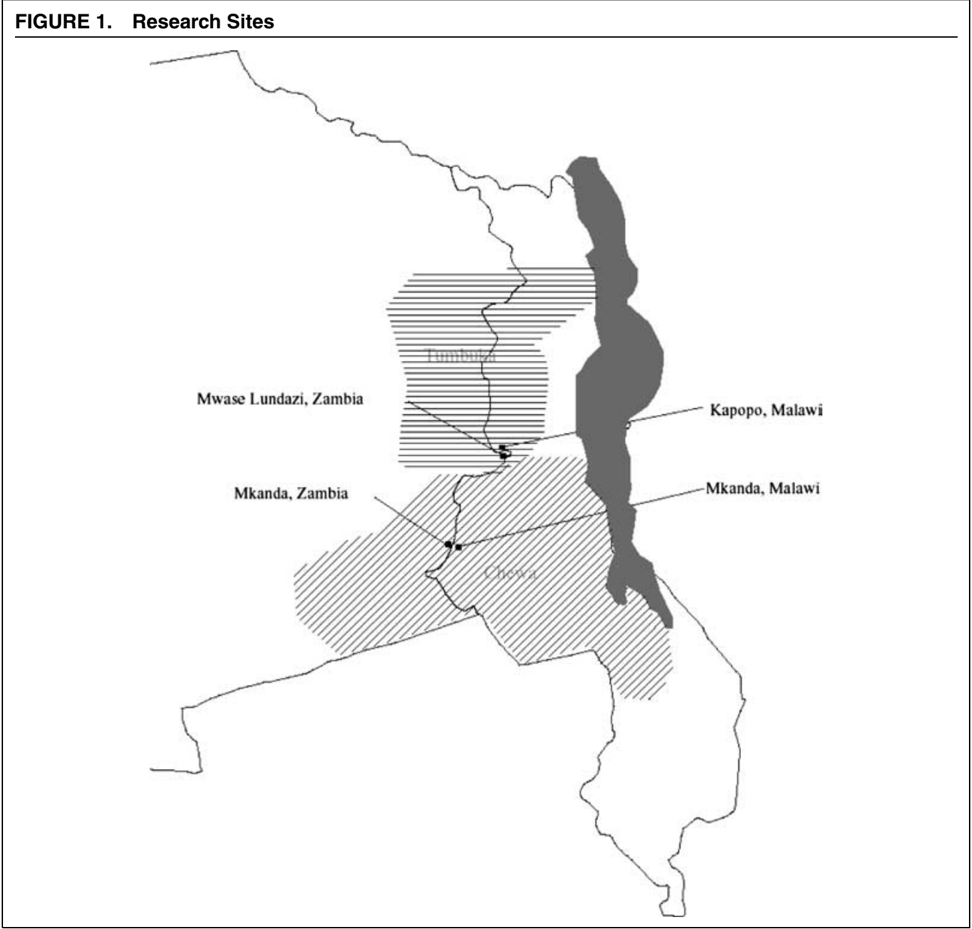
- Original field survey in July-August 2001 in four villages directly across the border: two Chewa villages and two Tumbuka villages; 42 respondents in each Zambian village and 48 in each Malawian village, for a total sample of 180, selected by random stratified quota sampling from every third unrelated household.
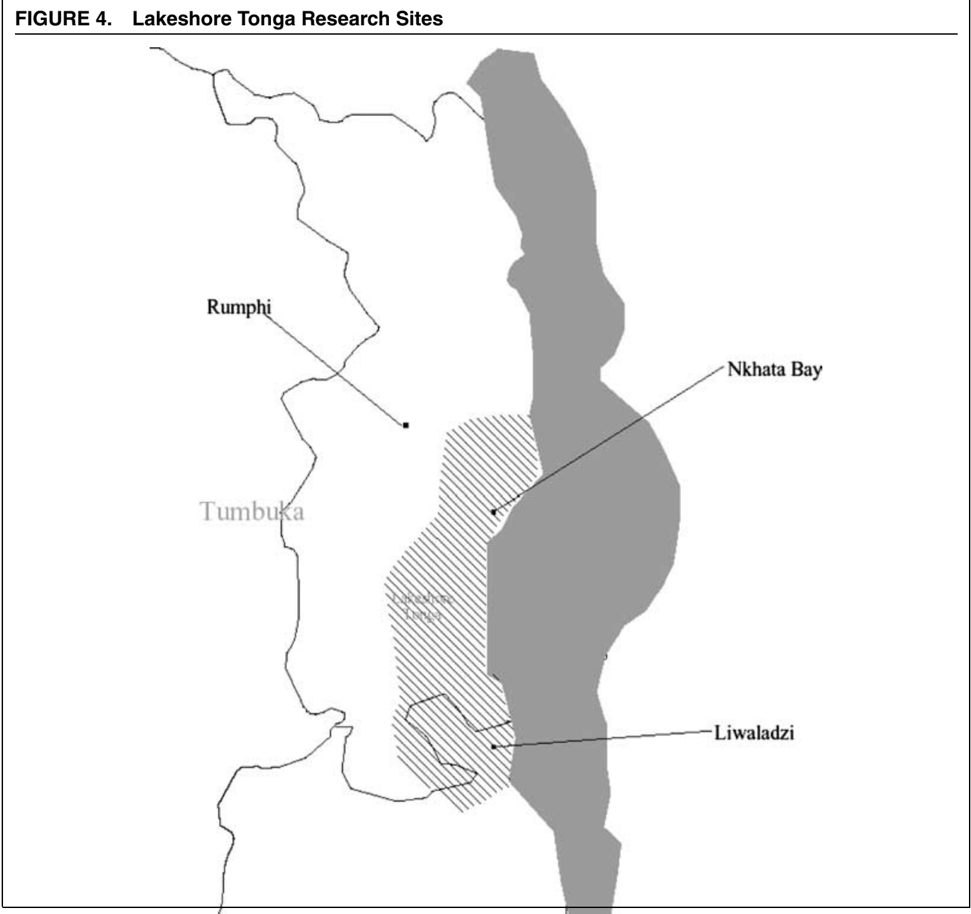
- Main analysis combines open-ended survey responses, descriptive comparisons, logit regressions controlling for tribal affiliation, gender, age, and the number of reported cultural differences, plus a second survey of 30 Lakeshore Tonga respondents to test whether an administrative boundary can create salience.
## Limitations
- Stated by the paper: the author notes that testing whether social divisions are products of political divisions would require time-series data on changes in political divisions, trust, and intermarriage, which are “currently unavailable.”
- Stated by the paper: the Lakeshore Tonga administrative-boundary test is described as “suggestive” because the sample is small.
- Evident from the text: the main survey is limited to four villages in one border region and relies on self-reported attitudes and a small, non-national sample, so generalization beyond the studied sites is not directly demonstrated.
Model-written summary. Check it against the paper before relying on it.
Integrity signals
Registry
Cites
Statistics
Figures
Verification
Claims the paper makes
0 Valid · 1 Not valid · 17 Not checked · 101 Own results and interpretations
A result the paper reports from its own data — it cites no other source for it, so there is none to check. The quote shows it is in the paper.
In the paper
“In fact, the modal Zambian response to our request for a list of differences between Chewas and Tumbukas was to emphasize that 'We are one' or 'We are united.'”
plain- Asserted: passes — The authors put it forward as true.
- Checkable: passes — It can be checked against evidence.
- Load-bearing: passes — The paper’s conclusions depend on it.
- Based: passes — The paper gives a reason why it holds.
A result the paper reports from its own data — it cites no other source for it, so there is none to check. The quote shows it is in the paper.
In the paper
“The most important finding, however, is that, controlling for all of these other factors, the most powerful determinant of a respondent's attitudes toward members of the other community is his or her physical- -and, it bears underscoring, from an historical perspective, entirely accidental- location on one side of the Zambia-Malawi border or the other.”
boostedstates a cause- Asserted: passes — The authors put it forward as true.
- Checkable: passes — It can be checked against evidence.
- Load-bearing: passes — The paper’s conclusions depend on it.
- Based: passes — The paper gives a reason why it holds.
A result the paper reports from its own data — it cites no other source for it, so there is none to check. The quote shows it is in the paper.
In the paper
“Malawian respondents are significantly less willing to vote for a presidential candidate from the other group and significantly less willing to marry across group lines than are their otherwise identical Zambian counterparts.”
plainstates an association- Asserted: passes — The authors put it forward as true.
- Checkable: passes — It can be checked against evidence.
- Load-bearing: passes — The paper’s conclusions depend on it.
- Based: passes — The paper gives a reason why it holds.
A result the paper reports from its own data — it cites no other source for it, so there is none to check. The quote shows it is in the paper.
In the paper
“Again and again, respondents in all four villages identified the same attributes as distinguishing members of the two communities.”
plain- Asserted: passes — The authors put it forward as true.
- Checkable: passes — It can be checked against evidence.
- Load-bearing: passes — The paper’s conclusions depend on it.
- Based: passes — The paper gives a reason why it holds.
A result the paper reports from its own data — it cites no other source for it, so there is none to check. The quote shows it is in the paper.
In the paper
“While the specific cultural practices that respondents mentioned varied somewhat from person to person, nearly every interviewee on both sides of the border (83% overall) was able to identify at least one attribute, tradition, or custom- -and often several- -that made Chewas and Tumbukas culturally different from one another.”
plain- Asserted: passes — The authors put it forward as true.
- Checkable: passes — It can be checked against evidence.
- Load-bearing: passes — The paper’s conclusions depend on it.
- Based: passes — The paper gives a reason why it holds.
66 more claims
Create a free account to see all 119 claims and every source verdict.
- It may state two separate claims as one. 42
- Probably not a substantial claim. 8
Citations
Cites
The clash of civilizations and the remaking of world order
(1997) · Long Range Planning · doi:10.1016/s0024-6301(97)80966-1 · Cited by 7,457
Political Order in Changing Societies
Huntington, S. P. (1970) · Verfassung in Recht und Übersee · doi:10.5771/0506-7286-1970-2-257 · Cited by 6,333
Kuper, L., & Horowitz, D. L. (1986) · Contemporary Sociology · doi:10.2307/2069338 · Cited by 4,869
Democracy in Plural Societies: A Comparative Exploration
Nagata, J., & Lijphart, A. (1979) · International Journal · doi:10.2307/40201796 · Cited by 2,255
Ethnic and Cultural Diversity by Country*
Fearon, J. D. (2003) · Journal of Economic Growth · doi:10.1023/a:1024419522867 · Cited by 1,829 · cited 1×
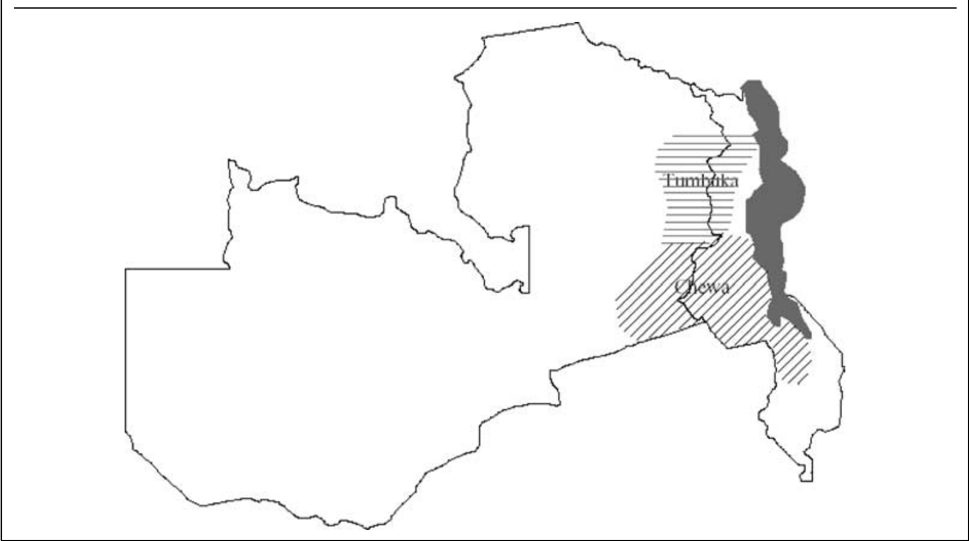
“As Figure 3 makes clear, the Chewa and Tumbuka communities are both large in Malawi (28% and 12% of the national population, respectively) but peripheral in Zambia (7% and 4%, respectively).16 Much more 16 Malawi’s figures come from Fearon 2003.”
BackgroundExplaining Interethnic Cooperation
Fearon, J. D., & Laitin, D. D. (1996) · American Political Science Review · doi:10.2307/2945838 · Cited by 1,606
Ethnologue: Languages of the World
(2015) · Choice Reviews Online · doi:10.5860/choice.192005 · Cited by 1,176
Social Mobilization and Political Development
Deutsch, K. W. (1961) · American Political Science Review · doi:10.1017/s0003055400125134 · Cited by 1,077
Why Ethnic Parties Succeed: Patronage and Ethnic Head Counts in India
Chandra, K. (2004) · Cambridge University Press eBooks · doi:10.1017/9781108573481 · Cited by 1,064
Horowitz, D. L. (2001) · University of California Press eBooks · doi:10.1525/9780520342057 · Cited by 925
Research works printed but not linked: 6
- Vail, Leroy, and Landeg White. 1989. 'Tribalism in the Political History of Malawi.' In The Creation of Tribalism in Southern Africa , ed. Leroy Vail. Berkeley and Los Angeles: University of California Press, 151- -92.
- Lijphart, Arend. 1977. DemocracyinPlural Societies: A Comparative Exploration . New Haven, CT: Yale University Press.
- Henkel, Reinhard. 1985. 'Mission Stations in Zambia: Their Location and Diffusion Patterns.' Zambia Geographical Journal 35: 1- -18.
- Hobsbawm, Eric. 1996. 'Are all Tongues Equal?' In Living as Equals , ed. Paul Barker. New York: Oxford University Press, 85- 98.
- Bratton, Michael. 1994. 'Economic Crisis and Political Realignment in Zambia.' In Economic Change and Political Liberalization in Sub-Saharan Africa , ed. Jennifer A. Widner. Baltimore: Johns Hopkins University Press, 101- -28.
- Lipset, Seymour Martin, and Stein Rokkan. 1967. 'Cleavage Structures, Party Systems and Voter Alignments: An Introduction.' In Party Systems and Voter Alignments: Cross-National Perspectives , ed. Seymour M. Lipset and Stein Rokkan. New York: Free Press, 1- -64.
Cited by
Items 301–400 of 948
Conteh, F. M., & Harris, D. (2014) · Critical African Studies · doi:10.1080/21681392.2014.889883 · Cited by 12
Racial Isolation Drives Racial Voting: Evidence from the New South Africa
de Kadt, D., & Sands, M. (2019) · Political Behavior · doi:10.1007/s11109-019-09547-8 · Cited by 19
Electoral incentives and elite racial identification: Why Brazilian politicians change their race
Janusz, A. (2021) · Electoral Studies · doi:10.1016/j.electstud.2021.102340 · Cited by 15
Governing After War: Rebel Victories and Post-war Statebuilding
Liu, S. (2024) · doi:10.1093/oso/9780197696705.001.0001 · Cited by 24
Kevlihan, R. (2007) · Ethnopolitics · doi:10.1080/17449050701252791 · Cited by 11
“Bases of political mobilization may depend on the nature of political institutions and how competition manifests itself through these institutions (Posner, 2004).”
BackgroundMethodInfluentialMultilevel Research Designs: Case Selection, Levels of Analysis, and Scope Conditions
Došek, T. (2020) · Studies in Comparative International Development · doi:10.1007/s12116-020-09313-6 · Cited by 26
Accounting for Culture in Policy Transfer: A Blueprint for Research and Practice
Bertram, D. (2020) · Political Studies Review · doi:10.1177/1478929920965352 · Cited by 20
Pupcenoks, J., Rostoks, T., & Mieriņa, I. (2022) · Nationalities Papers · doi:10.1017/nps.2022.109 · Cited by 18
“Also, ethnic conflict scholarship shows that the same ethnic groups in different countries can be friends or enemies, depending on other contextual factors (Kaufman 2015; Posner 2004).”
BackgroundSjöberg, F. M. (2011) · Cited by 13
APSA Presidents Reflect on Political Science: Who Knows What, When, and How?
Hochschild, J. L. (2005) · Perspectives on Politics · doi:10.1017/s1537592705050231 · Cited by 11
History and Ethnic Conflict: Does Precolonial Centralization Matter?
Ray, S. (2019) · International Studies Quarterly · doi:10.1093/isq/sqz010 · Cited by 17
Hoklo speakers and Taiwanese identity in south Taiwan
Wu, C. (2021) · Asian Politics & Policy · doi:10.1111/aspp.12570 · Cited by 11
El análisis subnacional: aportes teóricos y metodológicos a la política comparada
Giraudy, A., Moncada, E., & Snyder, R. (2021) · Revista de ciencia política · doi:10.4067/s0718-090x2021005000107 · Cited by 34
Haklai, O., & Norwich, L. (2015) · Ethnopolitics · doi:10.1080/17449057.2015.1052612 · Cited by 11
“…of ethnicity and nationalism has been the subject of considerable research, and many scholars have particularly identified the manipulative capacity of leaders in various contexts to increase their political benefits (Barth, 1963; Chandra, 2005; Oberschall, 2000; Posner, 2004; Wilkinson, 2004).”
BackgroundNatural And Field Experiments: The Role Of Qualitative Methods
Dunning, T. (2008) · Zenodo (CERN European Organization for Nuclear Research) · doi:10.5281/zenodo.996335 · Cited by 16
Horizontal Inequalities and Political Violence
Østby, G. (2011) · NORA - Norwegian Open Research Archives · Cited by 19
Religious Riots and Electoral Politics in IndiaPreprint
Iyer, S., & Shrivastava, A. (2015) · SSRN Electronic Journal · doi:10.2139/ssrn.2696360 · Cited by 12
Explaining the Number of Rebel Groups in Civil WarsPreprint
Walter, B. F., & Phillips, G. (2019) · SSRN Electronic Journal · doi:10.2139/ssrn.3477573 · Cited by 12
Unstable Identities: The Decline of Partisanship in Contemporary Chile
de la Cerda, N. (2022) · Journal of Politics in Latin America · doi:10.1177/1866802x211069378 · Cited by 29
“While boundaries between groups can be both produced and reinforced by political entrepreneurs (LeBas, 2006; Posner, 2004), it can be also be the case that, through their actions, political elites can deactivate cleavages, making some political identities more salient than others (Lebas, 2011).”
BackgroundElectoral Institutions and Identity Based Clientelism in Jordan
Kao, K. (2022) · Political Research Quarterly · doi:10.1177/10659129221128752 · Cited by 19
Cogneau, D., & Dupraz, Y. (2015) · Histoire & Mesure · doi:10.4000/histoiremesure.5189 · Cited by 19
Morton, R. B., Ou, K., & Qin, X. (2019) · Journal of Economic Behavior & Organization · doi:10.1016/j.jebo.2019.02.004 · Cited by 10
Bhattacharya, S., Deb, J., & Kundu, T. (2015) · American Economic Journal Microeconomics · doi:10.1257/mic.20130055 · Cited by 19
Government Policies, New Voter Coalitions, and the Emergence of Ethnic Dimension in Party Systems
Mor, M. (2022) · World Politics · doi:10.1017/s0043887121000228 · Cited by 12
“On group size, see Posner 2004.”
Expanding the Measurement of Culture with a Sample of Two Billion Humans
Obradovich, N., Özak, Ö., Martín, I., Ortuño-Ortín, I., Awad, E., Cebrián, M., Cuevas, R., Desmet, K., Rahwan, I., & Cuevas, √. (2020) · National Bureau of Economic Research · doi:10.3386/w27827 · Cited by 14
Robinson, A. L. (2023) · American Journal of Political Science · doi:10.1111/ajps.12795 · Cited by 13
Exclusion, violence, and optimism: Ethnic divides in Kyrgyzstan
Agadjanian, V. (2019) · Ethnicities · doi:10.1177/1468796819835657 · Cited by 11
“At the same time, the literature points to a variety of cross-cutting divisions and cleavages, such as those of a religious or territorial nature, that may obfuscate or supplant ethnic boundaries and loyalties and even assuage interethnic tensions (e.g. Banton, 2000; Dunning and Harrison, 2010; Posner, 2004; Schulze,…”
BackgroundRaymond, C. D. (2014) · Electoral Studies · doi:10.1016/j.electstud.2014.12.001 · Cited by 11
Schaub, M. (2017) · Political Geography · doi:10.1016/j.polgeo.2017.01.006 · Cited by 9
Social Forces and Regime Change: Beyond Class Analysis
Clarke, K. (2017) · World Politics · doi:10.1017/s0043887117000119 · Cited by 15
Looters or political protesters? Attributions for civil unrest in American cities
Haider‐Markel, D. P., Joslyn, M. R., Ahmed, R., & Badran, S. Z. (2018) · Social Science Research · doi:10.1016/j.ssresearch.2018.07.002 · Cited by 12
What Explains the Rise of Ethnic Minority Tensions in China
Hasmath, R. (2014) · XVIII ISA World Congress of Sociology (July 13-19, 2014) · Cited by 13
Kapidžić, D., & Komar, O. (2021) · Nationalities Papers · doi:10.1017/nps.2021.9 · Cited by 11
“In both cases this makes mobilization along ethnic lines viable even for small groups (contrary to Posner 2004).”
BackgroundEthnic Polarization and Human Development: The Conditional Effects of Minority Language Recognition
Csata, Z., Hlatky, R., & Liu, A. H. (2022) · Studies in Comparative International Development · doi:10.1007/s12116-022-09362-z · Cited by 11
“This decision often depends on the specific context of the study—i.e., which ethnic cleavages are politicized or relevant to the outcomes being studied (Posner 2004b).”
BackgroundPaying the Price of Failure: Reconstructing Failed and Collapsed States in Africa and Central Asia
Heilbrunn, J. R. (2006) · Perspectives on Politics · doi:10.1017/s1537592706060130 · Cited by 9
The Origins of Ethnic Activism: Caste Politics in Colonial India
Lee, A. (2019) · The Journal of Race Ethnicity and Politics · doi:10.1017/rep.2018.29 · Cited by 13
“In explaining which identities become salient, the ethnic politics literature has tended to focus on group size (Kasfir 1979, Posner 2004, Chandra 2004, 2012) or intergroup inequality (Baldwin and Huber 2010, Huber and Suryanarayan, 2016).”
BackgroundInfluentialSpatial variation of management of childhood diarrhea in Malawi
Atari, D. O., & Mkandawire, P. (2014) · Health & Place · doi:10.1016/j.healthplace.2014.06.005 · Cited by 9
Social Cleavages and Civil War Onset
Scarcelli, M. (2013) · Ethnopolitics · doi:10.1080/17449057.2013.835516 · Cited by 11
“…(as through intermarriage), and at certain key historical junctures such ethnic identities may be altered at a group level (see Laitin, 1986; Posner, 2004), at most points in time the majority of the members of such ‘descent-based’ groups are born into them (Chandra, 2006); ‘ethnic…”
BackgroundTies that unbind? Ethnic identity, social rules and electorial politics in Solomon Islands
Wood, T. (2014) · ANU Open Research (Australian National University) · doi:10.25911/5d5145d4e6d73 · Cited by 16
“111 (Norris and Mattes 2003; Chandra 2004; Posner 2004), or where ethnic groups are clustered”
BackgroundAcemoğlu, D., Fergusson, L., & Johnson, S. (2017) · National Bureau of Economic Research · doi:10.3386/w23322 · Cited by 18
Who Trusts? Ethnicity, Integration, and Attitudes Toward Elected Officials in Urban Nigeria
LeBas, A. (2020) · Comparative Political Studies · doi:10.1177/0010414020912269 · Cited by 6
“This is despite findings that clientelistic benefits are unevenly distributed within ethnic groups (Keefer, 2007; Wantchekon, 2003) and that the salience of ethnicity varies markedly across contexts (Eifert et al., 2010; Miguel, 2004; Posner, 2004).”
BackgroundExplaining Factional Sorting in China and Vietnam
Trinh, D. (2020) · Problems of Post-Communism · doi:10.1080/10758216.2020.1739540 · Cited by 9
“…that make them idiosyncratically more salient than others (Caselli and Coleman 2013; Isaacs 1967), as a rule, a social cleavage becomes salient only if the ingroup and outgroup it defines are large enough such that either of them can provide a viable base of political support (Posner 2004).”
BackgroundEthnic trust, minority status, and public goods in post-conflict societies
Whitt, S. (2021) · Journal of Peace Research · doi:10.1177/0022343320984211 · Cited by 9
“6 Ethnic fractionalization is calculated using a Herfindahl concentration formula (Posner, 2004a).”
BackgroundMethodParty structures and organization building in Africa
Lockwood, S. J., Krönke, M., & Mattes, R. (2021) · Party Politics · doi:10.1177/13540688211041038 · Cited by 9
Missing voices: Office space discontent as a driving force in employee hybrid work preferences
Skountridaki, L., Lee, W. V., & Rouhani, L. (2023) · Industrial Relations Journal · doi:10.1111/irj.12415 · Cited by 15
Zhao, K., Huang, H., & Wu, W. (2022) · PLoS ONE · doi:10.1371/journal.pone.0273154 · Cited by 9
“For example, Posner uses the colonial border between Zambia and Malawi, which is drawn by the British South African Company and split two different ethnic groups, to study the political salience of cultural cleavages [53].”
MethodTargeting hunger or votes? The political economy of humanitarian transfers in Malawi
Duchoslav, J., Kenamu, E., & Thunde, J. (2023) · World Development · doi:10.1016/j.worlddev.2022.106179 · Cited by 14
The State of Experimental Research in IR: An Analytical Survey
Hudson, N. F., & Butler, M. J. (2010) · International Studies Review · doi:10.1111/j.1468-2486.2010.00927.x · Cited by 12
Baker, D. L. (2008) · Disability & Society · doi:10.1080/09687590802328428 · Cited by 11
“Nevertheless, a history of discriminatory practices based on observed differences in physical, mental and emotional capacities of individuals with disabilities shapes a cohesive category for construction (but not necessarily implementation) of rights‐based policy due to a common excuse for discrimination (O’Brien 2003…”
BackgroundIs Language Destiny? The Origins and Consequences of Ethnolinguistic Diversity in Sub-Saharan Africa
Cuesta, B. D. L., & Wantchekon, L. (2016) · Palgrave Macmillan UK eBooks · doi:10.1007/978-1-137-32505-1_19 · Cited by 8
The decline of ethnic voting patterns in plural societies: Evidence from Suriname
Gowricharn, R. (2018) · Politics · doi:10.1177/0263395718782388 · Cited by 9
“These theories include ethnic competition (Despres, 1975), democratic stability and power-sharing (Roeder and Rothschild, 2005), and increasing ethnicization (Posner, 2004).”
BackgroundThe Shinawatra siblings: Ethnic heroes and the rise of Lanna nationalism
Selway, J. (2021) · Asian Politics & Policy · doi:10.1111/aspp.12566 · Cited by 8
Does Indiscriminate Violence Incite Insurgent Attacks? Evidence from a Natural ExperimentPreprint
Lyall, J. (2008) · RePEc: Research Papers in Economics · Cited by 8
Salazar, L., Maffioli, A., Aramburu, J., & Adrianzén, M. A. (2016) · doi:10.18235/0000253 · Cited by 10
“GRD designs have also been applied in the field of political science (Gerber et. al (2011), Huber and Arceneaux (2007), Krasno and Green (2008) and Posner (2004)).”
MethodThe Political Legacy of Violence during China's Cultural RevolutionPreprint
Wang, Y.-H. (2019) · SSRN Electronic Journal · doi:10.2139/ssrn.2905285 · Cited by 1
Jöst, P., Krönke, M., Lockwood, S. J., & Lust, E. (2023) · Comparative Political Studies · doi:10.1177/00104140231194064 · Cited by 12
“For example, a number of recent studies have argued that shared location, rather than shared ethnicity, may well be the key determining factor of electoral behavior (Basedau & Stroh, 2011; Ichino & Nathan, 2013; Posner, 2004b).”
Tembo, D., Manja, L. P., & Joshua, M. K. (2024) · Food Culture & Society · doi:10.1080/15528014.2024.2407195 · Cited by 7
“The extent to which cultural differences, for instance, between the Ngoni of Malawi, Zambia, Mozambique, and Tanzania, influence their dietary habits is outside the scope of this paper.”
Achimugu, H., Ata-Agboni, U. J., & Aliyu, A. (2013) · Public Policy and Administration Research · Cited by 7
Long-term effects of ethnic cleansing in the former Polish-German borderlands
Urbatsch, R. (2017) · Political Geography · doi:10.1016/j.polgeo.2017.01.004 · Cited by 11
Nemčok, M., Komar, O., Batrićević, N., Tóth, M., & Spáč, P. (2020) · Politics · doi:10.1177/0263395720920089 · Cited by 8
“Posner (1998, 2004), talking of Zambia, called voters’ expectations of ingroup bias in these societies ‘an axiom of politics’.”
BackgroundPolitics of interconfessional empathy and Schadenfreude in Lebanon
Ash, K., & Dolan, T. M. (2020) · Conflict Management and Peace Science · doi:10.1177/0738894220906370 · Cited by 9
“Our tailor from Zhaghrta speaks to a broader literature that contends individuals’ attitudes toward members of other identity-based groups change based on political circumstances (i.e. Chandra, 2004; Posner, 2004; Varshney, 2003).”
BackgroundNkansah, G. B., & Papp, Z. (2022) · Journal of Youth Studies · doi:10.1080/13676261.2022.2053666 · Cited by 7
“Ordinarily, their large numbers should give them political salience in the eyes of politicians (Posner 2004), and particularly so in electoral politics where numbers are the deciding factor.”
Talal, O. (2022) · Comparative Political Studies · doi:10.1177/00104140221115175 · Cited by 6
Politicized Secularism in Israel: Secularists as a Party to Communal Conflict
Shelef, N. G. (2010) · Contemporary Jewry · doi:10.1007/s12397-010-9025-8 · Cited by 8
Rosenblatt, F., Bidegaín, G., Monestier, F., & Rodríguez, R. P. (2015) · Latin American Politics and Society · doi:10.1111/j.1548-2456.2015.00268.x · Cited by 10
Does social diversity impede sound economic management? An empirical analysis, 1980–2012
de Soysa, I., & Vadlamannati, K. C. (2016) · Social Science Research · doi:10.1016/j.ssresearch.2016.08.012 · Cited by 8
Why Representation Matters: The Meaning of Ethnic Quotas in Rural India
Chauchard, S. (2017) · Cited by 7
Political Environments, Elite Co-Option, and Conflict
Raleigh, C., & Dowd, C. (2018) · Annals of the American Association of Geographers · doi:10.1080/24694452.2018.1459459 · Cited by 14
Ethnicity, Citizenry, and Nation-Building in Tanzania
Ndulu, B. J., Mbowe, W. E. N., & Hunter, E. (2019) · Cambridge University Press eBooks · doi:10.1017/9781108645195.004 · Cited by 8
Coastal reclamation and Balinese identity
Tans, R. (2021) · Asian Politics & Policy · doi:10.1111/aspp.12563 · Cited by 7
Pork and Typhoons: The Political Economy of Disaster Assistance in the PhilippinesPreprint
Hicken, A. D., Atkinson, J., & Ravanilla, N. (2011) · SSRN Electronic Journal · doi:10.2139/ssrn.1911915 · Cited by 7
Propaganda and Politics in Developing Countries: Evidence from IndiaPreprint
Blakeslee, D. (2015) · SSRN Electronic Journal · doi:10.2139/ssrn.2542702 · Cited by 7
Mobile Communication Technology and National Identity in Sub-Saharan AfricaPreprint
Choi, D. D., Laughlin, B., & Schultz, A. (2021) · OSF Preprints (OSF Preprints) · doi:10.31219/osf.io/k4djn · Cited by 8
“Much of the work in this area has focused on how long-term processes or macrosocial structures such as colonial legacies and mod-ernization affect ethnic or national identities (Bates, 1974; Posner, 2004; Robinson, 2014).”
BackgroundSleeping with the enemy: an essay on mixed identity in the context of violent conflict
Hartley, R. J. (2010) · Social Identities · doi:10.1080/13504631003691058 · Cited by 9
“…can be enhanced and exploited in the milieu of competition for political power, especially when one group is large enough to constitute a viable coalition, although success in group mobilization efforts is highly situational (Newbury, 1988; Posner, 2004; Gibson, 2006; Smiles, 2008, pp. 284 285).”
BackgroundSocial Identity and Voting in Afghanistan: Evidence from a Survey Experiment
Jochem, T., Murtazashvili, I., & Murtazashvili, J. B. (2015) · Journal of Experimental Political Science · doi:10.1017/xps.2014.28 · Cited by 6
“Posner (2004) finds that identity salience varies with events and context, such as during election periods.”
BackgroundThe impact of group identity on coalition formation
Laroze, D., Hugh-Jones, D., & Leininger, A. (2020) · Research & Politics · doi:10.1177/2053168020967488 · Cited by 7
“In certain countries political parties are formed on the basis of ethnicity (cf. Horowitz, 1993; Posner, 2004) and same gender groups can cut across party lines to address in-group concerns (e.”
BackgroundInfluentialExploration of the foundations of ethnic conflicts in Balochistan: a theoretical perspective
Ejaz, M., & Rehman, A. (2022) · Liberal Arts and Social Sciences International Journal (LASSIJ) · doi:10.47264/idea.lassij/6.1.4 · Cited by 6
“Ethnic groups are recognized as social constructions with identifiable ancestries and histories of expansion, contraction, amalgamation and division (Posner, 2004).”
BackgroundSiachiwena, H. (2022) · Journal of Eastern African Studies · doi:10.1080/17531055.2022.2236474 · Cited by 6
Abascal, M., Ganter, F., & Baldassarri, D. (2023) · Socius Sociological Research for a Dynamic World · doi:10.1177/23780231231196507 · Cited by 12
“…that predate most of those covered here have fruitfully investigated the relationship between ethnic diversity and societal problems, such as stalled economic growth (Collier 1998; Easterly and Levine 1997; Posner 2004) and violent conflict (Blattman and Miguel 2010; Fearon and Laitin 2003).”
BackgroundMethodInfluentialThe Impact of Nationalist and Maoist Legacies on Popular Trust in Legal Institutions
Landry, P. F. (2011) · Cambridge University Press eBooks · doi:10.1017/cbo9780511977008.007 · Cited by 8
Same old story: the problem of object-based thinking as a basis for teaching distant places
Martin, F. (2013) · Education 3-13 · doi:10.1080/03004279.2013.819619 · Cited by 14
“…difference as a property of everyone, from which points of similarity can be identified but which create categories that are fluid, open to change (as individuals, societies and cultural traditions change over time) and the boundaries of which are permeable (Bashkow 2004; Posner 2004).”
BackgroundHelle, S.-E. (2015) · Zeitschrift für Vergleichende Politikwissenschaft · doi:10.1007/s12286-015-0264-7 · Cited by 9
Managing conflict in north-west Kenya: the siege of Loregon and its aftermath
Noonan, O., & Kevlihan, R. (2018) · Conflict Security and Development · doi:10.1080/14678802.2018.1447862 · Cited by 7
Sweeping the flies away: evidence from a fruit fly eradication program
Salazar, L., Aramburu, J., Agurto, M., Maffioli, A., & Fahsbender, J. (2020) · European Review of Agricultural Economics · doi:10.1093/erae/jbaa015 · Cited by 7
Farhat, N., Vloeberghs, W., Bourbeau, P., & Poirier, P. (2020) · Publius The Journal of Federalism · doi:10.1093/publius/pjaa007 · Cited by 6
Competition Between Organizational Groups: Its Impact on Altruistic and Anti-Social MotivationsPreprint
Goette, L. F., Huffman, D., Meier, S., et al. (2011) · SSRN Electronic Journal · doi:10.2139/ssrn.1967200 · Cited by 6
Causal Inquiry in International Relations
Humphreys, A. R. C., & Suganami, H. (2024) · doi:10.1093/oso/9780198823582.001.0001 · Cited by 25
Tonwe, D. A., & Eke, S. J. (2015) · African Identities · doi:10.1080/14725843.2015.1128803 · Cited by 4
“This argument is supported by the fact that formal and informal institutions that regulate conflict have been identified by weingast (1997) and Posner (2004) as an intervening factor between diversity and conflict.”
BackgroundAbove, Below and Beyond the State: New Directions in Ethnic Conflict Studies
Jenne, E. K. (2016) · Ethnopolitics · doi:10.1080/17449057.2016.1235347 · Cited by 5
“Other scholars have observed that the group’s size relative to others’ in the state (Posner, 2004), the presence of ethnic myths and narratives (Kaufman, 2001; Petersen, 2002; Ross, 2007), group concentration upon a given territory (Toft, 2003), access to valuable land-based resources such as oil…”
BackgroundReligion, language, race and ethnic voting
Houle, C. (2019) · Electoral Studies · doi:10.1016/j.electstud.2019.102052 · Cited by 11
Zimbalist, Z. (2020) · Review of African Political Economy · doi:10.1080/03056244.2020.1840972 · Cited by 7
Group Ties amid Industrial Change: Historical Evidence from the Fossil Fuel Industry
Zucker, N. (2022) · World Politics · doi:10.1017/s0043887122000168 · Cited by 6
“12Patterson 1975; Malkki 1995; Laitin 1998; Brubaker 2002; Posner 2004; Wilkinson 2004; Eifert, Miguel, and Posner 2010.”
BackgroundBeyond the Cake Model: Critical Intersectionality and the Relative Advantage of Disadvantage
Oprisko, R. L., & Caplan, J. (2014) · Epiphany · doi:10.21533/epiphany.v7i2.107 · Cited by 8
Can Integration Tame Conflicts?
Goette, L. F., & Meier, S. (2011) · Science · doi:10.1126/science.1215617 · Cited by 5
The ethno-demographic structure of democratic consolidation in Mauritius and Fiji
Leuprecht, C. (2012) · Commonwealth and Comparative Politics · doi:10.1080/14662043.2012.642116 · Cited by 5
“Insofar as it is not out to weigh the merits of competing explanations per se, the approach in this article differs from the most-similar-systems design that frames some other well-known comparative case studies of ethnic conflict (e.g. Horowitz, 1989; Posner, 2004).”
ResultThe Origins of African Civil-Military Relations: Ethnic Armies and the Development of Coup Traps
Harkness, K. A. (2012) · Cited by 13
Kulkarni, P. (2017) · British Journal of Political Science · doi:10.1017/s0007123416000363 · Cited by 6
Decentralization and Ethnic Diversity
Dunning, T. (2019) · Cambridge University Press eBooks · doi:10.1017/9781108615594.011 · Cited by 5
Coethnicity and Corruption: Field Experimental Evidence from Public Officials in Malawi
Seim, B., & Robinson, A. L. (2019) · Journal of Experimental Political Science · doi:10.1017/xps.2019.8 · Cited by 5
“In our analysis, we use the region-based coding of coethnicity because regional identities within Malawi have been the most salient form of ethnic identity (Ferree and Horowitz 2010; Posner 2004).”
MethodBuilding fences? sectoral immigration bans in Russian regions
Joo, S. H. (2021) · Post-Soviet Affairs · doi:10.1080/1060586x.2021.2013047 · Cited by 6
Metadata
- Authors
- POSNER, D. N.
- Affiliations
- University of California, Los Angeles (US)
- Corresponding author
- POSNER, DANIEL N.
- ORCID
- POSNER, DANIEL N.
- Venue
- American Political Science Review
- Publisher
- Cambridge University Press (CUP)
- Published
- 2004-11
- Volume
- 98
- Issue
- 4
- Pages
- 529-545
- ISSN
- 0003-0554 (ISSN-L)
- 1537-5943
- OpenAlex
- W2169278049
- Cited by
- 940
- References
- 54
- Citations by year
- 2026: 22 · 2025: 22 · 2024: 117 · 2023: 45 · 2022: 40 · 2021: 28 · 2020: 94 · 2019: 34 · 2018: 72 · 2017: 45 · 2016: 49 · 2015: 46 · 2014: 58 · 2013: 45 · 2012: 32
- FWCI
- 79.46
- Type
- journal article
- Language
- en
- Open access
- green
- www.escholarship.org
- Locations
- American Political Science Review (publishedVersion)
- eScholarship (California Digital Library) (submittedVersion)
- RePEc: Research Papers in Economics (submittedVersion)
- Topics
- Social Sciences › Sociology and Political Science › Political Conflict and Governance
- Social Sciences › Sociology and Political Science › African Studies and Ethnography
- Social Sciences › Political Science and International Relations › Electoral Systems and Political Participation
- Keywords
- cultural cleavages, political salience, Chewa, Tumbuka, ethnic politics, ethnic group size, political coalition building, ethnic mobilization
About these checks
Registry, retraction, Cites and statistics results are computed, not judged, with one exception: a printed reference that no index lists is read once by a model before it counts as a citation error. Claims are extracted by a model and kept only when their quote appears verbatim in the text; each cited source is then checked, with a model’s help, for whether it says what the claim relies on. Those verdicts can be wrong — read the claim’s quote and the cited source before relying on one.
A language model drew the claims from the paper on 2026-10-11, under version 3 of the claim definition (model deepseek-v4.1-flash, prompt extract-v3).
A second model labelled each claim on 2026-10-11 (model jev-1.13-20260917, definition revision gold-guideline-v0.2).
Statistics and arithmetic are recomputed, not judged.
Confidence bands are shown only for fields calibrated on our annotated test set. None is calibrated yet, so no band is shown.
What counts as a claim ›How we measure confidence ›How we check this ›
Are you an author, or do you see a problem with this page? Request a review
Data sources
Bibliographic data: Semantic Scholar, OpenAlex, Crossref.
Contains information from the Semantic Scholar Academic Graph Datasets, made available under the ODC Attribution License (ODC-BY 1.0).
Semantic Scholar’s data is described in: Kinney, R., et al. (2023). The Semantic Scholar Open Data Platform. arXiv:2301.10140.
