

The Political Salience of Cultural Difference: Why Chewas and Tumbukas Are Allies in Zambia and Adversaries in Malawi
Open accessThe DOI matches its Crossref record; 52 of the 54 references it cites were found in a registry or an index, and 1 are not checked yet; none of the 26 sources its claims cite is checked for support yet.
Abstract
This paper explores the conditions under which cultural cleavages become politically salient. It does so by taking advantage of the natural experiment afforded by the division of the Chewa and Tumbuka peoples by the border between Zambia and Malawi. I document that, while the objective cultural differences between Chewas and Tumbukas on both sides of the border are identical, the political salience of the division between these communities is altogether different. I argue that this difference stems from the different sizes of the Chewa and Tumbuka communities in each country relative to each country's national political arena. In Malawi, Chewas and Tumbukas are each large groups vis-à-vis the country as a whole and, thus, serve as viable bases for political coalition-building. In Zambia, Chewas and Tumbukas are small relative to the country as a whole and, thus, not useful to mobilize as bases of political support. The analysis suggests that the political salience of a cultural cleavage depends not on the nature of the cleavage itself (since it is identical in both countries) but on the sizes of the groups it defines and whether or not they will be useful vehicles for political competition.
Checked 2026-11-22 · 1 reference not checked yet
Overview
CoChat Summary
## TL;DR
Posner argues that a cultural cleavage becomes politically and socially salient when the groups it defines are large enough to be useful coalitional building blocks in a given political arena. Using survey evidence from Chewa and Tumbuka villages in Zambia and Malawi, he shows that the same cultural differences are politically and socially much more salient in Malawi than in Zambia because of differences in group size relative to the national arena.
## Key findings
- In the border-area survey, respondents in all four villages identified the same Chewa-Tumbuka cultural differences; 83% overall could name at least one difference, with an average of 1.36 differences mentioned, and the average among those naming at least one was nearly identical across borders (1.66 in Zambia, 1.70 in Malawi).
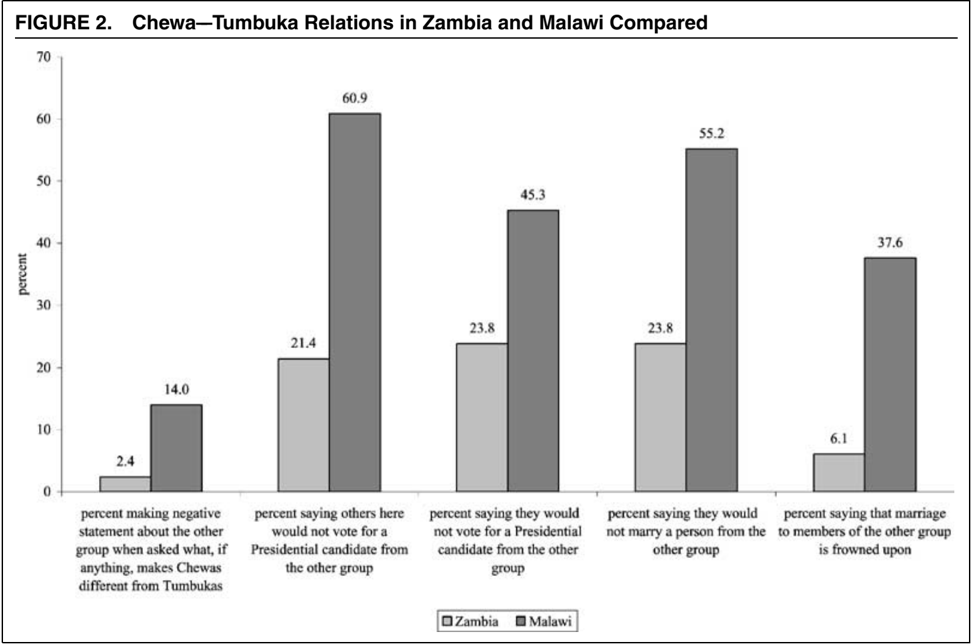
- Yet the cleavage was much more socially and politically salient in Malawi: 61% of Malawians versus 21% of Zambians said others in their village would be unwilling to vote for a candidate from the other group; 45% of Malawians versus 24% of Zambians said they themselves would not vote for such a candidate.
- On marriage, 55% of Malawians versus 24% of Zambians said they would not marry a member of the other group, and 38% of Malawians versus 6% of Zambians said intermarriage was frowned upon.
- The paper’s regressions find that the perceived number of cultural differences is not a significant predictor of attitudes in any of the four models, while country is strongly significant; the table notes sample sizes of 172, 175, 176, and 172.
## Methods
- Comparative natural-experiment design: the Zambia-Malawi border partitions Chewas and Tumbukas, who are otherwise culturally similar across sides of the border, allowing comparison of the same cleavage in different political settings.
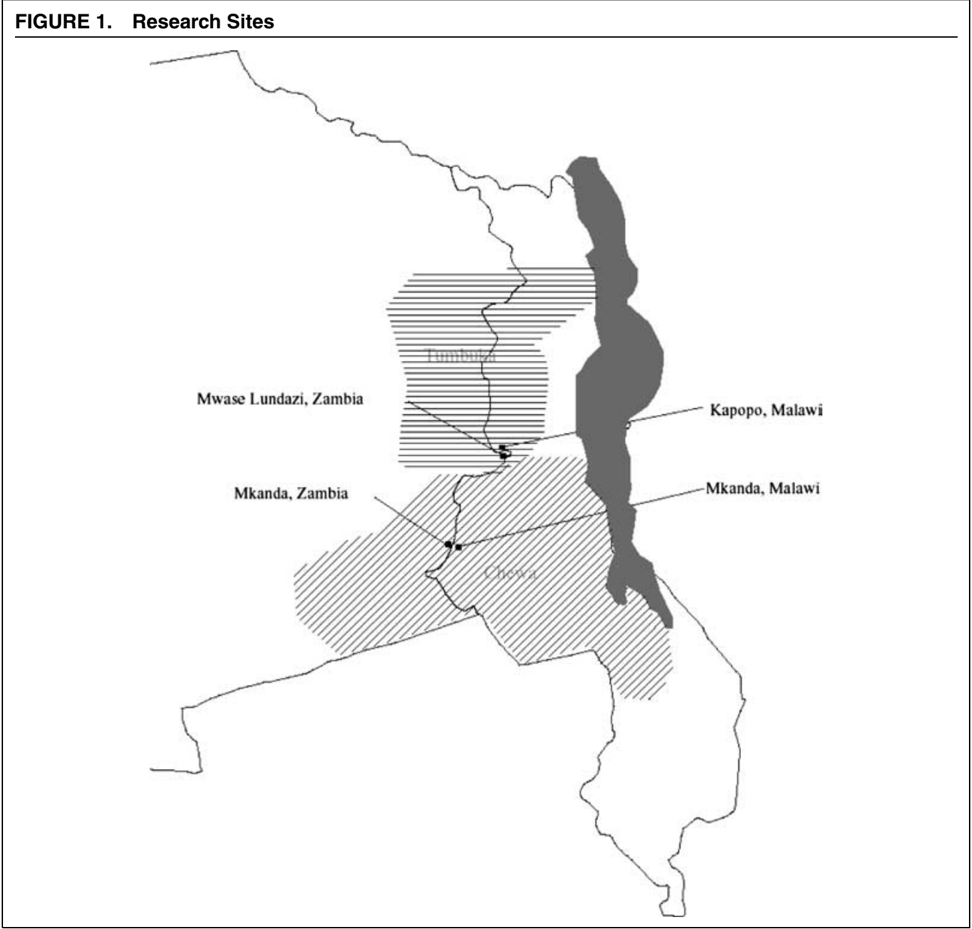
- Original field survey in July-August 2001 in four villages directly across the border: two Chewa villages and two Tumbuka villages; 42 respondents in each Zambian village and 48 in each Malawian village, for a total sample of 180, selected by random stratified quota sampling from every third unrelated household.
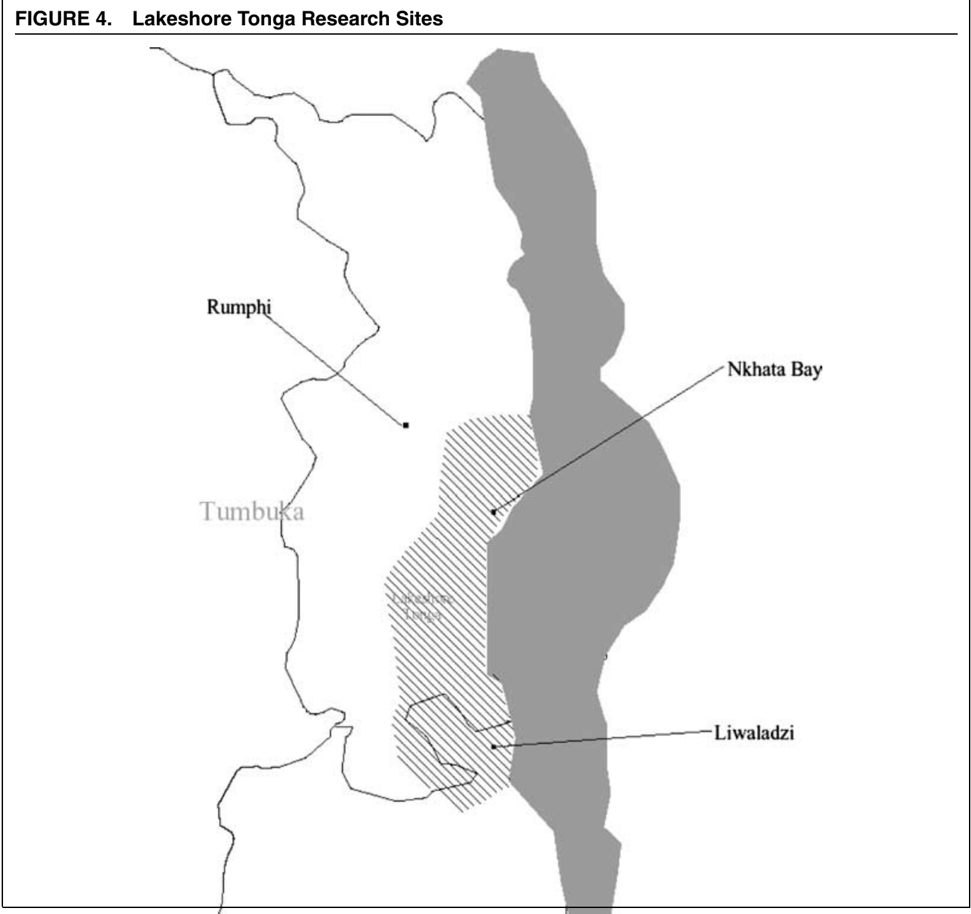
- Main analysis combines open-ended survey responses, descriptive comparisons, logit regressions controlling for tribal affiliation, gender, age, and the number of reported cultural differences, plus a second survey of 30 Lakeshore Tonga respondents to test whether an administrative boundary can create salience.
## Limitations
- Stated by the paper: the author notes that testing whether social divisions are products of political divisions would require time-series data on changes in political divisions, trust, and intermarriage, which are “currently unavailable.”
- Stated by the paper: the Lakeshore Tonga administrative-boundary test is described as “suggestive” because the sample is small.
- Evident from the text: the main survey is limited to four villages in one border region and relies on self-reported attitudes and a small, non-national sample, so generalization beyond the studied sites is not directly demonstrated.
Model-written summary. Check it against the paper before relying on it.
Integrity signals
Registry
Cites
Statistics
Figures
Verification
Claims the paper makes
0 Valid · 1 Not valid · 17 Not checked · 101 Own results and interpretations
A result the paper reports from its own data — it cites no other source for it, so there is none to check. The quote shows it is in the paper.
In the paper
“In fact, the modal Zambian response to our request for a list of differences between Chewas and Tumbukas was to emphasize that 'We are one' or 'We are united.'”
plain- Asserted: passes — The authors put it forward as true.
- Checkable: passes — It can be checked against evidence.
- Load-bearing: passes — The paper’s conclusions depend on it.
- Based: passes — The paper gives a reason why it holds.
A result the paper reports from its own data — it cites no other source for it, so there is none to check. The quote shows it is in the paper.
In the paper
“The most important finding, however, is that, controlling for all of these other factors, the most powerful determinant of a respondent's attitudes toward members of the other community is his or her physical- -and, it bears underscoring, from an historical perspective, entirely accidental- location on one side of the Zambia-Malawi border or the other.”
boostedstates a cause- Asserted: passes — The authors put it forward as true.
- Checkable: passes — It can be checked against evidence.
- Load-bearing: passes — The paper’s conclusions depend on it.
- Based: passes — The paper gives a reason why it holds.
A result the paper reports from its own data — it cites no other source for it, so there is none to check. The quote shows it is in the paper.
In the paper
“Malawian respondents are significantly less willing to vote for a presidential candidate from the other group and significantly less willing to marry across group lines than are their otherwise identical Zambian counterparts.”
plainstates an association- Asserted: passes — The authors put it forward as true.
- Checkable: passes — It can be checked against evidence.
- Load-bearing: passes — The paper’s conclusions depend on it.
- Based: passes — The paper gives a reason why it holds.
A result the paper reports from its own data — it cites no other source for it, so there is none to check. The quote shows it is in the paper.
In the paper
“Again and again, respondents in all four villages identified the same attributes as distinguishing members of the two communities.”
plain- Asserted: passes — The authors put it forward as true.
- Checkable: passes — It can be checked against evidence.
- Load-bearing: passes — The paper’s conclusions depend on it.
- Based: passes — The paper gives a reason why it holds.
A result the paper reports from its own data — it cites no other source for it, so there is none to check. The quote shows it is in the paper.
In the paper
“While the specific cultural practices that respondents mentioned varied somewhat from person to person, nearly every interviewee on both sides of the border (83% overall) was able to identify at least one attribute, tradition, or custom- -and often several- -that made Chewas and Tumbukas culturally different from one another.”
plain- Asserted: passes — The authors put it forward as true.
- Checkable: passes — It can be checked against evidence.
- Load-bearing: passes — The paper’s conclusions depend on it.
- Based: passes — The paper gives a reason why it holds.
66 more claims
Create a free account to see all 119 claims and every source verdict.
- It may state two separate claims as one. 42
- Probably not a substantial claim. 8
Citations
Cites
The clash of civilizations and the remaking of world order
(1997) · Long Range Planning · doi:10.1016/s0024-6301(97)80966-1 · Cited by 7,457
Political Order in Changing Societies
Huntington, S. P. (1970) · Verfassung in Recht und Übersee · doi:10.5771/0506-7286-1970-2-257 · Cited by 6,333
Kuper, L., & Horowitz, D. L. (1986) · Contemporary Sociology · doi:10.2307/2069338 · Cited by 4,869
Democracy in Plural Societies: A Comparative Exploration
Nagata, J., & Lijphart, A. (1979) · International Journal · doi:10.2307/40201796 · Cited by 2,255
Ethnic and Cultural Diversity by Country*
Fearon, J. D. (2003) · Journal of Economic Growth · doi:10.1023/a:1024419522867 · Cited by 1,829 · cited 1×
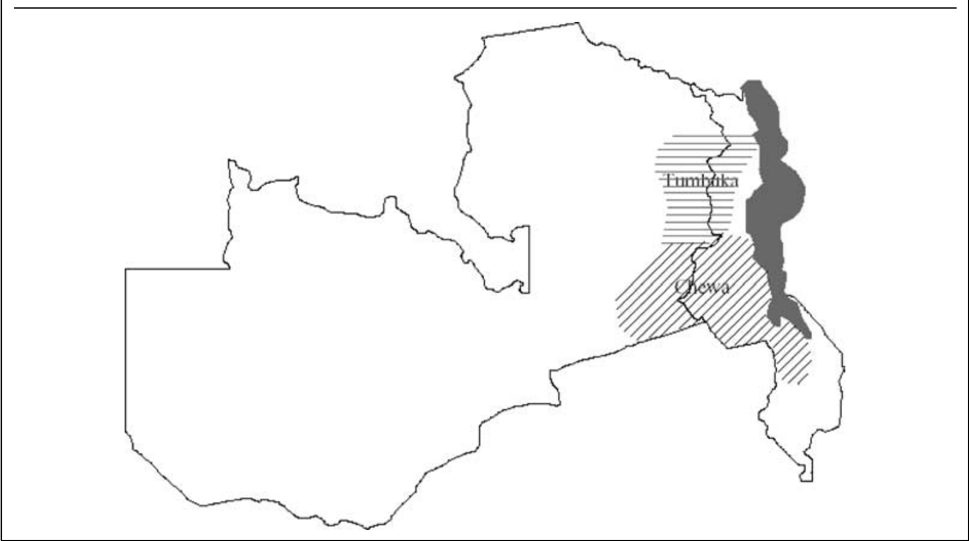
“As Figure 3 makes clear, the Chewa and Tumbuka communities are both large in Malawi (28% and 12% of the national population, respectively) but peripheral in Zambia (7% and 4%, respectively).16 Much more 16 Malawi’s figures come from Fearon 2003.”
BackgroundExplaining Interethnic Cooperation
Fearon, J. D., & Laitin, D. D. (1996) · American Political Science Review · doi:10.2307/2945838 · Cited by 1,606
Ethnologue: Languages of the World
(2015) · Choice Reviews Online · doi:10.5860/choice.192005 · Cited by 1,176
Social Mobilization and Political Development
Deutsch, K. W. (1961) · American Political Science Review · doi:10.1017/s0003055400125134 · Cited by 1,077
Why Ethnic Parties Succeed: Patronage and Ethnic Head Counts in India
Chandra, K. (2004) · Cambridge University Press eBooks · doi:10.1017/9781108573481 · Cited by 1,064
Horowitz, D. L. (2001) · University of California Press eBooks · doi:10.1525/9780520342057 · Cited by 925
Research works printed but not linked: 6
- Vail, Leroy, and Landeg White. 1989. 'Tribalism in the Political History of Malawi.' In The Creation of Tribalism in Southern Africa , ed. Leroy Vail. Berkeley and Los Angeles: University of California Press, 151- -92.
- Lijphart, Arend. 1977. DemocracyinPlural Societies: A Comparative Exploration . New Haven, CT: Yale University Press.
- Henkel, Reinhard. 1985. 'Mission Stations in Zambia: Their Location and Diffusion Patterns.' Zambia Geographical Journal 35: 1- -18.
- Hobsbawm, Eric. 1996. 'Are all Tongues Equal?' In Living as Equals , ed. Paul Barker. New York: Oxford University Press, 85- 98.
- Bratton, Michael. 1994. 'Economic Crisis and Political Realignment in Zambia.' In Economic Change and Political Liberalization in Sub-Saharan Africa , ed. Jennifer A. Widner. Baltimore: Johns Hopkins University Press, 101- -28.
- Lipset, Seymour Martin, and Stein Rokkan. 1967. 'Cleavage Structures, Party Systems and Voter Alignments: An Introduction.' In Party Systems and Voter Alignments: Cross-National Perspectives , ed. Seymour M. Lipset and Stein Rokkan. New York: Free Press, 1- -64.
Cited by
Items 701–800 of 948
Individual-level Causes and Effects of Election Violence
Klaus, K. (2020) · Cambridge University Press eBooks · doi:10.1017/9781108764063.008
Place, Change, Status, and Politics: Concluding Considerations
Fitzgerald, J. (2018) · Cambridge University Press eBooks · doi:10.1017/9781108377218.008
Two-Variable Regression Models
Kellstedt, P. M., & Whitten, G. D. (2019) · Cambridge University Press eBooks · doi:10.1017/9781108683791.010
Strategic Ethnic AmbiguityPreprint
Hurst, R. (2021) · SSRN Electronic Journal · doi:10.2139/ssrn.3878527
Ruling Islamists’ Approaches to Minorities in Sudan and Turkey
Daoud, D. (2020) · QSpace (Queen's University Library) · Cited by 1
Government Dependency Theory: Public Services, Banking Crisis, and the Likelihood of Protests
Bickel, T. (2014) · Open Scholarship Institutional Repository (Washington University in St. Louis) · doi:10.7936/k7zc80th
“Therefore, ethnic cleavages are a result of conflict and not the instigator (Posner 2004).”
BackgroundMultiple Regression Model Specification
Kellstedt, P. M., & Whitten, G. D. (2018) · Cambridge University Press eBooks · doi:10.1017/9781108131704.015
Limited Dependent Variables and Time-Series Data
Kellstedt, P. M., & Whitten, G. D. (2018) · Cambridge University Press eBooks · doi:10.1017/9781108131704.016
Two-Variable Regression Models
Kellstedt, P. M., & Whitten, G. D. (2018) · Cambridge University Press eBooks · doi:10.1017/9781108131704.013
Evaluating Causal Relationships
Kellstedt, P. M., & Whitten, G. D. (2018) · Cambridge University Press eBooks · doi:10.1017/9781108131704.007
Kellstedt, P. M., & Whitten, G. D. (2018) · Cambridge University Press eBooks · doi:10.1017/9781108131704.010
Acknowledgments to the Third Edition
Kellstedt, P. M., & Whitten, G. D. (2018) · Cambridge University Press eBooks · doi:10.1017/9781108131704.002
Multiple Regression: the Basics
Kellstedt, P. M., & Whitten, G. D. (2018) · Cambridge University Press eBooks · doi:10.1017/9781108131704.014
Acknowledgments to the Second Edition
Kellstedt, P. M., & Whitten, G. D. (2018) · Cambridge University Press eBooks · doi:10.1017/9781108131704.003
The Φ Link Function for Binomial Probit Models
Kellstedt, P. M., & Whitten, G. D. (2018) · Cambridge University Press eBooks · doi:10.1017/9781108131704.020
The Scientific Study of Politics
Kellstedt, P. M., & Whitten, G. D. (2018) · Cambridge University Press eBooks · doi:10.1017/9781108131704.005
Kellstedt, P. M., & Whitten, G. D. (2018) · Cambridge University Press eBooks · doi:10.1017/9781108131704.012
Acknowledgments to the First Edition
Kellstedt, P. M., & Whitten, G. D. (2018) · Cambridge University Press eBooks · doi:10.1017/9781108131704.004
Kellstedt, P. M., & Whitten, G. D. (2018) · Cambridge University Press eBooks · doi:10.1017/9781108131704.021
Kellstedt, P. M., & Whitten, G. D. (2018) · Cambridge University Press eBooks · doi:10.1017/9781108131704.001
Kellstedt, P. M., & Whitten, G. D. (2018) · Cambridge University Press eBooks · doi:10.1017/9781108131704.018
The Λ Link Function for Binomial Logit Models
Kellstedt, P. M., & Whitten, G. D. (2018) · Cambridge University Press eBooks · doi:10.1017/9781108131704.019
Critical Values of Chi-Squared
Kellstedt, P. M., & Whitten, G. D. (2018) · Cambridge University Press eBooks · doi:10.1017/9781108131704.017
Kellstedt, P. M., & Whitten, G. D. (2018) · Cambridge University Press eBooks · doi:10.1017/9781108131704.006
Klaus, K. (2020) · Cambridge University Press eBooks · doi:10.1017/9781108764063.011
Narrative Formation in the Central Rift Valley
Klaus, K. (2020) · Cambridge University Press eBooks · doi:10.1017/9781108764063.005
Klaus, K. (2020) · Cambridge University Press eBooks · doi:10.1017/9781108764063.014
Gerring, J., & Veenendaal, W. P. (2020) · Cambridge University Press eBooks · doi:10.1017/9781108657099.009
Introduction to Part III: Testing the Argument
Posner, D. (2005) · Cambridge University Press eBooks · doi:10.1017/cbo9780511808661.010
Self-citationWeighing the Dead: Partisan Reasoning at the Ballot Box
Kalmoe, N. P. (2020) · Cambridge University Press eBooks · doi:10.1017/9781108870504.009
Ghosts of the Civil War: Voting, Honoring, & Organizing
Kalmoe, N. P. (2020) · Cambridge University Press eBooks · doi:10.1017/9781108870504.012
Gerring, J., & Veenendaal, W. P. (2020) · Cambridge University Press eBooks · doi:10.1017/9781108657099.004
Gerring, J., & Veenendaal, W. P. (2020) · Cambridge University Press eBooks · doi:10.1017/9781108657099.010
Gerring, J., & Veenendaal, W. P. (2020) · Cambridge University Press eBooks · doi:10.1017/9781108657099.007
Gerring, J., & Veenendaal, W. P. (2020) · Cambridge University Press eBooks · doi:10.1017/9781108657099.013
Klaus, K. (2020) · Cambridge University Press eBooks · doi:10.1017/9781108764063.012
Kalmoe, N. P. (2020) · Cambridge University Press eBooks · doi:10.1017/9781108870504.001
Conclusion: Lessons from Partisan Warfare
Kalmoe, N. P. (2020) · Cambridge University Press eBooks · doi:10.1017/9781108870504.013
Kalmoe, N. P. (2020) · Cambridge University Press eBooks · doi:10.1017/9781108870504.015
Kawanaka, T., & Hazama, Y. (2016) · SpringerBriefs in economics · doi:10.1007/978-981-10-0257-1_2
Introduction to Part I: Accounting for the Ethnic Cleavage Structure
Posner, D. (2005) · Cambridge University Press eBooks · doi:10.1017/cbo9780511808661.004
Self-citationGerring, J., & Veenendaal, W. P. (2020) · Cambridge University Press eBooks · doi:10.1017/9781108657099.016
Gerring, J., & Veenendaal, W. P. (2020) · Cambridge University Press eBooks · doi:10.1017/9781108657099.001
Gerring, J., & Veenendaal, W. P. (2020) · Cambridge University Press eBooks · doi:10.1017/9781108657099.002
Gerring, J., & Veenendaal, W. P. (2020) · Cambridge University Press eBooks · doi:10.1017/9781108657099.015
Partisan Stability & the Myth of Atlanta: The Electoral Inconsequence of Wartime Events
Kalmoe, N. P. (2020) · Cambridge University Press eBooks · doi:10.1017/9781108870504.010
Kalmoe, N. P. (2020) · Cambridge University Press eBooks · doi:10.1017/9781108870504.004
Gerring, J., & Veenendaal, W. P. (2020) · Cambridge University Press eBooks · doi:10.1017/9781108657099.017
Gerring, J., & Veenendaal, W. P. (2020) · Cambridge University Press eBooks · doi:10.1017/9781108657099.003
Kalmoe, N. P. (2020) · Cambridge University Press eBooks · doi:10.1017/9781108870504.011
Filling the Ranks: Partisan Opinion Leadership in Violent Action
Kalmoe, N. P. (2020) · Cambridge University Press eBooks · doi:10.1017/9781108870504.006
Posner, D. (2005) · Cambridge University Press eBooks · doi:10.1017/cbo9780511808661.011
Self-citationKlaus, K. (2020) · Cambridge University Press eBooks · doi:10.1017/9781108764063.001
Gerring, J., & Veenendaal, W. P. (2020) · Cambridge University Press eBooks · doi:10.1017/9781108657099.019
Gerring, J., & Veenendaal, W. P. (2020) · Cambridge University Press eBooks · doi:10.1017/9781108657099.012
Gerring, J., & Veenendaal, W. P. (2020) · Cambridge University Press eBooks · doi:10.1017/9781108657099.006
The Roots of Partisan Civil War: Continuity across Political Eras
Kalmoe, N. P. (2020) · Cambridge University Press eBooks · doi:10.1017/9781108870504.003
Gerring, J., & Veenendaal, W. P. (2020) · Cambridge University Press eBooks · doi:10.1017/9781108657099.020
Gerring, J., & Veenendaal, W. P. (2020) · Cambridge University Press eBooks · doi:10.1017/9781108657099.008
Gerring, J., & Veenendaal, W. P. (2020) · Cambridge University Press eBooks · doi:10.1017/9781108657099.011
Klaus, K. (2020) · Cambridge University Press eBooks · doi:10.1017/9781108764063.009
Gerring, J., & Veenendaal, W. P. (2020) · Cambridge University Press eBooks · doi:10.1017/9781108657099.005
Brancati, D. (2008) · Oxford University Press eBooks · doi:10.1093/acprof:oso/9780199549009.003.0008
Kalmoe, N. P. (2020) · Cambridge University Press eBooks · doi:10.1017/9781108870504.014
Brancati, D. (2008) · Oxford University Press eBooks · doi:10.1093/acprof:oso/9780199549009.003.0003 · Cited by 1
Brancati, D. (2008) · Oxford University Press eBooks · doi:10.1093/acprof:oso/9780199549009.003.0007
Kalmoe, N. P. (2020) · Cambridge University Press eBooks · doi:10.1017/9781108870504.016
Kellstedt, P. M., & Whitten, G. D. (2018) · Cambridge University Press eBooks · doi:10.1017/9781108131704.022
Brancati, D. (2008) · Oxford University Press eBooks · doi:10.1093/acprof:oso/9780199549009.003.0004
Brancati, D. (2008) · Oxford University Press eBooks · doi:10.1093/acprof:oso/9780199549009.003.0005
Wilson, S.-A. (2012) · Palgrave Macmillan US eBooks · doi:10.1057/9781137012128_8
(2008) · Cambridge University Press eBooks · doi:10.1017/cbo9780511790614.012
Klaus, K. (2020) · Cambridge University Press eBooks · doi:10.1017/9781108764063.015
When Co-ethnicity FailsPreprint
Kustov, A., & Pardelli, G. (2020) · doi:10.33774/apsa-2020-24dr5
Gerring, J., & Veenendaal, W. P. (2020) · Cambridge University Press eBooks · doi:10.1017/9781108657099.021
Brancati, D. (2008) · Oxford University Press eBooks · doi:10.1093/acprof:oso/9780199549009.003.0001
Gerring, J., & Veenendaal, W. P. (2020) · Cambridge University Press eBooks · doi:10.1017/9781108657099.014
Spending on stability: The relationship between public goods provision and regime survival
Bell, C. (2011) · CU Scholar (University of Colorado Boulder)
Extending the Laakso-Taagepera Index to integrate both party and ethnicity
Grofman, B., & Fraenkel, J. (2022) · Party Politics · doi:10.1177/13540688221097838
“A given ethnic categorization might be relevant in one country but not another, and that might depend upon the relative sizes of groups in the two countries (Posner, 2004), and might change over time.”
BackgroundCivil and Ethnic Conflict in Historical Political EconomyPreprint
Jha, S. (2022) · SSRN Electronic Journal · doi:10.2139/ssrn.4164287
“Groups that are political complements are more likely to be tolerant, while those that compete politically are less likely to support inter-marriage (Posner, 2004).”
Background(2008) · Oxford University Press eBooks · doi:10.1093/acprof:oso/9780199549009.002.0007
(2008) · Oxford University Press eBooks · doi:10.1093/acprof:oso/9780199549009.002.0008
(2008) · Oxford University Press eBooks · doi:10.1093/acprof:oso/9780199549009.002.0003
Who Are the Localists that Support the Radical Right?
Fitzgerald, J. (2018) · Cambridge University Press eBooks · doi:10.1017/9781108377218.004
Local Political Salience and Radical Right Party Success in OECD Countries*
Fitzgerald, J. (2018) · Cambridge University Press eBooks · doi:10.1017/9781108377218.007
Localism and Radical Right Support in Europe*
Fitzgerald, J. (2018) · Cambridge University Press eBooks · doi:10.1017/9781108377218.003
Theorizing Localism and Radical Right Support
Fitzgerald, J. (2018) · Cambridge University Press eBooks · doi:10.1017/9781108377218.002
Local Autonomy Shifts, Local Cohesion, and Le Pen Support in France*
Fitzgerald, J. (2018) · Cambridge University Press eBooks · doi:10.1017/9781108377218.006
Electoral Disorder, Social Change: An Introduction
Fitzgerald, J. (2018) · Cambridge University Press eBooks · doi:10.1017/9781108377218.001
Fitzgerald, J. (2018) · Cambridge University Press eBooks · doi:10.1017/9781108377218.011
Fitzgerald, J. (2018) · Cambridge University Press eBooks · doi:10.1017/9781108377218.009
Neighborly Ties, Local Autonomy, and SVP Support in Switzerland
Fitzgerald, J. (2018) · Cambridge University Press eBooks · doi:10.1017/9781108377218.005
The Role of Partisanship, Identity and Incentives in Mobilizing Zambian CitizensPreprint
Jöst, P., Krönke, M., Lockwood, S., et al. (2022) · doi:10.33774/apsa-2022-575vn
Tumaini Festival: Cultural Production and Transnational Exchange at Dzaleka Refugee Camp in Malawi
Chima, E. (2022) · Springer eBooks · doi:10.1007/978-981-19-0641-1_15
Holland, C. C. (2020) · The Blackwell Encyclopedia of Sociology · doi:10.1002/9781405165518.wbeos1647
The Obama effect? Race, first-time voting, and future participation
Brown, J. (2023) · Political Science Research and Methods · doi:10.1017/psrm.2023.9 · Cited by 1
Owolabi, O. P. (2023) · Oxford University Press eBooks · doi:10.1093/oso/9780197673027.002.0009
Owolabi, O. P. (2023) · Oxford University Press eBooks · doi:10.1093/oso/9780197673027.003.0007
Owolabi, O. P. (2023) · Oxford University Press eBooks · doi:10.1093/oso/9780197673027.005.0004
Owolabi, O. P. (2023) · Oxford University Press eBooks · doi:10.1093/oso/9780197673027.002.0006
Metadata
- Authors
- POSNER, D. N.
- Affiliations
- University of California, Los Angeles (US)
- Corresponding author
- POSNER, DANIEL N.
- ORCID
- POSNER, DANIEL N.
- Venue
- American Political Science Review
- Publisher
- Cambridge University Press (CUP)
- Published
- 2004-11
- Volume
- 98
- Issue
- 4
- Pages
- 529-545
- ISSN
- 0003-0554 (ISSN-L)
- 1537-5943
- OpenAlex
- W2169278049
- Cited by
- 940
- References
- 54
- Citations by year
- 2026: 22 · 2025: 22 · 2024: 117 · 2023: 45 · 2022: 40 · 2021: 28 · 2020: 94 · 2019: 34 · 2018: 72 · 2017: 45 · 2016: 49 · 2015: 46 · 2014: 58 · 2013: 45 · 2012: 32
- FWCI
- 79.46
- Type
- journal article
- Language
- en
- Open access
- green
- www.escholarship.org
- Locations
- American Political Science Review (publishedVersion)
- eScholarship (California Digital Library) (submittedVersion)
- RePEc: Research Papers in Economics (submittedVersion)
- Topics
- Social Sciences › Sociology and Political Science › Political Conflict and Governance
- Social Sciences › Sociology and Political Science › African Studies and Ethnography
- Social Sciences › Political Science and International Relations › Electoral Systems and Political Participation
- Keywords
- cultural cleavages, political salience, Chewa, Tumbuka, ethnic politics, ethnic group size, political coalition building, ethnic mobilization
About these checks
Registry, retraction, Cites and statistics results are computed, not judged, with one exception: a printed reference that no index lists is read once by a model before it counts as a citation error. Claims are extracted by a model and kept only when their quote appears verbatim in the text; each cited source is then checked, with a model’s help, for whether it says what the claim relies on. Those verdicts can be wrong — read the claim’s quote and the cited source before relying on one.
A language model drew the claims from the paper on 2026-10-11, under version 3 of the claim definition (model deepseek-v4.1-flash, prompt extract-v3).
A second model labelled each claim on 2026-10-11 (model jev-1.13-20260917, definition revision gold-guideline-v0.2).
Statistics and arithmetic are recomputed, not judged.
Confidence bands are shown only for fields calibrated on our annotated test set. None is calibrated yet, so no band is shown.
What counts as a claim ›How we measure confidence ›How we check this ›
Are you an author, or do you see a problem with this page? Request a review
Data sources
Bibliographic data: Semantic Scholar, OpenAlex, Crossref.
Contains information from the Semantic Scholar Academic Graph Datasets, made available under the ODC Attribution License (ODC-BY 1.0).
Semantic Scholar’s data is described in: Kinney, R., et al. (2023). The Semantic Scholar Open Data Platform. arXiv:2301.10140.
