

Guided self-help concreteness training as an intervention for major depression in primary care: a Phase II randomized controlled trial
Open accessThe DOI matches its Crossref record; 50 of the 50 references it cites were found in a registry or an index.
Abstract
Background: The development of widely accessible, effective psychological interventions for depression is a priority. This randomized trial provides the first controlled data on an innovative cognitive bias modification (CBM) training guided self-help intervention for depression. Method: One hundred and twenty-one consecutively recruited participants meeting criteria for current major depression were randomly allocated to treatment as usual (TAU) or to TAU plus concreteness training (CNT) guided self-help or to TAU plus relaxation training (RT) guided self-help. CNT involved repeated practice at mental exercises designed to switch patients from an unhelpful abstract thinking habit to a helpful concrete thinking habit, thereby targeting depressogenic cognitive processes (rumination, overgeneralization). Results: The addition of CNT to TAU significantly improved depressive symptoms at post-treatment [mean difference on the Hamilton Rating Scale for Depression (HAMD) 4.28, 95% confidence interval (CI) 1.29–7.26], 3- and 6-month follow-ups, and for rumination and overgeneralization post-treatment. There was no difference in the reduction of symptoms between CNT and RT (mean difference on the HAMD 1.98, 95% CI −1.14 to 5.11), although CNT significantly reduced rumination and overgeneralization relative to RT post-treatment, suggesting a specific benefit on these cognitive processes. Conclusions: This study provides preliminary evidence that CNT guided self-help may be a useful addition to TAU in treating major depression in primary care, although the effect was not significantly different from an existing active treatment (RT) matched for structural and common factors. Because of its relative brevity and distinct format, it may have value as an additional innovative approach to increase the accessibility of treatment choices for depression.
Overview
The claims and statistics of this paper haven’t been checked yet.
Free: it reads the open-access text and checks the first 5 claims that cite a source we can check. Create a free account to check every claim.
Integrity signals
Registry
Cites
Statistics
Figures
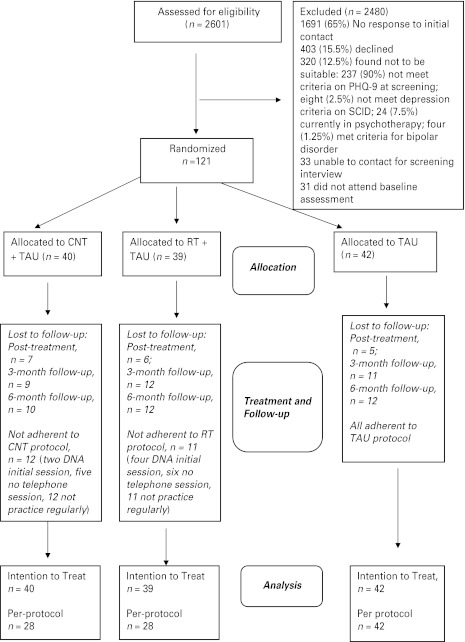
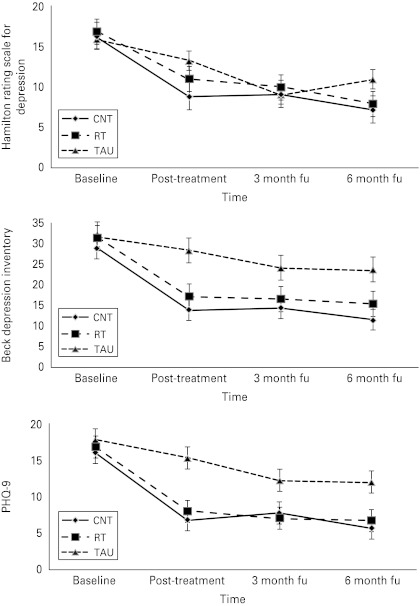
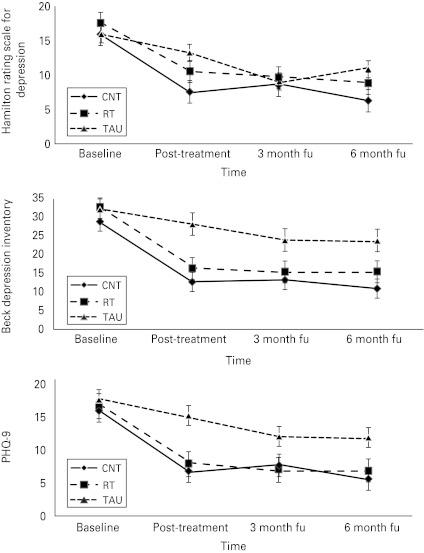
Verification
Claims the paper makes
The claims and statistics of this paper haven’t been checked yet.
Free: it reads the open-access text and checks the first 5 claims that cite a source we can check. Create a free account to check every claim.
Claims other papers make about this one
Each is checked against this paper’s own text: does it say what the citing paper says it does?
The source backs part of the claim, not all of it — or backs it for a different population, condition or comparison.
In the citing paper
“Psychological functioning was measured using the Beck Depression Inventory (BDI) and Beck Depression Inventory-II (BDI-II) scale [124] in eight studies”
From Helping patients help themselves: A systematic review of self-management support strategies in primary health care practice (2019) · cites this paper as [72]
Experimental — accuracy not yet measuredThe source backs part of the claim, not all of it — or backs it for a different population, condition or comparison.
In the citing paper
“Thirteen RCTs targeting a range of conditions including asthma, T2DM, COPD, recurrent binge eating, chronic fatigue, major depression, low self-esteem, IBS and depression reported positive findings for all clinical and humanistic outcome measures (Table 4) [42, 66, 67, 72, 75, 80, 91, 92, 95, 100, 117].”
From Helping patients help themselves: A systematic review of self-management support strategies in primary health care practice (2019) · cites this paper as [72]
Experimental — accuracy not yet measuredThe cited source says what the claim attributes to it.
In the citing paper
“The intervention resulted in significantly fewer depressive symptoms post-treatment, relative to treatment as usual (ITT, p = 0.006, effect size d for change in Hamilton Rating Scale for Depression (HAMD) = 0.76; PP, p<0.0001, d = 1.06).”
From Helping patients help themselves: A systematic review of self-management support strategies in primary health care practice (2019) · cites this paper as [72]
The cited source says what the claim attributes to it.
In the citing paper
“Four high-quality studies provided positive evidence that SMS interventions delivered in primary care dominate usual standard of care, by improving patients’ clinical outcomes, HRQOL or psychological functioning [72, 91, 92, 100].”
From Helping patients help themselves: A systematic review of self-management support strategies in primary health care practice (2019) · cites this paper as [72]
Self-check
Percentages, sums and reported differences re-computed from the paper’s own numbers.
The self-check needs the paper’s full text.
Citations
Cites
The PHQ-9: Validity of a brief depression severity measure
Kroenke, K., Spitzer, R. L., & Williams, J. B. W. (2001) · Journal of General Internal Medicine · doi:10.1046/j.1525-1497.2001.016009606.x · Cited by 44,910
Hamilton, M. (1960) · Journal of Neurology, Neurosurgery & Psychiatry · doi:10.1136/jnnp.23.1.56 · Cited by 32,817 · cited 2×
“Our primary outcome was depressive symptoms assessed on the 17-item interviewer-rated HAMD (Hamilton, 1960 ; Williams, 1998), the most commonly used interview-based measure of depressive severity, with documented reliability and validity (range 0–52; cut-offs : minimal depression <8, high severity…”
MethodA Brief Measure for Assessing Generalized Anxiety Disorder: The GAD-7
Spitzer, R. L., Kroenke, K., Williams, J. B. W., & Löwe, B. (2006) · Archives of Internal Medicine · doi:10.1001/archinte.166.10.1092 · Cited by 31,765 · cited 4×
“…: 0–13 minimal, 14–19 mild, 20–28 moderate, 29–63 severe) and the PHQ-9 (Kroenke et al. 2001, range 0–27; cut-offs : 0–4 minimal, 5–10 mild, 11–15 moderate, 16–20 moderately severe, 20–27 severe), and a well-validated anxiety measure, the Generalized Anxiety Disorder-7 (GAD-7; Spitzer et al. 2006).”
InfluentialCONSORT 2010 Statement: updated guidelines for reporting parallel group randomised trials
the CONSORT Group, Schulz, K. F., Altman, D. G., & Moher, D. (2010) · BMC Medicine · doi:10.1186/1741-7015-8-18 · Cited by 13,371
Concurrent and Predictive Validity of a Self-reported Measure of Medication Adherence
Morisky, D. E., Green, L. W., & Levine, D. M. (1986) · Medical Care · doi:10.1097/00005650-198601000-00007 · Cited by 5,317 · cited 2×
“…the Morisky Medication Adherence instrument, a structured fouritem self-reported measure (scored 0–4, 0–1=good adherence ; o2 signals potential difficulties with adherence), with demonstrated reliability and validity (Morisky et al. 1986), to assess adherence with antidepressant medication.”
BackgroundMethodResponses to depression and their effects on the duration of depressive episodes
Nolen-Hoeksema, S. (1991) · Journal of Abnormal Psychology · doi:10.1037/0021-843x.100.4.569 · Cited by 4,529 · cited 1×
“Rumination is repetitive thinking about the causes, meanings and implications of symptoms, problems and upsetting events (Nolen-Hoeksema, 1991 ; Watkins, 2008).”
BackgroundCONSORT 2010 statement: updated guidelines for reporting parallel group randomized trials
Schulz, K. F., Altman, D. G., Moher, D., & for the CONSORT Group* (2010) · Annals of Internal Medicine · doi:10.7326/0003-4819-152-11-201006010-00232 · Cited by 3,824
Nolen-Hoeksema, S., & Morrow, J. (1991) · Journal of Personality and Social Psychology · doi:10.1037/0022-3514.61.1.115 · Cited by 3,276 · cited 1×
“At baseline and post-treatment, patients completed the 22-item Ruminative Response Scale of the Response Styles Questionnaire (RSQ; Nolen-Hoeksema & Morrow, 1991), the standard measure of depressive rumination, and a shortened version of the Attributional Style Questionnaire (ASQ; Peterson et al.…”
MethodThe role of rumination in depressive disorders and mixed anxiety/depressive symptoms.
Nolen-Hoeksema, S. (2000) · Journal of Abnormal Psychology · doi:10.1037//0021-843x.109.3.504 · Cited by 2,998
Cognitive Therapy and the Emotional Disorders
Ince, L. P. (1977) · American Journal of Psychotherapy · doi:10.1176/appi.psychotherapy.1977.31.4.633 · Cited by 2,892
Research works printed but not linked: 2
- Beck AT Steer RA Brown GK 1996 The Beck Depression Inventory, Second Edition The Psychological Corporation San Antonio, TX
- 10.1001/archpsyc.1988.01800320058007 · DOI
Cited by
Reflecting on rumination: Consequences, causes, mechanisms and treatment of rumination
Watkins, E. R., & Roberts, H. (2020) · Behaviour Research and Therapy · doi:10.1016/j.brat.2020.103573 · Cited by 862
“reducing depression when training was self-reported to be habitual (Watkins et al., 2012).”
BackgroundSelf-citationExercise as a treatment for depression: A meta-analysis
Kvam, S., Kleppe, C. L., Nordhus, I. H., & Hovland, A. (2016) · Journal of Affective Disorders · doi:10.1016/j.jad.2016.03.063 · Cited by 837
“…Chalder et al., 2012; Garcia-Toro et al., 2012; Ma et al., 2010; Martiny et al., 2012; McClure et al., 2011; Piette et al., 2011; Ström et al., 2013; Watkins et al., 2012), the participants were younger than 18 years old (Roshan et al., 2011), they did not provide numerical data (Greist et al.,…”
BackgroundMethodDineen-Griffin, S., Garcia-Cardenas, V., Williams, K., & Benrimoj, S. I. (2019) · PLoS ONE · doi:10.1371/journal.pone.0220116 · Cited by 639
“Four high-quality studies provided positive evidence that SMS interventions delivered in primary care dominate usual standard of care, by improving patients’ clinical outcomes, HRQOL or psychological functioning [72, 91, 92, 100].”
BackgroundResultEfficacy of cognitive bias modification interventions in anxiety and depression: Meta-analysis
Cristea, I. A., Kok, R. N., & Cuijpers, P. (2015) · British Journal of Psychiatry · doi:10.1192/bjp.bp.114.146761 · Cited by 553
Mental Imagery in Depression: Phenomenology, Potential Mechanisms, and Treatment Implications
Holmes, E. A., Blackwell, S. E., Burnett Heyes, S., Renner, F., & Raes, F. (2016) · Annual Review of Clinical Psychology · doi:10.1146/annurev-clinpsy-021815-092925 · Cited by 325
A habit-goal framework of depressive rumination.
Watkins, E. R., & Nolen-Hoeksema, S. (2014) · Journal of Abnormal Psychology · doi:10.1037/a0035540 · Cited by 342
Self-citationDalgleish, T., & Werner-Seidler, A. (2014) · Trends in Cognitive Sciences · doi:10.1016/j.tics.2014.06.010 · Cited by 288
Assessing treatments used to reduce rumination and/or worry: A systematic review
Querstret, D., & Cropley, M. (2013) · Clinical Psychology Review · doi:10.1016/j.cpr.2013.08.004 · Cited by 251
“…of depression and rumination; Watkins, Baeyens, & Read (2009) compared concreteness training (CNT) against bogus CNT for the treatment of dysphoria; Watkins et al. (2012) compared guided self-help concreteness training against guided self-help relaxation training in the treatment of depression;…”
BackgroundMethodResultInfluentialLyubomirsky, S., Layous, K., Chancellor, J., & Nelson, S. K. (2015) · Annual Review of Clinical Psychology · doi:10.1146/annurev-clinpsy-032814-112733 · Cited by 222
“Watkins and colleagues also developed self-administered concreteness training to directly target several depressogenic cognitive processes such as rumination and overgeneralization (Watkins et al. 2012).”
BackgroundSpinhoven, P., Klein, N., Kennis, M., Cramer, A. O. J., Siegle, G., Cuijpers, P., Ormel, J., Hollon, S. D., & Bockting, C. L. (2018) · Behaviour Research and Therapy · doi:10.1016/j.brat.2018.04.002 · Cited by 185
Spontaneous Thought and Vulnerability to Mood Disorders: The Dark Side of the Wandering Mind
Marchetti, I., Koster, E. H. W., Klinger, E., & Alloy, L. B. (2016) · Clinical Psychological Science · doi:10.1177/2167702615622383 · Cited by 165
“…(Ma & Teasdale, 2004) and acceptance and commitment therapy (Hayes, Strosahl, & Wilson, 1999) could be options to precisely mitigate self-criticism during ST, and specific trainings are available to target individual processing style, moving from abstract to more concrete (Watkins et al., 2012).”
Grafton, B., MacLeod, C., Rudaizky, D., Holmes, E. A., Salemink, E., Fox, E., & Notebaert, L. (2017) · British Journal of Psychiatry · doi:10.1192/bjp.bp.115.176123 · Cited by 160
Hitchcock, C., Werner-Seidler, A., Blackwell, S. E., & Dalgleish, T. (2017) · Clinical Psychology Review · doi:10.1016/j.cpr.2016.12.003 · Cited by 157
“Mood and stress-related disorders are associatedwith the systematic retrieval of autobiographical information in an abstract and overgeneral manner (Sumner et al., 2010; Watkins et al., 2012; Williams et al., 2007).”
BackgroundMethodBetter Safe Than Sorry: A Common Signature of General Vulnerability for Psychopathology
Van den Bergh, O., Brosschot, J., Critchley, H., Thayer, J. F., & Ottaviani, C. (2021) · Perspectives on Psychological Science · doi:10.1177/1745691620950690 · Cited by 154
“For example, concreteness training (Watkins et al., 2012) aims at changing the abstract processing mode in rumination and perseverative cognition and at promoting concrete processing of difficult, upsetting events by focusing on sensory details, on the specific sequence of events, and on possible…”
BackgroundCook, L., & Watkins, E. (2016) · Trials · doi:10.1186/s13063-015-1128-9 · Cited by 145
Self-citationLinking Executive Control and Emotional Response: A Training Procedure to Reduce Rumination
Cohen, N., Mor, N., & Henik, A. (2015) · Clinical Psychological Science · doi:10.1177/2167702614530114 · Cited by 136
Cook, L., Mostazir, M., & Watkins, E. (2019) · Journal of Medical Internet Research · doi:10.2196/11349 · Cited by 115
“RFCBT therefore aims to shift participants from an abstract and evaluative style to a concrete, specific, and action-oriented style [29], consistent with evidence that concreteness training reduces depression [54].”
Self-citationKircaburun, K., Griffiths, M. D., & Billieux, J. (2019) · Personality and Individual Differences · doi:10.1016/j.paid.2018.11.024 · Cited by 100
Psychological treatment of depressive rumination
Watkins, E. (2015) · Current Opinion in Psychology · doi:10.1016/j.copsyc.2015.01.020 · Cited by 99
Self-citationMindfulness and rumination as predictors of persistence with a distress tolerance task
Feldman, G., Dunn, E., Stemke, C., Bell, K., & Greeson, J. (2014) · Personality and Individual Differences · doi:10.1016/j.paid.2013.08.040 · Cited by 90
“…training (e.g., Segal et al., 2001) and strategies to help individuals shift from unproductive to more productive forms of rumination (e.g., Watkins et al., 2012) may hold further promise as additional skills to promote DT. Nonetheless, it is important to note that persistence while…”
BackgroundKertz, S. J., Koran, J., Stevens, K. T., & Björgvinsson, Þ. (2015) · Behaviour Research and Therapy · doi:10.1016/j.brat.2015.03.006 · Cited by 108
Spinhoven, P., Penninx, B. W., Krempeniou, A., van Hemert, A. M., & Elzinga, B. (2015) · Behaviour Research and Therapy · doi:10.1016/j.brat.2015.06.004 · Cited by 84
“In order to facilitate dissemination and cost-effectiveness, such a targeted intervention should ideally be short in duration and be offered in an internetbased (Dimidjian et al., 2014) or self-help format (Watkins et al., 2012).”
BackgroundBastin, M., Mezulis, A. H., Ahles, J., Raes, F., & Bijttebier, P. (2014) · Research on Child and Adolescent Psychopathology · doi:10.1007/s10802-014-9912-7 · Cited by 99
“A preventive variant of this concreteness training (Watkins et al. 2012) has been recently developed, with promising first results for adolescents and young adults (Topper et al. 2014, in preparation).”
BackgroundNewby, J. M., Williams, A. D., & Andrews, G. (2014) · Behaviour Research and Therapy · doi:10.1016/j.brat.2014.05.009 · Cited by 78
“There have been promising efforts to develop ruminationfocused treatments for depression (e.g., rumination-focused CBT and concreteness training; Watkins et al., 2007, 2012), and worryfocused treatments for GAD (e.g., Metacognitive therapy for GAD, Wells, 1995) that specifically target rumination…”
BackgroundThe effects of psychotherapy for depression on anxiety symptoms: a meta-analysis
Weitz, E., Kleiboer, A., van Straten, A., & Cuijpers, P. (2018) · Psychological Medicine · doi:10.1017/s0033291717003622 · Cited by 77
“Watkins et al. (2012) Adults Dep symptoms Other (CNT) CAU Gsh 3 33 37 GAD-7 + + sr + UK 52.”
BackgroundKaplan, D. M., Palitsky, R., Carey, A. L., Crane, T. E., Havens, C. M., Medrano, M. R., Reznik, S. J., Sbarra, D. A., & O'Connor, M. (2018) · Journal of Clinical Psychology · doi:10.1002/jclp.22585 · Cited by 76
“A randomized controlled trial found that concreteness training significantly improved depressive symptoms and rumination compared to treatment as usual, and significantly improved rumination compared to relaxation training (Watkins et al., 2012).”
BackgroundTransdiagnostic distortions in autobiographical memory recollection
Dalgleish, T., & Hitchcock, C. (2023) · Nature Reviews Psychology · doi:10.1038/s44159-023-00148-1 · Cited by 86
Schiena, R. D., Luminet, O., Chang, B., & Philippot, P. (2013) · Cognitive Therapy and Research · doi:10.1007/s10608-012-9517-9 · Cited by 86
“In the same line, it has been repeatedly shown that interventions aimed at reducing A-A and at increasing C-E thinking are effective in reducing depressive symptoms (Watkins et al. 2009; Watkins et al. 2012).”
BackgroundDo strategic processes contribute to the specificity of future simulation in depression?
Addis, D. R., Hach, S., & Tippett, L. J. (2016) · British Journal of Clinical Psychology · doi:10.1111/bjc.12103 · Cited by 68
Emotion Regulation by Psychological Distance and Level of Abstraction: Two Meta-Analyses
Moran, T., & Eyal, T. (2022) · Personality and Social Psychology Review · doi:10.1177/10888683211069025 · Cited by 78
“Other cognitive therapy techniques such as “cognitive bias modification” (E. R. Watkins et al., 2012) focus on changing the processes suggested to underlie high-level emotions by training patients to respond in a way that is inconsistent with the cognitive bias involved in the emotional experience.”
BackgroundA qualitative study of university students' experience of Internet‐based CBT for depression
Gericke, F., Ebert, D. D., Breet, E., Auerbach, R. P., & Bantjes, J. (2021) · Counselling and Psychotherapy Research · doi:10.1002/capr.12465 · Cited by 57
Factorial Designs Help to Understand How Psychological Therapy Works
Watkins, E. R., & Newbold, A. (2020) · Frontiers in Psychiatry · doi:10.3389/fpsyt.2020.00429 · Cited by 51
Self-citationTraining Ruminators to Inhibit Negative Information: A Preliminary Report
Daches, S., & Mor, N. (2013) · Cognitive Therapy and Research · doi:10.1007/s10608-013-9585-5 · Cited by 61
“Similarly, examination of the effects of available treatments for rumination (e.g., Watkins et al. 2012) on cognitive impairments that characteristically accompany rumination, would be helpful in further delineating the causal links between these deficits and rumination.”
BackgroundInfluentialWatkins, E., Newbold, A., Tester-Jones, M., Javaid, M., Cadman, J., Collins, L. M., Graham, J., & Mostazir, M. (2016) · BMC Psychiatry · doi:10.1186/s12888-016-1054-8 · Cited by 51
“The current design assesses the effectiveness of seven treatment components from standard CBT [28] and recent treatment innovations derived from experimental research [29, 30], with each hypothesized to specifically target distinct mechanisms arising from different theoretical models.”
BackgroundMethodInfluentialSelf-citationSchaich, A., Watkins, E. R., & Ehring, T. (2013) · Journal of Behavior Therapy and Experimental Psychiatry · doi:10.1016/j.jbtep.2013.03.006 · Cited by 44
“For example, concreteness training has been developed as a guided self-help treatment for rumination and depression, and has been shown to be efficacious in a proof-of-principle study (Watkins, Baeyens, & Read, 2009) and a Phase II randomized controlled trial in patients with major depression recruited in primary care…”
BackgroundSelf-citationPasyugina, I., Koval, P., Leersnyder, J. D., Mesquita, B., & Kuppens, P. (2014) · Cognition & Emotion · doi:10.1080/02699931.2014.932755 · Cited by 47
“Especially, interventions focusing on training in concrete and specific thinking have proven successful in decreasing rumination and may, therefore, offer promise in treating depression (Watkins, Baeyens, & Read, 2009; Watkins et al., 2012).”
Newbold, A., Warren, F. C., Taylor, R. S., Hulme, C. T., Burnett, S., Aas, B., Botella, C., Burkhardt, F., Ehring, T. W., Fontaine, J. R. J., et al. (2020) · BMC Psychiatry · doi:10.1186/s12888-020-02857-w · Cited by 49
Self-citationWatkins, E. (2015) · Emotion Review · doi:10.1177/1754073915575400 · Cited by 43
“…we do not believe that these account for the observed effect of RFCBT because the measure is of trait rumination and is relatively unresponsive to other interventions that explicitly emphasized the targeting of negative thinking and rumination in their rationales (e.g., Watkins et al., 2012).”
BackgroundSelf-citationHitchcock, C., Mueller, V., Hammond, E., Rees, C., Werner-Seidler, A., & Dalgleish, T. (2016) · Journal of Behavior Therapy and Experimental Psychiatry · doi:10.1016/j.jbtep.2016.03.012 · Cited by 42
Mogoaşe, C., Brăilean, A., & David, D. (2013) · Cognitive Therapy and Research · doi:10.1007/s10608-012-9514-z · Cited by 45
“In contrast with previous studies (Watkins and Moberly 2009; Watkins et al. 2009, 2011), we did not find a CNT effect on rumination.”
MethodResultExploring and Designing for Memory Impairments in Depression
Qu, C., Sas, C., & Doherty, G. (2019) · Proceedings of the 2019 CHI Conference on Human Factors in Computing Systems · doi:10.1145/3290605.3300740 · Cited by 40
“Concreteness Training (CNT) trains people’s ability to look back at specific events in a concrete manner to reduce negative bias and overgeneralization.”
InfluentialWatkins, E., Newbold, A., Tester-Jones, M., Collins, L. M., & Mostazir, M. (2023) · JAMA Psychiatry · doi:10.1001/jamapsychiatry.2023.1937 · Cited by 40
Self-citationHarvey, A. G., Callaway, C. A., Zieve, G. G., Gumport, N. B., & Armstrong, C. C. (2021) · Perspectives on Psychological Science · doi:10.1177/1745691621995752 · Cited by 57
Wild, J., El-Salahi, S., Tyson, G., Lorenz, H., Pariante, C. M., Danese, A., Tsiachristas, A., Watkins, E. R., Middleton, B., Blaber, A., et al. (2018) · BMJ Open · doi:10.1136/bmjopen-2018-022292 · Cited by 53
Self-citationRuminative Thinking: Lessons Learned From Cognitive Training
Mor, N., & Daches, S. (2015) · Clinical Psychological Science · doi:10.1177/2167702615578130 · Cited by 38
“The work by Watkins and colleagues (Watkins et al., 2009; Watkins et al., 2012; Watkins & Moberly, 2009) demonstrated the effects of CNT on rumination in individuals with clinical or subclinical depression.”
BackgroundThe neuroscience of positive memory deficits in depression
Dillon, D. G. (2015) · Frontiers in Psychology · doi:10.3389/fpsyg.2015.01295 · Cited by 44
“Although the field of memory therapeutics is very new, there is already some evidence that these methods are clinically effective (e.g., Watkins et al., 2009, 2012; Neshat-Doost et al., 2012).”
BackgroundKornacka, M., Buczny, J., & Layton, R. L. (2016) · Frontiers in Psychology · doi:10.3389/fpsyg.2016.00322 · Cited by 43
“Initial results suggest that concreteness training reduces depressive symptoms, overgeneralization of cognitive biases, and rumination (Watkins et al., 2011).”
BackgroundMethodInfluentialRoberts, H., Jacobs, R. H., Bessette, K. L., Crowell, S. E., Schreiner, M. W., Thomas, L. R., Easter, R. E., Pocius, S. L., Dillahunt, A. K., Frandsen, S. B., et al. (2021) · BMC Psychiatry · doi:10.1186/s12888-021-03193-3 · Cited by 42
Self-citationCognitive bias modification for depression
Koster, E. H. W., & Hoorelbeke, K. (2015) · Current Opinion in Psychology · doi:10.1016/j.copsyc.2014.11.012 · Cited by 37
Embodied cognition and emotional disorders: Embodiment and abstraction in understanding depression
Gjelsvik, B., Lovric, D., & Williams, J. M. G. (2018) · Journal of Experimental Psychopathology · doi:10.5127/pr.035714 · Cited by 37
“The laboratory findings on the changes brought about by manipulating level of abstraction versus concreteness have motivated two clinical studies (Watkins & Moberly, 2009; Watkins et al., 2012).”
ResultInvestigating Functional Properties of Depressive Rumination: Insight and Avoidance
Kingston, R. E. F., Watkins, E. R., & Nolen–Hoeksema, S. (2014) · Journal of Experimental Psychopathology · doi:10.5127/jep.038013 · Cited by 34
“…interventions for people at risk for rumination could emphasise the advantages of this way of thinking, rather than informing individuals not to dwell on problems at all, and to instead think about the situation in a more constructive, solution–focused way (see Watkins et al., 2011, 2012).”
BackgroundSelf-citationHall, K. A. A., Davison, E. H., Galovski, T. E., Vasterling, J. J., & Pineles, S. L. (2019) · Journal of Traumatic Stress · doi:10.1002/jts.22385 · Cited by 32
Hvenegaard, M., Watkins, E. R., Poulsen, S., Rosenberg, N., Gondan, M., Grafton, B., Austin, S. F., Howard, H., & Møeller, S. B. (2015) · Trials · doi:10.1186/s13063-015-0875-y · Cited by 34
“The control group intervention is CBT based on Aaron Beck’s CBT manual for depression [27] but adapted to group format consisting of one individual session of 1 h followed by 11 group sessions of 3 h scheduled weekly or fortnightly, matched in duration, structure, and therapist contact with g-RFCBT.”
Self-citationRicarte, J. J., Hernández‐Viadel, J. V., Latorre, J. M., Ros, L., & Serrano, J. P. (2014) · Cognitive Therapy and Research · doi:10.1007/s10608-014-9610-3 · Cited by 29
“Guided self-help concreteness training shows positive results as an intervention for major depression (e.g., Watkins et al. 2012).”
BackgroundJones, N. P., Fournier, J. C. J., & Stone, L. B. (2017) · Journal of Affective Disorders · doi:10.1016/j.jad.2017.04.069 · Cited by 26
Salmon, K., Isler, L., Jose, P. E., Glynn, R., Mitchell, C., Dewhirst, M., Buxton, B. A., Gutenbrunner, C., & Reese, E. (2021) · Behaviour Research and Therapy · doi:10.1016/j.brat.2020.103798 · Cited by 27
Petersson, E., Forsén, E., Björkelund, C., Hammarback, L., Hessman, E., Weineland, S., & Svenningsson, I. (2023) · Journal of Affective Disorders · doi:10.1016/j.jad.2023.01.076 · Cited by 22
Evidence on Technology-Based Psychological Interventions in Diagnosed Depression: Systematic Review
Köhnen, M., Dreier, M., Seeralan, T., Kriston, L., Härter, M., Baumeister, H., & Liebherz, S. (2021) · JMIR Mental Health · doi:10.2196/21700 · Cited by 23
Joubert, A. E., Grierson, A. B., Li, I., Sharrock, M. J., Moulds, M. L., Werner‐Seidler, A., Stech, E. P., Mahoney, A., & Newby, J. M. (2023) · Behaviour Research and Therapy · doi:10.1016/j.brat.2023.104378 · Cited by 26
Concreteness of idiographic worry and anticipatory processing
McGowan, S. K., Stevens, E. S., Behar, E., Judah, M. R., Mills, A. C., & Grant, D. M. (2016) · Journal of Behavior Therapy and Experimental Psychiatry · doi:10.1016/j.jbtep.2016.08.005 · Cited by 24
“…2009; Watkins et al., 2009) among individuals experiencing mild to moderate depressive symptoms; similar results were achieved in a randomized controlled trial of a six week concreteness training for individuals diagnosed with MDD (Watkins et al., 2012; but see; Mogoaşe, Br ailean, & David, 2013).”
ResultHitchcock, C., Hammond, E. R., Rees, C., Panesar, I., Watson, P., Werner‐Seidler, A., & Dalgleish, T. (2015) · Trials · doi:10.1186/s13063-015-1029-y · Cited by 25
“CBM techniques for reducing negative attentional bias have begun to be adapted for memory retrieval in depressed samples, and have been seen to reduce negative generalisation and depressive symptoms [28, 29].”
Erten, M. N., & Brown, A. D. (2018) · Frontiers in Psychology · doi:10.3389/fpsyg.2018.00419 · Cited by 27
“In a subsequent study, Serrano et al. (2012) tested the LRT in older adults in which patients either received LRT or Treatment as Usual (TAU).”
BackgroundMethodUmegaki, Y., Nakagawa, A., Watkins, E. R., & Mullan, E. (2021) · Cognitive and Behavioral Practice · doi:10.1016/j.cbpra.2021.01.003 · Cited by 30
Self-citationMaking the leap: From experimental psychopathology to clinical trials
Blackwell, S. E., & Woud, M. L. (2022) · Journal of Experimental Psychopathology · doi:10.1177/20438087221080075 · Cited by 21
“…that it can provide evidence of specificity for that aspect of your intervention that differs from the comparator (e.g. psychoeducation as a comparator for memory flexibility training; Hitchcock et al., 2018; or guided relaxation as a comparator for ‘concreteness’ training; Watkins et al., 2012).”
BackgroundEffects of a training in mental imagery on worry: A proof-of-principle study
Skodzik, T., Leopold, A., & Ehring, T. W. (2016) · Journal of Anxiety Disorders · doi:10.1016/j.janxdis.2016.11.009 · Cited by 23
Spontaneous Thought and Goal Pursuit
Klinger, E., Koster, E. H. W., & Marchetti, I. (2018) · Oxford University Press eBooks · doi:10.1093/oxfordhb/9780190464745.013.24 · Cited by 24
“…these aspects, promising training interventions have been developed to rebalance the proportion and occurrence of abstract versus concrete thought (Watkins et al., 2012) and to tie aspirations to concrete processing of steps necessary to achieve them (Oettingen, 2012), processes that at first…”
BackgroundThe Use of Cognitive Bias Modification and Imagery in the Understanding and Treatment of Depression
Browning, M. D., Blackwell, S. E., & Holmes, E. A. (2012) · Current topics in behavioral neurosciences · doi:10.1007/7854_2012_212 · Cited by 23
“…biases (Joormann et al. 2009), metacognitive appraisals (Lang et al. 2009; Woud et al. (2011)) as well as non-affective processing habits (for example, bias modification aimed at improving the deficits in attentional control processes discussed above; Siegle et al. 2007; Watkins et al. 2011).”
BackgroundFélix Cova, S., García, F. E., Oyanadel, C., Villagrán, L., Páez, D., & Inostroza, C. (2019) · Frontiers in Psychology · doi:10.3389/fpsyg.2019.01943 · Cited by 24
Mechanisms of Change in Trauma-Focused Treatment for PTSD: The Role of Rumination
Schumm, H., Krüger-Gottschalk, A., Dyer, A., Pittig, A., Cludius, B., Takano, K., Alpers, G. W., & Ehring, T. W. (2021) · Behaviour Research and Therapy · doi:10.1016/j.brat.2021.104009 · Cited by 27
Chiorri, C., Soraci, P., & Ferrari, A. (2023) · Mindfulness · doi:10.1007/s12671-022-02066-4 · Cited by 29
“, 1999) can effectively reduce self-criticism during spontaneous thinking, and there are specific trainings that can target individual processing styles, moving from abstract to more concrete (Watkins et al., 2012).”
BackgroundDey, S., Joormann, J., Moulds, M. L., & Newell, B. R. (2018) · Behaviour Research and Therapy · doi:10.1016/j.brat.2018.06.007 · Cited by 20
Abstract and concrete repetitive thinking modes in alcohol-dependence
Grynberg, D., de Timary, P., Philippot, P., D’Hondt, F., Briane, Y., Devynck, F., Douilliez, C., Billieux, J., Heeren, A., & Maurage, P. (2016) · Journal of Addictive Diseases · doi:10.1080/10550887.2016.1207970 · Cited by 24
“, the sequence by which it occurred).(13)”
BackgroundKlinger, E., Marchetti, I., & Koster, E. H. W. (2017) · PsyArXiv (OSF Preprints) · doi:10.31234/osf.io/fmxh4 · Cited by 19
Development of a cognitive bias modification intervention for anxiety disorders in primary care
Weisberg, R. B., Gonsalves, M. A., Ramadurai, R., Braham, H., Fuchs, C. H., & Beard, C. (2021) · British Journal of Clinical Psychology · doi:10.1111/bjc.12281 · Cited by 19
Kuroda, N., Burkey, M. D., & Wissow, L. S. (2021) · Journal of General Internal Medicine · doi:10.1007/s11606-020-06449-y · Cited by 17
Does a novel training in mental imagery reduce pathological worry?
Skodzik, T., Adelt, M. H., Nossek, V. A., Kuck, S., & Ehring, T. W. (2018) · Behaviour Research and Therapy · doi:10.1016/j.brat.2018.07.005 · Cited by 16
The Role of Habits in Maladaptive Behaviour and Therapeutic Interventions
Verhoeven, A. A. C., & de Wit, S. (2018) · Springer eBooks · doi:10.1007/978-3-319-97529-0_16 · Cited by 23
Abstract Thinking about Negative Events in Dysphoric Students Leads to Negative Generalization
Lier, J. V., Vervliet, B., Vanbrabant, K., Lenaert, B., & Raes, F. (2014) · Journal of Experimental Psychopathology · doi:10.5127/jep.037913 · Cited by 14
“Recent studies that implemented concreteness training in therapy have found positive effects on dysphoria (Watkins, Baeyens, & Read, 2009) and depression (Watkins et al., 2012).”
BackgroundEdge, D., Newbold, A., Ehring, T. W., Rosenkranz, T., Frost, M. M., & Watkins, E. R. (2021) · BMC Psychiatry · doi:10.1186/s12888-021-03536-0 · Cited by 18
Self-citationCognitive Bias Modification: A New Frontier in Cognition and Emotion Research
MacLeod, C., & Clarke, P. (2013) · UWA Profiles and Research Repository (UWA) · Cited by 19
Rumination in Everyday Life: The Influence of Distancing, Immersion, and Distraction
Yasinski, C., Hayes, A. M., & Laurenceau, J.-P. (2016) · Journal of Experimental Psychopathology · doi:10.5127/jep.042714 · Cited by 12
“1 Another method with promising effects on rumination is “concreteness training” (Jacoby, Brewin, & Watkins, 2008; Watkins & Moulds, 2005; Watkins et al., 2011, 2012; Watkins, Teasdale, & Williams, 2003).”
Exploring Memory Interventions in Depression through Lifelogging Lens
Qu, C., & Sas, C. (2018) · Electronic workshops in computing · doi:10.14236/ewic/hci2018.161 · Cited by 13
Cognitive Vulnerability to Emotional Symptoms: Reconsidering the Role of Worry and Rumination
Madrid, H. M., Ferreiro, F., & Senra, C. (2013) · Journal of Psychopathology and Behavioral Assessment · doi:10.1007/s10862-013-9374-1 · Cited by 18
“Specifically, given that worry and rumination are characterized by high levels of abstractness, concreteness training could be useful to promote the activation of specific emotional memories that favor an adequate emotional processing (Watkins et al. 2012).”
BackgroundEdge, D., Watkins, E. R., Newbold, A., Ehring, T. W., Frost, M. M., & Rosenkranz, T. (2024) · JMIR mhealth and uhealth · doi:10.2196/51932 · Cited by 18
Self-citationRobertson, C., Carney, J., & Trudell, S. (2023) · Current Research in Behavioral Sciences · doi:10.1016/j.crbeha.2023.100104 · Cited by 14
Marsh, L. C., Patel, S. D., Smith, A., So, M. M., Armstrong, H., Elliott, R., Watkins, E. R., Moulds, M. L., Dalgleish, T., & Hitchcock, C. (2023) · Behaviour Research and Therapy · doi:10.1016/j.brat.2023.104352 · Cited by 15
Self-citationPerceptions of Organizational Politics: A Cross-cultural Perspective
Zibenberg, A. (2017) · Global Business Review · doi:10.1177/0972150917692211 · Cited by 14
Malhotra, S., Chakrabarti, S., Gupta, A., Mehta, A., Shah, R., Kumar, V., & Sharma, M. (2013) · The International Journal of Psychiatry in Medicine · doi:10.2190/pm.46.4.a · Cited by 10
“In face-to-face practice, self-guided intervention models have been found to be helpful in managing psychological symptoms [19, 20].”
BackgroundFunk, J., Kopf‐Beck, J., Watkins, E. R., & Ehring, T. W. (2023) · Trials · doi:10.1186/s13063-023-07295-z · Cited by 16
“Evidence from experimental psychopathology studies [37–40] and preliminary clinical findings [41, 42] suggest that training concrete thinking could be an active ingredient of the treatment and might have potential as a stand-alone intervention.”
BackgroundSelf-citation“Why is everyone always angry with me?!”: When thinking ‘why’ leads to generalization
Lier, J. V., Vervliet, B., Boddez, Y., & Raes, F. (2014) · Journal of Behavior Therapy and Experimental Psychiatry · doi:10.1016/j.jbtep.2014.11.008 · Cited by 13
“With regards to dysphoria and depression, recent studies that implemented concreteness training in therapy have found positive effects on dysphoria (Watkins, Baeyens, & Read, 2009) and depression (Watkins et al., 2012).”
ResultDuque, A., López‐Gómez, I., Blanco, I., & Vázquez, C. (2015) · Terapia psicológica · doi:10.4067/s0718-48082015000200005 · Cited by 18
“Esta variante ha sido combinada con el entrenamiento en relajación con resultados superiores al entrenamiento en relajación aislado, a un tratamiento habitual, y a la no intervención (Watkins et al., 2012; Watkins, Baeyens y Read, 2009; Watkins y Moberly, 2009).”
BackgroundWatkins, E. R., Grafton, B., Weinstein, S. M., & MacLeod, C. (2015) · Clinical Psychological Science · doi:10.1177/2167702614566816 · Cited by 12
“For example, the processing mode theory predicts that the concreteness training form of cognitive bias modification, derived from these training manipulations (Watkins, Baeyens, & Read, 2009; Watkins et al., 2012),”
MethodSelf-citationThe Effects of Worry and Relaxation on Flexibility During Cognitive Restructuring
Stevens, E. S., Jendrusina, A. A., Legrand, A. C., Nahin, E. R., Kaufman, M. G., Borkovec, T. D., & Behar, E. (2017) · Behavior Modification · doi:10.1177/0145445517732272 · Cited by 12
Transdiagnostic and transtherapeutic strategies for optimising autobiographical memory
Barry, T. J., & Hallford, D. J. (2024) · Behaviour Research and Therapy · doi:10.1016/j.brat.2024.104575 · Cited by 9
Tulbure, B. T., Dudău, D. P., Marian, Ș., & Watkins, E. R. (2025) · Behavior Therapy · doi:10.1016/j.beth.2024.12.004 · Cited by 11
Self-citationHitchcock, C., Gormley, S., O’Leary, C., Rodrigues, E., Wright, I., Griffiths, K., Gillard, J., Watson, P., Hammond, E., Werner-Seidler, A., et al. (2018) · BMJ Open · doi:10.1136/bmjopen-2017-018194 · Cited by 8
“Abstract and overgeneral memory recall intensifies rumination, 23 which in turn creates negative affect, impairs mood regulation, and is itself a risk factor for recurrent depression.”
BackgroundKöhnen, M., Kriston, L., Härter, M. C., Baumeister, H., & Liebherz, S. (2020) · Journal of Medical Internet Research · doi:10.2196/24584 · Cited by 17
“TBIs were delivered either with [39-41,51,63,72,74,92] or without [34,57] guidance or they were therapist-administered [35,64].”
BackgroundMethodInfluentialGuzey, M., Funk, J., Kustermann, J., & Ehring, T. W. (2021) · Behaviour Research and Therapy · doi:10.1016/j.brat.2021.103970 · Cited by 9
Kambara, K., Matsumoto, M., Hako, S., Shigematsu, J., Yokoyama, S., & Ogata, A. (2023) · Journal of Behavior Therapy and Experimental Psychiatry · doi:10.1016/j.jbtep.2023.101857 · Cited by 10
Perfectionnisme inadapté, pensées répétitives non constructives et réactivité émotionnelle
Kornacka, M., & Douilliez, C. (2014) · Journal de Thérapie Comportementale et Cognitive · doi:10.1016/j.jtcc.2014.03.001 · Cited by 8
Metadata
- Authors
- Watkins, E. R., Taylor, R. S., Byng, R., Baeyens, C., Read, R., Pearson, K., & Watson, L.
- Affiliations
- University of Exeter (GB)
- University of Plymouth (GB)
- Corresponding author
- Watkins, E. R.
- Venue
- Psychological Medicine
- Publisher
- Cambridge University Press (CUP)
- Published
- 2011-11-16
- Volume
- 42
- Issue
- 7
- Pages
- 1359-1371
- ISSN
- 0033-2917 (ISSN-L)
- 1469-8978
- PMC
- PMC3359637
- OpenAlex
- W2151504892
- Cited by
- 160
- References
- 50
- Citations by year
- 2026: 7 · 2025: 6 · 2024: 9 · 2023: 13 · 2022: 4 · 2021: 15 · 2020: 8 · 2019: 10 · 2018: 18 · 2017: 10 · 2016: 15 · 2015: 21 · 2014: 12 · 2013: 10 · 2012: 2
- FWCI
- 9.88
- Type
- journal article
- Language
- en
- Open access
- hybrid
- doi.org
- Licence
- cc-by-nc-sa
- www.cambridge.org/core/terms (unspecified)
- Locations
- Psychological Medicine (publishedVersion, cc-by-nc-sa)
- Europe PMC (PubMed Central) (publishedVersion, cc-by-nc-sa)
- PubMed Central (publishedVersion, cc-by-nc-sa)
- PubMed (publishedVersion)
- Open Research Exeter (University of Exeter) (publishedVersion)
- ENLIGHTEN (Jurnal Bimbingan dan Konseling Islam) (acceptedVersion)
- PEARL (University of Plymouth) (submittedVersion)
- HAL (submittedVersion)
- Figshare (submittedVersion)
- Funders
- Medical Research Council
- Topics
- Social Sciences › Psychology › Experimental and Cognitive Psychology › Anxiety, Depression, Psychometrics, Treatment, Cognitive Processes
- Social Sciences › Psychology › Applied Psychology › Digital Mental Health Interventions
- Social Sciences › Psychology › Clinical Psychology › Psychotherapy Techniques and Applications
- Keywords
- major depressive disorder, guided self-help, cognitive bias modification, rumination, overgeneralization, relaxation training, primary care, treatment accessibility
- MeSH terms
- Major Depressive Disorder, Female, Generalization, Psychological, Humans, Male, Middle Aged, Primary Health Care, Relaxation Therapy, Self Care, Severity of Illness Index, Thinking, Cognitive Behavioral Therapy, Outcome Assessment, Health Care, Intention to Treat Analysis
About these checks
Registry, retraction, Cites and statistics results are computed, not judged, with one exception: a printed reference that no index lists is read once by a model before it counts as a citation error. Claims are extracted by a model and kept only when their quote appears verbatim in the text; each cited source is then checked, with a model’s help, for whether it says what the claim relies on. Those verdicts can be wrong — read the claim’s quote and the cited source before relying on one.
Statistics and arithmetic are recomputed, not judged.
Confidence bands are shown only for fields calibrated on our annotated test set. None is calibrated yet, so no band is shown.
What counts as a claim ›How we measure confidence ›How we check this ›
Are you an author, or do you see a problem with this page? Request a review
Data sources
Bibliographic data: Semantic Scholar, OpenAlex, Crossref.
Contains information from the Semantic Scholar Academic Graph Datasets, made available under the ODC Attribution License (ODC-BY 1.0).
Semantic Scholar’s data is described in: Kinney, R., et al. (2023). The Semantic Scholar Open Data Platform. arXiv:2301.10140.
