

Towards microbial fermentation metabolites as markers for health benefits of prebiotics
Open accessThe DOI matches its Crossref record; 269 of the 269 references it cites were found in a registry or an index.
Abstract
Available evidence on the bioactive, nutritional and putative detrimental properties of gut microbial metabolites has been evaluated to support a more integrated view of how prebiotics might affect host health throughout life. The present literature inventory targeted evidence for the physiological and nutritional effects of metabolites, for example, SCFA, the potential toxicity of other metabolites and attempted to determine normal concentration ranges. Furthermore, the biological relevance of more holistic approaches like faecal water toxicity assays and metabolomics and the limitations of faecal measurements were addressed. Existing literature indicates that protein fermentation metabolites (phenol, p-cresol, indole, ammonia), typically considered as potentially harmful, occur at concentration ranges in the colon such that no toxic effects are expected either locally or following systemic absorption. The endproducts of saccharolytic fermentation, SCFA, may have effects on colonic health, host physiology, immunity, lipid and protein metabolism and appetite control. However, measuring SCFA concentrations in faeces is insufficient to assess the dynamic processes of their nutrikinetics. Existing literature on the usefulness of faecal water toxicity measures as indicators of cancer risk seems limited. In conclusion, at present there is insufficient evidence to use changes in faecal bacterial metabolite concentrations as markers of prebiotic effectiveness. Integration of results from metabolomics and metagenomics holds promise for understanding the health implications of prebiotic microbiome modulation but adequate tools for data integration and interpretation are currently lacking. Similarly, studies measuring metabolite fluxes in different body compartments to provide a more accurate picture of their nutrikinetics are needed.
Overview
The claims and statistics of this paper haven’t been checked yet.
Free: it reads the open-access text and checks the first 5 claims that cite a source we can check. Create a free account to check every claim.
Integrity signals
Registry
Cites
Statistics
Figures
Verification
Claims the paper makes
The claims and statistics of this paper haven’t been checked yet.
Free: it reads the open-access text and checks the first 5 claims that cite a source we can check. Create a free account to check every claim.
Claims other papers make about this one
Each is checked against this paper’s own text: does it say what the citing paper says it does?
In the citing paper
“These fermented products include acetate, propionate, and butyrate, approximately in a 60:20:20 ratio, respectively [215], and the two non-digestible carbohydrate categories are soluble (pectin, guar gum, psyllium, inulin) and insoluble fiber (cellulose, hemicellulose, lignin) [216].”
From Impact of Protein Intake in Older Adults with Sarcopenia and Obesity: A Gut Microbiota Perspective (2020) · cites this paper as [215]
Self-check
Percentages, sums and reported differences re-computed from the paper’s own numbers.
The self-check needs the paper’s full text.
Citations
Cites
An obesity-associated gut microbiome with increased capacity for energy harvest
Turnbaugh, P. J., Ley, R. E., Mahowald, M. A., Magrini, V., Mardis, E. R., & Gordon, J. I. (2006) · Nature · doi:10.1038/nature05414 · Cited by 12,444 · cited 1×
“A greater fermentation capacity in both obese animals and human subjects compared with normal-weight subjects was suggested (61–63) as well as increased concentrations of caecal or faecal SCFA.”
A human gut microbial gene catalogue established by metagenomic sequencing
MetaHIT Consortium, Qin, J., Li, R., Raes, J., Arumugam, M., Burgdorf, K. S., Manichanh, C., Nielsen, T., Pons, N., Levenez, F., et al. (2010) · Nature · doi:10.1038/nature08821 · Cited by 11,624 · cited 1×
“The collective genetic information encoded in the intestinal micro-organisms is truly impressive and has been referred to as ‘our other genome’((2)).”
BackgroundSelf-citationHuman gut microbes associated with obesity
Ley, R. E., Turnbaugh, P. J., Klein, S., & Gordon, J. I. (2006) · Nature · doi:10.1038/4441022a · Cited by 8,785 · cited 1×
“Firmicutes:Bacteroidetes ratio in the obese((59,60)).”
Dietary Modulation of the Human Colonic Microbiota: Introducing the Concept of Prebiotics
Gibson, G. R., & Roberfroid, M. B. (1995) · The Journal of Nutrition · doi:10.1093/jn/125.6.1401 · Cited by 7,667 · cited 1×
“Previously, the effect of prebiotic supplementation has been measured using the relative increase in Bifidobacterium and Lactobacillus species as markers((8)).”
MethodEnterotypes of the human gut microbiome
MetaHIT Consortium (additional members), Arumugam, M., Raes, J., Pelletier, E., Le Paslier, D., Yamada, T., Mende, D. R., Fernandes, G. R., Tap, J., Bruls, T., et al. (2011) · Nature · doi:10.1038/nature09944 · Cited by 7,548
Self-citationDe Filippo, C., Cavalieri, D., Di Paola, M., Ramazzotti, M., Poullet, J. B., Massart, S., Collini, S., Pieraccini, G., & Lionetti, P. (2010) · Proceedings of the National Academy of Sciences · doi:10.1073/pnas.1005963107 · Cited by 5,579 · cited 1×
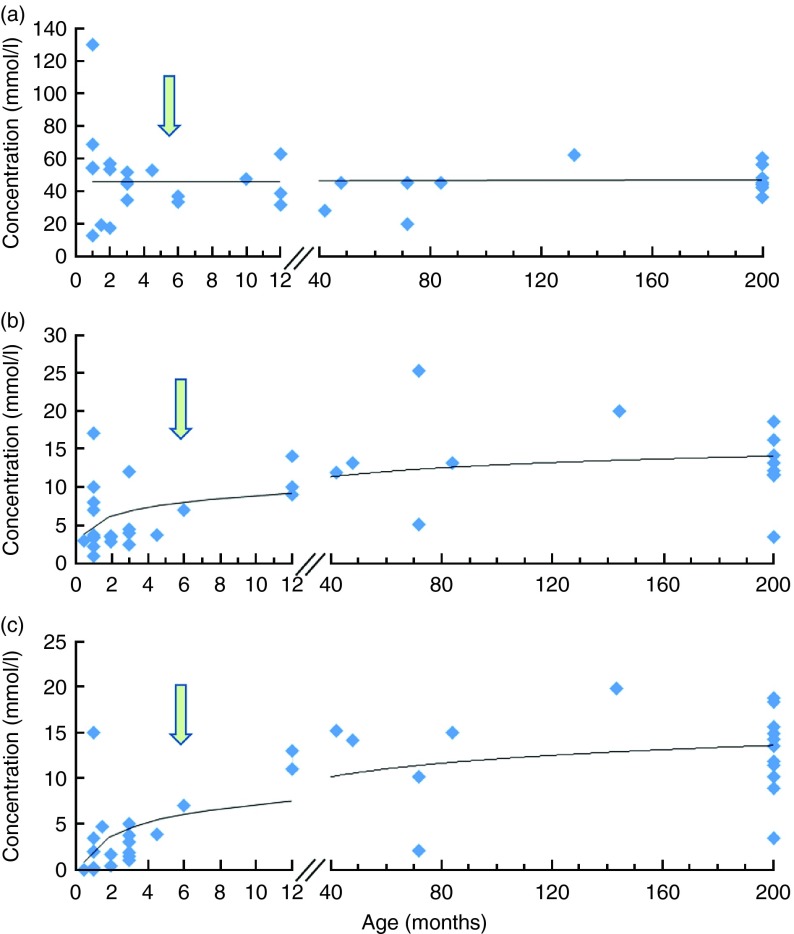
“The figures summarises the data reported in several studies (15,17,71,84,126,228–235) .”
den Besten, G., van Eunen, K., Groen, A. K., Venema, K., Reijngoud, D.-J., & Bakker, B. M. (2013) · Journal of Lipid Research · doi:10.1194/jlr.r036012 · Cited by 5,048
Metabolites produced by commensal bacteria promote peripheral regulatory T-cell generation
Arpaia, N., Campbell, C., Fan, X., Dikiy, S., van der Veeken, J., deRoos, P., Liu, H., Cross, J. R., Pfeffer, K., Coffer, P. J., et al. (2013) · Nature · doi:10.1038/nature12726 · Cited by 4,838 · cited 1×
“In contrast, rectal administration of acetate and propionate, but not butyrate, promoted accumulation of Treg cells, suggesting that butyrate promotes de novo generation but not colonic accumulation of Treg cells, whereas acetate has an opposite activity and propionate is capable of both((34)).”
BackgroundHost-gut microbiota metabolic interactions
Nicholson, J. K., Holmes, E., Kinross, J., Burcelin, R., Gibson, G., Jia, W., & Pettersson, S. (2012) · Science · doi:10.1126/science.1223813 · Cited by 4,760 · cited 1×
“They contribute to the metabolic phenotype of the host and hence may influence the risk of disease((3)).”
BackgroundRichness of human gut microbiome correlates with metabolic markers
Le Chatelier, E., Nielsen, T., Qin, J., Prifti, E., Hildebrand, F., Falony, G., Almeida, M., Arumugam, M., Batto, J.-M., Kennedy, S., et al. (2013) · Nature · doi:10.1038/nature12506 · Cited by 4,662 · cited 1×
“In a recent metagenomic study the typical ecological entity of microbiota ‘richness’ was highlighted as a strong determinant in body-weight control rather than its composition per se (66) .”
Self-citation
Research works printed but not linked: 1
- Morrow DMP, Ryan MP & McGlynn H (1996) An in vitro model to assess tumour promotor activity. Br J Cancer 74, 68.
Cited by
Items 301–356 of 356
The role of model animals in the study of symbiotic microorganisms
Yaqian, X., Chuan, L., Xiao, L., & BGI-Shenzhen, S. (2019) · Biodiversity Science · doi:10.17520/biods.2019042 · Cited by 1
“…英国桑格中心(Sanger Centre)协同全球 最权威的14家斑马鱼研究机构, 将斑马鱼全基因组 和人类基因组进行比较分析发现, 斑马鱼基因组含 有的26,206个蛋白编码基因与人类基因高度同源, 人类2万多个蛋白编码基因都至少可以在斑马鱼体 内找到1个同源基因与之对应(Howe et al, 2013)。其 独特的生物学、基因组学、遗传学优势及其高度保 守的疾病信号传导路径, 使其成为研究人类疾病信 号传导途径及活体高通量药物筛选的最佳模式生 物之一。 而早在斑马鱼自身的基因组被解析之前,…”
Biological Activities and Potential Application in Food Industry
Zhao, M., & Zhao, L. (2019) · Springer eBooks · doi:10.1007/978-981-13-9402-7_8 · Cited by 1
SUSU FERMENTASI DENGAN BIJI NANGKA SEBAGAI PREBIOTIK
Rahayu, W. P., Suliantari, S., Safitri, U. K., & Adhi, W. (2020) · Jurnal Teknologi dan Industri Pangan · doi:10.6066/jtip.2020.31.2.138 · Cited by 10
Microbial metabolites in nutrition and healthcare
Sundar, K., & Prabu, T. R. (2021) · Elsevier eBooks · doi:10.1016/b978-0-12-824523-1.00012-2 · Cited by 1
Role of the Gut Microbiome and Its Modulation in Neurodegenerative Diseases
Prabhakar, P., & Punnaveetil, S. (2022) · Springer eBooks · doi:10.1007/978-981-16-6703-9_5 · Cited by 1
Update Review of the Relationship Between Gut Microbiota and Neurodegenerative Diseases
Wang, Y., Jing, G., Fu, Y., Li, Y., & Wu, C. (2024) · Diseases & Research · doi:10.54457/dr.202401007 · Cited by 1
Gao, Y., Zhang, H., Zhu, D., & Guo, L. J. (2024) · mSystems · doi:10.1128/msystems.00954-24 · Cited by 1
“Undigested carbohydrates can provide substrates for the production of SCFAs mainly by the fermentation of bacteria in the colon, whereas the branched-chain fatty acids (BCFAs) are typically generated from protein fermentation (69, 70).”
Киселева, Т. Л., Киселева, М. А., & Хлебников, Е. В. (2024) · Традиционная медицина · doi:10.54296/18186173_2024_4_19 · Cited by 1
Early-life feeding in piglets: the impact on intestinal microbiota and mucosal development
Choudhury, R. (2021) · doi:10.18174/533912 · Cited by 1
Editorial: The Microbiological Functionality and Safety of Fermented Foods
Mah, J., & Ruíz‐Capillas, C. (2022) · Frontiers in Microbiology · doi:10.3389/fmicb.2022.979329 · Cited by 1
“Meanwhile, it has been known that fermented foods may have safety issues due to microbial metabolites such as ethyl carbamate, biogenic amines, and microbial toxins (Verbeke et al., 2015; Ruiz-Capillas and Herrero, 2019).”
BackgroundLemaire, M. (2018) · theses.fr (ABES) · doi:10.70675/d4a3481fzc7f5z40b0zba41z08905cdd9ce8 · Cited by 2
Chapter 8 Nondigestible Carbohydrates Nutritional Aspects
Parrett, A., Harris, H. C., & Edwards, C. A. (2016) · CRC Press eBooks · doi:10.1201/9781315372822-9
Self-citationTomaz, M. D. A. R. (2018) · Portuguese National Funding Agency for Science, Research and Technology (RCAAP Project by FCT) · doi:10.34626/775x-q944
Metagenom Dizilemelerindeki Mikroorganizmaların Tespiti
Aras, E., & Savran, I. (2018) · International Artificial Intelligence and Data Processing Symposium (IDAP) · doi:10.1109/idap.2018.8620868
“Bu ve bu konudaki diğer çalışmalarla, insan sağlığında mikrobiyal ekosistemin etkisinin büyük rol oynadı anlaşılmıştır [14].”
BackgroundThe role of invariant Natural Killer T cells in SLE patients with atherosclerosis
Smith, E. C. (2016) · UCL Discovery (University College London) · Cited by 1
Caracterización genética y funcional de la bacteria probiótica pediococcus parvulus 2.6
Pérez, A. (2019) · LA Referencia (Red Federada de Repositorios Institucionales de Publicaciones Científicas)
Impact of the gut microbiome on physical and mental health
Ţăpescu, M., & Tarcea, M. (2020) · Medic ro · doi:10.26416/med.133.1.2020.2996
Impact of Metabolic Regulation in Understanding the Status of Human Health and Diseases: A Review
Siddiqui, N., Bhavana, P. L., Sarvani, V., Gurumanchi, S., Nambidi, S., Madhav, S., Reddy, G. S., Reddy, G. K., & Rao, K. (2022) · International Journal of Life Science and Pharma Research · doi:10.22376/ijpbs/lpr.2022.12.1.l19-31
“There lies a connection between gut microbiota and intestine, liver, brain and other organs through the host-microbiota co-metabolism to yield metabolic axis and thus in regulating systemic metabolism of the host 20 .”
USE OF BACTERIOPHAGES TO CONTROL Salmonella Enteritidis IN FECAL FERMENTATION
Tissiani, A. C., do Nascimento, C. A., Pottker, E. S., dos Passos, A. C. S., Costa, M. M., dos Santos, L. R., & Rodrigues, L. B. (2022) · International Journal for Innovation Education and Research · doi:10.31686/ijier.vol10.iss3.3485
Die Bedeutung des Darm-Mikrobioms für die Alzheimer-Demenz
Adler, G. (2022) · Nervenheilkunde · doi:10.1055/a-1860-3282
Rodrigues, L. Z. (2023) · Digital Library of Theses and Dissertations (Universidade de São Paulo) · doi:10.11606/d.64.2023.tde-04092023-155023
Insights in the Cross-Talk Between Microbiota-Gut-Brain Axis: A Focus on Alzheimer’s Disease
Soni, T., Jawanda, I. K., Kumari, S., & Prabha, V. (2023) · Springer eBooks · doi:10.1007/978-981-99-3126-2_22
Influence des voies de sensibilisation dans la physiopathologie de l'asthme allergique
Dijoux, E. (2022) · theses.fr (ABES) · doi:10.70675/a5d1b0d5zc13cz483azab3fzd761b746e605
Advances in the Influence of Intestinal Flora on Tumour Development
Li, C., Zhang, N., Li, X., & Li, Y. (2024) · International Journal of Clinical and Experimental Medicine Research · doi:10.26855/ijcemr.2024.01.031
Prebiotics: Enhancing Poultry Health and Combating Antimicrobial Resistance (AMR)
(2024) · International Journal of Veterinary Science · doi:10.47278/book.cam/2024.372
Suo, Z., Yu, Y., Shi, F., Tian, J., Hao, Z., Zhang, J., & Zou, J. (2024) · Frontiers in Microbiomes · doi:10.3389/frmbi.2024.1380152
Parâmetros fermentativos e valor nutricional da silagem de torta de oliva
Rizzo, F. A., Schafhäuser, J., Fluck, A. C., Costa, O. A. D., Scheibler, R. B., Lourenço, L. A., Nörnberg, J. L., de Souza, A. P. B., de Vargas, D. P., & da Silva, J. L. S. (2024) · Semina Ciências Agrárias · doi:10.5433/1679-0359.2024v45n6p1695
AD prevention strategies adapted till present
Naik, R. A., Mir, M. N., Rajpoot, R., Singh, S. R., Singh, K., & Singh, S. K. (2024) · Elsevier eBooks · doi:10.1016/b978-0-443-15540-6.00015-x
Adhimah, A. F., Afifah, D. N., Mexitalia, M., Margawati, A., Noer, E. R., Andoyo, R., Hatimah, I., Nuryanto, N., & Endrinikapoulos, A. (2024) · Media Penelitian dan Pengembangan Kesehatan · doi:10.34011/jmp2k.v34i3.2083
“[9], [13], [14].”
Borzouie, S., Rathgeber, B. M., Burton, I. W., Stupart, C., & MacLaren, L. A. (2025) · Canadian Journal of Animal Science · doi:10.1139/cjas-2024-0096
In vitro fermentation characteristics of acacia fiber using feline fecal inoculum
Guardia-Hidrogo, V. M. D. L., Oba, P. M., Swanson, O. R., Bauer, L. L., Vinay, E., Menton, J. F., Millette, M., Kelly, M. R., Dilger, R. N., & Swanson, K. S. (2025) · Journal of Animal Science · doi:10.1093/jas/skaf179
Wilbrink, J. (2025) · Research Publications (Maastricht University) · doi:10.26481/dis.20250620jw
Developing Intestinal Health Foods for Children
Li, B., Li, Z., Zhou, L., & Liu, S. (2025) · Springer eBooks · doi:10.1007/978-981-96-8512-7_9 · Cited by 1
The Effect of Probiotics on Mental Health
Yılmaz, G. G. (2025) · Nutritional neurosciences · doi:10.1007/978-981-95-1414-4_12
Prebiotics and Probiotics in Alzheimer’s Disease
Mitra, S., Dolai, R. K., Halder, A. K., Ghosh, N., & Mandal, S. C. (2025) · Nutritional neurosciences · doi:10.1007/978-981-95-2736-6_5 · Cited by 1
Nutritional significance of short-chain fatty acids
Karadağ, M. G., Tuğ, T. A., Ağagündüz, D., & Özoğul, F. (2025) · Elsevier eBooks · doi:10.1016/b978-0-443-33296-8.00005-8
Führen, J., Schwalbe, M., Boekhorst, J., Rösch, C., Schols, H. A., & Kleerebezem, M. (2021) · Figshare · doi:10.6084/m9.figshare.16928604
Self-citationButowski, C. F. (2021) · Massey Research Online (Massey University) · Cited by 1
Evaluation of corn fermented protein (CFP) in pet food applications
Kilburn-Kappeler, L. R. (2023) · K-State Research Exchange (Kansas State University)
Kaewsaen, R., Honwichit, O., Mok, K., Nakphaichit, M., Chaiworapuek, W., & Charoensiddhi, S. (2026) · Journal of Agriculture and Food Research · doi:10.1016/j.jafr.2026.102857
Microbiote intestinal, cancer du sein et métabolisme lipidique
Luu, T. H. (2018) · theses.fr (ABES) · doi:10.70675/5a95efcbzc6e9z41b8z84a5z058eda043638
Barretto, S. A. (2019) · theses.fr (ABES) · doi:10.70675/fa5edab1z50c0z4b21z96d3z01d01036532a
Kataria, R. C. (2026) · International Journal of Biology Sciences · doi:10.33545/26649926.2026.v8.i8a.975
Gałęcki, R., Nowak, A., Nizioł, J., Ruman, T., Płaza‐Altamer, A., & Szulc, J. (2026) · International Journal of Molecular Sciences · doi:10.3390/ijms27177627
“Therefore, fecal SCFA levels provide an integrative readout of colonic fermentation and host–microbiota metabolic interactions [28,29].”
de Souza, T. C. R., Bautista-Marín, S. E., García, K. E., Soto, J. G. G., & Landín, G. M. (2026) · Revista Mexicana de Ciencias Pecuarias · doi:10.22319/rmcp.v17i3.7010
Cho, I., Park, G.-H., & Kong, C. (2026) · Animal Bioscience · doi:10.5713/ab.260676
Simonelli, N., Oyenes, F. B., Assandri, M. H., Florencia, M., M, R. S. G., Araceli, P. J., Peruzzo, P. J., Serradell, M. D. L. Á., Tanisawa, K., & Medrano, M. (2026) · Carbohydrate Research · doi:10.1016/j.carres.2026.110104
Prevention of cholelithiasis: focus on the comorbid patient
Лялюкова, Е. А. (2026) · Лечащий врач · doi:10.51793/os.2026.29.9.010
Guardia-Hidrogo, V. M. D. L. (2025) · Illinois Digital Environment for Access to Learning and Scholarship (University of Illinois at Urbana-Champaign)
Autuori, M., Lengelé, L., Rombaux, M., Dormal, V., Deldicque, L., Cani, P. D., Bindels, L. B., Neyrinck, A. M., & Delzenne, N. M. (2026) · Gut Microbes · doi:10.1080/19490976.2026.2740921
“6 Recent advances in non-invasive breath analysis have opened new avenues for monitoring gut microbial metabolism by enabling real-time detection of volatile compounds in exhaled air.”
Harkal, S., Kapse, N. G., Shetty, D., Javadekar-Subhedar, V., Wagh, S. A., Dagar, S. S., & Dhakephalkar, P. K. (2026) · Foods · doi:10.3390/foods15203649
“These metabolites contribute to intestinal homeostasis, with butyrate serving as an important energy source for colonocytes and supporting epithelial physiology, while acetate and lactate contribute to maintenance of the intestinal microbial environment [37,38].”
Probiotics in the prevention and management of chronic diseases
Bhardwaj, P., Rana, A., Malik, B., Sobti, R. C., & Chopra, M. (2026) · Elsevier eBooks · doi:10.1016/b978-0-443-45154-6.00010-6
Metadata
- Authors
- Verbeke, K. A., Boobis, A. R., Chiodini, A., Edwards, C. A., Franck, A., Kleerebezem, M., Nauta, A., Raes, J., van Tol, E. A. F., & Tuohy, K. M.
- Affiliations
- KU Leuven (BE)
- Imperial College London (GB)
- European Commission (BE)
- University of Glasgow (GB)
- Cargill (Belgium) (BE)
- Wageningen University & Research (NL)
- FrieslandCampina (Netherlands) (NL)
- Vrije Universiteit Brussel (BE)
- Fondazione Edmund Mach (IT)
- Corresponding author
- Chiodini, Alessandro
- ORCID
- Venue
- Nutrition Research Reviews
- Publisher
- Cambridge University Press (CUP)
- Published
- 2015-06
- Volume
- 28
- Issue
- 1
- Pages
- 42-66
- ISSN
- 0954-4224 (ISSN-L)
- 1475-2700
- PMC
- PMC4501371
- OpenAlex
- W2126018988
- Cited by
- 343
- References
- 269
- Citations by year
- 2026: 16 · 2025: 26 · 2024: 36 · 2023: 34 · 2022: 47 · 2021: 37 · 2020: 35 · 2019: 34 · 2018: 34 · 2017: 27 · 2016: 15 · 2015: 2
- FWCI
- 2.52
- Type
- journal article
- Language
- en
- Open access
- hybrid
- doi.org
- Locations
- Nutrition Research Reviews (publishedVersion, cc-by)
- PubMed Central (publishedVersion, cc-by)
- PubMed (publishedVersion)
- ENLIGHTEN (Jurnal Bimbingan dan Konseling Islam) (acceptedVersion)
- Socio-Environmental Systems Modeling (acceptedVersion, cc-by)
- Lirias (KU Leuven) (submittedVersion, cc-by)
- CINECA IRIS Institutional Research Information System (Fondazione Edmund Mach) (submittedVersion, cc-by-nc-sa)
- eSpace (Curtin University) (submittedVersion)
- VUBIR (Vrije Universiteit Brussel) (submittedVersion)
- Data Archiving and Networked Services (DANS) (submittedVersion, cc-by)
- Funders
- Institut National de la Recherche Agronomique
- Topics
- Life Sciences › Biochemistry, Genetics and Molecular Biology › Molecular Biology › Gut microbiota and health
- Health Sciences › Nursing › Nutrition and Dietetics › Microbial Metabolites in Food Biotechnology
- Life Sciences › Agricultural and Biological Sciences › Food Science › Probiotics and Fermented Foods
- Keywords
- prebiotics, gut microbiota metabolites, short-chain fatty acids, p-cresol, indole, phenols, ammonia, cancer risk, metabolomics, metagenomics, colonic health, host immunity, metabolite toxicity
- MeSH terms
- Gastrointestinal Microbiome, Bacteria, Carbohydrates, Colon, Fatty Acids, Fatty Acids, Volatile, Feces, Fermentation, Health Promotion, Humans, Intestines, Plants, Proteins, Metabolomics, Metagenomics, Prebiotics, Polyphenols
About these checks
Registry, retraction, Cites and statistics results are computed, not judged, with one exception: a printed reference that no index lists is read once by a model before it counts as a citation error. Claims are extracted by a model and kept only when their quote appears verbatim in the text; each cited source is then checked, with a model’s help, for whether it says what the claim relies on. Those verdicts can be wrong — read the claim’s quote and the cited source before relying on one.
Statistics and arithmetic are recomputed, not judged.
Confidence bands are shown only for fields calibrated on our annotated test set. None is calibrated yet, so no band is shown.
What counts as a claim ›How we measure confidence ›How we check this ›
Are you an author, or do you see a problem with this page? Request a review
Data sources
Bibliographic data: Semantic Scholar, OpenAlex, Crossref.
Contains information from the Semantic Scholar Academic Graph Datasets, made available under the ODC Attribution License (ODC-BY 1.0).
Semantic Scholar’s data is described in: Kinney, R., et al. (2023). The Semantic Scholar Open Data Platform. arXiv:2301.10140.
