

The DOI matches its Crossref record; 39 of the 43 references it cites were found in a registry or an index.
The effect of oxytocin nasal spray on social interaction deficits observed in young children with autism: a randomized clinical crossover trial
Open accessAbstract
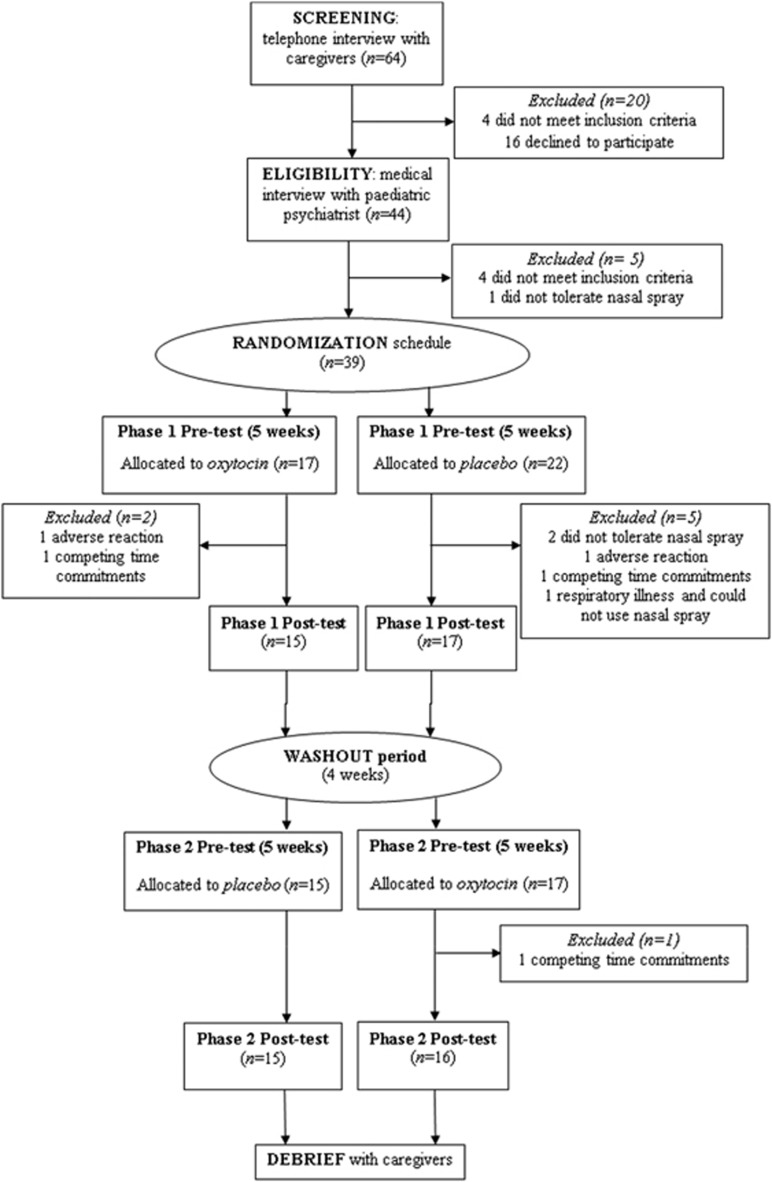
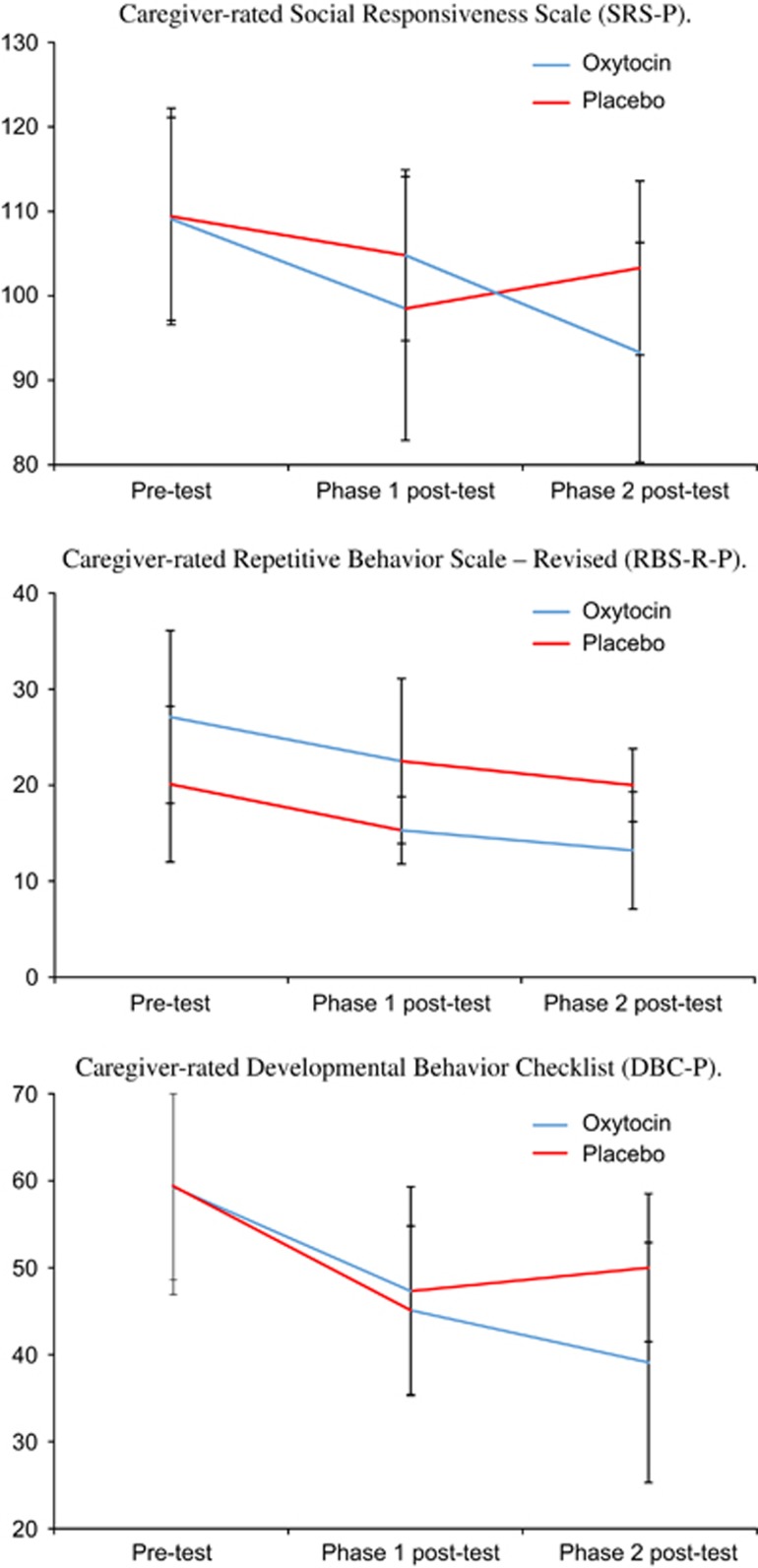
Interventions for autism are limited. The synthetic hormone oxytocin may provide a potential treatment to improve core social and behavioral difficulties in autism, but its efficacy has yet to be evaluated in young children who potentially may benefit to a greater extent. We investigated the efficacy, tolerability and safety of oxytocin treatment in young children with autism using a double-blind, randomized, placebo-controlled, crossover, clinical trial. Thirty-one children with autism received 12 International Units (IU) of oxytocin and placebo nasal spray morning and night (24 IU per day) for 5 weeks, with a 4-week washout period between each treatment. Compared with placebo, oxytocin led to significant improvements on the primary outcome of caregiver-rated social responsiveness. Overall, nasal spray was well tolerated, and the most common reported adverse events were thirst, urination and constipation. This study is the first clinical trial to support the potential of oxytocin as an early intervention for young children with autism to help improve social interaction deficits.
Overview
The claims and statistics of this paper haven’t been checked yet.
Run the check — free, no account needed. It reads the open-access text and checks the sources it cites.
Integrity signals
Registry
Cites
Statistics
Figures
Verification
Claims the paper makes
The claims and statistics of this paper haven’t been checked yet.
Run the check — free, no account needed. It reads the open-access text and checks the sources it cites.
Claims other papers make about this one
Each is checked against this paper’s own text: does it say what the citing paper says it does?
In the citing paper
“Oxytocin has received substantial interest as a potential treatment for psychiatric conditions such as autism spectrum conditions (ASC; henceforth autism),3 although clinical trials show modest effects.4, 5, 6”
From Intranasal oxytocin enhances intrinsic corticostriatal functional connectivity in women (2017) · cites this paper as [6]
In the citing paper
“Clinical trials of OT in autistic patients are ongoing, yet several studies have produced inconclusive results (4–8)”
From Oxytocin under opioid antagonism leads to supralinear enhancement of social attention (2017) · cites this paper as [5]
In the citing paper
“OT has been used safely with chronic administration in recent clinical trials (5)”
From Oxytocin under opioid antagonism leads to supralinear enhancement of social attention (2017) · cites this paper as [5]
In the citing paper
“Results of OXT studies in children have overall been more equivocal with mixed results.”
From An Update on Psychopharmacological Treatment of Autism Spectrum Disorder (2022) · cites this paper as [81]
In the citing paper
“Although 4 studies showed positive short-term results of OXT administration on social responsiveness (following 4 or 5 weeks of OXT administration) [80–83]”
From An Update on Psychopharmacological Treatment of Autism Spectrum Disorder (2022) · cites this paper as [81]
In the citing paper
“In another subsequent study from the same group, researchers found significant improvements on SRS outcome following chronic administration of IN-OT in children with ASD using a cross-over clinical trial design (Yatawara et al. 2016).”
From A precision medicine approach to oxytocin trials (2017) · cites this paper as Yatawara et al. 2016
Self-check
Percentages, sums and reported differences re-computed from the paper’s own numbers.
The self-check needs the paper’s full text.
Citations
Cites
(1976) · Medical Entomology and Zoology · Cited by 8,899
Cohen, J. (1992) · Psychological Bulletin · doi:10.1037//0033-2909.112.1.155 · Cited by 8,771
Jacobson, N. S., & Truax, P. (1991) · Journal of Consulting and Clinical Psychology · doi:10.1037/0022-006x.59.1.12 · Cited by 7,770
Oxytocin increases trust in humans
Kosfeld, M., Heinrichs, M., Zak, P. J., Fischbacher, U., & Fehr, E. (2005) · Nature · doi:10.1038/nature03701 · Cited by 3,690
Lord, C., Rutter, M., Goode, S., Heemsbergen, J., Jordan, H., Mawhood, L., & Schopler, E. (1989) · Journal of Autism and Developmental Disorders · doi:10.1007/bf02211841 · Cited by 2,030
Oxytocin, vasopressin, and the neurogenetics of sociality
Donaldson, Z. R., & Young, L. J. (2008) · Science · doi:10.1126/science.1158668 · Cited by 1,645
Varieties of Repetitive Behavior in Autism: Comparisons to Mental Retardation
Bodfish, J. W., Symons, F. J., Parker, D. E., & Lewis, M. H. (2000) · Journal of Autism and Developmental Disorders · doi:10.1023/a:1005596502855 · Cited by 1,223
Intranasal oxytocin improves emotion recognition for youth with autism spectrum disorders.
Guastella, A. J., Einfeld, S. L., Gray, K. M., Rinehart, N. J., Tonge, B. J., Lambert, T. J., & Hickie, I. B. (2010) · Biological Psychiatry · doi:10.1016/j.biopsych.2009.09.020 · Cited by 962
Self-citationPromoting social behavior with oxytocin in high-functioning autism spectrum disorders.
Andari, E., Duhamel, J.-R., Zalla, T., Herbrecht, E., Leboyer, M., & Sirigu, A. (2010) · Proceedings of the National Academy of Sciences · doi:10.1073/pnas.0910249107 · Cited by 941
Oxytocin increases gaze to the eye region of human faces
Guastella, A. J., Mitchell, P. B., & Dadds, M. R. (2008) · Biological Psychiatry · doi:10.1016/j.biopsych.2007.06.026 · Cited by 798
Self-citation
Research works printed but not linked: 2
- Einfeld SL, Tonge BT . Manual for the Developmental Behaviour Checklist (Second Edition)-Primary Carer Version (DBC-P-P) and Teacher Version (DBC-P-T). Monash University Centre for Developmental Psychiatry and Psychology and School of Psychiatry, University of New South Wales: : Melbourne and Sydney, Australia, 2002.
- Roid GH, Miller LJ . Leiter International Performance Scare-Revised. Stoeling: : Wooddale, IL, USA, 1997.
Cited by
Sorted by citations
An Overview of Autism Spectrum Disorder, Heterogeneity and Treatment Options
Masi, A., DeMayo, M. M., Glozier, N., & Guastella, A. J. (2017) · Neuroscience Bulletin · doi:10.1007/s12264-017-0100-y · Cited by 987
Self-citationGut instincts: microbiota as a key regulator of brain development, ageing and neurodegeneration
Dinan, T. G., & Cryan, J. F. (2017) · The Journal of Physiology · doi:10.1113/jp273106 · Cited by 813
Autism Spectrum Disorder: Classification, diagnosis and therapy
Sharma, S., Gonda, X., & Tarazi, F. I. (2018) · Pharmacology & Therapeutics · doi:10.1016/j.pharmthera.2018.05.007 · Cited by 745
Intranasal oxytocin treatment for social deficits and biomarkers of response in children with autism
Parker, K. J., Oztan, O., Libove, R. A., Sumiyoshi, R. D., Jackson, L. P., Karhson, D. S., Summers, J. E., Hinman, K. E., Motonaga, K. S., Phillips, J. M., et al. (2017) · Proceedings of the National Academy of Sciences · doi:10.1073/pnas.1705521114 · Cited by 349
Howes, O. D., Rogdaki, M., Findon, J. L., Wichers, R. H., Charman, T., King, B. H., Loth, E., McAlonan, G. M., McCracken, J. T., Parr, J. R., et al. (2018) · Journal of Psychopharmacology · doi:10.1177/0269881117741766 · Cited by 342
Quintana, D. S., Lischke, A., Grace, S., Scheele, D., Ma, Y., & Becker, B. (2021) · Molecular Psychiatry · doi:10.1038/s41380-020-00864-7 · Cited by 263
Lai, M.-C., Anagnostou, E., Wiznitzer, M., Allison, C., & Baron-Cohen, S. (2020) · The Lancet Neurology · doi:10.1016/s1474-4422(20)30034-x · Cited by 250
Kinetics and dose dependency of intranasal oxytocin effects on amygdala reactivity
Spengler, F. B., Schultz, J., Scheele, D., Essel, M., Maier, W., Heinrichs, M., & Hurlemann, R. (2017) · Biological Psychiatry · doi:10.1016/j.biopsych.2017.04.015 · Cited by 229
An Update on Psychopharmacological Treatment of Autism Spectrum Disorder
Aishworiya, R., Valica, T., Hagerman, R., & Restrepo, B. (2022) · Neurotherapeutics · doi:10.1007/s13311-022-01183-1 · Cited by 233
An update on pharmacotherapy for autism spectrum disorder in children and adolescents
Ji, N. Y., & Findling, R. L. (2015) · Current Opinion in Psychiatry · doi:10.1097/yco.0000000000000132 · Cited by 217
Lemonnier, E., Villeneuve, N., Sonie, S., Serret, S., Rosier, A., Roue, M., Brosset, P., Viellard, M., Bernoux, D., Rondeau, S., et al. (2017) · Translational Psychiatry · doi:10.1038/tp.2017.10 · Cited by 218
An Allostatic Theory of Oxytocin
Quintana, D. S., & Guastella, A. J. (2020) · Trends in Cognitive Sciences · doi:10.1016/j.tics.2020.03.008 · Cited by 223
Self-citationFreeman, S. M., & Young, L. J. (2016) · Journal of Neuroendocrinology · doi:10.1111/jne.12382 · Cited by 196
“More severe disruptions in eye movements and social visual attention in ASD patients correlate with the intensity of social dysfunction (63,64).”
BackgroundInfluentialThe role of GABAergic signalling in neurodevelopmental disorders
Tang, X., Jaenisch, R., & Sur, M. (2021) · Nature reviews. Neuroscience · doi:10.1038/s41583-021-00443-x · Cited by 216
Yamasue, H., Okada, T., Munesue, T., Kuroda, M., Fujioka, T., Uno, Y., Matsumoto, K., Kuwabara, H., Mori, D., Okamoto, Y., et al. (2020) · Molecular Psychiatry · doi:10.1038/s41380-018-0097-2 · Cited by 185
Parker, K. J., Oztan, O., Libove, R. A., Mohsin, N., Karhson, D. S., Sumiyoshi, R. D., Summers, J. E., Hinman, K. E., Motonaga, K. S., Phillips, J. M., et al. (2019) · Science Translational Medicine · doi:10.1126/scitranslmed.aau7356 · Cited by 185
An update on pharmacotherapy of autism spectrum disorder in children and adolescents
Goel, R., Hong, J. S., Findling, R. L., & Ji, N. Y. (2018) · International Review of Psychiatry · doi:10.1080/09540261.2018.1458706 · Cited by 194
Deficiency in prohormone convertase PC1 impairs prohormone processing in Prader-Willi syndrome
Burnett, L. C., LeDuc, C. A., Sulsona, C. R., Paull, D. J., Rausch, R. N., Eddiry, S., Carli, J. F. M., Morabito, M. V., Skowronski, A. A., Hubner, G., et al. (2016) · Journal of Clinical Investigation · doi:10.1172/jci88648 · Cited by 174
The New Statistics for Better Science: Ask How Much, How Uncertain, and What Else Is Known
Calin-Jageman, R. J., & Cumming, G. (2019) · The American Statistician · doi:10.1080/00031305.2018.1518266 · Cited by 182
Oxytocin enhances observational fear in mice
Pisansky, M. T., Hanson, L. R., Gottesman, I. I., & Gewirtz, J. C. (2017) · Nature Communications · doi:10.1038/s41467-017-02279-5 · Cited by 167
Genetics of Autism Spectrum Disorder: Current Status and Possible Clinical Applications
Yoo, H. (2015) · Experimental Neurobiology · doi:10.5607/en.2015.24.4.257 · Cited by 170
Frye, R. E. (2018) · CNS Drugs · doi:10.1007/s40263-018-0556-y · Cited by 169
Kong, X.-J., Liu, J., Liu, K., Koh, M., Sherman, H., Liu, S., Tian, R., Sukijthamapan, P., Wang, J., Fong, M., et al. (2021) · Nutrients · doi:10.3390/nu13051552 · Cited by 150
van Iersel, L., Brokke, K. E., Adan, R. A. H., Bulthuis, L. C. M., van den Akker, E. L. T., & van Santen, H. M. (2019) · Endocrine Reviews · doi:10.1210/er.2018-00017 · Cited by 146
Oxytocin and the Neurobiology of Prosocial Behavior
Marsh, N., Marsh, A. A., Lee, M. R., & Hurlemann, R. (2020) · The Neuroscientist · doi:10.1177/1073858420960111 · Cited by 159
Ornoy, A., Weinstein‐Fudim, L., & Ergaz, Z. (2016) · Frontiers in Neuroscience · doi:10.3389/fnins.2016.00316 · Cited by 141
Bolognani, F., del Valle Rubido, M., Squassante, L., Wandel, C., Derks, M., Murtagh, L., Sevigny, J., Khwaja, O., Umbricht, D., & Fontoura, P. (2019) · Science Translational Medicine · doi:10.1126/scitranslmed.aat7838 · Cited by 128
Wei, D., Dinh, D., Lee, D., Li, D., Anguren, A., Moreno-Sanz, G., Gall, C. M., & Piomelli, D. (2016) · Cannabis and Cannabinoid Research · doi:10.1089/can.2015.0008 · Cited by 122
Intranasal oxytocin in the treatment of autism spectrum disorders: A multilevel meta-analysis
Huang, Y., Huang, X., Ebstein, R. P., & Yu, R. (2021) · Neuroscience & Biobehavioral Reviews · doi:10.1016/j.neubiorev.2020.12.028 · Cited by 119
Overview of human oxytocin research
Kendrick, K. M., Guastella, A. J., & Becker, B. (2017) · Current Topics in Behavioral Neurosciences · doi:10.1007/7854_2017_19 · Cited by 121
Self-citationKosaka, H., Okamoto, Y., Munesue, T., Yamasue, H., Inohara, K., Fujioka, T., Anme, T., Orisaka, M., Ishitobi, M., Jung, M., et al. (2016) · Translational Psychiatry · doi:10.1038/tp.2016.152 · Cited by 117
Gordon, I., Jack, A., Pretzsch, C. M., Vander Wyk, B., Leckman, J. F., Feldman, R., & Pelphrey, K. A. (2016) · Scientific Reports · doi:10.1038/srep35054 · Cited by 114
Endocannabinoid Signaling in the Control of Social Behavior
Don, W., Allsop, S. A., Tye, K. M., & Piomelli, D. (2017) · Trends in Neurosciences · doi:10.1016/j.tins.2017.04.005 · Cited by 118
Oxytocin and Autism Spectrum Disorders
Yamasue, H., & Domes, G. (2017) · Current Topics in Behavioral Neurosciences · doi:10.1007/7854_2017_24 · Cited by 109
Physical activity and interoceptive processing: Theoretical considerations for future research
Wallman-Jones, A., Perakakis, P., Manos Tsakiris, A., & Schmidt, M. (2021) · International Journal of Psychophysiology · doi:10.1016/j.ijpsycho.2021.05.002 · Cited by 119
Tian, J., Gao, X., & Yang, L. (2022) · Frontiers in Neuroscience · doi:10.3389/fnins.2022.780407 · Cited by 136
Intranasal oxytocin enhances intrinsic corticostriatal functional connectivity in women
Bethlehem, R. A. I., Lombardo, M. V., Lai, M.-C., Auyeung, B., Crockford, S. K., Deakin, J., Soubramanian, S., Sule, A., Kundu, P., Voon, V, et al. (2017) · Translational Psychiatry · doi:10.1038/tp.2017.72 · Cited by 96
Bernaerts, S., Boets, B., Bosmans, G., Steyaert, J., & Alaerts, K. (2020) · Molecular Autism · doi:10.1186/s13229-020-0313-1 · Cited by 102
Quintana, D. S., Westlye, L. T., Alnæs, D., Rustan, Ø. G., Kaufmann, T., Smerud, K. T., Mahmoud, R. A., Djupesland, P. G., & Andreassen, O. A. (2016) · Psychoneuroendocrinology · doi:10.1016/j.psyneuen.2016.04.010 · Cited by 102
Lin, Y.-T., & Hsu, K. (2018) · Progress in Neurobiology · doi:10.1016/j.pneurobio.2018.10.003 · Cited by 100
Evidence for Intranasal Oxytocin Delivery to the brain: Recent Advances and Future Perspectives
Quintana, D. S., Smerud, K. T., Andreassen, O. A., & Djupesland, P. G. (2018) · Therapeutic Delivery · doi:10.4155/tde-2018-0002 · Cited by 98
Freeman, S. M., Palumbo, M. C., Lawrence, R. H., Smith, A. L., Goodman, M. M., & Bales, K. L. (2018) · Translational Psychiatry · doi:10.1038/s41398-018-0315-3 · Cited by 82
Social dysfunction after pediatric traumatic brain injury: A translational perspective
Ryan, N. P., Catroppa, C., Godfrey, C., Noble‐Haeusslein, L. J., Shultz, S. R., O'Brien, T. J., Anderson, V. A., & Semple, B. D. (2016) · Neuroscience & Biobehavioral Reviews · doi:10.1016/j.neubiorev.2016.02.020 · Cited by 102
Han, R. T., Kim, Y., Park, E. H., Kim, J. Y., Ryu, C., Kim, H. Y., Lee, J., Pahk, K., Cui, S., Kim, H., et al. (2018) · Frontiers in Molecular Neuroscience · doi:10.3389/fnmol.2018.00246 · Cited by 92
Alvares, G. A., Quintana, D. S., & Whitehouse, A. J. O. (2017) · Autism Research · doi:10.1002/aur.1692 · Cited by 91
Rapanelli, M., Frick, L. R., Xu, M., Groman, S. M., Jindachomthong, K., Tamamaki, N., Tanahira, C., Taylor, J. R., & Pittenger, C. (2017) · Biological Psychiatry · doi:10.1016/j.biopsych.2017.01.020 · Cited by 88
Le, J., Zhang, L., Zhao, W., Zhu, S., Lan, C., Kou, J., Zhang, Q., Zhang, Y., Li, Q., Chen, Z., et al. (2022) · Psychotherapy and Psychosomatics · doi:10.1159/000524543 · Cited by 86
Zhang, H.-F., Dai, Y., Wu, J., Jia, M., Zhang, J., Shou, X., Han, S., Zhang, R., & Han, J. (2016) · Neuroscience Bulletin · doi:10.1007/s12264-016-0046-5 · Cited by 91
Dai, Y., Zhang, H., Schön, M., Böckers, T. M., Han, S., Han, J., & Zhang, R. (2018) · Frontiers in Cellular Neuroscience · doi:10.3389/fncel.2018.00355 · Cited by 83
Muttenthaler, M., Andersson, Å., Vetter, I., Menon, R., Busnelli, M., Ragnarsson, L. K. N., Bergmayr, C., Arrowsmith, S., Deuis, J. R., Chiu, H. S., et al. (2017) · Science Signaling · doi:10.1126/scisignal.aan3398 · Cited by 78
Understanding autism spectrum disorders with animal models: applications, insights, and perspectives
Zhu, L., 昆明650500,中国, 云., Zhu, Y., Gu, L., & Cheng, Y. (2021) · 动物学研究 · doi:10.24272/j.issn.2095-8137.2021.251 · Cited by 90
Cai, Q., Feng, L., & Yap, K. Z. (2017) · Psychiatry and Clinical Neurosciences · doi:10.1111/pcn.12627 · Cited by 82
Zhang, R., Zhang, H.-F., Han, J., & Han, S. (2017) · Neuroscience Bulletin · doi:10.1007/s12264-017-0120-7 · Cited by 84
Kruppa, J. A., Gossen, A., Oberwelland Weiß, E., Kohls, G., Großheinrich, N., Cholemkery, H., Freitag, C. M., Karges, W., Wölfle, E., Sinzig, J., et al. (2019) · Neuropsychopharmacology · doi:10.1038/s41386-018-0258-7 · Cited by 69
Oxytocin reversed MK-801-induced social interaction and aggression deficits in zebrafish
Zimmermann, F. F., Gaspary, K. V., Siebel, A. M., & Bonan, C. D. (2016) · Behavioural Brain Research · doi:10.1016/j.bbr.2016.05.059 · Cited by 81
Wang, S.-C., Lin, C.-C., Chen, C.-C., Tzeng, N., & Liu, Y. (2018) · International Journal of Molecular Sciences · doi:10.3390/ijms19123848 · Cited by 73
Guastella, A. J., Boulton, K., Whitehouse, A., Song, Y. J. C., Thapa, R., Gregory, S. G., Pokorski, I., Granich, J., DeMayo, M. M., Ambarchi, Z., et al. (2022) · Molecular Psychiatry · doi:10.1038/s41380-022-01845-8 · Cited by 77
Self-citationPeled‐Avron, L., Abu-Akel, A. M., & Shamay‐Tsoory, S. (2020) · Neuroscience & Biobehavioral Reviews · doi:10.1016/j.neubiorev.2020.04.023 · Cited by 78
Clinical trials in autism spectrum disorder: evidence, challenges and future directions
Anagnostou, E. A. (2018) · Current Opinion in Neurology · doi:10.1097/wco.0000000000000542 · Cited by 74
Oxytocin and vasopressin: signalling, behavioural modulation and potential therapeutic effects
Rae, M., Lemos Duarte, M., Gomes, I., Camarini, R., & Devi, L. A. (2022) · British Journal of Pharmacology · doi:10.1111/bph.15481 · Cited by 72
DeMayo, M. M., Song, Y. J. C., Hickie, I. B., & Guastella, A. J. (2017) · Pediatric Drugs · doi:10.1007/s40272-017-0248-y · Cited by 71
Self-citationBusnelli, M., Kleinau, G., Muttenthaler, M., Stoev, S., Manning, M., Bibic, L., Howell, L. A., McCormick, P. J., Di Lascio, S., Braida, D., et al. (2016) · Journal of Medicinal Chemistry · doi:10.1021/acs.jmedchem.6b00564 · Cited by 67
Fluegge, K. (2016) · Environmental Toxicology and Pharmacology · doi:10.1016/j.etap.2016.08.013 · Cited by 68
Endogenous Oxytocin Levels in Autism—A Meta-Analysis
Moerkerke, M., Peeters, M., de Vries, L. M., Daniëls, N., Steyaert, J. G., Alaerts, K., & Boets, B. (2021) · Brain Sciences · doi:10.3390/brainsci11111545 · Cited by 68
Horta, M., Kaylor, K., Feifel, D., & Ebner, N. C. (2019) · Neuroscience & Biobehavioral Reviews · doi:10.1016/j.neubiorev.2019.10.012 · Cited by 63
Improving the precision of intranasal oxytocin research
Winterton, A., Westlye, L. T., Steen, N. E., Andreassen, O. A., & Quintana, D. S. (2020) · Nature Human Behaviour · doi:10.1038/s41562-020-00996-4 · Cited by 65
Stepanova, E. A., Dowling, S., Phelps, M., & Findling, R. L. (2017) · Dialogues in Clinical Neuroscience · doi:10.31887/dcns.2017.19.4/rfindling · Cited by 61
Reversal of social deficits by subchronic oxytocin in two autism mouse models
Teng, B. L., Nikolova, V. D., Riddick, N. V., Agster, K. L., Crowley, J. J., Baker, L. K., Koller, B. H., Pedersen, C. A., Jarstfer, M. B., & Moy, S. S. (2016) · Neuropharmacology · doi:10.1016/j.neuropharm.2015.12.025 · Cited by 65
Higashida, H., Munesue, T., Kosaka, H., Yamasue, H., Yokoyama, S., & Kikuchi, M. (2019) · Diseases · doi:10.3390/diseases7010024 · Cited by 65
Damen, L., Grootjen, L. N., Juriaans, A. F., Donze, S., Huisman, T. M., Visser, J. A., Delhanty, P. J. D., & Hokken‐Koelega, A. C. S. (2020) · Clinical Endocrinology · doi:10.1111/cen.14387 · Cited by 59
Oxytocin under opioid antagonism leads to supralinear enhancement of social attention
Dal Monte, O., Piva, M., Anderson, K. M., Tringides, M., Holmes, A. J., & Chang, S. W. C. (2017) · Proceedings of the National Academy of Sciences · doi:10.1073/pnas.1702725114 · Cited by 55
Putnam, P. T., Roman, J. M., Zimmerman, P. E., & Gothard, K. M. (2016) · Psychoneuroendocrinology · doi:10.1016/j.psyneuen.2016.05.016 · Cited by 53
“The neuromodulator oxytocin (OT) has been shown to improve social deficits in both ASD and other disorders accompanied by social deficits (Guastella et al., 2010, 2010; Hollander et al., 2002, 2007; Yatawara et al., 2015; Young and Barrett, 2015).”
An immunohistochemical, enzymatic, and behavioral study of CD157/BST-1 as a neuroregulator
Higashida, H., Liang, M., Yoshihara, T., Akther, S., Fakhrul, A. A. K. M., Михайлович, Ч. С., Nam, T., Kim, U., Kasai, S., Nishimura, T., et al. (2017) · BMC Neuroscience · doi:10.1186/s12868-017-0350-7 · Cited by 56
Frantz, M., Pellissier, L. P., Pflimlin, E., Loison, S., Gandía, J., MARSOL, C., Durroux, T., Mouillac, B., Becker, J. A. J., Merrer, J. L., et al. (2018) · Journal of Medicinal Chemistry · doi:10.1021/acs.jmedchem.8b00697 · Cited by 58
Lamy, M., & Erickson, C. A. (2018) · Current problems in pediatric and adolescent health care · doi:10.1016/j.cppeds.2018.08.015 · Cited by 60
Imaging-genetics of sex differences in ASD: distinct effects of OXTR variants on brain connectivity
Hernandez, L. M., Lawrence, K. E., Padgaonkar, N. T., Inada, M., Hoekstra, J. N., Lowe, J. K., Eilbott, J., Jack, A., Aylward, E., Gaab, N., et al. (2020) · Translational Psychiatry · doi:10.1038/s41398-020-0750-9 · Cited by 54
Oxytocin receptor gene variations predict neural and behavioral response to oxytocin in autism
Watanabe, T., Otowa, T., Abe, O., Kuwabara, H., Aoki, Y., Natsubori, T., Takao, H., Kakiuchi, C., Kondo, K., Ikeda, M., et al. (2017) · Social Cognitive and Affective Neuroscience · doi:10.1093/scan/nsw150 · Cited by 54
Daniëls, N., Moerkerke, M., Steyaert, J. G., Bamps, A., Debbaut, E., Prinsen, J., Tang, T., der Donck, S. V., Boets, B., & Alaerts, K. (2023) · Molecular Autism · doi:10.1186/s13229-023-00546-5 · Cited by 57
Circuits for social learning: a unified model and application to autism spectrum disorder
DeMayo, M. M., Young, L. J., Hickie, I. B., Song, Y. J. C., & Guastella, A. J. (2019) · Neuroscience & Biobehavioral Reviews · doi:10.1016/j.neubiorev.2019.09.034 · Cited by 52
Self-citationKompier, N. F., Keysers, C., Gazzola, V., Lucassen, P. J., & Krugers, H. J. (2019) · Frontiers in Behavioral Neuroscience · doi:10.3389/fnbeh.2019.00143 · Cited by 53
Yao, S., & Kendrick, K. M. (2022) · Pharmaceutics · doi:10.3390/pharmaceutics14020323 · Cited by 55
Oxytocin and excitation/inhibition balance in social recognition
Lopatina, O. L., Komleva, Y. K., Gorina, Y. V., Olovyannikova, R. Y., Труфанова, Л. В., Hashimoto, T., Takahashi, T., Kikuchi, M., Minabe, Y., Higashida, H., et al. (2018) · Neuropeptides · doi:10.1016/j.npep.2018.09.003 · Cited by 53
Montag, C., Sindermann, C., Melchers, M., Jung, S., Luo, R., Becker, B., Xie, J., Xu, W., Guastella, A. J., & Kendrick, K. M. (2017) · American Journal of Medical Genetics Part B Neuropsychiatric Genetics · doi:10.1002/ajmg.b.32596 · Cited by 50
Diagnostic and Severity-Tracking Biomarkers for Autism Spectrum Disorder
Bjørklund, G., Meguid, N. A., El-Ansary, A. K., El‐Bana, M. A., Dadar, M., Aaseth, J., Hemimi, M., Osredkar, J., & Chirumbolo, S. (2018) · Journal of Molecular Neuroscience · doi:10.1007/s12031-018-1192-1 · Cited by 54
Effect of a novel nasal oxytocin spray with enhanced bioavailability on autism: a randomized trial
Yamasue, H., Kojima, M., Kuwabara, H., Kuroda, M., Matsumoto, K., Kanai, C., Inada, N., Owada, K., Ochi, K., Ono, N., et al. (2021) · Brain · doi:10.1093/brain/awab291 · Cited by 52
Hardan, A. Y., Hendren, R. L., Aman, M. G., Robb, A. S., Melmed, R. D., Andersen, K. A., Luchini, R., Rahman, R., Ali, S., Jia, X., et al. (2019) · Autism · doi:10.1177/1362361318824103 · Cited by 50
Ni, H., Chen, Y., Chao, Y., Wu, C., Wu, Y., Liang, S. H., Chin, W., Chou, T., Gau, S. S., Huang, Y., et al. (2021) · Autism · doi:10.1177/1362361321990534 · Cited by 51
Oxytocin—a social peptide? Deconstructing the evidence
Leng, G., Leng, R., & Ludwig, M. (2022) · Philosophical Transactions of the Royal Society B Biological Sciences · doi:10.1098/rstb.2021.0055 · Cited by 51
Iffland, M., Livingstone, N., Jorgensen, M. L., Hazell, P., & Gillies, D. M. (2023) · Cochrane Database of Systematic Reviews · doi:10.1002/14651858.cd011769.pub2 · Cited by 58
Understanding autism: Causes, diagnosis, and advancing therapies
Wang, M., Zhang, X., Zhong, L., Zeng, L., Li, L., & Yao, P. (2025) · Brain Research Bulletin · doi:10.1016/j.brainresbull.2025.111411 · Cited by 67
The two fold role of oxytocin in social developmental disorders: A cause and a remedy?
Lefèvre, A., & Sirigu, A. (2016) · Neuroscience & Biobehavioral Reviews · doi:10.1016/j.neubiorev.2016.01.011 · Cited by 48
Kamp‐Becker, I., Poustka, L., Bachmann, C., Ehrlich, S., Hoffmann, F., Kanske, P., Kirsch, P., Krach, S., Paulus, F. M., Rietschel, M., et al. (2017) · BMC Psychiatry · doi:10.1186/s12888-017-1362-7 · Cited by 47
Aita, C., Mizoguchi, Y., Yamamoto, M., SeguchI, Y., Yatsuga, C., Nishimura, T., Sugimoto, Y., Takahashi, D., Nishihara, R., Ueno, T., et al. (2018) · Psychiatry Research · doi:10.1016/j.psychres.2018.12.139 · Cited by 53
Zhong, J., Amina, S., Liang, M., Akther, S., Yuhi, T., Nishimura, T., Tsuji, C., Tsuji, T., Liu, H.-X., Hashii, M., et al. (2016) · Frontiers in Neuroscience · doi:10.3389/fnins.2016.00304 · Cited by 42
Audunsdottir, K., Sartorius, A. M., Kang, H., Glaser, B. D., Bøen, R., Nærland, T., Alaerts, K., Kildal, E. S.-M., Westlye, L. T., Andreassen, O. A., et al. (2024) · Psychoneuroendocrinology · doi:10.1016/j.psyneuen.2024.107067 · Cited by 43
Martins, D., Paduraru, M., & Paloyelis, Y. (2021) · British Journal of Pharmacology · doi:10.1111/bph.15451 · Cited by 42
Zhao, F., Zhang, H., Wang, P., Cui, W., Xu, K., Chen, D., Hu, M., Li, Z., Geng, X., & Wei, S. (2022) · Frontiers in Neuroscience · doi:10.3389/fnins.2022.919890 · Cited by 44
Chronic oxytocin administration stimulates the oxytocinergic system in children with autism
Moerkerke, M., Daniëls, N., Tibermont, L., Tang, T., Evenepoel, M., der Donck, S. V., Debbaut, E., Prinsen, J., Chubar, V., Claes, S. J., et al. (2024) · Nature Communications · doi:10.1038/s41467-023-44334-4 · Cited by 46
Oxytocin improves facial emotion recognition in young adults with antisocial personality disorder
Timmermann, M., Jeung, H., Schmitt, R., Boll, S., Freitag, C. M., Bertsch, K., & Herpertz, S. C. (2017) · Psychoneuroendocrinology · doi:10.1016/j.psyneuen.2017.07.483 · Cited by 46
A precision medicine approach to oxytocin trials
Andari, E., Hurlemann, R., & Young, L. J. (2017) · Current Topics in Behavioral Neurosciences · doi:10.1007/7854_2017_29 · Cited by 40
Metadata
- Authors
- Yatawara, C. J., Einfeld, S. L., Hickie, I. B., Davenport, T. A., & Guastella, A. J.
- Affiliations
- The University of Sydney (AU)
- Corresponding author
- Guastella, A J
- Venue
- Molecular Psychiatry
- Published
- 2015-10-27
- Volume
- 21
- Issue
- 9
- Pages
- 1225-1231
- ISSN
- 1359-4184 (ISSN-L)
- 1476-5578
- PMC
- PMC4995545
- OpenAlex
- W1823169087
- Cited by
- 344
- References
- 43
- Citations by year
- 2026: 18 · 2025: 18 · 2024: 27 · 2023: 21 · 2022: 38 · 2021: 26 · 2020: 34 · 2019: 36 · 2018: 41 · 2017: 44 · 2016: 37 · 2015: 4
- FWCI
- 68.73
- Type
- journal article
- Language
- en
- Open access
- hybrid
- doi.org
- Licence
- Locations
- Molecular Psychiatry (publishedVersion, cc-by-nc-nd)
- PubMed Central (publishedVersion, cc-by-nc-nd)
- PubMed (publishedVersion)
- Funders
- National Health and Medical Research Council (APP 511921, 511921, 623625, 1043664, 1061922)
- Topics
- Life Sciences › Neuroscience › Endocrine and Autonomic Systems › Neuroendocrine regulation and behavior
- Life Sciences › Neuroscience › Cognitive Neuroscience › Autism Spectrum Disorder Research
- Life Sciences › Biochemistry, Genetics and Molecular Biology › Genetics › Genetics and Neurodevelopmental Disorders
- Keywords
- oxytocin, autism spectrum disorder, young children, nasal spray, social interaction deficits, social responsiveness, early intervention, treatment tolerability, adverse events
- MeSH terms
- Autism Spectrum Disorder, Administration, Intranasal, Autistic Disorder, Child, Child, Preschool, Double-Blind Method, Female, Humans, Interpersonal Relations, Male, Oxytocin, Social Behavior, Treatment Outcome, Cross-Over Studies, Nasal Sprays
About these checks
Registry, retraction, Cites and statistics results are computed, not judged, with one exception: a printed reference that no index lists is read once by a model before it counts as a citation error. Claims are extracted by a model and kept only when their quote appears verbatim in the text; each cited source is then checked, with a model’s help, for whether it says what the claim relies on. Those verdicts can be wrong — read the claim’s quote and the cited source before relying on one.
Statistics and arithmetic are recomputed, not judged.
Confidence bands are shown only for fields calibrated on our annotated test set. None is calibrated yet, so no band is shown.
What counts as a claim ›How we measure confidence ›How we check this ›
Are you an author, or do you see a problem with this page? Request a review
