

Analysis of protein-coding genetic variation in 60,706 humans
Open accessPublished version of a preprint
The DOI matches its Crossref record; 44 of the 44 references it cites were found in a registry or an index.
Abstract
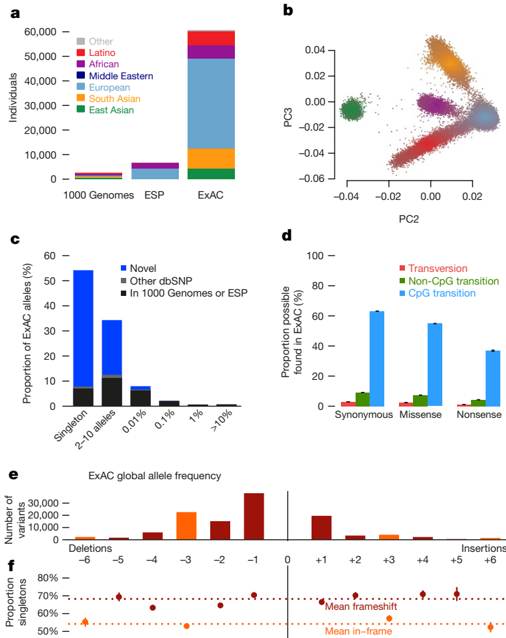
Large-scale reference data sets of human genetic variation are critical for the medical and functional interpretation of DNA sequence changes. Here we describe the aggregation and analysis of high-quality exome (protein-coding region) DNA sequence data for 60,706 individuals of diverse ancestries generated as part of the Exome Aggregation Consortium (ExAC). This catalogue of human genetic diversity contains an average of one variant every eight bases of the exome, and provides direct evidence for the presence of widespread mutational recurrence. We have used this catalogue to calculate objective metrics of pathogenicity for sequence variants, and to identify genes subject to strong selection against various classes of mutation; identifying 3,230 genes with near-complete depletion of predicted protein-truncating variants, with 72% of these genes having no currently established human disease phenotype. Finally, we demonstrate that these data can be used for the efficient filtering of candidate disease-causing variants, and for the discovery of human ‘knockout’ variants in protein-coding genes. Exome sequencing data from 60,706 people of diverse geographic ancestry is presented, providing insight into genetic variation across populations, and illuminating the relationship between DNA variants and human disease. As part of the Exome Aggregation Consortium (ExAC) project, Daniel MacArthur and colleagues report on the generation and analysis of high-quality exome sequencing data from 60,706 individuals of diverse ancestry. This provides the most comprehensive catalogue of human protein-coding genetic variation to date, yielding unprecedented resolution for the analysis of very rare variants across multiple human populations. The catalogue is freely accessible and provides a critical reference panel for the clinical interpretation of genetic variants and the discovery of disease-related genes.
Overview
The claims and statistics of this paper haven’t been checked yet.
Free: it reads the open-access text and checks the first 5 claims that cite a source we can check. Create a free account to check every claim.
Integrity signals
Registry
Cites
Statistics
Figures


Verification
Claims the paper makes
The claims and statistics of this paper haven’t been checked yet.
Free: it reads the open-access text and checks the first 5 claims that cite a source we can check. Create a free account to check every claim.
Claims other papers make about this one
Each is checked against this paper’s own text: does it say what the citing paper says it does?
The source backs part of the claim, not all of it — or backs it for a different population, condition or comparison.
In the citing paper
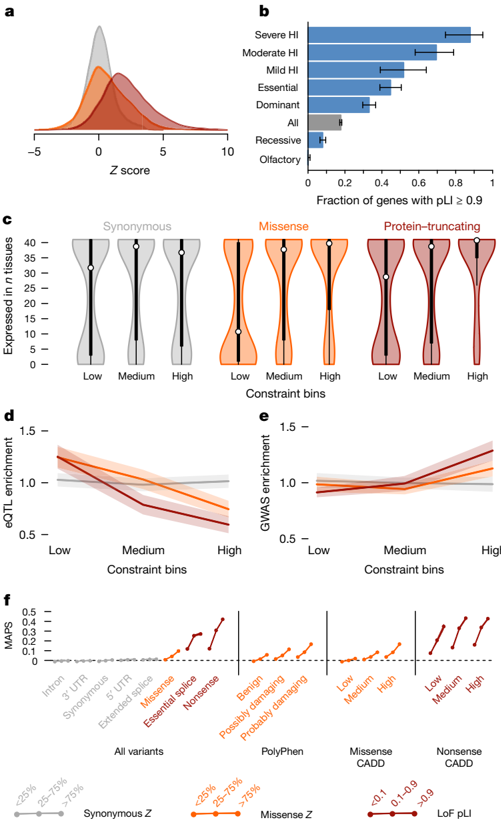
“Variants in constrained genes (pLI ≥ 0.5)12 explain most of the burden of dnLGD variants and de novo D-mis variants (defined by an MPC score ≥2) in the affected offspring in our study”
From Exome sequencing of 457 autism families recruited online provides evidence for autism risk genes (2019) · cites this paper as [12]
Experimental — accuracy not yet measuredThe source backs part of the claim, not all of it — or backs it for a different population, condition or comparison.
In the citing paper
“Known dominant DD-associated genes are strongly enriched in the minority of genes that exhibit strong selective constraint on heterozygous PTVs7.”
From Evidence for 28 genetic disorders discovered by combining healthcare and research data (2020) · cites this paper as [7]
Experimental — accuracy not yet measuredThe source backs part of the claim, not all of it — or backs it for a different population, condition or comparison.
In the citing paper
“As expected, all ten genes are among the most constrained genes in the genome, with a substantial depletion of PTVs compared to chance expectation24.”
From Rare coding variants in ten genes confer substantial risk for schizophrenia (2022) · cites this paper as [24]
Experimental — accuracy not yet measuredThe source backs part of the claim, not all of it — or backs it for a different population, condition or comparison.
In the citing paper
“In our evolution-focused SNP-h2 enrichment analysis, we detected an overabundance of genic and LoF intolerant loci in both EAS and EUR, suggesting that functionally important regions of the genome contribute to SNP-h2 to a different extent compared to the other annotations tested [10, 33, 40, 44].”
From Denisovan and Neanderthal archaic introgression differentially impacted the genetics of complex traits in modern populations (2022) · cites this paper as [33]
Experimental — accuracy not yet measuredThe source backs part of the claim, not all of it — or backs it for a different population, condition or comparison.
In the citing paper
“In line with previous studies [10, 33], the strongest enrichments in both ancestry groups were observed for annotations related to genic and LoF intolerant regions.”
From Denisovan and Neanderthal archaic introgression differentially impacted the genetics of complex traits in modern populations (2022) · cites this paper as [33]
Experimental — accuracy not yet measured
9 more claims about this paper
Create a free account to see every claim other papers make about this one.
Self-check
Percentages, sums and reported differences re-computed from the paper’s own numbers.
The self-check needs the paper’s full text.
Citations
Cites
Richards, S., Aziz, N., Bale, S., Bick, D., Das, S., Gastier-Foster, J., Grody, W. W., Hegde, M., Lyon, E., Spector, E., et al. (2015) · Genetics in Medicine · doi:10.1038/gim.2015.30 · Cited by 32,594
A global reference for human genetic variation
The 1000 Genomes Project Consortium, authors, C., Auton, A., Abecasis, G. R., Steering committee, Altshuler, D. M., Durbin, R. M., Abecasis, G. R., Bentley, D. R., Chakravarti, A., et al. (2015) · Nature · doi:10.1038/nature15393 · Cited by 18,247
Self-citationA framework for variation discovery and genotyping using next-generation DNA sequencing data
DePristo, M. A., Banks, E., Poplin, R., Garimella, K. V., Maguire, J. R., Hartl, C., Philippakis, A. A., del Angel, G., Rivas, M. A., Hanna, M., et al. (2011) · Nature Genetics · doi:10.1038/ng.806 · Cited by 11,456
Self-citationLethality and centrality in protein networks
Jeong, H., Mason, S. P., Barabási, A.-L., & Oltvai, Z. N. (2001) · Nature · doi:10.1038/35075138 · Cited by 5,287
The Genotype-Tissue Expression (GTEx) pilot analysis: Multitissue gene regulation in humans
The GTEx Consortium, Ardlie, K. G., Deluca, D. S., Segrè, A. V., Sullivan, T. J., Young, T. R., Gelfand, E. T., Trowbridge, C. A., Maller, J. B., Tukiainen, T., et al. (2015) · Science · doi:10.1126/science.1262110 · Cited by 5,062
Self-citationGoh, K.-I., Cusick, M. E., Valle, D., Childs, B., Vidal, M., & Barabási, A.-L. (2007) · Proceedings of the National Academy of Sciences · doi:10.1073/pnas.0701361104 · Cited by 3,242
Inference of human population history from individual whole-genome sequences
Li, H., & Durbin, R. (2011) · Nature · doi:10.1038/nature10231 · Cited by 2,590
Exome sequencing as a tool for Mendelian disease gene discovery
Bamshad, M. J., Ng, S. B., Bigham, A. W., Tabor, H. K., Emond, M. J., Nickerson, D. A., & Shendure, J. (2011) · Nature Reviews Genetics · doi:10.1038/nrg3031 · Cited by 1,673
De novo mutations in schizophrenia implicate synaptic networks
Fromer, M., Pocklington, A. J., Kavanagh, D. H., Williams, H. J., Dwyer, S., Gormley, P., Georgieva, L., Rees, E., Palta, P., Ruderfer, D. M., et al. (2014) · Nature · doi:10.1038/nature12929 · Cited by 1,617
Self-citationEvolution and functional impact of rare coding variation from deep sequencing of human exomes
Tennessen, J. A., Bigham, A. W., O’Connor, T. D., Fu, W., Kenny, E. E., Gravel, S., McGee, S., Do, R., Liu, X., Jun, G., et al. (2012) · Science · doi:10.1126/science.1219240 · Cited by 1,613
Self-citation
Cited by
Items 401–500 of 1,209
A systematic review and standardized clinical validity assessment of male infertility genes
Oud, M. S., Volozonoka, L., Smits, R. M., Vissers, L. E. L. M., Ramos, L., & Veltman, J. A. (2019) · Human Reproduction · doi:10.1093/humrep/dez022 · Cited by 208
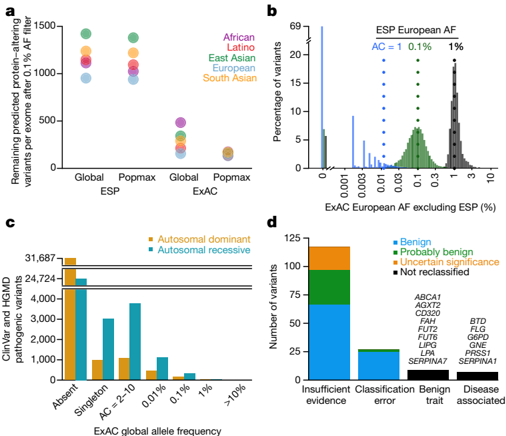
“Previous reports have shown that healthy participants on average have ~54 exonic variants that were previously reported to be pathogenic, but based on their allele frequency were likely to be misclassi fi ed (Lek et al. , 2016).”
Human TBK1: A Gatekeeper of Neuroinflammation
Ahmad, L., Zhang, S.-Y., Casanova, J.-L., & Sancho-Shimizu, V. (2016) · Trends in Molecular Medicine · doi:10.1016/j.molmed.2016.04.006 · Cited by 208
Racial/ethnic differences in multiple-gene sequencing results for hereditary cancer risk
Caswell-Jin, J. L., Gupta, T., Hall, E., Petrovchich, I. M., Mills, M. A., Kingham, K. E., Koff, R., Chun, N. M., Levonian, P., Lebensohn, A. P., et al. (2018) · Genetics in Medicine · doi:10.1038/gim.2017.96 · Cited by 208
Boisson-Dupuis, S., Ramirez-Alejo, N., Li, Z., Patin, E., Rao, G., Kerner, G., Lim, C. K., Krementsov, D. N., Hernandez, N., Ma, C. S., et al. (2018) · Science Immunology · doi:10.1126/sciimmunol.aau8714 · Cited by 207
Self-citationTesi, B., Davidsson, J., Voss, M., Rahikkala, E., Holmes, T. D., Chiang, S. C. C., Komulainen-Ebrahim, J., Gorcenco, S., Rundberg Nilsson, A., Ripperger, T., et al. (2017) · Blood · doi:10.1182/blood-2016-10-743302 · Cited by 207
“00003% of individuals from the ExAC database (Figure 2A, Figure S2).(32) In light of clinical similarities to family 1, the coding regions of SAMD9L were Sanger sequenced in family 2 (Figure 2C).”
InfluentialSomatic Mutations in TSC1 and TSC2 Cause Focal Cortical Dysplasia
Lim, J. S., Gopalappa, R., Kim, S. H., Ramakrishna, S., Lee, M., Kim, W.-I., Kim, J., Park, S. M., Lee, J., Oh, J.-H., et al. (2017) · The American Journal of Human Genetics · doi:10.1016/j.ajhg.2017.01.030 · Cited by 207
SYNGAP1 encephalopathy: A distinctive generalized developmental and epileptic encephalopathy
Vlaskamp, D. R. M., Shaw, B. J., Burgess, R., Mei, D., Montomoli, M., Xie, H., Myers, C. T., Bennett, M. F., XiangWei, W., Williams, D., et al. (2019) · Neurology · doi:10.1212/wnl.0000000000006729 · Cited by 206
“Three patients who had variants reported in gnomAD or ExAC and for whom inheritance of their SYNGAP1 variant was unavailable had phenotypes that were consistent with our large cohort.(38) Two had generalized DEE and 1 had mild ID with EM.”
ResultEmerging genotype–phenotype relationships in patients with large NF1 deletions
Kehrer-Sawatzki, H., Mautner, V.-F., & Cooper, D. N. (2017) · Human Genetics · doi:10.1007/s00439-017-1766-y · Cited by 206
Self-citationCD55 Deficiency, Early-Onset Protein-Losing Enteropathy, and Thrombosis
Ozen, A., Comrie, W. A., Ardy, R. C., Domínguez Conde, C., Dalgic, B., Beser, Ö. F., Morawski, A. R., Karakoc-Aydiner, E., Tutar, E., Baris, S., et al. (2017) · New England Journal of Medicine · doi:10.1056/nejmoa1615887 · Cited by 206
Smith, J. G., & Gerszten, R. E. (2017) · Circulation · doi:10.1161/circulationaha.116.025446 · Cited by 206
Collins, R. L., Brand, H., Redin, C. E., Hanscom, C., Antolik, C., Stone, M. R., Glessner, J. T., Mason, T., Pregno, G., Dorrani, N., et al. (2017) · Genome Biology · doi:10.1186/s13059-017-1158-6 · Cited by 206
“We used the pLI and RVIS scores from the data released circa 2015 summer corresponding to the data published on 60,706 individuals by the Exome Aggregation Consortium [65].”
Phenotype risk scores identify patients with unrecognized Mendelian disease patterns
Bastarache, L., Hughey, J. J., Hebbring, S., Marlo, J., Zhao, W., Ho, W. T., Van Driest, S. L., McGregor, T. L., Mosley, J. D., Wells, Q. S., et al. (2018) · Science · doi:10.1126/science.aal4043 · Cited by 210
Self-citationGermline Genetic IKZF1 Variation and Predisposition to Childhood Acute Lymphoblastic Leukemia
Churchman, M. L., Qian, M., te Kronnie, G., Zhang, R., Yang, W., Zhang, H., Lana, T., Tedrick, P., Baskin, R., Verbist, K., et al. (2018) · Cancer Cell · doi:10.1016/j.ccell.2018.03.021 · Cited by 205
“In the Exome Aggregation Consortium (ExAC) cohort that excluded the cases from The Cancer Genome Atlas (TCGA) (n = 53,105) (Lek et al., 2016), 18 of these variants were not observed and the remaining 9 were rare, with a maximum allele frequency of 0.”
InfluentialHigh-throughput identification of human SNPs affecting regulatory element activity
van Arensbergen, J., Pagie, L., FitzPatrick, V. D., de Haas, M., Baltissen, M. P., Comoglio, F., van der Weide, R. H., Teunissen, H., Võsa, U., Franke, L., et al. (2019) · Nature Genetics · doi:10.1038/s41588-019-0455-2 · Cited by 205
Systematic identification of human SNPs affecting regulatory element activity
(2018) · doi:10.1101/460402 · Cited by 205
Exonic Mosaic Mutations Contribute Risk for Autism Spectrum Disorder
Krupp, D. R., Barnard, R. A., Duffourd, Y., Evans, S. A., Mulqueen, R. M., Bernier, R., Rivière, J.-B., Fombonne, E., & O’Roak, B. J. (2017) · The American Journal of Human Genetics · doi:10.1016/j.ajhg.2017.07.016 · Cited by 204
Malcikova, J., Tausch, E., Rossi, D., Sutton, L. A., Soussi, T., Zenz, T., Kater, A. P., Niemann, C. U., Gonzalez, D., Davi, F., et al. (2018) · Leukemia · doi:10.1038/s41375-017-0007-7 · Cited by 204
“org/, originally Exome Aggregation Consortium [43]).”
BackgroundInfluentialMighell, T. L., Evans-Dutson, S., & O’Roak, B. J. (2018) · The American Journal of Human Genetics · doi:10.1016/j.ajhg.2018.03.018 · Cited by 204
The Metabolic Syndrome in Men study: a resource for studies of metabolic and cardiovascular diseases
Laakso, M., Kuusisto, J., Stančáková, A., Kuulasmaa, T., Pajukanta, P., Lusis, A. J., Collins, F. S., Mohlke, K. L., & Boehnke, M. (2017) · Journal of Lipid Research · doi:10.1194/jlr.o072629 · Cited by 204
“However, a strong influence of the bottleneck, particularly the proportional enrichment of rare deleterious variants, is also influenced by the unique history of the Finnish population and will not necessarily apply to all populations influenced by a bottleneck (2).”
BackgroundSelf-citationWang, J., Al-Ouran, R., Hu, Y., Kim, S.-Y., Wan, Y.-W., Wangler, M. F., Yamamoto, S., Chao, H.-T., Comjean, A., Mohr, S. E., et al. (2017) · The American Journal of Human Genetics · doi:10.1016/j.ajhg.2017.04.010 · Cited by 204
Large-scale targeted sequencing identifies risk genes for neurodevelopmental disorders
Wang, T., Hoekzema, K., Vecchio, D., Wu, H., Sulovari, A., Coe, B. P., Gillentine, M. A., Wilfert, A. B., Perez-Jurado, L. A., Kvarnung, M., et al. (2020) · Nature Communications · doi:10.1038/s41467-020-18723-y · Cited by 206
van der Ven, A. T., Connaughton, D. M., Ityel, H., Mann, N., Nakayama, M., Chen, J., Vivante, A., Hwang, D.-Y., Schulz, J., Braun, D. A., et al. (2018) · Journal of the American Society of Nephrology · doi:10.1681/asn.2017121265 · Cited by 204
Self-citationIsolated polycystic liver disease genes define effectors of polycystin-1 function
Besse, W., Dong, K., Choi, J., Punia, S., Fedeles, S. V., Choi, M., Gallagher, A.-R., Huang, E. B., Gulati, A., Knight, J., et al. (2017) · Journal of Clinical Investigation · doi:10.1172/jci90129 · Cited by 203
“GANAB is a highly loss-intolerant gene, with a probability of loss-of-function intolerance score (pLI) of 1 in ExAC, whereas PKHD1 and ALG8 are not loss intolerant, consistent with genes associated with a recessive human disease (31).”
Whole-Exome Sequencing in Adults With Chronic Kidney Disease: A Pilot Study
Lata, S., Marasa, M., Li, Y., Fasel, D. A., Groopman, E., Jobanputra, V., Rasouly, H., Mitrotti, A., Westland, R., Verbitsky, M., et al. (2018) · Annals of Internal Medicine · doi:10.7326/m17-1319 · Cited by 203
“Variants were annotated for predicted effect on protein function (using ANNOVAR and SnpEff); allele frequency in public databases (ExAC, dbSNP, and the 1000 Genomes Project); and predicted pathogenicity with in silico algorithms, including PolyPhen and Combined Annotation Dependent Depletion scores (30– 36).”
BackgroundInfluentialMelki, I., Rose, Y., Uggenti, C., Van Eyck, L., Frémond, M.-L., Kitabayashi, N., Rice, G. I., Jenkinson, E. M., Boulai, A., Jeremiah, N., et al. (2017) · Journal of Allergy and Clinical Immunology · doi:10.1016/j.jaci.2016.10.031 · Cited by 203
“Variant frequency data in control subjects was derived from the Exome Aggregation Consortium (ExAC).(17)”
MethodNava Rodrigues, D., Rescigno, P., Liu, D., Yuan, W., Carreira, S., Lambros, M. B., Seed, G., Mateo, J., Riisnaes, R., Mullane, S., et al. (2018) · Journal of Clinical Investigation · doi:10.1172/jci121924 · Cited by 203
Evaluating Variant Calling Tools for Non-Matched Next-Generation Sequencing Data
Sandmann, S., de Graaf, A. O., Karimi, M., van der Reijden, B. A., Hellström-Lindberg, E., Jansen, J. H., & Dugas, M. (2017) · Scientific Reports · doi:10.1038/srep43169 · Cited by 203
Prevalence and detection of low-allele-fraction variants in clinical cancer samples
Shin, H.-T., Choi, Y.-L., Yun, J. W., Kim, N. K. D., Kim, S.-Y., Jeon, H. J., Nam, J.-Y., Lee, C., Ryu, D., Kim, S. C., et al. (2017) · Nature Communications · doi:10.1038/s41467-017-01470-y · Cited by 203
Specifications of the ACMG/AMP standards and guidelines for mitochondrial DNA variant interpretation
McCormick, E. M., Lott, M. T., Dulik, M. C., Shen, L., Attimonelli, M., Vitale, O., Karaa, A., Bai, R., Pineda‐Alvarez, D. E., Singh, L. N., et al. (2020) · Human Mutation · doi:10.1002/humu.24107 · Cited by 186
“…et al., 2017), and genome Aggregation Database (gnomAD; Lek et al., 2016) are important databases for cataloging genomic variations in several global populations and are commonly utilized for assessing the frequency of particular variants in these populations (Auton et al., 2015; Lek et al, 2016).”
BackgroundAlamo, L., Ware, J. S., Pinto, A., Gillilan, R. E., Seidman, J. G., Seidman, C. E., & Padrón, R. (2017) · eLife · doi:10.7554/elife.24634 · Cited by 203
Self-citationJabs, J., Zickgraf, F. M., Park, J., Wagner, S., Jiang, X., Jechow, K., Kleinheinz, K., Toprak, U. H., Schneider, M. A., Meister, M., et al. (2017) · Molecular Systems Biology · doi:10.15252/msb.20177697 · Cited by 202
Insights into genetics, human biology and disease gleaned from family based genomic studies
Posey, J. E., O’Donnell-Luria, A. H., Chong, J. X., Harel, T., Jhangiani, S. N., Coban Akdemir, Z. H., Buyske, S., Pehlivan, D., Carvalho, C. M. B., Baxter, S., et al. (2019) · Genetics in Medicine · doi:10.1038/s41436-018-0408-7 · Cited by 202
Self-citationarcasHLA: high-resolution HLA typing from RNAseq
Orenbuch, R., Filip, I., Comito, D., Shaman, J., Pe’er, I., & Rabadan, R. (2020) · Bioinformatics · doi:10.1093/bioinformatics/btz474 · Cited by 201
MVP predicts the pathogenicity of missense variants by deep learning
Qi, H., Zhang, H., Zhao, Y., Chen, C., Long, J. J., Chung, W. K., Guan, Y., & Shen, Y. (2021) · Nature Communications · doi:10.1038/s41467-020-20847-0 · Cited by 198
Quantifying the contribution of recessive coding variation to developmental disorders
Martin, H. C., Jones, W. D., McIntyre, R., Sanchez-Andrade, G., Sanderson, M., Stephenson, J. D., Jones, C. P., Handsaker, J., Gallone, G., Bruntraeger, M., et al. (2018) · Science · doi:10.1126/science.aar6731 · Cited by 201
Schwerd, T., Twigg, S. R. F., Aschenbrenner, D., Manrique, S., Miller, K. A., Taylor, I. B., Capitani, M., McGowan, S. J., Sweeney, E., Weber, A., et al. (2017) · Journal of Experimental Medicine · doi:10.1084/jem.20161810 · Cited by 201
“1 E; Lek et al., 2016).”
BackgroundClinical genetics of craniosynostosis
Wilkie, A. O. M., Johnson, D., & Wall, S. A. (2017) · Current Opinion in Pediatrics · doi:10.1097/mop.0000000000000542 · Cited by 201
Walsh, R., Buchan, R., Wilk, A., John, S., Felkin, L. E., Thomson, K. L., Chiaw, T. H., Loong, C. C. W., Pua, C. J., Raphael, C., et al. (2017) · European Heart Journal · doi:10.1093/eurheartj/ehw603 · Cited by 201
Self-citationVarAFT: a variant annotation and filtration system for human next generation sequencing data
Desvignes, J.-P., Bartoli, M., Delague, V., Krahn, M., Miltgen, M., Béroud, C., & Salgado, D. (2018) · Nucleic Acids Research · doi:10.1093/nar/gky471 · Cited by 201
“Nevertheless, despite the thousands of exomes and genomes that have been studied (Genome Aggregation Database (gnomAD) (1)), we still have only a limited vision of the human genome variability especially in the context of rare human genetic disease.”
BackgroundSame-day genomic and epigenomic diagnosis of brain tumors using real-time nanopore sequencing
Euskirchen, P., Bielle, F., Labreche, K., Kloosterman, W. P., Rosenberg, S., Daniau, M., Schmitt, C., Masliah-Planchon, J., Bourdeaut, F., Dehais, C., et al. (2017) · Acta Neuropathologica · doi:10.1007/s00401-017-1743-5 · Cited by 196
VariantValidator: Accurate validation, mapping, and formatting of sequence variation descriptions
Freeman, P. J., Hart, R. K., Gretton, L. J., Brookes, A. J., & Dalgleish, R. (2018) · Human Mutation · doi:10.1002/humu.23348 · Cited by 196
“…non-HGVSformattedvariantdescriptionssuchasVCF(Daneceketal., 2011) or the pseudo-VCF format (e.g., 11-5248232-T-A), which is used by ExAC (https://exac.broadinstitute.org/) (Lek et al., 2016), VarSome (https://varsome.com/), and other related resources.”
MethodClinical Aspects of STAT3 Gain-of-Function Germline Mutations: A Systematic Review
Fabre, A., Marchal, S., Barlogis, V., Mari, B., Barbry, P., Rohrlich, P.-S., Forbes, L. R., Vogel, T. P., & Giovannini-Chami, L. (2019) · The Journal of Allergy and Clinical Immunology: In Practice · doi:10.1016/j.jaip.2019.02.018 · Cited by 194
Expanding the Boundaries of RNA Sequencing as a Diagnostic Tool for Rare Mendelian Disease
Gonorazky, H. D., Naumenko, S., Ramani, A. K., Nelakuditi, V., Mashouri, P., Wang, P., Kao, D., Ohri, K., Viththiyapaskaran, S., Tarnopolsky, M. A., et al. (2019) · The American Journal of Human Genetics · doi:10.1016/j.ajhg.2019.04.004 · Cited by 204
The promises and perils of psychedelic pharmacology for psychiatry
McClure-Begley, T. D., & Roth, B. L. (2022) · Nature Reviews Drug Discovery · doi:10.1038/s41573-022-00421-7 · Cited by 194
Li, C., Zhi, D., Wang, K., & Liu, X. (2022) · Genome Medicine · doi:10.1186/s13073-022-01120-z · Cited by 191
“As predictive features, our classifiers combine recently developed independent prediction algorithms, conservation scores, and allele frequency information from the 1000 Genomes Project (1000GP) [19], ExAC [20], and gnomAD [21].”
BackgroundMethodPlozasiran (ARO-APOC3) for Severe Hypertriglyceridemia
Gaudet, D., Pall, D., Watts, G. F., Nicholls, S. J., Rosenson, R. S., Modesto, K., San Martin, J., Hellawell, J., & Ballantyne, C. M. (2024) · JAMA Cardiology · doi:10.1001/jamacardio.2024.0959 · Cited by 201
Gene expression imputation across multiple brain regions provides insights into schizophrenia risk
CommonMind Consortium, Huckins, L. M., The Schizophrenia Working Group of the Psychiatric Genomics Consortium, iPSYCH-GEMS Schizophrenia Working Group, Dobbyn, A., Ruderfer, D. M., Hoffman, G., Wang, W., Pardiñas, A. F., Rajagopal, V. M., et al. (2019) · Nature Genetics · doi:10.1038/s41588-019-0364-4 · Cited by 188
Self-citationMolecular Genetic Anatomy and Risk Profile of Hirschsprung’s Disease
Tilghman, J. M., Ling, A. Y., Turner, T. N., Sosa, M. X., Krumm, N., Chatterjee, S., Kapoor, A., Coe, B. P., Nguyen, K.-D. H., Gupta, N., et al. (2019) · New England Journal of Medicine · doi:10.1056/nejmoa1706594 · Cited by 193
Self-citationAssociation of rare and common variation in the lipoprotein lipase gene with coronary artery disease
Khera, A. V., Won, H.-H., Peloso, G. M., O’Dushlaine, C., Liu, D., Stitziel, N. O., Natarajan, P., Nomura, A., Emdin, C. A., Gupta, N., et al. (2017) · JAMA · doi:10.1001/jama.2017.0972 · Cited by 198
“BMI, median (IQR) 26 (24-29) 27 (25-31) 32 (28-38) 31 (26-37)”
InfluentialSelf-citationKelley, K. W., Nakao-Inoue, H., Molofsky, A. V., & Oldham, M. C. (2018) · Nature Neuroscience · doi:10.1038/s41593-018-0216-z · Cited by 198
Recurrent somatic mutations affecting B-cell receptor signaling pathway genes in follicular lymphoma
Krysiak, K., Gomez, F., White, B. S., Matlock, M., Miller, C. A., Trani, L., Fronick, C. C., Fulton, R. S., Kreisel, F., Cashen, A. F., et al. (2017) · Blood · doi:10.1182/blood-2016-07-729954 · Cited by 183
VarCards: an integrated genetic and clinical database for coding variants in the human genome
Li, J., Shi, L., Zhang, K., Zhang, Y., Hu, S., Zhao, T., Teng, H., Li, X., Jiang, Y., Ji, L., et al. (2018) · Nucleic Acids Research · doi:10.1093/nar/gkx1039 · Cited by 197
Iranome: A catalog of genomic variations in the Iranian population
Fattahi, Z., Beheshtian, M., Mohseni, M., Poustchi, H., Sellars, E., Nezhadi, S. H., Amini, A., Arzhangi, S., Jalalvand, K., Jamali, P., et al. (2019) · Human Mutation · doi:10.1002/humu.23880 · Cited by 185
Targeting pyrimidine synthesis accentuates molecular therapy response in glioblastoma stem cells
Wang, X., Yang, K., Wu, Q., Kim, L. J. Y., Morton, A. R., Gimple, R. C., Prager, B. C., Shi, Y., Zhou, W., Bhargava, S., et al. (2019) · Science Translational Medicine · doi:10.1126/scitranslmed.aau4972 · Cited by 193
Ebbert, M. T. W., Jensen, T. D., Jansen-West, K., Sens, J. P., Reddy, J. S., Ridge, P. G., Kauwe, J. S. K., Belzil, V., Pregent, L., Carrasquillo, M. M., et al. (2019) · Genome Biology · doi:10.1186/s13059-019-1707-2 · Cited by 195
“org/) [36], we found that camouflaged regions in the ADSP males are consistently dark in the gnomAD data, demonstrating that these camouflaged regions are consistent across datasets.”
BackgroundKurian, A. W., Hughes, E., Handorf, E. A., Gutin, A., Allen, B., Hartman, A.-R., & Hall, M. J. (2017) · JCO Precision Oncology · doi:10.1200/po.16.00066 · Cited by 195
Panganiban, R. A., Sun, M., Dahlin, A., Park, H.-R., Kan, M., Himes, B. E., Mitchel, J. A., Iribarren, C., Jorgenson, E., Randell, S. H., et al. (2018) · Journal of Allergy and Clinical Immunology · doi:10.1016/j.jaci.2017.11.040 · Cited by 193
“We searched for all common (ie, MAF > 5%) as well as lower frequency (MAF > 1%) coding variants in these 6 genes using the Exome Aggregation Consortium browser, which contains exome sequencing results ofmore than 60,000 individuals.(32) We identified 8 common and 6 low-frequency coding variants (Table I; see Table E1…”
Human RIPK1 deficiency causes combined immunodeficiency and inflammatory bowel diseases
Li, Y., Führer, M., Bahrami, E., Socha, P., Klaudel-Dreszler, M., Bouzidi, A., Liu, Y., Lehle, A. S., Magg, T., Hollizeck, S., et al. (2019) · Proceedings of the National Academy of Sciences · doi:10.1073/pnas.1813582116 · Cited by 194
Jagannathan, V., Drögemüller, C., Leeb, T., & Dog Biomedical Variant Database Consortium (DBVDC) (2019) · Animal Genetics · doi:10.1111/age.12834 · Cited by 191
“The use of such filtering strategies has become standard practice in human medical genetics, and for example, the gnomAD database (https://gnomad.broadinstitute.org/) has become indispensable for the identification of candidate pathogenic variants in human genetics (Lek et al. 2016).”
MethodGenetic Variation, Comparative Genomics, and the Diagnosis of Disease
Eichler, E. E. (2019) · New England Journal of Medicine · doi:10.1056/nejmra1809315 · Cited by 195
Patterns of de novo tandem repeat mutations and their role in autism
Mitra, I., Huang, B., Mousavi, N., Ma, N., Lamkin, M., Yanicky, R., Shleizer-Burko, S., Lohmueller, K. E., & Gymrek, M. (2021) · Nature · doi:10.1038/s41586-020-03078-7 · Cited by 194
Big Data Analytics for Genomic Medicine
He, K., Ge, D., & He, M. (2017) · International Journal of Molecular Sciences · doi:10.3390/ijms18020412 · Cited by 178
“It also discovers variants in conserved regions and identifies variants present in dbSNP [69], the 1000 Genomes Project [70], the NHLBI EPS6500 project [71], and the ExAC [72].”
BackgroundPizzo, L., Jensen, M., Polyak, A., Rosenfeld, J. A., Mannik, K., Krishnan, A., McCready, E., Pichon, O., Le Caignec, C., Van Dijck, A., et al. (2019) · Genetics in Medicine · doi:10.1038/s41436-018-0266-3 · Cited by 193
“0001).(32,33) Interestingly, 44 of these genes with other hits (such as CNTNAP2,MBD5, SCN1A, CHD8, and AUTS2) have been recurrently associated with neurodevelopmental disorders(17) (Fig.”
Dosage sensitivity is a major determinant of human copy number variant pathogenicity
Rice, A. M., & McLysaght, A. (2017) · Nature Communications · doi:10.1038/ncomms14366 · Cited by 190
GPCRmd uncovers the dynamics of the 3D-GPCRome
Rodríguez-Espigares, I., Torrens-Fontanals, M., Tiemann, J. K. S., Aranda-García, D., Ramírez-Anguita, J. M., Stepniewski, T. M., Worp, N., Varela-Rial, A., Morales-Pastor, A., Medel-Lacruz, B., et al. (2020) · Nature Methods · doi:10.1038/s41592-020-0884-y · Cited by 192
Variant Annotation and Functional Prediction: SnpEff
Cingolani, P. (2022) · Methods in Molecular Biology · doi:10.1007/978-1-0716-2293-3_19 · Cited by 184
Sequencing of human genomes with nanopore technology
Bowden, R., Davies, R. W., Heger, A., Pagnamenta, A. T., de Cesare, M., Oikkonen, L. E., Parkes, D., Freeman, C., Dhalla, F., Patel, S. Y., et al. (2019) · Nature Communications · doi:10.1038/s41467-019-09637-5 · Cited by 192
Vcfanno: fast, flexible annotation of genetic variants
Pedersen, B. S., Layer, R. M., & Quinlan, A. R. (2016) · Genome Biology · doi:10.1186/s13059-016-0973-5 · Cited by 192
Bagnall, R. D., Ingles, J., Dinger, M. E., Cowley, M. J., Ross, S. B., Minoche, A. E., Lal, S., Turner, C., Colley, A., Rajagopalan, S., et al. (2018) · Journal of the American College of Cardiology · doi:10.1016/j.jacc.2018.04.078 · Cited by 190
“Concentric hypertrophy 5 (11) 1 (9) 1 (10)”
BackgroundMethodInfluentialBegay, R. L., Graw, S. L., Sinagra, G., Asimaki, A., Rowland, T. J., Slavov, D. B., Gowan, K., Jones, K. L., Brun, F., Merlo, M., et al. (2018) · JACC: Clinical Electrophysiology · doi:10.1016/j.jacep.2017.12.003 · Cited by 188
Prevalence and properties of intragenic copy-number variation in Mendelian disease genes
Truty, R., Paul, J., Kennemer, M., Lincoln, S. E., Olivares, E., Nussbaum, R. L., & Aradhya, S. (2019) · Genetics in Medicine · doi:10.1038/s41436-018-0033-5 · Cited by 184
Yacoub, A., Mascarenhas, J., Kosiorek, H., Prchal, J. T., Berenzon, D., Baer, M. R., Ritchie, E., Silver, R. T., Kessler, C., Winton, E., et al. (2019) · Blood · doi:10.1182/blood.2019000428 · Cited by 177
Lee, J. K., Sivakumar, S., Schrock, A. B., Madison, R., Fabrizio, D., Gjoerup, O., Ross, J. S., Frampton, G. M., Napalkov, P., Montesion, M., et al. (2022) · npj Precision Oncology · doi:10.1038/s41698-022-00334-z · Cited by 187
A large data resource of genomic copy number variation across neurodevelopmental disorders
Zarrei, M., Burton, C. L., Engchuan, W., Young, E. J., Higginbotham, E. J., MacDonald, J. R., Trost, B., Chan, A. J. S., Walker, S., Lamoureux, S., et al. (2019) · npj Genomic Medicine · doi:10.1038/s41525-019-0098-3 · Cited by 187
A framework for exhaustively mapping functional missense variants
Weile, J., Sun, S., Cote, A. G., Knapp, J., Verby, M., Mellor, J. C., Wu, Y., Pons, C., Wong, C., van Lieshout, N., et al. (2017) · Molecular Systems Biology · doi:10.15252/msb.20177908 · Cited by 187
“We classified variants as “damaging” if they were below both the highest score of known pathogenic variants and the lowest score of GnomAD variants, and classified variants as “benign” if they were both above the highest-scoring known-pathogenic variant and the lowest-scoring GnomAD variant.”
BackgroundInfluentialIntegrated genomic profiling expands clinical options for patients with cancer
Beaubier, N., Bontrager, M., Huether, R., Igartua, C., Lau, D., Tell, R., Bobe, A. M., Bush, S., Chang, A. L., Hoskinson, D. C., et al. (2019) · Nature Biotechnology · doi:10.1038/s41587-019-0259-z · Cited by 187
Evaluating drug targets through human loss-of-function genetic variation
Minikel, E. V., Karczewski, K. J., Martin, H. C., Cummings, B. B., Whiffin, N., Rhodes, D., Alföldi, J., Trembath, R. C., van Heel, D. A., Daly, M. J., et al. (2020) · Nature · doi:10.1038/s41586-020-2267-z · Cited by 187
“…though the distribution of populations sampled in gnomAD does not reflect the world population 7 ; we believe this is reasonable because CAF for many genes is driven by singletons and other ultra-rare variants for which frequency is not expected to differ appreciably by continental population 10 .”
InfluentialSelf-citationTranscriptome and translatome co-evolution in mammals
Wang, Z.-Y., Leushkin, E., Liechti, A., Ovchinnikova, S., Mößinger, K., Brüning, T., Rummel, C., Grützner, F., Cardoso-Moreira, M., Janich, P., et al. (2020) · Nature · doi:10.1038/s41586-020-2899-z · Cited by 185
Crotti, L., Spazzolini, C., Tester, D. J., Ghidoni, A., Baruteau, A.-E., Beckmann, B.-M., Behr, E. R., Bennett, J. S., Bezzina, C. R., Bhuiyan, Z. A., et al. (2019) · European Heart Journal · doi:10.1093/eurheartj/ehz311 · Cited by 180
“Patients’ ethnicity was presented according to the population subgroups proposed in ExAC/gnomAD databases.(22) For one patient, ethnicity was not reported.”
MethodRokita, J. L., Rathi, K. S., Cardenas, M. F., Upton, K. A., Jayaseelan, J., Cross, K. L., Pfeil, J., Egolf, L. E., Way, G. P., Farrel, A., et al. (2019) · Cell Reports · doi:10.1016/j.celrep.2019.09.071 · Cited by 173
Rare Copy Number Variants in NRXN1 and CNTN6 Increase Risk for Tourette Syndrome
Huang, A. Y., Yu, D., Davis, L. K., Sul, J. H., Tsetsos, F., Ramensky, V., Zelaya, I., Ramos, E. M., Osiecki, L., Chen, J. A., et al. (2017) · Neuron · doi:10.1016/j.neuron.2017.06.010 · Cited by 181
Self-citationCollagen VI disorders: Insights on form and function in the extracellular matrix and beyond
Lamandé, S. R., & Bateman, J. F. (2018) · Matrix Biology · doi:10.1016/j.matbio.2017.12.008 · Cited by 185
Before and After: Comparison of Legacy and Harmonized TCGA Genomic Data Commons’ Data
Gao, G. F., Parker, J. S., Reynolds, S. M., Silva, T. C., Wang, L.-B., Zhou, W., Akbani, R., Bailey, M., Balu, S., Berman, B. P., et al. (2019) · Cell Systems · doi:10.1016/j.cels.2019.06.006 · Cited by 179
The SLC9A-C Mammalian Na+/H+Exchanger Family: Molecules, Mechanisms, and Physiology
Pedersen, S. F., & Counillon, L. (2019) · Physiological Reviews · doi:10.1152/physrev.00028.2018 · Cited by 183
3.5KJPNv2: an allele frequency panel of 3552 Japanese individuals including the X chromosome
Tadaka, S., Katsuoka, F., Ueki, M., Kojima, K., Makino, S., Saito, S., Otsuki, A., Gocho, C., Sakurai-Yageta, M., Danjoh, I., et al. (2019) · Human Genome Variation · doi:10.1038/s41439-019-0059-5 · Cited by 183
Swanger, S. A., Chen, W., Wells, G., Burger, P. B., Tankovic, A., Bhattacharya, S., Strong, K. L., Hu, C., Kusumoto, H., Zhang, J., et al. (2016) · The American Journal of Human Genetics · doi:10.1016/j.ajhg.2016.10.002 · Cited by 178
The developmental biology of genetic Notch disorders
Mašek, J., & Andersson, E. R. (2017) · Development · doi:10.1242/dev.148007 · Cited by 182
“As an example, the most highly constrained genes encode factors involved in core biological processes, including components of the spliceosome, ribosome and proteasome (Lek et al., 2016).”
BackgroundMethodThe landscape of tolerated genetic variation in humans and primates
Gao, H., Hamp, T., Ede, J., Schraiber, J. G., McRae, J., Singer-Berk, M., Yang, Y., Dietrich, A., Fiziev, P., Kuderna, L., et al. (2023) · doi:10.1101/2023.05.01.538953 · Cited by 183
Self-citationThe landscape of tolerated genetic variation in humans and primates
(2023) · doi:10.1126/science.abn8197 · Cited by 182
“Compared with the genome Aggregation Database (gnomAD) cohort of 141,456 human individuals from diverse populations (28, 29), the primate sequencing cohort contained ~20% more exome variants despite sequencing 1/175th the number of individuals (Fig.”
Self-citationMu, W., Lu, H.-M., Chen, J., Li, S., & Elliott, A. M. (2016) · The Journal of Molecular Diagnostics · doi:10.1016/j.jmoldx.2016.07.006 · Cited by 176
Zernant, J., Lee, W., Collison, F. T., Fishman, G. A., Sergeev, Y. V., Schuerch, K., Sparrow, J. R., Tsang, S. H., & Allikmets, R. (2017) · Journal of Medical Genetics · doi:10.1136/jmedgenet-2017-104540 · Cited by 183
Okada, Y., Momozawa, Y., Sakaue, S., Kanai, M., Ishigaki, K., Akiyama, M., Kishikawa, T., Arai, Y., Sasaki, T., Kosaki, K., et al. (2018) · Nature Communications · doi:10.1038/s41467-018-03274-0 · Cited by 185
Characterising the loss-of-function impact of 5’ untranslated region variants in 15,708 individuals
Whiffin, N., Karczewski, K. J., Zhang, X., Chothani, S., Smith, M. J., Evans, D. G., Roberts, A. M., Quaife, N. M., Schafer, S., Rackham, O., et al. (2020) · Nature Communications · doi:10.1038/s41467-019-10717-9 · Cited by 179
Self-citationDe Franco, E., Saint‐Martin, C., Brusgaard, K., Knight Johnson, A. E., Aguilar‐Bryan, L., Bowman, P., Arnoux, J., Larsen, A. R., Sanyoura, M., Greeley, S. A. W., et al. (2020) · Human Mutation · doi:10.1002/humu.23995 · Cited by 174
“Large variant databases such as GnomAD and LOVD are pow- erful tools that aid in variant interpretation and allow for re- classification of variants (Fokkema et al., 2011; Lek et al., 2016).”
MethodTranscript expression-aware annotation improves rare variant interpretation
Cummings, B. B., Karczewski, K. J., Kosmicki, J. A., Seaby, E. G., Watts, N. A., Singer-Berk, M., Mudge, J. M., Karjalainen, J., Satterstrom, F. K., O’Donnell-Luria, A. H., et al. (2020) · Nature · doi:10.1038/s41586-020-2329-2 · Cited by 180
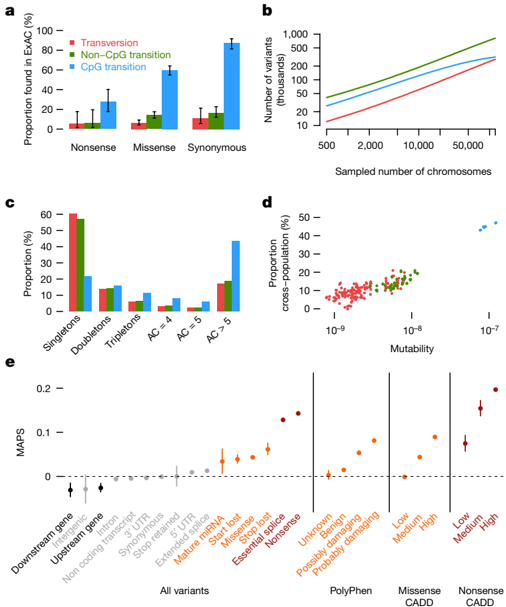
“Calculation of MAPS scores was previously described 21 and is implemented as a Hail module, as also described previously 1 .”
MethodSelf-citationGuo, M. H., Plummer, L., Chan, Y.-M., Hirschhorn, J. N., & Lippincott, M. F. (2018) · The American Journal of Human Genetics · doi:10.1016/j.ajhg.2018.08.016 · Cited by 175
Genomic analyses implicate noncoding de novo variants in congenital heart disease
Richter, F., Morton, S. U., Kim, S. W., Kitaygorodsky, A., Wasson, L. K., Chen, K. M., Zhou, J., Qi, H., Patel, N., DePalma, S. R., et al. (2020) · Nature Genetics · doi:10.1038/s41588-020-0652-z · Cited by 174
Sahoo, S. S., Pastor, V. B., Goodings, C., Voss, R. K., Kozyra, E. J., Szvetnik, A., Noellke, P., Dworzak, M., Starý, J., Locatelli, F., et al. (2021) · Nature Medicine · doi:10.1038/s41591-021-01511-6 · Cited by 170
De La Vega, F. M., Chowdhury, S., Moore, B., Frise, E., McCarthy, J., Hernandez, E. J., Wong, T., James, K., Guidugli, L., Agrawal, P. B., et al. (2021) · Genome Medicine · doi:10.1186/s13073-021-00965-0 · Cited by 172
Rapid evolution of the human mutation spectrum
Harris, K., & Pritchard, J. K. (2017) · eLife · doi:10.7554/elife.24284 · Cited by 172
“compiled data from 60,706 exomes to create 453 the Exome Aggregation Consortium dataset, which enables the analysis of ultra-rare 454 human variation [39].”
Method
Metadata
- Authors
- Exome Aggregation Consortium, Lek, M., Karczewski, K. J., Minikel, E. V., Samocha, K. E., Banks, E., Fennell, T., O’Donnell-Luria, A. H., Ware, J. S., Hill, A. J., Cummings, B. B., Tukiainen, T., Birnbaum, D. P., Kosmicki, J. A., Duncan, L. E., Estrada, K., Zhao, F., Zou, J., Pierce-Hoffman, E., Berghout, J., Cooper, D. N., Deflaux, N., DePristo, M., Do, R., Flannick, J., Fromer, M., Gauthier, L., Goldstein, J., Gupta, N., Howrigan, D., Kiezun, A., Kurki, M. I., Moonshine, A. L., Natarajan, P., Orozco, L., Peloso, G. M., Poplin, R., Rivas, M. A., Ruano-Rubio, V., Rose, S. A., Ruderfer, D. M., Shakir, K., Stenson, P. D., Stevens, C., Thomas, B. P., Tiao, G., Tusie-Luna, M. T., Weisburd, B., Won, H.-H., Yu, D., Altshuler, D. M., Ardissino, D., Boehnke, M., Danesh, J., Donnelly, S., Elosua, R., Florez, J. C., Gabriel, S. B., Getz, G., Glatt, S. J., Hultman, C. M., Kathiresan, S., Laakso, M., McCarroll, S., McCarthy, M. I., McGovern, D., McPherson, R., Neale, B. M., Palotie, A., Purcell, S. M., Saleheen, D., Scharf, J. M., Sklar, P., Sullivan, P. F., Tuomilehto, J., Tsuang, M. T., Watkins, H. C., Wilson, J. G., Daly, M. J., & MacArthur, D. G.
- Affiliations
- Broad Institute (US)
- University of Arizona (US)
- Cardiff University (GB)
- Google (United States) (US)
- Icahn School of Medicine at Mount Sinai (US)
- National Institute of Genomic Medicine (MX)
- Instituto Nacional de Ciencias Médicas y Nutrición Salvador Zubirán (MX)
- Samsung Medical Center (KR)
- University of Michigan (US)
- University of Cambridge (GB)
- SUNY Upstate Medical University (US)
- Karolinska Institutet (SE)
- University of Eastern Finland (FI)
- Centre for Human Genetics (GB)
- Cedars-Sinai Medical Center (US)
- Ottawa Heart Institute (CA)
- Center for Non-Communicable Diseases (PK)
- University of North Carolina at Chapel Hill (US)
- University of Helsinki (FI)
- University of California San Diego (US)
- University of Mississippi Medical Center (US)
- Corresponding author
- MacArthur, Daniel G.
- ORCID
- Lek, Monkol
- Karczewski, Konrad J.
- Minikel, Eric V.
- Samocha, Kaitlin E.
- Banks, Eric
- Ware, James S.
- Cummings, Beryl B.
- Tukiainen, Taru
- Kosmicki, Jack A.
- Duncan, Laramie E.
- Estrada, Karol
- Zhao, Fengmei
- Zou, James
- Berghout, Joanne
- Cooper, David N.
- Deflaux, Nicole
- Do, Ron
- Flannick, Jason
- Fromer, Menachem
- Gupta, Namrata
- Howrigan, Daniel
- Kurki, Mitja I.
- Natarajan, Pradeep
- Orozco, Lorena
- Peloso, Gina M.
- Rivas, Manuel A.
- Rose, Samuel A.
- Ruderfer, Douglas M.
- Stevens, Christine
- Tiao, Grace
- Weisburd, Ben
- Won, Hong-Hee
- Yu, Dongmei
- Altshuler, David M.
- Ardissino, Diego
- Boehnke, Michael
- Danesh, John
- Donnelly, Stacey
- Gabriel, Stacey B.
- Getz, Gad
- Glatt, Stephen J.
- Hultman, Christina M.
- Kathiresan, Sekar
- Laakso, Markku
- McCarroll, Steven
- McCarthy, Mark I.
- McGovern, Dermot
- McPherson, Ruth
- Neale, Benjamin M.
- Palotie, Aarno
- Purcell, Shaun M.
- Saleheen, Danish
- Scharf, Jeremiah M.
- Sklar, Pamela
- Sullivan, Patrick F.
- Tuomilehto, Jaakko
- Tsuang, Ming T.
- Watkins, Hugh C.
- Wilson, James G.
- Daly, Mark J.
- MacArthur, Daniel G.
- Venue
- Nature
- Published
- 2016-08
- Volume
- 536
- Issue
- 7616
- Pages
- 285-291
- ISSN
- 0028-0836 (ISSN-L)
- 1476-4687
- PMC
- PMC5018207
- OpenAlex
- W2256016639
- Semantic Scholar
- 6509e32048b95c233cca1fd9e40cb9cbcacf2bfd
- Cited by
- 9,587
- References
- 41
- Citations by year
- 2026: 196 · 2025: 344 · 2024: 516 · 2023: 538 · 2022: 674 · 2021: 955 · 2020: 1390 · 2019: 1717 · 2018: 1664 · 2017: 1235 · 2016: 340
- FWCI
- 1334.22
- Type
- journal article
- Language
- en
- Open access
- hybrid
- doi.org
- Licence
- cc-by
- creativecommons.org/licenses/by/4.0 (tdm)
- Locations
- Nature (publishedVersion, cc-by)
- bioRxiv (Cold Spring Harbor Laboratory) (acceptedVersion, cc-by-nd)
- PubMed (publishedVersion)
- VU Research Portal (publishedVersion, other-oa)
- ORCA Online Research @Cardiff (Cardiff University) (acceptedVersion)
- PubMed Central (acceptedVersion)
- Apollo (University of Cambridge) (submittedVersion, cc-by)
- Digital Access to Scholarship at Harvard (DASH) (Harvard University) (submittedVersion, cc-by)
- RePEc: Research Papers in Economics (submittedVersion)
- eScholarship (California Digital Library) (submittedVersion)
- eScholarship (California Digital Library) (submittedVersion, cc-by)
- Työväentutkimus Vuosikirja (submittedVersion)
- The Mouseion at the JAXlibrary (Jackson Laboratory) (submittedVersion)
- Spiral (Imperial College London) (submittedVersion, cc-by)
- Data Archiving and Networked Services (DANS) (submittedVersion, other-oa)
- Apollo (cc-by)
- Funders
- ACMG Foundation for Genetic and Genomic Medicine
- Wellcome Trust (090367, 098381, 090532, 107469/Z/15/Z)
- National Institute for Health and Care Research (NF-SI-0507-10228, NF-SI-0611-10099, NF-SI-0611-10219, NF-SI-0514-10027, NF-SI-0513-10087)
- British Heart Foundation (FS/14/55/30806, CH/12/2/29428, RG/13/13/30194, RG/16/4/32218)
- European Commission (279143, 279233)
- Cambridge University Hospitals (3819-1516-29, BRC 2012-2017, 3819-1617-25, 146281)
- National Institutes of Health (5rc2dk088389-02, 5u01mh094432-04)
- U.S. Public Health Service (NIMHRC2MH089905)
- Pfizer Foundation
- Canadian Institutes of Health Research (MOP--82810, #MOP77682, MOP136936)
- Medical Research Council (MR/L003120/1, MR/L010305/1)
- National Health and Medical Research Council
- National Medical Research Council
- National Institute on Aging (P30AG038072)
- National Heart, Lung, and Blood Institute (HHSN268201300050C, HHSN268201300046C, R01HL024799, HHSN268201300048C, HHSN268201300049C, K01HL125751, HHSN268201300047C, R01HL24799, R01HL107816, T32HL007208)
- National Institute of Mental Health (R01MH077139, R01MH085521, U01 MH094432, MH094421, MH095034, P50MH066392, R01MH085560, RC2MH089905, U01MH094421, R01MH095034, MH077139, MH089905)
- National Human Genome Research Institute (U54HG003067, U41HG000330)
- National Institute of General Medical Sciences (F32GM115208, R01GM104371)
- National Institute of Diabetes and Digestive and Kidney Diseases (U01DK085526, U01DK085584, DK098032, U01DK085501, U01DK062370, U01DK085524, DK085545, RC2-DK088389, U01DK085545, 1RC2DK088389, DK088389, RC2F DK088389, R01DK098032, U54DK105566, P30DK020572, P30DK043351, R01DK062370)
- National Institute of Neurological Disorders and Stroke (U01 NS40024-09S1, K02NS085048, NS40024-09S1, U01NS040024, NS085048)
- Topics
- Life Sciences › Biochemistry, Genetics and Molecular Biology › Genetics › Genomics and Rare Diseases
- Life Sciences › Biochemistry, Genetics and Molecular Biology › Genetics › Genetic Associations and Epidemiology
- Life Sciences › Biochemistry, Genetics and Molecular Biology › Molecular Biology › Genomics and Phylogenetic Studies
- Keywords
- human genetic variation, ExAC, exome sequencing, rare variants, variant pathogenicity, truncating mutations, purifying selection, population genetic variation
- MeSH terms
- DNA Mutational Analysis, Humans, Phenotype, Genetic Variation, Sample Size, Proteome, Rare Diseases, Exome, Datasets as Topic
About these checks
Registry, retraction, Cites and statistics results are computed, not judged, with one exception: a printed reference that no index lists is read once by a model before it counts as a citation error. Claims are extracted by a model and kept only when their quote appears verbatim in the text; each cited source is then checked, with a model’s help, for whether it says what the claim relies on. Those verdicts can be wrong — read the claim’s quote and the cited source before relying on one.
Statistics and arithmetic are recomputed, not judged.
Confidence bands are shown only for fields calibrated on our annotated test set. None is calibrated yet, so no band is shown.
What counts as a claim ›How we measure confidence ›How we check this ›
Are you an author, or do you see a problem with this page? Request a review
Data sources
Bibliographic data: Semantic Scholar, OpenAlex, Crossref.
Contains information from the Semantic Scholar Academic Graph Datasets, made available under the ODC Attribution License (ODC-BY 1.0).
Semantic Scholar’s data is described in: Kinney, R., et al. (2023). The Semantic Scholar Open Data Platform. arXiv:2301.10140.
