

Analysis of protein-coding genetic variation in 60,706 humans
Open accessPublished version of a preprint
The DOI matches its Crossref record; 44 of the 44 references it cites were found in a registry or an index.
Abstract
Large-scale reference data sets of human genetic variation are critical for the medical and functional interpretation of DNA sequence changes. Here we describe the aggregation and analysis of high-quality exome (protein-coding region) DNA sequence data for 60,706 individuals of diverse ancestries generated as part of the Exome Aggregation Consortium (ExAC). This catalogue of human genetic diversity contains an average of one variant every eight bases of the exome, and provides direct evidence for the presence of widespread mutational recurrence. We have used this catalogue to calculate objective metrics of pathogenicity for sequence variants, and to identify genes subject to strong selection against various classes of mutation; identifying 3,230 genes with near-complete depletion of predicted protein-truncating variants, with 72% of these genes having no currently established human disease phenotype. Finally, we demonstrate that these data can be used for the efficient filtering of candidate disease-causing variants, and for the discovery of human ‘knockout’ variants in protein-coding genes. Exome sequencing data from 60,706 people of diverse geographic ancestry is presented, providing insight into genetic variation across populations, and illuminating the relationship between DNA variants and human disease. As part of the Exome Aggregation Consortium (ExAC) project, Daniel MacArthur and colleagues report on the generation and analysis of high-quality exome sequencing data from 60,706 individuals of diverse ancestry. This provides the most comprehensive catalogue of human protein-coding genetic variation to date, yielding unprecedented resolution for the analysis of very rare variants across multiple human populations. The catalogue is freely accessible and provides a critical reference panel for the clinical interpretation of genetic variants and the discovery of disease-related genes.
Overview
The claims and statistics of this paper haven’t been checked yet.
Free: it reads the open-access text and checks the first 5 claims that cite a source we can check. Create a free account to check every claim.
Integrity signals
Registry
Cites
Statistics
Figures
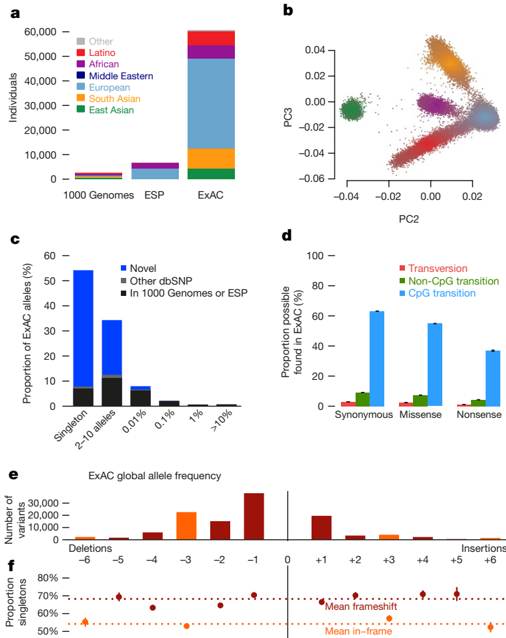
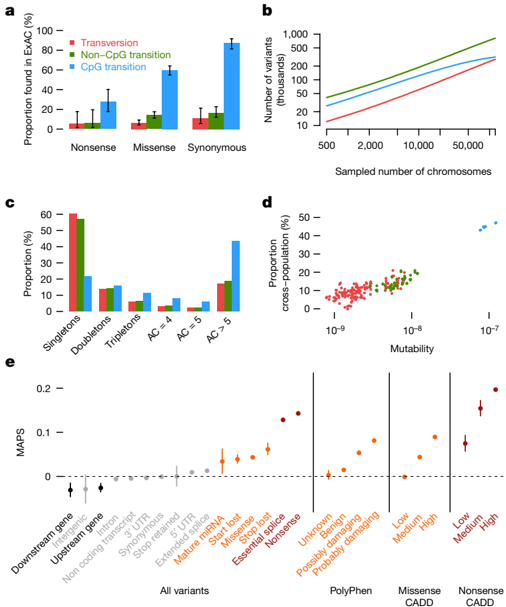

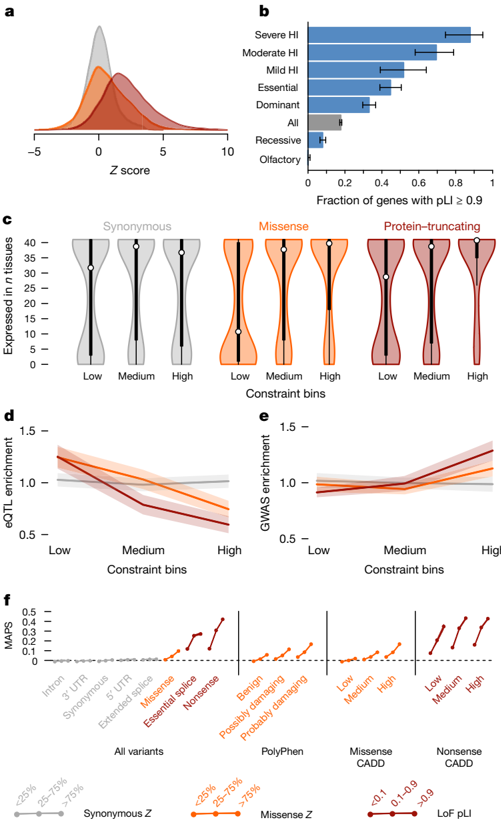
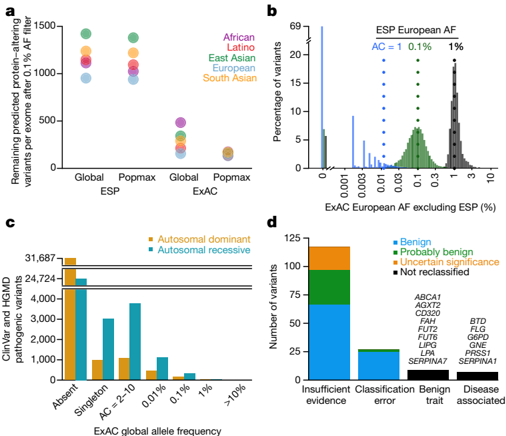

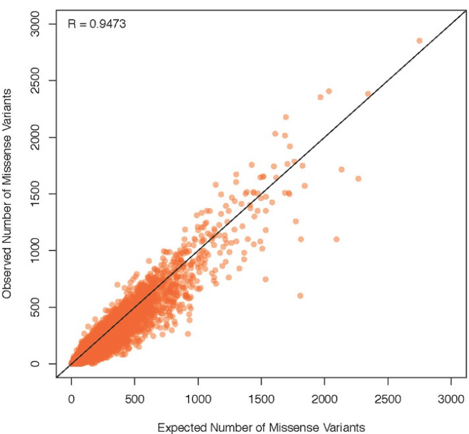
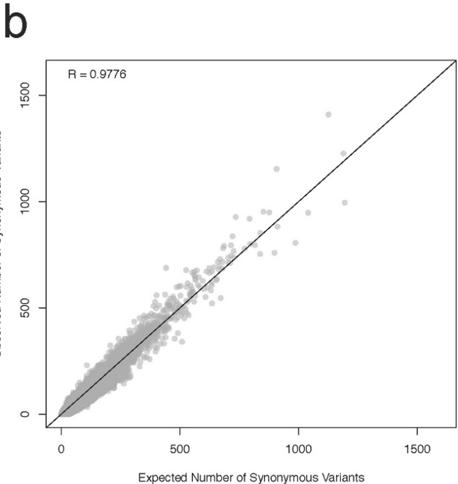
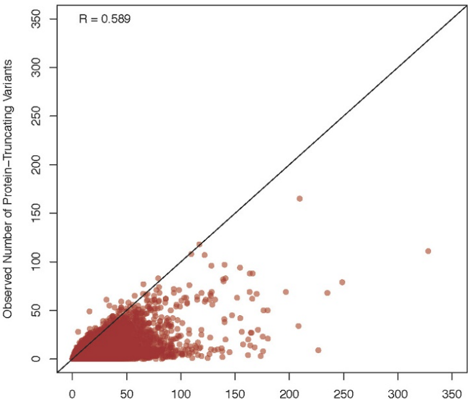
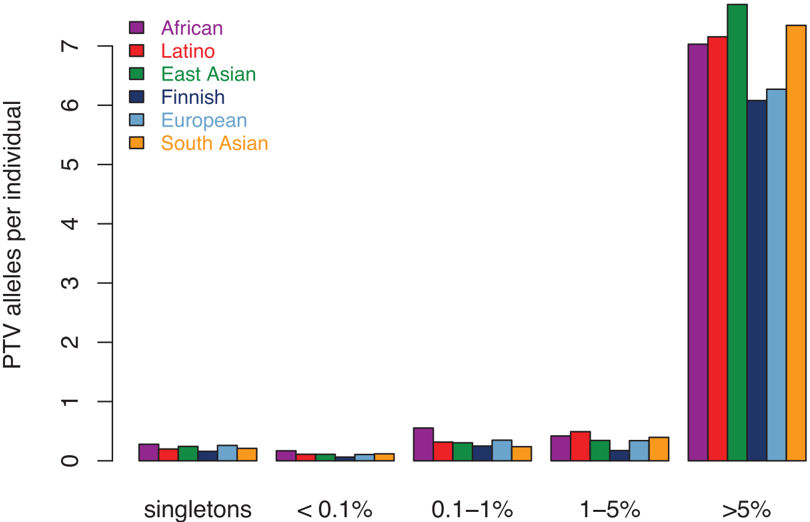
Verification
Claims the paper makes
The claims and statistics of this paper haven’t been checked yet.
Free: it reads the open-access text and checks the first 5 claims that cite a source we can check. Create a free account to check every claim.
Claims other papers make about this one
Each is checked against this paper’s own text: does it say what the citing paper says it does?
The source backs part of the claim, not all of it — or backs it for a different population, condition or comparison.
In the citing paper
“Variants in constrained genes (pLI ≥ 0.5)12 explain most of the burden of dnLGD variants and de novo D-mis variants (defined by an MPC score ≥2) in the affected offspring in our study”
From Exome sequencing of 457 autism families recruited online provides evidence for autism risk genes (2019) · cites this paper as [12]
Experimental — accuracy not yet measuredThe source backs part of the claim, not all of it — or backs it for a different population, condition or comparison.
In the citing paper
“Known dominant DD-associated genes are strongly enriched in the minority of genes that exhibit strong selective constraint on heterozygous PTVs7.”
From Evidence for 28 genetic disorders discovered by combining healthcare and research data (2020) · cites this paper as [7]
Experimental — accuracy not yet measuredThe source backs part of the claim, not all of it — or backs it for a different population, condition or comparison.
In the citing paper
“As expected, all ten genes are among the most constrained genes in the genome, with a substantial depletion of PTVs compared to chance expectation24.”
From Rare coding variants in ten genes confer substantial risk for schizophrenia (2022) · cites this paper as [24]
Experimental — accuracy not yet measuredThe source backs part of the claim, not all of it — or backs it for a different population, condition or comparison.
In the citing paper
“In our evolution-focused SNP-h2 enrichment analysis, we detected an overabundance of genic and LoF intolerant loci in both EAS and EUR, suggesting that functionally important regions of the genome contribute to SNP-h2 to a different extent compared to the other annotations tested [10, 33, 40, 44].”
From Denisovan and Neanderthal archaic introgression differentially impacted the genetics of complex traits in modern populations (2022) · cites this paper as [33]
Experimental — accuracy not yet measuredThe source backs part of the claim, not all of it — or backs it for a different population, condition or comparison.
In the citing paper
“In line with previous studies [10, 33], the strongest enrichments in both ancestry groups were observed for annotations related to genic and LoF intolerant regions.”
From Denisovan and Neanderthal archaic introgression differentially impacted the genetics of complex traits in modern populations (2022) · cites this paper as [33]
Experimental — accuracy not yet measured
9 more claims about this paper
Create a free account to see every claim other papers make about this one.
Self-check
Percentages, sums and reported differences re-computed from the paper’s own numbers.
The self-check needs the paper’s full text.
Citations
Cites
Richards, S., Aziz, N., Bale, S., Bick, D., Das, S., Gastier-Foster, J., Grody, W. W., Hegde, M., Lyon, E., Spector, E., et al. (2015) · Genetics in Medicine · doi:10.1038/gim.2015.30 · Cited by 32,594
A global reference for human genetic variation
The 1000 Genomes Project Consortium, authors, C., Auton, A., Abecasis, G. R., Steering committee, Altshuler, D. M., Durbin, R. M., Abecasis, G. R., Bentley, D. R., Chakravarti, A., et al. (2015) · Nature · doi:10.1038/nature15393 · Cited by 18,247
Self-citationA framework for variation discovery and genotyping using next-generation DNA sequencing data
DePristo, M. A., Banks, E., Poplin, R., Garimella, K. V., Maguire, J. R., Hartl, C., Philippakis, A. A., del Angel, G., Rivas, M. A., Hanna, M., et al. (2011) · Nature Genetics · doi:10.1038/ng.806 · Cited by 11,456
Self-citationLethality and centrality in protein networks
Jeong, H., Mason, S. P., Barabási, A.-L., & Oltvai, Z. N. (2001) · Nature · doi:10.1038/35075138 · Cited by 5,287
The Genotype-Tissue Expression (GTEx) pilot analysis: Multitissue gene regulation in humans
The GTEx Consortium, Ardlie, K. G., Deluca, D. S., Segrè, A. V., Sullivan, T. J., Young, T. R., Gelfand, E. T., Trowbridge, C. A., Maller, J. B., Tukiainen, T., et al. (2015) · Science · doi:10.1126/science.1262110 · Cited by 5,062
Self-citationGoh, K.-I., Cusick, M. E., Valle, D., Childs, B., Vidal, M., & Barabási, A.-L. (2007) · Proceedings of the National Academy of Sciences · doi:10.1073/pnas.0701361104 · Cited by 3,242
Inference of human population history from individual whole-genome sequences
Li, H., & Durbin, R. (2011) · Nature · doi:10.1038/nature10231 · Cited by 2,590
Exome sequencing as a tool for Mendelian disease gene discovery
Bamshad, M. J., Ng, S. B., Bigham, A. W., Tabor, H. K., Emond, M. J., Nickerson, D. A., & Shendure, J. (2011) · Nature Reviews Genetics · doi:10.1038/nrg3031 · Cited by 1,673
De novo mutations in schizophrenia implicate synaptic networks
Fromer, M., Pocklington, A. J., Kavanagh, D. H., Williams, H. J., Dwyer, S., Gormley, P., Georgieva, L., Rees, E., Palta, P., Ruderfer, D. M., et al. (2014) · Nature · doi:10.1038/nature12929 · Cited by 1,617
Self-citationEvolution and functional impact of rare coding variation from deep sequencing of human exomes
Tennessen, J. A., Bigham, A. W., O’Connor, T. D., Fu, W., Kenny, E. E., Gravel, S., McGee, S., Do, R., Liu, X., Jun, G., et al. (2012) · Science · doi:10.1126/science.1219240 · Cited by 1,613
Self-citation
Cited by
Items 501–600 of 1,209
Emerging mechanisms of aminoacyl-tRNA synthetase mutations in recessive and dominant human disease
Meyer-Schuman, R., & Antonellis, A. (2017) · Human Molecular Genetics · doi:10.1093/hmg/ddx231 · Cited by 180
Zech, M., Boesch, S., Maier, E. M., Borggraefe, I., Vill, K., Laccone, F., Pilshofer, V., Ceballos-Baumann, A., Alhaddad, B., Berutti, R., et al. (2016) · The American Journal of Human Genetics · doi:10.1016/j.ajhg.2016.10.010 · Cited by 171
Mutations disrupting neuritogenesis genes confer risk for cerebral palsy
Jin, S. C., Lewis, S. A., Bakhtiari, S., Zeng, X., Sierant, M. C., Shetty, S., Nordlie, S. M., Elie, A., Corbett, M. A., Norton, B. Y., et al. (2020) · Nature Genetics · doi:10.1038/s41588-020-0695-1 · Cited by 180
Radiation-related genomic profile of papillary thyroid carcinoma after the Chernobyl accident
Morton, L. M., Karyadi, D. M., Stewart, C., Bogdanova, T. I., Dawson, E. T., Steinberg, M. K., Dai, J., Hartley, S. W., Schonfeld, S. J., Sampson, J. N., et al. (2021) · Science · doi:10.1126/science.abg2538 · Cited by 169
Self-citationChen, Y., Tristan, C. A., Chen, L., Jovanovic, V. M., Malley, C., Chu, P.-H., Ryu, S., Deng, T., Ormanoglu, P., Tao, D., et al. (2021) · Nature Methods · doi:10.1038/s41592-021-01126-2 · Cited by 172
Project MinE ALS Sequencing Consortium (2018) · European Journal of Human Genetics · doi:10.1038/s41431-018-0177-4 · Cited by 178
Qian, M., Cao, X., Devidas, M., Yang, W., Cheng, C., Dai, Y., Carroll, A., Heerema, N. A., Zhang, H., Moriyama, T., et al. (2018) · Journal of Clinical Oncology · doi:10.1200/jco.2017.75.5215 · Cited by 176
Cortese, A., Zhu, Y., Rebelo, A. P., Negri, S., Courel, S., Abreu, L., Bacon, C. J., Bai, Y., Bis-Brewer, D. M., Bugiardini, E., et al. (2020) · Nature Genetics · doi:10.1038/s41588-020-0615-4 · Cited by 175
Blackburn, P. R., Xu, Z., Tumelty, K. E., Zhao, R. W., Monis, W. J., Harris, K. G., Gass, J. M., Cousin, M. A., Boczek, N. J., Mitkov, M. V., et al. (2018) · The American Journal of Human Genetics · doi:10.1016/j.ajhg.2018.02.018 · Cited by 176
Diverse functions of cytochrome c in cell death and disease
Zhou, Z., Arroum, T., Luo, X., Kang, R., Lee, Y. J., Tang, D., Hüttemann, M., & Song, X. (2024) · Cell Death & Differentiation · doi:10.1038/s41418-024-01284-8 · Cited by 176
“Large-scale sequencing studies have also identi fi ed multiple previously unknown CYCS mutations, with potential clinical signi fi cance for the mutation of Asn52 based on its interaction with cardiolipin [58, 155].”
Hormozdiari, F., Gazal, S., van de Geijn, B., Finucane, H. K., Ju, C. J.-T., Loh, P.-R., Schoech, A., Reshef, Y., Liu, X., O’Connor, L., et al. (2018) · Nature Genetics · doi:10.1038/s41588-018-0148-2 · Cited by 179
“Recent studies have identified gene sets that are depleted for coding variants and enriched for de novo coding mutations impacting disease 37,39,40 .”
InfluentialHotspots of missense mutation identify neurodevelopmental disorder genes and functional domains
Geisheker, M. R., Heymann, G., Wang, T., Coe, B. P., Turner, T. N., Stessman, H. A. F., Hoekzema, K., Kvarnung, M., Shaw, M., Friend, K., et al. (2017) · Nature Neuroscience · doi:10.1038/nn.4589 · Cited by 174
The clinical imperative for inclusivity: Race, ethnicity, and ancestry (REA) in genomics
Popejoy, A. B., Ritter, D. I., Crooks, K., Currey, E., Fullerton, S. M., Hindorff, L. A., Koenig, B., Ramos, E. M., Sorokin, E. P., Wand, H., et al. (2018) · Human Mutation · doi:10.1002/humu.23644 · Cited by 172
“…with other ClinGen working groups, and the strong commitment of the National Human Genome Research Institute (NHGRI) to promoting diversity and research on ancestry (Hindorff et al., 2018; Manolio et al., 2017; Green et al., 2011) results in the ADWG being well-poised to tackle such complex issues.”
Self-citationSequence diversity analyses of an improved rhesus macaque genome enhance its biomedical utility
Warren, W. C., Harris, R. A., Haukness, M., Fiddes, I. T., Murali, S. C., Fernandes, J., Dishuck, P. C., Storer, J. M., Raveendran, M., Hillier, L. W., et al. (2020) · Science · doi:10.1126/science.abc6617 · Cited by 179
Traynelis, J., Silk, M., Wang, Q., Berkovic, S. F., Liu, L., Ascher, D. B., Balding, D. J., & Petrovski, S. (2017) · Genome Research · doi:10.1101/gr.226589.117 · Cited by 174
“Forthefirstgroup of presumed benign missense variants (Control Group 1), we took singleton missense variants reported exactly once in the ExAC v1 reference sample of 60,706 individuals (release 0.3.1) (Lek et al. 2016).”
InfluentialSanchis-Juan, A., Stephens, J., French, C. E., Gleadall, N., Mégy, K., Penkett, C., Shamardina, O., Stirrups, K., Delon, I., Dewhurst, E., et al. (2018) · Genome Medicine · doi:10.1186/s13073-018-0606-6 · Cited by 173
“The 16.3 Mb deletion contains 72 genes, of which only 6 have been reported as associated with autosomal dominant disease or constrained for loss-of-function (LOF) variation in ExAC [29] (Additional file 2: Table S1).”
BackgroundInfluentialUpdated recommendation for the benign stand‐alone ACMG/AMP criterion
Ghosh, R., Harrison, S. M., Rehm, H. L., Plon, S. E., Biesecker, L. G., & on behalf of ClinGen Sequence Variant Interpretation Working Group (2018) · Human Mutation · doi:10.1002/humu.23642 · Cited by 173
“Population data sets such as ExAC may not necessarily be considered as healthy control data sets in that only severe pediatric disease was excluded and other later onset or milder phenotypes may be present.”
BackgroundMethodInfluentialHauke, J., Horvath, J., Groß, E., Gehrig, A., Honisch, E., Hackmann, K., Schmidt, G., Arnold, N., Faust, U., Sutter, C., et al. (2018) · Cancer Medicine · doi:10.1002/cam4.1376 · Cited by 173
“From the Exome Aggregation Consortium (ExAC) [28], we requested a dataset of individuals of European, non-Finnish ancestry, excluding samples from The Cancer Genome Atlas (TCGA).”
MethodThe Hypertension Pandemic: An Evolutionary Perspective
Rossier, B. C., Bochud, M., & Devuyst, O. (2017) · Physiology · doi:10.1152/physiol.00026.2016 · Cited by 169
Multiscale causal networks identify VGF as a key regulator of Alzheimer’s disease
Beckmann, N. D., Lin, W.-J., Wang, M., Cohain, A. T., Charney, A. W., Wang, P., Ma, W., Wang, Y.-C., Jiang, C., Audrain, M., et al. (2020) · Nature Communications · doi:10.1038/s41467-020-17405-z · Cited by 172
Takata, A., Miyake, N., Tsurusaki, Y., Fukai, R., Miyatake, S., Koshimizu, E., Kushima, I., Okada, T., Morikawa, M., Uno, Y., et al. (2018) · Cell Reports · doi:10.1016/j.celrep.2017.12.074 · Cited by 172
Patterns of genic intolerance of rare copy number variation in 59,898 human exomes
Exome Aggregation Consortium, Ruderfer, D. M., Hamamsy, T., Lek, M., Karczewski, K. J., Kavanagh, D., Samocha, K. E., Daly, M. J., MacArthur, D. G., Fromer, M., et al. (2016) · Nature Genetics · doi:10.1038/ng.3638 · Cited by 169
Self-citationRecent advances in understanding the molecular genetic basis of mitochondrial disease
Thompson, K., Collier, J. J., Glasgow, R. I. C., Robertson, F. M., Pyle, A., Blakely, E. L., Alston, C. L., Oláhová, M., McFarland, R., & Taylor, R. W. (2020) · Journal of Inherited Metabolic Disease · doi:10.1002/jimd.12104 · Cited by 166
Mouhieddine, T. H., Sperling, A. S., Redd, R., Park, J., Leventhal, M., Gibson, C. J., Manier, S., Nassar, A. H., Capelletti, M., Huynh, D., et al. (2020) · Nature Communications · doi:10.1038/s41467-020-16805-5 · Cited by 167
Self-citationSangermano, R., Khan, M., Cornelis, S. S., Richelle, V., Albert, S., Garanto, A., Elmelik, D., Qamar, R., Lugtenberg, D., van den Born, L. I., et al. (2018) · Genome Research · doi:10.1101/gr.226621.117 · Cited by 167
“…Senapathy 1987; Reese et al. 1997; Pertea et al. 2001; Yeo and Burge2004; Desmet et al. 2009) via Alamut Visual software version 2.7 (Interactive Biosoftware; www.interactive-biosoftware.com); and (3) an allele frequency of ≤ 0.005 in the gnomAD browser (accessed May 31, 2017) (Lek et al. 2016).”
InfluentialEvaluating and enhancing target specificity of gene-editing nucleases and deaminases
Kim, D., Luk, K., Wolfe, S. A., & Kim, J.-S. (2019) · Annual Review of Biochemistry · doi:10.1146/annurev-biochem-013118-111730 · Cited by 171
Eising, E., Carrion-Castillo, A., Vino, A., Strand, E. A., Jakielski, K. J., Scerri, T. S., Hildebrand, M. S., Webster, R., Ma, A., Mazoyer, B., et al. (2019) · Molecular Psychiatry · doi:10.1038/s41380-018-0020-x · Cited by 171
“3) database [25], based on a recent statistical framework that takes into account multiple factors, including disease prevalence, genetic heterogeneity, inheritance mode and penetrance [26].”
BackgroundOsborne, A. J., Breno, M., Borsa, N. G., Bu, F., Frémeaux-Bacchi, V., Gale, D. P., van den Heuvel, L. P., Kavanagh, D., Noris, M., Pinto, S., et al. (2018) · The Journal of Immunology · doi:10.4049/jimmunol.1701695 · Cited by 171
“Following comparisons with 60,706 genomic reference sequences from ExAC (37) and 6,500 from the Exome Variant Server (EVS), we confirmed the associations of six genes (above) with aHUS and that three genes (CFHR5, PLG, and THBD) were not associated with aHUS.”
BackgroundMethodWalker, G. J., Harrison, J. W., Heap, G. A., Voskuil, M. D., Andersen, V., Anderson, C. A., Ananthakrishnan, A. N., Barrett, J. C., Beaugerie, L., Bewshea, C. M., et al. (2019) · JAMA · doi:10.1001/jama.2019.0709 · Cited by 171
Self-citationKumar, S., Warrell, J., Li, S., McGillivray, P. D., Meyerson, W., Salichos, L., Harmanci, A., Martinez-Fundichely, A., Chan, C. W. Y., Nielsen, M. M., et al. (2020) · Cell · doi:10.1016/j.cell.2020.01.032 · Cited by 160
Self-citationLow-Frequency and Rare-Coding Variation Contributes to Multiple Sclerosis Risk
Mitrovič, M., Patsopoulos, N. A., Beecham, A. H., Dankowski, T., Goris, A., Dubois, B., D’hooghe, M. B., Lemmens, R., Van Damme, P., Søndergaard, H. B., et al. (2018) · Cell · doi:10.1016/j.cell.2018.09.049 · Cited by 170
Departure from Hardy Weinberg Equilibrium and Genotyping Error
Chen, B., Cole, J. W., & Grond-Ginsbach, C. (2017) · Frontiers in Genetics · doi:10.3389/fgene.2017.00167 · Cited by 159
“Using genetic variant data from the Exome Aggregation Consortium (ExAC) database (http://exac.broadinstitute.org/) we explored causes of HWE-departure in a diverse multiethnic human population (Lek et al., 2016).”
BackgroundMethodInfluentialGermline Elongator mutations in Sonic Hedgehog medulloblastoma
Waszak, S. M., Robinson, G. W., Gudenas, B. L., Smith, K. S., Forget, A., Kojic, M., Garcia-Lopez, J., Hadley, J., Hamilton, K. V., Indersie, E., et al. (2020) · Nature · doi:10.1038/s41586-020-2164-5 · Cited by 162
Resistance to malaria through structural variation of red blood cell invasion receptors
Leffler, E. M., Band, G., Busby, G. B. J., Kivinen, K., Le, Q. S., Clarke, G. M., Bojang, K. A., Conway, D. J., Jallow, M., Sisay-Joof, F., et al. (2017) · Science · doi:10.1126/science.aam6393 · Cited by 170
Richter, M., Murtaza, N., Scharrenberg, R., White, S. H., Johanns, O., Walker, S., Yuen, R. K. C., Schwanke, B., Bedürftig, B., Henis, M., et al. (2019) · Molecular Psychiatry · doi:10.1038/s41380-018-0025-5 · Cited by 169
“54) [76], suggesting that mutations in TAOK2 could have deleterious effects.”
BackgroundRutten, J. W., Van Eijsden, B. J., Duering, M., Jouvent, E., Opherk, C., Pantoni, L., Federico, A., Dichgans, M., Markus, H. S., Chabriat, H., et al. (2019) · Genetics in Medicine · doi:10.1038/s41436-018-0088-3 · Cited by 169
ClinGen’s RASopathy Expert Panel consensus methods for variant interpretation
Gelb, B. D., Cavé, H., Dillon, M. W., Gripp, K. W., Lee, J. A., Mason-Suares, H., Rauen, K. A., Williams, B., Zenker, M., & Vincent, L. M. (2018) · Genetics in Medicine · doi:10.1038/gim.2018.3 · Cited by 169
Advances in the Genetic Basis and Pathogenesis of Sarcomere Cardiomyopathies
Yotti, R., Seidman, C. E., & Seidman, J. G. (2019) · Annual Review of Genomics and Human Genetics · doi:10.1146/annurev-genom-083118-015306 · Cited by 168
Howrigan, D. P., Rose, S. A., Samocha, K. E., Fromer, M., Cerrato, F., Chen, W. J., Churchhouse, C., Chambert, K., Chandler, S. D., Daly, M. J., et al. (2020) · Nature Neuroscience · doi:10.1038/s41593-019-0564-3 · Cited by 168
Self-citationBiophysical and Mechanistic Models for Disease-Causing Protein Variants
Stein, A., Fowler, D. M., Hartmann-Petersen, R., & Lindorff-Larsen, K. (2019) · Trends in Biochemical Sciences · doi:10.1016/j.tibs.2019.01.003 · Cited by 163
“Variant interpretation is particularly challenging since more than half of the distinct variants found in an analysis of >60 000 human exomes were only observed in a single individual [3] and since many diseases have a complex, polygenic origin [4].”
RAC1 Missense Mutations in Developmental Disorders with Diverse Phenotypes
Reijnders, M. R. F., Ansor, N. M., Kousi, M., Yue, W. W., Tan, P. L., Clarkson, K., Clayton-Smith, J., Corning, K., Jones, J. R., Lam, W. W. K., et al. (2017) · The American Journal of Human Genetics · doi:10.1016/j.ajhg.2017.08.007 · Cited by 168
Actionable Activating Oncogenic ERBB2/HER2 Transmembrane and Juxtamembrane Domain Mutations
Pahuja, K. B., Nguyen, T. T., Jaiswal, B. S., Prabhash, K., Thaker, T. M., Senger, K., Chaudhuri, S., Kljavin, N. M., Antony, A., Phalke, S., et al. (2018) · Cancer Cell · doi:10.1016/j.ccell.2018.09.010 · Cited by 164
“After filtering out common variants present at MAF >= 1% frequency in the ExAC database (Lek et al., 2016) or 1000 genomes (1000 Genomes Project Consortium et al.”
Transcriptional States and Chromatin Accessibility Underlying Human Erythropoiesis
Ludwig, L. S., Lareau, C. A., Bao, E. L., Nandakumar, S. K., Muus, C., Ulirsch, J. C., Chowdhary, K., Buenrostro, J. D., Mohandas, N., An, X., et al. (2019) · Cell Reports · doi:10.1016/j.celrep.2019.05.046 · Cited by 166
A brain somatic RHEB doublet mutation causes focal cortical dysplasia type II
Zhao, S., Li, Z., Zhang, M., Zhang, L., Zheng, H., Ning, J., Wang, Y., Wang, F., Zhang, X., Gan, H., et al. (2019) · Experimental & Molecular Medicine · doi:10.1038/s12276-019-0277-4 · Cited by 166
Comprehensive In Vivo Interrogation Reveals Phenotypic Impact of Human Enhancer Variants
Kvon, E. Z., Zhu, Y., Kelman, G., Novak, C. S., Plajzer-Frick, I., Kato, M., Garvin, T. H., Pham, Q., Harrington, A. N., Hunter, R. D., et al. (2020) · Cell · doi:10.1016/j.cell.2020.02.031 · Cited by 176
Bellenguez, C., Charbonnier, C., Grenier-Boley, B., Quenez, O., Le Guennec, K., Nicolas, G., Chauhan, G., Wallon, D., Rousseau, S., Richard, A. C., et al. (2017) · Neurobiology of Aging · doi:10.1016/j.neurobiolaging.2017.07.001 · Cited by 166
Pharmacogenomic Biomarkers for Improved Drug Therapy—Recent Progress and Future Developments
Lauschke, V. M., Milani, L., & Ingelman-Sundberg, M. (2018) · The AAPS Journal · doi:10.1208/s12248-017-0161-x · Cited by 159
“obtained from ExAC [84] or the 1000 Genomes project [85] EUR Europeans, AFR Africans, EAS East Asians, SAS South Asians, AMR ad mixed Americans Genetic Biomarkers for Drug Response”
MethodDayem Ullah, A. Z., Oscanoa, J., Wang, J., Nagano, A., Lemoine, N. R., & Chelala, C. (2018) · Nucleic Acids Research · doi:10.1093/nar/gky399 · Cited by 163
Analysis of Racial/Ethnic Representation in Select Basic and Applied Cancer Research Studies
Guerrero, S., López-Cortés, A., Indacochea, A., García-Cárdenas, J. M., Zambrano, A. K., Cabrera-Andrade, A., Guevara-Ramírez, P., González, D. A., Leone, P. E., & Paz-y-Miño, C. (2018) · Scientific Reports · doi:10.1038/s41598-018-32264-x · Cited by 163
Prospective Comprehensive Genomic Profiling of Primary and Metastatic Prostate Tumors
Chung, J. H., Dewal, N., Sokol, E., Mathew, P., Whitehead, R., Millis, S. Z., Frampton, G. M., Bratslavsky, G., Pal, S. K., Lee, R. J., et al. (2019) · JCO Precision Oncology · doi:10.1200/po.18.00283 · Cited by 158
“Although not identified in one recent study of CDK12 in prostate cancer,(8) germline truncating CDK12 mutations were described in other studies, including prostate cancer,(38-40) and in germline databases.(40) Although preclinical studies have identified non-BRCA1/2 HRR genes, their association with HRD phenotype in c…”
BackgroundClinical and biochemical features of different molecular etiologies of familial chylomicronemia
Hegele, R. A., Berberich, A. J., Ban, M. R., Wang, J., Digenio, A., Alexander, V. J., D'Erasmo, L., Arca, M., Jones, A., Bruckert, E., et al. (2018) · Journal of Clinical Lipidology · doi:10.1016/j.jacl.2018.03.093 · Cited by 165
Nanki, Y., Chiyoda, T., Hirasawa, A., Ookubo, A., Itoh, M., Ueno, M., Akahane, T., Kameyama, K., Yamagami, W., Kataoka, F., et al. (2020) · Scientific Reports · doi:10.1038/s41598-020-69488-9 · Cited by 165
Stress granule mediated protein aggregation and underlying gene defects in the FTD-ALS spectrum
Baradaran‐Heravi, Y., Broeckhoven, C. V., & van der Zee, J. (2019) · Neurobiology of Disease · doi:10.1016/j.nbd.2019.104639 · Cited by 179
Baxi, E. G., Thompson, T., Li, J., Kaye, J. A., Lim, R. G., Wu, J., Ramamoorthy, D., Lima, L., Vaibhav, V., Matlock, A., et al. (2022) · Nature Neuroscience · doi:10.1038/s41593-021-01006-0 · Cited by 154
“Frequency information from three databases on all known variants from ExAC 49 , the NHLBI Exome Sequencing Project (ESP) 50 , and the 1000 Genomes Project 51 .”
Polygenic architecture of rare coding variation across 394,783 exomes
Weiner, D. J., Nadig, A., Jagadeesh, K. A., Dey, K. K., Neale, B. M., Robinson, E. B., Karczewski, K. J., & O’Connor, L. J. (2023) · Nature · doi:10.1038/s41586-022-05684-z · Cited by 165
Self-citationGenetic basis of human congenital anomalies of the kidney and urinary tract
Sanna-Cherchi, S., Westland, R., Ghiggeri, G. M., & Gharavi, A. G. (2018) · Journal of Clinical Investigation · doi:10.1172/jci95300 · Cited by 160
Lee, K., Krempely, K. E., Roberts, M. E., Anderson, M. J., Carneiro, F., Chao, E., Dixon, K., Figueiredo, J., Ghosh, R., Huntsman, D. D., et al. (2018) · Human Mutation · doi:10.1002/humu.23650 · Cited by 185
“In addition, these databases are not designed to exclude every individual with disease (e.g., the ExAC online server includes individuals from the TCGA cancer project (Lek et al., 2016)) or every individual that is a young adult and might develop disease later in life.”
BackgroundMethodInfluentialKarolak, J. A., Vincent, M., Deutsch, G., Gambin, T., Cogné, B., Pichon, O., Vetrini, F., Mefford, H. C., Dines, J. N., Golden-Grant, K., et al. (2019) · The American Journal of Human Genetics · doi:10.1016/j.ajhg.2018.12.010 · Cited by 164
Applications and analysis of targeted genomic sequencing in cancer studies
Bewicke‐Copley, F., Kumar, E. A., Palladino, G., Korfi, K., & Wang, J. (2019) · Computational and Structural Biotechnology Journal · doi:10.1016/j.csbj.2019.10.004 · Cited by 184
“Datasets such as dbSNP, 1000 Genome Project, NHLBI GO Exome Sequencing Project (ESP), The Genome Aggregation Database (gnomAD) [80] and ExAC [81] include the estimated frequency of variants.”
MethodAberrant phase separation and nucleolar dysfunction in rare genetic diseases
Mensah, M. A., Niskanen, H., Magalhaes, A. P., Basu, S., Kircher, M., Sczakiel, H. L., Reiter, A. M. V., Elsner, J., Meinecke, P., Biskup, S., et al. (2023) · Nature · doi:10.1038/s41586-022-05682-1 · Cited by 163
Luo, Y., de Lange, K. M., Jostins, L., Moutsianas, L., Randall, J., Kennedy, N. A., Lamb, C. A., McCarthy, S., Ahmad, T., Edwards, C., et al. (2017) · Nature Genetics · doi:10.1038/ng.3761 · Cited by 162
Zhu, N., Gonzaga-Jauregui, C., Welch, C. L., Ma, L., Qi, H., King, A. K., Krishnan, U., Rosenzweig, E. B., Ivy, D. D., Austin, E. D., et al. (2018) · Circulation: Genomic and Precision Medicine · doi:10.1161/circgen.117.001887 · Cited by 160
Zhu, N., Welch, C. L., Wang, J., Allen, P. M., Gonzaga-Jauregui, C., Ma, L., King, A. K., Krishnan, U., Rosenzweig, E. B., Ivy, D. D., et al. (2018) · Genome Medicine · doi:10.1186/s13073-018-0566-x · Cited by 158
Responsible, practical genomic data sharing that accelerates research
Byrd, J. B., Greene, A. C., Prasad, D. V., Jiang, X., & Greene, C. S. (2020) · Nature Reviews Genetics · doi:10.1038/s41576-020-0257-5 · Cited by 145
Distinct longevity mechanisms across and within species and their association with aging
Tyshkovskiy, A., Ma, S., Shindyapina, A. V., Tikhonov, S., Lee, S.-G., Bozaykut, P., Castro, J. P., Seluanov, A., Schork, N. J., Gorbunova, V., et al. (2023) · Cell · doi:10.1016/j.cell.2023.05.002 · Cited by 162
MRGPRX4 is a bile acid receptor for human cholestatic itch
Yu, H., Zhao, T., Liu, S., Wu, Q., Johnson, O., Wu, Z., Zhuang, Z., Shi, Y., Peng, L., He, R., et al. (2019) · eLife · doi:10.7554/elife.48431 · Cited by 161
A genomic view of short tandem repeats
Gymrek, M. (2017) · Current Opinion in Genetics & Development · doi:10.1016/j.gde.2017.01.012 · Cited by 181
Genetics and genomics of dilated cardiomyopathy and systolic heart failure
Tayal, U., Prasad, S., & Cook, S. A. (2017) · Genome Medicine · doi:10.1186/s13073-017-0410-8 · Cited by 155
“The ExAC data-set of over 60,000 exomes will help to address the pressing need for greater amounts of control data [13].”
BackgroundMethodWarrier, V., Toro, R., Chakrabarti, B., the iPSYCH-Broad autism group, Børglum, A. D., Grove, J., the 23andMe Research Team, Hinds, D. A., Bourgeron, T., & Baron-Cohen, S. (2018) · Translational Psychiatry · doi:10.1038/s41398-017-0082-6 · Cited by 136
“…are intolerant to loss-of-function mutations, we identi fi ed gene boundaries of genes with probability of loss-of-function intolerance scores > 0.9 from the Exome Aggregation Consortium 48 , and conducted partitioned heritability analysis for all common SNPs within the gene boundaries identi fi ed.”
InfluentialFamilial Cerebral Cavernous Malformations
Zafar, A., Quadri, S. A., Farooqui, M., Ikram, A., Robinson, M., Hart, B. L., Mabray, M. C., Vigil, C., Tang, A. T., Kahn, M. L., et al. (2019) · Stroke · doi:10.1161/strokeaha.118.022314 · Cited by 167
The human noncoding genome defined by genetic diversity
di Iulio, J., Bartha, I., Wong, E. H. M., Yu, H.-C., Lavrenko, V., Yang, D., Jung, I., Hicks, M. A., Shah, N., Kirkness, E. F., et al. (2018) · Nature Genetics · doi:10.1038/s41588-018-0062-7 · Cited by 161
The power of multiplexed functional analysis of genetic variants
Gasperini, M., Starita, L., & Shendure, J. (2016) · Nature Protocols · doi:10.1038/nprot.2016.135 · Cited by 160
Phenotypic Characterization of a Comprehensive Set of MAPK1/ERK2 Missense Mutants
Brenan, L., Andreev, A., Cohen, O., Pantel, S., Kamburov, A., Cacchiarelli, D., Persky, N. S., Zhu, C., Bagul, M., Goetz, E. M., et al. (2016) · Cell Reports · doi:10.1016/j.celrep.2016.09.061 · Cited by 160
Self-citationPatat, O., Pagin, A., Siegfried, A., Mitchell, V., Chassaing, N., Faguer, S., Monteil, L., Gaston, V., Bujan, L., Courtade-Saïdi, M., et al. (2016) · The American Journal of Human Genetics · doi:10.1016/j.ajhg.2016.06.012 · Cited by 160
Point-of-care whole-exome sequencing of idiopathic male infertility
Fakhro, K. A., Elbardisi, H., Arafa, M. M., Robay, A., Rodríguez-Flores, J. L., Mezey, J. G., Crystal, R. G., Al-Shakaki, A., Syed, N., Khalil, C. A., et al. (2018) · Genetics in Medicine · doi:10.1038/gim.2018.10 · Cited by 176
Molecular insights into cardiomyopathies associated with desmin (DES) mutations
Brodehl, A., Gärtner, A., & Milting, H. (2018) · Biophysical Reviews · doi:10.1007/s12551-018-0429-0 · Cited by 168
Recurrent WNT pathway alterations are frequent in relapsed small cell lung cancer
Wagner, A. H., Devarakonda, S., Skidmore, Z. L., Krysiak, K., Ramu, A., Trani, L., Kunisaki, J., Masood, A., Waqar, S. N., Spies, N. C., et al. (2018) · Nature Communications · doi:10.1038/s41467-018-06162-9 · Cited by 163
Heyn, P., Logan, C. V., Fluteau, A., Challis, R. C., Auchynnikava, T., Martin, C.-A., Marsh, J. A., Taglini, F., Kilanowski, F., Parry, D. A., et al. (2019) · Nature Genetics · doi:10.1038/s41588-018-0274-x · Cited by 152
Epilepsy and developmental disorders: Next generation sequencing in the clinic
Symonds, J. D., & McTague, A. (2020) · European Journal of Paediatric Neurology · doi:10.1016/j.ejpn.2019.12.008 · Cited by 151
López-Rivera, J. A., Pérez‐Palma, E., Symonds, J. D., Lindy, A. S., McKnight, D., Leu, C., Zuberi, S. M., Brunklaus, A., Møller, R. S., & Lal, D. (2020) · Brain · doi:10.1093/brain/awaa051 · Cited by 171
“For all human genes, benign population variants have been identified (http://gnomad.broadinstitute.org/; Lek et al., 2016).”
BackgroundRecessive gene disruptions in autism spectrum disorder
Autism Sequencing Consortium, Doan, R. N., Lim, E. T., De Rubeis, S., Betancur, C., Cutler, D. J., Chiocchetti, A. G., Overman, L. M., Soucy, A., Goetze, S., et al. (2019) · Nature Genetics · doi:10.1038/s41588-019-0433-8 · Cited by 159
Self-citationThe Genetics of Human Skin and Hair Pigmentation
Pavan, W. J., & Sturm, R. A. (2019) · Annual Review of Genomics and Human Genetics · doi:10.1146/annurev-genom-083118-015230 · Cited by 159
“1% frequency in the European population (91), but an association with a pigmentation phenotype is yet to be examined.”
BackgroundSex-Based Analysis of De Novo Variants in Neurodevelopmental Disorders
Turner, T. N., Wilfert, A. B., Bakken, T. E., Bernier, R. A., Pepper, M. R., Zhang, Z., Torene, R. I., Retterer, K., & Eichler, E. E. (2019) · The American Journal of Human Genetics · doi:10.1016/j.ajhg.2019.11.003 · Cited by 159
Lilyquist, J., LaDuca, H., Polley, E. C., Davis, B. T., Shimelis, H., Hu, C., Hart, S. N., Dolinsky, J. S., Couch, F. J., & Goldgar, D. E. (2017) · Gynecologic Oncology · doi:10.1016/j.ygyno.2017.08.030 · Cited by 181
ALSGENS Consortium, Farhan, S. M. K., FALS Consortium, Project MinE Consortium, CReATe Consortium, Howrigan, D. P., Abbott, L. E., Klim, J. R., Topp, S. D., Byrnes, A. E., et al. (2019) · Nature Neuroscience · doi:10.1038/s41593-019-0530-0 · Cited by 145
Self-citationCRAVAT: cancer-related analysis of variants toolkit
Douville, C., Carter, H., Kim, R., Niknafs, N., Diekhans, M., Stenson, P. D., Cooper, D. N., Ryan, M., & Karchin, R. (2013) · Bioinformatics · doi:10.1093/bioinformatics/btt017 · Cited by 157
Self-citationGene‐specific criteria for PTEN variant curation: Recommendations from the ClinGen PTEN Expert Panel
Mester, J. L., Ghosh, R., Pesaran, T., Huether, R., Karam, R., Hruska, K. S., Costa, H. A., Lachlan, K., Ngeow, J., Barnholtz‐Sloan, J., et al. (2018) · Human Mutation · doi:10.1002/humu.23636 · Cited by 155
“During the rule testing process, it was noted that several LOF alleles were present at ultra-rare frequency (1/240,000+ alleles) in the gnomAD cohort (Lek et al., 2016), including PTEN c.50_51delAA, listed as pathogenic per multiple ClinVar submitters and selected for the PATH/LPATH test set.”
BackgroundMethodHelbig, K. L., Lauerer, R. J., Bahr, J. C., Souza, I. A., Myers, C. T., Uysal, B., Schwarz, N., Gandini, M. A., Huang, S., Keren, B., et al. (2018) · The American Journal of Human Genetics · doi:10.1016/j.ajhg.2018.09.006 · Cited by 152
Comprehensive Genomic Profiling of Neuroendocrine Carcinomas of the Gastrointestinal System
Yachida, S., Totoki, Y., Noë, M., Nakatani, Y., Horie, M., Kawasaki, K., Nakamura, H., Saito-Adachi, M., Suzuki, M., Takai, E., et al. (2022) · Cancer Discovery · doi:10.1158/2159-8290.cd-21-0669 · Cited by 169
“Rare variants were defined with an allele frequency less than 1% in The 15 International Genome Sample Resource (IGSR) (58), the Exome Aggregation Consortium 16 database (ExAC) (59), the NHLBI Grand Opportunity Exome Sequencing Project (GO17 ESP) (60), and the Integrative Japanese Genome Variation Database (iJGVD, Toh…”
Corbett, M. A., Kroes, T., Veneziano, L., Bennett, M. F., Florian, R., Schneider, A. L., Coppola, A., Licchetta, L., Franceschetti, S., Suppa, A., et al. (2019) · Nature Communications · doi:10.1038/s41467-019-12671-y · Cited by 157
Moors, T. E., Paciotti, S., Ingrassia, A., Quadri, M., Breedveld, G., Tasegian, A., Chiasserini, D., Eusebi, P., Duran-Pacheco, G., Kremer, T., et al. (2019) · Molecular Neurobiology · doi:10.1007/s12035-018-1090-0 · Cited by 150
ALG9 Mutation Carriers Develop Kidney and Liver Cysts
Besse, W., Chang, A. R., Luo, J. Z., Triffo, W. J., Moore, B. S., Gulati, A., Hartzel, D. N., Mane, S., Regeneron Genetics Center, Torres, V. E., et al. (2019) · Journal of the American Society of Nephrology · doi:10.1681/asn.2019030298 · Cited by 158
A DNAH17 missense variant causes flagella destabilization and asthenozoospermia
Zhang, B., Ma, H., Khan, T., Ma, A., Li, T., Zhang, H., Gao, J., Zhou, J., Li, Y., Yu, C., et al. (2019) · The Journal of Experimental Medicine · doi:10.1084/jem.20182365 · Cited by 168
“, 2013), or ExAC database (Lek et al., 2016), and variants homozygous in our in-houseWES variants call set generated from 578 fertile male samples (41 Pakistanis, 254 Chinese, and 283 Europeans) were excluded; (3) variants potentially affecting protein sequence and (4) in genes expressed in testis based on Spermatogen…”
BackgroundAnalysis of AlphaMissense data in different protein groups and structural context
Tordai, H., Torres, O., Csepi, M., Padányi, R., Lukács, G. L., & Hegedűs, T. (2024) · Scientific Data · doi:10.1038/s41597-024-03327-8 · Cited by 135
“In both the medical field and the broader realm of biology, understanding the pathogenicity of mutations holds high significance 1,2 .”
BackgroundPark, J. S., Lee, J., Jung, E. S., Kim, M.-H., Kim, I. B., Son, H., Kim, S., Kim, S., Park, Y. M., Mook-Jung, I., et al. (2019) · Nature Communications · doi:10.1038/s41467-019-11000-7 · Cited by 155
Severe viral respiratory infections in children with IFIH1 loss-of-function mutations
Asgari, S., Schlapbach, L. J., Anchisi, S., Hammer, C., Bartha, I., Junier, T., Mottet-Osman, G., Posfay-Barbe, K. M., Longchamp, D., Stocker, M., et al. (2017) · Proceedings of the National Academy of Sciences · doi:10.1073/pnas.1704259114 · Cited by 157
“Among these putative loss-of-function variants (LoFs), we searched for variants that were homozygous in at least one study participant, and with a higher minor allele frequency in our cohort than in the genome Aggregation Database (gnomAD) (8) and in an in-house”
BackgroundInteractome INSIDER: a structural interactome browser for genomic studies
Meyer, M. J., Beltrán, J. F., Liang, S., Fragoza, R., Rumack, A., Liang, J., Wei, X., & Yu, H. (2018) · Nature Methods · doi:10.1038/nmeth.4540 · Cited by 159
“…that large-scale sequencing data from many contexts are readily available, for instance from whole-genome/whole-exome population variant studies 31,45 and cancer studies 46,47 , researchers have become increasingly interested in ways to assess the potential functional consequences of variants on…”
Mutational Analysis of 472 Urothelial Carcinoma Across Grades and Anatomic Sites
Nassar, A. H., Umeton, R., Kim, J., Lundgren, K. T., Harshman, L. C., Allen, E. M. V., Preston, M. A., Dong, F., Bellmunt, J., Mouw, K. W., et al. (2019) · Clinical Cancer Research · doi:10.1158/1078-0432.ccr-18-3147 · Cited by 167
“1% in the Exome Aggregation Consortium database (19).”
BackgroundGazal, S., Loh, P.-R., Finucane, H. K., Ganna, A., Schoech, A., Sunyaev, S., & Price, A. L. (2018) · Nature Genetics · doi:10.1038/s41588-018-0231-8 · Cited by 154
Shaw, N. D., Brand, H., Kupchinsky, Z. A., Bengani, H., Plummer, L., Jones, T. I., Erdin, S., Williamson, K. A., Rainger, J., Stortchevoi, A., et al. (2017) · Nature Genetics · doi:10.1038/ng.3743 · Cited by 166
Self-citation
Metadata
- Authors
- Exome Aggregation Consortium, Lek, M., Karczewski, K. J., Minikel, E. V., Samocha, K. E., Banks, E., Fennell, T., O’Donnell-Luria, A. H., Ware, J. S., Hill, A. J., Cummings, B. B., Tukiainen, T., Birnbaum, D. P., Kosmicki, J. A., Duncan, L. E., Estrada, K., Zhao, F., Zou, J., Pierce-Hoffman, E., Berghout, J., Cooper, D. N., Deflaux, N., DePristo, M., Do, R., Flannick, J., Fromer, M., Gauthier, L., Goldstein, J., Gupta, N., Howrigan, D., Kiezun, A., Kurki, M. I., Moonshine, A. L., Natarajan, P., Orozco, L., Peloso, G. M., Poplin, R., Rivas, M. A., Ruano-Rubio, V., Rose, S. A., Ruderfer, D. M., Shakir, K., Stenson, P. D., Stevens, C., Thomas, B. P., Tiao, G., Tusie-Luna, M. T., Weisburd, B., Won, H.-H., Yu, D., Altshuler, D. M., Ardissino, D., Boehnke, M., Danesh, J., Donnelly, S., Elosua, R., Florez, J. C., Gabriel, S. B., Getz, G., Glatt, S. J., Hultman, C. M., Kathiresan, S., Laakso, M., McCarroll, S., McCarthy, M. I., McGovern, D., McPherson, R., Neale, B. M., Palotie, A., Purcell, S. M., Saleheen, D., Scharf, J. M., Sklar, P., Sullivan, P. F., Tuomilehto, J., Tsuang, M. T., Watkins, H. C., Wilson, J. G., Daly, M. J., & MacArthur, D. G.
- Affiliations
- Broad Institute (US)
- University of Arizona (US)
- Cardiff University (GB)
- Google (United States) (US)
- Icahn School of Medicine at Mount Sinai (US)
- National Institute of Genomic Medicine (MX)
- Instituto Nacional de Ciencias Médicas y Nutrición Salvador Zubirán (MX)
- Samsung Medical Center (KR)
- University of Michigan (US)
- University of Cambridge (GB)
- SUNY Upstate Medical University (US)
- Karolinska Institutet (SE)
- University of Eastern Finland (FI)
- Centre for Human Genetics (GB)
- Cedars-Sinai Medical Center (US)
- Ottawa Heart Institute (CA)
- Center for Non-Communicable Diseases (PK)
- University of North Carolina at Chapel Hill (US)
- University of Helsinki (FI)
- University of California San Diego (US)
- University of Mississippi Medical Center (US)
- Corresponding author
- MacArthur, Daniel G.
- ORCID
- Lek, Monkol
- Karczewski, Konrad J.
- Minikel, Eric V.
- Samocha, Kaitlin E.
- Banks, Eric
- Ware, James S.
- Cummings, Beryl B.
- Tukiainen, Taru
- Kosmicki, Jack A.
- Duncan, Laramie E.
- Estrada, Karol
- Zhao, Fengmei
- Zou, James
- Berghout, Joanne
- Cooper, David N.
- Deflaux, Nicole
- Do, Ron
- Flannick, Jason
- Fromer, Menachem
- Gupta, Namrata
- Howrigan, Daniel
- Kurki, Mitja I.
- Natarajan, Pradeep
- Orozco, Lorena
- Peloso, Gina M.
- Rivas, Manuel A.
- Rose, Samuel A.
- Ruderfer, Douglas M.
- Stevens, Christine
- Tiao, Grace
- Weisburd, Ben
- Won, Hong-Hee
- Yu, Dongmei
- Altshuler, David M.
- Ardissino, Diego
- Boehnke, Michael
- Danesh, John
- Donnelly, Stacey
- Gabriel, Stacey B.
- Getz, Gad
- Glatt, Stephen J.
- Hultman, Christina M.
- Kathiresan, Sekar
- Laakso, Markku
- McCarroll, Steven
- McCarthy, Mark I.
- McGovern, Dermot
- McPherson, Ruth
- Neale, Benjamin M.
- Palotie, Aarno
- Purcell, Shaun M.
- Saleheen, Danish
- Scharf, Jeremiah M.
- Sklar, Pamela
- Sullivan, Patrick F.
- Tuomilehto, Jaakko
- Tsuang, Ming T.
- Watkins, Hugh C.
- Wilson, James G.
- Daly, Mark J.
- MacArthur, Daniel G.
- Venue
- Nature
- Published
- 2016-08
- Volume
- 536
- Issue
- 7616
- Pages
- 285-291
- ISSN
- 0028-0836 (ISSN-L)
- 1476-4687
- PMC
- PMC5018207
- OpenAlex
- W2256016639
- Semantic Scholar
- 6509e32048b95c233cca1fd9e40cb9cbcacf2bfd
- Cited by
- 9,587
- References
- 41
- Citations by year
- 2026: 196 · 2025: 344 · 2024: 516 · 2023: 538 · 2022: 674 · 2021: 955 · 2020: 1390 · 2019: 1717 · 2018: 1664 · 2017: 1235 · 2016: 340
- FWCI
- 1334.22
- Type
- journal article
- Language
- en
- Open access
- hybrid
- doi.org
- Licence
- cc-by
- creativecommons.org/licenses/by/4.0 (tdm)
- Locations
- Nature (publishedVersion, cc-by)
- bioRxiv (Cold Spring Harbor Laboratory) (acceptedVersion, cc-by-nd)
- PubMed (publishedVersion)
- VU Research Portal (publishedVersion, other-oa)
- ORCA Online Research @Cardiff (Cardiff University) (acceptedVersion)
- PubMed Central (acceptedVersion)
- Apollo (University of Cambridge) (submittedVersion, cc-by)
- Digital Access to Scholarship at Harvard (DASH) (Harvard University) (submittedVersion, cc-by)
- RePEc: Research Papers in Economics (submittedVersion)
- eScholarship (California Digital Library) (submittedVersion)
- eScholarship (California Digital Library) (submittedVersion, cc-by)
- Työväentutkimus Vuosikirja (submittedVersion)
- The Mouseion at the JAXlibrary (Jackson Laboratory) (submittedVersion)
- Spiral (Imperial College London) (submittedVersion, cc-by)
- Data Archiving and Networked Services (DANS) (submittedVersion, other-oa)
- Apollo (cc-by)
- Funders
- ACMG Foundation for Genetic and Genomic Medicine
- Wellcome Trust (090367, 098381, 090532, 107469/Z/15/Z)
- National Institute for Health and Care Research (NF-SI-0507-10228, NF-SI-0611-10099, NF-SI-0611-10219, NF-SI-0514-10027, NF-SI-0513-10087)
- British Heart Foundation (FS/14/55/30806, CH/12/2/29428, RG/13/13/30194, RG/16/4/32218)
- European Commission (279143, 279233)
- Cambridge University Hospitals (3819-1516-29, BRC 2012-2017, 3819-1617-25, 146281)
- National Institutes of Health (5rc2dk088389-02, 5u01mh094432-04)
- U.S. Public Health Service (NIMHRC2MH089905)
- Pfizer Foundation
- Canadian Institutes of Health Research (MOP--82810, #MOP77682, MOP136936)
- Medical Research Council (MR/L003120/1, MR/L010305/1)
- National Health and Medical Research Council
- National Medical Research Council
- National Institute on Aging (P30AG038072)
- National Heart, Lung, and Blood Institute (HHSN268201300050C, HHSN268201300046C, R01HL024799, HHSN268201300048C, HHSN268201300049C, K01HL125751, HHSN268201300047C, R01HL24799, R01HL107816, T32HL007208)
- National Institute of Mental Health (R01MH077139, R01MH085521, U01 MH094432, MH094421, MH095034, P50MH066392, R01MH085560, RC2MH089905, U01MH094421, R01MH095034, MH077139, MH089905)
- National Human Genome Research Institute (U54HG003067, U41HG000330)
- National Institute of General Medical Sciences (F32GM115208, R01GM104371)
- National Institute of Diabetes and Digestive and Kidney Diseases (U01DK085526, U01DK085584, DK098032, U01DK085501, U01DK062370, U01DK085524, DK085545, RC2-DK088389, U01DK085545, 1RC2DK088389, DK088389, RC2F DK088389, R01DK098032, U54DK105566, P30DK020572, P30DK043351, R01DK062370)
- National Institute of Neurological Disorders and Stroke (U01 NS40024-09S1, K02NS085048, NS40024-09S1, U01NS040024, NS085048)
- Topics
- Life Sciences › Biochemistry, Genetics and Molecular Biology › Genetics › Genomics and Rare Diseases
- Life Sciences › Biochemistry, Genetics and Molecular Biology › Genetics › Genetic Associations and Epidemiology
- Life Sciences › Biochemistry, Genetics and Molecular Biology › Molecular Biology › Genomics and Phylogenetic Studies
- Keywords
- human genetic variation, ExAC, exome sequencing, rare variants, variant pathogenicity, truncating mutations, purifying selection, population genetic variation
- MeSH terms
- DNA Mutational Analysis, Humans, Phenotype, Genetic Variation, Sample Size, Proteome, Rare Diseases, Exome, Datasets as Topic
About these checks
Registry, retraction, Cites and statistics results are computed, not judged, with one exception: a printed reference that no index lists is read once by a model before it counts as a citation error. Claims are extracted by a model and kept only when their quote appears verbatim in the text; each cited source is then checked, with a model’s help, for whether it says what the claim relies on. Those verdicts can be wrong — read the claim’s quote and the cited source before relying on one.
Statistics and arithmetic are recomputed, not judged.
Confidence bands are shown only for fields calibrated on our annotated test set. None is calibrated yet, so no band is shown.
What counts as a claim ›How we measure confidence ›How we check this ›
Are you an author, or do you see a problem with this page? Request a review
Data sources
Bibliographic data: Semantic Scholar, OpenAlex, Crossref.
Contains information from the Semantic Scholar Academic Graph Datasets, made available under the ODC Attribution License (ODC-BY 1.0).
Semantic Scholar’s data is described in: Kinney, R., et al. (2023). The Semantic Scholar Open Data Platform. arXiv:2301.10140.
