

Analysis of protein-coding genetic variation in 60,706 humans
Open accessPublished version of a preprint
The DOI matches its Crossref record; 44 of the 44 references it cites were found in a registry or an index.
Abstract
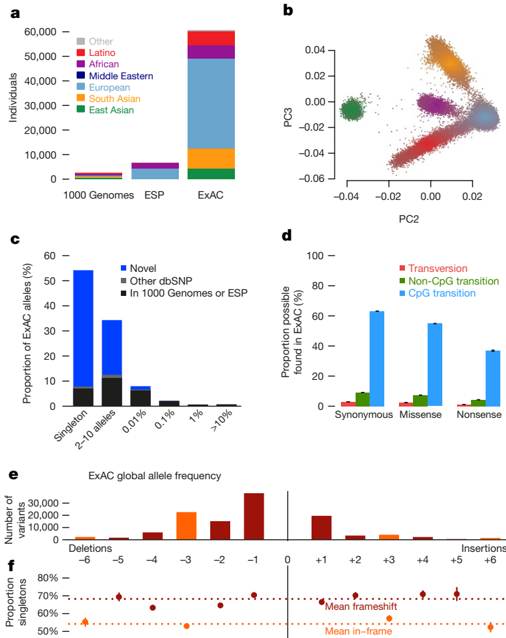
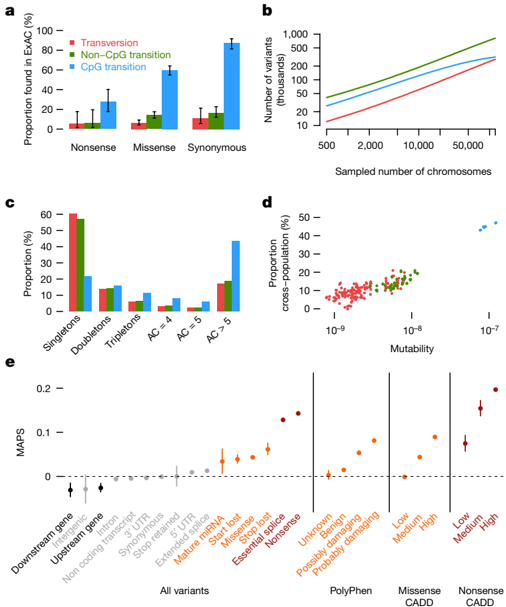
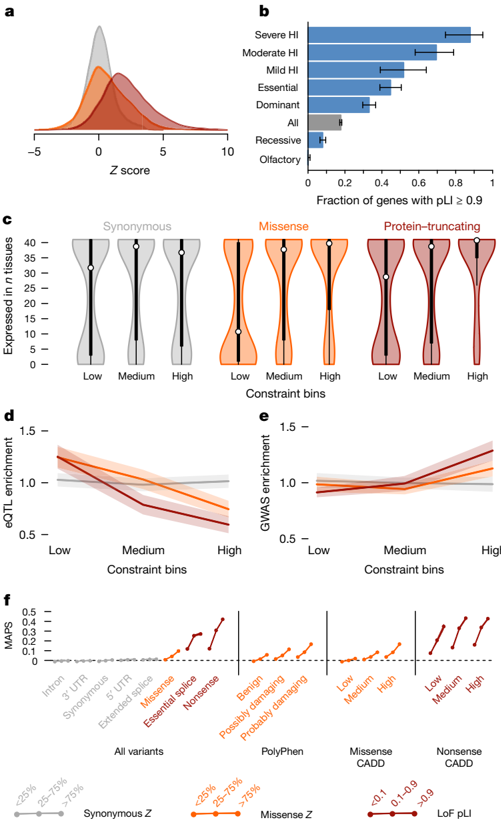
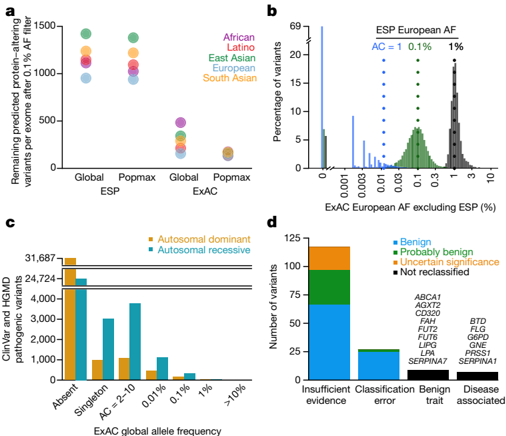
Large-scale reference data sets of human genetic variation are critical for the medical and functional interpretation of DNA sequence changes. Here we describe the aggregation and analysis of high-quality exome (protein-coding region) DNA sequence data for 60,706 individuals of diverse ancestries generated as part of the Exome Aggregation Consortium (ExAC). This catalogue of human genetic diversity contains an average of one variant every eight bases of the exome, and provides direct evidence for the presence of widespread mutational recurrence. We have used this catalogue to calculate objective metrics of pathogenicity for sequence variants, and to identify genes subject to strong selection against various classes of mutation; identifying 3,230 genes with near-complete depletion of predicted protein-truncating variants, with 72% of these genes having no currently established human disease phenotype. Finally, we demonstrate that these data can be used for the efficient filtering of candidate disease-causing variants, and for the discovery of human ‘knockout’ variants in protein-coding genes. Exome sequencing data from 60,706 people of diverse geographic ancestry is presented, providing insight into genetic variation across populations, and illuminating the relationship between DNA variants and human disease. As part of the Exome Aggregation Consortium (ExAC) project, Daniel MacArthur and colleagues report on the generation and analysis of high-quality exome sequencing data from 60,706 individuals of diverse ancestry. This provides the most comprehensive catalogue of human protein-coding genetic variation to date, yielding unprecedented resolution for the analysis of very rare variants across multiple human populations. The catalogue is freely accessible and provides a critical reference panel for the clinical interpretation of genetic variants and the discovery of disease-related genes.
Overview
The claims and statistics of this paper haven’t been checked yet.
Free: it reads the open-access text and checks the first 5 claims that cite a source we can check. Create a free account to check every claim.
Integrity signals
Registry
Cites
Statistics
Figures


Verification
Claims the paper makes
The claims and statistics of this paper haven’t been checked yet.
Free: it reads the open-access text and checks the first 5 claims that cite a source we can check. Create a free account to check every claim.
Claims other papers make about this one
Each is checked against this paper’s own text: does it say what the citing paper says it does?
The source backs part of the claim, not all of it — or backs it for a different population, condition or comparison.
In the citing paper
“Variants in constrained genes (pLI ≥ 0.5)12 explain most of the burden of dnLGD variants and de novo D-mis variants (defined by an MPC score ≥2) in the affected offspring in our study”
From Exome sequencing of 457 autism families recruited online provides evidence for autism risk genes (2019) · cites this paper as [12]
Experimental — accuracy not yet measuredThe source backs part of the claim, not all of it — or backs it for a different population, condition or comparison.
In the citing paper
“Known dominant DD-associated genes are strongly enriched in the minority of genes that exhibit strong selective constraint on heterozygous PTVs7.”
From Evidence for 28 genetic disorders discovered by combining healthcare and research data (2020) · cites this paper as [7]
Experimental — accuracy not yet measuredThe source backs part of the claim, not all of it — or backs it for a different population, condition or comparison.
In the citing paper
“As expected, all ten genes are among the most constrained genes in the genome, with a substantial depletion of PTVs compared to chance expectation24.”
From Rare coding variants in ten genes confer substantial risk for schizophrenia (2022) · cites this paper as [24]
Experimental — accuracy not yet measuredThe source backs part of the claim, not all of it — or backs it for a different population, condition or comparison.
In the citing paper
“In our evolution-focused SNP-h2 enrichment analysis, we detected an overabundance of genic and LoF intolerant loci in both EAS and EUR, suggesting that functionally important regions of the genome contribute to SNP-h2 to a different extent compared to the other annotations tested [10, 33, 40, 44].”
From Denisovan and Neanderthal archaic introgression differentially impacted the genetics of complex traits in modern populations (2022) · cites this paper as [33]
Experimental — accuracy not yet measuredThe source backs part of the claim, not all of it — or backs it for a different population, condition or comparison.
In the citing paper
“In line with previous studies [10, 33], the strongest enrichments in both ancestry groups were observed for annotations related to genic and LoF intolerant regions.”
From Denisovan and Neanderthal archaic introgression differentially impacted the genetics of complex traits in modern populations (2022) · cites this paper as [33]
Experimental — accuracy not yet measured
9 more claims about this paper
Create a free account to see every claim other papers make about this one.
Self-check
Percentages, sums and reported differences re-computed from the paper’s own numbers.
The self-check needs the paper’s full text.
Citations
Cites
Richards, S., Aziz, N., Bale, S., Bick, D., Das, S., Gastier-Foster, J., Grody, W. W., Hegde, M., Lyon, E., Spector, E., et al. (2015) · Genetics in Medicine · doi:10.1038/gim.2015.30 · Cited by 32,594
A global reference for human genetic variation
The 1000 Genomes Project Consortium, authors, C., Auton, A., Abecasis, G. R., Steering committee, Altshuler, D. M., Durbin, R. M., Abecasis, G. R., Bentley, D. R., Chakravarti, A., et al. (2015) · Nature · doi:10.1038/nature15393 · Cited by 18,247
Self-citationA framework for variation discovery and genotyping using next-generation DNA sequencing data
DePristo, M. A., Banks, E., Poplin, R., Garimella, K. V., Maguire, J. R., Hartl, C., Philippakis, A. A., del Angel, G., Rivas, M. A., Hanna, M., et al. (2011) · Nature Genetics · doi:10.1038/ng.806 · Cited by 11,456
Self-citationLethality and centrality in protein networks
Jeong, H., Mason, S. P., Barabási, A.-L., & Oltvai, Z. N. (2001) · Nature · doi:10.1038/35075138 · Cited by 5,287
The Genotype-Tissue Expression (GTEx) pilot analysis: Multitissue gene regulation in humans
The GTEx Consortium, Ardlie, K. G., Deluca, D. S., Segrè, A. V., Sullivan, T. J., Young, T. R., Gelfand, E. T., Trowbridge, C. A., Maller, J. B., Tukiainen, T., et al. (2015) · Science · doi:10.1126/science.1262110 · Cited by 5,062
Self-citationGoh, K.-I., Cusick, M. E., Valle, D., Childs, B., Vidal, M., & Barabási, A.-L. (2007) · Proceedings of the National Academy of Sciences · doi:10.1073/pnas.0701361104 · Cited by 3,242
Inference of human population history from individual whole-genome sequences
Li, H., & Durbin, R. (2011) · Nature · doi:10.1038/nature10231 · Cited by 2,590
Exome sequencing as a tool for Mendelian disease gene discovery
Bamshad, M. J., Ng, S. B., Bigham, A. W., Tabor, H. K., Emond, M. J., Nickerson, D. A., & Shendure, J. (2011) · Nature Reviews Genetics · doi:10.1038/nrg3031 · Cited by 1,673
De novo mutations in schizophrenia implicate synaptic networks
Fromer, M., Pocklington, A. J., Kavanagh, D. H., Williams, H. J., Dwyer, S., Gormley, P., Georgieva, L., Rees, E., Palta, P., Ruderfer, D. M., et al. (2014) · Nature · doi:10.1038/nature12929 · Cited by 1,617
Self-citationEvolution and functional impact of rare coding variation from deep sequencing of human exomes
Tennessen, J. A., Bigham, A. W., O’Connor, T. D., Fu, W., Kenny, E. E., Gravel, S., McGee, S., Do, R., Liu, X., Jun, G., et al. (2012) · Science · doi:10.1126/science.1219240 · Cited by 1,613
Self-citation
Cited by
Items 601–700 of 1,209
BACH2 immunodeficiency illustrates an association between super-enhancers and haploinsufficiency
Afzali, B., Grönholm, J., Vandrovcova, J., O'Brien, C., Sun, H.-W., Vanderleyden, I., Davis, F. P., Khoder, A., Zhang, Y., Hegazy, A. N., et al. (2017) · Nature Immunology · doi:10.1038/ni.3753 · Cited by 151
Mitochondrial DNA variation across 56,434 individuals in gnomAD
Laricchia, K. M., Lake, N. J., Watts, N. A., Shand, M., Haessly, A., Gauthier, L., Benjamin, D., Banks, E., Soto, J., Garimella, K., et al. (2022) · Genome Research · doi:10.1101/gr.276013.121 · Cited by 148
“Until now, mtDNA variants have not been included in most large population databases of genomic variation such as the Exome Aggregation Consortium (ExAC) (Lek et al. 2016), the Genome Aggregation Database (gnomAD) (Karczewski et al.”
Self-citationLoss-or gain-of-function mutations in ACOX1 cause axonal loss via different mechanisms
Chung, H.-L., Wangler, M. F., Marcogliese, P. C., Jo, J., Ravenscroft, T. A., Zuo, Z., Duraine, L., Sadeghzadeh, S., Li-Kroeger, D., Schmidt, R. E., et al. (2020) · Neuron · doi:10.1016/j.neuron.2020.02.021 · Cited by 154
Yoshikawa, Y., Emi, M., Hashimoto-Tamaoki, T., Ohmuraya, M., Sato, A., Tsujimura, T., Hasegawa, S., Nakano, T., Nasu, M., Pastorino, S., et al. (2016) · Proceedings of the National Academy of Sciences · doi:10.1073/pnas.1612074113 · Cited by 149
Male breast cancer in a multi-gene panel testing cohort: insights and unexpected results
Pritzlaff, M., Summerour, P., McFarland, R. E., Li, S., Reineke, P., Dolinsky, J. S., Goldgar, D. E., Shimelis, H., Couch, F. J., Chao, E., et al. (2016) · Breast Cancer Research and Treatment · doi:10.1007/s10549-016-4085-4 · Cited by 168
Tsaousis, G., Papadopoulou, E., Apessos, A., Αγιαννιτόπουλος, Κ., Pepe, G., Kampouri, S., Diamantopoulos, N., Floros, T., Iosifidou, R., Katopodi, O., et al. (2019) · BMC Cancer · doi:10.1186/s12885-019-5756-4 · Cited by 163
Genetic variant effects on gene expression in human pancreatic islets and their implications for T2D
Viñuela, A., Varshney, A., van de Bunt, M., Prasad, R. B., Asplund, O., Bennett, A., Boehnke, M., Brown, A. A., Erdos, M. R., Fadista, J., et al. (2020) · Nature Communications · doi:10.1038/s41467-020-18581-8 · Cited by 152
Self-citationLipin proteins and glycerolipid metabolism: Roles at the ER membrane and beyond
Zhang, P., & Reue, K. (2017) · Biochimica et Biophysica Acta (BBA) - Biomembranes · doi:10.1016/j.bbamem.2017.04.007 · Cited by 158
Genomics-First Evaluation of Heart Disease Associated With Titin-Truncating Variants
Haggerty, C. M., Damrauer, S. M., Levin, M. G., Birtwell, D., Carey, D. J., Golden, A. M., Hartzel, D. N., Hu, Y., Judy, R., Kelly, M. A., et al. (2019) · Circulation · doi:10.1161/circulationaha.119.039573 · Cited by 158
Self-citationGenetic variation in human drug-related genes
Schärfe, C., Tremmel, R., Schwab, M. G., Kohlbacher, O., & Marks, D. S. (2017) · Genome Medicine · doi:10.1186/s13073-017-0502-5 · Cited by 171
“Non-Finnish European, and Admixed American (Latino) ancestry [19].”
BackgroundMethodInfluentialFlexible and scalable diagnostic filtering of genomic variants using G2P with Ensembl VEP
Thormann, A., Halachev, M., McLaren, W., Moore, D. J., Svinti, V., Campbell, A., Kerr, S. M., Tischkowitz, M., Hunt, S. E., Dunlop, M. G., et al. (2019) · Nature Communications · doi:10.1038/s41467-019-10016-3 · Cited by 151
Biallelic TRIP13 mutations predispose to Wilms tumor and chromosome missegregation
Yost, S. E., de Wolf, B., Hanks, S., Zachariou, A., Marcozzi, C., Clarke, M., de Voer, R. M., Etemad, B., Uijttewaal, E. C. H., Ramsay, E., et al. (2017) · Nature Genetics · doi:10.1038/ng.3883 · Cited by 160
Sequencing and de novo assembly of 150 genomes from Denmark as a population reference
Maretty, L., Jensen, J. M., Petersen, B., Sibbesen, J. A., Liu, S., Villesen, P., Skov, L., Belling, K., Theil Have, C., Izarzugaza, J. M. G., et al. (2017) · Nature · doi:10.1038/nature23264 · Cited by 153
“[1, 5) [5, 9) [9, 13) [13, 17) [17, 21) –400 –200 0 200 400”
Self-citationGenome maps across 26 human populations reveal population-specific patterns of structural variation
Levy-Sakin, M., Pastor, S., Mostovoy, Y., Li, L., Leung, A. K. Y., McCaffrey, J., Young, E., Lam, E. T., Hastie, A. R., Wong, K. H. Y., et al. (2019) · Nature Communications · doi:10.1038/s41467-019-08992-7 · Cited by 149
Pilati, C., Shinde, J., Alexandrov, L. B., Assié, G., André, T., Hélias‐Rodzewicz, Z., Ducoudray, R., Le Corre, D., Zucman‐Rossi, J., Emile, J., et al. (2017) · The Journal of Pathology · doi:10.1002/path.4880 · Cited by 150
“germline variants with a reported frequency≤ 1% in the ExAC database [12]) in the MUTYH gene (p= 0.”
BackgroundMöller, M., Jöud, M., Storry, J. R., & Olsson, M. L. (2016) · Blood Advances · doi:10.1182/bloodadvances.2016001867 · Cited by 163
The Human Knockout Gene CLYBL Connects Itaconate to Vitamin B12
Shen, H., Campanello, G. C., Flicker, D., Grabarek, Z., Hu, J., Luo, C., Banerjee, R., & Mootha, V. K. (2017) · Cell · doi:10.1016/j.cell.2017.09.051 · Cited by 152
Jelin, A. C., & Vora, N. L. (2018) · Obstetrics and Gynecology Clinics of North America · doi:10.1016/j.ogc.2017.10.003 · Cited by 165
Oegema, R., Barakat, T. S., Wilke, M., Stouffs, K., Amrom, D., Aronica, E., Bahi‐Buisson, N., Conti, V., Fry, A. E., Geis, T., et al. (2020) · Nature Reviews Neurology · doi:10.1038/s41582-020-0395-6 · Cited by 163
Laying the foundation for genomically-based risk assessment in chronic myeloid leukemia
on behalf of the International CML Foundation Genomics Alliance, Branford, S., Kim, D. D. H., Apperley, J. F., Eide, C. A., Mustjoki, S., Ong, S. T., Nteliopoulos, G., Ernst, T., Chuah, C., et al. (2019) · Leukemia · doi:10.1038/s41375-019-0512-y · Cited by 149
Singh, T., Neale, B. M., & Daly, M. J. (2020) · doi:10.1101/2020.09.18.20192815 · Cited by 980
“Previous studies have shown that PTVs are concentrated in 3,063 genes under strong constraint in schizophrenia cases compared to controls 8,22 , and we replicated this result with consistent signals across our major cohorts ( P meta = 7.6 x 10 -35 ; OR = 1.26, 95% CI = 1.22 - 1.31, Figure 1C,…”
ResultInfluentialSelf-citationLindstrand, A., Eisfeldt, J., Pettersson, M., Carvalho, C. M. B., Kvarnung, M., Grigelioniené, G., Anderlid, B., Bjerin, O., Gustavsson, P., Hammarsjö, A., et al. (2019) · Genome Medicine · doi:10.1186/s13073-019-0675-1 · Cited by 168
Barbitoff, Y. A., Polev, D. E., Glotov, A. S., Serebryakova, E. A., Shcherbakova, I. V., Kiselev, A. M., Kostareva, A. A., Glotov, O. S., & Predeus, A. V. (2020) · Scientific Reports · doi:10.1038/s41598-020-59026-y · Cited by 143
Landscape of multi-nucleotide variants in 125,748 human exomes and 15,708 genomes
Wang, Q., Pierce-Hoffman, E., Cummings, B. B., Alföldi, J., Francioli, L. C., Gauthier, L. D., Hill, A. J., O’Donnell-Luria, A. H., Genome Aggregation Database Production Team, Armean, I. M., et al. (2020) · Nature Communications · doi:10.1038/s41467-019-12438-5 · Cited by 147
“Figure 3a), each of which is biased toward certain MNV patterns: (1) combinations of distinct singlenucleotide mutation events; (2) replication errors by errorprone polymerase zeta; and (3) polymerase slippage events at repeat junctions.”
BackgroundSelf-citationType 2 diabetes: genetic data sharing to advance complex disease research
Flannick, J. A., & Florez, J. C. (2016) · Nature Reviews Genetics · doi:10.1038/nrg.2016.56 · Cited by 175
Self-citationGenomic disorders 20 years on—mechanisms for clinical manifestations
Harel, T., & Lupski, J. R. (2017) · Clinical Genetics · doi:10.1111/cge.13146 · Cited by 165
“whether a gene is haploinsufficient, that is, intolerant to heterozygous loss of function.(52,53) For deletion CNVs, associations between a specific gene within a CNV and a phenotype are often supported by the identification of pathogenic single nucleotide variants (SNV) in that gene.”
BackgroundDe Novo Mutation in Genes Regulating Neural Stem Cell Fate in Human Congenital Hydrocephalus
Furey, C. G., Choi, J., Jin, S. C., Zeng, X. Q., Timberlake, A. T., Nelson-Williams, C. J., Mansuri, M. S., Lu, Q., Durán, D., Panchagnula, S., et al. (2018) · Neuron · doi:10.1016/j.neuron.2018.06.019 · Cited by 154
Mutational Landscapes and Phenotypic Spectrum of SWI/SNF-Related Intellectual Disability Disorders
Bögershausen, N., & Wollnik, B. (2018) · Frontiers in Molecular Neuroscience · doi:10.3389/fnmol.2018.00252 · Cited by 156
Regional Variation in RBM20 Causes a Highly Penetrant Arrhythmogenic Cardiomyopathy
Parikh, V. N., Caleshu, C., Reuter, C., Lazzeroni, L. C., Ingles, J., Garcia, J., McCaleb, K., Adesiyun, T., Sedaghat-Hamedani, F., Kumar, S., et al. (2019) · Circulation: Heart Failure · doi:10.1161/circheartfailure.118.005371 · Cited by 148
Medical implications of technical accuracy in genome sequencing
Goldfeder, R. L., Priest, J. R., Zook, J. M., Grove, M. E., Waggott, D., Wheeler, M. T., Salit, M., & Ashley, E. A. (2016) · Genome Medicine · doi:10.1186/s13073-016-0269-0 · Cited by 141
“(XLSX 40 kb) Additional file 5: Table S4.”
BackgroundLu, H., Tan, Q., Rousseaux, M. W. C., Wang, W., Kim, J., Richman, R., Wan, Y., Yeh, S.-Y., Patel, J. M., Liu, X., et al. (2017) · Nature Genetics · doi:10.1038/ng.3808 · Cited by 156
Dröge, C., Bonus, M., Baumann, U., Klindt, C., Lainka, E., Kathemann, S., Brinkert, F., Grabhorn, E. F., Pfister, E., Wenning, D., et al. (2017) · Journal of Hepatology · doi:10.1016/j.jhep.2017.07.004 · Cited by 151
Hadinnapola, C., Bleda, M., Haimel, M., Screaton, N., Swift, A., Dorfmüller, P., Preston, S. D., Southwood, M., Hernandez-Sanchez, J., Martin, J., et al. (2017) · Circulation · doi:10.1161/circulationaha.117.028351 · Cited by 147
Self-citationHuman tumor genomics and zebrafish modeling identify SPRED1 loss as a driver of mucosal melanoma
Ablain, J., Xu, M., Rothschild, H., Jordan, R. C., Mito, J. K., Daniels, B. H., Bell, C. F., Joseph, N. M., Wu, H., Bastian, B. C., et al. (2018) · Science · doi:10.1126/science.aau6509 · Cited by 142
“Supplementary Materials: 5 Materials and Methods Figures S1-S12 Tables S1-S4 References (29-71) 10 References and Notes 1.”
BackgroundThe Cambridge Handbook of Personality Psychology
Corr, P. J., & Matthews, G. (2020) · Cambridge University Press eBooks · doi:10.1017/9781108264822 · Cited by 85
Integration of Genetic Testing and Pathology for the Diagnosis of Adults with FSGS
Yao, T., Udwan, K., John, R., Rana, A., Haghighi, A., Xu, L., Hack, S., Reich, H. N., Hladunewich, M., Cattran, D. C., et al. (2019) · Clinical Journal of the American Society of Nephrology · doi:10.2215/cjn.08750718 · Cited by 164
Recapitulation and Reversal of Schizophrenia-Related Phenotypes in Setd1a-Deficient Mice
Mukai, J., Cannavò, E., Crabtree, G. W., Sun, Z., Diamantopoulou, A., Thakur, P., Chang, C., Cai, Y., Lomvardas, S., Takata, A., et al. (2019) · Neuron · doi:10.1016/j.neuron.2019.09.014 · Cited by 156
SPOP-Mutated/CHD1-Deleted Lethal Prostate Cancer and Abiraterone Sensitivity
Boysen, G., Rodrigues, D. N., Rescigno, P., Seed, G., Dolling, D., Riisnaes, R., Crespo, M., Zafeiriou, Z., Sumanasuriya, S., Bianchini, D., et al. (2018) · Clinical Cancer Research · doi:10.1158/1078-0432.ccr-18-0937 · Cited by 145
Survey of variation in human transcription factors reveals prevalent DNA binding changes
Barrera, L. A., Vedenko, A., Kurland, J. V., Rogers, J. M., Gisselbrecht, S. S., Rossin, E. J., Woodard, J., Mariani, L., Kock, K. H., Inukai, S., et al. (2016) · Science · doi:10.1126/science.aad2257 · Cited by 140
Self-citationEstimating the selective effects of heterozygous protein-truncating variants from human exome data
Cassa, C. A., Weghorn, D., Balick, D. J., Jordan, D. M., Nusinow, D., Samocha, K. E., O'Donnell-Luria, A., MacArthur, D. G., Daly, M. J., Beier, D. R., et al. (2017) · Nature Genetics · doi:10.1038/ng.3831 · Cited by 150
“We also compared the log-likelihood of the fit to Q(n) obtained with this model to that obtained from two other two-parameter distributions, (4)”
BackgroundMethodSelf-citationWong, K., van der Weyden, L., Schott, C. R., Foote, A. K., Constantino‐Casas, F., Smith, S., Dobson, J. M., Murchison, E. P., Wu, H. G., Yeh, I., et al. (2019) · Nature Communications · doi:10.1038/s41467-018-08081-1 · Cited by 162
Yan, T., Cui, H., Zhou, Y., Yang, B. J., Kong, P., Zhang, Y., Liu, Y., Wang, B., Cheng, Y., Li, J., et al. (2019) · Nature Communications · doi:10.1038/s41467-019-09255-1 · Cited by 156
Cerrone, M., Remme, C. A., Tadros, R., Bezzina, C. R., & Delmar, M. (2019) · Circulation · doi:10.1161/circulationaha.118.035954 · Cited by 166
DNA Methylation Clocks and Their Predictive Capacity for Aging Phenotypes and Healthspan
Bergsma, T., & Rogaeva, E. A. (2020) · Neuroscience Insights · doi:10.1177/2633105520942221 · Cited by 153
Buckley, R. M., Davis, B. W., Brashear, W. A., Farias, F. G., Kuroki, K., Graves, T., Hillier, L., Kremitzki, M., Li, G., Middleton, R. P., et al. (2020) · PLoS Genetics · doi:10.1371/journal.pgen.1008926 · Cited by 165
“Alternatively, larger analyses in human reveal a much higher fraction of low frequency variants [58, 59].”
BackgroundMethodRecurrent de novo mutations in neurodevelopmental disorders: properties and clinical implications
Wilfert, A. B., Sulovari, A., Turner, T. N., Coe, B. P., & Eichler, E. E. (2017) · Genome Medicine · doi:10.1186/s13073-017-0498-x · Cited by 144
“1% was covered by WGS at this coverage threshold [36].”
BackgroundMethodDobbyn, A., Huckins, L. M., Boocock, J., Sloofman, L. G., Glicksberg, B. S., Giambartolomei, C., Hoffman, G. E., Perumal, T. M., Girdhar, K., Jiang, Y., et al. (2018) · The American Journal of Human Genetics · doi:10.1016/j.ajhg.2018.04.011 · Cited by 144
Self-citationAhlberg, G., Refsgaard, L., Lundegaard, P. R., Andreasen, L., Ranthe, M. F., Linscheid, N., Nielsen, J. B., Melbye, M., Haunsø, S., Sajadieh, A., et al. (2018) · Nature Communications · doi:10.1038/s41467-018-06618-y · Cited by 148
Slavin, T. P., Maxwell, K. N., Lilyquist, J., Vijai, J., Neuhausen, S. L., Hart, S. N., Ravichandran, V., Thomas, T., Maria, A., Villano, D., et al. (2017) · npj Breast Cancer · doi:10.1038/s41523-017-0024-8 · Cited by 163
“The purpose of this study was to detail the spectrum of known and proposed breast cancer susceptibility genes, highlight genotype–phenotype correlations, and refine risk estimates for mutations in these genes by examining BRCA negative familial breast cancer (FBC; proband with breast cancer and a family history of bre…”
Epilepsy-Related Voltage-Gated Sodium Channelopathies: A Review
Menezes, L. F. S., Júnior, E. F. S., Tibery, D. V., Carneiro, L. D. A., & Schwartz, E. F. (2020) · Frontiers in Pharmacology · doi:10.3389/fphar.2020.01276 · Cited by 156
“NaV channels rank amongst the 2% most conserved proteins in the human genome, with an extremely low rate of coding variation, accounting for nearly 5% of known epileptic encephalopathies (Petrovski et al., 2013; MercimekMahmutoglu et al., 2015; Lek et al., 2016; Heyne et al., 2019).”
BackgroundLeblond, C. S., Le, T.-L., Malesys, S., Cliquet, F., Tabet, A.-C., Delorme, R., Rolland, T., & Bourgeron, T. (2021) · Molecular and Cellular Neuroscience · doi:10.1016/j.mcn.2021.103623 · Cited by 136
Genome-wide association studies: assessing trait characteristics in model and crop plants
Alseekh, S., Kostova, D., Bulut, M., & Fernie, A. R. (2021) · Cellular and Molecular Life Sciences · doi:10.1007/s00018-021-03868-w · Cited by 169
Evolving health care through personal genomics
Rehm, H. L. (2017) · Nature Reviews Genetics · doi:10.1038/nrg.2016.162 · Cited by 134
“Moreover, comparison across individuals shows that each individual harbours over 60 coding variants found only in one in 60,000 individuals[62].”
BackgroundMethodInfluentialGorman, J. A., Hundhausen, C., Errett, J. S., Stone, A. E. L., Allenspach, E. J., Ge, Y., Arkatkar, T., Clough, C. A., Dai, X., Khim, S., et al. (2017) · Nature Immunology · doi:10.1038/ni.3766 · Cited by 148
Genomic medicine for kidney disease
Groopman, E., Rasouly, H. M., & Gharavi, A. G. (2018) · Nature Reviews Nephrology · doi:10.1038/nrneph.2017.167 · Cited by 156
Bailey, C. S., Moldenhauer, H. J., Park, S. M., Keros, S., & Meredith, A. L. (2019) · The Journal of General Physiology · doi:10.1085/jgp.201912457 · Cited by 164
“The allele frequency of certain pathogenic KCNMA1 mutations in larger populations is estimated to be less than 1:100,000 in the Genome Aggregation Database (D434G = 3 × 10⁻⁵ and Y676Lfs*7 = 4 × 10⁻⁶; Lek et al., 2016).”
BackgroundWhole‐exome sequencing in 20,197 persons for rare variants in Alzheimer's disease
Raghavan, N. S., Brickman, A. M., Andrews, H., Manly, J. J., Schupf, N., Lantigua, R., Wolock, C. J., Kamalakaran, S., Petrovski, S., Tosto, G., et al. (2018) · Annals of Clinical and Translational Neurology · doi:10.1002/acn3.582 · Cited by 141
“Two of the 11 cases were deceased with autopsy confirming the pathological diagnosis of AD.16 Coverage for WDR76 and GRN was excellent in this study and in ExAC.12 Three of the 10 individuals clinically diagnosed as AD with loss-of-function qualifying variants in WDR76 had undergone autopsy.”
BackgroundDosage-sensitive genes in evolution and disease
Rice, A. M., & McLysaght, A. (2017) · BMC Biology · doi:10.1186/s12915-017-0418-y · Cited by 172
“A recent large survey of human genetic variation identified over 3000 genes in the human genome with a near-total absence of loss-of-function alleles, suggesting that many of these are in fact haploinsufficient; over 70% of these were not previously associated with disease [15].”
BackgroundThe genetic architecture of long QT syndrome: A critical reappraisal
Giudicessi, J. R., Wilde, A. A. M., & Ackerman, M. J. (2018) · Trends in Cardiovascular Medicine · doi:10.1016/j.tcm.2018.03.003 · Cited by 154
Genetic diagnoses in epilepsy: The impact of dynamic exome analysis in a pediatric cohort
Rochtus, A. M., Olson, H. E., Smith, L. A., Keith, L. G., Achkar, C. M. E., Taylor, A., Mahida, S., Park, M., Kelly, M., Shain, C., et al. (2020) · Epilepsia · doi:10.1111/epi.16427 · Cited by 147
An osteocalcin-deficient mouse strain without endocrine abnormalities
Diegel, C. R., Hann, S., Ayturk, U. M., Hu, J. C. W., Lim, K.-E., Droscha, C. J., Madaj, Z. B., Foxa, G. E., Izaguirre, I., Transgenics Core, V. V. A., et al. (2020) · PLOS Genetics · doi:10.1371/journal.pgen.1008361 · Cited by 134
“org, each accessed on December 5, 2019), and there seems to be tolerance for heterozygous loss-of-function mutations at the population level (pLI = 0) [30] in the gnomAD database [https://gnomad.”
BackgroundPredicting dynamic cellular protein–RNA interactions by deep learning using in vivo RNA structures
Sun, L., Xu, K., Huang, W., Yang, Y. T., Li, P., Tang, L., Xiong, T., & Zhang, Q. C. (2021) · Cell Research · doi:10.1038/s41422-021-00476-y · Cited by 141
Predicting functional effects of missense variants in voltage-gated sodium and calcium channels
Heyne, H. O., Baez-Nieto, D., Iqbal, S., Palmer, D. S., Brunklaus, A., May, P., Collaborative, E., Johannesen, K. M., Lauxmann, S., Lemke, J. R., et al. (2020) · Science Translational Medicine · doi:10.1126/scitranslmed.aay6848 · Cited by 140
Self-citationHeterozygous RFX6 protein truncating variants are associated with MODY with reduced penetrance
Patel, K., Kettunen, J. L. T., Laakso, M., Stančáková, A., Laver, T. W., Colclough, K., Johnson, M. B., Abramowicz, M., Groop, L., Miettinen, P. J., et al. (2017) · Nature Communications · doi:10.1038/s41467-017-00895-9 · Cited by 150
Self-citationIdentification of new Wilms tumour predisposition genes: an exome sequencing study
Mahamdallie, S., Yost, S. E., Poyastro-Pearson, E., Holt, E., Zachariou, A., Seal, S., Elliott, A., Clarke, M., Warren-Perry, M., Hanks, S., et al. (2019) · The Lancet Child & Adolescent Health · doi:10.1016/s2352-4642(19)30018-5 · Cited by 146
Won, H., Huang, J., Opland, C. K., Hartl, C. L., & Geschwind, D. H. (2019) · Nature Communications · doi:10.1038/s41467-019-10248-3 · Cited by 148
Self-citationFrequencies of clinically important CYP2C19 and CYP2D6 alleles are graded across Europe
Petrović, J., Pešić, V., & Lauschke, V. M. (2019) · European Journal of Human Genetics · doi:10.1038/s41431-019-0480-8 · Cited by 140
“In addition, we included data from the Genome Aggregation Database [13], the 1000 Genomes Project [14], the SweGen project [15], and the Estonian biobank [16].”
MethodLahrouchi, N., Tadros, R., Crotti, L., Mizusawa, Y., Postema, P. G., Beekman, L., Walsh, R., Hasegawa, K., Barc, J., Ernsting, M., et al. (2020) · Circulation · doi:10.1161/circulationaha.120.045956 · Cited by 150
Genome-wide rare variant analysis for thousands of phenotypes in over 70,000 exomes from two cohorts
Cirulli, E. T., White, S., Read, R. W., Elhanan, G., Metcalf, W. J., Tanudjaja, F., Fath, D. M., Sandoval, E., Isaksson, M., Schlauch, K. A., et al. (2020) · Nature Communications · doi:10.1038/s41467-020-14288-y · Cited by 139
Survey of the Heritability and Sparse Architecture of Gene Expression Traits across Human Tissues
Wheeler, H. E., Shah, K. P., Brenner, J., Garcia, T., Aquino-Michaels, K., GTEx Consortium, Cox, N. J., Nicolae, D. L., & Im, H. K. (2016) · PLOS Genetics · doi:10.1371/journal.pgen.1006423 · Cited by 145
“In other words, whether many variants with small effects or a small [32])dichotomized by local heritabilityestimates.”
Yamauchi, T., Masuda, T., Canver, M. C., Seiler, M., Semba, Y., Shboul, M., Al-Raqad, M., Maeda, M., Schoonenberg, V. A. C., Cole, M. A., et al. (2018) · Cancer Cell · doi:10.1016/j.ccell.2018.01.012 · Cited by 138
“To identify potentially actionable targets, we selected genes meeting the following criteria: (1) they encoded a protein with an available inhibitor and/or (2) their germline mutation loss-offunction phenotype was relatively moderate based on the literature or the human exome-sequencing database (Lek et al., 2016; Lim…”
BackgroundMethodGalambos, C., Mullen, M. P., Shieh, J. T. C., Schwerk, N., Kielt, M. J., Ullmann, N., Boldrini, R., Gantar, I. Š., Haass, C., Bansal, M., et al. (2019) · European Respiratory Journal · doi:10.1183/13993003.01965-2018 · Cited by 148
Deelen, P., van Dam, S., Herkert, J. C., Karjalainen, J. M., Brugge, H., Abbott, K. M., van Diemen, C. C., van der Zwaag, P. A., Gerkes, E. H., Zonneveld-Huijssoon, E., et al. (2019) · Nature Communications · doi:10.1038/s41467-019-10649-4 · Cited by 138
“This is corroborated by the signi fi cant correlation between the ExAC missense constraint score 10 (a metric denoting a depletion of missense variation in a gene) and the number of submissions to ClinVar ( r : 0.12 p -value: 8.81 × 10 − 17 ) (Supplementary Fig.”
BackgroundInfluentialA human immunodeficiency syndrome caused by mutations in CARMIL2
Schober, T., Magg, T., Laschinger, M., Rohlfs, M., Linhares, N. D., Puchalka, J., Weisser, T., Fehlner, K., Mautner, J., Walz, C., et al. (2017) · Nature Communications · doi:10.1038/ncomms14209 · Cited by 133
Bloch, Y., Bouchareychas, L., Merceron, R., Składanowska, K., Van den Bossche, L., Detry, S., Govindarajan, S., Elewaut, D., Haerynck, F., Dullaers, M., et al. (2018) · Immunity · doi:10.1016/j.immuni.2017.12.008 · Cited by 134
“To this end we leveraged the curated browser of the Exome Aggregation Consortium (ExAC) (Lek et al., 2016).”
MethodPrecise detection of low-level somatic mutation in resected epilepsy brain tissue
Sim, N. S., Ko, A., Kim, W. K., Kim, S. H., Kim, J. S., Shim, K.-W., Aronica, E., Mijnsbergen, C., Spliet, W. G. M., Koh, H. Y., et al. (2019) · Acta Neuropathologica · doi:10.1007/s00401-019-02052-6 · Cited by 137
“1% in the ExAC database for minor allele frequencies and East Asian populations [22].”
BackgroundA missense variant in PTPN22 is a risk factor for drug-induced liver injury
Cirulli, E. T., Nicoletti, P., Abramson, K., Andrade, R. J., Bjornsson, E. S., Chalasani, N., Fontana, R. J., Hallberg, P., Li, Y. J., Lucena, M. I., et al. (2019) · Gastroenterology · doi:10.1053/j.gastro.2019.01.034 · Cited by 137
The prognostic effects of somatic mutations in ER-positive breast cancer
Griffith, O. L., Spies, N. C., Anurag, M., Griffith, M., Luo, J., Tu, D., Yeo, B., Kunisaki, J., Miller, C. A., Krysiak, K., et al. (2018) · Nature Communications · doi:10.1038/s41467-018-05914-x · Cited by 128
Doheny, D. O., Srinivasan, R., Pagant, S., Chen, B., Yasuda, M., & Desnick, R. J. (2018) · Journal of Medical Genetics · doi:10.1136/jmedgenet-2017-105080 · Cited by 137
Tobita, T., Nomura, S., Fujita, T., Morita, H., Asano, Y., Onoue, K., Ito, M., Imai, Y., Suzuki, A., Ko, T., et al. (2018) · Scientific Reports · doi:10.1038/s41598-018-20114-9 · Cited by 144
Gennarino, V. A., Palmer, E. E., McDonell, L. M., Wang, L., Adamski, C. J., Koire, A., See, L., Chen, C.-A., Schaaf, C. P., Rosenfeld, J. A., et al. (2018) · Cell · doi:10.1016/j.cell.2018.02.006 · Cited by 135
“The mutations resulting in infantile disease were not identified in the ExAC database (release version: August 8, 2016) (Lek et al., 2016), but the mutation associated with adult-onset disease was found in one exome from ExAC.”
BackgroundMethodInfluentialWeber‐Lassalle, N., Hauke, J., Ramser, J., Richters, L., Groß, E., Blümcke, B., Gehrig, A., Kahlert, A., Müller, C. R., Hackmann, K., et al. (2018) · Breast Cancer Research · doi:10.1186/s13058-018-0935-9 · Cited by 149
“For ExAC, neither personal nor family cancer histories are publicly available.”
MethodInfluentialSitosterolemia, Hypercholesterolemia, and Coronary Artery Disease
Tada, H., Nohara, A., Inazu, A., SAKUMA, N., Mabuchi, H., & Kawashiri, M. (2018) · Journal of Atherosclerosis and Thrombosis · doi:10.5551/jat.rv17024 · Cited by 157
The human CIB1–EVER1–EVER2 complex governs keratinocyte-intrinsic immunity to β-papillomaviruses
de Jong, S. J., Créquer-Grandhomme, A., Matos, I., Hum, D., Gunasekharan, V. K., Lorenzo, L., Jabot‐Hanin, F., Imahorn, E., Arias, A. A., Vahidnezhad, H., et al. (2018) · The Journal of Experimental Medicine · doi:10.1084/jem.20170308 · Cited by 152
“The CIB1 mutations are predicted to be deleterious The frameshift indels and splice-site mutations were not found in the public databases Genome Aggregation Database (gnomAD; Lek et al., 2016), Bravo (https:// bravo .”
BackgroundDomingo, A., & Klein, C. (2018) · Handbook of clinical neurology · doi:10.1016/b978-0-444-63233-3.00014-2 · Cited by 155
Hook, P. W., McClymont, S. A., Cannon, G. H., Law, W. D., Morton, A. J., Goff, L. A., & McCallion, A. S. (2018) · The American Journal of Human Genetics · doi:10.1016/j.ajhg.2018.02.001 · Cited by 136
Human TGF-β1 deficiency causes severe inflammatory bowel disease and encephalopathy
Kotlarz, D., Marquardt, B., Barøy, T., Lee, W. S., Konnikova, L., Hollizeck, S., Magg, T., Lehle, A. S., Walz, C., Borggraefe, I., et al. (2018) · Nature Genetics · doi:10.1038/s41588-018-0063-6 · Cited by 146
Deep Phenotyping on Electronic Health Records Facilitates Genetic Diagnosis by Clinical Exomes
Son, J. H., Xie, G., Yuan, C., Ena, L., Li, Z., Goldstein, A., Huang, L., Wang, L., Shen, F., Liu, H., et al. (2018) · The American Journal of Human Genetics · doi:10.1016/j.ajhg.2018.05.010 · Cited by 133
Bacher, U., Shumilov, E., Flach, J., Porret, N. A., Joncourt, R., Wiedemann, G., Fiedler, M., Novak, U., Amstutz, U., & Pabst, T. (2018) · Blood Cancer Journal · doi:10.1038/s41408-018-0148-6 · Cited by 144
Extremely rare variants reveal patterns of germline mutation rate heterogeneity in humans
Carlson, J., Locke, A. E., Flickinger, M., Zawistowski, M., Levy, S., Myers, R. M., Boehnke, M., Kang, H. M., Scott, L. J., Li, J. Z., et al. (2018) · Nature Communications · doi:10.1038/s41467-018-05936-5 · Cited by 130
Self-citationKonukiewitz, B., Jesinghaus, M., Steiger, K., Schlitter, A. M., Kasajima, A., Sipos, B., Zamboni, G., Weichert, W., Pfarr, N., & Klöppel, G. (2018) · Human Pathology · doi:10.1016/j.humpath.2018.03.018 · Cited by 135
Somatic SLC35A2 variants in the brain are associated with intractable neocortical epilepsy
Winawer, M. R., Griffin, N. G., Samanamud, J., Baugh, E. H., Rathakrishnan, D., Ramalingam, S., Zagzag, D., Schevon, C. A., Dugan, P., Hegde, M., et al. (2018) · Annals of Neurology · doi:10.1002/ana.25243 · Cited by 132
A somatic activating NRAS variant associated with kaposiform lymphangiomatosis
Barclay, S. F., Inman, K. W., Luks, V. L., McIntyre, J. B., Al‐Ibraheemi, A., Church, A. J., Pérez‐Atayde, A. R., Mangray, S., Jeng, M., Kreimer, S., et al. (2018) · Genetics in Medicine · doi:10.1038/s41436-018-0390-0 · Cited by 141
Genetic characteristics of retinitis pigmentosa in 1204 Japanese patients
Koyanagi, Y., Akiyama, M., Nishiguchi, K. M., Momozawa, Y., Kamatani, Y., Takata, S., Inai, C., Iwasaki, Y., Kumano, M., Murakami, Y., et al. (2019) · Journal of Medical Genetics · doi:10.1136/jmedgenet-2018-105691 · Cited by 151
Measuring intolerance to mutation in human genetics
Fuller, Z. L., Berg, J. J., Mostafavi, H., Sella, G., & Przeworski, M. (2019) · Nature Genetics · doi:10.1038/s41588-019-0383-1 · Cited by 137
van Riet, J., van de Werken, H. J. G., Cuppen, E. P. J. G., Eskens, F. A. L. M., Tesselaar, M. E. T., van Veenendaal, L. M., Klümpen, H., Dercksen, M. W., Valk, G. D., Lolkema, M. P., et al. (2021) · Nature Communications · doi:10.1038/s41467-021-24812-3 · Cited by 147
Deriving genomic diagnoses without revealing patient genomes
Jagadeesh, K. A., Wu, D. J., Birgmeier, J. A., Boneh, D., & Bejerano, G. (2017) · Science · doi:10.1126/science.aam9710 · Cited by 134
ACTB Loss-of-Function Mutations Result in a Pleiotropic Developmental Disorder
Cuvertino, S., Stuart, H. M., Chandler, K. E., Roberts, N. A., Armstrong, R., Bernardini, L., Bhaskar, S., Callewaert, B., Clayton-Smith, J., Davalillo, C. H., et al. (2017) · The American Journal of Human Genetics · doi:10.1016/j.ajhg.2017.11.006 · Cited by 135
“Developmental disorders (DDs) are thought to affect 2%– 5% of individuals and are genetically heterogeneous.(1) They range from isolated internal organ malformations and intellectual disability to complex syndromic presentations.”
BackgroundSYT1-associated neurodevelopmental disorder: a case series
Baker, K., Gordon, S. L., Melland, H., Bumbak, F., Scott, D. J., Jiang, T. J., Owen, D., Turner, B. J., Boyd, S. G., Rossi, M., et al. (2018) · Brain · doi:10.1093/brain/awy209 · Cited by 131
Carrier screening for recessive disorders
Antonarakis, S. E. (2019) · Nature Reviews Genetics · doi:10.1038/s41576-019-0134-2 · Cited by 140
Metadata
- Authors
- Exome Aggregation Consortium, Lek, M., Karczewski, K. J., Minikel, E. V., Samocha, K. E., Banks, E., Fennell, T., O’Donnell-Luria, A. H., Ware, J. S., Hill, A. J., Cummings, B. B., Tukiainen, T., Birnbaum, D. P., Kosmicki, J. A., Duncan, L. E., Estrada, K., Zhao, F., Zou, J., Pierce-Hoffman, E., Berghout, J., Cooper, D. N., Deflaux, N., DePristo, M., Do, R., Flannick, J., Fromer, M., Gauthier, L., Goldstein, J., Gupta, N., Howrigan, D., Kiezun, A., Kurki, M. I., Moonshine, A. L., Natarajan, P., Orozco, L., Peloso, G. M., Poplin, R., Rivas, M. A., Ruano-Rubio, V., Rose, S. A., Ruderfer, D. M., Shakir, K., Stenson, P. D., Stevens, C., Thomas, B. P., Tiao, G., Tusie-Luna, M. T., Weisburd, B., Won, H.-H., Yu, D., Altshuler, D. M., Ardissino, D., Boehnke, M., Danesh, J., Donnelly, S., Elosua, R., Florez, J. C., Gabriel, S. B., Getz, G., Glatt, S. J., Hultman, C. M., Kathiresan, S., Laakso, M., McCarroll, S., McCarthy, M. I., McGovern, D., McPherson, R., Neale, B. M., Palotie, A., Purcell, S. M., Saleheen, D., Scharf, J. M., Sklar, P., Sullivan, P. F., Tuomilehto, J., Tsuang, M. T., Watkins, H. C., Wilson, J. G., Daly, M. J., & MacArthur, D. G.
- Affiliations
- Broad Institute (US)
- University of Arizona (US)
- Cardiff University (GB)
- Google (United States) (US)
- Icahn School of Medicine at Mount Sinai (US)
- National Institute of Genomic Medicine (MX)
- Instituto Nacional de Ciencias Médicas y Nutrición Salvador Zubirán (MX)
- Samsung Medical Center (KR)
- University of Michigan (US)
- University of Cambridge (GB)
- SUNY Upstate Medical University (US)
- Karolinska Institutet (SE)
- University of Eastern Finland (FI)
- Centre for Human Genetics (GB)
- Cedars-Sinai Medical Center (US)
- Ottawa Heart Institute (CA)
- Center for Non-Communicable Diseases (PK)
- University of North Carolina at Chapel Hill (US)
- University of Helsinki (FI)
- University of California San Diego (US)
- University of Mississippi Medical Center (US)
- Corresponding author
- MacArthur, Daniel G.
- ORCID
- Lek, Monkol
- Karczewski, Konrad J.
- Minikel, Eric V.
- Samocha, Kaitlin E.
- Banks, Eric
- Ware, James S.
- Cummings, Beryl B.
- Tukiainen, Taru
- Kosmicki, Jack A.
- Duncan, Laramie E.
- Estrada, Karol
- Zhao, Fengmei
- Zou, James
- Berghout, Joanne
- Cooper, David N.
- Deflaux, Nicole
- Do, Ron
- Flannick, Jason
- Fromer, Menachem
- Gupta, Namrata
- Howrigan, Daniel
- Kurki, Mitja I.
- Natarajan, Pradeep
- Orozco, Lorena
- Peloso, Gina M.
- Rivas, Manuel A.
- Rose, Samuel A.
- Ruderfer, Douglas M.
- Stevens, Christine
- Tiao, Grace
- Weisburd, Ben
- Won, Hong-Hee
- Yu, Dongmei
- Altshuler, David M.
- Ardissino, Diego
- Boehnke, Michael
- Danesh, John
- Donnelly, Stacey
- Gabriel, Stacey B.
- Getz, Gad
- Glatt, Stephen J.
- Hultman, Christina M.
- Kathiresan, Sekar
- Laakso, Markku
- McCarroll, Steven
- McCarthy, Mark I.
- McGovern, Dermot
- McPherson, Ruth
- Neale, Benjamin M.
- Palotie, Aarno
- Purcell, Shaun M.
- Saleheen, Danish
- Scharf, Jeremiah M.
- Sklar, Pamela
- Sullivan, Patrick F.
- Tuomilehto, Jaakko
- Tsuang, Ming T.
- Watkins, Hugh C.
- Wilson, James G.
- Daly, Mark J.
- MacArthur, Daniel G.
- Venue
- Nature
- Published
- 2016-08
- Volume
- 536
- Issue
- 7616
- Pages
- 285-291
- ISSN
- 0028-0836 (ISSN-L)
- 1476-4687
- PMC
- PMC5018207
- OpenAlex
- W2256016639
- Semantic Scholar
- 6509e32048b95c233cca1fd9e40cb9cbcacf2bfd
- Cited by
- 9,587
- References
- 41
- Citations by year
- 2026: 196 · 2025: 344 · 2024: 516 · 2023: 538 · 2022: 674 · 2021: 955 · 2020: 1390 · 2019: 1717 · 2018: 1664 · 2017: 1235 · 2016: 340
- FWCI
- 1334.22
- Type
- journal article
- Language
- en
- Open access
- hybrid
- doi.org
- Licence
- cc-by
- creativecommons.org/licenses/by/4.0 (tdm)
- Locations
- Nature (publishedVersion, cc-by)
- bioRxiv (Cold Spring Harbor Laboratory) (acceptedVersion, cc-by-nd)
- PubMed (publishedVersion)
- VU Research Portal (publishedVersion, other-oa)
- ORCA Online Research @Cardiff (Cardiff University) (acceptedVersion)
- PubMed Central (acceptedVersion)
- Apollo (University of Cambridge) (submittedVersion, cc-by)
- Digital Access to Scholarship at Harvard (DASH) (Harvard University) (submittedVersion, cc-by)
- RePEc: Research Papers in Economics (submittedVersion)
- eScholarship (California Digital Library) (submittedVersion)
- eScholarship (California Digital Library) (submittedVersion, cc-by)
- Työväentutkimus Vuosikirja (submittedVersion)
- The Mouseion at the JAXlibrary (Jackson Laboratory) (submittedVersion)
- Spiral (Imperial College London) (submittedVersion, cc-by)
- Data Archiving and Networked Services (DANS) (submittedVersion, other-oa)
- Apollo (cc-by)
- Funders
- ACMG Foundation for Genetic and Genomic Medicine
- Wellcome Trust (090367, 098381, 090532, 107469/Z/15/Z)
- National Institute for Health and Care Research (NF-SI-0507-10228, NF-SI-0611-10099, NF-SI-0611-10219, NF-SI-0514-10027, NF-SI-0513-10087)
- British Heart Foundation (FS/14/55/30806, CH/12/2/29428, RG/13/13/30194, RG/16/4/32218)
- European Commission (279143, 279233)
- Cambridge University Hospitals (3819-1516-29, BRC 2012-2017, 3819-1617-25, 146281)
- National Institutes of Health (5rc2dk088389-02, 5u01mh094432-04)
- U.S. Public Health Service (NIMHRC2MH089905)
- Pfizer Foundation
- Canadian Institutes of Health Research (MOP--82810, #MOP77682, MOP136936)
- Medical Research Council (MR/L003120/1, MR/L010305/1)
- National Health and Medical Research Council
- National Medical Research Council
- National Institute on Aging (P30AG038072)
- National Heart, Lung, and Blood Institute (HHSN268201300050C, HHSN268201300046C, R01HL024799, HHSN268201300048C, HHSN268201300049C, K01HL125751, HHSN268201300047C, R01HL24799, R01HL107816, T32HL007208)
- National Institute of Mental Health (R01MH077139, R01MH085521, U01 MH094432, MH094421, MH095034, P50MH066392, R01MH085560, RC2MH089905, U01MH094421, R01MH095034, MH077139, MH089905)
- National Human Genome Research Institute (U54HG003067, U41HG000330)
- National Institute of General Medical Sciences (F32GM115208, R01GM104371)
- National Institute of Diabetes and Digestive and Kidney Diseases (U01DK085526, U01DK085584, DK098032, U01DK085501, U01DK062370, U01DK085524, DK085545, RC2-DK088389, U01DK085545, 1RC2DK088389, DK088389, RC2F DK088389, R01DK098032, U54DK105566, P30DK020572, P30DK043351, R01DK062370)
- National Institute of Neurological Disorders and Stroke (U01 NS40024-09S1, K02NS085048, NS40024-09S1, U01NS040024, NS085048)
- Topics
- Life Sciences › Biochemistry, Genetics and Molecular Biology › Genetics › Genomics and Rare Diseases
- Life Sciences › Biochemistry, Genetics and Molecular Biology › Genetics › Genetic Associations and Epidemiology
- Life Sciences › Biochemistry, Genetics and Molecular Biology › Molecular Biology › Genomics and Phylogenetic Studies
- Keywords
- human genetic variation, ExAC, exome sequencing, rare variants, variant pathogenicity, truncating mutations, purifying selection, population genetic variation
- MeSH terms
- DNA Mutational Analysis, Humans, Phenotype, Genetic Variation, Sample Size, Proteome, Rare Diseases, Exome, Datasets as Topic
About these checks
Registry, retraction, Cites and statistics results are computed, not judged, with one exception: a printed reference that no index lists is read once by a model before it counts as a citation error. Claims are extracted by a model and kept only when their quote appears verbatim in the text; each cited source is then checked, with a model’s help, for whether it says what the claim relies on. Those verdicts can be wrong — read the claim’s quote and the cited source before relying on one.
Statistics and arithmetic are recomputed, not judged.
Confidence bands are shown only for fields calibrated on our annotated test set. None is calibrated yet, so no band is shown.
What counts as a claim ›How we measure confidence ›How we check this ›
Are you an author, or do you see a problem with this page? Request a review
Data sources
Bibliographic data: Semantic Scholar, OpenAlex, Crossref.
Contains information from the Semantic Scholar Academic Graph Datasets, made available under the ODC Attribution License (ODC-BY 1.0).
Semantic Scholar’s data is described in: Kinney, R., et al. (2023). The Semantic Scholar Open Data Platform. arXiv:2301.10140.
