

Analysis of protein-coding genetic variation in 60,706 humans
Open accessPublished version of a preprint
The DOI matches its Crossref record; 44 of the 44 references it cites were found in a registry or an index.
Abstract
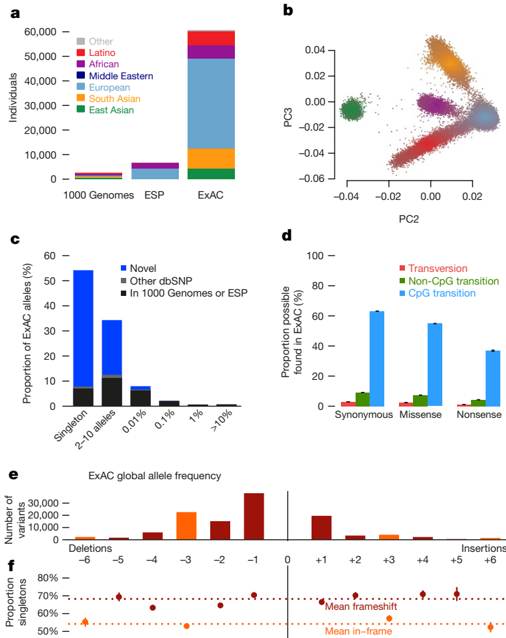
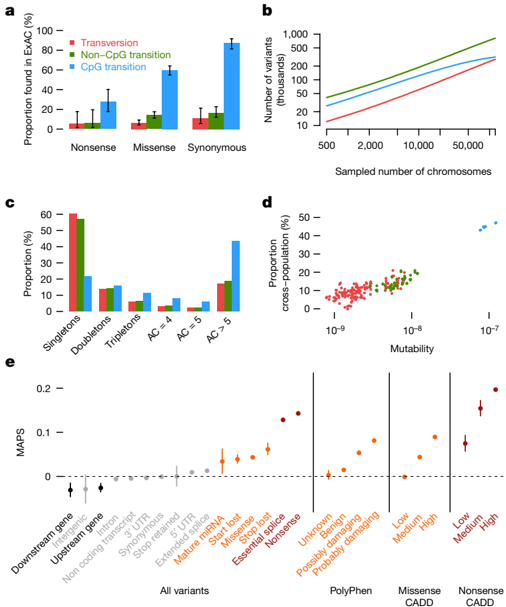
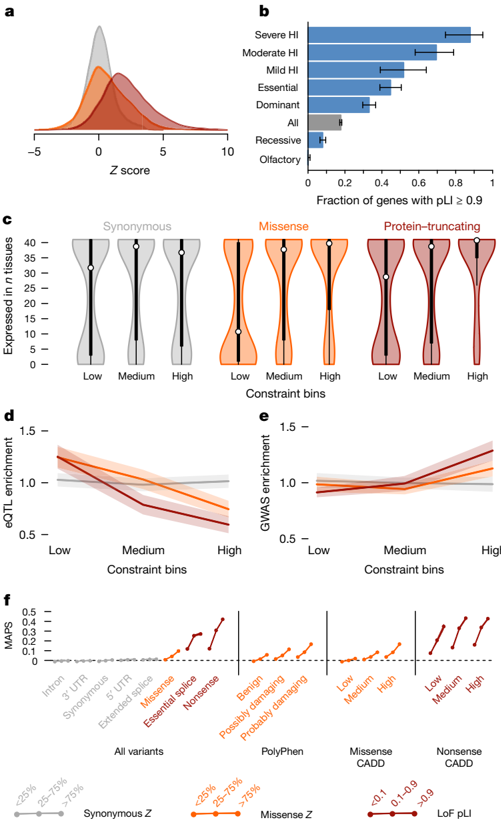
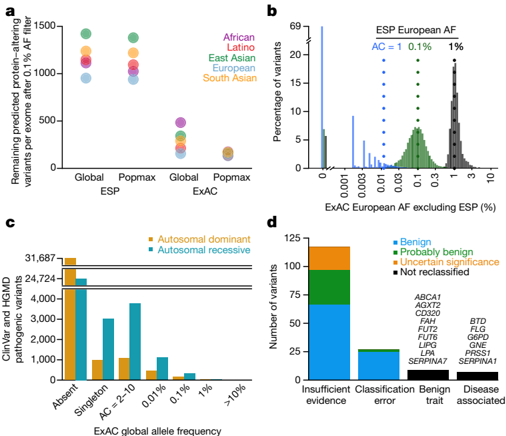
Large-scale reference data sets of human genetic variation are critical for the medical and functional interpretation of DNA sequence changes. Here we describe the aggregation and analysis of high-quality exome (protein-coding region) DNA sequence data for 60,706 individuals of diverse ancestries generated as part of the Exome Aggregation Consortium (ExAC). This catalogue of human genetic diversity contains an average of one variant every eight bases of the exome, and provides direct evidence for the presence of widespread mutational recurrence. We have used this catalogue to calculate objective metrics of pathogenicity for sequence variants, and to identify genes subject to strong selection against various classes of mutation; identifying 3,230 genes with near-complete depletion of predicted protein-truncating variants, with 72% of these genes having no currently established human disease phenotype. Finally, we demonstrate that these data can be used for the efficient filtering of candidate disease-causing variants, and for the discovery of human ‘knockout’ variants in protein-coding genes. Exome sequencing data from 60,706 people of diverse geographic ancestry is presented, providing insight into genetic variation across populations, and illuminating the relationship between DNA variants and human disease. As part of the Exome Aggregation Consortium (ExAC) project, Daniel MacArthur and colleagues report on the generation and analysis of high-quality exome sequencing data from 60,706 individuals of diverse ancestry. This provides the most comprehensive catalogue of human protein-coding genetic variation to date, yielding unprecedented resolution for the analysis of very rare variants across multiple human populations. The catalogue is freely accessible and provides a critical reference panel for the clinical interpretation of genetic variants and the discovery of disease-related genes.
Overview
The claims and statistics of this paper haven’t been checked yet.
Free: it reads the open-access text and checks the first 5 claims that cite a source we can check. Create a free account to check every claim.
Integrity signals
Registry
Cites
Statistics
Figures


Verification
Claims the paper makes
The claims and statistics of this paper haven’t been checked yet.
Free: it reads the open-access text and checks the first 5 claims that cite a source we can check. Create a free account to check every claim.
Claims other papers make about this one
Each is checked against this paper’s own text: does it say what the citing paper says it does?
The source backs part of the claim, not all of it — or backs it for a different population, condition or comparison.
In the citing paper
“Variants in constrained genes (pLI ≥ 0.5)12 explain most of the burden of dnLGD variants and de novo D-mis variants (defined by an MPC score ≥2) in the affected offspring in our study”
From Exome sequencing of 457 autism families recruited online provides evidence for autism risk genes (2019) · cites this paper as [12]
Experimental — accuracy not yet measuredThe source backs part of the claim, not all of it — or backs it for a different population, condition or comparison.
In the citing paper
“Known dominant DD-associated genes are strongly enriched in the minority of genes that exhibit strong selective constraint on heterozygous PTVs7.”
From Evidence for 28 genetic disorders discovered by combining healthcare and research data (2020) · cites this paper as [7]
Experimental — accuracy not yet measuredThe source backs part of the claim, not all of it — or backs it for a different population, condition or comparison.
In the citing paper
“As expected, all ten genes are among the most constrained genes in the genome, with a substantial depletion of PTVs compared to chance expectation24.”
From Rare coding variants in ten genes confer substantial risk for schizophrenia (2022) · cites this paper as [24]
Experimental — accuracy not yet measuredThe source backs part of the claim, not all of it — or backs it for a different population, condition or comparison.
In the citing paper
“In our evolution-focused SNP-h2 enrichment analysis, we detected an overabundance of genic and LoF intolerant loci in both EAS and EUR, suggesting that functionally important regions of the genome contribute to SNP-h2 to a different extent compared to the other annotations tested [10, 33, 40, 44].”
From Denisovan and Neanderthal archaic introgression differentially impacted the genetics of complex traits in modern populations (2022) · cites this paper as [33]
Experimental — accuracy not yet measuredThe source backs part of the claim, not all of it — or backs it for a different population, condition or comparison.
In the citing paper
“In line with previous studies [10, 33], the strongest enrichments in both ancestry groups were observed for annotations related to genic and LoF intolerant regions.”
From Denisovan and Neanderthal archaic introgression differentially impacted the genetics of complex traits in modern populations (2022) · cites this paper as [33]
Experimental — accuracy not yet measured
9 more claims about this paper
Create a free account to see every claim other papers make about this one.
Self-check
Percentages, sums and reported differences re-computed from the paper’s own numbers.
The self-check needs the paper’s full text.
Citations
Cites
Richards, S., Aziz, N., Bale, S., Bick, D., Das, S., Gastier-Foster, J., Grody, W. W., Hegde, M., Lyon, E., Spector, E., et al. (2015) · Genetics in Medicine · doi:10.1038/gim.2015.30 · Cited by 32,594
A global reference for human genetic variation
The 1000 Genomes Project Consortium, authors, C., Auton, A., Abecasis, G. R., Steering committee, Altshuler, D. M., Durbin, R. M., Abecasis, G. R., Bentley, D. R., Chakravarti, A., et al. (2015) · Nature · doi:10.1038/nature15393 · Cited by 18,247
Self-citationA framework for variation discovery and genotyping using next-generation DNA sequencing data
DePristo, M. A., Banks, E., Poplin, R., Garimella, K. V., Maguire, J. R., Hartl, C., Philippakis, A. A., del Angel, G., Rivas, M. A., Hanna, M., et al. (2011) · Nature Genetics · doi:10.1038/ng.806 · Cited by 11,456
Self-citationLethality and centrality in protein networks
Jeong, H., Mason, S. P., Barabási, A.-L., & Oltvai, Z. N. (2001) · Nature · doi:10.1038/35075138 · Cited by 5,287
The Genotype-Tissue Expression (GTEx) pilot analysis: Multitissue gene regulation in humans
The GTEx Consortium, Ardlie, K. G., Deluca, D. S., Segrè, A. V., Sullivan, T. J., Young, T. R., Gelfand, E. T., Trowbridge, C. A., Maller, J. B., Tukiainen, T., et al. (2015) · Science · doi:10.1126/science.1262110 · Cited by 5,062
Self-citationGoh, K.-I., Cusick, M. E., Valle, D., Childs, B., Vidal, M., & Barabási, A.-L. (2007) · Proceedings of the National Academy of Sciences · doi:10.1073/pnas.0701361104 · Cited by 3,242
Inference of human population history from individual whole-genome sequences
Li, H., & Durbin, R. (2011) · Nature · doi:10.1038/nature10231 · Cited by 2,590
Exome sequencing as a tool for Mendelian disease gene discovery
Bamshad, M. J., Ng, S. B., Bigham, A. W., Tabor, H. K., Emond, M. J., Nickerson, D. A., & Shendure, J. (2011) · Nature Reviews Genetics · doi:10.1038/nrg3031 · Cited by 1,673
De novo mutations in schizophrenia implicate synaptic networks
Fromer, M., Pocklington, A. J., Kavanagh, D. H., Williams, H. J., Dwyer, S., Gormley, P., Georgieva, L., Rees, E., Palta, P., Ruderfer, D. M., et al. (2014) · Nature · doi:10.1038/nature12929 · Cited by 1,617
Self-citationEvolution and functional impact of rare coding variation from deep sequencing of human exomes
Tennessen, J. A., Bigham, A. W., O’Connor, T. D., Fu, W., Kenny, E. E., Gravel, S., McGee, S., Do, R., Liu, X., Jun, G., et al. (2012) · Science · doi:10.1126/science.1219240 · Cited by 1,613
Self-citation
Cited by
Items 101–200 of 1,209
The Translational Landscape of the Human Heart
van Heesch, S., Witte, F., Schneider-Lunitz, V., Schulz, J. F., Adami, E., Faber, A. B., Kirchner, M., Maatz, H., Blachut, S., Sandmann, C.-L., et al. (2019) · Cell · doi:10.1016/j.cell.2019.05.010 · Cited by 626
Associations Between Cancer Predisposition Testing Panel Genes and Breast Cancer
Couch, F. J., Shimelis, H., Hu, C., Hart, S. N., Polley, E. C., Na, J., Hallberg, E., Moore, R., Thomas, A., Lilyquist, J., et al. (2017) · JAMA Oncology · doi:10.1001/jamaoncol.2017.0424 · Cited by 611
“However, when considering sequence quality, variant allele frequency, race, and ethnicity, andexcludingknowncancer samples, theExAC-NFEnonTCGA data set offered a reasonable approximation of white population-basedallele frequencies.(24)ExACcontrolshavebeen used to identify genes that predispose to ovarian and prostate…”
Advancements in Next-Generation Sequencing
Levy, S. E., & Myers, R. M. (2016) · Annual Review of Genomics and Human Genetics · doi:10.1146/annurev-genom-083115-022413 · Cited by 599
Structural variation in the sequencing era
Ho, S. S., Urban, A. E., & Mills, R. E. (2020) · Nature Reviews Genetics · doi:10.1038/s41576-019-0180-9 · Cited by 615
Genetics of blood lipids among ∼300,000 multi-ethnic participants of the Million Veteran Program
Global Lipids Genetics Consortium, Klarin, D., Myocardial Infarction Genetics (MIGen) Consortium, The Geisinger-Regeneron DiscovEHR Collaboration, Program, T. V. M. V., Damrauer, S. M., Cho, K., Sun, Y. V., Teslovich, T. M., Honerlaw, J., et al. (2018) · Nature Genetics · doi:10.1038/s41588-018-0222-9 · Cited by 625
Self-citationGenome-wide genetic data on ~500,000 UK Biobank participants
Bycroft, C., Freeman, C., Petkova, D., Band, G., Elliott, L. T., Sharp, K., Motyer, A., Vukcevic, D., Delaneau, O., O’Connell, J., et al. (2017) · bioRxiv (Cold Spring Harbor Laboratory) · doi:10.1101/166298 · Cited by 623
“We compared allele frequencies in the UK Biobank with those estimated from sequencing data sourced from the Exome Aggregation Consortium (ExAC) database [31].”
MethodLanoiselée, H.-M., Nicolas, G., Wallon, D., Rovelet-Lecrux, A., Lacour, M., Rousseau, S., Richard, A.-C., Pasquier, F., Rollin-Sillaire, A., Martinaud, O., et al. (2017) · PLOS Medicine · doi:10.1371/journal.pmed.1002270 · Cited by 616
Evidence for 28 genetic disorders discovered by combining healthcare and research data
Kaplanis, J., Samocha, K. E., Wiel, L., Zhang, Z., Arvai, K. J., Eberhardt, R. Y., Gallone, G., Lelieveld, S. H., Martin, H. C., McRae, J. F., et al. (2020) · Nature · doi:10.1038/s41586-020-2832-5 · Cited by 615
Self-citationZhou, Y., Ingelman‐Sundberg, M., & Lauschke, V. (2017) · Clinical Pharmacology & Therapeutics · doi:10.1002/cpt.690 · Cited by 583
“METHODS Allele frequency data Frequency information of exonic variants was obtained from Exome Aggregation Consortium, which integrated 14 large-scale sequencing efforts encompassing in total sequences of 56,945 unrelated individuals from five major populations, encompassing 33,370 Europeans, 5,203 Africans and Africa…”
MethodInfluentialArendt, T., Stieler, J. T., & Holzer, M. (2016) · Brain Research Bulletin · doi:10.1016/j.brainresbull.2016.08.018 · Cited by 609
Deng, Q., Han, G., Puebla-Osorio, N., Ma, M. C. J., Strati, P., Chasen, B., Dai, E., Dang, M., Jain, N., Yang, H., et al. (2020) · Nature Medicine · doi:10.1038/s41591-020-1061-7 · Cited by 600
Fakhouri, F., Zuber, J., Frémeaux-Bacchi, V., & Loirat, C. (2017) · The Lancet · doi:10.1016/s0140-6736(17)30062-4 · Cited by 571
Genetic diagnosis of Mendelian disorders via RNA sequencing
Kremer, L. S., Bader, D. M., Mertes, C., Kopajtich, R., Pichler, G., Iuso, A., Haack, T. B., Graf, E., Schwarzmayr, T., Terrile, C., et al. (2017) · Nature Communications · doi:10.1038/ncomms15824 · Cited by 590
Hu, C., Hart, S. N., Polley, E. C., Gnanaolivu, R., Shimelis, H., Lee, K. Y., Lilyquist, J., Na, J., Moore, R., Antwi, S. O., et al. (2018) · JAMA · doi:10.1001/jama.2018.6228 · Cited by 577
Biallelic expansion of an intronic repeat in RFC1 is a common cause of late-onset ataxia
Cortese, A., Simone, R., Sullivan, R., Vandrovcova, J., Tariq, H., Yau, W. Y., Humphrey, J., Jaunmuktane, Z., Sivakumar, P., Polke, J., et al. (2019) · Nature Genetics · doi:10.1038/s41588-019-0372-4 · Cited by 575
Strande, N. T., Riggs, E. R., Buchanan, A. H., Ceyhan-Birsoy, O., DiStefano, M., Dwight, S. S., Goldstein, J., Ghosh, R., Seifert, B. A., Sneddon, T. P., et al. (2017) · The American Journal of Human Genetics · doi:10.1016/j.ajhg.2017.04.015 · Cited by 567
Self-citationStessman, H. A. F., Xiong, B., Coe, B. P., Wang, T., Hoekzema, K., Fenckova, M., Kvarnung, M., Gerdts, J., Trinh, S., Cosemans, N., et al. (2017) · Nature Genetics · doi:10.1038/ng.3792 · Cited by 559
“…ASD/ID, we compared our smMIP data to two control datasets: the first included the 2,867 unaffected sibling controls that were sequenced through the same smMIP pipeline (see above), and the second included mutation data from the ExAC database 91 where neuropsychiatric cases were removed (ExAC v0.”
Whole-genome sequencing of patients with rare diseases in a national health system
Turro, E., Astle, W. J., Megy, K., Gräf, S., Greene, D., Shamardina, O., Allen, H. L., Sanchis-Juan, A., Frontini, M., Thys, C., et al. (2020) · Nature · doi:10.1038/s41586-020-2434-2 · Cited by 554
Self-citationGenetic Analysis of 779 Advanced Differentiated and Anaplastic Thyroid Cancers
Pozdeyev, N., Gay, L. M., Sokol, E. S., Hartmaier, R., Deaver, K. E., Davis, S., French, J. D., Borre, P. V., LaBarbera, D. V., Tan, A.-C., et al. (2018) · Clinical Cancer Research · doi:10.1158/1078-0432.ccr-18-0373 · Cited by 533
“(i) Variants reported in any of the eight Exome Aggregation Consortium (11) databases with the frequency of 0.”
BackgroundInfluentialGenomic and phenotypic heterogeneity in prostate cancer
Haffner, M. C., Zwart, W., Roudier, M. P., True, L. D., Nelson, W. G., Epstein, J. I., De Marzo, A. M., Nelson, P. S., & Yegnasubramanian, S. (2021) · Nature Reviews Urology · doi:10.1038/s41585-020-00400-w · Cited by 502
Polak, P., Kim, J., Braunstein, L. Z., Karlic, R., Haradhavala, N. J., Tiao, G., Rosebrock, D., Livitz, D., Kübler, K., Mouw, K. W., et al. (2017) · Nature Genetics · doi:10.1038/ng.3934 · Cited by 531
Self-citationPiercing the dark matter: bioinformatics of long-range sequencing and mapping
Sedlazeck, F. J., Lee, H., Darby, C. A., & Schatz, M. C. (2018) · Nature Reviews Genetics · doi:10.1038/s41576-018-0003-4 · Cited by 530
“This makes it difficult to determine whether an observed SV is common in the general population, which has proved to be one of the most powerful signals for determining whether a variant is pathogenic or carries some other important function 86 .”
BackgroundMandelker, D., Zhang, L., Kemel, Y., Stadler, Z. K., Joseph, V., Zehir, A., Pradhan, N., Arnold, A., Walsh, M. F., Li, Y., et al. (2017) · JAMA · doi:10.1001/jama.2017.11137 · Cited by 511
Cancer Genome Interpreter annotates the biological and clinical relevance of tumor alterations
Tamborero, D., Rubio-Perez, C., Deu-Pons, J., Schroeder, M. P., Vivancos, A., Rovira, A., Tusquets, I., Albanell, J., Rodon, J., Tabernero, J., et al. (2018) · Genome Medicine · doi:10.1186/s13073-018-0531-8 · Cited by 519
“Moreover, we propose that some of these features of interest can be extracted from the analyses of large sequenced cohorts of healthy and tumor tissue [4, 17].”
BackgroundiPSYCH-Broad Autism Group, Weiner, D. J., Psychiatric Genomics Consortium Autism Group, Wigdor, E. M., Ripke, S., Walters, R. K., Kosmicki, J. A., Grove, J., Samocha, K. E., Goldstein, J. I., et al. (2017) · Nature Genetics · doi:10.1038/ng.3863 · Cited by 516
“…more deleterious than those seen in probands with ASD alone. loss-of-function variation (probability of loss-of-function intolerance (pLI) ≥ 0.9) 22 and (ii) uncommon, large ( ≥ 500-kb) deletions that did not contain a constrained gene (referred to hereafter as contributing CNV deletions;…”
InfluentialSelf-citationTiming the Landmark Events in the Evolution of Clear Cell Renal Cell Cancer: TRACERx Renal
Mitchell, T. J., Turajlic, S., Rowan, A., Nicol, D., Farmery, J. H. R., O’Brien, T., Martincorena, I., Tarpey, P., Angelopoulos, N., Yates, L. R., et al. (2018) · Cell · doi:10.1016/j.cell.2018.02.020 · Cited by 513
“…173 , 611–623, April 19, 2018 619 a large number of genes within this region that have been iden-tified as ‘‘essential’’ to cellular survival in in vitro studies (Blomen et al., 2015; Wang et al., 2015) or intolerant of protein-truncating germline mutations in vivo (Lek et al., 2016) (Figure 7H).”
BackgroundThe International Genome Sample Resource (IGSR) collection of open human genomic variation resources
Fairley, S., Lowy-Gallego, E., Perry, E., & Flicek, P. (2020) · Nucleic Acids Research · doi:10.1093/nar/gkz836 · Cited by 495
“breadth of projects, including those with more limited consent, such as gnomAD (12).”
BackgroundAken, B. L., Achuthan, P., Akanni, W., Amode, M. R., Bernsdorff, F., Bhai, J., Billis, K., Carvalho-Silva, D., Cummins, C., Clapham, P., et al. (2017) · Nucleic Acids Research · doi:10.1093/nar/gkw1104 · Cited by 512
Human pluripotent stem cells recurrently acquire and expand dominant negative P53 mutations
Merkle, F. T., Ghosh, S., Kamitaki, N., Mitchell, J., Avior, Y., Mello, C., Kashin, S., Mekhoubad, S., Ilic, D., Charlton, M., et al. (2017) · Nature · doi:10.1038/nature22312 · Cited by 506
“US–UK IRB differences (11) NIH registry (11)”
Self-citationRNA sequence analysis reveals macroscopic somatic clonal expansion across normal tissues
Yizhak, K., Aguet, F., Kim, J., Hess, J. M., Kübler, K., Grimsby, J., Frazer, R., Zhang, H., Haradhvala, N. J., Rosebrock, D., et al. (2019) · Science · doi:10.1126/science.aaw0726 · Cited by 500
Self-citationThe impact of structural variation on human gene expression
GTEx Consortium, Chiang, C., Scott, A. J., Davis, J. R., Tsang, E. K., Li, X., Kim, Y., Hadzic, T., Damani, F. N., Ganel, L., et al. (2017) · Nature Genetics · doi:10.1038/ng.3834 · Cited by 495
“22 –25).”
Characterizing the Major Structural Variant Alleles of the Human Genome
Audano, P. A., Sulovari, A., Graves-Lindsay, T. A., Cantsilieris, S., Sorensen, M., Welch, A. E., Dougherty, M. L., Nelson, B. J., Shah, A., Dutcher, S. K., et al. (2019) · Cell · doi:10.1016/j.cell.2018.12.019 · Cited by 492
Predicting the clinical impact of human mutation with deep neural networks
Sundaram, L., Gao, H., Padigepati, S. R., McRae, J. F., Li, Y., Kosmicki, J. A., Fritzilas, N., Hakenberg, J., Dutta, A., Shon, J., et al. (2018) · Nature Genetics · doi:10.1038/s41588-018-0167-z · Cited by 493
“Moreover, systematic studies identify that many human expert annotations have questionable supporting evidence 6,43 , underscoring the difficulty of interpreting rare variants that may be observed in only a single patient.”
InfluentialSelf-citationThe functional landscape of the human phosphoproteome
Ochoa, D., Jarnuczak, A. F., Viéitez, C., Gehre, M., Soucheray, M., Mateus, A., Kleefeldt, A. A., Hill, A., Garcia-Alonso, L., Stein, F., et al. (2020) · Nature Biotechnology · doi:10.1038/s41587-019-0344-3 · Cited by 491
“We analyzed available information on the allele frequency of variants in natural populations 37 (Fig.”
MethodSelf-citationFrom Big Data to Precision Medicine
Hulsen, T., Jamuar, S. S., Moody, A. R., Karnes, J. H., Varga, O., Hedensted, S., Spreafico, R., Hafler, D. A., & McKinney, E. F. (2019) · Frontiers in Medicine · doi:10.3389/fmed.2019.00034 · Cited by 459
“These databases allow for understanding of genetic variations that are common across different ethnic groups but also identifies variants that are unique within a specific ethnic group (53).”
Porath, B., Gainullin, V. G., Cornec-Le Gall, E., Dillinger, E. K., Heyer, C. M., Hopp, K., Edwards, M. E., Madsen, C. D., Mauritz, S. R., Banks, C. J., et al. (2016) · The American Journal of Human Genetics · doi:10.1016/j.ajhg.2016.05.004 · Cited by 475
AnnotSV: an integrated tool for structural variations annotation
Geoffroy, V., Herenger, Y., Kress, A., Stoetzel, C., Piton, A., Dollfus, H., & Muller, J. (2018) · Bioinformatics · doi:10.1093/bioinformatics/bty304 · Cited by 473
New insights into the generation and role of de novo mutations in health and disease
Acuna-Hidalgo, R., Veltman, J. A., & Hoischen, A. (2016) · Genome Biology · doi:10.1186/s13059-016-1110-1 · Cited by 453
“By contrast, the presence of a mutation in ExAC does not automatically entail that the mutation is not disease causing.”
InfluentialStone, E. M., Andorf, J. L., Whitmore, S. S., DeLuca, A. P., Giacalone, J. C., Streb, L. M., Braun, T. A., Mullins, R. F., Scheetz, T. E., Sheffield, V. C., et al. (2017) · Ophthalmology · doi:10.1016/j.ophtha.2017.04.008 · Cited by 460
BCFtools/csq: haplotype-aware variant consequences
Danecek, P., & McCarthy, S. A. (2017) · Bioinformatics · doi:10.1093/bioinformatics/btx100 · Cited by 468
Carss, K. J., Arno, G., Erwood, M., Stephens, J., Sanchis-Juan, A., Hull, S., Megy, K., Grozeva, D., Dewhurst, E., Malka, S., et al. (2017) · The American Journal of Human Genetics · doi:10.1016/j.ajhg.2016.12.003 · Cited by 463
Kim, M. Y., Yu, K.-R., Kenderian, S. S., Ruella, M., Chen, S., Shin, T.-H., Aljanahi, A. A., Schreeder, D., Klichinsky, M., Shestova, O., et al. (2018) · Cell · doi:10.1016/j.cell.2018.05.013 · Cited by 459
Hunt, S. E., McLaren, W., Gil, L., Thormann, A., Schuilenburg, H., Sheppard, D., Parton, A., Armean, I. M., Trevanion, S. J., Flicek, P., et al. (2018) · Database · doi:10.1093/database/bay119 · Cited by 452
“We therefore provide frequency data from a number of reference sets including the 1000 Genomes Project (20), which sequenced, at low coverage, the full genomes of 2504 individuals from 26 populations and the Genome Aggregation Database (gnomAD) (21), which collected and analysed the exomes of 123 136 individuals, and…”
MethodA clinically applicable integrative molecular classification of meningiomas
Nassiri, F., Liu, J., Patil, V., Mamatjan, Y., Wang, J. Z., Hugh-White, R., Macklin, A. M., Khan, S., Singh, O., Karimi, S., et al. (2021) · Nature · doi:10.1038/s41586-021-03850-3 · Cited by 449
The GenomeAsia 100K Project enables genetic discoveries across Asia
GenomeAsia100K Consortium, Wall, J. D., Stawiski, E. W., Ratan, A., Kim, H. L., Kim, C., Gupta, R., Suryamohan, K., Gusareva, E. S., Purbojati, R. W., et al. (2019) · Nature · doi:10.1038/s41586-019-1793-z · Cited by 456
Self-citationLong-Read Sequencing Emerging in Medical Genetics
Mantere, T., Kersten, S., & Hoischen, A. (2019) · Frontiers in Genetics · doi:10.3389/fgene.2019.00426 · Cited by 440
Symonds, J. D., Zuberi, S. M., Stewart, K., McLellan, A., O‘Regan, M., MacLeod, S., Jollands, A., Joss, S., Kirkpatrick, M., Brunklaus, A., et al. (2019) · Brain · doi:10.1093/brain/awz195 · Cited by 459
“The observation that this variant appears over 400 times in the exome aggregation consortium (ExAC) database (Lek et al., 2016) would initially suggest”
Inherited and de novo genetic risk for autism impacts shared networks
Ruzzo, E. K., Pérez-Cano, L., Jung, J.-Y., Wang, L.-K., Kashef-Haghighi, D., Hartl, C., Singh, C., Xu, J., Hoekstra, J. N., Leventhal, O., et al. (2019) · Cell · doi:10.1016/j.cell.2019.07.015 · Cited by 457
Genome-wide association study identifies 112 new loci for body mass index in the Japanese population
Akiyama, M., Okada, Y., Kanai, M., Takahashi, A., Momozawa, Y., Ikeda, M., Iwata, N., Ikegawa, S., Hirata, M., Matsuda, K., et al. (2017) · Nature Genetics · doi:10.1038/ng.3951 · Cited by 455
Zhou, X., Feliciano, P., Shu, C., Wang, T., Astrovskaya, I., Hall, J. B., Obiajulu, J. U., Wright, J. R., Murali, S. C., Xu, S. X., et al. (2022) · Nature Genetics · doi:10.1038/s41588-022-01148-2 · Cited by 453
Study, S. S., Singh, T., Study, I., Study, D., UK10 K Consortium, Kurki, M. I., Curtis, D., Purcell, S. M., Crooks, L., McRae, J., et al. (2016) · Nature Neuroscience · doi:10.1038/nn.4267 · Cited by 452
Self-citationBreaching Self-Tolerance to Alu Duplex RNA Underlies MDA5-Mediated Inflammation
Ahmad, S., Mu, X., Yang, F., Greenwald, E., Park, J. W., Jacob, E., Zhang, C.-Z., & Hur, S. (2018) · Cell · doi:10.1016/j.cell.2017.12.016 · Cited by 449
“We chose three premature termination variants in the SNP database (Lek et al., 2016): Q230Ter, E627Ter and E773Ter (Figure 1A).”
Study, T. I., Sifrim, A., the UK10K Consortium, Study, T. D. D. D., Hitz, M.-P., Wilsdon, A., Breckpot, J., Turki, S. H. A., Thienpont, B., McRae, J., et al. (2016) · Nature Genetics · doi:10.1038/ng.3627 · Cited by 449
Self-citationReproducible RNA-seq analysis using recount2
Collado-Torres, L., Nellore, A., Kammers, K., Ellis, S. E., Taub, M. A., Hansen, K. D., Jaffe, A. E., Langmead, B., & Leek, J. T. (2017) · Nature Biotechnology · doi:10.1038/nbt.3838 · Cited by 458
Identification of type 2 diabetes loci in 433,540 East Asian individuals
Spracklen, C. N., Horikoshi, M., Kim, Y. J., Lin, K., Bragg, F., Moon, S., Suzuki, K., Tam, C. H. T., Tabara, Y., Kwak, S.-H., et al. (2020) · Nature · doi:10.1038/s41586-020-2263-3 · Cited by 440
Self-citationHigh Rate of Recurrent De Novo Mutations in Developmental and Epileptic Encephalopathies
Hamdan, F. F., Myers, C. T., Cossette, P., Lemay, P., Spiegelman, D., Laporte, A. D., Nassif, C., Diallo, O., Monlong, J., Cadieux-Dion, M., et al. (2017) · The American Journal of Human Genetics · doi:10.1016/j.ajhg.2017.09.008 · Cited by 445
Increased burden of ultra-rare protein-altering variants among 4,877 individuals with schizophrenia
Genovese, G., Fromer, M., Stahl, E. A., Ruderfer, D. M., Chambert, K., Landén, M., Moran, J. L., Purcell, S. M., Sklar, P., Sullivan, P. F., et al. (2016) · Nature Neuroscience · doi:10.1038/nn.4402 · Cited by 444
Self-citationQuantifying prion disease penetrance using large population control cohorts
Minikel, E. V., Vallabh, S. M., Lek, M., Estrada, K., Samocha, K. E., Sathirapongsasuti, J. F., McLean, C. Y., Tung, J. Y., Yu, L. P. C., Gambetti, P., et al. (2016) · Science Translational Medicine · doi:10.1126/scitranslmed.aad5169 · Cited by 442
Self-citationMahajan, A., Wessel, J., Willems, S. M., Zhao, W., Robertson, N. R., Chu, A. Y., Gan, W., Kitajima, H., Taliun, D., Rayner, N. W., et al. (2018) · Nature Genetics · doi:10.1038/s41588-018-0084-1 · Cited by 442
“…functional impact of coding alleles is correlated with (i) variant-spe-cific features, including measures of conservation and predicted impact on protein structure, and (ii) gene-specific features, such as extreme selective constraints as quantified by the intolerance to functional variation 33 .”
InfluentialSelf-citationMeta-analysis of 2,104 trios provides support for 10 new genes for intellectual disability
Lelieveld, S. H., Reijnders, M. R. F., Pfundt, R., Yntema, H. G., Kamsteeg, E.-J., de Vries, P., de Vries, B. B. A., Willemsen, M. H., Kleefstra, T., Löhner, K., et al. (2016) · Nature Neuroscience · doi:10.1038/nn.4352 · Cited by 442
Mungall, C. J., McMurry, J. A., Köhler, S., Balhoff, J. P., Borromeo, C., Brush, M., Carbon, S., Conlin, T., Dunn, N., Engelstad, M., et al. (2017) · Nucleic Acids Research · doi:10.1093/nar/gkw1128 · Cited by 441
“Similarly, of the 72% of the 3230 genes in ExAC with ‘near-complete depletion of predicted protein-truncating variants have no currently established human disease phenotype’ (6), where 88% of these genes without a human phenotype have a phenotype in a non-human organism.”
BackgroundUsing high-resolution variant frequencies to empower clinical genome interpretation
Whiffin, N., Minikel, E., Walsh, R., O’Donnell-Luria, A. H., Karczewski, K., Ing, A. Y., Barton, P. J. R., Funke, B., Cook, S. A., MacArthur, D., et al. (2017) · Genetics in Medicine · doi:10.1038/gim.2017.26 · Cited by 441
Self-citationCreelan, B. C., Wang, C., Teer, J. K., Toloza, E. M., Yao, J., Kim, S., Landin, A. M., Mullinax, J. E., Saller, J. J., Saltos, A. N., et al. (2021) · Nature Medicine · doi:10.1038/s41591-021-01462-y · Cited by 428
Multiplex assessment of protein variant abundance by massively parallel sequencing
Matreyek, K. A., Starita, L. M., Stephany, J. J., Martin, B., Chiasson, M. A., Gray, V. E., Kircher, M., Khechaduri, A., Dines, J. N., Hause, R. J., et al. (2018) · Nature Genetics · doi:10.1038/s41588-018-0122-z · Cited by 436
“However, only ~2% of all presently reported germline missense variants have clinical interpretations 2,3 .”
BackgroundNew insights into genetic susceptibility of COVID-19: an ACE2 and TMPRSS2 polymorphism analysis
Hou, Y., Zhao, J., Martin, W., Kallianpur, A., Chung, M. K., Jehi, L., Sharifi, N., Erzurum, S., Eng, C., & Cheng, F. (2020) · BMC Medicine · doi:10.1186/s12916-020-01673-z · Cited by 438
RNA-binding proteins with prion-like domains in health and disease
Harrison, A. F., & Shorter, J. (2017) · Biochemical Journal · doi:10.1042/bcj20160499 · Cited by 422
Reversal of cytosolic one-carbon flux compensates for loss of the mitochondrial folate pathway
Ducker, G. S., Chen, L., Morscher, R. J., Ghergurovich, J. M., Esposito, M., Teng, X., Kang, Y., & Rabinowitz, J. D. (2016) · Cell Metabolism · doi:10.1016/j.cmet.2016.04.016 · Cited by 419
“We identified this MTHFD1L variant in the ExAC database as a rare allele in the normal population, suggesting that certain individuals harbor heterozygous mutations 8 Cell Metabolism 23, 1–14, June 14, 2016 in MTHFD1L, which may, due to loss of heterozygosity, result in tumors defective in mitochondrial folate metabol…”
InfluentialRibosome Levels Selectively Regulate Translation and Lineage Commitment in Human Hematopoiesis
Khajuria, R. K., Munschauer, M., Ulirsch, J. C., Fiorini, C., Ludwig, L. S., McFarland, S. K., Abdulhay, N. J., Specht, H., Keshishian, H., Mani, D. R., et al. (2018) · Cell · doi:10.1016/j.cell.2018.02.036 · Cited by 416
“3 database, containing allele frequencies from whole exome sequencing for 60,706 unrelated individuals lacking Mendelian pediatric disease, has been used to estimate the probability that any single gene is intolerant to LoF mutations (known as pLI) (Lek et al., 2016).”
BackgroundMethodInfluentialGuillen, K. P., Fujita, M., Butterfield, A. J., Scherer, S. D., Bailey, M. H., Chu, Z., DeRose, Y. S., Zhao, L., Cortes-Sanchez, E., Yang, C.-H., et al. (2022) · Nature Cancer · doi:10.1038/s43018-022-00337-6 · Cited by 416
Accelerating Discovery of Functional Mutant Alleles in Cancer
Chang, M. T., Bhattarai, T. S., Schram, A. M., Bielski, C. M., Donoghue, M. T. A., Jonsson, P., Chakravarty, D., Phillips, S., Kandoth, C., Penson, A., et al. (2018) · Cancer Discovery · doi:10.1158/2159-8290.cd-17-0321 · Cited by 409
“Variants identified by the Exome Aggregation Consortium (ExAC)(30) as having a minor allele frequency greater than 0.”
Turcot, V., Lu, Y., Highland, H. M., Schurmann, C., Justice, A. E., Fine, R. S., Bradfield, J. P., Esko, T., Giri, A., Graff, M., et al. (2018) · Nature Genetics · doi:10.1038/s41588-017-0011-x · Cited by 409
“The ZFHX3 gene is highly intolerant to loss-of-function mutations 51 .”
InfluentialSelf-citationRives, A., Meier, J., Sercu, T., Goyal, S., Lin, Z., Liu, J., Guo, D., Ott, M., Zitnick, C. L., Ma, J., et al. (2019) · doi:10.1101/622803 · Cited by 3,280
“The mutational fitness landscape provides deep insight into biology: determining protein activity (Fowler & Fields, 2014), linking genetic variation to human health (Lek et al., 2016; Bycroft et al., 2018; Karczewski et al., 2019), and enabling for rational protein engineering (Slaymaker et al.”
BackgroundLarge-scale GWAS reveals insights into the genetic architecture of same-sex sexual behavior
Ganna, A., Verweij, K. J. H., Nivard, M. G., Maier, R., Wedow, R., Busch, A. S., Abdellaoui, A., Guo, S., Sathirapongsasuti, J. F., 23andMe Research Team, et al. (2019) · Science · doi:10.1126/science.aat7693 · Cited by 406
“However, we did find that genes near variants associated with samesex sexual behavior are more likely than chance to be highly constrained [having unusually low prevalence of loss-of-function variants, suggesting stronger evolutionary constraint (14, 26)], even after controlling for expression in the brain (table S15).”
BackgroundSelf-citationFate mapping of human glioblastoma reveals an invariant stem cell hierarchy
Lan, X., Jörg, D. J., Cavalli, F. M. G., Richards, L. M., Nguyen, L. V., Vanner, R. J., Guilhamon, P., Lee, L., Kushida, M. M., Pellacani, D., et al. (2017) · Nature · doi:10.1038/nature23666 · Cited by 405
Adler, A., Novelli, V., Amin, A. S., Abiusi, E., Care, M., Nannenberg, E. A., Feilotter, H., Amenta, S., Mazza, D., Bikker, H., et al. (2020) · Circulation · doi:10.1161/circulationaha.119.043132 · Cited by 394
Self-citationWalker, L. C., Hoya, M. D. L., Wiggins, G. A. R., Lindy, A., Vincent, L. M., Parsons, M. T., Canson, D. M., Bis-Brewer, D., Cass, A., Tchourbanov, A., et al. (2023) · The American Journal of Human Genetics · doi:10.1016/j.ajhg.2023.06.002 · Cited by 351
Self-citationReview of Clinical Next-Generation Sequencing
Yohe, S., & Thyagarajan, B. (2017) · Archives of Pathology & Laboratory Medicine · doi:10.5858/arpa.2016-0501-ra · Cited by 370
A guide for the diagnosis of rare and undiagnosed disease: beyond the exome
Marwaha, S., Knowles, J. W., & Ashley, E. A. (2022) · Genome Medicine · doi:10.1186/s13073-022-01026-w · Cited by 359
Wong, M., Mayoh, C., Lau, L. M. S., Khuong-Quang, D.-A., Pinese, M., Kumar, A., Barahona, P., Wilkie, E. E., Sullivan, P., Bowen-James, R., et al. (2020) · Nature Medicine · doi:10.1038/s41591-020-1072-4 · Cited by 393
Self-citationPrioritizing diversity in human genomics research
Hindorff, L. A., Bonham, V. L., Brody, L. C., Ginoza, M. E. C., Hutter, C. M., Manolio, T. A., & Green, E. D. (2018) · Nature Reviews Genetics · doi:10.1038/nrg.2017.89 · Cited by 386
Bouchard, J. J., Otero, J. H., Scott, D. C., Szulc, E., Martin, E. W., Sabri, N., Granata, D., Marzahn, M. R., Lindorff-Larsen, K., Salvatella, X., et al. (2018) · Molecular Cell · doi:10.1016/j.molcel.2018.08.027 · Cited by 391
Harnessing genomic information for livestock improvement
Georges, M., Charlier, C., & Hayes, B. (2019) · Nature Reviews Genetics · doi:10.1038/s41576-018-0082-2 · Cited by 384
Castro, E., Romero-Laorden, N., del Pozo, A., Lozano, R., Medina, A., Puente, J., Piulats, J. M., Lorente, D., Saez, M. I., Morales-Barrera, R., et al. (2019) · Journal of Clinical Oncology · doi:10.1200/jco.18.00358 · Cited by 377
Innovations present in the primate interneuron repertoire
Krienen, F. M., Goldman, M., Zhang, Q., C. H. del Rosario, R., Florio, M., Machold, R., Saunders, A., Levandowski, K., Zaniewski, H., Schuman, B., et al. (2020) · Nature · doi:10.1038/s41586-020-2781-z · Cited by 381
Self-citationMutation of the Human Circadian Clock Gene CRY1 in Familial Delayed Sleep Phase Disorder
Patke, A., Murphy, P. J., Onat, O. E., Krieger, A. C., Özçelik, T., Campbell, S. S., & Young, M. W. (2017) · Cell · doi:10.1016/j.cell.2017.03.027 · Cited by 381
“…< 0.01 in the 1000 Genomes combined population using Ensembl Variant Effect Predictor (McLaren et al., 2016) or in the ExAC total population (Lek et al., 2016); (2) to include only variants at a site with gerp score > 2.0 or a nonsynonymous change with PolyPhen score > 0.40 (PolyPhen-2 v2.”
MethodInfluentialVariant interpretation: functional assays to the rescue
Starita, L. M., Ahituv, N., Dunham, M. J., Kitzman, J. O., Roth, F. P., Seelig, G., Shendure, J., & Fowler, D. M. (2017) · The American Journal of Human Genetics · doi:10.1016/j.ajhg.2017.07.014 · Cited by 381
Identification of rare sequence variation underlying heritable pulmonary arterial hypertension
Gräf, S., Haimel, M., Bleda, M., Hadinnapola, C., Southgate, L., Li, W., Hodgson, J., Liu, B., Salmon, R. M., Southwood, M., et al. (2018) · Nature Communications · doi:10.1038/s41467-018-03672-4 · Cited by 380
Athanasiou, D., Aguila, M., Bellingham, J., Li, W., McCulley, C., Reeves, P. J., & Cheetham, M. E. (2018) · Progress in Retinal and Eye Research · doi:10.1016/j.preteyeres.2017.10.002 · Cited by 373
A comparative genomics multitool for scientific discovery and conservation
Zoonomia Consortium, Genereux, D. P., Serres, A., Armstrong, J., Johnson, J., Marinescu, V. D., Murén, E., Juan, D., Bejerano, G., Casewell, N. R., et al. (2020) · Nature · doi:10.1038/s41586-020-2876-6 · Cited by 373
Kelly, M. A., Caleshu, C., Morales, A., Buchan, J., Wolf, Z., Harrison, S. M., Cook, S., Dillon, M. W., Garcia, J., Haverfield, E., et al. (2018) · Genetics in Medicine · doi:10.1038/gim.2017.218 · Cited by 364
“The ExAC database (http://exac.broadinstitute.org/ 22 ) provides a metric to express the deviation of variant counts from the expected number (constraint score).”
Self-citationInnovations in Primate Interneuron Repertoire
Krienen, F. M., Goldman, M., Zhang, Q., del Rosario, R., Florio, M., Machold, R., Saunders, A., Levandowski, K., Zaniewski, H., Schuman, B., et al. (2019) · doi:10.1101/709501 · Cited by 372
Self-citationGenome-wide analysis of dental caries and periodontitis combining clinical and self-reported data
Shungin, D., Haworth, S., Divaris, K., Agler, C. S., Kamatani, Y., Keun Lee, M., Grinde, K., Hindy, G., Alaraudanjoki, V., Pesonen, P., et al. (2019) · Nature Communications · doi:10.1038/s41467-019-10630-1 · Cited by 364
High-depth African genomes inform human migration and health
Choudhury, A., Aron, S., Botigué, L. R., Sengupta, D., Botha, G., Bensellak, T., Wells, G., Kumuthini, J., Shriner, D., Fakim, Y. J., et al. (2020) · Nature · doi:10.1038/s41586-020-2859-7 · Cited by 355
Leukocidins: staphylococcal bi-component pore-forming toxins find their receptors
Spaan, A. N., van Strijp, J. A. G., & Torres, V. J. (2017) · Nature Reviews Microbiology · doi:10.1038/nrmicro.2017.27 · Cited by 347
The impact of rare and low-frequency genetic variants in common disease
Bomba, L., Walter, K., & Soranzo, N. (2017) · Genome Biology · doi:10.1186/s13059-017-1212-4 · Cited by 344
“The data set of 60,706 individuals collated by the Exome Aggregation Consortium (ExAC) can assist in filtering of candidate disease-causing variants and in the discovery of human “knockout” variants in proteincoding genes [119].”
MethodComputational pan-genomics: status, promises and challenges
(2016) · Briefings in Bioinformatics · doi:10.1093/bib/bbw089 · Cited by 287
Titin-truncating variants affect heart function in disease cohorts and the general population
Schafer, S., de Marvao, A., Adami, E., Fiedler, L. R., Ng, B., Khin, E., Rackham, O. J. L., van Heesch, S., Pua, C. J., Kui, M., et al. (2017) · Nature Genetics · doi:10.1038/ng.3719 · Cited by 362
“This may explain why hemodynamic stress associated with pregnancy or possibly a second genetic factor may uncover TTNtv effects 43 .”
InfluentialSelf-citationStructural variations in human ACE2 may influence its binding with SARS‐CoV‐2 spike protein
Hussain, M., Jabeen, N., Raza, F., Shabbir, S., Baig, A. A., Amanullah, A., & Aziz, B. (2020) · Journal of Medical Virology · doi:10.1002/jmv.25832 · Cited by 354
Personalized Medicine and the Power of Electronic Health Records
Abul-Husn, N. S., & Kenny, E. E. (2019) · Cell · doi:10.1016/j.cell.2019.02.039 · Cited by 355
“Other technical hurdles will be overcome as the scientific community moves toward pan-ethnic reference genomes, large databases of publicly available population-scale variants (Lek et al., 2016), and deepening clinical genetic databases (Landrum et al., 2014; Rehm et al., 2015).”
BackgroundNoninvasive Early Identification of Therapeutic Benefit from Immune Checkpoint Inhibition
Nabet, B. Y., Esfahani, M. S., Moding, E. J., Hamilton, E. G., Chabon, J. J., Rizvi, H., Steen, C. B., Chaudhuri, A. A., Liu, C. L., Hui, A. B., et al. (2020) · Cell · doi:10.1016/j.cell.2020.09.001 · Cited by 347
“05% of samples in the Genome Aggregation Database (Lek et al., 2016).”
Influential
Metadata
- Authors
- Exome Aggregation Consortium, Lek, M., Karczewski, K. J., Minikel, E. V., Samocha, K. E., Banks, E., Fennell, T., O’Donnell-Luria, A. H., Ware, J. S., Hill, A. J., Cummings, B. B., Tukiainen, T., Birnbaum, D. P., Kosmicki, J. A., Duncan, L. E., Estrada, K., Zhao, F., Zou, J., Pierce-Hoffman, E., Berghout, J., Cooper, D. N., Deflaux, N., DePristo, M., Do, R., Flannick, J., Fromer, M., Gauthier, L., Goldstein, J., Gupta, N., Howrigan, D., Kiezun, A., Kurki, M. I., Moonshine, A. L., Natarajan, P., Orozco, L., Peloso, G. M., Poplin, R., Rivas, M. A., Ruano-Rubio, V., Rose, S. A., Ruderfer, D. M., Shakir, K., Stenson, P. D., Stevens, C., Thomas, B. P., Tiao, G., Tusie-Luna, M. T., Weisburd, B., Won, H.-H., Yu, D., Altshuler, D. M., Ardissino, D., Boehnke, M., Danesh, J., Donnelly, S., Elosua, R., Florez, J. C., Gabriel, S. B., Getz, G., Glatt, S. J., Hultman, C. M., Kathiresan, S., Laakso, M., McCarroll, S., McCarthy, M. I., McGovern, D., McPherson, R., Neale, B. M., Palotie, A., Purcell, S. M., Saleheen, D., Scharf, J. M., Sklar, P., Sullivan, P. F., Tuomilehto, J., Tsuang, M. T., Watkins, H. C., Wilson, J. G., Daly, M. J., & MacArthur, D. G.
- Affiliations
- Broad Institute (US)
- University of Arizona (US)
- Cardiff University (GB)
- Google (United States) (US)
- Icahn School of Medicine at Mount Sinai (US)
- National Institute of Genomic Medicine (MX)
- Instituto Nacional de Ciencias Médicas y Nutrición Salvador Zubirán (MX)
- Samsung Medical Center (KR)
- University of Michigan (US)
- University of Cambridge (GB)
- SUNY Upstate Medical University (US)
- Karolinska Institutet (SE)
- University of Eastern Finland (FI)
- Centre for Human Genetics (GB)
- Cedars-Sinai Medical Center (US)
- Ottawa Heart Institute (CA)
- Center for Non-Communicable Diseases (PK)
- University of North Carolina at Chapel Hill (US)
- University of Helsinki (FI)
- University of California San Diego (US)
- University of Mississippi Medical Center (US)
- Corresponding author
- MacArthur, Daniel G.
- ORCID
- Lek, Monkol
- Karczewski, Konrad J.
- Minikel, Eric V.
- Samocha, Kaitlin E.
- Banks, Eric
- Ware, James S.
- Cummings, Beryl B.
- Tukiainen, Taru
- Kosmicki, Jack A.
- Duncan, Laramie E.
- Estrada, Karol
- Zhao, Fengmei
- Zou, James
- Berghout, Joanne
- Cooper, David N.
- Deflaux, Nicole
- Do, Ron
- Flannick, Jason
- Fromer, Menachem
- Gupta, Namrata
- Howrigan, Daniel
- Kurki, Mitja I.
- Natarajan, Pradeep
- Orozco, Lorena
- Peloso, Gina M.
- Rivas, Manuel A.
- Rose, Samuel A.
- Ruderfer, Douglas M.
- Stevens, Christine
- Tiao, Grace
- Weisburd, Ben
- Won, Hong-Hee
- Yu, Dongmei
- Altshuler, David M.
- Ardissino, Diego
- Boehnke, Michael
- Danesh, John
- Donnelly, Stacey
- Gabriel, Stacey B.
- Getz, Gad
- Glatt, Stephen J.
- Hultman, Christina M.
- Kathiresan, Sekar
- Laakso, Markku
- McCarroll, Steven
- McCarthy, Mark I.
- McGovern, Dermot
- McPherson, Ruth
- Neale, Benjamin M.
- Palotie, Aarno
- Purcell, Shaun M.
- Saleheen, Danish
- Scharf, Jeremiah M.
- Sklar, Pamela
- Sullivan, Patrick F.
- Tuomilehto, Jaakko
- Tsuang, Ming T.
- Watkins, Hugh C.
- Wilson, James G.
- Daly, Mark J.
- MacArthur, Daniel G.
- Venue
- Nature
- Published
- 2016-08
- Volume
- 536
- Issue
- 7616
- Pages
- 285-291
- ISSN
- 0028-0836 (ISSN-L)
- 1476-4687
- PMC
- PMC5018207
- OpenAlex
- W2256016639
- Semantic Scholar
- 6509e32048b95c233cca1fd9e40cb9cbcacf2bfd
- Cited by
- 9,587
- References
- 41
- Citations by year
- 2026: 196 · 2025: 344 · 2024: 516 · 2023: 538 · 2022: 674 · 2021: 955 · 2020: 1390 · 2019: 1717 · 2018: 1664 · 2017: 1235 · 2016: 340
- FWCI
- 1334.22
- Type
- journal article
- Language
- en
- Open access
- hybrid
- doi.org
- Licence
- cc-by
- creativecommons.org/licenses/by/4.0 (tdm)
- Locations
- Nature (publishedVersion, cc-by)
- bioRxiv (Cold Spring Harbor Laboratory) (acceptedVersion, cc-by-nd)
- PubMed (publishedVersion)
- VU Research Portal (publishedVersion, other-oa)
- ORCA Online Research @Cardiff (Cardiff University) (acceptedVersion)
- PubMed Central (acceptedVersion)
- Apollo (University of Cambridge) (submittedVersion, cc-by)
- Digital Access to Scholarship at Harvard (DASH) (Harvard University) (submittedVersion, cc-by)
- RePEc: Research Papers in Economics (submittedVersion)
- eScholarship (California Digital Library) (submittedVersion)
- eScholarship (California Digital Library) (submittedVersion, cc-by)
- Työväentutkimus Vuosikirja (submittedVersion)
- The Mouseion at the JAXlibrary (Jackson Laboratory) (submittedVersion)
- Spiral (Imperial College London) (submittedVersion, cc-by)
- Data Archiving and Networked Services (DANS) (submittedVersion, other-oa)
- Apollo (cc-by)
- Funders
- ACMG Foundation for Genetic and Genomic Medicine
- Wellcome Trust (090367, 098381, 090532, 107469/Z/15/Z)
- National Institute for Health and Care Research (NF-SI-0507-10228, NF-SI-0611-10099, NF-SI-0611-10219, NF-SI-0514-10027, NF-SI-0513-10087)
- British Heart Foundation (FS/14/55/30806, CH/12/2/29428, RG/13/13/30194, RG/16/4/32218)
- European Commission (279143, 279233)
- Cambridge University Hospitals (3819-1516-29, BRC 2012-2017, 3819-1617-25, 146281)
- National Institutes of Health (5rc2dk088389-02, 5u01mh094432-04)
- U.S. Public Health Service (NIMHRC2MH089905)
- Pfizer Foundation
- Canadian Institutes of Health Research (MOP--82810, #MOP77682, MOP136936)
- Medical Research Council (MR/L003120/1, MR/L010305/1)
- National Health and Medical Research Council
- National Medical Research Council
- National Institute on Aging (P30AG038072)
- National Heart, Lung, and Blood Institute (HHSN268201300050C, HHSN268201300046C, R01HL024799, HHSN268201300048C, HHSN268201300049C, K01HL125751, HHSN268201300047C, R01HL24799, R01HL107816, T32HL007208)
- National Institute of Mental Health (R01MH077139, R01MH085521, U01 MH094432, MH094421, MH095034, P50MH066392, R01MH085560, RC2MH089905, U01MH094421, R01MH095034, MH077139, MH089905)
- National Human Genome Research Institute (U54HG003067, U41HG000330)
- National Institute of General Medical Sciences (F32GM115208, R01GM104371)
- National Institute of Diabetes and Digestive and Kidney Diseases (U01DK085526, U01DK085584, DK098032, U01DK085501, U01DK062370, U01DK085524, DK085545, RC2-DK088389, U01DK085545, 1RC2DK088389, DK088389, RC2F DK088389, R01DK098032, U54DK105566, P30DK020572, P30DK043351, R01DK062370)
- National Institute of Neurological Disorders and Stroke (U01 NS40024-09S1, K02NS085048, NS40024-09S1, U01NS040024, NS085048)
- Topics
- Life Sciences › Biochemistry, Genetics and Molecular Biology › Genetics › Genomics and Rare Diseases
- Life Sciences › Biochemistry, Genetics and Molecular Biology › Genetics › Genetic Associations and Epidemiology
- Life Sciences › Biochemistry, Genetics and Molecular Biology › Molecular Biology › Genomics and Phylogenetic Studies
- Keywords
- human genetic variation, ExAC, exome sequencing, rare variants, variant pathogenicity, truncating mutations, purifying selection, population genetic variation
- MeSH terms
- DNA Mutational Analysis, Humans, Phenotype, Genetic Variation, Sample Size, Proteome, Rare Diseases, Exome, Datasets as Topic
About these checks
Registry, retraction, Cites and statistics results are computed, not judged, with one exception: a printed reference that no index lists is read once by a model before it counts as a citation error. Claims are extracted by a model and kept only when their quote appears verbatim in the text; each cited source is then checked, with a model’s help, for whether it says what the claim relies on. Those verdicts can be wrong — read the claim’s quote and the cited source before relying on one.
Statistics and arithmetic are recomputed, not judged.
Confidence bands are shown only for fields calibrated on our annotated test set. None is calibrated yet, so no band is shown.
What counts as a claim ›How we measure confidence ›How we check this ›
Are you an author, or do you see a problem with this page? Request a review
Data sources
Bibliographic data: Semantic Scholar, OpenAlex, Crossref.
Contains information from the Semantic Scholar Academic Graph Datasets, made available under the ODC Attribution License (ODC-BY 1.0).
Semantic Scholar’s data is described in: Kinney, R., et al. (2023). The Semantic Scholar Open Data Platform. arXiv:2301.10140.
