

Analysis of protein-coding genetic variation in 60,706 humans
Open accessPublished version of a preprint
The DOI matches its Crossref record; 44 of the 44 references it cites were found in a registry or an index.
Abstract
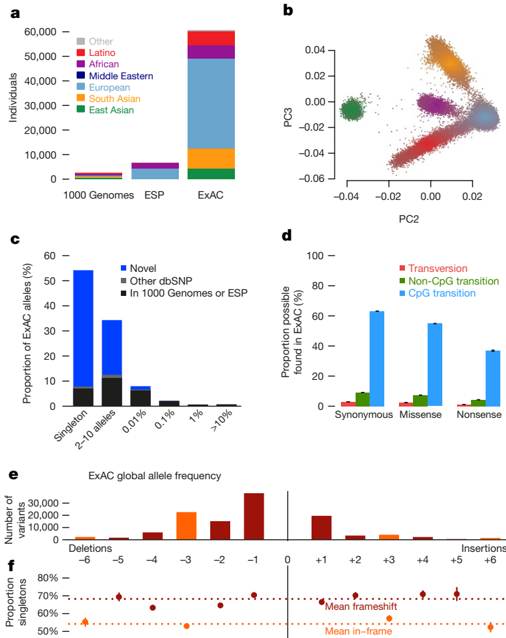
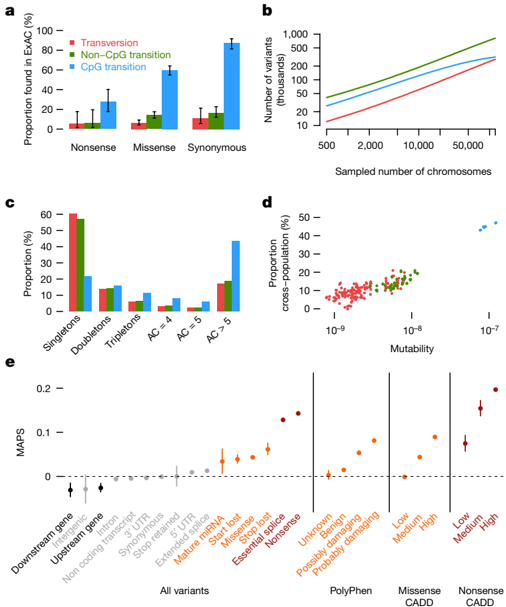
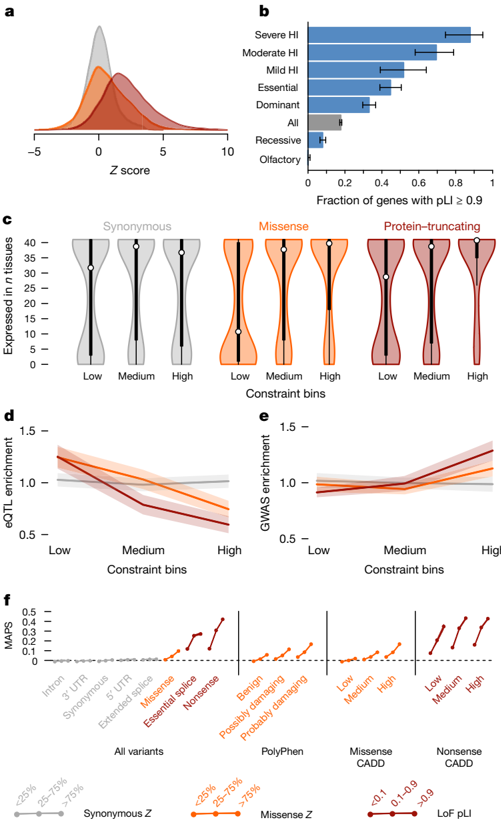
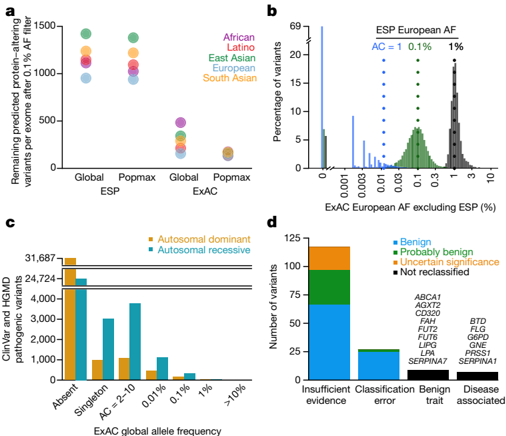
Large-scale reference data sets of human genetic variation are critical for the medical and functional interpretation of DNA sequence changes. Here we describe the aggregation and analysis of high-quality exome (protein-coding region) DNA sequence data for 60,706 individuals of diverse ancestries generated as part of the Exome Aggregation Consortium (ExAC). This catalogue of human genetic diversity contains an average of one variant every eight bases of the exome, and provides direct evidence for the presence of widespread mutational recurrence. We have used this catalogue to calculate objective metrics of pathogenicity for sequence variants, and to identify genes subject to strong selection against various classes of mutation; identifying 3,230 genes with near-complete depletion of predicted protein-truncating variants, with 72% of these genes having no currently established human disease phenotype. Finally, we demonstrate that these data can be used for the efficient filtering of candidate disease-causing variants, and for the discovery of human ‘knockout’ variants in protein-coding genes. Exome sequencing data from 60,706 people of diverse geographic ancestry is presented, providing insight into genetic variation across populations, and illuminating the relationship between DNA variants and human disease. As part of the Exome Aggregation Consortium (ExAC) project, Daniel MacArthur and colleagues report on the generation and analysis of high-quality exome sequencing data from 60,706 individuals of diverse ancestry. This provides the most comprehensive catalogue of human protein-coding genetic variation to date, yielding unprecedented resolution for the analysis of very rare variants across multiple human populations. The catalogue is freely accessible and provides a critical reference panel for the clinical interpretation of genetic variants and the discovery of disease-related genes.
Overview
The claims and statistics of this paper haven’t been checked yet.
Free: it reads the open-access text and checks the first 5 claims that cite a source we can check. Create a free account to check every claim.
Integrity signals
Registry
Cites
Statistics
Figures


Verification
Claims the paper makes
The claims and statistics of this paper haven’t been checked yet.
Free: it reads the open-access text and checks the first 5 claims that cite a source we can check. Create a free account to check every claim.
Claims other papers make about this one
Each is checked against this paper’s own text: does it say what the citing paper says it does?
The source backs part of the claim, not all of it — or backs it for a different population, condition or comparison.
In the citing paper
“Variants in constrained genes (pLI ≥ 0.5)12 explain most of the burden of dnLGD variants and de novo D-mis variants (defined by an MPC score ≥2) in the affected offspring in our study”
From Exome sequencing of 457 autism families recruited online provides evidence for autism risk genes (2019) · cites this paper as [12]
Experimental — accuracy not yet measuredThe source backs part of the claim, not all of it — or backs it for a different population, condition or comparison.
In the citing paper
“Known dominant DD-associated genes are strongly enriched in the minority of genes that exhibit strong selective constraint on heterozygous PTVs7.”
From Evidence for 28 genetic disorders discovered by combining healthcare and research data (2020) · cites this paper as [7]
Experimental — accuracy not yet measuredThe source backs part of the claim, not all of it — or backs it for a different population, condition or comparison.
In the citing paper
“As expected, all ten genes are among the most constrained genes in the genome, with a substantial depletion of PTVs compared to chance expectation24.”
From Rare coding variants in ten genes confer substantial risk for schizophrenia (2022) · cites this paper as [24]
Experimental — accuracy not yet measuredThe source backs part of the claim, not all of it — or backs it for a different population, condition or comparison.
In the citing paper
“In our evolution-focused SNP-h2 enrichment analysis, we detected an overabundance of genic and LoF intolerant loci in both EAS and EUR, suggesting that functionally important regions of the genome contribute to SNP-h2 to a different extent compared to the other annotations tested [10, 33, 40, 44].”
From Denisovan and Neanderthal archaic introgression differentially impacted the genetics of complex traits in modern populations (2022) · cites this paper as [33]
Experimental — accuracy not yet measuredThe source backs part of the claim, not all of it — or backs it for a different population, condition or comparison.
In the citing paper
“In line with previous studies [10, 33], the strongest enrichments in both ancestry groups were observed for annotations related to genic and LoF intolerant regions.”
From Denisovan and Neanderthal archaic introgression differentially impacted the genetics of complex traits in modern populations (2022) · cites this paper as [33]
Experimental — accuracy not yet measured
9 more claims about this paper
Create a free account to see every claim other papers make about this one.
Self-check
Percentages, sums and reported differences re-computed from the paper’s own numbers.
The self-check needs the paper’s full text.
Citations
Cites
Richards, S., Aziz, N., Bale, S., Bick, D., Das, S., Gastier-Foster, J., Grody, W. W., Hegde, M., Lyon, E., Spector, E., et al. (2015) · Genetics in Medicine · doi:10.1038/gim.2015.30 · Cited by 32,594
A global reference for human genetic variation
The 1000 Genomes Project Consortium, authors, C., Auton, A., Abecasis, G. R., Steering committee, Altshuler, D. M., Durbin, R. M., Abecasis, G. R., Bentley, D. R., Chakravarti, A., et al. (2015) · Nature · doi:10.1038/nature15393 · Cited by 18,247
Self-citationA framework for variation discovery and genotyping using next-generation DNA sequencing data
DePristo, M. A., Banks, E., Poplin, R., Garimella, K. V., Maguire, J. R., Hartl, C., Philippakis, A. A., del Angel, G., Rivas, M. A., Hanna, M., et al. (2011) · Nature Genetics · doi:10.1038/ng.806 · Cited by 11,456
Self-citationLethality and centrality in protein networks
Jeong, H., Mason, S. P., Barabási, A.-L., & Oltvai, Z. N. (2001) · Nature · doi:10.1038/35075138 · Cited by 5,287
The Genotype-Tissue Expression (GTEx) pilot analysis: Multitissue gene regulation in humans
The GTEx Consortium, Ardlie, K. G., Deluca, D. S., Segrè, A. V., Sullivan, T. J., Young, T. R., Gelfand, E. T., Trowbridge, C. A., Maller, J. B., Tukiainen, T., et al. (2015) · Science · doi:10.1126/science.1262110 · Cited by 5,062
Self-citationGoh, K.-I., Cusick, M. E., Valle, D., Childs, B., Vidal, M., & Barabási, A.-L. (2007) · Proceedings of the National Academy of Sciences · doi:10.1073/pnas.0701361104 · Cited by 3,242
Inference of human population history from individual whole-genome sequences
Li, H., & Durbin, R. (2011) · Nature · doi:10.1038/nature10231 · Cited by 2,590
Exome sequencing as a tool for Mendelian disease gene discovery
Bamshad, M. J., Ng, S. B., Bigham, A. W., Tabor, H. K., Emond, M. J., Nickerson, D. A., & Shendure, J. (2011) · Nature Reviews Genetics · doi:10.1038/nrg3031 · Cited by 1,673
De novo mutations in schizophrenia implicate synaptic networks
Fromer, M., Pocklington, A. J., Kavanagh, D. H., Williams, H. J., Dwyer, S., Gormley, P., Georgieva, L., Rees, E., Palta, P., Ruderfer, D. M., et al. (2014) · Nature · doi:10.1038/nature12929 · Cited by 1,617
Self-citationEvolution and functional impact of rare coding variation from deep sequencing of human exomes
Tennessen, J. A., Bigham, A. W., O’Connor, T. D., Fu, W., Kenny, E. E., Gravel, S., McGee, S., Do, R., Liu, X., Jun, G., et al. (2012) · Science · doi:10.1126/science.1219240 · Cited by 1,613
Self-citation
Cited by
Items 701–800 of 1,209
Werling, D. M., Pochareddy, S., Choi, J., An, J.-Y., Sheppard, B., Peng, M., Li, Z., Dastmalchi, C., Santpere, G., Sousa, A. M. M., et al. (2020) · Cell Reports · doi:10.1016/j.celrep.2020.03.053 · Cited by 144
“To identify the rarest variants, which have the potential to mediate the highest effects, we defined rare for PTVs as never observed in 15,708 individuals with WGS in the Genome Aggregation Database (GnomAD; (Lek et al., 2016) or in 3,804 unrelated samples with WGS data from the Simons Simplex Collection (SSC) and, fo…”
InfluentialChiou, S.-H., Tseng, D., Reuben, A., Mallajosyula, V., Molina, I. S., Conley, S., Wilhelmy, J., McSween, A. M., Yang, X., Nishimiya, D., et al. (2021) · Immunity · doi:10.1016/j.immuni.2021.02.014 · Cited by 133
DOMINO: Using Machine Learning to Predict Genes Associated with Dominant Disorders
Quinodoz, M., Royer‐Bertrand, B., Cisarova, K. V., Gioia, S. A. D., Superti‐Furga, A., & Rivolta, C. (2017) · The American Journal of Human Genetics · doi:10.1016/j.ajhg.2017.09.001 · Cited by 138
“related to the global variation landscape in the human population, as identified in the ExAC project.(20) Another intriguing result emerging from the selection of features is the fact that few AD genes have a long mRNA half-life.”
BackgroundBi-allelic Recessive Loss-of-Function Variants in FANCM Cause Non-obstructive Azoospermia
Kasak, L., Punab, M., Nagirnaja, L., Grigorova, M., Minajeva, A., Lopes, A. M., Punab, A. M., Aston, K. I., Carvalho, F., Laasik, E., et al. (2018) · The American Journal of Human Genetics · doi:10.1016/j.ajhg.2018.07.005 · Cited by 137
Bombard, Y., Brothers, K. B., Fitzgerald‐Butt, S. M., Garrison, N. A., Jamal, L., James, C. A., Jarvik, G. P., McCormick, J. B., Nelson, T. N., Ormond, K. E., et al. (2019) · The American Journal of Human Genetics · doi:10.1016/j.ajhg.2019.02.025 · Cited by 135
The genetic landscape of the human solute carrier (SLC) transporter superfamily
Schaller, L., & Lauschke, V. M. (2019) · Human Genetics · doi:10.1007/s00439-019-02081-x · Cited by 138
Huber, C. D., Kim, B. Y., & Lohmueller, K. E. (2020) · PLOS Genetics · doi:10.1371/journal.pgen.1008827 · Cited by 127
“Second, because GERP is less effective when there is functional turnover, and at distinguishing weak selection from strong selection, improvement can be made by using polymorphism-based measures of purifying selection (Lek et al. 2016; Karczewski et al. 2019; Huang, Gulko, and Siepel 2017; Lawrie and Petrov 2014; Sch…”
Pedersen, B. S., Bhetariya, P. J., Brown, J., Kravitz, S. N., Marth, G., Jensen, R. L., Bronner, M. P., Underhill, H. R., & Quinlan, A. R. (2020) · Genome Medicine · doi:10.1186/s13073-020-00761-2 · Cited by 133
Causal Genetic Variants in Stillbirth
Stanley, K. E., Giordano, J. L., Thorsten, V., Buchovecky, C. M., Thomas‐Wilson, A., Ganapathi, M., Liao, J., Dharmadhikari, A. V., Revah‐Politi, A., Ernst, M. E., et al. (2020) · New England Journal of Medicine · doi:10.1056/nejmoa1908753 · Cited by 148
Rodin, R. E., Dou, Y., Kwon, M., Sherman, M. A., D’Gama, A. M., Doan, R. N., Rento, L. M., Girskis, K. M., Bohrson, C. L., Kim, S. N., et al. (2021) · Nature Neuroscience · doi:10.1038/s41593-020-00765-6 · Cited by 124
Loss of tubulin deglutamylase CCP1 causes infantile‐onset neurodegeneration
Shashi, V., Magiera, M. M., Klein, D., Zaki, M., Schoch, K., Rudnik‐Schöneborn, S., Norman, A., Lopes Abath Neto, O., Dusl, M., Yuan, X., et al. (2018) · The EMBO Journal · doi:10.15252/embj.2018100540 · Cited by 133
“The Genome Aggregation Database (gnomAD) spanning exomes of 123,136 unrelated individuals (Lek et al , 2016) contained 98 CCP1 variants annotated as loss-of-function or missense with a predicted functional impact (according to PolyPhen-2; Adzhubei et al , 2010) at least as deleterious as the…”
InfluentialZhao, X., Collins, R. L., Lee, W.-P., Weber, A. M., Jun, Y., Zhu, Q., Weisburd, B., Huang, Y., Audano, P. A., Wang, H., et al. (2021) · The American Journal of Human Genetics · doi:10.1016/j.ajhg.2021.03.014 · Cited by 132
“‘‘Constrained’’ refers to genes and exons with pLI > 0.9, 21 and ‘‘OMIM genes’’ includes a curated list of autosomal dominant genes that were defined in both Berg et al. 22 and Blekhman et al. 23 Gb, gigabase; Mb, megabase.”
BackgroundInfluentialSelf-citationKuentz, P., St‐Onge, J., Duffourd, Y., Courcet, J., Carmignac, V., Jouan, T., Sorlin, A., Abasq‐Thomas, C., Albuisson, J., Amiel, J., et al. (2017) · Genetics in Medicine · doi:10.1038/gim.2016.220 · Cited by 151
Kovačević, J., Maroteaux, G., Schut, D., Loos, M., Dubey, M., Pitsch, J., Remmelink, E., Koopmans, B., Crowley, J., Cornelisse, L. N., et al. (2018) · Brain · doi:10.1093/brain/awy046 · Cited by 132
“1A) are all ultra-rare (Lek et al., 2016), and were not observed in over 140 000 human whole exomes and genomes at http://gnomad.”
Self-citationРыжкова, О. П., Kardymon, O. L., Прохорчук, Е. Б., Konovalov, F. A., Масленников, А. Б., Степанов, В. А., Афанасьев, А. А., Заклязьминская, Е. В., Rebrikov, D. V., Савостьянов, К. В., et al. (2020) · Nauchno-prakticheskii zhurnal «Medicinskaia genetika» · doi:10.25557/2073-7998.2019.02.3-23 · Cited by 132
Hardy-Weinberg Equilibrium in the Large Scale Genomic Sequencing Era
Abramovs, N., Brass, A., & Tassabehji, M. (2020) · Frontiers in Genetics · doi:10.3389/fgene.2020.00210 · Cited by 142
“extremly intolerant to variation (probability of Loss-of-Function Intolerance (pLI) = 1 (Lek et al., 2016), missense Z-score = 4 (Samocha et al.”
BackgroundGenomic analyses of 10,376 individuals in the Westlake BioBank for Chinese (WBBC) pilot project
Cong, P., Bai, W.-Y., Li, J., Yang, M., Khederzadeh, S., Gai, S.-R., Li, N., Liu, Y., Yu, S., Zhao, W.-W., et al. (2022) · Nature Communications · doi:10.1038/s41467-022-30526-x · Cited by 154
GATK-gCNV enables the discovery of rare copy number variants from exome sequencing data
Babadi, M., Fu, J. M., Lee, S. K., Smirnov, A. N., Gauthier, L. D., Walker, M., Benjamin, D. I., Zhao, X., Karczewski, K. J., Wong, I., et al. (2023) · Nature Genetics · doi:10.1038/s41588-023-01449-0 · Cited by 163
Self-citationThe structural coverage of the human proteome before and after AlphaFold
Porta-Pardo, E., Ruiz-Serra, V., Valentini, S., & Valencia, A. (2022) · PLOS Computational Biology · doi:10.1371/journal.pcbi.1009818 · Cited by 131
“The list of “All essential genes” includes all those with a pLI score [51] above 0.”
BackgroundThe Genetic Landscape of Renal Complications in Type 1 Diabetes
Sandholm, N., Van Zuydam, N., Ahlqvist, E., Juliusdottir, T., Deshmukh, H. A., Rayner, N. W., Di Camillo, B., Forsblom, C., Fadista, J., Ziemek, D., et al. (2017) · Journal of the American Society of Nephrology · doi:10.1681/asn.2016020231 · Cited by 129
Self-citationCassatella, D., Howard, S. R., Acierno, J. S., Xu, C., Papadakis, G. E., Santoni, F. A., Dwyer, A. A., Santini, S., Sykiotis, G. P., Chambion, C., et al. (2018) · European Journal of Endocrinology · doi:10.1530/eje-17-0568 · Cited by 138
“Ethnically matched controls (non-Finnish European (NFE) and Finnish European (FIN)) from the Exome Aggregation Consortium (ExAC) (28) were used for individual variant and gene mutation frequencies.”
BackgroundMethodUndifferentiated Sarcomas Develop through Distinct Evolutionary Pathways
Steele, C. D., Tarabichi, M., Oukrif, D., Webster, A. P., Ye, H., Fittall, M. W., Lombard, P., Martincorena, I., Tarpey, P. S., Collord, G., et al. (2019) · Cancer Cell · doi:10.1016/j.ccell.2019.02.002 · Cited by 137
Mack, S. C., Singh, I., Wang, X., Hirsch, R., Wu, Q., Villagomez, R., Bernatchez, J. A., Zhu, Z., Gimple, R. C., Kim, L. J. Y., et al. (2019) · Journal of Experimental Medicine · doi:10.1084/jem.20190196 · Cited by 130
“This ChIP-seq processing pipeline (1) mapped the sequenced reads to the human reference genome hg19/GRCh37 using the Burrows-Wheeler Aligner (Li and Durbin, 2009), (2) filtered low-quality, duplicate, multimapping, unmapped reads along with reads mapping to the mitochondrial genome, and (3)…”
MethodGenetic Associations between Voltage-Gated Calcium Channels and Psychiatric Disorders
Andrade, A., Brennecke, A., Mallat, S., Brown, J., Gomez-Rivadeneira, J., Czepiel, N., & Londrigan, L. (2019) · International Journal of Molecular Sciences · doi:10.3390/ijms20143537 · Cited by 145
Schöneberg, T., & Liebscher, I. (2021) · Pharmacological Reviews · doi:10.1124/pharmrev.120.000011 · Cited by 120
Collagen fibril assembly: New approaches to unanswered questions
Revell, C. K., Jensen, O. E., Shearer, T., Lu, Y., Holmes, D. F., & Kadler, K. E. (2021) · Matrix Biology Plus · doi:10.1016/j.mbplus.2021.100079 · Cited by 149
The structural coverage of the human proteome before and after AlphaFold
(2021) · doi:10.1101/2021.08.03.454980 · Cited by 131
Chong, R., Insigne, K. D., Yao, D., Burghard, C. P., Wang, J., Hsiao, Y.-H. E., Jones, E. M., Goodman, D. B., Xiao, X., & Kosuri, S. (2019) · Molecular Cell · doi:10.1016/j.molcel.2018.10.037 · Cited by 130
Advances in epilepsy gene discovery and implications for epilepsy diagnosis and treatment
Symonds, J. D., Zuberi, S. M., & Johnson, M. R. (2017) · Current Opinion in Neurology · doi:10.1097/wco.0000000000000433 · Cited by 140
Royal, P., Andrés‐Bilbé, A., Prado, P. Á., Verkest, C., Wdziekonski, B., Schaub, S., Baron, A., Lesage, F., Gasull, X., Levitz, J., et al. (2018) · Neuron · doi:10.1016/j.neuron.2018.11.039 · Cited by 135
An essential role for the Zn2+ transporter ZIP7 in B cell development
Anzilotti, C., Swan, D. J., Boisson, B., Deobagkar‐Lele, M., Oliveira, C., CHABOSSEAU, P. L., Engelhardt, K. R., Xu, X., Chen, R., Álvarez, L., et al. (2019) · Nature Immunology · doi:10.1038/s41590-018-0295-8 · Cited by 138
Late Jomon male and female genome sequences from the Funadomari site in Hokkaido, Japan
Kanzawa‐Kiriyama, H., Jinam, T. A., Kawai, Y., Sato, T. K., Hosomichi, K., Tajima, A., Adachi, N., Matsumura, H., Kryukov, K. A., Saitou, N., et al. (2019) · Anthropological Science · doi:10.1537/ase.190415 · Cited by 142
“…Variation Database (Higasa et al., 2016) (http://www.genome.med.kyoto-u.ac.jp/SnpDB/index. html), Exome Aggregation Consortium version 0.3.1 (Lek et al., 2016) (http://exac.broadinstitute.org), and 1000 Genomes Project database Phase 3 (ftp://ftp.1000genomes.ebi. ac.uk/vol1/ftp/) to narrow…”
BackgroundInfluentialHigh-Throughput Reclassification of SCN5A Variants
Glazer, A. M., Wada, Y., Li, B., Muhammad, A., Kalash, O. R., O’Neill, M. J., Shields, T., Hall, L. D., Short, L. L., Blair, M. A., et al. (2020) · The American Journal of Human Genetics · doi:10.1016/j.ajhg.2020.05.015 · Cited by 144
Genomic Sequencing for Newborn Screening: Results of the NC NEXUS Project
Roman, T. S., Crowley, S. B., Roche, M. I., Foreman, A. K. M., O’Daniel, J. M., Seifert, B. A., Lee, K., Brandt, A., Gustafson, C. E., DeCristo, D. M., et al. (2020) · The American Journal of Human Genetics · doi:10.1016/j.ajhg.2020.08.001 · Cited by 137
Herpes simplex encephalitis in a patient with a distinctive form of inherited IFNAR1 deficiency
Bastard, P., Manry, J., Chen, J., Rosain, J., Seeleuthner, Y., AbuZaitun, O., Lorenzo, L., Khan, T., Hasek, M. L., Hernandez, N., et al. (2021) · Journal of Clinical Investigation · doi:10.1172/jci139980 · Cited by 138
GROUP Investigators, Rees, E., Han, J., Morgan, J., Carrera, N., Escott-Price, V., Pocklington, A. J., Duffield, M., Hall, L. S., Legge, S. E., et al. (2020) · Nature Neuroscience · doi:10.1038/s41593-019-0565-2 · Cited by 129
“Despite testing a wide-range of alternative variant filters (e.g. excluding DNVs observed in ExAC/gnomAD), missense annotations (e.g. MPC scores and constrained coding regions), and CNVs intersecting only LoF tolerant genes, no set of DNV carriers had a significantly greater reduction in pTDT than that observed for ou…”
InfluentialZhou, W., Brumpton, B., Kabil, O., Gudmundsson, J., Thorleifsson, G., Weinstock, J., Zawistowski, M., Nielsen, J. B., Chaker, L., Medici, M., et al. (2020) · Nature Communications · doi:10.1038/s41467-020-17718-z · Cited by 129
Self-citationNeubauer, J., Lecca, M. R., Russo, G., Bärtsch, C., Medeiros‐Domingo, A., Berger, W., & Haas, C. (2017) · European Journal of Human Genetics · doi:10.1038/ejhg.2016.199 · Cited by 129
Human RELA haploinsufficiency results in autosomal-dominant chronic mucocutaneous ulceration
Badran, Y. R., Dedeoğlu, F., Leyva-Castillo, J. M., Bainter, W., Ohsumi, T. K., Bousvaros, A., Goldsmith, J. D., Geha, R. S., & Chou, J. S. (2017) · The Journal of Experimental Medicine · doi:10.1084/jem.20160724 · Cited by 136
“Neither the Exome Aggregation Consortium nor 1000 Genomes databases contain loss-of-function variants for RELA, a gene that is known to be under strong, purifying selection (Lek et al., 2016).”
BackgroundImplications of human genetic variation in CRISPR-based therapeutic genome editing
Scott, D. A., & Zhang, F. (2017) · Nature Medicine · doi:10.1038/nm.4377 · Cited by 129
Expanding the genetic architecture and phenotypic spectrum in the skeletal ciliopathies
Zhang, W., Taylor, S. P., Ennis, H. A., Forlenza, K. N., Durán, I., Li, B., Sanchez, J. A. O., Nevarez, L., Nickerson, D. A., Bamshad, M. J., et al. (2017) · Human Mutation · doi:10.1002/humu.23362 · Cited by 136
Mestek-Boukhibar, L., Clement, E., Jones, W. D., Drury, S., Ocaka, L., Gagunashvili, A., Le Quesne Stabej, P., Bacchelli, C., Jani, N., Rahman, S., et al. (2018) · Journal of Medical Genetics · doi:10.1136/jmedgenet-2018-105396 · Cited by 128
Insights into pancreatic islet cell dysfunction from type 2 diabetes mellitus genetics
Krentz, N. A. J., & Gloyn, A. L. (2020) · Nature Reviews Endocrinology · doi:10.1038/s41574-020-0325-0 · Cited by 144
Mitochondrial Diseases: A Diagnostic Revolution
Schon, K. R., Ratnaike, T. E., van den Ameele, J., Horváth, R., & Chinnery, P. F. (2020) · Trends in Genetics · doi:10.1016/j.tig.2020.06.009 · Cited by 140
The Contribution of Mosaic Variants to Autism Spectrum Disorder
Freed, D., & Pevsner, J. (2016) · PLOS Genetics · doi:10.1371/journal.pgen.1006245 · Cited by 131
Ogden, K. K., Chen, W., Swanger, S. A., McDaniel, M. J., Fan, L. Z., Hu, C., Tankovic, A., Kusumoto, H., Kosobucki, G. J., Schulien, A. J., et al. (2017) · PLOS Genetics · doi:10.1371/journal.pgen.1006536 · Cited by 123
“Identifying where purifying selection has acted strongest within GRIN genes To illustrate the missense variant intolerance landscape of GRIN1,GRIN2A and GRIN2Bwe use aggregated variant information from a recently available collection of 141,352 unrelated individuals, the gnomAD data set (beta release accessed November…”
BackgroundMethodUnravelling the genetics of inherited retinal dystrophies: Past, present and future
Broadgate, S., Yu, J., Downes, S. M., & Halford, S. (2017) · Progress in Retinal and Eye Research · doi:10.1016/j.preteyeres.2017.03.003 · Cited by 138
Hellmann, M. D., Nabet, B. Y., Rizvi, H., Chaudhuri, A. A., Wells, D. K., Dunphy, M. P. S., Chabon, J. J., Liu, C. L., Hui, A. B., Arbour, K. C., et al. (2020) · Clinical Cancer Research · doi:10.1158/1078-0432.ccr-19-3418 · Cited by 125
“For tumor-informed CAPP-Seq analysis, we: (i) limited variants to coding positions, (ii) removed any variants with greater than 1 supporting read in the matched germline sample, (iii) removed variants with more than 2 supporting reads in 5% of healthy control plasma samples (n¼ 54), and (iv) removed variants present i…”
BackgroundInfluentialDecomposition of phenotypic heterogeneity in autism reveals underlying genetic programs
Litman, A., Sauerwald, N., Snyder, L. G., Foss‐Feig, J. H., Park, C. Y., Hao, Y., Dinstein, I., Theesfeld, C. L., & Troyanskaya, O. G. (2025) · Nature Genetics · doi:10.1038/s41588-025-02224-z · Cited by 161
“44 and included genes with pLI > 0.9 from ExAC 56 , predicted ASD risk genes (FDR 0.3) from ref.”
InfluentialRecessive mutations in VPS13D cause childhood onset movement disorders
Gauthier, J., Meijer, I. A., Lessel, D., Mencacci, N. E., Krainc, D., Hempel, M., Tsiakas, K., Prokisch, H., Rossignol, E., Helm, M. H., et al. (2018) · Annals of Neurology · doi:10.1002/ana.25204 · Cited by 127
“Moreover, VPS13D is extremely intolerant of loss-of-function (LoF) variations, with a pLi 5 1.(23) Although 103 LoF variations in VPS13D are reported in the gnomAD browser (>138,000 unrelated individuals), none of these was found in the homozygous state, reinforcing the low tolerance for this type of mutation in VPS13…”
BackgroundA deep catalogue of protein-coding variation in 983,578 individuals
Sun, K. Y., Bai, X., Chen, S., Bao, S., Zhang, C., Kapoor, M., Backman, J., Joseph, T., Maxwell, E., Mitra, G., et al. (2024) · Nature · doi:10.1038/s41586-024-07556-0 · Cited by 127
Self-citationHolstege, H., van der Lee, S. J., Hulsman, M., Wong, T. H., van Rooij, J. G., Weiss, M., Louwersheimer, E., Wolters, F. J., Amin, N., Uitterlinden, A. G., et al. (2017) · European Journal of Human Genetics · doi:10.1038/ejhg.2017.87 · Cited by 140
Suszyńska, M., Ratajska, M., & Kozłowski, P. (2020) · Journal of Ovarian Research · doi:10.1186/s13048-020-00654-3 · Cited by 136
IndiGenomes: a comprehensive resource of genetic variants from over 1000 Indian genomes
Jain, A. K., Bhoyar, R. C., Pandhare, K., Mishra, A., Sharma, D., Imran, M., Senthivel, V., Divakar, M. K., Rophina, M., Jolly, B., et al. (2020) · Nucleic Acids Research · doi:10.1093/nar/gkaa923 · Cited by 158
“In this effort, multiple global population datasets including the 1000 genome project (7), ExAC (13), ESP6500 (https://evs.gs.washington. edu/EVS/) and gnomAD (14) have generated reference and patient genome datasets from populations across the continents.”
BackgroundSite-saturation mutagenesis of 500 human protein domains
Beltran, A., Jiang, X., Shen, Y., & Lehner, B. (2025) · Nature · doi:10.1038/s41586-024-08370-4 · Cited by 126
FLNC Gene Splice Mutations Cause Dilated Cardiomyopathy
Begay, R. L., Tharp, C. A., Martin, A., Graw, S. L., Sinagra, G., Miani, D., Sweet, M., Slavov, D. B., Stafford, N., Zeller, M. J., et al. (2016) · JACC Basic to Translational Science · doi:10.1016/j.jacbts.2016.05.004 · Cited by 141
“In over 60,000 sequenced individuals, the frequency of FLNC LoF variants is lower than expected, leading to a high probability of LoF intolerance for FLNC (40).”
BackgroundThe continuum of causality in human genetic disorders
Katsanis, N. (2016) · Genome Biology · doi:10.1186/s13059-016-1107-9 · Cited by 127
“From a historical perspective, cilia are among the oldest observed organelles; they were discovered in the 17th century by Leeuwenhoek and noted for their remarkable motile properties [4].”
BackgroundLake, N. J., Webb, B. D., Stroud, D. A., Richman, T. R., Ruzzenente, B., Compton, A. G., Mountford, H. S., Pulman, J., Zangarelli, C., Rio, M., et al. (2017) · The American Journal of Human Genetics · doi:10.1016/j.ajhg.2017.07.005 · Cited by 130
Sanders, M. A., Chew, E., Flensburg, C., Zeilemaker, A., Miller, S. E., al Hinai, A. S., Bajel, A., Luiken, B., Rijken, M., Mclennan, T., et al. (2018) · Blood · doi:10.1182/blood-2018-05-852566 · Cited by 119
Walsh, R., Mazzarotto, F., Whiffin, N., Buchan, R., Midwinter, W., Wilk, A., Li, N., Felkin, L., Ingold, N., Govind, R., et al. (2019) · Genome Medicine · doi:10.1186/s13073-019-0616-z · Cited by 121
“These were in part prompted by the plethora of erroneous variant-disease associations in the research literature [3, 4] and the increasing realisation that individually rare variants are collectively common for many genes, as highlighted by population datasets such as the Exome Aggregation Consortium (ExAC) [5].”
BackgroundSelf-citationJoseph, N. M., Tsokos, C. G., Umetsu, S. E., Shain, A. H., Kelley, R. K., Onodera, C. S., Bowman, S., Talevich, E., Ferrell, L. D., Kakar, S., et al. (2019) · The Journal of Pathology · doi:10.1002/path.5243 · Cited by 132
Identification of Misclassified ClinVar Variants via Disease Population Prevalence
Shah, N., Hou, Y. C., Yu, H., Sainger, R., Dec, E., Perkins, B., Caskey, C. T., Venter, J. C., & Telenti, A. (2018) · The American Journal of Human Genetics · doi:10.1016/j.ajhg.2018.02.019 · Cited by 144
Whole genome sequencing in psychiatric disorders: the WGSPD consortium
(WGSPD), W. G. S. F. P. D., Sanders, S. J., Neale, B. M., Huang, H., Werling, D. M., An, J.-Y., Dong, S., Abecasis, G., Arguello, P. A., Blangero, J., et al. (2017) · Nature Neuroscience · doi:10.1038/s41593-017-0017-9 · Cited by 128
Self-citationBackwell, L., & Marsh, J. A. (2022) · Annual Review of Genomics and Human Genetics · doi:10.1146/annurev-genom-111221-103208 · Cited by 122
The drug-induced phenotypic landscape of colorectal cancer organoids
Betge, J., Rindtorff, N., Sauer, J., Rauscher, B., Dingert, C., Gaitantzi, H., Herweck, F., Srour-Mhanna, K., Miersch, T., Valentini, E., et al. (2022) · Nature Communications · doi:10.1038/s41467-022-30722-9 · Cited by 112
Baillie, J. K., Arner, E., Daub, C., De Hoon, M., Itoh, M., Kawaji, H., Lassmann, T., Carninci, P., Forrest, A. R. R., Hayashizaki, Y., et al. (2017) · PLOS Genetics · doi:10.1371/journal.pgen.1006641 · Cited by 130
Protein-altering and regulatory genetic variants near GATA4 implicated in bicuspid aortic valve
Yang, B., Zhou, W., Jiao, J., Nielsen, J. B., Mathis, M. R., Heydarpour, M., Lettre, G., Folkersen, L., Prakash, S., Schurmann, C., et al. (2017) · Nature Communications · doi:10.1038/ncomms15481 · Cited by 123
Medical relevance of protein-truncating variants across 337,205 individuals in the UK Biobank study
DeBoever, C., Tanigawa, Y., Lindholm, M. E., McInnes, G., Lavertu, A., Ingelsson, E., Chang, C., Ashley, E. A., Bustamante, C. D., Daly, M. J., et al. (2018) · Nature Communications · doi:10.1038/s41467-018-03910-9 · Cited by 126
Self-citationRuetz, M., Campanello, G. C., Purchal, M. K., Shen, H., McDevitt, L., Gouda, H., Wakabayashi, S., Zhu, J., Rubin, E. J., Warncke, K., et al. (2019) · Science · doi:10.1126/science.aay0934 · Cited by 132
The effect of LRRK2 loss-of-function variants in humans
Whiffin, N., Armean, I. M., Kleinman, A., Marshall, J. L., Minikel, E. V., Goodrich, J. K., Quaife, N. M., Cole, J. B., Wang, Q., Karczewski, K. J., et al. (2020) · Nature Medicine · doi:10.1038/s41591-020-0893-5 · Cited by 124
Self-citationSingle-cell genomics meets human genetics
Cuomo, A. S. E., Nathan, A., Raychaudhuri, S., MacArthur, D. G., & Powell, J. E. (2023) · Nature Reviews Genetics · doi:10.1038/s41576-023-00599-5 · Cited by 124
Self-citationThe female protective effect against autism spectrum disorder
Wigdor, E. M., Weiner, D. J., Grove, J., Fu, J. M., Thompson, W. K., Carey, C. E., Baya, N., van der Merwe, C., Walters, R. K., Satterstrom, F. K., et al. (2022) · Cell Genomics · doi:10.1016/j.xgen.2022.100134 · Cited by 124
Self-citationThe female protective effect against autism spectrum disorder
Wigdor, E. M., Weiner, D. J., Grove, J., Fu, J. M., Thompson, W. K., Carey, C. E., Baya, N., van der Merwe, C., Walters, R. K., Satterstrom, F. K., et al. (2021) · doi:10.1101/2021.03.29.21253866 · Cited by 124
Self-citationCampion, D., Charbonnier, C., & Nicolas, G. (2019) · Acta Neuropathologica · doi:10.1007/s00401-019-01991-4 · Cited by 124
Lessel, D., Gehbauer, C., Bramswig, N. C., Schluth‐Bolard, C., Venkataramanappa, S., van Gassen, K. L. I., Hempel, M., Haack, T. B., Barešić, A., Genetti, C. A., et al. (2018) · Brain · doi:10.1093/brain/awy173 · Cited by 131
Self-citationThe phenotypic spectrum of SCN2A-related epilepsy
Reynolds, C., King, M. D., & Gorman, K. M. (2020) · European Journal of Paediatric Neurology · doi:10.1016/j.ejpn.2019.12.016 · Cited by 125
The contributions of rare inherited and polygenic risk to ASD in multiplex families
Cirnigliaro, M., Chang, T. S., Arteaga, S. A., Pérez‐Cano, L., Ruzzo, E. K., Gordon, A., Bicks, L. K., Jung, J.-Y., Lowe, J. K., Wall, D. P., et al. (2023) · Proceedings of the National Academy of Sciences · doi:10.1073/pnas.2215632120 · Cited by 152
“, 2019), the Exome Aggregation Consortium (exac03nonpsych) (Lek et al., 2016), the NHLBI Exome Sequencing Project (esp6500siv2_all)”
Herling, C., Klaumuenzer, M., Rocha, C. K., Altmüller, J., Thiele, H., Bahlo, J., Kluth, S., Crispatzu, G., Herling, M., Schiller, J., et al. (2016) · Blood · doi:10.1182/blood-2016-01-691550 · Cited by 131
Mutations in DONSON disrupt replication fork stability and cause microcephalic dwarfism
Reynolds, J. J., Bicknell, L. S., Carroll, P., Higgs, M. R., Shaheen, R., Murray, J., Papadopoulos, D. K., Leitch, A., Murina, O., Tarnauskaitė, Ž., et al. (2017) · Nature Genetics · doi:10.1038/ng.3790 · Cited by 133
Pacifici, M. (2017) · Current Osteoporosis Reports · doi:10.1007/s11914-017-0355-2 · Cited by 142
“We used the Exome Aggregation Consortium (ExAC) [70], a data bank that has amassed genomic sequences from the protein-coding portions of the genome from over 60,000 individuals without severe pediatric disease (specifically screened out) and representing diverse populations of European, Asian,…”
Heidet, L., Morinière, V., Henry, C., Tomasi, L. D., Reilly, M. L., Humbert, C., Alibeu, O., Fourrage, C., Bôle‐Feysot, C., Nitschké, P., et al. (2017) · Journal of the American Society of Nephrology · doi:10.1681/asn.2017010043 · Cited by 124
Multiple Gene Variants in Hypertrophic Cardiomyopathy in the Era of Next-Generation Sequencing
Burns, C., Bagnall, R. D., Lam, L., Semsarian, C., & Ingles, J. (2017) · Circulation: Cardiovascular Genetics · doi:10.1161/circgenetics.116.001666 · Cited by 121
Human Organoids Share Structural and Genetic Features with Primary Pancreatic Adenocarcinoma Tumors
Romero-Calvo, I., Weber, C. R., Ray, M., Brown, M., Kirby, K., Nandi, R. K., Long, T. M., Sparrow, S. M., Ugolkov, A., Qiang, W., et al. (2019) · Molecular Cancer Research · doi:10.1158/1541-7786.mcr-18-0531 · Cited by 119
Grošelj, U., Kovač, J., Šuštar, U., Mlinarič, M., Fras, Z., Podkrajšek, K. T., & Battelino, T. (2018) · Atherosclerosis · doi:10.1016/j.atherosclerosis.2018.06.858 · Cited by 132
Clech, A. L., Simon‐Tillaux, N., Provôt, F., Delmas, Y., Vieira-Martins, P., Limou, S., Halimi, J., Quintrec, M. L., Lebourg, L., Grangé, S., et al. (2019) · Kidney International · doi:10.1016/j.kint.2019.01.023 · Cited by 123
Drutman, S. B., Haerynck, F., Zhong, F. L., Hum, D., Hernandez, N. J., Belkaya, S., Rapaport, F., de Jong, S. J., Creytens, D., Tavernier, S. J., et al. (2019) · Proceedings of the National Academy of Sciences · doi:10.1073/pnas.1906184116 · Cited by 125
Lafaille, F. G., Harschnitz, O., Lee, Y. S., Zhang, P., Hasek, M. L., Kerner, G., Itan, Y., Ewaleifoh, O., Rapaport, F., Carlile, T. M., et al. (2019) · Nature Medicine · doi:10.1038/s41591-019-0672-3 · Cited by 130
Potus, F., Pauciulo, M. W., Cook, E. K., Zhu, N., Hsieh, A., Welch, C. L., Shen, Y., Tian, L., Lima, P., Mewburn, J. D., et al. (2020) · Circulation · doi:10.1161/circulationaha.119.044320 · Cited by 133
Iqbal, S., Pérez-Palma, E., Jespersen, J. B., May, P., Hoksza, D., Heyne, H. O., Ahmed, S. S., Rifat, Z. T., Rahman, M. S., Lage, K., et al. (2020) · Proceedings of the National Academy of Sciences · doi:10.1073/pnas.2002660117 · Cited by 119
“Predicting their association with disease from sequencing output alone, instead, remains challenging because missense variations can be either benign or pathogenic, and both types coexist in almost every disease-associated gene (3).”
Self-citationNon-coding deletions identify Maenli lncRNA as a limb-specific En1 regulator
Allou, L., Balzano, S., Magg, A., Quinodoz, M., Royer‐Bertrand, B., Schöpflin, R., Chan, W.-L., Speck‐Martins, C. E., Carvalho, D. R., Farage, L., et al. (2021) · Nature · doi:10.1038/s41586-021-03208-9 · Cited by 134
CYP21A2 mutation update: Comprehensive analysis of databases and published genetic variants
Simonetti, L., Bruque, C. D., Fernández, C. S., Benavides-Mori, B., Delea, M., Kolomenski, J. E., Espeche, L. D., Buzzalino, N. D., Nadra, A. D., & Dain, L. (2018) · Human Mutation · doi:10.1002/humu.23351 · Cited by 122
A SLC39A8 variant causes manganese deficiency, and glycosylation and mitochondrial disorders
Riley, L. G., Cowley, M. J., Gayevskiy, V., Roscioli, T., Thorburn, D. R., Prelog, K., Bahlo, M., Sue, C. M., Balasubramaniam, S., & Christodoulou, J. (2016) · Journal of Inherited Metabolic Disease · doi:10.1007/s10545-016-0010-6 · Cited by 133
“We identified a homozygous Chr4(GRCh37):g .103236869C>G; c.338G>C; p. (Cys113Ser) variant in SLC39A8 that is not present in ExAC (Lek et al 2015).”
BackgroundMartinez, G., Kherraf, Z.-E., Zouari, R., Fourati Ben Mustapha, S., Saut, A., Pernet-Gallay, K., Bertrand, A., Bidart, M., Hograindleur, J. P., Amiri-Yekta, A., et al. (2018) · Human Reproduction · doi:10.1093/humrep/dey264 · Cited by 121
“, 2012), or >1% in ExAC (Lek et al., 2016) or gnomAD (http://gnomad.”
BackgroundPhosphorylation of Parkin at serine 65 is essential for its activation in vivo
McWilliams, T. G., Barini, E., Pohjolan-Pirhonen, R., Brooks, S. P., Singh, F., Burel, S., Balk, K., Kumar, A., Montava-Garriga, L., Prescott, A. R., et al. (2018) · Open Biology · doi:10.1098/rsob.180108 · Cited by 116
Qi, H., Yu, L., Zhou, X., Wynn, J., Zhao, H., Guo, Y., Zhu, N., Kitaygorodsky, A., Hernan, R., Aspelund, G., et al. (2018) · PLoS Genetics · doi:10.1371/journal.pgen.1007822 · Cited by 129
Self-citationGenetic and Environmental Risk Factors for Keratoconus
Lucas, S. E. M., & Burdon, K. P. (2020) · Annual Review of Vision Science · doi:10.1146/annurev-vision-121219-081723 · Cited by 132
“To date, no homozygous loss of function variants in GALNT14 have been observed in the large publicly available data set of human genome sequences in gnomAD (Lek et al. 2016).”
BackgroundPolygenic Scores for Height in Admixed Populations
Bitarello, B. D., & Mathieson, I. (2020) · G3 Genes|Genomes|Genetics · doi:10.1534/g3.120.401658 · Cited by 125
Sequencing and characterizing short tandem repeats in the human genome
Tanudisastro, H. A., Deveson, I. W., Dashnow, H., & MacArthur, D. G. (2024) · Nature Reviews Genetics · doi:10.1038/s41576-024-00692-3 · Cited by 145
“Following the completion of the Human Genome Project 3 , an abundance of high-throughput whole-exome and whole-genome sequencing (WGS) data has been generated 25,26 .”
InfluentialSelf-citationDe Novo Mutations in PDE10A Cause Childhood-Onset Chorea with Bilateral Striatal Lesions
Mencacci, N. E., Kamsteeg, E.-J., Nakashima, K., R’Bibo, L., Lynch, D. S., Balint, B., Willemsen, M. A. A. P., Adams, M. E., Wiethoff, S., Suzuki, K., et al. (2016) · The American Journal of Human Genetics · doi:10.1016/j.ajhg.2016.02.015 · Cited by 129
Nassar, A. H., Adib, E., Abou Alaiwi, S., El Zarif, T., Groha, S., Akl, E. W., Nuzzo, P. V., Mouhieddine, T. H., Perea-Chamblee, T., Taraszka, K., et al. (2022) · Cancer Cell · doi:10.1016/j.ccell.2022.08.022 · Cited by 121
Metadata
- Authors
- Exome Aggregation Consortium, Lek, M., Karczewski, K. J., Minikel, E. V., Samocha, K. E., Banks, E., Fennell, T., O’Donnell-Luria, A. H., Ware, J. S., Hill, A. J., Cummings, B. B., Tukiainen, T., Birnbaum, D. P., Kosmicki, J. A., Duncan, L. E., Estrada, K., Zhao, F., Zou, J., Pierce-Hoffman, E., Berghout, J., Cooper, D. N., Deflaux, N., DePristo, M., Do, R., Flannick, J., Fromer, M., Gauthier, L., Goldstein, J., Gupta, N., Howrigan, D., Kiezun, A., Kurki, M. I., Moonshine, A. L., Natarajan, P., Orozco, L., Peloso, G. M., Poplin, R., Rivas, M. A., Ruano-Rubio, V., Rose, S. A., Ruderfer, D. M., Shakir, K., Stenson, P. D., Stevens, C., Thomas, B. P., Tiao, G., Tusie-Luna, M. T., Weisburd, B., Won, H.-H., Yu, D., Altshuler, D. M., Ardissino, D., Boehnke, M., Danesh, J., Donnelly, S., Elosua, R., Florez, J. C., Gabriel, S. B., Getz, G., Glatt, S. J., Hultman, C. M., Kathiresan, S., Laakso, M., McCarroll, S., McCarthy, M. I., McGovern, D., McPherson, R., Neale, B. M., Palotie, A., Purcell, S. M., Saleheen, D., Scharf, J. M., Sklar, P., Sullivan, P. F., Tuomilehto, J., Tsuang, M. T., Watkins, H. C., Wilson, J. G., Daly, M. J., & MacArthur, D. G.
- Affiliations
- Broad Institute (US)
- University of Arizona (US)
- Cardiff University (GB)
- Google (United States) (US)
- Icahn School of Medicine at Mount Sinai (US)
- National Institute of Genomic Medicine (MX)
- Instituto Nacional de Ciencias Médicas y Nutrición Salvador Zubirán (MX)
- Samsung Medical Center (KR)
- University of Michigan (US)
- University of Cambridge (GB)
- SUNY Upstate Medical University (US)
- Karolinska Institutet (SE)
- University of Eastern Finland (FI)
- Centre for Human Genetics (GB)
- Cedars-Sinai Medical Center (US)
- Ottawa Heart Institute (CA)
- Center for Non-Communicable Diseases (PK)
- University of North Carolina at Chapel Hill (US)
- University of Helsinki (FI)
- University of California San Diego (US)
- University of Mississippi Medical Center (US)
- Corresponding author
- MacArthur, Daniel G.
- ORCID
- Lek, Monkol
- Karczewski, Konrad J.
- Minikel, Eric V.
- Samocha, Kaitlin E.
- Banks, Eric
- Ware, James S.
- Cummings, Beryl B.
- Tukiainen, Taru
- Kosmicki, Jack A.
- Duncan, Laramie E.
- Estrada, Karol
- Zhao, Fengmei
- Zou, James
- Berghout, Joanne
- Cooper, David N.
- Deflaux, Nicole
- Do, Ron
- Flannick, Jason
- Fromer, Menachem
- Gupta, Namrata
- Howrigan, Daniel
- Kurki, Mitja I.
- Natarajan, Pradeep
- Orozco, Lorena
- Peloso, Gina M.
- Rivas, Manuel A.
- Rose, Samuel A.
- Ruderfer, Douglas M.
- Stevens, Christine
- Tiao, Grace
- Weisburd, Ben
- Won, Hong-Hee
- Yu, Dongmei
- Altshuler, David M.
- Ardissino, Diego
- Boehnke, Michael
- Danesh, John
- Donnelly, Stacey
- Gabriel, Stacey B.
- Getz, Gad
- Glatt, Stephen J.
- Hultman, Christina M.
- Kathiresan, Sekar
- Laakso, Markku
- McCarroll, Steven
- McCarthy, Mark I.
- McGovern, Dermot
- McPherson, Ruth
- Neale, Benjamin M.
- Palotie, Aarno
- Purcell, Shaun M.
- Saleheen, Danish
- Scharf, Jeremiah M.
- Sklar, Pamela
- Sullivan, Patrick F.
- Tuomilehto, Jaakko
- Tsuang, Ming T.
- Watkins, Hugh C.
- Wilson, James G.
- Daly, Mark J.
- MacArthur, Daniel G.
- Venue
- Nature
- Published
- 2016-08
- Volume
- 536
- Issue
- 7616
- Pages
- 285-291
- ISSN
- 0028-0836 (ISSN-L)
- 1476-4687
- PMC
- PMC5018207
- OpenAlex
- W2256016639
- Semantic Scholar
- 6509e32048b95c233cca1fd9e40cb9cbcacf2bfd
- Cited by
- 9,587
- References
- 41
- Citations by year
- 2026: 196 · 2025: 344 · 2024: 516 · 2023: 538 · 2022: 674 · 2021: 955 · 2020: 1390 · 2019: 1717 · 2018: 1664 · 2017: 1235 · 2016: 340
- FWCI
- 1334.22
- Type
- journal article
- Language
- en
- Open access
- hybrid
- doi.org
- Licence
- cc-by
- creativecommons.org/licenses/by/4.0 (tdm)
- Locations
- Nature (publishedVersion, cc-by)
- bioRxiv (Cold Spring Harbor Laboratory) (acceptedVersion, cc-by-nd)
- PubMed (publishedVersion)
- VU Research Portal (publishedVersion, other-oa)
- ORCA Online Research @Cardiff (Cardiff University) (acceptedVersion)
- PubMed Central (acceptedVersion)
- Apollo (University of Cambridge) (submittedVersion, cc-by)
- Digital Access to Scholarship at Harvard (DASH) (Harvard University) (submittedVersion, cc-by)
- RePEc: Research Papers in Economics (submittedVersion)
- eScholarship (California Digital Library) (submittedVersion)
- eScholarship (California Digital Library) (submittedVersion, cc-by)
- Työväentutkimus Vuosikirja (submittedVersion)
- The Mouseion at the JAXlibrary (Jackson Laboratory) (submittedVersion)
- Spiral (Imperial College London) (submittedVersion, cc-by)
- Data Archiving and Networked Services (DANS) (submittedVersion, other-oa)
- Apollo (cc-by)
- Funders
- ACMG Foundation for Genetic and Genomic Medicine
- Wellcome Trust (090367, 098381, 090532, 107469/Z/15/Z)
- National Institute for Health and Care Research (NF-SI-0507-10228, NF-SI-0611-10099, NF-SI-0611-10219, NF-SI-0514-10027, NF-SI-0513-10087)
- British Heart Foundation (FS/14/55/30806, CH/12/2/29428, RG/13/13/30194, RG/16/4/32218)
- European Commission (279143, 279233)
- Cambridge University Hospitals (3819-1516-29, BRC 2012-2017, 3819-1617-25, 146281)
- National Institutes of Health (5rc2dk088389-02, 5u01mh094432-04)
- U.S. Public Health Service (NIMHRC2MH089905)
- Pfizer Foundation
- Canadian Institutes of Health Research (MOP--82810, #MOP77682, MOP136936)
- Medical Research Council (MR/L003120/1, MR/L010305/1)
- National Health and Medical Research Council
- National Medical Research Council
- National Institute on Aging (P30AG038072)
- National Heart, Lung, and Blood Institute (HHSN268201300050C, HHSN268201300046C, R01HL024799, HHSN268201300048C, HHSN268201300049C, K01HL125751, HHSN268201300047C, R01HL24799, R01HL107816, T32HL007208)
- National Institute of Mental Health (R01MH077139, R01MH085521, U01 MH094432, MH094421, MH095034, P50MH066392, R01MH085560, RC2MH089905, U01MH094421, R01MH095034, MH077139, MH089905)
- National Human Genome Research Institute (U54HG003067, U41HG000330)
- National Institute of General Medical Sciences (F32GM115208, R01GM104371)
- National Institute of Diabetes and Digestive and Kidney Diseases (U01DK085526, U01DK085584, DK098032, U01DK085501, U01DK062370, U01DK085524, DK085545, RC2-DK088389, U01DK085545, 1RC2DK088389, DK088389, RC2F DK088389, R01DK098032, U54DK105566, P30DK020572, P30DK043351, R01DK062370)
- National Institute of Neurological Disorders and Stroke (U01 NS40024-09S1, K02NS085048, NS40024-09S1, U01NS040024, NS085048)
- Topics
- Life Sciences › Biochemistry, Genetics and Molecular Biology › Genetics › Genomics and Rare Diseases
- Life Sciences › Biochemistry, Genetics and Molecular Biology › Genetics › Genetic Associations and Epidemiology
- Life Sciences › Biochemistry, Genetics and Molecular Biology › Molecular Biology › Genomics and Phylogenetic Studies
- Keywords
- human genetic variation, ExAC, exome sequencing, rare variants, variant pathogenicity, truncating mutations, purifying selection, population genetic variation
- MeSH terms
- DNA Mutational Analysis, Humans, Phenotype, Genetic Variation, Sample Size, Proteome, Rare Diseases, Exome, Datasets as Topic
About these checks
Registry, retraction, Cites and statistics results are computed, not judged, with one exception: a printed reference that no index lists is read once by a model before it counts as a citation error. Claims are extracted by a model and kept only when their quote appears verbatim in the text; each cited source is then checked, with a model’s help, for whether it says what the claim relies on. Those verdicts can be wrong — read the claim’s quote and the cited source before relying on one.
Statistics and arithmetic are recomputed, not judged.
Confidence bands are shown only for fields calibrated on our annotated test set. None is calibrated yet, so no band is shown.
What counts as a claim ›How we measure confidence ›How we check this ›
Are you an author, or do you see a problem with this page? Request a review
Data sources
Bibliographic data: Semantic Scholar, OpenAlex, Crossref.
Contains information from the Semantic Scholar Academic Graph Datasets, made available under the ODC Attribution License (ODC-BY 1.0).
Semantic Scholar’s data is described in: Kinney, R., et al. (2023). The Semantic Scholar Open Data Platform. arXiv:2301.10140.
