

Analysis of protein-coding genetic variation in 60,706 humans
Open accessPublished version of a preprint
The DOI matches its Crossref record; 44 of the 44 references it cites were found in a registry or an index.
Abstract
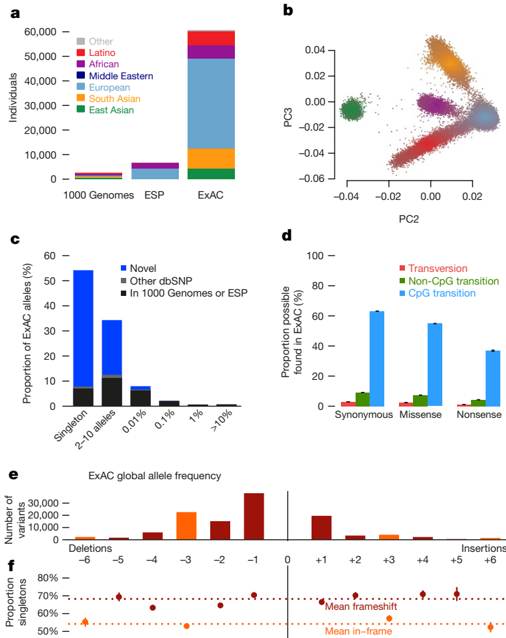
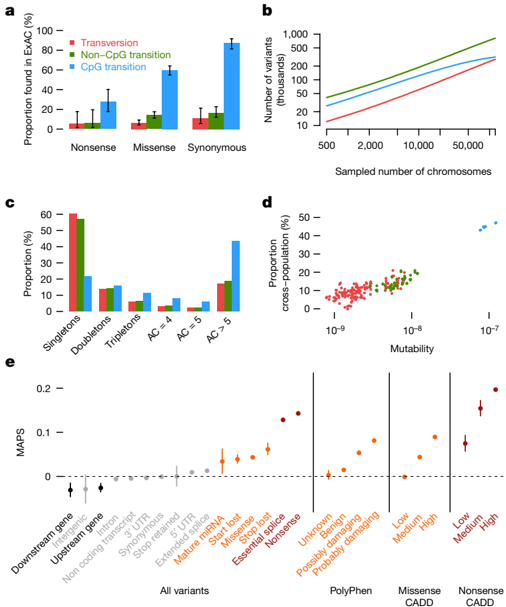
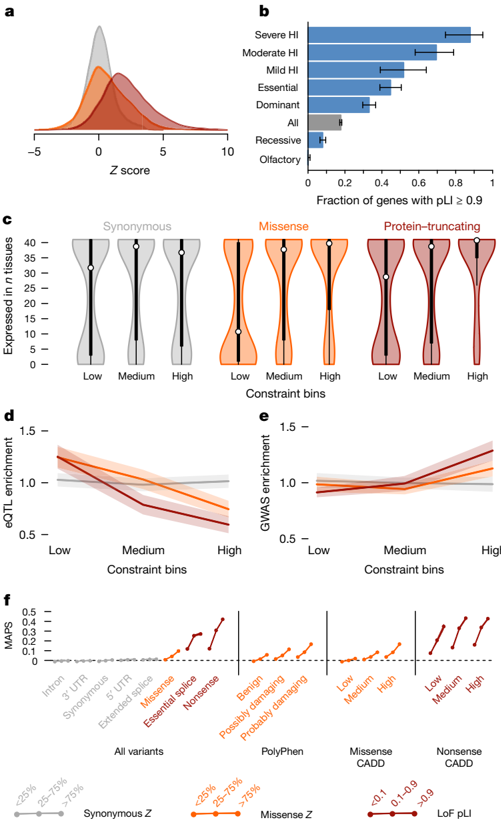
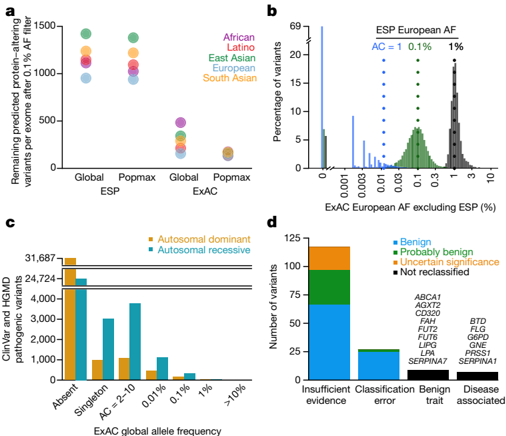
Large-scale reference data sets of human genetic variation are critical for the medical and functional interpretation of DNA sequence changes. Here we describe the aggregation and analysis of high-quality exome (protein-coding region) DNA sequence data for 60,706 individuals of diverse ancestries generated as part of the Exome Aggregation Consortium (ExAC). This catalogue of human genetic diversity contains an average of one variant every eight bases of the exome, and provides direct evidence for the presence of widespread mutational recurrence. We have used this catalogue to calculate objective metrics of pathogenicity for sequence variants, and to identify genes subject to strong selection against various classes of mutation; identifying 3,230 genes with near-complete depletion of predicted protein-truncating variants, with 72% of these genes having no currently established human disease phenotype. Finally, we demonstrate that these data can be used for the efficient filtering of candidate disease-causing variants, and for the discovery of human ‘knockout’ variants in protein-coding genes. Exome sequencing data from 60,706 people of diverse geographic ancestry is presented, providing insight into genetic variation across populations, and illuminating the relationship between DNA variants and human disease. As part of the Exome Aggregation Consortium (ExAC) project, Daniel MacArthur and colleagues report on the generation and analysis of high-quality exome sequencing data from 60,706 individuals of diverse ancestry. This provides the most comprehensive catalogue of human protein-coding genetic variation to date, yielding unprecedented resolution for the analysis of very rare variants across multiple human populations. The catalogue is freely accessible and provides a critical reference panel for the clinical interpretation of genetic variants and the discovery of disease-related genes.
Overview
The claims and statistics of this paper haven’t been checked yet.
Free: it reads the open-access text and checks the first 5 claims that cite a source we can check. Create a free account to check every claim.
Integrity signals
Registry
Cites
Statistics
Figures


Verification
Claims the paper makes
The claims and statistics of this paper haven’t been checked yet.
Free: it reads the open-access text and checks the first 5 claims that cite a source we can check. Create a free account to check every claim.
Claims other papers make about this one
Each is checked against this paper’s own text: does it say what the citing paper says it does?
The source backs part of the claim, not all of it — or backs it for a different population, condition or comparison.
In the citing paper
“Variants in constrained genes (pLI ≥ 0.5)12 explain most of the burden of dnLGD variants and de novo D-mis variants (defined by an MPC score ≥2) in the affected offspring in our study”
From Exome sequencing of 457 autism families recruited online provides evidence for autism risk genes (2019) · cites this paper as [12]
Experimental — accuracy not yet measuredThe source backs part of the claim, not all of it — or backs it for a different population, condition or comparison.
In the citing paper
“Known dominant DD-associated genes are strongly enriched in the minority of genes that exhibit strong selective constraint on heterozygous PTVs7.”
From Evidence for 28 genetic disorders discovered by combining healthcare and research data (2020) · cites this paper as [7]
Experimental — accuracy not yet measuredThe source backs part of the claim, not all of it — or backs it for a different population, condition or comparison.
In the citing paper
“As expected, all ten genes are among the most constrained genes in the genome, with a substantial depletion of PTVs compared to chance expectation24.”
From Rare coding variants in ten genes confer substantial risk for schizophrenia (2022) · cites this paper as [24]
Experimental — accuracy not yet measuredThe source backs part of the claim, not all of it — or backs it for a different population, condition or comparison.
In the citing paper
“In our evolution-focused SNP-h2 enrichment analysis, we detected an overabundance of genic and LoF intolerant loci in both EAS and EUR, suggesting that functionally important regions of the genome contribute to SNP-h2 to a different extent compared to the other annotations tested [10, 33, 40, 44].”
From Denisovan and Neanderthal archaic introgression differentially impacted the genetics of complex traits in modern populations (2022) · cites this paper as [33]
Experimental — accuracy not yet measuredThe source backs part of the claim, not all of it — or backs it for a different population, condition or comparison.
In the citing paper
“In line with previous studies [10, 33], the strongest enrichments in both ancestry groups were observed for annotations related to genic and LoF intolerant regions.”
From Denisovan and Neanderthal archaic introgression differentially impacted the genetics of complex traits in modern populations (2022) · cites this paper as [33]
Experimental — accuracy not yet measured
9 more claims about this paper
Create a free account to see every claim other papers make about this one.
Self-check
Percentages, sums and reported differences re-computed from the paper’s own numbers.
The self-check needs the paper’s full text.
Citations
Cites
Richards, S., Aziz, N., Bale, S., Bick, D., Das, S., Gastier-Foster, J., Grody, W. W., Hegde, M., Lyon, E., Spector, E., et al. (2015) · Genetics in Medicine · doi:10.1038/gim.2015.30 · Cited by 32,594
A global reference for human genetic variation
The 1000 Genomes Project Consortium, authors, C., Auton, A., Abecasis, G. R., Steering committee, Altshuler, D. M., Durbin, R. M., Abecasis, G. R., Bentley, D. R., Chakravarti, A., et al. (2015) · Nature · doi:10.1038/nature15393 · Cited by 18,247
Self-citationA framework for variation discovery and genotyping using next-generation DNA sequencing data
DePristo, M. A., Banks, E., Poplin, R., Garimella, K. V., Maguire, J. R., Hartl, C., Philippakis, A. A., del Angel, G., Rivas, M. A., Hanna, M., et al. (2011) · Nature Genetics · doi:10.1038/ng.806 · Cited by 11,456
Self-citationLethality and centrality in protein networks
Jeong, H., Mason, S. P., Barabási, A.-L., & Oltvai, Z. N. (2001) · Nature · doi:10.1038/35075138 · Cited by 5,287
The Genotype-Tissue Expression (GTEx) pilot analysis: Multitissue gene regulation in humans
The GTEx Consortium, Ardlie, K. G., Deluca, D. S., Segrè, A. V., Sullivan, T. J., Young, T. R., Gelfand, E. T., Trowbridge, C. A., Maller, J. B., Tukiainen, T., et al. (2015) · Science · doi:10.1126/science.1262110 · Cited by 5,062
Self-citationGoh, K.-I., Cusick, M. E., Valle, D., Childs, B., Vidal, M., & Barabási, A.-L. (2007) · Proceedings of the National Academy of Sciences · doi:10.1073/pnas.0701361104 · Cited by 3,242
Inference of human population history from individual whole-genome sequences
Li, H., & Durbin, R. (2011) · Nature · doi:10.1038/nature10231 · Cited by 2,590
Exome sequencing as a tool for Mendelian disease gene discovery
Bamshad, M. J., Ng, S. B., Bigham, A. W., Tabor, H. K., Emond, M. J., Nickerson, D. A., & Shendure, J. (2011) · Nature Reviews Genetics · doi:10.1038/nrg3031 · Cited by 1,673
De novo mutations in schizophrenia implicate synaptic networks
Fromer, M., Pocklington, A. J., Kavanagh, D. H., Williams, H. J., Dwyer, S., Gormley, P., Georgieva, L., Rees, E., Palta, P., Ruderfer, D. M., et al. (2014) · Nature · doi:10.1038/nature12929 · Cited by 1,617
Self-citationEvolution and functional impact of rare coding variation from deep sequencing of human exomes
Tennessen, J. A., Bigham, A. W., O’Connor, T. D., Fu, W., Kenny, E. E., Gravel, S., McGee, S., Do, R., Liu, X., Jun, G., et al. (2012) · Science · doi:10.1126/science.1219240 · Cited by 1,613
Self-citation
Cited by
Items 301–400 of 1,209
The impact of rare variation on gene expression across tissues
GTEx Consortium, Li, X., Kim, Y., Tsang, E. K., Davis, J. R., Damani, F. N., Chiang, C., Hess, G. T., Zappala, Z., Strober, B. J., et al. (2017) · Nature · doi:10.1038/nature24267 · Cited by 257
Multifunctional Cytochrome c: Learning New Tricks from an Old Dog
Alvarez-Paggi, D., Hannibal, L., Castro, M. A., Oviedo-Rouco, S., Demicheli, V., Tórtora, V., Tomasina, F., Radi, R., & Murgida, D. H. (2017) · Chemical Reviews · doi:10.1021/acs.chemrev.7b00257 · Cited by 251
Platzer, K., Yuan, H., Schütz, H., Winschel, A., Chen, W., Hu, C., Kusumoto, H., Heyne, H. O., Helbig, K. L., Tang, S., et al. (2017) · Journal of Medical Genetics · doi:10.1136/jmedgenet-2016-104509 · Cited by 252
Long-read genome sequencing identifies causal structural variation in a Mendelian disease
Merker, J. D., Wenger, A. M., Sneddon, T., Grove, M., Zappala, Z., Fresard, L., Waggott, D., Utiramerur, S., Hou, Y., Smith, K. S., et al. (2018) · Genetics in Medicine · doi:10.1038/gim.2017.86 · Cited by 252
Smith, B. N., Topp, S. D., Fallini, C., Shibata, H., Chen, H.-J., Troakes, C., King, A., Ticozzi, N., Kenna, K. P., Soragia-Gkazi, A., et al. (2017) · Science Translational Medicine · doi:10.1126/scitranslmed.aad9157 · Cited by 247
Self-citationThe landscape of epilepsy-related GATOR1 variants
Baldassari, S., Picard, F., Verbeek, N. E., van Kempen, M., Brilstra, E. H., Lesca, G., Conti, V., Guerrini, R., Bisulli, F., Licchetta, L., et al. (2019) · Genetics in Medicine · doi:10.1038/s41436-018-0060-2 · Cited by 240
AMPA receptor GluA2 subunit defects are a cause of neurodevelopmental disorders
Salpietro, V., Dixon, C. L., Guo, H., Bello, O. D., Vandrovcova, J., Efthymiou, S., Maroofian, R., Heimer, G., Burglen, L., Valence, S., et al. (2019) · Nature Communications · doi:10.1038/s41467-019-10910-w · Cited by 248
Ma, S., Cahalan, S., LaMonte, G., Grubaugh, N. D., Zeng, W., Murthy, S. E., Paytas, E., Gamini, R., Lukacs, V., Whitwam, T., et al. (2018) · Cell · doi:10.1016/j.cell.2018.02.047 · Cited by 250
“To maximize the likelihood of finding gain-of-function mutations, we (1) performed our search using the Exome Aggregation Consortium data (ExAC) (Lek et al., 2016); (2) picked PIEZO1 SNPs or indels with allele frequencies above 0.5%; and (3) picked mutations that were more than 5-fold enriched in…”
InfluentialThe role of exome sequencing in newborn screening for inborn errors of metabolism
Adhikari, A. N., Gallagher, R. C., Wang, Y., Currier, R. J., Amatuni, G., Bassaganyas, L., Chen, F., Kundu, K., Kvale, M., Mooney, S. D., et al. (2020) · Nature Medicine · doi:10.1038/s41591-020-0966-5 · Cited by 249
Pan-cancer analysis of bi-allelic alterations in homologous recombination DNA repair genes
Riaz, N., Blecua, P., Lim, R. S., Shen, R., Higginson, D. S., Weinhold, N., Norton, L., Weigelt, B., Powell, S. N., & Reis-Filho, J. S. (2017) · Nature Communications · doi:10.1038/s41467-017-00921-w · Cited by 249
Capturing variation impact on molecular interactions in the IMEx Consortium mutations data set
The IMEx Consortium Curators, Khadake, J., Meldal, B., Panni, S., Thorneycroft, D., van Roey, K., Abbani, S., Salwinski, L., Pellegrini, M., Iannuccelli, M., et al. (2019) · Nature Communications · doi:10.1038/s41467-018-07709-6 · Cited by 247
“A total of 3,198,692 coding variants in H. sapiens for over 65,000 individuals was collected from the ExAC Consortium 29 in the ANNO-VAR 60 output format along with corresponding adjusted allele frequencies.”
MethodAdvances in genetics of migraine
Sutherland, H. G., Albury, C. L., & Griffiths, L. R. (2019) · The Journal of Headache and Pain · doi:10.1186/s10194-019-1017-9 · Cited by 230
Exome sequencing of 457 autism families recruited online provides evidence for autism risk genes
Feliciano, P., Zhou, X., Astrovskaya, I., Turner, T. N., Wang, T., Brueggeman, L., Barnard, R., Hsieh, A., Snyder, L. G., Muzny, D. M., et al. (2019) · npj Genomic Medicine · doi:10.1038/s41525-019-0093-8 · Cited by 247
Identification of cancer driver genes based on nucleotide context
Dietlein, F., Weghorn, D., Taylor-Weiner, A., Richters, A., Reardon, B., Liu, D., Lander, E. S., Van Allen, E. M., & Sunyaev, S. R. (2020) · Nature Genetics · doi:10.1038/s41588-019-0572-y · Cited by 255
“Each mutation was compared against the Exome Aggregation Consortium database 83 , which reports the germline variants of 60,706 individuals.”
MethodNuclear-embedded mitochondrial DNA sequences in 66,083 human genomes
Wei, W., Schon, K. R., Elgar, G., Orioli, A., Tanguy, M., Giess, A., Tischkowitz, M., Caulfield, M. J., & Chinnery, P. F. (2022) · Nature · doi:10.1038/s41586-022-05288-7 · Cited by 246
Mutations in CFAP43 and CFAP44 cause male infertility and flagellum defects in Trypanosoma and human
Coutton, C., Vargas, A. S., Amiri-Yekta, A., Kherraf, Z.-E., Ben Mustapha, S. F., Le Tanno, P., Wambergue-Legrand, C., Karaouzène, T., Martinez, G., Crouzy, S., et al. (2018) · Nature Communications · doi:10.1038/s41467-017-02792-7 · Cited by 245
Pharmacogenomics: Precision Medicine and Drug Response
Weinshilboum, R. M., & Wang, L. (2017) · Mayo Clinic Proceedings · doi:10.1016/j.mayocp.2017.09.001 · Cited by 245
Mutations in the histone methyltransferase gene KMT2B cause complex early-onset dystonia
UK10K Consortium, Meyer, E., Study, D. D. D., NIHR BioResource Rare Diseases Consortium, Carss, K. J., Rankin, J., Nichols, J. M. E., Grozeva, D., Joseph, A. P., Mencacci, N. E., et al. (2017) · Nature Genetics · doi:10.1038/ng.3740 · Cited by 241
Pathogenic variants that alter protein code often disrupt splicing
Soemedi, R., Cygan, K. J., Rhine, C. L., Wang, J., Bulacan, C., Yang, J., Bayrak-Toydemir, P., McDonald, J., & Fairbrother, W. G. (2017) · Nature Genetics · doi:10.1038/ng.3837 · Cited by 241
“Because PTV and splicing mutations often share the same loss-of-function mechanism, we examined the disease ESM occurrence in PTV-intolerant genes (pLI >= 0.9) 6 in comparison to other genes.”
InfluentialGenomic frontiers in congenital heart disease
Morton, S. U., Quiat, D., Seidman, J. G., & Seidman, C. E. (2022) · Nature Reviews Cardiology · doi:10.1038/s41569-021-00587-4 · Cited by 236
Expanding the Boundaries of RNA Sequencing as a Diagnostic Tool for Rare Mendelian Disease
Gonorazky, H. D., Naumenko, S., Ramani, A. K., Nelakuditi, V., Mashouri, P., Wang, P., Kao, D., Ohri, K., Viththiyapaskaran, S., Tarnopolsky, M. A., et al. (2019) · The American Journal of Human Genetics · doi:10.1016/j.ajhg.2019.01.012 · Cited by 236
A map of constrained coding regions in the human genome
Havrilla, J. M., Pedersen, B. S., Layer, R. M., & Quinlan, A. R. (2019) · Nature Genetics · doi:10.1038/s41588-018-0294-6 · Cited by 245
A glycine-specific N-degron pathway mediates the quality control of protein N -myristoylation
Timms, R. T., Zhang, Z., Rhee, D. Y., Harper, J. W., Koren, I., & Elledge, S. J. (2019) · Science · doi:10.1126/science.aaw4912 · Cited by 240
“ZYG11B and ZER1 both have a pLi value of 1 in the ExAC database (37), indicating that loss-of-function variants are strongly selected against in the heterozygous state, demonstrating potent haploinsufficiency and counter selection in humans.”
BackgroundTo NMD or Not To NMD: Nonsense-Mediated mRNA Decay in Cancer and Other Genetic Diseases
Supek, F., Lehner, B., & Lindeboom, R. G. H. (2021) · Trends in Genetics · doi:10.1016/j.tig.2020.11.002 · Cited by 244
Esposito, D., Weile, J., Shendure, J., Starita, L. M., Papenfuss, A. T., Roth, F. P., Fowler, D. M., & Rubin, A. F. (2019) · Genome Biology · doi:10.1186/s13059-019-1845-6 · Cited by 242
“In addition to its utility for visualizing variant effect maps, we expect that this package will be generally useful for working with data from ClinVar [5], gnomAD [206], and other important sequence variation resources.”
MethodCuchet-Lourenço, D., Eletto, D., Wu, C., Plagnol, V., Papapietro, O., Curtis, J., Ceron-Gutierrez, L., Bacon, C. M., Hackett, S., Alsaleem, B., et al. (2018) · Science · doi:10.1126/science.aar2641 · Cited by 243
Whole-genome sequencing of a sporadic primary immunodeficiency cohort
Thaventhiran, J. E. D., Lango Allen, H., Burren, O. S., Rae, W., Greene, D., Staples, E., Zhang, Z., Farmery, J. H. R., Simeoni, I., Rivers, E., et al. (2020) · Nature · doi:10.1038/s41586-020-2265-1 · Cited by 240
“We thus downloaded pLI scores 53 and took the product between these and the COGS scores to compute an `overall’ prioritisation score across each trait and gene combination.”
An Exome Sequencing Study to Assess the Role of Rare Genetic Variation in Pulmonary Fibrosis
Petrovski, S., Todd, J. L., Durheim, M. T., Wang, Q., Chien, J. W., Kelly, F. L., Frankel, C., Mebane, C. M., Ren, Z., Bridgers, J., et al. (2017) · American Journal of Respiratory and Critical Care Medicine · doi:10.1164/rccm.201610-2088oc · Cited by 242
Benner, C., Havulinna, A. S., Järvelin, M.-R., Salomaa, V., Ripatti, S., & Pirinen, M. (2017) · The American Journal of Human Genetics · doi:10.1016/j.ajhg.2017.08.012 · Cited by 242
LaDuca, H., Polley, E. C., Yussuf, A., Hoang, L., Gutierrez, S., Hart, S. N., Yadav, S., Hu, C., Na, J., Goldgar, D. E., et al. (2020) · Genetics in Medicine · doi:10.1038/s41436-019-0633-8 · Cited by 226
The protein histidine phosphatase LHPP is a tumour suppressor
Hindupur, S. K., Colombi, M., Fuhs, S. R., Matter, M. S., Guri, Y., Adam, K., Cornu, M., Piscuoglio, S., Ng, C. K. Y., Betz, C., et al. (2018) · Nature · doi:10.1038/nature26140 · Cited by 243
Heart-brain connections: Phenotypic and genetic insights from magnetic resonance images
Zhao, B., Li, T., Fan, Z., Yang, Y., Shu, J., Yang, X., Wang, X., Luo, T., Tang, J., Xiong, D., et al. (2023) · Science · doi:10.1126/science.abn6598 · Cited by 240
“Moreover, 91 MAGMA or FUMA-identified genes had a high probability of being loss-of-function intolerant (113) (pLI > 0.”
BackgroundHuman GRIN2B variants in neurodevelopmental disorders
Hu, C., Chen, W., Myers, S. J., Yuan, H., & Traynelis, S. F. (2016) · Journal of Pharmacological Sciences · doi:10.1016/j.jphs.2016.10.002 · Cited by 236
“Rather, these cohorts reveal missense mutations in the ATD or CTD domains where ExAC allele frequencies trend higher and association with SCZ may be variable or low (27), consistent with a lack of association between clozapine response and GRIN2B variants in a SCZ patient population (51).”
BackgroundInfluentialGenome-wide detection of tandem DNA repeats that are expanded in autism
Trost, B., Engchuan, W., Nguyen, C. M., Thiruvahindrapuram, B., Dolzhenko, E., Backstrom, I., Mirceta, M., Mojarad, B. A., Yin, Y., Dov, A., et al. (2020) · Nature · doi:10.1038/s41586-020-2579-z · Cited by 238
Shiu, E. Y. C., Leung, N. H. L., & Cowling, B. J. (2019) · Current Opinion in Infectious Diseases · doi:10.1097/qco.0000000000000563 · Cited by 235
Bartha, I., di Iulio, J., Venter, J. C., & Telenti, A. (2018) · Nature Reviews Genetics · doi:10.1038/nrg.2017.75 · Cited by 237
Fan, J., Lee, H.-O., Lee, S., Ryu, D.-E., Lee, S., Xue, C., Kim, S. J., Kim, K., Barkas, N., Park, P. J., et al. (2018) · Genome Research · doi:10.1101/gr.228080.117 · Cited by 237
FGFR1 and NTRK3 actionable alterations in “Wild-Type” gastrointestinal stromal tumors
Shi, E., Chmielecki, J., Tang, C.-M., Wang, K., Heinrich, M. C., Kang, G., Corless, C. L., Hong, D., Fero, K. E., Murphy, J. D., et al. (2016) · Journal of Translational Medicine · doi:10.1186/s12967-016-1075-6 · Cited by 237
Aneichyk, T., Hendriks, W. T., Yadav, R., Shin, D., Gao, D., Vaine, C. A., Collins, R. L., Domingo, A., Currall, B., Stortchevoi, A., et al. (2018) · Cell · doi:10.1016/j.cell.2018.02.011 · Cited by 228
MMSplice: modular modeling improves the predictions of genetic variant effects on splicing
Cheng, J., Nguyen, T. Y. D., Cygan, K. J., Çelik, M. H., Fairbrother, W. G., Avsec, Ž., & Gagneur, J. (2019) · Genome Biology · doi:10.1186/s13059-019-1653-z · Cited by 235
“Vex-seq is a high-throughput reporter assay that compared for constructs containing a reference sequence to for matching constructs containing one of 2059 Exome Aggregation Consortium (ExAC [32]) variants.”
MethodHarrison, S. M., Dolinsky, J. S., Knight Johnson, A. E., Pesaran, T., Azzariti, D. R., Bale, S., Chao, E. C., Das, S., Vincent, L., & Rehm, H. L. (2017) · Genetics in Medicine · doi:10.1038/gim.2017.14 · Cited by 234
Kircher, M., Xiong, C., Martin, B., Schubach, M., Inoue, F., Bell, R. J. A., Costello, J. F., Shendure, J., & Ahituv, N. (2019) · Nature Communications · doi:10.1038/s41467-019-11526-w · Cited by 234
Evaluation of in silico algorithms for use with ACMG/AMP clinical variant interpretation guidelines
Ghosh, R., Oak, N., & Plon, S. E. (2017) · Genome biology · doi:10.1186/s13059-017-1353-5 · Cited by 233
“Finally, we explored whether the performance of algorithms was affected by the level of constraint on a gene, as defined by comparing the expected and observed missense variants in ExAC [30] (missense Z scores).”
BackgroundOpportunities and challenges of whole-genome and -exome sequencing
Petersen, B.-S., Fredrich, B., Hoeppner, M. P., Ellinghaus, D., & Franke, A. (2017) · BMC Genetics · doi:10.1186/s12863-017-0479-5 · Cited by 213
“Databases like EVS [83], ExAC [20] and KAVIAR [84] now provide population-specific allele frequencies from several thousands to more than 60,000 individuals that can be used for filtering of candidate variants.”
BackgroundInfluentialKobayashi, Y., Yang, S., Nykamp, K., Garcia, J., Lincoln, S. E., & Topper, S. E. (2017) · Genome Medicine · doi:10.1186/s13073-017-0403-7 · Cited by 232
“These advantages allow for the direct and accurate characterization of the population burden of pathogenic variants associated with rare Mendelian disorders [5 – 8].”
BackgroundResultInfluentialZhao, S., Bellone, S., Lopez, S., Thakral, D., Schwab, C., English, D. P., Black, J., Cocco, E., Choi, J., Zammataro, L., et al. (2016) · Proceedings of the National Academy of Sciences · doi:10.1073/pnas.1614120113 · Cited by 228
“For unmatched tumors, we first called variants from the reference sequence and then excluded variants that have a frequency higher than 2 × 10 in the Exome Aggregation Consortium (ExAC) database (7).”
BackgroundMethodDerks, J. L., Leblay, N., Thunnissen, E., van Suylen, R. J., den Bakker, M., Groen, H. J. M., Smit, E. F., Damhuis, R., van den Broek, E. C., Charbrier, A., et al. (2018) · Clinical Cancer Research · doi:10.1158/1078-0432.ccr-17-1921 · Cited by 232
“Etoposide 28 (35) 13 (30) 15 (40) 40 (37) 9 (29) 31 (41)”
Chemical probes and drug leads from advances in synthetic planning and methodology
Gerry, C. J., & Schreiber, S. L. (2018) · Nature Reviews Drug Discovery · doi:10.1038/nrd.2018.53 · Cited by 230
Singh, T., Walters, J. T. R., Johnstone, M., Curtis, D., Suvisaari, J., Torniainen, M., Rees, E., Iyegbe, C., Blackwood, D., McIntosh, A. M., et al. (2017) · Nature Genetics · doi:10.1038/ng.3903 · Cited by 231
Self-citationGenomic profiling for clinical decision making in myeloid neoplasms and acute leukemia
Duncavage, E. J., Bagg, A., Hasserjian, R. P., DiNardo, C. D., Godley, L. A., Iacobucci, I., Jaiswal, S., Malcovati, L., Vannucchi, A. M., Patel, K. P., et al. (2022) · Blood · doi:10.1182/blood.2022015853 · Cited by 217
High-performance web services for querying gene and variant annotation
Xin, J., Mark, A., Afrasiabi, C., Tsueng, G., Juchler, M., Gopal, N., Stupp, G. S., Putman, T. E., Ainscough, B. J., Griffith, O. L., et al. (2016) · Genome Biology · doi:10.1186/s13059-016-0953-9 · Cited by 217
“We also incorporated an allele frequency filter based on data from the Exome Aggregation Consortium [22], filtered for candidate genes involved in metabolic processes (“GO:0008152”) based on Gene Ontology annotations, and ranked candidate genes based on Combined Annotation Dependent Depletion (CADD) score [23] (an est…”
Settling the score: variant prioritization and Mendelian disease
Eilbeck, K., Quinlan, A., & Yandell, M. (2017) · Nature Reviews Genetics · doi:10.1038/nrg.2017.52 · Cited by 228
“Nature Reviews | In this example, two genes, coiled-coil domain-containing 113 ( CCDC113 ) and protease serine 54 ( PRSS54 ) overlap on different strands of the genome, and both have multiple observed transcripts.”
BackgroundMethodOverview of Specifications to the ACMG/AMP Variant Interpretation Guidelines
Harrison, S. M., Biesecker, L. G., & Rehm, H. L. (2019) · Current Protocols in Human Genetics · doi:10.1002/cphg.93 · Cited by 229
“The pLI score is computationally derived and measures the intolerance of a given gene to LoF variants in the general population, with a pLI > 0.9 suggesting a significantly lower than expected rate of LoFs in the gene (Lek et al., 2016).”
BackgroundInfluentialGenomics, convergent neuroscience and progress in understanding autism spectrum disorder
Willsey, H. R., Willsey, A. J., Wang, B., & State, M. W. (2022) · Nature Reviews Neuroscience · doi:10.1038/s41583-022-00576-7 · Cited by 229
IBD risk loci are enriched in multigenic regulatory modules encompassing putative causative genes
Momozawa, Y., Dmitrieva, J., Théâtre, E., Deffontaine, V., Rahmouni, S., Charloteaux, B., Crins, F., Docampo, E., Elansary, M., Gori, A.-S., et al. (2018) · Nature Communications · doi:10.1038/s41467-018-04365-8 · Cited by 229
Self-citationTatton-Brown, K., Loveday, C., Yost, S., Clarke, M., Ramsay, E., Zachariou, A., Elliott, A., Wylie, H., Ardissone, A., Rittinger, O., et al. (2017) · The American Journal of Human Genetics · doi:10.1016/j.ajhg.2017.03.010 · Cited by 221
Genetic variants associated with longitudinal changes in brain structure across the lifespan
Brouwer, R. M., Klein, M., Grasby, K. L., Schnack, H. G., Jahanshad, N., Teeuw, J., Thomopoulos, S. I., Sprooten, E., Franz, C. E., Gogtay, N., et al. (2022) · Nature Neuroscience · doi:10.1038/s41593-022-01042-4 · Cited by 227
Frequency of Germline Mutations in Cancer Susceptibility Genes in Malignant Mesothelioma
Panou, V., Gadiraju, M., Wolin, A., Weipert, C. M., Skarda, E., Husain, A. N., Patel, J. D., Rose, B., Zhang, S. R., Weatherly, M., et al. (2018) · Journal of Clinical Oncology · doi:10.1200/jco.2018.78.5204 · Cited by 229
GRIN2A -related disorders: genotype and functional consequence predict phenotype
Strehlow, V., Heyne, H. O., Vlaskamp, D. R. M., Marwick, K. F. M., Rudolf, G., de Bellescize, J., Biskup, S., Brilstra, E. H., Brouwer, O. F., Callenbach, P. M. C., et al. (2019) · Brain · doi:10.1093/brain/awy304 · Cited by 220
“gests that GRIN2A null and missense variants strongly reduce evolutionary fitness (Lek et al., 2016).”
BackgroundPharmacogenomics of CYP2C9: Functional and Clinical Considerations
Daly, A., Rettie, A., Fowler, D., & Miners, J. (2017) · Journal of Personalized Medicine · doi:10.3390/jpm8010001 · Cited by 227
“org/) [84] provides comprehensive data on frequencies in a range of populations for a large number of CYP2C9 single nucleotide variants (SNVs).”
BackgroundMethodHot-spot KIF5A mutations cause familial ALS
Brenner, D., Yilmaz, R., Müller, K., Grehl, T., Petri, S., Meyer, T., Grosskreutz, J., Weydt, P., Ruf, W., Neuwirth, C., et al. (2018) · Brain · doi:10.1093/brain/awx370 · Cited by 227
“The frequency of KIF5A variants was compared to 6137 in-house whole exome datasets from control individuals with non-neurological diseases and the 138 632 exomes and genomes of the gnomAD dataset (http://gnomad.broadinstitute.org/, Lek et al., 2016).”
MethodProspective functional classification of all possible missense variants in PPARG
UK Monogenic Diabetes Consortium, Majithia, A. R., Myocardial Infarction Genetics Consortium, UK Congenital Lipodystrophy Consortium, Tsuda, B., Agostini, M., Gnanapradeepan, K., Rice, R., Peloso, G., Patel, K. A., et al. (2016) · Nature Genetics · doi:10.1038/ng.3700 · Cited by 227
Self-citationComprehensive characterization of protein–protein interactions perturbed by disease mutations
Cheng, F., Zhao, J., Wang, Y., Lu, W., Liu, Z., Zhou, Y., Martin, W. R., Wang, R., Huang, J., Hao, T., et al. (2021) · Nature Genetics · doi:10.1038/s41588-020-00774-y · Cited by 227
Titin Gene and Protein Functions in Passive and Active Muscle
Linke, W. A. (2018) · Annual Review of Physiology · doi:10.1146/annurev-physiol-021317-121234 · Cited by 223
Next-generation sequencing in Charcot–Marie–Tooth disease: opportunities and challenges
Pipis, M., Rossor, A. M., Laura, M., & Reilly, M. M. (2019) · Nature Reviews Neurology · doi:10.1038/s41582-019-0254-5 · Cited by 217
Regier, A. A., Farjoun, Y., Larson, D. E., Krasheninina, O., Kang, H. M., Howrigan, D. P., Chen, B.-J., Kher, M., Banks, E., Ames, D. C., et al. (2018) · Nature Communications · doi:10.1038/s41467-018-06159-4 · Cited by 238
Self-citationThe road to precision psychiatry: translating genetics into disease mechanisms
Gandal, M. J., Leppa, V., Won, H., Parikshak, N. N., & Geschwind, D. H. (2016) · Nature Neuroscience · doi:10.1038/nn.4409 · Cited by 223
Self-citationSomatic genomic changes in single Alzheimer’s disease neurons
Miller, M. B., Huang, A. Y., Kim, J., Zhou, Z., Kirkham, S. L., Maury, E. A., Ziegenfuss, J. S., Reed, H. C., Neil, J. E., Rento, L., et al. (2022) · Nature · doi:10.1038/s41586-022-04640-1 · Cited by 223
Oligogenic inheritance of a human heart disease involving a genetic modifier
Gifford, C. A., Ranade, S. S., Samarakoon, R., Salunga, H. T., de Soysa, T. Y., Huang, Y., Zhou, P., Elfenbein, A., Wyman, S. K., Bui, Y. K., et al. (2019) · Science · doi:10.1126/science.aat5056 · Cited by 213
Fast and accurate genomic analyses using genome graphs
Rakocevic, G., Semenyuk, V., Lee, W.-P., Spencer, J., Browning, J., Johnson, I. J., Arsenijevic, V., Nadj, J., Ghose, K., Suciu, M. C., et al. (2019) · Nature Genetics · doi:10.1038/s41588-018-0316-4 · Cited by 221
Severe hypertriglyceridemia is primarily polygenic
Dron, J. S., Wang, J., Cao, H., McIntyre, A. D., Iacocca, M. A., Menard, J. R., Movsesyan, I., Malloy, M. J., Pullinger, C. R., Kane, J. P., et al. (2019) · Journal of Clinical Lipidology · doi:10.1016/j.jacl.2018.10.006 · Cited by 222
Downes, K., Megy, K., Duarte, D., Vries, M., Gebhart, J., Hofer, S., Shamardina, O., Deevi, S. V. V., Stephens, J., Mapeta, R., et al. (2019) · Blood · doi:10.1182/blood.2018891192 · Cited by 222
The copy number variation landscape of congenital anomalies of the kidney and urinary tract
Verbitsky, M., Westland, R., Perez, A., Kiryluk, K., Liu, Q., Krithivasan, P., Mitrotti, A., Fasel, D. A., Batourina, E., Sampson, M. G., et al. (2019) · Nature Genetics · doi:10.1038/s41588-018-0281-y · Cited by 222
“Overall we identified only one LOF variant in EFCAB12 (p.Q437*; observed once in heterozygosity in the ExAC database 55,56 ) in a patient affected by unilateral KA and multiple extrarenal manifestations, including neurodevelopmental delay, epilepsy, corpus callosum agenesis, left radial bone…”
OUTRIDER: A Statistical Method for Detecting Aberrantly Expressed Genes in RNA Sequencing Data
Brechtmann, F., Mertes, C., Matusevičiūtė, A., Yépez, V. A., Avsec, Ž., Herzog, M., Bader, D. M., Prokisch, H., & Gagneur, J. (2018) · The American Journal of Human Genetics · doi:10.1016/j.ajhg.2018.10.025 · Cited by 220
The molecular evolution of spermatogenesis across mammals
Murat, F., Mbengue, N., Winge, S. B., Trefzer, T., Leushkin, E., Sepp, M., Cardoso-Moreira, M., Schmidt, J., Schneider, C., Mößinger, K., et al. (2023) · Nature · doi:10.1038/s41586-022-05547-7 · Cited by 210
ZNF445 is a primary regulator of genomic imprinting
Takahashi, N., Coluccio, A., Thorball, C. W., Planet, E., Shi, H., Offner, S., Turelli, P., Imbeault, M., Ferguson-Smith, A. C., & Trono, D. (2019) · Genes & Development · doi:10.1101/gad.320069.118 · Cited by 211
“4B; Lek et al. 2016).”
BackgroundResultInfluentialThe ANGPTL3-4-8 model, a molecular mechanism for triglyceride trafficking
Zhang, R. (2016) · Open Biology · doi:10.1098/rsob.150272 · Cited by 219
Coban-Akdemir, Z., White, J. J., Song, X., Jhangiani, S. N., Fatih, J. M., Gambin, T., Bayram, Y., Chinn, I. K., Karaca, E., Punetha, J., et al. (2018) · The American Journal of Human Genetics · doi:10.1016/j.ajhg.2018.06.009 · Cited by 219
Performance evaluation of pathogenicity-computation methods for missense variants
Li, J., Zhao, T., Zhang, Y., Zhang, K., Shi, L., Chen, Y., Wang, X., & Sun, Z. (2018) · Nucleic Acids Research · doi:10.1093/nar/gky678 · Cited by 217
“Numerous sequence variants in the human genome can be detected by WES, most of which are missense variants that cause amino acid changes in proteins (3,4).”
BackgroundWallmeier, J., Frank, D., Shoemark, A., Nöthe-Menchen, T., Cindric, S., Olbrich, H., Loges, N. T., Aprea, I., Dougherty, G. W., Pennekamp, P., et al. (2019) · The American Journal of Human Genetics · doi:10.1016/j.ajhg.2019.09.022 · Cited by 212
Gibson, J., Fieldhouse, R., Chan, M. M. Y., Sadeghi-Alavijeh, O., Burnett, L., Izzi, V., Persikov, A. V., Gale, D. P., Storey, H., Savige, J., et al. (2021) · Journal of the American Society of Nephrology · doi:10.1681/asn.2020071065 · Cited by 218
Suwinski, P., Ong, C., Ling, M. H. T., Poh, Y. M., Khan, A. M., & Ong, H. S. (2019) · Frontiers in Genetics · doi:10.3389/fgene.2019.00049 · Cited by 210
Modified penetrance of coding variants by cis-regulatory variation contributes to disease risk
Castel, S. E., Cervera, A., Mohammadi, P., Aguet, F., Reverter, F., Wolman, A., Guigo, R., Iossifov, I., Vasileva, A., & Lappalainen, T. (2018) · Nature Genetics · doi:10.1038/s41588-018-0192-y · Cited by 217
Loss-of-function variants in ADCY3 increase risk of obesity and type 2 diabetes
Grarup, N., Moltke, I., Andersen, M. K., Dalby, M., Vitting-Seerup, K., Kern, T., Mahendran, Y., Jørsboe, E., Larsen, C. V. L., Dahl-Petersen, I. K., et al. (2018) · Nature Genetics · doi:10.1038/s41588-017-0022-7 · Cited by 216
Model Organisms Facilitate Rare Disease Diagnosis and Therapeutic Research
Wangler, M. F., Yamamoto, S., Chao, H.-T., Posey, J. E., Westerfield, M., Postlethwait, J., Members of the Undiagnosed Diseases Network (UDN), Hieter, P., Boycott, K. M., Campeau, P. M., et al. (2017) · Genetics · doi:10.1534/genetics.117.203067 · Cited by 211
Exome and genome sequencing for inborn errors of immunity
Meyts, I., Bosch, B., Bolze, A., Boisson, B., Itan, Y., Belkadi, A., Pedergnana, V., Moens, L., Picard, C., Cobat, A., et al. (2016) · Journal of Allergy and Clinical Immunology · doi:10.1016/j.jaci.2016.08.003 · Cited by 215
Integrating rare genetic variants into pharmacogenetic drug response predictions
Ingelman-Sundberg, M., Mkrtchian, S., Zhou, Y., & Lauschke, V. M. (2018) · Human Genomics · doi:10.1186/s40246-018-0157-3 · Cited by 215
“%) of these functional variants, of which 1.8, 1.7, ABC transporters (23) CYPs (35) Other phase 1 (39) UGTs (17) GSTs (17) Other phase 2 (4) Nuclear receptors (9) Others (6 [11].”
BackgroundMethodInfluentialRare-variant collapsing analyses for complex traits: guidelines and applications
Povysil, G., Petrovski, S., Hostyk, J., Aggarwal, V., Allen, A. S., & Goldstein, D. B. (2019) · Nature Reviews Genetics · doi:10.1038/s41576-019-0177-4 · Cited by 215
Robinson, B. D., Vlachostergios, P. J., Bhinder, B., Liu, W., Li, K., Moss, T. J., Bareja, R., Park, K., Tavassoli, P., Cyrta, J., et al. (2019) · Nature Communications · doi:10.1038/s41467-019-10873-y · Cited by 214
The neXtProt knowledgebase in 2020: data, tools and usability improvements
Zahn-Zabal, M., Michel, P.-A., Gateau, A., Nikitin, F., Schaeffer, M., Audot, E., Gaudet, P., Duek, P. D., Teixeira, D., Rech de Laval, V., et al. (2019) · Nucleic Acids Research · doi:10.1093/nar/gkz995 · Cited by 214
van Dessel, L. F., van Riet, J., Smits, M., Zhu, Y., Hamberg, P., van der Heijden, M. S., Bergman, A. M., van Oort, I. M., de Wit, R., Voest, E. E., et al. (2019) · Nature Communications · doi:10.1038/s41467-019-13084-7 · Cited by 207
Wright, C. F., West, B., Tuke, M., Jones, S. E., Patel, K., Laver, T. W., Beaumont, R. N., Tyrrell, J., Wood, A. R., Frayling, T. M., et al. (2019) · The American Journal of Human Genetics · doi:10.1016/j.ajhg.2018.12.015 · Cited by 212
The role of ABCA7 in Alzheimer’s disease: evidence from genomics, transcriptomics and methylomics
De Roeck, A., Van Broeckhoven, C., & Sleegers, K. (2019) · Acta Neuropathologica · doi:10.1007/s00401-019-01994-1 · Cited by 212
Allgäuer, M., Budczies, J., Christopoulos, P., Endris, V., Lier, A., Rempel, E., Volckmar, A.-L., Kirchner, M., von Winterfeld, M., Leichsenring, J., et al. (2018) · Translational Lung Cancer Research · doi:10.21037/tlcr.2018.08.14 · Cited by 212
Revealing enzyme functional architecture via high-throughput microfluidic enzyme kinetics
Markin, C. J., Mokhtari, D. A., Sunden, F., Appel, M. J., Akiva, E., Longwell, S. A., Sabatti, C., Herschlag, D., & Fordyce, P. M. (2021) · Science · doi:10.1126/science.abf8761 · Cited by 220
“Sequence variations across organisms and individuals confer beneficial and deleterious effects: Variation throughout evolution creates proteins with improved or new functions, but variation among individuals can also compromise function and cause disease ( 1 – 3 ).”
BackgroundGenomic landscape of high-grade meningiomas
Bi, W. L., Greenwald, N. F., Abedalthagafi, M., Wala, J., Gibson, W. J., Agarwalla, P. K., Horowitz, P., Schumacher, S. E., Esaulova, E., Mei, Y., et al. (2017) · npj Genomic Medicine · doi:10.1038/s41525-017-0014-7 · Cited by 210
Early-Onset Alzheimer’s Disease: What Is Missing in Research?
Ayodele, T., Rogaeva, E., Kurup, J. T., Beecham, G., & Reitz, C. (2021) · Current Neurology and Neuroscience Reports · doi:10.1007/s11910-020-01090-y · Cited by 193
“Notably, CpGs are the most mutable sites in the genome, since methylated-cytosine can spontaneously change to thymine (C > T transition) [66].”
BackgroundMethodPaternally inherited cis-regulatory structural variants are associated with autism
Brandler, W. M., Antaki, D., Gujral, M., Kleiber, M. L., Whitney, J., Maile, M. S., Hong, O., Chapman, T. R., Tan, S., Tandon, P., et al. (2018) · Science · doi:10.1126/science.aan2261 · Cited by 209
iPSYCH-Broad Consortium, Satterstrom, F. K., Walters, R. K., Singh, T., Wigdor, E. M., Lescai, F., Demontis, D., Kosmicki, J. A., Grove, J., Stevens, C., et al. (2019) · Nature Neuroscience · doi:10.1038/s41593-019-0527-8 · Cited by 209
Self-citationAmeur, A., Dahlberg, J., Olason, P., Vezzi, F., Karlsson, R., Martin, M., Viklund, J., Kähäri, A. K., Lundin, P., Che, H., et al. (2017) · European Journal of Human Genetics · doi:10.1038/ejhg.2017.130 · Cited by 209
Metadata
- Authors
- Exome Aggregation Consortium, Lek, M., Karczewski, K. J., Minikel, E. V., Samocha, K. E., Banks, E., Fennell, T., O’Donnell-Luria, A. H., Ware, J. S., Hill, A. J., Cummings, B. B., Tukiainen, T., Birnbaum, D. P., Kosmicki, J. A., Duncan, L. E., Estrada, K., Zhao, F., Zou, J., Pierce-Hoffman, E., Berghout, J., Cooper, D. N., Deflaux, N., DePristo, M., Do, R., Flannick, J., Fromer, M., Gauthier, L., Goldstein, J., Gupta, N., Howrigan, D., Kiezun, A., Kurki, M. I., Moonshine, A. L., Natarajan, P., Orozco, L., Peloso, G. M., Poplin, R., Rivas, M. A., Ruano-Rubio, V., Rose, S. A., Ruderfer, D. M., Shakir, K., Stenson, P. D., Stevens, C., Thomas, B. P., Tiao, G., Tusie-Luna, M. T., Weisburd, B., Won, H.-H., Yu, D., Altshuler, D. M., Ardissino, D., Boehnke, M., Danesh, J., Donnelly, S., Elosua, R., Florez, J. C., Gabriel, S. B., Getz, G., Glatt, S. J., Hultman, C. M., Kathiresan, S., Laakso, M., McCarroll, S., McCarthy, M. I., McGovern, D., McPherson, R., Neale, B. M., Palotie, A., Purcell, S. M., Saleheen, D., Scharf, J. M., Sklar, P., Sullivan, P. F., Tuomilehto, J., Tsuang, M. T., Watkins, H. C., Wilson, J. G., Daly, M. J., & MacArthur, D. G.
- Affiliations
- Broad Institute (US)
- University of Arizona (US)
- Cardiff University (GB)
- Google (United States) (US)
- Icahn School of Medicine at Mount Sinai (US)
- National Institute of Genomic Medicine (MX)
- Instituto Nacional de Ciencias Médicas y Nutrición Salvador Zubirán (MX)
- Samsung Medical Center (KR)
- University of Michigan (US)
- University of Cambridge (GB)
- SUNY Upstate Medical University (US)
- Karolinska Institutet (SE)
- University of Eastern Finland (FI)
- Centre for Human Genetics (GB)
- Cedars-Sinai Medical Center (US)
- Ottawa Heart Institute (CA)
- Center for Non-Communicable Diseases (PK)
- University of North Carolina at Chapel Hill (US)
- University of Helsinki (FI)
- University of California San Diego (US)
- University of Mississippi Medical Center (US)
- Corresponding author
- MacArthur, Daniel G.
- ORCID
- Lek, Monkol
- Karczewski, Konrad J.
- Minikel, Eric V.
- Samocha, Kaitlin E.
- Banks, Eric
- Ware, James S.
- Cummings, Beryl B.
- Tukiainen, Taru
- Kosmicki, Jack A.
- Duncan, Laramie E.
- Estrada, Karol
- Zhao, Fengmei
- Zou, James
- Berghout, Joanne
- Cooper, David N.
- Deflaux, Nicole
- Do, Ron
- Flannick, Jason
- Fromer, Menachem
- Gupta, Namrata
- Howrigan, Daniel
- Kurki, Mitja I.
- Natarajan, Pradeep
- Orozco, Lorena
- Peloso, Gina M.
- Rivas, Manuel A.
- Rose, Samuel A.
- Ruderfer, Douglas M.
- Stevens, Christine
- Tiao, Grace
- Weisburd, Ben
- Won, Hong-Hee
- Yu, Dongmei
- Altshuler, David M.
- Ardissino, Diego
- Boehnke, Michael
- Danesh, John
- Donnelly, Stacey
- Gabriel, Stacey B.
- Getz, Gad
- Glatt, Stephen J.
- Hultman, Christina M.
- Kathiresan, Sekar
- Laakso, Markku
- McCarroll, Steven
- McCarthy, Mark I.
- McGovern, Dermot
- McPherson, Ruth
- Neale, Benjamin M.
- Palotie, Aarno
- Purcell, Shaun M.
- Saleheen, Danish
- Scharf, Jeremiah M.
- Sklar, Pamela
- Sullivan, Patrick F.
- Tuomilehto, Jaakko
- Tsuang, Ming T.
- Watkins, Hugh C.
- Wilson, James G.
- Daly, Mark J.
- MacArthur, Daniel G.
- Venue
- Nature
- Published
- 2016-08
- Volume
- 536
- Issue
- 7616
- Pages
- 285-291
- ISSN
- 0028-0836 (ISSN-L)
- 1476-4687
- PMC
- PMC5018207
- OpenAlex
- W2256016639
- Semantic Scholar
- 6509e32048b95c233cca1fd9e40cb9cbcacf2bfd
- Cited by
- 9,587
- References
- 41
- Citations by year
- 2026: 196 · 2025: 344 · 2024: 516 · 2023: 538 · 2022: 674 · 2021: 955 · 2020: 1390 · 2019: 1717 · 2018: 1664 · 2017: 1235 · 2016: 340
- FWCI
- 1334.22
- Type
- journal article
- Language
- en
- Open access
- hybrid
- doi.org
- Licence
- cc-by
- creativecommons.org/licenses/by/4.0 (tdm)
- Locations
- Nature (publishedVersion, cc-by)
- bioRxiv (Cold Spring Harbor Laboratory) (acceptedVersion, cc-by-nd)
- PubMed (publishedVersion)
- VU Research Portal (publishedVersion, other-oa)
- ORCA Online Research @Cardiff (Cardiff University) (acceptedVersion)
- PubMed Central (acceptedVersion)
- Apollo (University of Cambridge) (submittedVersion, cc-by)
- Digital Access to Scholarship at Harvard (DASH) (Harvard University) (submittedVersion, cc-by)
- RePEc: Research Papers in Economics (submittedVersion)
- eScholarship (California Digital Library) (submittedVersion)
- eScholarship (California Digital Library) (submittedVersion, cc-by)
- Työväentutkimus Vuosikirja (submittedVersion)
- The Mouseion at the JAXlibrary (Jackson Laboratory) (submittedVersion)
- Spiral (Imperial College London) (submittedVersion, cc-by)
- Data Archiving and Networked Services (DANS) (submittedVersion, other-oa)
- Apollo (cc-by)
- Funders
- ACMG Foundation for Genetic and Genomic Medicine
- Wellcome Trust (090367, 098381, 090532, 107469/Z/15/Z)
- National Institute for Health and Care Research (NF-SI-0507-10228, NF-SI-0611-10099, NF-SI-0611-10219, NF-SI-0514-10027, NF-SI-0513-10087)
- British Heart Foundation (FS/14/55/30806, CH/12/2/29428, RG/13/13/30194, RG/16/4/32218)
- European Commission (279143, 279233)
- Cambridge University Hospitals (3819-1516-29, BRC 2012-2017, 3819-1617-25, 146281)
- National Institutes of Health (5rc2dk088389-02, 5u01mh094432-04)
- U.S. Public Health Service (NIMHRC2MH089905)
- Pfizer Foundation
- Canadian Institutes of Health Research (MOP--82810, #MOP77682, MOP136936)
- Medical Research Council (MR/L003120/1, MR/L010305/1)
- National Health and Medical Research Council
- National Medical Research Council
- National Institute on Aging (P30AG038072)
- National Heart, Lung, and Blood Institute (HHSN268201300050C, HHSN268201300046C, R01HL024799, HHSN268201300048C, HHSN268201300049C, K01HL125751, HHSN268201300047C, R01HL24799, R01HL107816, T32HL007208)
- National Institute of Mental Health (R01MH077139, R01MH085521, U01 MH094432, MH094421, MH095034, P50MH066392, R01MH085560, RC2MH089905, U01MH094421, R01MH095034, MH077139, MH089905)
- National Human Genome Research Institute (U54HG003067, U41HG000330)
- National Institute of General Medical Sciences (F32GM115208, R01GM104371)
- National Institute of Diabetes and Digestive and Kidney Diseases (U01DK085526, U01DK085584, DK098032, U01DK085501, U01DK062370, U01DK085524, DK085545, RC2-DK088389, U01DK085545, 1RC2DK088389, DK088389, RC2F DK088389, R01DK098032, U54DK105566, P30DK020572, P30DK043351, R01DK062370)
- National Institute of Neurological Disorders and Stroke (U01 NS40024-09S1, K02NS085048, NS40024-09S1, U01NS040024, NS085048)
- Topics
- Life Sciences › Biochemistry, Genetics and Molecular Biology › Genetics › Genomics and Rare Diseases
- Life Sciences › Biochemistry, Genetics and Molecular Biology › Genetics › Genetic Associations and Epidemiology
- Life Sciences › Biochemistry, Genetics and Molecular Biology › Molecular Biology › Genomics and Phylogenetic Studies
- Keywords
- human genetic variation, ExAC, exome sequencing, rare variants, variant pathogenicity, truncating mutations, purifying selection, population genetic variation
- MeSH terms
- DNA Mutational Analysis, Humans, Phenotype, Genetic Variation, Sample Size, Proteome, Rare Diseases, Exome, Datasets as Topic
About these checks
Registry, retraction, Cites and statistics results are computed, not judged, with one exception: a printed reference that no index lists is read once by a model before it counts as a citation error. Claims are extracted by a model and kept only when their quote appears verbatim in the text; each cited source is then checked, with a model’s help, for whether it says what the claim relies on. Those verdicts can be wrong — read the claim’s quote and the cited source before relying on one.
Statistics and arithmetic are recomputed, not judged.
Confidence bands are shown only for fields calibrated on our annotated test set. None is calibrated yet, so no band is shown.
What counts as a claim ›How we measure confidence ›How we check this ›
Are you an author, or do you see a problem with this page? Request a review
Data sources
Bibliographic data: Semantic Scholar, OpenAlex, Crossref.
Contains information from the Semantic Scholar Academic Graph Datasets, made available under the ODC Attribution License (ODC-BY 1.0).
Semantic Scholar’s data is described in: Kinney, R., et al. (2023). The Semantic Scholar Open Data Platform. arXiv:2301.10140.
