

Analysis of protein-coding genetic variation in 60,706 humans
Open accessPublished version of a preprint
The DOI matches its Crossref record; 44 of the 44 references it cites were found in a registry or an index.
Abstract
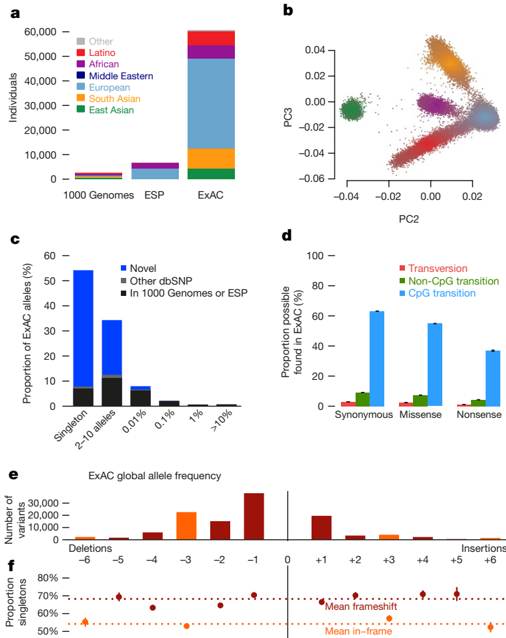
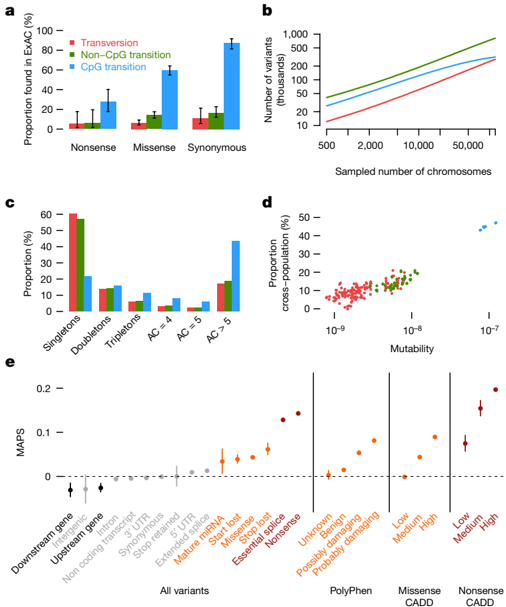
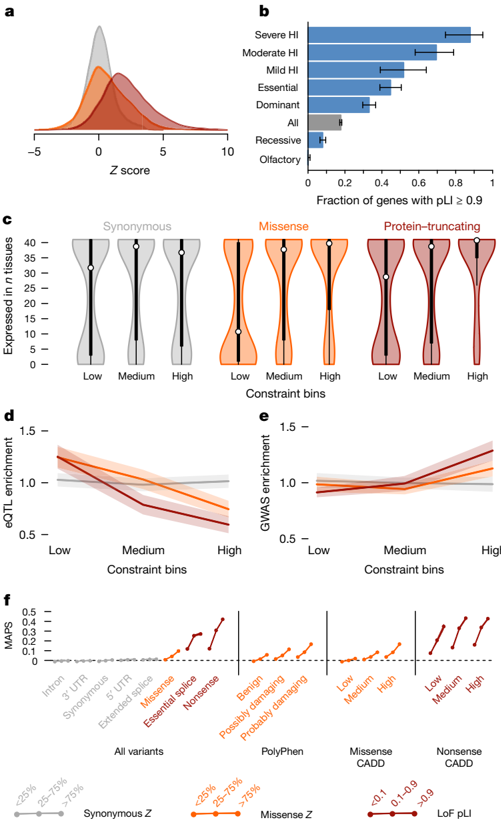
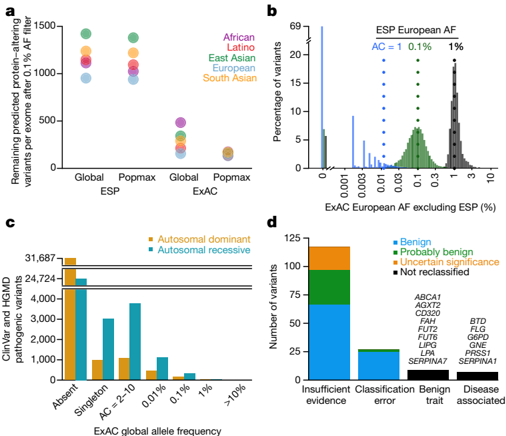
Large-scale reference data sets of human genetic variation are critical for the medical and functional interpretation of DNA sequence changes. Here we describe the aggregation and analysis of high-quality exome (protein-coding region) DNA sequence data for 60,706 individuals of diverse ancestries generated as part of the Exome Aggregation Consortium (ExAC). This catalogue of human genetic diversity contains an average of one variant every eight bases of the exome, and provides direct evidence for the presence of widespread mutational recurrence. We have used this catalogue to calculate objective metrics of pathogenicity for sequence variants, and to identify genes subject to strong selection against various classes of mutation; identifying 3,230 genes with near-complete depletion of predicted protein-truncating variants, with 72% of these genes having no currently established human disease phenotype. Finally, we demonstrate that these data can be used for the efficient filtering of candidate disease-causing variants, and for the discovery of human ‘knockout’ variants in protein-coding genes. Exome sequencing data from 60,706 people of diverse geographic ancestry is presented, providing insight into genetic variation across populations, and illuminating the relationship between DNA variants and human disease. As part of the Exome Aggregation Consortium (ExAC) project, Daniel MacArthur and colleagues report on the generation and analysis of high-quality exome sequencing data from 60,706 individuals of diverse ancestry. This provides the most comprehensive catalogue of human protein-coding genetic variation to date, yielding unprecedented resolution for the analysis of very rare variants across multiple human populations. The catalogue is freely accessible and provides a critical reference panel for the clinical interpretation of genetic variants and the discovery of disease-related genes.
Overview
The claims and statistics of this paper haven’t been checked yet.
Free: it reads the open-access text and checks the first 5 claims that cite a source we can check. Create a free account to check every claim.
Integrity signals
Registry
Cites
Statistics
Figures


Verification
Claims the paper makes
The claims and statistics of this paper haven’t been checked yet.
Free: it reads the open-access text and checks the first 5 claims that cite a source we can check. Create a free account to check every claim.
Claims other papers make about this one
Each is checked against this paper’s own text: does it say what the citing paper says it does?
The source backs part of the claim, not all of it — or backs it for a different population, condition or comparison.
In the citing paper
“Variants in constrained genes (pLI ≥ 0.5)12 explain most of the burden of dnLGD variants and de novo D-mis variants (defined by an MPC score ≥2) in the affected offspring in our study”
From Exome sequencing of 457 autism families recruited online provides evidence for autism risk genes (2019) · cites this paper as [12]
Experimental — accuracy not yet measuredThe source backs part of the claim, not all of it — or backs it for a different population, condition or comparison.
In the citing paper
“Known dominant DD-associated genes are strongly enriched in the minority of genes that exhibit strong selective constraint on heterozygous PTVs7.”
From Evidence for 28 genetic disorders discovered by combining healthcare and research data (2020) · cites this paper as [7]
Experimental — accuracy not yet measuredThe source backs part of the claim, not all of it — or backs it for a different population, condition or comparison.
In the citing paper
“As expected, all ten genes are among the most constrained genes in the genome, with a substantial depletion of PTVs compared to chance expectation24.”
From Rare coding variants in ten genes confer substantial risk for schizophrenia (2022) · cites this paper as [24]
Experimental — accuracy not yet measuredThe source backs part of the claim, not all of it — or backs it for a different population, condition or comparison.
In the citing paper
“In our evolution-focused SNP-h2 enrichment analysis, we detected an overabundance of genic and LoF intolerant loci in both EAS and EUR, suggesting that functionally important regions of the genome contribute to SNP-h2 to a different extent compared to the other annotations tested [10, 33, 40, 44].”
From Denisovan and Neanderthal archaic introgression differentially impacted the genetics of complex traits in modern populations (2022) · cites this paper as [33]
Experimental — accuracy not yet measuredThe source backs part of the claim, not all of it — or backs it for a different population, condition or comparison.
In the citing paper
“In line with previous studies [10, 33], the strongest enrichments in both ancestry groups were observed for annotations related to genic and LoF intolerant regions.”
From Denisovan and Neanderthal archaic introgression differentially impacted the genetics of complex traits in modern populations (2022) · cites this paper as [33]
Experimental — accuracy not yet measured
9 more claims about this paper
Create a free account to see every claim other papers make about this one.
Self-check
Percentages, sums and reported differences re-computed from the paper’s own numbers.
The self-check needs the paper’s full text.
Citations
Cites
Richards, S., Aziz, N., Bale, S., Bick, D., Das, S., Gastier-Foster, J., Grody, W. W., Hegde, M., Lyon, E., Spector, E., et al. (2015) · Genetics in Medicine · doi:10.1038/gim.2015.30 · Cited by 32,594
A global reference for human genetic variation
The 1000 Genomes Project Consortium, authors, C., Auton, A., Abecasis, G. R., Steering committee, Altshuler, D. M., Durbin, R. M., Abecasis, G. R., Bentley, D. R., Chakravarti, A., et al. (2015) · Nature · doi:10.1038/nature15393 · Cited by 18,247
Self-citationA framework for variation discovery and genotyping using next-generation DNA sequencing data
DePristo, M. A., Banks, E., Poplin, R., Garimella, K. V., Maguire, J. R., Hartl, C., Philippakis, A. A., del Angel, G., Rivas, M. A., Hanna, M., et al. (2011) · Nature Genetics · doi:10.1038/ng.806 · Cited by 11,456
Self-citationLethality and centrality in protein networks
Jeong, H., Mason, S. P., Barabási, A.-L., & Oltvai, Z. N. (2001) · Nature · doi:10.1038/35075138 · Cited by 5,287
The Genotype-Tissue Expression (GTEx) pilot analysis: Multitissue gene regulation in humans
The GTEx Consortium, Ardlie, K. G., Deluca, D. S., Segrè, A. V., Sullivan, T. J., Young, T. R., Gelfand, E. T., Trowbridge, C. A., Maller, J. B., Tukiainen, T., et al. (2015) · Science · doi:10.1126/science.1262110 · Cited by 5,062
Self-citationGoh, K.-I., Cusick, M. E., Valle, D., Childs, B., Vidal, M., & Barabási, A.-L. (2007) · Proceedings of the National Academy of Sciences · doi:10.1073/pnas.0701361104 · Cited by 3,242
Inference of human population history from individual whole-genome sequences
Li, H., & Durbin, R. (2011) · Nature · doi:10.1038/nature10231 · Cited by 2,590
Exome sequencing as a tool for Mendelian disease gene discovery
Bamshad, M. J., Ng, S. B., Bigham, A. W., Tabor, H. K., Emond, M. J., Nickerson, D. A., & Shendure, J. (2011) · Nature Reviews Genetics · doi:10.1038/nrg3031 · Cited by 1,673
De novo mutations in schizophrenia implicate synaptic networks
Fromer, M., Pocklington, A. J., Kavanagh, D. H., Williams, H. J., Dwyer, S., Gormley, P., Georgieva, L., Rees, E., Palta, P., Ruderfer, D. M., et al. (2014) · Nature · doi:10.1038/nature12929 · Cited by 1,617
Self-citationEvolution and functional impact of rare coding variation from deep sequencing of human exomes
Tennessen, J. A., Bigham, A. W., O’Connor, T. D., Fu, W., Kenny, E. E., Gravel, S., McGee, S., Do, R., Liu, X., Jun, G., et al. (2012) · Science · doi:10.1126/science.1219240 · Cited by 1,613
Self-citation
Cited by
Items 201–300 of 1,209
Regional missense constraint improves variant deleteriousness prediction
Samocha, K. E., Kosmicki, J. A., Karczewski, K. J., O’Donnell-Luria, A. H., Pierce-Hoffman, E., MacArthur, D. G., Neale, B. M., & Daly, M. J. (2017) · doi:10.1101/148353 · Cited by 351
“In our earlier work, we identified 1614 transcripts that were significantly (Z ≥ 3.09; p < 10 -3 ) depleted of missense variation 13 .”
BackgroundMethodInfluentialSelf-citationMutations in Human Accelerated Regions Disrupt Cognition and Social Behavior
Doan, R. N., Bae, B.-I., Cubelos, B., Chang, C., Hossain, A. A., Al-Saad, S., Mukaddes, N. M., Oner, O., Al-Saffar, M., Balkhy, S., et al. (2016) · Cell · doi:10.1016/j.cell.2016.08.071 · Cited by 351
“Additionally, gene constraint scores (pLI) (Lek et al., 2015) of flanking and target genes are elevated (pLI = 0.”
BackgroundInfluentialHigh-resolution comparative analysis of great ape genomes
Kronenberg, Z. N., Fiddes, I. T., Gordon, D., Murali, S., Cantsilieris, S., Meyerson, O. S., Underwood, J. G., Nelson, B. J., Chaisson, M. J. P., Dougherty, M. L., et al. (2018) · Science · doi:10.1126/science.aar6343 · Cited by 350
Singhi, A. D., George, B., Greenbowe, J. R., Chung, J., Suh, J., Maitra, A., Klempner, S. J., Hendifar, A., Milind, J. M., Golan, T., et al. (2019) · Gastroenterology · doi:10.1053/j.gastro.2019.02.037 · Cited by 348
Multiple Deeply Divergent Denisovan Ancestries in Papuans
Jacobs, G. S., Hudjashov, G., Saag, L., Kusuma, P., Darusallam, C. C., Lawson, D. J., Mondal, M., Pagani, L., Ricaut, F.-X., Stoneking, M., et al. (2019) · Cell · doi:10.1016/j.cell.2019.02.035 · Cited by 346
Wright, C. F., McRae, J. F., Clayton, S., Gallone, G., Aitken, S., FitzGerald, T. W., Jones, P., Prigmore, E., Rajan, D., Lord, J., et al. (2018) · Genetics in Medicine · doi:10.1038/gim.2017.246 · Cited by 329
“…considerably more background population variation data became available between our initial analysis in 2014 and this analysis in 2017 (both internally from unaffected parents within DDD, and externally from resources such as ExAC),21 which is crucial to excluding ‘normal’ benign variation.”
Steinhaus, R., Proft, S., Schuelke, M., Cooper, D. N., Schwarz, J. M., & Seelow, D. (2021) · Nucleic Acids Research · doi:10.1093/nar/gkab266 · Cited by 324
Self-citationDeep sequencing of 10,000 human genomes
Telenti, A., Pierce, L. C. T., Biggs, W. H., di Iulio, J., Wong, E. H. M., Fabani, M. M., Kirkness, E. F., Moustafa, A., Shah, N., Xie, C., et al. (2016) · Proceedings of the National Academy of Sciences · doi:10.1073/pnas.1613365113 · Cited by 336
“(21) (yellow) and Exome Aggregation Consortium (ExAC) pLI (probability that a gene is intolerant to a loss of function mutation) (22) (purple).”
BackgroundMethodInfluentialKosmicki, J. A., Samocha, K. E., Howrigan, D. P., Sanders, S. J., Slowikowski, K., Lek, M., Karczewski, K. J., Cutler, D. J., Devlin, B., Roeder, K., et al. (2017) · Nature Genetics · doi:10.1038/ng.3789 · Cited by 340
Self-citationHuman knockouts and phenotypic analysis in a cohort with a high rate of consanguinity
Saleheen, D., Natarajan, P., Armean, I. M., Zhao, W., Rasheed, A., Khetarpal, S. A., Won, H.-H., Karczewski, K. J., O’Donnell-Luria, A. H., Samocha, K. E., et al. (2017) · Nature · doi:10.1038/nature22034 · Cited by 340
“We compared our results to three recent reports in which homozygous pLoF genes have been catalogued: in Pakistanis living in Britain 6 , in Icelanders 7 , and in the Exome Aggregation Consortium (ExAC) 8 .”
Self-citationWhole-genome landscape of mucosal melanoma reveals diverse drivers and therapeutic targets
Newell, F., Kong, Y., Wilmott, J. S., Johansson, P. A., Ferguson, P. M., Cui, C., Li, Z., Kazakoff, S. H., Burke, H., Dodds, T. J., et al. (2019) · Nature Communications · doi:10.1038/s41467-019-11107-x · Cited by 334
Oduwole, O. O., Huhtaniemi, I. T., & Misrahi, M. (2021) · International Journal of Molecular Sciences · doi:10.3390/ijms222312735 · Cited by 301
Role of Follicle-Stimulating Hormone in Spermatogenesis
Oduwole, O. O., Peltoketo, H., & Huhtaniemi, I. T. (2018) · Frontiers in Endocrinology · doi:10.3389/fendo.2018.00763 · Cited by 314
Systematic differences in discovery of genetic effects on gene expression and complex traits
Mostafavi, H., Spence, J. P., Naqvi, S., & Pritchard, J. K. (2023) · Nature Genetics · doi:10.1038/s41588-023-01529-1 · Cited by 336
“Despite this, SNP heritability for complex traits is enriched near selectively constrained genes 45–47 , as measured by the pLI (probability of being loss-of-function intoler-ant) score 45 .”
InfluentialClinical and Mechanistic Insights Into the Genetics of Cardiomyopathy
Burke, M. A., Cook, S. A., Seidman, J. G., & Seidman, C. E. (2016) · Journal of the American College of Cardiology · doi:10.1016/j.jacc.2016.08.079 · Cited by 325
“A recently developed and publically available resource, the Exome Aggregation Consortium (ExAC)(5) has further improved variant classification.”
Systematic reanalysis of clinical exome data yields additional diagnoses: implications for providers
Wenger, A. M., Guturu, H., Bernstein, J. A., & Bejerano, G. (2017) · Genetics in Medicine · doi:10.1038/gim.2016.88 · Cited by 328
Comprehensive Analysis of Genetic Ancestry and Its Molecular Correlates in Cancer
Carrot-Zhang, J., Chambwe, N., Damrauer, J. S., Knijnenburg, T. A., Robertson, A. G., Yau, C., Zhou, W., Berger, A. C., Huang, K.-L., Newberg, J. Y., et al. (2020) · Cancer Cell · doi:10.1016/j.ccell.2020.04.012 · Cited by 331
Self-citationNeurodevelopmental disease genes implicated by de novo mutation and copy number variation morbidity
Coe, B. P., Stessman, H. A. F., Sulovari, A., Geisheker, M. R., Bakken, T. E., Lake, A. M., Dougherty, J. D., Lein, E. S., Hormozdiari, F., Bernier, R. A., et al. (2019) · Nature Genetics · doi:10.1038/s41588-018-0288-4 · Cited by 330
The impact of nonsense-mediated mRNA decay on genetic disease, gene editing and cancer immunotherapy
Lindeboom, R. G. H., Vermeulen, M., Lehner, B., & Supek, F. (2019) · Nature Genetics · doi:10.1038/s41588-019-0517-5 · Cited by 327
CRISPR-mediated activation of a promoter or enhancer rescues obesity caused by haploinsufficiency
Matharu, N., Rattanasopha, S., Tamura, S., Maliskova, L., Wang, Y., Bernard, A., Hardin, A., Eckalbar, W. L., Vaisse, C., & Ahituv, N. (2019) · Science · doi:10.1126/science.aau0629 · Cited by 323
“Large-scale exome sequencing analyses estimate that there could be over 3000 human genes that are haploinsufficient (3).”
BackgroundFrequency of mononuclear diploid cardiomyocytes underlies natural variation in heart regeneration
Patterson, M., Barske, L., Van Handel, B., Rau, C. D., Gan, P., Sharma, A., Parikh, S., Denholtz, M., Huang, Y., Yamaguchi, Y., et al. (2017) · Nature Genetics · doi:10.1038/ng.3929 · Cited by 320
Identification of rare-disease genes using blood transcriptome sequencing and large control cohorts
Undiagnosed Diseases Network, Frésard, L., Care4Rare Canada Consortium, Smail, C., Ferraro, N. M., Teran, N. A., Li, X., Smith, K. S., Bonner, D., Kernohan, K. D., et al. (2019) · Nature Medicine · doi:10.1038/s41591-019-0457-8 · Cited by 321
Triple-Negative Breast Cancer Risk Genes Identified by Multigene Hereditary Cancer Panel Testing
Shimelis, H., LaDuca, H., Hu, C., Hart, S. N., Na, J., Thomas, A., Akinhanmi, M., Moore, R. M., Brauch, H., Cox, A., et al. (2018) · JNCI: Journal of the National Cancer Institute · doi:10.1093/jnci/djy106 · Cited by 305
“from the clinical cohort and 17 genes in TNBC patients from the TNBCC study were compared with PV frequency in more than 26 000 non-Finnish European population (NFE) Exome Aggregation Consortium (ExAC) reference control subjects (7), excluding The Cancer Genome Atlas (TCGA) exomes”
MethodMonoallelic Mutations to DNAJB11 Cause Atypical Autosomal-Dominant Polycystic Kidney Disease
Cornec-Le Gall, E., Olson, R. J., Besse, W., Heyer, C. M., Gainullin, V. G., Smith, J. M., Audrézet, M.-P., Hopp, K., Porath, B., Shi, B., et al. (2018) · The American Journal of Human Genetics · doi:10.1016/j.ajhg.2018.03.013 · Cited by 312
Analysis of error profiles in deep next-generation sequencing data
Ma, X., Shao, Y., Tian, L., Flasch, D. A., Mulder, H. L., Edmonson, M. N., Liu, Y., Chen, X., Newman, S., Nakitandwe, J., et al. (2019) · Genome Biology · doi:10.1186/s13059-019-1659-6 · Cited by 318
“To account for potential germline variants present in the COSMIC database, variants with a population allele fraction > 0.1% (defined by the ExAC database [26]) were removed.”
MethodInfluentialGenomic Analysis in the Age of Human Genome Sequencing
Lappalainen, T., Scott, A. J., Brandt, M., & Hall, I. M. (2019) · Cell · doi:10.1016/j.cell.2019.02.032 · Cited by 301
“While the vast majority of this huge number of variants have no functional impact at the molecular or phenotypic level, every genome has >100 protein truncating variants (PTVs) that introduce a premature stop codon, >20 of which are rare in the human population and potentially deleterious (Lek et al., 2016).”
InfluentialIncomplete Penetrance and Variable Expressivity: From Clinical Studies to Population Cohorts
Kingdom, R., & Wright, C. F. (2022) · Frontiers in Genetics · doi:10.3389/fgene.2022.920390 · Cited by 287
Innovations in Genomics and Big Data Analytics for Personalized Medicine and Health Care: A Review
Hassan, M., Awan, F. M., Naz, A., deAndrés-Galiana, E. J., Alvarez, O., Cernea, A., Fernández-Brillet, L., Fernández-Martínez, J. L., & Kloczkowski, A. (2022) · International Journal of Molecular Sciences · doi:10.3390/ijms23094645 · Cited by 317
“ExAC, GNOMAD, and the Beacon Network databases provide support in the understanding of genetic variations and identifying variants that are unique within a specific ethnic group [22].”
BackgroundMethodGenome-wide de novo risk score implicates promoter variation in autism spectrum disorder
An, J.-Y., Lin, K., Zhu, L., Werling, D. M., Dong, S., Brand, H., Wang, H. Z., Zhao, X., Schwartz, G. B., Collins, R. L., et al. (2018) · Science · doi:10.1126/science.aat6576 · Cited by 316
“In coding regions, de novo mutations that are not observed in the general population according to the Genome Aggregation Database (gnomAD) (27) are more likely to be associated with ASD (28).”
Self-citationOrganoid Cultures as Preclinical Models of Non–Small Cell Lung Cancer
Shi, R., Radulovich, N., Ng, C., Liu, N., Notsuda, H., Cabanero, M., Martins-Filho, S. N., Raghavan, V., Li, Q., Mer, A. S., et al. (2020) · Clinical Cancer Research · doi:10.1158/1078-0432.ccr-19-1376 · Cited by 316
“8 (33) were used for mutation calling, whereas dbSNP (34), ExAC (35), and ESP (36) were used as filters for samples without matched normal tissue.”
MethodInfluentialIon Channels in Genetic Epilepsy: From Genes and Mechanisms to Disease-Targeted Therapies
Oyrer, J., Maljevic, S., Scheffer, I. E., Berkovic, S. F., Petrou, S., & Reid, C. A. (2018) · Pharmacological Reviews · doi:10.1124/pr.117.014456 · Cited by 315
“Moreover, many of the initially reported variants have emerged in available databases at high frequencies, suggesting that they are benign polymorphisms (Lek et al., 2016; Becker et al., 2017).”
BackgroundDunn, E. C., Soare, T. W., Zhu, Y., Simpkin, A. J., Suderman, M. J., Klengel, T., Smith, A. D. A. C., Ressler, K. J., & Relton, C. L. (2019) · Biological Psychiatry · doi:10.1016/j.biopsych.2018.12.023 · Cited by 315
Prevalence Estimates of Polycystic Kidney and Liver Disease by Population Sequencing
Lanktree, M. B., Haghighi, A., Guiard, E., Iliuta, I.-A., Song, X., Harris, P. C., Paterson, A. D., & Pei, Y. (2018) · Journal of the American Society of Nephrology · doi:10.1681/asn.2018050493 · Cited by 300
Angus, L., Smid, M., Wilting, S. M., van Riet, J., Van Hoeck, A., Nguyen, L., Nik-Zainal, S., Steenbruggen, T. G., Tjan-Heijnen, V. C. G., Labots, M., et al. (2019) · Nature Genetics · doi:10.1038/s41588-019-0507-7 · Cited by 309
Interleukin-11 is a therapeutic target in idiopathic pulmonary fibrosis
Ng, B., Dong, J., D’Agostino, G., Viswanathan, S., Widjaja, A. A., Lim, W.-W., Ko, N. S. J., Tan, J., Chothani, S. P., Huang, B., et al. (2019) · Science Translational Medicine · doi:10.1126/scitranslmed.aaw1237 · Cited by 314
Alcohol Dehydrogenases, Aldehyde Dehydrogenases, and Alcohol Use Disorders: A Critical Review
Edenberg, H. J., & McClintick, J. N. (2018) · Alcoholism: Clinical and Experimental Research · doi:10.1111/acer.13904 · Cited by 275
AKT Inhibition in Solid Tumors With AKT1 Mutations
Hyman, D. M., Smyth, L. M., Donoghue, M. T. A., Westin, S. N., Bedard, P. L., Dean, E. J., Bando, H., El-Khoueiry, A. B., Pérez-Fidalgo, J. A., Mita, A., et al. (2017) · Journal of Clinical Oncology · doi:10.1200/jco.2017.73.0143 · Cited by 311
Moss, D. J. H., Pardiñas, A. F., Langbehn, D., Lo, K., Leavitt, B. R., Roos, R., Durr, A., Mead, S., Coleman, A., Santos, R. D., et al. (2017) · The Lancet Neurology · doi:10.1016/s1474-4422(17)30161-8 · Cited by 312
“Loss of or variation in mismatch repair complexes can cause malignancy and thus they are not regarded as ideal drug targets, but MSH3 is not essential as it can tolerate loss of function variation (36) and could provide a therapeutic target in HD.”
BackgroundDown syndrome and the complexity of genome dosage imbalance
Antonarakis, S. E. (2017) · Nature Reviews Genetics · doi:10.1038/nrg.2016.154 · Cited by 299
Genomics of disease risk in globally diverse populations
Gurdasani, D., Barroso, I., Zeggini, E., & Sandhu, M. S. (2019) · Nature Reviews Genetics · doi:10.1038/s41576-019-0144-0 · Cited by 306
The ChinaMAP analytics of deep whole genome sequences in 10,588 individuals
The ChinaMAP Consortium, Cao, Y., Li, L., Xu, M., Feng, Z., Sun, X., Lu, J., Xu, Y., Du, P., Wang, T., et al. (2020) · Cell Research · doi:10.1038/s41422-020-0322-9 · Cited by 317
Cloud computing for genomic data analysis and collaboration
Langmead, B., & Nellore, A. (2018) · Nature Reviews Genetics · doi:10.1038/nrg.2017.113 · Cited by 310
Mapping and characterization of structural variation in 17,795 human genomes
Genomics, N. C. F. C. D., Abel, H. J., Larson, D. E., Regier, A. A., Chiang, C., Das, I., Kanchi, K. L., Layer, R. M., Neale, B. M., Salerno, W. J., et al. (2020) · Nature · doi:10.1038/s41586-020-2371-0 · Cited by 310
“2d): (1) the fraction of variants that affect dosage-tolerant genes with a loss-of-function intolerance (pLI) 27,28 score of less than 0.9; and (2) the fraction of variants that are present as singletons found in only one individual or family.”
BackgroundMethodInfluentialSelf-citationAnalysis of 589,306 genomes identifies individuals resilient to severe Mendelian childhood diseases
Chen, R., Shi, L., Hakenberg, J., Naughton, B., Sklar, P., Zhang, J., Zhou, H., Tian, L., Prakash, O., Lemire, M., et al. (2016) · Nature Biotechnology · doi:10.1038/nbt.3514 · Cited by 310
Self-citationGenomic Landscape and Mutational Signatures of Deafness-Associated Genes
Azaiez, H., Booth, K. T., Ephraim, S. S., Crone, B., Black-Ziegelbein, E. A., Marini, R. J., Shearer, A. E., Sloan-Heggen, C. M., Kolbe, D., Casavant, T., et al. (2018) · The American Journal of Human Genetics · doi:10.1016/j.ajhg.2018.08.006 · Cited by 301
Bioinformatics and Computational Tools for Next-Generation Sequencing Analysis in Clinical Genetics
Pereira, R., Oliveira, J., & Sousa, M. (2020) · Journal of Clinical Medicine · doi:10.3390/jcm9010132 · Cited by 279
“Population databases such 1000 genome project [126], Exome Aggregation Consortium (ExAC) [127], and the Genome Aggregation Database (gnomAD; http://gnomad.”
BackgroundPlotkin, S. R., Messiaen, L., Legius, E., Pancza, P., Avery, R. A., Blakeley, J. O., Babovic-Vuksanovic, D., Ferner, R., Fisher, M. J., Friedman, J. M., et al. (2022) · Genetics in Medicine · doi:10.1016/j.gim.2022.05.007 · Cited by 294
“25 Therefore, although loss-of-function is a common mechanism in LZTR1 -related SWN, identi fi cation of a truncating LZTR1 variant with no NF2/SMARCB1 variant in an unaffected tissue such as blood of the patient with SWN does not con fi rm pathogenicity of the variant.”
Tang, S., Wang, X., Li, W., Yang, X., Li, Z., Liu, W., Li, C., Zhu, Z., Wang, L., Wang, J., et al. (2017) · The American Journal of Human Genetics · doi:10.1016/j.ajhg.2017.04.012 · Cited by 304
Amyere, M., Revencu, N., Helaers, R., Pairet, E., Baselga, E., Cordisco, M., Chung, W., Dubois, J., Lacour, J.-P., Martorell, L., et al. (2017) · Circulation · doi:10.1161/circulationaha.116.026886 · Cited by 302
Somatic MAP2K1 Mutations Are Associated with Extracranial Arteriovenous Malformation
Couto, J. A., Huang, A. Y., Konczyk, D. J., Goss, J. A., Fishman, S. J., Mulliken, J. B., Warman, M. L., & Greene, A. K. (2017) · The American Journal of Human Genetics · doi:10.1016/j.ajhg.2017.01.018 · Cited by 298
ZBP1: Innate Sensor Regulating Cell Death and Inflammation
Kuriakose, T., & Kanneganti, T.-D. (2018) · Trends in Immunology · doi:10.1016/j.it.2017.11.002 · Cited by 299
“As per the protein coding genetic variation data provided by the Exome Aggregation Consortium (ExAC), 71 synonymous, 173 missense and 15 loss of function variants were observed for ZBP1 in healthy subjects [53].”
MethodMathew, N. R., Baumgartner, F., Braun, L., O'Sullivan, D., Thomas, S., Waterhouse, M., Müller, T. A., Hanke, K., Taromi, S., Apostolova, P., et al. (2018) · Nature Medicine · doi:10.1038/nm.4484 · Cited by 295
“The patients' median age was 50 (14-76) in the chemotherapy cohort, 50 (12-76) in the DLI alone cohort, 52 (20-76) in the DLI plus chemotherapy cohort, 53 (19-74) in the sorafenib alone cohort and 49 (18-68) in the sorafenib and DLI cohort.”
BackgroundQuantifying genetic effects on disease mediated by assayed gene expression levels
Yao, D. W., O’Connor, L. J., Price, A. L., & Gusev, A. (2020) · Nature Genetics · doi:10.1038/s41588-020-0625-2 · Cited by 298
“We obtained an additional gene set for genes essential in cell lines 83 , genes depleted for protein-truncating mutations 46,47 , and genes depleted for missense mutations 84 from the supplementary data of the respective papers.”
InfluentialWhere Are the Disease-Associated eQTLs?
Umans, B. D., Battle, A., & Gilad, Y. (2021) · Trends in Genetics · doi:10.1016/j.tig.2020.08.009 · Cited by 296
“more rare in the population and more frequently implicated in highly penetrant diseases [43] than regulatory mutations.”
BackgroundWhole-genome deep-learning analysis identifies contribution of noncoding mutations to autism risk
Zhou, J., Park, C. Y., Theesfeld, C. L., Wong, A. K., Yuan, Y., Scheckel, C., Fak, J. J., Funk, J., Yao, K., Tajima, Y., et al. (2019) · Nature Genetics · doi:10.1038/s41588-019-0420-0 · Cited by 284
Werling, D. M., Brand, H., An, J.-Y., Stone, M. R., Zhu, L., Glessner, J. T., Collins, R. L., Dong, S., Layer, R. M., Markenscoff-Papadimitriou, E., et al. (2018) · Nature Genetics · doi:10.1038/s41588-018-0107-y · Cited by 293
Self-citationA proteomic landscape of diffuse-type gastric cancer
Ge, S., Xia, X., Ding, C., Zhen, B., Zhou, Q., Feng, J., Yuan, J., Chen, R., Li, Y., Ge, Z., et al. (2018) · Nature Communications · doi:10.1038/s41467-018-03121-2 · Cited by 288
PERCH: A Unified Framework for Disease Gene Prioritization: HUMAN MUTATION
Feng, B.-J. (2017) · Human Mutation · doi:10.1002/humu.23158 · Cited by 289
“Therefore, the deleteriousness predictors in this framework included the maximum minor allele frequency across populations (MaxMAF) in the Exome Aggregation Consortium (ExAC) version 0.3 [Lek et al., 2016] and the 1000 Genomes Project (G1K) phase 3 [McVean et al., 2012].”
MethodInfluentialDe novo variants in neurodevelopmental disorders with epilepsy
EuroEPINOMICS RES Consortium, Heyne, H. O., Singh, T., Stamberger, H., Abou Jamra, R., Caglayan, H., Craiu, D., De Jonghe, P., Guerrini, R., Helbig, K. L., et al. (2018) · Nature Genetics · doi:10.1038/s41588-018-0143-7 · Cited by 289
Self-citationBen-Shalom, R., Keeshen, C. M., Berrios, K. N., An, J. Y., Sanders, S. J., & Bender, K. J. (2017) · Biological Psychiatry · doi:10.1016/j.biopsych.2017.01.009 · Cited by 288
“Exome Aggregation Consortium (28) and Residual Variation Intolerance Score (29), two methods that use large-scale population data to identify constrained genes that are intolerant of deleterious variation, both predict that SCN2A is highly intolerant of such haploinsufficiency, with 30-fold fewer PTVs observed in an a…”
Emerging concepts in liquid biopsies
Perakis, S., & Speicher, M. R. (2017) · BMC Medicine · doi:10.1186/s12916-017-0840-6 · Cited by 282
“The question regarding what constitutes typical somatic variation and to what extent does it take form in terms of phenotype has gained attention by recent landmark large-scale studies [51, 52].”
BackgroundGene discovery in amyotrophic lateral sclerosis: implications for clinical management
Al-Chalabi, A., van den Berg, L. H., & Veldink, J. (2017) · Nature Reviews Neurology · doi:10.1038/nrneurol.2016.182 · Cited by 287
Ultra-Rare Genetic Variation in the Epilepsies: A Whole-Exome Sequencing Study of 17,606 Individuals
Feng, Y.-C. A., Howrigan, D. P., Abbott, L. E., Tashman, K., Cerrato, F., Singh, T., Heyne, H., Byrnes, A., Churchhouse, C., Watts, N., et al. (2019) · The American Journal of Human Genetics · doi:10.1016/j.ajhg.2019.05.020 · Cited by 297
Self-citationGenomic architecture of autism from comprehensive whole-genome sequence annotation
Trost, B., Thiruvahindrapuram, B., Chan, A. J. S., Engchuan, W., Higginbotham, E. J., Howe, J. L., Loureiro, L. O., Reuter, M. S., Roshandel, D., Whitney, J., et al. (2022) · Cell · doi:10.1016/j.cell.2022.10.009 · Cited by 270
Self-citationHealth and population effects of rare gene knockouts in adult humans with related parents
Narasimhan, V. M., Hunt, K. A., Mason, D., Baker, C. L., Karczewski, K. J., Barnes, M. R., Barnett, A. H., Bates, C., Bellary, S., Bockett, N. A., et al. (2016) · Science · doi:10.1126/science.aac8624 · Cited by 286
Self-citationWang, X., Prager, B. C., Wu, Q., Kim, L. J. Y., Gimple, R. C., Shi, Y., Yang, K., Morton, A. R., Zhou, W., Zhu, Z., et al. (2018) · Cell Stem Cell · doi:10.1016/j.stem.2018.03.011 · Cited by 285
“, 2012) to identify those which may have moderate or high impact on gene function (primarily nonsynonymous variants or those that directly affect splice donors or acceptors), and variants were also annotated with allelic frequencies from the Exome Aggregation Consortium release 1 (Lek et al., 2016) or the 1000 Genomes…”
Exomic variants of an elderly cohort of Brazilians in the ABraOM database
Naslavsky, M. S., Yamamoto, G. L., Almeida, T. F., Ezquina, S. A. M., Sunaga, D. Y., Pho, N., Bozoklian, D., Sandberg, T. O. M., Brito, L. A., Lazar, M., et al. (2017) · Human Mutation · doi:10.1002/humu.23220 · Cited by 279
“Regarding the analyses presented in this article in Results, we have used Annovar filter-based annotation lists (build hg19): (1) datasets: exac03 (Lek et al., 2016), esp6500siv2_all (Tennessen et al., 2012), 1000g2015aug (1000 Genomes Project Consortium et al., 2015), snp138/avsnp147 (Sherry et…”
BackgroundMethodResultInfluentialGenomic diagnosis for children with intellectual disability and/or developmental delay
Bowling, K. M., Thompson, M. L., Amaral, M. D., Finnila, C. R., Hiatt, S. M., Engel, K. L., Cochran, J. N., Brothers, K. B., East, K. M., Gray, D. E., et al. (2017) · Genome Medicine · doi:10.1186/s13073-017-0433-1 · Cited by 273
“For reanalysis, variants were reannotated with additional data, including updated versions of ClinVar [6], ExAC [15], DDG2P [16], and gene or variant lists identified in publications related to DD/ID genetics [17–19], and refiltered as described above and in Supplemental Methods.”
MethodA genome-wide association study of serum proteins reveals shared loci with common diseases
Gudjonsson, A., Gudmundsdottir, V., Axelsson, G. T., Gudmundsson, E. F., Jonsson, B. G., Launer, L. J., Lamb, J. R., Jennings, L. L., Aspelund, T., Emilsson, V., et al. (2022) · Nature Communications · doi:10.1038/s41467-021-27850-z · Cited by 284
Momozawa, Y., Iwasaki, Y., Parsons, M. T., Kamatani, Y., Takahashi, A., Tamura, C., Katagiri, T., Yoshida, T., Nakamura, S., Sugano, K., et al. (2018) · Nature Communications · doi:10.1038/s41467-018-06581-8 · Cited by 278
Liu, S., Huang, S., Chen, F., Zhao, L., Yuan, Y., Francis, S. S., Fang, L., Li, Z., Lin, L., Liu, R., et al. (2018) · Cell · doi:10.1016/j.cell.2018.08.016 · Cited by 279
Kleppe, M., Koche, R., Zou, L., van Galen, P., Hill, C. E., Dong, L., De Groote, S., Papalexi, E., Hanasoge Somasundara, A. V., Cordner, K., et al. (2018) · Cancer Cell · doi:10.1016/j.ccell.2017.11.009 · Cited by 279
The NGS in PPGL (NGSnPPGL) Study Group, Toledo, R. A., Burnichon, N., Cascon, A., Benn, D. E., Bayley, J.-P., Welander, J., Tops, C. M., Firth, H., Dwight, T., et al. (2017) · Nature Reviews Endocrinology · doi:10.1038/nrendo.2016.185 · Cited by 275
CLCN2 chloride channel mutations in familial hyperaldosteronism type II
Scholl, U. I., Stölting, G., Schewe, J., Thiel, A., Tan, H., Nelson-Williams, C., Vichot, A. A., Jin, S. C., Loring, E., Untiet, V., et al. (2018) · Nature Genetics · doi:10.1038/s41588-018-0048-5 · Cited by 266
SNPnexus: a web server for functional annotation of human genome sequence variation (2020 update)
Oscanoa, J., Sivapalan, L., Gadaleta, E., Dayem Ullah, A. Z., Lemoine, N. R., & Chelala, C. (2020) · Nucleic Acids Research · doi:10.1093/nar/gkaa420 · Cited by 280
“This filter uses data from gnomAD exomes, gnomAD genomes (14) and 1000 Genomes Project (15).”
MethodCano-Gamez, K., Soskic, B., Roumeliotis, T. I., So, E., Smyth, D. J., Baldrighi, M., Willé, D., Nakic, N., Esparza-Gordillo, J., Larminie, C. G. C., et al. (2020) · Nature Communications · doi:10.1038/s41467-020-15543-y · Cited by 274
De novo mutations in regulatory elements in neurodevelopmental disorders
Short, P. J., McRae, J. F., Gallone, G., Sifrim, A., Won, H., Geschwind, D. H., Wright, C. F., Firth, H. V., FitzPatrick, D. R., Barrett, J. C., et al. (2018) · Nature · doi:10.1038/nature25983 · Cited by 274
Self-citationHistone Lysine Methylases and Demethylases in the Landscape of Human Developmental Disorders
Faundes, V., Newman, W. G., Bernardini, L., Canham, N., Clayton-Smith, J., Dallapiccola, B., Davies, S. J., Demos, M. K., Goldman, A., Gill, H., et al. (2018) · The American Journal of Human Genetics · doi:10.1016/j.ajhg.2017.11.013 · Cited by 275
The Genetic Landscape of Diamond-Blackfan Anemia
Ulirsch, J. C., Verboon, J. M., Kazerounian, S., Guo, M. H., Yuan, D., Ludwig, L. S., Handsaker, R. E., Abdulhay, N. J., Fiorini, C., Genovese, G., et al. (2018) · The American Journal of Human Genetics · doi:10.1016/j.ajhg.2018.10.027 · Cited by 272
Self-citationDEG 15, an update of the Database of Essential Genes that includes built-in analysis tools
Luo, H., Lin, Y., Liu, T., Lai, F.-L., Zhang, C.-T., Gao, F., & Zhang, R. (2021) · Nucleic Acids Research · doi:10.1093/nar/gkaa917 · Cited by 271
Guerreiro, R., Ross, O. A., Kun-Rodrigues, C., Hernandez, D. G., Orme, T., Eicher, J. D., Shepherd, C. E., Parkkinen, L., Darwent, L., Heckman, M. G., et al. (2018) · The Lancet Neurology · doi:10.1016/s1474-4422(17)30400-3 · Cited by 270
A thrifty variant in CREBRF strongly influences body mass index in Samoans
Minster, R. L., Hawley, N. L., Su, C.-T., Sun, G., Kershaw, E. E., Cheng, H., Buhule, O. D., Lin, J., Reupena, M. S., Viali, S., et al. (2016) · Nature Genetics · doi:10.1038/ng.3620 · Cited by 262
Yoo, S.-K., Song, Y. S., Lee, E. K., Hwang, J., Kim, H. H., Jung, G., Kim, Y. A., Kim, S.-J., Cho, S. W., Won, J.-K., et al. (2019) · Nature Communications · doi:10.1038/s41467-019-10680-5 · Cited by 268
Extreme Polygenicity of Complex Traits Is Explained by Negative Selection
O'Connor, L. J., Schoech, A. P., Hormozdiari, F., Gazal, S., Patterson, N., & Price, A. L. (2019) · The American Journal of Human Genetics · doi:10.1016/j.ajhg.2019.07.003 · Cited by 268
Wiel, L., Baakman, C., Gilissen, D., Veltman, J. A., Vriend, G., & Gilissen, C. (2019) · Human Mutation · doi:10.1002/humu.23798 · Cited by 257
Reevaluating the Genetic Contribution of Monogenic Dilated Cardiomyopathy
Mazzarotto, F., Tayal, U., Buchan, R. J., Midwinter, W., Wilk, A., Whiffin, N., Govind, R., Mazaika, E., de Marvao, A., Dawes, T. J. W., et al. (2020) · Circulation · doi:10.1161/circulationaha.119.037661 · Cited by 257
Self-citationAccurate, scalable cohort variant calls using DeepVariant and GLnexus
Yun, T., Li, H., Chang, P.-C., Lin, M. F., Carroll, A., & McLean, C. Y. (2021) · Bioinformatics · doi:10.1093/bioinformatics/btaa1081 · Cited by 269
Kozel, B. A., Barak, B., Kim, C. A., Mervis, C. B., Osborne, L. R., Porter, M., & Pober, B. R. (2021) · Nature Reviews Disease Primers · doi:10.1038/s41572-021-00276-z · Cited by 245
The landscape of sex-differential transcriptome and its consequent selection in human adults
Gershoni, M., & Pietrokovski, S. (2017) · BMC Biology · doi:10.1186/s12915-017-0352-z · Cited by 266
“We examined the use of other available sources of human genetic variations, such as ExAC [61].”
MethodApplication of magnetic nanoparticles in nucleic acid detection
Tang, C., He, Z., Liu, H., Xu, Y., Huang, H., Yang, G., Xiao, Z., Li, S., Liu, H., Deng, Y., et al. (2020) · Journal of Nanobiotechnology · doi:10.1186/s12951-020-00613-6 · Cited by 262
Günther, T., Tulipano, G., Dournaud, P., Bousquet, C., Csaba, Z., Kreienkamp, H.-J., Lupp, A., Korbonits, M., Castaño, J. P., Wester, H.-J., et al. (2018) · Pharmacological Reviews · doi:10.1124/pr.117.015388 · Cited by 253
“In a ranking of about 18,000 human genes based on the presence of missense mutations, the genes coding for SST receptors are placed between positions 1459 (SST1) and 9488 (SST5), where 1 would be the gene that has the lowest tolerance for missense mutations (Lek et al., 2016).”
BackgroundRafehi, H., Szmulewicz, D. J., Bennett, M. F., Sobreira, N. L. M., Pope, K., Smith, K. R., Gillies, G., Diakumis, P., Dolzhenko, E., Eberle, M. A., et al. (2019) · The American Journal of Human Genetics · doi:10.1016/j.ajhg.2019.05.016 · Cited by 262
Genetic Control of Expression and Splicing in Developing Human Brain Informs Disease Mechanisms
Walker, R. L., Ramaswami, G., Hartl, C., Mancuso, N., Gandal, M. J., de la Torre-Ubieta, L., Pasaniuc, B., Stein, J. L., & Geschwind, D. H. (2019) · Cell · doi:10.1016/j.cell.2019.09.021 · Cited by 273
Large-scale investigation of the reasons why potentially important genes are ignored
Stoeger, T., Gerlach, M., Morimoto, R. I., & Nunes Amaral, L. A. (2018) · PLOS Biology · doi:10.1371/journal.pbio.2006643 · Cited by 261
Artificial intelligence for precision medicine in neurodevelopmental disorders
Uddin, M., Wang, Y., & Woodbury-Smith, M. (2019) · npj Digital Medicine · doi:10.1038/s41746-019-0191-0 · Cited by 248
Whole genome sequencing reveals that genetic conditions are frequent in intensively ill children
Disease, N. B., French, C. E., Next Generation Children Project, Delon, I., Dolling, H., Sanchis-Juan, A., Shamardina, O., Mégy, K., Abbs, S., Austin, T., et al. (2019) · Intensive Care Medicine · doi:10.1007/s00134-019-05552-x · Cited by 251
Resolving the full spectrum of human genome variation using Linked-Reads
Marks, P., Garcia, S., Barrio, A. M., Belhocine, K., Bernate, J., Bharadwaj, R., Bjornson, K., Catalanotti, C., Delaney, J., Fehr, A., et al. (2019) · Genome Research · doi:10.1101/gr.234443.118 · Cited by 261
Self-citationMarinko, J. T., Huang, H., Penn, W. D., Capra, J. A., Schlebach, J. P., & Sanders, C. R. (2019) · Chemical Reviews · doi:10.1021/acs.chemrev.8b00532 · Cited by 252
Petrovski, S., & Goldstein, D. B. (2016) · Genome Biology · doi:10.1186/s13059-016-1016-y · Cited by 255
Wei, C.-Y., Yang, J.-H., Yeh, E.-C., Tsai, M.-F., Kao, H.-J., Lo, C.-Z., Chang, L.-P., Lin, W.-J., Hsieh, F.-J., Belsare, S., et al. (2021) · npj Genomic Medicine · doi:10.1038/s41525-021-00178-9 · Cited by 252
Metadata
- Authors
- Exome Aggregation Consortium, Lek, M., Karczewski, K. J., Minikel, E. V., Samocha, K. E., Banks, E., Fennell, T., O’Donnell-Luria, A. H., Ware, J. S., Hill, A. J., Cummings, B. B., Tukiainen, T., Birnbaum, D. P., Kosmicki, J. A., Duncan, L. E., Estrada, K., Zhao, F., Zou, J., Pierce-Hoffman, E., Berghout, J., Cooper, D. N., Deflaux, N., DePristo, M., Do, R., Flannick, J., Fromer, M., Gauthier, L., Goldstein, J., Gupta, N., Howrigan, D., Kiezun, A., Kurki, M. I., Moonshine, A. L., Natarajan, P., Orozco, L., Peloso, G. M., Poplin, R., Rivas, M. A., Ruano-Rubio, V., Rose, S. A., Ruderfer, D. M., Shakir, K., Stenson, P. D., Stevens, C., Thomas, B. P., Tiao, G., Tusie-Luna, M. T., Weisburd, B., Won, H.-H., Yu, D., Altshuler, D. M., Ardissino, D., Boehnke, M., Danesh, J., Donnelly, S., Elosua, R., Florez, J. C., Gabriel, S. B., Getz, G., Glatt, S. J., Hultman, C. M., Kathiresan, S., Laakso, M., McCarroll, S., McCarthy, M. I., McGovern, D., McPherson, R., Neale, B. M., Palotie, A., Purcell, S. M., Saleheen, D., Scharf, J. M., Sklar, P., Sullivan, P. F., Tuomilehto, J., Tsuang, M. T., Watkins, H. C., Wilson, J. G., Daly, M. J., & MacArthur, D. G.
- Affiliations
- Broad Institute (US)
- University of Arizona (US)
- Cardiff University (GB)
- Google (United States) (US)
- Icahn School of Medicine at Mount Sinai (US)
- National Institute of Genomic Medicine (MX)
- Instituto Nacional de Ciencias Médicas y Nutrición Salvador Zubirán (MX)
- Samsung Medical Center (KR)
- University of Michigan (US)
- University of Cambridge (GB)
- SUNY Upstate Medical University (US)
- Karolinska Institutet (SE)
- University of Eastern Finland (FI)
- Centre for Human Genetics (GB)
- Cedars-Sinai Medical Center (US)
- Ottawa Heart Institute (CA)
- Center for Non-Communicable Diseases (PK)
- University of North Carolina at Chapel Hill (US)
- University of Helsinki (FI)
- University of California San Diego (US)
- University of Mississippi Medical Center (US)
- Corresponding author
- MacArthur, Daniel G.
- ORCID
- Lek, Monkol
- Karczewski, Konrad J.
- Minikel, Eric V.
- Samocha, Kaitlin E.
- Banks, Eric
- Ware, James S.
- Cummings, Beryl B.
- Tukiainen, Taru
- Kosmicki, Jack A.
- Duncan, Laramie E.
- Estrada, Karol
- Zhao, Fengmei
- Zou, James
- Berghout, Joanne
- Cooper, David N.
- Deflaux, Nicole
- Do, Ron
- Flannick, Jason
- Fromer, Menachem
- Gupta, Namrata
- Howrigan, Daniel
- Kurki, Mitja I.
- Natarajan, Pradeep
- Orozco, Lorena
- Peloso, Gina M.
- Rivas, Manuel A.
- Rose, Samuel A.
- Ruderfer, Douglas M.
- Stevens, Christine
- Tiao, Grace
- Weisburd, Ben
- Won, Hong-Hee
- Yu, Dongmei
- Altshuler, David M.
- Ardissino, Diego
- Boehnke, Michael
- Danesh, John
- Donnelly, Stacey
- Gabriel, Stacey B.
- Getz, Gad
- Glatt, Stephen J.
- Hultman, Christina M.
- Kathiresan, Sekar
- Laakso, Markku
- McCarroll, Steven
- McCarthy, Mark I.
- McGovern, Dermot
- McPherson, Ruth
- Neale, Benjamin M.
- Palotie, Aarno
- Purcell, Shaun M.
- Saleheen, Danish
- Scharf, Jeremiah M.
- Sklar, Pamela
- Sullivan, Patrick F.
- Tuomilehto, Jaakko
- Tsuang, Ming T.
- Watkins, Hugh C.
- Wilson, James G.
- Daly, Mark J.
- MacArthur, Daniel G.
- Venue
- Nature
- Published
- 2016-08
- Volume
- 536
- Issue
- 7616
- Pages
- 285-291
- ISSN
- 0028-0836 (ISSN-L)
- 1476-4687
- PMC
- PMC5018207
- OpenAlex
- W2256016639
- Semantic Scholar
- 6509e32048b95c233cca1fd9e40cb9cbcacf2bfd
- Cited by
- 9,587
- References
- 41
- Citations by year
- 2026: 196 · 2025: 344 · 2024: 516 · 2023: 538 · 2022: 674 · 2021: 955 · 2020: 1390 · 2019: 1717 · 2018: 1664 · 2017: 1235 · 2016: 340
- FWCI
- 1334.22
- Type
- journal article
- Language
- en
- Open access
- hybrid
- doi.org
- Licence
- cc-by
- creativecommons.org/licenses/by/4.0 (tdm)
- Locations
- Nature (publishedVersion, cc-by)
- bioRxiv (Cold Spring Harbor Laboratory) (acceptedVersion, cc-by-nd)
- PubMed (publishedVersion)
- VU Research Portal (publishedVersion, other-oa)
- ORCA Online Research @Cardiff (Cardiff University) (acceptedVersion)
- PubMed Central (acceptedVersion)
- Apollo (University of Cambridge) (submittedVersion, cc-by)
- Digital Access to Scholarship at Harvard (DASH) (Harvard University) (submittedVersion, cc-by)
- RePEc: Research Papers in Economics (submittedVersion)
- eScholarship (California Digital Library) (submittedVersion)
- eScholarship (California Digital Library) (submittedVersion, cc-by)
- Työväentutkimus Vuosikirja (submittedVersion)
- The Mouseion at the JAXlibrary (Jackson Laboratory) (submittedVersion)
- Spiral (Imperial College London) (submittedVersion, cc-by)
- Data Archiving and Networked Services (DANS) (submittedVersion, other-oa)
- Apollo (cc-by)
- Funders
- ACMG Foundation for Genetic and Genomic Medicine
- Wellcome Trust (090367, 098381, 090532, 107469/Z/15/Z)
- National Institute for Health and Care Research (NF-SI-0507-10228, NF-SI-0611-10099, NF-SI-0611-10219, NF-SI-0514-10027, NF-SI-0513-10087)
- British Heart Foundation (FS/14/55/30806, CH/12/2/29428, RG/13/13/30194, RG/16/4/32218)
- European Commission (279143, 279233)
- Cambridge University Hospitals (3819-1516-29, BRC 2012-2017, 3819-1617-25, 146281)
- National Institutes of Health (5rc2dk088389-02, 5u01mh094432-04)
- U.S. Public Health Service (NIMHRC2MH089905)
- Pfizer Foundation
- Canadian Institutes of Health Research (MOP--82810, #MOP77682, MOP136936)
- Medical Research Council (MR/L003120/1, MR/L010305/1)
- National Health and Medical Research Council
- National Medical Research Council
- National Institute on Aging (P30AG038072)
- National Heart, Lung, and Blood Institute (HHSN268201300050C, HHSN268201300046C, R01HL024799, HHSN268201300048C, HHSN268201300049C, K01HL125751, HHSN268201300047C, R01HL24799, R01HL107816, T32HL007208)
- National Institute of Mental Health (R01MH077139, R01MH085521, U01 MH094432, MH094421, MH095034, P50MH066392, R01MH085560, RC2MH089905, U01MH094421, R01MH095034, MH077139, MH089905)
- National Human Genome Research Institute (U54HG003067, U41HG000330)
- National Institute of General Medical Sciences (F32GM115208, R01GM104371)
- National Institute of Diabetes and Digestive and Kidney Diseases (U01DK085526, U01DK085584, DK098032, U01DK085501, U01DK062370, U01DK085524, DK085545, RC2-DK088389, U01DK085545, 1RC2DK088389, DK088389, RC2F DK088389, R01DK098032, U54DK105566, P30DK020572, P30DK043351, R01DK062370)
- National Institute of Neurological Disorders and Stroke (U01 NS40024-09S1, K02NS085048, NS40024-09S1, U01NS040024, NS085048)
- Topics
- Life Sciences › Biochemistry, Genetics and Molecular Biology › Genetics › Genomics and Rare Diseases
- Life Sciences › Biochemistry, Genetics and Molecular Biology › Genetics › Genetic Associations and Epidemiology
- Life Sciences › Biochemistry, Genetics and Molecular Biology › Molecular Biology › Genomics and Phylogenetic Studies
- Keywords
- human genetic variation, ExAC, exome sequencing, rare variants, variant pathogenicity, truncating mutations, purifying selection, population genetic variation
- MeSH terms
- DNA Mutational Analysis, Humans, Phenotype, Genetic Variation, Sample Size, Proteome, Rare Diseases, Exome, Datasets as Topic
About these checks
Registry, retraction, Cites and statistics results are computed, not judged, with one exception: a printed reference that no index lists is read once by a model before it counts as a citation error. Claims are extracted by a model and kept only when their quote appears verbatim in the text; each cited source is then checked, with a model’s help, for whether it says what the claim relies on. Those verdicts can be wrong — read the claim’s quote and the cited source before relying on one.
Statistics and arithmetic are recomputed, not judged.
Confidence bands are shown only for fields calibrated on our annotated test set. None is calibrated yet, so no band is shown.
What counts as a claim ›How we measure confidence ›How we check this ›
Are you an author, or do you see a problem with this page? Request a review
Data sources
Bibliographic data: Semantic Scholar, OpenAlex, Crossref.
Contains information from the Semantic Scholar Academic Graph Datasets, made available under the ODC Attribution License (ODC-BY 1.0).
Semantic Scholar’s data is described in: Kinney, R., et al. (2023). The Semantic Scholar Open Data Platform. arXiv:2301.10140.
