

Genetic effects on gene expression across human tissues
Open accessThe DOI matches its Crossref record; 83 of the 83 references it cites were found in a registry or an index.
Abstract
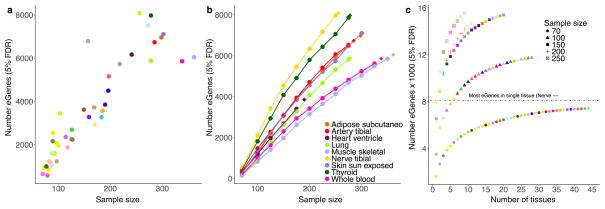
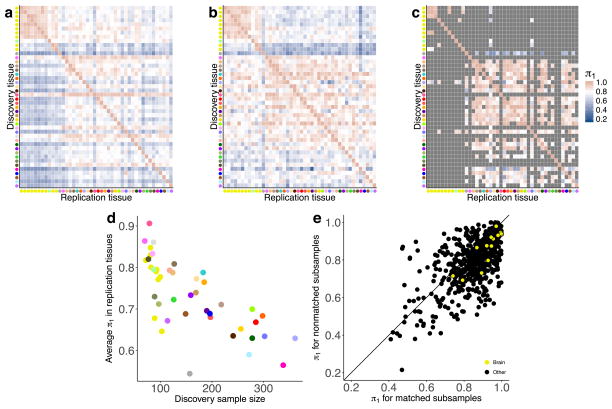
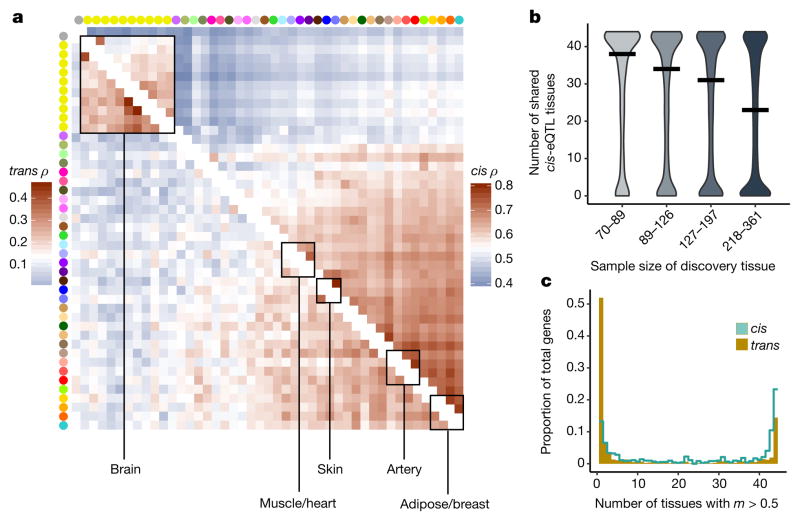
Characterization of the molecular function of the human genome and its variation across individuals is essential for identifying the cellular mechanisms that underlie human genetic traits and diseases. The Genotype-Tissue Expression (GTEx) project aims to characterize variation in gene expression levels across individuals and diverse tissues of the human body, many of which are not easily accessible. Here we describe genetic effects on gene expression levels across 44 human tissues. We find that local genetic variation affects gene expression levels for the majority of genes, and we further identify inter-chromosomal genetic effects for 93 genes and 112 loci. On the basis of the identified genetic effects, we characterize patterns of tissue specificity, compare local and distal effects, and evaluate the functional properties of the genetic effects. We also demonstrate that multi-tissue, multi-individual data can be used to identify genes and pathways affected by human disease-associated variation, enabling a mechanistic interpretation of gene regulation and the genetic basis of disease.
Overview
The claims and statistics of this paper haven’t been checked yet.
Free: it reads the open-access text and checks the first 5 claims that cite a source we can check. Create a free account to check every claim.
Integrity signals
Registry
Cites
Statistics
Figures


![Extended Data Figure 3 Properties of cis-eGenes and non-eGenes In these analyses, ‘non-eGenes’ refers to the set of genes with no significantly associated cis-eQTLs. a, Density of expression (mean across samples, median across tissues, in log10 scale) for cis-eGenes and non-eGenes. The difference in mean expression for cis-eGenes and non-eGenes is significant (Wald test; P <1 ×10⁻¹⁶). b, Box plots comparing the probability of being loss-of-function-intolerant (pLI) scores41 for cis-eGenes and non-eGenes, stratified by expression percentile across all genes (mean across samples, median across tissues, in log10 scale). On average, highly expressed non-eGenes have higher pLI scores than highly expressed cis-eGenes (t-test for the difference in mean pLI score between cis-eGenes and non-eGenes; BH adjusted P = 8.3 ×10⁻⁴ and 2.1 ×10⁻⁹ for (50,75]% and (75,100]%, respectively) and lowly expressed non-eGenes (t-test for the difference in mean pLI score between highly and lowly expressed non-eGenes; BH adjusted P ≤7.8 ×10−46, P ≤5.5 ×10⁻¹⁷ and P ≤2.1 ×10⁻³ for (75,100]% vs [0,25]%, (75,100 vs (25,50]% and (75,100]% vs (50,75]%, respectively). c, Gene Ontology (GO) analysis of tested protein-coding non-eGenes. We used the PANTHER overrepresentation test78 (release 20160715) against 20,972 human genes as background to test for enrichment in GO biological processes using the GO database release 2017-02-28. Significant GO IDs (Bonferroni adjusted P < 0.05) were selected for analysis with REVIGO79 to group similar ontological terms, which yielded 22 over-represented GO IDs. d, GO analysis of a more stringent set of protein-coding non-eGenes. Selected genes included those not tested in GTEx (532 genes) or those with a minimum nominal P value across tissues greater than 0.1 (692 genes). Of these stringent 1,224 non-eGenes, 808 were mapped in the GO analysis. Using a similar approach as in c, 20 over-represented GO IDs were identified. For both c and d, the x-axis represents the −log10 P value resulting from GO analysis. GO IDs are coloured by the broader enrichment category to which each corresponds. Box plots depict the IQR, whiskers depict 1.5× IQR.](https://figures.cochat.ai/paper-figures/ea51d71f9cd44f0ba04adaf266dc2572/genetic-effects-on-gene-expression-across-human-tissues-figure-3.jpg)






Verification
Claims the paper makes
The claims and statistics of this paper haven’t been checked yet.
Free: it reads the open-access text and checks the first 5 claims that cite a source we can check. Create a free account to check every claim.
Claims other papers make about this one
Each is checked against this paper’s own text: does it say what the citing paper says it does?
The source backs part of the claim, not all of it — or backs it for a different population, condition or comparison.
In the citing paper
“the ENCODE and Roadmap Epigenomics (Roadmap) projects have identified noncoding regions acting as enhancers and promoters (8–10).”
From Comprehensive functional genomic resource and integrative model for the human brain (2018) · cites this paper as [8]
Experimental — accuracy not yet measuredThe source backs part of the claim, not all of it — or backs it for a different population, condition or comparison.
In the citing paper
“The eQTL framework is very powerful, and for variants residing within distally located candidate enhancers, can provide in vivo validation of those enhancers while also linking them to their target genes136.”
From Towards a comprehensive catalogue of validated and target-linked human enhancers (2020) · cites this paper as [136]
Experimental — accuracy not yet measuredThe cited source says what the claim attributes to it.
In the citing paper
“Because only 9 of the 953 genes lack confirmed expression in any of the 34 neuro-related tissues tracked by IDG KMC (for example, GTEx40,41, HPA42 and HPM43), these data suggest that the remaining 80% of this set have the potential to be associated with human neurobehavioural phenotypes, paving the way for new research avenues in this direction (see Supplementary Table S8).”
From Unexplored therapeutic opportunities in the human genome (2018) · cites this paper as [41]
The cited source says what the claim attributes to it.
In the citing paper
“For example, the GTEx (Genotype-Tissue Expression) consortium has mapped thou sands of expression quantitative trait loci (QTLs) across hundreds of individuals and dozens of tissues112.”
From A brief history of human disease genetics (2020) · cites this paper as [112]
The cited source says what the claim attributes to it.
In the citing paper
“the Genotype-Tissue Expression (GTEx) project has associated many noncoding variants with expression quantitative-trait loci (eQTLs)”
From Comprehensive functional genomic resource and integrative model for the human brain (2018) · cites this paper as [8]
4 more claims about this paper
Create a free account to see every claim other papers make about this one.
Self-check
Percentages, sums and reported differences re-computed from the paper’s own numbers.
The self-check needs the paper’s full text.
Citations
Cites
Controlling the False Discovery Rate: A Practical and Powerful Approach to Multiple Testing
Benjamini, Y., & Hochberg, Y. (1995) · Journal of the Royal Statistical Society Series B: Statistical Methodology · doi:10.1111/j.2517-6161.1995.tb02031.x · Cited by 109,482
BEDTools: a flexible suite of utilities for comparing genomic features
Quinlan, A. R., & Hall, I. M. (2010) · Bioinformatics · doi:10.1093/bioinformatics/btq033 · Cited by 27,437
A global reference for human genetic variation
The 1000 Genomes Project Consortium, authors, C., Auton, A., Abecasis, G. R., Steering committee, Altshuler, D. M., Durbin, R. M., Abecasis, G. R., Bentley, D. R., Chakravarti, A., et al. (2015) · Nature · doi:10.1038/nature15393 · Cited by 18,247
The Molecular Signatures Database Hallmark Gene Set Collection
Liberzon, A., Birger, C., Thorvaldsdóttir, H., Ghandi, M., Mesirov, J. P., & Tamayo, P. (2015) · Cell Systems · doi:10.1016/j.cels.2015.12.004 · Cited by 13,807
Statistical significance for genomewide studies
Storey, J. D., & Tibshirani, R. (2003) · Proceedings of the National Academy of Sciences · doi:10.1073/pnas.1530509100 · Cited by 9,692
Analysis of protein-coding genetic variation in 60,706 humans
Exome Aggregation Consortium, Lek, M., Karczewski, K. J., Minikel, E. V., Samocha, K. E., Banks, E., Fennell, T., O’Donnell-Luria, A. H., Ware, J. S., Hill, A. J., et al. (2016) · Nature · doi:10.1038/nature19057 · Cited by 9,587
An integrated map of genetic variation from 1,092 human genomes
The 1000 Genomes Project Consortium (2012) · Nature · doi:10.1038/nature11632 · Cited by 7,711
Integrative analysis of 111 reference human epigenomes
Roadmap Epigenomics Consortium, Kundaje, A., Meuleman, W., Ernst, J., Bilenky, M., Yen, A., Heravi-Moussavi, A., Kheradpour, P., Zhang, Z., Wang, J., et al. (2015) · Nature · doi:10.1038/nature14248 · Cited by 6,368
REVIGO summarizes and visualizes long lists of gene ontology terms
Supek, F., Bošnjak, M., Škunca, N., & Šmuc, T. (2011) · PLoS ONE · doi:10.1371/journal.pone.0021800 · Cited by 6,264
The ENCODE Project Consortium (2007) · Nature · doi:10.1038/nature05874 · Cited by 5,223
Research works printed but not linked: 1
- Regev A The human cell atlas Preprint at http://www.biorxiv.org/content/early/2017/05/08/121202 2017
Cited by
Items 601–700 of 1,040
Patel, R. A., Musharoff, S. A., Spence, J. P., Pimentel, H., Tcheandjieu, C., Mostafavi, H., Sinnott-Armstrong, N., Clarke, S. L., Smith, C. J., Program, V. M. V., et al. (2022) · The American Journal of Human Genetics · doi:10.1016/j.ajhg.2022.05.014 · Cited by 86
Rare penetrant mutations confer severe risk of common diseases
Fiziev, P. P., McRae, J. F., Ulirsch, J. C., Dron, J. S., Hamp, T., Yang, Y., Wainschtein, P., Ni, Z., Schraiber, J. G., Gao, H., et al. (2023) · Science · doi:10.1126/science.abo1131 · Cited by 85
Interindividual variation in human cortical cell type abundance and expression
Johansen, N., Somasundaram, S., Travaglini, K. J., Yanny, A. M., Shumyatcher, M., Casper, T., Cobbs, C., Dee, N., Ellenbogen, R. G., Ferreira, M. L., et al. (2023) · Science · doi:10.1126/science.adf2359 · Cited by 80
“This study provides a genomic and transcriptomic overview of cortical cell type variation in adult human individuals, identifying a highly consistent cellular makeup but with substantial variation that reflects donor characteristics, diseasecondition,andgeneticregulation.”
BackgroundMassively parallel characterization of regulatory elements in the developing human cortex
Deng, C., Whalen, S., Steyert, M., Ziffra, R., Przytycki, P. F., Inoue, F., Pereira, D. A., Capauto, D., Norton, S., Vaccarino, F. M., et al. (2024) · Science · doi:10.1126/science.adh0559 · Cited by 87
Ober, C., McKennan, C. G., Magnaye, K. M., Altman, M. C., Washington, C., Stanhope, C. T., Naughton, K. A., Rosasco, M. G., Bacharier, L. B., Billheimer, D. D., et al. (2020) · The Lancet Respiratory Medicine · doi:10.1016/s2213-2600(20)30011-4 · Cited by 80
Cai, N., Gomez-Duran, A., Yonova-Doing, E., Kundu, K., Burgess, A. I., Golder, Z. J., Calabrese, C., Bonder, M. J., Camacho, M., Lawson, R. A., et al. (2021) · Nature Medicine · doi:10.1038/s41591-021-01441-3 · Cited by 73
Jordan, D. M., Verbanck, M., & Do, R. (2019) · Genome Biology · doi:10.1186/s13059-019-1844-7 · Cited by 73
Boocock, J., Leask, M., Okada, Y., Matsuo, H., Kawamura, Y., Shi, Y., Li, C., Mount, D. B., Mandal, A. K., Wang, W., et al. (2020) · Human Molecular Genetics · doi:10.1093/hmg/ddaa013 · Cited by 82
Genome-wide association studies of antidepressant class response and treatment-resistant depression
Li, Q. S., Tian, C., Hinds, D. A., Agee, M., Alipanahi, B., Auton, A., Bell, R. K., Bryc, K., Elson, S. L., Fontanillas, P., et al. (2020) · Translational Psychiatry · doi:10.1038/s41398-020-01035-6 · Cited by 79
Optimizing expression quantitative trait locus mapping workflows for single-cell studies
Cuomo, A. S. E., Alvari, G., Azodi, C. B., single-cell eQTLGen consortium, McCarthy, D. J., & Bonder, M. J. (2021) · Genome Biology · doi:10.1186/s13059-021-02407-x · Cited by 75
“To assess the replication of 10X FFP eQTLs, we leveraged the brain summary statistics available from the GTEx study (v7) [2].”
BackgroundMethodSex- and age-dependent genetics of longevity in a heterogeneous mouse population
Sleiman, M. S. B., Roy, S., Gao, A. W., Sadler, M. C., von Alvensleben, G., Li, H., Sen, Ś., Harrison, D. E., Nelson, J. F., Strong, R., et al. (2022) · Science · doi:10.1126/science.abo3191 · Cited by 78
DRESIS: the first comprehensive landscape of drug resistance information
Sun, X., Zhang, Y., Li, H., Zhou, Y., Shi, S., Chen, Z., He, X., Zhang, H., Li, F., Yin, J., et al. (2022) · Nucleic Acids Research · doi:10.1093/nar/gkac812 · Cited by 82
Yuan, S., Wang, L., Zhang, H., Xu, F., Zhou, X., Yu, L., Sun, J., Chen, J., Ying, H., Xu, X., et al. (2023) · eBioMedicine · doi:10.1016/j.ebiom.2023.104488 · Cited by 72
A reference haplotype panel for genome-wide imputation of short tandem repeats
Saini, S., Mitra, I., Mousavi, N., Feupe, S. F., & Gymrek, M. (2018) · Nature Communications · doi:10.1038/s41467-018-06694-0 · Cited by 82
Genetic study of multimodal imaging Alzheimer’s disease progression score implicates novel loci
Scelsi, M. A., Khan, R. R., Lorenzi, M., Christopher, L., Greicius, M. D., Schott, J. M., Ourselin, S., & Altmann, A. (2018) · Brain · doi:10.1093/brain/awy141 · Cited by 73
“, 2014) and followed up in the GTEx database (Aguet et al., 2017) (date accessed: 9 May 2017) with a targeted query for a specific triplet SNP-gene-tissue and correcting for the number of tests using the Bonferroni method.”
Shade, L. M. P., Katsumata, Y., Abner, E. L., Aung, K. Z., Claas, S. A., Qiao, Q., Heberle, B. A., Brandon, J. A., Page, M. L., Hohman, T. J., et al. (2024) · Nature Genetics · doi:10.1038/s41588-024-01939-9 · Cited by 72
“First, we downloaded Genotype-Tissue Expression Project (GTEx) v8 European ancestry QTL analysis sum-mary statistics, which contains summary statistics for significant gene expression and splicing QTL variants (eQTL and sQTL, respectively) in 48 body tissues 106 .”
Genome-wide pQTL analysis of protein expression regulatory networks in the human liver
He, B., Shi, J., Wang, X., Jiang, H., & Zhu, H.-J. (2020) · BMC Biology · doi:10.1186/s12915-020-00830-3 · Cited by 72
A human population-based organotypic in vitro model for cardiotoxicity screening
Grimm, F. A. (2018) · ALTEX · doi:10.14573/altex.1805301 · Cited by 109
A Robust Method Uncovers Significant Context-Specific Heritability in Diverse Complex Traits
Dahl, A. W., Nguyen, K., Cai, N., Gandal, M. J., Flint, J., & Zaitlen, N. (2020) · The American Journal of Human Genetics · doi:10.1016/j.ajhg.2019.11.015 · Cited by 82
Smolders, S., & Broeckhoven, C. V. (2020) · Acta Neuropathologica Communications · doi:10.1186/s40478-020-00935-4 · Cited by 75
AutoPVS1: An automatic classification tool for PVS1 interpretation of null variants
Xiang, J., Peng, J., Baxter, S. M., & Peng, Z. (2020) · Human Mutation · doi:10.1002/humu.24051 · Cited by 75
Profiling immunoglobulin repertoires across multiple human tissues using RNA sequencing
Mandric, I., Rotman, J., Yang, H. T., Strauli, N. B., Montoya, D. J., Wey, W. V. D., Ronas, J. R., Statz, B., Yao, D. W., Petrova, V. N., et al. (2020) · Nature Communications · doi:10.1038/s41467-020-16857-7 · Cited by 72
Methods for correcting inference based on outcomes predicted by machine learning
Wang, S., McCormick, T. H., & Leek, J. T. (2020) · Proceedings of the National Academy of Sciences · doi:10.1073/pnas.2001238117 · Cited by 138
“The Genotype-Tissue Expression (GTEx) project (49), for example, studies how gene expression levels are varied across individuals and diverse tissues of the human body for a wide variety of primary tissues and cell types (44, 49).”
BackgroundEditing GWAS: experimental approaches to dissect and exploit disease-associated genetic variation
Rao, S., Yao, Y., & Bauer, D. E. (2021) · Genome Medicine · doi:10.1186/s13073-021-00857-3 · Cited by 67
“pression could result in a disease phenotype, given that the majority of eQTL effects are of relatively small magnitude (< 2-fold change in expression) [107].”
BackgroundUncovering genetic mechanisms of hypertension through multi-omic analysis of the kidney
Eales, J., Jiang, X., Xu, X., Saluja, S., Akbarov, A., Cano-Gamez, E., McNulty, M. T., Finan, C., Guo, H., Wystrychowski, W., et al. (2021) · Nature Genetics · doi:10.1038/s41588-021-00835-w · Cited by 76
Lineage-defined leiomyosarcoma subtypes emerge years before diagnosis and determine patient survival
Anderson, N. D., Babichev, Y., Fuligni, F., Comitani, F., Layeghifard, M., Venier, R. E., Dentro, S. C., Maheshwari, A., Guram, S., Wunker, C., et al. (2021) · Nature Communications · doi:10.1038/s41467-021-24677-6 · Cited by 77
Mortlock, S., Corona, R. I., Kho, P. F., Pharoah, P., Seo, J.-H., Freedman, M. L., Gayther, S. A., Siedhoff, M. T., Rogers, P. A. W., Leuchter, R., et al. (2022) · Cell Reports Medicine · doi:10.1016/j.xcrm.2022.100542 · Cited by 54
“Previous studies have shown a large proportion of eQTLs are shared between tissues.(35,36) To increase power, the analysis was repeated using a large blood cis-eQTL dataset from eQTLGen(40) (n = 31,684 individuals) and expression of seven genes was found to be associated (SMR p value <0.”
Seaborne, R. A., Hughes, D. C., Turner, D. C., Owens, D. J., Baehr, L. M., Gorski, P., Semenova, E. A., Borisov, O. V., Larin, A. K., Popov, D. V., et al. (2019) · The Journal of Physiology · doi:10.1113/jp278073 · Cited by 72
A network-based approach to identify deregulated pathways and drug effects in metabolic syndrome
Misselbeck, K., Parolo, S., Lorenzini, F., Savoca, V., Leonardelli, L., Bora, P., Morine, M. J., Mione, M., Domenici, E., & Priami, C. (2019) · Nature Communications · doi:10.1038/s41467-019-13208-z · Cited by 75
Shared genetic etiology underlying Alzheimer’s disease and major depressive disorder
Lutz, M. W., Sprague, D., Barrera, J., & Chiba‐Falek, O. (2020) · Translational Psychiatry · doi:10.1038/s41398-020-0769-y · Cited by 79
Perspectives on Allele-Specific Expression
Cleary, S., & Seoighe, C. (2021) · Annual Review of Biomedical Data Science · doi:10.1146/annurev-biodatasci-021621-122219 · Cited by 79
Sex differences in the genetic architecture of obsessive–compulsive disorder
Khramtsova, E. A., Heldman, R., Derks, E. M., Yu, D., Tourette Syndrome/Obsessive‐Compulsive Disorder Working Group of the Psychiatric Genomics Consortium, Davis, L. K., & Stranger, B. E. (2019) · American Journal of Medical Genetics Part B: Neuropsychiatric Genetics · doi:10.1002/ajmg.b.32687 · Cited by 66
On the cross-population generalizability of gene expression prediction models
Keys, K. L., Mak, A. C. Y., White, M. J., Eckalbar, W. L., Dahl, A. W., Mefford, J., Mikhaylova, A. V., Contreras, M. G., Elhawary, J. R., Eng, C., et al. (2020) · PLOS Genetics · doi:10.1371/journal.pgen.1008927 · Cited by 67
Yang, F., Wang, J., Pierce, B. L., & Chen, L. (2017) · Genome Research · doi:10.1101/gr.216754.116 · Cited by 89
Sirey, T., Roberts, K., Haerty, W., Bedoya-Reina, O. C., Rogatti, S., Tan, J. Y., Li, N., Heather, L. C., Carter, R. N., Cooper, S., et al. (2019) · eLife · doi:10.7554/elife.45051 · Cited by 75
Arloth, J., Eraslan, G., Andlauer, T. F. M., Martins, J., Iurato, S., Kühnel, B., Waldenberger, M., Frank, J., Gold, R., Hemmer, B., et al. (2020) · PLOS Computational Biology · doi:10.1371/journal.pcbi.1007616 · Cited by 74
“org/#!Synapse:syn4622659, and GTEx eQTLs [30] downloaded from https://gtexportal.”
MethodSun, Y., Zhu, J., Zhou, D., Canchi, S., Wu, C., Cox, N. J., Rissman, R. A., Gamazon, E. R., & Wu, L. (2021) · Genome Medicine · doi:10.1186/s13073-021-00959-y · Cited by 69
“The detailed information of the GTEx v8 dataset including genotyping method, RNA sequencing experiments, and quality control processes, has been described elsewhere [26, 27].”
MethodAllen, R. J., Oldham, J. M., Jenkins, D. A., Leavy, O. C., Guillén‐Guío, B., Melbourne, C., Ma, S., Jou, J., Kim, J. S., CleanUP-IPF Investigators of the Pulmonary Trials Cooperative, et al. (2022) · The Lancet Respiratory Medicine · doi:10.1016/s2213-2600(22)00251-x · Cited by 77
“When using the genome-wide summary statistics, no genes or pathways were found to be significantly enriched in genetic associations with FVC or DLCO decline after Bonferroni corrections for multiple testing (appendix pp 23, 46).”
MethodBayesian Genetic Colocalization Test of Two Traits Using coloc
Rasooly, D., Peloso, G. M., & Giambartolomei, C. (2022) · Current Protocols · doi:10.1002/cpz1.627 · Cited by 79
A Genome-Wide Association Study of Sprint Performance in Elite Youth Football Players.
Pickering, C., Suraci, B., Semenova, E., Boulygina, E., Kostryukova, E., Kulemin, N., Borisov, O., Khabibova, S. A., Larin, A., Pavlenko, A., et al. (2019) · Journal of Strength and Conditioning Research · doi:10.1519/jsc.0000000000003259 · Cited by 55
Whole genome sequence analysis of blood lipid levels in >66,000 individuals
Selvaraj, M. S., Li, X., Li, Z., Pampana, A., Zhang, D. Y., Park, J., Aslibekyan, S., Bis, J. C., Brody, J. A., Cade, B. E., et al. (2022) · Nature Communications · doi:10.1038/s41467-022-33510-7 · Cited by 69
Liu, Z., Ran, Y., Tao, C., Li, S., Chen, J., & Yang, E. (2019) · Genome biology · doi:10.1186/s13059-019-1701-8 · Cited by 73
“2d), which is especially highly expressed in testes [24].”
BackgroundFine-mapping cis-regulatory variants in diverse human populations
Tehranchi, A., Hie, B., Dacre, M., Kaplow, I., Pettie, K., Combs, P., & Fraser, H. B. (2019) · eLife · doi:10.7554/elife.39595 · Cited by 68
“For example, QTLs for mRNA levels (eQTLs) are enriched for SNPs implicated by GWAS in a wide range of diseases, suggesting specific genes as likely mediators of the associations (Lappalainen et al. 2013, GTEx Consortium 2017).”
BackgroundMethodInfluentialKibinge, N. K., Relton, C. L., Gaunt, T. R., & Richardson, T. G. (2020) · The American Journal of Human Genetics · doi:10.1016/j.ajhg.2020.04.007 · Cited by 71
Bonder, M. J., Smail, C., Gloudemans, M. J., Frésard, L., Jakubosky, D., D’Antonio, M., Li, X., Ferraro, N. M., Carcamo-Orive, I., Mirauta, B., et al. (2021) · Nature Genetics · doi:10.1038/s41588-021-00800-7 · Cited by 76
Detecting genome-wide directional effects of transcription factor binding on polygenic disease risk
Reshef, Y. A., Finucane, H. K., Kelley, D. R., Gusev, A., Kotliar, D., Ulirsch, J. C., Hormozdiari, F., Nasser, J., O’Connor, L., van de Geijn, B., et al. (2018) · Nature Genetics · doi:10.1038/s41588-018-0196-7 · Cited by 68
Self-citationTissue-specific sex differences in human gene expression
Kassam, I., Wu, Y., Yang, J., Visscher, P. M., & McRae, A. F. (2019) · Human Molecular Genetics · doi:10.1093/hmg/ddz090 · Cited by 69
Prediction of competing endogenous RNA coexpression network as prognostic markers in AML
Wang, J., Zhou, H., Tu, X.-X., He, Y., Liu, Q.-F., Liu, Q., & Long, Z. (2019) · Aging · doi:10.18632/aging.101985 · Cited by 75
Ma, Y., Qiu, F., Deng, C., Li, J., Huang, Y., Wu, Z., Zhou, Y., Zhang, Y., Xiong, Y., Yao, Y., et al. (2022) · Genome Medicine · doi:10.1186/s13073-022-01021-1 · Cited by 75
“with GTEx eQTL data To obtain combined signals from multiple tissues [58], we leveraged S-MultiXcan to meta-analyze the tissue-specific associations from 49 tissues in GTEx, which showed that the genetically predicted expressions of 16 genes were significantly associated with severe COVID-19 (FDR < 0.”
MethodZhu, Z., Lin, Y., Li, X., Driver, J. A., & Liang, L. (2019) · Human Genetics · doi:10.1007/s00439-019-01988-9 · Cited by 85
Machine learning prediction of oncology drug targets based on protein and network properties
Dezső, Z., & Ceccarelli, M. (2020) · BMC Bioinformatics · doi:10.1186/s12859-020-3442-9 · Cited by 64
Huckins, L. M., Chatzinakos, C., Breen, M. S., Hartmann, J., Klengel, T., Almeida, A. C. D. S., Dobbyn, A. L., Girdhar, K., Hoffman, G. E., Klengel, C., et al. (2020) · Cell Reports · doi:10.1016/j.celrep.2020.107716 · Cited by 72
Litterman, A. J., Kageyama, R., Tonquèze, O. L., Zhao, W., Gagnon, J. D., Goodarzi, H., Erle, D. J., & Ansel, K. M. (2019) · Genome Research · doi:10.1101/gr.242552.118 · Cited by 78
GREP: genome for REPositioning drugs
Sakaue, S., & Okada, Y. (2019) · Bioinformatics · doi:10.1093/bioinformatics/btz166 · Cited by 70
Telomerase as a Therapeutic Target in Cardiovascular Disease
Hoffmann, J., Richardson, G. D., Haendeler, J., Altschmied, J., Andrés, V., & Spyridopoulos, I. (2021) · Arteriosclerosis Thrombosis and Vascular Biology · doi:10.1161/atvbaha.120.315695 · Cited by 73
The impact of cell type and context-dependent regulatory variants on human immune traits
Mu, Z., Wei, W., Fair, B., Miao, J., Zhu, P., & Li, Y. I. (2021) · Genome Biology · doi:10.1186/s13059-021-02334-x · Cited by 73
“In addition, a paper from the GTEx consortium [15] suggests that ∼20% of GWAS loci show colocalized effect with eQTLs in the tissue most relevant to the trait.”
BackgroundAPRIL limits atherosclerosis by binding to heparan sulfate proteoglycans
Tsiantoulas, D., Eslami, M., Obermayer, G., Clément, M., Smeets, D., Mayer, F., Kiss, M. G., Enders, L., Weißer, J., Göderle, L., et al. (2021) · Nature · doi:10.1038/s41586-021-03818-3 · Cited by 70
scPRINT: pre-training on 50 million cells allows robust gene network predictions
Kalfon, J., Samaran, J., Peyré, G., & Cantini, L. (2025) · Nature Communications · doi:10.1038/s41467-025-58699-1 · Cited by 100
“Thishasalso beenproposedinUCEandhelpsthemodelunderstandthatgeneswith similar locations tend to beregulated bysimilarregulatory regions 115 , a relationship well-known in cellular biology.”
Rare variants in axonogenesis genes connect three families with sound–color synesthesia
Tilot, A. K., Kucera, K. S., Vino, A., Asher, J. E., Baron‐Cohen, S., & Fisher, S. E. (2018) · Proceedings of the National Academy of Sciences · doi:10.1073/pnas.1715492115 · Cited by 67
Genetic-Driven Druggable Target Identification and Validation
Floris, M., Olla, S., Schlessinger, D., & Cucca, F. (2018) · Trends in Genetics · doi:10.1016/j.tig.2018.04.004 · Cited by 64
“The GTEx Consortium (2017) Genetic effects on gene expression across human tissues.”
BackgroundRobledo, D., Gutiérrez, A. P., Barría, A., Lhorente, J. P., Houston, R. D., & Yañez, J. M. (2019) · Frontiers in Genetics · doi:10.3389/fgene.2019.00056 · Cited by 72
Genome-wide germline correlates of the epigenetic landscape of prostate cancer
Houlahan, K. E., Shiah, Y.-J., Gusev, A., Yuan, J., Ahmed, M., Shetty, A. H., Ramanand, S. G., Yao, C. Q., Bell, C. A., O’Connor, E. P., et al. (2019) · Nature Medicine · doi:10.1038/s41591-019-0579-z · Cited by 72
A Multi-Omics Perspective of Quantitative Trait Loci in Precision Medicine
Ye, Y., Zhang, Z., Liu, Y., Diao, L., & Han, L. (2020) · Trends in Genetics · doi:10.1016/j.tig.2020.01.009 · Cited by 73
Gerring, Z. F., Mina-Vargas, A., Gamazon, E. R., & Derks, E. M. (2021) · Bioinformatics · doi:10.1093/bioinformatics/btab115 · Cited by 75
Genetic features and genomic targets of human KRAB-zinc finger proteins
de Tribolet-Hardy, J., Thorball, C. W., Forey, R., Planet, E., Duc, J., Coudray, A., Khubieh, B., Offner, S., Pulver, C., Fellay, J., et al. (2023) · Genome Research · doi:10.1101/gr.277722.123 · Cited by 74
Leveraging phenotypic variability to identify genetic interactions in human phenotypes
Marderstein, A. R., Davenport, E., Kulm, S., Hout, C. V. V., Elemento, O., & Clark, A. G. (2020) · The American Journal of Human Genetics · doi:10.1016/j.ajhg.2020.11.016 · Cited by 72
Stuart, P. E., Tsoi, L. C., Nair, R. P., Ghosh, M., Kabra, M., Shaiq, P. A., Raja, G. K., Qamar, R., Thelma, B. K., Patrick, M. T., et al. (2021) · Human Genetics and Genomics Advances · doi:10.1016/j.xhgg.2021.100069 · Cited by 78
Kundu, K., Tardáguila, M., Mann, A., Watt, S., Ponstingl, H., Vasquez, L. J., Schiller, D. V., Morrell, N. W., Stegle, O., Pastinen, T., et al. (2022) · Nature Genetics · doi:10.1038/s41588-022-01025-y · Cited by 75
A practical guideline of genomics-driven drug discovery in the era of global biobank meta-analysis
Namba, S., Konuma, T., Wu, K.-H., Zhou, W., Initiative, G. B. M.-A., & Okada, Y. (2022) · Cell Genomics · doi:10.1016/j.xgen.2022.100190 · Cited by 75
Liang, X., Yee, S. W., Chien, H., Chen, E. C., Luo, Q., Zou, L., Piao, M., Mifune, A., Chen, L., Calvert, M., et al. (2018) · PLoS Biology · doi:10.1371/journal.pbio.2002907 · Cited by 66
“In addition, two of the missense OCT1 variants, OCT1-P341L and OCT1-V408M, which are associated with lower SLC22A1 expression levels in several tissues [13, 27, 28], were also associated with higher cholesterol levels in at least one study.”
BackgroundEleven loci with new reproducible genetic associations with allergic disease risk
Ferreira, M. A. R., Vonk, J. M., Baurecht, H., Marenholz, I., Tian, C., Hoffman, J., Helmer, Q., Tillander, A., Ullemar, V., Lu, Y., et al. (2018) · Journal of Allergy and Clinical Immunology · doi:10.1016/j.jaci.2018.03.012 · Cited by 67
Characterisation of genetic regulatory effects for osteoporosis risk variants in human osteoclasts
Mullin, B. H., Tickner, J., Zhu, K., Kenny, J., Mullin, S., Brown, S. J., Dudbridge, F., Pavlos, N. J., Mocarski, E. S., Walsh, J. P., et al. (2020) · Genome Biology · doi:10.1186/s13059-020-01997-2 · Cited by 67
“%) of the eQTL associations identified in this study are potentially osteoclast-specific when compared with data from the 53 tissues of the GTEx V7 dataset [1], demonstrating the value of performing such investigations in disease-relevant cell/tissue types.”
BackgroundMethodResultInfluentialSynonymous mutations reveal genome-wide levels of positive selection in healthy tissues
Poon, G. Y. P., Watson, C. J., Fisher, D. S., & Blundell, J. R. (2021) · Nature Genetics · doi:10.1038/s41588-021-00957-1 · Cited by 65
RSPO3 impacts body fat distribution and regulates adipose cell biology in vitro
Loh, N. Y., Minchin, J. E. N., Pinnick, K. E., Verma, M., Todorčević, M., Denton, N., Moustafa, J. S. E.-S., Kemp, J. P., Gregson, C. L., Evans, D. M., et al. (2020) · Nature Communications · doi:10.1038/s41467-020-16592-z · Cited by 79
Yin, X., Bose, D., Kwon, A., Hanks, S. C., Jackson, A., Stringham, H. M., Welch, R., Oravilahti, A., Silva, L. F., Locke, A. E., et al. (2022) · The American Journal of Human Genetics · doi:10.1016/j.ajhg.2022.08.007 · Cited by 70
Raffield, L. M., Ulirsch, J. C., Naik, R. P., Lessard, S., Handsaker, R. E., Jain, D., Kang, H. M., Pankratz, N., Auer, P. L., Bao, E. L., et al. (2018) · PLOS Genetics · doi:10.1371/journal.pgen.1007293 · Cited by 63
Evidence for Weak Selective Constraint on Human Gene Expression
Glassberg, E. C., Gao, Z., Harpak, A., Lan, X., & Pritchard, J. K. (2019) · Genetics · doi:10.1534/genetics.118.301833 · Cited by 63
Genetic effects on promoter usage are highly context-specific and contribute to complex traits
Alasoo, K., Rodrigues, J., Danesh, J., Freitag, D. F., Paul, D. S., & Gaffney, D. J. (2019) · eLife · doi:10.7554/elife.41673 · Cited by 65
Transcriptome‐wide association study reveals candidate causal genes for lung cancer
Bossé, Y., Li, Z., Xia, J., Manem, V. S., Carreras‐Torres, R., Gabriel, A. A., Gaudreault, N., Albanes, D., Aldrich, M. C., Andrew, A. S., et al. (2019) · International Journal of Cancer · doi:10.1002/ijc.32771 · Cited by 76
Zhang, Y., Quick, C., Yu, K., Barbeira, A., Luca, F., Piqué-Regi, R., Im, H. K., & Wen, X. (2020) · Genome biology · doi:10.1186/s13059-020-02026-y · Cited by 80
AncestryDNA COVID-19 Host Genetic Study Identifies Three Novel LociPreprint
Roberts, G. H. L., Park, D. S., Coignet, M. V., McCurdy, S., Knight, S. C., Partha, R., Rhead, B., Zhang, M., Berkowitz, N., AncestryDNA Science Team, et al. (2020) · medRxiv · doi:10.1101/2020.10.06.20205864 · Cited by 68
Expression estimation and eQTL mapping for HLA genes with a personalized pipeline
Aguiar, V. R. C., César, J., Delaneau, O., Dermitzakis, E. T., & Meyer, D. (2019) · PLOS Genetics · doi:10.1371/journal.pgen.1008091 · Cited by 65
“This result suggests that correlation of expression among HLA loci in LCLs is a result of factors acting at the gene level, and is not driven predominantly by properties of the haplotype.”
BackgroundMethodInfluentialAUVINEN, J. P., Tapio, J., Karhunen, V., Kettunen, J., Serpi, R., Dimova, E. Y., Gill, D., Soininen, P., Tammelin, T., Mykkänen, J., et al. (2021) · Science Advances · doi:10.1126/sciadv.abi4822 · Cited by 67
WNT5B governs the phenotype of basal-like breast cancer by activating WNT signaling
Jiang, S., Zhang, M., Zhang, Y., Zhou, W., Zhu, T., Ruan, Q., Chen, H., Fang, J., Zhou, F., Sun, J., et al. (2019) · Cell Communication and Signaling · doi:10.1186/s12964-019-0419-2 · Cited by 69
Satterstrom, F. K., Kosmicki, J. A., Wang, J., Breen, M. S., De Rubeis, S., An, J.-Y., Peng, M., Collins, R., Grove, J., Klei, L., et al. (2018) · doi:10.1101/484113 · Cited by 2,323
Rare loss of function variants in the hepatokine gene INHBE protect from abdominal obesity
Deaton, A. M., Dubey, A., Ward, L. D., Dornbos, P., Flannick, J., AMP-T2D-GENES Consortium, Yee, E., Ticau, S., Noetzli, L., Parker, M. M., et al. (2022) · Nature Communications · doi:10.1038/s41467-022-31757-8 · Cited by 57
Dahl, A., Thompson, M., An, U., Krebs, M. D., Appadurai, V., Border, R., Bacanu, S., Werge, T. M., Flint, J., Schork, A. J., et al. (2023) · Nature Genetics · doi:10.1038/s41588-023-01559-9 · Cited by 78
The Extending Spectrum of NPC1-Related Human Disorders: From Niemann–Pick C1 Disease to Obesity
Lamri, A., Pigeyre, M., Garver, W. S., & Meyre, D. (2018) · Endocrine Reviews · doi:10.1210/er.2017-00176 · Cited by 67
Genome-wide association study of germline variants and breast cancer-specific mortality
Collaborators, N., Escala-Garcia, M., Guo, Q., Dörk, T., Canisius, S., Keeman, R., Dennis, J., Beesley, J. M., Lecarpentier, J., Bolla, M. K., et al. (2019) · British Journal of Cancer · doi:10.1038/s41416-019-0393-x · Cited by 75
High‐resolution mapping of cancer cell networks using co‐functional interactions
Boyle, E. A., Pritchard, J. K., & Greenleaf, W. J. (2018) · Molecular Systems Biology · doi:10.15252/msb.20188594 · Cited by 63
“In the germline, one NF1 loss-of-function allele causes the Mendelian disorder neuro-fibromatosis type 1 (Gutmann et al , 2017).”
Johnston, A. D., Simões‐Pires, C. A., Thompson, T. V., Suzuki, M., & Greally, J. M. (2019) · Nature Communications · doi:10.1038/s41467-019-11412-5 · Cited by 72
Hoffman, G. E., Bendl, J. M., Girdhar, K., Schadt, E. E., & Roussos, P. (2019) · Nucleic Acids Research · doi:10.1093/nar/gkz808 · Cited by 78
“Since genetic variants conferring disease risk or regulating gene expression can act through a number of mechanisms (9,20,23,26,67,69), the value of additional epigenetic assays depends on the accuracy of a predictive model as well as the regulatory mechanism of interest.”
BackgroundWatt, S., Vasquez, L., Walter, K., Mann, A. L., Kundu, K., Chen, L., Sims, Y., Ecker, S., Burden, F., Farrow, S., et al. (2021) · Nature Communications · doi:10.1038/s41467-021-22548-8 · Cited by 63
Optimized design of single-cell RNA sequencing experiments for cell-type-specific eQTL analysis
Mandric, I., Schwarz, T., Majumdar, A., Hou, K., Briscoe, L., Perez, R., Subramaniam, M., Hafemeister, C., Satija, R., Ye, C. J., et al. (2020) · Nature Communications · doi:10.1038/s41467-020-19365-w · Cited by 62
Genomic Evidence for Local Adaptation of Hunter-Gatherers to the African Rainforest
Lopez, M., Choin, J., Sikora, M., Siddle, K. J., Harmant, C., Costa, H. A., Silvert, M., Mouguiama-Daouda, P., Hombert, J.-M., Froment, A., et al. (2019) · Current Biology · doi:10.1016/j.cub.2019.07.013 · Cited by 66
Zhou, J., Liu, C., Sun, Y., Huang, W., & Ye, K. (2020) · Brain Behavior and Immunity · doi:10.1016/j.bbi.2020.10.019 · Cited by 68
A versatile platform for locus-scale genome rewriting and verification
Brosh, R., Laurent, J. M., Ordoñez, R., Huang, E., Hogan, M. S., Hitchcock, A. M., Mitchell, L. A., Pinglay, S., Cadley, J. A., Luther, R. D., et al. (2021) · Proceedings of the National Academy of Sciences · doi:10.1073/pnas.2023952118 · Cited by 61
Wolf, J., Boneva, S., Schlecht, A., Lapp, T., Auw‐Haedrich, C., Lagrèze, W. A., Agostini, H. T., Reinhard, T., Schlunck, G., & Lange, C. (2022) · Genomics · doi:10.1016/j.ygeno.2022.110286 · Cited by 72
Caudal, É., Loegler, V., Dutreux, F., Vakirlis, N., Teyssonnière, É., Caradec, C., Friedrich, A., Hou, J., & Schacherer, J. (2024) · Nature Genetics · doi:10.1038/s41588-024-01769-9 · Cited by 67
Learning Causal Biological Networks With the Principle of Mendelian Randomization
Badsha, M. B., & Fu, A. Q. (2019) · Frontiers in Genetics · doi:10.3389/fgene.2019.00460 · Cited by 72
Metadata
- Authors
- GTEx Consortium
- Venue
- Nature
- Published
- 2017-10-12
- Volume
- 550
- Issue
- 7675
- Pages
- 204-213
- ISSN
- 0028-0836 (ISSN-L)
- 1476-4687
- PMC
- PMC5776756
- OpenAlex
- W2761275051
- Cited by
- 4,036
- References
- 83
- Citations by year
- 2026: 248 · 2025: 355 · 2024: 412 · 2023: 401 · 2022: 507 · 2021: 634 · 2020: 600 · 2019: 516 · 2018: 320 · 2017: 35
- FWCI
- 266.52
- Type
- journal article
- Language
- en
- Update notices
- erratum (2017-12-20)
- Open access
- hybrid
- doi.org
- Licence
- cc-by
- creativecommons.org/licenses/by/4.0 (tdm)
- creativecommons.org/licenses/by/4.0 (vor)
- Locations
- Nature (publishedVersion, cc-by)
- PubMed (publishedVersion)
- RECERCAT (Consorci de Serveis Universitaris de Catalunya) (publishedVersion, other-oa)
- Archive ouverte UNIGE (University of Geneva) (publishedVersion, other-oa)
- UPCommons institutional repository (Universitat Politècnica de Catalunya) (publishedVersion, other-oa)
- Europe PMC (PubMed Central) (acceptedVersion, cc-by)
- PubMed Central (acceptedVersion, cc-by)
- SERVAL (Université de Lausanne) (acceptedVersion, cc-by)
- Discovery Research Portal (University of Dundee) (submittedVersion, cc-by)
- LA Referencia (Red Federada de Repositorios Institucionales de Publicaciones Científicas) (submittedVersion, public-domain)
- IRIS (submittedVersion, cc-by)
- Data Archiving and Networked Services (DANS) (submittedVersion)
- DSpace@MIT (Massachusetts Institute of Technology) (submittedVersion, cc-by-nc)
- eScholarship (California Digital Library) (submittedVersion)
- eScholarship (California Digital Library) (submittedVersion, cc-by)
- Minerva Access (University of Melbourne) (submittedVersion, cc-by)
- Repositori digital de la UPF (Universitat Pompeu Fabra) (submittedVersion, cc-by)
- Seoul National University Open Repository (Seoul National University) (submittedVersion)
- Archive ouverte UNIGE (University of Geneva) (submittedVersion, cc-by)
- TUScholarShare (Temple University) (cc-by)
- Funders
- National Science Foundation ((DGE-114747, DGE-165651 8, 114747, HHSN261200800001E, 1656518)
- University of Miami (DA006227)
- Wellcome Trust
- Broad Institute (HHSN268201000029C)
- Searle Scholars Program
- Leidos (HHSN261200800001E)
- National Institute for Health and Care Research (NF-SI-0611-10099)
- National Institutes of Health (10XS170, HHSN2682010000029C, #HHSN261200800001E, HHSN268201000029C, 10XS171, DGE-114747, HHSN261200800001C, DGE-1656518, 10ST1035)
- Center for Computational, Evolutionary and Human Genomics, Stanford University
- National Institute on Aging (P30AG010124)
- National Heart, Lung, and Blood Institute (HHSN268201000029C, HHSN268201000002C, HHSN261200800001E, HHSN268201000009C)
- National Institute of Mental Health (R01MH101814, R01MH101822, R01MH090937, R01MH106842, R01MH101810, HHSN261200800001E, R01MH101782, R01MH101819, R01MH101820, R01MH109905)
- National Institute on Drug Abuse (DA006227, R01DA006227)
- National Human Genome Research Institute (U01HG007900, UM1HG008901, R00HG006265, R01HG009125, U41HG002371, HHSN261200800001E, U01HG007591, K22HG000044, U01HG007436, R01HG008150, R21HG007840, U01HG009080, U54HG007990, T32HG003284, T32HG000044)
- NIH Office of the Director (HHSN261200800001E, R01MH101814)
- National Cancer Institute (HHSN261200800001E), HHSN268201000029C)
- National Institute of General Medical Sciences (T32GM007057, R01GM104371)
- National Institute of Diabetes and Digestive and Kidney Diseases (U54DK105566)
- National Institute of Neurological Disorders and Stroke
- U.S. National Library of Medicine (T15LM007033)
- Common Fund
- Topics
- Life Sciences › Biochemistry, Genetics and Molecular Biology › Genetics › Genetic Associations and Epidemiology
- Life Sciences › Biochemistry, Genetics and Molecular Biology › Molecular Biology › Genomics and Chromatin Dynamics
- Life Sciences › Biochemistry, Genetics and Molecular Biology › Molecular Biology › RNA Research and Splicing
- Keywords
- tissue-specific gene expression, gene expression regulation, GTEx, human genetic variation
- MeSH terms
- Alleles, Chromosomes, Human, Disease, Female, Gene Expression Regulation, Genotype, Humans, Male, Organ Specificity, Genetic Variation, Genome, Human, Gene Expression Profiling, Quantitative Trait Loci
About these checks
Registry, retraction, Cites and statistics results are computed, not judged, with one exception: a printed reference that no index lists is read once by a model before it counts as a citation error. Claims are extracted by a model and kept only when their quote appears verbatim in the text; each cited source is then checked, with a model’s help, for whether it says what the claim relies on. Those verdicts can be wrong — read the claim’s quote and the cited source before relying on one.
Statistics and arithmetic are recomputed, not judged.
Confidence bands are shown only for fields calibrated on our annotated test set. None is calibrated yet, so no band is shown.
What counts as a claim ›How we measure confidence ›How we check this ›
Are you an author, or do you see a problem with this page? Request a review
Data sources
Bibliographic data: Semantic Scholar, OpenAlex, Crossref.
Contains information from the Semantic Scholar Academic Graph Datasets, made available under the ODC Attribution License (ODC-BY 1.0).
Semantic Scholar’s data is described in: Kinney, R., et al. (2023). The Semantic Scholar Open Data Platform. arXiv:2301.10140.
