

The DOI matches its Crossref record; 4 of the 4 references it cites were found in a registry or an index.
The cellular function of SCAP in metabolic signaling
Abstract
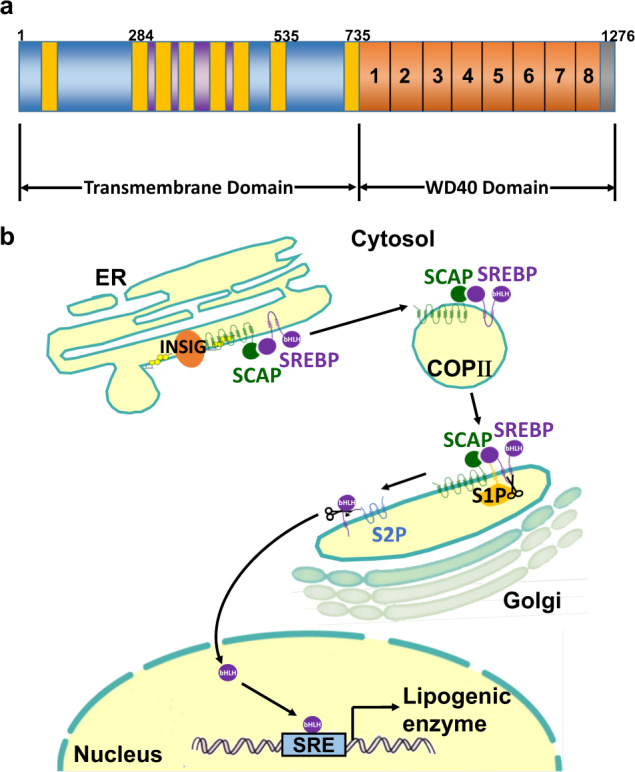
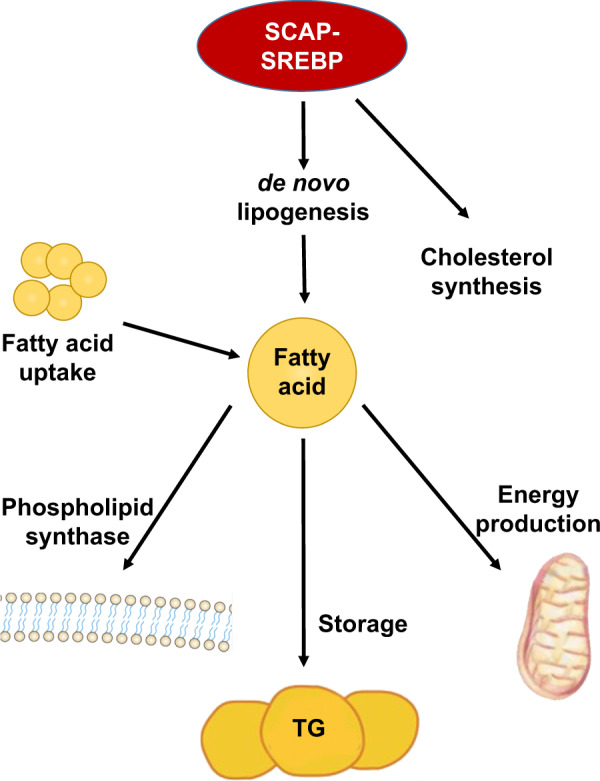
Sterol regulatory element binding protein (SREBP) cleavage activating protein (SCAP) is a key regulator of SREBP maturation. SCAP induces translocation of SREBP from the endoplasmic reticulum to the Golgi apparatus, allowing it to regulate cellular triglyceride and cholesterol levels. Previous studies have shown that suppression of SREBP activation in SCAP conditional knockout mice reduced the accumulation of intracellular triglycerides, which eventually causes the development of metabolic diseases such as atherosclerosis, diabetes, hepatic steatosis, and insulin resistance. However, despite the significance of SCAP as a regulator of SREBP, its function has not been thoroughly discussed. In this review, we have summarized the function of SCAP and its regulatory proteins. Furthermore, we discuss recent studies regarding SCAP as a possible therapeutic target for hypertriglyceridemia and hyperlipidemia.
Overview
The claims and statistics of this paper haven’t been checked yet.
Run the check — free, no account needed. It reads the open-access text and checks the sources it cites.
Integrity signals
Registry
Cites
Statistics
Figures
Verification
Claims the paper makes
The claims and statistics of this paper haven’t been checked yet.
Run the check — free, no account needed. It reads the open-access text and checks the sources it cites.
Claims other papers make about this one
Each is checked against this paper’s own text: does it say what the citing paper says it does?
In the citing paper
“Complement proteins, including C1q and C3, are upregulated in AD brain tissues36 and cerebrospinal fluid87,91, where they are pivotal in neuroinflammation and synapse elimination88,92.”
In the citing paper
“Consistently, a metabolic study noted that the loss of SCAP attenuates lipopolysaccharide -induced IκBα phosphorylation and p65 nuclear entry, indicating that SCAP is essential for NF-κB activation independent of its lipid metabolism role87.”
Self-check
Percentages, sums and reported differences re-computed from the paper’s own numbers.
The self-check needs the paper’s full text.
Citations
Cites
SREBPs: activators of the complete program of cholesterol and fatty acid synthesis in the liver
Horton, J. D., Goldstein, J. L., & Brown, M. S. (2002) · Journal of Clinical Investigation · doi:10.1172/jci0215593 · Cited by 4,092
Cholesterol, inflammation and innate immunity.
Tall, A. R., & Yvan-Charvet, L. (2015) · Nature Reviews Immunology · doi:10.1038/nri3793 · Cited by 1,479
Kidani, Y., Elsaesser, H., Hock, M. B., Vergnes, L., Williams, K. J., Argus, J. P., Marbois, B. N., Komisopoulou, E., Wilson, E. B., Osborne, T. F., et al. (2013) · Nature Immunology · doi:10.1038/ni.2570 · Cited by 552
Rosenfeld, M. E., & Ross, R. (1990) · Arteriosclerosis: An Official Journal of the American Heart Association, Inc. · doi:10.1161/01.atv.10.5.680 · Cited by 331
Research works printed but not linked: 49
- Shimano, H. & Sato, R. SREBP-regulated lipid metabolism: convergent physiology-divergent pathophysiology. Nat. Rev. Endocrinol. 13, 710–730 (2017). · DOI · Paper page
- Goldstein, J. L., DeBose-Boyd, R. A. & Brown, M. S. Protein sensors for membrane sterols. Cell 124, 35–46 (2006). · DOI · Paper page
- Goldstein, J. L., Rawson, R. B. & Brown, M. S. Mutant mammalian cells as tools to delineate the sterol regulatory element-binding protein pathway for feedback regulation of lipid synthesis. Arch. Biochem. Biophys. 397, 139–148 (2002). · DOI · Paper page
- Motamed, M. et al. Identification of luminal Loop 1 of Scap protein as the sterol sensor that maintains cholesterol homeostasis. J. Biol. Chem. 286, 18002–18012 (2011). · DOI
- Radhakrishnan, A., Sun, L. P., Kwon, H. J., Brown, M. S. & Goldstein, J. L. Direct binding of cholesterol to the purified membrane region of SCAP: mechanism for a sterol-sensing domain. Mol. Cell. 15, 259–268 (2004). · DOI · Paper page
- Sakai, J., Nohturfft, A., Goldstein, J. L. & Brown, M. S. Cleavage of sterol regulatory element-binding proteins (SREBPs) at site-1 requires interaction with SREBP cleavage-activating protein. Evidence from in vivo competition studies. J. Biol. Chem. 273, 5785–5793 (1998). · DOI
- Yang, T. et al. Crucial step in cholesterol homeostasis: sterols promote binding of SCAP to INSIG-1, a membrane protein that facilitates retention of SREBPs in ER. Cell 110, 489–500 (2002). · DOI · Paper page
- Brown, M. S., Radhakrishnan, A. & Goldstein, J. L. Retrospective on cholesterol homeostasis: the central role of scap. Annu. Rev. Biochem. 87, 783–807 (2018). · DOI · Paper page
- Zhang, Y., Motamed, M., Seemann, J., Brown, M. S. & Goldstein, J. L. Point mutation in luminal loop 7 of Scap protein blocks interaction with loop 1 and abolishes movement to Golgi. J. Biol. Chem. 288, 14059–14067 (2013). · DOI
- Espenshade, P. J. & Hughes, A. L. Regulation of sterol synthesis in eukaryotes. Annu. Rev. Genet. 41, 401–427 (2007). · DOI · Paper page
- Sokolov, A. & Radhakrishnan, A. Accessibility of cholesterol in endoplasmic reticulum membranes and activation of SREBP-2 switch abruptly at a common cholesterol threshold. J. Biol. Chem. 285, 29480–29490 (2010). · DOI · Paper page
- Afonso, M. S. et al. Molecular pathways underlying cholesterol homeostasis. Nutrients 10, 760 (2018). · DOI · Paper page
- Dong, X. Y., Tang, S. Q. & Chen, J. D. Dual functions of Insig proteins in cholesterol homeostasis. Lipids Health Dis. 11, 173 (2012). · DOI
- Bi, X., Corpina, R. A. & Goldberg, J. Structure of the Sec23/24-Sar1 pre-budding complex of the COPII vesicle coat. Nature 419, 271–277 (2002). · DOI
- Sun, L. P., Li, L., Goldstein, J. L. & Brown, M. S. Insig required for sterol-mediated inhibition of Scap/SREBP binding to COPII proteins in vitro. J. Biol. Chem. 280, 26483–26490 (2005). · DOI · Paper page
- Radhakrishnan, A., Ikeda, Y., Kwon, H. J., Brown, M. S. & Goldstein, J. L. Sterol-regulated transport of SREBPs from endoplasmic reticulum to Golgi: oxysterols block transport by binding to Insig. Proc. Natl Acad. Sci. USA 104, 6511–6518 (2007). · DOI · Paper page
- Nohturfft, A., Yabe, D., Goldstein, J. L., Brown, M. S. & Espenshade, P. J. Regulated step in cholesterol feedback localized to budding of SCAP from ER membranes. Cell 102, 315–323 (2000). · DOI
- Espenshade, P. J., Li, W. P. & Yabe, D. Sterols block binding of COPII proteins to SCAP, thereby controlling SCAP sorting in ER. Proc. Natl Acad. Sci. USA 99, 11694–11699 (2002). · DOI · Paper page
- Ye, J. & DeBose-Boyd, R. A. Regulation of cholesterol and fatty acid synthesis. Cold Spring Harb. Perspect. Biol 3, a004754 (2011). · DOI · Paper page
- van Meer, G., Voelker, D. R. & Feigenson, G. W. Membrane lipids: where they are and how they behave. Nat. Rev. Mol. Cell Biol. 9, 112–124 (2008). · DOI · Paper page
- Breslow, D. K. & Weissman, J. S. Membranes in balance: mechanisms of sphingolipid homeostasis. Mol. Cell. 40, 267–279 (2010). · DOI
- Gong, Y. et al. Sterol-regulated ubiquitination and degradation of Insig-1 creates a convergent mechanism for feedback control of cholesterol synthesis and uptake. Cell Metab. 3, 15–24 (2006). · DOI · Paper page
- McFarlane, M. R., Liang, G. & Engelking, L. J. Insig proteins mediate feedback inhibition of cholesterol synthesis in the intestine. J. Biol. Chem. 289, 2148–2156 (2014). · DOI
- DeBose-Boyd, R. A. & Ye, J. SREBPs in lipid metabolism, insulin signaling, and beyond. Trends Biochem. Sci. 43, 358–368 (2018). · DOI
- Moon, Y. A. et al. The Scap/SREBP pathway is essential for developing diabetic fatty liver and carbohydrate-induced hypertriglyceridemia in animals. Cell Metab. 15, 240–246 (2012). · DOI · Paper page
- Zhang, X., Ji, X., Wang, Q. & Li, J. Z. New insight into inter-organ crosstalk contributing to the pathogenesis of non-alcoholic fatty liver disease (NAFLD). Protein Cell 9, 164–177 (2018). · DOI
- Mu, W. et al. Potential nexus of non-alcoholic fatty liver disease and type 2 diabetes mellitus: insulin resistance between hepatic and peripheral tissues. Front. Pharm. 9, 1566 (2018). · DOI
- Ito, A. et al. Cholesterol accumulation in CD11c(+) Immune cells is a causal and targetable factor in autoimmune disease. Immunity 45, 1311–1326 (2016). · DOI
- Westerterp, M. et al. Cholesterol accumulation in dendritic cells links the inflammasome to acquired immunity. Cell Metab. 25, 1294–1304 e1296 (2017). · DOI · Paper page
- Guo, C. et al. Cholesterol homeostatic regulator SCAP-SREBP2 Integrates NLRP3 inflammasome activation and cholesterol biosynthetic signaling in macrophages. Immunity 49, 842–856 e847 (2018). · DOI · Paper page
- Ouyang, N. et al. Dysfunction of cholesterol sensor SCAP promotes inflammation activation in THP-1 macrophages. Exp. Cell Res. 367, 162–169 (2018). · DOI · Paper page
- Uttarwar, L., Gao, B., Ingram, A. J. & Krepinsky, J. C. SREBP-1 activation by glucose mediates TGF-beta upregulation in mesangial cells. Am. J. Physiol. Ren. Physiol. 302, F329–F341 (2012). · DOI
- Yuan, Y. et al. Advanced glycation end products (AGEs) increase human mesangial foam cell formation by increasing Golgi SCAP glycosylation in vitro. Am. J. Physiol. Ren. Physiol. 301, F236–F243 (2011). · DOI
- Zhou, C. et al. Enhanced SCAP glycosylation by inflammation induces macrophage foam cell formation. PLoS ONE 8, e75650 (2013). · DOI
- York, A. G. et al. Limiting cholesterol biosynthetic flux spontaneously engages Type I IFN signaling. Cell 163, 1716–1729 (2015). · DOI · Paper page
- Boshuizen, M. C. et al. Interferon-beta promotes macrophage foam cell formation by altering both cholesterol influx and efflux mechanisms. Cytokine 77, 220–226 (2016). · DOI
- Chen, W. et al. ER adaptor SCAP translocates and recruits IRF3 to perinuclear microsome induced by cytosolic microbial DNAs. PLoS Pathog. 12, e1005462 (2016). · DOI
- Engelking, L. J., Cantoria, M. J., Xu, Y. & Liang, G. Developmental and extrahepatic physiological functions of SREBP pathway genes in mice. Semin. Cell Dev. Biol. 81, 98–109 (2018). · DOI
- McFarlane, M. R. et al. Scap is required for sterol synthesis and crypt growth in intestinal mucosa. J. Lipid Res. 56, 1560–1571 (2015). · DOI · Paper page
- Tang, J. J. et al. Inhibition of SREBP by a small molecule, betulin, improves hyperlipidemia and insulin resistance and reduces atherosclerotic plaques. Cell Metab. 13, 44–56 (2011). · DOI · Paper page
- Casaschi, A. et al. The chalcone xanthohumol inhibits triglyceride and apolipoprotein B secretion in HepG2 cells. J. Nutr. 134, 1340–1346 (2004). · DOI
- Miyata, S., Inoue, J., Shimizu, M. & Sato, R. Xanthohumol improves diet-induced obesity and fatty liver by suppressing sterol regulatory element-binding protein (SREBP) Activation. J. Biol. Chem. 290, 20565–20579 (2015). · DOI
- Mustafa, M., Wang, T. N., Chen, X., Gao, B. & Krepinsky, J. C. SREBP inhibition ameliorates renal injury after unilateral ureteral obstruction. Am. J. Physiol. Ren. Physiol. 311, F614–F625 (2016). · DOI
- Kamisuki, S. et al. A small molecule that blocks fat synthesis by inhibiting the activation of SREBP. Chem. Biol. 16, 882–892 (2009). · DOI · Paper page
- Cheng, X., Li, J. & Guo, D. SCAP/SREBPs are central players in lipid metabolism and novel metabolic targets in cancer therapy. Curr. Top. Med. Chem. 18, 484–493 (2018). · DOI
- Pharr, P. N. & Ogawa, M. Enhancement of the proliferation of murine fetal liver erythroid progenitors by infection with Harvey sarcoma virus. Leukemia 4, 210–215 (1990).
- Choi, Y., Kawazoe, Y., Murakami, K., Misawa, H. & Uesugi, M. Identification of bioactive molecules by adipogenesis profiling of organic compounds. J. Biol. Chem. 278, 7320–7324 (2003). · DOI
- Liu, M. et al. Xanthohumol, a prenylated chalcone from beer hops, acts as an alpha-glucosidase inhibitor in vitro. J. Agric. Food Chem. 62, 5548–5554 (2014). · DOI
- Mahli, A. et al. Therapeutic application of micellar solubilized xanthohumol in a western-type diet-induced mouse model of obesity, diabetes and non-alcoholic Fatty liver disease. Cells 8, 359 (2019). · DOI
Cited by
Sorted by citations
Metabolic injury of hepatocytes promotes progression of NAFLD and AALD
Carvalho-Gontijo, R., Han, C., Zhang, L., Zhang, V., Hosseini, M., Mekeel, K., Schnabl, B., Loomba, R., Karin, M., Brenner, D. A., et al. (2022) · Seminars in Liver Disease · doi:10.1055/s-0042-1755316 · Cited by 23
Niu, T., Wang, S., Zhang, H., Zhu, W., Liu, K., Zhou, X., Sun, R., Niu, D., & Yuan, Y. (2025) · Experimental & Molecular Medicine · doi:10.1038/s12276-025-01534-w · Cited by 7
Metadata
- Authors
- Lee, S. H., Lee, J.-H., & Im, S.-S.
- ORCID
- Im, Seung-Soon
- Venue
- Experimental & Molecular Medicine
- Published
- 2020-05
- Volume
- 52
- Issue
- 5
- Pages
- 724-729
- ISSN
- 1226-3613
- 2092-6413
- PMC
- PMC7272406
- Cited by
- 96
- References
- 4
- Language
- en
About these checks
Registry, retraction, Cites and statistics results are computed, not judged, with one exception: a printed reference that no index lists is read once by a model before it counts as a citation error. Claims are extracted by a model and kept only when their quote appears verbatim in the text; each cited source is then checked, with a model’s help, for whether it says what the claim relies on. Those verdicts can be wrong — read the claim’s quote and the cited source before relying on one.
Statistics and arithmetic are recomputed, not judged.
Confidence bands are shown only for fields calibrated on our annotated test set. None is calibrated yet, so no band is shown.
What counts as a claim ›How we measure confidence ›How we check this ›
Are you an author, or do you see a problem with this page? Request a review
