

Serotonin depletion impairs both Pavlovian and instrumental reversal learning in healthy humans
Open accessPublished version of a preprint
The DOI matches its Crossref record; 147 of the 150 references it cites were found in a registry or an index.
Abstract
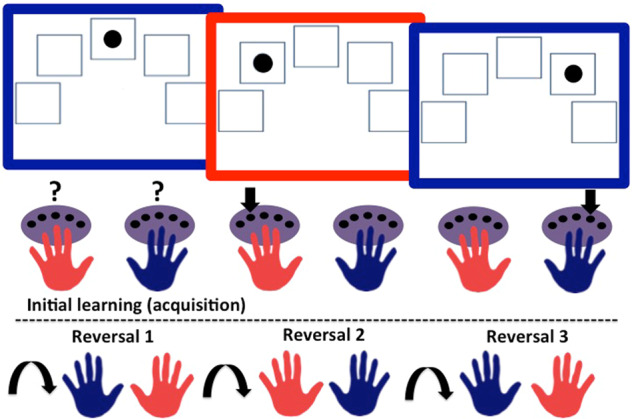
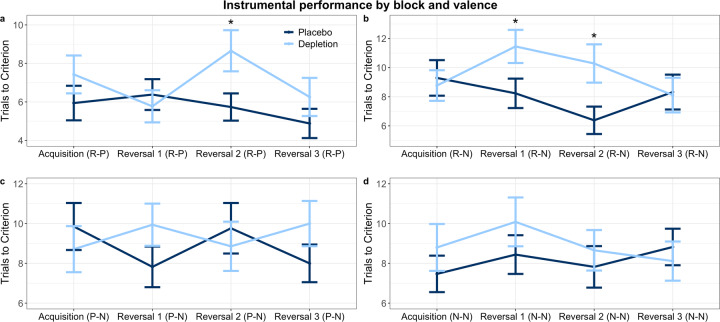
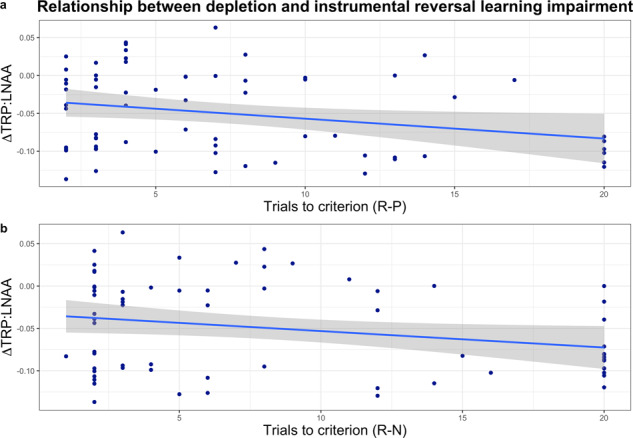
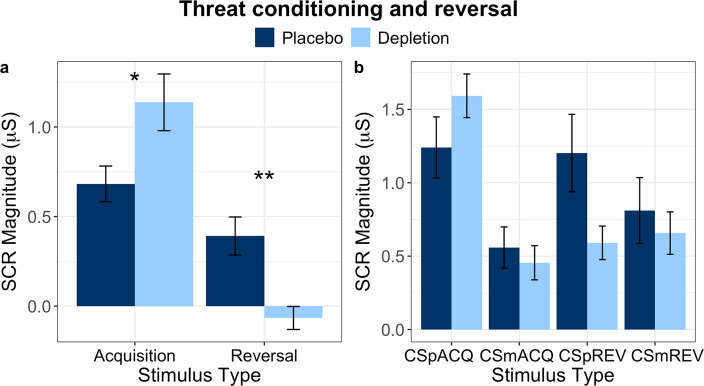
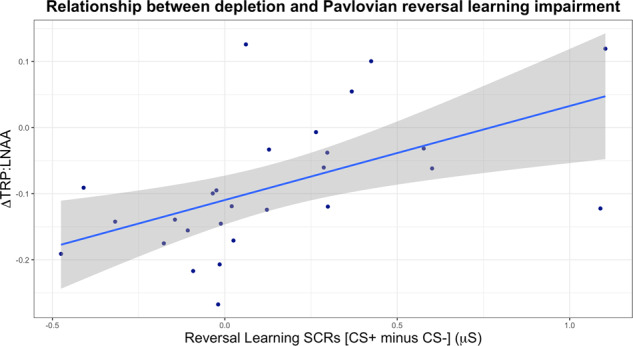
Serotonin is involved in updating responses to changing environmental circumstances. Optimising behaviour to maximise reward and minimise punishment may require shifting strategies upon encountering new situations. Likewise, autonomic responses to threats are critical for survival yet must be modified as danger shifts from one source to another. Whilst numerous psychiatric disorders are characterised by behavioural and autonomic inflexibility, few studies have examined the contribution of serotonin in humans. We modelled both processes, respectively, in two independent experiments ( N = 97). Experiment 1 assessed instrumental (stimulus-response-outcome) reversal learning whereby individuals learned through trial and error which action was most optimal for obtaining reward or avoiding punishment initially, and the contingencies subsequently reversed serially. Experiment 2 examined Pavlovian (stimulus-outcome) reversal learning assessed by the skin conductance response: one innately threatening stimulus predicted receipt of an uncomfortable electric shock and another did not; these contingencies swapped in a reversal phase. Upon depleting the serotonin precursor tryptophan—in a double-blind randomised placebo-controlled design—healthy volunteers showed impairments in updating both actions and autonomic responses to reflect changing contingencies. Reversal deficits in each domain, furthermore, were correlated with the extent of tryptophan depletion. Initial Pavlovian conditioning, moreover, which involved innately threatening stimuli, was potentiated by depletion. These results translate findings in experimental animals to humans and have implications for the neurochemical basis of cognitive inflexibility.
Overview
The claims and statistics of this paper haven’t been checked yet.
Free: it reads the open-access text and checks the first 5 claims that cite a source we can check. Create a free account to check every claim.
Integrity signals
Registry
Cites
Statistics
Figures
Verification
Claims the paper makes
The claims and statistics of this paper haven’t been checked yet.
Free: it reads the open-access text and checks the first 5 claims that cite a source we can check. Create a free account to check every claim.
Claims other papers make about this one
Each is checked against this paper’s own text: does it say what the citing paper says it does?
The source backs part of the claim, not all of it — or backs it for a different population, condition or comparison.
In the citing paper
“ATD has been shown to affect measures of both ‘cold’ (rational and non-emotional), and ‘hot’ (social and emotional) cognition [13–18].”
From Chronic escitalopram in healthy volunteers has specific effects on reinforcement sensitivity: a double-blind, placebo-controlled semi-randomised study (2023) · cites this paper as [14]
Experimental — accuracy not yet measuredThe source backs part of the claim, not all of it — or backs it for a different population, condition or comparison.
In the citing paper
“Effects of ATD have also been seen on reinforcement behaviour [13], reversal learning [9, 14], learning and memory [15], affective and social cognition [9, 16, 17] and moral judgement [18].”
From Chronic escitalopram in healthy volunteers has specific effects on reinforcement sensitivity: a double-blind, placebo-controlled semi-randomised study (2023) · cites this paper as [14]
Experimental — accuracy not yet measured
Self-check
Percentages, sums and reported differences re-computed from the paper’s own numbers.
The self-check needs the paper’s full text.
Citations
Cites
Diagnostic and Statistical Manual of Mental Disorders
American Psychiatric Association (2013) · doi:10.1176/appi.books.9780890425596 · Cited by 116,369
Controlling the False Discovery Rate: A Practical and Powerful Approach to Multiple Testing
Benjamini, Y., & Hochberg, Y. (1995) · Journal of the Royal Statistical Society Series B: Statistical Methodology · doi:10.1111/j.2517-6161.1995.tb02031.x · Cited by 109,482 · cited 1×
“Correction for multiple comparisons where relevant, was conducted using the Benjamini-Hochberg procedure [106].”
MethodDevelopment and validation of brief measures of positive and negative affect: The PANAS scales.
Watson, D., Clark, L. A., & Tellegen, A. (1988) · Journal of Personality and Social Psychology · doi:10.1037/0022-3514.54.6.1063 · Cited by 32,433
Self-citation(1998) · The Journal of Clinical Psychiatry · Cited by 19,139
(1998) · PubMed · Cited by 10,216
LeDoux, J. E. (2000) · Annual Review of Neuroscience · doi:10.1146/annurev.neuro.23.1.155 · Cited by 8,444 · cited 1×
“The central nucleus of the amygdala (CeA) is the major source of output and its downstream projections ultimately produce defence responses such as perspiration in humans and freezing in rodents (LeDoux 2000).”
BackgroundComparison of Beck Depression Inventories -IA and -II in psychiatric outpatients
Beck, A. T., Steer, R. A., Ball, R., & Ranieri, W. F. (1996) · Journal of Personality Assessment · doi:10.1207/s15327752jpa6703_13 · Cited by 5,965
The mini international neuropsychiatric interview
Lecrubier, Y., Sheehan, D., Hergueta, T., & Weiller, E. (1998) · European Psychiatry · doi:10.1016/s0924-9338(99)80239-9 · Cited by 5,872
Thresholding of statistical maps in functional neuroimaging using the false discovery rate
Genovese, C. R., Lazar, N. A., & Nichols, T. (2002) · NeuroImage · doi:10.1006/nimg.2001.1037 · Cited by 4,923
The Obsessive-Compulsive Inventory: Development and validation of a short version.
Foa, E. B., Huppert, J. D., Leiberg, S., Langner, R., Kichic, R., Hajcak, G., & Salkovskis, P. M. (2002) · Psychological Assessment · doi:10.1037/1040-3590.14.4.485 · Cited by 2,959
Neurobiological Basis of Failure to Recall Extinction Memory in Posttraumatic Stress Disorder
Milad, M. R., Pitman, R. K., Ellis, C. B., Gold, A. L., Shin, L. M., Lasko, N. B., Zeidan, M. A., Handwerger, K., Orr, S. P., & Rauch, S. L. (2009) · Biological Psychiatry · doi:10.1016/j.biopsych.2009.06.026 · Cited by 1,339
Churchill, A. J., Gutiérrez, G. D., Singer, R. A., Lorberbaum, D. S., Fischer, K. A., & Sussel, L. (2017) · eLife · doi:10.7554/elife.20010 · Cited by 1,236
Ekman, P., & Friesen, W. V. (1976) · Environmental Psychology and Nonverbal Behavior · doi:10.1007/bf01115465 · Cited by 1,221
Rogers, R. (1999) · Neuropsychopharmacology · doi:10.1016/s0893-133x(98)00091-8 · Cited by 1,101 · cited 3×
“…feedback (Evers et al. 2005; Finger et al. 2007; Murphy et al. 2002) and a single reversal (Finger et al. 2007; Murphy et al. 2002), or were used primarily to test higher order cognitive flexibility in the form of attentional set-shifting (Park et al. 1994; Rogers et al. 1999; Talbot et al. 2006).”
BackgroundMethodInfluentialUsing Neuroscience to Help Understand Fear and Anxiety: A Two-System Framework
LeDoux, J. E., & Pine, D. S. (2016) · American Journal of Psychiatry · doi:10.1176/appi.ajp.2016.16030353 · Cited by 1,035
5-HT and mechanisms of defence
Deakin, J. F. W., & Graeff, F. G. (1991) · Journal of Psychopharmacology · doi:10.1177/026988119100500414 · Cited by 1,010
Cools, R. (2001) · Cerebral Cortex · doi:10.1093/cercor/11.12.1136 · Cited by 906 · cited 2×
“These authors invoked the phenomenon of stress-induced dopamine release (Pruessner et al. 2004), which may dampen negative prediction errors evoked by contingency reversal (Cools et al. 2001).”
BackgroundDifferences between males and females in rates of serotonin synthesis in human brain
Nishizawa, S., Benkelfat, C., Young, S. N., Leyton, M., Mzengeza, S., de Montigny, C., Blier, P., & Diksic, M. (1997) · Proceedings of the National Academy of Sciences · doi:10.1073/pnas.94.10.5308 · Cited by 900
(2008) · Cited by 889
Orbitofrontal Cortex as a Cognitive Map of Task Space
Wilson, R. C., Takahashi, Y. K., Schoenbaum, G., & Niv, Y. (2014) · Neuron · doi:10.1016/j.neuron.2013.11.005 · Cited by 885
Ruhé, H. G., Mason, N. S., & Schene, A. H. (2007) · Molecular Psychiatry · doi:10.1038/sj.mp.4001949 · Cited by 861
Kim, M. J., Loucks, R. A., Palmer, A. L., Brown, A. C., Solomon, K. M., Marchante, A. N., & Whalen, P. J. (2011) · Behavioural Brain Research · doi:10.1016/j.bbr.2011.04.025 · Cited by 838
Serotonin and brain function: a tale of two receptors
Carhart-Harris, R., & Nutt, D. (2017) · Journal of Psychopharmacology · doi:10.1177/0269881117725915 · Cited by 739
Duits, P., Cath, D. C., Lissek, S., Hox, J. J., Hamm, A. O., Engelhard, I. M., van den Hout, M. A., & Baas, J. M. P. (2015) · Depression and Anxiety · doi:10.1002/da.22353 · Cited by 726
Striatal dopamine nerve terminal markers in human, chronic methamphetamine users
Wilson, J. M., Kalasinsky, K. S., Levey, A. I., Bergeron, C., Reiber, G., Anthony, R. M., Schmunk, G. A., Shannak, K., Haycock, J. W., & Kish, S. J. (1996) · Nature Medicine · doi:10.1038/nm0696-699 · Cited by 718
Pruessner, J. C., Champagne, F., Meaney, M. J., & Dagher, A. (2004) · The Journal of Neuroscience · doi:10.1523/jneurosci.3422-03.2004 · Cited by 709 · cited 1×
“These authors invoked the phenomenon of stress-induced dopamine release (Pruessner et al. 2004), which may dampen negative prediction errors evoked by contingency reversal (Cools et al. 2001).”
BackgroundBaldwin, D. S., Anderson, I. M., Nutt, D. J., Allgulander, C., Bandelow, B., den Boer, J. A., Christmas, D. M., Davies, S., Fineberg, N., Lidbetter, N., et al. (2014) · Journal of Psychopharmacology · doi:10.1177/0269881114525674 · Cited by 676
Self-citationSerotoninergic regulation of emotional and behavioural control processes
Cools, R., Roberts, A. C., & Robbins, T. W. (2008) · Trends in Cognitive Sciences · doi:10.1016/j.tics.2007.10.011 · Cited by 656
Self-citationCognitive Inflexibility After Prefrontal Serotonin Depletion
Clarke, H. F., Dalley, J. W., Crofts, H. S., Robbins, T. W., & Roberts, A. C. (2004) · Science · doi:10.1126/science.1094987 · Cited by 632
Self-citationGross, C. T., & Canteras, N. S. (2012) · Nature Reviews Neuroscience · doi:10.1038/nrn3301 · Cited by 596
Chamberlain, S. R., Menzies, L., Hampshire, A., Suckling, J., Fineberg, N. A., del Campo, N., Aitken, M., Craig, K., Owen, A. M., Bullmore, E. T., et al. (2008) · Science · doi:10.1126/science.1154433 · Cited by 550
Self-citationObsessive-compulsive disorder: Puzzles and prospects
Robbins, T. W., Vaghi, M. M., & Banca, P. (2019) · Neuron · doi:10.1016/j.neuron.2019.01.046 · Cited by 510 · cited 2×
“Indeed, impairments in behavioural and emotional flexibility are pervasive in psychiatric disorders (Apergis-Schoute et al. 2017; APA 2013; Homan et al. 2019; Remijnse et al. 2006; Robbins et al. 2019; Waltz et al. 2007) and serotonergic dysfunction is widely implicated across diagnostic categories (Cunningham et al.”
BackgroundSelf-citationFrom Fear to Safety and Back: Reversal of Fear in the Human Brain
Schiller, D., Levy, I., Niv, Y., LeDoux, J. E., & Phelps, E. A. (2008) · The Journal of Neuroscience · doi:10.1523/jneurosci.2265-08.2008 · Cited by 429
Reduced orbitofrontal-striatal activity on a reversal learning task in obsessive-compulsive disorder
Remijnse, P. L., Nielen, M. M. A., van Balkom, A. J. L. M., Cath, D. C., van Oppen, P., Uylings, H. B. M., & Veltman, D. J. (2006) · Archives of General Psychiatry · doi:10.1001/archpsyc.63.11.1225 · Cited by 408
Serotonergic neurons signal reward and punishment on multiple timescales
Cohen, J. Y., Amoroso, M. W., & Uchida, N. (2015) · eLife · doi:10.7554/elife.06346 · Cited by 388 · cited 2×
“2012b; Deakin 2013) and rewarding (Cohen et al. 2015; Matias et al. 2017; Seymour et al. 2012) outcomes, we used an innovative task (Figure 1) incorporating feedback that was markedly more salient than was used in previous reversal tasks (Evers et al.”
MethodSerotonin in Affective Control
Dayan, P., & Huys, Q. J. M. (2009) · Annual Review of Neuroscience · doi:10.1146/annurev.neuro.051508.135607 · Cited by 381
Winstanley, C. A., Dalley, J. W., Theobald, D. E., & Robbins, T. W. (2004) · Neuropsychopharmacology · doi:10.1038/sj.npp.1300434 · Cited by 371
Self-citationReduced Serotonin Type 1AReceptor Binding in Panic Disorder: Figure 1.
Neumeister, A., Bain, E., Nugent, A. C., Carson, R. E., Bonne, O., Luckenbaugh, D. A., Eckelman, W., Herscovitch, P., Charney, D. S., & Drevets, W. C. (2004) · The Journal of Neuroscience · doi:10.1523/jneurosci.4921-03.2004 · Cited by 355
Differential roles of human striatum and amygdala in associative learning
Li, J., Schiller, D., Schoenbaum, G., Phelps, E. A., & Daw, N. D. (2011) · Nature Neuroscience · doi:10.1038/nn.2904 · Cited by 353
Clarke, H., Walker, S., Dalley, J., Robbins, T., & Roberts, A. (2006) · Cerebral Cortex · doi:10.1093/cercor/bhj120 · Cited by 351
Self-citationWaltz, J. A., & Gold, J. M. (2007) · Schizophrenia Research · doi:10.1016/j.schres.2007.03.010 · Cited by 331
Bari, A., Theobald, D. E., Caprioli, D., Mar, A. C., Aidoo-Micah, A., Dalley, J. W., & Robbins, T. W. (2010) · Neuropsychopharmacology · doi:10.1038/npp.2009.233 · Cited by 325
Self-citationMarx, W., McGuinness, A. J., Rocks, T., Ruusunen, A., Cleminson, J., Walker, A. J., Gomes-da-Costa, S., Lane, M., Sanches, M., Diaz, A. P., et al. (2021) · Molecular Psychiatry · doi:10.1038/s41380-020-00951-9 · Cited by 322 · cited 1×
“A recent metaanalysis, for example, showed decreased bioavailability of tryptophan, serotonin’s precursor, as well as a shift in the metabolism of tryptophan away from the serotonin biosynthesis pathway in major depressive disorder, bipolar disorder, and schizophrenia [30].”
BackgroundTryptophan depletion in normal volunteers produces selective impairments in learning and memory
Park, S. B., Coull, J. T., McShane, R. H., Young, A. H., Sahakian, B. J., Robbins, T. W., & Cowen, P. J. (1994) · Neuropharmacology · doi:10.1016/0028-3908(94)90089-2 · Cited by 310
Self-citationMilad, M. R., Furtak, S. C., Greenberg, J. L., Keshaviah, A., Im, J. J., Falkenstein, M. J., Jenike, M., Rauch, S. L., & Wilhelm, S. (2013) · JAMA Psychiatry · doi:10.1001/jamapsychiatry.2013.914 · Cited by 308
Extinction during reconsolidation of threat memory diminishes prefrontal cortex involvement
Schiller, D., Kanen, J. W., LeDoux, J. E., Monfils, M.-H., & Phelps, E. A. (2013) · Proceedings of the National Academy of Sciences · doi:10.1073/pnas.1320322110 · Cited by 304 · cited 1×
“Of these, two (1 female) were “non-responders” and were thus excluded for an undetectable skin conductance response as is standard practice (e.g. Schiller et al. 2013).”
Self-citationReduced Serotonin-1A Receptor Binding in Social Anxiety Disorder
Lanzenberger, R. R., Mitterhauser, M., Spindelegger, C., Wadsak, W., Klein, N., Mien, L.-K., Holik, A., Attarbaschi, T., Mossaheb, N., Sacher, J., et al. (2007) · Biological Psychiatry · doi:10.1016/j.biopsych.2006.05.022 · Cited by 300
Tryptophan Depletion During Continuous CSF Sampling in Healthy Human Subjects
Carpenter, M. D. (1998) · Neuropsychopharmacology · doi:10.1016/s0893-133x(97)00198-x · Cited by 298
López-Figueroa, A. L., Norton, C. S., López-Figueroa, M. O., Armellini-Dodel, D., Burke, S., Akil, H., López, J. F., & Watson, S. J. (2004) · Biological Psychiatry · doi:10.1016/j.biopsych.2003.09.017 · Cited by 296
Rogers, R. D., Blackshaw, A. J., Middleton, H. C., Matthews, K., Hawtin, K., Crowley, C., Hopwood, A., Wallace, C., Deakin, J. F. W., Sahakian, B. J., et al. (1999) · Psychopharmacology · doi:10.1007/pl00005494 · Cited by 289
Self-citationCrockett, M. J., Clark, L., & Robbins, T. W. (2009) · The Journal of Neuroscience · doi:10.1523/jneurosci.2513-09.2009 · Cited by 271
Self-citationBiggio, G., Fadda, F., Fanni, P., Tagliamonte, A., & Gessa, G. L. (1974) · Life Sciences · doi:10.1016/0024-3205(74)90440-8 · Cited by 265
Dissociable Effects of Dopamine and Serotonin on Reversal Learning
den Ouden, H. E. M., Daw, N. D., Fernandez, G., Elshout, J. A., Rijpkema, M., Hoogman, M., Franke, B., & Cools, R. (2013) · Neuron · doi:10.1016/j.neuron.2013.08.030 · Cited by 255
The effects of tryptophan depletion on cognitive and affective processing in healthy volunteers
Murphy, F., Smith, K., Cowen, P., Robbins, T., & Sahakian, B. (2002) · Psychopharmacology · doi:10.1007/s00213-002-1128-9 · Cited by 255
Self-citationSerotonin Selectively Modulates Reward Value in Human Decision-Making
Seymour, B., Daw, N. D., Roiser, J. P., Dayan, P., & Dolan, R. (2012) · The Journal of Neuroscience · doi:10.1523/jneurosci.0053-12.2012 · Cited by 252
Burghardt, N. S., Sullivan, G. M., McEwen, B. S., Gorman, J. M., & LeDoux, J. E. (2004) · Biological Psychiatry · doi:10.1016/j.biopsych.2004.02.029 · Cited by 246
Of snakes and faces: An evolutionary perspective on the psychology of fear
ÖHMAN, A. (2009) · Scandinavian Journal of Psychology · doi:10.1111/j.1467-9450.2009.00784.x · Cited by 244
Activity patterns of serotonin neurons underlying cognitive flexibility
Matias, S., Lottem, E., Dugué, G. P., & Mainen, Z. F. (2017) · eLife · doi:10.7554/elife.20552 · Cited by 239
Monoamine depletion in psychiatric and healthy populations: review
Booij, L., Van der Does, A. J. W., & Riedel, W. J. (2003) · Molecular Psychiatry · doi:10.1038/sj.mp.4001423 · Cited by 237
Evers, E. A. T., Cools, R., Clark, L., van der Veen, F. M., Jolles, J., Sahakian, B. J., & Robbins, T. W. (2005) · Neuropsychopharmacology · doi:10.1038/sj.npp.1300663 · Cited by 208
Self-citationBurghardt, N. S., Bush, D. E. A., McEwen, B. S., & LeDoux, J. E. (2007) · Biological Psychiatry · doi:10.1016/j.biopsych.2006.11.023 · Cited by 179
Htr2a-Expressing Cells in the Central Amygdala Control the Hierarchy between Innate and Learned Fear
Isosaka, T., Matsuo, T., Yamaguchi, T., Funabiki, K., Nakanishi, S., Kobayakawa, R., & Kobayakawa, K. (2015) · Cell · doi:10.1016/j.cell.2015.10.047 · Cited by 179
Serotonin 5-HT1A receptor binding in people with panic disorder: positron emission tomography study
Nash, J. R., Sargent, P. A., Rabiner, E. A., Hood, S. D., Argyropoulos, S. V., Potokar, J. P., Grasby, P. M., & Nutt, D. J. (2008) · British Journal of Psychiatry · doi:10.1192/bjp.bp.107.041186 · Cited by 177
Ranade, S. P., & Mainen, Z. F. (2009) · Journal of Neurophysiology · doi:10.1152/jn.00507.2009 · Cited by 173
Cools, R., Robinson, O. J., & Sahakian, B. (2008) · Neuropsychopharmacology · doi:10.1038/sj.npp.1301598 · Cited by 172
Self-citationNeural basis of impaired safety signaling in obsessive compulsive disorder
Apergis-Schoute, A. M., Gillan, C. M., Fineberg, N. A., Fernandez-Egea, E., Sahakian, B. J., & Robbins, T. W. (2017) · Proceedings of the National Academy of Sciences · doi:10.1073/pnas.1609194114 · Cited by 168
Self-citationNavigating the garden of forking paths for data exclusions in fear conditioning research
Lonsdorf, T. B., Klingelhöfer-Jens, M., Andreatta, M., Beckers, T., Chalkia, A., Gerlicher, A., Jentsch, V. L., Meir Drexler, S., Mertens, G., Richter, J., et al. (2019) · eLife · doi:10.7554/elife.52465 · Cited by 164
Lapiz-Bluhm, M. D. S., Soto-Piña, A. E., Hensler, J. G., & Morilak, D. A. (2009) · Psychopharmacology · doi:10.1007/s00213-008-1224-6 · Cited by 163
Grillon, C., Levenson, J., & Pine, D. S. (2007) · Neuropsychopharmacology · doi:10.1038/sj.npp.1301204 · Cited by 162
Serotonin and dopamine transporter imaging in patients with obsessive-compulsive disorder
Hesse, S., Müller, U., Lincke, T., Barthel, H., Villmann, T., Angermeyer, M. C., Sabri, O., & Stengler-Wenzke, K. (2005) · Psychiatry Research: Neuroimaging · doi:10.1016/j.pscychresns.2005.07.002 · Cited by 155
Marin, M.-F., Zsido, R. G., Song, H., Lasko, N. B., Killgore, W. D. S., Rauch, S. L., Simon, N. M., & Milad, M. R. (2017) · JAMA Psychiatry · doi:10.1001/jamapsychiatry.2017.0329 · Cited by 154
Serotonin in fear conditioning processes
Bauer, E. P. (2014) · Behavioural Brain Research · doi:10.1016/j.bbr.2014.07.028 · Cited by 151 · cited 2×
“…adaptation comes from studies of non-human animals (e.g. Bari et al. 2010; Barlow et al. 2015; Clarke et al. 2004, 2007; Lapiz-Bluhm et al. 2009; Matias et al. 2017), whilst the role of serotonin in human threat and safety learning has received surprisingly little attention (Bauer 2015).”
BackgroundKoelewijn, L., Lancaster, T. M., Linden, D., Dima, D. C., Routley, B. C., Magazzini, L., Barawi, K., Brindley, L., Adams, R., Tansey, K. E., et al. (2019) · eLife · doi:10.7554/elife.36011 · Cited by 149
Cooperative interactions enable singular olfactory receptor expression in mouse olfactory neurons
Monahan, K., Schieren, I., Cheung, J., Mumbey-Wafula, A., Monuki, E. S., & Lomvardas, S. (2017) · eLife · doi:10.7554/elife.28620 · Cited by 148
Coding of Task Reward Value in the Dorsal Raphe Nucleus
Bromberg-Martin, E. S., Hikosaka, O., & Nakamura, K. (2010) · The Journal of Neuroscience · doi:10.1523/jneurosci.0015-10.2010 · Cited by 147
Intense threat switches dorsal raphe serotonin neurons to a paradoxical operational mode
Seo, C., Guru, A., Jin, M., Ito, B., Sleezer, B. J., Ho, Y.-Y., Wang, E., Boada, C., Krupa, N. A., Kullakanda, D. S., et al. (2019) · Science · doi:10.1126/science.aau8722 · Cited by 145
Dopamine, but not serotonin, regulates reversal learning in the marmoset caudate nucleus
Clarke, H. F., Hill, G. J., Robbins, T. W., & Roberts, A. C. (2011) · The Journal of Neuroscience · doi:10.1523/jneurosci.5066-10.2011 · Cited by 144
Self-citationMechanism of acute tryptophan depletion: is it only serotonin?
van Donkelaar, E. L., Blokland, A., Ferrington, L., Kelly, P. A. T., Steinbusch, H. W. M., & Prickaerts, J. (2011) · Molecular Psychiatry · doi:10.1038/mp.2011.9 · Cited by 141
Passamonti, L., Crockett, M. J., Apergis-Schoute, A. M., Clark, L., Rowe, J. B., Calder, A. J., & Robbins, T. W. (2012) · Biological Psychiatry · doi:10.1016/j.biopsych.2011.07.033 · Cited by 138
Self-citationOjala, K. E., & Bach, D. R. (2020) · Neuroscience & Biobehavioral Reviews · doi:10.1016/j.neubiorev.2020.04.019 · Cited by 135
Serotonin Modulates Striatal Responses to Fairness and Retaliation in Humans
Crockett, M. J., Apergis-Schoute, A., Herrmann, B., Lieberman, M. D., Müller, U., Robbins, T. W., & Clark, L. (2013) · The Journal of Neuroscience · doi:10.1523/jneurosci.2761-12.2013 · Cited by 134
Self-citationWorbe, Y., Savulich, G., Voon, V., Fernandez-Egea, E., & Robbins, T. W. (2014) · Neuropsychopharmacology · doi:10.1038/npp.2013.351 · Cited by 125
Self-citationPharmacotherapy of obsessive–compulsive disorder: evidence-based treatment and beyond
Fineberg, N. A., Reghunandanan, S., Brown, A., & Pampaloni, I. (2013) · Australian & New Zealand Journal of Psychiatry · doi:10.1177/0004867412461958 · Cited by 122
Failure of Neural Responses to Safety Cues in Schizophrenia
Holt, D. J., Coombs, G., Zeidan, M. A., Goff, D. C., & Milad, M. R. (2012) · Archives of General Psychiatry · doi:10.1001/archgenpsychiatry.2011.2310 · Cited by 121
Neural substrates of cognitive flexibility in cocaine and gambling addictions
Verdejo-Garcia, A., Clark, L., Verdejo-Román, J., Albein-Urios, N., Martinez-Gonzalez, J. M., Gutierrez, B., & Soriano-Mas, C. (2015) · British Journal of Psychiatry · doi:10.1192/bjp.bp.114.152223 · Cited by 112
Self-citationEffects of ritanserin on aversive classical conditioning in humans
Hensman, R., Guimarães, F. S., Wang, M., & Deakin, J. F. W. (1991) · Psychopharmacology · doi:10.1007/bf02244182 · Cited by 112
Hypervigilance for fear after basolateral amygdala damage in humans
Terburg, D., Morgan, B. E., Montoya, E. R., Hooge, I. T., Thornton, H. B., Hariri, A. R., Panksepp, J., Stein, D. J., & van Honk, J. (2012) · Translational Psychiatry · doi:10.1038/tp.2012.46 · Cited by 110 · cited 5×
“The central nucleus of the amygdala (CeA) is the major source of output and its downstream projections ultimately produce defence responses such as perspiration in humans and freezing in rodents (LeDoux 2000).”
BackgroundInfluentialAcute tryptophan depletion in humans: a review of theoretical, practical and ethical aspects
Young, S. N. (2013) · Journal of Psychiatry and Neuroscience · doi:10.1503/jpn.120209 · Cited by 110
Brain serotonin transporter in human methamphetamine users
Kish, S. J., Fitzmaurice, P. S., Boileau, I., Schmunk, G. A., Ang, L.-C., Furukawa, Y., Chang, L., Wickham, D. J., Sherwin, A. L., & Tong, J. (2008) · Psychopharmacology · doi:10.1007/s00213-008-1346-x · Cited by 105
The Importance of Serotonin for Orbitofrontal Function
Roberts, A. (2011) · Biological Psychiatry · doi:10.1016/j.biopsych.2010.12.037 · Cited by 102
Acute Tryptophan Depletion. Part II: Clinical Effects and Implications
Bell, C. J., Hood, S. D., & Nutt, D. J. (2005) · Australian & New Zealand Journal of Psychiatry · doi:10.1080/j.1440-1614.2005.01628.x · Cited by 101
Neural computations of threat in the aftermath of combat trauma
Homan, P., Levy, I., Feltham, E., Gordon, C., Hu, J., Li, J., Pietrzak, R. H., Southwick, S., Krystal, J. H., Harpaz-Rotem, I., et al. (2019) · Nature Neuroscience · doi:10.1038/s41593-018-0315-x · Cited by 101
Kanen, J. W., Ersche, K. D., Fineberg, N. A., Robbins, T. W., & Cardinal, R. N. (2019) · Psychopharmacology · doi:10.1007/s00213-019-05325-w · Cited by 101
Self-citationThe Role of the Anterior Cingulate Cortex in Choices based on Reward Value and Reward Contingency
Chudasama, Y., Daniels, T. E., Gorrin, D. P., Rhodes, S. E. V., Rudebeck, P. H., & Murray, E. A. (2013) · Cerebral Cortex · doi:10.1093/cercor/bhs266 · Cited by 97
Serotonin Modulates the Effects of Pavlovian Aversive Predictions on Response Vigor
Crockett, M. J., Clark, L., Apergis-Schoute, A. M., Morein-Zamir, S., & Robbins, T. W. (2012) · Neuropsychopharmacology · doi:10.1038/npp.2012.75 · Cited by 96
Self-citationWalker, S. C., Robbins, T. W., & Roberts, A. C. (2009) · Cerebral Cortex · doi:10.1093/cercor/bhn136 · Cited by 96
Self-citationInescapable shock activates serotonergic neurons in all raphe nuclei of rat
Takase, L. F., Nogueira, M. I., Baratta, M. V., Bland, S. T., Watkins, L. R., Maier, S. F., Fornal, C. A., & Jacobs, B. L. (2004) · Behavioural Brain Research · doi:10.1016/j.bbr.2003.12.020 · Cited by 92
Faulkner, P., & Deakin, J. F. W. (2014) · Neuroscience & Biobehavioral Reviews · doi:10.1016/j.neubiorev.2014.07.024 · Cited by 90
Skandali, N., Rowe, J. B., Voon, V., Deakin, J. B., Cardinal, R. N., Cormack, F., Passamonti, L., Bevan-Jones, W. R., Regenthal, R., Chamberlain, S. R., et al. (2018) · Neuropsychopharmacology · doi:10.1038/s41386-018-0229-z · Cited by 89
Self-citationGrillon, C., Chavis, C., Covington, M. F., & Pine, D. S. (2009) · Neuropsychopharmacology · doi:10.1038/npp.2008.141 · Cited by 88
Matsumoto, R., Ichise, M., Ito, H., Ando, T., Takahashi, H., Ikoma, Y., Kosaka, J., Arakawa, R., Fujimura, Y., Ota, M., et al. (2010) · NeuroImage · doi:10.1016/j.neuroimage.2009.07.069 · Cited by 87
Reduced serotonin transporter?availability in obsessive?compulsive disorder (OCD)
Stengler‐Wenzke, K., M�ller, U., Angermeyer, M. C., Sabri, O., & Hesse, S. (2004) · European Archives of Psychiatry and Clinical Neuroscience · doi:10.1007/s00406-004-0489-y · Cited by 87
Reimold, M., Smolka, M. N., Zimmer, A., Batra, A., Knobel, A., Solbach, C., Mundt, A. P., Smoltczyk, H., Goldman, D. A., Mann, K. F., et al. (2007) · Journal of Neural Transmission · doi:10.1007/s00702-007-0785-6 · Cited by 86
Finger, E. C., Marsh, A. A., Buzas, B., Kamel, N., Rhodes, R., Vythilingham, M., Pine, D. S., Goldman, D., & Blair, J. R. (2007) · Neuropsychopharmacology · doi:10.1038/sj.npp.1301182 · Cited by 86
Bel, N., & Artigas, F. (1996) · Journal of Neurochemistry · doi:10.1046/j.1471-4159.1996.67020669.x · Cited by 84
Stress attenuates the flexible updating of aversive value
Raio, C. M., Hartley, C. A., Orederu, T. A., Li, J., & Phelps, E. A. (2017) · Proceedings of the National Academy of Sciences · doi:10.1073/pnas.1702565114 · Cited by 84
Converging evidence for central 5-HT effects in acute tryptophan depletion
Crockett, M. J., Clark, L., Roiser, J. P., Robinson, O. J., Cools, R., Chase, H. W., den Ouden, H. E. M., Apergis-Schoute, A. M., Campbell-Meiklejohn, D. K., Seymour, B., et al. (2011) · Molecular Psychiatry · doi:10.1038/mp.2011.106 · Cited by 82
Self-citationReiter, A. M. F., Deserno, L., Kallert, T., Heinze, H.-J., Heinz, A., & Schlagenhauf, F. (2016) · The Journal of Neuroscience · doi:10.1523/jneurosci.4322-15.2016 · Cited by 82
Broocks, A., Bandelow, B., George, A., Jestrabeck, C., Opitz, M., Bartmann, U., Gleiter, C. H., Meineke, I., Roed, I.-S., Rüther, E., et al. (2000) · International Clinical Psychopharmacology · doi:10.1097/00004850-200015030-00004 · Cited by 77
Barlow, R. L., Alsiö, J., Jupp, B., Rabinovich, R., Shrestha, S., Roberts, A. C., Robbins, T. W., & Dalley, J. W. (2015) · Neuropsychopharmacology · doi:10.1038/npp.2014.335 · Cited by 77
Self-citationSerotonin and Aversive Pavlovian Control of Instrumental Behavior in Humans
Geurts, D. E. M., Huys, Q. J. M., den Ouden, H. E. M., & Cools, R. (2013) · The Journal of Neuroscience · doi:10.1523/jneurosci.2749-13.2013 · Cited by 77
Human Pavlovian fear conditioning conforms to probabilistic learning
Tzovara, A., Korn, C. W., & Bach, D. R. (2018) · PLOS Computational Biology · doi:10.1371/journal.pcbi.1006243 · Cited by 76
Valence-dependent influence of serotonin depletion on model-based choice strategy
Worbe, Y., Palminteri, S., Savulich, G., Daw, N. D., Fernandez-Egea, E., Robbins, T. W., & Voon, V (2016) · Molecular Psychiatry · doi:10.1038/mp.2015.46 · Cited by 75
Self-citationPsychophysiological modelling and the measurement of fear conditioning
Bach, D. R., & Melinščak, F. (2020) · Behaviour Research and Therapy · doi:10.1016/j.brat.2020.103576 · Cited by 75
Tryptophan depletion disinhibits punishment but not reward prediction: implications for resilience
Robinson, O. J., Cools, R., & Sahakian, B. J. (2012) · Psychopharmacology · doi:10.1007/s00213-011-2410-5 · Cited by 73
Self-citationImpaired Associative Learning with Food Rewards in Obese Women
Zhang, Z., Manson, K. F., Schiller, D., & Levy, I. (2014) · Current Biology · doi:10.1016/j.cub.2014.05.075 · Cited by 72
d -Fenfluramine in panic disorder: a dual role for 5-hydroxytryptamine
Mortimore, C., & Anderson, I. M. (2000) · Psychopharmacology · doi:10.1007/s002139900342 · Cited by 71
Individual differences in learning predict the return of fear
Gershman, S. J., & Hartley, C. A. (2015) · Learning & Behavior · doi:10.3758/s13420-015-0176-z · Cited by 64
Zitterl, W., Aigner, M., Stompe, T., Zitterl‐Eglseer, K., Gutiérrez‐Lobos, K., Schmidl-Mohl, B., Wenzel, T., Demal, U., Zettinig, G., Hornik, K., et al. (2006) · Neuropsychopharmacology · doi:10.1038/sj.npp.1301290 · Cited by 63
Talbot, P. S., Watson, D. R., Barrett, S. L., & Cooper, S. J. (2006) · Neuropsychopharmacology · doi:10.1038/sj.npp.1300980 · Cited by 61
The origins of ‘5-HT and mechanisms of defence’ by Deakin and Graeff: A personal perspective
Deakin, J. (2013) · Journal of Psychopharmacology · doi:10.1177/0269881113503508 · Cited by 59 · cited 1×
“Given the importance of serotonin in processing both aversive (Crockett et al. 2012b; Deakin 2013) and rewarding (Cohen et al. 2015; Matias et al. 2017; Seymour et al. 2012) outcomes, we used an innovative task (Figure 1) incorporating feedback that was markedly more salient than was used in…”
MethodAsphyxia-activated corticocardiac signaling accelerates onset of cardiac arrest
Li, D., Mabrouk, O. S., Liu, T., Tian, F., Xu, G., Rengifo, S., Choi, S. J., Mathur, A., Crooks, C. P., Kennedy, R. T., et al. (2015) · Proceedings of the National Academy of Sciences · doi:10.1073/pnas.1423936112 · Cited by 56
Extinction retention and fear renewal in a lifetime obsessive-compulsive disorder sample
McLaughlin, N. C. R., Strong, D., Abrantes, A., Garnaat, S., Cerny, A., O’Connell, C., Fadok, R., Spofford, C., Rasmussen, S. A., Milad, M. R., et al. (2015) · Behavioural Brain Research · doi:10.1016/j.bbr.2014.11.011 · Cited by 55
Converging evidence for central 5-HT effects in acute tryptophan depletion?
Plasse, G. (2012) · Molecular Psychiatry · doi:10.1038/mp.2012.44 · Cited by 53
Sullivan, G. M., Ogden, R. T., Huang, Y.-Y., Oquendo, M. A., Mann, J. J., & Parsey, R. V. (2013) · Depression and Anxiety · doi:10.1002/da.22019 · Cited by 50
(2019) · doi:10.1101/789669 · Cited by 50
Kanen, J. W., Arntz, F. E., Yellowlees, R., Cardinal, R. N., Price, A., Christmas, D. M., Apergis-Schoute, A. M., Sahakian, B. J., & Robbins, T. W. (2021) · Translational Psychiatry · doi:10.1038/s41398-020-00880-9 · Cited by 50 · cited 1×
“In the afternoon participants completed the deterministic reversal learning task, along with several other tasks reported elsewhere [65, 99, 100].”
BackgroundSelf-citationThe Neuronatomy of the Serotonergic System
Hornung, J.-P. (2010) · Handbook of Behavioral Neuroscience · doi:10.1016/s1569-7339(10)70071-0 · Cited by 45 · cited 1×
“The reversal deficit in OCD, indexed by SCR on an identical paradigm, was explained by dysfunctional activity in the ventromedial prefrontal (vmPFC), which receives rich serotonergic innervation (Hornung 2010).”
MethodThe Influence of Serotonin on Fear Learning
Hindi Attar, C., Finckh, B., & Büchel, C. (2012) · PLoS ONE · doi:10.1371/journal.pone.0042397 · Cited by 42
Pictures over words: a cross-sectional study reporting short term memory abilities in children
Rooha, A., Anil, M. A., & Bhat, J. S. (2020) · F1000Research · doi:10.12688/f1000research.23378.2 · Cited by 42
Ritanserin facilitates anxiety in a simulated public-speaking paradigm
Guimarães, F. S., Mbaya, P. S., & Deakin, J. F. W. (1997) · Journal of Psychopharmacology · doi:10.1177/026988119701100305 · Cited by 41
Quednow, B. B., Geyer, M. A., & Halberstadt, A. L. (2020) · Handbook of behavioral neuroscience · doi:10.1016/b978-0-444-64125-0.00039-6 · Cited by 41
Reduced midbrain‐pons serotonin transporter binding in patients with obsessive–compulsive disorder
Hasselbalch, S. G., Hansen, E. S., Jakobsen, T. B., Pinborg, L. H., Lønborg, J. H., & Bolwig, T. G. (2007) · Acta Psychiatrica Scandinavica · doi:10.1111/j.1600-0447.2006.00940.x · Cited by 37
Robinson, O. J., Overstreet, C., Allen, P. S., Pine, D. S., & Grillon, C. (2012) · Neuropsychopharmacology · doi:10.1038/npp.2012.43 · Cited by 35
Serotonin in panic and anxiety disorders
Zangrossi, H., Del‐Ben, C. M., Graeff, F. G., & Guimarães, F. S. (2020) · Handbook of behavioral neuroscience · doi:10.1016/b978-0-444-64125-0.00036-0 · Cited by 34
Vaidya, A. R., & Fellows, L. K. (2020) · F1000Research · doi:10.12688/f1000research.21946.1 · Cited by 28
Kähkönen, S. (2002) · Neuropsychopharmacology · doi:10.1016/s0893-133x(02)00357-3 · Cited by 26
(2020) · doi:10.1101/2020.04.26.062505 · Cited by 23
(2021) · doi:10.1016/j.bpsc.2020.12.012 · Cited by 23 · cited 2×
“Experiment 2, moreover, contained only one reversal, whereas Experiment 1 incorporated multiple reversals; however, as a result, habituation of SCR, which can often occur in later phases of a threat conditioning experiment, may have been avoided [65, 127].”
BackgroundResultSelf-citationNeural Abnormalities in Fear Generalization in Schizophrenia and Associations With Negative Symptoms
Tuominen, L. J., DeCross, S. N., Boeke, E. A., Cassidy, C., Freudenreich, O., Shinn, A. K., Tootell, R. B. H., & Holt, D. J. (2021) · Biological Psychiatry Cognitive Neuroscience and Neuroimaging · doi:10.1016/j.bpsc.2021.01.006 · Cited by 21 · cited 1×
“Non-reversal aberrations in Pavlovian threat and safety learning have also been reported in OCD [18, 19], schizophrenia [20, 21], PTSD [22, 23], and other anxiety disorders [22, 24, 25].”
BackgroundThe serotonergic system in obsessive-compulsive disorder
Derksen, M., Feenstra, M. G. P., Willuhn, I., & Denys, D. A. J. P. (2020) · Handbook of behavioral neuroscience · doi:10.1016/b978-0-444-64125-0.00044-x · Cited by 17
Gelenberg, A. J. (2010) · Annals of General Psychiatry · doi:10.1186/1744-859x-9-s1-s46 · Cited by 16
Kanen, J. W., Arntz, F. E., Yellowlees, R., Cardinal, R. N., Price, A. C., Christmas, D. M. B., Sahakian, B. J., Apergis-Schoute, A. M., & Robbins, T. W. (2020) · Journal of Psychopharmacology · doi:10.1177/0269881120907991 · Cited by 13
Self-citationThe Serotonergic System in Obsessive-Compulsive Disorder
van Dijk, A., Klompmakers, A. A., & Denys, D. A. J. P. (2010) · Handbook of behavioral neuroscience · doi:10.1016/s1569-7339(10)70100-4 · Cited by 9 · cited 2×
“…Homan et al. 2019; Remijnse et al. 2006; Robbins et al. 2019; Waltz et al. 2007) and serotonergic dysfunction is widely implicated across diagnostic categories (Cunningham et al. 2020; Dayan and Huys 2009; Dersken et al. 2020; Phillips and Robbins 2020; Quednow et al. 2020; Zangrossi et al. 2020).”
BackgroundSerotonin neurobiology in cocaine use disorder
Cunningham, K. A., Howell, L. L., & Anastasio, N. C. (2020) · Handbook of behavioral neuroscience · doi:10.1016/b978-0-444-64125-0.00040-2 · Cited by 7 · cited 2×
“…Homan et al. 2019; Remijnse et al. 2006; Robbins et al. 2019; Waltz et al. 2007) and serotonergic dysfunction is widely implicated across diagnostic categories (Cunningham et al. 2020; Dayan and Huys 2009; Dersken et al. 2020; Phillips and Robbins 2020; Quednow et al. 2020; Zangrossi et al. 2020).”
BackgroundPhillips, B. U., & Robbins, T. W. (2020) · Handbook of behavioral neuroscience · doi:10.1016/b978-0-444-64125-0.00031-1 · Cited by 6 · cited 2×
“…Homan et al. 2019; Remijnse et al. 2006; Robbins et al. 2019; Waltz et al. 2007) and serotonergic dysfunction is widely implicated across diagnostic categories (Cunningham et al. 2020; Dayan and Huys 2009; Dersken et al. 2020; Phillips and Robbins 2020; Quednow et al. 2020; Zangrossi et al. 2020).”
BackgroundSelf-citationApergis-Schoute, A. M., & Ip, S. (2020) · Biological Psychiatry · doi:10.1016/j.biopsych.2020.02.339 · Cited by 4
Self-citation
Cited by
Psychedelics, Sociality, and Human Evolution
Rodríguez Arce, J. M., & Winkelman, M. J. (2021) · Frontiers in Psychology · doi:10.3389/fpsyg.2021.729425 · Cited by 86
“Self-medication with psilocybin mushrooms would have ameliorated the costs associated with impairment of serotonergic neural signaling, involving depressed mood (Jenkins et al., 2016), increased stress vulnerability (Sachs et al., 2015), and cognitive inflexibility (Kanen et al., 2020).”
BackgroundUnderstanding the effects of serotonin in the brain through its role in the gastrointestinal tract
Shine, J. M., O’Callaghan, C., Walpola, I. C., Wainstein, G., Taylor, N. L., Aru, J., Huebner, B., & John, Y. J. (2022) · Brain · doi:10.1093/brain/awac256 · Cited by 73
“A 144 – 147 This perseverative responding is commonly measured in the context of reversal learning tasks, 148 whereby perseverative errors interfere with an animal ’ s ability to switch to anewresponsecontingency.”
Langley, C., Armand, S., Luo, Q., Savulich, G., Segerberg, T., Søndergaard, A., Pedersen, E. B., Svart, N., Overgaard-Hansen, O., Johansen, A., et al. (2023) · Neuropsychopharmacology · doi:10.1038/s41386-022-01523-x · Cited by 58
“Effects of ATD have also been seen on reinforcement behaviour [13], reversal learning [9, 14], learning and memory [15], affective and social cognition [9, 16, 17] and moral judgement [18].”
BackgroundSelf-citationA neurobiological perspective on social influence: Serotonin and social adaptation
Duerler, P., Vollenweider, F. X., & Preller, K. H. (2022) · Journal of Neurochemistry · doi:10.1111/jnc.15607 · Cited by 53
Денисовна, Ш. А., Zharikova, T. S., Ковалева, О. Н., Luchina, A. M., Aktemirov, A. S., Olsufieva, A. V., Sinelnikov, M. Y., Pontes‐Silva, A., & Zharikov, Y. O. (2023) · Behavioural Brain Research · doi:10.1016/j.bbr.2023.114606 · Cited by 39
Metadata
- Authors
- Kanen, J. W., Apergis-Schoute, A. M., Yellowlees, R., Arntz, F. E., van der Flier, F. E., Price, A., Cardinal, R. N., Christmas, D. M., Clark, L., Sahakian, B. J., Crockett, M. J., & Robbins, T. W.
- Affiliations
- University of Cambridge (GB)
- University of Leicester (GB)
- King's College London (GB)
- Leiden University (NL)
- University of British Columbia (CA)
- Yale University (US)
- Corresponding author
- Kanen, Jonathan W.
- ORCID
- Venue
- Molecular Psychiatry
- Published
- 2021-08-24
- Volume
- 26
- Issue
- 12
- Pages
- 7200-7210
- ISSN
- 1359-4184 (ISSN-L)
- 1476-5578
- PMC
- PMC8873011
- OpenAlex
- W3194895949
- Cited by
- 34
- References
- 150
- Citations by year
- 2026: 2 · 2025: 5 · 2024: 8 · 2023: 10 · 2022: 7 · 2021: 2
- FWCI
- 3.11
- Type
- journal article
- Language
- en
- Open access
- hybrid
- doi.org
- Licence
- cc-by
- creativecommons.org/licenses/by/4.0 (tdm)
- creativecommons.org/licenses/by/4.0 (vor)
- Locations
- Molecular Psychiatry (publishedVersion, cc-by)
- bioRxiv (Cold Spring Harbor Laboratory) (acceptedVersion, cc-by-nc-nd)
- PubMed Central (publishedVersion, cc-by)
- PubMed (publishedVersion)
- Queen Mary Research Online (Queen Mary University of London) (submittedVersion, cc-by)
- Apollo (University of Cambridge) (submittedVersion, cc-by)
- Apollo (cc-by)
- Funders
- Gates Cambridge Trust
- DH | National Institute for Health Research
- Wellcome Trust (104631/Z/14/Z)
- Topics
- Life Sciences › Neuroscience › Cellular and Molecular Neuroscience › Neurotransmitter Receptor Influence on Behavior
- Life Sciences › Neuroscience › Cognitive Neuroscience › Neural and Behavioral Psychology Studies
- Life Sciences › Neuroscience › Biological Psychiatry › Tryptophan and brain disorders
- Keywords
- serotonin, tryptophan depletion, reversal learning, classical conditioning, operant conditioning, cognitive flexibility, skin conductance response, reward and punishment
- MeSH terms
- Conditioning, Operant, Humans, Punishment, Reversal Learning, Reward, Serotonin
About these checks
Registry, retraction, Cites and statistics results are computed, not judged, with one exception: a printed reference that no index lists is read once by a model before it counts as a citation error. Claims are extracted by a model and kept only when their quote appears verbatim in the text; each cited source is then checked, with a model’s help, for whether it says what the claim relies on. Those verdicts can be wrong — read the claim’s quote and the cited source before relying on one.
Statistics and arithmetic are recomputed, not judged.
Confidence bands are shown only for fields calibrated on our annotated test set. None is calibrated yet, so no band is shown.
What counts as a claim ›How we measure confidence ›How we check this ›
Are you an author, or do you see a problem with this page? Request a review
Data sources
Bibliographic data: Semantic Scholar, OpenAlex, Crossref.
Contains information from the Semantic Scholar Academic Graph Datasets, made available under the ODC Attribution License (ODC-BY 1.0).
Semantic Scholar’s data is described in: Kinney, R., et al. (2023). The Semantic Scholar Open Data Platform. arXiv:2301.10140.
