

Effectiveness of pre-pregnancy lifestyle in preventing gestational diabetes mellitus—a systematic review and meta-analysis of 257,876 pregnancies
Open accessThe DOI matches its Crossref record; 64 of the 65 references it cites were found in a registry or an index; 17 of the 19 sources its claims cite were checked for support.
Abstract
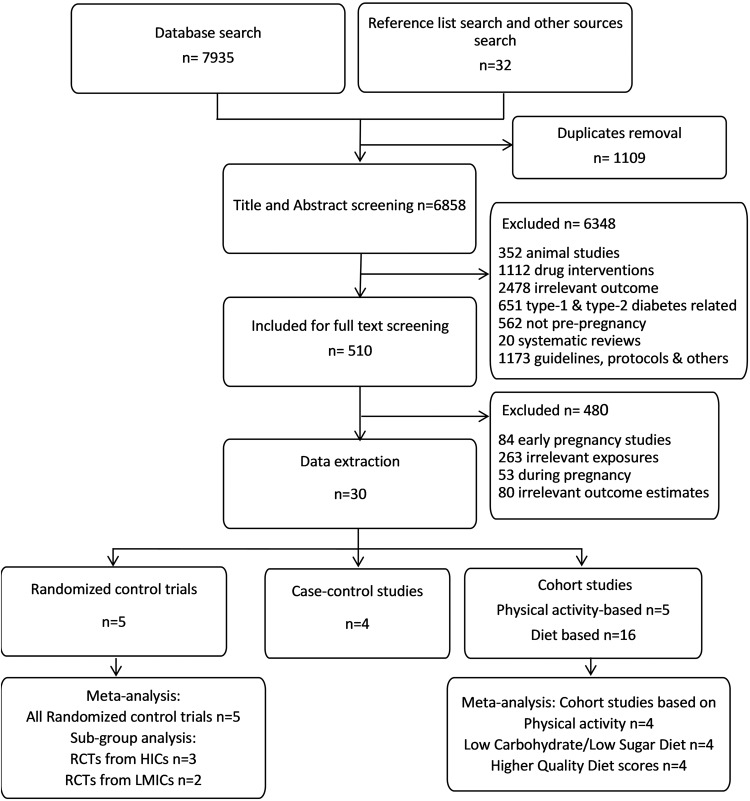
BACKGROUND: Gestational Diabetes Mellitus (GDM) is hyperglycaemia first detected during pregnancy. Globally, GDM affects around 1 in 6 live births (up to 1 in 4 in low- and middle-income countries- LMICs), thus, urgent measures are needed to prevent this public health threat. OBJECTIVE: To determine the effectiveness of pre-pregnancy lifestyle in preventing GDM. METHODS: We searched MEDLINE, Web of science, Embase and Cochrane central register of controlled trials. Randomized control trials (RCTs), case-control studies, and cohort studies that assessed the effect of pre-pregnancy lifestyle (diet and/or physical activity based) in preventing GDM were included. Random effects model was used to calculate odds ratio (OR) with 95% confidence interval. The Cochrane ROB-2 and the Newcastle-Ottawa Scale were used for assessing the risk of bias. The protocol was registered in PROSPERO (ID: CRD42020189574) RESULTS: Database search identified 7935 studies, of which 30 studies with 257,876 pregnancies were included. Meta-analysis of the RCTs (N = 5; n = 2471) in women who received pre-pregnancy lifestyle intervention showed non-significant reduction of the risk of developing GDM (OR 0.76, 95% CI: 0.50-1.17, p = 0.21). Meta-analysis of cohort studies showed that women who were physically active pre-pregnancy (N = 4; n = 23263), those who followed a low carbohydrate/low sugar diet (N = 4; n = 25739) and those women with higher quality diet scores were 29%, 14% and 28% less likely to develop GDM respectively (OR 0.71, 95% CI: 0.57, 0.88, p = 0.002, OR 0.86, 95% CI: 0.68, 1.09, p = 0.22 and OR 0.72, 95% CI 0.60-0.87, p = 0.0006). CONCLUSION: This study highlights that some components of pre-pregnancy lifestyle interventions/exposures such as diet/physical activity-based preparation/counseling, intake of vegetables, fruits, low carbohydrate/low sugar diet, higher quality diet scores and high physical activity can reduce the risk of developing gestational diabetes. Evidence from RCTs globally and the number of studies in LMICs are limited, highlighting the need for carefully designed RCTs that combine the different aspects of the lifestyle and are personalized to achieve better clinical and cost effectiveness.
Overview
CoChat Summary
TL;DR
This systematic review and meta-analysis found that pre-pregnancy lifestyle factors are associated with lower GDM risk, but the randomized trial evidence was not statistically significant. The strongest signals came from cohort studies: higher pre-pregnancy physical activity and higher-quality diet scores were linked to reduced GDM risk.
Key findings
- The review included 30 studies comprising 257,876 pregnancies; the search identified 7,935 studies plus 32 additional studies from other sources.
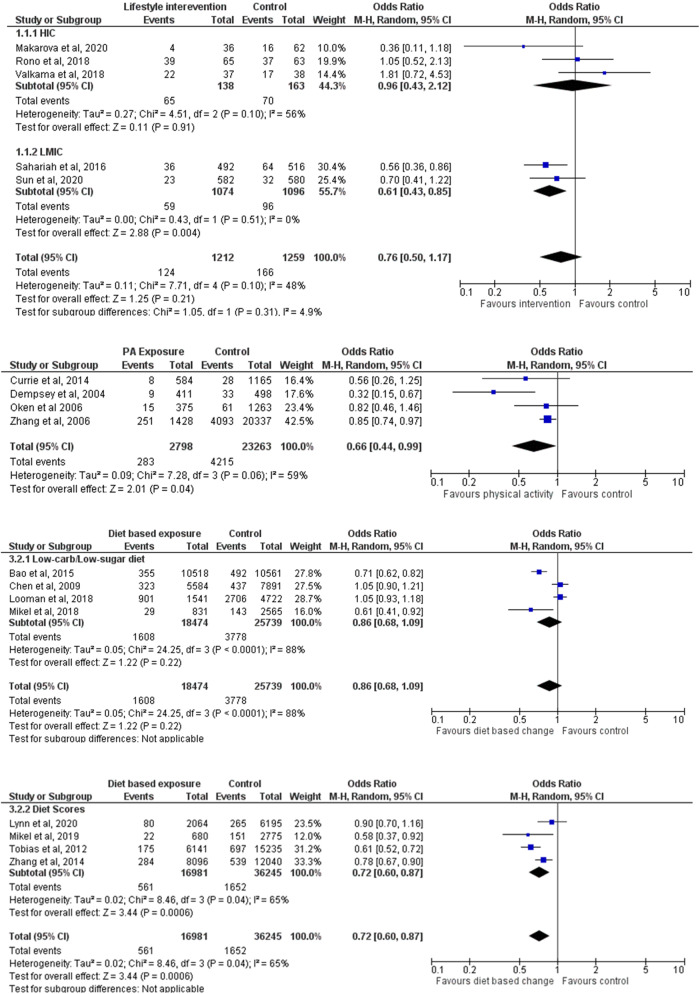
- In 5 RCTs (n = 2,471), pre-pregnancy lifestyle intervention showed a non-significant reduction in GDM risk: OR 0.76 (95% CI 0.50–1.17), p = 0.21.
- In cohort studies, women who were physically active pre-pregnancy were 34% less likely to develop GDM: OR 0.66 (95% CI 0.44–0.99), p = 0.04.
- Women with higher quality diet scores were 28% less likely to develop GDM: OR 0.72 (95% CI 0.60–0.87), p = 0.0006; low carbohydrate/low sugar diet showed OR 0.86 (95% CI 0.68–1.09), p = 0.22.
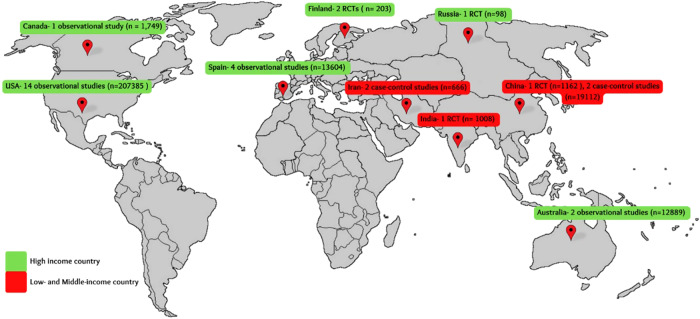
- The authors report that 24 of 30 studies were from high-income countries and 6 of 30 from LMICs.
Methods
- Systematic review and meta-analysis of RCTs, cohort studies, and case-control studies assessing pre-pregnancy diet and/or physical activity and GDM risk.
- Searched MEDLINE, Web of Science, Embase, and CENTRAL from inception to July 2022, with no language restrictions; protocol registered in PROSPERO (CRD42020189574).
- Used random-effects meta-analysis to estimate odds ratios (ORs) with 95% CIs; risk of bias assessed with Cochrane ROB-2 for RCTs and Newcastle-Ottawa Scale for non-randomized studies.
Limitations
- The paper states there was high/substantial heterogeneity across studies, likely because the included lifestyle factors differed.
- The paper states that many cohort and case-control studies relied on food frequency and physical activity questionnaires, creating self-reported bias.
- The paper states that few studies were from LMICs, limiting applicability to the populations with the highest GDM burden. Evident from the text: the RCT evidence was limited and the RCT meta-analysis was based on only 5 trials.
Model-written summary. Check it against the paper before relying on it.
Integrity signals
Registry
Cites
Statistics
Figures
Verification
Claims the paper makes
8 Valid · 0 Not valid · 1 Not checked · 37 Own results and interpretations
The cited sources support only part of this claim — read each source’s verdict below.
In the paper
“Two recent studies have shown that lifestyle interventions before pregnancy may help to prevent GDM.”
§ Effectiveness of pre-pregnancy lifestyle in preventing gestational diabetes mellitus—a systematic review and meta-analysis of 257,876 pregnancies > Background
What the sources say
- Partly supportedcites [26] Phelan S Windows of opportunity for lifestyle interventions to prevent gestational diabetes mellitus Am J Perinatol 2016 33 1291 9 10.1055/s-0036-1586504 27487229 PMC5685171 sourceExperimental — accuracy not yet measured
The Interconception or preconceptional interventions section reports observational evidence that weight loss before pregnancy is associated with lower GDM risk. It also says no known clinical trials had examined whether postpartum weight-control interventions affect subsequent pregnancies. The paper therefore supports the possibility of prevention, but not the claim that two recent studies showed pre-pregnancy lifestyle interventions prevent GDM. (LLM, conf=0.86)
- Partly supportedcites [27] Zhang C Tobias DK Chavarro JE Bao W Wang D Ley SH Adherence to healthy lifestyle and risk of gestational diabetes mellitus: prospective cohort study BMJ: Br Med J 2014 349 g5450 10.1136/bmj.g5450 25269649 PMC4180295 sourceExperimental — accuracy not yet measured
The Discussion reports that a healthy lifestyle before pregnancy was associated with a lower risk of gestational diabetes, and the Conclusions suggest a potential benefit from preconception lifestyle counseling. This was a prospective cohort study, however, not a test of a lifestyle intervention before pregnancy, so it does not show that such an intervention prevents GDM. (LLM, conf=0.86)
hedgedstates a possible cause- Asserted: passes — The authors put it forward as true.
- Checkable: passes — It can be checked against evidence.
- Load-bearing: passes — The paper’s conclusions depend on it.
- Based: passes — The paper gives a reason why it holds.
- Partly supported
The cited sources support only part of this claim — read each source’s verdict below.
In the paper
“However, studies that tested the effectiveness of lifestyle interventions provided during pregnancy on GDM have shown mixed results [14, 17–21].”
§ Effectiveness of pre-pregnancy lifestyle in preventing gestational diabetes mellitus—a systematic review and meta-analysis of 257,876 pregnancies > Background
What the sources say
- Supportedcites [14] Bain E, Crane M, Tieu J, Han S, Crowther CA, Middleton P Diet and exercise interventions for preventing gestational diabetes mellitus. Cochrane Database Syst Rev. 2015;(4):Cd010443. 25864059 source
The Bain 2015 Cochrane review pools 13 RCTs of combined diet and exercise interventions in pregnancy and finds no clear difference for GDM, caesarean birth or large-for-gestational-age, yet documents discordance across the literature: the ethnicity subgroup analysis showed a trend towards increased GDM risk in 'majority low-risk ethnicities' trials versus a significantly reduced risk (average RR 0.72, 95% CI 0.53 to 0.99) in 'mixed ethnicities/not stated' trials, plus a benefit for preterm birth, and it states the Oostdam 2011 finding of a significant GDM reduction with dietary counselling 'was inconsistent with the results from our review and the Tieu 2008 review'. The 'How the intervention might work' section likewise records that the diet-alone and exercise-alone Cochrane reviews 'have revealed inconclusive findings', while Halperin 2014 is cited for most RCTs having been negative. Taken together our copy supports the attributed generalisation that trials of lifestyle interventions in pregnancy on GDM have given mixed/inconsistent results; the claim is a broad background statement, and the review's caveat that no conclusions can be drawn from the subgroup data does not contradict it. (LLM, conf=0.84)
- Supportedcites [17] Simmons D Jelsma JG Galjaard S Devlieger R van Assche A Jans G Results from a european multicenter randomized trial of physical activity and/or healthy eating to reduce the risk of gestational diabetes mellitus: The DALI lifestyle pilot Diabetes Care 2015 38 1650 6 10.2337/dc15-0360 26112044 source
The DALI pilot's introduction (CONCLUSIONS, p. 2) states outright that 'the evidence that interventions to reduce these harms are beneficial is mixed', noting a meta-analysis where combined PA+HE lifestyle intervention did not significantly reduce GDM rates, and that more recent large RCTs 'have shown no reduction in the incidence of GDM'. Its discussion (CONCLUSIONS, pp. 4-5) reinforces the mixed picture: previous RCTs initiated before 20 weeks 'largely shown no impact on GDM prevalence, fasting glucose, or insulin concentrations', with named exceptions (BAMBINO pilot, LiP, Quinlivan, Thornton), while the DALI pilot itself found HE apparently more efficacious than PA yet 32% of women still developed GDM. The source is itself a pregnancy lifestyle-intervention trial on GDM risk, so the paraphrase fits. (LLM, conf=0.90)
- Supportedcites [18] Assaf-Balut C García de la Torre N Durán A Fuentes M Bordiú E Del Valle L A Mediterranean diet with additional extra virgin olive oil and pistachios reduces the incidence of gestational diabetes mellitus (GDM): A randomized controlled trial: The St. Carlos GDM prevention study PLoS One 2017 12 e0185873 10.1371/journal.pone.0185873 29049303 PMC5648128 source
The Introduction reports that studies of lifestyle interventions to prevent GDM found both prevention and no-prevention results. The Discussion likewise says some dietary interventions improved GDM incidence whereas others did not. Page numbers are not provided in our copy. (LLM, conf=0.94)
- Supportedcites [19] Dodd JM Turnbull D McPhee AJ Deussen AR Grivell RM Yelland LN Antenatal lifestyle advice for women who are overweight or obese: LIMIT randomised trial BMJ: Br Med J 2014 348 g1285 10.1136/bmj.g1285 24513442 PMC3919179 source
The Methods and Abstract identify this as a trial of antenatal lifestyle advice that included gestational diabetes as a prespecified outcome. The Discussion (Comparison with other studies; page unavailable) reports a non-significant increase in gestational diabetes among women receiving the advice. This supports citing the trial as one study contributing to the broader statement about mixed results; it does not, by itself, establish the results of all the studies cited. (LLM, conf=0.87)
- Partly supportedcites [20] Poston L Bell R Croker H Flynn AC Godfrey KM Goff L Effect of a behavioural intervention in obese pregnant women (the UPBEAT study): a multicentre, randomised controlled trial Lancet Diabetes Endocrinol 2015 3 767 77 10.1016/S2213-8587(15)00227-2 26165396 sourceExperimental — accuracy not yet measured
Our copy of UPBEAT does depict heterogeneous findings on pregnancy lifestyle interventions and gestational diabetes: the Discussion (p. n/a) states that 'by contrast with previous systematic reviews and metaanalyses of studies on a smaller scale to ours, our null fi nding extends some observations', and it records that in the two Danish studies 'gestational diabetes was not decreased' and that the Australian LIMIT trial 'had no eff ect on gestational diabetes'. So the source does evidence studies with differing outcomes. However, it does not frame the literature as genuinely 'mixed': it attributes the apparently positive signal to bias ('the inference from systematic reviews that pregnancy lifestyle interventions might be an eff ective means to prevent gestational diabetes in women with obesity seems to have been biased by small-scale studies and methodological limitations') and concludes the focus on behavioural interventions to prevent GDM 'would seem to be misplaced'. The supporting material is also confined to overweight/obese pregnant women, a narrower population than the claim's general 'during pregnancy'. (LLM, conf=0.68)
- Supportedcites [21] Oteng-Ntim E Varma R Croker H Poston L Doyle P Lifestyle interventions for overweight and obese pregnant women to improve pregnancy outcome: systematic review and meta-analysis BMC Med 2012 10 47 10.1186/1741-7015-10-47 22574949 PMC3355057 source
The Discussion (Interpretation) says the effect on gestational diabetes was not consistent across trial populations and refers to both successful and unsuccessful studies. The Results likewise report a trend toward reduction in randomised trials but no evidence of reduction in non-randomised trials. The review concerns overweight and obese pregnant women. (LLM, conf=0.92)
plain- Asserted: passes — The authors put it forward as true.
- Checkable: passes — It can be checked against evidence.
- Load-bearing: passes — The paper’s conclusions depend on it.
- Based: passes — The paper gives a reason why it holds.
- Supported
A result the paper reports from its own data — it cites no other source for it, so there is none to check. The quote shows it is in the paper.
In the paper
“Meta-analysis of cohort studies showed that women who were physically active pre-pregnancy (N = 4; n = 23263), those who followed a low carbohydrate/low sugar diet (N = 4; n = 25739) and those women with higher quality diet scores were 29%, 14% and 28% less likely to develop GDM respectively (OR 0.71, 95% CI: 0.57, 0.88, p = 0.002, OR 0.86, 95% CI: 0.68, 1.09, p = 0.22 and OR 0.72, 95% CI 0.60–0.”
- Also stated in: § Results · plain
“Similarly, women who had low carbohydrate/low sugar diet were 24% less likely to develop GDM (OR 0.86, 95% CI 0.68–1.09, p = 0.22) (Fig. 2c).”
§ Effectiveness of pre-pregnancy lifestyle in preventing gestational diabetes mellitus—a systematic review and meta-analysis of 257,876 pregnancies > Abstract > Results
plainstates a causen = 25,739- Asserted: passes — The authors put it forward as true.
- Checkable: passes — It can be checked against evidence.
- Load-bearing: unclear — It is unclear whether the paper’s conclusions depend on it.
- Based: passes — The paper gives a reason why it holds.
- Also stated in: § Results · plain
A result the paper reports from its own data — it cites no other source for it, so there is none to check. The quote shows it is in the paper.
In the paper
“Meta-analysis of cohort studies (n = 4) revealed that women who were more physically active before pregnancy were 34% less likely to develop GDM (OR 0.66, 95% CI: 0.44, 0.99, p = 0.04) (Fig. 2b).”
§ Effectiveness of pre-pregnancy lifestyle in preventing gestational diabetes mellitus—a systematic review and meta-analysis of 257,876 pregnancies > Results
plainstates a causen = 4 ·- Asserted: passes — The authors put it forward as true.
- Checkable: passes — It can be checked against evidence.
- Load-bearing: passes — The paper’s conclusions depend on it.
- Based: passes — The paper gives a reason why it holds.
A result the paper reports from its own data — it cites no other source for it, so there is none to check. The quote shows it is in the paper.
In the paper
“Meta-analysis of cohort studies showed that women who were physically active pre-pregnancy (N = 4; n = 23263), those who followed a low carbohydrate/low sugar diet (N = 4; n = 25739) and those women with higher quality diet scores were 29%, 14% and 28% less likely to develop GDM respectively (OR 0.71, 95% CI: 0.57, 0.88, p = 0.002, OR 0.86, 95% CI: 0.68, 1.09, p = 0.22 and OR 0.72, 95% CI 0.60–0.”
§ Effectiveness of pre-pregnancy lifestyle in preventing gestational diabetes mellitus—a systematic review and meta-analysis of 257,876 pregnancies > Abstract > Results
plainstates a causen = 23,263 ·- Asserted: passes — The authors put it forward as true.
- Checkable: passes — It can be checked against evidence.
- Load-bearing: passes — The paper’s conclusions depend on it.
- Based: passes — The paper gives a reason why it holds.
10 more claims
Create a free account to see all 46 claims and every source verdict.
- Probably not a substantial claim. 20
- It may state two separate claims as one. 20
Citations
Cites
International Diabetes Federation 2017
Carracher, A. M., Marathe, P. H., & Close, K. L. (2018) · Journal of Diabetes · doi:10.1111/1753-0407.12644 · Cited by 13,418
Tuomilehto, J., Lindström, J., Eriksson, J. G., Valle, T. T., Hämäläinen, H., Ilanne-Parikka, P., Keinänen-Kiukaanniemi, S., Laakso, M., Louheranta, A., Rastas, M., et al. (2001) · New England Journal of Medicine · doi:10.1056/nejm200105033441801 · Cited by 10,873 · cited 2×
“Lifestyle interventions are proven to effectively prevent type-2 diabetes [16].”
BackgroundA Multicenter, Randomized Trial of Treatment for Mild Gestational Diabetes
Landon, M. B., Spong, C. Y., Thom, E., Carpenter, M. W., Ramin, S. M., Casey, B., Wapner, R. J., Varner, M. W., Rouse, D. J., Thorp, J. M., et al. (2009) · New England Journal of Medicine · doi:10.1056/nejmoa0902430 · Cited by 2,122 · cited 1×
“Even in research setting, current management strategy for GDM, at best, reduces the short-term complications by about 50% [13, 14].”
BackgroundThe Diabetes Prevention Program (DPP)
The Diabetes Prevention Program (DPP) Research Group (2002) · Diabetes Care · doi:10.2337/diacare.25.12.2165 · Cited by 1,938 · cited 1×
“While our review highlights the potential bene fi ts of various components of diet and lifestyle measures, studies that focus on reducing sedentary behavior are needed.”
BackgroundStephenson, J., Heslehurst, N., Hall, J., Schoenaker, D. A. J. M., Hutchinson, J., Cade, J. E., Poston, L., Barrett, G., Crozier, S. R., Barker, M., et al. (2018) · The Lancet · doi:10.1016/s0140-6736(18)30311-8 · Cited by 1,222 · cited 1×
“There is increasing evidence that pre-conception health of women is of critical importance in shaping the metabolic health of the next generation [9 – 11].”
BackgroundOrigins of lifetime health around the time of conception: causes and consequences
Fleming, T. P., Watkins, A. J., Velazquez, M. A., Mathers, J. C., Prentice, A. M., Stephenson, J., Barker, M., Saffery, R., Yajnik, C. S., Eckert, J. J., et al. (2018) · The Lancet · doi:10.1016/s0140-6736(18)30312-x · Cited by 1,147
Poston, L., Bell, R., Croker, H., Flynn, A. C., Godfrey, K. M., Goff, L., Hayes, L., Khazaezadeh, N., Nelson, S. M., Oteng-Ntim, E., et al. (2015) · The Lancet Diabetes & Endocrinology · doi:10.1016/s2213-8587(15)00227-2 · Cited by 642
Association of Sedentary Behaviour with Metabolic Syndrome: A Meta-Analysis
Edwardson, C. L., Gorely, T., Davies, M. J., Gray, L. J., Khunti, K., Wilmot, E. G., Yates, T., & Biddle, S. J. H. (2012) · PLoS ONE · doi:10.1371/journal.pone.0034916 · Cited by 535
Antenatal lifestyle advice for women who are overweight or obese: LIMIT randomised trial
Dodd, J. M., Turnbull, D., McPhee, A. J., Deussen, A. R., Grivell, R. M., Yelland, L. N., Crowther, C. A., Wittert, G., Owens, J. A., Robinson, J. S., et al. (2014) · BMJ · doi:10.1136/bmj.g1285 · Cited by 482
Gestational diabetes: opportunities for improving maternal and child health
Saravanan, P., Magee, L. A., Banerjee, A., Coleman, M. A., Von Dadelszen, P., Denison, F., Farmer, A., Finer, S., Fox-Rushby, J., Holt, R., et al. (2020) · The Lancet Diabetes & Endocrinology · doi:10.1016/s2213-8587(20)30161-3 · Cited by 428 · cited 1×
“…needs to move away from “ diagnosis and treatment of GDM ” to “ prevention of GDM. ” Prevention of GDM may provide a crucial opportunity to reduce this risk of adverse metabolic programming of the offspring and future risk of cardiometabolic disorders, in addition to bene fi ting the mothers [15].”
BackgroundSelf-citationRelationship of Sedentary Behavior and Physical Activity to Incident Cardiovascular Disease
Chomistek, A. K., Manson, J. E., Stefanick, M. L., Lu, B., Sands-Lincoln, M., Going, S. B., Garcia, L., Allison, M. A., Sims, S. T., LaMonte, M. J., et al. (2013) · Journal of the American College of Cardiology · doi:10.1016/j.jacc.2013.03.031 · Cited by 389
Dietary Fiber Intake, Dietary Glycemic Load, and the Risk for Gestational Diabetes Mellitus
Zhang, C., Liu, S., Solomon, C. G., & Hu, F. B. (2006) · Diabetes Care · doi:10.2337/dc06-0266 · Cited by 378
Intervention strategies to improve nutrition and health behaviours before conception
Barker, M., Dombrowski, S. U., Colbourn, T., Fall, C. H. D., Kriznik, N. M., Lawrence, W. T., Norris, S. A., Ngaiza, G., Patel, D., Skordis-Worrall, J., et al. (2018) · The Lancet · doi:10.1016/s0140-6736(18)30313-1 · Cited by 377
What is fetal programming?: a lifetime health is under the control of in utero health
Kwon, E. J., & Kim, Y. J. (2017) · Obstetrics & Gynecology Science · doi:10.5468/ogs.2017.60.6.506 · Cited by 375 · cited 1×
“Maternal metabolic health during pregnancy has critical in fl uence on the metabolic health of the offspring and possibly even in the subsequent generations [8].”
BackgroundOteng-Ntim, E., Varma, R., Croker, H., Poston, L., & Doyle, P. (2012) · BMC Medicine · doi:10.1186/1741-7015-10-47 · Cited by 352 · cited 1×
“However, studies that tested the effectiveness of lifestyle interventions provided during pregnancy on GDM have shown mixed results [14, 17 – 21].”
ResultTeede, H. J., Bailey, C., Moran, L. J., Bahri Khomami, M., Enticott, J., Ranasinha, S., Rogozińska, E., Skouteris, H., Boyle, J. A., Thangaratinam, S., et al. (2022) · JAMA Internal Medicine · doi:10.1001/jamainternmed.2021.6373 · Cited by 329 · cited 12×
“Sub-group analysis of the studies from HICs and LMICs was also performed as shown in Fig.”
BackgroundMethodInfluentialZhang, C., Solomon, C. G., Manson, J. E., & Hu, F. B. (2006) · Archives of Internal Medicine · doi:10.1001/archinte.166.5.543 · Cited by 306
Dempsey, J. C. (2004) · American Journal of Epidemiology · doi:10.1093/aje/kwh091 · Cited by 292
First-Trimester Fasting Hyperglycemia and Adverse Pregnancy Outcomes
Riskin-Mashiah, S., Younes, G., Damti, A., & Auslender, R. (2009) · Diabetes Care · doi:10.2337/dc09-0688 · Cited by 277 · cited 1×
“However, varying degrees of hyperglycaemia may be present before this time period [4] and adverse effects on the fetus may have already happened at the time of diagnosis of GDM [5 – 7].”
BackgroundHenson, J., Davies, M. J., Bodicoat, D. H., Edwardson, C. L., Gill, J. M. R., Stensel, D. J., Tolfrey, K., Dunstan, D. W., Khunti, K., & Yates, T. (2016) · Diabetes Care · doi:10.2337/dc15-1240 · Cited by 270
Mobile Health (mHealth) in Low- and Middle-Income Countries
McCool, J., Dobson, R., Whittaker, R., & Paton, C. (2022) · Annual Review of Public Health · doi:10.1146/annurev-publhealth-052620-093850 · Cited by 269
A prospective study of dietary patterns, meat intake and the risk of gestational diabetes mellitus
Zhang, C., Schulze, M. B., Solomon, C. G., & Hu, F. B. (2006) · Diabetologia · doi:10.1007/s00125-006-0422-1 · Cited by 266
Associations of Physical Activity and Inactivity Before and During Pregnancy With Glucose Tolerance
Oken, E., Ning, Y., Rifas-Shiman, S. L., Radesky, J. S., Rich-Edwards, J. W., & Gillman, M. W. (2006) · Obstetrics & Gynecology · doi:10.1097/01.aog.0000241088.60745.70 · Cited by 240
Song, C., Li, J., Leng, J., Ma, R. C., & Yang, X. (2016) · Obesity Reviews · doi:10.1111/obr.12442 · Cited by 227 · cited 1×
“Interestingly, interventions provided during early weeks of gestation showed promising results [22].”
BackgroundPrepregnancy adherence to dietary patterns and lower risk of gestational diabetes mellitus
Tobias, D. K., Zhang, C., Chavarro, J., Bowers, K., Rich-Edwards, J., Rosner, B., Mozaffarian, D., & Hu, F. B. (2012) · The American Journal of Clinical Nutrition · doi:10.3945/ajcn.111.028266 · Cited by 225
Assaf-Balut, C., García de la Torre, N., Durán, A., Fuentes, M., Bordiú, E., del Valle, L., Familiar, C., Ortolá, A., Jiménez, I., Herraiz, M. A., et al. (2017) · PLOS ONE · doi:10.1371/journal.pone.0185873 · Cited by 224
Adherence to healthy lifestyle and risk of gestational diabetes mellitus: prospective cohort study
Zhang, C., Tobias, D. K., Chavarro, J. E., Bao, W., Wang, D., Ley, S. H., & Hu, F. B. (2014) · BMJ · doi:10.1136/bmj.g5450 · Cited by 220 · cited 3×
“The cohort studies explored various components of diet and physical activity measures and con fi rmed a strong link between higher self-reported physical activity and diets that are classi fi ed as “ healthy ” during the pre-pregnancy period and reduced risk of GDM. Analysis of cohort studies on low…”
BackgroundSovio, U., Murphy, H. R., & Smith, G. C. S. (2016) · Diabetes Care · doi:10.2337/dc16-0160 · Cited by 220 · cited 1×
“However, varying degrees of hyperglycaemia may be present before this time period [4] and adverse effects on the fetus may have already happened at the time of diagnosis of GDM [5 – 7].”
BackgroundDiet and exercise interventions for preventing gestational diabetes mellitus
Bain, E., Crane, M., Tieu, J., Han, S., Crowther, C. A., & Middleton, P. (2015) · Cochrane Database of Systematic Reviews · doi:10.1002/14651858.cd010443.pub2 · Cited by 188 · cited 2×
“Even in research setting, current management strategy for GDM, at best, reduces the short-term complications by about 50% [13, 14].”
BackgroundResultNicklas, J. M., Zera, C. A., Seely, E. W., Abdul-Rahim, Z. S., Rudloff, N. D., & Levkoff, S. E. (2011) · BMC Pregnancy and Childbirth · doi:10.1186/1471-2393-11-23 · Cited by 177
Chen, L., Hu, F. B., Yeung, E., Willett, W., & Zhang, C. (2009) · Diabetes Care · doi:10.2337/dc09-0866 · Cited by 150
Schoenaker, D. A. J. M., Soedamah‐Muthu, S. S., Callaway, L. K., & Mishra, G. D. (2015) · Diabetologia · doi:10.1007/s00125-015-3742-1 · Cited by 144
Bao, W., Bowers, K., Tobias, D. K., Olsen, S. F., Chavarro, J., Vaag, A., Kiely, M., & Zhang, C. (2014) · The American Journal of Clinical Nutrition · doi:10.3945/ajcn.113.082966 · Cited by 129
Fetal programming and gestational diabetes mellitus
Monteiro, L. J., Norman, J. E., Rice, G. E., & Illanes, S. E. (2015) · Placenta · doi:10.1016/j.placenta.2015.11.015 · Cited by 115 · cited 1×
“In addition, GDM has been shown to be associated with adverse fetal programming [12].”
BackgroundSimmons, D., Jelsma, J. G. M., Galjaard, S., Devlieger, R., van Assche, A., Jans, G., Corcoy, R., Adelantado, J. M., Dunne, F., Desoye, G., et al. (2015) · Diabetes Care · doi:10.2337/dc15-0360 · Cited by 105 · cited 1×
“However, studies that tested the effectiveness of lifestyle interventions provided during pregnancy on GDM have shown mixed results [14, 17 – 21].”
ResultAmniotic Fluid Insulin at 14–20 Weeks’ Gestation
Carpenter, M. W., Canick, J. A., Hogan, J. W., Shellum, C., Somers, M., & Star, J. A. (2001) · Diabetes Care · doi:10.2337/diacare.24.7.1259 · Cited by 85 · cited 1×
“Typically, GDM is diagnosed between 24 and 28 weeks of gestation [3].”
BackgroundVenkataraman, H., Ram, U., Craik, S., Arungunasekaran, A., Seshadri, S., & Saravanan, P. (2017) · Diabetologia · doi:10.1007/s00125-016-4166-2 · Cited by 82 · cited 1×
“However, varying degrees of hyperglycaemia may be present before this time period [4] and adverse effects on the fetus may have already happened at the time of diagnosis of GDM [5 – 7].”
BackgroundSelf-citationBao, W., Tobias, D. K., Olsen, S. F., & Zhang, C. (2014) · Diabetologia · doi:10.1007/s00125-014-3382-x · Cited by 76
The Association Between Physical Activity and Maternal and Neonatal Outcomes: A Prospective Cohort
Currie, L. M., Woolcott, C. G., Fell, D. B., Armson, B. A., & Dodds, L. A. (2013) · Maternal and Child Health Journal · doi:10.1007/s10995-013-1426-3 · Cited by 71 · cited 1×
“The cohort studies explored various components of diet and physical activity measures and con fi rmed a strong link between higher self-reported physical activity and diets that are classi fi ed as “ healthy ” during the pre-pregnancy period and reduced risk of GDM. Analysis of cohort studies on low…”
BackgroundSoft drink consumption and gestational diabetes risk in the SUN project
Donazar-Ezcurra, M., del Burgo, C. L., Martínez‐González, M. Á., Basterra-Gortari, F. J., de Irala, J., & Bes‐Rastrollo, M. (2017) · Clinical Nutrition · doi:10.1016/j.clnu.2017.02.005 · Cited by 70
Marí-Sanchis, A., Díaz-Jurado, G., Basterra-Gortari, F. J., de la Fuente‐Arrillaga, C., Martínez‐González, M. Á., & Bes‐Rastrollo, M. (2017) · European Journal of Nutrition · doi:10.1007/s00394-017-1377-3 · Cited by 69 · cited 1×
“The cohort studies explored various components of diet and physical activity measures and con fi rmed a strong link between higher self-reported physical activity and diets that are classi fi ed as “ healthy ” during the pre-pregnancy period and reduced risk of GDM. Analysis of cohort studies on low…”
BackgroundLi, M., Li, S., Chavarro, J. E., Gaskins, A. J., Ley, S. H., Hinkle, S. N., Wang, X., Ding, M., Bell, G., Bjerregaard, A. A., et al. (2019) · Diabetes Care · doi:10.2337/dc18-2198 · Cited by 68
Looman, M., Schoenaker, D. A. J. M., Soedamah-Muthu, S. S., Geelen, A., Feskens, E. J. M., & Mishra, G. D. (2018) · British Journal of Nutrition · doi:10.1017/s0007114518001277 · Cited by 64
Quality of periconceptional dietary intake and maternal and neonatal outcomes
Yee, L. M., Silver, R. M., Haas, D. M., Parry, S., Mercer, B. M., Iams, J., Wing, D., Parker, C. B., Reddy, U. M., Wapner, R. J., et al. (2020) · American Journal of Obstetrics and Gynecology · doi:10.1016/j.ajog.2020.01.042 · Cited by 61
Rönö, K., Stach‐Lempinen, B., Eriksson, J. G., Pöyhönen‐Alho, M., Klemetti, M. M., Roine, R. P., Huvinen, E., Andersson, S., Laivuori, H. M., Valkama, A., et al. (2018) · International Journal of Women s Health · doi:10.2147/ijwh.s162061 · Cited by 53
Sahariah, S. A., Potdar, R. D., Gandhi, M., Kehoe, S. H., Brown, N., Sane, H., Coakley, P. J., Marley-Zagar, E., Chopra, H., Shivshankaran, D., et al. (2016) · The Journal of Nutrition · doi:10.3945/jn.115.223461 · Cited by 49
Shivappa, N., Hébert, J. R., Akhoundan, M., Mirmiran, P., & Rashidkhani, B. (2018) · The Journal of Maternal-Fetal & Neonatal Medicine · doi:10.1080/14767058.2018.1466275 · Cited by 44
Asadi, M., Shahzeidi, M., Nadjarzadeh, A., yusefabad, H. H., & Mansoori, A. (2019) · Nutrition & Dietetics · doi:10.1111/1747-0080.12514 · Cited by 42
Donazar-Ezcurra, M., Lopez-del Burgo, C., Martinez-Gonzalez, M. A., Basterra-Gortari, F. J., de Irala, J., & Bes-Rastrollo, M. (2017) · British Journal of Nutrition · doi:10.1017/s0007114517002537 · Cited by 39
Lessons learned from lifestyle prevention trials in gestational diabetes mellitus
Egan, A. M., & Simmons, D. (2019) · Diabetic Medicine · doi:10.1111/dme.13772 · Cited by 39
Windows of Opportunity for Lifestyle Interventions to Prevent Gestational Diabetes Mellitus
Phelan, S. (2016) · American Journal of Perinatology · doi:10.1055/s-0036-1586504 · Cited by 38
Kant, R., Yadav, P., Kishore, S., Barnwal, S., Kumar, R., & Khapre, M. P. (2022) · Cureus · doi:10.7759/cureus.21256 · Cited by 34
Bao, W., Song, Y., Bertrand, K. A., Tobias, D. K., Olsen, S. F., Chavarro, J. E., Mills, J. L., Hu, F. B., & Zhang, C. (2017) · Journal of Diabetes · doi:10.1111/1753-0407.12611 · Cited by 33
Ekezie, W. C., Dallosso, H. M., Saravanan, P., Khunti, K., & Hadjiconstantinou, M. (2021) · BMC Health Services Research · doi:10.1186/s12913-021-06791-9 · Cited by 33
Self-citationChen, Q., Feng, Y., Yang, H., Wu, W., Zhang, P., Wang, K., Wang, Y., Ko, J. S., Shen, J., Guo, L., et al. (2019) · Journal of Diabetes Research · doi:10.1155/2019/5232308 · Cited by 30
Chen, Q., Wu, W., Yang, H., Zhang, P., Feng, Y., Wang, K., Wang, Y., Wang, S., & Zhang, Y. (2020) · Diabetes & Metabolism Journal · doi:10.4093/dmj.2019.0138 · Cited by 30
Sun, L., & Niu, Z. (2020) · Food & Nutrition Research · doi:10.29219/fnr.v64.4451 · Cited by 28
Coomar, D., Hazlehurst, J., Austin, F., Foster, C. E., Hitman, G. A., Heslehurst, N., Iliodromiti, S., Betrán, A. P., Moss, N., Poston, L., et al. (2021) · BMJ Open · doi:10.1136/bmjopen-2020-048119 · Cited by 13 · cited 1×
“…that antenatal structured diet and physical activity-based lifestyle interventions were linked to reduced gestational weight gain and lower risk of other adverse maternal and neonatal outcomes [23] and two individual participant data (IPD) meta-analysis on prevention of GDM are ongoing [24, 25].”
BackgroundSampathkumar, S., Sankar, M., Ramasamy, S., Sriram, N., Saravanan, P., & Ram, U. (2022) · International Journal of Environmental Research and Public Health · doi:10.3390/ijerph19158914 · Cited by 13
Self-citationValkama, A. J., Meinilä, J., Koivusalo, S., Lindström, J., Rönö, K., Stach‐Lempinen, B., Kautiainen, H., & Eriksson, J. G. (2018) · Journal of Human Nutrition and Dietetics · doi:10.1111/jhn.12547 · Cited by 12 · cited 1×
“To our knowledge, our systematic review and meta-analysis is the fi rst to show the evidence for pre-pregnancy lifestyle interventions and the risk of GDM. Data from RCTs were limited and showed that pre-pregnancy lifestyle interventions may reduce the risk of developing GDM by about 24%.”
MethodDonazar-Ezcurra, M., del Burgo, C. L., Martínez‐González, M. Á., Dominguez, L. J., Basterra-Gortari, F. J., de Irala, J., & Bes‐Rastrollo, M. (2019) · British Journal Of Nutrition · doi:10.1017/s0007114519001521 · Cited by 10
Boath, A., Vale, L. D., Hayes, L., Allotey, J., & Heslehurst, N. (2023) · BMJ Open · doi:10.1136/bmjopen-2022-065335 · Cited by 7 · cited 1×
“…that antenatal structured diet and physical activity-based lifestyle interventions were linked to reduced gestational weight gain and lower risk of other adverse maternal and neonatal outcomes [23] and two individual participant data (IPD) meta-analysis on prevention of GDM are ongoing [24, 25].”
BackgroundHyperglycaemia in pregnancy: time to ask the hard questions?
Ram, U., Seshadri, S., & Saravanan, P. (2017) · The Lancet Diabetes & Endocrinology · doi:10.1016/s2213-8587(17)30175-4 · Cited by 6
Self-citationMakarova, M. E. L., Olina, O. A. A., & Terekhina, T. N. A. (2020) · Akusherstvo i ginekologiia · doi:10.18565/aig.2020.4.182-188 · Cited by 4 · cited 2×
“To our knowledge, our systematic review and meta-analysis is the fi rst to show the evidence for pre-pregnancy lifestyle interventions and the risk of GDM. Data from RCTs were limited and showed that pre-pregnancy lifestyle interventions may reduce the risk of developing GDM by about 24%.”
BackgroundMethod
Research works printed but not linked: 1
- WHO. Diagnostic Criteria and Classification of Hyperglycaemia First Detected in Pregnancy. 2013. https://apps.who.int/iris/bitstream/handle/10665/85975/WHO_NMH_MND_13.2_eng.pdf;jsessionid=E5806DC69967B1753795EB66C155EF30?sequence=1 (accessed 05.12. 2022). 24199271
Cited by
Call to action for a life course approach
Simmons, D., Gupta, Y., Hernandez, T. L., Levitt, N., van Poppel, M., Yang, X., Zarowsky, C., Backman, H., Feghali, M., & Nielsen, K. K. (2024) · The Lancet · doi:10.1016/s0140-6736(24)00826-2 · Cited by 66
Parker, J., O'Brien, C. L., Yeoh, C., Gersh, F. L., & Brennecke, S. P. (2024) · Journal of Clinical Medicine · doi:10.3390/jcm13061774 · Cited by 24
“Another recent large meta-analysis of 21 cohort studies showed that following a healthy lifestyle (a healthy diet and high physical activity) can also reduce the risk of developing GDM [65].”
BackgroundPrevention of Pregnancy Complications Using a Multimodal Lifestyle, Screening, and Medical Model
Parker, J., Hofstee, P., & Brennecke, S. P. (2024) · Journal of Clinical Medicine · doi:10.3390/jcm13154344 · Cited by 33
Sujan, M. A. J., Skarstad, H. M. S., Rosvold, G., Fougner, S. L., Follestad, T., Salvesen, K. Å., & Moholdt, T. T. (2025) · BMJ · doi:10.1136/bmj-2024-083398 · Cited by 11
“22-24 However, evidence on the specific components of prepregnancy interventions and their effectiveness remains scarce.”
Dubois, N., & Giroux, I. (2025) · Healthcare · doi:10.3390/healthcare13182261 · Cited by 15
Metadata
- Authors
- Sampathkumar, S., Parkhi, D., Ghebremichael-Weldeselassie, Y., Sukumar, N., & Saravanan, P.
- Affiliations
- University of Warwick (GB)
- George Eliot Hospital (GB)
- Corresponding author
- Saravanan, Ponnusamy
- Venue
- Nutrition & Diabetes
- Published
- 2023-11-16
- Volume
- 13
- Issue
- 1
- Pages
- 22-22
- ISSN
- 2044-4052 (ISSN-L)
- PMC
- PMC10654718
- OpenAlex
- W4388723236
- Semantic Scholar
- ea676dfe9ecd85a69ec451f772eb7e93c205cc68
- Cited by
- 23
- References
- 65
- Citations by year
- 2026: 8 · 2025: 9 · 2024: 6
- FWCI
- 1.40
- Type
- journal article
- Language
- en
- Open access
- gold
- doi.org
- Licence
- cc-by
- creativecommons.org/licenses/by/4.0 (tdm)
- creativecommons.org/licenses/by/4.0 (vor)
- Locations
- Nutrition and Diabetes (publishedVersion, cc-by)
- PubMed Central (publishedVersion, cc-by)
- PubMed (publishedVersion)
- Open Research Online (The Open University) (acceptedVersion)
- DOAJ (DOAJ: Directory of Open Access Journals) (submittedVersion, cc-by-sa)
- Funders
- RCUK | Medical Research Council (MR/R020981/1)
- Novo Nordisk (International Doctoral Training Scholarship, University of Warwiick)
- RCUK | MRC | Medical Research Foundation (MR/R020981/1)
- Topics
- Health Sciences › Medicine › Obstetrics and Gynecology › Gestational Diabetes Research and Management
- Health Sciences › Medicine › Endocrinology, Diabetes and Metabolism › Diabetes, Cardiovascular Risks, and Lipoproteins
- Health Sciences › Medicine › Pediatrics, Perinatology and Child Health › Maternal and Neonatal Healthcare
- Keywords
- gestational diabetes mellitus, physical activity, low-carbohydrate diet, low-sugar diet, diet quality, maternal hyperglycemia, lifestyle intervention
- MeSH terms
- Sugars, Carbohydrates, Female, Humans, Life Style, Pregnancy, Diabetes, Gestational, Diet, Carbohydrate-Restricted
About these checks
Registry, retraction, Cites and statistics results are computed, not judged, with one exception: a printed reference that no index lists is read once by a model before it counts as a citation error. Claims are extracted by a model and kept only when their quote appears verbatim in the text; each cited source is then checked, with a model’s help, for whether it says what the claim relies on. Those verdicts can be wrong — read the claim’s quote and the cited source before relying on one.
The claim verdicts this report counts are experimental: their accuracy is not yet measured.
A language model drew the claims from the paper on 2026-10-10, under version 3 of the claim definition (model deepseek-v4.1-flash, prompt extract-v3).
A second model labelled each claim on 2026-10-10 (model jev-1.13-20260917, definition revision gold-guideline-v0.2).
Cited sources are checked with a language model’s help (gpt-6-sol and qwen3.8-omni-flash).
Statistics and arithmetic are recomputed, not judged.
Confidence bands are shown only for fields calibrated on our annotated test set. None is calibrated yet, so no band is shown.
What counts as a claim ›How we measure confidence ›How we check this ›
Are you an author, or do you see a problem with this page? Request a review
Data sources
Bibliographic data: Semantic Scholar, OpenAlex, Crossref.
Contains information from the Semantic Scholar Academic Graph Datasets, made available under the ODC Attribution License (ODC-BY 1.0).
Semantic Scholar’s data is described in: Kinney, R., et al. (2023). The Semantic Scholar Open Data Platform. arXiv:2301.10140.
