

Stress induces insertion of calcium-permeable AMPA receptors in the OFC–BLA synapse and modulates emotional behaviours in mice
Open accessThe DOI matches its Crossref record; 78 of the 78 references it cites were found in a registry or an index.
Abstract
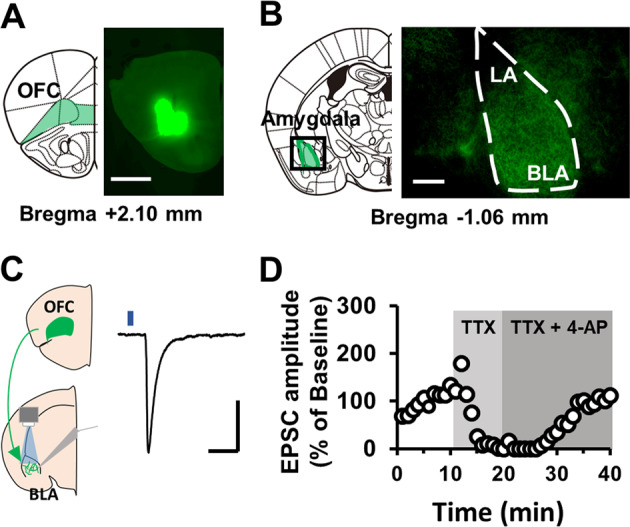
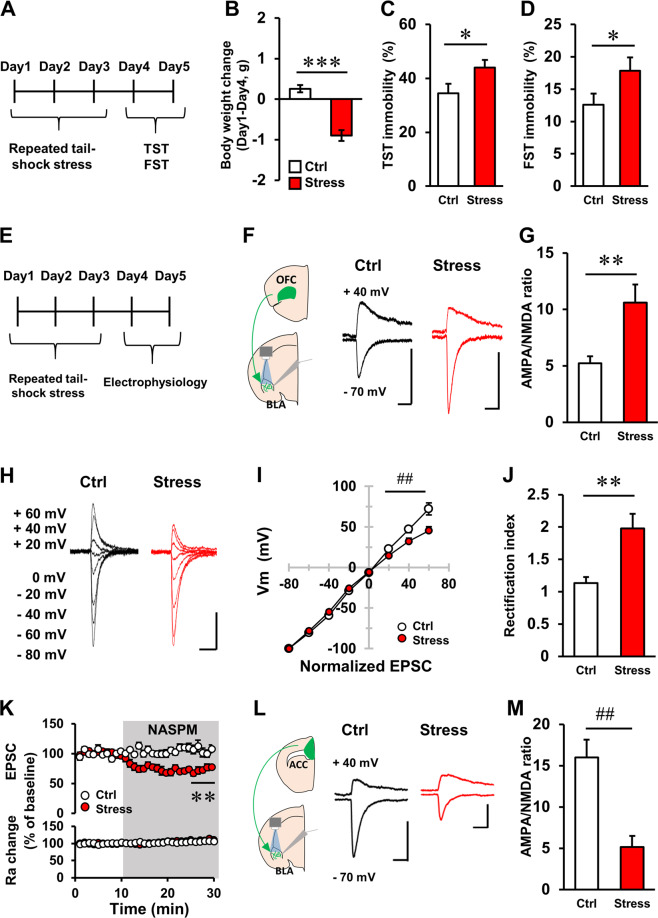
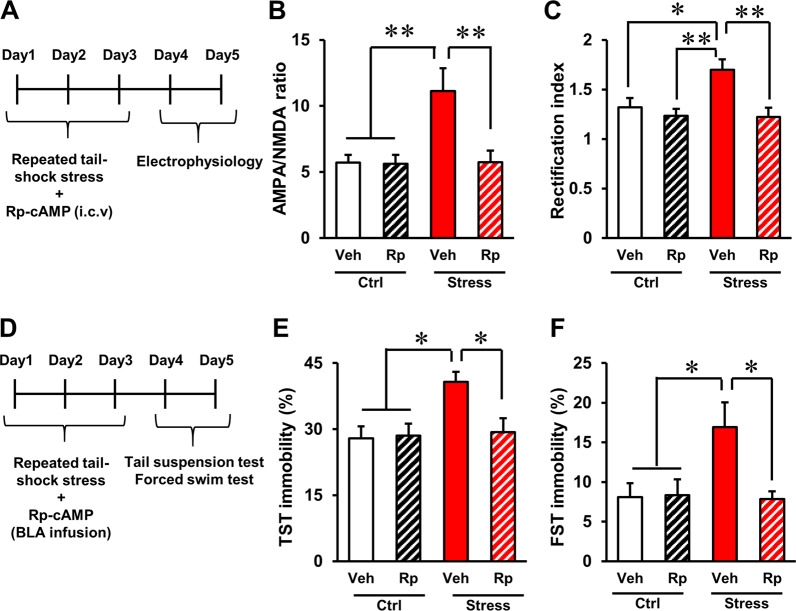
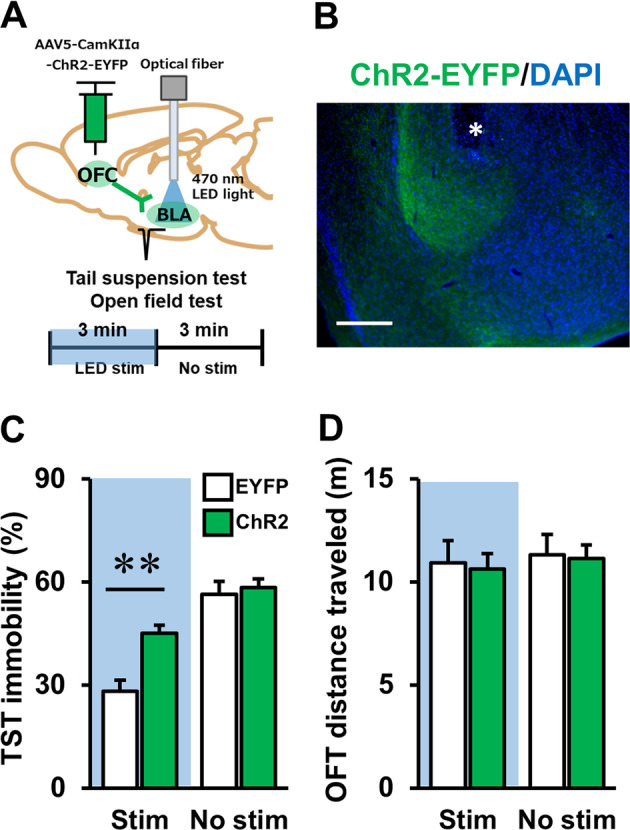
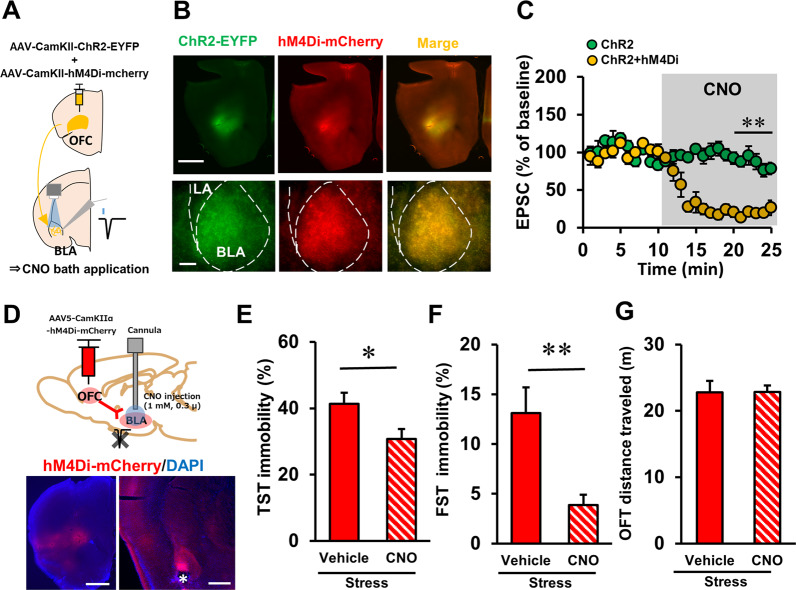
Stress increases the risk of neuropsychiatric disorders, such as major depression. Exposure to stress has been reported to induce various neuronal changes, such as alterations in synaptic transmission and structure. However, a causal link between stress-induced neural circuit alterations and changes in emotional behaviours is not well understood. In the present study, we focused on a projection pathway from the orbitofrontal cortex (OFC) to the basolateral nucleus of the amygdala (BLA) as a crucial circuit for negative emotions and examined the effect of stress on OFC–BLA excitatory synaptic transmission using optogenetic and whole-cell patch-clamp methods in mice. As a stress-inducing procedure, we used repeated tail-shock, which increased stress-related behaviours. We found greater α-amino-3-hydroxy-5-methyl-4-isoxazole propionic acid (AMPA)/N-methyl-d-aspartate current ratios and insertion of calcium-permeable AMPA receptors (AMPARs) in the OFC–BLA synapse after stress. These stress-induced synaptic and behavioural changes were reduced by a blockade of protein kinase A, which plays a principal role in stress-induced targeting of AMPARs into the synaptic membrane. To examine a possible causal relationship between alterations in synaptic transmission in the OFC–BLA pathway and stress-related behaviour, we performed optogenetic activation or chemogenetic inactivation of OFC–BLA transmission in mice. We found that optogenetic activation and chemogenetic inactivation of OFC–BLA transmission increased and decreased stress-related behaviour, respectively. In conclusion, we have demonstrated that stress altered the postsynaptic properties of the OFC–BLA pathway. These synaptic changes might be one of the underlying mechanisms of stress-induced behavioural alterations.
Overview
The claims and statistics of this paper haven’t been checked yet.
Free: it reads the open-access text and checks the first 5 claims that cite a source we can check. Create a free account to check every claim.
Integrity signals
Registry
Cites
Statistics
Figures
Verification
Claims the paper makes
The claims and statistics of this paper haven’t been checked yet.
Free: it reads the open-access text and checks the first 5 claims that cite a source we can check. Create a free account to check every claim.
Claims other papers make about this one
Each is checked against this paper’s own text: does it say what the citing paper says it does?
The cited source says what the claim attributes to it.
In the citing paper
“Altered performance on FST and TST are also associated with abnormal activity within the OFC including promotion of passive coping behavior following inhibition of histone acetylation in ventrolateral regions [229], activation of the OFC-amygdala pathway [230] and weekly infusions of a 5-HT2a agonist into lateral OFC [141].”
From Prefrontal cortex and depression (2022) · cites this paper as [230]
In the citing paper
“Moreover, it has also been shown that stress induces the insertion of these receptors, and local blockade of GluA2-lacking AMPARs was shown to attenuate stress-induced behavioral changes in rodents (Kuniishi et al., 2020; Yi et al., 2017).”
From Oxytocin neurons mediate the effect of social isolation via the VTA circuits (2022) · cites this paper as Kuniishi et al., 2020
Self-check
Percentages, sums and reported differences re-computed from the paper’s own numbers.
The self-check needs the paper’s full text.
Citations
Cites
Investigation of the freely available easy-to-use software ‘EZR’ for medical statistics
Kanda, Y. (2013) · Bone Marrow Transplantation · doi:10.1038/bmt.2012.244 · Cited by 18,767
Contributions of the Amygdala to Emotion Processing: From Animal Models to Human Behavior
Phelps, E. A., & LeDoux, J. E. (2005) · Neuron · doi:10.1016/j.neuron.2005.09.025 · Cited by 3,203
The human orbitofrontal cortex: linking reward to hedonic experience
Kringelbach, M. L. (2005) · Nature Reviews Neuroscience · doi:10.1038/nrn1747 · Cited by 2,180
From circuits to behaviour in the amygdala
Janak, P. H., & Tye, K. M. (2015) · Nature · doi:10.1038/nature14188 · Cited by 2,011
The Amygdaloid Complex: Anatomy and Physiology
SAH, P., FABER, E. S. L., LOPEZ DE ARMENTIA, M., & POWER, J. (2003) · Physiological Reviews · doi:10.1152/physrev.00002.2003 · Cited by 1,745
Vyas, A., Mitra, R., Shankaranarayana Rao, B. S., & Chattarji, S. (2002) · The Journal of Neuroscience · doi:10.1523/jneurosci.22-15-06810.2002 · Cited by 1,662
Synaptic plasticity and addiction
Kauer, J. A., & Malenka, R. C. (2007) · Nature Reviews Neuroscience · doi:10.1038/nrn2234 · Cited by 1,397
The functions of the orbitofrontal cortex
Rolls, E. T. (2004) · Brain and Cognition · doi:10.1016/s0278-2626(03)00277-x · Cited by 1,327
Rapid regulation of depression-related behaviours by control of midbrain dopamine neurons
Chaudhury, D., Walsh, J. J., Friedman, A. K., Juarez, B., Ku, S. M., Koo, J. W., Ferguson, D., Tsai, H.-C., Pomeranz, L., Christoffel, D. J., et al. (2013) · Nature · doi:10.1038/nature11713 · Cited by 1,156
Dopamine neurons modulate neural encoding and expression of depression-related behaviour
Tye, K. M., Mirzabekov, J. J., Warden, M. R., Ferenczi, E. A., Tsai, H.-C., Finkelstein, J., Kim, S.-Y., Adhikari, A., Thompson, K. R., Andalman, A. S., et al. (2013) · Nature · doi:10.1038/nature11740 · Cited by 1,073
Johnstone, T., van Reekum, C. M., Urry, H. L., Kalin, N. H., & Davidson, R. J. (2007) · The Journal of Neuroscience · doi:10.1523/jneurosci.2063-07.2007 · Cited by 1,051
The subcellular organization of neocortical excitatory connections
Petreanu, L., Mao, T., Sternson, S. M., & Svoboda, K. (2009) · Nature · doi:10.1038/nature07709 · Cited by 1,047
Liston, C., Miller, M. M., Goldwater, D. S., Radley, J. J., Rocher, A. B., Hof, P. R., Morrison, J. H., & McEwen, B. S. (2006) · The Journal of Neuroscience · doi:10.1523/jneurosci.1184-06.2006 · Cited by 968
Siegle, G. J., Steinhauer, S. R., Thase, M. E., Stenger, V. A., & Carter, C. S. (2002) · Biological Psychiatry · doi:10.1016/s0006-3223(02)01314-8 · Cited by 859
Orbitofrontal cortex and basolateral amygdala encode expected outcomes during learning
Schoenbaum, G., Chiba, A. A., & Gallagher, M. (1998) · Nature Neuroscience · doi:10.1038/407 · Cited by 850
Chiba, S., Numakawa, T., Ninomiya, M., Richards, M. C., Wakabayashi, C., & Kunugi, H. (2012) · Progress in Neuro-Psychopharmacology and Biological Psychiatry · doi:10.1016/j.pnpbp.2012.05.018 · Cited by 673
A circuit mechanism for differentiating positive and negative associations
Namburi, P., Beyeler, A., Yorozu, S., Calhoon, G. G., Halbert, S. A., Wichmann, R., Holden, S. S., Mertens, K. L., Anahtar, M., Felix-Ortiz, A. C., et al. (2015) · Nature · doi:10.1038/nature14366 · Cited by 614
Plant, K., Pelkey, K. A., Bortolotto, Z. A., Morita, D., Terashima, A., McBain, C. J., Collingridge, G. L., & Isaac, J. T. R. (2006) · Nature Neuroscience · doi:10.1038/nn1678 · Cited by 542
Synaptic AMPA receptor composition in development, plasticity and disease
Henley, J. M., & Wilkinson, K. A. (2016) · Nature Reviews Neuroscience · doi:10.1038/nrn.2016.37 · Cited by 508
Calcium-Permeable AMPA Receptor Dynamics Mediate Fear Memory Erasure
Clem, R. L., & Huganir, R. L. (2010) · Science · doi:10.1126/science.1195298 · Cited by 493
Neural correlates of rumination in depression
Cooney, R. E., Joormann, J., Eugène, F., Dennis, E. L., & Gotlib, I. H. (2010) · Cognitive, Affective, & Behavioral Neuroscience · doi:10.3758/cabn.10.4.470 · Cited by 493
Orbitofrontal cortex function and structure in depression
DREVETS, W. C. (2007) · Annals of the New York Academy of Sciences · doi:10.1196/annals.1401.029 · Cited by 417
Cocaine-evoked synaptic plasticity: persistence in the VTA triggers adaptations in the NAc
Mameli, M., Halbout, B., Creton, C., Engblom, D., Parkitna, J. R., Spanagel, R., & Lüscher, C. (2009) · Nature Neuroscience · doi:10.1038/nn.2367 · Cited by 340
Induction of ΔFosB in Reward-Related Brain Structures after Chronic Stress
Perrotti, L. I., Hadeishi, Y., Ulery, P. G., Barrot, M., Monteggia, L., Duman, R. S., & Nestler, E. J. (2004) · The Journal of Neuroscience · doi:10.1523/jneurosci.2542-04.2004 · Cited by 329
Organization of valence-encoding and projection-defined neurons in the basolateral amygdala
Beyeler, A., Chang, C.-J., Silvestre, M., Lévêque, C., Namburi, P., Wildes, C. P., & Tye, K. M. (2018) · Cell Reports · doi:10.1016/j.celrep.2017.12.097 · Cited by 306
Corticoamygdala Transfer of Socially Derived Information Gates Observational Learning
Allsop, S. A., Wichmann, R., Mills, F., Burgos-Robles, A., Chang, C.-J., Felix-Ortiz, A. C., Vienne, A., Beyeler, A., Izadmehr, E. M., Glober, G., et al. (2018) · Cell · doi:10.1016/j.cell.2018.04.004 · Cited by 288
Chronic Stress Causes Amygdala Hyperexcitability in Rodents
Rosenkranz, J. A., Venheim, E. R., & Padival, M. (2010) · Biological Psychiatry · doi:10.1016/j.biopsych.2010.02.008 · Cited by 284
Electrophysiological and morphological properties of rat basolateral amygdaloid neurons in vitro
Washburn, M., & Moises, H. (1992) · The Journal of Neuroscience · doi:10.1523/jneurosci.12-10-04066.1992 · Cited by 270
Projections of the medial orbital and ventral orbital cortex in the rat
Hoover, W. B., & Vertes, R. P. (2011) · Journal of Comparative Neurology · doi:10.1002/cne.22733 · Cited by 252
Basolateral amygdala and stress-induced hyperexcitability affect motivated behaviors and addiction
Sharp, B. M. (2017) · Translational Psychiatry · doi:10.1038/tp.2017.161 · Cited by 244
Amygdala-Ventral Pallidum Pathway Decreases Dopamine Activity After Chronic Mild Stress in Rats
Chang, C.-H., & Grace, A. A. (2014) · Biological Psychiatry · doi:10.1016/j.biopsych.2013.09.020 · Cited by 239
Shen, C.-J., Zheng, D., Li, K.-X., Yang, J.-M., Pan, H.-Q., Yu, X.-D., Fu, J.-Y., Zhu, Y., Sun, Q.-X., Tang, M.-Y., et al. (2019) · Nature Medicine · doi:10.1038/s41591-018-0299-9 · Cited by 226
Monteiro, S., Roque, S., de Sá-Calçada, D., Sousa, N., Correia-Neves, M., & Cerqueira, J. J. (2015) · Frontiers in Psychiatry · doi:10.3389/fpsyt.2015.00006 · Cited by 216
Rapid Associative Encoding in Basolateral Amygdala Depends on Connections with Orbitofrontal Cortex
Saddoris, M. P., Gallagher, M., & Schoenbaum, G. (2005) · Neuron · doi:10.1016/j.neuron.2005.02.018 · Cited by 215
Stress hormones and AMPA receptor trafficking in synaptic plasticity and memory
Krugers, H. J., Hoogenraad, C. C., & Groc, L. (2010) · Nature Reviews Neuroscience · doi:10.1038/nrn2913 · Cited by 197
Versace, A., Thompson, W. K., Zhou, D., Almeida, J. R. C., Hassel, S., Klein, C. R., Kupfer, D. J., & Phillips, M. L. (2010) · Biological Psychiatry · doi:10.1016/j.biopsych.2009.11.025 · Cited by 194
Fortin, D. A., Davare, M. A., Srivastava, T., Brady, J. D., Nygaard, S., Derkach, V. A., & Soderling, T. R. (2010) · The Journal of Neuroscience · doi:10.1523/jneurosci.1746-10.2010 · Cited by 186
Role of Orbitofrontal Cortex Connections in Emotion
REMPEL‐CLOWER, N. L. (2007) · Annals of the New York Academy of Sciences · doi:10.1196/annals.1401.026 · Cited by 181
Kallarackal, A. J., Kvarta, M. D., Cammarata, E., Jaberi, L., Cai, X., Bailey, A. M., & Thompson, S. M. (2013) · The Journal of Neuroscience · doi:10.1523/jneurosci.2588-13.2013 · Cited by 181
A non-reward attractor theory of depression
Rolls, E. T. (2016) · Neuroscience & Biobehavioral Reviews · doi:10.1016/j.neubiorev.2016.05.007 · Cited by 180
A proportional but slower NMDA potentiation follows AMPA potentiation in LTP
Watt, A. J., Sjöström, P. J., Häusser, M., Nelson, S. B., & Turrigiano, G. G. (2004) · Nature Neuroscience · doi:10.1038/nn1220 · Cited by 174
Basolateral amygdala to orbitofrontal cortex projections enable cue-triggered reward expectations
Lichtenberg, N. T., Pennington, Z. T., Holley, S. M., Greenfield, V. Y., Cepeda, C., Levine, M. S., & Wassum, K. M. (2017) · The Journal of Neuroscience · doi:10.1523/jneurosci.0486-17.2017 · Cited by 171
Ottenweller, J. E., Natelson, B. H., Pitman, D. L., & Drastal, S. D. (1989) · Biological Psychiatry · doi:10.1016/0006-3223(89)90123-6 · Cited by 166
Braga, M. F. M., Aroniadou‐Anderjaska, V., Manion, S. T., Hough, C. J., & Li, H. (2003) · Neuropsychopharmacology · doi:10.1038/sj.npp.1300297 · Cited by 153
AMPA receptor exchange underlies transient memory destabilization on retrieval
Hong, I., Kim, J., Kim, J., Lee, S., Ko, H.-G., Nader, K., Kaang, B.-K., Tsien, R. W., & Choi, S. (2013) · Proceedings of the National Academy of Sciences · doi:10.1073/pnas.1305235110 · Cited by 148
Goffer, Y., Xu, D., Eberle, S. E., D'amour, J., Lee, M., Tukey, D., Froemke, R. C., Ziff, E. B., & Wang, J. (2013) · The Journal of Neuroscience · doi:10.1523/jneurosci.2454-13.2013 · Cited by 141
Bland, S. T., Schmid, M. J., Der‐Avakian, A., Watkins, L. R., Spencer, R. L., & Maier, S. F. (2005) · Brain Research · doi:10.1016/j.brainres.2005.05.065 · Cited by 129
Pathway-Selective Adjustment of Prefrontal-Amygdala Transmission during Fear Encoding
Arruda-Carvalho, M., & Clem, R. L. (2014) · The Journal of Neuroscience · doi:10.1523/jneurosci.2664-14.2014 · Cited by 127
Chronic Administration of 13-Cis-Retinoic Acid Increases Depression-Related Behavior in Mice
O’Reilly, K. C., Shumake, J., Gonzalez-Lima, F., Lane, M. A., & Bailey, S. (2006) · Neuropsychopharmacology · doi:10.1038/sj.npp.1300998 · Cited by 127
(1978) · Elsevier eBooks · doi:10.1016/c2013-1-15195-7 · Cited by 125
Stress-Induced Changes in Nucleus Accumbens Glutamate Synaptic Plasticity
Campioni, M. R., Xu, M., & McGehee, D. S. (2009) · Journal of Neurophysiology · doi:10.1152/jn.91111.2008 · Cited by 117
Whitehead, G., Jo, J., Hogg, E. L., Piers, T., Kim, D.-H., Seaton, G., Seok, H., Bru-Mercier, G., Son, G. H., Regan, P., et al. (2013) · Brain · doi:10.1093/brain/awt293 · Cited by 105
Campeau, S., Dolan, D., Akil, H., & Watson, S. J. (2002) · Stress · doi:10.1080/10253890290027895 · Cited by 99
Zushida, K., Sakurai, M., Wada, K., & Sekiguchi, M. (2007) · The Journal of Neuroscience · doi:10.1523/jneurosci.3842-06.2007 · Cited by 98
Self-citationRincón-Cortés, M., & Grace, A. A. (2017) · International Journal of Neuropsychopharmacology · doi:10.1093/ijnp/pyx048 · Cited by 98
Zimmermann, K. S., Yamin, J. A., Rainnie, D. G., Ressler, K. J., & Gourley, S. L. (2017) · Biological Psychiatry · doi:10.1016/j.biopsych.2015.10.026 · Cited by 82
Persistent stress-induced sensitization of adrenocortical and startle responses
Servatius, R. J., Ottenweller, J. E., Bergen, M. T., Soldan, S. A., & Natelson, B. H. (1994) · Physiology & Behavior · doi:10.1016/0031-9384(94)90328-x · Cited by 74
Caudal, D., Godsil, B. P., Mailliet, F., Bergerot, D., & Jay, T. M. (2010) · PLoS ONE · doi:10.1371/journal.pone.0015282 · Cited by 70
Bissière, S., McAllister, K. H., Olpe, H.-R., & Cryan, J. F. (2006) · Behavioural Brain Research · doi:10.1016/j.bbr.2006.08.022 · Cited by 69
Park, M., Seo, B. A., Lee, B., Shin, H., & Kang, M. (2018) · Scientific Reports · doi:10.1038/s41598-018-33410-1 · Cited by 66
Zhou, H.-Y., He, J., Hu, Z., Xue, S.-G., Xu, J., Cui, Q., Gao, S., Zhou, B., Wu, P., Long, L., et al. (2019) · Biological Psychiatry · doi:10.1016/j.biopsych.2019.03.967 · Cited by 65
IL-4/10 prevents stress vulnerability following imipramine discontinuation
Han, A., Yeo, H., Park, M.-J., Kim, S. H., Choi, H. J., Hong, C.-W., & Kwon, M.-S. (2015) · Journal of Neuroinflammation · doi:10.1186/s12974-015-0416-3 · Cited by 60
Ampuero, E., Luarte, A., Santibañez, M., Varas-Godoy, M., Toledo, J., Diaz-Veliz, G., Cavada, G., Rubio, F. J., & Wyneken, U. (2015) · International Journal of Neuropsychopharmacology · doi:10.1093/ijnp/pyv038 · Cited by 57
Benson, B. E., Willis, M. W., Ketter, T. A., Speer, A., Kimbrell, T. A., Herscovitch, P., George, M. S., & Post, R. M. (2014) · Journal of Affective Disorders · doi:10.1016/j.jad.2014.05.045 · Cited by 51
Modulation of Fear Memory by Dietary Polyunsaturated Fatty Acids via Cannabinoid Receptors
Yamada, D., Takeo, J., Koppensteiner, P., Wada, K., & Sekiguchi, M. (2014) · Neuropsychopharmacology · doi:10.1038/npp.2014.32 · Cited by 50
Self-citationMorozov, A., Sukato, D., & Ito, W. (2011) · The Journal of Neuroscience · doi:10.1523/jneurosci.5537-10.2011 · Cited by 45
Yi, E.-S., Oh, S., Lee, J.-K., & Leem, Y.-H. (2017) · Biochemical and Biophysical Research Communications · doi:10.1016/j.bbrc.2017.03.093 · Cited by 45
Zhao, Y., Xing, B., Dang, Y.-H., Qu, C.-L., Zhu, F., & Yan, C.-X. (2013) · PLoS ONE · doi:10.1371/journal.pone.0052698 · Cited by 36
Xu, C., Ma, X.-M., Chen, H.-B., Zhou, M.-H., Qiao, H., & An, S.-C. (2016) · Neuropharmacology · doi:10.1016/j.neuropharm.2016.02.020 · Cited by 34
Kuniishi, H., Ichisaka, S., Matsuda, S., Futora, E., Harada, R., & Hata, Y. (2017) · Frontiers in Behavioral Neuroscience · doi:10.3389/fnbeh.2016.00250 · Cited by 34
Self-citationXing, B., Zhao, Y., Zhang, H., Dang, Y., Chen, T., Huang, J., & Luo, Q. (2011) · Brain Research Bulletin · doi:10.1016/j.brainresbull.2011.03.007 · Cited by 31
Miyamoto, Y., Iegaki, N., Fu, K., Ishikawa, Y., Sumi, K., Azuma, S., Uno, K., Muramatsu, S., & Nitta, A. (2017) · The International Journal of Neuropsychopharmacology · doi:10.1093/ijnp/pyx078 · Cited by 31
Orbitofrontal cortex: a ‘non-rewarding’ new treatment target in depression?
Downar, J. (2019) · Current Biology · doi:10.1016/j.cub.2018.11.057 · Cited by 31
Koppensteiner, P., Aizawa, S., Yamada, D., Kabuta, T., Boehm, S., Wada, K., & Sekiguchi, M. (2014) · Psychoneuroendocrinology · doi:10.1016/j.psyneuen.2014.04.007 · Cited by 22
Self-citationYamada, D., Wada, K., & Sekiguchi, M. (2016) · Frontiers in Behavioral Neuroscience · doi:10.3389/fnbeh.2016.00164 · Cited by 20
Self-citationInduction of deltaFosB in reward-related brain structures after chronic stress
Perrotti, L. I., Hadeishi, Y., Ulery, P. G., et al. (2004) · HAL (Le Centre pour la Communication Scientifique Directe) · Cited by 10
Orbitofrontal Cortex: A ‘Non-rewarding’ New Treatment Target in Depression?
Downar, J. H. (2019) · Current Biology · doi:10.1016/j.cub.2019.02.015 · Cited by 9
[Proceedings: Mechanism of release of lipolytic products (FFA and FG) from fat cells].
NAITO, C., & Okada, T. (1974) · PubMed · Cited by 1
Cited by
Prefrontal cortex and depression
Pizzagalli, D. A., & Roberts, A. C. (2022) · Neuropsychopharmacology · doi:10.1038/s41386-021-01101-7 · Cited by 667
“Altered performance on FST and TST are also associated with abnormal activity within the OFC including promotion of passive coping behavior following inhibition of histone acetylation in ventrolateral regions [229], activation of the OFC-amygdala pathway [230] and weekly infusions of a 5-HT2a agonist into lateral OFC…”
BackgroundSong, Z., Sun, Y., Liu, P., Ruan, H., He, Y., Yin, J., Xiao, C., Ma, J., Yu, Y., Wang, S., et al. (2024) · Research · doi:10.34133/research.0535 · Cited by 96
“AMPAR disorders, which cause an imbalance in excitatory/inhibitory synaptic transmission, have been linked to the development of conditions like pain, depression, epilepsy, and stroke and are also considered as effective regulatory targets [ 28 , 29 ].”
Guadagno, A., Verlezza, S., Long, H., Wong, T. P., & Walker, C.-D. (2020) · The Journal of Neuroscience · doi:10.1523/jneurosci.1029-20.2020 · Cited by 78
“Chronic stress has also been shown to enhance the inward rectification of AMPAR in the BLA (Kuniishi et al., 2020), suggesting an increase in AMPARs lacking the GluA2 subunit.”
BackgroundOxytocin neurons mediate the effect of social isolation via the VTA circuits
Musardo, S., Contestabile, A., Knoop, M., Baud, O., & Bellone, C. (2022) · eLife · doi:10.7554/elife.73421 · Cited by 77
“Moreover, it has also been shown that stress induces the insertion of these receptors, and local blockade of GluA2lacking AMPARs was shown to attenuate stressinduced behavioral changes in rodents (Kuniishi et al., 2020; Yi et al., 2017).”
BackgroundLee, M. T., Peng, W.-H., Kan, H.-W., Wu, C.-C., Wang, D.-W., & Ho, Y.-C. (2022) · Biomedicines · doi:10.3390/biomedicines10051005 · Cited by 65
“Furthermore, another study revealed that chronic stress can induce the insertion of calcium-permeable subunits into the AMPA receptors of the BLA neurons, thus increasing the efficiency of AMPA-glutamatergic transmission and modulating emotional behaviors in mice [52].”
Background
Metadata
- Authors
- Kuniishi, H., Yamada, D., Wada, K., Yamada, M., & Sekiguchi, M.
- Affiliations
- National Center of Neurology and Psychiatry (JP)
- Corresponding author
- Yamada, Mitsuhiko
- Sekiguchi, Masayuki
- Venue
- Translational Psychiatry
- Published
- 2020-05-18
- Volume
- 10
- Issue
- 1
- Pages
- 154-154
- ISSN
- 2158-3188 (ISSN-L)
- PMC
- PMC7235080
- OpenAlex
- W3025877258
- Cited by
- 47
- References
- 78
- Citations by year
- 2026: 5 · 2025: 2 · 2024: 11 · 2023: 8 · 2022: 13 · 2021: 5 · 2020: 3
- FWCI
- 3.32
- Type
- journal article
- Language
- en
- Open access
- gold
- doi.org
- Licence
- cc-by
- creativecommons.org/licenses/by/4.0 (tdm)
- creativecommons.org/licenses/by/4.0 (vor)
- Locations
- Translational Psychiatry (publishedVersion, cc-by)
- PubMed Central (publishedVersion, cc-by)
- PubMed (publishedVersion)
- Funders
- MEXT | Japan Society for the Promotion of Science (KAKENHI 15K06730, 18K15533)
- National Center of Neurology and Psychiatry (Intramural Research Grant (27-1, 30-1))
- Topics
- Life Sciences › Neuroscience › Cellular and Molecular Neuroscience › Neuroscience and Neuropharmacology Research
- Life Sciences › Neuroscience › Cellular and Molecular Neuroscience › Neurotransmitter Receptor Influence on Behavior
- Life Sciences › Neuroscience › Behavioral Neuroscience › Stress Responses and Cortisol
- Keywords
- stress, calcium-permeable AMPA receptors, orbitofrontal cortex, basolateral amygdala, synaptic transmission, protein kinase A, stress behavior, major depressive disorder, optogenetic stimulation, chemogenetic inactivation
- MeSH terms
- Animals, Calcium, Emotions, Synaptic Transmission, Synapses, Prefrontal Cortex, Receptors, AMPA, alpha-Amino-3-hydroxy-5-methyl-4-isoxazolepropionic Acid, Receptors, Calcium-Sensing, Mice
About these checks
Registry, retraction, Cites and statistics results are computed, not judged, with one exception: a printed reference that no index lists is read once by a model before it counts as a citation error. Claims are extracted by a model and kept only when their quote appears verbatim in the text; each cited source is then checked, with a model’s help, for whether it says what the claim relies on. Those verdicts can be wrong — read the claim’s quote and the cited source before relying on one.
Statistics and arithmetic are recomputed, not judged.
Confidence bands are shown only for fields calibrated on our annotated test set. None is calibrated yet, so no band is shown.
What counts as a claim ›How we measure confidence ›How we check this ›
Are you an author, or do you see a problem with this page? Request a review
Data sources
Bibliographic data: Semantic Scholar, OpenAlex, Crossref.
Contains information from the Semantic Scholar Academic Graph Datasets, made available under the ODC Attribution License (ODC-BY 1.0).
Semantic Scholar’s data is described in: Kinney, R., et al. (2023). The Semantic Scholar Open Data Platform. arXiv:2301.10140.
