

Neandertal introgression partitions the genetic landscape of neuropsychiatric disorders and associated behavioral phenotypes
Open accessPublished version of a preprint
The DOI matches its Crossref record; 62 of the 62 references it cites were found in a registry or an index; 46 of the 50 sources its claims cite were checked for support.
Abstract
Despite advances in identifying the genetic basis of psychiatric and neurological disorders, fundamental questions about their evolutionary origins remain elusive. Here, introgressed variants from archaic humans such as Neandertals can serve as an intriguing research paradigm. We compared the number of associations for Neandertal variants to the number of associations of frequency-matched non-archaic variants with regard to human CNS disorders (neurological and psychiatric), nervous system drug prescriptions (as a proxy for disease), and related, non-disease phenotypes in the UK biobank (UKBB). While no enrichment for Neandertal genetic variants were observed in the UKBB for psychiatric or neurological disease categories, we found significant associations with certain behavioral phenotypes including pain, chronotype/sleep, smoking and alcohol consumption. In some instances, the enrichment signal was driven by Neandertal variants that represented the strongest association genome-wide. SNPs within a Neandertal haplotype that was associated with smoking in the UKBB could be replicated in four independent genomics datasets.Our data suggest that evolutionary processes in recent human evolution like admixture with Neandertals significantly contribute to behavioral phenotypes but not psychiatric and neurological diseases. These findings help to link genetic variants in a population to putative past beneficial effects, which likely only indirectly contribute to pathology in modern da…
Overview
CoChat Summary
TL;DR
The study compares Neandertal-introgressed variants with frequency-matched non-archaic variants across UK Biobank and replication cohorts to test whether archaic DNA is disproportionately associated with neuropsychiatric disease versus related behaviors. It finds no robust enrichment for psychiatric or neurological diagnostic categories, but does find enrichment for behavioral phenotypes such as smoking, alcohol intake, chronotype/sleep, and pain.
Key findings
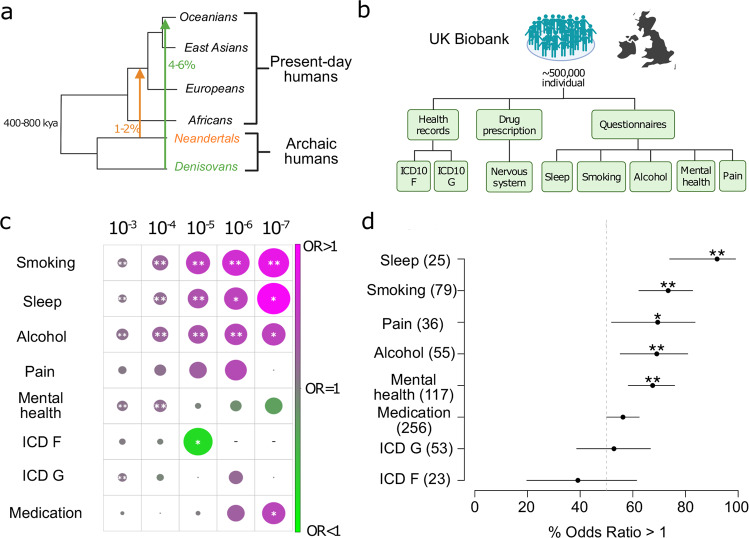
- In the UK Biobank, 11 mental/behavioral/neurodevelopmental disorders and 21 nervous system diseases showed no significant enrichment for Neandertal tag SNP associations when averaged across significance cutoffs.
- Behavioral traits showed stronger signals: smoking had significant enrichment at all cutoffs tested (all P < 0.001 and FDR < 0.001, all OR > 1), sleep traits also showed enrichment (all P < 0.05 and 4 of 5 FDR < 0.05, all OR > 1), and alcohol intake did as well (all P < 0.05 and 2 of 5 FDR < 0.05, all OR > 1).
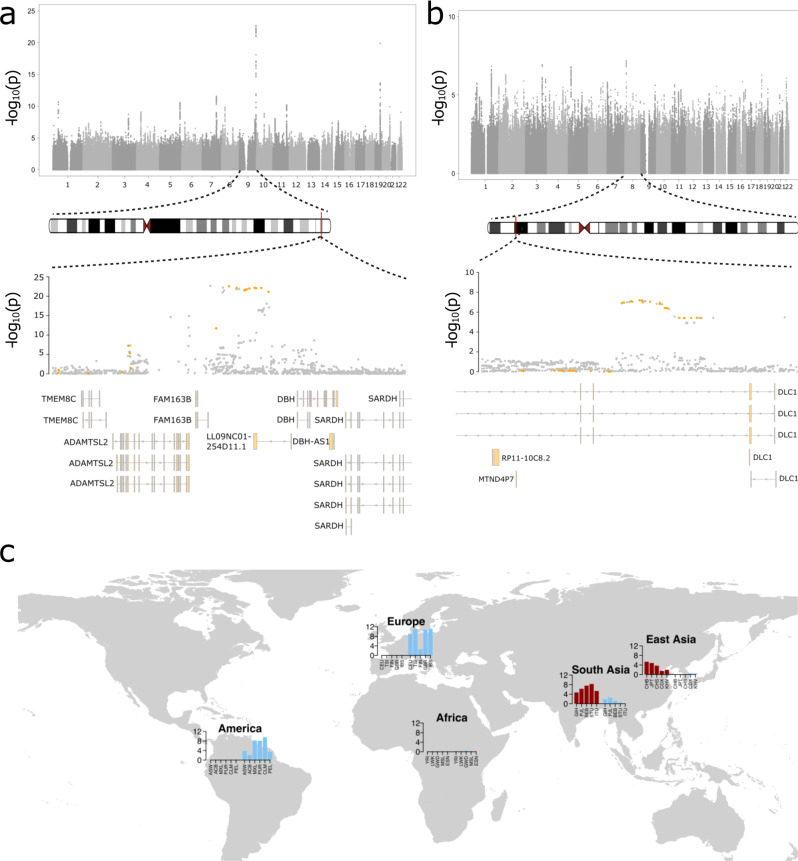
- In the UK Biobank, the authors found 27 genome-wide significant associations linked to 18 independent Neandertal loci; 18 of the 27 associations were linked to smoking and sleeping patterns.
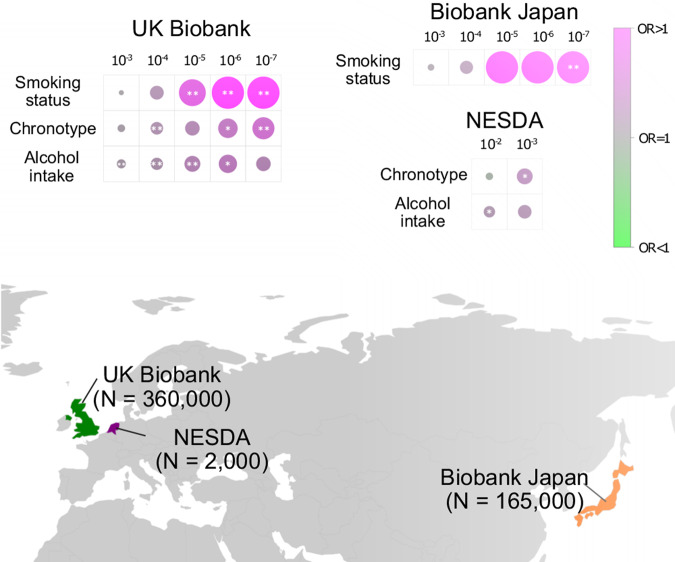
- Replication supported smoking-related haplotypes across four additional datasets: NESDA (P = 2.2 × 10⁻⁴), FinnGen (P = 0.004), deCODE (P = 2.4 × 10⁻⁷), and the Estonian Biobank (P = 0.008).
Methods
- Compared the number of significant associations for Neandertal tag SNPs (aSNPs) against 1000 sets of frequency-matched, LD-corrected non-archaic tag SNPs, using odds ratios, empirical P values, and Benjamini–Hochberg FDR correction.
- Primary data came from UK Biobank GWAS summary statistics for 261 traits; additional analyses used Biobank Japan smoking GWAS, newly generated NESDA GWAS for eight behavioral phenotypes, and Estonian Biobank smoking GWAS.
- Defined aSNPs using prior Neandertal marker SNPs: absent in Yoruba, present in homozygous form in Altai or Vindija Neandertal genomes, present in at least one non-African 1000 Genomes individual, and on haplotypes longer than expected under incomplete lineage sorting.
Limitations
- The paper states that it is using an aSNP cut-off-based enrichment approach and acknowledges that alternative methods such as SNP-based heritability enrichment could address the question differently.
- The authors note that many individual phenotype signals are driven by a small number of strongly associated Neandertal variants, which makes single-trait replication difficult; this is an explicit limitation stated in the paper.
- Evident from the text: sample sizes were much smaller in NESDA (N = 1842–2261) than in UK Biobank, so power was reduced there; the paper also notes that some smoking phenotypes did not exactly match across cohorts.
Model-written summary. Check it against the paper before relying on it.
Integrity signals
Registry
Cites
Statistics
Figures
Verification
Claims the paper makes
22 Valid · 1 Not valid · 1 Not checked · 72 Own results and interpretations
The cited sources that could be checked couldn’t confirm or dispute this claim.
In the paper
“we still found significant associations (P < 0.05, Table 1) with aSNPs related to the archaic haplotype of the UK Biobank risk aSNP: NESDA (‘ever smoked’, P = 2.2 × 10⁻⁴, rs1985381), FinnGen (R5 Smoking item, P = 0.004, rs113382419), deCode (‘current vs former smokers’, P = 2.4 × 10⁻⁷, rs3025343) and the Estonian Biobank (‘ever smoked’, P = 0.008, rs113382419).”
§ Neandertal introgression partitions the genetic landscape of neuropsychiatric disorders and associated behavioral phenotypes > Results > A Neandertal haplotype is associated with smoking across different genomic cohorts
What the sources say
- Could not verifycites Skov et al. [30] Skov L Coll Macià M Sveinbjörnsson G Mafessoni F Lucotte EA Einarsdóttir MS The nature of Neanderthal introgression revealed by 27,566 Icelandic genomes Nature 2020 582 78 83 10.1038/s41586-020-2225-9 32494067 sourceExperimental — accuracy not yet measured
The ‘Phenotypic effects of archaic fragments’ section discusses associations with archaic variants, but the retrieved passages do not report smoking-related associations in NESDA, FinnGen, deCODE, or the Estonian Biobank. Searches for smoking, the named cohorts, and the specified variants found no passage supporting the four-cohort claim; page numbers were unavailable in our copy. (LLM, conf=0.77)
plainstates an association- Asserted: passes — The authors put it forward as true.
- Checkable: passes — It can be checked against evidence.
- Load-bearing: passes — The paper’s conclusions depend on it.
- Based: passes — The paper gives a reason why it holds.
- Rests on an assumption not shown here.
- Could not verify
The cited sources support only part of this claim — read each source’s verdict below.
In the paper
“In one study that analyzed health record data in ~28,000 individuals, the authors demonstrated that neurological and psychiatric disorders showed the highest proportional Neandertal DNA contribution [21].”
§ Neandertal introgression partitions the genetic landscape of neuropsychiatric disorders and associated behavioral phenotypes > Introduction
What the sources say
- Partly supportedcites [21] Simonti CN Vernot B Bastarache L Bottinger E Carrell DS Chisholm RL The phenotypic legacy of admixture between modern humans and Neandertals Science 2016 351 737 41 10.1126/science.aad2149 26912863 PMC4849557 sourceExperimental — accuracy not yet measured
The paper reports an analysis of EHR-derived phenotypes in about 28,000 adults of European ancestry. Its discussion of Fig. 2 says Neanderthal SNPs were associated with more neurological and psychiatric phenotypes than matched non-Neanderthal SNPs, but it does not establish that those disorders had the highest proportional Neanderthal DNA contribution among all disorder classes. (LLM, conf=0.83)
boostedstates an associationn = 28,000- Asserted: passes — The authors put it forward as true.
- Checkable: passes — It can be checked against evidence.
- Load-bearing: unclear — It is unclear whether the paper’s conclusions depend on it.
- Based: passes — The paper gives a reason why it holds.
- Partly supported
The cited sources support only part of this claim — read each source’s verdict below.
In the paper
“Consistent with our results, this study also identifies individual phenotypes related to smoking and sleep that show enrichment for Neandertal variants on heritability.”
§ Neandertal introgression partitions the genetic landscape of neuropsychiatric disorders and associated behavioral phenotypes > Discussion
What the sources say
- Partly supportedcites [34] McArthur E Rinker DC Capra JA Quantifying the contribution of Neanderthal introgression to the heritability of complex traits Nat Commun 2021 12 4481 10.1038/s41467-021-24582-y 34294692 PMC8298587 sourceExperimental — accuracy not yet measured
The Results section identifies morningness as a sleep-related trait with heritability enrichment, and the Discussion names chronotype among enriched traits. For smoking, the Results report only a trend toward enrichment across tobacco-use disorders as a group (1.2-fold, q = 0.23), not enrichment of an identified individual smoking phenotype. No page numbers are available in our copy. (LLM, conf=0.86)
plainstates an association- Asserted: passes — The authors put it forward as true.
- Checkable: passes — It can be checked against evidence.
- Load-bearing: unclear — It is unclear whether the paper’s conclusions depend on it.
- Based: passes — The paper gives a reason why it holds.
- Partly supported
The cited sources support only part of this claim — read each source’s verdict below.
In the paper
“In general, the lack of an enrichment of Neandertal associations with psychiatric and neurological diagnostic categories by our study and McArthur et al. is consistent with previous studies that have shown that many complex traits, and in particular diseases, are targets of purifying selection [45, 46].”
§ Neandertal introgression partitions the genetic landscape of neuropsychiatric disorders and associated behavioral phenotypes > Discussion
What the sources say
- Partly supportedcites [45] Gazal S Finucane HK Furlotte NA Loh P-R Palamara PF Liu X Linkage disequilibrium-dependent architecture of human complex traits shows action of negative selection Nat Genet 2017 49 1421 7 10.1038/ng.3954 28892061 PMC6133304 sourceExperimental — accuracy not yet measured
Split into 2 atoms — 1 confirmed, 1 partially supported, 0 disputed, 0 misattributed, 0 unverifiable. Expand the claim to see per-atom verdicts.
- Supportedcites [46] O’Connor LJ Schoech AP Hormozdiari F Gazal S Patterson N Price AL Extreme polygenicity of complex traits is explained by negative selection Am J Hum Genet 2019 105 456 76 10.1016/j.ajhg.2019.07.003 31402091 PMC6732528 source
Split into 2 atoms — 2 confirmed, 0 partially supported, 0 disputed, 0 misattributed, 0 unverifiable. Expand the claim to see per-atom verdicts.
plain- Asserted: passes — The authors put it forward as true.
- Checkable: passes — It can be checked against evidence.
- Load-bearing: passes — The paper’s conclusions depend on it.
- Based: passes — The paper gives a reason why it holds.
- Partly supported
A result the paper reports from its own data — it cites no other source for it, so there is none to check. The quote shows it is in the paper.
In the paper
“When averaged across all significance cutoffs, CNS medication did not show significant associations with Neandertal DNA”
§ Neandertal introgression partitions the genetic landscape of neuropsychiatric disorders and associated behavioral phenotypes > Results > Diagnostic categories of CNS disorders do not show robust links to Neandertal DNA variants
plain- Asserted: passes — The authors put it forward as true.
- Checkable: passes — It can be checked against evidence.
- Load-bearing: passes — The paper’s conclusions depend on it.
- Based: passes — The paper gives a reason why it holds.
37 more claims
Create a free account to see all 96 claims and to verify the 3 references still open.
- Probably not a substantial claim. 24
- It may state two separate claims as one. 41
- The quote only partly states this claim. 3
Citations
Cites
A global reference for human genetic variation
The 1000 Genomes Project Consortium, authors, C., Auton, A., Abecasis, G. R., Steering committee, Altshuler, D. M., Durbin, R. M., Abecasis, G. R., Bentley, D. R., Chakravarti, A., et al. (2015) · Nature · doi:10.1038/nature15393 · Cited by 18,247
The UK Biobank resource with deep phenotyping and genomic data
Bycroft, C., Freeman, C., Petkova, D., Band, G., Elliott, L. T., Sharp, K., Motyer, A., Vukcevic, D., Delaneau, O., O’Connell, J., et al. (2018) · Nature · doi:10.1038/s41586-018-0579-z · Cited by 8,876 · cited 12×
“Taken together, these results indicate a robust enrichment of Neandertal variants associated with 5 groups of behavioral phenotypes in the UKBB: Alcohol consumption, smoking, mental health (specifically mood), chronotype/sleep, and pain.”
MethodInfluentialThe Ensembl Variant Effect Predictor
McLaren, W., Gil, L., Hunt, S. E., Riat, H. S., Ritchie, G. R. S., Thormann, A., Flicek, P., & Cunningham, F. (2016) · Genome Biology · doi:10.1186/s13059-016-0974-4 · Cited by 8,099 · cited 1×
“Similarly, we tested whether any candidate aSNP or aSNPs associated with the candidate aSNPs’ haplotype were predicted to modify the amino acid sequence using the ENSEMBLs’ Variant Effect Predictor [36] by extracting all of the aSNPs that were annotated as ‘missense variant’.”
MethodBiological insights from 108 schizophrenia-associated genetic loci
Schizophrenia Working Group of the Psychiatric Genomics Consortium (2014) · Nature · doi:10.1038/nature13595 · Cited by 7,577
Self-citationGenetic effects on gene expression across human tissues
GTEx Consortium (2017) · Nature · doi:10.1038/nature24277 · Cited by 4,036
Predicting Functional Effect of Human Missense Mutations Using PolyPhen‐2
Adzhubei, I., Jordan, D. M., & Sunyaev, S. R. (2013) · Current Protocols in Human Genetics · doi:10.1002/0471142905.hg0720s76 · Cited by 3,705 · cited 2×
“This modification is also classified as ‘possibly damaging’ by PolyPhen.”
BackgroundeQTLGen, Wray, N. R., 23andMe, the Major Depressive Disorder Working Group of the Psychiatric Genomics Consortium, Ripke, S., Mattheisen, M., Trzaskowski, M., Byrne, E. M., Abdellaoui, A., Adams, M. J., et al. (2018) · Nature Genetics · doi:10.1038/s41588-018-0090-3 · Cited by 3,005
Self-citationPartitioning heritability by functional annotation using genome-wide association summary statistics
ReproGen Consortium, Finucane, H. K., Schizophrenia Working Group of the Psychiatric Genomics Consortium, The RACI Consortium, Bulik-Sullivan, B., Gusev, A., Trynka, G., Reshef, Y., Loh, P.-R., Anttila, V., et al. (2015) · Nature Genetics · doi:10.1038/ng.3404 · Cited by 2,604
Howard, D. M., Adams, M. J., Clarke, T.-K., Hafferty, J. D., Gibson, J., Shirali, M., Coleman, J. R. I., Hagenaars, S. P., Ward, J., Wigmore, E. M., et al. (2019) · Nature Neuroscience · doi:10.1038/s41593-018-0326-7 · Cited by 2,565
The complete genome sequence of a Neanderthal from the Altai Mountains
Prüfer, K., Racimo, F., Patterson, N., Jay, F., Sankararaman, S., Sawyer, S., Heinze, A., Renaud, G., Sudmant, P. H., de Filippo, C., et al. (2014) · Nature · doi:10.1038/nature12886 · Cited by 2,254 · cited 2×
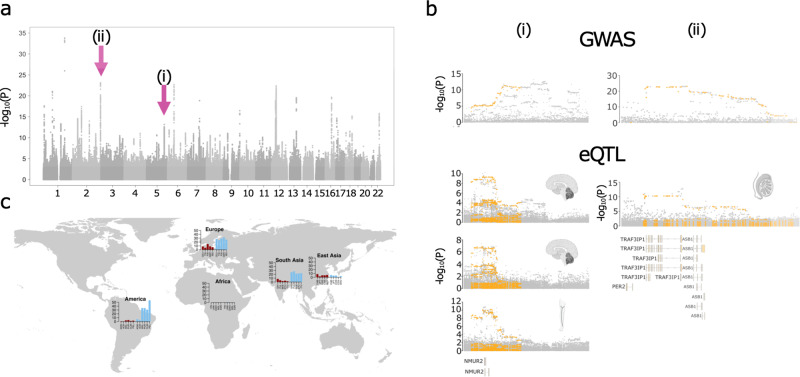
“The lower part of each panel shows gene expression associations in GTEx tissues for the respective regions (eQTL −log [10] transformed association P values for—from top—Cerebellar_Hemisphere, Cerebellum and Tibial Nerve and Testis.”
BackgroundSelf-citationA high-coverage genome sequence from an archaic denisovan individual
Meyer, M., Kircher, M., Gansauge, M.-T., Li, H., Racimo, F., Mallick, S., Schraiber, J. G., Jay, F., Prüfer, K., de Filippo, C., et al. (2012) · Science · doi:10.1126/science.1224344 · Cited by 1,967
Self-citationGenotype imputation for genome-wide association studies
Marchini, J., & Howie, B. (2010) · Nature Reviews Genetics · doi:10.1038/nrg2796 · Cited by 1,627 · cited 1×
“Genomewide association analyses assuming an additive model were carried out using SNPTEST [28].”
MethodGERAD1 Consortium, Pardiñas, A. F., CRESTAR Consortium, Holmans, P., Pocklington, A. J., Escott-Price, V., Ripke, S., Carrera, N., Legge, S. E., Bishop, S., et al. (2018) · Nature Genetics · doi:10.1038/s41588-018-0059-2 · Cited by 1,552 · cited 1×
“A more recent study subsequently demonstrated that when accounting for purifying selection there is no evidence for a significant Neandertal contribution [44].”
BackgroundThe genomic landscape of Neanderthal ancestry in present-day humans
Sankararaman, S., Mallick, S., Dannemann, M., Prüfer, K., Kelso, J., Pääbo, S., Patterson, N., & Reich, D. (2014) · Nature · doi:10.1038/nature12961 · Cited by 1,107 · cited 3×
“Some of the remaining Neandertal variants have reached high frequencies in some present-day populations, suggesting that they might have conferred advantages at some point since admixture [12, 18, 19].”
BackgroundSelf-citationUpper Palaeolithic Siberian genome reveals dual ancestry of Native Americans
Raghavan, M., Skoglund, P., Graf, K. E., Metspalu, M., Albrechtsen, A., Moltke, I., Rasmussen, S., Stafford Jr, T. W., Orlando, L., Metspalu, E., et al. (2014) · Nature · doi:10.1038/nature12736 · Cited by 963
Self-citationThe genetic history of Ice Age Europe
Fu, Q., Posth, C., Hajdinjak, M., Petr, M., Mallick, S., Fernandes, D., Furtwängler, A., Haak, W., Meyer, M., Mittnik, A., et al. (2016) · Nature · doi:10.1038/nature17993 · Cited by 959
Self-citationThe Netherlands Study of Depression and Anxiety (NESDA): rationale, objectives and methods
Penninx, B. W. J. H., Beekman, A. T. F., Smit, J. H., Zitman, F. G., Nolen, W. A., Spinhoven, P., Cuijpers, P., De Jong, P. J., Van Marwijk, H. W. J., Assendelft, W. J. J., et al. (2008) · International Journal of Methods in Psychiatric Research · doi:10.1002/mpr.256 · Cited by 927 · cited 17×
“These analyses were conducted in subsets of individuals of the NESDA cohort, ranging between 1842 and 2261 individuals.”
MethodInfluentialSelf-citationHyde, C. L., Nagle, M. W., Tian, C., Chen, X., Paciga, S. A., Wendland, J. R., Tung, J. Y., Hinds, D. A., Perlis, R. H., & Winslow, A. R. (2016) · Nature Genetics · doi:10.1038/ng.3623 · Cited by 784
Overview of the BioBank Japan Project: Study design and profile
Nagai, A., Hirata, M., Kamatani, Y., Muto, K., Matsuda, K., Kiyohara, Y., Ninomiya, T., Tamakoshi, A., Yamagata, Z., Mushiroda, T., et al. (2017) · Journal of Epidemiology · doi:10.1016/j.je.2016.12.005 · Cited by 739 · cited 12×
“%) and Biobank Japan (lead aSNP: rs76591447, chr8:13,289,111_C/G, P= 6.7 × 10⁻⁸, β=−0.02, archaic AF= 3.2”
MethodInfluentialThe Genetics of Major Depression
Flint, J., & Kendler, K. S. (2014) · Neuron · doi:10.1016/j.neuron.2014.01.027 · Cited by 724 · cited 1×
“INTRODUCTION It has long been known that psychiatric disorders run in families, indicating substantial heredity, but their genetic basis has remained elusive for decades [1].”
BackgroundA high-coverage Neandertal genome from Vindija Cave in Croatia
Prüfer, K., de Filippo, C., Grote, S., Mafessoni, F., Korlević, P., Hajdinjak, M., Vernot, B., Skov, L., Hsieh, P., Peyrégne, S., et al. (2017) · Science · doi:10.1126/science.aao1887 · Cited by 719
Self-citationWootton, R. E., Richmond, R. C., Stuijfzand, B. G., Lawn, R. B., Sallis, H. M., Taylor, G. M. J., Hemani, G., Jones, H. J., Zammit, S., Davey Smith, G., et al. (2020) · Psychological Medicine · doi:10.1017/s0033291719002678 · Cited by 587 · cited 1×
“For example, recent work has suggested that there is a potentially genetic causal link between chronotype and odds of developing depressive symptoms [38] and similar findings have been reported for smoking [39] or alcohol abuse [40] and depression.”
BackgroundResurrecting Surviving Neandertal Lineages from Modern Human Genomes
Vernot, B., & Akey, J. M. (2014) · Science · doi:10.1126/science.1245938 · Cited by 562 · cited 1×
“However, risk loci for complex traits have often been associated with population-specific genetic variants, a phenomenon that has also been observed for Neandertal DNA [32, 37].”
BackgroundGazal, S., Finucane, H. K., Furlotte, N. A., Loh, P.-R., Palamara, P. F., Liu, X., Schoech, A., Bulik-Sullivan, B., Neale, B. M., Gusev, A., et al. (2017) · Nature Genetics · doi:10.1038/ng.3954 · Cited by 525
Genetic adaptation and Neandertal admixture shaped the immune system of human populations
Quach, H., Rotival, M., Pothlichet, J., Loh, Y.-H. E., Dannemann, M., Zidane, N., Laval, G., Patin, E., Harmant, C., Lopez, M., et al. (2016) · Cell · doi:10.1016/j.cell.2016.09.024 · Cited by 475 · cited 1×
“Testing for the proportional association strength to phenotypes In order to quantify the association strength of archaic variants, we compared their number of significantly associated tag aSNPs to the number of frequency-matched non-archaic tag SNPs following similar approaches that have previously been used for such…”
ResultSelf-citationThe Combined Landscape of Denisovan and Neanderthal Ancestry in Present-Day Humans
Sankararaman, S., Mallick, S., Patterson, N., & Reich, D. (2016) · Current Biology · doi:10.1016/j.cub.2016.03.037 · Cited by 465 · cited 1×
“Introgressed Neandertal variants are also particularly interesting because they are detectable in all non-African populations [14, 20] and their phenotypic correlates can thus be studied across different ancestries (e.”
BackgroundThe Date of Interbreeding between Neandertals and Modern Humans
Sankararaman, S., Patterson, N., Li, H., Pääbo, S., & Reich, D. (2012) · PLoS Genetics · doi:10.1371/journal.pgen.1002947 · Cited by 460 · cited 1×
“After modern humans left Africa more than 60,000 years ago, genetic evidence suggests multiple admixture events ~55,000 years [9] between modern humans and now extinct archaic humans including Neandertals [10–12] and Denisovans [13, 14].”
BackgroundCohort Profile: Estonian Biobank of the Estonian Genome Center, University of Tartu
Leitsalu, L., Haller, T., Esko, T., Tammesoo, M.-L., Alavere, H., Snieder, H., Perola, M., Ng, P. C., Mägi, R., Milani, L., et al. (2015) · International Journal of Epidemiology · doi:10.1093/ije/dyt268 · Cited by 460
Self-citationExcavating Neandertal and Denisovan DNA from the genomes of Melanesian individuals
Vernot, B., Tucci, S., Kelso, J., Schraiber, J. G., Wolf, A. B., Gittelman, R. M., Dannemann, M., Grote, S., McCoy, R. C., Norton, H., et al. (2016) · Science · doi:10.1126/science.aad9416 · Cited by 459 · cited 6×
“After modern humans left Africa more than 60,000 years ago, genetic evidence suggests multiple admixture events ~55,000 years [9] between modern humans and now extinct archaic humans including Neandertals [10–12] and Denisovans [13, 14].”
BackgroundSelf-citationLevey, D. F., Stein, M. B., Wendt, F. R., Pathak, G. A., Zhou, H., Aslan, M., Quaden, R., Harrington, K. M., Nuñez, Y. Z., Overstreet, C., et al. (2021) · Nature Neuroscience · doi:10.1038/s41593-021-00860-2 · Cited by 422
The Genetic Cost of Neanderthal Introgression
Harris, K., & Nielsen, R. (2016) · Genetics · doi:10.1534/genetics.116.186890 · Cited by 419
The phenotypic legacy of admixture between modern humans and Neandertals
Simonti, C. N., Vernot, B., Bastarache, L., Bottinger, E., Carrell, D. S., Chisholm, R. L., Crosslin, D. R., Hebbring, S. J., Jarvik, G. P., Kullo, I. J., et al. (2016) · Science · doi:10.1126/science.aad2149 · Cited by 330 · cited 3×
“Testing for the proportional association strength to phenotypes In order to quantify the association strength of archaic variants, we compared their number of significantly associated tag aSNPs to the number of frequency-matched non-archaic tag SNPs following similar approaches that have previously been used for such…”
BackgroundResultExtreme Polygenicity of Complex Traits Is Explained by Negative Selection
O'Connor, L. J., Schoech, A. P., Hormozdiari, F., Gazal, S., Patterson, N., & Price, A. L. (2019) · The American Journal of Human Genetics · doi:10.1016/j.ajhg.2019.07.003 · Cited by 268 · cited 1×
“is consistent with previous studies that have shown that many complex traits, and in particular diseases, are targets of purifying selection [45, 46].”
ResultLimits of long-term selection against Neandertal introgression
Petr, M., Pääbo, S., Kelso, J., & Vernot, B. (2019) · Proceedings of the National Academy of Sciences · doi:10.1073/pnas.1814338116 · Cited by 211
Self-citationThompson, T., Oram, C., Correll, C. U., Tsermentseli, S., & Stubbs, B. (2017) · The Journal of Pain · doi:10.1016/j.jpain.2016.11.009 · Cited by 202 · cited 1×
“An alternative— non-exclusive—hypothesis could be that this reflects selfmedication for pain [50], so that all of these associations (as well as the reported link with some pain medications) may be driven by the same selection processes.”
BackgroundThe Contribution of Neanderthals to Phenotypic Variation in Modern Humans
Dannemann, M., & Kelso, J. (2017) · The American Journal of Human Genetics · doi:10.1016/j.ajhg.2017.09.010 · Cited by 193 · cited 2×
“Testing for the proportional association strength to phenotypes In order to quantify the association strength of archaic variants, we compared their number of significantly associated tag aSNPs to the number of frequency-matched non-archaic tag SNPs following similar approaches that have previously been used for such…”
BackgroundResultSelf-citationArchaic Hominin Admixture Facilitated Adaptation to Out-of-Africa Environments
Gittelman, R. M., Schraiber, J. G., Vernot, B., Mikacenic, C., Wurfel, M. M., & Akey, J. M. (2016) · Current Biology · doi:10.1016/j.cub.2016.10.041 · Cited by 181 · cited 1×
“Some of the remaining Neandertal variants have reached high frequencies in some present-day populations, suggesting that they might have conferred advantages at some point since admixture [12, 18, 19].”
Cai, N., Choi, K. W., & Fried, E. I. (2020) · Human Molecular Genetics · doi:10.1093/hmg/ddaa115 · Cited by 160 · cited 1×
“It has been postulated that due to the clinical heterogeneity of complex human disorders, and psychiatric syndromes in particular, careful behavioral phenotyping might yield more robust biological substrates [23].”
BackgroundGenetic Markers of Human Evolution Are Enriched in Schizophrenia
Srinivasan, S., Bettella, F., Mattingsdal, M., Wang, Y., Witoelar, A., Schork, A. J., Thompson, W. K., Zuber, V., Winsvold, B. S., Zwart, J.-A., et al. (2016) · Biological Psychiatry · doi:10.1016/j.biopsych.2015.10.009 · Cited by 129 · cited 1×
“Some previous studies have suggested that evolutionary forces such as positive selection [41] and Neandertal admixture [42, 43] may be linked to mental disorders such as Schizophrenia.”
BackgroundThe nature of Neanderthal introgression revealed by 27,566 Icelandic genomes
Skov, L., Coll Macià, M., Sveinbjörnsson, G., Mafessoni, F., Lucotte, E. A., Einarsdóttir, M. S., Jonsson, H., Halldorsson, B., Gudbjartsson, D. F., Helgason, A., et al. (2020) · Nature · doi:10.1038/s41586-020-2225-9 · Cited by 125
Polimanti, R., Peterson, R. E., Ong, J.-S., MacGregor, S., Edwards, A. C., Clarke, T.-K., Frank, J., Gerring, Z., Gillespie, N. A., Lind, P. A., et al. (2019) · Psychological Medicine · doi:10.1017/s0033291719000667 · Cited by 108
Polimanti, R., Peterson, R. E., Ong, J.-S., MacGregor, S., Edwards, A. C., Clarke, T.-K., Frank, J., Gerring, Z., Gillespie, N. A., Lind, P. A., et al. (2018) · doi:10.1101/412098 · Cited by 108 · cited 1×
“For example, recent work has suggested that there is a potentially genetic causal link between chronotype and odds of developing depressive symptoms [38] and similar findings have been reported for smoking [39] or alcohol abuse [40] and depression.”
BackgroundAn ancestral recombination graph of human, Neanderthal, and Denisovan genomes
Schaefer, N. K., Shapiro, B., & Green, R. E. (2021) · Science Advances · doi:10.1126/sciadv.abc0776 · Cited by 106 · cited 1×
“Interestingly, genomic regions that differ most between Neandertals and modern humans, including regions where no introgressed archaic DNA can be detected in people today [14, 47] have previously been linked to brain-related genes [14, 47].”
BackgroundSomething old, something borrowed: admixture and adaptation in human evolution
Dannemann, M., & Racimo, F. (2018) · Current Opinion in Genetics & Development · doi:10.1016/j.gde.2018.05.009 · Cited by 87 · cited 1×
“Some of the remaining Neandertal variants have reached high frequencies in some present-day populations, suggesting that they might have conferred advantages at some point since admixture [12, 18, 19].”
BackgroundSelf-citationA CHRNA5 smoking risk variant decreases the aversive effects of nicotine in humans
Jensen, K. P., DeVito, E. E., Herman, A. I., Valentine, G. W., Gelernter, J., & Sofuoglu, M. (2015) · Neuropsychopharmacology · doi:10.1038/npp.2015.131 · Cited by 85
The CHRNA5–A3–B4 Gene Cluster and Smoking: From Discovery to Therapeutics
Lassi, G., Taylor, A. E., Timpson, N. J., Kenny, P. J., Mather, R. J., Eisen, T., & Munafò, M. R. (2016) · Trends in Neurosciences · doi:10.1016/j.tins.2016.10.005 · Cited by 85
The Genetics of Major Depression
Flint, J., & Kendler, K. S. (2014) · Neuron · doi:10.1016/j.neuron.2014.02.033 · Cited by 81
The evolutionary origins and significance of drug addiction
Saah, T. (2005) · Harm Reduction Journal · doi:10.1186/1477-7517-2-8 · Cited by 77 · cited 1×
“With regard to smoking or alcohol, evolutionary origins have been postulated for addiction, suggesting a co-evolution of the human brain, reward-seeking, and psychotropic substances [49].”
BackgroundIncreased Genetic Vulnerability to Smoking at CHRNA5 in Early-Onset Smokers
Hartz, S. M., Short, S. E., Saccone, N. L., Culverhouse, R., Chen, L., Schwantes-An, T.-H., Coon, H., Han, Y., Stephens, S. H., Sun, J., et al. (2012) · Archives of General Psychiatry · doi:10.1001/archgenpsychiatry.2012.124 · Cited by 75
Self-citationMatoba, N., Akiyama, M., Ishigaki, K., Kanai, M., Takahashi, A., Momozawa, Y., Ikegawa, S., Ikeda, M., Iwata, N., Hirata, M., et al. (2019) · Nature Human Behaviour · doi:10.1038/s41562-019-0557-y · Cited by 71 · cited 13×
“%) and Biobank Japan (lead aSNP: rs76591447, chr8:13,289,111_C/G, P= 6.7 × 10⁻⁸, β=−0.02, archaic AF= 3.2”
BackgroundMethodInfluentialQuantifying the contribution of Neanderthal introgression to the heritability of complex traits
McArthur, E., Rinker, D. C., & Capra, J. A. (2021) · Nature Communications · doi:10.1038/s41467-021-24582-y · Cited by 71 · cited 3×
“However, given that previous analyses have demonstrated that Neandertal DNA is showing signals of depletion around functional gene groups [12, 34], makes our current setup rather conservative as it shouldn’t result in an artificial enrichment result due to functional genome context.”
BackgroundA gene expression atlas for different kinds of stress in the mouse brain
Flati, T., Gioiosa, S., Chillemi, G., Mele, A., Oliverio, A., Mannironi, C., Rinaldi, A., & Castrignanò, T. (2020) · Scientific Data · doi:10.1038/s41597-020-00772-z · Cited by 65 · cited 1×
“SCML4 has previously been linked to stress reactions in mice and modifications to its protein structure might therefore further contribute to related effects in mood phenotypes [52].”
BackgroundFrom Men to Mice: CHRNA5/CHRNA3, Smoking Behavior and Disease
Ware, J. J., van den Bree, M., & Munafò, M. R. (2012) · Nicotine & Tobacco Research · doi:10.1093/ntr/nts106 · Cited by 62
A Neanderthal Sodium Channel Increases Pain Sensitivity in Present-Day Humans
Zeberg, H., Dannemann, M., Sahlholm, K., Tsuo, K., Maricic, T., Wiebe, V., Hevers, W., Robinson, H. P. C., Kelso, J., & Pääbo, S. (2020) · Current Biology · doi:10.1016/j.cub.2020.06.045 · Cited by 50
Self-citationO’Loughlin, J., Casanova, F., Jones, S. E., Hagenaars, S. P., Beaumont, R. N., Freathy, R. M., Watkins, E. R., Vetter, C., Rutter, M. K., Cain, S. W., et al. (2021) · Molecular Psychiatry · doi:10.1038/s41380-021-01157-3 · Cited by 44 · cited 1×
“For example, recent work has suggested that there is a potentially genetic causal link between chronotype and odds of developing depressive symptoms [38] and similar findings have been reported for smoking [39] or alcohol abuse [40] and depression.”
BackgroundThe Population-Specific Impact of Neandertal Introgression on Human Disease
Dannemann, M. (2021) · Genome Biology and Evolution · doi:10.1093/gbe/evaa250 · Cited by 33 · cited 4×
“Testing for the proportional association strength to phenotypes In order to quantify the association strength of archaic variants, we compared their number of significantly associated tag aSNPs to the number of frequency-matched non-archaic tag SNPs following similar approaches that have previously been used for such…”
BackgroundMethodResultInfluentialSelf-citationA selection pressure landscape for 870 human polygenic traits
Song, W., Shi, Y., Wang, W., Pan, W., Qian, W., Yu, S., Zhao, M., & Lin, G. N. (2021) · Nature Human Behaviour · doi:10.1038/s41562-021-01231-4 · Cited by 25
Gregory, M. D., Eisenberg, D. P., Hamborg, M., Kippenhan, J. S., Kohn, P., Kolachana, B., Dickinson, D., & Berman, K. F. (2021) · American Journal of Medical Genetics Part B: Neuropsychiatric Genetics · doi:10.1002/ajmg.b.32872 · Cited by 24
Reassessing neurodegenerative disease: immune protection pathways and antagonistic pleiotropy
Provenzano, F., & Deleidi, M. (2021) · Trends in Neurosciences · doi:10.1016/j.tins.2021.06.006 · Cited by 21 · cited 1×
“While evolutionary origins for the susceptibility to psychiatric [7] and neurological [8] diseases have been postulated, this hypothesis has not been tested directly.”
BackgroundEvolutionary Psychology and Mental Health
Nesse, R. M. (2015) · Wiley eBooks · doi:10.1002/9781119125563.evpsych243 · Cited by 12
Cushing, K. C., Chiplunker, A., Li, A., Sung, Y. J., Geisman, T., Chen, L.-S., Cresci, S., & Gutierrez, A. M. (2018) · Inflammatory Bowel Diseases · doi:10.1093/ibd/izx094 · Cited by 9
Cushing, K. C., Chiplunker, A. J., Li, A., Sung, Y. J., Geisman, T., Chen, L., Cresci, S., & Gutierrez, A. M. (2017) · Gastroenterology · doi:10.1016/s0016-5085(17)33340-1 · Cited by 6
Cited by
The Estonian Biobank’s journey from biobanking to personalized medicine
Milani, L. A., Alver, M., Laur, S., Reisberg, S., Haller, T., Aasmets, O., Abner, E., Alavere, H., Allik, A., Annilo, T., et al. (2025) · Nature Communications · doi:10.1038/s41467-025-58465-3 · Cited by 156
Self-citationThe importance of gene flow in human evolution
Templeton, A. R. (2023) · Human Population Genetics and Genomics · doi:10.47248/hpgg2303030005 · Cited by 32
From Biobanking to Personalized Medicine: the journey of the Estonian BiobankPreprint
Milani, L. A., Alver, M., Laur, S., Reisberg, S., Haller, T., Aasmets, O., Abner, E., Alavere, H., Allik, A., Annilo, T., et al. (2024) · medRxiv · doi:10.1101/2024.09.22.24313964 · Cited by 18
Self-citationDenisovan admixture facilitated environmental adaptation in Papua New Guinean populations
Yermakovich, D., André, M., Brucato, N., Kariwiga, J., Leavesley, M., Pankratov, V., Mondal, M., Ricaut, F.-X., & Dannemann, M. (2024) · Proceedings of the National Academy of Sciences · doi:10.1073/pnas.2405889121 · Cited by 12
Self-citationArchaic hominin admixture and its consequences for modern humans
Tagore, D., & Akey, J. M. (2024) · Current Opinion in Genetics & Development · doi:10.1016/j.gde.2024.102280 · Cited by 17
Metadata
- Authors
- Dannemann, M., Milaneschi, Y., Yermakovich, D., Stiglbauer, V., Kariis, H. M., Krebs, K., Friese, M. A., Otte, C., Estonian Biobank Research Team, Esko, T., Metspalu, A., Milani, L., Mägi, R., Nelis, M., Lehto, K., Penninx, B. W. J. H., Kelso, J., & Gold, S. M.
- Affiliations
- Max Planck Institute for Evolutionary Anthropology (DE)
- Amsterdam Neuroscience (NL)
- University of Tartu (EE)
- Humboldt-Universität zu Berlin (DE)
- University Medical Center Hamburg-Eppendorf (DE)
- Corresponding author
- Gold, Stefan M.
- ORCID
- Venue
- Translational Psychiatry
- Published
- 2022-10-05
- Volume
- 12
- Issue
- 1
- Pages
- 433-433
- ISSN
- 2158-3188 (ISSN-L)
- PMC
- PMC9534885
- OpenAlex
- W4301600558
- Semantic Scholar
- 066b743c431e3fe30f867aa1581fcee1a0243ff9
- Cited by
- 23
- References
- 60
- Citations by year
- 2026: 6 · 2025: 5 · 2024: 6 · 2023: 5 · 2022: 1
- FWCI
- 2.56
- Type
- journal article
- Language
- en
- Open access
- gold
- doi.org
- Licence
- cc-by
- creativecommons.org/licenses/by/4.0 (tdm)
- creativecommons.org/licenses/by/4.0 (vor)
- Locations
- Translational Psychiatry (publishedVersion, cc-by)
- medRxiv (acceptedVersion, cc-by-nd)
- PubMed Central (publishedVersion, cc-by)
- PubMed (publishedVersion)
- Amsterdam UMC (VU Amsterdam) - Institutional Repository (publishedVersion, other-oa)
- Pure Amsterdam UMC (acceptedVersion, other-oa)
- DOAJ (DOAJ: Directory of Open Access Journals) (submittedVersion, cc-by-sa)
- Refubium (Universitätsbibliothek der Freien Universität Berlin) (submittedVersion, cc-by)
- Data Archiving and Networked Services (DANS) (submittedVersion, other-oa)
- Universitätsbibliothek der FU Berlin Hochschulschriftenstelle u. Dokumentenserver (cc-by)
- Funders
- European Commission (810645)
- Universiteit Leiden (10‐000‐1002)
- Vrije Universiteit Amsterdam
- Eesti Teadusagentuur (PSG615)
- Nederlandse Organisatie voor Wetenschappelijk Onderzoek (10-000-1002)
- Leids Universitair Medisch Centrum
- Universitair Medisch Centrum Groningen
- Medical Research Council (MC_PC_17228)
- National Institute of Mental Health (RC2MH089995, RC2MH089951)
- Topics
- Life Sciences › Biochemistry, Genetics and Molecular Biology › Genetics › Genetic Associations and Epidemiology
- Social Sciences › Anthropology › Pleistocene-Era Hominins and Archaeology
- Life Sciences › Biochemistry, Genetics and Molecular Biology › Genetics › Forensic and Genetic Research
- Keywords
- archaic human admixture, neuropsychiatric disorders, behavioral phenotypes, pain, chronotype, sleep, smoking, alcohol consumption, UK Biobank, human evolution, mental illness
- MeSH terms
- Animals, Haplotypes, Humans, Phenotype, Genetic Variation, Genome, Neanderthals
About these checks
Registry, retraction, Cites and statistics results are computed, not judged, with one exception: a printed reference that no index lists is read once by a model before it counts as a citation error. Claims are extracted by a model and kept only when their quote appears verbatim in the text; each cited source is then checked, with a model’s help, for whether it says what the claim relies on. Those verdicts can be wrong — read the claim’s quote and the cited source before relying on one.
The claim verdicts this report counts are experimental: their accuracy is not yet measured.
A language model drew the claims from the paper on 2026-10-11, under version 3 of the claim definition (model deepseek-v4.1-flash, prompt extract-v3).
A second model labelled each claim on 2026-10-11 (model jev-1.13-20260917, definition revision gold-guideline-v0.2).
Cited sources are checked with a language model’s help (gpt-6-sol).
Statistics and arithmetic are recomputed, not judged.
Confidence bands are shown only for fields calibrated on our annotated test set. None is calibrated yet, so no band is shown.
What counts as a claim ›How we measure confidence ›How we check this ›
Are you an author, or do you see a problem with this page? Request a review
Data sources
Bibliographic data: Semantic Scholar, OpenAlex, Crossref.
Contains information from the Semantic Scholar Academic Graph Datasets, made available under the ODC Attribution License (ODC-BY 1.0).
Semantic Scholar’s data is described in: Kinney, R., et al. (2023). The Semantic Scholar Open Data Platform. arXiv:2301.10140.
