

Targeting triple-negative breast cancers with the Smac-mimetic birinapant
Open accessThe DOI matches its Crossref record; 72 of the 72 references it cites were found in a registry or an index.
Abstract
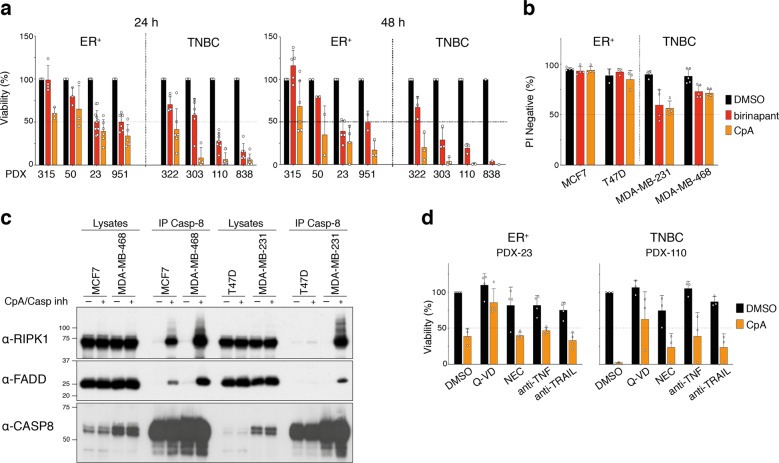
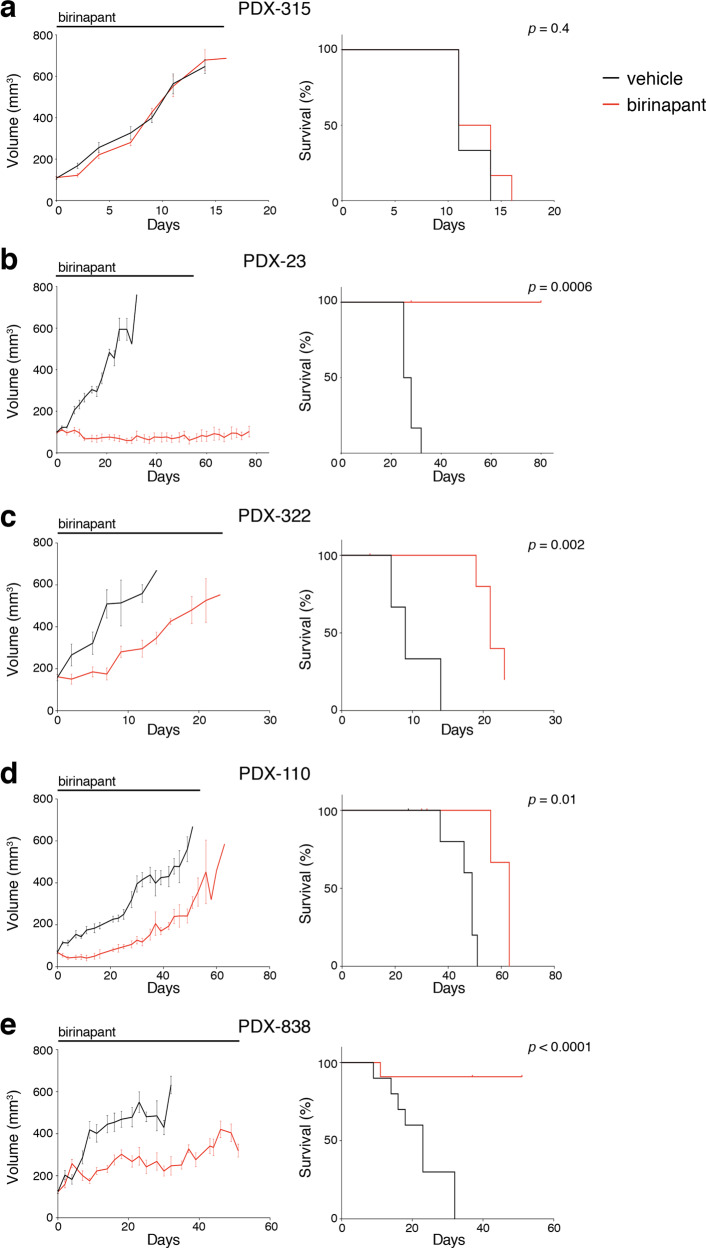
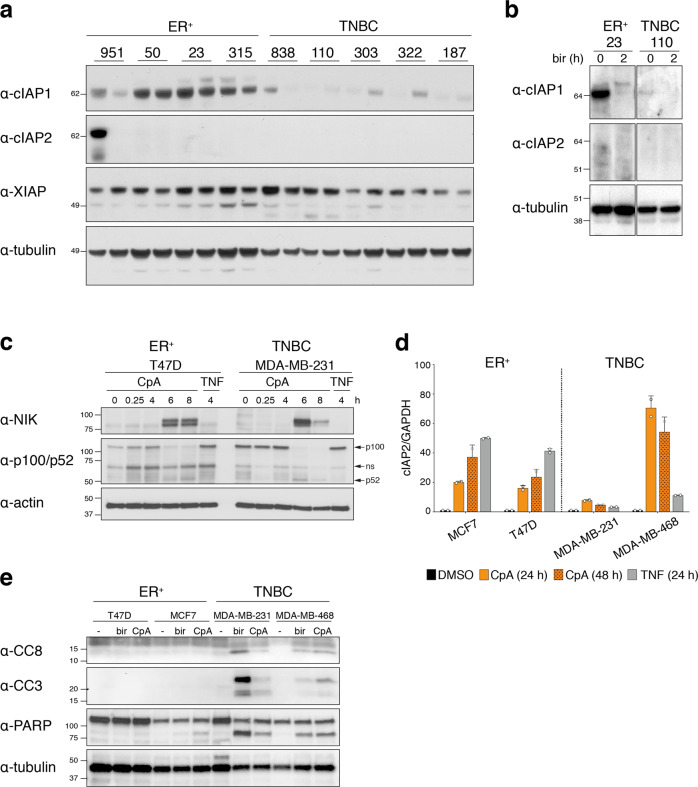
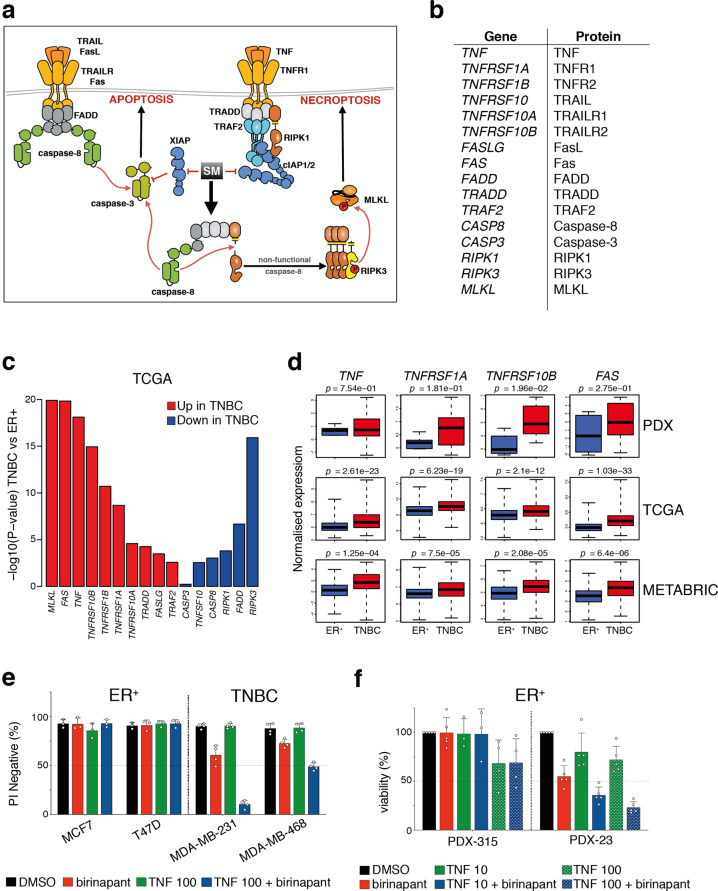
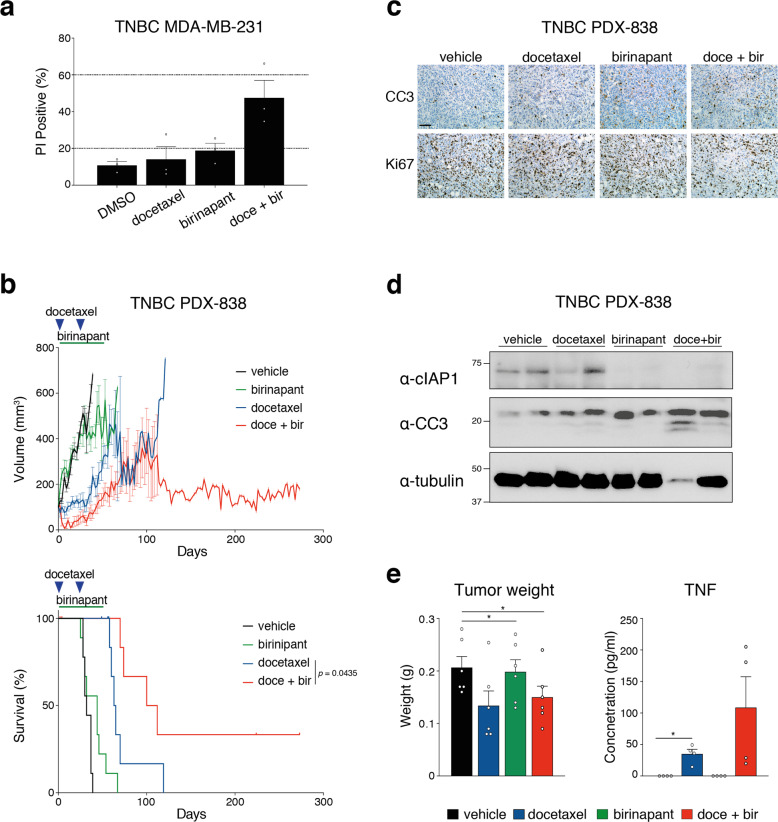
Smac mimetics target inhibitor of apoptosis (IAP) proteins, thereby suppressing their function to facilitate tumor cell death. Here we have evaluated the efficacy of the preclinical Smac-mimetic compound A and the clinical lead birinapant on breast cancer cells. Both exhibited potent in vitro activity in triple-negative breast cancer (TNBC) cells, including those from patient-derived xenograft (PDX) models. Birinapant was further studied using in vivo PDX models of TNBC and estrogen receptor-positive (ER+) breast cancer. Birinapant exhibited single agent activity in all TNBC PDX models and augmented response to docetaxel, the latter through induction of TNF. Transcriptomic analysis of TCGA datasets revealed that genes encoding mediators of Smac-mimetic-induced cell death were expressed at higher levels in TNBC compared with ER+ breast cancer, resulting in a molecular signature associated with responsiveness to Smac mimetics. In addition, the cell death complex was preferentially formed in TNBCs versus ER+ cells in response to Smac mimetics. Taken together, our findings provide a rationale for prospectively selecting patients whose breast tumors contain a competent death receptor signaling pathway for the further evaluation of birinapant in the clinic.
Overview
The claims and statistics of this paper haven’t been checked yet.
Free: it reads the open-access text and checks the first 5 claims that cite a source we can check. Create a free account to check every claim.
Integrity signals
Registry
Cites
Statistics
Figures
Verification
Claims the paper makes
The claims and statistics of this paper haven’t been checked yet.
Free: it reads the open-access text and checks the first 5 claims that cite a source we can check. Create a free account to check every claim.
Claims other papers make about this one
Each is checked against this paper’s own text: does it say what the citing paper says it does?
The check wasn’t confident either way, so it gives no verdict — never disputed.
In the citing paper
“its loss has been shown to be lethal in several cancers, particularly eR+ breast cancer”
From From serendipity to strategy: molecular glue degraders in cancer therapeutics (2025) · cites this paper as lalaoui et al. 2020
Experimental — accuracy not yet measuredThe check wasn’t confident either way, so it gives no verdict — never disputed.
In the citing paper
“RBM39 depletion impairs eR-driven transcription and reduces proliferation (campbell et al. 2018; lalaoui et al. 2020).”
From From serendipity to strategy: molecular glue degraders in cancer therapeutics (2025) · cites this paper as lalaoui et al. 2020
Experimental — accuracy not yet measured
Self-check
Percentages, sums and reported differences re-computed from the paper’s own numbers.
The self-check needs the paper’s full text.
Citations
Cites
limma powers differential expression analyses for RNA-sequencing and microarray studies
Ritchie, M. E., Phipson, B., Wu, D., Hu, Y., Law, C. W., Shi, W., & Smyth, G. K. (2015) · Nucleic Acids Research · doi:10.1093/nar/gkv007 · Cited by 40,458
Self-citationfeatureCounts: an efficient general purpose program for assigning sequence reads to genomic features
Liao, Y., Smyth, G. K., & Shi, W. (2014) · Bioinformatics · doi:10.1093/bioinformatics/btt656 · Cited by 27,219
Self-citationMolecular portraits of human breast tumours
Perou, C. M., Sørlie, T., Eisen, M. B., van de Rijn, M., Jeffrey, S. S., Rees, C. A., Pollack, J. R., Ross, D. T., Johnsen, H., Akslen, L. A., et al. (2000) · Nature · doi:10.1038/35021093 · Cited by 16,261
Nishimura, R., Osako, T., Nishiyama, Y., Tashima, R., Nakano, M., Fujisue, M., Toyozumi, Y., & Arima, N. (2013) · Oncology · doi:10.1159/000353099 · Cited by 13,166
Comprehensive molecular portraits of human breast tumours
The Cancer Genome Atlas Network (2012) · Nature · doi:10.1038/nature11412 · Cited by 12,129
Sørlie, T., Perou, C. M., Tibshirani, R., Aas, T., Geisler, S., Johnsen, H., Hastie, T., Eisen, M. B., van de Rijn, M., Jeffrey, S. S., et al. (2001) · Proceedings of the National Academy of Sciences · doi:10.1073/pnas.191367098 · Cited by 10,938
A scaling normalization method for differential expression analysis of RNA-seq data
Robinson, M. D., & Oshlack, A. (2010) · Genome Biology · doi:10.1186/gb-2010-11-3-r25 · Cited by 7,876
voom: precision weights unlock linear model analysis tools for RNA-seq read counts
Law, C. W., Chen, Y., Shi, W., & Smyth, G. K. (2014) · Genome Biology · doi:10.1186/gb-2014-15-2-r29 · Cited by 6,155 · cited 1×
“Differential expression between TNBC and ER tumors was assessed using the limma software package [63] and the voom method [64].”
MethodSelf-citationThe genomic and transcriptomic architecture of 2,000 breast tumours reveals novel subgroups
METABRIC Group, Curtis, C., Shah, S. P., Chin, S.-F., Turashvili, G., Rueda, O. M., Dunning, M. J., Speed, D., Lynch, A. G., Samarajiwa, S., et al. (2012) · Nature · doi:10.1038/nature10983 · Cited by 6,097
Trastuzumab plus Adjuvant Chemotherapy for Operable HER2-Positive Breast Cancer
Romond, E. H., Perez, E. A., Bryant, J., Suman, V. J., Geyer, C. E., Davidson, N. E., Tan-Chiu, E., Martino, S., Paik, S., Kaufman, P. A., et al. (2005) · New England Journal of Medicine · doi:10.1056/nejmoa052122 · Cited by 5,356
Trastuzumab-Induced Hepatotoxicity: A Case Report
Vucicevic, D., Carey, E. J., & Karlin, N. J. (2013) · Breast Care · doi:10.1159/000346844 · Cited by 4,415
Elkablawy, M. A., Albasri, A. M., Mohammed, R. A., Hussainy, A. S., Nouh, M. M., & Alhujaily, A. S. (2016) · Saudi Medical Journal · doi:10.15537/smj.2016.2.12285 · Cited by 4,382
Atezolizumab and nab-paclitaxel in advanced triple-negative breast cancer
Schmid, P., Adams, S., Rugo, H. S., Schneeweiss, A., Barrios, C. H., Iwata, H., Diéras, V., Hegg, R., Im, S.-A., Shaw Wright, G., et al. (2018) · New England Journal of Medicine · doi:10.1056/nejmoa1809615 · Cited by 4,350
Tamoxifen for early breast cancer: an overview of the randomised trials
(1998) · The Lancet · doi:10.1016/s0140-6736(97)11423-4 · Cited by 4,085
Du, C., Fang, M., Li, Y., Li, L., & Wang, X. (2000) · Cell · doi:10.1016/s0092-8674(00)00008-8 · Cited by 3,513
The Subread aligner: fast, accurate and scalable read mapping by seed-and-vote
Liao, Y., Smyth, G. K., & Shi, W. (2013) · Nucleic Acids Research · doi:10.1093/nar/gkt214 · Cited by 3,064
Self-citationVerhagen, A. M., Ekert, P. G., Pakusch, M., Silke, J., Connolly, L. M., Reid, G. E., Moritz, R. L., Simpson, R. J., & Vaux, D. L. (2000) · Cell · doi:10.1016/s0092-8674(00)00009-x · Cited by 2,372
Self-citationHarris, L., Fritsche, H., Mennel, R., Norton, L., Ravdin, P., Taube, S., Somerfield, M. R., Hayes, D. F., & Bast, R. C. (2007) · Journal of Clinical Oncology · doi:10.1200/jco.2007.14.2364 · Cited by 2,217
Focan, C., Steinberg, S. M., Blichert-Toft, M., Forbes, J., Collins, R. D., Anderson, S., Margreiter, R., Harwood, C. S., Andersen, K., Beighton, G., et al. (1998) · PubMed · Cited by 2,146
WHO classification of tumours of the breast
Lakhani, S. R., Ellis, I. O., Schnitt, S. J., Tan, P. H., & van de Vijver, M. J. (2012) · International Agency for Research on Cancer eBooks · Cited by 1,524
Rothe, M., Pan, M.-G., Henzel, W. J., Ayres, T. M., & V. Goeddel, D. (1995) · Cell · doi:10.1016/0092-8674(95)90149-3 · Cited by 1,253
IAP Antagonists Induce Autoubiquitination of c-IAPs, NF-κB Activation, and TNFα-Dependent Apoptosis
Varfolomeev, E., Blankenship, J. W., Wayson, S. M., Fedorova, A. V., Kayagaki, N., Garg, P., Zobel, K., Dynek, J. N., Elliott, L. O., Wallweber, H. J. A., et al. (2007) · Cell · doi:10.1016/j.cell.2007.10.030 · Cited by 1,218
IAP Antagonists Target cIAP1 to Induce TNFα-Dependent Apoptosis
Vince, J. E., Wong, W. W.-L., Khan, N., Feltham, R., Chau, D., Ahmed, A. U., Benetatos, C. A., Chunduru, S. K., Condon, S. M., McKinlay, M., et al. (2007) · Cell · doi:10.1016/j.cell.2007.10.037 · Cited by 1,053
Self-citationSrinivasula, S. M., Hegde, R., Saleh, A., Datta, P., Shiozaki, E., Chai, J., Lee, R.-A., Robbins, P. D., Fernandes-Alnemri, T., Shi, Y., et al. (2001) · Nature · doi:10.1038/35065125 · Cited by 1,013
Matese, J. C., Sørlie, T., Tibshirani, R., Jeffrey, S. S., Johnsen, H., Brown, P. O., Lønning, P. E., Quist, H., Botstein, D., Eisen, M. B., et al. (2020) · Carolina Digital Repository (University of North Carolina at Chapel Hill) · doi:10.17615/qpxp-y103 · Cited by 679
RIPK3 promotes cell death and NLRP3 inflammasome activation in the absence of MLKL
Lawlor, K. E., Khan, N., Mildenhall, A., Gerlic, M., Croker, B. A., D’Cruz, A. A., Hall, C., Kaur Spall, S., Anderton, H., Masters, S. L., et al. (2015) · Nature Communications · doi:10.1038/ncomms7282 · Cited by 649
Self-citationVallabhapurapu, S., Matsuzawa, A., Zhang, W., Tseng, P.-H., Keats, J. J., Wang, H., Vignali, D. A. A., Bergsagel, P. L., & Karin, M. (2008) · Nature Immunology · doi:10.1038/ni.1678 · Cited by 608
Autocrine TNFα Signaling Renders Human Cancer Cells Susceptible to Smac-Mimetic-Induced Apoptosis
Petersen, S. L., Wang, L., Yalcin-Chin, A., Li, L., Peyton, M., Minna, J., Harran, P., & Wang, X. (2007) · Cancer Cell · doi:10.1016/j.ccr.2007.08.029 · Cited by 571
ROAST: rotation gene set tests for complex microarray experiments
Wu, D., Lim, E., Vaillant, F., Asselin-Labat, M.-L., Visvader, J. E., & Smyth, G. K. (2010) · Bioinformatics · doi:10.1093/bioinformatics/btq401 · Cited by 560
Self-citationTeschendorff, A. E., Miremadi, A., Pinder, S. E., Ellis, I. O., & Caldas, C. (2007) · Genome Biology · doi:10.1186/gb-2007-8-8-r157 · Cited by 497
Inhibitor of Apoptosis Proteins Limit RIP3 Kinase-Dependent Interleukin-1 Activation
Vince, J. E., Wong, W. W.-L., Gentle, I., Lawlor, K. E., Allam, R., O'Reilly, L., Mason, K., Gross, O., Ma, S., Guarda, G., et al. (2012) · Immunity · doi:10.1016/j.immuni.2012.01.012 · Cited by 491
Self-citationDondelinger, Y., Jouan-Lanhouet, S., Divert, T., Theatre, E., Bertin, J., Gough, P. J., Giansanti, P., Heck, A. J. R., Dejardin, E., Vandenabeele, P., et al. (2015) · Molecular Cell · doi:10.1016/j.molcel.2015.07.032 · Cited by 431
MK2 Phosphorylates RIPK1 to Prevent TNF-Induced Cell Death
Jaco, I., Annibaldi, A., Lalaoui, N., Wilson, R., Tenev, T., Laurien, L., Kim, C., Jamal, K., Wicky John, S., Liccardi, G., et al. (2017) · Molecular Cell · doi:10.1016/j.molcel.2017.05.003 · Cited by 320
Self-citationTBK1 and IKKε prevent TNF-induced cell death by RIPK1 phosphorylation
Lafont, E., Draber, P., Rieser, E., Reichert, M., Kupka, S., de Miguel, D., Draberova, H., von Mässenhausen, A., Bhamra, A., Henderson, S., et al. (2018) · Nature Cell Biology · doi:10.1038/s41556-018-0229-6 · Cited by 283
Targeting BCL-2 with the BH3 Mimetic ABT-199 in Estrogen Receptor-Positive Breast Cancer
Vaillant, F., Merino, D., Lee, L., Breslin, K., Pal, B., Ritchie, M. E., Smyth, G. K., Christie, M., Phillipson, L. J., Burns, C. J., et al. (2013) · Cancer Cell · doi:10.1016/j.ccr.2013.06.002 · Cited by 276
Self-citationXIAP Restricts TNF- and RIP3-Dependent Cell Death and Inflammasome Activation
Yabal, M., Müller, N., Adler, H., Knies, N., Groß, C. J., Damgaard, R. B., Kanegane, H., Ringelhan, M., Kaufmann, T., Heikenwälder, M., et al. (2014) · Cell Reports · doi:10.1016/j.celrep.2014.05.008 · Cited by 255
Imoto, I., Yang, Z.-Q., Pimkhaokham, A., Tsuda, H., Shimada, Y., Imamura, M., Ohki, M., & Inazawa, J. (2001) · PubMed · Cited by 244
Menon, M. B., Gropengießer, J., Fischer, J., Novikova, L., Deuretzbacher, A., Lafera, J., Schimmeck, H., Czymmeck, N., Ronkina, N., Kotlyarov, A., et al. (2017) · Nature Cell Biology · doi:10.1038/ncb3614 · Cited by 238
Gaither, A., Porter, D., Yao, Y., Borawski, J., Yang, G., Donovan, J., Sage, D., Slisz, J., Tran, M., Straub, C., et al. (2007) · Cancer Research · doi:10.1158/0008-5472.can-07-5173 · Cited by 224
Whole-exome sequencing for finding de novo mutations in sporadic mental retardation
Robinson, P. N. (2010) · Genome Biology · doi:10.1186/gb-2010-11-12-144 · Cited by 207
MK2 phosphorylation of RIPK1 regulates TNF-mediated cell death
Dondelinger, Y., Delanghe, T., Rojas-Rivera, D., Priem, D., Delvaeye, T., Bruggeman, I., Van Herreweghe, F., Vandenabeele, P., & Bertrand, M. J. M. (2017) · Nature Cell Biology · doi:10.1038/ncb3608 · Cited by 202
Dondelinger, Y., Delanghe, T., Priem, D., Wynosky-Dolfi, M. A., Sorobetea, D., Rojas-Rivera, D., Giansanti, P., Roelandt, R., Gropengiesser, J., Ruckdeschel, K., et al. (2019) · Nature Communications · doi:10.1038/s41467-019-09690-0 · Cited by 199
Sensitization of BCL-2–expressing breast tumors to chemotherapy by the BH3 mimetic ABT-737
Oakes, S. R., Vaillant, F., Lim, E., Lee, L., Breslin, K., Feleppa, F., Deb, S., Ritchie, M. E., Takano, E., Ward, T., et al. (2012) · Proceedings of the National Academy of Sciences · doi:10.1073/pnas.1104778108 · Cited by 193
Self-citationMerino, D., Whittle, J. R., Vaillant, F., Serrano, A., Gong, J.-N., Giner, G., Maragno, A. L., Chanrion, M., Schneider, E., Pal, B., et al. (2017) · Science Translational Medicine · doi:10.1126/scitranslmed.aam7049 · Cited by 185
Self-citationBrumatti, G., Ma, C., Lalaoui, N., Nguyen, N.-Y., Navarro, M., Tanzer, M. C., Richmond, J., Ghisi, M., Salmon, J. M., Silke, N., et al. (2016) · Science Translational Medicine · doi:10.1126/scitranslmed.aad3099 · Cited by 183
Self-citationImoto, I., Tsuda, H., Hirasawa, A., Miura, M., Sakamoto, M., Hirohashi, S., & Inazawa, J. (2002) · PubMed · Cited by 177
The molecular relationships between apoptosis, autophagy and necroptosis
Lalaoui, N., Lindqvist, L. M., Sandow, J. J., & Ekert, P. G. (2015) · Seminars in Cell & Developmental Biology · doi:10.1016/j.semcdb.2015.02.003 · Cited by 175
Self-citationIAP antagonists induce anti-tumor immunity in multiple myeloma
Chesi, M., Mirza, N. N., Garbitt, V. M., Sharik, M. E., Dueck, A. C., Asmann, Y. W., Akhmetzyanova, I., Kosiorek, H. E., Calcinotto, A., Riggs, D. L., et al. (2016) · Nature Medicine · doi:10.1038/nm.4229 · Cited by 171
IAP Family of Cell Death and Signaling Regulators
Silke, J., & Vucic, D. (2014) · Methods in enzymology on CD-ROM/Methods in enzymology · doi:10.1016/b978-0-12-801430-1.00002-0 · Cited by 154
Self-citationCondon, S. M., Mitsuuchi, Y., Deng, Y., LaPorte, M. G., Rippin, S. R., Haimowitz, T., Alexander, M. D., Kumar, P. T., Hendi, M. S., Lee, Y.-H., et al. (2014) · Journal of Medicinal Chemistry · doi:10.1021/jm500176w · Cited by 152
Self-citationBeug, S. T., Beauregard, C. E., Healy, C., Sanda, T., St-Jean, M., Chabot, J., Walker, D. E., Mohan, A., Earl, N., Lun, X., et al. (2017) · Nature Communications · doi:10.1038/ncomms14278 · Cited by 140
Lawlor, K. E., Feltham, R., Yabal, M., Conos, S. A., Chen, K. W., Ziehe, S., Graß, C., Zhan, Y., Nguyen, T. A., Hall, C., et al. (2017) · Cell Reports · doi:10.1016/j.celrep.2017.06.073 · Cited by 139
Self-citationSmac mimetics and innate immune stimuli synergize to promote tumor death
Beug, S. T., Tang, V. A., LaCasse, E. C., Cheung, H. H., Beauregard, C. E., Brun, J., Nuyens, J. P., Earl, N., St-Jean, M., Holbrook, J., et al. (2014) · Nature Biotechnology · doi:10.1038/nbt.2806 · Cited by 132
A Phase I Study of the SMAC-Mimetic Birinapant in Adults with Refractory Solid Tumors or Lymphoma
Amaravadi, R. K., Schilder, R. J., Martin, L. P., Levin, M., Graham, M. A., Weng, D. E., & Adjei, A. A. (2015) · Molecular Cancer Therapeutics · doi:10.1158/1535-7163.mct-15-0475 · Cited by 131
Molecular determinants of Smac mimetic induced degradation of cIAP1 and cIAP2
Darding, M., Feltham, R., Tenev, T., Bianchi, K., Benetatos, C., Silke, J., & Meier, P. (2011) · Cell Death & Differentiation · doi:10.1038/cdd.2011.10 · Cited by 108
Self-citationCong, H., Xu, L., Wu, Y., Qu, Z., Bian, T., Zhang, W., Xing, C., & Zhuang, C. (2019) · Journal of Medicinal Chemistry · doi:10.1021/acs.jmedchem.8b01668 · Cited by 107
Targeting p38 or MK2 Enhances the Anti-Leukemic Activity of Smac-Mimetics
Lalaoui, N., Hänggi, K., Brumatti, G., Chau, D., Nguyen, N.-Y. N., Vasilikos, L., Spilgies, L. M., Heckmann, D. A., Ma, C., Ghisi, M., et al. (2016) · Cancer Cell · doi:10.1016/j.ccell.2016.01.006 · Cited by 106
Self-citationLoss of XIAP facilitates switch to TNFα-induced necroptosis in mouse neutrophils
Wicki, S., Gurzeler, U., Wong, W. W.-L., Jost, P. J., Bachmann, D., & Kaufmann, T. (2016) · Cell Death and Disease · doi:10.1038/cddis.2016.311 · Cited by 100
Recent advances in understanding inhibitor of apoptosis proteins
Lalaoui, N., & Vaux, D. L. (2018) · F1000Research · doi:10.12688/f1000research.16439.1 · Cited by 98
Self-citationSprowl, J. A., Reed, K., Armstrong, S., Lannér, C., Guo, B., Kalatskaya, I., Stein, L. D., Hembruff, S. L., Tam, A., & Parissenti, A. M. (2012) · Breast Cancer Research · doi:10.1186/bcr3083 · Cited by 84
PD-L1 and IAPs co-operate to protect tumors from cytotoxic lymphocyte-derived TNF
Kearney, C. J., Lalaoui, N., Freeman, A. J., Ramsbottom, K. M., Silke, J., & Oliaro, J. (2017) · Cell Death & Differentiation · doi:10.1038/cdd.2017.94 · Cited by 83
Self-citationEdwardson, D. W., Boudreau, J., Mapletoft, J., Lannér, C., Kovala, A. T., & Parissenti, A. M. (2017) · PLoS ONE · doi:10.1371/journal.pone.0183662 · Cited by 82
Smac Mimetics to Therapeutically Target IAP Proteins in Cancer
Fulda, S. (2017) · International review of cytology · doi:10.1016/bs.ircmb.2016.09.004 · Cited by 78
Bardia, A., Parton, M., Kümmel, S., Estévez, L. G., Huang, C.-S., Cortés, J., Ruiz-Borrego, M., Telli, M. L., Martin-Martorell, P., López, R., et al. (2018) · Journal of Clinical Oncology · doi:10.1200/jco.2017.74.8392 · Cited by 72
Mind Bomb Regulates Cell Death during TNF Signaling by Suppressing RIPK1’s Cytotoxic Potential
Feltham, R., Jamal, K., Tenev, T., Liccardi, G., Jaco, I., Domingues, C. M., Morris, O., John, S. W., Annibaldi, A., Widya, M., et al. (2018) · Cell Reports · doi:10.1016/j.celrep.2018.03.054 · Cited by 66
Chung, H. S., Meng, F., Kim, J. Y., McHale, K., Gopich, I. V., & Louis, J. M. (2017) · Proceedings of the National Academy of Sciences · doi:10.1073/pnas.1700357114 · Cited by 54
Cai, J., Lin, Y., Zhang, H., Liang, J., Tan, Y., Cavenee, W. K., & Yan, G. (2017) · Proceedings of the National Academy of Sciences · doi:10.1073/pnas.1701002114 · Cited by 52
Dobson, C. C., Naing, T., Beug, S. T., Faye, M. D., Chabot, J., St‐Jean, M., Walker, D. E., LaCasse, E. C., Stojdl, D. F., Korneluk, R. G., et al. (2016) · Oncotarget · doi:10.18632/oncotarget.13849 · Cited by 42
Srivastava, A. K., Jaganathan, S., Stephen, L. L., Hollingshead, M. G., Layhee, A., Damour, E., Govindharajulu, J. P., Donohue, J., Esposito, D., Mapes, J. P., et al. (2016) · Clinical Cancer Research · doi:10.1158/1078-0432.ccr-14-3156 · Cited by 30
Smac mimetics as novel promising modulators of apoptosis in the treatment of breast cancer
Nikkhoo, A., Rostami, N., Hojjat‐Farsangi, M., Azizi, G., Yousefi, B., Ghalamfarsa, G., & Jadidi‐Niaragh, F. (2018) · Journal of Cellular Biochemistry · doi:10.1002/jcb.28205 · Cited by 28
Roesler, S., Eckhardt, I., Wolf, S., & Fulda, S. (2016) · Oncotarget · doi:10.18632/oncotarget.6915 · Cited by 23
Beug, S. T., LaCasse, E. C., & Korneluk, R. G. (2014) · OncoImmunology · doi:10.4161/onci.28541 · Cited by 18
Cited by
Guillen, K. P., Fujita, M., Butterfield, A. J., Scherer, S. D., Bailey, M. H., Chu, Z., DeRose, Y. S., Zhao, L., Cortes-Sanchez, E., Yang, C.-H., et al. (2022) · Nature Cancer · doi:10.1038/s43018-022-00337-6 · Cited by 416
Malireddi, R. K. S., Karki, R., Sundaram, B., Kancharana, B., Lee, S., Samir, P., & Kanneganti, T.-D. (2021) · ImmunoHorizons · doi:10.4049/immunohorizons.2100059 · Cited by 194
BH3-mimetics: recent developments in cancer therapy
Townsend, P. A., Kozhevnikova, M. V., Cexus, O., Zamyatnin, A. A., & Soond, S. M. (2021) · Journal of Experimental & Clinical Cancer Research · doi:10.1186/s13046-021-02157-5 · Cited by 116
RNA-binding protein 39: a promising therapeutic target for cancer
Xu, C., Chen, X., Zhang, X., Zhao, D., Dou, Z., Xie, X., Li, H., Yang, H., Li, Q., Zhang, H., et al. (2021) · Cell Death Discovery · doi:10.1038/s41420-021-00598-7 · Cited by 78
Small molecules targeting protein–protein interactions for cancer therapy
Wu, D., Li, Y., Zheng, L., Xiao, H., Ouyang, L., Wang, G., & Sun, Q. (2023) · Acta Pharmaceutica Sinica B · doi:10.1016/j.apsb.2023.05.035 · Cited by 71
Metadata
- Authors
- Lalaoui, N., Merino, D., Giner, G., Vaillant, F., Chau, D., Liu, L., Kratina, T., Pal, B., Whittle, J. R., Etemadi, N., Berthelet, J., Gräsel, J., Hall, C., Ritchie, M. E., Ernst, M., Smyth, G. K., Vaux, D. L., Visvader, J. E., Lindeman, G. J., & Silke, J.
- Affiliations
- The University of Melbourne (AU)
- Walter and Eliza Hall Institute of Medical Research (AU)
- La Trobe University (AU)
- The Royal Melbourne Hospital (AU)
- Corresponding author
- Lalaoui, Najoua
- Lindeman, Geoffrey J.
- Silke, John
- ORCID
- Venue
- Cell Death & Differentiation
- Published
- 2020-04-27
- Volume
- 27
- Issue
- 10
- Pages
- 2768-2780
- ISSN
- 1350-9047 (ISSN-L)
- 1476-5403
- PMC
- PMC7492458
- OpenAlex
- W3017978664
- Cited by
- 51
- References
- 72
- Citations by year
- 2026: 6 · 2025: 7 · 2024: 9 · 2023: 7 · 2022: 8 · 2021: 9 · 2020: 5
- FWCI
- 2.35
- Type
- journal article
- Language
- en
- Open access
- hybrid
- doi.org
- Licence
- cc-by
- creativecommons.org/licenses/by/4.0 (tdm)
- creativecommons.org/licenses/by/4.0 (vor)
- Locations
- Cell Death and Differentiation (publishedVersion, cc-by)
- PubMed (publishedVersion)
- Minerva Access (University of Melbourne) (submittedVersion, cc-by)
- Funders
- Leukemia and Lymphoma Society (7001-13)
- Australian Government
- National Breast Cancer Foundation
- Cancer Australia
- State Government of Victoria
- National Health and Medical Research Council (1054618, 1107149, 1058892, 9000433, 1016701, 1101378, 1020136, 1025594, 1037230, 1078730, 1113133, 1046984)
- Topics
- Life Sciences › Biochemistry, Genetics and Molecular Biology › Molecular Biology › Cell death mechanisms and regulation
- Life Sciences › Biochemistry, Genetics and Molecular Biology › Molecular Biology › Histone Deacetylase Inhibitors Research
- Health Sciences › Medicine › Oncology › Cancer-related Molecular Pathways
- Keywords
- triple-negative breast cancer, birinapant, IAP antagonists, inhibitor of apoptosis proteins, apoptosis, patient-derived xenografts, estrogen receptor-positive breast cancer, docetaxel combination, death receptor signaling, patient selection
- MeSH terms
- Animals, Antineoplastic Agents, Dipeptides, Female, Humans, Indoles, Gene Expression Regulation, Neoplastic, Mice, SCID, Mice, Inbred NOD, Mice, Knockout, Cell Line, Tumor, Mice, Transcriptome, Triple Negative Breast Neoplasms
About these checks
Registry, retraction, Cites and statistics results are computed, not judged, with one exception: a printed reference that no index lists is read once by a model before it counts as a citation error. Claims are extracted by a model and kept only when their quote appears verbatim in the text; each cited source is then checked, with a model’s help, for whether it says what the claim relies on. Those verdicts can be wrong — read the claim’s quote and the cited source before relying on one.
Statistics and arithmetic are recomputed, not judged.
Confidence bands are shown only for fields calibrated on our annotated test set. None is calibrated yet, so no band is shown.
What counts as a claim ›How we measure confidence ›How we check this ›
Are you an author, or do you see a problem with this page? Request a review
Data sources
Bibliographic data: Semantic Scholar, OpenAlex, Crossref.
Contains information from the Semantic Scholar Academic Graph Datasets, made available under the ODC Attribution License (ODC-BY 1.0).
Semantic Scholar’s data is described in: Kinney, R., et al. (2023). The Semantic Scholar Open Data Platform. arXiv:2301.10140.
