

The pro-inflammatory phenotype of the human non-classical monocyte subset is attributed to senescence
Open accessThe DOI matches its Crossref record; 58 of the 58 references it cites were found in a registry or an index.
Abstract
Human primary monocytes comprise a heterogeneous population that can be classified into three subsets based on CD14 and CD16 expression: classical (CD14 high/CD16−), intermediate (CD14 high/CD16+), and non-classical (CD14 low/CD16+). The non-classical monocytes are the most pro-inflammatory in response to TLR stimulation in vitro, yet they express a remarkably high basal level of miR-146a, a microRNA known to negatively regulate the TLR pathway. This concurrence of a pro-inflammatory status and a high miR-146a level has been associated with cellular senescence in other cell types. Hence, we assessed the three monocyte subsets for evidence of senescence, including proliferative status, telomere length, cellular ROS levels, and mitochondrial membrane potential. Indeed, the non-classical subset exhibited the clearest hallmarks of senescence, followed by the intermediate and then the classical subset. In addition, the non-classical subset secreted pro-inflammatory cytokines basally in vitro. The highly pro-inflammatory nature of the non-classical monocytes could be a manifestation of the senescence-associated secretory phenotype (SASP), likely induced by a high basal NF-κB activity and IL-1α production. Finally, we observed an accumulation of the non-classical monocytes, in conjunction with higher levels of plasma TNF-α and IL-8, in the elderly. These factors may contribute to inflamm-aging and age-related inflammatory conditions, such as atherosclerosis and osteoarthritis. With our new understanding that the non-classical monocyte subset is a senescent population, we can now re-examine the role of this subset in disease conditions where this subset expands.
Overview
The claims and statistics of this paper haven’t been checked yet.
Free: it reads the open-access text and checks the first 5 claims that cite a source we can check. Create a free account to check every claim.
Integrity signals
Registry
Cites
Statistics
Figures
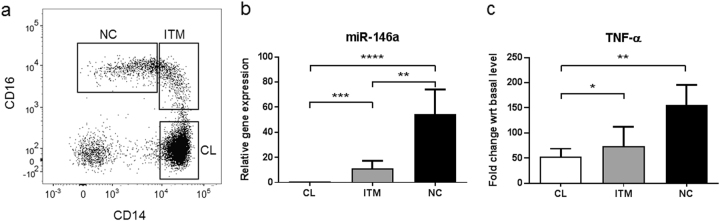
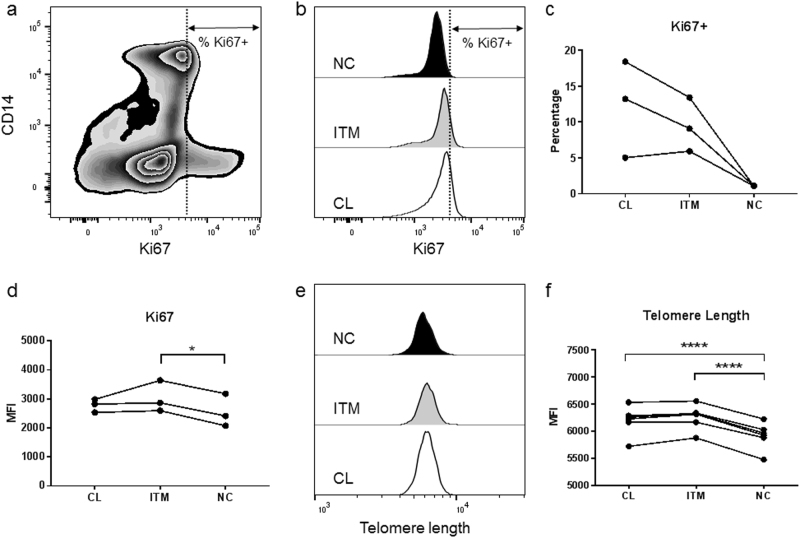
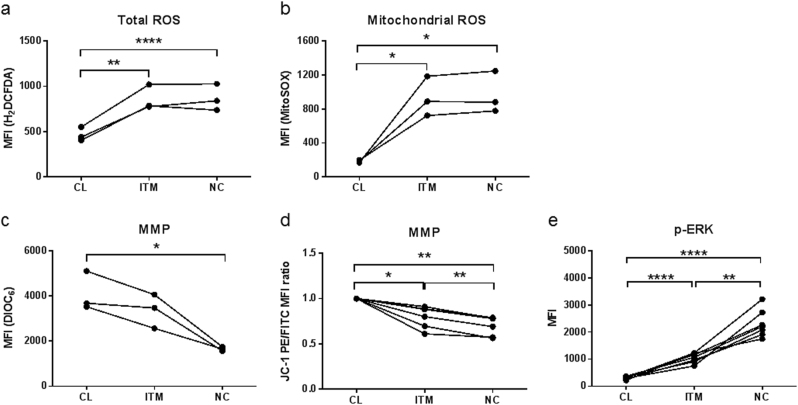
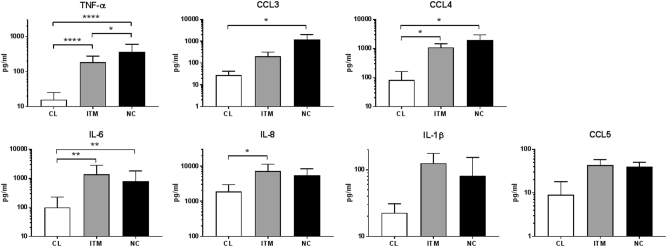
Verification
Claims the paper makes
The claims and statistics of this paper haven’t been checked yet.
Free: it reads the open-access text and checks the first 5 claims that cite a source we can check. Create a free account to check every claim.
Claims other papers make about this one
Each is checked against this paper’s own text: does it say what the citing paper says it does?
In the citing paper
“T cell populations exhibiting multiple senescence markers and lacking proliferative capacity, in addition to B cells (30) and monocytes (31) that carry senescent features, have been described (32) and implicated in immunopathology.”
From Connecting aging biology and inflammation in the omics era (2022) · cites this paper as [31]
Self-check
Percentages, sums and reported differences re-computed from the paper’s own numbers.
The self-check needs the paper’s full text.
Citations
Cites
The senescence-associated secretory phenotype: the dark side of tumor suppression
Coppé, J.-P., Desprez, P.-Y., Krtolica, A., & Campisi, J. (2010) · Annual Review of Pathology: Mechanisms of Disease · doi:10.1146/annurev-pathol-121808-102144 · Cited by 5,206
Taganov, K. D., Boldin, M. P., Chang, K.-J., & Baltimore, D. (2006) · Proceedings of the National Academy of Sciences · doi:10.1073/pnas.0605298103 · Cited by 4,317
Clearance of p16Ink4a-positive senescent cells delays ageing-associated disorders
Baker, D. J., Wijshake, T., Tchkonia, T., LeBrasseur, N. K., Childs, B. G., van de Sluis, B., Kirkland, J. L., & van Deursen, J. M. (2011) · Nature · doi:10.1038/nature10600 · Cited by 3,670
The role of senescent cells in ageing
van Deursen, J. M. (2014) · Nature · doi:10.1038/nature13193 · Cited by 2,623
Nomenclature of monocytes and dendritic cells in blood
Ziegler-Heitbrock, L., Ancuta, P., Crowe, S., Dalod, M., Grau, V., Hart, D. N., Leenen, P. J. M., Liu, Y.-J., MacPherson, G., Randolph, G. J., et al. (2010) · Blood · doi:10.1182/blood-2010-02-258558 · Cited by 2,436
Cellular senescence and the senescent secretory phenotype: therapeutic opportunities
Tchkonia, T., Zhu, Y., van Deursen, J., Campisi, J., & Kirkland, J. L. (2013) · Journal of Clinical Investigation · doi:10.1172/jci64098 · Cited by 1,774
THE ORIGIN AND KINETICS OF MONONUCLEAR PHAGOCYTES
van Furth, R., & Cohn, Z. A. (1968) · The Journal of Experimental Medicine · doi:10.1084/jem.128.3.415 · Cited by 1,563
Inflammatory networks during cellular senescence: causes and consequences.
Freund, A., Orjalo, A. V., Desprez, P.-Y., & Campisi, J. (2010) · Trends in Molecular Medicine · doi:10.1016/j.molmed.2010.03.003 · Cited by 1,354
ERK and cell death: mechanisms of ERK-induced cell death--apoptosis, autophagy and senescence
Cagnol, S., & Chambard, J. (2010) · The FEBS Journal · doi:10.1111/j.1742-4658.2009.07366.x · Cited by 1,290
Senescent intimal foam cells are deleterious at all stages of atherosclerosis
Childs, B. G., Baker, D. J., Wijshake, T., Conover, C. A., Campisi, J., & van Deursen, J. M. (2016) · Science · doi:10.1126/science.aaf6659 · Cited by 1,195
Cellular Senescence in Aging Primates
Herbig, U., Ferreira, M., Condel, L., Carey, D., & Sedivy, J. M. (2006) · Science · doi:10.1126/science.1122446 · Cited by 1,101
Wong, K. L., Tai, J. J.-Y., Wong, W.-C., Han, H., Sem, X., Yeap, W.-H., Kourilsky, P., & Wong, S.-C. (2011) · Blood · doi:10.1182/blood-2010-12-326355 · Cited by 1,101
Self-citationYang, J., Zhang, L., Yu, C., Yang, X.-F., & Wang, H. (2014) · Biomarker Research · doi:10.1186/2050-7771-2-1 · Cited by 1,099
Identification and characterization of a novel monocyte subpopulation in human peripheral blood
Passlick, B., Flieger, D., & Ziegler-Heitbrock, H. (1989) · Blood · doi:10.1182/blood.v74.7.2527.2527 · Cited by 1,037
The fate and lifespan of human monocyte subsets in steady state and systemic inflammation
Patel, A. A., Zhang, Y., Fullerton, J. N., Boelen, L., Rongvaux, A., Maini, A. A., Bigley, V., Flavell, R. A., Gilroy, D. W., Asquith, B., et al. (2017) · Journal of Experimental Medicine · doi:10.1084/jem.20170355 · Cited by 946
The Proinflammatory CD14+CD16+DR++ Monocytes Are a Major Source of TNF
Belge, K.-U., Dayyani, F., Horelt, A., Siedlar, M., Frankenberger, M., Frankenberger, B., Espevik, T., & Ziegler-Heitbrock, L. (2002) · The Journal of Immunology · doi:10.4049/jimmunol.168.7.3536 · Cited by 883
Cellular senescence and its effector programs
Salama, R., Sadaie, M., Hoare, M., & Narita, M. (2014) · Genes & Development · doi:10.1101/gad.235184.113 · Cited by 855
Salminen, A., Kauppinen, A., & Kaarniranta, K. (2012) · Cellular Signalling · doi:10.1016/j.cellsig.2011.12.006 · Cited by 763
The three human monocyte subsets: implications for health and disease
Wong, K. L., Yeap, W. H., Tai, J. J. Y., Ong, S. M., Dang, T. M., & Wong, S. C. (2012) · Immunologic Research · doi:10.1007/s12026-012-8297-3 · Cited by 680
Self-citationOrjalo, A. V., Bhaumik, D., Gengler, B. K., Scott, G. K., & Campisi, J. (2009) · Proceedings of the National Academy of Sciences · doi:10.1073/pnas.0905299106 · Cited by 654
Hearps, A. C., Martin, G. E., Angelovich, T. A., Cheng, W., Maisa, A., Landay, A. L., Jaworowski, A., & Crowe, S. M. (2012) · Aging Cell · doi:10.1111/j.1474-9726.2012.00851.x · Cited by 547
Bhaumik, D., Scott, G. K., Schokrpur, S., Patil, C. K., Orjalo, A. V., Rodier, F., Lithgow, G. J., & Campisi, J. (2009) · Aging · doi:10.18632/aging.100042 · Cited by 500
Repression of c- fos Transcription and an Altered Genetic Program in Senescent Human Fibroblasts
Seshadri, T., & Campisi, J. (1990) · Science · doi:10.1126/science.2104680 · Cited by 481
Mukherjee, R., Kanti Barman, P., Kumar Thatoi, P., Tripathy, R., Kumar Das, B., & Ravindran, B. (2015) · Scientific Reports · doi:10.1038/srep13886 · Cited by 431
miR-146a Is Critical for Endotoxin-induced Tolerance
Nahid, M. A., Pauley, K. M., Satoh, M., & Chan, E. K. L. (2009) · Journal of Biological Chemistry · doi:10.1074/jbc.m109.056317 · Cited by 423
The novel subset of CD14+/CD16+ blood monocytes exhibits features of tissue macrophages
Ziegler‐Heitbrock, H. W. L., Fingerle, G., Ströbel, M., Schraut, W., Stelter, F., Schütt, C., Passlick, B., & Pforte, A. (1993) · European Journal of Immunology · doi:10.1002/eji.1830230902 · Cited by 385
Cellular senescence and organismal aging
Jeyapalan, J. C., & Sedivy, J. M. (2008) · Mechanisms of Ageing and Development · doi:10.1016/j.mad.2008.04.001 · Cited by 346
Frankenberger, M., Sternsdorf, T., Pechumer, H., Pforte, A., & Ziegler-Heitbrock, H. (1996) · Blood · doi:10.1182/blood.v87.1.373.373 · Cited by 313
Ancuta, P., Liu, K.-Y., Misra, V., Wacleche, V., Gosselin, A., Zhou, X., & Gabuzda, D. (2009) · BMC Genomics · doi:10.1186/1471-2164-10-403 · Cited by 278
The Role of Immunosenescence in the Development of Age-Related Diseases
Fülöp, T., Dupuis, G., Witkowski, J. M., & Larbi, A. (2016) · Revista de Investigación Clínica · doi:10.1016/s0034-8376(25)00212-8 · Cited by 269
Self-citationYe, X., Zerlanko, B., Kennedy, A., Banumathy, G., Zhang, R., & Adams, P. D. (2007) · Molecular Cell · doi:10.1016/j.molcel.2007.05.034 · Cited by 228
Olivieri, F., Lazzarini, R., Recchioni, R., Marcheselli, F., Rippo, M. R., Di Nuzzo, S., Albertini, M. C., Graciotti, L., Babini, L., Mariotti, S., et al. (2013) · AGE · doi:10.1007/s11357-012-9440-8 · Cited by 206
Monocyte heterogeneity in obesity and subclinical atherosclerosis
Rogacev, K. S., Ulrich, C., Blomer, L., Hornof, F., Oster, K., Ziegelin, M., Cremers, B., Grenner, Y., Geisel, J., Schlitt, A., et al. (2010) · European Heart Journal · doi:10.1093/eurheartj/ehp308 · Cited by 194
Cellular senescence induced by CD158d reprograms natural killer cells to promote vascular remodeling
Rajagopalan, S., & Long, E. O. (2012) · Proceedings of the National Academy of Sciences · doi:10.1073/pnas.1208248109 · Cited by 168
Phenotypic and functional characteristics of circulating monocytes of elderly persons☆
Sadeghi, H. M., Schnelle, J. F., Thomas, J. K., Nishanian, P., & Fahey, J. L. (1999) · Experimental Gerontology · doi:10.1016/s0531-5565(99)00065-0 · Cited by 165
Clinical significance of monocyte heterogeneity
Stansfield, B. K., & Ingram, D. A. (2015) · Clinical and Translational Medicine · doi:10.1186/s40169-014-0040-3 · Cited by 161
Age‐associated increase in heterochromatic marks in murine and primate tissues
Kreiling, J. A., Tamamori‐Adachi, M., Sexton, A. N., Jeyapalan, J. C., Munoz‐Najar, U., Peterson, A. L., Manivannan, J., Rogers, E. S., Pchelintsev, N. A., Adams, P. D., et al. (2011) · Aging Cell · doi:10.1111/j.1474-9726.2010.00666.x · Cited by 152
Selective depletion of CD14+ CD16+ monocytes by glucocorticoid therapy
Fingerle-Rowson, G., Angstwurm, M., Andreesen, R., & Ziegler-Heitbrock, H. W. L. (2001) · Clinical and Experimental Immunology · doi:10.1046/j.1365-2249.1998.00617.x · Cited by 151
Cellular senescence impact on immune cell fate and function
Vicente, R., Mausset-Bonnefont, A.-L., Jorgensen, C., Louis-Plence, P., & Brondello, J.-M. (2016) · Aging Cell · doi:10.1111/acel.12455 · Cited by 151
Idźkowska, E., Eljaszewicz, A., Mikłasz, P., Musial, W. J., Tycińska, A., & Moniuszko, M. (2015) · Scandinavian Journal of Immunology · doi:10.1111/sji.12314 · Cited by 135
Cudejko, C., Wouters, K., Fuentes, L., Hannou, S. A., Paquet, C., Bantubungi, K., Bouchaert, E., Vanhoutte, J., Fleury, S., Remy, P., et al. (2011) · Blood · doi:10.1182/blood-2010-10-313106 · Cited by 125
CD16 (FcRγIII) as a potential marker of osteoclast precursors in psoriatic arthritis
Chiu, Y. G., Shao, T., Feng, C., Mensah, K. A., Thullen, M., Schwarz, E. M., & Ritchlin, C. T. (2010) · Arthritis Research & Therapy · doi:10.1186/ar2915 · Cited by 123
Zhang, J.-Y., Zou, Z.-S., Huang, A., Zhang, Z., Fu, J.-L., Xu, X.-S., Chen, L.-M., Li, B.-S., & Wang, F.-S. (2011) · PLoS ONE · doi:10.1371/journal.pone.0017484 · Cited by 118
The emerging role of senescent cells in tissue homeostasis and pathophysiology
Tominaga, K. (2015) · Pathobiology of Aging & Age-related Diseases · doi:10.3402/pba.v5.27743 · Cited by 113
Zhao, C., Zhang, H., Wong, W.-C., Sem, X., Han, H., Ong, S.-M., Tan, Y.-C., Yeap, W.-H., Gan, C.-S., Ng, K.-Q., et al. (2009) · Journal of Proteome Research · doi:10.1021/pr900364p · Cited by 99
Self-citationLu, Y., Tan, C. T. Y., Nyunt, M. S. Z., Mok, E. W. H., Camous, X., Kared, H., Fulop, T., Feng, L., Ng, T. P., & Larbi, A. (2016) · Oncotarget · doi:10.18632/oncotarget.8939 · Cited by 98
Self-citationEffect of ageing on CMV-specific CD8 T cells from CMV seropositive healthy donors
Pita-Lopez, M. L., Gayoso, I., DelaRosa, O., Casado, J. G., Alonso, C., Muñoz-Gomariz, E., Tarazona, R., & Solana, R. (2009) · Immunity & Ageing · doi:10.1186/1742-4933-6-11 · Cited by 86
Siedlar, M., Strach, M., Bukowska-Straková, K., Lenart, M., Szaflarska, A., Węglarczyk, K., Rutkowska, M., Baj‐Krzyworzeka, M., Pituch‐Noworolska, A., Kowalczyk, D., et al. (2011) · Clinical Immunology · doi:10.1016/j.clim.2011.01.002 · Cited by 77
CD16-positive circulating monocytes and fibrotic manifestations of systemic sclerosis
Lescoat, A., Lecureur, V., Roussel, M., Sunnaram, B. L., Ballerie, A., Coiffier, G., Jouneau, S., Fardel, O., Fest, T., & Jégo, P. (2017) · Clinical Rheumatology · doi:10.1007/s10067-017-3597-6 · Cited by 75
Li, G., Luna, C., Qiu, J., Epstein, D. L., & Gonzalez, P. (2010) · Investigative Opthalmology & Visual Science · doi:10.1167/iovs.09-4874 · Cited by 72
Verschoor, C. P., Johnstone, J., Millar, J., Parsons, R., Lelic, A., Loeb, M., Bramson, J. L., & Bowdish, D. M. E. (2014) · PLoS ONE · doi:10.1371/journal.pone.0104522 · Cited by 71
Detection and properties of the human proliferative monocyte subpopulation
Clanchy, F. I. L., Holloway, A. C., Lari, R., Cameron, P. U., & Hamilton, J. A. (2006) · Journal of Leukocyte Biology · doi:10.1189/jlb.0905522 · Cited by 69
Kapinsky, M., Torzewski, M., Büchler, C., Duong, C. Q., Rothe, G., & Schmitz, G. (2001) · Arteriosclerosis Thrombosis and Vascular Biology · doi:10.1161/01.atv.21.6.1004 · Cited by 68
Korkosz, M., Bukowska-Strakova, K., Sadis, S., Grodzicki, T., & Siedlar, M. (2012) · Blood · doi:10.1182/blood-2012-02-412551 · Cited by 62
Fluorescence-Based Detection and Quantification of Features of Cellular Senescence
Cho, S., & Hwang, E. S. (2011) · Methods in cell biology · doi:10.1016/b978-0-12-385493-3.00007-3 · Cited by 61
Zhao, C., Tan, Y.-C., Wong, W.-C., Sem, X., Zhang, H., Han, H., Ong, S.-M., Wong, K.-L., Yeap, W.-H., Sze, S. K., et al. (2010) · Cell Death and Disease · doi:10.1038/cddis.2010.69 · Cited by 57
Self-citationMicro RNA expression profiling of human blood monocyte subsets highlights functional differences
Dang, T., Wong, W., Ong, S., Li, P., Lum, J., Chen, J., Poidinger, M., Zolezzi, F., & Wong, S. C. (2015) · Immunology · doi:10.1111/imm.12456 · Cited by 34
Self-citationWallquist, C., Paulson, J. M., Hylander, B., Lundahl, J., & Jacobson, S. H. (2013) · Scandinavian Journal of Immunology · doi:10.1111/sji.12115 · Cited by 14
Cited by
Cell Type-Specific Roles of NF-κB Linking Inflammation and Thrombosis
Mussbacher, M., Salzmann, M., Brostjan, C., Hoesel, B., Schoergenhofer, C., Datler, H., Hohensinner, P., Basílio, J., Petzelbauer, P., Assinger, A., et al. (2019) · Frontiers in Immunology · doi:10.3389/fimmu.2019.00085 · Cited by 596
“In addition, differentiation of monocytes is connected to cellular aging as NCMs display clear markers of cellular senescence including reduced telomere length and reduced numbers of Ki67-positive cells (443).”
BackgroundImmunology of aging: the birth of inflammaging
Fulop, T., Larbi, A., Pawelec, G., Khalil, A., Cohen, A. A., Hirokawa, K., Witkowski, J. M., & Franceschi, C. (2021) · Clinical Reviews in Allergy & Immunology · doi:10.1007/s12016-021-08899-6 · Cited by 464
“There is no consensus whether these non-classical monocytes may be more reactive than the classical ones, but they are somehow more inflammatory and present some attributes of senescence/exhaustion [100, 101].”
BackgroundSelf-citationSenNet recommendations for detecting senescent cells in different tissues
Suryadevara, V., Hudgins, A. D., Rajesh, A., Pappalardo, A., Karpova, A., Dey, A. K., Hertzel, A., Agudelo, A., Rocha, A., Soygur, B., et al. (2024) · Nature Reviews Molecular Cell Biology · doi:10.1038/s41580-024-00738-8 · Cited by 408
NF-κB in monocytes and macrophages – an inflammatory master regulator in multitalented immune cells
Mussbacher, M., Derler, M., Basílio, J., & Schmid, J. A. (2023) · Frontiers in Immunology · doi:10.3389/fimmu.2023.1134661 · Cited by 320
Rana, A. K., Li, Y., Dang, Q., & Yang, F. (2018) · International Immunopharmacology · doi:10.1016/j.intimp.2018.10.016 · Cited by 303
Metadata
- Authors
- Ong, S.-M., Hadadi, E., Dang, T.-M., Yeap, W.-H., Tan, C. T.-Y., Ng, T.-P., Larbi, A., & Wong, S.-C.
- Affiliations
- Agency for Science, Technology and Research (SG)
- National University of Singapore (SG)
- Corresponding author
- Wong, Siew-Cheng
- Venue
- Cell Death & Disease
- Published
- 2018-02-15
- Volume
- 9
- Issue
- 3
- Pages
- 266-266
- ISSN
- 2041-4889 (ISSN-L)
- PMC
- PMC5833376
- OpenAlex
- W2793282252
- Cited by
- 233
- References
- 58
- Citations by year
- 2026: 9 · 2025: 33 · 2024: 30 · 2023: 27 · 2022: 33 · 2021: 44 · 2020: 31 · 2019: 14 · 2018: 12
- FWCI
- 17.36
- Type
- journal article
- Language
- en
- Open access
- gold
- doi.org
- Licence
- cc-by
- creativecommons.org/licenses/by/4.0 (tdm)
- creativecommons.org/licenses/by/4.0 (vor)
- Locations
- Cell Death and Disease (publishedVersion, cc-by)
- PubMed Central (publishedVersion, cc-by)
- PubMed (publishedVersion)
- National University of Singapore (submittedVersion, cc-by)
- DOAJ (DOAJ: Directory of Open Access Journals) (submittedVersion)
- Funders
- Agency for Science, Technology and Research
- Biomedical Research Council
- Topics
- Life Sciences › Biochemistry, Genetics and Molecular Biology › Cell Biology › Telomeres, Telomerase, and Senescence
- Life Sciences › Immunology and Microbiology › Immunology › Immune cells in cancer
- Life Sciences › Immunology and Microbiology › Immunology › Immune Response and Inflammation
- Keywords
- non-classical monocytes, cellular senescence, senescence-associated secretory phenotype, pro-inflammatory phenotype, miR-146a, Toll-like receptor signaling, NF-κB, IL-1α, telomere length, reactive oxygen species, mitochondrial membrane potential, monocyte subsets, inflammaging, aging, TNF-α, interleukin-8, atherosclerosis, osteoarthritis
- MeSH terms
- Adult, Age Factors, Aging, Cells, Cultured, Female, Humans, Inflammation, Lipopolysaccharides, Male, Middle Aged, Mitochondria, Monocytes, Phenotype, Signal Transduction, Cytokines, NF-kappa B, Cellular Senescence, Reactive Oxygen Species, Receptors, IgG, Inflammation Mediators, Lipopolysaccharide Receptors, MicroRNAs, Cell Proliferation, Membrane Potential, Mitochondrial, Interleukin-1alpha, Young Adult, GPI-Linked Proteins, Telomere Homeostasis
About these checks
Registry, retraction, Cites and statistics results are computed, not judged, with one exception: a printed reference that no index lists is read once by a model before it counts as a citation error. Claims are extracted by a model and kept only when their quote appears verbatim in the text; each cited source is then checked, with a model’s help, for whether it says what the claim relies on. Those verdicts can be wrong — read the claim’s quote and the cited source before relying on one.
Statistics and arithmetic are recomputed, not judged.
Confidence bands are shown only for fields calibrated on our annotated test set. None is calibrated yet, so no band is shown.
What counts as a claim ›How we measure confidence ›How we check this ›
Are you an author, or do you see a problem with this page? Request a review
Data sources
Bibliographic data: Semantic Scholar, OpenAlex, Crossref.
Contains information from the Semantic Scholar Academic Graph Datasets, made available under the ODC Attribution License (ODC-BY 1.0).
Semantic Scholar’s data is described in: Kinney, R., et al. (2023). The Semantic Scholar Open Data Platform. arXiv:2301.10140.
