

Genomic epidemiology of the UK outbreak of the emerging human fungal pathogen Candida auris
Open accessThe DOI matches its Crossref record; 59 of the 59 references it cites were found in a registry or an index.
Abstract
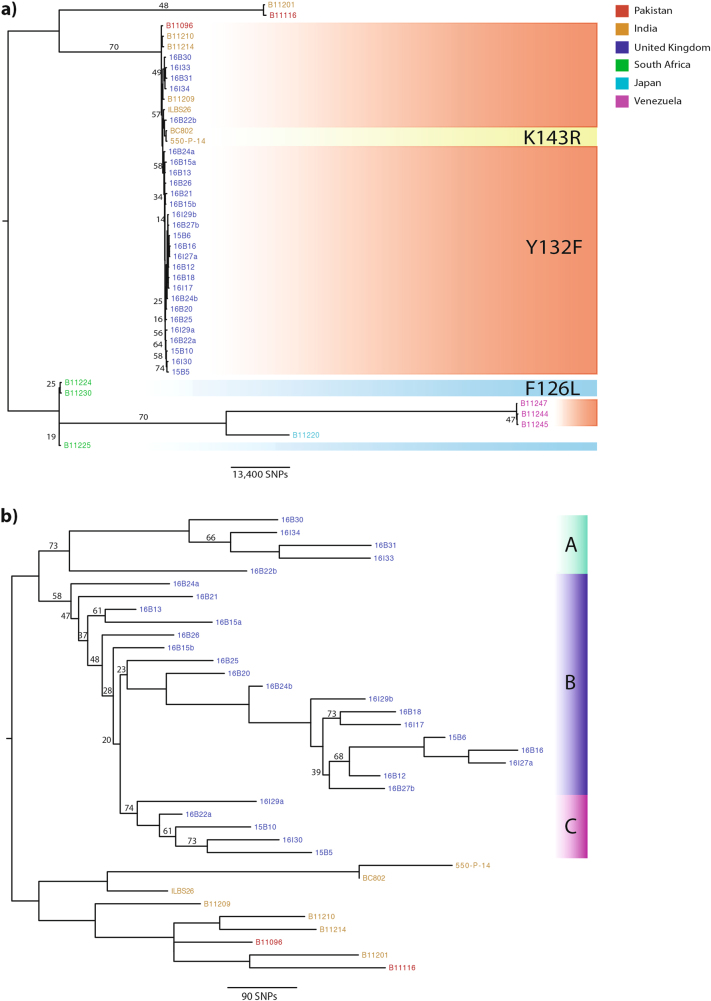
Candida auris was first described in 2009, and it has since caused nosocomial outbreaks, invasive infections, and fungaemia across at least 19 countries on five continents. An outbreak of C. auris occurred in a specialized cardiothoracic London hospital between April 2015 and November 2016, which to date has been the largest outbreak in the UK, involving a total of 72 patients. To understand the genetic epidemiology of C. auris infection both within this hospital and within a global context, we sequenced the outbreak isolate genomes using Oxford Nanopore Technologies and Illumina platforms to detect antifungal resistance alleles and reannotate the C. auris genome. Phylogenomic analysis placed the UK outbreak in the India/Pakistan clade, demonstrating an Asian origin; the outbreak showed similar genetic diversity to that of the entire clade, and limited local spatiotemporal clustering was observed. One isolate displayed resistance to both echinocandins and 5-flucytosine; the former was associated with a serine to tyrosine amino acid substitution in the gene FKS1, and the latter was associated with a phenylalanine to isoleucine substitution in the gene FUR1. These mutations add to a growing body of research on multiple antifungal drug targets in this organism. Multiple differential episodic selection of antifungal resistant genotypes has occurred within a genetically heterogenous population across this outbreak, creating a resilient pathogen and making it difficult to define local-scale patterns of transmission and implement outbreak control measures.
Overview
The claims and statistics of this paper haven’t been checked yet.
Free: it reads the open-access text and checks the first 5 claims that cite a source we can check. Create a free account to check every claim.
Integrity signals
Registry
Cites
Statistics
Figures
Verification
Claims the paper makes
The claims and statistics of this paper haven’t been checked yet.
Free: it reads the open-access text and checks the first 5 claims that cite a source we can check. Create a free account to check every claim.
Claims other papers make about this one
Each is checked against this paper’s own text: does it say what the citing paper says it does?
The cited source says what the claim attributes to it.
In the citing paper
“Indeed, nearly clonal isolates have emerged from hospitals in north and south India (77) and can spread through local transmission (78).”
From Transcriptomics and Phenotyping Define Genetic Signatures Associated with Echinocandin Resistance in Candida auris (2022) · cites this paper as [78]
Self-check
Percentages, sums and reported differences re-computed from the paper’s own numbers.
The self-check needs the paper’s full text.
Citations
Cites
The Sequence Alignment/Map format and SAMtools
Li, H., Handsaker, B., Wysoker, A., Fennell, T., Ruan, J., Homer, N., Marth, G., Abecasis, G., Durbin, R., & 1000 Genome Project Data Processing Subgroup (2009) · Bioinformatics · doi:10.1093/bioinformatics/btp352 · Cited by 62,041
KEGG: Kyoto Encyclopedia of Genes and Genomes
Kanehisa, M. (2000) · Nucleic Acids Research · doi:10.1093/nar/28.1.27 · Cited by 37,077
KEGG: Kyoto Encyclopedia of Genes and Genomes
Ogata, H., Goto, S., Sato, K., Fujibuchi, W., Bono, H., & Kanehisa, M. (1999) · Nucleic Acids Research · doi:10.1093/nar/27.1.29 · Cited by 31,232
The Genome Analysis Toolkit: A MapReduce framework for analyzing next-generation DNA sequencing data
McKenna, A., Hanna, M., Banks, E., Sivachenko, A., Cibulskis, K., Kernytsky, A., Garimella, K., Altshuler, D., Gabriel, S., Daly, M., et al. (2010) · Genome Research · doi:10.1101/gr.107524.110 · Cited by 27,895
tRNAscan-SE: A Program for Improved Detection of Transfer RNA Genes in Genomic Sequence
Lowe, T. M., & Eddy, S. R. (1997) · Nucleic Acids Research · doi:10.1093/nar/25.5.955 · Cited by 10,905
Pfam: the protein families database
Finn, R. D., Bateman, A., Clements, J., Coggill, P., Eberhardt, R. Y., Eddy, S. R., Heger, A., Hetherington, K., Holm, L., Mistry, J., et al. (2014) · Nucleic Acids Research · doi:10.1093/nar/gkt1223 · Cited by 6,148
RNAmmer: consistent and rapid annotation of ribosomal RNA genes
Lagesen, K., Hallin, P., Rødland, E. A., Stærfeldt, H.-H., Rognes, T., & Ussery, D. W. (2007) · Nucleic Acids Research · doi:10.1093/nar/gkm160 · Cited by 6,112
HMMER web server: interactive sequence similarity searching
Finn, R. D., Clements, J., & Eddy, S. R. (2011) · Nucleic Acids Research · doi:10.1093/nar/gkr367 · Cited by 5,952
Aligning sequence reads, clone sequences and assembly contigs with BWA-MEM
Li, H. (2013) · DROPS (Schloss Dagstuhl – Leibniz Center for Informatics) · doi:10.48550/arxiv.1303.3997 · Cited by 5,159
The SWISS-PROT protein sequence database and its supplement TrEMBL in 2000
Bairoch, A. (2000) · Nucleic Acids Research · doi:10.1093/nar/28.1.45 · Cited by 3,093
Cited by
Items 101–200 of 266
Wang, Y., & Xu, J. (2022) · Computational and Structural Biotechnology Journal · doi:10.1016/j.csbj.2022.06.030 · Cited by 32
The Epidemiology and Prevention of Candida auris
Snyder, G. M., & Wright, S. B. (2019) · Current Infectious Disease Reports · doi:10.1007/s11908-019-0675-8 · Cited by 37
Salah, H., Sundararaju, S., Dalil, L., Salameh, S., Al-Wali, W., Tang, P., Abid, F. B., & Tsui, C. K. M. (2021) · Journal of Fungi · doi:10.3390/jof7030240 · Cited by 36
Genomic epidemiology describes introduction and outbreaks of antifungal drug-resistant Candida auris
Kappel, D., Gifford, H., Brackin, A. P., Abdolrasouli, A., Eyre, D. W., Jeffery, K. J., Schelenz, S., Aanensen, D. M., Brown, C. S., Borman, A. M., et al. (2024) · npj Antimicrobials and Resistance · doi:10.1038/s44259-024-00043-6 · Cited by 37
“This is consistent withtheRBHoutbreakanalysis,whichsuggestedthatentryintothehospital wasinearly2015beforeallotherhospitalswithCladeIisolates 32 .”
InfluentialSelf-citationMartínez-Murcia, A., Navarro, A., Bru, G., Chowdhary, A., Hagen, F., & Meis, J. F. G. M. (2018) · Mycoses · doi:10.1111/myc.12834 · Cited by 36
Long-Reads-Based Metagenomics in Clinical Diagnosis With a Special Focus on Fungal Infections
Hoang, M. T. V., Irinyi, L., Hu, Y., Schwessinger, B., & Meyer, W. (2022) · Frontiers in Microbiology · doi:10.3389/fmicb.2021.708550 · Cited by 35
Siopi, M., Pachoulis, I., Leventaki, S., Spruijtenburg, B., Meis, J. F. G. M., Pournaras, S., Vrioni, G., Tsakris, A., & Meletiadis, J. (2024) · Journal of Clinical Microbiology · doi:10.1128/jcm.01528-23 · Cited by 34
“…the ERG3 , ERG5 , ERG6 , and/or ERG10 genes, which have been associated with amphotericin B resistance in other Candida spp., have not been previously identified among phenotypi cally amphotericin B-resistant C. auris strains, and thus, resistance could not be verified molecularly (9, 36, 37).”
BackgroundMolecular Diagnostics in the Times of Surveillance for Candida auris
Kordalewska, M., & Perlin, D. S. (2019) · Journal of Fungi · doi:10.3390/jof5030077 · Cited by 38
Jenull, S., Shivarathri, R., Tsymala, I., Penninger, P., Trinh, P.-C., Nogueira, F., Chauhan, M., Singh, A., Petryshyn, A., Stoiber, A., et al. (2022) · mBio · doi:10.1128/mbio.00799-22 · Cited by 32
Wu, Y., Totten, M., Memon, W., Ying, C., & Zhang, S. X. (2019) · Antimicrobial Agents and Chemotherapy · doi:10.1128/aac.02063-19 · Cited by 34
Voorhies, M., Cohen, S., Shea, T., Petrus, S., Muñoz, J. F., Poplawski, S. G., Goldman, W. E., Michael, T. P., Cuomo, C. A., Sil, A., et al. (2022) · mBio · doi:10.1128/mbio.02574-21 · Cited by 33
“14 has greatly improved our understanding of fungal genomes (13, 14, 37).”
BackgroundSelf-citationHirayama, T., Miyazaki, T., Sumiyoshi, M., Ito, Y., Ashizawa, N., Takeda, K., Iwanaga, N., Takazono, T., Yamamoto, K., Izumikawa, K., et al. (2023) · Antimicrobial Agents and Chemotherapy · doi:10.1128/aac.01243-22 · Cited by 33
“auris, three mutations (S639Y, S639P, and S639F) in FKS1 HS1 have been reported to be correlated with echinocandin resistance (2, 3); recently, mutations in FKS1 HS1 (DF635, F635Y, F635L, and D642Y) and FKS1 HS2 (R1354S and R1354H) have also been reportedly implicated (4, 5, 20).”
BackgroundA decade after the emergence of Candida auris: what do we know?
ElBaradei, A. (2020) · European Journal of Clinical Microbiology & Infectious Diseases · doi:10.1007/s10096-020-03886-9 · Cited by 33
“F211I mutation was reported from a single isolate [60] but needs more investigations.”
BackgroundTranscriptional and translational landscape of Candida auris in response to caspofungin
Zamith-Miranda, D., Amatuzzi, R. F., Munhoz da Rocha, I. F., Martins, S. T., Lucena, A. C. R., Vieira, A. Z., Trentin, G., Almeida, F., Rodrigues, M. L., Nakayasu, E. S., et al. (2021) · Computational and Structural Biotechnology Journal · doi:10.1016/j.csbj.2021.09.007 · Cited by 29
“auris was responsible for numerous nosocomial outbreaks in healthcare settings [6,7].”
BackgroundMalavia-Jones, D., Farrer, R. A., Stappers, M. H. T., Edmondson, M. B., Borman, A. M., Johnson, E. M., Lipke, P. N., & Gow, N. A. R. (2023) · The Cell Surface · doi:10.1016/j.tcsw.2023.100110 · Cited by 29
Self-citationPla, L., Santiago‐Felipe, S., Tormo‐Más, M. Á., Gaitán, A. C. R., Pemán, J., Valentín, E., Sancenón, F., Aznar, E., & Martínez‐Máñez, R. (2020) · Emerging Microbes & Infections · doi:10.1080/22221751.2020.1870411 · Cited by 31
Candida auris Whole-Genome Sequence Benchmark Dataset for Phylogenomic Pipelines
Welsh, R. M., Misas, E., Forsberg, K., Lyman, M., & Chow, N. A. (2021) · Journal of Fungi · doi:10.3390/jof7030214 · Cited by 30
Williamson, B., Wilk, A. S., Guerrero, K. D., Mikulski, T. D., Elias, T. N., Sawh, I., Cancino-Prado, G., Gardam, D., Heath, C. H., Govender, N. P., et al. (2021) · Antimicrobial Agents and Chemotherapy · doi:10.1128/aac.01624-21 · Cited by 30
Chapman, R., Jones, L., D’Angelo, A., Suliman, A., Anwar, M., & Bagby, S. (2023) · Lung · doi:10.1007/s00408-023-00612-y · Cited by 30
Rapid in vitro evolution of flucytosine resistance in Candida auris
Phan-Canh, T., Nguyen-Le, D.-M., Luu, P., Khunweeraphong, N., & Kuchler, K. (2025) · mSphere · doi:10.1128/msphere.00977-24 · Cited by 30
Alvarado, M. I., Álvarez, J. B., Lockhart, S. R., Valentín, E., Gaitán, A. C. R., Eraso, E., & de Groot, P. W. J. (2020) · Mycoses · doi:10.1111/myc.13204 · Cited by 30
Ennis, C. L., Hernday, A. D., & Nobile, C. J. (2021) · Microbiology Spectrum · doi:10.1128/spectrum.01820-21 · Cited by 23
Ashkenazi‐Hoffnung, L., & Danziger, C. R. (2023) · Journal of Fungi · doi:10.3390/jof9020176 · Cited by 29
ECMM CandiReg—A ready to use platform for outbreaks and epidemiological studies
Koehler, P. A., Arendrup, M. C., Arıkan-Akdağlı, S., Bassetti, M., Bretagne, S., Klingspor, L., Lagrou, K., Meis, J. F. G. M., Rautemaa‐Richardson, R., Schelenz, S., et al. (2019) · Mycoses · doi:10.1111/myc.12963 · Cited by 30
“The emergence of C auris, a novel, usually fluconazole resistant and often multidrug‐resistant Candida species has caused outbreaks worldwide and led to clinical alerts to United States and European healthcare facilities.5‐8 In an Indian hospital, C auris has become the second most common cause of candidemia after C t…”
BackgroundSelf-citationDu, M., Hu, W., Tamura, T., Alshahni, M. M., Satoh, K., Yamanishi, C., Naito, T., & Makimura, K. (2021) · Mycopathologia · doi:10.1007/s11046-020-00526-w · Cited by 28
“Many taxa of the clades represent isolates linked to outbreaks worldwide [28, 29], except for Japan/South Korea isolates from the East Asian Clade, which showed a propensity for the ear [15].”
BackgroundThe Microevolution of Antifungal Drug Resistance in Pathogenic Fungi
Boyce, K. J. (2023) · Microorganisms · doi:10.3390/microorganisms11112757 · Cited by 29
“Mutations in FCY1 and FCY2 , permeases required for 5-FC transport, and in FUR1 , a gene that encodes a uracil phosphoribosyltransferase that converts 5-FC into toxic 5-FU, confer resistance to 5-FC in C. albicans , C. glabrata , C. auris and C. neoformans [31,102].”
Genomic Characterizations of Clade III Lineage of Candida auris , California, USA
Price, T. K., Mirasol, R., Ward, K. W., Dayo, A. J., Hilt, E. E., Chandrasekaran, S., Garner, O. B., Maurice, A. D. S., & Yang, S. (2021) · Emerging infectious diseases · doi:10.3201/eid2704.204361 · Cited by 26
“auris (7) and are a common feature of clade III isolates (12).”
BackgroundSmall molecules for combating multidrug-resistant superbug Candida auris infections
Tu, J., Liu, N., Huang, Y., Yang, W., & Sheng, C. (2022) · Acta Pharmaceutica Sinica B · doi:10.1016/j.apsb.2022.08.001 · Cited by 29
Satała, D., Juszczak, M., Wronowska, E., Surowiec, M., Kulig, K., Kozik, A., Rąpała‐Kozik, M., & Karkowska‐Kuleta, J. (2022) · Cellular Microbiology · doi:10.1155/2022/2599136 · Cited by 28
MinION Whole-Genome Sequencing in Resource-Limited Settings: Challenges and Opportunities
Wasswa, F. B., Kassaza, K., Nielsen, K., & Bazira, J. (2022) · Current Clinical Microbiology Reports · doi:10.1007/s40588-022-00183-1 · Cited by 29
“MinION sequencing has been successfully applied in the context of fungal detection in the developed world for various applications such as de novo genome assemblies of yeasts like Saccharomyces cerevisiae [69, 70], genome assembly from PCR products [29], detection of fungi using metagenomics [71, 72], fungal ecology s…”
MethodRamos, L. S., Barbosa, P. F., Lorentino, C. M. A., Lima, J. C., Braga, A. L., Lima, R., Giovanini, L., Casemiro, A. L., Siqueira, N. L. M., da Costa, S. C., et al. (2025) · Current Research in Microbial Sciences · doi:10.1016/j.crmicr.2025.100354 · Cited by 33
“…Gait ´ an et al., 2017; Berkow and Lockhart, 2018; Chowdhary et al., 2018; Hashemi et al., 2018; Kordalewska et al., 2018; Pathirana et al., 2018; Rhodes et al., 2018; Tian et al., 2018; Dal Mas et al., 2019; Kwon et al., 2019; Mohammad et al., 2019; Sayeed et al., 2019; Tan et al., 2019;…”
Diagnosing Emerging Fungal Threats: A One Health Perspective
Ghosh, P. N., Fisher, M. C., & Bates, K. A. (2018) · Frontiers in Genetics · doi:10.3389/fgene.2018.00376 · Cited by 30
Self-citationBiswas, C., Wang, Q., van Hal, S. J., Eyre, D. W., Hudson, B. J., Halliday, C. L., Mazsewska, K., Gordon, A. K., Lee, A. S., Irinyi, L., et al. (2020) · Open Forum Infectious Diseases · doi:10.1093/ofid/ofaa158 · Cited by 29
“Regardless, the results indicate the presence of genetically heterogeneous strain populations colonizing the host simultaneously where such heterogeneity may enhance fitness [4, 22].”
BackgroundHernando-Ortiz, A., Eraso, E., Jauregizar, N., de Groot, P. W. J., Quindós, G., & Mateo, E. (2023) · Microbiology Spectrum · doi:10.1128/spectrum.02086-23 · Cited by 25
Azole-Resistant Aspergillus and Echinocandin-Resistant Candida: What Are the Treatment Options?
Novak, A. R., Bradley, M. E., Kiser, T. H., & Mueller, S. W. (2020) · Current Fungal Infection Reports · doi:10.1007/s12281-020-00379-2 · Cited by 26
Taori, S. K., Rhodes, J. L., Khonyongwa, K., Szendrôi, A., Smith, M. H., Borman, A. M., Kumarage, J., Brown, C. S., Moore, G., & Desai, N. (2022) · Journal of Hospital Infection · doi:10.1016/j.jhin.2022.06.009 · Cited by 25
Self-citationNanotechnology-Based Strategies to Combat Multidrug-Resistant Candida auris Infections
Hetta, H. F., Ramadan, Y. N., Al-Kadmy, I. M. S., Ellah, N. H. A., Shbibe, L., & Battah, B. (2023) · Pathogens · doi:10.3390/pathogens12081033 · Cited by 24
Prevalence of Candida auris in Canadian acute care hospitals among at-risk patients, 2018
Garcia-Jeldes, H. F., Mitchell, R., McGeer, A., Rudnick, W., Amaratunga, K., Vallabhaneni, S., Lockhart, S. R., CNISP C. auris Interest Group, Al‐Rawahi, G. N., Brodkin, E., et al. (2020) · Antimicrobial Resistance and Infection Control · doi:10.1186/s13756-020-00752-3 · Cited by 25
Virulence Traits and Azole Resistance in Korean Candida auris Isolates
Byun, S. A., Kwon, Y. J., Lee, G. Y., Choi, M. J., Jeong, S. H., Kim, D., Choi, M. H., Kee, S., Kim, S. H., Shin, M., et al. (2023) · Journal of Fungi · doi:10.3390/jof9100979 · Cited by 26
Incursions of Candida auris into Australia, 2018
Lane, C. R., Seemann, T., Worth, L. J., Easton, M., Pitchers, W., Wong, J., Cameron, D., Azzato, F., Bartolo, R., Mateevici, C., et al. (2020) · Emerging infectious diseases · doi:10.3201/eid2606.190936 · Cited by 23
“190936 T fungal pathogen Candida auris is an emerging global health threat associated with a range of invasive infections, most commonly candidemia; it is often resistant to multiple antifungal drugs (1).”
BackgroundYeast metagenomics: analytical challenges in the analysis of the eukaryotic microbiome
Renzi, S., Nenciarini, S., Bacci, G., & Cavalieri, D. (2023) · Microbiome Research Reports · doi:10.20517/mrr.2023.27 · Cited by 24
Drug repurposing against Candida auris: A systematic review
Izadi, A., Gharehbolagh, S. A., Sadeghi, F., Talebi, M., Darmiani, K., Zarrinnia, A., Zarei, F., Peymaeei, F., Khojasteh, S., Borman, A. M., et al. (2022) · Mycoses · doi:10.1111/myc.13477 · Cited by 23
The Future of Livestock Management: A Review of Real-Time Portable Sequencing Applied to Livestock
Lamb, H. J., Hayes, B. J., Nguyen, L. T., & Ross, E. M. (2020) · Genes · doi:10.3390/genes11121478 · Cited by 28
Al-Dossary, H. A., Rehman, S., Jermy, B. R., AlJindan, R. Y., Aldayel, A., AbdulAzeez, S., Akhtar, S., Khan, F. A., Borgio, J. F., & Al-Suhaimi, E. A. (2022) · Pharmaceutics · doi:10.3390/pharmaceutics14102251 · Cited by 20
Antifungal resistance, combinations and pipeline: oh my!
Stover, K. R., Hawkins, B. K., Keck, J. M., Barber, K. E., & Cretella, D. A. (2023) · Drugs in Context · doi:10.7573/dic.2023-7-1 · Cited by 22
“102,103 Echinocandin resistance through FKS gene mutations has been identified in A. fu-migatus isolates but the prevalence appears low.”
BackgroundDetection of Candida auris Antifungal Drug Resistance Markers Directly from Clinical Skin Swabs
Kordalewska, M., Lee, A., Zhao, Y., & Perlin, D. S. (2019) · Antimicrobial Agents and Chemotherapy · doi:10.1128/aac.01754-19 · Cited by 20
Lima, S. L., Rossato, L. L., & Melo, A. S. D. A. (2020) · Microbial Pathogenesis · doi:10.1016/j.micpath.2020.104461 · Cited by 20
Tamura, T., Alshahni, M. M., & Makimura, K. (2022) · Microbiology and Immunology · doi:10.1111/1348-0421.12973 · Cited by 26
Climate change: shifting boundaries of fungal disease in Europe and beyond
Bottery, M. J., Sedik, S., Schwartz, I. S., Hoenigl, M., & van Rhijn, N. (2025) · Thorax · doi:10.1136/thorax-2024-222168 · Cited by 21
Toepfer, S., Lackner, M., Keniya, M. V., & Monk, B. C. (2023) · Journal of Fungi · doi:10.3390/jof9020168 · Cited by 20
Ettadili, H., & Vural, C. (2024) · Brazilian Journal of Microbiology · doi:10.1007/s42770-023-01239-0 · Cited by 20
“In addition, mutations in hot spot regions of the FKS genes, especially FKS1 (e.g., S639F, S639P, S639Y), cause echinocandin resistance in C. auris [30, 51, 57] .”
Current Perspectives of Antifungal Therapy: A Special Focus on Candida auris
Arumugam, G., Muthuselvam, M., de Lima, P. M. N., Rajendran, R., & Junqueira, J. C. (2024) · Journal of Fungi · doi:10.3390/jof10060408 · Cited by 22
Woodworth, M. H., Dynerman, D., Crawford, E. D., Doernberg, S. B., Ramírez-Àvila, L., Serpa, P. H., Nichols, A. D., Li, L. M., Lyden, A., Tato, C. M., et al. (2019) · Microbial Drug Resistance · doi:10.1089/mdr.2018.0408 · Cited by 19
“Previous studies suggest that mutations in these genes can arise in the setting of systemic antifungal therapy.(3) Despite first appearing in the eastern United States in 2013, C.”
BackgroundMethodResultInfluentialErratum: Candida auris: The recent emergence of a multidrug-resistant fungal Pathogen
Forsberg, K., Woodworth, K. R., Walters, M., Berkow, E. L., Jackson, B. R., Chiller, T. M., & Vallabhaneni, S. (2019) · Medical Mycology · doi:10.1093/mmy/myy156 · Cited by 20
Barbian, H. J., Lie, L., Kittner, A., Harrington, A., Carson, J. S., Frias, M., Slade, D. H., Kim, D. Y., Black, S. R., Parada, J. P., et al. (2025) · Emerging infectious diseases · doi:10.3201/eid3103.241195 · Cited by 19
Fungal Genomics in Respiratory Medicine: What, How and When?
Brackin, A. P., Hemmings, S., Fisher, M. C., & Rhodes, J. L. (2021) · Mycopathologia · doi:10.1007/s11046-021-00573-x · Cited by 16
Self-citationTalento, A. F., Qualie, M., Cottom, L., Backx, M., & White, P. L. (2021) · Journal of Fungi · doi:10.3390/jof7100801 · Cited by 16
Candida auris Identification and Profiling by MALDI–ToF Mass Spectrometry
Abdolrasouli, A., & Fraser, M. (2022) · Methods in molecular biology · doi:10.1007/978-1-0716-2417-3_2 · Cited by 17
Self-citationŞengel, B. E., Ekren, B. Y., Sayın, E., Çerikçioğlu, N., Sezerman, O. U., & Odabaşı, Z. (2023) · Mycopathologia · doi:10.1007/s11046-023-00787-1 · Cited by 15
“On the other hand, Rhodes et al. have not found any mutations in these genes in 27 C. auris isolates displaying reduced susceptibility to AmpB [10].”
BackgroundInfluentialArendrup, M. C., Armstrong-James, D. P. H., Borman, A. M., Denning, D. W., Fisher, M. C., Gorton, R., Maertens, J. A., Martín‐Loeches, I., Mehra, V., Mercier, T., et al. (2024) · Open Forum Infectious Diseases · doi:10.1093/ofid/ofae372 · Cited by 15
“For example, whole-genome sequencing of C . auris infections from the largest UK outbreak to date, which occurred between April 2015 and November 2016, uncovered multiple antifungal-resistant C. auris genotypes [109].”
Self-citationMitchell, B. I., Kling, K., Bolon, M. K., Rathod, S. N., Malczynski, M., Ruiz, J., Polanco, W., Fritz, K., Maali, S., Stosor, V., et al. (2024) · Journal of Clinical Microbiology · doi:10.1128/jcm.00680-24 · Cited by 15
Virgolino, A., Antunes, F., Santos, O., da Costa, A. C. J. S., de Matos, M. G., Bárbara, C., Bicho, M., Caneiras, C. S. G., Sabino, R., Núncio, M. S., et al. (2020) · Sustainability · doi:10.3390/su12218963 · Cited by 18
Abdolrasouli, A., Gibani, M. M., de Groot, T., Borman, A. M., Hoffman, P. N., Azadian, B. S., Mughal, N., Moore, L. S. P., Johnson, E. M., & Meis, J. F. G. M. (2020) · Mycoses · doi:10.1111/myc.13227 · Cited by 16
Self-citationGenetic Evaluation of Nosocomial Candida auris Transmission
Roberts, S. C., Zembower, T. R., Ozer, E. A., & Qi, C. (2021) · Journal of Clinical Microbiology · doi:10.1128/jcm.02252-20 · Cited by 15
Hao, Z., Li, Y., Jiang, Y., Xu, J., Li, J., & Luo, L. (2021) · Journal of Fungi · doi:10.3390/jof7090699 · Cited by 15
“The ONT sequencing platform in particular provides an affordable method to produce high-quality genome assemblies [26–28], and has been applied widely in both prokaryotes [29] and eukaryotes including fungi [30].”
MethodRhodes, J. L., Abdolrasouli, A., Farrer, R. A., Cuomo, C. A., Aanensen, D. M., Armstrong-James, D. P. H., Fisher, M. C., & Schelenz, S. (2018) · Emerging Microbes & Infections · doi:10.1038/s41426-018-0098-x · Cited by 15
Self-citationPsychogenetic, genetic and epigenetic mechanisms in Candida auris: Role in drug resistance
Rabaan, A. A., Eljaaly, K., Alfouzan, W. A., Mutair, A. A., Alhumaid, S., Alfaraj, A. H., Aldawood, Y., Alsaleh, A. A., Albayat, H., Azmi, R. A., et al. (2023) · Journal of Infection and Public Health · doi:10.1016/j.jiph.2022.12.012 · Cited by 14
Cross-feeding affects the target of resistance evolution to an antifungal drug
Durand, R., Jalbert-Ross, J., Fijarczyk, A., Dubé, A. K., & Landry, C. R. (2023) · PLOS Genetics · doi:10.1371/journal.pgen.1011002 · Cited by 14
Tracking a Global Threat: a New Genotyping Method for Candida auris
Cuomo, C. A., & Alanio, A. (2020) · mBio · doi:10.1128/mbio.00259-20 · Cited by 14
“Amino acid substitutions associated with azole and echinocandin resistance have been identified in most resistant isolates (4, 7, 8).”
BackgroundSelf-citationCross-feeding affects the target of resistance evolution to an antifungal drug
Durand, R., Jalbert-Ross, J., Fijarczyk, A., Dubé, A. K., & Landry, C. R. (2023) · doi:10.1101/2023.05.03.539243 · Cited by 14
Mitochondrial Genome Sequences of the Emerging Fungal Pathogen Candida auris
Misas, E., Chow, N. A., Gómez, O. M., Muñoz, J. F., McEwen, J. G., Litvintseva, A. P., & Clay, O. (2020) · Frontiers in Microbiology · doi:10.3389/fmicb.2020.560332 · Cited by 14
“It now has a global distribution spanning five continents (Sharma et al., 2015; Lockhart et al., 2017b; Rhodes et al., 2018; Ruiz-Gaitan et al., 2019).”
BackgroundTheiaEuk: a species-agnostic bioinformatics workflow for fungal genomic characterization
Ambrosio, F. J., Scribner, M. R., Wright, S. M., Otieno, J. R., Doughty, E. L., Gorzalski, A. J., Siao, D. D., Killian, S., Hua, C. N., Schneider, E., et al. (2023) · Frontiers in Public Health · doi:10.3389/fpubh.2023.1198213 · Cited by 15
The sphingolipid inhibitor myriocin increases Candida auris susceptibility to amphotericin B
Stieber, H., Junghanns, L., Wilhelm, H., Batliner, M., Aldejohann, A. M., Kurzai, O., & Martin, R. (2024) · Mycoses · doi:10.1111/myc.13723 · Cited by 13
Candida auris ve Antifungal İlaçlara Direnç Mekanizmaları
Alp, Ş., & Arıkan-Akdağlı, S. (2021) · Mikrobiyoloji Bulteni · doi:10.5578/mb.20217 · Cited by 14
Candida auris and other phylogenetically related species – a mini-review of the literature
Ciurea, C. N., Mare, A. D., Kosovski, I.-B., Toma, F., Vintilă, C., & Man, A. (2021) · GERMS · doi:10.18683/germs.2021.1281 · Cited by 13
“The resistance to flucytosine, a nucleoside analog, might occur due to an F211I amino acid substitution in the FUR1 gene.(58) Also, mutations in MEC3 increase the MIC for polyene,(59) and caspofungin, a drug effective against C.”
BackgroundThe Use of Host Biomarkers for the Management of Invasive Fungal Disease
Griffiths, J. S., Orr, S. J., Morton, C. O., Loeffler, J., & White, P. L. (2022) · Journal of Fungi · doi:10.3390/jof8121307 · Cited by 11
Short-term evolution and dispersal patterns of fluconazole-resistance in Candida auris clade III
Cancino‐Muñoz, I., Bayona, J. V. M., García, C. S., Tormo, N., Guna, R., Cardona, C. G., & Gónzález‐Candelas, F. (2024) · mBio · doi:10.1128/mbio.03164-24 · Cited by 10
Deciphering the multidrug resistance paradigm in Candida auris
Santana, D. J., Cauldron, N. C., Rogers, P. D., & Cuomo, C. A. (2026) · Antimicrobial Agents and Chemotherapy · doi:10.1128/aac.01062-24 · Cited by 10
Self-citationRapidly Spreading Multi-Drug Resistant Yeast: Candida auris
AYHANCI, T., & Altındiş, M. (2020) · Turkish Bulletin of Hygiene and Experimental Biology · doi:10.5505/turkhijyen.2019.26879 · Cited by 16
Accounting for the Biological Complexity of Pathogenic Fungi in Phylogenetic Dating
Edwards, H. M., & Rhodes, J. L. (2021) · Journal of Fungi · doi:10.3390/jof7080661 · Cited by 11
“[11], and Candida auris [12,13], estimating mutation rates in the order of 10−8, 10−9, and 10−5 subs/site/year for the three pathogens, respectively.”
BackgroundInfluentialSelf-citationInsights into the global emergence of antifungal drug resistance
Boyce, K. J., Morrissey, O., Idnurm, A., & Macreadie, I. G. (2019) · Microbiology Australia · doi:10.1071/ma19024 · Cited by 10
Smithgall, M. C., Kılıç, A., Weidmann, M. D., Ofori, K., Gu, Y., Koganti, L., Mi, S., Xia, H., Shi, J., Pang, J., et al. (2025) · Clinical Chemistry · doi:10.1093/clinchem/hvae185 · Cited by 9
Murphy, S. G., Ross, T. L., Fitzgerald, A., Gauthier, N. P. G., Keller, E. N., Barker, E., Memon, W., Chorlton, S. D., Moore, T., Curless, M. S., et al. (2026) · Journal of Clinical Microbiology · doi:10.1128/jcm.01348-25 · Cited by 9
A cluster investigation of Candida auris among hospitalized incarcerated patients
McDougal, A. N., DeMaet, M. A., Garcia, B., York, T., Iverson, T., Ojo, O., & Patel, J. A. (2023) · Antimicrobial Stewardship & Healthcare Epidemiology · doi:10.1017/ash.2023.520 · Cited by 9
Azole Antifungal Drugs: Mode of Action and Resistance
Garcia‐Rubio, R., Monteiro, M. C., & Mellado, E. (2018) · Elsevier eBooks · doi:10.1016/b978-0-12-809633-8.20731-0 · Cited by 9
Yang, B., Vaisvil, B., Schmitt, D. P., Collins, J., Young, E. M., Kapatral, V., & Rao, R. P. (2024) · Infection and Immunity · doi:10.1128/iai.00103-24 · Cited by 9
Microbiological Characteristics and Drug Resistance Rates of Candida auris Isolates in Japan
Abe, M., Koizumi, A., Umeyama, T., Tomuro, H., Muraosa, Y., Nakayama, N., Oiki, S., Shimada, S., Murakami, Y., Ota, M., et al. (2025) · Japanese Journal of Infectious Diseases · doi:10.7883/yoken.jjid.2025.025 · Cited by 8
A pseudo-outbreak of Cyberlindnera fabianii funguria: Implication from whole genome sequencing assay
Fan, X., Dai, R., Kudinha, T., & Gu, L. (2023) · Frontiers in Cellular and Infection Microbiology · doi:10.3389/fcimb.2023.1130645 · Cited by 8
Candida auris: Emergência Recente de um Fungo Patogénico Multirresistente
Antunes, F., Veríssimo, C., Pereira, Á. A., & Sabino, R. (2020) · Acta Médica Portuguesa · doi:10.20344/amp.12419 · Cited by 13
Ross, Z. K., Alsayegh, S., Zhao, Y., McPherson, S., Munro, C. A., & Lorenz, A. (2025) · Microbiological Research · doi:10.1016/j.micres.2025.128322 · Cited by 8
Cao, Y., Li, Y., Wang, M., Wu, Y., Shi, S., Wang, C., Gao, Z., Yang, W., Wang, L., & Kang, H. (2025) · Frontiers in Cellular and Infection Microbiology · doi:10.3389/fcimb.2025.1658476 · Cited by 7
Son, Y.-E., Arques, C. P., & Heitman, J. (2026) · PLoS Biology · doi:10.1371/journal.pbio.3003598 · Cited by 7
“Paradoxically, dual antifungal therapies intended to improve treatment outcomes may instead accelerate the evolution of multidrug-resistant strains [37–39].”
Rosa, R. M., Baptista, R. P., Tran, T. T., Eskandari, S., Roselló, G., Arias, C. A., Martínez, O., & Abbo, L. M. (2025) · American Journal of Infection Control · doi:10.1016/j.ajic.2025.03.013 · Cited by 7
Umamaheshwari, S., Neelambike, S. M., Shankarnarayan, S. A., Kumarswamy, K. S., Gopal, S., Prakash, H., & Rudramurthy, S. M. (2021) · Journal de Mycologie Médicale · doi:10.1016/j.mycmed.2021.101176 · Cited by 7
A Human Ex Vivo Skin Model to Study Candida auris Biofilms
Corzo-León, D., Mark, C., MacCallum, D. M., & Munro, C. A. (2022) · Methods in molecular biology · doi:10.1007/978-1-0716-2417-3_21 · Cited by 7
Yerbanga, I. W., Diallo, S. N., Rouamba, T., Ouédraogo, D. F., Lagrou, K., Oladele, R. O., Gangneux, J., Denis, O., Rodriguez‐Villalobos, H., Montesinos, I., et al. (2024) · Journal of Biosciences and Medicines · doi:10.4236/jbm.2024.121012 · Cited by 9
New approaches to tackle a rising problem: Large-scale methods to study antifungal resistance
Després, P. C., Shapiro, R. S., & Cuomo, C. A. (2024) · PLoS Pathogens · doi:10.1371/journal.ppat.1012478 · Cited by 6
“High-throughput sequencing of isolates is also helpful in mapping out epidemiological relationships and tracking drug resistance emergence during disease outbreaks in humans and plants [17–19].”
BackgroundSelf-citationCross-Disciplinary Genomics Approaches to Studying Emerging Fungal Infections
Ghosh, P. N., Brookes, L. M., Edwards, H. M., Fisher, M. C., Jervis, P., Kappel, D., Sewell, T. R., Shelton, J., Skelly, E., & Rhodes, J. L. (2020) · Life · doi:10.3390/life10120315 · Cited by 7
“Given the successful use of the MinION on fungal pathogens [50,51] it is feasible that this cutting-edge technology could be applied to outbreaks of fungal pathogens to track the spread of infection and to aid in traditional epidemiological analyses.”
BackgroundSelf-citationFuture Directions for Clinical Respiratory Fungal Research
Armstrong-James, D. P. H. (2021) · Mycopathologia · doi:10.1007/s11046-021-00579-5 · Cited by 7
Self-citationGuo, P., Fang, J., Wang, R., Lin, W., Jiang, Y., Long, J., Chen, L., Huang, X., Liao, K., & Peng, Y. (2025) · Frontiers in Microbiology · doi:10.3389/fmicb.2025.1689176 · Cited by 6
Metadata
- Authors
- Rhodes, J., Abdolrasouli, A., Farrer, R. A., Cuomo, C. A., Aanensen, D. M., Armstrong-James, D., Fisher, M. C., & Schelenz, S.
- Affiliations
- Imperial College London (GB)
- Imperial College Healthcare NHS Trust (GB)
- Broad Institute (US)
- Corresponding author
- Rhodes, Johanna
- Abdolrasouli, Alireza
- Venue
- Emerging Microbes & Infections
- Publisher
- Informa UK Limited
- Published
- 2018-05-31
- Volume
- 7
- Issue
- 1
- Pages
- 1-12
- ISSN
- 2222-1751 (ISSN-L)
- PMC
- PMC5874254
- OpenAlex
- W2794692961
- Semantic Scholar
- ba58ae97e2ba30cf7acadd77193468f8756ecc60
- Cited by
- 246
- References
- 57
- Citations by year
- 2026: 13 · 2025: 20 · 2024: 24 · 2023: 26 · 2022: 30 · 2021: 41 · 2020: 40 · 2019: 33 · 2018: 19
- FWCI
- 25.15
- Type
- journal article
- Language
- en
- Open access
- gold
- doi.org
- Licence
- Locations
- Emerging Microbes & Infections (publishedVersion, cc-by)
- Europe PMC (PubMed Central) (publishedVersion, cc-by)
- PubMed Central (publishedVersion, cc-by)
- PubMed (publishedVersion)
- Aberdeen University Research Archive (Aberdeen University) (submittedVersion)
- DOAJ (DOAJ: Directory of Open Access Journals) (submittedVersion, cc-by-sa)
- UCL Discovery (University College London) (submittedVersion)
- Figshare (submittedVersion, cc-by)
- Open Research Exeter (University of Exeter) (submittedVersion, cc-by)
- University of Birmingham Research Portal (University of Birmingham) (submittedVersion, other-oa)
- Spiral (Imperial College London) (submittedVersion, cc-by)
- Funders
- U.S. Department of Health and Human Services (U19-AI110818)
- Wellcome Trust (099202)
- Oxford Nanopore Technologies
- National Institute for Health and Care Research (HPRU-2012-10080)
- National Institutes of Health
- Centers for Disease Control and Prevention (U19AI110818)
- Medical Research Council (MR/K000373/1, K000373/1)
- Biotechnology and Biological Sciences Research Council (BB/L024209/1)
- Natural Environment Research Council (NE/K014455/1)
- National Institute of Allergy and Infectious Diseases (U19AI110818)
- Topics
- Health Sciences › Medicine › Infectious Diseases › Antifungal resistance and susceptibility
- Life Sciences › Immunology and Microbiology › Microbiology › Yeasts and Rust Fungi Studies
- Life Sciences › Biochemistry, Genetics and Molecular Biology › Molecular Biology › Fungal and yeast genetics research
- Keywords
- Candida auris, fungal outbreak, nosocomial infections, antifungal resistance, echinocandin resistance, FKS1, phylogenomics, genetic diversity, transmission patterns, fungemia
- MeSH terms
- Alleles, Antifungal Agents, Candida, Candidiasis, Cross Infection, Disease Outbreaks, United Kingdom, Humans, India, Microbial Sensitivity Tests, Mutation, Genome, Fungal, Amino Acid Substitution, Communicable Diseases, Emerging, Genomics, Drug Resistance, Multiple, Fungal, High-Throughput Nucleotide Sequencing
About these checks
Registry, retraction, Cites and statistics results are computed, not judged, with one exception: a printed reference that no index lists is read once by a model before it counts as a citation error. Claims are extracted by a model and kept only when their quote appears verbatim in the text; each cited source is then checked, with a model’s help, for whether it says what the claim relies on. Those verdicts can be wrong — read the claim’s quote and the cited source before relying on one.
Statistics and arithmetic are recomputed, not judged.
Confidence bands are shown only for fields calibrated on our annotated test set. None is calibrated yet, so no band is shown.
What counts as a claim ›How we measure confidence ›How we check this ›
Are you an author, or do you see a problem with this page? Request a review
Data sources
Bibliographic data: Semantic Scholar, OpenAlex, Crossref.
Contains information from the Semantic Scholar Academic Graph Datasets, made available under the ODC Attribution License (ODC-BY 1.0).
Semantic Scholar’s data is described in: Kinney, R., et al. (2023). The Semantic Scholar Open Data Platform. arXiv:2301.10140.
