

Genomic epidemiology of the UK outbreak of the emerging human fungal pathogen Candida auris
Open accessThe DOI matches its Crossref record; 59 of the 59 references it cites were found in a registry or an index.
Abstract
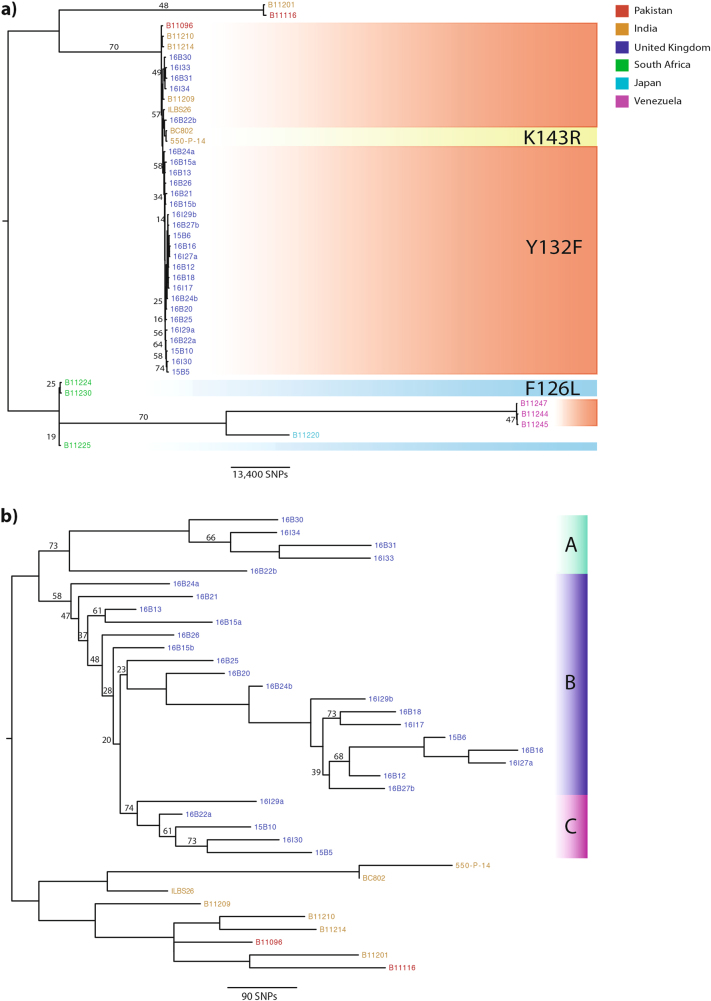
Candida auris was first described in 2009, and it has since caused nosocomial outbreaks, invasive infections, and fungaemia across at least 19 countries on five continents. An outbreak of C. auris occurred in a specialized cardiothoracic London hospital between April 2015 and November 2016, which to date has been the largest outbreak in the UK, involving a total of 72 patients. To understand the genetic epidemiology of C. auris infection both within this hospital and within a global context, we sequenced the outbreak isolate genomes using Oxford Nanopore Technologies and Illumina platforms to detect antifungal resistance alleles and reannotate the C. auris genome. Phylogenomic analysis placed the UK outbreak in the India/Pakistan clade, demonstrating an Asian origin; the outbreak showed similar genetic diversity to that of the entire clade, and limited local spatiotemporal clustering was observed. One isolate displayed resistance to both echinocandins and 5-flucytosine; the former was associated with a serine to tyrosine amino acid substitution in the gene FKS1, and the latter was associated with a phenylalanine to isoleucine substitution in the gene FUR1. These mutations add to a growing body of research on multiple antifungal drug targets in this organism. Multiple differential episodic selection of antifungal resistant genotypes has occurred within a genetically heterogenous population across this outbreak, creating a resilient pathogen and making it difficult to define local-scale patterns of transmission and implement outbreak control measures.
Overview
The claims and statistics of this paper haven’t been checked yet.
Free: it reads the open-access text and checks the first 5 claims that cite a source we can check. Create a free account to check every claim.
Integrity signals
Registry
Cites
Statistics
Figures
Verification
Claims the paper makes
The claims and statistics of this paper haven’t been checked yet.
Free: it reads the open-access text and checks the first 5 claims that cite a source we can check. Create a free account to check every claim.
Claims other papers make about this one
Each is checked against this paper’s own text: does it say what the citing paper says it does?
The cited source says what the claim attributes to it.
In the citing paper
“Indeed, nearly clonal isolates have emerged from hospitals in north and south India (77) and can spread through local transmission (78).”
From Transcriptomics and Phenotyping Define Genetic Signatures Associated with Echinocandin Resistance in Candida auris (2022) · cites this paper as [78]
Self-check
Percentages, sums and reported differences re-computed from the paper’s own numbers.
The self-check needs the paper’s full text.
Citations
Cites
The Sequence Alignment/Map format and SAMtools
Li, H., Handsaker, B., Wysoker, A., Fennell, T., Ruan, J., Homer, N., Marth, G., Abecasis, G., Durbin, R., & 1000 Genome Project Data Processing Subgroup (2009) · Bioinformatics · doi:10.1093/bioinformatics/btp352 · Cited by 62,041
KEGG: Kyoto Encyclopedia of Genes and Genomes
Kanehisa, M. (2000) · Nucleic Acids Research · doi:10.1093/nar/28.1.27 · Cited by 37,077
KEGG: Kyoto Encyclopedia of Genes and Genomes
Ogata, H., Goto, S., Sato, K., Fujibuchi, W., Bono, H., & Kanehisa, M. (1999) · Nucleic Acids Research · doi:10.1093/nar/27.1.29 · Cited by 31,232
The Genome Analysis Toolkit: A MapReduce framework for analyzing next-generation DNA sequencing data
McKenna, A., Hanna, M., Banks, E., Sivachenko, A., Cibulskis, K., Kernytsky, A., Garimella, K., Altshuler, D., Gabriel, S., Daly, M., et al. (2010) · Genome Research · doi:10.1101/gr.107524.110 · Cited by 27,895
tRNAscan-SE: A Program for Improved Detection of Transfer RNA Genes in Genomic Sequence
Lowe, T. M., & Eddy, S. R. (1997) · Nucleic Acids Research · doi:10.1093/nar/25.5.955 · Cited by 10,905
Pfam: the protein families database
Finn, R. D., Bateman, A., Clements, J., Coggill, P., Eberhardt, R. Y., Eddy, S. R., Heger, A., Hetherington, K., Holm, L., Mistry, J., et al. (2014) · Nucleic Acids Research · doi:10.1093/nar/gkt1223 · Cited by 6,148
RNAmmer: consistent and rapid annotation of ribosomal RNA genes
Lagesen, K., Hallin, P., Rødland, E. A., Stærfeldt, H.-H., Rognes, T., & Ussery, D. W. (2007) · Nucleic Acids Research · doi:10.1093/nar/gkm160 · Cited by 6,112
HMMER web server: interactive sequence similarity searching
Finn, R. D., Clements, J., & Eddy, S. R. (2011) · Nucleic Acids Research · doi:10.1093/nar/gkr367 · Cited by 5,952
Aligning sequence reads, clone sequences and assembly contigs with BWA-MEM
Li, H. (2013) · DROPS (Schloss Dagstuhl – Leibniz Center for Informatics) · doi:10.48550/arxiv.1303.3997 · Cited by 5,159
The SWISS-PROT protein sequence database and its supplement TrEMBL in 2000
Bairoch, A. (2000) · Nucleic Acids Research · doi:10.1093/nar/28.1.45 · Cited by 3,093
Cited by
Nanopore sequencing technology, bioinformatics and applications
Wang, Y., Zhao, Y., Bollas, A., Wang, Y., & Au, K. F. (2021) · Nature Biotechnology · doi:10.1038/s41587-021-01108-x · Cited by 1,753
Tackling the emerging threat of antifungal resistance to human health
Fisher, M. C., Alastruey-Izquierdo, A., Berman, J., Bicanic, T., Bignell, E. M., Bowyer, P., Bromley, M., Brüggemann, R., Garber, G., Cornely, O. A., et al. (2022) · Nature Reviews Microbiology · doi:10.1038/s41579-022-00720-1 · Cited by 1,179
Self-citationAntifungal Drug Resistance: Molecular Mechanisms in Candida albicans and Beyond
Lee, Y., Puumala, E., Robbins, N., & Cowen, L. E. (2021) · Chemical Reviews · doi:10.1021/acs.chemrev.0c00199 · Cited by 801
Threats Posed by the Fungal Kingdom to Humans, Wildlife, and Agriculture
Fisher, M. C., Gurr, S. J., Cuomo, C. A., Blehert, D. S., Jin, H., Stukenbrock, E. H., Stajich, J. E., Kahmann, R., Boone, C., Denning, D. W., et al. (2020) · mBio · doi:10.1128/mbio.00449-20 · Cited by 536
Self-citationChow, N. A., Muñoz, J. F., Gade, L., Berkow, E., Li, X., Welsh, R. M., Forsberg, K., Lockhart, S. R., Adam, R., Alanio, A., et al. (2020) · doi:10.1101/2020.01.06.896548 · Cited by 463
Self-citationMuñoz, J. F., Gade, L., Chow, N. A., Loparev, V. N., Juieng, P., Berkow, E. L., Farrer, R. A., Litvintseva, A. P., & Cuomo, C. A. (2018) · Nature Communications · doi:10.1038/s41467-018-07779-6 · Cited by 458
Self-citationCandida auris : The recent emergence of a multidrug-resistant fungal pathogen
Forsberg, K., Woodworth, K., Walters, M., Berkow, E. L., Jackson, B., Chiller, T., & Vallabhaneni, S. (2019) · Medical Mycology · doi:10.1093/mmy/myy054 · Cited by 421
“11,14,26,70 Shared and mobile equipment, like temperature probes, have also tested positive for C. auris and provide a potential transmission route for patients placed in single rooms.”
BackgroundPotential Fifth Clade of Candida auris, Iran, 2018
Chow, N. A., de Groot, T., Badali, H., Abastabar, M., Chiller, T. M., & Meis, J. F. (2019) · Emerging Infectious Diseases · doi:10.3201/eid2509.190686 · Cited by 356
Epidemiology, clinical characteristics, resistance, and treatment of infections by Candida auris
Cortegiani, A., Misseri, G., Fasciana, T., Giammanco, A., Giarratano, A., & Chowdhary, A. (2018) · Journal of Intensive Care · doi:10.1186/s40560-018-0342-4 · Cited by 329
“auris isolate resistant to both echinocandins and 5-flucytosine obtained from London Cardiothoracic outbreak was investigated for mutation analysis in the later study using WGS displayed SNP, causing a serine to tyrosine substitution (S652Y) in the FKS1 gene [95].”
Global epidemiology of emerging Candida auris
Rhodes, J., & Fisher, M. C. (2019) · Current Opinion in Microbiology · doi:10.1016/j.mib.2019.05.008 · Cited by 315
Self-citationMolecular mechanisms governing antifungal drug resistance
Lee, Y., Robbins, N., & Cowen, L. E. (2023) · npj Antimicrobials and Resistance · doi:10.1038/s44259-023-00007-2 · Cited by 304
Chow, N. A., Gade, L., Tsay, S. V., Forsberg, K., Greenko, J. A., Southwick, K. L., Barrett, P. M., Kerins, J. L., Lockhart, S. R., Chiller, T. M., et al. (2018) · The Lancet Infectious Diseases · doi:10.1016/s1473-3099(18)30597-8 · Cited by 289
Ahmad, S., & Alfouzan, W. (2021) · Microorganisms · doi:10.3390/microorganisms9040807 · Cited by 269
“In an earlier study, C. auris was isolated from the nares of a nurse who provided care to a heavily colonized patient during an outbreak in the United Kingdom [48], and from the hands of two healthcare workers and the groin of another healthcare worker during outbreak investigation in Colombia [176].”
BackgroundInfluentialReview on Antifungal Resistance Mechanisms in the Emerging Pathogen Candida auris
Chaabane, F., Graf, A., Jequier, L., & Coste, A. T. (2019) · Frontiers in Microbiology · doi:10.3389/fmicb.2019.02788 · Cited by 223
“…al. (2012), [b] Sharma et al. (2016), [c] Ben-Ami et al. (2017), [d] Chowdhary et al. (2018), [e] Rybak et al. (2019), [f] Healey et al. (2018), [g] Rhodes et al. (2018), [h] Kordalewska et al. (2018), [i] Escandón et al. (2019). inhibit this enzyme, decreasing the amount of glucans in the cell…”
BackgroundInfluentialCandida auris and multidrug resistance: Defining the new normal
Lockhart, S. R. (2019) · Fungal Genetics and Biology · doi:10.1016/j.fgb.2019.103243 · Cited by 205
Ademe, M. (2020) · doi:10.2147/idr.s249864 · Cited by 182
Candida glabrata: pathogenicity and resistance mechanisms for adaptation and survival
Hassan, Y., Chew, S. Y., & Than, L. T. L. (2021) · Journal of Fungi · doi:10.3390/jof7080667 · Cited by 170
Healey, K. R., Kordalewska, M., Jiménez Ortigosa, C., Singh, A., Berrío, I., Chowdhary, A., & Perlin, D. S. (2018) · Antimicrobial Agents and Chemotherapy · doi:10.1128/aac.01427-18 · Cited by 165
“auris-related infections in other parts of the world, such as the United States or United Kingdom, have been caused by strains that are genetically related to these clades (2, 3).”
BackgroundEmerging fungal pathogen Candida auris evades neutrophil attack
Johnson, C. J., Davis, J. M., Huttenlocher, A., Kernien, J. F., & Nett, J. E. (2018) · mBio · doi:10.1128/mbio.01403-18 · Cited by 157
“We selected a strain from this clade to investigate, as recent nosocomial outbreaks in both the United Kingdom and (Continued on next page) the United States have been caused by members of the South Asian clade (21, 22).”
The world’s ten most feared fungi
Hyde, K. D., Al‐Hatmi, A. M. S., Andersen, B., Boekhout, T., Buzina, W., Dawson, T. L., Eastwood, D. C., Jones, E. B. G., de Hoog, S., Kang, Y., et al. (2018) · Fungal Diversity · doi:10.1007/s13225-018-0413-9 · Cited by 168
“A recent temporal whole genome in-depth analysis of the first outbreak in the UK showed that the most recent common ancestor was only found in March 2015, just before the first confirmed hospital infections a few weeks later, suggesting a recent introduction into the UK (Rhodes et al. 2018).”
BackgroundThe Quiet and Underappreciated Rise of Drug-Resistant Invasive Fungal Pathogens
Arastehfar, A., Lass-Flörl, C., Garcia-Rubio, R., Daneshnia, F., Ilkit, M., Boekhout, T., Gabaldon, T., & Perlin, D. S. (2020) · Journal of Fungi · doi:10.3390/jof6030138 · Cited by 145
Tedersoo, L., Drenkhan, R., Anslan, S., Morales‐Rodríguez, C., & Cleary, M. (2018) · Molecular Ecology Resources · doi:10.1111/1755-0998.12959 · Cited by 148
“For example, Rhodes et al. (2018) sequenced multiple strains of an opportunistic human patho- gen Candida auris and suggested (unsubstantiated though) Indian ori- gin for the pathogenic strains.”
BackgroundIdentification of Drug Resistant Candida auris
Kordalewska, M., & Perlin, D. S. (2019) · Frontiers in Microbiology · doi:10.3389/fmicb.2019.01918 · Cited by 124
Chakrabarti, A., & Sood, P. (2021) · Journal of Medical Microbiology · doi:10.1099/jmm.0.001318 · Cited by 133
“However, no similar mutations have been observed in other Candida species [134].”
Sabino, R., Veríssimo, C., Pereira, Á. A., & Antunes, F. (2020) · Microorganisms · doi:10.3390/microorganisms8020181 · Cited by 133
Szekely, A., Borman, A. M., & Johnson, E. M. (2019) · Journal of Clinical Microbiology · doi:10.1128/jcm.02055-18 · Cited by 125
van Rhijn, N., & Bromley, M. (2021) · Journal of Fungi · doi:10.3390/jof7050367 · Cited by 132
Rybak, J. M., Barker, K. S., Muñoz, J. F., Parker, J. E., Ahmad, S., Mokaddas, E., Abdullah, A., Elhagracy, R. S., Kelly, S. L., Cuomo, C. A., et al. (2022) · Clinical Microbiology and Infection · doi:10.1016/j.cmi.2021.11.024 · Cited by 120
Self-citationBiagi, M. J., Wiederhold, N. P., Gibas, C., Wickes, B. L., Lozano, V., Bleasdale, S. C., & Danziger, L. (2019) · Open Forum Infectious Diseases · doi:10.1093/ofid/ofz262 · Cited by 118
“auris UTIs, although no clinical outcomes were reported [22].”
BackgroundRybak, J. M., Cuomo, C. A., & David Rogers, P. (2022) · Current Opinion in Microbiology · doi:10.1016/j.mib.2022.102208 · Cited by 113
Self-citationYadav, A., Singh, A., Wang, Y., Haren, M. H. V., Singh, A., de Groot, T., Meis, J. F., Xu, J., & Chowdhary, A. (2021) · Journal of Fungi · doi:10.3390/jof7020081 · Cited by 111
Di Pilato, V., Codda, G., Ball, L., Giacobbe, D. R., Willison, E., Mikulska, M., Magnasco, L., Crea, F., Vena, A., Pelosi, P., et al. (2021) · Journal of Fungi · doi:10.3390/jof7020140 · Cited by 107
Fungal Drug Response and Antimicrobial Resistance
Osset-Trénor, P., Pascual‐Ahuir, A., & Proft, M. (2023) · Journal of Fungi · doi:10.3390/jof9050565 · Cited by 119
Emerging Antifungal Resistance in Fungal Pathogens
Hui, S. T., Gifford, H., & Rhodes, J. L. (2024) · Current Clinical Microbiology Reports · doi:10.1007/s40588-024-00219-8 · Cited by 119
“Yet over time, mutations conferring resistance to other antifungal drug classes have been described: the first European outbreak detailed flucytosine resistance due to F211I in FUR1 and echinocandin resistance due to S639Y in FKS1 [48].”
BackgroundSelf-citationCandida auris: a global fungal public health threat
Meis, J. F. G. M., & Chowdhary, A. (2018) · The Lancet Infectious Diseases · doi:10.1016/s1473-3099(18)30609-1 · Cited by 110
Flucytosine and its clinical usage
Sigera, L. S. M., & Denning, D. W. (2023) · Therapeutic Advances in Infectious Disease · doi:10.1177/20499361231161387 · Cited by 131
Shastri, P. S., Shankarnarayan, S. A., Oberoi, J., Rudramurthy, S. M., Wattal, C., & Chakrabarti, A. (2020) · Journal of Critical Care · doi:10.1016/j.jcrc.2020.01.004 · Cited by 103
Nine Things Genomics Can Tell Us About Candida auris
Chybowska, A. D., Childers, D. S., & Farrer, R. A. (2020) · Frontiers in Genetics · doi:10.3389/fgene.2020.00351 · Cited by 96
Self-citationBravo Ruiz, G., Ross, Z. K., Gow, N. A. R., & Lorenz, A. (2020) · mSphere · doi:10.1128/msphere.00151-20 · Cited by 101
Welsh, R. M., Sexton, D. J., Forsberg, K., Vallabhaneni, S., & Litvintseva, A. (2019) · Journal of Clinical Microbiology · doi:10.1128/jcm.00007-19 · Cited by 90
“Clades I and III predominate in European outbreaks studied to date (12, 15, 16).”
BackgroundMolecular Mechanisms of 5-Fluorocytosine Resistance in Yeasts and Filamentous Fungi
Delma, F. Z., Al-Hatmi, A. M. S., Brüggemann, R. J. M., Melchers, W. J. G., de Hoog, S., Verweij, P. E., & Buil, J. B. (2021) · Journal of Fungi · doi:10.3390/jof7110909 · Cited by 96
“[43] reported in one 5-FC resistant isolate a mutation in the FUR1 gene that causes an amino acid substitution from isoleucine to phenylalanine at position 211.”
BackgroundCandida auris: An emerging drug resistant yeast – A mini-review
Bidaud, A. L., Chowdhary, A., & Dannaoui, E. (2018) · Journal de Mycologie Médicale · doi:10.1016/j.mycmed.2018.06.007 · Cited by 94
“auris isolate in a London cardiothoracic outbreak [51].”
BackgroundGhannoum, M., Arendrup, M. C., Chaturvedi, V. P., Lockhart, S. R., McCormick, T. S., Chaturvedi, S., Berkow, E. L., Juneja, D., Tarai, B., Azie, N., et al. (2020) · Antibiotics · doi:10.3390/antibiotics9090539 · Cited by 90
Antifungal Resistance in Candida auris: Molecular Determinants
Frías-De-León, M. G., Hernández-Castro, R., Vite-Garín, T., Arenas, R., Bonifaz, A., Castañón-Olivares, L., Acosta-Altamirano, G., & Martínez-Herrera, E. (2020) · Antibiotics · doi:10.3390/antibiotics9090568 · Cited by 93
Borman, A. M., Fraser, M., & Johnson, E. M. (2021) · Medical Mycology · doi:10.1093/mmy/myaa049 · Cited by 88
Wasi, M., Khandelwal, N. K., Moorhouse, A. J., Nair, R., Vishwakarma, P., Bravo Ruiz, G., Ross, Z. K., Lorenz, A., Rudramurthy, S. M., Chakrabarti, A., et al. (2019) · Frontiers in Microbiology · doi:10.3389/fmicb.2019.01445 · Cited by 89
“…of isolation, the authors have classified the clades as follows: clade I comprises isolates from India and Pakistan, clade II from Japan and South Korea, clade III from South Africa, and clade IV from Venezuela (Schelenz et al., 2016; Lockhart et al., 2017; Muñoz et al., 2018; Rhodes et al., 2018).”
Influentialde Groot, T., Puts, Y., Berrio, I., Chowdhary, A., & Meis, J. F. (2020) · mBio · doi:10.1128/mbio.02971-19 · Cited by 88
“In the 2015–2016 outbreak in London, United Kingdom, all isolates but one exhibited a single genotype (26).”
BackgroundKeighley, C., Garnham, K., Harch, S. A. J., Robertson, M., Chaw, K., Teng, J. C., & Chen, S. C.-A. (2021) · Current Fungal Infection Reports · doi:10.1007/s12281-021-00420-y · Cited by 87
What do we know about the biology of the emerging fungal pathogen of humans Candida auris?
Bravo Ruiz, G., & Lorenz, A. (2021) · Microbiological Research · doi:10.1016/j.micres.2020.126621 · Cited by 85
Bing, J., Hu, T., Zheng, Q., Muñoz, J. F., Cuomo, C. A., & Huang, G. (2020) · Antimicrobial Agents and Chemotherapy · doi:10.1128/aac.01466-20 · Cited by 86
Self-citationCandida auris: A Quick Review on Identification, Current Treatments, and Challenges
Černáková, L., Roudbary, M., Brás, S., Tafaj, S., & Rodrigues, C. F. (2021) · International Journal of Molecular Sciences · doi:10.3390/ijms22094470 · Cited by 92
“However, variants lighting these differences in drug susceptibility were not found [95].”
BackgroundWhat Do We Know about Candida auris? State of the Art, Knowledge Gaps, and Future Directions
García-Bustos, V., Cabañero-Navalón, M. D., Ruiz‐Saurí, A., Gaitán, A. C. R., Salavert, M., Tormo‐Más, M. Á., & Pemán, J. (2021) · Microorganisms · doi:10.3390/microorganisms9102177 · Cited by 91
Ahmad, S., Khan, Z., Al‐Sweih, N., Alfouzan, W., & Joseph, L. (2020) · Mycoses · doi:10.1111/myc.13022 · Cited by 79
Burrack, L. S., Todd, R. T., Soisangwan, N., Wiederhold, N. P., & Selmecki, A. (2022) · mBio · doi:10.1128/mbio.00842-22 · Cited by 82
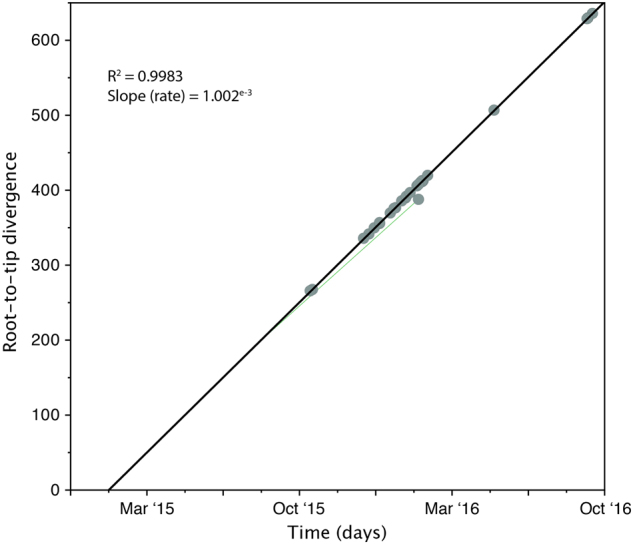
“75 SNPs per genome per year [61] to more than 400 SNPs per 663 year [62] with genetic variability observed both with hosts and within healthcare facilities 664 suggesting that clinically important evolution can occur both in the environment and in vivo 665”
BackgroundHorton, M. V., Johnson, C. J., Zarnowski, R., Andes, B. D., Schoen, T. J., Kernien, J. F., Lowman, D., Kruppa, M. D., Ma, Z., Williams, D. L., et al. (2021) · mSphere · doi:10.1128/msphere.00406-21 · Cited by 79
Molecular Epidemiology of Candida Auris Outbreak in a Major Secondary-Care Hospital in Kuwait
Alfouzan, W., Ahmad, S., Dhar, R., Asadzadeh, M., Almerdasi, N., Abdo, N. M., Joseph, L., de Groot, T., Alali, W. Q., Khan, Z., et al. (2020) · Journal of Fungi · doi:10.3390/jof6040307 · Cited by 74
Sexton, D. J., Kordalewska, M., Bentz, M. L., Welsh, R. M., Perlin, D. S., & Litvintseva, A. P. (2018) · Journal of Clinical Microbiology · doi:10.1128/jcm.01337-18 · Cited by 77
In Vitro Antifungal Resistance of Candida auris Isolates from Bloodstream Infections, South Africa
Maphanga, T. G., Naicker, S. D., Kwenda, S., Muñoz, J. F., van Schalkwyk, E., Wadula, J., Nana, T., Ismail, A., Coetzee, J., Govind, C., et al. (2021) · Antimicrobial Agents and Chemotherapy · doi:10.1128/aac.00517-21 · Cited by 78
“In a large clade I C. auris outbreak involving 72 patients in the United Kingdom, Rhodes et al. reported 5 amphotericin B-resistant isolates with MICs of 2mg/ml, none of which had any ERG3, ERG5, or ERG6mutations (28).”
BackgroundCarolus, H., Sofras, D., Boccarella, G., Sephton-Clark, P., Biriukov, V., Cauldron, N. C., Lobo Romero, C., Vergauwen, R., Yazdani, S., Pierson, S., et al. (2024) · Nature Microbiology · doi:10.1038/s41564-024-01854-z · Cited by 72
Self-citationIguchi, S., Itakura, Y., Yoshida, A., Kamada, K., Mizushima, R., Arai, Y., Uzawa, Y., & Kikuchi, K. (2019) · Journal of Infection and Chemotherapy · doi:10.1016/j.jiac.2019.05.034 · Cited by 69
Candida auris: An emerging pathogen “incognito”?
Nett, J. E. (2019) · PLOS Pathogens · doi:10.1371/journal.ppat.1007638 · Cited by 69
Sexton, D. J., Bentz, M. L., Welsh, R. M., & Litvintseva, A. P. (2018) · Mycoses · doi:10.1111/myc.12817 · Cited by 65
Multidrug-resistant Candida auris : an epidemiological review
Chakrabarti, A., & Singh, S. (2020) · Expert Review of Anti-infective Therapy · doi:10.1080/14787210.2020.1750368 · Cited by 66
“However, a study using long read sequencing analysis uncovered greater diversity among outbreak-related isolates particularly in Clade II [85].”
BackgroundGómez-Gaviria, M., Martínez-Álvarez, J. A., Chávez-Santiago, J. O., & Mora-Montes, H. M. (2023) · Infection and Drug Resistance · doi:10.2147/idr.s402754 · Cited by 69
Emergence of the novel sixth Candida auris Clade VI in Bangladesh
Khan, T., Faysal, N. I., Hossain, M. M., Mah-E-Muneer, S., Haider, A., Moon, S. B., Sen, D., Ahmed, D., Parnell, L. A., Jubair, M., et al. (2024) · Microbiology Spectrum · doi:10.1128/spectrum.03540-23 · Cited by 61
Fisher, M. C., Burnett, F. J., Chandler, C., Gow, N. A. R., Gurr, S. J., Hart, A. J., Holmes, A. H., May, R. C., Quinn, J., Soliman, T., et al. (2024) · npj Antimicrobials and Resistance · doi:10.1038/s44259-024-00055-2 · Cited by 67
“There is currently limited fungal genomics capacity for global molecular surveillanceoffAMR,althoughinternationalacademiceffortstoimplement fungalgenomicsurveillanceofbothMDR C. auris and azole-resistant A. fumigatus have begun 42,50 .”
BackgroundSelf-citationCandida auris Sternal Osteomyelitis in a Man from Kenya Visiting Australia, 2015
Heath, C. H., Dyer, J. R., Pang, S., Coombs, G. W., & Gardam, D. J. (2019) · Emerging Infectious Diseases · doi:10.3201/eid2501.181321 · Cited by 59
Heaney, H., Laing, J., Paterson, L., Walker, A. W., Gow, N. A. R., Johnson, E. M., MacCallum, D. M., & Brown, A. J. P. (2020) · Medical Mycology · doi:10.1093/mmy/myz127 · Cited by 61
Hu, S., Zhu, F., Jiang, W., Wang, Y., Quan, Y., Zhang, G., Gu, F., & Yang, Y. (2021) · Frontiers in Microbiology · doi:10.3389/fmicb.2021.658329 · Cited by 64
Vaseghi, N., Sharifisooraki, J., Khodadadi, H., Nami, S., Safari, F., Ahangarkani, F., Meis, J. F., Badali, H., & Morovati, H. (2022) · Mycoses · doi:10.1111/myc.13471 · Cited by 63
Antifungal drug resistance in Candida: a special emphasis on amphotericin B
Ahmady, L., Gothwal, M., Mukkoli, M. M., & Bari, V. K. (2024) · Apmis · doi:10.1111/apm.13389 · Cited by 65
“Previous studies reported that substitution mutation in the FUR1 F211I and transient gene duplication occur during replicative aging, responsible for tolerance to 5-FC in C. auris cells [145].”
BackgroundComprehensive Overview of Candida auris : An Emerging Multidrug-Resistant Fungal Pathogen
Kim, J.-S., Cha, H., & Bahn, Y. (2024) · Journal of Microbiology and Biotechnology · doi:10.4014/jmb.2404.04040 · Cited by 63
Ong, C. W., Chen, S. C. ‐., Clark, J. E., Halliday, C. L., Kidd, S. E., Marriott, D. J., Marshall, C. L., Morris, A. J., Morrissey, C. O., Roy, R., et al. (2019) · Internal Medicine Journal · doi:10.1111/imj.14612 · Cited by 58
Clade II Candida auris possess genomic structural variations related to an ancestral strain
Sekizuka, T., Iguchi, S., Umeyama, T., Inamine, Y., Makimura, K., Kuroda, M., Miyazaki, Y., & Kikuchi, K. (2019) · PLOS ONE · doi:10.1371/journal.pone.0223433 · Cited by 59
“using these SNVs indicated the existence of 4 distinct clades (Fig 1), which closely relate to the geographic location, and are consistent with a previous report [13,23,24].”
BackgroundResultInfluentialPan-resistant Candida auris: New York subcluster susceptible to antifungal combinations
O'Brien, B., Liang, J., Chaturvedi, S., Jacobs, J. L., & Chaturvedi, V. (2020) · The Lancet Microbe · doi:10.1016/s2666-5247(20)30090-2 · Cited by 60
Rapid and extensive karyotype diversification in haploid clinical Candida auris isolates
Bravo Ruiz, G., Ross, Z. K., Holmes, E., Schelenz, S., Gow, N. A. R., & Lorenz, A. (2019) · Current Genetics · doi:10.1007/s00294-019-00976-w · Cited by 60
Self-citationMultidrug transporters of Candida species in clinical azole resistance
Prasad, R., Nair, R., & Banerjee, A. (2019) · Fungal Genetics and Biology · doi:10.1016/j.fgb.2019.103252 · Cited by 57
Sharma, C., & Kadosh, D. (2023) · PLoS Pathogens · doi:10.1371/journal.ppat.1011190 · Cited by 64
“Gene mutation FUR1 F211I [49] Terbinafine resistance Upregulation of a CDR6 ortholog [58]”
BackgroundThe global challenge of Candida auris in the intensive care unit
Cortegiani, A., Misseri, G., Giarratano, A., Bassetti, M., & Eyre, D. (2019) · Critical Care · doi:10.1186/s13054-019-2449-y · Cited by 54
Azole resistance in Candida auris: mechanisms and combinatorial therapy
Jangir, P., Kalra, S., Tanwar, S., & Bari, V. K. (2023) · Apmis · doi:10.1111/apm.13336 · Cited by 62
Hata, D. J., Humphries, R., Lockhart, S. R., & for the College of American Pathologists Microbiology Committee (2020) · Archives of Pathology & Laboratory Medicine · doi:10.5858/arpa.2018-0508-ra · Cited by 49
Stavrou, A. A., Lackner, M., Lass‐Flörl, C., & Boekhout, T. (2019) · FEMS Yeast Research · doi:10.1093/femsyr/foz037 · Cited by 57
Arıkan-Akdağlı, S., Ghannoum, M. A., & Meis, J. F. G. M. (2018) · Journal of Fungi · doi:10.3390/jof4040129 · Cited by 55
Romera, D., Aguilera-Correa, J.-J., García-Coca, M., Mahillo-Fernández, I., Viñuela-Sandoval, L., García-Rodríguez, J., & Esteban, J. (2020) · Pathogens and Disease · doi:10.1093/femspd/ftaa067 · Cited by 48
Lara-Aguilar, V., Rueda, C., García-Barbazán, I., Varona, S., Monzón, S., Jiménez, P., Cuesta, I., Zaballos, Á., & Zaragoza, Ó. (2021) · Virulence · doi:10.1080/21505594.2021.1927609 · Cited by 40
“So far, only three mutations have been described in C. auris isolates resistant to echinocandins, which take place in HS1 of FKS1; the substitution of amino acids S652Y and S639P [26,27], as well as the substitution in the same position S639F, equivalent to the mutation in position S645F that is associated with resist…”
BackgroundSiopi, M., Peroukidou, I., Beredaki, M.-I., Spruijtenburg, B., de Groot, T., Meis, J. F. G. M., Vrioni, G., Tsakris, A., Pournaras, S., & Meletiadis, J. (2023) · Microbiology Spectrum · doi:10.1128/spectrum.04431-22 · Cited by 47
“1 mg/L), resistance could not be confirmed molecularly, as no mutations within the ERG3, ERG5, ERG6, and/or ERG10 genes that have been associated with resistance to AMB in Candida species have been detected (20, 21).”
BackgroundIn vitro antifungal activity of a novel topical triazole PC945 against emerging yeast Candida auris
Rudramurthy, S. M., Colley, T., Abdolrasouli, A., Ashman, J., Dhaliwal, M., Kaur, H., Armstrong-James, D., Strong, P., Rapeport, G., Schelenz, S., et al. (2019) · Journal of Antimicrobial Chemotherapy · doi:10.1093/jac/dkz280 · Cited by 44
Self-citationOtero-Ruiz, A., Gonzalez-Zuñiga, L. D., Rodríguez-Anaya, L. Z., Lares‐Jiménez, L. F., González-Galavíz, J. R., & Villa, F. L. (2022) · Pathogens · doi:10.3390/pathogens11101199 · Cited by 44
A Rapid Approach to Profiling Diverse Fungal Communities using the Minion™ Nanopore Sequencer
Mafune, K. K., Godfrey, B. J., Vogt, D. J., & Vogt, K. A. (2019) · BioTechniques · doi:10.2144/btn-2019-0072 · Cited by 44
Emerging and future strategies in the management of recalcitrant Candida auris
Bandara, N., & Samaranayake, L. P. (2022) · Medical Mycology · doi:10.1093/mmy/myac008 · Cited by 52
Candida auris outbreak involving liver transplant recipients in a surgical intensive care unit
Theodoropoulos, N. M., Bolstorff, B., Bozorgzadeh, A., Brandeburg, C., Cumming, M., Daly, J. S., Ellison, R. T., Forsberg, K., Gade, L., Gibson, L., et al. (2020) · American Journal of Transplantation · doi:10.1111/ajt.16144 · Cited by 41
Sanglard, D. (2019) · PLoS Pathogens · doi:10.1371/journal.ppat.1007478 · Cited by 43
Whole genome sequence of first Candida auris strain, isolated in Russia
Pchelin, I. M., Валерьевич, А. Д., Churina, M. A., Ryabinin, I. A., Vybornova, I. V., Апалько, С. В., Kruglov, A., Sarana, А. М., Taraskina, A. E., & Vasilyeva, N. V. (2019) · Medical Mycology · doi:10.1093/mmy/myz078 · Cited by 42
Potential Environmental Reservoirs of Candida auris: A Systematic Review
da Silva, I. C. B., Miranda, I. M., & Costa‐de‐Oliveira, S. (2024) · Journal of Fungi · doi:10.3390/jof10050336 · Cited by 43
Candida auris:a fungus with identity crisis
Vila, T. V. M., Sultan, A. S., Montelongo‐Jauregui, D., & Jabra‐Rizk, M. A. (2020) · Pathogens and Disease · doi:10.1093/femspd/ftaa034 · Cited by 42
Maphanga, T. G., Mpembe, R. S., Naicker, S. D., Govender, N. P., & GERMS-SA, F. (2022) · Microbiology Spectrum · doi:10.1128/spectrum.01717-21 · Cited by 42
Al-Obaid, I., Asadzadeh, M., Ahmad, S., Alobaid, K., Alfouzan, W., Bafna, R., Emara, M., & Joseph, L. (2022) · Journal of Fungi · doi:10.3390/jof8030267 · Cited by 39
“5 [34] F635L 1 [46] F635Y 4 to 16 [46] S639F 2 to 16 [18,43,45,46,48] S639Y 1 to 8 [51], This study S639P 1 to 8 [52] S639T 0.”
Application of Machine Learning Classifier to Candida auris Drug Resistance Analysis
Li, D., Wang, Y., Hu, W., Chen, F., Zhao, J., Chen, X., & Li, H. (2021) · Frontiers in Cellular and Infection Microbiology · doi:10.3389/fcimb.2021.742062 · Cited by 40
Candida auris infections in China
Du, H., Bing, J., Nobile, C. J., & Huang, G. (2022) · Virulence · doi:10.1080/21505594.2022.2054120 · Cited by 40
Kumar, M., Singh, A., Kumari, S., Kumar, P., Wasi, M., Mondal, A. K., Rudramurthy, S. M., Chakrabarti, A., Gaur, N. A., Gow, N. A. R., et al. (2020) · Biochimica et Biophysica Acta (BBA) - Molecular and Cell Biology of Lipids · doi:10.1016/j.bbalip.2020.158815 · Cited by 41
“[10], IPC synthases [11, 12], MIPC synthase [13, 14], M(IP)2C synthase [15, 16], Δ4-desaturase [17], Δ8-desaturase [18], SL C9 methyltransferase [19] and GlcCer synthase [20].”
BackgroundMethod
Metadata
- Authors
- Rhodes, J., Abdolrasouli, A., Farrer, R. A., Cuomo, C. A., Aanensen, D. M., Armstrong-James, D., Fisher, M. C., & Schelenz, S.
- Affiliations
- Imperial College London (GB)
- Imperial College Healthcare NHS Trust (GB)
- Broad Institute (US)
- Corresponding author
- Rhodes, Johanna
- Abdolrasouli, Alireza
- Venue
- Emerging Microbes & Infections
- Publisher
- Informa UK Limited
- Published
- 2018-05-31
- Volume
- 7
- Issue
- 1
- Pages
- 1-12
- ISSN
- 2222-1751 (ISSN-L)
- PMC
- PMC5874254
- OpenAlex
- W2794692961
- Semantic Scholar
- ba58ae97e2ba30cf7acadd77193468f8756ecc60
- Cited by
- 246
- References
- 57
- Citations by year
- 2026: 13 · 2025: 20 · 2024: 24 · 2023: 26 · 2022: 30 · 2021: 41 · 2020: 40 · 2019: 33 · 2018: 19
- FWCI
- 25.15
- Type
- journal article
- Language
- en
- Open access
- gold
- doi.org
- Licence
- Locations
- Emerging Microbes & Infections (publishedVersion, cc-by)
- Europe PMC (PubMed Central) (publishedVersion, cc-by)
- PubMed Central (publishedVersion, cc-by)
- PubMed (publishedVersion)
- Aberdeen University Research Archive (Aberdeen University) (submittedVersion)
- DOAJ (DOAJ: Directory of Open Access Journals) (submittedVersion, cc-by-sa)
- UCL Discovery (University College London) (submittedVersion)
- Figshare (submittedVersion, cc-by)
- Open Research Exeter (University of Exeter) (submittedVersion, cc-by)
- University of Birmingham Research Portal (University of Birmingham) (submittedVersion, other-oa)
- Spiral (Imperial College London) (submittedVersion, cc-by)
- Funders
- U.S. Department of Health and Human Services (U19-AI110818)
- Wellcome Trust (099202)
- Oxford Nanopore Technologies
- National Institute for Health and Care Research (HPRU-2012-10080)
- National Institutes of Health
- Centers for Disease Control and Prevention (U19AI110818)
- Medical Research Council (MR/K000373/1, K000373/1)
- Biotechnology and Biological Sciences Research Council (BB/L024209/1)
- Natural Environment Research Council (NE/K014455/1)
- National Institute of Allergy and Infectious Diseases (U19AI110818)
- Topics
- Health Sciences › Medicine › Infectious Diseases › Antifungal resistance and susceptibility
- Life Sciences › Immunology and Microbiology › Microbiology › Yeasts and Rust Fungi Studies
- Life Sciences › Biochemistry, Genetics and Molecular Biology › Molecular Biology › Fungal and yeast genetics research
- Keywords
- Candida auris, fungal outbreak, nosocomial infections, antifungal resistance, echinocandin resistance, FKS1, phylogenomics, genetic diversity, transmission patterns, fungemia
- MeSH terms
- Alleles, Antifungal Agents, Candida, Candidiasis, Cross Infection, Disease Outbreaks, United Kingdom, Humans, India, Microbial Sensitivity Tests, Mutation, Genome, Fungal, Amino Acid Substitution, Communicable Diseases, Emerging, Genomics, Drug Resistance, Multiple, Fungal, High-Throughput Nucleotide Sequencing
About these checks
Registry, retraction, Cites and statistics results are computed, not judged, with one exception: a printed reference that no index lists is read once by a model before it counts as a citation error. Claims are extracted by a model and kept only when their quote appears verbatim in the text; each cited source is then checked, with a model’s help, for whether it says what the claim relies on. Those verdicts can be wrong — read the claim’s quote and the cited source before relying on one.
Statistics and arithmetic are recomputed, not judged.
Confidence bands are shown only for fields calibrated on our annotated test set. None is calibrated yet, so no band is shown.
What counts as a claim ›How we measure confidence ›How we check this ›
Are you an author, or do you see a problem with this page? Request a review
Data sources
Bibliographic data: Semantic Scholar, OpenAlex, Crossref.
Contains information from the Semantic Scholar Academic Graph Datasets, made available under the ODC Attribution License (ODC-BY 1.0).
Semantic Scholar’s data is described in: Kinney, R., et al. (2023). The Semantic Scholar Open Data Platform. arXiv:2301.10140.
