

Activation of STAT3 integrates common profibrotic pathways to promote fibroblast activation and tissue fibrosis
Open accessThe DOI matches its Crossref record; 71 of the 71 references it cites were found in a registry or an index.
Abstract
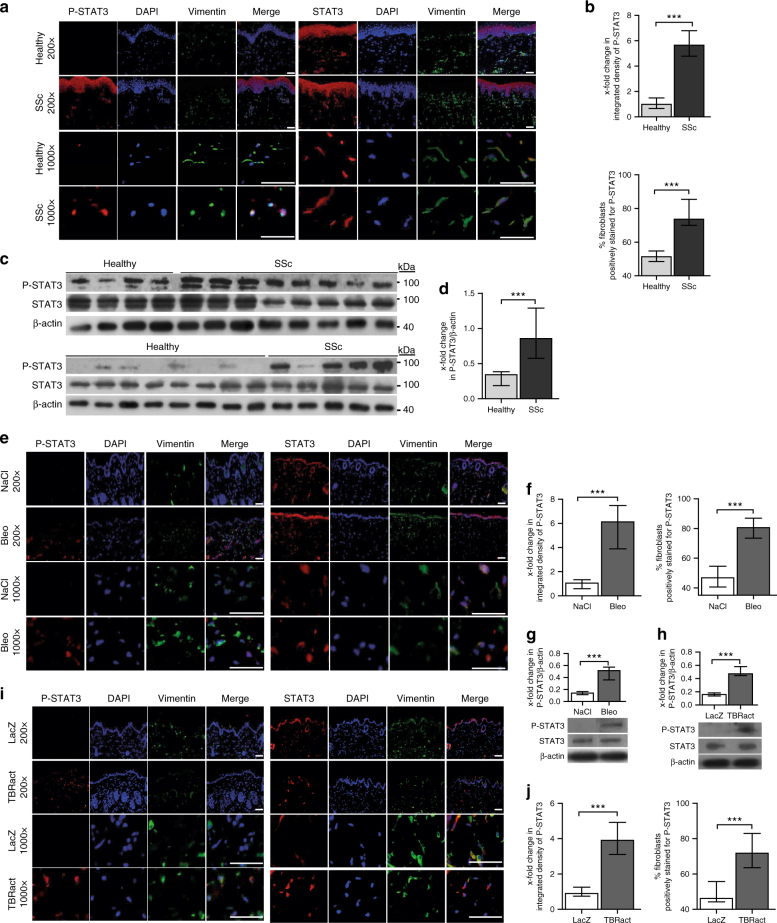
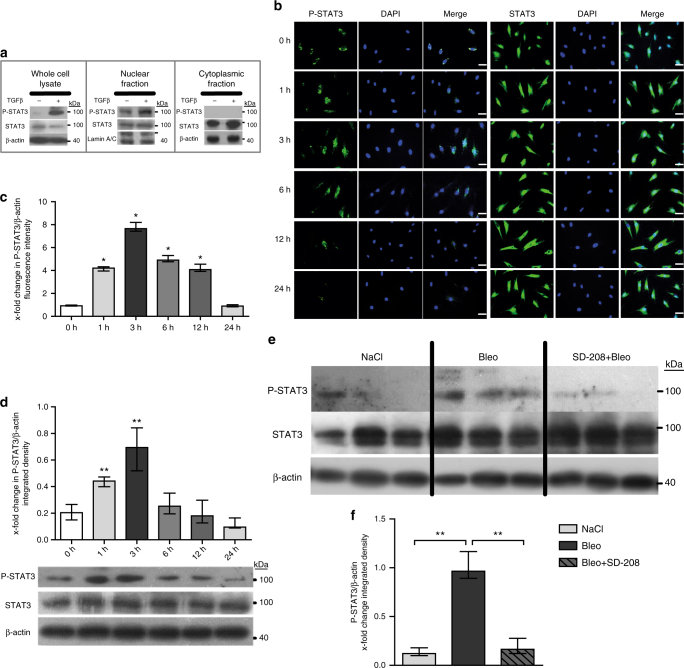
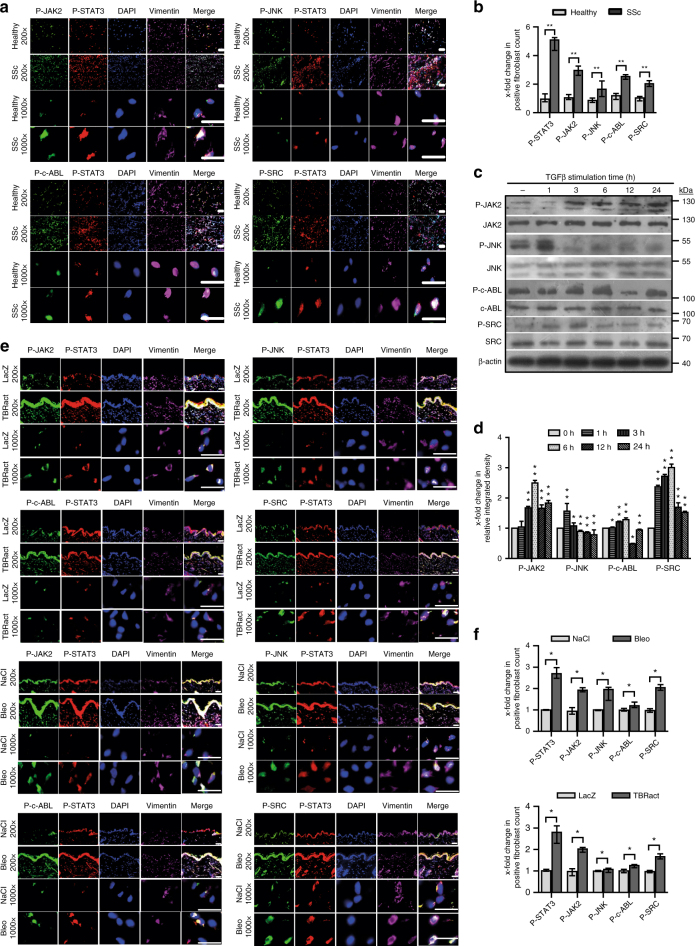
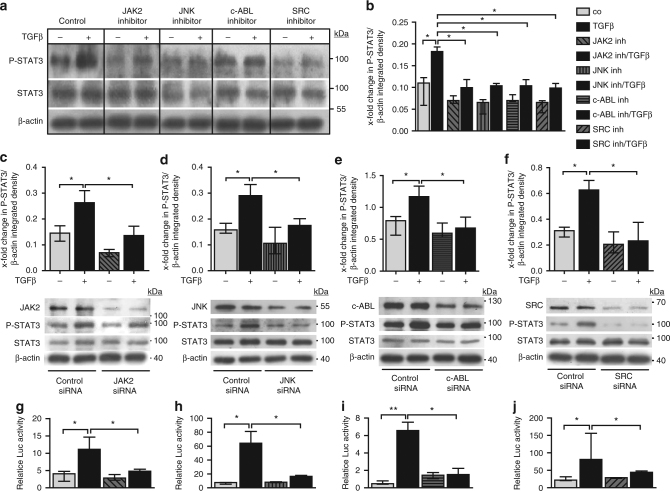
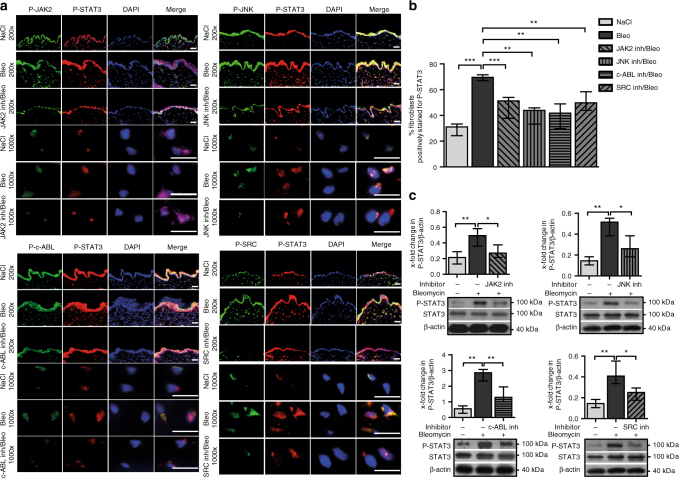
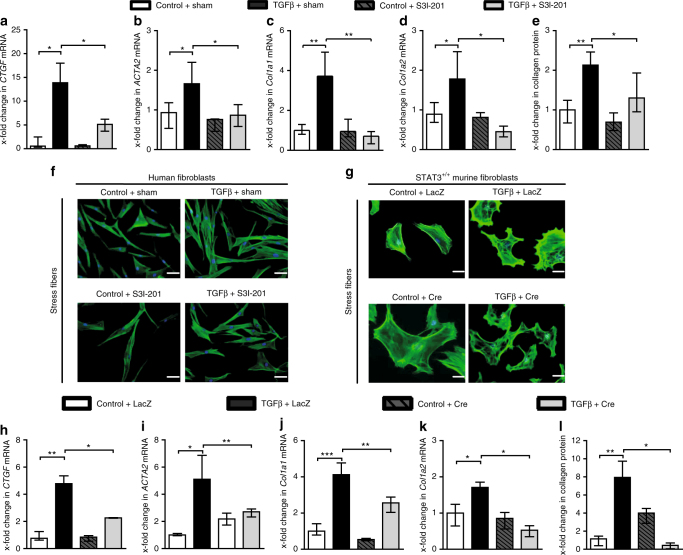
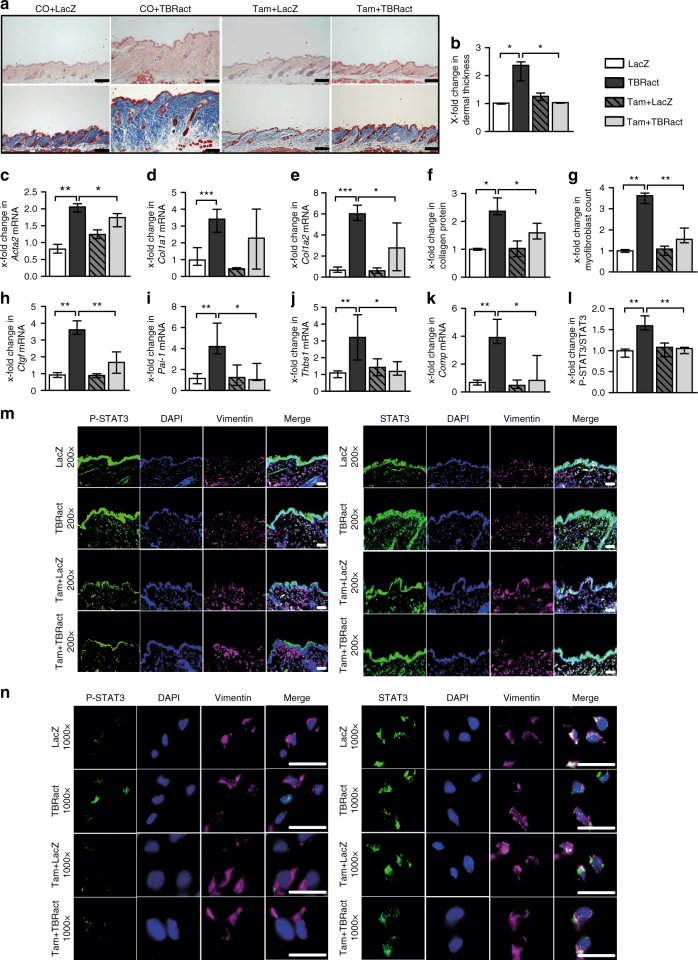
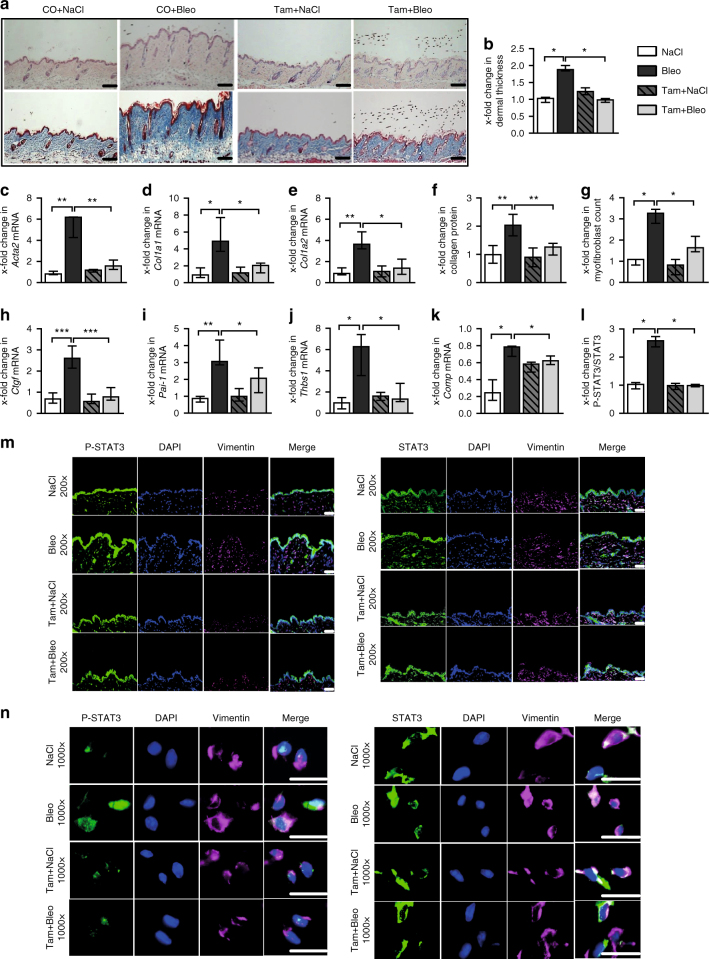
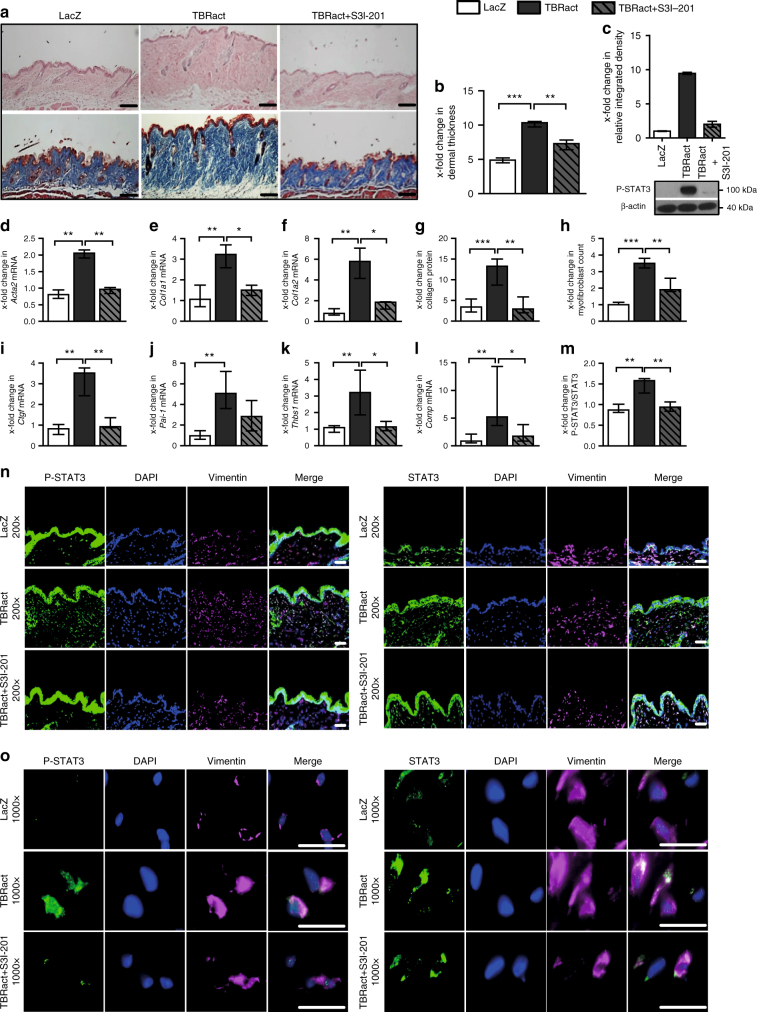
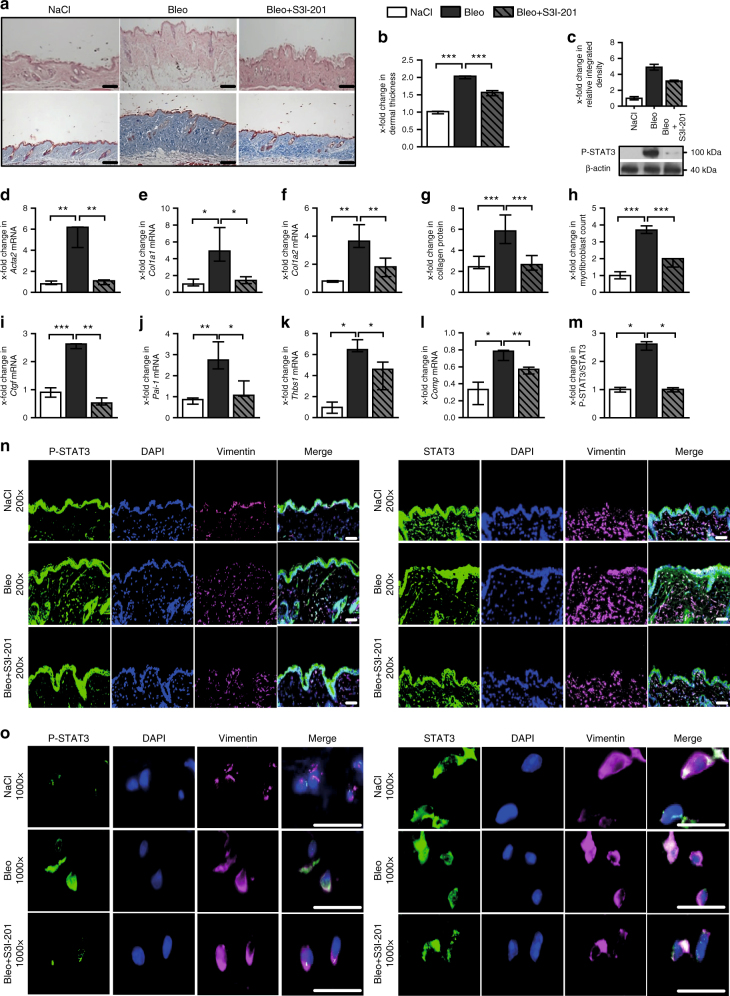
Signal transducer and activator of transcription 3 (STAT3) is phosphorylated by various kinases, several of which have been implicated in aberrant fibroblast activation in fibrotic diseases including systemic sclerosis (SSc). Here we show that profibrotic signals converge on STAT3 and that STAT3 may be an important molecular checkpoint for tissue fibrosis. STAT3 signaling is hyperactivated in SSc in a TGFβ-dependent manner. Expression profiling and functional studies in vitro and in vivo demonstrate that STAT3 activation is mediated by the combined action of JAK, SRC, c-ABL, and JNK kinases. STAT3-deficient fibroblasts are less sensitive to the pro-fibrotic effects of TGFβ. Fibroblast-specific knockout of STAT3, or its pharmacological inhibition, ameliorate skin fibrosis in experimental mouse models. STAT3 thus integrates several profibrotic signals and might be a core mediator of fibrosis. Considering that several STAT3 inhibitors are currently tested in clinical trials, STAT3 might be a candidate for molecular targeted therapies of SSc.
Overview
The claims and statistics of this paper haven’t been checked yet.
Free: it reads the open-access text and checks the first 5 claims that cite a source we can check. Create a free account to check every claim.
Integrity signals
Registry
Cites
Statistics
Figures
Verification
Claims the paper makes
The claims and statistics of this paper haven’t been checked yet.
Free: it reads the open-access text and checks the first 5 claims that cite a source we can check. Create a free account to check every claim.
Claims other papers make about this one
Each is checked against this paper’s own text: does it say what the citing paper says it does?
The source backs part of the claim, not all of it — or backs it for a different population, condition or comparison.
In the citing paper
“In SSc skin, STAT3 signaling is activated (81) resulting in pro-fibrotic gene expression in fibroblasts; for example, STAT3 regulates collagen type I expression in SSc skin fibroblasts (82). However, of note, in lungs of SSc patients no enhanced STAT3 activation can be observed (82).”
From Unraveling SSc Pathophysiology; The Myofibroblast (2018) · cites this paper as [81]
Experimental — accuracy not yet measuredThe source backs part of the claim, not all of it — or backs it for a different population, condition or comparison.
In the citing paper
“Both TTI-101 and S3I-201 have been tested in several mouse models of fibrosis, including bleomycin-induced lung and skin fibrosis (scleroderma) and genetically-engineered models of scleroderma, as well as a model mouse of interstitial kidney fibrosis induced by unilateral ureteral obstruction, in which inhibition of STAT3 phosphorylation by these compounds blocks the development of organ fibrosis”
From Targeting Janus Kinases and Signal Transducer and Activator of Transcription 3 To Treat Inflammation, Fibrosis, and Cancer: Rationale, Progress, and Caution (2020) · cites this paper as Chakraborty et al., 2017
Experimental — accuracy not yet measuredIn the citing paper
“Importantly, in both bleomycin induced skin and lung fibrosis in mice, knockout or pharmacological inhibition of STAT3 ameliorates fibrosis (83) (81). Furthermore, in both models, STAT3 was shown to be downstream of TGFβ signaling, as inhibition of STAT3 prevented TGFβ-induced myofibroblasts formation (81, 83).”
From Unraveling SSc Pathophysiology; The Myofibroblast (2018) · cites this paper as [81]
Self-check
Percentages, sums and reported differences re-computed from the paper’s own numbers.
The self-check needs the paper’s full text.
Citations
Cites
1 retracted
Ruzehaji, N., Avouac, J., Elhaï, M., Fréchet, M., Frantz, C., Ruiz, B., Distler, J. H. W., & Allanore, Y. (2015) · Arthritis Research & Therapy · doi:10.1186/s13075-015-0659-5 · Cited by 42
Self-citationRetractedSmad-dependent and Smad-independent pathways in TGF-β family signalling
Derynck, R., & Zhang, Y. E. (2003) · Nature · doi:10.1038/nature02006 · Cited by 5,373
Cellular and molecular mechanisms of fibrosis
Wynn, T. (2008) · The Journal of Pathology · doi:10.1002/path.2277 · Cited by 4,495
STATs in cancer inflammation and immunity: a leading role for STAT3
Yu, H., Pardoll, D., & Jove, R. (2009) · Nature reviews. Cancer · doi:10.1038/nrc2734 · Cited by 4,383
van den Hoogen, F., Khanna, D., Fransen, J., Johnson, S. R., Baron, M., Tyndall, A., Matucci‐Cerinic, M., Naden, R. P., Medsger, T. A., Carreira, P. E., et al. (2013) · Arthritis & Rheumatism · doi:10.1002/art.38098 · Cited by 3,409
Self-citationMassagué, J. (2012) · Nature Reviews Molecular Cell Biology · doi:10.1038/nrm3434 · Cited by 3,128
Massagué, J., Seoane, J., & Wotton, D. (2005) · Genes & Development · doi:10.1101/gad.1350705 · Cited by 2,452
TGF-β signaling and the fibrotic response
Leask, A., & Abraham, D. J. (2004) · The FASEB Journal · doi:10.1096/fj.03-1273rev · Cited by 2,319
Zhong, Z., Wen, Z., & Darnell, J. E. (1994) · Science · doi:10.1126/science.8140422 · Cited by 2,070
Non-Smad pathways in TGF-β signaling
Zhang, Y. E. (2009) · Cell Research · doi:10.1038/cr.2008.328 · Cited by 1,749
Cited by
Items 101–200 of 364
A cAbl-MRTF-A Feedback Loop Contributes to Hepatic Stellate Cell Activation
Lu, Y., Lv, F., Kong, M., Chen, X., Duan, Y., Chen, X., Sun, D., Fang, M., & Xu, Y. (2019) · Frontiers in Cell and Developmental Biology · doi:10.3389/fcell.2019.00243 · Cited by 35
Dubin, C., Glickman, J. W., DUCA, E. D., Chennareddy, S., Han, J., Dahabreh, D., Estrada, Y. D., Zhang, N., Kimmel, G. W., Singer, G., et al. (2021) · Journal of the American Academy of Dermatology · doi:10.1016/j.jaad.2021.05.016 · Cited by 35
Xu, Q., Liu, Y., Pan, H., Xu, T., Li, Y., Yuan, J., Li, P., Yao, W., Yan, W., & Ni, C. (2019) · Toxicology · doi:10.1016/j.tox.2019.01.007 · Cited by 32
A phase 2a trial of brepocitinib for cicatricial alopecia
David, E., Shokrian, N., DUCA, E. D., Meariman, M., Dubin, C., Hawkins, K. A., Andrews, E., Sikand, S., Singer, G., Oemar, B. S., et al. (2024) · Journal of the American Academy of Dermatology · doi:10.1016/j.jaad.2024.09.073 · Cited by 31
Fukuma, N., Hulke, M. L., Brener, M. I., Golob, S., Zilinyi, R. S., Zhou, Z., Tzimas, C., Russo, I., McGroder, C. F., Pfeiffer, R. D., et al. (2022) · JCI Insight · doi:10.1172/jci.insight.154633 · Cited by 32
“…genes revealed signaling associations including ECM deposition (collagen family members) and fibroblast activation ( STAT3 , THBS1 ) in fibroblasts (43, 44), further emphasizing that dysregulated fibroblast activity is a salient feature of COVID-19–associated cardiac microthrombi (Supplemental…”
Choi, S., Jung, H. J., Kim, M. W., Kang, J., Shin, D., Jang, Y., Yoon, Y. S., & Oh, S. H. (2019) · Biochemical and Biophysical Research Communications · doi:10.1016/j.bbrc.2019.03.156 · Cited by 30
The Rationale for Targeting the JAK/STAT Pathway in Scleroderma-Associated Interstitial Lung Disease
Talotta, R. (2020) · Immunotherapy · doi:10.2217/imt-2020-0270 · Cited by 33
Karataş, A., Öz, B., Celik, C., Akar, Z. A., Akkoç, R. F., Etem, E. Ö., Dağlı, A. F., & Koca, S. S. (2022) · Scientific Reports · doi:10.1038/s41598-022-06581-1 · Cited by 35
Increased STAT3 Activation in Periodontitis Drives Inflammatory Bone Loss
Arce, M., Rodriguez-Peña, M., Espinoza‐Arrue, J., Godoy, R. A., Reyes, M., Kajikawa, T., Greenwell‐Wild, T., Hajishengallis, G., Abusleme, L., Moutsopoulos, N. M., et al. (2023) · Journal of Dental Research · doi:10.1177/00220345231192381 · Cited by 29
“In fibroblasts, STAT3 is a central integrator of multiple profibrotic signals participating in the fibroblasts to myofibroblasts transition and collagen release (Chakraborty et al. 2017).”
BackgroundAkcora, B. Ö., Gabriël, A. V., Ortiz‐Perez, A., & Bansal, R. (2020) · FASEB BioAdvances · doi:10.1096/fba.2019-00070 · Cited by 29
“Our findings also corroborate with the previous studies (Chakraborty et al, 2017) documenting that inhibition of STAT3 pathway reduces the activation and contractility of hepatic myofibroblasts.10 Importantly, the role of STAT3 pathway in inflammation and inflammatory macrophages remained unknown.”
ResultTargeting the AXL Receptor in Combating Smoking-Related Pulmonary Fibrosis
Yang, D. C. H., Gu, S. V., Li, J.-M., Hsu, S., Chen, S.-J., Chang, W., & Chen, C. (2021) · American Journal of Respiratory Cell and Molecular Biology · doi:10.1165/rcmb.2020-0303oc · Cited by 30
“Given that tobacco smoking is a significant risk factor for IPF (16–22, 47) and many patients have prior smoking history, it would not be illogical for tobacco smoke to influence Tyro3 levels and/or function.”
BackgroundInfluentialSelf-citationControl of Tissue Fibrosis by 5-Methoxytryptophan, an Innate Anti-Inflammatory Metabolite
Wu, K. K. (2021) · Frontiers in Pharmacology · doi:10.3389/fphar.2021.759199 · Cited by 31
“A number of signaling pathways including p38 MAPK (Ma et al., 1999; Stambe et al., 2004; Molkentin et al., 2017; Turner and Blythe, 2019), TGFβ/SMAD3 (Fang et al., 2020), PI3K/AKT (Zhang et al., 2016; Hsu et al., 2017; Fang et al., 2020; Hu et al., 2020); JNK (Grynberg et al., 2017) and STAT3 (Chakraborty et al., 2017…”
BackgroundPark, E., Lee, S. J., Moon, H., Park, J., Jeon, H., Hwang, J. S., Hwang, H., Hong, K. B., Han, S.-H., Choi, S., et al. (2021) · Journal of Medicinal Chemistry · doi:10.1021/acs.jmedchem.0c01026 · Cited by 31
Xie, Q., Zhang, M., Mao, X., Xu, M., Liu, S., Shang, D., Xu, Y., Chen, R., Guan, Y., Huang, X., et al. (2022) · Cell Death and Disease · doi:10.1038/s41419-022-05496-z · Cited by 29
Trinh‐Minh, T., Györfi, A., Tomčík, M., Manh, C. T., Zhou, X. Y., Dickel, N., Tümerdem, B. Ş., Kreuter, A., Burmann, S., Borchert, S. V., et al. (2023) · Arthritis & Rheumatology · doi:10.1002/art.42781 · Cited by 30
“28 The reduction in pSTAT3 may be caused by one or several mechanisms, including prevention of S100A4-binding to RAGE, or via reduced IL-6 release from macrophages or fi broblasts, but this requires further experimental con fi rmation.”
BackgroundSelf-citationWang, Z., Shen, J., Sun, W. Y., Zhang, T., Zuo, D., Wang, H., Wang, G., Xu, J., Yin, F., Mao, M., et al. (2019) · Cancer Science · doi:10.1111/cas.14008 · Cited by 28
Salminen, A. (2023) · Biogerontology · doi:10.1007/s10522-023-10072-9 · Cited by 31
“There are diverse studies indicating that the activation of the JAK/STAT3 axis promotes the differentiation of myofibroblasts in many experimental models (Pedroza et al. 2016; Chakraborty et al. 2017; Milara et al. 2018) (Fig.”
BackgroundPathological Insight into 5-HT2B Receptor Activation in Fibrosing Interstitial Lung Diseases
Löfdahl, A., Tornling, G., Wigén, J., Larsson‐Callerfelt, A., Wenglén, C., & Westergren‐Thorsson, G. (2020) · International Journal of Molecular Sciences · doi:10.3390/ijms22010225 · Cited by 29
“Additionally, treating bleomycin-challenged mice with a STAT3-inhibitor ameliorated induced skin fibrosis [66].”
BackgroundMendoza, F. A., Piera-Velázquez, S., & Jiménez, S. A. (2021) · Translational research · doi:10.1016/j.trsl.2021.01.001 · Cited by 29
Keum, H., Kim, J., Yoo, D., Kim, T. W., Seo, C., Kim, D., & Jon, S. (2021) · Journal of Controlled Release · doi:10.1016/j.jconrel.2021.02.022 · Cited by 28
Shao, M., Zhang, X., Sun, J., Dong, H., Han, X., Yang, Q., Chen, R., Shen, L., Xu, L., Wang, L., et al. (2025) · Exploration · doi:10.1002/exp.70000 · Cited by 39
“The results showed that Ssb1 could directly bind to the signal transducer and activator of transcription 3 (STAT3), an important positive transcription factor in tissue fibrosis, in aHSC cells [18].”
Emerging therapies for the treatment of systemic sclerosis
Distler, J. H. W., Kuwana, M., Assassi, S., & Denton, C. P. (2025) · Nature Reviews Rheumatology · doi:10.1038/s41584-025-01294-x · Cited by 29
“72).”
Self-citationNiknam, B., Baghaei, K., Hashemi, S. M., Hatami, B., Zali, M. R., & Amani, D. (2023) · International Immunopharmacology · doi:10.1016/j.intimp.2023.110294 · Cited by 30
Saber, S., Nasr, M., Kaddah, M. M. Y., Mostafa‐Hedeab, G., Cavalu, S. D., Mourad, A. A. E., Gaafar, A. G. A., Zaghlool, S. S., Saleh, S., Hafez, M. M., et al. (2022) · Biomedicine & Pharmacotherapy · doi:10.1016/j.biopha.2022.112731 · Cited by 27
Tieyuan, Z., Zhang, Y., Xinghua, Z., Huimin, W., & Huagang, L. (2022) · International Immunopharmacology · doi:10.1016/j.intimp.2022.109107 · Cited by 26
Astarini, F. D., Ratnasari, N., & Wasityastuti, W. (2022) · Iranian Biomedical Journal · doi:10.52547/ibj.3647 · Cited by 26
“STAT3 inactivation also inhibits fibroblast-tomyofibroblast transition in cultured fibroblasts, preventing the development of fibrosis [125] , which is in contrast to the results of Nakajima et al.”
ResultHan, Y., Cheong, S., He, Y., & Lu, F. (2023) · Stem Cell Research & Therapy · doi:10.1186/s13287-023-03543-w · Cited by 29
“Furthermore, miR-151-5p directly targets IL-4 receptor α (IL-4Rα), thereby interrupting the IL-4Rα/ mTOR pathway, which could impede the activation of resting fibroblasts by TGF-β [47].”
BackgroundRogers, J. D., Aguado, B. A., Watts, K. M., Anseth, K. S., & Richardson, W. J. (2022) · Proceedings of the National Academy of Sciences · doi:10.1073/pnas.2117323119 · Cited by 27
Wang, Q., Chen, Y., Xie, Y., Yang, D. L., Sun, Y., Yuan, Y., Chen, H., Zhang, Y., Huang, K., & Zheng, L. (2022) · Cancer Science · doi:10.1111/cas.15336 · Cited by 26
What Is New in Morphea—Narrative Review on Molecular Aspects and New Targeted Therapies
Stein, T., Cieplewicz, P., Iżykowska, K., Pieniawska, M., Żaba, R. W., Dańczak‐Pazdrowska, A., & Polańska, A. (2024) · Journal of Clinical Medicine · doi:10.3390/jcm13237134 · Cited by 26
Rationally-based therapeutic disease modification in systemic sclerosis: Novel strategies
Asano, Y., & Varga, J. (2019) · Seminars in Cell and Developmental Biology · doi:10.1016/j.semcdb.2019.12.007 · Cited by 24
Wang, F., Wang, S., Zhang, C., Tian, X., Zhou, Y., Xuan, W., Matteson, E. L., Luo, F., Tschumperlin, D. J., & Vassallo, R. (2022) · American Journal of Physiology-Lung Cellular and Molecular Physiology · doi:10.1152/ajplung.00428.2021 · Cited by 24
Ji, H.-M., Dong, H., Lan, Y., Bi, Y., Gu, X., Han, Y., Yang, C., Cheng, M.-H., & Gao, J. (2023) · Frontiers in Pharmacology · doi:10.3389/fphar.2023.1089812 · Cited by 25
“Signal transducer and activator of transcription 3 (STAT3), a member of STATs family, is activated by multiple cytokines, including interleukin-6 and transforming growth factor (TGF)-β1 (Chakraborty et al., 2017).”
BackgroundXiang, Z., Guan, X., Ma, Z., Shi, Q., Panteleev, M. A., & Ataullakhanov, F. I. (2023) · Regenerative Biomaterials · doi:10.1093/rb/rbad010 · Cited by 26
“It has been widely recognized that the prolonged presence of M1 macrophages aggravates inflammation and mediates transforming growth factor-b (TGF-b) overexpression in fibroblasts, resulting in excessive deposition of ECM and even fibrosis [13, 14].”
BackgroundAttenuating Chronic Fibrosis: Decreasing Foreign Body Response with Acellular Dermal Matrix
Liang, N. E., Griffin, M., Berry, C. E., Parker, J. B. L., Downer, M. A., Wan, D. C., & Longaker, M. T. (2023) · Tissue Engineering Part B Reviews · doi:10.1089/ten.teb.2023.0060 · Cited by 26
“40 TGF-b is a well-established fibrotic mediator, with increased expression seen during fibrotic encapsulation and decreased capsule formation observed in mouse studies where TGF-b was inhibited.”
βIV-Spectrin/STAT3 complex regulates fibroblast phenotype, fibrosis, and cardiac function
Patel, N., Nassal, D. M., Greer-Short, A., Unudurthi, S. D., Scandling, B. W., Gratz, D. H., Xu, X., Kalyanasundaram, A., Fedorov, V. V., Accornero, F., et al. (2019) · JCI Insight · doi:10.1172/jci.insight.131046 · Cited by 24
“Significant differences were observed between qv4J and WT CFs in fibrotic genes Col1a1 and Vim previously identified as regulated by STAT3 (16, 19, 23), but not other myofibroblast markers including Acta2 (Supplemental Figure 3), suggesting a partial reprogramming”
BackgroundThe Role of Pro-fibrotic Myofibroblasts in Systemic Sclerosis: From Origin to Therapeutic Targeting
Romano, E., Rosa, I., Fioretto, B. S., Matucci‐Cerinic, M., & Manetti, M. (2021) · Current Molecular Medicine · doi:10.2174/0929867328666210325102749 · Cited by 26
Yu, B., Yang, L., Song, S., Li, W., Wang, H., & Cheng, J. (2021) · American Journal of Physiology-Cell Physiology · doi:10.1152/ajpcell.00517.2020 · Cited by 24
Wu, W., Bonnet, S., Shimauchi, T., Toro, V., Grobs, Y., Romanet, C., Bourgeois, A., Vitry, G., Omura, J., Tremblay, È., et al. (2021) · Thorax · doi:10.1136/thoraxjnl-2021-217377 · Cited by 25
El‐Kashef, D. H., Youssef, M. E., Nasr, M. H. A., Alrouji, M., Alhajlah, S. H., AlOmeir, O., Khalaf, N. E. A., Ghaffar, D. M. A., Jamil, L., Abdel-Nasser, Z. M., et al. (2022) · Biomedicine & Pharmacotherapy · doi:10.1016/j.biopha.2022.113487 · Cited by 26
The potential of functionalized dressing releasing flavonoids facilitates scar-free healing
Zhang, M., Chen, X., Zhang, Y., Zhao, X., Zhao, J., & Wang, X. (2022) · Frontiers in Medicine · doi:10.3389/fmed.2022.978120 · Cited by 28
“Signal transducer and activator of transcription 3 (STAT3) is important for fibroblast proliferation, migration, and collagen synthesis (110).”
BackgroundWang, Y., Wu, C., Zhou, J., Fang, H., & Wang, J. (2022) · BMC Pharmacology and Toxicology · doi:10.1186/s40360-022-00617-y · Cited by 23
Chang, Y., Peng, H., Hu, C., Tien, S.-C., Chen, Y., Jeng, Y., & Chang, M. (2023) · Molecular Oncology · doi:10.1002/1878-0261.13442 · Cited by 24
Inositol possesses antifibrotic activity and mitigates pulmonary fibrosis
Li, J.-M., Chang, W., Li, L., Yang, D. C. H., Hsu, S., Kenyon, N. J., & Chen, C. (2023) · Respiratory Research · doi:10.1186/s12931-023-02421-6 · Cited by 23
Self-citationNelson, A. R., Christiansen, S. L. M., Naegle, K. M., & Saucerman, J. J. (2024) · Proceedings of the National Academy of Sciences · doi:10.1073/pnas.2303513121 · Cited by 23
“Another study showed that fibroblast - specific knockout of STAT3 ameliorates skin fibrosis, and that pharmacological inhibition of STAT3 successfully reduces myofibroblast activation, collagen accumulation, and dermal thickening in experimental fibrosis in mice (45).”
Yang, S., Wang, X., Xiao, W., Xu, Z., Ye, H., Sha, X., & Yang, H. (2022) · Frontiers in Endocrinology · doi:10.3389/fendo.2022.891922 · Cited by 24
“Previous studies showed that TGF-b1 can promote fibroblast activation and tissue fibrosis by both canonical Smad and non-Smad pathways (41) and that STAT3 activation also plays an important role in TGF-b1 signaling (42).”
BackgroundDuffy, L., Henderson, J., Brown, M., Pryzborski, S., Fullard, N., Summa, L., Distler, J. H. W., Stratton, R. J., & O’Reilly, S. (2021) · Frontiers in Cell and Developmental Biology · doi:10.3389/fcell.2021.681061 · Cited by 21
“In some experiments the IL-6 and soluble IL-6 stimulation was pretreated for 1 h with the STAT3 inhibitor S31-201 (Sigma Aldrich, United Kingdom) 15 μM in DMSO, which was previously demonstrated to be antifibrotic in SSc dermal fibroblasts (Chakraborty et al., 2017).”
MethodSelf-citationNoncoding RNAs in peritoneal fibrosis: Background, Mechanism, and Therapeutic Approach
Guo, Y., Wang, L., Gou, R., Tang, L., & Liu, P. (2020) · Biomedicine & Pharmacotherapy · doi:10.1016/j.biopha.2020.110385 · Cited by 21
Mechanisms of fibrotic tissue remodelling: insights from systemic sclerosis
Distler, J. H. W., Launay, D., Feghali‐Bostwick, C. A., Matei, A.-E., Trojanowska, M., & Gudjonsson, J. E. (2026) · Nature Reviews Rheumatology · doi:10.1038/s41584-025-01349-z · Cited by 21
Self-citationZaki, M. Y. W., Alhasan, S. F., Shukla, R., McCain, M. V., Laszczewska, M., Geh, D., Patman, G., Televantou, D., Whitehead, A., Maurício, J., et al. (2022) · Liver Cancer · doi:10.1159/000525375 · Cited by 21
Yap, J. M., Ueda, T., Kanemitsu, Y., Takeda, N., Fukumitsu, K., Fukuda, S., Uemura, T., Tajiri, T., Ohkubo, H., Maeno, K., et al. (2022) · Frontiers in Immunology · doi:10.3389/fimmu.2022.921728 · Cited by 21
“Signal transducer and activator of transcription 3 (STAT3) was identified as an IL6-activated transcription factor and activated by phosphorylation at Tyr-705 in the transactivation domain (25).”
BackgroundLiu, W., Wu, F., Bi, X., Hou, L., Wang, C., Li, Y., Zeng, Z., Xia, C., Tang, L., & Hou, C. (2023) · Phytomedicine · doi:10.1016/j.phymed.2023.154662 · Cited by 20
Myeloid Cell–Restricted STAT3 Signaling Controls a Cell-Autonomous Antifibrotic Repair Program
Do, N., Willenborg, S., Eckes, B., Jüngst, C., Sengle, G., Zaucke, F., & Eming, S. A. (2018) · The Journal of Immunology · doi:10.4049/jimmunol.1701791 · Cited by 23
Harrach, S., Barz, V., Pap, T., Pavenstädt, H. J., Schlatter, E., Edemir, B., Distler, J. H. W., Ciarimboli, G., & Bertrand, J. (2018) · Journal of Investigative Dermatology · doi:10.1016/j.jid.2018.08.021 · Cited by 21
Self-citationActivation of PPARα Ameliorates Cardiac Fibrosis in Dsg2-Deficient Arrhythmogenic Cardiomyopathy
Qiu, Z., Zhao, Y., Tian, T., Guo, W., Liu, R., Huang, J., & Xu, G. (2022) · Cells · doi:10.3390/cells11203184 · Cited by 21
“The signal transducer and activator of transcription 3 (STAT3) is hyperactivated in fibrotic diseases and STAT3 inhibitors are currently used in the treatments of fibrotic diseases, especially in cardiac fibrosis [14].”
BackgroundYu, E., Kim, H., Park, H., Hong, J. H., Jin, J., Song, Y., Woo, J. M., Min, J. K., & Yun, J. (2024) · Scientific Reports · doi:10.1038/s41598-024-76258-4 · Cited by 26
“…can antagonize both VEGF and fibrotic signaling pathways by inhibiting VEGFR2 activation, which triggers downstream signaling that promotes endothelial cell proliferation, migration, and angiogenesis, and upregulates profibrotic genes such as αSMA and collagen through STAT3 activation 18–20 .”
Interrelation of Natural Polyphenol and Fibrosis in Diabetic Nephropathy
Ma, Y., Wang, J., Fan, J., Jia, H., & Li, J. (2024) · Molecules · doi:10.3390/molecules30010020 · Cited by 20
“Additionally, the persistent activation of STAT3 is a critical feature of fibrosis, as it drives the activation and excessive proliferation of fibroblasts, accelerating the fibrosis process [29].”
Li, Z., Geng, J., Xie, B., He, J., Wang, J., Peng, L., Hu, Y., Dai, H., & Wang, C. (2022) · Frontiers in Pharmacology · doi:10.3389/fphar.2022.834604 · Cited by 20
“Many studies have demonstrated that TGF-β1 can promote fibrosis via the STAT3/p-STAT3 pathway (Chakraborty et al., 2017; Dees et al., 2020); however, few of these studies have explored the effects of abnormal STAT3/p-STAT3 expression on IPFHLFs.”
BackgroundRNA‐Seq analysis of potential lncRNAs and genes for the anti‐renal fibrotic effect of norcantharidin
Xiao, H., Liao, Y., Tang, C., Zheng, X. W., Luo, H., Li, J., Liu, H., Sun, L., Zeng, D., & Li, Y. (2019) · Journal of Cellular Biochemistry · doi:10.1002/jcb.28999 · Cited by 19
“signals, which plays a critical role in aggregation and activation of fibroblasts.(23,33) Activation of Stat3 can promote renal fibrosis and inflammation via mediating TGF‐β1 and NF‐κB pathways.”
BackgroundTyrphostin AG490 reduces inflammation and fibrosis in neonatal obstructive nephropathy
Gasparitsch, M., Schieber, A., Schaubeck, T., Keller, U., Cattaruzza, M., & Lange-Sperandio, B. (2019) · PLoS ONE · doi:10.1371/journal.pone.0226675 · Cited by 19
“STAT3 seems to act as a central regulator linking tubular and interstitial cells in tissue fibrosis [6, 36].”
BackgroundResultIs biological therapy in systemic sclerosis the answer?
Misra, D. P., Ahmed, S., & Agarwal, V. (2020) · Rheumatology International · doi:10.1007/s00296-020-04515-6 · Cited by 20
Fan, T., Ge, M., Guo, Z., He, H., Zhang, N., Li, Y., & Song, D. (2020) · Molecules · doi:10.3390/molecules25040773 · Cited by 19
“In addition, 6c demonstrated a dose-dependent inhibitory effect on the phosphorylation of JAK1, being recognized as an upstream regulator for the phosphorylation of STAT3 [28].”
BackgroundInfluentialPatel, N., Nassal, D. M., Gratz, D. H., & Hund, T. J. (2020) · Expert Opinion on Therapeutic Targets · doi:10.1080/14728222.2021.1849145 · Cited by 20
Liu, J., Li, T., Zhang, S., Lu, E., Qiao, W., Chen, H., Liu, P., Tang, X., Cheng, T., & Chen, H. (2023) · Frontiers in Pharmacology · doi:10.3389/fphar.2023.1232539 · Cited by 19
Kim, H.-Y., Charton, C., Shim, J. H., Lim, S. Y., Kim, J.-H., Lee, S., Ohn, J. H., Kim, B., & Heo, C. Y. (2024) · Cells · doi:10.3390/cells13090729 · Cited by 19
“Upon exposure to an inflammatory stimulus, fibroblasts can activate and exhibit altered transcriptional profiles [69].”
BackgroundExploring organ-specific features of fibrogenesis using murine precision-cut tissue slices
Bigaeva, E., Gore, E., Mutsaers, H. A. M., Oosterhuis, D., Kim, Y. O., Schuppan, D., Bank, R. A., Boersema, M., & Olinga, P. (2019) · Biochimica et Biophysica Acta (BBA) - Molecular Basis of Disease · doi:10.1016/j.bbadis.2019.165582 · Cited by 19
“In turn, TGFβ-mediated activity of NF-kB often requires cooperation with SMADs as transcriptional coactivators to regulate the transcription of its target genes [44], whereas activation of the signal transducer and activator of transcription 3 (STAT3) by TGFβ requires integrated signals from phosphorylated SMAD3 and n…”
BackgroundLee, D.-Y., Yun, S., Song, M.-Y., Ji, S.-D., Son, J.-G., & Kim, E. (2020) · Cells · doi:10.3390/cells9030568 · Cited by 19
“However, inhibition of these pathways has not been reported to completely improve the fibrotic symptoms of TGF-β, which means that other pathways may be present to regulate the inhibitory effects of fibrosis [12].”
BackgroundPorritt, R. A., Huizar, C. C., Dick, E. J., Kumar, S., Escalona, R., Gomez, A. C., Marek‐Iannucci, S., Rivas, M. N., Patterson, J., Forsthuber, T. G., et al. (2021) · Frontiers in Immunology · doi:10.3389/fimmu.2021.630196 · Cited by 20
“STAT3 has recently been identified as a putative mediator of dermal fibrosis in patients with scleroderma and its murine models, acting downstream of TGF-b to drive pro-fibrotic fibroblast responses (58, 59).”
BackgroundLudolph, I., Gruener, J. S., Kengelbach‐Weigand, A., Fießler, C., Horch, R. E., & Schmitz, M. (2019) · Journal of Plastic Reconstructive & Aesthetic Surgery · doi:10.1016/j.bjps.2019.04.015 · Cited by 18
Self-citationChen, L., Zhou, X., Kong, X., Su, Z., Wang, X., Li, S., Luo, A., Liu, Z., Fang, Y., & Wang, J. (2021) · Frontiers in Cell and Developmental Biology · doi:10.3389/fcell.2021.656693 · Cited by 20
“Previous studies showed that STAT3 activation is mediated by the combined action of JAK, SRC, c-ABL, and JNKs (Chakraborty et al., 2017).”
BackgroundSuccessful Treatment of Paediatric Morphea with Tofacitinib
Tang, J.-C., Zheng, W., Han, G., Liu, S.-F., & Yang, B. (2023) · Acta Dermato Venereologica · doi:10.2340/actadv.v103.4805 · Cited by 17
“More specifically, the JAK-STAT pathway is considered the downstream mediator in the promotion of fibrosis by TGF-β, IL-6, and other factors, and plays a signal transduction role in the process of fibrosis (12, 13) JAK inhibitors, such as tofacitinib, targeting the JAK-STAT pathway, have been widely used for a variety…”
BackgroundAnthelmintic nitazoxanide protects against experimental pulmonary fibrosis
Chen, X., Dong, Y., Yu, Y., Jiang, M., Bu, W., Li, P., Sun, Z., & Dong, D. (2023) · British Journal of Pharmacology · doi:10.1111/bph.16190 · Cited by 17
“The transcriptional regulator STAT3 regulates fundamental cellular processes including inflammation, cell growth, proliferation, migration, differentiation and apoptosis (Bharadwaj et al., 2020; Chakraborty et al., 2017).”
BackgroundLedesma, S. N. (2025) · Journal of Clinical Medicine · doi:10.3390/jcm14051780 · Cited by 20
“However, recent evidence suggests that the JAK-STAT pathway may also modulate fibroblast function and ECM production, establishing an important link between immune-mediated inflammation and fibrotic progression [38,39].”
Sirtuins and their role in ovarian aging-related fibrosis predisposing to ovarian cancer
Grzeczka, A., Skowrońska, A., Sepe, S., Skowroński, M. T., & Kordowitzki, P. (2025) · npj Aging · doi:10.1038/s41514-025-00256-7 · Cited by 17
“STAT3, in particular, is activated by cytokines such as IL-6 and plays a critical role in both systemic fi brotic diseases and ovarian cancer 61,62 .”
Preclinical advances and the immunophysiology of a new therapeutic Chagas disease vaccine
Jones, K. M., Poveda, C., Versteeg, L., Bottazzi, M. E., & Hotez, P. J. (2022) · Expert Review of Vaccines · doi:10.1080/14760584.2022.2093721 · Cited by 18
“Also, IL-6 in concert with TGFβ induces the development of TH17 cells from naive T cells [64].”
BackgroundInfluentialZheng, B., Yuan, M., Wang, S., Tan, Y., Xu, Y., Ye, J., Gao, Y., Sun, X., Wang, T., Kong, L., et al. (2021) · Toxicology and Applied Pharmacology · doi:10.1016/j.taap.2021.115530 · Cited by 17
Zhang, R., Kumar, G. S., Hansen, U. J., Zoccheddu, M., Sacchetti, C., Holmes, Z. J., Lee, M. C., Beckmann, D., Wen, Y., Mikulski, Z., et al. (2022) · JCI Insight · doi:10.1172/jci.insight.155761 · Cited by 17
“67 × 107 PFU of replication-deficient type 5 adenoviruses encoding TBRICA (Vector Biolabs) into a defined area of 1–2 cm2 at the upper back every 2 weeks for 4 times total according to a published protocol (44).”
MethodPeskar, D., Kuret, T., Lakota, K., & Erman, A. (2023) · International Journal of Molecular Sciences · doi:10.3390/ijms24065758 · Cited by 17
“The JAK/STAT signaling pathway activated by various cytokines has been previously demonstrated in several cell types, including cells of the immune system [42–44], fibroblasts [45], and epithelial cells [46].”
BackgroundSteffen, D., Avey, A. M., Mienaltowski, M. J., & Baar, K. (2023) · The Journal of Physiology · doi:10.1113/jp284393 · Cited by 16
“Despite reports of STAT inhibition decreasing collagen synthesis (Chakraborty et al., 2017; Papaioannou et al., 2018), pharmaceutically inhibiting JAK1 in our engineered ligaments increased collagen content and the mechanical strength of the tissues.”
BackgroundKomura, M., Wang, C., Ito, S., Kato, S., Ueki, A., Ebi, M., Ogasawara, N., Tsuzuki, T., Kasai, K., Kasugai, K., et al. (2024) · International Journal of Molecular Sciences · doi:10.3390/ijms25052537 · Cited by 16
Liang, J., Zhao, J., Yang, L., Wang, Q., Liao, J., Li, J., Zhuang, W., Li, F., He, J., Tang, Y., et al. (2025) · Stem Cell Research & Therapy · doi:10.1186/s13287-025-04181-0 · Cited by 17
X-linked inhibitor of apoptosis protein (XIAP) inhibition in systemic sclerosis (SSc)
Bergmann, C., Hallenberger, L., Fakhouri, S. C., Merlevede, B., Brandt, A., Dees, C., Zhu, H., Zehender, A., Zhou, X., Schwab, A., et al. (2021) · Annals of the Rheumatic Diseases · doi:10.1136/annrheumdis-2020-219822 · Cited by 17
Self-citationTirbanibulin Attenuates Pulmonary Fibrosis by Modulating Src/STAT3 Signaling
Wang, X., Ren, R., Xu, Z., Huang, H., Jiang, W., & Ma, J. (2021) · Frontiers in Pharmacology · doi:10.3389/fphar.2021.693906 · Cited by 20
Sun, W., Kim, D.-H., Byon, C. H., Choi, H., Park, J. S., Bae, E. H., Kwon, S., & Kim, S. W. (2022) · International Journal of Molecular Sciences · doi:10.3390/ijms23105553 · Cited by 18
“showed that the phosphorylation level of STAT3 in TGF-β stimulated fibroblasts could be reduced using JAK2 inhibitors [26].”
MethodZhang, M., Wang, H., Bie, M., Wang, X., Lü, K., & Xiao, H. (2021) · Journal of Cardiovascular Pharmacology · doi:10.1097/fjc.0000000000001066 · Cited by 16
Kim, H.-J., Jin, B., & An, H. (2021) · International Journal of Molecular Sciences · doi:10.3390/ijms22169019 · Cited by 15
“Upstream kinases that regulate phosphorylation and transcriptional activation of STAT3, such as JAK2, JNK, and SRC, have been previously characterized as mediators of the non-canonical TGFβ signaling [38].”
BackgroundMicroRNA-21a-5p inhibition alleviates systemic sclerosis by targeting STAT3 signaling
Park, J., Kim, C., Choi, J., Jeong, H. Y., Moon, Y., Kang, H., Lee, E. K., Cho, M., & Park, S. (2024) · Journal of Translational Medicine · doi:10.1186/s12967-024-05056-3 · Cited by 15
“Fibroblast-specific knock-out of STAT3 alleviates the development of bleomycin-induced skin fibrosis [31].”
BackgroundRewiring Host Signaling: Hepatitis C Virus in Liver Pathogenesis
Virzì, A., Suarez, A. A. R., Baumert, T. F., & Lupberger, J. (2019) · Cold Spring Harbor Perspectives in Medicine · doi:10.1101/cshperspect.a037366 · Cited by 17
“2018) and strong data reveal its role in fibrosis development (Chakraborty et al. 2017).”
BackgroundSu, J., Lartey, D. A., Zanella, G., Hawinkels, L. J. A. C., Matteoli, G., Löwenberg, M., & Barnhoorn, M. C. (2025) · Journal of Crohn s and Colitis · doi:10.1093/ecco-jcc/jjaf087 · Cited by 15
“46,47 Recently, TWIST1 has been described by our and other research groups as key regulator of the activation process of FAP + fibroblasts in stenotic CD patients.”
Interleukin-26 in host defense and inflammatory disorders of the airways
Che, K. F., Tengvall, S., & Lindén, A. (2020) · Cytokine & Growth Factor Reviews · doi:10.1016/j.cytogfr.2020.10.003 · Cited by 17
Ubiquitination in Scleroderma Fibrosis and Its Treatment
Long, Y., Chen, W., Du, Q., Zuo, X., & Zhu, H. (2018) · Frontiers in Immunology · doi:10.3389/fimmu.2018.02383 · Cited by 16
“considered a potential target for SSc treatment (4, 84).”
BackgroundThe off-label uses profile of tofacitinib in systemic rheumatic diseases
Zhao, Z., Ye, C., & Dong, L. (2020) · International Immunopharmacology · doi:10.1016/j.intimp.2020.106480 · Cited by 14
Paeoniflorin mitigates PBC-induced liver fibrosis by repressing NLRP3 formation
Zhang, Y., Zhang, S., Luo, X., Zhao, H., & Xiang, X. (2021) · Acta Cirúrgica Brasileira · doi:10.1590/acb361106 · Cited by 16
Extracellular vesicles: emerging therapeutic agents for liver fibrosis
Chiabotto, G., Semnani, A., Ceccotti, E., & Bruno, S. (2025) · Extracellular Vesicles and Circulating Nucleic Acids · doi:10.20517/evcna.2025.08 · Cited by 13
Co-Expression of Podoplanin and CD44 in Proliferative Vitreoretinopathy Epiretinal Membranes
Bonente, D., Bianchi, L., Salvo, R. D., Nicoletti, C., Benedetto, E. D., Bacci, T., Bini, L., Inzalaco, G., Franci, L., Chiariello, M., et al. (2023) · International Journal of Molecular Sciences · doi:10.3390/ijms24119728 · Cited by 15
Li, M., Zhou, Y., Zhu, H., Xu, L., & Jian, P. (2024) · Journal of Chinese Integrative Medicine · doi:10.1016/j.joim.2024.03.006 · Cited by 14
Jeong, H. Y., Park, J., Choi, J. W., Lee, K. H., Yang, S. C., Kang, H. Y., Cho, S., Lee, S.-Y., Lee, A. R., Park, Y., et al. (2024) · Experimental & Molecular Medicine · doi:10.1038/s12276-024-01366-0 · Cited by 15
“As GRIM-19 binds directly to STAT3 17 and given the previously described fi brotic effects of STAT3 11 , our results indicate that the mechanism underlying the observed GRIM-19-mediated amelioration of SSc involves the control of nuclear STAT3 transcription.”
InfluentialCurcumin modulates airway remodelling‐contributing genes—the significance of transcription factors
Wieczfińska, J., Sitarek, P., Kowalczyk, T., Rieske, P., & Pawliczak, R. (2021) · Journal of Cellular and Molecular Medicine · doi:10.1111/jcmm.17102 · Cited by 14
M2 macrophage infusion ameliorates diabetic glomerulopathy via the JAK2/STAT3 pathway in db/db mice
Gu, Y., Yu, S., Gu, W., Li, B., Xue, J., Liu, J., Zhang, Q., Yin, Y., Zhang, H., Guo, Q., et al. (2024) · Renal Failure · doi:10.1080/0886022x.2024.2378210 · Cited by 12
“Although STAT3 plays a vital role in cell survival and proliferation, persistent activation of STAT3 is associated with various pathological conditions, including inflammation and fibrosis [39,40], and STAT3 induces collagen production [39,41,42].”
BackgroundBaricitinib alleviates cardiac fibrosis and inflammation induced by chronic sympathetic activation
Li, W., Liu, J., Jiao, R., Liu, Z., Zhang, T., Chai, D., Meng, L., Yang, Z., Liu, Y., Gu, X., et al. (2024) · International Immunopharmacology · doi:10.1016/j.intimp.2024.112894 · Cited by 12
Metadata
- Authors
- Chakraborty, D., Šumová, B., Mallano, T., Chen, C.-W., Distler, A., Bergmann, C., Ludolph, I., Horch, R. E., Gelse, K., Ramming, A., Distler, O., Schett, G., Šenolt, L., & Distler, J. H. W.
- Affiliations
- Friedrich-Alexander-Universität Erlangen-Nürnberg (DE)
- University Hospital Zurich (CH)
- Charles University (CZ)
- Corresponding author
- Distler, Jörg H. W.
- ORCID
- Venue
- Nature Communications
- Published
- 2017-10-24
- Volume
- 8
- Issue
- 1
- Pages
- 1130-1130
- ISSN
- 2041-1723 (ISSN-L)
- PMC
- PMC5654983
- OpenAlex
- W2766965802
- Cited by
- 356
- References
- 70
- Citations by year
- 2026: 31 · 2025: 36 · 2024: 48 · 2023: 36 · 2022: 46 · 2021: 60 · 2020: 48 · 2019: 32 · 2018: 18 · 2017: 1
- FWCI
- 21.26
- Type
- journal article
- Language
- en
- Update notices
- correction (2021-12-08)
- Open access
- gold
- doi.org
- Licence
- cc-by
- creativecommons.org/licenses/by/4.0 (tdm)
- creativecommons.org/licenses/by/4.0 (vor)
- Locations
- Nature Communications (publishedVersion, cc-by)
- PubMed Central (publishedVersion, cc-by)
- PubMed (publishedVersion)
- Zurich Open Repository and Archive (University of Zurich) (acceptedVersion, cc-by)
- RePEc: Research Papers in Economics (submittedVersion)
- DOAJ (DOAJ: Directory of Open Access Journals) (submittedVersion, cc-by-sa)
- Zurich Open Repository and Archive (University of Zurich) (submittedVersion, cc-by)
- Zurich Open Repository and Archive (University of Zurich)
- Funders
- Deutsche Forschungsgemeinschaft (CRC‐1181, DI 1537/11‐1, DI 1537/, DI 1537/8-1, Project C01, DI 1537/9‐1, DI 1537/7-1, 2013.056.1, DE2414/2-1)
- Ministerstvo Zdravotnictví Ceské Republiky (#00023728)
- Topics
- Health Sciences › Medicine › Rheumatology › Systemic Sclerosis and Related Diseases
- Life Sciences › Immunology and Microbiology › Immunology › Cytokine Signaling Pathways and Interactions
- Life Sciences › Biochemistry, Genetics and Molecular Biology › Molecular Biology › TGF-β signaling in diseases
- Keywords
- STAT3, systemic sclerosis, fibroblast activation, fibrosis, TGF-beta signaling, JAK kinases, Src kinase, c-Abl kinase, JNK kinase, skin fibrosis, STAT3 inhibitor, targeted therapy
- MeSH terms
- Adolescent, Adult, Aged, Aminosalicylic Acids, Animals, Benzenesulfonates, Biopsy, Bleomycin, Collagen, Enzyme Activation, Female, Fibroblasts, Fibrosis, Humans, Inflammation, Male, Middle Aged, Phosphorylation, Scleroderma, Systemic, Skin, Signal Transduction, Transforming Growth Factor beta, Receptors, Transforming Growth Factor beta, Microscopy, Confocal, STAT3 Transcription Factor, Mice, Young Adult
About these checks
Registry, retraction, Cites and statistics results are computed, not judged, with one exception: a printed reference that no index lists is read once by a model before it counts as a citation error. Claims are extracted by a model and kept only when their quote appears verbatim in the text; each cited source is then checked, with a model’s help, for whether it says what the claim relies on. Those verdicts can be wrong — read the claim’s quote and the cited source before relying on one.
Statistics and arithmetic are recomputed, not judged.
Confidence bands are shown only for fields calibrated on our annotated test set. None is calibrated yet, so no band is shown.
What counts as a claim ›How we measure confidence ›How we check this ›
Are you an author, or do you see a problem with this page? Request a review
Data sources
Bibliographic data: Semantic Scholar, OpenAlex, Crossref.
Contains information from the Semantic Scholar Academic Graph Datasets, made available under the ODC Attribution License (ODC-BY 1.0).
Semantic Scholar’s data is described in: Kinney, R., et al. (2023). The Semantic Scholar Open Data Platform. arXiv:2301.10140.
