

Activation of STAT3 integrates common profibrotic pathways to promote fibroblast activation and tissue fibrosis
Open accessThe DOI matches its Crossref record; 71 of the 71 references it cites were found in a registry or an index.
Abstract
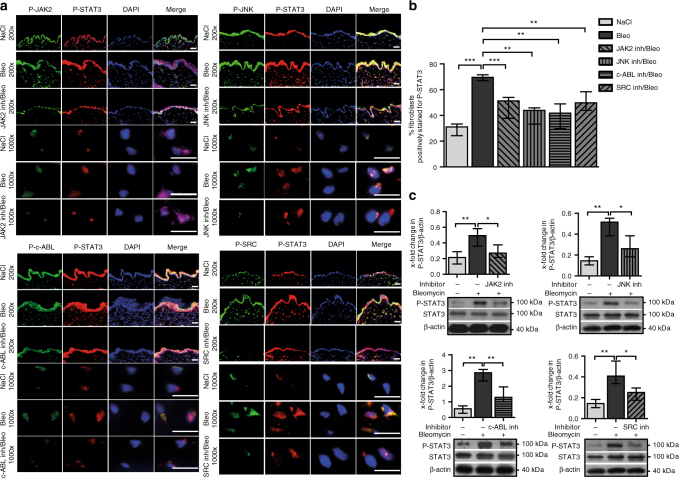
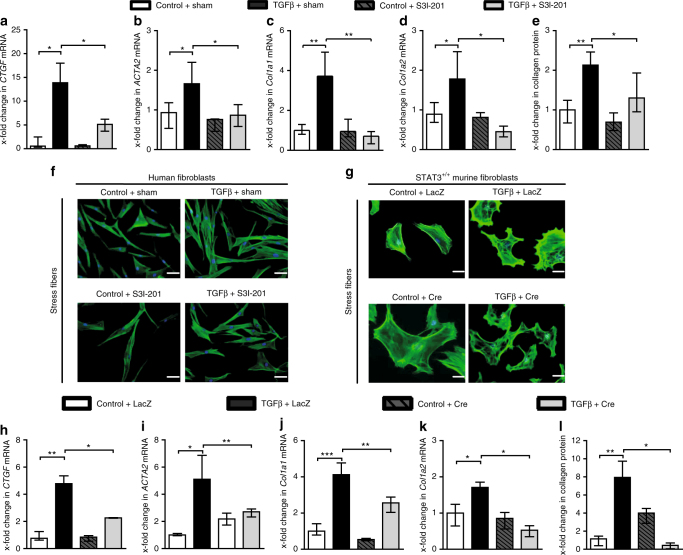
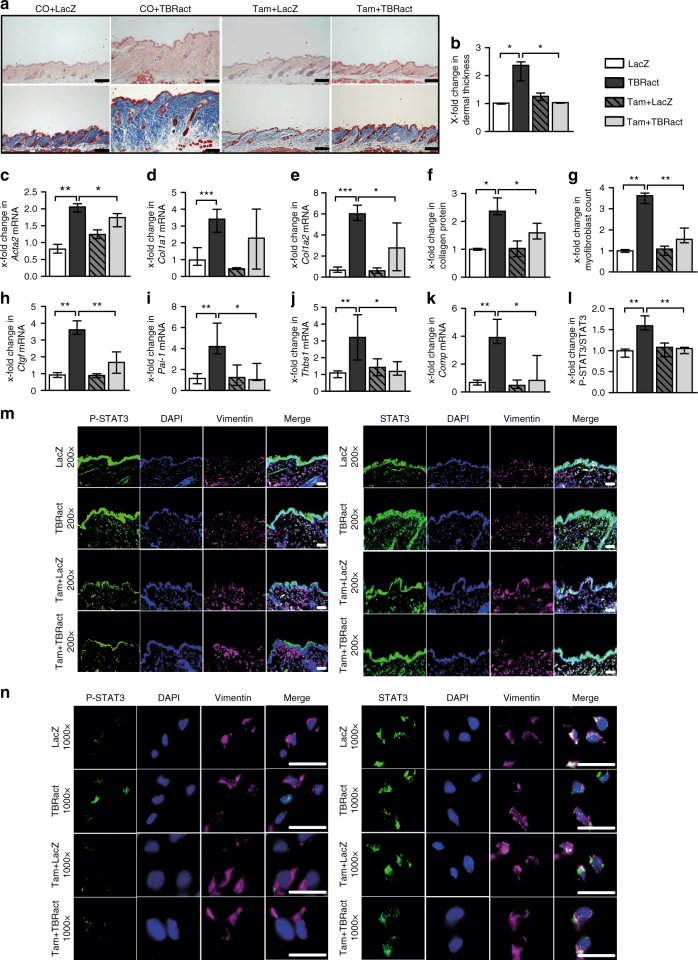
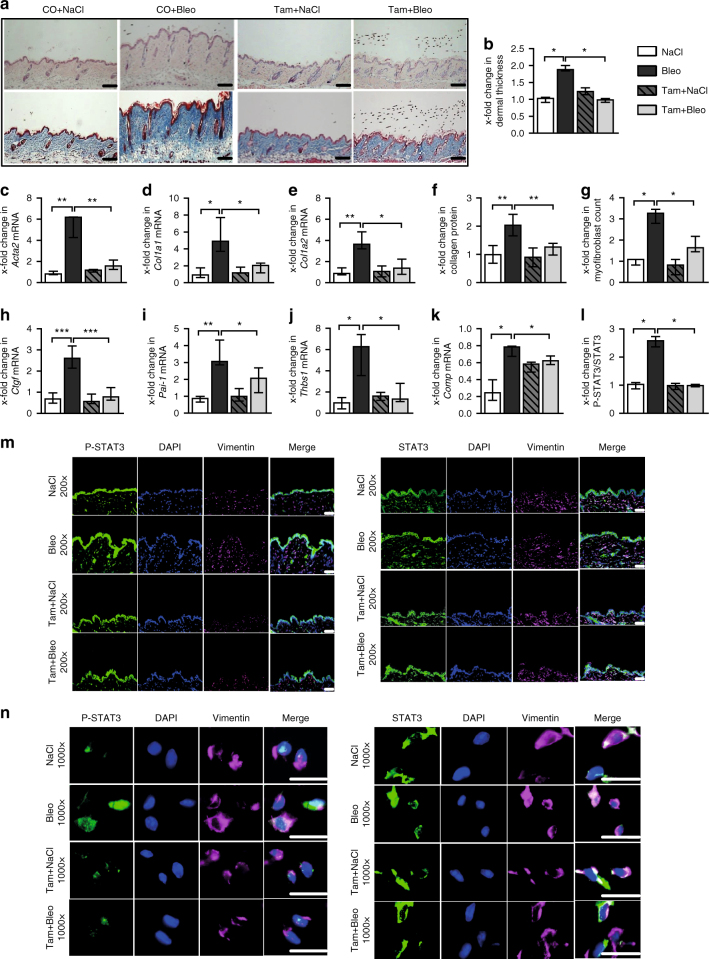
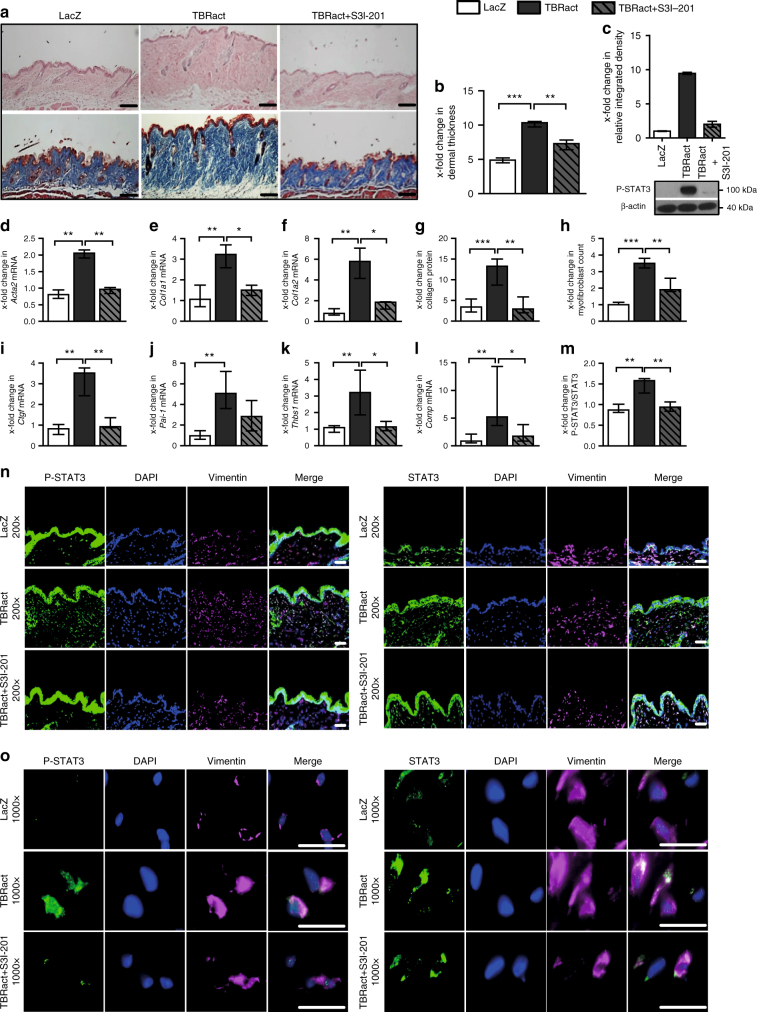
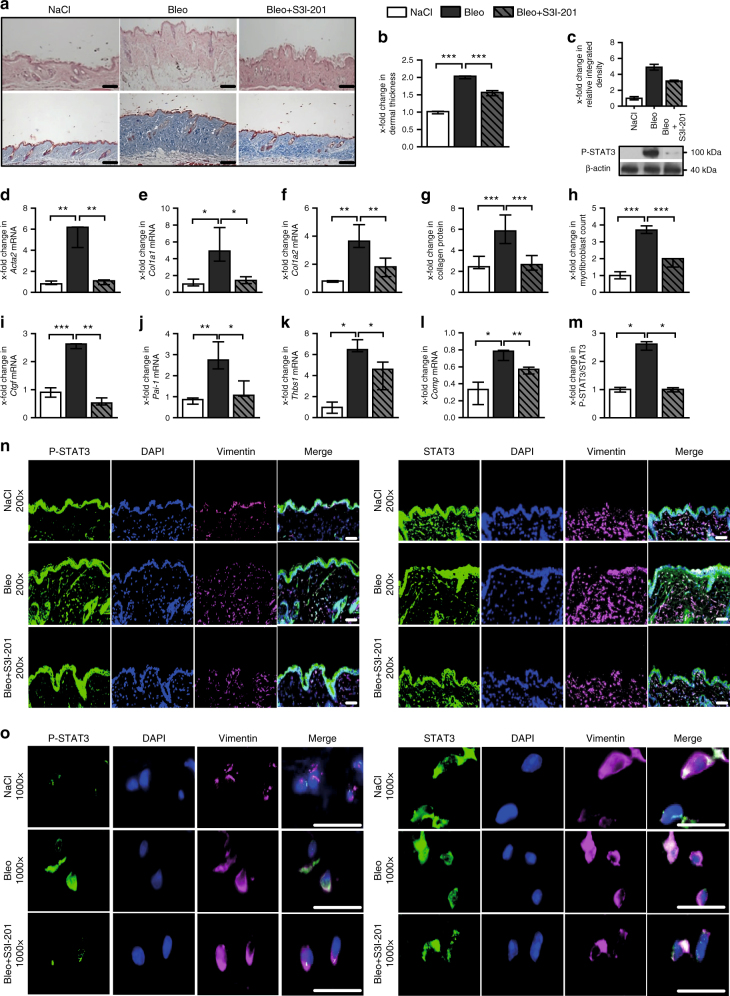
Signal transducer and activator of transcription 3 (STAT3) is phosphorylated by various kinases, several of which have been implicated in aberrant fibroblast activation in fibrotic diseases including systemic sclerosis (SSc). Here we show that profibrotic signals converge on STAT3 and that STAT3 may be an important molecular checkpoint for tissue fibrosis. STAT3 signaling is hyperactivated in SSc in a TGFβ-dependent manner. Expression profiling and functional studies in vitro and in vivo demonstrate that STAT3 activation is mediated by the combined action of JAK, SRC, c-ABL, and JNK kinases. STAT3-deficient fibroblasts are less sensitive to the pro-fibrotic effects of TGFβ. Fibroblast-specific knockout of STAT3, or its pharmacological inhibition, ameliorate skin fibrosis in experimental mouse models. STAT3 thus integrates several profibrotic signals and might be a core mediator of fibrosis. Considering that several STAT3 inhibitors are currently tested in clinical trials, STAT3 might be a candidate for molecular targeted therapies of SSc.
Overview
The claims and statistics of this paper haven’t been checked yet.
Free: it reads the open-access text and checks the first 5 claims that cite a source we can check. Create a free account to check every claim.
Integrity signals
Registry
Cites
Statistics
Figures
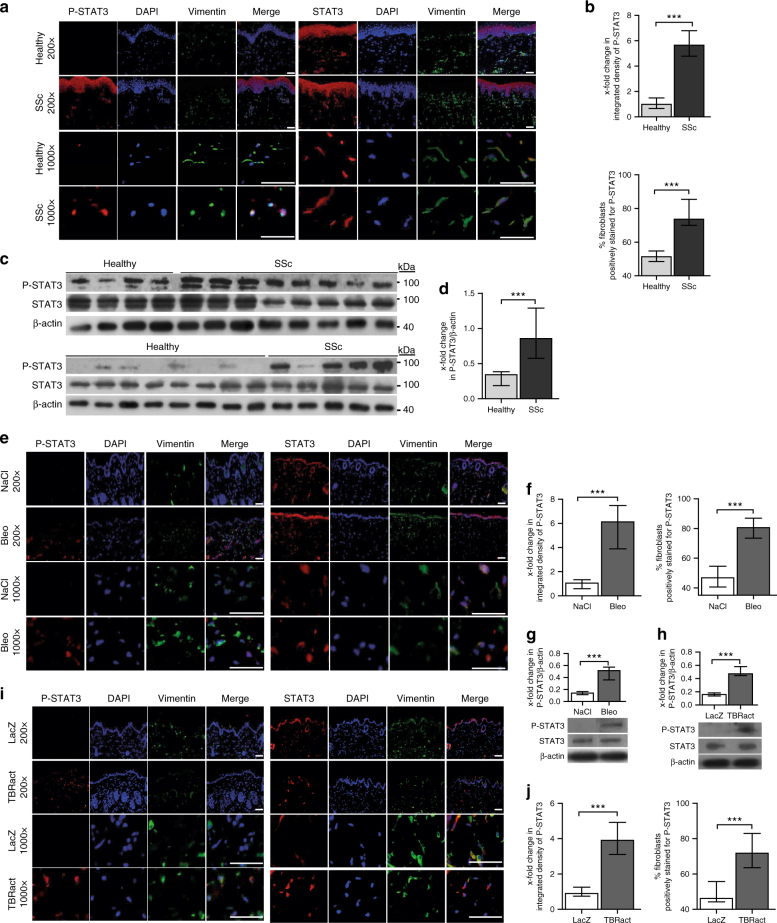
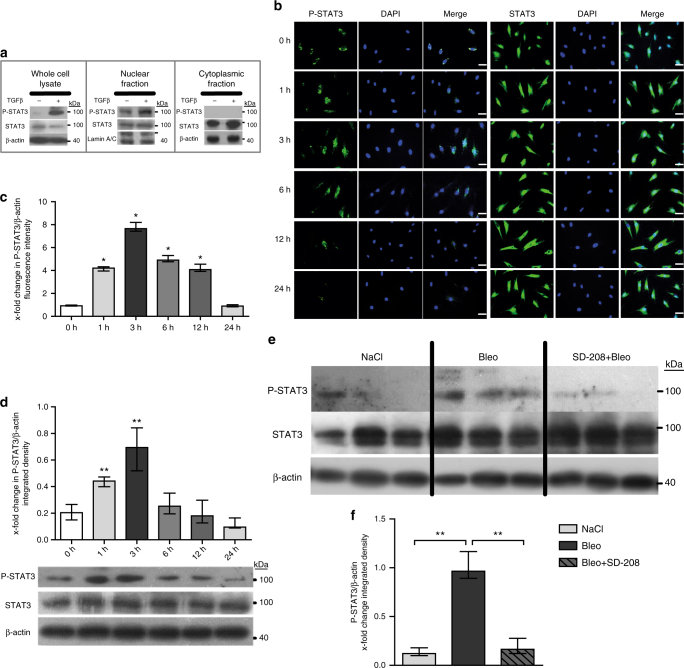
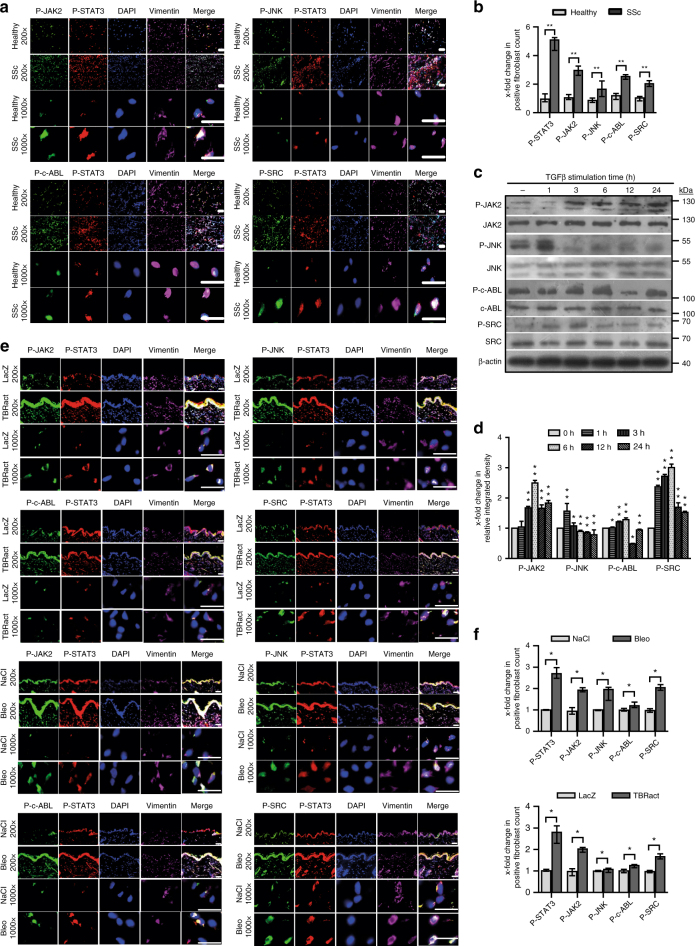
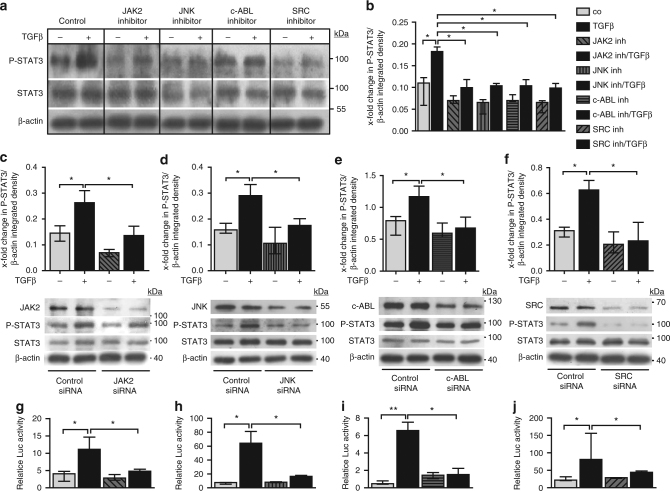
Verification
Claims the paper makes
The claims and statistics of this paper haven’t been checked yet.
Free: it reads the open-access text and checks the first 5 claims that cite a source we can check. Create a free account to check every claim.
Claims other papers make about this one
Each is checked against this paper’s own text: does it say what the citing paper says it does?
The source backs part of the claim, not all of it — or backs it for a different population, condition or comparison.
In the citing paper
“In SSc skin, STAT3 signaling is activated (81) resulting in pro-fibrotic gene expression in fibroblasts; for example, STAT3 regulates collagen type I expression in SSc skin fibroblasts (82). However, of note, in lungs of SSc patients no enhanced STAT3 activation can be observed (82).”
From Unraveling SSc Pathophysiology; The Myofibroblast (2018) · cites this paper as [81]
Experimental — accuracy not yet measuredThe source backs part of the claim, not all of it — or backs it for a different population, condition or comparison.
In the citing paper
“Both TTI-101 and S3I-201 have been tested in several mouse models of fibrosis, including bleomycin-induced lung and skin fibrosis (scleroderma) and genetically-engineered models of scleroderma, as well as a model mouse of interstitial kidney fibrosis induced by unilateral ureteral obstruction, in which inhibition of STAT3 phosphorylation by these compounds blocks the development of organ fibrosis”
From Targeting Janus Kinases and Signal Transducer and Activator of Transcription 3 To Treat Inflammation, Fibrosis, and Cancer: Rationale, Progress, and Caution (2020) · cites this paper as Chakraborty et al., 2017
Experimental — accuracy not yet measuredIn the citing paper
“Importantly, in both bleomycin induced skin and lung fibrosis in mice, knockout or pharmacological inhibition of STAT3 ameliorates fibrosis (83) (81). Furthermore, in both models, STAT3 was shown to be downstream of TGFβ signaling, as inhibition of STAT3 prevented TGFβ-induced myofibroblasts formation (81, 83).”
From Unraveling SSc Pathophysiology; The Myofibroblast (2018) · cites this paper as [81]
Self-check
Percentages, sums and reported differences re-computed from the paper’s own numbers.
The self-check needs the paper’s full text.
Citations
Cites
1 retracted
Ruzehaji, N., Avouac, J., Elhaï, M., Fréchet, M., Frantz, C., Ruiz, B., Distler, J. H. W., & Allanore, Y. (2015) · Arthritis Research & Therapy · doi:10.1186/s13075-015-0659-5 · Cited by 42
Self-citationRetractedSmad-dependent and Smad-independent pathways in TGF-β family signalling
Derynck, R., & Zhang, Y. E. (2003) · Nature · doi:10.1038/nature02006 · Cited by 5,373
Cellular and molecular mechanisms of fibrosis
Wynn, T. (2008) · The Journal of Pathology · doi:10.1002/path.2277 · Cited by 4,495
STATs in cancer inflammation and immunity: a leading role for STAT3
Yu, H., Pardoll, D., & Jove, R. (2009) · Nature reviews. Cancer · doi:10.1038/nrc2734 · Cited by 4,383
van den Hoogen, F., Khanna, D., Fransen, J., Johnson, S. R., Baron, M., Tyndall, A., Matucci‐Cerinic, M., Naden, R. P., Medsger, T. A., Carreira, P. E., et al. (2013) · Arthritis & Rheumatism · doi:10.1002/art.38098 · Cited by 3,409
Self-citationMassagué, J. (2012) · Nature Reviews Molecular Cell Biology · doi:10.1038/nrm3434 · Cited by 3,128
Massagué, J., Seoane, J., & Wotton, D. (2005) · Genes & Development · doi:10.1101/gad.1350705 · Cited by 2,452
TGF-β signaling and the fibrotic response
Leask, A., & Abraham, D. J. (2004) · The FASEB Journal · doi:10.1096/fj.03-1273rev · Cited by 2,319
Zhong, Z., Wen, Z., & Darnell, J. E. (1994) · Science · doi:10.1126/science.8140422 · Cited by 2,070
Non-Smad pathways in TGF-β signaling
Zhang, Y. E. (2009) · Cell Research · doi:10.1038/cr.2008.328 · Cited by 1,749
Cited by
Items 201–300 of 364
CD34+ Orbital Fibroblasts Contribute to the Pathogenesis of Thyroid Eye Disease via miR-182-5p
Yu, B., Wang, Y., Jin, J., Liu, J., Huang, Y., Wang, Y., Zhu, C., Li, Y., Li, B., Sun, J. P., et al. (2024) · The Journal of Clinical Endocrinology & Metabolism · doi:10.1210/clinem/dgae876 · Cited by 13
The Role of Signalling Pathways in Myocardial Fibrosis in Hypertrophic Cardiomyopathy
Skórka, P., Piotrowski, J., Bakinowska, E., Kiełbowski, K., & Pawlik, A. (2025) · Reviews in Cardiovascular Medicine · doi:10.31083/rcm27152 · Cited by 14
“Because this pathway is activated by factors promoting fibroblast activation—such as endothelin-1, Ang II, vascular endothelial growth factor (VEGF), PDGF, TGF-β 1, and IL-6—it plays a critical role in cardiac fibrosis and may contribute significantly to HCM pathology [102].”
Sengstack, J., Zheng, J., Aghayev, T., Bieri, G., Mobaraki, M., Lin, J., Deng, C., Villeda, S., & Li, H. (2026) · Proceedings of the National Academy of Sciences · doi:10.1073/pnas.2515183123 · Cited by 13
“STAT3 is a member of the STAT family that forms part of the JAK - STAT signaling cascade and plays an important function in immune/inflammatory response (25).”
Emerging drugs for the treatment of scleroderma: a review of recent phase 2 and 3 trials
Roofeh, D., Lescoat, A., & Khanna, D. (2020) · Expert Opinion on Emerging Drugs · doi:10.1080/14728214.2020.1836156 · Cited by 12
Zhou, Q., Gong, J., Bi, J., Yang, X., Zhang, L., Lu, C., Li, L., Chen, M., Cai, J., Yang, R., et al. (2022) · Journal of Investigative Dermatology · doi:10.1016/j.jid.2021.12.018 · Cited by 15
Švec, X., Štorkánová, H., Trinh‐Minh, T., Tran, M. C., Štorkánová, L., Hulejová, H., Oreská, S., Heřmánková, B., Bečvář, R., Pavelká, K., et al. (2023) · Rheumatology · doi:10.1093/rheumatology/kead295 · Cited by 12
“STAT3 plays a pivotal role in fibrogenesis and is involved in both IL-6 and non-canonical TGF-b signalling [38–40].”
BackgroundSelf-citationTherapeutic molecular targets of SSc-ILD
Zhang, Y., & Distler, J. H. W. (2020) · Journal of Scleroderma and Related Disorders · doi:10.1177/2397198319899013 · Cited by 13
Self-citationBraumann, S., Schumacher, W., Im, N. G., Nettersheim, F. S., Mehrkens, D., Bokredenghel, S., Hof, A., Nies, R. J., Adler, C., Winkels, H., et al. (2021) · International Journal of Molecular Sciences · doi:10.3390/ijms22169052 · Cited by 14
Immunologic underpinnings and treatment of morphea
LaChance, A., Goldman, N., Kassamali, B., & Vleugels, R. A. (2022) · Expert Review of Clinical Immunology · doi:10.1080/1744666x.2022.2063841 · Cited by 13
“Given prior animal studies demonstrating anti-fibrotic properties of small molecule inhibitors of STAT3, such as S3I-201, without significant toxicity, this therapeutic target in morphea should be explored further in depth [21].”
BackgroundInfluentialShen, J., Liang, J., Rejiepu, M., Ma, Z., Zhao, J., Li, J., Zhang, L., Yuan, P., Wang, J., & Tang, B. (2024) · Scientific Reports · doi:10.1038/s41598-024-55613-5 · Cited by 11
Chu, X., Li, D., Fang, X., Liang, F., Li, P., You, Q., Wang, C., Zhu, L., Yang, Y., Yang, Y., et al. (2025) · Nano Today · doi:10.1016/j.nantod.2025.102709 · Cited by 11
Saliva-derived extracellular vesicles: a promising therapeutic approach for salivary gland fibrosis
Peng, B., Guo, X., Kang, J., Pan, S., Wei, L., Wang, L., Li, B., Han, G., & Cheng, Y. (2025) · Journal of Translational Medicine · doi:10.1186/s12967-025-06620-1 · Cited by 11
“Emerging evidence highlights its pivotal role in fibrotic progression, where STAT3 activation drives myofibroblast expansion, phenotypic activation, and excessive ECM deposition [41, 42].”
Activin A activation drives renal fibrosis through the STAT3 signaling pathway
Yuan, C., Ni, L., & Wu, X. (2021) · The International Journal of Biochemistry & Cell Biology · doi:10.1016/j.biocel.2021.105950 · Cited by 11
Vicente‐Rabaneda, E. F., López-Matencio, J. M. S., Ancochea, J., Blanco, R., González-Gay, M. Á., & Castañeda, S. (2021) · Expert Opinion on Drug Safety · doi:10.1080/14740338.2021.1973428 · Cited by 12
“Furthermore, a link between IL-6 and TGFβ-dependent tissue fibrosis has been identified [37].”
BackgroundLu, Y., Wu, Q., Liao, J., Zhang, S., Lü, K., Yang, S., Wu, Y., Dong, Q., Yuan, J. T., Zhao, N., et al. (2021) · Annals of Translational Medicine · doi:10.21037/atm-21-2913 · Cited by 11
“STAT3 integrates several profibrotic signals and might be a core mediator of fibrosis (36).”
BackgroundXiao, R., Gu, L., Li, A.-M., Gan, Y., He, C.-Y., Liao, J., Li, Y., Xu, L., & Guo, S. (2023) · Biochimica et Biophysica Acta (BBA) - Molecular Cell Research · doi:10.1016/j.bbamcr.2023.119438 · Cited by 11
Bayram, B., Owen, A. R., Dudakovic, A., Dagneaux, L., Turner, T. W., Bettencourt, J. W., Limberg, A. K., Tibbo, M. E., Morrey, M. E., Sánchez‐Sotelo, J., et al. (2020) · Journal of Clinical Medicine · doi:10.3390/jcm9113690 · Cited by 11
Akboua, H., Eghbalzadeh, K., Keser, U., Wahlers, T., & Paunel‐Görgülü, A. (2021) · Journal of Cellular and Molecular Medicine · doi:10.1111/jcmm.16915 · Cited by 12
Wang, Y., Liu, H., Li, W., Xie, Y., Gan, C., Xue, T., Su, X., Yue, L., Wang, Q., Chen, F., et al. (2022) · European Journal of Medicinal Chemistry · doi:10.1016/j.ejmech.2022.114953 · Cited by 11
STAT3 — A key integrator of profibrotic signalling
McHugh, J. (2017) · Nature Reviews Rheumatology · doi:10.1038/nrrheum.2017.190 · Cited by 11
Pan, Z., Wu, Q.-F., Xie, Z., Wu, Q., Xinti, T., & Wang, X. (2020) · Cellular Signalling · doi:10.1016/j.cellsig.2020.109606 · Cited by 11
Immunogenetics of Systemic Sclerosis
Gumkowska-Sroka, O., Kotyla, K., & Kotyla, P. J. (2024) · Genes · doi:10.3390/genes15050586 · Cited by 13
“STAT3 undergoes activation in response to various pro-inflammatory cytokines, including interleukin-6 (IL-6) but also by strong profibrotic factors such as TGF [77,78].”
BackgroundRajan, R. K., Ali, F., & Ahmed, A. B. (2025) · In Silico Research in Biomedicine · doi:10.1016/j.insi.2025.100043 · Cited by 10
Mesenchymal drift: A convergent framework for the hallmarks of aging
Lu, J. Y., Tu, W. B., Ma, S., Ma, Z., Imaz-Rosshandler, I., Weng, M., Qu, J., Esteban, C. R., Reddy, P., Liu, G.-H., et al. (2026) · Cell · doi:10.1016/j.cell.2026.04.020 · Cited by 12
Etanercept Ameliorates Cardiac Fibrosis in Rats with Diet-Induced Obesity
Hsu, C.-C., Li, Y., Hsu, C., Cheng, J., Lin, M.-H., Cheng, K., & Chen, S.-W. (2021) · Pharmaceuticals · doi:10.3390/ph14040320 · Cited by 10
“STAT3 plays a major role in fibrosis [47] and is known to act both independently and in conjunction with other signaling networks such as TGF-β1 signaling [48].”
BackgroundWang, M., Huang, C., Gao, W., Zhu, Y., Zhang, F., Li, Z., & Tian, Z. (2022) · Aging · doi:10.18632/aging.204028 · Cited by 11
Li, Y., Zhao, J., Yin, Y., Zhang, C., Zhang, Z., & Zheng, Y. (2023) · International Journal of Molecular Sciences · doi:10.3390/ijms241512210 · Cited by 10
Emerging therapeutic targets in systemic sclerosis
O’Reilly, S. (2024) · Journal of Molecular Medicine · doi:10.1007/s00109-024-02424-w · Cited by 10
“Furthermore, mice with fibroblast-specific depletion of STAT3 or pharmacological chemical inhibition of STAT3 retarded experimental fibrosis in animal models with reduced collagen and ECM deposition [44].”
The KDM5 Inhibitor KDM5-C70 Induces Astrocyte Differentiation in Rat Neural Stem Cells
Lee, H., Ann, J., Kim, Y., Lee, J., & Kim, H. (2021) · ACS Chemical Neuroscience · doi:10.1021/acschemneuro.0c00613 · Cited by 10
Pereckova, J., Pekarová, M., Szamecova, N., Hoferová, Z., Kamarytova, K., Falk, M., & Perečko, T. (2021) · International Journal of Molecular Sciences · doi:10.3390/ijms22189981 · Cited by 10
“On the other hand, it could suppress tumor growth and induce differentiation and apoptosis in a specific context [6,7].”
BackgroundChioma, O. S., Mallott, E. K., Shah-Gandhi, B., Wiggins, Z., Langford, M., Lancaster, A. W., Gelbard, A. H., Wu, H., Johnson, J. E., LANCASTER, L. H., et al. (2023) · Cells · doi:10.3390/cells12050766 · Cited by 11
“Independent reports demonstrate that profibrotic signaling pathways converge on STAT3, an important molecular checkpoint for tissue fibrosis [12,13].”
BackgroundRyanto, G. R. T., Yorifuji, K., Ikeda, K., & Emoto, N. (2020) · Canadian Journal of Physiology and Pharmacology · doi:10.1139/cjpp-2019-0649 · Cited by 10
Role of IL‐6 and STAT3 signaling in dihydropyridine‐induced gingival overgrowth fibroblasts
Lu, S., Huang, C., Li, C.-L., Lu, H., & Chen, S. L. (2020) · Oral Diseases · doi:10.1111/odi.13724 · Cited by 11
Nanì, M. F., Pagano, E., Cicco, P. D., Lucariello, G., Cattaneo, F., Tropeano, F. P., Cicia, D., Amico, R., Raucci, F., Ercolano, G., et al. (2024) · Journal of Crohn s and Colitis · doi:10.1093/ecco-jcc/jjae132 · Cited by 10
EFFICACY AND SAFETY OF TOFACITINIB FOR IMMUNEMEDIATED INFLAMMATORY RHEUMATIC DISEASES (PART II)
Nasonov, E. L., Avdeeva, A. S., & Lila, A. M. (2020) · Rheumatology Science and Practice · doi:10.14412/1995-4484-2020-214-224 · Cited by 9
Interstitial lung disease in rheumatic diseases: an update of the 2018 review
Atzeni, F., Alciati, A., Gozza, F., Masala, I. F., Siragusano, C., & Pipitone, N. (2024) · Expert Review of Clinical Immunology · doi:10.1080/1744666x.2024.2407536 · Cited by 9
“Furthermore, inhibition of STAT3 in fibroblasts showed reductions in TGFβ1-induced fibroblast – myofibroblast transition (FMT), and alleviated skin fibrosis in mouse models of systemic sclerosis [30].”
Bozzinì, S., Pandolfi, L., Rossi, E. G., Inghilleri, S., Zorzetto, M., Ferrario, G., Carlo, S. D., Politano, G. M. M., SILVESTRI, A. D., Frangipane, V., et al. (2021) · Cells · doi:10.3390/cells10030688 · Cited by 9
“Previous studies have demonstrated that STAT3 exerts anti-fibrotic effects in many fibrosis diseases, such as systemic sclerosis (SSc), skin fibrosis, and renal fibrosis [32–34].”
News and failures from recent treatment trials in systemic sclerosis
Denton, C. P., Yee, P., & Ong, V. H. (2020) · European Journal of Rheumatology · doi:10.5152/eurjrheum.2020.19187 · Cited by 10
“This provides additional mechanistic insight into the role of IL-6 in modulating TGFβ activity as has been suggested in other recent work (37).”
ResultAminocyanopyridines as anti‐lung cancer agents by inhibiting the STAT3 pathway
Xu, L., Qiu, S., Yang, L., Xu, H., Liu, X., Fan, S., Cui, R., Fu, W., Zhao, C., Shen, L., et al. (2019) · Molecular Carcinogenesis · doi:10.1002/mc.23038 · Cited by 10
“Expression profiling and functional studies demonstrate that STAT3 activation is mediated by the combined action of JAK, SRC, and JNK kinases in cancer cells and in cancer tissues.(29) Our present data led us to speculate that 3o may have superior properties in preventing activation of STAT3 compared with other STAT3…”
Skin and lung fibrosis induced by bleomycin in mice: a systematic review
Gülle, S., Çelik, A., Bırlık, M., & Yılmaz, O. (2024) · Reumatismo · doi:10.4081/reumatismo.2024.1642 · Cited by 10
Nikolić, I., & Morici, L. (2026) · European Journal of Pharmacology · doi:10.1016/j.ejphar.2026.178645 · Cited by 9
Han, M., Tang, J., Zhao, H., Sheng, Y., Li, Z., Shi, W., Wang, J., Ma, C., Xi, K., Gu, Y., et al. (2024) · Chemical Engineering Journal · doi:10.1016/j.cej.2024.149308 · Cited by 8
Kulma, M., Hofman, B., Szostakowska-Rodzoś, M., Dymkowska, D., Serwa, R. A., Piwowar, K., Belczyk-Ciesielska, A., Grochowska, J., Tuszyńska, I., Muchowicz, A., et al. (2024) · Journal of Biological Chemistry · doi:10.1016/j.jbc.2024.107793 · Cited by 9
“…of the contribution of STAT3 activation in the transmission of intracellular signals of multiple cytokines promoting in fl ammation in fi brotic diseases (50), suggests that inhibition of USP21 can be potentially used as a therapeutic strategy to prevent the progression of pulmonary fi brosis.”
BackgroundBenefits of the Topical JAK Inhibitor Delgocitinib in a Patient With Pediatric Localized Scleroderma
Yamamoto, M., Nakajima, K., Matsuda, M., Takahashi, A., & Nakai, K. (2024) · Pediatric Dermatology · doi:10.1111/pde.15844 · Cited by 8
Vithalkar, M. P., Vishnusai, B., Sandra, K., Naik, V., Dessai, A. D., Nayak, U. Y., Fayaz, S. M., Andugulapati, S. B., Sathyanarayana, B., Nagareddy, P. R., et al. (2025) · Beni-Suef University Journal of Basic and Applied Sciences · doi:10.1186/s43088-025-00684-0 · Cited by 11
“Inhibition of the JAK1/ STAT3 axis leads to suppression of fibroblast activation, inhibition of MYFs differentiation, and reduction in pro-fibrotic gene expression and extracellular matrix deposition [147, 148].”
Rigau, A. R., Luber, M., & Distler, J. H. W. (2021) · Methods in molecular biology · doi:10.1007/978-1-0716-1382-5_25 · Cited by 12
Self-citationDiscovery and development of benzene sulfonamide derivatives as anti-hepatic fibrosis agents
Niu, W., Zhu, M., Wang, M., Zhang, G., Zheng, C., Bao, Y., Li, Y., Zhang, N., Wang, J., He, H., et al. (2023) · Bioorganic & Medicinal Chemistry Letters · doi:10.1016/j.bmcl.2023.129290 · Cited by 8
Mechanisms of Fibroblast Activation during Fibrotic Tissue Remodeling
Rigau, A. R., & Dees, C. (2024) · Fibrosis · doi:10.35534/fibrosis.2024.10002 · Cited by 7
PPARδ Agonism Ameliorates Renal Fibrosis in an Alport Syndrome Mouse Model
Omachi, K., O’Carroll, C., & Miner, J. H. (2022) · Kidney360 · doi:10.34067/kid.0006662022 · Cited by 7
The role of iTr35 cells in the inflammatory response and fibrosis progression of systemic sclerosis
Yang, C., Lu, C., Pan, J., Zhao, C., Chen, Z., Qin, F., Wen, J., Wei, W., & Lei, L. (2023) · Rheumatology · doi:10.1093/rheumatology/kead053 · Cited by 7
Zhou, Y., Nie, A., Chen, S., Wang, M., Yin, R. M., Tang, B., Wu, Y., Yang, F., Du, B., Shi, H., et al. (2021) · Journal of Inflammation Research · doi:10.2147/jir.s310687 · Cited by 7
Hong, X., Ye, Y., Lin, C., Zheng, M., Lin, F., Xiong, Q., Xu, W., Huang, L., Zhang, Y., & Zheng, H. (2025) · Frontiers in Immunology · doi:10.3389/fimmu.2025.1665648 · Cited by 6
Exploring the Complexities of TGF-β Signaling in Keloids: Beyond the Classical Smad Pathway
Mo, J., Huang, H., Zhu, B., Liao, R., Li, W., & Zhang, Y. (2026) · International Journal of Molecular Sciences · doi:10.3390/ijms27083600 · Cited by 6
“The absence or inhibition of STAT3 itself significantly weakens the fibroblast’s response to TGF-β and effectively alleviates fibrosis in animal models [43].”
Dai, L., Lou, N., Huang, L., Li, L., Tang, L. M., Shi, Y., & Han, X. (2025) · Cancer Immunology Immunotherapy · doi:10.1007/s00262-025-03968-7 · Cited by 6
“Consistent with our findings that LYZ is associated with favorable prognosis in DLBCL. LYZ + fibroblasts were associated with higher macrophage infiltration, high transcription factor activity of HIF1A [37] and STAT3 [38], usually activated in CAF and promotes CAF activation.”
Epithelial to Mesenchymal Transition
Dalton, A. C., & Howe, P. H. (2021) · Elsevier eBooks · doi:10.1016/b978-0-12-820472-6.00005-0 · Cited by 6
STAT3 in medulloblastoma: a key transcriptional regulator and potential therapeutic target
Zaiter, A., Audi, Z. F., Shawraba, F., Saker, Z., Bahmad, H. F., Nabha, R. H., Harati, H., & Nabha, S. M. (2022) · Molecular Biology Reports · doi:10.1007/s11033-022-07694-6 · Cited by 7
“STATs are activated by extracellular signaling proteins (cytokines, growth factors, and hormones) mainly via binding to specific cell surface receptor-associated Janus kinases (JAK) promoting a wide range of physiological events such as differentiation, proliferation, angiogenesis, apoptosis, and cellular immunity [11…”
BackgroundOliveira‐Santos, A., Dagda, M., Wittmann, J. L., Smalley, R., & Burkin, D. J. (2023) · Disease Models & Mechanisms · doi:10.1242/dmm.049916 · Cited by 8
Sengstack, J., Zheng, J., Mobaraki, M., Lin, J., Deng, C., & Li, H. (2022) · bioRxiv (Cold Spring Harbor Laboratory) · doi:10.1101/2022.11.20.517270 · Cited by 6
Effector CD8 T cell differentiation in primary and breakthrough SARS-CoV-2 infection in mice
Kingstad-Bakke, B. A., Lee, W., Yount, B. L., Cleven, T., Park, H.-T., Sullivan, J. A., Baric, R. S., & Suresh, M. (2025) · Communications Biology · doi:10.1038/s42003-025-07820-7 · Cited by 5
“In addition to suppression of CD8 T-cell effector functions, STAT-3 promotes lung fi brosis 53 – 57 , a sequel to COVID-19 in a cohort of patients.”
Trinh‐Minh, T., Manh, C. T., Györfi, A., Dickel, N., Liebel, C., Zhou, X., Wang, J., Kunz, M., Arozenius, H., Pettersson, L., et al. (2025) · Arthritis & Rheumatology · doi:10.1002/art.43151 · Cited by 5
“…of TGF β in SSc. Immuno fl uorescence staining validated the RNASeq fi ndings, showing consistent changes in MAOB and SLC6A4 (markers of 5-HT metabolism), CCL2, CCL5, and CCL18 (in fl ammatory chemokines), as well as PAI-1 40 – 42 and P-STAT3 (TGF β signaling targets) 15,20,23,41,43,44 (Figure 6A –”
Self-citationLu, C., Zeng, Y., Wang, G., Lou, B., Wang, Y., Wh, L., Yan, Z., & Fu, H. (2025) · Frontiers in Pharmacology · doi:10.3389/fphar.2025.1685708 · Cited by 5
Methylated circPTK2 as a driver of fibroblast activation in pulmonary fibrosis
Zhu, Y., Zhao, L., Qin, J., Guo, B., Luo, X., Feng, Z., Wei, J., Huang, X., Chen, X., Lin, Y., et al. (2025) · Molecular Therapy · doi:10.1016/j.ymthe.2025.12.013 · Cited by 6
Quantitative proteomics reveals specific protein regulation of severe hypospadias
Zhu, S., Fu, W., Hu, J., Tang, X., Cui, Y., & Jia, W. (2022) · Translational Andrology and Urology · doi:10.21037/tau-22-155 · Cited by 5
Jeong, H., Koo, S., Kang, Y.-H., Kim, T. W., Kim, H. K., & Park, Y. J. (2023) · Food Science and Biotechnology · doi:10.1007/s10068-023-01440-9 · Cited by 5
“The STAT3 pathway also plays an important role in fibrotic diseases via inflammatory responses and fibroblast activation (Chakraborty et al., 2017; Kasembeli et al., 2018).”
Tan, M., Wu, D., Zhou, Y., & Duan, B. (2023) · Journal of Cosmetic Dermatology · doi:10.1111/jocd.15883 · Cited by 5
GPR176 promotes fibroblast-to-myofibroblast transition in organ fibrosis progression
Okamoto, Y., Kitakaze, K., Takenouchi, Y., Matsui, R., Koga, D., Miyashima, R., Ishimaru, H., & Tsuboi, K. (2024) · Biochimica et Biophysica Acta (BBA) - Molecular Cell Research · doi:10.1016/j.bbamcr.2024.119798 · Cited by 6
Nørgård, M. Ø., Christensen, M. S., Mutsaers, H. A. M., & Nørregaard, R. (2020) · Pharmaceutics · doi:10.3390/pharmaceutics12040301 · Cited by 5
“Moreover, it has been demonstrated that STAT3-deficient fibroblasts are less sensitive to the pro-fibrotic effects of TGF-β, and fibroblast-specific knockout of STAT3 attenuates skin fibrosis in experimental mouse models [24].”
BackgroundWollin, L., Trinh‐Minh, T., Zhang, Y., & Distler, J. H. W. (2021) · Clinical and Experimental Rheumatology · doi:10.55563/clinexprheumatol/g5mej7 · Cited by 6
“42q, National Institutes of Health, USA) as reported in previous studies (18-22).”
MethodSelf-citationFeng, T., Ji, W., Tan, S. H., Chen, L., & Liu, G. (2024) · Biochimica et Biophysica Acta (BBA) - Molecular Basis of Disease · doi:10.1016/j.bbadis.2024.167216 · Cited by 5
Jammal, T. E., Gerfaud‐Valentin, M., Sève, P., & Jamilloux, Y. (2020) · Revue du Rhumatisme · doi:10.1016/j.rhum.2020.01.032 · Cited by 6
Park, E., Park, S.-H., Lee, S. J., Jeong, D., Jin, H. K., Moon, H., Cha, B., Kim, D., Ma, S., Seo, W., et al. (2023) · Journal of Medicinal Chemistry · doi:10.1021/acs.jmedchem.3c01712 · Cited by 4
A patient-based murine model recapitulates human STAT3 gain-of-function syndrome
Meesilpavikkai, K., Zhou, Z., Kaikaew, K., Phakham, S., van der Spek, P. J., Swagemakers, S. M. A., Venter, D. J., de Bie, M., Schrijver, B., Schliehe, C., et al. (2024) · Clinical Immunology · doi:10.1016/j.clim.2024.110312 · Cited by 4
The role and mechanism of JAK2 inhibitor in endothelial mesenchymal transition in systemic sclerosis
Luo, Q., Wang, X., Zhang, Y., Xie, W., Liang, L., Xu, Y., Liang, Y., & Ji, S. (2025) · Journal of Dermatological Science · doi:10.1016/j.jdermsci.2025.02.001 · Cited by 4
Malik, M., Britten, J., DeAngelis, A., & Catherino, W. H. (2020) · F&S Science · doi:10.1016/j.xfss.2020.07.005 · Cited by 5
Chaturvedi, S., Rai, M. K., Singh, H., Misra, D. P., Prasad, N., Agrawal, V., & Agarwal, V. (2020) · Indian Journal of Rheumatology · doi:10.4103/injr.injr_169_19 · Cited by 4
“[33,34] The fact that 5-HT has a role in fibrosis is evident from the histology of carcinoid tumors where fibrosis is evident both locally (peritumoral area) and systemically.”
High Doses of Kefir Accelerate Lung-Injury Progression in Bleomycin-Induced Pneumonitis in Rats
Raras, T. Y. M., Hidayati, N. A., & Wardhani, S. O. (2021) · Jundishapur Journal of Natural Pharmaceutical Products · doi:10.5812/jjnpp.111882 · Cited by 4
“Thus, STAT-3 might be an important molecular checkpoint for tissue fibrosis (21).”
BackgroundHuang, C., Yu, X., Shi, C., Wang, M., Li, A., & Wang, F. (2023) · British Journal Of Nutrition · doi:10.1017/s0007114523002970 · Cited by 4
“…expressed genes may represent promising candidates for understanding the mechanism underlying the inflammatory liver injury induced by LPS. Hepatic inflammation caused by STAT3 pathway activation often is associated with activation of hepatic stellate cells, which lead to liver fibrosis (39) .”
The Role of Non‐Coding RNA in Systemic Sclerosis: From Mechanism to Translation
Zhu, R., Pi, Z., Shi, Y., Xiao, Y., & Xiao, R. (2025) · Wiley Interdisciplinary Reviews - RNA · doi:10.1002/wrna.70003 · Cited by 3
“Notably, STAT3 is as a critical molecular checkpoint for tissue fibrosis in SSc, given that many profibrotic signals are connected toit (Chakraborty et al. 2017).”
Kan, S., Ali, A., Kao, S.-W., Tsai, B. C., Lin, Y., Hsieh, D. J., Kuo, C., Kuo, W., Lin, S., & Huang, C. (2025) · Biotechnology and Applied Biochemistry · doi:10.1002/bab.2771 · Cited by 3
“Liver fibrosis is a common hepatic disorder, and STAT3, a key regulator of profibrotic pathways, is modulated by PKC ζ [46– 48].”
Systemic sclerosis and AHR: Shedding light on a hidden connections
Wajda, A., Paradowska‐Gorycka, A., & Esser, C. (2025) · Autoimmunity Reviews · doi:10.1016/j.autrev.2025.103915 · Cited by 3
Lee, S.-C., Yu, K.-H., Huang, H., & Juan, H. (2026) · Drug Discovery Today · doi:10.1016/j.drudis.2026.104620 · Cited by 3
Inhibition of CCL4 prevents renal inflammation and fibrosis in acute kidney injury
Chiang, C.-H., Lan, T.-Y., Chen, J., & Chang, T. (2026) · Clinical Science · doi:10.1042/cs20257231 · Cited by 3
Shi, L. L., Zhang, R. F., & Xiao, H. (2021) · PubMed · doi:10.3760/cma.j.cn501120-20200417-00231 · Cited by 3
Zhu, Y., Zhang, J., Zhao, X., Guo, M., Chen, C., Zhou, Y., & Xu, L. (2025) · Pharmacological Research · doi:10.1016/j.phrs.2025.107822 · Cited by 3
Self-citationSong, Q., Li, H., Yan, H., Yu, Z., Li, Z., Yuan, J., Jiang, N., Ni, Z., Gu, L., & Fang, W. (2024) · Journal of Cellular and Molecular Medicine · doi:10.1111/jcmm.18381 · Cited by 4
“…fibroblasts to differentiate into myofibroblasts by integrating common profibrotic pathways, including upstream kinases SRC, c-ABL, JAK2, and JNK. 13 Study on the burn-induced hypertrophic scarring also showed that IL-6 trans-signalling could induce activation of STAT3 and promoted fibroblast…”
BackgroundMishra, V., Baranwal, V., Mugale, M. N., Sharma, S., & Mishra, R. K. (2024) · ACS Biomaterials Science & Engineering · doi:10.1021/acsbiomaterials.4c01473 · Cited by 4
McKenna, N. J., Ochsner, S. A., Waich, A., Cala-García, J., Echartrea, M. E. R., Grimm, S. L., Poli, F., Castillo, R. C., Zuluaga, J. D., Poli, S., et al. (2025) · bioRxiv (Cold Spring Harbor Laboratory) · doi:10.1101/2025.06.16.659944 · Cited by 3
Nodular scleroderma partially controlled with tofacitinib
Zhou, K., Ye, Q., & Fang, S. C. (2024) · Anais Brasileiros de Dermatologia · doi:10.1016/j.abd.2024.02.003 · Cited by 2
Tien, C., Wu, Y., Cheng, Y., & Hsu, Y. (2024) · International Immunopharmacology · doi:10.1016/j.intimp.2024.113882 · Cited by 2
Koo, B., Smith, A., & Joeng, K. S. (2025) · BMB Reports · doi:10.5483/bmbrep.2024-0198 · Cited by 2
“Research involving pharmacological inhibitors and genetic mouse models has also revealed STAT3’s partial involvement in TGF -mediated fibrosis (35).”
Nishimura, H., Kawano, H., Sato, S., Imakura, T., Yamashita, Y., Murakami, K., Haji, K., Bando, H., Naito, N., Kagawa, K., et al. (2025) · The Journal of Medical Investigation · doi:10.2152/jmi.72.298 · Cited by 2
Janus Kinase Inhibitors for the Treatment of Pediatric Morphea: A Systematic Review
Moschella, A., DeBiasio, C., & Liy‐Wong, C. (2025) · Pediatric Dermatology · doi:10.1111/pde.70090 · Cited by 2
Thymidine phosphorylase promotes SARS-CoV-2 spike protein-driven lung tumor development
Wallace, C., Gileles‐Hillel, A., Cox, A., Gozal, D., Li, W., & Yue, H. (2026) · Frontiers in Immunology · doi:10.3389/fimmu.2026.1798566 · Cited by 2
“Since STAT3 activation promotes fi brosis (39), we assessed lung fi brosis by Trichrome staining (Figure 3B).”
Advances in the interplay between mechanical forces and inflammatory immunity in keloid formation
Zhou, S., Wang, L., Chen, N., Liu, J., Zhang, R., Zhou, S., Liu, Y., Zhu, W., Chen, X., & Meng, R. (2026) · Frontiers in Immunology · doi:10.3389/fimmu.2026.1792028 · Cited by 2
Coppi, F., Pagnoni, G., Renda, G., Sbarra, F., Cesare, D. D., Marangi, F., Baccarani, A., Aschieri, D., Mattioli, A. V., Dei, A., et al. (2026) · International Journal of Molecular Sciences · doi:10.3390/ijms27177683 · Cited by 2
“STAT3 has been recognized for several years as a critical convergence node for pro-fibrotic signaling in SSc [60,67], but its role in SSc pathogenesis had been understood primarily through its nuclear transcriptional functions—the activation of fibrosis-relevant gene programs including collagen…”
Wu, Z., Yuan, J., Li, K., Wang, X., Zhang, Z., & Hong, M. (2024) · Drug Metabolism and Disposition · doi:10.1124/dmd.124.001755 · Cited by 2
Novel Compound HJC0416 Attenuates Hepatic Fibrosis via HSP90/NF-κB–Associated Mechanism
DeJesus, J. E., Wang, X., Gu, Y., Mao, R.-M. D., Zhou, J., & Radhakrishnan, R. (2024) · Journal of Surgical Research · doi:10.1016/j.jss.2024.09.038 · Cited by 2
Shu, C., Ren, C., Chen, Q., Wang, Y., Li, R., Zhang, Y., Yang, S., Wang, C., & Li, Y. (2025) · Frontiers in Cardiovascular Medicine · doi:10.3389/fcvm.2025.1627255 · Cited by 3
Novel classification for global gene signature model for predicting severity of systemic sclerosis
Johnson, Z. I., Jones, J., Mukherjee, A., Ren, D., Feghali‐Bostwick, C. A., Conley, Y. P., & Yates, C. C. (2018) · PLoS ONE · doi:10.1371/journal.pone.0199314 · Cited by 2
Mechanisms of norcantharidin against renal tubulointerstitial fibrosis
Yun, Q.-S., Bao, Y.-X., Jiang, J.-B., & Guo, Q. (2024) · Pharmacological Reports · doi:10.1007/s43440-024-00578-5 · Cited by 1
“STAT3 is the central integron of various pro-fibrotic signals, playing a key role in fibroblast aggregation and activation [108, 109].”
Metadata
- Authors
- Chakraborty, D., Šumová, B., Mallano, T., Chen, C.-W., Distler, A., Bergmann, C., Ludolph, I., Horch, R. E., Gelse, K., Ramming, A., Distler, O., Schett, G., Šenolt, L., & Distler, J. H. W.
- Affiliations
- Friedrich-Alexander-Universität Erlangen-Nürnberg (DE)
- University Hospital Zurich (CH)
- Charles University (CZ)
- Corresponding author
- Distler, Jörg H. W.
- ORCID
- Venue
- Nature Communications
- Published
- 2017-10-24
- Volume
- 8
- Issue
- 1
- Pages
- 1130-1130
- ISSN
- 2041-1723 (ISSN-L)
- PMC
- PMC5654983
- OpenAlex
- W2766965802
- Cited by
- 356
- References
- 70
- Citations by year
- 2026: 31 · 2025: 36 · 2024: 48 · 2023: 36 · 2022: 46 · 2021: 60 · 2020: 48 · 2019: 32 · 2018: 18 · 2017: 1
- FWCI
- 21.26
- Type
- journal article
- Language
- en
- Update notices
- correction (2021-12-08)
- Open access
- gold
- doi.org
- Licence
- cc-by
- creativecommons.org/licenses/by/4.0 (tdm)
- creativecommons.org/licenses/by/4.0 (vor)
- Locations
- Nature Communications (publishedVersion, cc-by)
- PubMed Central (publishedVersion, cc-by)
- PubMed (publishedVersion)
- Zurich Open Repository and Archive (University of Zurich) (acceptedVersion, cc-by)
- RePEc: Research Papers in Economics (submittedVersion)
- DOAJ (DOAJ: Directory of Open Access Journals) (submittedVersion, cc-by-sa)
- Zurich Open Repository and Archive (University of Zurich) (submittedVersion, cc-by)
- Zurich Open Repository and Archive (University of Zurich)
- Funders
- Deutsche Forschungsgemeinschaft (CRC‐1181, DI 1537/11‐1, DI 1537/, DI 1537/8-1, Project C01, DI 1537/9‐1, DI 1537/7-1, 2013.056.1, DE2414/2-1)
- Ministerstvo Zdravotnictví Ceské Republiky (#00023728)
- Topics
- Health Sciences › Medicine › Rheumatology › Systemic Sclerosis and Related Diseases
- Life Sciences › Immunology and Microbiology › Immunology › Cytokine Signaling Pathways and Interactions
- Life Sciences › Biochemistry, Genetics and Molecular Biology › Molecular Biology › TGF-β signaling in diseases
- Keywords
- STAT3, systemic sclerosis, fibroblast activation, fibrosis, TGF-beta signaling, JAK kinases, Src kinase, c-Abl kinase, JNK kinase, skin fibrosis, STAT3 inhibitor, targeted therapy
- MeSH terms
- Adolescent, Adult, Aged, Aminosalicylic Acids, Animals, Benzenesulfonates, Biopsy, Bleomycin, Collagen, Enzyme Activation, Female, Fibroblasts, Fibrosis, Humans, Inflammation, Male, Middle Aged, Phosphorylation, Scleroderma, Systemic, Skin, Signal Transduction, Transforming Growth Factor beta, Receptors, Transforming Growth Factor beta, Microscopy, Confocal, STAT3 Transcription Factor, Mice, Young Adult
About these checks
Registry, retraction, Cites and statistics results are computed, not judged, with one exception: a printed reference that no index lists is read once by a model before it counts as a citation error. Claims are extracted by a model and kept only when their quote appears verbatim in the text; each cited source is then checked, with a model’s help, for whether it says what the claim relies on. Those verdicts can be wrong — read the claim’s quote and the cited source before relying on one.
Statistics and arithmetic are recomputed, not judged.
Confidence bands are shown only for fields calibrated on our annotated test set. None is calibrated yet, so no band is shown.
What counts as a claim ›How we measure confidence ›How we check this ›
Are you an author, or do you see a problem with this page? Request a review
Data sources
Bibliographic data: Semantic Scholar, OpenAlex, Crossref.
Contains information from the Semantic Scholar Academic Graph Datasets, made available under the ODC Attribution License (ODC-BY 1.0).
Semantic Scholar’s data is described in: Kinney, R., et al. (2023). The Semantic Scholar Open Data Platform. arXiv:2301.10140.
