

Activation of STAT3 integrates common profibrotic pathways to promote fibroblast activation and tissue fibrosis
Open accessThe DOI matches its Crossref record; 71 of the 71 references it cites were found in a registry or an index.
Abstract
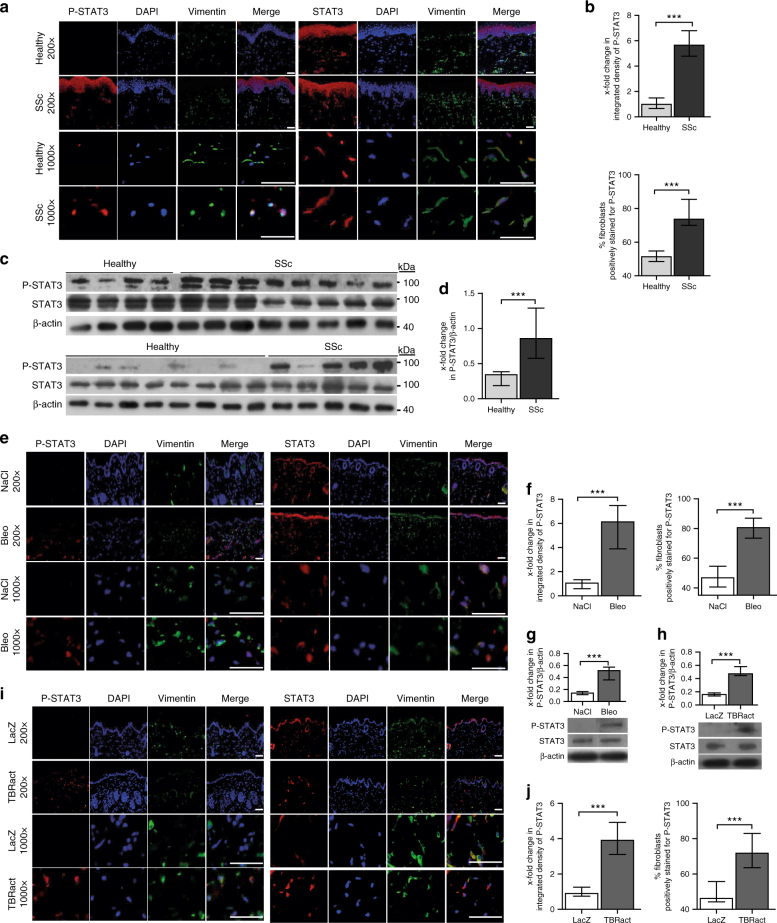
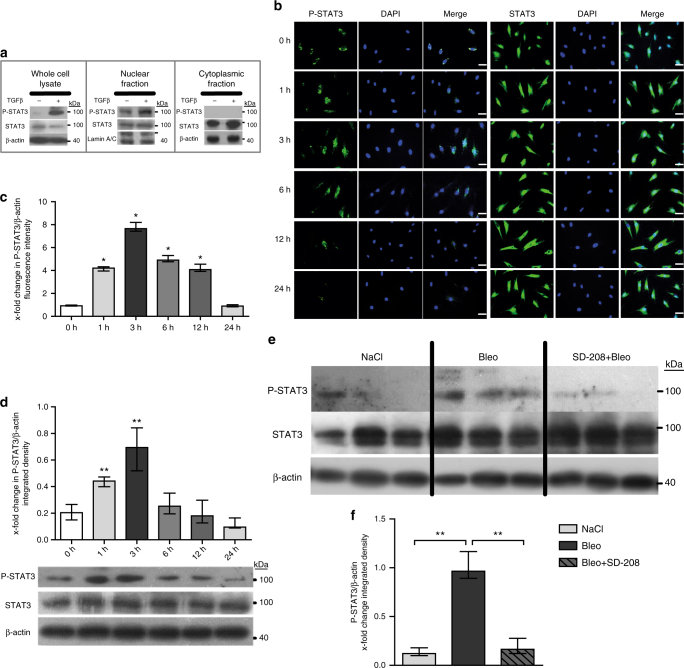
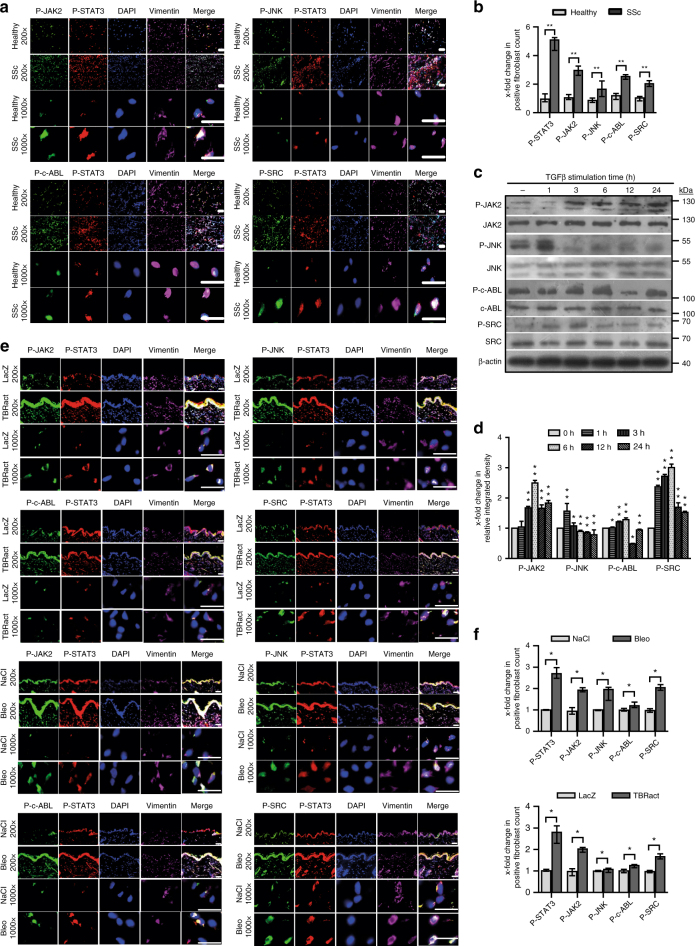
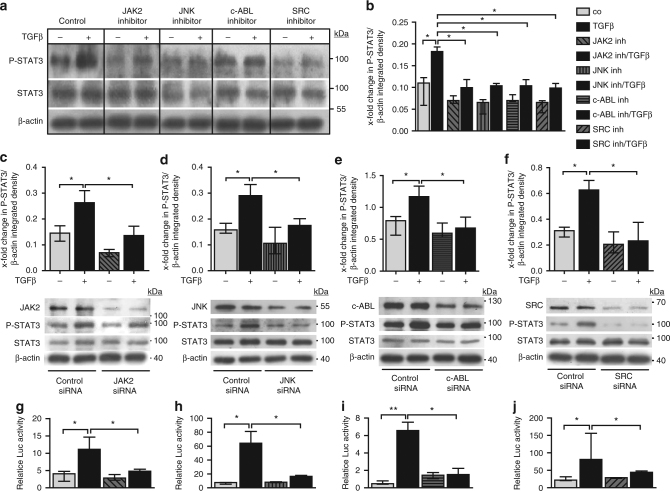
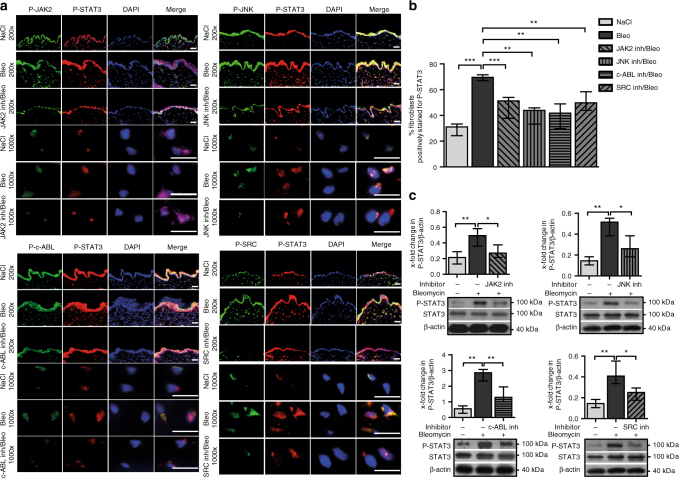
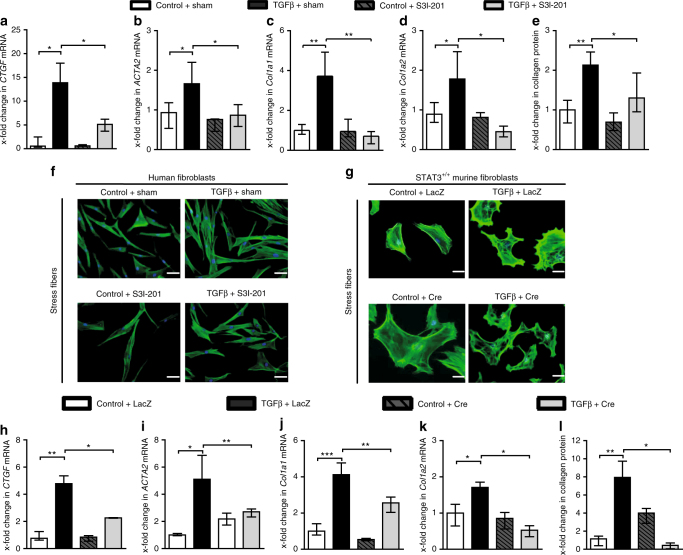
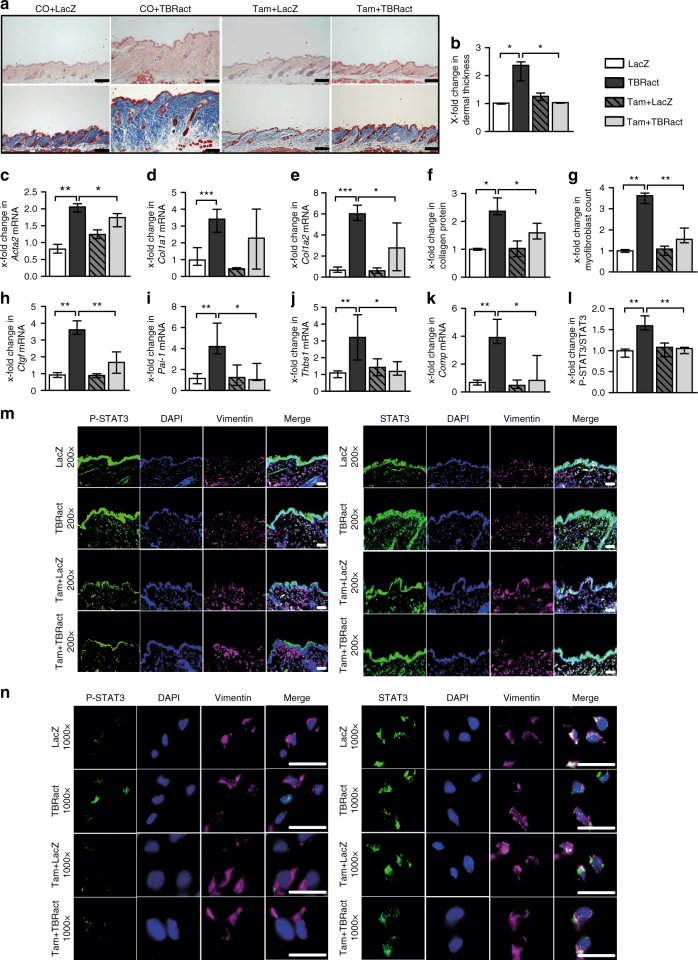
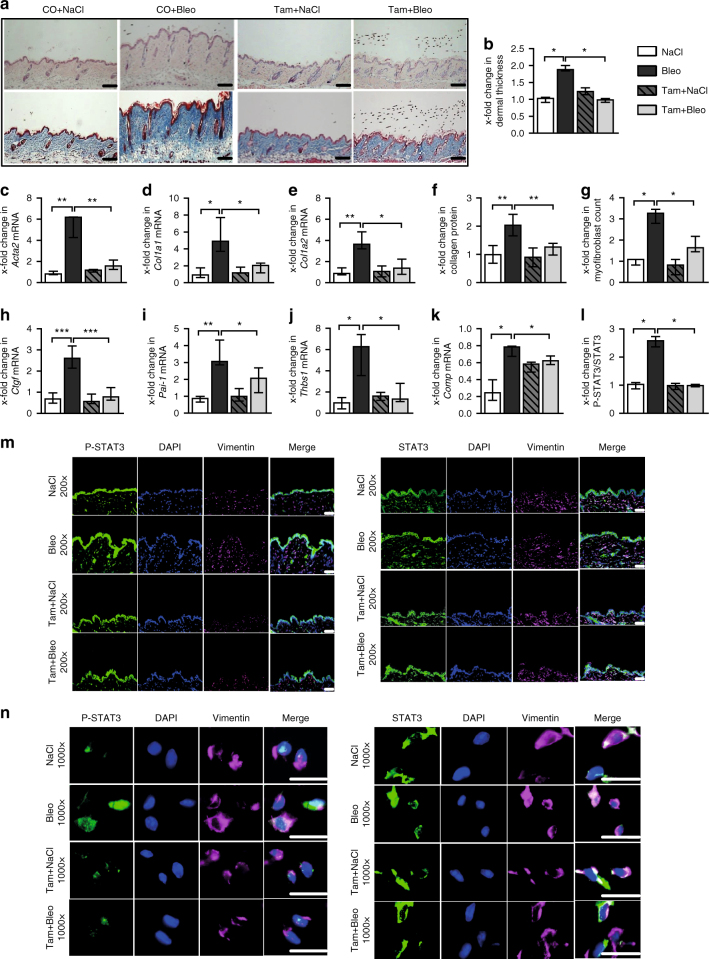
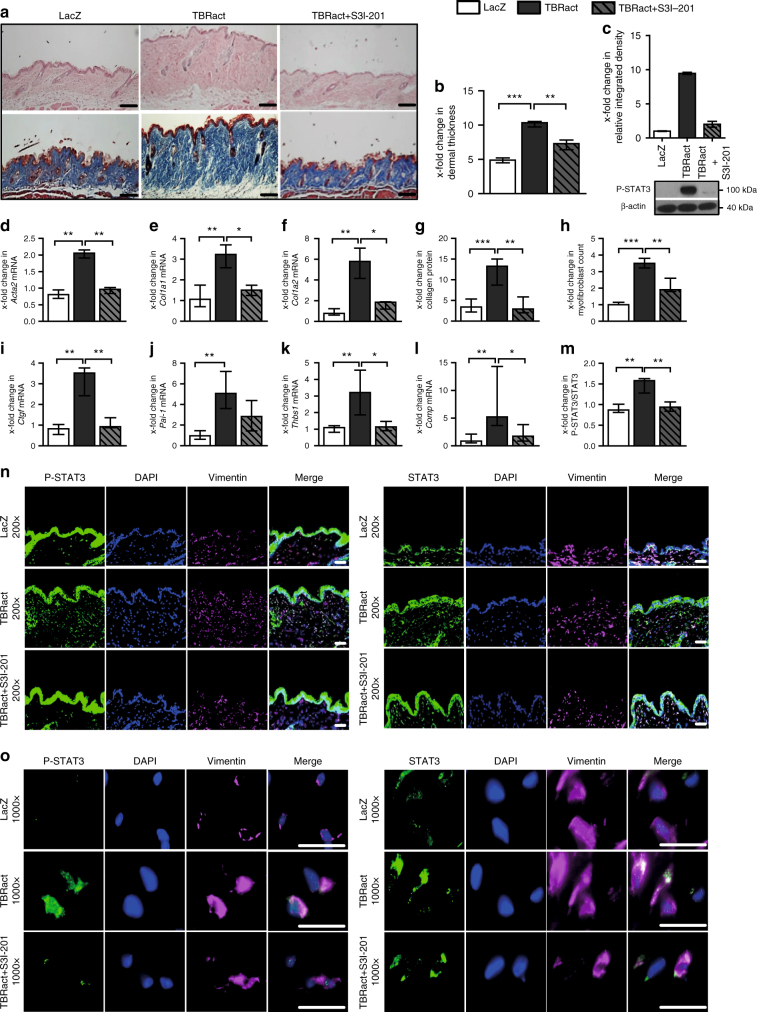
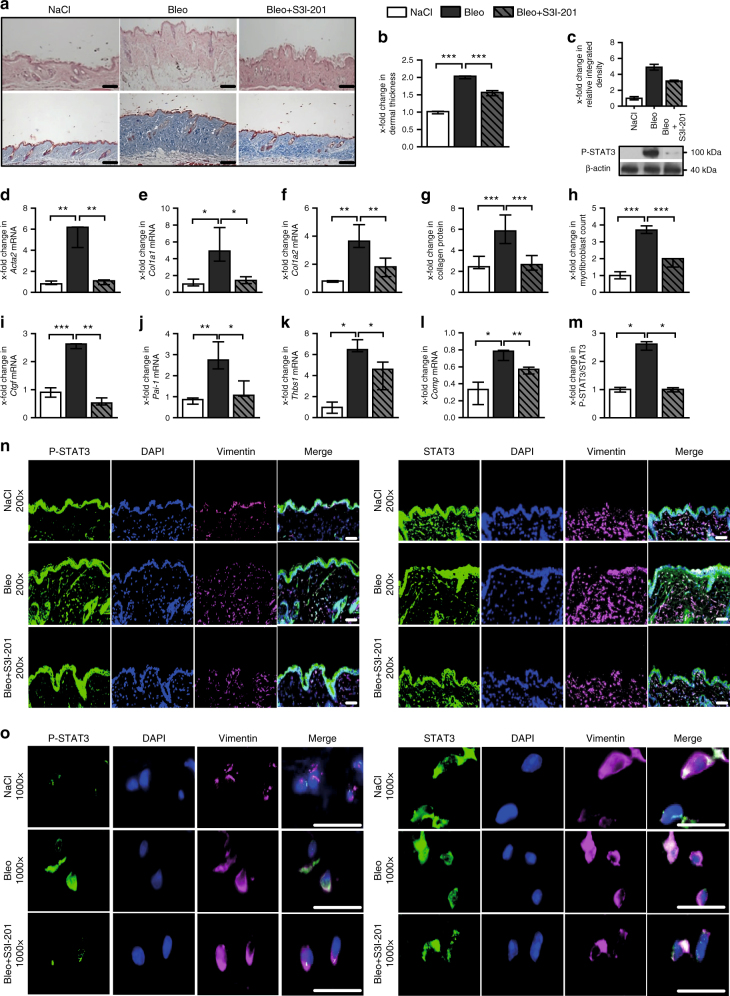
Signal transducer and activator of transcription 3 (STAT3) is phosphorylated by various kinases, several of which have been implicated in aberrant fibroblast activation in fibrotic diseases including systemic sclerosis (SSc). Here we show that profibrotic signals converge on STAT3 and that STAT3 may be an important molecular checkpoint for tissue fibrosis. STAT3 signaling is hyperactivated in SSc in a TGFβ-dependent manner. Expression profiling and functional studies in vitro and in vivo demonstrate that STAT3 activation is mediated by the combined action of JAK, SRC, c-ABL, and JNK kinases. STAT3-deficient fibroblasts are less sensitive to the pro-fibrotic effects of TGFβ. Fibroblast-specific knockout of STAT3, or its pharmacological inhibition, ameliorate skin fibrosis in experimental mouse models. STAT3 thus integrates several profibrotic signals and might be a core mediator of fibrosis. Considering that several STAT3 inhibitors are currently tested in clinical trials, STAT3 might be a candidate for molecular targeted therapies of SSc.
Overview
The claims and statistics of this paper haven’t been checked yet.
Free: it reads the open-access text and checks the first 5 claims that cite a source we can check. Create a free account to check every claim.
Integrity signals
Registry
Cites
Statistics
Figures
Verification
Claims the paper makes
The claims and statistics of this paper haven’t been checked yet.
Free: it reads the open-access text and checks the first 5 claims that cite a source we can check. Create a free account to check every claim.
Claims other papers make about this one
Each is checked against this paper’s own text: does it say what the citing paper says it does?
The source backs part of the claim, not all of it — or backs it for a different population, condition or comparison.
In the citing paper
“In SSc skin, STAT3 signaling is activated (81) resulting in pro-fibrotic gene expression in fibroblasts; for example, STAT3 regulates collagen type I expression in SSc skin fibroblasts (82). However, of note, in lungs of SSc patients no enhanced STAT3 activation can be observed (82).”
From Unraveling SSc Pathophysiology; The Myofibroblast (2018) · cites this paper as [81]
Experimental — accuracy not yet measuredThe source backs part of the claim, not all of it — or backs it for a different population, condition or comparison.
In the citing paper
“Both TTI-101 and S3I-201 have been tested in several mouse models of fibrosis, including bleomycin-induced lung and skin fibrosis (scleroderma) and genetically-engineered models of scleroderma, as well as a model mouse of interstitial kidney fibrosis induced by unilateral ureteral obstruction, in which inhibition of STAT3 phosphorylation by these compounds blocks the development of organ fibrosis”
From Targeting Janus Kinases and Signal Transducer and Activator of Transcription 3 To Treat Inflammation, Fibrosis, and Cancer: Rationale, Progress, and Caution (2020) · cites this paper as Chakraborty et al., 2017
Experimental — accuracy not yet measuredIn the citing paper
“Importantly, in both bleomycin induced skin and lung fibrosis in mice, knockout or pharmacological inhibition of STAT3 ameliorates fibrosis (83) (81). Furthermore, in both models, STAT3 was shown to be downstream of TGFβ signaling, as inhibition of STAT3 prevented TGFβ-induced myofibroblasts formation (81, 83).”
From Unraveling SSc Pathophysiology; The Myofibroblast (2018) · cites this paper as [81]
Self-check
Percentages, sums and reported differences re-computed from the paper’s own numbers.
The self-check needs the paper’s full text.
Citations
Cites
1 retracted
Ruzehaji, N., Avouac, J., Elhaï, M., Fréchet, M., Frantz, C., Ruiz, B., Distler, J. H. W., & Allanore, Y. (2015) · Arthritis Research & Therapy · doi:10.1186/s13075-015-0659-5 · Cited by 42
Self-citationRetractedSmad-dependent and Smad-independent pathways in TGF-β family signalling
Derynck, R., & Zhang, Y. E. (2003) · Nature · doi:10.1038/nature02006 · Cited by 5,373
Cellular and molecular mechanisms of fibrosis
Wynn, T. (2008) · The Journal of Pathology · doi:10.1002/path.2277 · Cited by 4,495
STATs in cancer inflammation and immunity: a leading role for STAT3
Yu, H., Pardoll, D., & Jove, R. (2009) · Nature reviews. Cancer · doi:10.1038/nrc2734 · Cited by 4,383
van den Hoogen, F., Khanna, D., Fransen, J., Johnson, S. R., Baron, M., Tyndall, A., Matucci‐Cerinic, M., Naden, R. P., Medsger, T. A., Carreira, P. E., et al. (2013) · Arthritis & Rheumatism · doi:10.1002/art.38098 · Cited by 3,409
Self-citationMassagué, J. (2012) · Nature Reviews Molecular Cell Biology · doi:10.1038/nrm3434 · Cited by 3,128
Massagué, J., Seoane, J., & Wotton, D. (2005) · Genes & Development · doi:10.1101/gad.1350705 · Cited by 2,452
TGF-β signaling and the fibrotic response
Leask, A., & Abraham, D. J. (2004) · The FASEB Journal · doi:10.1096/fj.03-1273rev · Cited by 2,319
Zhong, Z., Wen, Z., & Darnell, J. E. (1994) · Science · doi:10.1126/science.8140422 · Cited by 2,070
Non-Smad pathways in TGF-β signaling
Zhang, Y. E. (2009) · Cell Research · doi:10.1038/cr.2008.328 · Cited by 1,749
Cited by
Items 301–364 of 364
Refractory papulonodular mucinosis successfully treated with tofacitinib
Luo, S., & Fang, S. C. (2024) · Clinical and Experimental Dermatology · doi:10.1093/ced/llae438 · Cited by 1
Chen, F., Yijie, W., Tang, K., Zhao, Q. P., Sha, W., Gu, X., Dongping, Y., Wu, J., Zhou, H., Dan, S., et al. (2025) · International Journal of Pharmaceutics · doi:10.1016/j.ijpharm.2025.125320 · Cited by 1
Circadian clock regulation of myofibroblast fate
Tsoneva, Y., Velikova, T. V., & Nikolaev, G. (2025) · Cellular Signalling · doi:10.1016/j.cellsig.2025.111774 · Cited by 1
WNT3a induces external anal sphincter fibrosis and dysfunction in rabbits
Thippeswamy, J., Mamachan, M., Shin, J., Rudramurthy, S. H., Selvam, M. K. P., Rajasekaran, M., & Mittal, R. K. (2026) · American Journal of Physiology-Gastrointestinal and Liver Physiology · doi:10.1152/ajpgi.00349.2025 · Cited by 1
Caballero-Ruiz, B., Wasson, C. W., Ross, R. L., & Galdo, F. D. (2026) · Arthritis & Rheumatology · doi:10.1002/art.70104 · Cited by 1
Zhang, Y., Shen, L., Zheng, J., Baur, G., Yasen, D., Zhu, H. P., Li, Y., Meng, X., Trinh‐Minh, T., Filla, T., et al. (2026) · Arthritis & Rheumatology · doi:10.1002/art.70228 · Cited by 2
Self-citationBonollo, F., Hanhart, D., de Brot, S., Cheng, W., Chouvardas, P., Roth, B., Thalmann, G. N., Sampson, N., Julio, M. K., & Karkampouna, S. (2026) · Communications Biology · doi:10.1038/s42003-026-10297-7 · Cited by 1
Ge, Q., Zhang, Q., Chen, R., Wu, D., Zhangdi, H., Guo, Y. P., Wang, J., Yang, Y., Chen, G., Jian, J., et al. (2026) · Liver International · doi:10.1111/liv.70716 · Cited by 1
Chen, X., Yuan, F., Wang, K., & Yin, J. (2026) · European Journal of Clinical Pharmacology · doi:10.1007/s00228-026-04112-9 · Cited by 1
“By depleting CD20 + B cells, rituximab reduces autoantibody production and inhibits profibrotic cytokines like IL-6 and TGF-β, thereby attenuating disease progression [ 36, 37 ].”
Charoenthanakitkul, D., & Ariyachet, C. (2026) · International Journal of Molecular Medicine · doi:10.3892/ijmm.2026.5962 · Cited by 2
“Increased STAT3 activation in dermal fibroblasts and immune cells promotes myofibroblast differen‑ tiation, ECM production and fibrotic gene expression, whereas pharmacological inhibition of STAT3 markedly attenuates dermal fibrosis (137,138).”
Horch, R. E., Ludolph, I., Schmitz, M., Boos, A. M., Kneser, U., Beier, J. P., & Arkudas, A. (2018) · Plastic and Aesthetic Research · doi:10.20517/2347-9264.2018.25 · Cited by 1
“Methods of tissue engineering and regenerative medicine([37-51]) to circumvent the use of autologous tissue and their inherent donor site morbidity seem promising but are not clinically available for these problems yet.”
BackgroundSelf-citationKore, R. A., Jenkins, S. V., Jamshidi‐Parsian, A., Tackett, A. J., Griffin, R. J., Ayyadevara, S., & Mehta, J. L. (2023) · Biochemistry and Biophysics Reports · doi:10.1016/j.bbrep.2023.101463 · Cited by 1
“Phosphorylation of SMAD3 increases the phosphorylation of STAT3 leading to increased expression of pro-fibrotic proteins in the fibroblasts [28].”
BackgroundTofacitinib for the treatment of severe rare skin diseases: a narrative review
Luo, F., Zhang, Y., & Wang, P. (2024) · European Journal of Clinical Pharmacology · doi:10.1007/s00228-024-03621-9 · Cited by 1
“Additionally, recent research has shown that JAK participates in the activation of STAT 3, which integrates profibrotic signals to promote fibrosis [95].”
Pan, H., Zhao, Z., Zhu, Y., Gao, Y., Ruan, H., Huang, Y., Chi, P., & Huang, S. (2024) · Journal of Proteomics · doi:10.1016/j.jprot.2024.105287 · Cited by 1
Liu, Y., Li, Q., Fang, L., Hu, X., Pan, Z., Hu, Q., Cheng, M., Tao, X., Zhang, Y., & Huang, P. (2024) · Journal of Functional Foods · doi:10.1016/j.jff.2024.106463 · Cited by 1
Zhu, S., Sun, W., Ye, Z., & Jia, W. (2025) · Biochimica et Biophysica Acta (BBA) - Molecular Basis of Disease · doi:10.1016/j.bbadis.2025.167893 · Cited by 1
Identification of Molecular Subgroups in Liver Cirrhosis by Gene Expression Profiles
Zhang, Y., Sun, F., Li, X., Liu, Q., Chen, Z.-M., & Guo, Y. (2022) · Hepatitis Monthly · doi:10.5812/hepatmon.118535
Faculty Opinions recommendation of PU.1 controls fibroblast polarization and tissue fibrosis.
Nanchahal, J. (2020) · Faculty Opinions – Post-Publication Peer Review of the Biomedical Literature · doi:10.3410/f.734947940.793569335
Distler, J. H. W., & Hallén, J. (2024) · Arthritis & Rheumatology · doi:10.1002/art.42823
Self-citationSuarez, A. A. R. (2019) · theses.fr (ABES) · doi:10.70675/ddbff38dza323z44b2za1ddzc96f4d14950e
Characterizing the Role of Palmitoylation in Cardiac Fibroblast Activation and Fibrosis
Goldsmith, R. (2024) · Deep Blue (University of Michigan) · doi:10.7302/23113
He, S., Chen, X., Cheng, Q., Zhu, L., Zhang, P., Tong, S., Xue, J., & Du, Y. (2024) · PubMed Central · doi:10.19723/j.issn.1671-167x.2024.03.018
Gonçalves, A., Machado, R., & Gomes, A. C. (2024) · Biomaterials Advances · doi:10.1016/j.bioadv.2024.214150
Additional file 1 of Inositol possesses antifibrotic activity and mitigates pulmonary fibrosis
Li, J.-M., Chang, W.-H., Li, L., Yang, D. C. H., Hsu, S.-W., Kenyon, N. J., & Chen, C.-H. (2024) · Figshare · doi:10.6084/m9.figshare.26589909
Self-citationMilani, M., Mammarella, E., Rossi, S., Miele, C., Lattante, S., Sabatelli, M., Cozzolino, M., D’Ambrosi, N., & Apolloni, S. (2021) · Figshare · doi:10.6084/m9.figshare.14775706
Song, Z., Liu, X., Zhang, W., Luo, Y., Xiao, H., Liu, Y., 戴, 冠., Hong, J., & Li, A. (2022) · Figshare · doi:10.6084/m9.figshare.19522679
Chakraborty, D. (2023)
Self-citationSteffen, D. (2023) · eScholarship (California Digital Library) · Cited by 1
Cumming, J. (2023) · DiVA at Umeå University (Umeå University)
Changes in transcription and phospho-signalling in breast tumour hypoxia and hypoxia-reoxygenation
Aboalmaaly, A. (2024) · Nottingham ePrints (University of Nottingham)
Ratsimandresy, R. A., Doran, E., Dengler, H. S., Headland, S. E., Wedeles, C. J., Guidi, R., Xu, D., Liu, J., Shi, Y., Wang, J., et al. (2025) · bioRxiv (Cold Spring Harbor Laboratory) · doi:10.64898/2025.12.25.695625 · Cited by 1
Causal relevance of the JAK/STAT pathway for cardioprotection via cold acclimation
Kasík, P., Galatik, F., Matous, P., Páral, P., Vašek, D., Hornikova, D., Elsnicová, B., & Zurmanova, J. M. (2026) · Scientific Reports · doi:10.1038/s41598-026-40532-4
“Thus, chronic, uninhibited STAT3 signaling may cause maladaptive remodeling 73–75 .”
Smarce1-dependent modulation of Stat3 signaling governs cardiomyocyte proliferation
Park, D.-D., Boos, A., Hermann, A., Kim, S. Y., Rottbauer, W., & Just, S. (2026) · Biological Research · doi:10.1186/s40659-026-00681-2
“Beyond the epicardium, Stat3 plays a central role in fibroblast biology, driving profibrotic gene expression and fibroblast-to-myofibro-blast transition in part through crosstalk with TGF-β signaling [34, 35].”
The Immunomodulatory Effects of Arsenic Trioxide in Autoimmunity and Alloreactivity
Ye, Y. (2019) · theses.fr (ABES) · doi:10.70675/65bfdcabzdb07z4be1z9c7czaa4093c44245
Les lymphocytes T folliculaires auxiliaires dans la sclérodermie systémique
Ricard, L. (2019) · theses.fr (ABES) · doi:10.70675/bef55222zfe07z4dddz9452z5d593b588ba1
Sgp130Fc regulates IL-6/JAK2/STAT3 trans-signaling pathway in rat vocal fold fibroblast activation
Gao, M., Li, X., Wang, H., Lin, Y., Hu, R., & Xu, W. (2026) · Experimental Cell Research · doi:10.1016/j.yexcr.2026.115019 · Cited by 1
La voie JAK/STAT : cible potentielle pour une médecine personnalisée dans la sarcoïdose
Iskounen, T. (2024) · theses.fr (ABES) · doi:10.70675/00fbfed0za969z457ez8cc2z0aa7974831b0
Ye, L., Jiang, Z., Wu, Y. J., Zeng, Y., Chen, X., Feng, B., Yin, L., Gao, Y., Xu, W., Yan, S., et al. (2026) · Journal of the American Society of Nephrology · doi:10.1681/asn.0000001081
Anderson-Crannage, M. (2026) · Touro Scholar (Touro College)
Can we cure primary biliary cholangitis?
Trivedi, P. J., Hirschfield, G. M., & Gershwin, M. E. (2026) · Current Opinion in Immunology · doi:10.1016/j.coi.2026.102786
Torok, K. S., & Foeldvari, I. (2026) · Elsevier eBooks · doi:10.1016/b978-0-443-11980-4.00031-3
Živić, K., Pavlović, M., Ostojić, M., Galun, D. A., Pavić, A., Srdić-Rajić, T., & Grahovac, J. (2026) · Cells · doi:10.3390/cells15111032
“IL-6/STAT3 signaling also contributes to tissue fibrosis [68], and the inhibition of IL-6 signaling has shown promising results in the inhibition of pancreatic tumor progression [69].”
S100A10-ANXA2 tetramer inhibition hampers hepatic stellate cell activation in human MASLD organoids
Türkal, M., Maeder, C., de Sousa, M. C., Fournier, M., Harane, S. E., Gjorgjieva, M., Foti, M., Maechler, P., & Delangre, E. (2026) · EMBO Molecular Medicine · doi:10.1038/s44321-026-00464-y · Cited by 2
“…in ongoing or completed early-phase clinical trials, including TTI-101 (solid tumours) and danvatirsen (hematologic malignancies) as well as feasibility study testing STA-21 in psoriasis (Chakraborty et al, 2017; Li et al, 2015; Miyoshi et al, 2011; Reilley et al, 2018; Tsimberidou et al, 2025).”
Donato, S. D., Truchetet, M., Minerba, M., Distler, O., Sancho, J. J. A., Braun‐Moscovici, Y., Bergmann, C., Sfikakis, P. P., Vries-Bouwstra, J. K. D., Baron, M. G., et al. (2026) · Arthritis Care & Research · doi:10.1002/acr.80100
Self-citationLi, X. B., Chen, J., Tian, H., & 张光军 (2026) · Discover Oncology · doi:10.1007/s12672-026-05201-y
“Given that several STAT3 inhibitors are already in clinical trials [27], combination approaches that also suppress CPVL expression could enhance therapeutic efficacy.”
Digoxin inhibits HIF-1α to attenuate inflammation and fibrosis in thyroid eye disease
Ling, J., Gong, C., Ye, H., Tang, M., Wang, D., Gao, X., Xing, C., Wu, G., Li, X., Bi, S., et al. (2026) · Biochemical and Biophysical Research Communications · doi:10.1016/j.bbrc.2026.154287
Engineered models of skin fibrosis: from biomaterial-free to biomaterial-based in vitro systems
Amaral, S., Presa, R., & Pereira, R. F. (2026) · Biomaterials Science · doi:10.1039/d6bm00232c
Daser, A., Gulbins, A., Horstmann, M., Kalisch, J., Nolte, I., Hashemi, F., Lang, S., Mattheis, S., Bechrakis, N. E., Banga, J. P., et al. (2026) · European Thyroid Journal · doi:10.1530/etj-25-0407
“This underscores the broader relevance of a TNFα–IL-6 axis (41, 42, 43, 44, 45).”
Srichan, S., Khuituan, P., Dejyong, K., Duangtum, N., Jiangsakul, J., Yoksiri, C., Hautavanija, N., Sangjun, S., Hayeeawaema, F., Chavasiri, W., et al. (2026) · Biomedicine & Pharmacotherapy · doi:10.1016/j.biopha.2026.119820
Isife, S., Bush, T., Medasani, I., Towler, M. J., & Weathers, P. J. (2026) · Molecules · doi:10.3390/molecules31162745
Gao, L., Chen, Z., Wang, Y., Gao, J., Yan, N., & Huang, K. (2026) · Annals of Vascular Surgery · doi:10.1016/j.avsg.2026.07.045
Network pharmacology and molecular docking reveal the mechanisms of XOL in treating heart failure
Qu, X., Wang, S., Ma, W., Ma, X., Liu, J., Yang, X., & Sun, Y. (2026) · Archives of Biochemistry and Biophysics · doi:10.1016/j.abb.2026.110977
Chen, X., Yang, T., Tang, X., Guo, M., He, L., & Li, Y. (2026) · Current Issues in Molecular Biology · doi:10.3390/cimb48090879
A first‐in‐human study of CAL101, a monoclonal antibody targeting S100A4
Hallén, J., Vetrhus, S., Sørgaard, M., Klingelhöfer, J., Borchert, S. V., Holyer, I., Ramesh, S., Distler, J. H. W., & Singh, D. (2026) · British Journal of Clinical Pharmacology · doi:10.1002/bcp.70808
Self-citationLi, Z., Ren, R., Wang, Y., Fan, Z., Zhang, Y., Fu, J., Huang, J., Huang, Y., Zhang, K., & Li, Q. (2026) · Stem Cells International · doi:10.1155/sci/4935728
“For example, in systemic sclerosis fi broblasts, JNK, together with other kinases such as JAK and SRC, has been implicated in STAT3 activation [60].”
Alotaibi, A., Bhowmik, K. K., Kumar, V., Abou-Gharbia, M. A., Childers, W. E., & Sari, Y. (2026) · Biomedicines · doi:10.3390/biomedicines14102250
“STAT-3 has been linked to the regulation of inflammation and fibrosis, which are activated by IL-6 and other inflammatory factors [57].”
Gao, Z., Zhao, Q., Li, B., Wang, S., & Wang, L. (2026) · International Immunopharmacology · doi:10.1016/j.intimp.2026.117505
Wang, H., Zhao, A., Li, X., Hu, R., & Xu, W. (2026) · World Journal of Otorhinolaryngology - Head and Neck Surgery · doi:10.1002/wjo2.70167
“Myofibroblasts can cause fibrotic lesions in different organs and tissues, including the liver, kidneys, and lungs, despite their short lifespan [4–7].”
InfluentialBindingDB Entry 50012378: Discovery and Biological Evaluation of
BindingDB (2022) · UC San Diego · doi:10.7270/q2w95dtd
Gülle, S., Barış, M., Lebe, B., Ulukuş, Ç., Harmancı, D., Çelik, A., Bırlık, M., & Yılmaz, O. (2026) · Biomedicines · doi:10.3390/biomedicines14112468
Metadata
- Authors
- Chakraborty, D., Šumová, B., Mallano, T., Chen, C.-W., Distler, A., Bergmann, C., Ludolph, I., Horch, R. E., Gelse, K., Ramming, A., Distler, O., Schett, G., Šenolt, L., & Distler, J. H. W.
- Affiliations
- Friedrich-Alexander-Universität Erlangen-Nürnberg (DE)
- University Hospital Zurich (CH)
- Charles University (CZ)
- Corresponding author
- Distler, Jörg H. W.
- ORCID
- Venue
- Nature Communications
- Published
- 2017-10-24
- Volume
- 8
- Issue
- 1
- Pages
- 1130-1130
- ISSN
- 2041-1723 (ISSN-L)
- PMC
- PMC5654983
- OpenAlex
- W2766965802
- Cited by
- 356
- References
- 70
- Citations by year
- 2026: 31 · 2025: 36 · 2024: 48 · 2023: 36 · 2022: 46 · 2021: 60 · 2020: 48 · 2019: 32 · 2018: 18 · 2017: 1
- FWCI
- 21.26
- Type
- journal article
- Language
- en
- Update notices
- correction (2021-12-08)
- Open access
- gold
- doi.org
- Licence
- cc-by
- creativecommons.org/licenses/by/4.0 (tdm)
- creativecommons.org/licenses/by/4.0 (vor)
- Locations
- Nature Communications (publishedVersion, cc-by)
- PubMed Central (publishedVersion, cc-by)
- PubMed (publishedVersion)
- Zurich Open Repository and Archive (University of Zurich) (acceptedVersion, cc-by)
- RePEc: Research Papers in Economics (submittedVersion)
- DOAJ (DOAJ: Directory of Open Access Journals) (submittedVersion, cc-by-sa)
- Zurich Open Repository and Archive (University of Zurich) (submittedVersion, cc-by)
- Zurich Open Repository and Archive (University of Zurich)
- Funders
- Deutsche Forschungsgemeinschaft (CRC‐1181, DI 1537/11‐1, DI 1537/, DI 1537/8-1, Project C01, DI 1537/9‐1, DI 1537/7-1, 2013.056.1, DE2414/2-1)
- Ministerstvo Zdravotnictví Ceské Republiky (#00023728)
- Topics
- Health Sciences › Medicine › Rheumatology › Systemic Sclerosis and Related Diseases
- Life Sciences › Immunology and Microbiology › Immunology › Cytokine Signaling Pathways and Interactions
- Life Sciences › Biochemistry, Genetics and Molecular Biology › Molecular Biology › TGF-β signaling in diseases
- Keywords
- STAT3, systemic sclerosis, fibroblast activation, fibrosis, TGF-beta signaling, JAK kinases, Src kinase, c-Abl kinase, JNK kinase, skin fibrosis, STAT3 inhibitor, targeted therapy
- MeSH terms
- Adolescent, Adult, Aged, Aminosalicylic Acids, Animals, Benzenesulfonates, Biopsy, Bleomycin, Collagen, Enzyme Activation, Female, Fibroblasts, Fibrosis, Humans, Inflammation, Male, Middle Aged, Phosphorylation, Scleroderma, Systemic, Skin, Signal Transduction, Transforming Growth Factor beta, Receptors, Transforming Growth Factor beta, Microscopy, Confocal, STAT3 Transcription Factor, Mice, Young Adult
About these checks
Registry, retraction, Cites and statistics results are computed, not judged, with one exception: a printed reference that no index lists is read once by a model before it counts as a citation error. Claims are extracted by a model and kept only when their quote appears verbatim in the text; each cited source is then checked, with a model’s help, for whether it says what the claim relies on. Those verdicts can be wrong — read the claim’s quote and the cited source before relying on one.
Statistics and arithmetic are recomputed, not judged.
Confidence bands are shown only for fields calibrated on our annotated test set. None is calibrated yet, so no band is shown.
What counts as a claim ›How we measure confidence ›How we check this ›
Are you an author, or do you see a problem with this page? Request a review
Data sources
Bibliographic data: Semantic Scholar, OpenAlex, Crossref.
Contains information from the Semantic Scholar Academic Graph Datasets, made available under the ODC Attribution License (ODC-BY 1.0).
Semantic Scholar’s data is described in: Kinney, R., et al. (2023). The Semantic Scholar Open Data Platform. arXiv:2301.10140.
