

Microbiota derived short chain fatty acids promote histone crotonylation in the colon through histone deacetylases
Open accessThe DOI matches its Crossref record; 51 of the 51 references it cites were found in a registry or an index.
Abstract
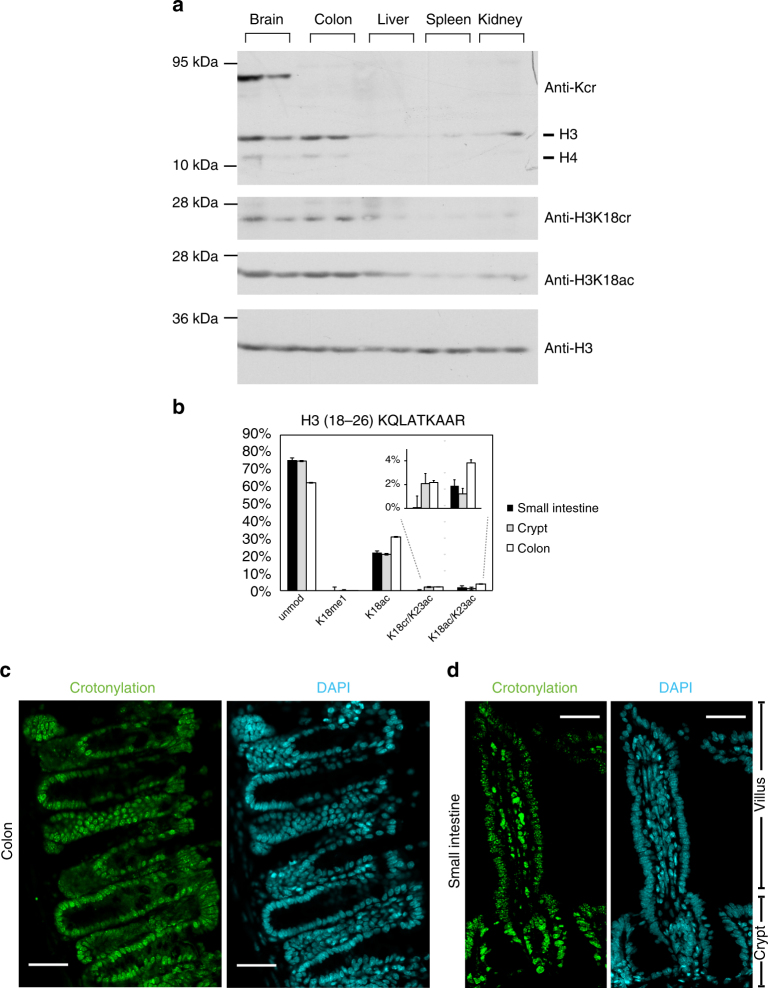
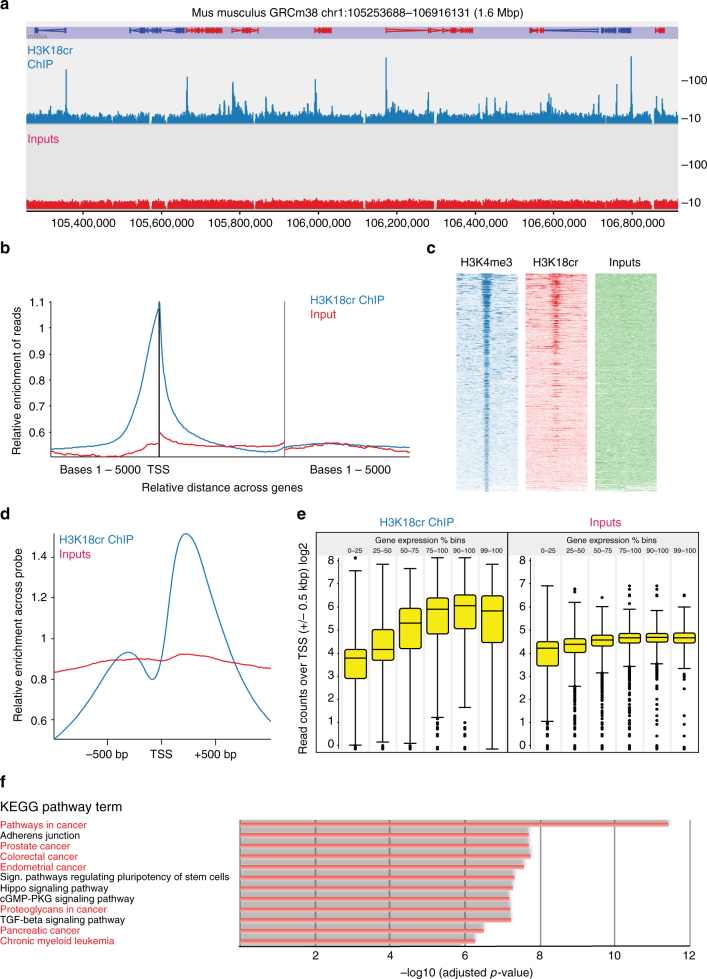
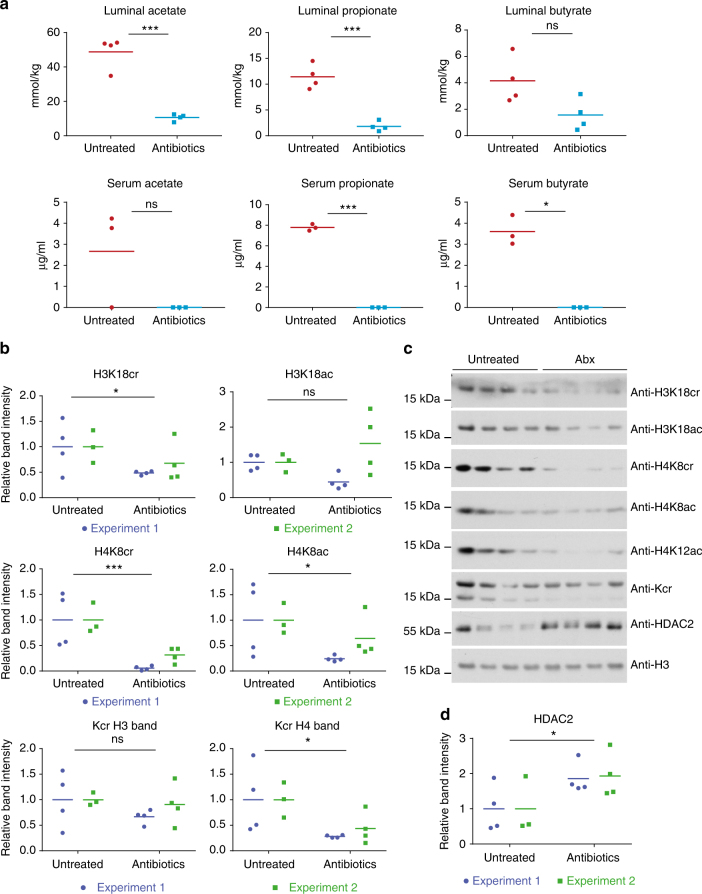
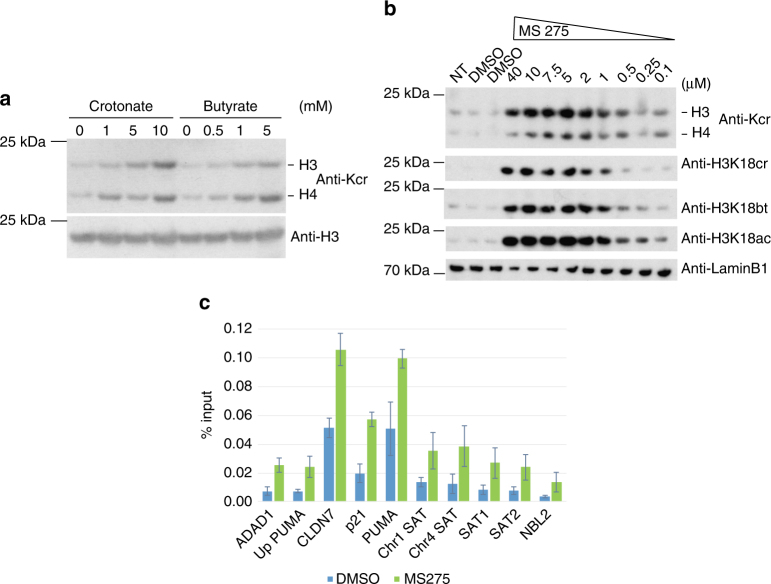
The recently discovered histone post-translational modification crotonylation connects cellular metabolism to gene regulation. Its regulation and tissue-specific functions are poorly understood. We characterize histone crotonylation in intestinal epithelia and find that histone H3 crotonylation at lysine 18 is a surprisingly abundant modification in the small intestine crypt and colon, and is linked to gene regulation. We show that this modification is highly dynamic and regulated during the cell cycle. We identify class I histone deacetylases, HDAC1, HDAC2, and HDAC3, as major executors of histone decrotonylation. We show that known HDAC inhibitors, including the gut microbiota-derived butyrate, affect histone decrotonylation. Consistent with this, we find that depletion of the gut microbiota leads to a global change in histone crotonylation in the colon. Our results suggest that histone crotonylation connects chromatin to the gut microbiota, at least in part, via short-chain fatty acids and HDACs.
Overview
The claims and statistics of this paper haven’t been checked yet.
Free: it reads the open-access text and checks the first 5 claims that cite a source we can check. Create a free account to check every claim.
Integrity signals
Registry
Cites
Statistics
Figures
Verification
Claims the paper makes
The claims and statistics of this paper haven’t been checked yet.
Free: it reads the open-access text and checks the first 5 claims that cite a source we can check. Create a free account to check every claim.
Claims other papers make about this one
Each is checked against this paper’s own text: does it say what the citing paper says it does?
The source backs part of the claim, not all of it — or backs it for a different population, condition or comparison.
In the citing paper
“Recently, HDAC1/2 have been implicated in the regulation of histone crotonylation levels in cells21,22.”
From Histone deacetylase (HDAC) 1 and 2 complexes regulate both histone acetylation and crotonylation in vivo (2018) · cites this paper as [22]
Experimental — accuracy not yet measuredThe source backs part of the claim, not all of it — or backs it for a different population, condition or comparison.
In the citing paper
“To date, decrotonylase activity has been described for HDAC1-3 and Sirtuins 1-316–18,21,22.”
From Histone deacetylase (HDAC) 1 and 2 complexes regulate both histone acetylation and crotonylation in vivo (2018) · cites this paper as [22]
Experimental — accuracy not yet measuredThe source backs part of the claim, not all of it — or backs it for a different population, condition or comparison.
In the citing paper
“histone crotonylation is catalyzed by HATs, which add a crotonyl group from crotonyl-coenzyme A (CoA) to amino acid residues of histones,111 while HDACs 1/2/3 and sirtuin 1/2/3, act as decrotonylases.180–182”
From Epigenetic regulation in major depression and other stress-related disorders: molecular mechanisms, clinical relevance and therapeutic potential (2023) · cites this paper as [180]
Experimental — accuracy not yet measuredThe cited source says what the claim attributes to it.
In the citing paper
“SCFAs have recently been implicated in histone crotonylation”
From The Microbiota-Gut-Brain Axis (2019) · cites this paper as Fellows et al., 2018
In the citing paper
“the gut microbiota and its related metabolites can disrupt the host's normal cell cycle, leading to changes in cell and protein expression that control cell division, DNA repair, and apoptosis (8,9).”
From The Role of Gut Microbiota in Lung Cancer: From Carcinogenesis to Immunotherapy (2021) · doi:10.3389/fonc.2021.720842 · cites this paper as [9]
7 more claims about this paper
Create a free account to see every claim other papers make about this one.
Self-check
Percentages, sums and reported differences re-computed from the paper’s own numbers.
The self-check needs the paper’s full text.
Citations
Cites
The Perseus computational platform for comprehensive analysis of (prote)omics data
Tyanova, S., Temu, T., Sinitcyn, P., Carlson, A., Hein, M. Y., Geiger, T., Mann, M., & Cox, J. (2016) · Nature Methods · doi:10.1038/nmeth.3901 · Cited by 8,803
From Dietary Fiber to Host Physiology: Short-Chain Fatty Acids as Key Bacterial Metabolites
Koh, A., De Vadder, F., Kovatcheva-Datchary, P., & Bäckhed, F. (2016) · Cell · doi:10.1016/j.cell.2016.05.041 · Cited by 7,070
The MaxQuant computational platform for mass spectrometry-based shotgun proteomics
Tyanova, S., Temu, T., & Cox, J. (2016) · Nature Protocols · doi:10.1038/nprot.2016.136 · Cited by 4,797
Rappsilber, J., Ishihama, Y., & Mann, M. (2003) · Analytical Chemistry · doi:10.1021/ac026117i · Cited by 2,644
The microbiome and butyrate regulate energy metabolism and autophagy in the mammalian colon
Donohoe, D. R., Garge, N., Zhang, X., Sun, W., O'Connell, T. M., Bunger, M. K., & Bultman, S. J. (2011) · Cell Metabolism · doi:10.1016/j.cmet.2011.02.018 · Cited by 2,003
Tan, M., Luo, H., Lee, S., Jin, F., Yang, J. S., Montellier, E., Buchou, T., Cheng, Z., Rousseaux, S., Rajagopal, N., et al. (2011) · Cell · doi:10.1016/j.cell.2011.08.008 · Cited by 1,902
HDACs and HDAC Inhibitors in Cancer Development and Therapy
Li, Y., & Seto, E. (2016) · Cold Spring Harbor Perspectives in Medicine · doi:10.1101/cshperspect.a026831 · Cited by 1,284
Growing Self-Organizing Mini-Guts from a Single Intestinal Stem Cell: Mechanism and Applications
Sato, T., & Clevers, H. (2013) · Science · doi:10.1126/science.1234852 · Cited by 1,170
Metabolic regulation of gene expression through histone acylations
Sabari, B. R., Zhang, D., Allis, C. D., & Zhao, Y. (2017) · Nature Reviews Molecular Cell Biology · doi:10.1038/nrm.2016.140 · Cited by 1,130
Sodium butyrate inhibits histone deacetylation in cultured cells
Candido, E. (1978) · Cell · doi:10.1016/0092-8674(78)90305-7 · Cited by 1,036
Cited by
Items 401–500 of 605
Acetyltransferase in cardiovascular disease and aging
Keller, M. A., & Nakamura, M. (2024) · The Journal of Cardiovascular Aging · doi:10.20517/jca.2024.21 · Cited by 9
Koppe, L., Beddhu, S., Chauveau, P., Kovesdy, C. P., Mafra, D., Joshi, S., Kalantar‐Zadeh, K., & Fouque, D. P. (2021) · Nephrology Dialysis Transplantation · doi:10.1093/ndt/gfab033 · Cited by 6
Chemical Biology Tools for Protein Lysine Acylation
Xie, Y., Du, S., Liu, Z., Liu, M., Xu, Z., Wang, X., Kee, J. X., Yi, F., Sun, H., & Yao, S. Q. (2022) · Angewandte Chemie · doi:10.1002/ange.202200303 · Cited by 6
Slight Changes in the Gut Microbiome in Early-stage Chronic Kidney Disease of Unknown Etiology
Banjong, D., Pongking, T., Tran, N. T. D., Pinlaor, S., Dangtakot, R., Intuyod, K., Anutrakulchai, S., Cha’on, U., & Pinlaor, P. (2023) · Microbes and Environments · doi:10.1264/jsme2.me22097 · Cited by 6
“Serum SCFAs were detected using GC-MS as previously descri‐ bed with slight modifications (Fellows et al. , 2018).”
MethodSimpson, S., Kimbrough, A., Peters, G., Wellmeyer, E., Mclellan, R., Walker, N., Jia, H., Hu, S., Iyer, M. R., Sathish, V., et al. (2022) · bioRxiv (Cold Spring Harbor Laboratory) · doi:10.1101/2022.07.23.501268 · Cited by 6
“SCFAs act as ligands for g-protein coupled receptors found throughout the body and the brain, histone deacetylase inhibitors which modify gene expression profiles, and influence inflammatory responses by reducing the recruitment and migration of immune cells (Jayasimhan and Marino, 2019; Kimura et al., 2011; Müller et…”
BackgroundZhang, Z., Wu, D., Li, X., Jia, Y., Qi, J., Harmon, D. L., & Xu, M. (2025) · Tropical Animal Health and Production · doi:10.1007/s11250-025-04464-x · Cited by 5
“Butyrate essentially serves as a natural energy source for intestinal epithelial cells, aiding in cell proliferation and repair of cellular damage (Fellows et al. 2018).”
The Role of the Microbiome in Endometriosis
Sanabani, S. S. (2025) · Reproductive Sciences · doi:10.1007/s43032-025-01985-6 · Cited by 6
“Histone modifications are another crucial layer of epi - genetic control, and their regulation is highly sensitive to microbial metabolites [36].”
Unveiling hidden players: the role of intratumoral microbiota in gastrointestinal cancer dynamics
Tang, W., Li, F., Zheng, H., Zhou, S., Li, C., Xu, X., & Fu, J. (2025) · Journal of Cancer Research and Clinical Oncology · doi:10.1007/s00432-025-06401-9 · Cited by 5
“Butyrate-mediated HDAC inhibition results in histone hyperacetylation, predominantly at H4K18 residues, leading to chromatin relaxation and transcriptional activation of tumour-suppressive pathways (Fellows et al. 2018).”
Epigenetics and the gut–brain axis: Insights into DNA methylation, aging, and Alzheimer disease
Kumar, V., Shukla, R., Gangani, S., Joseph, R., Jain, S., & Yadav, H. (2026) · Journal of Pharmacology and Experimental Therapeutics · doi:10.1016/j.jpet.2026.104299 · Cited by 6
Martínez‐Gopar, P. E., Guzmán‐Mejía, F., Godínez‐Victoria, M., Flores-Valente, J., Molotla‐Torres, D. E., & Drago-Serrano, M. E. (2026) · Biomedicines · doi:10.3390/biomedicines14040791 · Cited by 5
“Together, these microbiota-dependent mechanisms reinforce the mucus, epithelial, and antimicrobial components of the intestinal barrier and help explain how microbiota-derived metabolites mediate the protective effects of inulin on intestinal health [64] (Figure 2).”
Zhang, M., Lee, S., Huang, M., & Tan, M. (2024) · Life Medicine · doi:10.1093/lifemedi/lnae003 · Cited by 6
Ghajavand, B., Avesani, C. M., Stenvinkel, P., & Bruchfeld, A. N. (2024) · Journal of Renal Nutrition · doi:10.1053/j.jrn.2024.03.007 · Cited by 5
Zhang, Y., Xu, Y., Zheng, S., Lin, Y., Kang, D., & Yao, P. (2024) · Seizure · doi:10.1016/j.seizure.2024.09.005 · Cited by 5
2038 – When microbes rule the Earth
McGenity, T. J. (2018) · Environmental Microbiology · doi:10.1111/1462-2920.14449 · Cited by 5
Nutritional Biomarkers for Predicting Pancreatic Beta Cell Failure in Central Obesity
Rahman, M. N., Diantini, A., Fattah, M., & Barliana, M. I. (2021) · The Indonesian Biomedical Journal · doi:10.18585/inabj.v13i1.1440 · Cited by 7
Human microbiota: A crucial gatekeeper in lung cancer initiation, progression, and treatment
Zhou, Y., & Chen, T. (2022) · Medicine in Microecology · doi:10.1016/j.medmic.2022.100055 · Cited by 7
Chen, H., Lou, G., Meng, F., Zhang, Y., Kuang, H., & Yang, D. (2026) · Frontiers in Immunology · doi:10.3389/fimmu.2026.1734792 · Cited by 5
“This process triggers a cascade of pro-in fl ammatory cytokines, including IL-6, IL-8, and TNF-a , thereby establishing a persistently in fl ammatory microenvironment (145, 147).”
Proteostasis Deregulation by Metabolism Drives the Hallmarks of Cancer
Venkitaraman, A. R. (2026) · Annual Review of Biochemistry · doi:10.1146/annurev-biochem-051424-052148 · Cited by 4
Xie, J., Zhang, J., Zhang, L., & Chen, X. (2026) · Frontiers in Microbiology · doi:10.3389/fmicb.2026.1740680 · Cited by 5
“In addition to acetylation, SCFAs, via their respective acyl-CoA intermediates, can initiate other novel histone acylations, such as butyrylation (Kbu), propionylation (Kpr), and crotonylation (Kcr) (Fellows et al., 2018).”
Du, W., Xu, J., Li, Y., Zhang, M., Huang, Y., Zhao, S., Zhou, Y., Zhao, L., Xu, K., Zhai, L., et al. (2026) · Cell Metabolism · doi:10.1016/j.cmet.2026.05.016 · Cited by 5
Multiomics analysis uncovers host-microbiota interactions regulate hybrid vigor traits in geese
Ni, H., Yang, Y., Wang, C., Li, Z., Liu, W., Han, Y., Jiang, H., Sun, H., Li, Y., & Zhang, Y. (2025) · Poultry Science · doi:10.1016/j.psj.2025.105289 · Cited by 4
“The runtime for each analysis was 12.95 min (Fellows et al., 2018).”
InfluentialWang, H., Liang, Y., Boor, P. J., Khanipov, K., Zhang, Y., Yu, X., Ambati, C. S. R., Putluri, N., & Khan, M. F. (2025) · Journal of Nutrition · doi:10.1016/j.tjnut.2025.06.031 · Cited by 4
BMDD: A probabilistic framework for accurate imputation of zero-inflated microbiome sequencing data
Zhou, H., Chen, J., & Zhang, X. (2025) · PLoS Computational Biology · doi:10.1371/journal.pcbi.1013124 · Cited by 4
“For example, immune maturation and modulation [8,9], inflammatory cytokine production [10], host serum metabolome and insulin level [11], and host gene regulation [12] have all been shown to be linked to the human microbiome.”
Potential prebiotic functions of a characterised Ehretia macrophylla Wall. fruit polysaccharide
Xu, D., Li, L., Tang, X., Chen, J., Yan, W., Wang, L., Zhang, X., Li, B., & Yao, H. L. (2021) · International Journal of Food Science & Technology · doi:10.1111/ijfs.15005 · Cited by 6
Exploring functional metabolites and proteomics biomarkers in late-preterm and natural-born pigs
Chong, J., Wang, J., Zhong, H., Zhang, J., Ding, Y., Ge, L., Ma, J., & Sun, J. (2024) · Frontiers in Veterinary Science · doi:10.3389/fvets.2024.1340849 · Cited by 4
Gut microbiota dysbiosis: the hidden roles in human aging and age-related diseases
Zhan, Y., Su, W., & Liu, X. (2025) · Oral Science and Homeostatic Medicine · doi:10.26599/oshm.2025.9610012 · Cited by 5
Neumann, S., Peyroux, E. M., Woodall, M. J., Shields, N. J., Young, S. L., & Pattison, S. T. (2020) · IntechOpen eBooks · doi:10.5772/intechopen.88137 · Cited by 6
Livzan, M. A., & Gaus, O. V. (2021) · Russian Journal of Evidence-Based Gastroenterology · doi:10.17116/dokgastro20211003147 · Cited by 4
A fluorogenic probe targeting two spatially separated enzymes for selective imaging of cancer cells
Park, S.-H., Jung, H., Kim, Y., & Shin, I. (2022) · Chemical Communications · doi:10.1039/d2cc01082h · Cited by 4
Cross-feeding interactions of gut symbionts driven by human milk oligosaccharidesand mucins
Chia, L. W. (2018) · doi:10.18174/444432 · Cited by 6
“Butyrate and propionate to a lesser extent, can also be involved in the epigenetic regulation of host gene expression by inhibiting histone deacetylase (HDAC) (Fellows et al 2018).”
BackgroundInfluentialDecorating Histones in Polycystic Kidney Disease
Ramalingam, H., & Patel, V. (2022) · Journal of the American Society of Nephrology · doi:10.1681/asn.2022070750 · Cited by 4
Impact of Gut Microbiota on Bone Metabolism—Present Concepts and Therapeutic Implications
Toboła, M., & Kuryłowicz, A. (2026) · International Journal of Molecular Sciences · doi:10.3390/ijms27093865 · Cited by 3
“However, SCFAs also act as histone deacetylase (HDAC) inhibitors: by inhibiting class I and class II HDACs, they promote histone hyperacetylation, which alters gene expression and, in turn, induces cell cycle arrest and differentiation [34].”
Oral probiotic delivery-based therapeutic strategies for inflammatory bowel disease
Li, S., Deng, H., Fu, S., Li, J., Luo, X., Chen, Z., Wang, P., Feng, X., Chen, Y., Fu, C., et al. (2026) · Asian Journal of Pharmaceutical Sciences · doi:10.1016/j.ajps.2026.101187 · Cited by 2
“For example, butyrate has an anti-inflammatory effect by inhibiting histone deacetylases and NF-κ B pathways, which significantly reduces pro-inflammatory cytokines (TNF-α and IL-6) [ 100 ].”
Liang, Y., Li, S., You, X., Guo, Y., & Tang, J. (2023) · Current Bioinformatics · doi:10.2174/0115748936272040231117114252 · Cited by 3
Liang, H., Wang, Y., Li, J., & Zhang, K. (2025) · Scientific Reports · doi:10.1038/s41598-025-96874-y · Cited by 5
“Furthermore, alterations in lysine crotonylation levels have been implicated in the pathogenesis of various diseases 29 .”
Exploring the Vital Role of Microbiota Metabolites in Early-Life Health
Zhang, B., Lin, Y., Song, S., & Guo, H. (2025) · Journal of Nutrition · doi:10.1016/j.tjnut.2025.04.025 · Cited by 3
Gut microbiome and lung cancer: mechanisms, interactions, and dietary interventions
Chakraborty, J., Singh, N. L., & Das, B. K. (2025) · Gut Microbes Reports · doi:10.1080/29933935.2025.2501313 · Cited by 3
Anih, D. C., Arowora, K. A., Ugwuoke, K. C., Abah, M. A., & Habibu, B. (2025) · Science International · doi:10.17311/sciintl.2025.90.109 · Cited by 6
In vitro Enzymatic Assays of Histone Decrotonylation on Recombinant Histones
Fellows, R., & Varga‐Weisz, P. (2018) · BIO-PROTOCOL · doi:10.21769/bioprotoc.2924 · Cited by 3
“This is an elaborated method based on the work published by Fellows et al. (2018).”
BackgroundMethodSelf-citationEpigenetics of autoimmune liver diseases: current progress and future directions
Liu, Q., Li, Y., Ma, X., & Tang, R. (2019) · Journal of Bio-X Research · doi:10.1097/jbr.0000000000000030 · Cited by 3
Short-Chain Fatty Acids-A Healthy Bus between Gut Microbiota and Organs beyond the Gut
Cao, R., Zeng, Y., Li, S., Xue, P., & Li, M. (2022) · Advances in Bioscience and Biotechnology · doi:10.4236/abb.2022.139024 · Cited by 3
Epigenetic Reprogramming of the Glucose Metabolic Pathways by the Chromatin Effectors During Cancer
Mondal, P., Tiwary, N., Sengupta, A., Dhang, S., Roy, S., & Das, C. (2022) · Sub-cellular biochemistry/Subcellular biochemistry · doi:10.1007/978-3-031-07634-3_9 · Cited by 3
Russo, A., D’Alessandro, A., Paola, M. D., Cerasuolo, B., Renzi, S., Meriggi, N., Conti, L., Costa, J., Pogni, R., Martellini, T., et al. (2025) · The Science of The Total Environment · doi:10.1016/j.scitotenv.2025.179109 · Cited by 3
Cao, L., Li, H., Liu, F., Zhao, T., Shi, X., Liu, H., Sun, Y. K., Wei, F., & Ren, H. (2025) · Clinical Cancer Research · doi:10.1158/1078-0432.ccr-24-4300 · Cited by 2
Fungi-Kcr: a language model for predicting lysine crotonylation in pathogenic fungal proteins
Chen, Y., Wang, X., Wang, Z., & Li, H. (2025) · Frontiers in Cellular and Infection Microbiology · doi:10.3389/fcimb.2025.1615443 · Cited by 3
Revankar, N. A., & Negi, P. S. (2025) · Journal of Food Science · doi:10.1111/1750-3841.70464 · Cited by 2
Epigenetic Landscapes in Ulcerative Colitis: From Mechanistic Insights to Clinical Translation
Li, L., Luo, X., Tang, Y., Tang, F., Zhou, F., Sun, C., Huang, D., Li, Z., Tan, Y., & Li, L. (2025) · ACS Omega · doi:10.1021/acsomega.5c07523 · Cited by 2
Karisola, P., Sinkko, H., Nieminen, A. I., Laatikainen, T., Yang, Y., Paalanen, L., Jousilahti, P., Vartiainen, E. A., Mäkelä, M. J., Fyhrquist, N., et al. (2025) · Environment International · doi:10.1016/j.envint.2025.109911 · Cited by 2
Protic, D. D., Bascarevic, D., Dimitrijevic, S., Pešović, J., Nikolić, V., Nikolic, S., Novicevic, V., Markovic, J., Arandjelović, I., Pavicevic, D. S., et al. (2025) · Scientific Reports · doi:10.1038/s41598-025-29896-1 · Cited by 2
“SCFAs and other microbial metabolites modulate gene expression by promoting histone acetylation and crotonylation, influencing microglial and astrocyte activity and thereby enhancing synaptic plasticity 66–70 .”
韩金选, Han, J., Duan, S., Xin, C., & Jiang, P. (2025) · Neurochemical Research · doi:10.1007/s11064-025-04631-4 · Cited by 2
“Impor - tantly, Class I (HDAC1-3) and certain Sirtuins (SIRT1-3, SIRT5, SIRT7) exhibit broad deacylase activity, removing modifications like Kla [ 7], Kcr [9], Ksucc, and Kbhb [12, 13, 23 ].”
Di, J., Guo, Z., Di, Y., Zhang, L., Qin, Y., Wang, F., & Xiang, C. (2026) · Frontiers in Nutrition · doi:10.3389/fnut.2025.1646005 · Cited by 3
Processes and therapeutic perspectives of acylation modifications of lysine and cysteine in tumors
Jiang, J., Chen, J., Huang, S., Tian, Y., Liu, L., Yao, J., Zhang, Y., Jiang, C., Zhang, X., Han, N., et al. (2026) · Cell Communication and Signaling · doi:10.1186/s12964-026-02707-4 · Cited by 2
“This modification hinders the degradation of PKM2 via the proteasome pathway by blocking the binding between E3 ubiquitin ligases (e.g. CHIP) and PKM2, which increases intracellular PKM2 protein levels [171].”
Kou, R., Pan, C., Xing, X., Wang, J., Morrin, S. T., Buck, R. H., Li, X., Mao, Y., & Wang, S. (2026) · Nutrients · doi:10.3390/nu18040624 · Cited by 2
“HMOs have previously been demonstrated to modulate the gut microbiota and enhance the production of beneficial metabolites, particularly SCFAs, which are widely recognized as signaling molecules contributing to intestinal homeostasis in the healthy development of infants and young children [47,48].”
Shen, S., Li, J., Zheng, S., Cui, X., & Gou, X. (2026) · Frontiers in Immunology · doi:10.3389/fimmu.2026.1771414 · Cited by 3
“This epigenetic remodeling relaxes the condensed chromatin structure, rendering DNA more accessible to transcription factors (37, 38). induce cell cycle arrest and apoptosis, acting as a check on tumor growth (40).”
A targeted metabolomic method to detect epigenetically relevant metabolites
Miro-Blanch, J., Junza, A., Capellades, J., Balvay, A., Maudet, C., Kovatcheva, M., Raineri, S., Rabot, S., Mellor, J., Serrano, M., et al. (2026) · Molecular Metabolism · doi:10.1016/j.molmet.2026.102342 · Cited by 2
Fan, Q., Lü, H., Chi, X., Liu, G., Dong, Y., Zhang, P., Shen, X., & Fan, G. (2026) · International Immunopharmacology · doi:10.1016/j.intimp.2026.116455 · Cited by 2
Kawuribi, V., Awere‐Duodu, A., Adjei, F. A., Osman, A.-H., Bomansaan, H., Madadi, M. M., Tampuri, J. U., & Adu‐Amankwaah, J. (2026) · Critical Reviews in Oncology/Hematology · doi:10.1016/j.critrevonc.2026.105280 · Cited by 2
Cerreto, M., Maestri, M., Pallozzi, M., Cerrito, L., Stella, L., Ianiro, G., Gasbarrini, A., & Ponziani, F. R. (2026) · Life · doi:10.3390/life16040641 · Cited by 2
“Both BA and valeric acid (VA) act as histone deacetylase (HDAC) inhibitors [72–74].”
Tanaka, Y., Miki, D., Hayes, C. N., Kawahara, M., Sueda, S., Emori, T., Hashimoto, K., Mitamura, Y., Tanaka, A., Hiraoka, K., et al. (2026) · Microorganisms · doi:10.3390/microorganisms14040867 · Cited by 3
Synbiotics as a Microbiome-Based Strategy in Colorectal Cancer
Procopciuc, L. M., Hangan, A. C., & Lucaciu, R. L. (2026) · Nutrients · doi:10.3390/nu18101591 · Cited by 3
“This mechanism results in the suppression of pro-inflammatory gene expression and promotes anti-tumor activity by inducing apoptosis and inhibiting uncontrolled cell proliferation [81,82].”
Maternal and infant gut microbiome
Wang, H., Tin, F., Chen, H., Jiao, F., Wu, M., Sun, S., Lin, L., Li, D., Zheng, H., Niu, Z., et al. (2026) · iMeta · doi:10.1002/imt2.70151 · Cited by 3
Beyond acetylation: Evaluating the emerging biology of lysine acylation
Hintzen, J. C. J., & Burslem, G. M. (2026) · Cell chemical biology · doi:10.1016/j.chembiol.2026.07.009 · Cited by 2
The histone deacetylase family in health and disease
Wen, R., Yang, Y., Zhang, T., Zhang, S.-Y., Yang, X.-R., Zhang, L.-Y., Hao, P.-H., Zheng, Y., Ni, Y., & Zhang, T. (2026) · Signal Transduction and Targeted Therapy · doi:10.1038/s41392-026-02764-8 · Cited by 2
“For example, upregulation of HDAC6 suppresses the expression of GATA-binding factor 6, thereby promoting the proliferation and metastasis of lung squamous cell carcinoma cells.”
Genome-wide Analyses of Histone Modifications in the Mammalian Genome
Tian, S., Slager, S. L., Klee, E. W., & Yan, H. (2022) · Elsevier eBooks · doi:10.1016/b978-0-323-91909-8.00021-9 · Cited by 2
Epigenetic modifications and regulation in infection
Brown, J. A., Amir, M., & Zeng, M. Y. (2023) · Elsevier eBooks · doi:10.1016/b978-0-12-823931-5.00002-5 · Cited by 3
Microbiome therapeutics for the cancer management
Punetha, A., & Punetha, A. K. (2023) · Elsevier eBooks · doi:10.1016/b978-0-323-99336-4.00012-4 · Cited by 2
Fatemi, N., Jahdkaran, M., Mirbahari, S. N., & Houri, H. (2024) · Expert Reviews in Molecular Medicine · doi:10.1017/erm.2024.31 · Cited by 2
“127).”
Yue, X., Zhu, L., & Zhang, Z. (2025) · Microorganisms · doi:10.3390/microorganisms13010165 · Cited by 2
Yagi, A., Hanagaura, K., & Abe, H. (2020) · Journal of Gastroenterology and Hepatology Research · doi:10.17554/j.issn.2224-3992.2020.09.896 · Cited by 2
“Follows et al[17] characterized histone crotonylation in intestinal epithelial and found that histone H3 crotonylation at lysine 18 is a surprisingly abundant modification in the small intestine crypt and colon, and is linked to gene regulation.”
BackgroundSimpson, S., de Guglielmo, G., Brennan, M., Maturin, L., Peters, G., Jia, H., Wellmeyer, E., Andrews, S., Woods, L. C. S., Palmer, A. A., et al. (2021) · bioRxiv (Cold Spring Harbor Laboratory) · doi:10.1101/2021.07.23.453592 · Cited by 2
“SCFA’s signal in a variety of ways including through g-protein coupled receptors (GPCRs) (Kimura et al., 2011) and act as histone-deacetylase inhibitors (Fellows et al., 2018).”
BackgroundAdvances in regulation of homeostasis through chromatin modifications by airway commensals
Connor, M. G., & Hamon, M. A. (2024) · Current Opinion in Microbiology · doi:10.1016/j.mib.2024.102505 · Cited by 1
The Gut Microbiome And Its Impact On Neurological Health: A Systematic Review
Chintharala, K., Asif, S., Reddy, N., Panjiyar, B. K., & Adusumilli, M. (2024) · Journal of Neurological Sciences and Research. · doi:10.52793/jnsrr.2024.4(1)-33 · Cited by 1
“Furthermore, they inhibit histone deacetylases (HDACs) and interact with Sensory receptor 78 (Olfr78) [38], [39].”
BackgroundMendez, H., & Rijkers, G. T. (2025) · Exploration of Immunology · doi:10.37349/ei.2025.1003191 · Cited by 1
Interplay of miR-243 and microbial interactions in aging and transgenerational immunity
Kumar, A., Mir, D. A., & Khan, M. R. (2025) · Gut Microbes · doi:10.1080/19490976.2025.2537750 · Cited by 1
“5 Similarly, microbe-associated molecular patterns (MAMPs) can activate host’s pattern recognition receptors (e.g. Toll like receptors), that triggers downstream signaling pathways, which in turn remodels chromatin and alters transcriptional activation of immune-associated miRNAs.”
Using Disease Models for Mechanistic Studies: Special Focus on Gene Editing
Sukhorukov, V. N., & Orekhov, A. N. (2025) · Current Medicinal Chemistry · doi:10.2174/0109298673450033251020095814 · Cited by 1
Kowalczyk, T., Merecz-Sadowska, A., Gładyś, A., Osicka, W., Dudzic, M., Picot, L., Piekarski, J. H., Szemraj, J., Rijo, P. M., & Sitarek, P. (2025) · Food Reviews International · doi:10.1080/87559129.2025.2597422 · Cited by 1
Arabi, T. Z., Akbar, A., Yaqinuddin, A., Khan, M. I., & Arora, I. (2026) · Nutrients · doi:10.3390/nu18040681 · Cited by 2
Agarkova, V., Bogacheva, A., Sedova, A., Dzhakhaya, N., Zolnikova, O. Y., & Ivashkin, V. (2026) · Vrach · doi:10.29296/25877305-2026-03-03 · Cited by 2
Dai, S., Ren, N., Liu, C.-M., & Yang, F. (2026) · Cellular & Molecular Biology Letters · doi:10.1186/s11658-026-00935-7 · Cited by 1
“…at identical lysine residues, H-Kcr and H-Kac, when deposited on distinct lysine residues, can coexist on the same histone peptide, as exemplified by the combinatorial marks H3K18cr/K23ac and H4K8cr/K12ac/ K16ac [8, 52], suggesting their potential synergistic roles in transcriptional regulation.”
InfluentialCrotonylation: A novel layer of the epigenetic landscape in disease
Ma, Y., Zhang, Y., Cao, L., & Ren, H. (2026) · Cancer Letters · doi:10.1016/j.canlet.2026.218579 · Cited by 2
The Gut Microbiome in Early Ontogeny: Implications for Brain and Immune System Development
Borrego-Ruiz, A., & Borrego, J. J. (2026) · Journal of Developmental Biology · doi:10.3390/jdb14020027 · Cited by 1
The microbiome–epigenome axis: Regulation of host genome function across development and disease
Abuhassan, Q., Atoom, A. M., Ganesan, S., Panigrahi, R., Kumar, V. R., Sharma, V., Chauhan, A. S., & Shodikulova, G. Z. (2026) · Cancer Treatment and Research Communications · doi:10.1016/j.ctarc.2026.101299 · Cited by 2
Bu, Y., Li, W., Li, S., Hao, Z., Gu, B., & Chen, J. (2026) · Biomolecules · doi:10.3390/biom16070980 · Cited by 1
“This forms the structural basis for considering HDAC3 a potentially multifunctional deacylase [6,15–17].”
The interplay of the microbiome, host genetics, and epigenetic modifications in gastric cancer
Zhou, T., Li, G., Ye, W., Wu, L., Liu, H., Guo, J., Wen, Y., Li, J., Wu, M., Li, W., et al. (2026) · Frontiers in Microbiology · doi:10.3389/fmicb.2026.1834439 · Cited by 1
“They regulate epigenetic processes such as DNA methylation, histone modifications, and non-coding RNAs (Fellows et al., 2018; Ansari et al., 2020; Haque et al., 2022) by providing epigenetic substrates or acting as enzyme modulators (Shock et al., 2021; Woo and Alenghat, 2022), thereby influencing…”
InfluentialSk, K., Seo, H., Kim, T., Rahim, M. A., Tajdozian, H., Yoon, Y., Jo, S., Shuvo, M. S. H., Barman, I., Park, C. S., et al. (2026) · Journal of Microbiology and Biotechnology · doi:10.4014/jmb.2604.04046 · Cited by 1
Wan, F., Wang, Y., Jin, Z., Chen, J., Li, B., Xu, S., Jing, X., Lu, Y., Dai, S., Ge, L., et al. (2026) · Journal of Ethnopharmacology · doi:10.1016/j.jep.2026.122243 · Cited by 1
Bi, Y., Song, W., Glymenaki, M., Hu, J., Li, X., Huang, H., Peng, Y., Ni, S., Haonon, O., Liu, Z., et al. (2026) · iMeta · doi:10.1002/imt2.70144 · Cited by 2
Histone acylation in the epigenomic regulation of insulin action and metabolic disease
Balcerczyk, A., Biesiekierska, M., Vialichka, V., & Pirola, L. (2019) · Elsevier eBooks · doi:10.1016/b978-0-12-816843-1.00007-2 · Cited by 2
Gut microbiota and lipid metabolism and metabolic syndrome
Duttaroy, A. K. (2021) · Elsevier eBooks · doi:10.1016/b978-0-12-822405-2.00029-3 · Cited by 1
Theodoropoulos, G. E. (2021) · The microbiomes of humans, animals, plants, and the environment · doi:10.1007/978-3-030-59642-2_4 · Cited by 1
Role of histone modifications in the development of acute kidney injury
Sharma, N., Shiva, N., Kulkarni, Y. A., & Gaikwad, A. B. (2023) · Elsevier eBooks · doi:10.1016/b978-0-12-823931-5.00016-5 · Cited by 1
Role of histone acylation and related technical developments
Yan, H., & Zhang, H. (2023) · Scientia Sinica Vitae · doi:10.1360/ssv-2023-0226 · Cited by 1
Beyond Genes: Epiregulomes as Molecular Commanders in Innate Immunity
Ali, A., Azmat, U., Ji, Z., Khatoon, A., Murtaza, B., Akbar, K., Irshad, U., Raza, R., & Su, Z. (2024) · International Immunopharmacology · doi:10.1016/j.intimp.2024.113149 · Cited by 1
Fellows, R. (2019) · Apollo (University of Cambridge) · doi:10.17863/cam.50237 · Cited by 1
Self-citationActivation mechanism of AhR pathway in intestinal epithelial cells by commensal bacteria
Marinelli, L. (2018) · theses.fr (ABES) · doi:10.70675/fcff0336z601cz4152z97f7z6e398d94c34b · Cited by 1
Vieira, A. D. S. (2018) · Digital Library of Theses and Dissertations (Universidade de São Paulo) · doi:10.11606/t.9.2018.tde-24052018-141613
Wah, D. T. O. (2018) · Scholarship@Western (Western University)
Blood Type Diets (BTD) and Aging: An Overview
Menapace, M. (2019) · Journal of Aging Science · doi:10.35248/2329-8847.19.07.203
“An association between cellular metabolism (a major energy source for intestinal cells), SCFAs, and transcriptional regulation (with consequential immune modulation) has recently been established [153].”
BackgroundLucas, J. T. (2019) · ScholarWorks at University of Montana
Nutritional Support After Surgery of the Colon
Pucciani, F., & D’Eugenio, A. (2019) · Springer eBooks · doi:10.1007/978-3-030-16554-3_10
Metadata
- Authors
- Fellows, R., Denizot, J., Stellato, C., Cuomo, A., Jain, P., Stoyanova, E., Balázsi, S., Hajnády, Z., Liebert, A., Kazakevych, J., Blackburn, H., Corrêa, R. O., Fachi, J. L., Sato, F. T., Ribeiro, W. R., Ferreira, C. M., Perée, H., Spagnuolo, M., Mattiuz, R., Matolcsi, C., Guedes, J., Clark, J., Veldhoen, M., Bonaldi, T., Vinolo, M. A. R., & Varga-Weisz, P.
- Affiliations
- Babraham Institute (GB)
- European Institute of Oncology (IT)
- Universidade Estadual de Campinas (UNICAMP) (BR)
- Universidade Federal de São Paulo (BR)
- Corresponding author
- Bonaldi, Tiziana
- Vinolo, Marco Aurélio Ramirez
- ORCID
- Denizot, Jérémy
- Stellato, Claudia
- Cuomo, Alessandro
- Liebert, Anke
- Kazakevych, Juri
- Corrêa, Renan Oliveira
- Fachi, José Luís
- Ribeiro, Willian R.
- Ferreira, Caroline Marcantonio
- Perée, Hélène
- Spagnuolo, Mariangela
- Mattiuz, Raphaël
- Guedes, Joana
- Clark, Jonathan
- Veldhoen, Marc
- Bonaldi, Tiziana
- Vinolo, Marco Aurélio Ramirez
- Venue
- Nature Communications
- Published
- 2018-01-09
- Volume
- 9
- Issue
- 1
- Pages
- 105-105
- ISSN
- 2041-1723 (ISSN-L)
- PMC
- PMC5760624
- OpenAlex
- W2782311151
- Semantic Scholar
- f14a6f1c69fc5f24020adf5cead4266af5e5ef87
- Cited by
- 568
- References
- 51
- Citations by year
- 2026: 76 · 2025: 92 · 2024: 75 · 2023: 64 · 2022: 60 · 2021: 70 · 2020: 55 · 2019: 47 · 2018: 29
- FWCI
- 17.88
- Type
- journal article
- Language
- en
- Open access
- gold
- doi.org
- Licence
- cc-by
- creativecommons.org/licenses/by/4.0 (tdm)
- creativecommons.org/licenses/by/4.0 (vor)
- Locations
- Nature Communications (publishedVersion, cc-by)
- Europe PMC (PubMed Central) (publishedVersion, cc-by)
- PubMed Central (publishedVersion, cc-by)
- PubMed (publishedVersion)
- Open Access at Essex (University of Essex) (acceptedVersion)
- HAL (submittedVersion, cc-by)
- RePEc: Research Papers in Economics (submittedVersion)
- Archivio Istituzionale della Ricerca (Universita Degli Studi Di Milano) (submittedVersion, other-oa)
- DOAJ (DOAJ: Directory of Open Access Journals) (submittedVersion)
- DOAJ (DOAJ: Directory of Open Access Journals) (submittedVersion, cc-by-sa)
- ORBi (University of Liège) (submittedVersion, other-oa)
- LA Referencia (Red Federada de Repositorios Institucionales de Publicaciones Científicas) (submittedVersion, other-oa)
- Funders
- National Centre for the Replacement, Refinement and Reduction of Animals in Research (NC/L001217/1)
- Fundação de Amparo à Pesquisa do Estado de São Paulo (12/10653-9, 2015/, 15/50379-1)
- Ministero della Salute (GR2011)
- Associazione Italiana per la Ricerca sul Cancro
- Tokyo Medical and Dental University
- Directorate for Biological Sciences
- Medical Research Council (MR/N009398/1)
- Biotechnology and Biological Sciences Research Council (BB/L026988/1, BBS/E/B/0000C338, BBS/E/B/000C0404, BBS/E/B/000C0409, BB/E021638/1, BB/F020236/1, BB/N013565/1, BBS/E/B/000C0427)
- Erasmus+
- Topics
- Life Sciences › Biochemistry, Genetics and Molecular Biology › Molecular Biology › Histone Deacetylase Inhibitors Research
- Life Sciences › Biochemistry, Genetics and Molecular Biology › Molecular Biology › Genomics and Chromatin Dynamics
- Life Sciences › Biochemistry, Genetics and Molecular Biology › Molecular Biology › Epigenetics and DNA Methylation
- Keywords
- histone crotonylation, histone deacetylase, class I HDACs, HDAC1, HDAC2, HDAC3, gut microbiota, short-chain fatty acids, butyrate, intestinal epithelium, colon, small intestine crypts, cell cycle, chromatin regulation, gene expression regulation, gut microbiota depletion
- MeSH terms
- Gastrointestinal Microbiome, Acylation, Animals, Cell Cycle, Colon, Crotonates, Fatty Acids, Volatile, Histone Deacetylases, Histones, Humans, Intestinal Mucosa, Male, Mice, Inbred C57BL, Protein Processing, Post-Translational, HCT116 Cells, Histone Deacetylase Inhibitors
About these checks
Registry, retraction, Cites and statistics results are computed, not judged, with one exception: a printed reference that no index lists is read once by a model before it counts as a citation error. Claims are extracted by a model and kept only when their quote appears verbatim in the text; each cited source is then checked, with a model’s help, for whether it says what the claim relies on. Those verdicts can be wrong — read the claim’s quote and the cited source before relying on one.
Statistics and arithmetic are recomputed, not judged.
Confidence bands are shown only for fields calibrated on our annotated test set. None is calibrated yet, so no band is shown.
What counts as a claim ›How we measure confidence ›How we check this ›
Are you an author, or do you see a problem with this page? Request a review
Data sources
Bibliographic data: Semantic Scholar, OpenAlex, Crossref.
Contains information from the Semantic Scholar Academic Graph Datasets, made available under the ODC Attribution License (ODC-BY 1.0).
Semantic Scholar’s data is described in: Kinney, R., et al. (2023). The Semantic Scholar Open Data Platform. arXiv:2301.10140.
