

Microbiota derived short chain fatty acids promote histone crotonylation in the colon through histone deacetylases
Open accessThe DOI matches its Crossref record; 51 of the 51 references it cites were found in a registry or an index.
Abstract
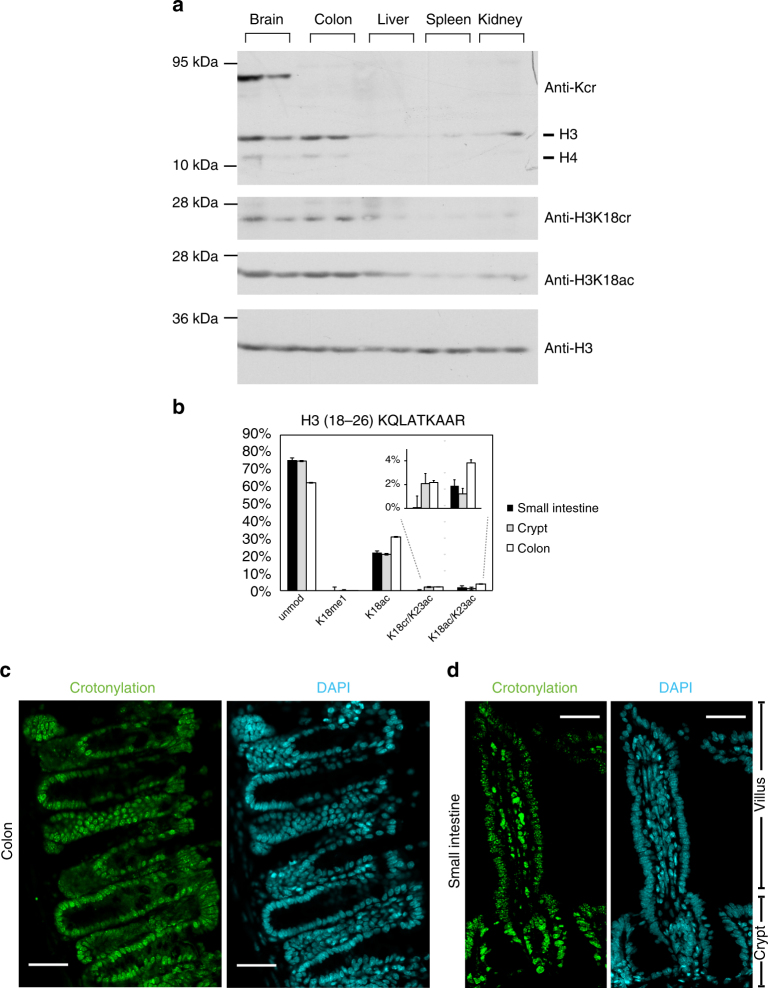
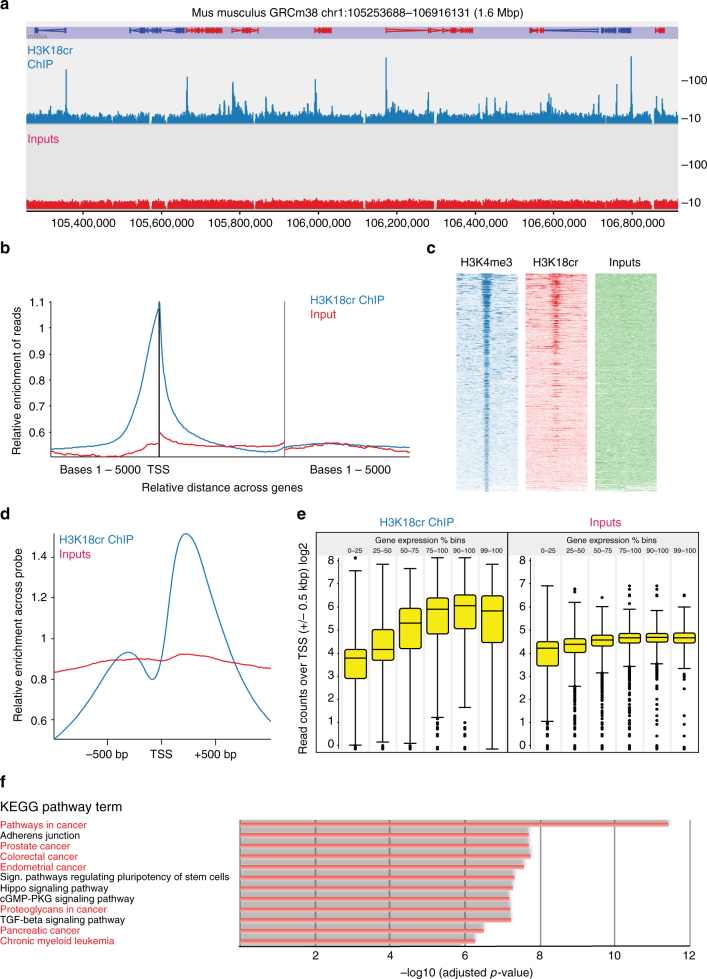
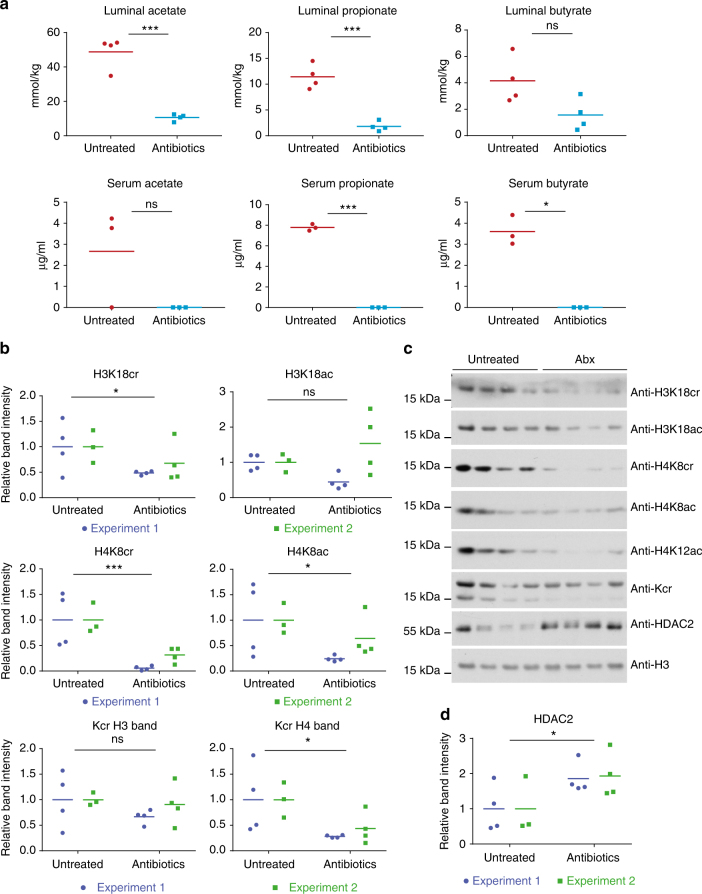
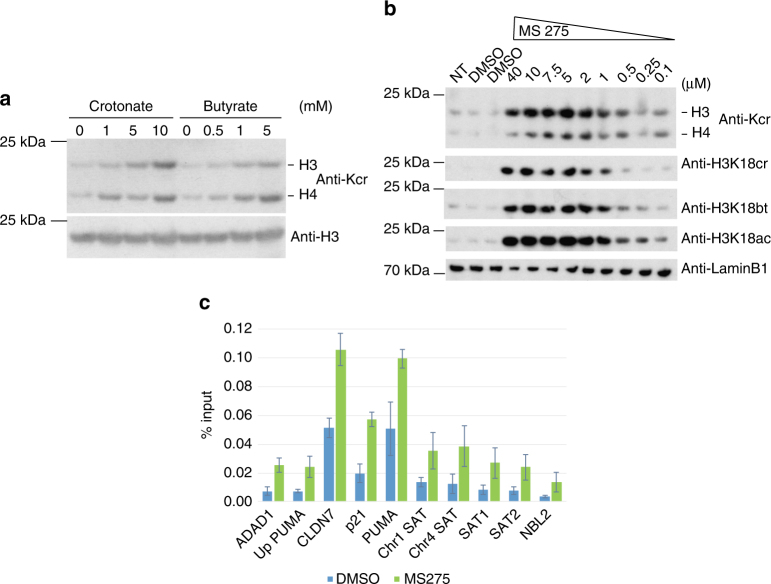
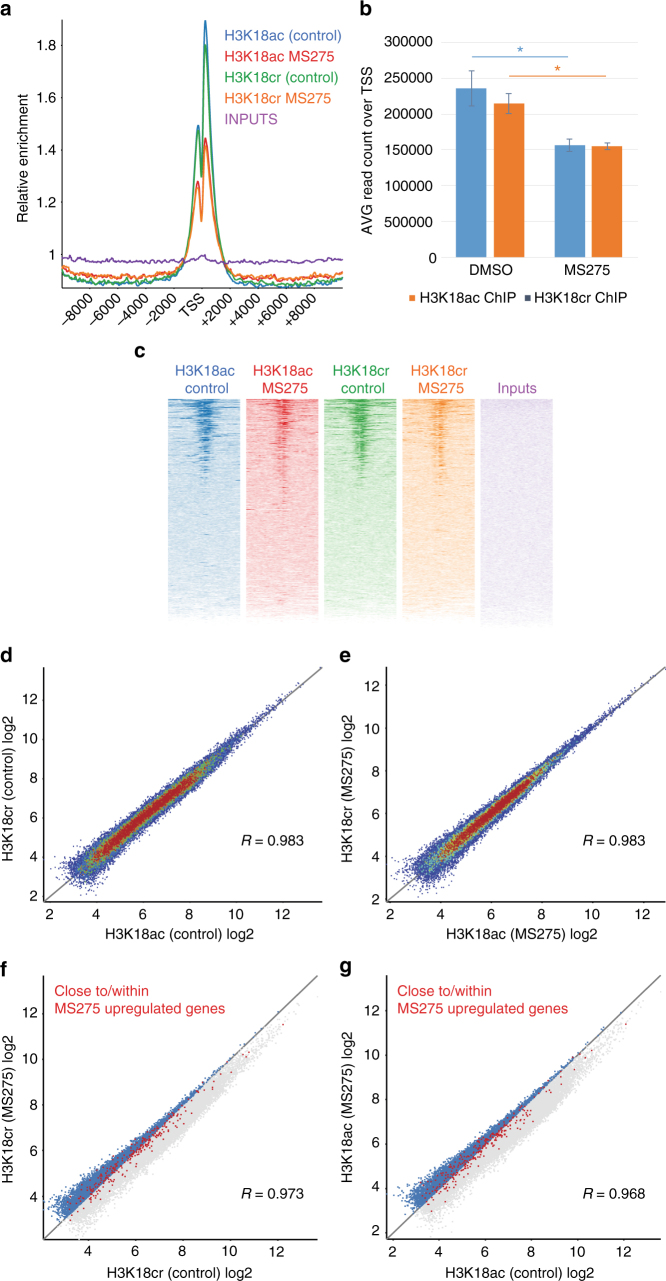
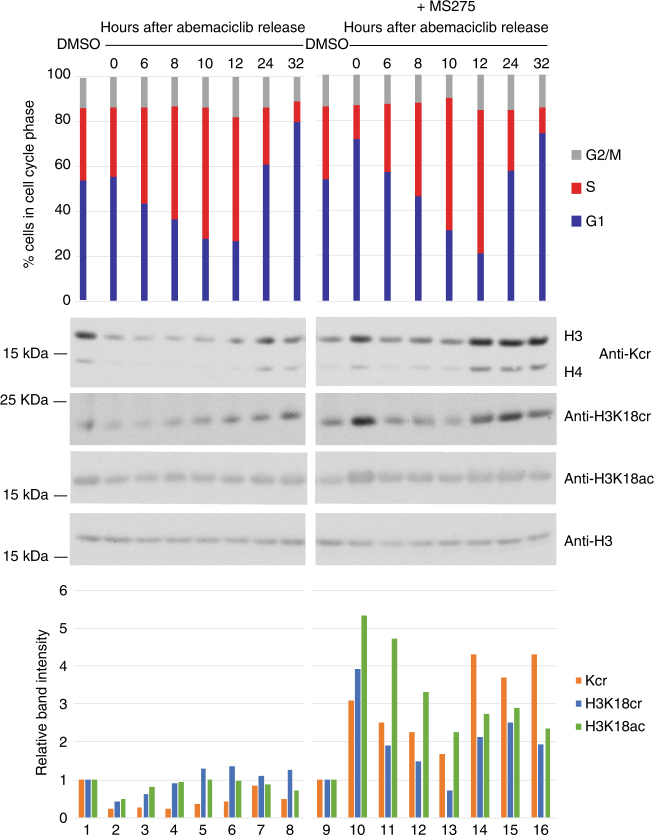
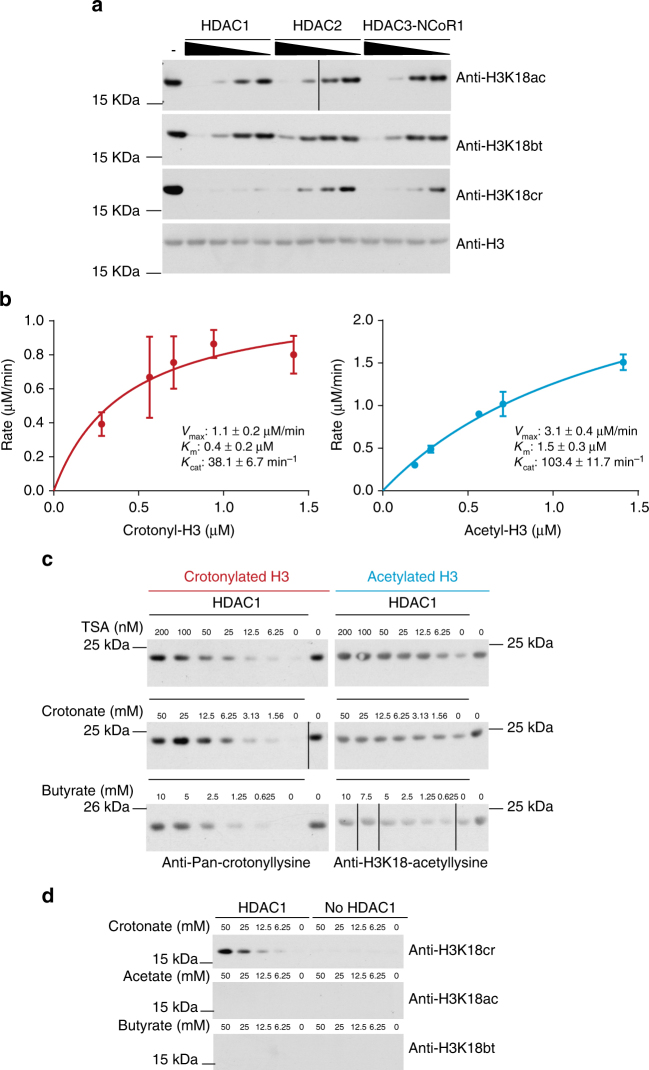
The recently discovered histone post-translational modification crotonylation connects cellular metabolism to gene regulation. Its regulation and tissue-specific functions are poorly understood. We characterize histone crotonylation in intestinal epithelia and find that histone H3 crotonylation at lysine 18 is a surprisingly abundant modification in the small intestine crypt and colon, and is linked to gene regulation. We show that this modification is highly dynamic and regulated during the cell cycle. We identify class I histone deacetylases, HDAC1, HDAC2, and HDAC3, as major executors of histone decrotonylation. We show that known HDAC inhibitors, including the gut microbiota-derived butyrate, affect histone decrotonylation. Consistent with this, we find that depletion of the gut microbiota leads to a global change in histone crotonylation in the colon. Our results suggest that histone crotonylation connects chromatin to the gut microbiota, at least in part, via short-chain fatty acids and HDACs.
Overview
The claims and statistics of this paper haven’t been checked yet.
Free: it reads the open-access text and checks the first 5 claims that cite a source we can check. Create a free account to check every claim.
Integrity signals
Registry
Cites
Statistics
Figures
Verification
Claims the paper makes
The claims and statistics of this paper haven’t been checked yet.
Free: it reads the open-access text and checks the first 5 claims that cite a source we can check. Create a free account to check every claim.
Claims other papers make about this one
Each is checked against this paper’s own text: does it say what the citing paper says it does?
The source backs part of the claim, not all of it — or backs it for a different population, condition or comparison.
In the citing paper
“Recently, HDAC1/2 have been implicated in the regulation of histone crotonylation levels in cells21,22.”
From Histone deacetylase (HDAC) 1 and 2 complexes regulate both histone acetylation and crotonylation in vivo (2018) · cites this paper as [22]
Experimental — accuracy not yet measuredThe source backs part of the claim, not all of it — or backs it for a different population, condition or comparison.
In the citing paper
“To date, decrotonylase activity has been described for HDAC1-3 and Sirtuins 1-316–18,21,22.”
From Histone deacetylase (HDAC) 1 and 2 complexes regulate both histone acetylation and crotonylation in vivo (2018) · cites this paper as [22]
Experimental — accuracy not yet measuredThe source backs part of the claim, not all of it — or backs it for a different population, condition or comparison.
In the citing paper
“histone crotonylation is catalyzed by HATs, which add a crotonyl group from crotonyl-coenzyme A (CoA) to amino acid residues of histones,111 while HDACs 1/2/3 and sirtuin 1/2/3, act as decrotonylases.180–182”
From Epigenetic regulation in major depression and other stress-related disorders: molecular mechanisms, clinical relevance and therapeutic potential (2023) · cites this paper as [180]
Experimental — accuracy not yet measuredThe cited source says what the claim attributes to it.
In the citing paper
“SCFAs have recently been implicated in histone crotonylation”
From The Microbiota-Gut-Brain Axis (2019) · cites this paper as Fellows et al., 2018
In the citing paper
“the gut microbiota and its related metabolites can disrupt the host's normal cell cycle, leading to changes in cell and protein expression that control cell division, DNA repair, and apoptosis (8,9).”
From The Role of Gut Microbiota in Lung Cancer: From Carcinogenesis to Immunotherapy (2021) · doi:10.3389/fonc.2021.720842 · cites this paper as [9]
7 more claims about this paper
Create a free account to see every claim other papers make about this one.
Self-check
Percentages, sums and reported differences re-computed from the paper’s own numbers.
The self-check needs the paper’s full text.
Citations
Cites
The Perseus computational platform for comprehensive analysis of (prote)omics data
Tyanova, S., Temu, T., Sinitcyn, P., Carlson, A., Hein, M. Y., Geiger, T., Mann, M., & Cox, J. (2016) · Nature Methods · doi:10.1038/nmeth.3901 · Cited by 8,803
From Dietary Fiber to Host Physiology: Short-Chain Fatty Acids as Key Bacterial Metabolites
Koh, A., De Vadder, F., Kovatcheva-Datchary, P., & Bäckhed, F. (2016) · Cell · doi:10.1016/j.cell.2016.05.041 · Cited by 7,070
The MaxQuant computational platform for mass spectrometry-based shotgun proteomics
Tyanova, S., Temu, T., & Cox, J. (2016) · Nature Protocols · doi:10.1038/nprot.2016.136 · Cited by 4,797
Rappsilber, J., Ishihama, Y., & Mann, M. (2003) · Analytical Chemistry · doi:10.1021/ac026117i · Cited by 2,644
The microbiome and butyrate regulate energy metabolism and autophagy in the mammalian colon
Donohoe, D. R., Garge, N., Zhang, X., Sun, W., O'Connell, T. M., Bunger, M. K., & Bultman, S. J. (2011) · Cell Metabolism · doi:10.1016/j.cmet.2011.02.018 · Cited by 2,003
Tan, M., Luo, H., Lee, S., Jin, F., Yang, J. S., Montellier, E., Buchou, T., Cheng, Z., Rousseaux, S., Rajagopal, N., et al. (2011) · Cell · doi:10.1016/j.cell.2011.08.008 · Cited by 1,902
HDACs and HDAC Inhibitors in Cancer Development and Therapy
Li, Y., & Seto, E. (2016) · Cold Spring Harbor Perspectives in Medicine · doi:10.1101/cshperspect.a026831 · Cited by 1,284
Growing Self-Organizing Mini-Guts from a Single Intestinal Stem Cell: Mechanism and Applications
Sato, T., & Clevers, H. (2013) · Science · doi:10.1126/science.1234852 · Cited by 1,170
Metabolic regulation of gene expression through histone acylations
Sabari, B. R., Zhang, D., Allis, C. D., & Zhao, Y. (2017) · Nature Reviews Molecular Cell Biology · doi:10.1038/nrm.2016.140 · Cited by 1,130
Sodium butyrate inhibits histone deacetylation in cultured cells
Candido, E. (1978) · Cell · doi:10.1016/0092-8674(78)90305-7 · Cited by 1,036
Dietary gut microbial metabolites, short-chain fatty acids, and host metabolic regulation
Kasubuchi, M., Hasegawa, S., Hiramatsu, T., Ichimura, A., & Kimura, I. (2015) · Nutrients · doi:10.3390/nu7042839 · Cited by 904
The neuropharmacology of butyrate: the bread and butter of the microbiota-gut-brain axis
Stilling, R. M., van de Wouw, M., Clarke, G., Stanton, C., Dinan, T. G., & Cryan, J. F. (2016) · Neurochemistry International · doi:10.1016/j.neuint.2016.06.011 · Cited by 891
Lysine propionylation and butyrylation are novel post-translational modifications in histones
Chen, Y., Sprung, R., Tang, Y., Ball, H., Sangras, B., Kim, S. C., Falck, J. R., Peng, J., Gu, W., & Zhao, Y. (2007) · Molecular & Cellular Proteomics · doi:10.1074/mcp.m700021-mcp200 · Cited by 764
Metabolic Regulation of Gene Expression by Histone Lysine β-Hydroxybutyrylation
Xie, Z., Zhang, D., Chung, D., Tang, Z., Huang, H., Dai, L., Qi, S., Li, J., Colak, G., Chen, Y., et al. (2016) · Molecular Cell · doi:10.1016/j.molcel.2016.03.036 · Cited by 744
Intracellular Crotonyl-CoA Stimulates Transcription through p300-Catalyzed Histone Crotonylation
Sabari, B. R., Tang, Z., Huang, H., Yong-Gonzalez, V., Molina, H., Kong, H. E., Dai, L., Shimada, M., Cross, J. R., Zhao, Y., et al. (2015) · Molecular Cell · doi:10.1016/j.molcel.2015.02.029 · Cited by 659
Diet-Microbiota Interactions Mediate Global Epigenetic Programming in Multiple Host Tissues
Krautkramer, K. A., Kreznar, J. H., Romano, K. A., Vivas, E. I., Barrett-Wilt, G. A., Rabaglia, M. E., Keller, M. P., Attie, A. D., Rey, F. E., & Denu, J. M. (2016) · Molecular Cell · doi:10.1016/j.molcel.2016.10.025 · Cited by 607
Induction of HDAC2 expression upon loss of APC in colorectal tumorigenesis
Zhu, P., Martin, E., Mengwasser, J., Schlag, P., Janssen, K.-P., & Göttlicher, M. (2004) · Cancer Cell · doi:10.1016/s1535-6108(04)00114-x · Cited by 525
The histone deacetylase inhibitor valproic acid selectively induces proteasomal degradation of HDAC2
Krämer, O. H., Zhu, P., Ostendorff, H. P., Golebiewski, M., Tiefenbach, J., Peters, M. A., Brill, B., Groner, B., Bach, I., Heinzel, T., et al. (2003) · The EMBO Journal · doi:10.1093/emboj/cdg315 · Cited by 523
Conservation of deposition-related acetylation sites in newly synthesized histones H3 and H4.
Sobel, R. E., Cook, R. G., Perry, C. A., Annunziato, A. T., & Allis, C. D. (1995) · Proceedings of the National Academy of Sciences · doi:10.1073/pnas.92.4.1237 · Cited by 510
Enteric Salmonellosis Disrupts the Microbial Ecology of the Murine Gastrointestinal Tract
Barman, M., Unold, D., Shifley, K., Amir, E., Hung, K., Bos, N., & Salzman, N. (2008) · Infection and Immunity · doi:10.1128/iai.01432-07 · Cited by 431
Molecular Coupling of Histone Crotonylation and Active Transcription by AF9 YEATS Domain
Li, Y., Sabari, B. R., Panchenko, T., Wen, H., Zhao, D., Guan, H., Wan, L., Huang, H., Tang, Z., Zhao, Y., et al. (2016) · Molecular Cell · doi:10.1016/j.molcel.2016.03.028 · Cited by 384
Taddei, A., Maison, C., Roche, D., & Almouzni, G. (2001) · Nature Cell Biology · doi:10.1038/35055010 · Cited by 361
Hdac3 is essential for the maintenance of chromatin structure and genome stability
Bhaskara, S., Knutson, S. K., Jiang, G., Chandrasekharan, M. B., Wilson, A. J., Zheng, S., Yenamandra, A., Locke, K., Yuan, J.-L., Bonine-Summers, A. R., et al. (2010) · Cancer Cell · doi:10.1016/j.ccr.2010.10.022 · Cited by 353
Keating, S. T., & El-Osta, A. (2015) · Circulation Research · doi:10.1161/circresaha.116.303936 · Cited by 317 · cited 1×
“Nature Communications, Nature Publishing Group, 2018, 9 (1), pp.”
Wei, W., Liu, X., Chen, J., Gao, S., Lu, L., Zhang, H., Ding, G., Wang, Z., Chen, Z., Shi, T., et al. (2017) · Cell Research · doi:10.1038/cr.2017.68 · Cited by 304
A Fluorogenic Histone Deacetylase Assay Well Suited for High-Throughput Activity Screening
Wegener, D., Wirsching, F., Riester, D., & Schwienhorst, A. (2003) · Chemistry & Biology · doi:10.1016/s1074-5521(02)00305-8 · Cited by 282
Replication Stress Interferes with Histone Recycling and Predeposition Marking of New Histones
Jasencakova, Z., Scharf, A. N. D., Ask, K., Corpet, A., Imhof, A., Almouzni, G., & Groth, A. (2010) · Molecular Cell · doi:10.1016/j.molcel.2010.01.033 · Cited by 277
Goudarzi, A., Zhang, D., Huang, H., Barral, S., Kwon, O. K., Qi, S., Tang, Z., Buchou, T., Vitte, A.-L., He, T., et al. (2016) · Molecular Cell · doi:10.1016/j.molcel.2016.03.014 · Cited by 263
Visualization of LC‐MS/MS proteomics data in MaxQuant
Tyanova, S., Temu, T., Carlson, A., Sinitcyn, P., Mann, M., & Cox, J. (2015) · PROTEOMICS · doi:10.1002/pmic.201400449 · Cited by 263
Inhibition of histone deacetylases in cancer therapy: lessons from leukaemia
Ceccacci, E., & Minucci, S. (2016) · British Journal of Cancer · doi:10.1038/bjc.2016.36 · Cited by 253
The Taf14 YEATS domain is a reader of histone crotonylation
Andrews, F. H., Shinsky, S. A., Shanle, E. K., Bridgers, J. B., Gest, A., Tsun, I. K., Krajewski, K., Shi, X., Strahl, B. D., & Kutateladze, T. G. (2016) · Nature Chemical Biology · doi:10.1038/nchembio.2065 · Cited by 236
Protein Lysine Acylation and Cysteine Succination by Intermediates of Energy Metabolism
Lin, H., Su, X., & He, B. (2012) · ACS Chemical Biology · doi:10.1021/cb3001793 · Cited by 234
Isoform-specific histone deacetylase inhibitors: The next step?
Balasubramanian, S., Verner, E., & Buggy, J. J. (2009) · Cancer Letters · doi:10.1016/j.canlet.2009.02.013 · Cited by 220
YEATS2 is a selective histone crotonylation reader
Zhao, D., Guan, H., Zhao, S., Mi, W., Wen, H., Li, Y., Zhao, Y., Allis, C. D., Shi, X., & Li, H. (2016) · Cell Research · doi:10.1038/cr.2016.49 · Cited by 220
Global profiling of crotonylation on non-histone proteins
Xu, W., Wan, J., Zhan, J., Li, X., He, H., Shi, Z., & Zhang, H. (2017) · Cell Research · doi:10.1038/cr.2017.60 · Cited by 213
Duplication and Maintenance of Heterochromatin Domains
Taddei, A., Roche, D., Sibarita, J.-B., Turner, B. M., & Almouzni, G. (1999) · The Journal of Cell Biology · doi:10.1083/jcb.147.6.1153 · Cited by 204
Selective recognition of histone crotonylation by double PHD fingers of MOZ and DPF2
Xiong, X., Panchenko, T., Yang, S., Zhao, S., Yan, P., Zhang, W., Xie, W., Li, Y., Zhao, Y., Allis, C. D., et al. (2016) · Nature Chemical Biology · doi:10.1038/nchembio.2218 · Cited by 190
Jung, H. R., Pasini, D., Helin, K., & Jensen, O. N. (2010) · Molecular & Cellular Proteomics · doi:10.1074/mcp.m900489-mcp200 · Cited by 137
Global Histone H4 Acetylation and HDAC2 Expression in Colon Adenoma and Carcinoma
Ashktorab, H., Belgrave, K., Hosseinkhah, F., Brim, H., Nouraie, M., Takkikto, M., Hewitt, S., Lee, E. L., Dashwood, R. H., & Smoot, D. (2009) · Digestive Diseases and Sciences · doi:10.1007/s10620-008-0601-7 · Cited by 137
Madsen, A. S., & Olsen, C. A. (2012) · Angewandte Chemie International Edition · doi:10.1002/anie.201203754 · Cited by 122
Assembling chromatin: The long and winding road
Annunziato, A. T. (2011) · Biochimica et Biophysica Acta (BBA) - Gene Regulatory Mechanisms · doi:10.1016/j.bbagrm.2011.07.005 · Cited by 113
Tou, L., Liu, Q., & Shivdasani, R. A. (2004) · Molecular and Cellular Biology · doi:10.1128/mcb.24.8.3132-3139.2004 · Cited by 102
A non-isotopic assay for histone deacetylase activity
Hoffmann, K., Jung, M., Brosch, G., & Loidl, P. (1999) · Nucleic Acids Research · doi:10.1093/nar/27.9.2057 · Cited by 99
Kinetics and Comparative Reactivity of Human Class I and Class IIb Histone Deacetylases
Schultz, B. E., Misialek, S., Wu, J., Tang, J., Conn, M. T., Tahilramani, R., & Wong, L. (2004) · Biochemistry · doi:10.1021/bi0494471 · Cited by 88
Cuomo, A., Moretti, S., Minucci, S., & Bonaldi, T. (2010) · Amino Acids · doi:10.1007/s00726-010-0668-2 · Cited by 84
Self-citationHistone deacetylases 1 and 2 maintain S-phase chromatin and DNA replication fork progression
Bhaskara, S., Jacques, V., Rusche, J. R., Olson, E. N., Cairns, B. R., & Chandrasekharan, M. B. (2013) · Epigenetics & Chromatin · doi:10.1186/1756-8935-6-27 · Cited by 71
A Bioluminogenic HDAC Activity Assay: Validation and Screening
Halley, F., Reinshagen, J., Ellinger, B., Wolf, M., Niles, A. L., Evans, N. J., Kirkland, T. A., Wagner, J. M., Jung, M., Gribbon, P. M., et al. (2011) · SLAS DISCOVERY · doi:10.1177/1087057111416004 · Cited by 51
Mendes, E., Acetturi, B. G., Thomas, A. M., Martins, F. D. S., Crisma, A. R., Murata, G., Braga, T. T., Camâra, N. O. S., Franco, A. L. D. S., Setubal, J. C., et al. (2017) · Frontiers in Microbiology · doi:10.3389/fmicb.2017.01732 · Cited by 46
Self-citationSoldi, M., Cuomo, A., & Bonaldi, T. (2014) · PROTEOMICS · doi:10.1002/pmic.201400075 · Cited by 36
Self-citationHenkes, L. M., Haus, P., Jäger, F., Ludwig, J., & Meyer‐Almes, F. (2011) · Bioorganic & Medicinal Chemistry · doi:10.1016/j.bmc.2011.11.041 · Cited by 17
Cuomo, A., Soldi, M., & Bonaldi, T. (2016) · Methods in molecular biology · doi:10.1007/978-1-4939-6630-1_7 · Cited by 7
Self-citation
Cited by
Cryan, J. F., O'Riordan, K. J., Cowan, C. S. M., Sandhu, K. V., Bastiaanssen, T. F. S., Boehme, M., Codagnone, M. G., Cussotto, S., Fulling, C., Golubeva, A. V., et al. (2019) · Physiological Reviews · doi:10.1152/physrev.00018.2018 · Cited by 5,286
The role of short-chain fatty acids in microbiota–gut–brain communication
Dalile, B., Van Oudenhove, L., Vervliet, B., & Verbeke, K. (2019) · Nature Reviews Gastroenterology & Hepatology · doi:10.1038/s41575-019-0157-3 · Cited by 3,357
Short-chain fatty acids: Linking diet, the microbiome and immunity
Mann, E. R., Lam, Y. K., & Uhlig, H. H. (2024) · Nature reviews. Immunology · doi:10.1038/s41577-024-01014-8 · Cited by 1,595
“57), as well as through its conversion into butyryl-CoA and crotonyl-CoA, which functions as a precursor for histone crotonylation by p300–CBP 58 .”
SCFA: mechanisms and functional importance in the gut
Martin-Gallausiaux, C., Marinelli, L., Blottière, H. M., Larraufie, P., & Lapaque, N. (2021) · Proceedings of the Nutrition Society · doi:10.1017/s0029665120006916 · Cited by 1,480
Class I histone deacetylases (HDAC1–3) are histone lysine delactylases
Moreno-Yruela, C., Zhang, D., Wei, W., Bæk, M., Liu, W., Gao, J., Danková, D., Nielsen, A. L., Bolding, J. E., Yang, L., et al. (2022) · Science Advances · doi:10.1126/sciadv.abi6696 · Cited by 841
Metadata
- Authors
- Fellows, R., Denizot, J., Stellato, C., Cuomo, A., Jain, P., Stoyanova, E., Balázsi, S., Hajnády, Z., Liebert, A., Kazakevych, J., Blackburn, H., Corrêa, R. O., Fachi, J. L., Sato, F. T., Ribeiro, W. R., Ferreira, C. M., Perée, H., Spagnuolo, M., Mattiuz, R., Matolcsi, C., Guedes, J., Clark, J., Veldhoen, M., Bonaldi, T., Vinolo, M. A. R., & Varga-Weisz, P.
- Affiliations
- Babraham Institute (GB)
- European Institute of Oncology (IT)
- Universidade Estadual de Campinas (UNICAMP) (BR)
- Universidade Federal de São Paulo (BR)
- Corresponding author
- Bonaldi, Tiziana
- Vinolo, Marco Aurélio Ramirez
- ORCID
- Denizot, Jérémy
- Stellato, Claudia
- Cuomo, Alessandro
- Liebert, Anke
- Kazakevych, Juri
- Corrêa, Renan Oliveira
- Fachi, José Luís
- Ribeiro, Willian R.
- Ferreira, Caroline Marcantonio
- Perée, Hélène
- Spagnuolo, Mariangela
- Mattiuz, Raphaël
- Guedes, Joana
- Clark, Jonathan
- Veldhoen, Marc
- Bonaldi, Tiziana
- Vinolo, Marco Aurélio Ramirez
- Venue
- Nature Communications
- Published
- 2018-01-09
- Volume
- 9
- Issue
- 1
- Pages
- 105-105
- ISSN
- 2041-1723 (ISSN-L)
- PMC
- PMC5760624
- OpenAlex
- W2782311151
- Cited by
- 568
- References
- 51
- Citations by year
- 2026: 76 · 2025: 92 · 2024: 75 · 2023: 64 · 2022: 60 · 2021: 70 · 2020: 55 · 2019: 47 · 2018: 29
- FWCI
- 17.88
- Type
- journal article
- Language
- en
- Open access
- gold
- doi.org
- Licence
- cc-by
- creativecommons.org/licenses/by/4.0 (tdm)
- creativecommons.org/licenses/by/4.0 (vor)
- Locations
- Nature Communications (publishedVersion, cc-by)
- Europe PMC (PubMed Central) (publishedVersion, cc-by)
- PubMed Central (publishedVersion, cc-by)
- PubMed (publishedVersion)
- Open Access at Essex (University of Essex) (acceptedVersion)
- HAL (submittedVersion, cc-by)
- RePEc: Research Papers in Economics (submittedVersion)
- Archivio Istituzionale della Ricerca (Universita Degli Studi Di Milano) (submittedVersion, other-oa)
- DOAJ (DOAJ: Directory of Open Access Journals) (submittedVersion)
- DOAJ (DOAJ: Directory of Open Access Journals) (submittedVersion, cc-by-sa)
- ORBi (University of Liège) (submittedVersion, other-oa)
- LA Referencia (Red Federada de Repositorios Institucionales de Publicaciones Científicas) (submittedVersion, other-oa)
- Funders
- National Centre for the Replacement, Refinement and Reduction of Animals in Research (NC/L001217/1)
- Fundação de Amparo à Pesquisa do Estado de São Paulo (12/10653-9, 2015/, 15/50379-1)
- Ministero della Salute (GR2011)
- Associazione Italiana per la Ricerca sul Cancro
- Tokyo Medical and Dental University
- Directorate for Biological Sciences
- Medical Research Council (MR/N009398/1)
- Biotechnology and Biological Sciences Research Council (BB/L026988/1, BBS/E/B/0000C338, BBS/E/B/000C0404, BBS/E/B/000C0409, BB/E021638/1, BB/F020236/1, BB/N013565/1, BBS/E/B/000C0427)
- Erasmus+
- Topics
- Life Sciences › Biochemistry, Genetics and Molecular Biology › Molecular Biology › Histone Deacetylase Inhibitors Research
- Life Sciences › Biochemistry, Genetics and Molecular Biology › Molecular Biology › Genomics and Chromatin Dynamics
- Life Sciences › Biochemistry, Genetics and Molecular Biology › Molecular Biology › Epigenetics and DNA Methylation
- Keywords
- histone crotonylation, histone deacetylase, class I HDACs, HDAC1, HDAC2, HDAC3, gut microbiota, short-chain fatty acids, butyrate, intestinal epithelium, colon, small intestine crypts, cell cycle, chromatin regulation, gene expression regulation, gut microbiota depletion
- MeSH terms
- Gastrointestinal Microbiome, Acylation, Animals, Cell Cycle, Colon, Crotonates, Fatty Acids, Volatile, Histone Deacetylases, Histones, Humans, Intestinal Mucosa, Male, Mice, Inbred C57BL, Protein Processing, Post-Translational, HCT116 Cells, Histone Deacetylase Inhibitors
About these checks
Registry, retraction, Cites and statistics results are computed, not judged, with one exception: a printed reference that no index lists is read once by a model before it counts as a citation error. Claims are extracted by a model and kept only when their quote appears verbatim in the text; each cited source is then checked, with a model’s help, for whether it says what the claim relies on. Those verdicts can be wrong — read the claim’s quote and the cited source before relying on one.
Statistics and arithmetic are recomputed, not judged.
Confidence bands are shown only for fields calibrated on our annotated test set. None is calibrated yet, so no band is shown.
What counts as a claim ›How we measure confidence ›How we check this ›
Are you an author, or do you see a problem with this page? Request a review
Data sources
Bibliographic data: Semantic Scholar, OpenAlex, Crossref.
Contains information from the Semantic Scholar Academic Graph Datasets, made available under the ODC Attribution License (ODC-BY 1.0).
Semantic Scholar’s data is described in: Kinney, R., et al. (2023). The Semantic Scholar Open Data Platform. arXiv:2301.10140.
