

Microbiota derived short chain fatty acids promote histone crotonylation in the colon through histone deacetylases
Open accessThe DOI matches its Crossref record; 51 of the 51 references it cites were found in a registry or an index.
Abstract
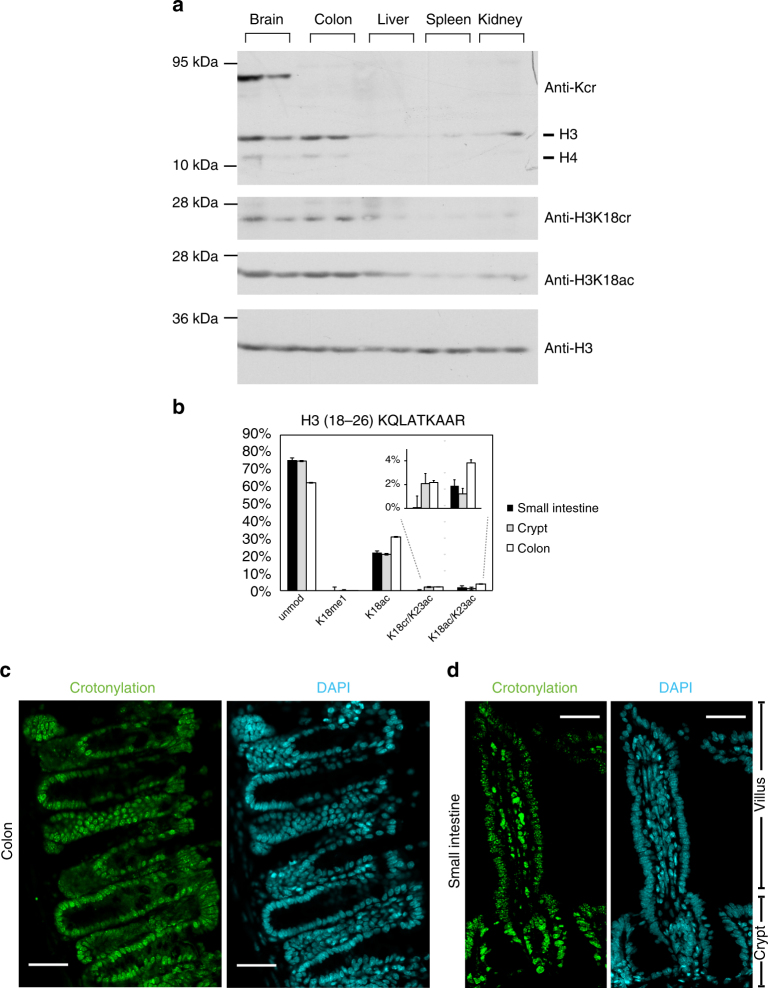
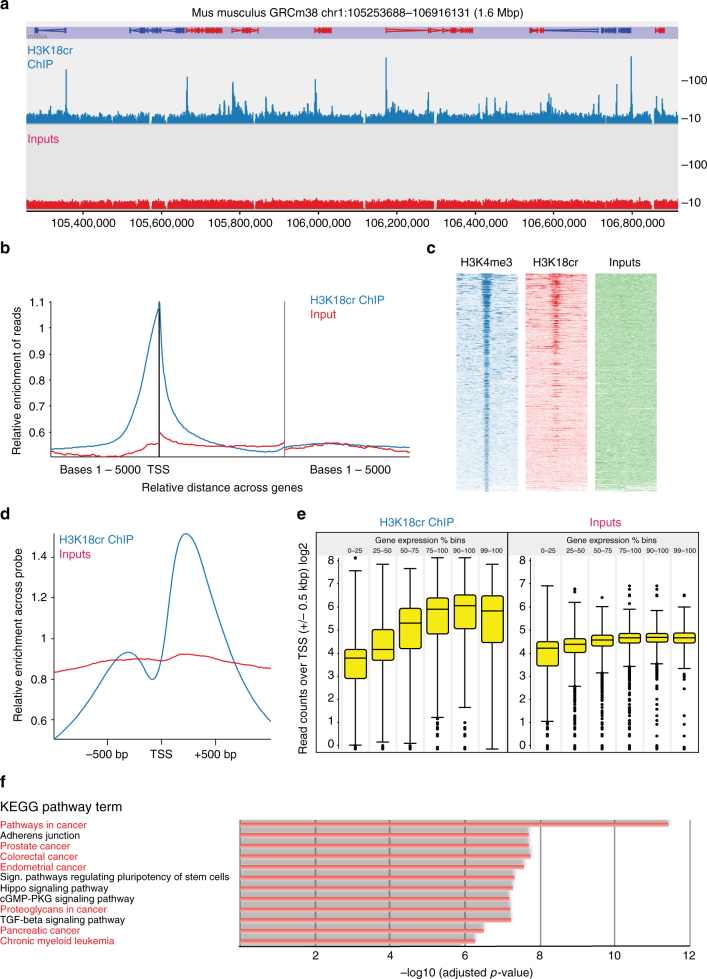
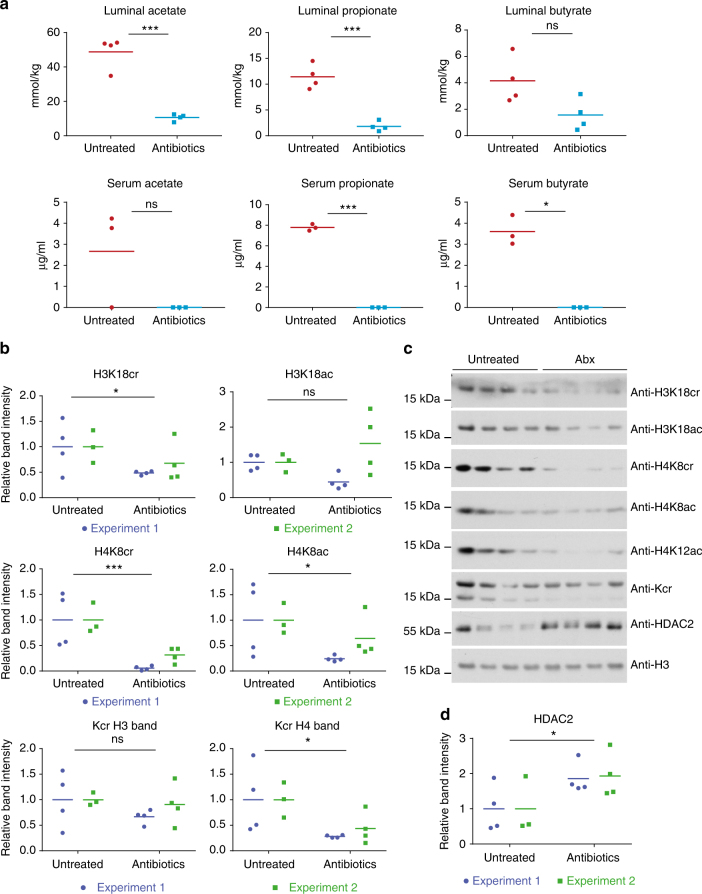
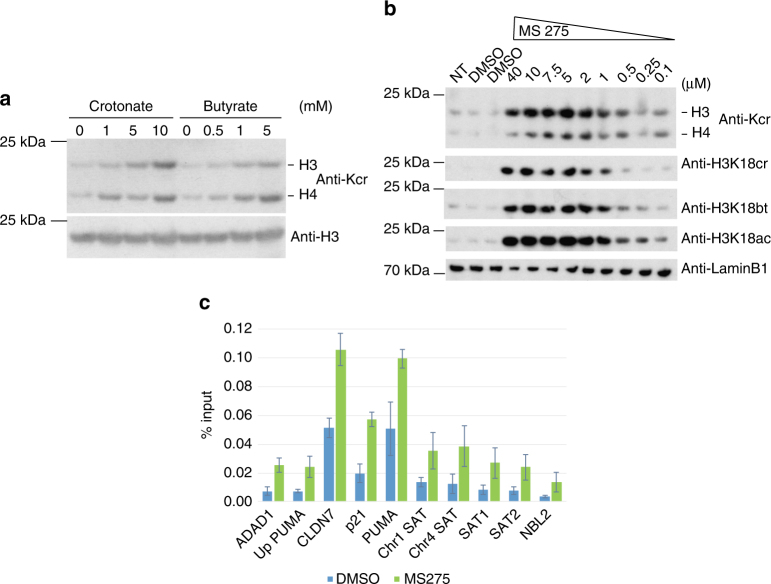
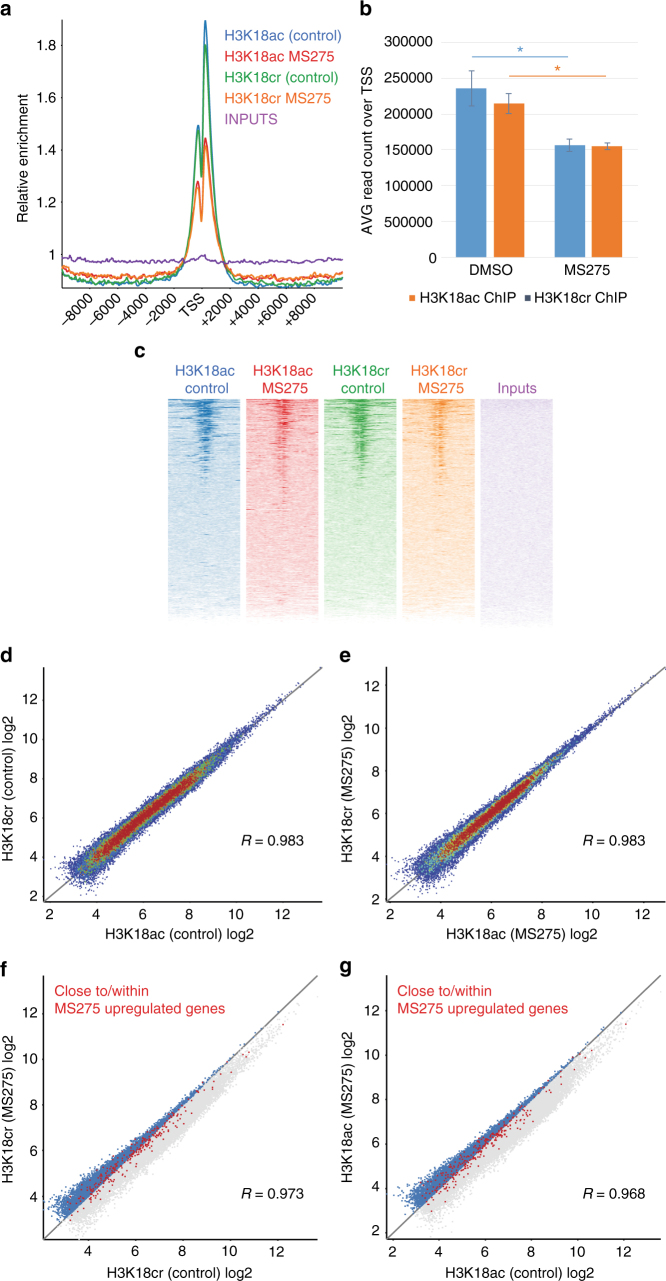
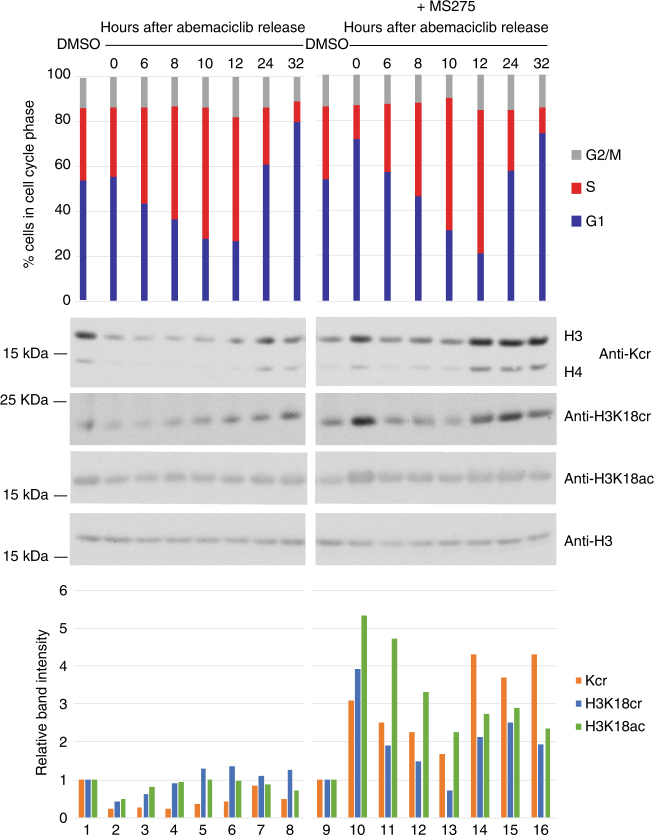
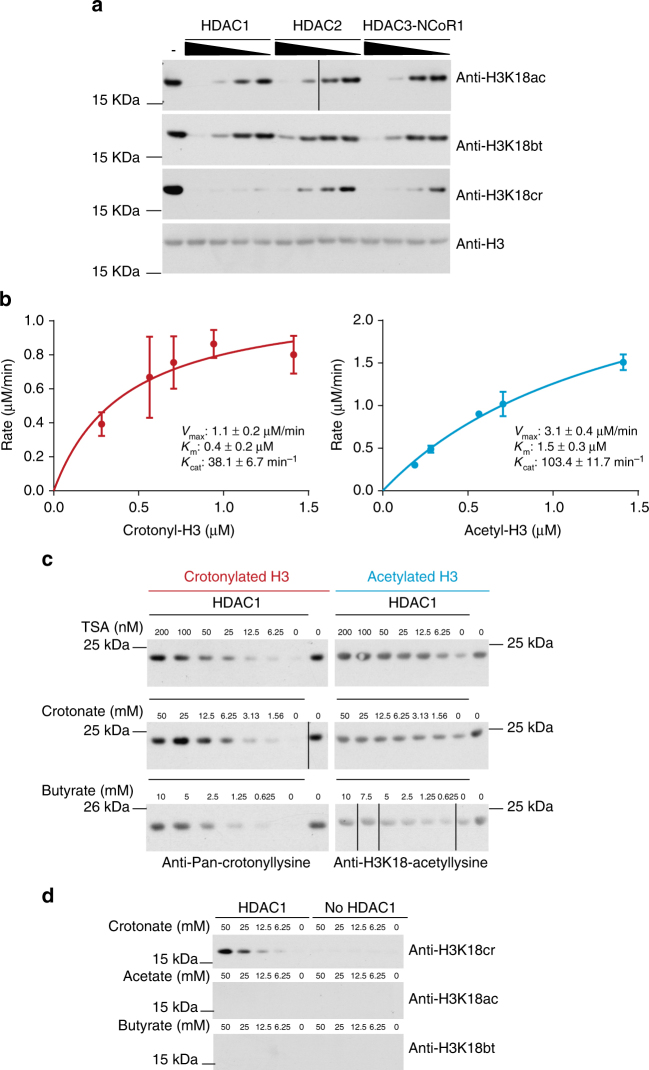
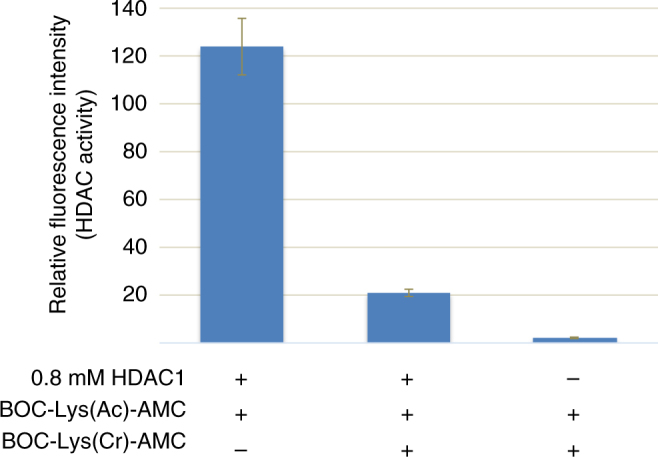
The recently discovered histone post-translational modification crotonylation connects cellular metabolism to gene regulation. Its regulation and tissue-specific functions are poorly understood. We characterize histone crotonylation in intestinal epithelia and find that histone H3 crotonylation at lysine 18 is a surprisingly abundant modification in the small intestine crypt and colon, and is linked to gene regulation. We show that this modification is highly dynamic and regulated during the cell cycle. We identify class I histone deacetylases, HDAC1, HDAC2, and HDAC3, as major executors of histone decrotonylation. We show that known HDAC inhibitors, including the gut microbiota-derived butyrate, affect histone decrotonylation. Consistent with this, we find that depletion of the gut microbiota leads to a global change in histone crotonylation in the colon. Our results suggest that histone crotonylation connects chromatin to the gut microbiota, at least in part, via short-chain fatty acids and HDACs.
Overview
The claims and statistics of this paper haven’t been checked yet.
Free: it reads the open-access text and checks the first 5 claims that cite a source we can check. Create a free account to check every claim.
Integrity signals
Registry
Cites
Statistics
Figures
Verification
Claims the paper makes
The claims and statistics of this paper haven’t been checked yet.
Free: it reads the open-access text and checks the first 5 claims that cite a source we can check. Create a free account to check every claim.
Claims other papers make about this one
Each is checked against this paper’s own text: does it say what the citing paper says it does?
The source backs part of the claim, not all of it — or backs it for a different population, condition or comparison.
In the citing paper
“Recently, HDAC1/2 have been implicated in the regulation of histone crotonylation levels in cells21,22.”
From Histone deacetylase (HDAC) 1 and 2 complexes regulate both histone acetylation and crotonylation in vivo (2018) · cites this paper as [22]
Experimental — accuracy not yet measuredThe source backs part of the claim, not all of it — or backs it for a different population, condition or comparison.
In the citing paper
“To date, decrotonylase activity has been described for HDAC1-3 and Sirtuins 1-316–18,21,22.”
From Histone deacetylase (HDAC) 1 and 2 complexes regulate both histone acetylation and crotonylation in vivo (2018) · cites this paper as [22]
Experimental — accuracy not yet measuredThe source backs part of the claim, not all of it — or backs it for a different population, condition or comparison.
In the citing paper
“histone crotonylation is catalyzed by HATs, which add a crotonyl group from crotonyl-coenzyme A (CoA) to amino acid residues of histones,111 while HDACs 1/2/3 and sirtuin 1/2/3, act as decrotonylases.180–182”
From Epigenetic regulation in major depression and other stress-related disorders: molecular mechanisms, clinical relevance and therapeutic potential (2023) · cites this paper as [180]
Experimental — accuracy not yet measuredThe cited source says what the claim attributes to it.
In the citing paper
“SCFAs have recently been implicated in histone crotonylation”
From The Microbiota-Gut-Brain Axis (2019) · cites this paper as Fellows et al., 2018
In the citing paper
“the gut microbiota and its related metabolites can disrupt the host's normal cell cycle, leading to changes in cell and protein expression that control cell division, DNA repair, and apoptosis (8,9).”
From The Role of Gut Microbiota in Lung Cancer: From Carcinogenesis to Immunotherapy (2021) · doi:10.3389/fonc.2021.720842 · cites this paper as [9]
7 more claims about this paper
Create a free account to see every claim other papers make about this one.
Self-check
Percentages, sums and reported differences re-computed from the paper’s own numbers.
The self-check needs the paper’s full text.
Citations
Cites
The Perseus computational platform for comprehensive analysis of (prote)omics data
Tyanova, S., Temu, T., Sinitcyn, P., Carlson, A., Hein, M. Y., Geiger, T., Mann, M., & Cox, J. (2016) · Nature Methods · doi:10.1038/nmeth.3901 · Cited by 8,803
From Dietary Fiber to Host Physiology: Short-Chain Fatty Acids as Key Bacterial Metabolites
Koh, A., De Vadder, F., Kovatcheva-Datchary, P., & Bäckhed, F. (2016) · Cell · doi:10.1016/j.cell.2016.05.041 · Cited by 7,070
The MaxQuant computational platform for mass spectrometry-based shotgun proteomics
Tyanova, S., Temu, T., & Cox, J. (2016) · Nature Protocols · doi:10.1038/nprot.2016.136 · Cited by 4,797
Rappsilber, J., Ishihama, Y., & Mann, M. (2003) · Analytical Chemistry · doi:10.1021/ac026117i · Cited by 2,644
The microbiome and butyrate regulate energy metabolism and autophagy in the mammalian colon
Donohoe, D. R., Garge, N., Zhang, X., Sun, W., O'Connell, T. M., Bunger, M. K., & Bultman, S. J. (2011) · Cell Metabolism · doi:10.1016/j.cmet.2011.02.018 · Cited by 2,003
Tan, M., Luo, H., Lee, S., Jin, F., Yang, J. S., Montellier, E., Buchou, T., Cheng, Z., Rousseaux, S., Rajagopal, N., et al. (2011) · Cell · doi:10.1016/j.cell.2011.08.008 · Cited by 1,902
HDACs and HDAC Inhibitors in Cancer Development and Therapy
Li, Y., & Seto, E. (2016) · Cold Spring Harbor Perspectives in Medicine · doi:10.1101/cshperspect.a026831 · Cited by 1,284
Growing Self-Organizing Mini-Guts from a Single Intestinal Stem Cell: Mechanism and Applications
Sato, T., & Clevers, H. (2013) · Science · doi:10.1126/science.1234852 · Cited by 1,170
Metabolic regulation of gene expression through histone acylations
Sabari, B. R., Zhang, D., Allis, C. D., & Zhao, Y. (2017) · Nature Reviews Molecular Cell Biology · doi:10.1038/nrm.2016.140 · Cited by 1,130
Sodium butyrate inhibits histone deacetylation in cultured cells
Candido, E. (1978) · Cell · doi:10.1016/0092-8674(78)90305-7 · Cited by 1,036
Cited by
Items 101–200 of 605
Acox2 is a regulator of lysine crotonylation that mediates hepatic metabolic homeostasis in mice
Zhang, Y., Chen, Y., Zhang, Z., Tao, X., Xu, S., Zhang, X., Zurashvili, T., Lu, Z., Bayascas, J. R., Jin, L., et al. (2022) · Cell Death and Disease · doi:10.1038/s41419-022-04725-9 · Cited by 72
“different conditions [15, 17], we postulated that changes at non-histone Kcr levels were involved in stability regulation of metabolic enzymes.”
Habineza, P., Muhammad, A., Ji, T., Xiao, R., Yin, X., Hou, Y., & Shi, Z. (2019) · Frontiers in Microbiology · doi:10.3389/fmicb.2019.01212 · Cited by 75
Host and microbiota metabolic signals in aging and longevity
Zhou, Y., Hu, G., & Wang, M. C. (2021) · Nature Chemical Biology · doi:10.1038/s41589-021-00837-z · Cited by 70
Lanza, M., Filippone, A., Ardizzone, A., Casili, G., Paterniti, I., Esposito, E., & Campolo, M. (2021) · Cells · doi:10.3390/cells10102756 · Cited by 70
Class I histone deacetylases catalyze lysine lactylation
Gonzatti, M. B., Hintzen, J. C. J., Sharma, I., Najar, M. A., Tsusaka, T., Marcinkiewicz, M. M., Crispim, C. V., Snyder, N. W., Burslem, G. M., & Goldberg, E. L. (2025) · Journal of Biological Chemistry · doi:10.1016/j.jbc.2025.110602 · Cited by 74
“…other short-chain fatty acids for known and yet-to-be-discovered lysine acylations, like the recently reported sorbylation (28) and crotonylation (37) and that this will depend on whether those short-chain fatty acids can achieve the requisite concentrations through metabolic or dietary exposure.”
Epigenetic Modifiers as Potential Therapeutic Targets in Diabetic Kidney Disease
Martinez-Moreno, J. M., Fontecha‐Barriuso, M., Martín‐Sánchez, D., Guerrero‐Mauvecin, J., Gomá-Garcés, E., Fernández‐Fernández, B., Carriazo, S. M., Sánchez-Niño, M. D., Ramos, A. M., Ruiz‐Ortega, M., et al. (2020) · International Journal of Molecular Sciences · doi:10.3390/ijms21114113 · Cited by 71
Bai, X., Fu, R., Duan, Z., Wang, P., Zhu, C., & Fan, D. (2021) · Food Research International · doi:10.1016/j.foodres.2021.110465 · Cited by 67
Hofford, R. S., Mervosh, N. L., Euston, T. J., Meckel, K. R., Orr, A. T., & Kiraly, D. D. (2021) · Neuropsychopharmacology · doi:10.1038/s41386-021-01043-0 · Cited by 70
Chia, L. W., Mank, M., Blijenberg, B., Bongers, R. S., Aalvink, S., van Limpt, K., Wopereis, H., Tims, S., Stahl, B., Belzer, C., et al. (2020) · Beneficial Microbes · doi:10.3920/bm2020.0005 · Cited by 73
Nutritional Therapy Strategies in Pediatric Crohn’s Disease
Verburgt, C. M., Ghiboub, M., Benninga, M. A., de Jonge, W. J., & Limbergen, J. V. (2021) · Nutrients · doi:10.3390/nu13010212 · Cited by 80
Abo, H., Chassaing, B., Harusato, A., Quirós, M., Brazil, J. C., Ngo, V. L., Viennois, É., Merlin, D., Gewirtz, A. T., Nusrat, A., et al. (2020) · Nature Communications · doi:10.1038/s41467-019-14258-z · Cited by 70
Role of the gut microbiota in the pathogenesis of endometriosis: a review
Guo, C., & Zhang, C. (2024) · Frontiers in Microbiology · doi:10.3389/fmicb.2024.1363455 · Cited by 83
Sex Differences in Pulmonary Responses to Ozone in Mice. Role of the Microbiome
Cho, Y., Abu-Ali, G., Tashiro, H., Brown, T. A., Osgood, R. S., Kasahara, D. I., Huttenhower, C., & Shore, S. A. (2019) · American Journal of Respiratory Cell and Molecular Biology · doi:10.1165/rcmb.2018-0099oc · Cited by 64
A Link between Chronic Kidney Disease and Gut Microbiota in Immunological and Nutritional Aspects
Mertowska, P., Mertowski, S., Wojnicka, J., Korona‐Głowniak, I., Grywalska, E., Błażewicz, A., & Załuska, W. (2021) · Nutrients · doi:10.3390/nu13103637 · Cited by 71
Fatty acids role in multiple sclerosis as “metabokines”
Yu, H., Bai, S., Hao, Y., & Guan, Y. (2022) · Journal of Neuroinflammation · doi:10.1186/s12974-022-02502-1 · Cited by 65
“SCFAs such as butyrate by targeting HDAC1/2/3 alters histone crotonylation level in the small intestine, colon, and putatively brain, thus participating in cell cycle modulation [81].”
BackgroundLiao, M., Sun, X., Zheng, W., Wu, M., Wang, Y., Yao, J., Ma, Y., Gao, S., & Pei, D. (2023) · Molecular Cancer · doi:10.1186/s12943-023-01859-y · Cited by 65
“Compared with other tissues, the colon has the highest level of histone crotonylation [9].”
BackgroundUnveiling the role of histone deacetylases in neurological diseases: focus on epilepsy
Cao, D., Zhou, X., Guo, Q., Xiang, M.-Y., Bao, M., He, B., & Mao, X. (2024) · Biomarker Research · doi:10.1186/s40364-024-00687-6 · Cited by 65
“…illustrated pharmacological inhibition of HDAC by butyrate, a critical short chain fatty acid (SCFA) derived from the gut microbiota, promotes histone crotonylation in the colon and depletion of the gut microbiota reduces the generation of SCFA, resulting in a loss of histone crotonylation [88].”
O'Toole, P. W., & Shiels, P. G. (2020) · Journal of Internal Medicine · doi:10.1111/joim.13021 · Cited by 62
Sex-Bias in Irritable Bowel Syndrome: Linking Steroids to the Gut-Brain Axis
So, S. Y., & Savidge, T. (2021) · Frontiers in Endocrinology · doi:10.3389/fendo.2021.684096 · Cited by 67
Bermúdez‐Humarán, L. G., Chassaing, B., & Langella, P. (2024) · Microbial Cell Factories · doi:10.1186/s12934-024-02449-3 · Cited by 66
“Through epigenetic regulation as histone deacetylase (HDAC) inhibitors, SCFAs affect gene expression and cellular processes [41].”
BackgroundBijlsma, A., Omrani, A., Spoelder, M., Verharen, J. P. H., Bauer, L., Cornelis, C., de Zwart, B., van Dorland, R., Vanderschuren, L. J. M. J., & Wierenga, C. J. (2022) · The Journal of Neuroscience · doi:10.1523/jneurosci.0524-22.2022 · Cited by 61
Inulin‐A polysaccharide: Review on its functional and prebiotic efficacy
Bhanja, A., Sutar, P. P., & Mishra, M. (2022) · Journal of Food Biochemistry · doi:10.1111/jfbc.14386 · Cited by 64
Simpson, S., Kimbrough, A., Boomhower, B., Mclellan, R., Hughes, M., Shankar, K., de Guglielmo, G., & George, O. (2020) · eNeuro · doi:10.1523/eneuro.0312-19.2020 · Cited by 61
“…barrier, signaling through a family of G-protein-coupled receptors (GPR41/GPR43; Kimura et al., 2011, 2014; Inoue et al., 2012), and acting as class II histone deacetylate inhibitors (Chen et al., 2003; Waldecker et al., 2008; Fellows et al., 2018), which in turn can alter gene expression profiles.”
BackgroundKrone, M. W., Travis, C. R., Lee, G. Y., Eckvahl, H. J., Houk, K. N., & Waters, M. L. (2020) · Journal of the American Chemical Society · doi:10.1021/jacs.0c06568 · Cited by 63
Delaney, K., Tan, M., Zhu, Z., Gao, J., Dai, L., Kim, S., Ding, J., He, M., Halabelian, L., Yang, L., et al. (2021) · Cell Discovery · doi:10.1038/s41421-021-00344-4 · Cited by 60
Allostatic load and ageing: linking the microbiome and nutrition with age-related health
Shiels, P. G., Buchanan, S., Selman, C., & Stenvinkel, P. (2019) · Biochemical Society Transactions · doi:10.1042/bst20190110 · Cited by 60
Regulation of Oxygen Homeostasis at the Intestinal Epithelial Barrier Site
Konjar, Š., Pavšič, M., & Veldhoen, M. (2021) · International Journal of Molecular Sciences · doi:10.3390/ijms22179170 · Cited by 64
Self-citationPredictive Modeling of Microbiome Data Using a Phylogeny-Regularized Generalized Linear Mixed Model
Xiao, J. Y., Chen, L., Johnson, S. P., Yu, Y., Zhang, X., & Chen, J. (2018) · Frontiers in Microbiology · doi:10.3389/fmicb.2018.01391 · Cited by 66
“For instance, the human gut microbiome contributes to nutrient metabolism, immune maturation and modulation, inflammatory cytokine production, and host gene regulation (Ahern et al., 2014; Schirmer et al., 2016; Pedersen et al., 2016; Fellows et al., 2018).”
BackgroundLiu, Y., Jin, X., Ma, Y., Jian, Z., Wei, Z., Xiang, L., Sun, Q., Qi, S., Wang, K., & Li, H. (2021) · mSystems · doi:10.1128/msystems.01045-21 · Cited by 61
de Souza, A. B., Chaud, M. V., & Santana, M. H. A. (2019) · Carbohydrate Polymers · doi:10.1016/j.carbpol.2019.115001 · Cited by 59
Global crotonylome reveals hypoxia-mediated lamin A crotonylation regulated by HDAC6 in liver cancer
Zhang, D., Tang, J. P., Xu, Y., Huang, X., Wang, Y., Jin, X., Wu, G., & Liu, P. (2022) · Cell Death and Disease · doi:10.1038/s41419-022-05165-1 · Cited by 64
“found that short-chain fatty acids derived such as butyrate in the intestine promote histone crotonylation by inhibiting HDACs and providing substrates such as crotonyl-CoA [18].”
BackgroundXiao, T., Wu, S., Yan, C., Zhao, C., Jin, H., Yan, N., Xu, J., Wu, Y., Li, C., Shao, Q., et al. (2018) · Oncology Letters · doi:10.3892/ol.2018.9201 · Cited by 70
“Indeed, in contrast to normal colonocytes, cancerous colonocytes prefer to use aerobic glycolysis for glucose metabolism, and butyrate acts as a histone deacetylase (HDAC) inhibitor to suppress cell growth and to induce apoptosis by altering gene expression profiles (30).”
Depletion of Gut Microbiota Impairs Gut Barrier Function and Antiviral Immune Defense in the Liver
Guo, W., Zhou, X., Li, X., Zhu, Q., Peng, J., Zhu, B., Zheng, X., Lu, Y., Yang, D., Wang, B., et al. (2021) · Frontiers in Immunology · doi:10.3389/fimmu.2021.636803 · Cited by 58
“Short chain fatty acids (SCFAs) produced by the gut microbiota serve as nutrient supplements that modulate intestinal barrier function (16, 20, 21).”
BackgroundDowdell, A. S., & Colgan, S. P. (2021) · Pharmaceuticals · doi:10.3390/ph14080708 · Cited by 56
Sánchez-Alcoholado, L., Laborda-Illanes, A., Otero, A., Ordóñez, R., González-González, A., Plaza-Andrades, I., Ramos-Molina, B., Gómez-Millán, J., & Queipo-Ortuño, M. I. (2021) · International Journal of Molecular Sciences · doi:10.3390/ijms22179549 · Cited by 49
Hypoxia and Intestinal Inflammation: Common Molecular Mechanisms and Signaling Pathways
Dvornikova, K. A., Platonova, O. N., & Bystrova, E. Y. (2023) · International Journal of Molecular Sciences · doi:10.3390/ijms24032425 · Cited by 59
Barker‐Tejeda, T. C., Zubeldia‐Varela, E., Macías‐Camero, A., Alonso, L., Martín‐Antoniano, I. A., Rey-Stolle, F., Mera‐Berriatua, L., Bazire, R., Cabrera‐Freitag, P., Shanmuganathan, M., et al. (2024) · Nature Communications · doi:10.1038/s41467-024-47182-y · Cited by 58
Bombin, A., Mosley, J. D., Yan, S., Bombin, S., & Ferguson, J. F. (2022) · Physiological Reports · doi:10.14814/phy2.15254 · Cited by 61
Hao, S., Wang, Y., Zhao, Y., Gao, W. Y., Cui, W., Li, Y., Cui, J. G., Liu, Y., Lin, L., Xu, X., et al. (2022) · Nucleic Acids Research · doi:10.1093/nar/gkac734 · Cited by 57
“The classic histone acetyltrans-ferases (HATs), p300 / CBP, PCAF, and MOF, are responsible for most crotonylation events, while the histone deacety-lases (HDACs) HDAC1 / 2 / 3 and SIRT1 / 2 / 3 reverse these reactions (16–21).”
Linking chromatin acylation mark-defined proteome and genome in living cells
Qin, F., Li, B., Wang, H., Ma, S., Li, J., Liu, S., Kong, L., Zheng, H., Zhu, R., Han, Y., et al. (2023) · Cell · doi:10.1016/j.cell.2023.02.007 · Cited by 56
Ribeiro, W., Vinolo, M., Calixto, L., & Ferreira, C. (2018) · BIO-PROTOCOL · doi:10.21769/bioprotoc.3089 · Cited by 52
Self-citationCan we modulate the breastfed infant gut microbiota through maternal diet?
Sindi, A. S., Geddes, D. T., Wlodek, M. E., Mühlhäusler, B. S., Payne, M. S., & Stinson, L. F. (2021) · FEMS Microbiology Reviews · doi:10.1093/femsre/fuab011 · Cited by 58
Pathogenic role of S100 proteins in psoriasis
Liang, H., Li, J., & Zhang, K. (2023) · Frontiers in Immunology · doi:10.3389/fimmu.2023.1191645 · Cited by 55
“Lysine crotonylation affects gene expression and epigenome, thereby affecting cell function and regulating immune responses (96, 97).”
BackgroundLipska, K., Gumieniczek, A., & Filip, A. A. (2020) · Acta Pharmaceutica · doi:10.2478/acph-2020-0021 · Cited by 55
The use of fecal microbiota transplant in sepsis
Keskey, R. C., Cone, J., DeFazio, J. R., & Alverdy, J. C. (2020) · Translational research · doi:10.1016/j.trsl.2020.07.002 · Cited by 54
Microbiota metabolites in bone: Shaping health and Confronting disease
Han, D., Wang, W., Gong, J., Ma, Y., & Li, Y. (2024) · Heliyon · doi:10.1016/j.heliyon.2024.e28435 · Cited by 56
A two-way relationship between histone acetylation and metabolism
Charidemou, E., & Kirmizis, A. (2024) · Trends in Biochemical Sciences · doi:10.1016/j.tibs.2024.10.005 · Cited by 58
Gut microbiota and epigenetic inheritance: implications for the development of IBD
Guo, X., Li, J., Xu, J., Zhang, L., Huang, C., Nie, Y., & Zhou, Y. (2025) · Gut Microbes · doi:10.1080/19490976.2025.2490207 · Cited by 55
“Fellows et al. 151 showed that gut microbiota depletion leads to a decrease in SCFA and that butyrate can act as an inhibitor of HDAC2 by increasing butyryl-CoA and crotonyl-CoA production, thereby facilitating colonic histone crotonyla-tion and maintaining intestinal homeostasis.”
Protein Lactylation and Metabolic Regulation of the Zoonotic Parasite Toxoplasma Gondii
Yin, D., Jiang, N., Cheng, C., Sang, X., Feng, Y., Chen, R., & Chen, Q. (2022) · Genomics Proteomics & Bioinformatics · doi:10.1016/j.gpb.2022.09.010 · Cited by 51
“There is growing evidence that enzymes such as HDACs and MYST-A are involved in the regulation of various cellular functions [41,52].”
De-coding the complex role of microbial metabolites in cancer
Escriva, P. P., Bernardino, C. C. T., & Letellier, E. (2025) · Cell Reports · doi:10.1016/j.celrep.2025.115358 · Cited by 54
New perspectives on placental fatty acid transfer
Lewis, R. M., Childs, C. E., & Calder, P. C. (2018) · Prostaglandins Leukotrienes and Essential Fatty Acids · doi:10.1016/j.plefa.2018.10.001 · Cited by 55
Histone crotonylation regulates neural stem cell fate decisions by activating bivalent promoters
Dai, S., Liu, P., Du, H., Liu, X., Xu, Y., Liu, C., Wang, Y.-Y., Teng, Z., & Liu, C. (2021) · EMBO Reports · doi:10.15252/embr.202052023 · Cited by 51
“Although histone Kcr is observed and exists in combination with other histone PTMs in the adult mouse brain (Tweedie-Cullen et al , 2012; Liu et al , 2017b; Fellows et al , 2018), its biological functions and regulatory mechanisms in neurogenesis remain unknown.”
Fatty acid metabolism and acyl-CoA synthetases in the liver-gut axis
Ma, Y., Nenkov, M., Chen, Y., Press, A. T., Kaemmerer, E., & Gaßler, N. (2021) · World Journal of Hepatology · doi:10.4254/wjh.v13.i11.1512 · Cited by 53
Li, Z., Fang, J., Wang, S., Zhang, L., Chen, Y., & Pian, C. (2022) · Briefings in Bioinformatics · doi:10.1093/bib/bbac037 · Cited by 52
Jadhav, V. V., Han, J., Fasina, Y. O., & Harrison, S. H. (2022) · Frontiers in Physiology · doi:10.3389/fphys.2022.1035538 · Cited by 54
“, 2012), but the functional role of this crotonylation is still unknown (Fellows et al., 2018).”
BackgroundDóra, D., Bokhari, S. M. Z., Aloss, K., Takacs, P., Desnoix, J. Z., Szklenárik, G., Hurley, P. D., & Lohinai, Z. (2023) · International Journal of Molecular Sciences · doi:10.3390/ijms24032769 · Cited by 51
He, X., Zhang, T., Zeng, Y., Pei, P., Liu, Y., Jia, W., Zhao, H., Bi, M., & Wang, S. (2022) · Frontiers in Microbiology · doi:10.3389/fmicb.2022.993146 · Cited by 51
“Protein lysine acylation, such as acetylation, crotonylation, and butyrylation, is a common posttranslational protein modification (Fellows et al., 2018).”
BackgroundLi, M., Trapika, I. G. M. G. S. C., Tang, S. Y. S., Cho, J., Qi, Y., Li, C. G., Li, Y., Yao, M., Yang, D., Liu, B., et al. (2022) · Frontiers in Nutrition · doi:10.3389/fnut.2021.811870 · Cited by 55
“SCFAs are the main catabolic products of this process, and they signal through G protein-coupled free fatty acid receptors (FFAR)2 and FFAR3 or function by regulating nuclear histone deacetylase (HDAC) activity (90, 91).”
BackgroundShort-chain fatty acids: key antiviral mediators of gut microbiota
Xu, Z., Wang, T., Wang, Y., Li, Y., Sun, Y., & Qiu, H. (2025) · Frontiers in Immunology · doi:10.3389/fimmu.2025.1614879 · Cited by 60
“Cancer-related pathways typically involve processes such as cell proliferation and differentiation, which require high-level gene expression for maintenance (133).”
InfluentialTang, C. C., Du, Y., Liang, Q. Y., Cheng, Z., & Tian, J. (2019) · Molecular Imaging and Biology · doi:10.1007/s11307-019-01389-4 · Cited by 47
Xu, B., Yan, Y., Huang, J., Yin, B., Pan, Y., & Ma, L. (2019) · Biomedicine & Pharmacotherapy · doi:10.1016/j.biopha.2019.109720 · Cited by 51
The Gut Microbiota: How Does It Influence the Development and Progression of Liver Diseases
Kanmani, P., Kanmani, S., & Kim, H. (2020) · Biomedicines · doi:10.3390/biomedicines8110501 · Cited by 52
Emerging roles of non-histone protein crotonylation in biomedicine
Hou, J., Zhou, L., Li, J., Wang, D., & Cao, J. (2021) · Cell & Bioscience · doi:10.1186/s13578-021-00616-2 · Cited by 47
“About 70 kDa of proteins in mouse brain extract can be recognized by pan Kcr antibodies, indicating the crotonylated non-histone proteins in the brain [104].”
BackgroundMicrobes in lung cancer initiation, treatment, and outcome: Boon or bane?
Guo, H., Zhao, L., Zhu, J., Chen, P., Wang, H., Jiang, M., Liu, X., Sun, H., Zhao, W., Zheng, Z., et al. (2021) · Seminars in Cancer Biology · doi:10.1016/j.semcancer.2021.05.025 · Cited by 50
Melo, N. C. D. O., Cuevas‐Sierra, A., Souto, V. F., & Martínez, J. A. (2024) · Biomolecules · doi:10.3390/biom14050559 · Cited by 50
Microbe-metabolite-host axis, two-way action in the pathogenesis and treatment of human autoimmunity
Meng, X. L., Zhou, H., Shen, H., Lufumpa, E., Li, X., Guo, B., & Li, B. (2019) · Autoimmunity Reviews · doi:10.1016/j.autrev.2019.03.006 · Cited by 47
Smith, L. K., & Wissel, E. F. (2019) · Perspectives on Psychological Science · doi:10.1177/1745691618809379 · Cited by 42
Proteomics and the microbiome: pitfalls and potential
Lin, H., He, Q., Shi, L., Sleeman, M. W., Baker, M. S., & Nice, E. C. (2018) · Expert Review of Proteomics · doi:10.1080/14789450.2018.1523724 · Cited by 47
“The SCFAs canmove from the bacteria into the host cells where they can then trigger processes that change gene expression profiles and gene activity, ultimately affecting the cell proteome and phenotypic behavior [32].”
BackgroundOpportunities and Challenges of the Human Microbiome in Ovarian Cancer
Cheng, H., Wang, Z., Cui, L., Wen, Y. L., Chen, X., Gong, F., & Yi, H. (2020) · Frontiers in Oncology · doi:10.3389/fonc.2020.00163 · Cited by 46
Neurodevelopmental Disorders Associated with Gut Microbiome Dysbiosis in Children
Borrego-Ruiz, A., & Borrego, J. J. (2024) · Children · doi:10.3390/children11070796 · Cited by 48
“5-HT is synthesized primarily from tryptophan in enterochromaffin cells of the gastrointestinal tract, although some evidence suggests that the GM may play a role in influencing brain serotonin production [105,107].”
BackgroundGut Microbiota and Mental Health: A Comprehensive Review of Gut-Brain Interactions in Mood Disorders
Mehta, I., Juneja, K., Nimmakayala, T., Bansal, L. R., Pulekar, S., Duggineni, D., Ghori, H. K., Modi, N. M., & Younas, S. (2025) · Cureus · doi:10.7759/cureus.81447 · Cited by 57
“SCFAs cross the BBB through monocarboxylate transporters (MCT) and influence the immune system and gene expression via free fatty acid receptors and histone crotonylation [42,43].”
Li, H., Qin, Q., Shi, X., He, J., & Xu, G. (2018) · Journal of Chromatography A · doi:10.1016/j.chroma.2018.11.014 · Cited by 44
Crotonylation and disease: Current progress and future perspectives
Yang, P., Qin, Y., Zeng, L., He, Y., Xie, Y., Cheng, X., Huang, W. G., & Cao, L. (2023) · Biomedicine & Pharmacotherapy · doi:10.1016/j.biopha.2023.115108 · Cited by 45
The Contribution of Histone Crotonylation to Tissue Health and Disease: Focus on Kidney Health
Martinez-Moreno, J. M., Fontecha‐Barriuso, M., Martín‐Sánchez, D., Sánchez-Niño, M. D., Ruiz‐Ortega, M., Sanz, A. B., & Ortíz, A. (2020) · Frontiers in Pharmacology · doi:10.3389/fphar.2020.00393 · Cited by 53
“In this line, microbiota depletion decreases histone crotonylation in colon supporting the concept that microbiota may modulate epigenetic modifications (Fellows et al., 2018).”
BackgroundInfluentialHu, J., Chen, J., Hou, Q., Xu, X., Ren, J., Ma, L., & Yan, X. (2023) · Microbiome · doi:10.1186/s40168-023-01468-3 · Cited by 49
Substrate and Functional Diversity of Protein Lysine Post-translational Modifications
Hao, B., Chen, K., Zhai, L., Liu, M., Liu, B., & Tan, M. (2024) · Genomics Proteomics & Bioinformatics · doi:10.1093/gpbjnl/qzae019 · Cited by 47
Lim, J. J., Li, X., Lehmler, H., Wang, D., Gu, H., & Cui, J. Y. (2020) · Toxicological Sciences · doi:10.1093/toxsci/kfaa090 · Cited by 45
“from the gut microbial metabolites, such as butyrate, succinate, and acetate (Fellows et al., 2018; Hullar and Fu, 2014; Xu et al., 2018).”
BackgroundXiao, C., Zhang, L., Zhang, B., Kong, L., Pan, X., Goossens, T., & Song, Z. (2023) · Poultry Science · doi:10.1016/j.psj.2023.102658 · Cited by 45
The chromatin landscape of neuronal plasticity
Herre, M., & Korb, E. (2019) · Current Opinion in Neurobiology · doi:10.1016/j.conb.2019.04.006 · Cited by 41
Gately, S. T. (2019) · Cancer treatment and research · doi:10.1007/978-3-030-16391-4_10 · Cited by 43
The Zinc-dependent HDACs: Non-histone Substrates and Catalytic Deacylation Beyond Deacetylation
Zheng, W. (2022) · Mini-Reviews in Medicinal Chemistry · doi:10.2174/1389557522666220330144151 · Cited by 38
Short-chain fatty acid – A critical interfering factor for allergic diseases
Liu, Y., Liu, J., Du, M., Hu, Y., Shi, R., Shi, Y., Zhang, S., Zhao, Y., & Lan, J. (2023) · Chemico-Biological Interactions · doi:10.1016/j.cbi.2023.110739 · Cited by 38
Lactate and lysine lactylation of histone regulate transcription in cancer
Yang, Y., Luo, N., Gong, Z., Zhou, W., Ku, Y., & Chen, Y. (2024) · Heliyon · doi:10.1016/j.heliyon.2024.e38426 · Cited by 45
Drymoni, K., Browning, J., & Guðmundsson, Á. (2021) · Journal of Volcanology and Geothermal Research · doi:10.1016/j.jvolgeores.2021.107294 · Cited by 38
Gut Microbiome-Based Therapeutics in Critically Ill Adult Patients—A Narrative Review
He, S., Lin, F., Hu, X., & Pan, P. (2023) · Nutrients · doi:10.3390/nu15224734 · Cited by 37
“As a histone deacetylase inhibitor, it affects the gene expression profile of intestinal epithelial cells and immune cells through histone deacetylases [126–128].”
BackgroundThe emerging role of microbiota derived SCFAs in neurodegenerative disorders
Wachamo, S., & Gaultier, A. (2025) · Brain Behavior & Immunity - Health · doi:10.1016/j.bbih.2025.101012 · Cited by 44
“Studies have revealed that microbial-derived SCFAs mediate many histone posttranslational modifications, including acetylation, methylation, ethylation, crotonylation, propionilation, butyrylation, and hydroxybutyrylation (Fellows et al., 2018; Tan et al., 2011).”
Distinct biochemical properties of the class I histone deacetylase complexes
Lee, K., Whedon, S. D., Wang, Z. A., & Cole, P. A. (2022) · Current Opinion in Chemical Biology · doi:10.1016/j.cbpa.2022.102179 · Cited by 38
Lozenov, S., Krastev, B. M., Nikolaev, G., Peshevska-Sekulovska, M., Peruhova, M., & Velikova, T. V. (2023) · International Journal of Molecular Sciences · doi:10.3390/ijms24065978 · Cited by 36
Epigenetic Mechanisms in Aging: Extrinsic Factors and Gut Microbiome
Borrego-Ruiz, A., & Borrego, J. J. (2024) · Genes · doi:10.3390/genes15121599 · Cited by 36
“SCFAs can also influence histone decrotonylation and acylation [330] and serve as donor substrates for HATs [331].”
Epigenome-metabolome-microbiome axis in health and IBD
Amatullah, H., & Jeffrey, K. L. (2020) · Current Opinion in Microbiology · doi:10.1016/j.mib.2020.08.005 · Cited by 39
Xu, M., Luo, J., Li, Y., Shen, L., Zhang, X., Yu, J., Guo, Z., Wu, J.-X., Chi, Y., & Yang, J. (2021) · PROTEOMICS · doi:10.1002/pmic.202000156 · Cited by 43
Promotion of Healthy Aging Through the Nexus of Gut Microbiota and Dietary Phytochemicals
Beaver, L. M., Jamieson, P. E., Wong, C. P., Hosseinikia, M., Stevens, J. F., & Ho, E. (2025) · Advances in Nutrition · doi:10.1016/j.advnut.2025.100376 · Cited by 39
“Furthermore, SCFAs, speci fi cally propionate and butyrate, affect epigenetic hallmarks of aging through inhibition of histone deacetylases [65].”
Zalila‐Kolsi, I., Dhieb, D., Osman, H. A., & Mekideche, H. (2025) · Biology · doi:10.3390/biology14030251 · Cited by 39
“For example, histone crotony-lation, linked to gene expression in cancers including CRC, decreases post-antibiotic treatment, correlating with reduced short-chain fatty acids and lower HDAC2 expression [29,30].”
(De)Toxifying the Epigenetic Code
Zheng, Q., Prescott, N. A., Maksimovic, I., & David, Y. (2019) · Chemical Research in Toxicology · doi:10.1021/acs.chemrestox.9b00013 · Cited by 34
“(28,31) Furthermore, crotonylation has emerged as a link between the gut microbiota and epigenetic signaling, strengthening the possibility that it may serve as an NECM.”
BackgroundInfluentialInterkingdom signaling between gastrointestinal hormones and the gut microbiome
Zhao, X., Qiu, Y., Liang, L., & Fu, X. (2025) · Gut Microbes · doi:10.1080/19490976.2025.2456592 · Cited by 34
Propionate promotes intestinal lipolysis and metabolic benefits via AMPK/LSD1 pathway in mice
Wang, D., Liu, C.-D., Tian, M.-L., Tan, C., Shu, G., Jiang, Q., Zhang, L., & Yin, Y. (2019) · Journal of Endocrinology · doi:10.1530/joe-19-0188 · Cited by 33
Yang, J., He, Z., Chen, C., Li, S., Qian, J., Zhao, J., & Fang, R. (2021) · Frontiers in Immunology · doi:10.3389/fimmu.2021.696061 · Cited by 35
“org 2 affecting cell function and regulating immune responses (28).”
BackgroundA Crosstalk between Diet, Microbiome and microRNA in Epigenetic Regulation of Colorectal Cancer
Guz, M., Jeleniewicz, W., Malm, A., & Korona‐Głowniak, I. (2021) · Nutrients · doi:10.3390/nu13072428 · Cited by 34
Fachi, J. L., Pral, L. P., de Assis, H. C., de Oliveira, S., Rodovalho, V. D. R., dos Santos, J. A. C., Fernandes, M. F., Matheus, V. A., Sesti‐Costa, R., Basso, P. J., et al. (2024) · Gut Microbes · doi:10.1080/19490976.2023.2297872 · Cited by 32
Self-citationKanmani, S., Son, T., Kim, K., & Koo, B. (2020) · Microbial Pathogenesis · doi:10.1016/j.micpath.2020.104583 · Cited by 33
Metadata
- Authors
- Fellows, R., Denizot, J., Stellato, C., Cuomo, A., Jain, P., Stoyanova, E., Balázsi, S., Hajnády, Z., Liebert, A., Kazakevych, J., Blackburn, H., Corrêa, R. O., Fachi, J. L., Sato, F. T., Ribeiro, W. R., Ferreira, C. M., Perée, H., Spagnuolo, M., Mattiuz, R., Matolcsi, C., Guedes, J., Clark, J., Veldhoen, M., Bonaldi, T., Vinolo, M. A. R., & Varga-Weisz, P.
- Affiliations
- Babraham Institute (GB)
- European Institute of Oncology (IT)
- Universidade Estadual de Campinas (UNICAMP) (BR)
- Universidade Federal de São Paulo (BR)
- Corresponding author
- Bonaldi, Tiziana
- Vinolo, Marco Aurélio Ramirez
- ORCID
- Denizot, Jérémy
- Stellato, Claudia
- Cuomo, Alessandro
- Liebert, Anke
- Kazakevych, Juri
- Corrêa, Renan Oliveira
- Fachi, José Luís
- Ribeiro, Willian R.
- Ferreira, Caroline Marcantonio
- Perée, Hélène
- Spagnuolo, Mariangela
- Mattiuz, Raphaël
- Guedes, Joana
- Clark, Jonathan
- Veldhoen, Marc
- Bonaldi, Tiziana
- Vinolo, Marco Aurélio Ramirez
- Venue
- Nature Communications
- Published
- 2018-01-09
- Volume
- 9
- Issue
- 1
- Pages
- 105-105
- ISSN
- 2041-1723 (ISSN-L)
- PMC
- PMC5760624
- OpenAlex
- W2782311151
- Semantic Scholar
- f14a6f1c69fc5f24020adf5cead4266af5e5ef87
- Cited by
- 568
- References
- 51
- Citations by year
- 2026: 76 · 2025: 92 · 2024: 75 · 2023: 64 · 2022: 60 · 2021: 70 · 2020: 55 · 2019: 47 · 2018: 29
- FWCI
- 17.88
- Type
- journal article
- Language
- en
- Open access
- gold
- doi.org
- Licence
- cc-by
- creativecommons.org/licenses/by/4.0 (tdm)
- creativecommons.org/licenses/by/4.0 (vor)
- Locations
- Nature Communications (publishedVersion, cc-by)
- Europe PMC (PubMed Central) (publishedVersion, cc-by)
- PubMed Central (publishedVersion, cc-by)
- PubMed (publishedVersion)
- Open Access at Essex (University of Essex) (acceptedVersion)
- HAL (submittedVersion, cc-by)
- RePEc: Research Papers in Economics (submittedVersion)
- Archivio Istituzionale della Ricerca (Universita Degli Studi Di Milano) (submittedVersion, other-oa)
- DOAJ (DOAJ: Directory of Open Access Journals) (submittedVersion)
- DOAJ (DOAJ: Directory of Open Access Journals) (submittedVersion, cc-by-sa)
- ORBi (University of Liège) (submittedVersion, other-oa)
- LA Referencia (Red Federada de Repositorios Institucionales de Publicaciones Científicas) (submittedVersion, other-oa)
- Funders
- National Centre for the Replacement, Refinement and Reduction of Animals in Research (NC/L001217/1)
- Fundação de Amparo à Pesquisa do Estado de São Paulo (12/10653-9, 2015/, 15/50379-1)
- Ministero della Salute (GR2011)
- Associazione Italiana per la Ricerca sul Cancro
- Tokyo Medical and Dental University
- Directorate for Biological Sciences
- Medical Research Council (MR/N009398/1)
- Biotechnology and Biological Sciences Research Council (BB/L026988/1, BBS/E/B/0000C338, BBS/E/B/000C0404, BBS/E/B/000C0409, BB/E021638/1, BB/F020236/1, BB/N013565/1, BBS/E/B/000C0427)
- Erasmus+
- Topics
- Life Sciences › Biochemistry, Genetics and Molecular Biology › Molecular Biology › Histone Deacetylase Inhibitors Research
- Life Sciences › Biochemistry, Genetics and Molecular Biology › Molecular Biology › Genomics and Chromatin Dynamics
- Life Sciences › Biochemistry, Genetics and Molecular Biology › Molecular Biology › Epigenetics and DNA Methylation
- Keywords
- histone crotonylation, histone deacetylase, class I HDACs, HDAC1, HDAC2, HDAC3, gut microbiota, short-chain fatty acids, butyrate, intestinal epithelium, colon, small intestine crypts, cell cycle, chromatin regulation, gene expression regulation, gut microbiota depletion
- MeSH terms
- Gastrointestinal Microbiome, Acylation, Animals, Cell Cycle, Colon, Crotonates, Fatty Acids, Volatile, Histone Deacetylases, Histones, Humans, Intestinal Mucosa, Male, Mice, Inbred C57BL, Protein Processing, Post-Translational, HCT116 Cells, Histone Deacetylase Inhibitors
About these checks
Registry, retraction, Cites and statistics results are computed, not judged, with one exception: a printed reference that no index lists is read once by a model before it counts as a citation error. Claims are extracted by a model and kept only when their quote appears verbatim in the text; each cited source is then checked, with a model’s help, for whether it says what the claim relies on. Those verdicts can be wrong — read the claim’s quote and the cited source before relying on one.
Statistics and arithmetic are recomputed, not judged.
Confidence bands are shown only for fields calibrated on our annotated test set. None is calibrated yet, so no band is shown.
What counts as a claim ›How we measure confidence ›How we check this ›
Are you an author, or do you see a problem with this page? Request a review
Data sources
Bibliographic data: Semantic Scholar, OpenAlex, Crossref.
Contains information from the Semantic Scholar Academic Graph Datasets, made available under the ODC Attribution License (ODC-BY 1.0).
Semantic Scholar’s data is described in: Kinney, R., et al. (2023). The Semantic Scholar Open Data Platform. arXiv:2301.10140.
