

NOTCH-mediated non-cell autonomous regulation of chromatin structure during senescence
Open accessPublished version of a preprint
The DOI matches its Crossref record; 107 of the 107 references it cites were found in a registry or an index.
Abstract
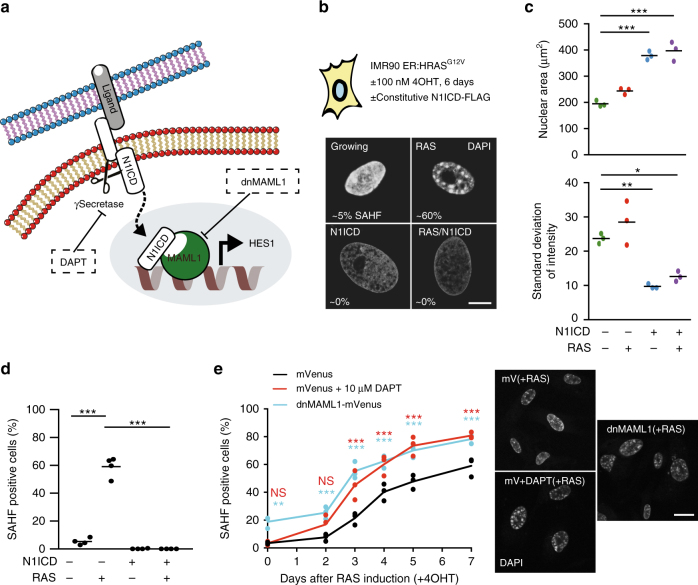
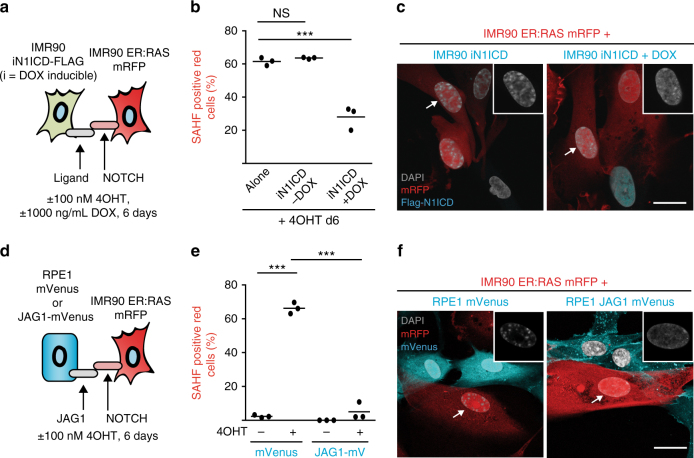
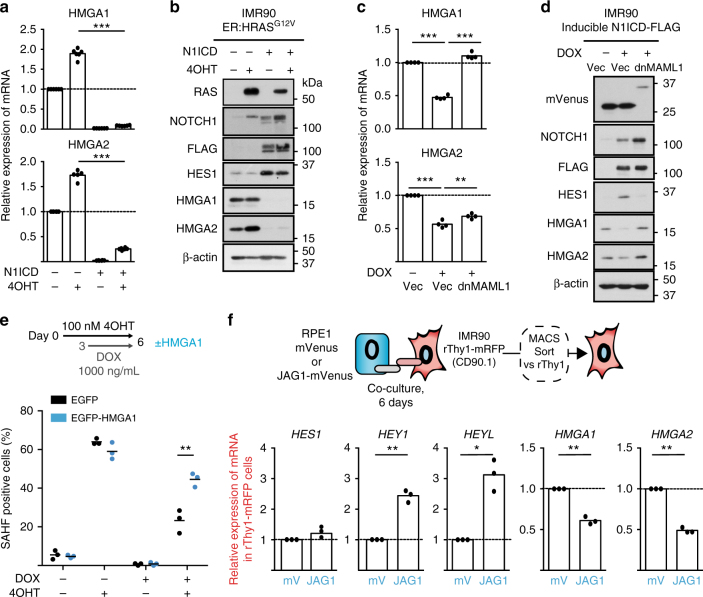
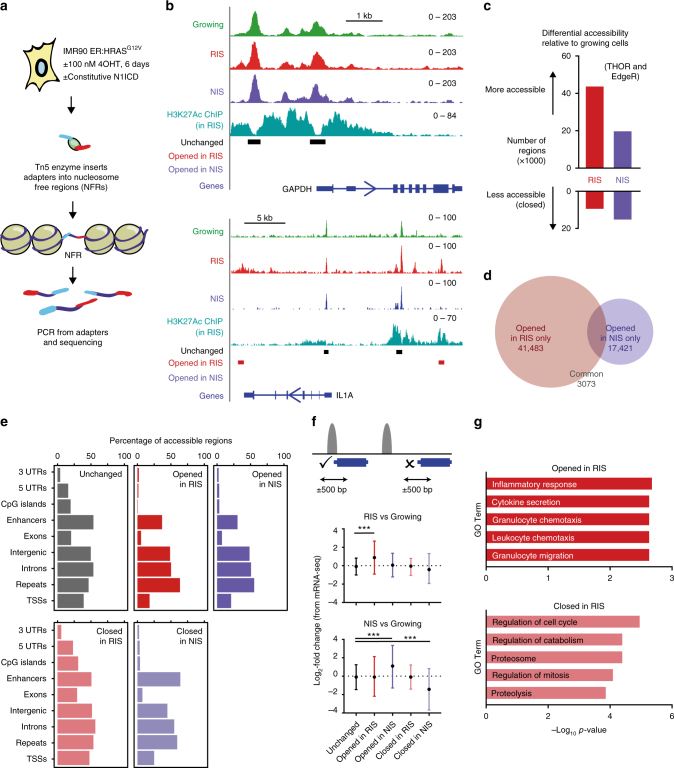
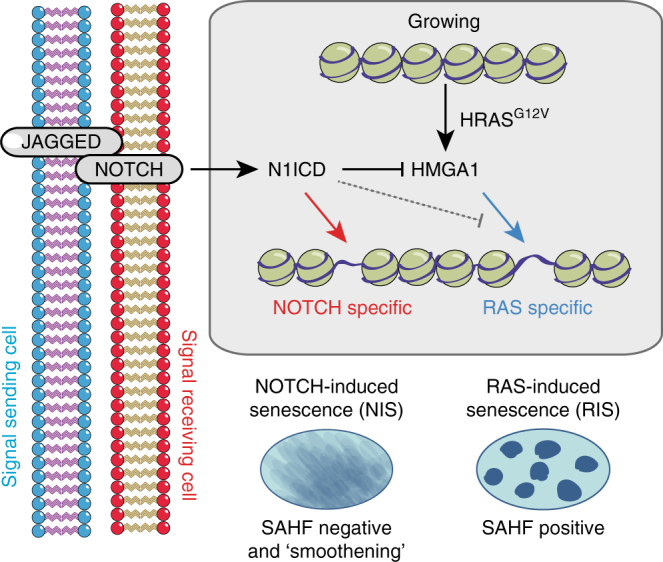
Senescent cells interact with the surrounding microenvironment achieving diverse functional outcomes. We have recently identified that NOTCH1 can drive ‘lateral induction’ of a unique senescence phenotype in adjacent cells by specifically upregulating the NOTCH ligand JAG1. Here we show that NOTCH signalling can modulate chromatin structure autonomously and non-autonomously. In addition to senescence-associated heterochromatic foci (SAHF), oncogenic RAS-induced senescent (RIS) cells exhibit a massive increase in chromatin accessibility. NOTCH signalling suppresses SAHF and increased chromatin accessibility in this context. Strikingly, NOTCH-induced senescent cells, or cancer cells with high JAG1 expression, drive similar chromatin architectural changes in adjacent cells through cell–cell contact. Mechanistically, we show that NOTCH signalling represses the chromatin architectural protein HMGA1, an association found in multiple human cancers. Thus, HMGA1 is involved not only in SAHFs but also in RIS-driven chromatin accessibility. In conclusion, this study identifies that the JAG1–NOTCH–HMGA1 axis mediates the juxtacrine regulation of chromatin architecture.
Overview
The claims and statistics of this paper haven’t been checked yet.
Free: it reads the open-access text and checks the first 5 claims that cite a source we can check. Create a free account to check every claim.
Integrity signals
Registry
Cites
Statistics
Figures
Verification
Claims the paper makes
The claims and statistics of this paper haven’t been checked yet.
Free: it reads the open-access text and checks the first 5 claims that cite a source we can check. Create a free account to check every claim.
Claims other papers make about this one
Each is checked against this paper’s own text: does it say what the citing paper says it does?
The source backs part of the claim, not all of it — or backs it for a different population, condition or comparison.
In the citing paper
“Induction of p21 and a Notch- driven SASP are considered early events 70,75,76 , whereas upregulation of p16 INK4a and an NF- κB- driven SASP are evident at later stages of senescence 71,77,78 .”
From Senescence and cancer — role and therapeutic opportunities (2022) · cites this paper as [75]
Experimental — accuracy not yet measuredThe cited source says what the claim attributes to it.
In the citing paper
“oncogene-induced senescent cells and late replicatively senescent fibroblasts exhibit a marked increase in chromatin accessibility at the nucleosomal level, with most of the open chromatin regions mapping to regulatory elements and repeats66,67”
From Cellular senescence in ageing: from mechanisms to therapeutic opportunities (2021) · cites this paper as [66]
Experimental — accuracy not yet measured
Self-check
Percentages, sums and reported differences re-computed from the paper’s own numbers.
The self-check needs the paper’s full text.
Citations
Cites
3 retracted
Fedele, M., Fidanza, V., Battista, S., Pentimalli, F., Klein-Szanto, A. J. P., Visone, R., De Martino, I., Curcio, A., Morisco, C., Del Vecchio, L., et al. (2006) · Cancer Research · doi:10.1158/0008-5472.can-05-1889 · Cited by 100
RetractedRETRACTED: Critical Role of the HMGI(Y) Proteins in Adipocytic Cell Growth and Differentiation
Melillo, R. M., Pierantoni, G. M., Scala, S., Battista, S., Fedele, M., Stella, A., De Biasio, M. C., Chiappetta, G., Fidanza, V., Condorelli, G., et al. (2001) · Molecular and Cellular Biology · doi:10.1128/mcb.21.7.2485-2495.2001 · Cited by 99
RetractedLoss of Hmga1 gene function affects embryonic stem cell lymphohematopoietic differentiation
Battista, S., Pentimalli, F., Baldassarre, G., Fedele, M., Fidanza, V., Croce, C. M., & Fusco, A. (2003) · The FASEB Journal · doi:10.1096/fj.02-0977fje · Cited by 69
RetractedAnalysis of Relative Gene Expression Data Using Real-Time Quantitative PCR and the 2−ΔΔCT Method
Livak, K. J., & Schmittgen, T. D. (2001) · Methods · doi:10.1006/meth.2001.1262 · Cited by 180,860
Fiji: an open-source platform for biological-image analysis
Schindelin, J., Arganda-Carreras, I., Frise, E., Kaynig, V., Longair, M., Pietzsch, T., Preibisch, S., Rueden, C., Saalfeld, S., Schmid, B., et al. (2012) · Nature Methods · doi:10.1038/nmeth.2019 · Cited by 66,890
Fast and accurate short read alignment with Burrows-Wheeler transform
Li, H., & Durbin, R. (2009) · Bioinformatics · doi:10.1093/bioinformatics/btp324 · Cited by 58,607
STAR: ultrafast universal RNA-seq aligner
Dobin, A., Davis, C. A., Schlesinger, F., Drenkow, J., Zaleski, C., Jha, S., Batut, P., Chaisson, M., & Gingeras, T. R. (2013) · Bioinformatics · doi:10.1093/bioinformatics/bts635 · Cited by 51,709
Robinson, M. D., McCarthy, D. J., & Smyth, G. K. (2010) · Bioinformatics · doi:10.1093/bioinformatics/btp616 · Cited by 41,364 · cited 1×
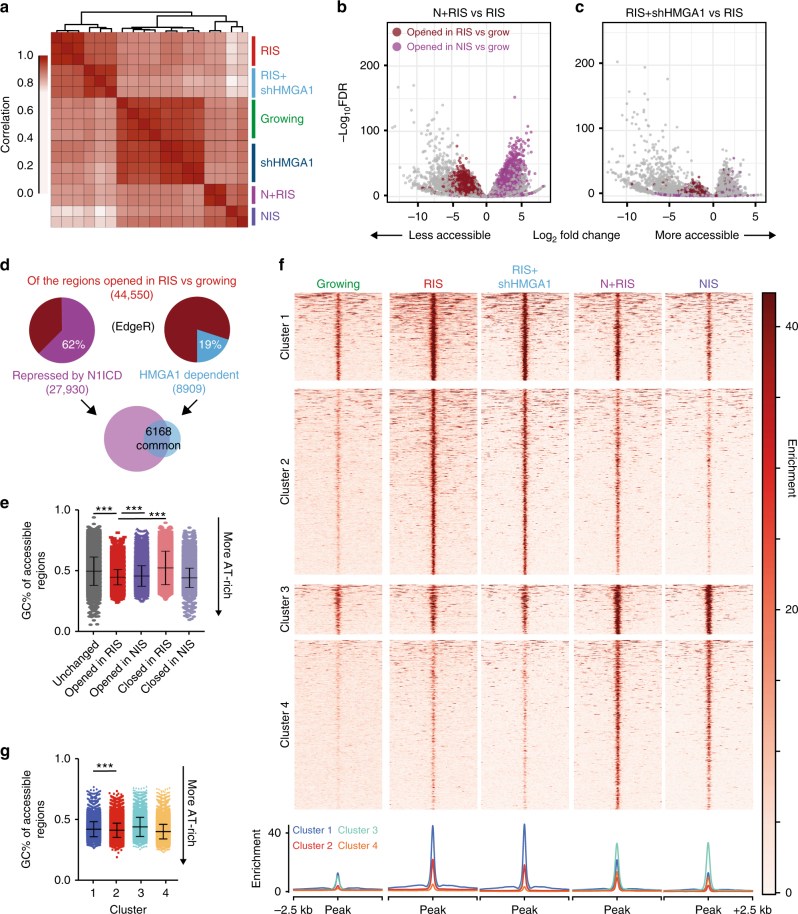
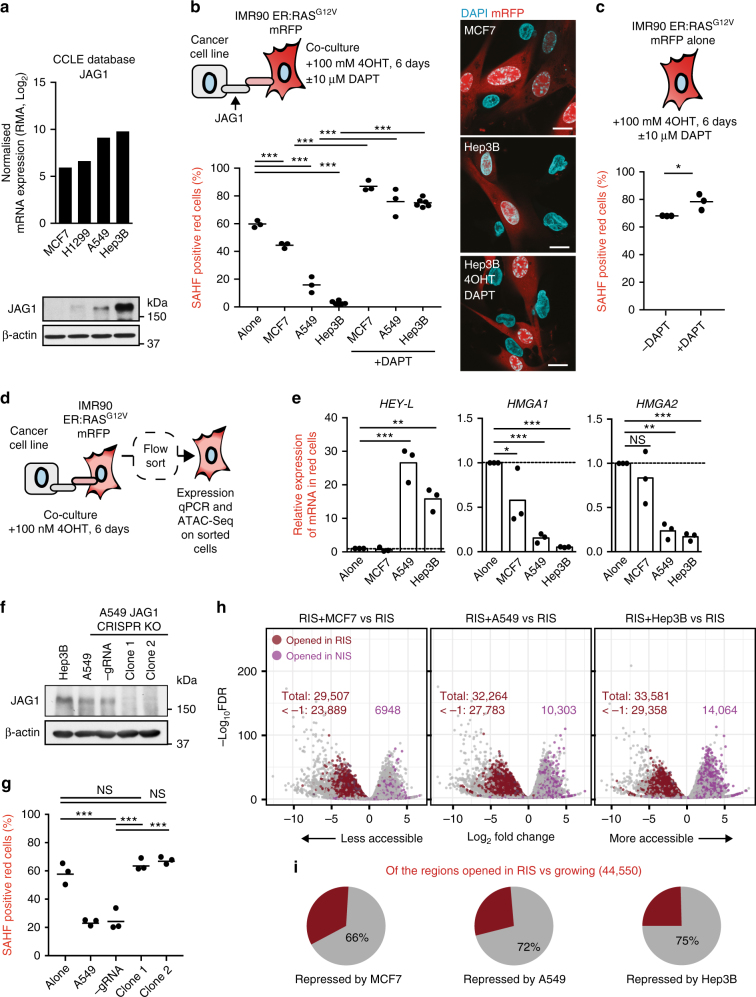
“We found that 66% (29,507), 72% (32,364) and 75% (33,581) of RIS-driven accessible regions were significantly repressed by co-culture with MCF7, A549 and Hep3B cells, respectively (Fig.”
BackgroundCutadapt removes adapter sequences from high-throughput sequencing reads
Martin, M. (2011) · EMBnet.journal · doi:10.14806/ej.17.1.200 · Cited by 33,889
BEDTools: a flexible suite of utilities for comparing genomic features
Quinlan, A. R., & Hall, I. M. (2010) · Bioinformatics · doi:10.1093/bioinformatics/btq033 · Cited by 27,437
Cited by
Cellular senescence in ageing: from mechanisms to therapeutic opportunities
Di Micco, R., Krizhanovsky, V., Baker, D., & d’Adda di Fagagna, F. (2021) · Nature Reviews Molecular Cell Biology · doi:10.1038/s41580-020-00314-w · Cited by 2,277
Senescence and cancer — role and therapeutic opportunities
Schmitt, C. A., Wang, B., & Demaria, M. (2022) · Nature Reviews Clinical Oncology · doi:10.1038/s41571-022-00668-4 · Cited by 794
Classical and Nonclassical Intercellular Communication in Senescence and Ageing
Fafián-Labora, J. A., & O’Loghlen, A. (2020) · Trends in Cell Biology · doi:10.1016/j.tcb.2020.05.003 · Cited by 228
Notch Signaling Mediates Secondary Senescence
Teo, Y. V., Rattanavirotkul, N., Olova, N., Salzano, A., Quintanilla, A., Tarrats, N., Kiourtis, C., Müller, M., Green, A. R., Adams, P. D., et al. (2019) · Cell Reports · doi:10.1016/j.celrep.2019.03.104 · Cited by 149
“This is consistent with published data where impaired Notch signaling partially suppresses SAHF formation in primary senescence (Parry et al., 2018).”
BackgroundOncogene-induced senescence: From biology to therapy
Zhu, H., Blake, S., Kusuma, F. K., Pearson, R. B., Kang, J., & Chan, K. T. (2020) · Mechanisms of Ageing and Development · doi:10.1016/j.mad.2020.111229 · Cited by 116
Evidence and perspectives of cell senescence in neurodegenerative diseases
Si, Z., Sun, L., & Wang, X. (2021) · Biomedicine & Pharmacotherapy · doi:10.1016/j.biopha.2021.111327 · Cited by 105
HMGA Genes and Proteins in Development and Evolution
Vignali, R., & Marracci, S. (2020) · International Journal of Molecular Sciences · doi:10.3390/ijms21020654 · Cited by 108
Tripathi, U., Misra, A., Tchkonia, T., & Kirkland, J. L. (2021) · Mechanisms of Ageing and Development · doi:10.1016/j.mad.2021.111548 · Cited by 104
“For example, senescent cells can signal and influence adjacent cells through juxtacrine NOTCH/JAG1 signaling [59], ROS production [26], or by cargo transfer, which occurs through the formation of cytoplasmic bridges or release of exosomes [60].”
Dissecting primary and secondary senescence to enable new senotherapeutic strategies
Admasu, T. D., Rae, M. J., & Stolzing, A. (2021) · Ageing Research Reviews · doi:10.1016/j.arr.2021.101412 · Cited by 103
The Histone Code of Senescence
Paluvai, H., Di Giorgio, E., & Brancolini, C. (2020) · Cells · doi:10.3390/cells9020466 · Cited by 93
“It is important to note that the DDR dependence was observed for RAS but its involvement in the case of other oncogenes, such as NOTCH and AKT1, needs further validations [90,98].”
BackgroundInfluentialThe role of the dynamic epigenetic landscape in senescence: orchestrating SASP expression
Dasgupta, N., Arnold, R., Equey, A., Gandhi, A., & Adams, P. D. (2024) · npj Aging · doi:10.1038/s41514-024-00172-2 · Cited by 101
“By inducing IL1A expression, DOT1L sustains a positive feedback loop that promotes the transcription of multiple SASP factors 71 .”
BackgroundInfluentialCOX2 regulates senescence secretome composition and senescence surveillance through PGE2
Gonçalves, S., Yin, K., Ito, Y., Chan, A., Olan, I., Gough, S., Cassidy, L., Serrao, E., Smith, S., Young, A., et al. (2021) · Cell Reports · doi:10.1016/j.celrep.2021.108860 · Cited by 95
“Vectors The following retroviral vectors were used: pLNCX2 ER:HRAS (Addgene #67844) (Parry et al., 2018); pBabe-CEBPB-LAP* (a kind gift fromDaniel Peeper, NKI, Amsterdam) (Hoare et al.”
MethodSelf-citationDown-syndrome-induced senescence disrupts the nuclear architecture of neural progenitors
Meharena, H. S., Marco, A., Dileep, V., Lockshin, E. R., Akatsu, G. Y., Mullahoo, J., Watson, L. A., Ko, T., Guerin, L. N., Abdurrob, F., et al. (2022) · Cell Stem Cell · doi:10.1016/j.stem.2021.12.002 · Cited by 92
“…chromosomal introversion, disruption of LADs, and transcriptional and chromatin state changes have all been identified as key features of senescent cells (Criscione et al., 2016; Hernandez-Segura et al., 2017; Lenain et al., 2017; Parry et al., 2018; Sati et al., 2020; Zirkel et al., 2018).”
BackgroundPouikli, A., Parekh, S., Maleszewska, M., Nikopoulou, C., Baghdadi, M., Tripodi, I., Folz-Donahue, K., Hinze, Y., Mesaros, A., Hoey, D., et al. (2021) · Nature Aging · doi:10.1038/s43587-021-00105-8 · Cited by 79
Short-term gain, long-term pain: the senescence life cycle and cancer
Chan, A. S. L., & Narita, M. (2019) · Genes & Development · doi:10.1101/gad.320937.118 · Cited by 80
“2015), cell–cell contact (Nelson et al. 2012; Hoare et al. 2016; Ito et al. 2017; Parry et al. 2018), and secreted extracellular vesicles (Takasugi et al.”
BackgroundInfluentialSelf-citationTranscription-dependent cohesin repositioning rewires chromatin loops in cellular senescence
Olan, I., Parry, A. J., Schoenfelder, S., Narita, M., Ito, Y., Chan, A. S. L., Slater, G. S. C., Bihary, D., Bando, M., Shirahige, K., et al. (2020) · Nature Communications · doi:10.1038/s41467-020-19878-4 · Cited by 76
Self-citationMisawa, T., Tanaka, Y., Okada, R., & Takahashi, A. (2020) · Geriatrics & Gerontology International · doi:10.1111/ggi.13928 · Cited by 69
Di Giorgio, E., Paluvai, H., Dalla, E., Ranzino, L., Renzini, A., Moresi, V., Minisini, M., Picco, R., & Brancolini, C. (2021) · Genome Biology · doi:10.1186/s13059-021-02340-z · Cited by 66
“NOTCH-induced senescence [47] and embryonic senescence [48].”
High Mobility Group A1 (HMGA1): Structure, Biological Function, and Therapeutic Potential
Wang, L., Zhang, J., Xia, M. H., Liu, C., Zu, X., & Zhong, J. (2022) · International Journal of Biological Sciences · doi:10.7150/ijbs.72952 · Cited by 73
“At the same time, the chromatin structure of adjacent cells changes through the connection between cells [168].”
Background(2021) · doi:10.1038/s43587-021-00063-1 · Cited by 66
“PC3/PSC27 ML324 MIT + + + + – + – + – – + + (1) (2) (3) (4) 74.”
Retracted(2020) · doi:10.1101/2020.08.03.235465 · Cited by 66
RetractedTargeting Colorectal Cancer Stem Cells as an Effective Treatment for Colorectal Cancer
Ma, Y., Li, W., Liu, Y., Shi, Y., Lin, Q., & Fu, D. (2020) · Technology in Cancer Research & Treatment · doi:10.1177/1533033819892261 · Cited by 64
“Previous study found that HMGAI-induced CCSCs express Twist 1 protein in transgenic mice, inhibit the expression of E-cadherin, and promote tumor metastasis and development; while knockout of HMGA1 blocks anchorageindependent growth and transplantation of tumor cells.(58) The phenomenon of liver metastasis of colon ca…”
BackgroundTracking single-cell evolution using clock-like chromatin accessibility loci
Xiao, Y., Jin, W., Ju, L., Fu, J., Wang, G., Yu, M., Chen, F., Qian, K., Wang, X., & Zhang, Y. (2024) · Nature Biotechnology · doi:10.1038/s41587-024-02241-z · Cited by 52
Brain ischemia causes systemic Notch1 activity in endothelial cells to drive atherosclerosis
Liu, M., Wang, D., Qi, C., Zou, M., Song, J., Li, L., Xie, H., Ren, H., Hao, H., Yang, G., et al. (2024) · Immunity · doi:10.1016/j.immuni.2024.07.002 · Cited by 54
Escape from oncogene-induced senescence is controlled by POU2F2 and memorized by chromatin scars
Martínez‐Zamudio, R. I., Stefa, A., de Freitas, J. A. N. L. F., Vasilopoulos, T., Simpson, M., Doré, G. R. G., Roux, P., Galan, M. A., Chokshi, R. J., Bischof, O., et al. (2023) · Cell Genomics · doi:10.1016/j.xgen.2023.100293 · Cited by 52
A tale of the good and bad: Cell senescence in bone homeostasis and disease
(2019) · International Review of Cell and Molecular Biology · doi:10.1016/bs.ircmb.2019.03.005 · Cited by 45
Integrated multi-omics approach revealed cellular senescence landscape
Song, Q., Hou, Y., Zhang, Y., Liu, J., Wang, Y., Fu, J., Zhang, C., Cao, M., Cui, Y., Zhang, X., et al. (2022) · Nucleic Acids Research · doi:10.1093/nar/gkac885 · Cited by 41
“We obtained OIS cells’ ChIP-seq data of H3K4me1 from GSM2775005, GSM2775006, and GSM2775007, employed control from GSM2775000, GSM2775001, GSM2775002 and GSM2775003 (12).”
BackgroundMethodInfluentialOhtsuka, T., & Kageyama, R. (2019) · Seminars in Cell and Developmental Biology · doi:10.1016/j.semcdb.2019.01.007 · Cited by 50
Beyond SAHF: An integrative view of chromatin compartmentalization during senescence
Olan, I., Handa, T., & Narita, M. (2023) · Current Opinion in Cell Biology · doi:10.1016/j.ceb.2023.102206 · Cited by 50
Self-citationRamadhiani, R., Ikeda, K., Miyagawa, K., Ryanto, G. R. T., Tamada, N., Suzuki, Y., Kirita, Y., Matoba, S., Hirata, K., & Emoto, N. (2023) · iScience · doi:10.1016/j.isci.2023.106662 · Cited by 45
“EC senescence is thought to play a causative role in age-related metabolic26,37 and cardiovascular disease.27,30,38–41 Furthermore, the potential role of cellular senescence has been investigated in non-age-related diseases such as type-1 diabetes42 and PAH associated with congenital heart disease.16 Senescence-associ…”
BackgroundInfluentialMechanical rejuvenation of senescent stem cells and aged bone via chromatin remodeling
Liu, X., Ye, Y., Li, Z., Liao, L., & Wei, Q. (2026) · Nature Communications · doi:10.1038/s41467-026-68387-3 · Cited by 48
Induction and transmission of oncogene-induced senescence
Rattanavirotkul, N., Kirschner, K., & Chandra, T. (2020) · Cellular and Molecular Life Sciences · doi:10.1007/s00018-020-03638-0 · Cited by 44
The functional impact of nuclear reorganization in cellular senescence
Rocha, A., Dalgarno, A., & Neretti, N. (2022) · Briefings in Functional Genomics · doi:10.1093/bfgp/elab012 · Cited by 38
Wang, C., Long, Q., Fu, Q., Xu, Q., Fu, D., Li, Y., Gao, L., Guo, J., Zhang, X., Lam, E. W. ‐., et al. (2021) · Oncogene · doi:10.1038/s41388-022-02476-7 · Cited by 39
Olan, I., Ando‐Kuri, M., Parry, A., Handa, T., Schoenfelder, S., Fraser, P., Ohkawa, Y., Kimurâ, H., Narita, M., & Narita, M. (2024) · Nature Communications · doi:10.1038/s41467-024-51153-8 · Cited by 37
“These cells were stably transduced with a well-characterised shRNA against HMGA1 (shA1) in a miR30 design or control miR30 backbone 13,16,17 , and ER:HRAS G12V was then induced with 4OHT for 6 days to establish OIS or OIS-shA1 cells.”
BackgroundMethodSelf-citationZhou, Z., Zhang, R., Zhang, Y., Xu, Y., Wang, R., Chen, S., Lv, Y., Chen, Y., Ren, Y., Luo, P., et al. (2024) · Cancer Letters · doi:10.1016/j.canlet.2024.217273 · Cited by 35
Etoh, K., Araki, H., Koga, T., Hino, Y., Kuribayashi, K., Hino, S., & Nakao, M. (2024) · Cell Reports · doi:10.1016/j.celrep.2024.114496 · Cited by 33
Devulder, J. V., Baker, J. R., Fenwick, P. S., Odqvist, L., Donnelly, L., & Barnes, P. J. (2025) · American Journal of Respiratory Cell and Molecular Biology · doi:10.1165/rcmb.2024-0183oc · Cited by 30
Engineering cell fate: Applying synthetic biology to cellular reprogramming
Wang, N., Beitz, A. M., & Galloway, K. E. (2020) · Current Opinion in Systems Biology · doi:10.1016/j.coisb.2020.09.002 · Cited by 30
Wang, J., Zhou, X., Yu, P., Yao, J., Guo, P., Xu, Q., Zhao, Y., Wang, G., Li, Q., Zhu, X., et al. (2025) · Nature Aging · doi:10.1038/s43587-025-00886-2 · Cited by 28
“In addition, hUSI demonstrated robustness against several data quality problems (including batch effects, sparsity and outlier) in simulations using five independent RNA-seq datasets 81,100–102 (AUC > 0.95) (Extended Data Fig.”
InfluentialNi, T., Wang, J., Wang, W., Yao, J., Zhou, X., & Wei, G. (2024) · doi:10.21203/rs.3.rs-3920908/v1 · Cited by 28
Paving the way for small-molecule drug discovery.
Ma, Y., Xin, R., Yang, X., Shi, Y., Zhang, D., Wang, H., Wang, P., Liu, J., Chu, K.-J., & Fu, D. (2021) · American Journal of Translational Research · Cited by 48
Locus-specific induction of gene expression from heterochromatin loci during cellular senescence
Tomimatsu, K., Bihary, D., Olan, I., Parry, A. J., Schoenfelder, S., Chan, A. S. L., Slater, G. S. C., Ito, Y., Rugg-Gunn, P. J., Kirschner, K., et al. (2021) · Nature Aging · doi:10.1038/s43587-021-00147-y · Cited by 25
Self-citationSenescence: An Identity Crisis Originating from Deep Within the Nucleus
Olan, I., & Narita, M. (2022) · Annual Review of Cell and Developmental Biology · doi:10.1146/annurev-cellbio-120420-013537 · Cited by 25
Self-citationSenescence in cancer: Hallmarks, paradoxes, and therapeutic promise
Hinterleitner, C., Goldberg, H. V., McHugh, D., Barthet, V. J. A., Filliol, A. A., & Lowe, S. W. (2026) · Cell · doi:10.1016/j.cell.2026.03.005 · Cited by 24
“These effects are mediated by SASP components such as EREG, PDGF-AA, HGF and several MMPs, and by signaling pathways including TGF-β and Notch, which coordinate communication among the fibroblast, immune, and epithelial compartments 23,72,73,209 .”
Mitochondrial metabolism and epigenetic crosstalk drive SASP
Martini, H., Birch, J., Marques, F. M., Victorelli, S. G., Lagnado, A. B., Pirius, N., Franco, A. C., Lee, G., Han, Y., Rowsey, J. L., et al. (2026) · Nature · doi:10.1038/s41586-026-10791-2 · Cited by 24
Loss of p16: A Bouncer of the Immunological Surveillance?
Leon, K. E., Tangudu, N. K., Aird, K. M., & Buj, R. (2021) · Life · doi:10.3390/life11040309 · Cited by 23
Increased chromatin accessibility underpins senescence
Lopes‐Paciencia, S., & Ferbeyre, G. (2025) · FEBS Journal · doi:10.1111/febs.70136 · Cited by 18
Sasia, C., Borgonetti, V., Mancini, C., Lori, G., Arbiser, J. L., Taddei, M. L., & Galeotti, N. (2024) · Cells · doi:10.3390/cells13191652 · Cited by 18
“A specific type of senescence induced by Notch has been described [58], characterized by a specific upregulation of the ligand Jagged1 that, by engagement of NOTCH1, drives senescence on adjacent cells through the modulation of chromatin structure [59].”
BackgroundPalikyras, S., Sofiadis, K., Stavropoulou, A., Danieli‐Mackay, A., Varamogianni‐Mamatsi, V., Hörl, D., Nasiscionyte, S., Zhu, Y., Papadionysiou, I., Papadakis, A., et al. (2024) · Aging Cell · doi:10.1111/acel.14083 · Cited by 17
“…RS entry were similarly affected by ICM treatment with the notable exception of HMGA1 and A2, which have been implicated in the induction of heterochromatic foci in senescence and SASP regulation (Doubleday et al., 2020 ; Narita et al., 2006 ; Parry et al., 2018 ; Sati et al., 2020; Figure 3e ).”
BackgroundThe role of high mobility group proteins in cellular senescence mechanisms
Chen, J., Li, H., Huang, Y., & Tang, Q. (2024) · Frontiers in Aging · doi:10.3389/fragi.2024.1486281 · Cited by 17
To Be, or Notch to Be: Mediating Cell Fate from Embryogenesis to Lymphopoiesis
Ng, H. L., Quail, E. A., Cruickshank, M. N., & Ulgiati, D. (2021) · Biomolecules · doi:10.3390/biom11060849 · Cited by 17
Insights into the therapeutic strategies for aging and aging-associated diseases
Dong, R., Wu, Q., Kan, J., Fu, C., Sorrentino, V., Chow, A., Lei, Y., Wu, D., Xu, Z., Du, J., et al. (2026) · Signal Transduction and Targeted Therapy · doi:10.1038/s41392-026-02662-z · Cited by 17
Cellular senescence in metastatic prostate cancer: A therapeutic opportunity or challenge (Review)
Jin, C., Liao, S., Lu, G., Geng, B. D., Ye, Z., Xu, J., Ge, G., & Yang, D. (2024) · Molecular Medicine Reports · doi:10.3892/mmr.2024.13286 · Cited by 15
“2) (32).”
MAPKs in the early steps of senescence implemEMTation
Anerillas, C., Altés, G., & Gorospe, M. (2023) · Frontiers in Cell and Developmental Biology · doi:10.3389/fcell.2023.1083401 · Cited by 13
“Mostly through the SASP, senescent cells also help coordinate the response of nearby and distant damaged cells and even trigger secondary senescence (Acosta et al., 2013; Parry et al., 2018; Teo et al., 2019).”
BackgroundNeretti, N., Evans, S. A., Voan Teo, Y., Hinthorn, S. J., Clark, K., Ito, T., & Sedivy, J. M. (2023) · Aging Biology · doi:10.59368/agingbio.20230008 · Cited by 10
“For instance, TGF-beta-dominated SASP profiles are prevalent in notch-induced senescence (NIS) 10–12 , which occurs when a primary senescent cell (or a pre-existing senescent cell) makes direct contact and activates the notch signaling pathway in a neighbor cell, causing the spread of senescence…”
InfluentialA senescence restriction point acting on chromatin integrates oncogenic signals
Lopes‐Paciencia, S., Bourdeau, V., Rowell, M., Amirimehr, D., Guillon, J., Kalegari, P., Barua, A., Trinh, V. Q., Azzi, F., Turcotte, S., et al. (2024) · Cell Reports · doi:10.1016/j.celrep.2024.114044 · Cited by 13
Redefining senescence through hepatocyte fate changes in liver diseases
Umbaugh, D. S., Diehl, A. M., & Du, K. (2025) · Trends in Endocrinology and Metabolism · doi:10.1016/j.tem.2025.08.003 · Cited by 16
Systematic transcriptomic analysis and temporal modelling of human fibroblast senescence
Scanlan, R.-L., Pease, L., O’Keefe, H., Guimera, A. M., Rasmussen, L. J., Wordsworth, J., & Shanley, D. P. (2024) · Frontiers in Aging · doi:10.3389/fragi.2024.1448543 · Cited by 11
Zhu, H., Roode, L. W. Y., Parry, A., Erkamp, N. A., Rodriguez‐Garcia, M., Narita, M., Shen, Y., Ou, Y., Toprakcioglu, Z., Narita, M., et al. (2022) · Advanced NanoBiomed Research · doi:10.1002/anbr.202200138 · Cited by 10
Self-citationHMGs as rheostats of chromosomal structure and cell proliferation
Papantonis, A. (2021) · Trends in Genetics · doi:10.1016/j.tig.2021.07.004 · Cited by 11
Zhang, B., Long, Q., Wu, S., Xu, Q., Song, S., Han, L., Qian, M., Ren, X., Liu, H., Jiang, J. H., et al. (2025) · Aging Cell · doi:10.1111/acel.70194 · Cited by 11
“Senescent cells display profound alterations in nuclear and chromatin structure, expression patterns, and metabolic activities (Parry et al. 2018).”
Senescence-Associated miRNAs and Their Role in Pancreatic Cancer
Popov, A., & Mandys, V. (2022) · Pathology & Oncology Research · doi:10.3389/pore.2022.1610156 · Cited by 8
“Notch signaling pathway is involved in cellcontact-dependent juxtacrine senescence, where cells are characterized by distinct SASP components [24, 25].”
BackgroundHallmarks of the Aging Skin Microenvironment: Components and Mechanisms
He, R., Sun, M., Liu, T., Geng, L., Xing, C., Xu, P., Peng, Y., & Fang, Y. (2025) · Journal of Cellular Physiology · doi:10.1002/jcp.70111 · Cited by 8
“The classical sSASP comprises pro ‐ inflammatory cytokines such as IL ‐ 6 and IL ‐ 8, growth factors including TGF ‐ β , ECM ‐ remodeling enzymes, transcription factors like NF ‐ κ B and C/EBP β (Acosta et al. 2008; Kang et al. 2015; Kuilman et al. 2008; Parry et al. 2018).”
Yin, Y., Yao, S., Li, C., Ma, Y., Kang, Z.-J., Zhang, J., Jia, C., Hou, L., Qin, S., Fan, X., et al. (2021) · Europe PMC (PubMed Central) · Cited by 8
Basic approaches, challenges and opportunities for the discovery of small molecule anti-tumor drugs.
Ma, Y., Liu, J., Yang, X., Xin, R., Shi, Y., Zhang, D., Wang, H., Wang, P., Lin, Q., Li, W., et al. (2021) · American Journal of Cancer Research · Cited by 13
Cai, Y., Xu, H., Deng, K., Yang, H., Zhao, B., Zhang, C., Li, S., Wei, Z., Wang, Z., Wang, F., et al. (2025) · International Journal of Biological Macromolecules · doi:10.1016/j.ijbiomac.2025.141271 · Cited by 6
Functional screening to identify senescence regulators in cancer
Lujambio, A., & Banito, A. (2019) · Current Opinion in Genetics & Development · doi:10.1016/j.gde.2019.02.001 · Cited by 6
de Mendonça, L. B., Lenz, G., & Filippi‐Chiela, E. C. (2025) · Biochemical Society Transactions · doi:10.1042/bst20253054 · Cited by 5
“In this process, early SnCs have elevated NOTCH1 activity, low levels of NAD, and low SASP enriched with TGF-β and growth factors [107,154].”
TPR is required for cytoplasmic chromatin fragment formation during senescence
Bartlett, B. M., Kumar, Y., Boyle, S., Chowdhury, T., Quintanilla, A., Boumendil, C., Acosta, J. C., & Bickmore, W. A. (2024) · eLife · doi:10.7554/elife.101702 · Cited by 7
Chronic Kidney Disease and Cellular Senescence
Morevati, M., Tavenier, J., Scheibye‐Knudsen, M., Houlind, M. B., Hedayati, A., & Hornum, M. (2026) · International Journal of Molecular Sciences · doi:10.3390/ijms27073205 · Cited by 6
Dennis, C. J., He, A. Z., Krishnaraj, A., Quan, A., Teoh, H., Connelly, K. A., Hess, D. A., & Verma, S. (2026) · Circulation Research · doi:10.1161/circresaha.126.327425 · Cited by 4
Epigenetic Insights Into Aging: Emerging Roles of Natural Products in Therapeutic Interventions
Pang, Y., Zhang, H., Li, H., Wang, X., Wei, P., Yi, L., & Lin, S. (2025) · Phytotherapy Research · doi:10.1002/ptr.70003 · Cited by 5
“In conclusion, the disruption of chromatin structure and the formation of heterochromatin are crucial in the processes of aging and cell growth arrest (Parry et al. 2018).”
Non-Canonical Senescence Phenotype in Resistance to CDK4/6 Inhibitors in ER-Positive Breast Cancer
Mammadova, A., Gu, Y., Ruan, L., Badve, S., & Gökmen‐Polar, Y. (2026) · Biomolecules · doi:10.3390/biom16010093 · Cited by 3
“Narita’s group focused on the temporal and spatial aspects of senescence and emphasized that the role of senescence is time dependent [26–29].”
Wu, C., Luo, D., Shi, B., Chen, S., Sun, C., He, Z., & Yu, C. (2025) · Scientific Reports · doi:10.1038/s41598-025-88265-0 · Cited by 4
“Parry et al. reported that by specifically upregulating Jagged-1, the Notch pathway can autonomously and non-autonomously regulate the chromatin structure of aging cells through “trans-induction” of a unique aging phenotype in adjacent cells 38 .”
The Multifaceted Phenotype of Senescent HL-60/S4 MacrophagesPreprint
Olins, A. L., Welch, D. B. M., Saul, D., Prudovsky, I. A., & Olins, D. E. (2024) · bioRxiv (Cold Spring Harbor Laboratory) · doi:10.1101/2024.06.15.598082 · Cited by 3
“Subsequently, the senescent cells develop low levels of NOTCH1 and TGFB1 with high levels of CEBPB, resulting in high levels of proinflammatory factors (e.g., IL1B and IL6) (Hoare and Narita, 2017; Hoare and Narita, 2018).”
BackgroundInfluentialKirkendoll, A. (2025) · Advances in Cancer Biology - Metastasis · doi:10.1016/j.adcanc.2025.100148 · Cited by 3
Dutta, R. K., Du, K., Ren, N., Umbaugh, D. S., Oh, S., Wang, L., Kalsotra, A., Blackshear, P. J., & Diehl, A. (2026) · Gut · doi:10.1136/gutjnl-2025-337019 · Cited by 2
“63 Our data suggest that ZFP36L1 serves as a brake on this process, acting as a molecular safeguard to preserve hepatocyte identity.”
Molecular mechanisms and recent advances in cellular senescence
Hussain, A., Tatar, M., & Gong, R. (2026) · Cell & Bioscience · doi:10.1186/s13578-026-01596-x · Cited by 4
Wei, R., Liu, D., Shu, K., & Zhu, H. (2026) · Drug Resistance Updates · doi:10.1016/j.drup.2026.101444 · Cited by 3
UHRF1 overexpression generates distinct senescent states with different Tp53 dependencies
Magnani, E., Chen, C., Macchi, F., Randic, T., Madakashira, B. P., McBain, I., & Sadler, K. C. (2026) · EMBO Reports · doi:10.1038/s44319-026-00941-y · Cited by 2
Olins, A. L., Welch, D. B. M., Prudovsky, I. A., & Olins, D. E. (2025) · bioRxiv (Cold Spring Harbor Laboratory) · doi:10.1101/2025.02.02.635278 · Cited by 2
The rise of RAS: how gradual oncogene activation shapes the OIS spectrum
Zhu, H., Chan, A. S. L., & Narita, M. (2025) · Genes & Development · doi:10.1101/gad.352761.125 · Cited by 4
“In addition, NOTCH signaling is mediated by direct cell – cell contact, wherein cell surface ligands (e.g., JAG1) bind cell surface NOTCH receptors (Hoare et al. 2016; Parry et al. 2018; Teo et al. 2019).”
Self-citationCirculating cfdna: A novel biomarker for preventing early recurrence in ischemic stroke
Li, X., Yuan, Y., Jing, W., Liu, C., Wei, M., Liu, Q., Li, X., Wei, L., Du, X., & Wang, J. (2025) · Journal of Thrombosis and Thrombolysis · doi:10.1007/s11239-025-03179-y · Cited by 1
“Meanwhile, AIM2 recognizes cfDNA and activates the inflammasome, promoting caspase-1-mediated leads to cell cycle arrest in the presence of mitogens, as well as the secretion of inflammatory cytokines and adhe - sion molecules, such as vascular cell adhesion molecule 1 (VCAM1) [114, 153].”
Sun, Z., Zhao, J., Liao, Y., Cheng, Y., Yu, H., Wang, M., Fang, X., Yang, S., & Zhao, Y. (2026) · Journal of Animal Science and Biotechnology/Journal of animal science and biotechnology · doi:10.1186/s40104-025-01318-2 · Cited by 1
“Active chromatin regions contain enhancers and transcription factors (TFs) that collectively establish cell type-specific gene programs, which are dynamically regulated and closely associated with biological processes such as cellular differentiation and development [15, 16].”
The role of HMGA1 in genome stability: Implications in human cancer
Lei, X., He, K.-Y., Jian, Y., & Xu, Z. (2026) · Cellular and Molecular Life Sciences · doi:10.1007/s00018-025-06011-1 · Cited by 1
Understanding the heterogeneity of senescence and ageing at the single-cell level
Rattanavirotkul, N. (2020) · ERA · doi:10.7488/era/25 · Cited by 1
“Recent lines of evidence have favoured the role of Notch in the modulation of senescence and mediation of secondary senescence (Hoare et al., 2016; Parry et al., 2018).”
BackgroundResultWhy we age: the four process modelPreprint
Wordsworth, J., Nielsen, P. Y., Fielder, E., Chandrasegaran, S., & Shanley, D. P. (2026) · bioRxiv (Cold Spring Harbor Laboratory) · doi:10.64898/2026.01.30.701154 · Cited by 1
Notch signalling mediates secondary senescencePreprint
Teo, Y. V., Rattanavirotkul, N., Salzano, A., Quintanilla, A., Tarrats, N., Kiourtis, C., Mueller, M., Green, A. R., Adams, P. D., Acosta, J. C., et al. (2019) · bioRxiv (Cold Spring Harbor Laboratory) · doi:10.1101/554741
Josipović, N. (2022) · eDiss (Georg-August-Universität Göttingen) · doi:10.53846/goediss-9136 · Cited by 1
Mechanotransduction is the Janus-faced regulator of cell agingPreprint
Liu, X., Liao, L., Wang, P., Ye, Y., Dong, X., Xing, X., Li, Z., Wei, Q., & Tian, W. (2022) · Research Square · doi:10.21203/rs.3.rs-2208259/v1
Predicting chromosomal compartments directly from the nucleotide sequence with DNA-DDA
Lainscsek, X., & Taher, L. (2023) · Briefings in Bioinformatics · doi:10.1093/bib/bbad198
“GM12878 GSE63525 (primary) [2], [48] GSE29611; GSM733772 [49] GATC GATC K562 GSE63525 [2], [48] GSE31755; GSM788085 [50] GATC GATC hESC GSE35156 [51] GSE29611; GSM733687 [49] AAGCTT GATC IMR90 GSE35156 [51] GSE103589; GSM2775001 [52] AAGCTT GATC”
Senescent Subtypes Transition ModelPreprint
Singh, G. (2023) · bioRxiv (Cold Spring Harbor Laboratory) · doi:10.1101/2023.06.10.544466
“NOTCH1 also regulate chromatin structure during senescence [31].”
BackgroundStudy of the role of the cyclin-dependent kinase inhibitor p21Waf1/Cip1 in cellular senescence
Zapata-Bodalo, I. (2022) · theses.fr (ABES) · doi:10.70675/db01e49aza2daz4404za0f1za3db90231ce9
Author response: TPR is required for cytoplasmic chromatin fragment formation during senescence
Bartlett, B. M., Kumar, Y., Boyle, S., Chowdhury, T., Quintanilla, A., Boumendil, C., Acosta, J. C., & Bickmore, W. A. (2024) · eLife · doi:10.7554/elife.101702.sa2
Giorgio, E. D., Paluvai, H., Dalla, E., Ranzino, L., Renzini, A., Moresi, V., Minisini, M., Picco, R., & Brancolini, C. (2021) · Figshare · doi:10.6084/m9.figshare.14562731
Giorgio, E. D., Paluvai, H., Dalla, E., Ranzino, L., Renzini, A., Moresi, V., Minisini, M., Picco, R., & Brancolini, C. (2021) · Figshare · doi:10.6084/m9.figshare.14562755
Genetics and epigenetics in the senescence associated secretory phenotype (SASP) and carcinogenesis
Βασίλιεβα, Κ. Α., & Βασίλιεβα, Κ. Α. (2025) · University of Thessaly Institutional Repository (University of Thessaly)
Fontanilla-Ramirez, P. (2020) · theses.fr (ABES) · doi:10.70675/55998d2az7ba5z4d1ez9adezd5b9861cf0fe · Cited by 1
Metadata
- Authors
- Parry, A. J., Hoare, M., Bihary, D., Hänsel-Hertsch, R., Smith, S., Tomimatsu, K., Mannion, E., Smith, A., D’Santos, P., Russell, I. A., Balasubramanian, S., Kimura, H., Samarajiwa, S. A., & Narita, M.
- Affiliations
- University of Cambridge (GB)
- Corresponding author
- Samarajiwa, Shamith A.
- Narita, Masashi
- ORCID
- Venue
- Nature Communications
- Published
- 2018-05-09
- Volume
- 9
- Issue
- 1
- Pages
- 1840-1840
- ISSN
- 2041-1723 (ISSN-L)
- PMC
- PMC5943456
- OpenAlex
- W2950147893
- Cited by
- 102
- References
- 106
- Citations by year
- 2026: 15 · 2025: 14 · 2024: 14 · 2023: 9 · 2022: 12 · 2021: 18 · 2020: 14 · 2019: 6
- FWCI
- 6.53
- Type
- journal article
- Language
- en
- Open access
- gold
- doi.org
- Licence
- cc-by
- creativecommons.org/licenses/by/4.0 (tdm)
- creativecommons.org/licenses/by/4.0 (vor)
- Locations
- Nature Communications (publishedVersion, cc-by)
- bioRxiv (Cold Spring Harbor Laboratory) (acceptedVersion, cc-by-nd)
- Europe PMC (PubMed Central) (publishedVersion, other-oa)
- PubMed Central (publishedVersion, cc-by)
- PubMed (publishedVersion)
- RePEc: Research Papers in Economics (submittedVersion)
- DOAJ (DOAJ: Directory of Open Access Journals) (submittedVersion, cc-by-sa)
- DOAJ (DOAJ: Directory of Open Access Journals) (submittedVersion)
- UCL Discovery (University College London) (submittedVersion)
- Institutional Repositories DataBase (IRDB) (submittedVersion)
- Tokyo Tech Research Repository (Tokyo Institute of Technology) (submittedVersion)
- Apollo (University of Cambridge) (submittedVersion, cc-by)
- Apollo (cc-by)
- Funders
- Cancer Research UK (A20976, A17197, CB4330, C14303, 12488, CB4160, C20/A20976, A19924, CB4210, 19924, C14303 / A17197, C52489/A19924, 15890, 24453)
- University of Cambridge
- Tokyo Institute of Technology
- Medical Research Council (MR/M013049/1, MR/M013049, MR/R010013/1, MR/R001146/1, MC_UU_12022/10)
- Japan Society for the Promotion of Science (17H01417, 26291071, 25116005, JP25116005)
- Cancer Research UK Cambridge Institute, University of Cambridge (C14303, C14303/A17197, A17197)
- Topics
- Life Sciences › Biochemistry, Genetics and Molecular Biology › Cell Biology › Telomeres, Telomerase, and Senescence
- Life Sciences › Biochemistry, Genetics and Molecular Biology › Molecular Biology › Genomics and Chromatin Dynamics
- Life Sciences › Biochemistry, Genetics and Molecular Biology › Aging › Genetics, Aging, and Longevity in Model Organisms
- Keywords
- Notch signaling, Notch1, JAG1, senescence-associated heterochromatin foci, chromatin accessibility, HMGA1, lateral induction, non-cell-autonomous regulation, chromatin structure
- MeSH terms
- Jagged-1 Protein, Chromatin, Heterochromatin, Humans, Signal Transduction, Cellular Senescence, HMGA1a Protein, Receptor, Notch1
About these checks
Registry, retraction, Cites and statistics results are computed, not judged, with one exception: a printed reference that no index lists is read once by a model before it counts as a citation error. Claims are extracted by a model and kept only when their quote appears verbatim in the text; each cited source is then checked, with a model’s help, for whether it says what the claim relies on. Those verdicts can be wrong — read the claim’s quote and the cited source before relying on one.
Statistics and arithmetic are recomputed, not judged.
Confidence bands are shown only for fields calibrated on our annotated test set. None is calibrated yet, so no band is shown.
What counts as a claim ›How we measure confidence ›How we check this ›
Are you an author, or do you see a problem with this page? Request a review
Data sources
Bibliographic data: Semantic Scholar, OpenAlex, Crossref.
Contains information from the Semantic Scholar Academic Graph Datasets, made available under the ODC Attribution License (ODC-BY 1.0).
Semantic Scholar’s data is described in: Kinney, R., et al. (2023). The Semantic Scholar Open Data Platform. arXiv:2301.10140.
