

NOTCH-mediated non-cell autonomous regulation of chromatin structure during senescence
Open accessPublished version of a preprint
The DOI matches its Crossref record; 107 of the 107 references it cites were found in a registry or an index.
Abstract
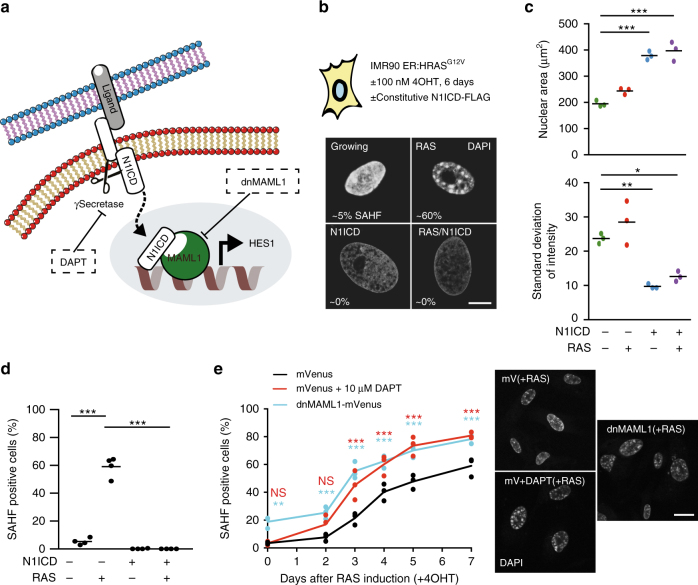
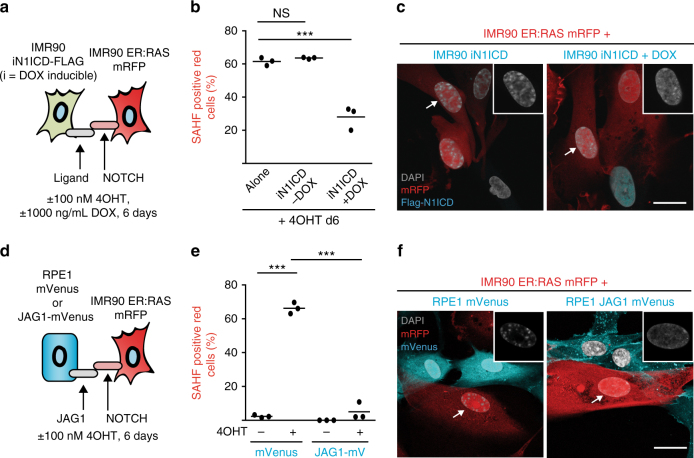
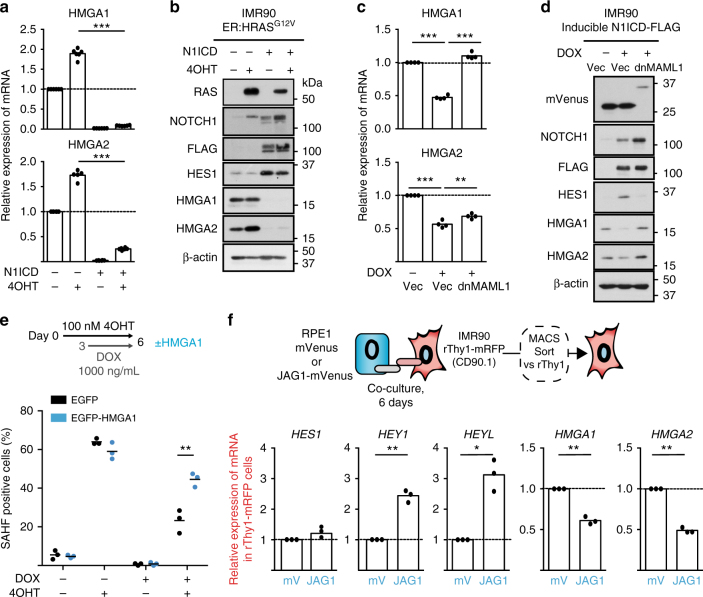
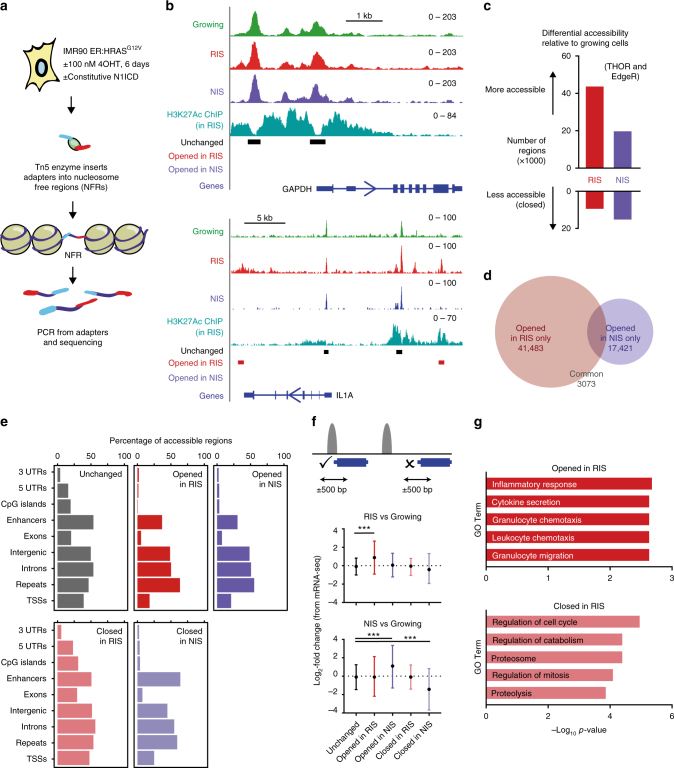
Senescent cells interact with the surrounding microenvironment achieving diverse functional outcomes. We have recently identified that NOTCH1 can drive ‘lateral induction’ of a unique senescence phenotype in adjacent cells by specifically upregulating the NOTCH ligand JAG1. Here we show that NOTCH signalling can modulate chromatin structure autonomously and non-autonomously. In addition to senescence-associated heterochromatic foci (SAHF), oncogenic RAS-induced senescent (RIS) cells exhibit a massive increase in chromatin accessibility. NOTCH signalling suppresses SAHF and increased chromatin accessibility in this context. Strikingly, NOTCH-induced senescent cells, or cancer cells with high JAG1 expression, drive similar chromatin architectural changes in adjacent cells through cell–cell contact. Mechanistically, we show that NOTCH signalling represses the chromatin architectural protein HMGA1, an association found in multiple human cancers. Thus, HMGA1 is involved not only in SAHFs but also in RIS-driven chromatin accessibility. In conclusion, this study identifies that the JAG1–NOTCH–HMGA1 axis mediates the juxtacrine regulation of chromatin architecture.
Overview
The claims and statistics of this paper haven’t been checked yet.
Free: it reads the open-access text and checks the first 5 claims that cite a source we can check. Create a free account to check every claim.
Integrity signals
Registry
Cites
Statistics
Figures
Verification
Claims the paper makes
The claims and statistics of this paper haven’t been checked yet.
Free: it reads the open-access text and checks the first 5 claims that cite a source we can check. Create a free account to check every claim.
Claims other papers make about this one
Each is checked against this paper’s own text: does it say what the citing paper says it does?
The source backs part of the claim, not all of it — or backs it for a different population, condition or comparison.
In the citing paper
“Induction of p21 and a Notch- driven SASP are considered early events 70,75,76 , whereas upregulation of p16 INK4a and an NF- κB- driven SASP are evident at later stages of senescence 71,77,78 .”
From Senescence and cancer — role and therapeutic opportunities (2022) · cites this paper as [75]
Experimental — accuracy not yet measuredThe cited source says what the claim attributes to it.
In the citing paper
“oncogene-induced senescent cells and late replicatively senescent fibroblasts exhibit a marked increase in chromatin accessibility at the nucleosomal level, with most of the open chromatin regions mapping to regulatory elements and repeats66,67”
From Cellular senescence in ageing: from mechanisms to therapeutic opportunities (2021) · cites this paper as [66]
Experimental — accuracy not yet measured
Self-check
Percentages, sums and reported differences re-computed from the paper’s own numbers.
The self-check needs the paper’s full text.
Citations
Cites
3 retracted
Fedele, M., Fidanza, V., Battista, S., Pentimalli, F., Klein-Szanto, A. J. P., Visone, R., De Martino, I., Curcio, A., Morisco, C., Del Vecchio, L., et al. (2006) · Cancer Research · doi:10.1158/0008-5472.can-05-1889 · Cited by 100
RetractedRETRACTED: Critical Role of the HMGI(Y) Proteins in Adipocytic Cell Growth and Differentiation
Melillo, R. M., Pierantoni, G. M., Scala, S., Battista, S., Fedele, M., Stella, A., De Biasio, M. C., Chiappetta, G., Fidanza, V., Condorelli, G., et al. (2001) · Molecular and Cellular Biology · doi:10.1128/mcb.21.7.2485-2495.2001 · Cited by 99
RetractedLoss of Hmga1 gene function affects embryonic stem cell lymphohematopoietic differentiation
Battista, S., Pentimalli, F., Baldassarre, G., Fedele, M., Fidanza, V., Croce, C. M., & Fusco, A. (2003) · The FASEB Journal · doi:10.1096/fj.02-0977fje · Cited by 69
RetractedAnalysis of Relative Gene Expression Data Using Real-Time Quantitative PCR and the 2−ΔΔCT Method
Livak, K. J., & Schmittgen, T. D. (2001) · Methods · doi:10.1006/meth.2001.1262 · Cited by 180,860
Fiji: an open-source platform for biological-image analysis
Schindelin, J., Arganda-Carreras, I., Frise, E., Kaynig, V., Longair, M., Pietzsch, T., Preibisch, S., Rueden, C., Saalfeld, S., Schmid, B., et al. (2012) · Nature Methods · doi:10.1038/nmeth.2019 · Cited by 66,890
Fast and accurate short read alignment with Burrows-Wheeler transform
Li, H., & Durbin, R. (2009) · Bioinformatics · doi:10.1093/bioinformatics/btp324 · Cited by 58,607
STAR: ultrafast universal RNA-seq aligner
Dobin, A., Davis, C. A., Schlesinger, F., Drenkow, J., Zaleski, C., Jha, S., Batut, P., Chaisson, M., & Gingeras, T. R. (2013) · Bioinformatics · doi:10.1093/bioinformatics/bts635 · Cited by 51,709
Robinson, M. D., McCarthy, D. J., & Smyth, G. K. (2010) · Bioinformatics · doi:10.1093/bioinformatics/btp616 · Cited by 41,364 · cited 1×
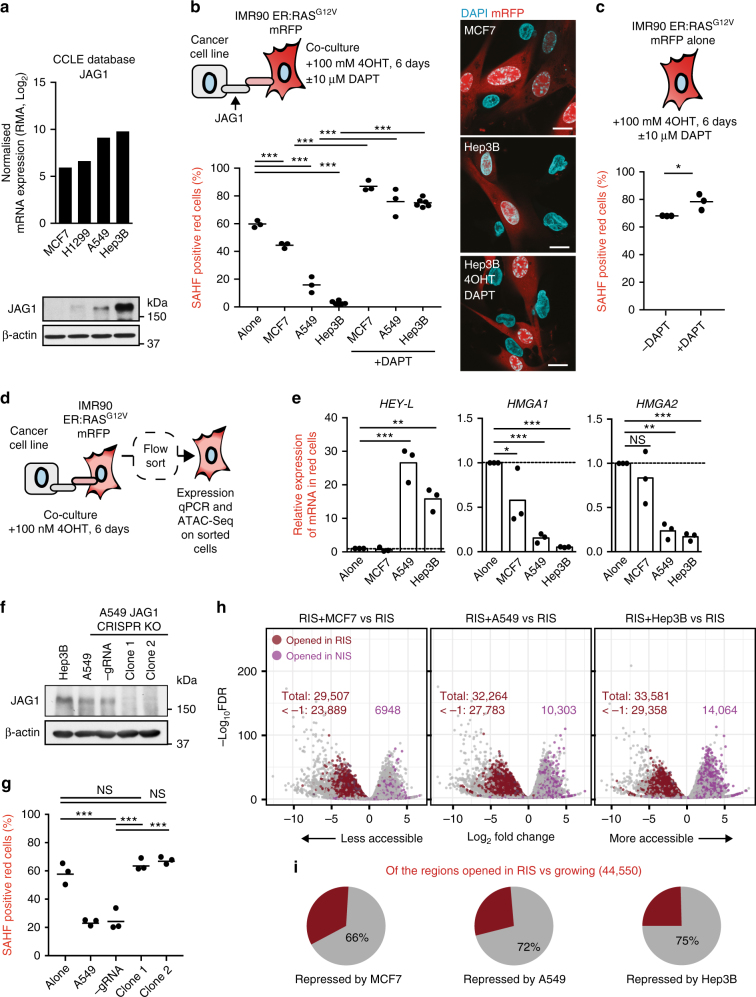
“We found that 66% (29,507), 72% (32,364) and 75% (33,581) of RIS-driven accessible regions were significantly repressed by co-culture with MCF7, A549 and Hep3B cells, respectively (Fig.”
BackgroundCutadapt removes adapter sequences from high-throughput sequencing reads
Martin, M. (2011) · EMBnet.journal · doi:10.14806/ej.17.1.200 · Cited by 33,889
BEDTools: a flexible suite of utilities for comparing genomic features
Quinlan, A. R., & Hall, I. M. (2010) · Bioinformatics · doi:10.1093/bioinformatics/btq033 · Cited by 27,437
Model-based Analysis of ChIP-Seq (MACS)
Zhang, Y., Liu, T., Meyer, C. A., Eeckhoute, J., Johnson, D. S., Bernstein, B. E., Nusbaum, C., Myers, R. M., Brown, M., Li, W., et al. (2008) · Genome Biology · doi:10.1186/gb-2008-9-9-r137 · Cited by 18,386
An integrated encyclopedia of DNA elements in the human genome
The ENCODE Project Consortium (2012) · Nature · doi:10.1038/nature11247 · Cited by 18,072
ggplot2: Elegant Graphics for Data Analysis
Wickham, H. (2009) · doi:10.1007/978-0-387-98141-3 · Cited by 14,447
Heinz, S., Benner, C., Spann, N., Bertolino, E., Lin, Y. C., Laslo, P., Cheng, J. X., Murre, C., Singh, H., & Glass, C. K. (2010) · Molecular Cell · doi:10.1016/j.molcel.2010.05.004 · Cited by 13,382
Genome engineering using the CRISPR-Cas9 system
Ran, F. A., Hsu, P. D., Wright, J., Agarwala, V., Scott, D. A., & Zhang, F. (2013) · Nature Protocols · doi:10.1038/nprot.2013.143 · Cited by 11,133
Enrichr: a comprehensive gene set enrichment analysis web server 2016 update
Kuleshov, M. V., Jones, M. R., Rouillard, A. D., Fernandez, N. F., Duan, Q., Wang, Z., Koplev, S., Jenkins, S. L., Jagodnik, K. M., Lachmann, A., et al. (2016) · Nucleic Acids Research · doi:10.1093/nar/gkw377 · Cited by 10,799
The cancer genome atlas pan-cancer analysis project
The Cancer Genome Atlas Research Network, Weinstein, J. N., Collisson, E. A., Mills, G. B., Shaw, K. R. M., Ozenberger, B. A., Ellrott, K., Shmulevich, I., Sander, C., & Stuart, J. M. (2013) · Nature Genetics · doi:10.1038/ng.2764 · Cited by 9,092
Modeling Survival Data: Extending the Cox Model
Therneau, T. M., & Grambsch, P. M. (2000) · Statistics for Biology and Health · doi:10.1007/978-1-4757-3294-8 · Cited by 8,674
The serial cultivation of human diploid cell strains
Hayflick, L., & Moorhead, P. S. (1961) · Experimental Cell Research · doi:10.1016/0014-4827(61)90192-6 · Cited by 8,508
The Cancer Cell Line Encyclopedia enables predictive modelling of anticancer drug sensitivity
Barretina, J., Caponigro, G., Stransky, N., Venkatesan, K., Margolin, A. A., Kim, S., Wilson, C. J., Lehár, J., Kryukov, G. V., Sonkin, D., et al. (2012) · Nature · doi:10.1038/nature11003 · Cited by 7,950
Enrichr: interactive and collaborative HTML5 gene list enrichment analysis tool
Chen, E. Y., Tan, C. M., Kou, Y., Duan, Q., Wang, Z., Meirelles, G. V., Clark, N. R., & Ma’ayan, A. (2013) · BMC Bioinformatics · doi:10.1186/1471-2105-14-128 · Cited by 7,814
Buenrostro, J. D., Giresi, P. G., Zaba, L. C., Chang, H. Y., & Greenleaf, W. J. (2013) · Nature Methods · doi:10.1038/nmeth.2688 · Cited by 6,422
The limited in vitro lifetime of human diploid cell strains
Hayflick, L. (1965) · Experimental Cell Research · doi:10.1016/0014-4827(65)90211-9 · Cited by 5,876
Oncogenic ras provokes premature cell senescence associated with accumulation of p53 and p16INK4a
Serrano, M., Lin, A. W., McCurrach, M. E., Beach, D., & Lowe, S. W. (1997) · Cell · doi:10.1016/s0092-8674(00)81902-9 · Cited by 5,218
The senescence-associated secretory phenotype: the dark side of tumor suppression
Coppé, J.-P., Desprez, P.-Y., Krtolica, A., & Campisi, J. (2010) · Annual Review of Pathology: Mechanisms of Disease · doi:10.1146/annurev-pathol-121808-102144 · Cited by 5,206
Cellular senescence: when bad things happen to good cells
Campisi, J., & d'Adda di Fagagna, F. (2007) · Nature Reviews Molecular Cell Biology · doi:10.1038/nrm2233 · Cited by 4,441
Györffy, B., Lanczky, A., Eklund, A. C., Denkert, C., Budczies, J., Li, Q., & Szallasi, Z. (2010) · Breast Cancer Research and Treatment · doi:10.1007/s10549-009-0674-9 · Cited by 4,169
Mutation of the mouse klotho gene leads to a syndrome resembling ageing
Kuro-o, M., Matsumura, Y., Aizawa, H., Kawaguchi, H., Suga, T., Utsugi, T., Ohyama, Y., Kurabayashi, M., Kaname, T., Kume, E., et al. (1997) · Nature · doi:10.1038/36285 · Cited by 3,837
deepTools: a flexible platform for exploring deep-sequencing data
Ramírez, F., Dündar, F., Diehl, S., Grüning, B. A., & Manke, T. (2014) · Nucleic Acids Research · doi:10.1093/nar/gku365 · Cited by 3,738
The Canonical Notch Signaling Pathway: Unfolding the Activation Mechanism
Kopan, R., & Ilagan, M. X. G. (2009) · Cell · doi:10.1016/j.cell.2009.03.045 · Cited by 3,643
The Subread aligner: fast, accurate and scalable read mapping by seed-and-vote
Liao, Y., Smyth, G. K., & Shi, W. (2013) · Nucleic Acids Research · doi:10.1093/nar/gkt214 · Cited by 3,064
The accessible chromatin landscape of the human genome
Thurman, R. E., Rynes, E., Humbert, R., Vierstra, J., Maurano, M. T., Haugen, E., Sheffield, N. C., Stergachis, A. B., Wang, H., Vernot, B., et al. (2012) · Nature · doi:10.1038/nature11232 · Cited by 2,679
The Achilles' heel of senescent cells: from transcriptome to senolytic drugs
Zhu, Y., Tchkonia, T., Pirtskhalava, T., Gower, A. C., Ding, H., Giorgadze, N., Palmer, A. K., Ikeno, Y., Hubbard, G. B., Lenburg, M., et al. (2015) · Aging Cell · doi:10.1111/acel.12344 · Cited by 2,584
Rb-mediated heterochromatin formation and silencing of E2F target genes during cellular senescence
Narita, M., Nuñez, S., Heard, E., Narita, M., Lin, A. W., Hearn, S. A., Spector, D. L., Hannon, G. J., & Lowe, S. W. (2003) · Cell · doi:10.1016/s0092-8674(03)00401-x · Cited by 2,278
Self-citationScaling accurate genetic variant discovery to tens of thousands of samples
Poplin, R., Ruano-Rubio, V., DePristo, M. A., Fennell, T. J., Carneiro, M. O., Van der Auwera, G. A., Kling, D. E., Gauthier, L. D., Levy-Moonshine, A., Roazen, D., et al. (2017) · bioRxiv (Cold Spring Harbor Laboratory) · doi:10.1101/201178 · Cited by 1,915
Győrffy, B., Surowiak, P., Budczies, J., & Lánczky, A. (2013) · PLoS ONE · doi:10.1371/journal.pone.0082241 · Cited by 1,760
Baar, M. P., Brandt, R. M. C., Putavet, D. A., Klein, J. D. D., Derks, K. W. J., Bourgeois, B. R. M., Stryeck, S., Rijksen, Y., van Willigenburg, H., Feijtel, D. A., et al. (2017) · Cell · doi:10.1016/j.cell.2017.02.031 · Cited by 1,454
Genome-wide analysis of mammalian promoter architecture and evolution
Carninci, P., Sandelin, A., Lenhard, B., Katayama, S., Shimokawa, K., Ponjavic, J., Semple, C. A. M., Taylor, M. S., Engström, P. G., Frith, M. C., et al. (2006) · Nature Genetics · doi:10.1038/ng1789 · Cited by 1,350
A positive role for histone acetylation in transcription factor access to nucleosomal DNA
Lee, D. Y., Hayes, J. J., Pruss, D., & Wolffe, A. P. (1993) · Cell · doi:10.1016/0092-8674(93)90051-q · Cited by 1,122
Autophagy mediates the mitotic senescence transition
Young, A. R. J., Narita, M., Ferreira, M., Kirschner, K., Sadaie, M., Darot, J. F. J., Tavaré, S., Arakawa, S., Shimizu, S., Watt, F. M., et al. (2009) · Genes & Development · doi:10.1101/gad.519709 · Cited by 1,078
Self-citationLamin B1 loss is a senescence-associated biomarker
Freund, A., Laberge, R.-M., Demaria, M., & Campisi, J. (2012) · Molecular Biology of the Cell · doi:10.1091/mbc.e11-10-0884 · Cited by 1,046
Directed elimination of senescent cells by inhibition of BCL-W and BCL-XL
Yosef, R., Pilpel, N., Tokarsky-Amiel, R., Biran, A., Ovadya, Y., Cohen, S., Vadai, E., Dassa, L., Shahar, E., Condiotti, R., et al. (2016) · Nature Communications · doi:10.1038/ncomms11190 · Cited by 1,032
Bray, S. J. (2016) · Nature Reviews Molecular Cell Biology · doi:10.1038/nrm.2016.94 · Cited by 1,012
Szász, A. M., Lánczky, A., Nagy, Á., Förster, S., Hark, K., Green, J. E., Boussioutas, A., Busuttil, R., Szabó, A., & Győrffy, B. (2016) · Oncotarget · doi:10.18632/oncotarget.10337 · Cited by 988
VarDict: a novel and versatile variant caller for next-generation sequencing in cancer research
Lai, Z., Markovets, A., Ahdesmaki, M., Chapman, B., Hofmann, O., McEwen, R., Johnson, J., Dougherty, B., Barrett, J. C., & Dry, J. R. (2016) · Nucleic Acids Research · doi:10.1093/nar/gkw227 · Cited by 970
G-quadruplex structures mark human regulatory chromatin
Hänsel-Hertsch, R., Beraldi, D., Lensing, S. V., Marsico, G., Zyner, K., Parry, A., Di Antonio, M., Pike, J., Kimura, H., Narita, M., et al. (2016) · Nature Genetics · doi:10.1038/ng.3662 · Cited by 964
Self-citationGiresi, P. G., Kim, J., McDaniell, R. M., Iyer, V. R., & Lieb, J. D. (2007) · Genome Research · doi:10.1101/gr.5533506 · Cited by 955
Senescence-messaging secretome: SMS-ing cellular stress
Kuilman, T., & Peeper, D. S. (2009) · Nature Reviews Cancer · doi:10.1038/nrc2560 · Cited by 909
Cellular senescence and its effector programs
Salama, R., Sadaie, M., Hoare, M., & Narita, M. (2014) · Genes & Development · doi:10.1101/gad.235184.113 · Cited by 855
Self-citationLánczky, A., Nagy, Á., Bottai, G., Munkácsy, G., Szabó, A., Santarpia, L., & Győrffy, B. (2016) · Breast Cancer Research and Treatment · doi:10.1007/s10549-016-4013-7 · Cited by 768
Roles of HMGA proteins in cancer
Fusco, A., & Fedele, M. (2007) · Nature Reviews Cancer · doi:10.1038/nrc2271 · Cited by 716
Zhang, R., Poustovoitov, M. V., Ye, X., Santos, H. A., Chen, W., Daganzo, S. M., Erzberger, J. P., Serebriiskii, I. G., Canutescu, A. A., Dunbrack, R. L., et al. (2005) · Developmental Cell · doi:10.1016/j.devcel.2004.10.019 · Cited by 699
A novel role for high-mobility group A proteins in cellular senescence and heterochromatin formation
Narita, M., Narita, M., Krizhanovsky, V., Nuñez, S., Chicas, A., Hearn, S. A., Myers, M. P., & Lowe, S. W. (2006) · Cell · doi:10.1016/j.cell.2006.05.052 · Cited by 629
Self-citationMutation responsible for the mouse pygmy phenotype in the developmentally regulated factor HMGI-C
Zhou, X., Benson, K. F., Ashar, H. R., & Chada, K. (1995) · Nature · doi:10.1038/376771a0 · Cited by 626
Shah, P. P., Donahue, G., Otte, G. L., Capell, B. C., Nelson, D. M., Cao, K., Aggarwala, V., Cruickshanks, H. A., Rai, T. S., McBryan, T., et al. (2013) · Genes & Development · doi:10.1101/gad.223834.113 · Cited by 550
The role of nuclear lamin B1 in cell proliferation and senescence
Shimi, T., Butin-Israeli, V., Adam, S. A., Hamanaka, R. B., Goldman, A. E., Lucas, C. A., Shumaker, D. K., Kosak, S. T., Chandel, N. S., & Goldman, R. D. (2011) · Genes & Development · doi:10.1101/gad.179515.111 · Cited by 547
A role for cell-cycle-regulated histone H3 lysine 56 acetylation in the DNA damage response
Masumoto, H., Hawke, D., Kobayashi, R., & Verreault, A. (2005) · Nature · doi:10.1038/nature03714 · Cited by 544
ChIP-seq: Using high-throughput sequencing to discover protein–DNA interactions
Schmidt, D., Wilson, M. D., Spyrou, C., Brown, G. D., Hadfield, J., & Odom, D. T. (2009) · Methods · doi:10.1016/j.ymeth.2009.03.001 · Cited by 525
NOTCH1 mediates a switch between two distinct secretomes during senescence
Hoare, M., Ito, Y., Kang, T.-W., Weekes, M. P., Matheson, N. J., Patten, D. A., Shetty, S., Parry, A. J., Menon, S., Salama, R., et al. (2016) · Nature Cell Biology · doi:10.1038/ncb3397 · Cited by 522
Self-citationDynamic regulation of transcriptional states by chromatin and transcription factors
Voss, T. C., & Hager, G. L. (2014) · Nature Reviews Genetics · doi:10.1038/nrg3623 · Cited by 504 · cited 1×
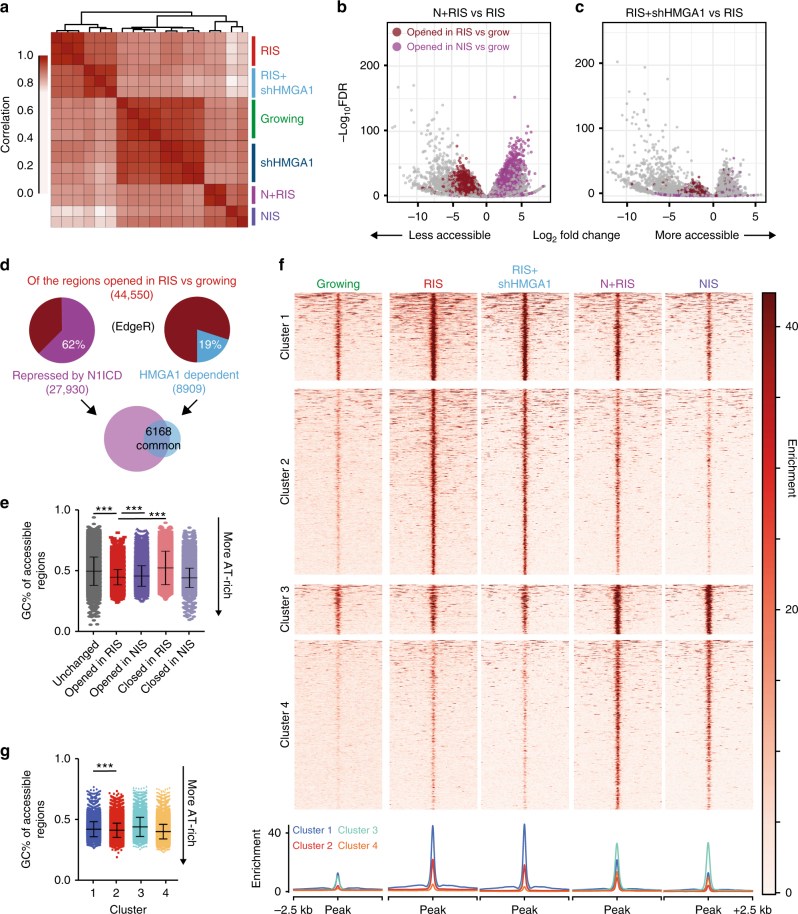
“Repressed by N1ICD (27,930) HMGA1 dependent (8909) 62% 19%”
REACTIVE STROMA IN PROSTATE CANCER PROGRESSION
TUXHORN, J. A., AYALA, G. E., & ROWLEY, D. R. (2001) · Journal of Urology · doi:10.1016/s0022-5347(05)65620-0 · Cited by 502
Stromal senescence establishes an immunosuppressive microenvironment that drives tumorigenesis
Ruhland, M. K., Loza, A. J., Capietto, A.-H., Luo, X., Knolhoff, B. L., Flanagan, K. C., Belt, B. A., Alspach, E., Leahy, K., Luo, J., et al. (2016) · Nature Communications · doi:10.1038/ncomms11762 · Cited by 496
Vettese-Dadey, M., Grant, P. A., Hebbes, T. R., Crane- Robinson, C., Allis, C. D., & Workman, J. L. (1996) · The EMBO Journal · doi:10.1002/j.1460-2075.1996.tb00608.x · Cited by 468
De Cecco, M., Criscione, S. W., Peckham, E. J., Hillenmeyer, S., Hamm, E. A., Manivannan, J., Peterson, A. L., Kreiling, J. A., Neretti, N., & Sedivy, J. M. (2013) · Aging Cell · doi:10.1111/acel.12047 · Cited by 459 · cited 1×
“We found that 66% (29,507), 72% (32,364) and 75% (33,581) of RIS-driven accessible regions were significantly repressed by co-culture with MCF7, A549 and Hep3B cells, respectively (Fig.”
BackgroundChen, C.-C., Carson, J. J., Feser, J., Tamburini, B., Zabaronick, S., Linger, J., & Tyler, J. K. (2008) · Cell · doi:10.1016/j.cell.2008.06.035 · Cited by 425
Therneau, T. M., & Grambsch, P. M. (2000) · Statistics for Biology and Health · doi:10.1007/978-1-4757-3294-8_3 · Cited by 400
From Fly Wings to Targeted Cancer Therapies: A Centennial for Notch Signaling
Ntziachristos, P., Lim, J. S., Sage, J., & Aifantis, I. (2014) · Cancer Cell · doi:10.1016/j.ccr.2014.02.018 · Cited by 374
Nfib Promotes Metastasis through a Widespread Increase in Chromatin Accessibility
Denny, S. K., Yang, D., Chuang, C.-H., Brady, J. J., Lim, J. S., Grüner, B. M., Chiou, S.-H., Schep, A. N., Baral, J., Hamard, C., et al. (2016) · Cell · doi:10.1016/j.cell.2016.05.052 · Cited by 368 · cited 1×
“We found that 66% (29,507), 72% (32,364) and 75% (33,581) of RIS-driven accessible regions were significantly repressed by co-culture with MCF7, A549 and Hep3B cells, respectively (Fig.”
BackgroundDevelopmental Fate and Cellular Maturity Encoded in Human Regulatory DNA Landscapes
Stergachis, A. B., Neph, S., Reynolds, A., Humbert, R., Miller, B., Paige, S. L., Vernot, B., Cheng, J. B., Thurman, R. E., Sandstrom, R., et al. (2013) · Cell · doi:10.1016/j.cell.2013.07.020 · Cited by 338
The reactive stroma microenvironment and prostate cancer progression
Barron, D. A., & Rowley, D. R. (2012) · Endocrine-Related Cancer · doi:10.1530/erc-12-0085 · Cited by 329
Sadaie, M., Salama, R., Carroll, T., Tomimatsu, K., Chandra, T., Young, A. R. J., Narita, M., Pérez-Mancera, P. A., Bennett, D. C., Chong, H., et al. (2013) · Genes & Development · doi:10.1101/gad.217281.113 · Cited by 323
Self-citationDynamic Ligand Discrimination in the Notch Signaling Pathway
Nandagopal, N., Santat, L. A., LeBon, L., Sprinzak, D., Bronner, M. E., & Elowitz, M. B. (2018) · Cell · doi:10.1016/j.cell.2018.01.002 · Cited by 322
Chandra, T., Kirschner, K., Thuret, J.-Y., Pope, B. D., Ryba, T., Newman, S., Ahmed, K., Samarajiwa, S. A., Salama, R., Carroll, T., et al. (2012) · Molecular Cell · doi:10.1016/j.molcel.2012.06.010 · Cited by 308
Self-citationCoppé, J.-P., Patil, C. K., Rodier, F., Sun, Y., Muñoz, D. P., Goldstein, J., Nelson, P. S., Desprez, P.-Y., & Campisi, J. (2008) · PLoS Biology · doi:10.1371/journal.pbio.0060301 · Cited by 302
Kimura, H., Hayashi-Takanaka, Y., Goto, Y., Takizawa, N., & Nozaki, N. (2008) · Cell Structure and Function · doi:10.1247/csf.07035 · Cited by 295
Zhao, K., Käs, E., Gonzalez, E., & Laemmli, U. K. (1993) · The EMBO Journal · doi:10.1002/j.1460-2075.1993.tb05993.x · Cited by 293
Wallberg, A. E., Pedersen, K., Lendahl, U., & Roeder, R. G. (2002) · Molecular and Cellular Biology · doi:10.1128/mcb.22.22.7812-7819.2002 · Cited by 285
The HMGA proteins: A myriad of functions (Review)
Cleynen, I., & Van de Ven, W. (2008) · International Journal of Oncology · doi:10.3892/ijo.32.2.289 · Cited by 283
Kosar, M., Bartkova, J., Hubackova, S., Hodny, Z., Lukas, J., & Bartek, J. (2011) · Cell Cycle · doi:10.4161/cc.10.3.14707 · Cited by 283
Accelerated senescence: An emerging role in tumor cell response to chemotherapy and radiation
Gewirtz, D. A., Holt, S. E., & Elmore, L. W. (2008) · Biochemical Pharmacology · doi:10.1016/j.bcp.2008.06.024 · Cited by 281
Network of Dynamic Interactions between Histone H1 and High-Mobility-Group Proteins in Chromatin
Catez, F., Yang, H., Tracey, K. J., Reeves, R., Misteli, T., & Bustin, M. (2004) · Molecular and Cellular Biology · doi:10.1128/mcb.24.10.4321-4328.2004 · Cited by 263 · cited 2×
“E nr ic hm en t E nichm nt Of the regions opened in RIS vs growing (44,550) d 0 100 200 N+RIS vs RIS”
BackgroundOncogene-induced senescence: the bright and dark side of the response
Gorgoulis, V. G., & Halazonetis, T. D. (2010) · Current Opinion in Cell Biology · doi:10.1016/j.ceb.2010.07.013 · Cited by 257
Impact of artifact removal on ChIP quality metrics in ChIP-seq and ChIP-exo data
Carroll, T. S., Liang, Z., Salama, R., Stark, R., & de Santiago, I. (2014) · Frontiers in Genetics · doi:10.3389/fgene.2014.00075 · Cited by 254
Swanson, E. C., Manning, B., Zhang, H., & Lawrence, J. B. (2013) · Journal of Cell Biology · doi:10.1083/jcb.201306073 · Cited by 251
Kurooka, H., & Honjo, T. (2000) · Journal of Biological Chemistry · doi:10.1074/jbc.m000909200 · Cited by 238
Ura, K. (1997) · The EMBO Journal · doi:10.1093/emboj/16.8.2096 · Cited by 233
Simon, J. M., Hacker, K. E., Singh, D., Brannon, A. R., Parker, J. S., Weiser, M., Ho, T. H., Kuan, P.-F., Jonasch, E., Furey, T. S., et al. (2014) · Genome Research · doi:10.1101/gr.158253.113 · Cited by 189
Increased expression of high mobility group A proteins in lung cancer
Sarhadi, V., Wikman, H., Salmenkivi, K., Kuosma, E., Sioris, T., Salo, J., Karjalainen, A., Knuutila, S., & Anttila, S. (2006) · The Journal of Pathology · doi:10.1002/path.1960 · Cited by 184
Anderson, J. D., Lowary, P. T., & Widom, J. (2001) · Journal of Molecular Biology · doi:10.1006/jmbi.2001.4528 · Cited by 163
HMGA regulates the global chromatin state and neurogenic potential in neocortical precursor cells
Kishi, Y., Fujii, Y., Hirabayashi, Y., & Gotoh, Y. (2012) · Nature Neuroscience · doi:10.1038/nn.3165 · Cited by 161
Variable chromatin structure revealed by in situ spatially correlated DNA cleavage mapping
Risca, V. I., Denny, S. K., Straight, A. F., & Greenleaf, W. J. (2017) · Nature · doi:10.1038/nature20781 · Cited by 159
The Chromatin Landscape of Cellular Senescence
Criscione, S. W., Teo, Y. V., & Neretti, N. (2016) · Trends in Genetics · doi:10.1016/j.tig.2016.09.005 · Cited by 137
HMGI(Y) and HMGI-C Dysregulation: A Common Occurrence in Human Tumors
Tallini, G., & Cin, P. D. (1999) · Advances in Anatomic Pathology · doi:10.1097/00125480-199909000-00001 · Cited by 120
Sammons, M. A., Zhu, J., Drake, A. M., & Berger, S. L. (2015) · Genome Research · doi:10.1101/gr.181883.114 · Cited by 119
Stromal Senescence By Prolonged CDK4/6 Inhibition Potentiates Tumor Growth
Guan, X., LaPak, K. M., Hennessey, R. C., Yu, C. Y., Shakya, R., Zhang, J., & Burd, C. E. (2017) · Molecular Cancer Research · doi:10.1158/1541-7786.mcr-16-0319 · Cited by 106
Skalska, L., Stojnic, R., Li, J., Fischer, B., Cerda‐Moya, G., Sakai, H., Tajbakhsh, S., Russell, S. R. H., Adryan, B., & Bray, S. J. (2015) · The EMBO Journal · doi:10.15252/embj.201489923 · Cited by 95
Adkins, M. W., Carson, J. J., English, C. M., Ramey, C. J., & Tyler, J. K. (2007) · Journal of Biological Chemistry · doi:10.1074/jbc.m608025200 · Cited by 91
Differential peak calling of ChIP-seq signals with replicates with THOR
Allhoff, M., Seré, K., F. Pires, J., Zenke, M., & G. Costa, I. (2016) · Nucleic Acids Research · doi:10.1093/nar/gkw680 · Cited by 73
Hmga1/Hmga2 double knock-out mice display a “superpygmy” phenotype
Federico, A., Forzati, F., Esposito, F., Arra, C., Palma, G., Barbieri, A., Palmieri, D., Fedele, M., Pierantoni, G. M., De Martino, I., et al. (2014) · Biology Open · doi:10.1242/bio.20146759 · Cited by 71
Kagawa, S., Natsuizaka, M., Whelan, K. A., Facompre, N., Naganuma, S., Ohashi, S., Kinugasa, H., Egloff, A. M., Basu, D., Gimotty, P. A., et al. (2015) · Oncogene · doi:10.1038/onc.2014.169 · Cited by 70
Phenotype Specific Analyses Reveal Distinct Regulatory Mechanism for Chronically Activated p53
Kirschner, K., Samarajiwa, S. A., Cairns, J. M., Menon, S., Pérez-Mancera, P. A., Tomimatsu, K., Bermejo-Rodriguez, C., Ito, Y., Chandra, T., Narita, M., et al. (2015) · PLOS Genetics · doi:10.1371/journal.pgen.1005053 · Cited by 61
Self-citationOld cells, new tricks: chromatin structure in senescence
Parry, A. J., & Narita, M. (2016) · Mammalian Genome · doi:10.1007/s00335-016-9628-9 · Cited by 53
Self-citationVartiainen, E., Palvimo, J. J., Mahonen, A., Linnala‐Kankkunen, A., & Mäenpää, P. H. (1988) · FEBS Letters · doi:10.1016/0014-5793(88)80581-7 · Cited by 43
Su, Q., Zhang, B., Zhang, L., Dang, T., Rowley, D. R., Ittmann, M., & Xin, L. (2016) · Oncogene · doi:10.1038/onc.2016.232 · Cited by 40
Identification of breast cancer associated variants that modulate transcription factor binding
Liu, Y., Walavalkar, N. M., Dozmorov, M. G., Rich, S. S., Civelek, M., & Guertin, M. J. (2017) · PLOS Genetics · doi:10.1371/journal.pgen.1006761 · Cited by 40
Genes Upregulated in Prostate Cancer Reactive Stroma Promote Prostate Cancer Progression In Vivo
Dakhova, O., Rowley, D. R., & Ittmann, M. (2013) · Clinical Cancer Research · doi:10.1158/1078-0432.ccr-13-1184 · Cited by 40
DNA Bending by the Mammalian High-Mobility Group Protein AT Hook 2
Chen, B., Young, J., & Leng, F. (2010) · Biochemistry · doi:10.1021/bi901881c · Cited by 32
Cited by
Cellular senescence in ageing: from mechanisms to therapeutic opportunities
Di Micco, R., Krizhanovsky, V., Baker, D., & d’Adda di Fagagna, F. (2021) · Nature Reviews Molecular Cell Biology · doi:10.1038/s41580-020-00314-w · Cited by 2,277
Senescence and cancer — role and therapeutic opportunities
Schmitt, C. A., Wang, B., & Demaria, M. (2022) · Nature Reviews Clinical Oncology · doi:10.1038/s41571-022-00668-4 · Cited by 794
Classical and Nonclassical Intercellular Communication in Senescence and Ageing
Fafián-Labora, J. A., & O’Loghlen, A. (2020) · Trends in Cell Biology · doi:10.1016/j.tcb.2020.05.003 · Cited by 228
Notch Signaling Mediates Secondary Senescence
Teo, Y. V., Rattanavirotkul, N., Olova, N., Salzano, A., Quintanilla, A., Tarrats, N., Kiourtis, C., Müller, M., Green, A. R., Adams, P. D., et al. (2019) · Cell Reports · doi:10.1016/j.celrep.2019.03.104 · Cited by 149
“This is consistent with published data where impaired Notch signaling partially suppresses SAHF formation in primary senescence (Parry et al., 2018).”
BackgroundOncogene-induced senescence: From biology to therapy
Zhu, H., Blake, S., Kusuma, F. K., Pearson, R. B., Kang, J., & Chan, K. T. (2020) · Mechanisms of Ageing and Development · doi:10.1016/j.mad.2020.111229 · Cited by 116
Metadata
- Authors
- Parry, A. J., Hoare, M., Bihary, D., Hänsel-Hertsch, R., Smith, S., Tomimatsu, K., Mannion, E., Smith, A., D’Santos, P., Russell, I. A., Balasubramanian, S., Kimura, H., Samarajiwa, S. A., & Narita, M.
- Affiliations
- University of Cambridge (GB)
- Corresponding author
- Samarajiwa, Shamith A.
- Narita, Masashi
- ORCID
- Venue
- Nature Communications
- Published
- 2018-05-09
- Volume
- 9
- Issue
- 1
- Pages
- 1840-1840
- ISSN
- 2041-1723 (ISSN-L)
- PMC
- PMC5943456
- OpenAlex
- W2950147893
- Cited by
- 102
- References
- 106
- Citations by year
- 2026: 15 · 2025: 14 · 2024: 14 · 2023: 9 · 2022: 12 · 2021: 18 · 2020: 14 · 2019: 6
- FWCI
- 6.53
- Type
- journal article
- Language
- en
- Open access
- gold
- doi.org
- Licence
- cc-by
- creativecommons.org/licenses/by/4.0 (tdm)
- creativecommons.org/licenses/by/4.0 (vor)
- Locations
- Nature Communications (publishedVersion, cc-by)
- bioRxiv (Cold Spring Harbor Laboratory) (acceptedVersion, cc-by-nd)
- Europe PMC (PubMed Central) (publishedVersion, other-oa)
- PubMed Central (publishedVersion, cc-by)
- PubMed (publishedVersion)
- RePEc: Research Papers in Economics (submittedVersion)
- DOAJ (DOAJ: Directory of Open Access Journals) (submittedVersion, cc-by-sa)
- DOAJ (DOAJ: Directory of Open Access Journals) (submittedVersion)
- UCL Discovery (University College London) (submittedVersion)
- Institutional Repositories DataBase (IRDB) (submittedVersion)
- Tokyo Tech Research Repository (Tokyo Institute of Technology) (submittedVersion)
- Apollo (University of Cambridge) (submittedVersion, cc-by)
- Apollo (cc-by)
- Funders
- Cancer Research UK (A20976, A17197, CB4330, C14303, 12488, CB4160, C20/A20976, A19924, CB4210, 19924, C14303 / A17197, C52489/A19924, 15890, 24453)
- University of Cambridge
- Tokyo Institute of Technology
- Medical Research Council (MR/M013049/1, MR/M013049, MR/R010013/1, MR/R001146/1, MC_UU_12022/10)
- Japan Society for the Promotion of Science (17H01417, 26291071, 25116005, JP25116005)
- Cancer Research UK Cambridge Institute, University of Cambridge (C14303, C14303/A17197, A17197)
- Topics
- Life Sciences › Biochemistry, Genetics and Molecular Biology › Cell Biology › Telomeres, Telomerase, and Senescence
- Life Sciences › Biochemistry, Genetics and Molecular Biology › Molecular Biology › Genomics and Chromatin Dynamics
- Life Sciences › Biochemistry, Genetics and Molecular Biology › Aging › Genetics, Aging, and Longevity in Model Organisms
- Keywords
- Notch signaling, Notch1, JAG1, senescence-associated heterochromatin foci, chromatin accessibility, HMGA1, lateral induction, non-cell-autonomous regulation, chromatin structure
- MeSH terms
- Jagged-1 Protein, Chromatin, Heterochromatin, Humans, Signal Transduction, Cellular Senescence, HMGA1a Protein, Receptor, Notch1
About these checks
Registry, retraction, Cites and statistics results are computed, not judged, with one exception: a printed reference that no index lists is read once by a model before it counts as a citation error. Claims are extracted by a model and kept only when their quote appears verbatim in the text; each cited source is then checked, with a model’s help, for whether it says what the claim relies on. Those verdicts can be wrong — read the claim’s quote and the cited source before relying on one.
Statistics and arithmetic are recomputed, not judged.
Confidence bands are shown only for fields calibrated on our annotated test set. None is calibrated yet, so no band is shown.
What counts as a claim ›How we measure confidence ›How we check this ›
Are you an author, or do you see a problem with this page? Request a review
Data sources
Bibliographic data: Semantic Scholar, OpenAlex, Crossref.
Contains information from the Semantic Scholar Academic Graph Datasets, made available under the ODC Attribution License (ODC-BY 1.0).
Semantic Scholar’s data is described in: Kinney, R., et al. (2023). The Semantic Scholar Open Data Platform. arXiv:2301.10140.
