

Late-life targeting of the IGF-1 receptor improves healthspan and lifespan in female mice
Open accessThe DOI matches its Crossref record; 53 of the 53 references it cites were found in a registry or an index.
Abstract
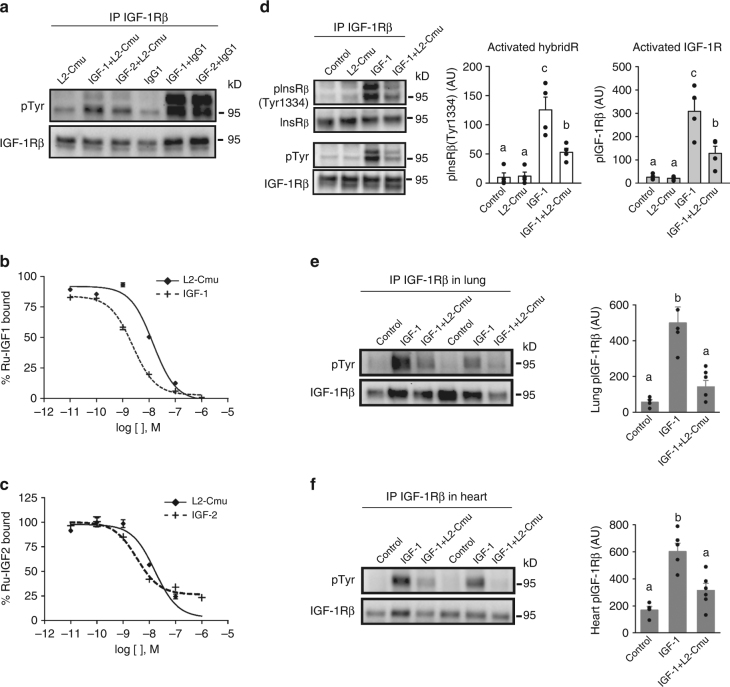
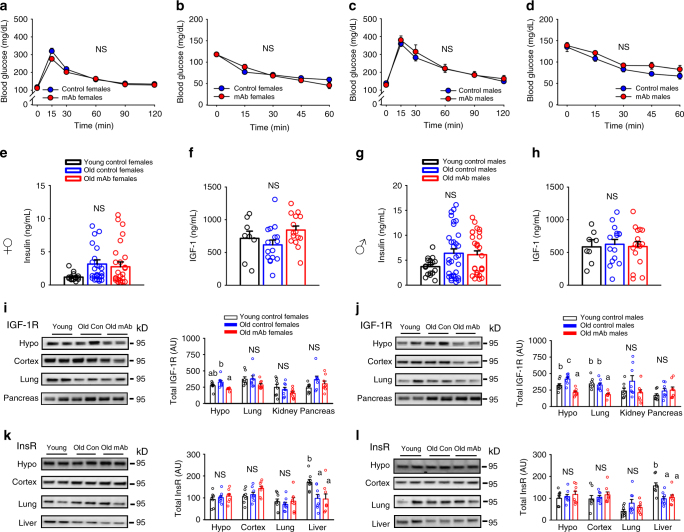
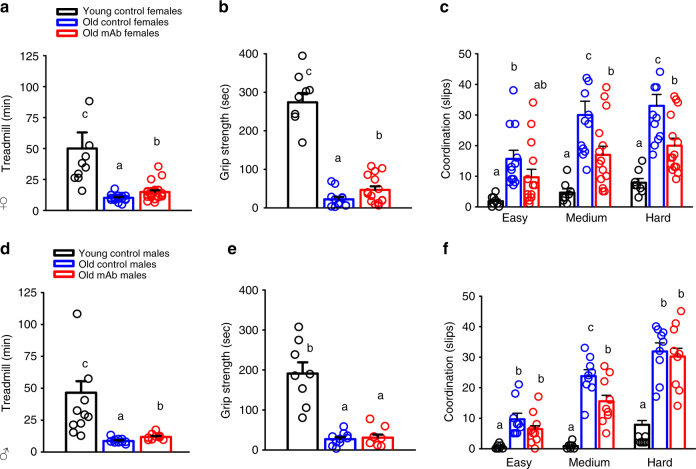
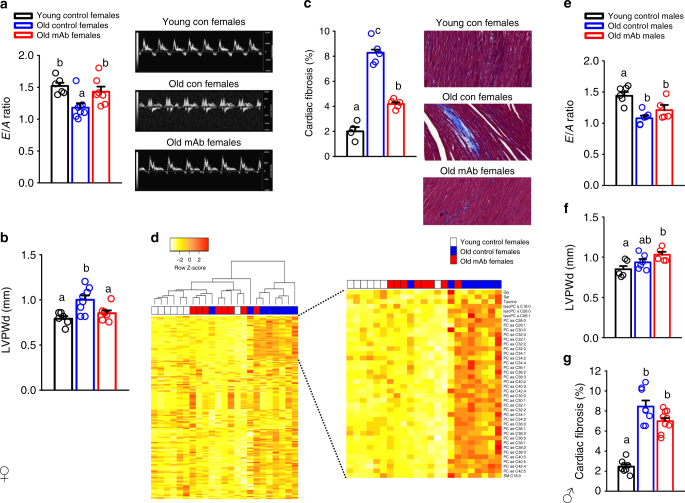
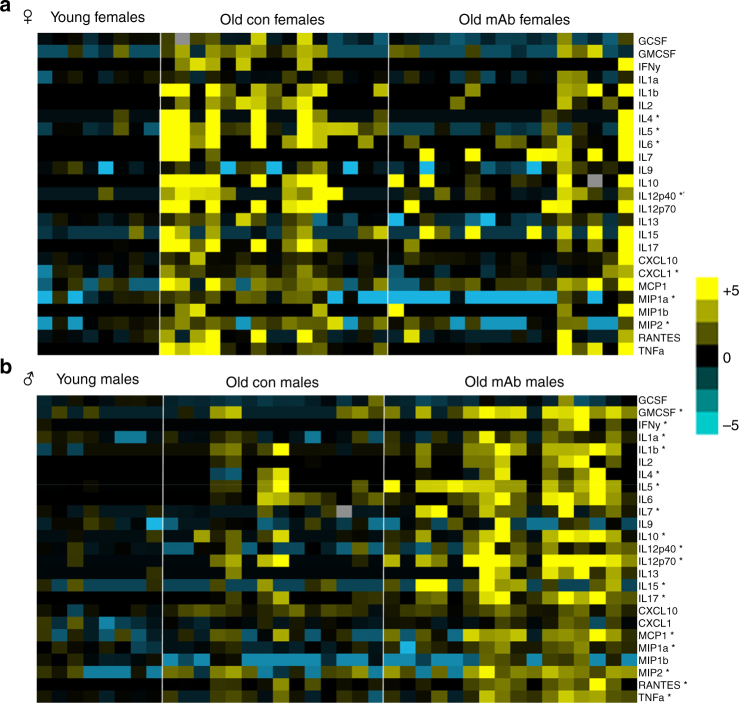
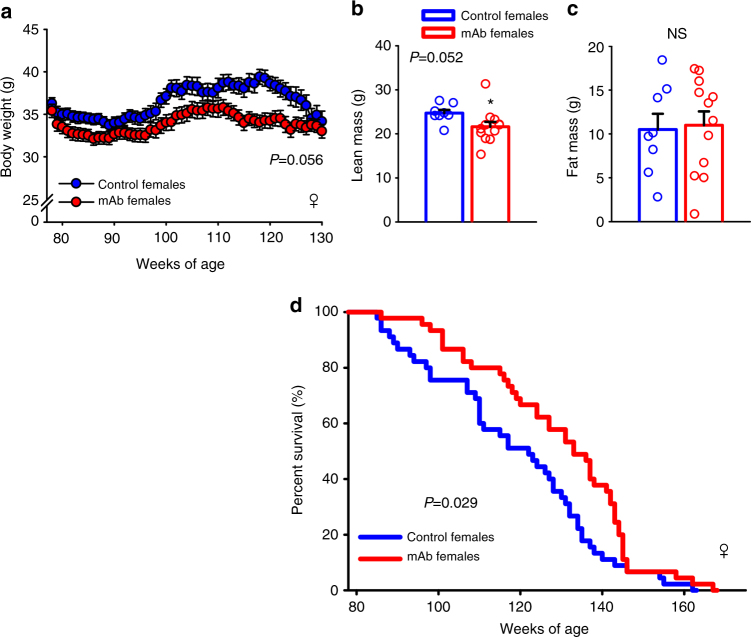
Diminished growth factor signaling improves longevity in laboratory models, while a reduction in the somatotropic axis is favorably linked to human aging and longevity. Given the conserved role of this pathway on lifespan, therapeutic strategies, such as insulin-like growth factor-1 receptor (IGF-1R) monoclonal antibodies (mAb), represent a promising translational tool to target human aging. To this end, we performed a preclinical study in 18-mo-old male and female mice treated with vehicle or an IGF-1R mAb (L2-Cmu, Amgen Inc), and determined effects on aging outcomes. Here we show that L2-Cmu preferentially improves female healthspan and increases median lifespan by 9% (P = 0.03) in females, along with a reduction in neoplasms and inflammation (P ≤ 0.05). Thus, consistent with other models, targeting IGF-1R signaling appears to be most beneficial to females. Importantly, these effects could be achieved at advanced ages, suggesting that IGF-1R mAbs could represent a promising therapeutic candidate to delay aging.
Overview
The claims and statistics of this paper haven’t been checked yet.
Free: it reads the open-access text and checks the first 5 claims that cite a source we can check. Create a free account to check every claim.
Integrity signals
Registry
Cites
Statistics
Figures
Verification
Claims the paper makes
The claims and statistics of this paper haven’t been checked yet.
Free: it reads the open-access text and checks the first 5 claims that cite a source we can check. Create a free account to check every claim.
Claims other papers make about this one
Each is checked against this paper’s own text: does it say what the citing paper says it does?
The source backs part of the claim, not all of it — or backs it for a different population, condition or comparison.
In the citing paper
“An important question for future research is discovering why mTOR inhibitors have sex-specific or sex-biased benefits, as pharmacological treatment with rapamycin or genetic inhibition of insulin-IGF1/PI3K/Akt/mTOR/S6K1 signaling typically (but not always) extends the lifespan of female mice a greater amount than it extends the lifespan of male mice 191–193.”
From Targeting the biology of aging with mTOR inhibitors (2023) · cites this paper as [192]
Experimental — accuracy not yet measuredIn the citing paper
“while long-term administration of an anti-IGF1R antibody increases lifespan and reduces inflammation and cancer development in female mice.218”
From Meta-hallmarks of aging and cancer (2023) · cites this paper as [218]
Self-check
Percentages, sums and reported differences re-computed from the paper’s own numbers.
The self-check needs the paper’s full text.
Citations
Cites
Rapamycin fed late in life extends lifespan in genetically heterogeneous mice
Harrison, D. E., Strong, R., Sharp, Z. D., Nelson, J. F., Astle, C. M., Flurkey, K., Nadon, N. L., Wilkinson, J. E., Frenkel, K., Carter, C. S., et al. (2009) · Nature · doi:10.1038/nature08221 · Cited by 3,766
A C. elegans mutant that lives twice as long as wild type
Kenyon, C., Chang, J., Gensch, E., Rudner, A., & Tabtiang, R. (1993) · Nature · doi:10.1038/366461a0 · Cited by 3,387
IGF-1 receptor regulates lifespan and resistance to oxidative stress in mice
Holzenberger, M., Dupont, J., Ducos, B., Leneuve, P., Géloën, A., Even, P. C., Cervera, P., & Le Bouc, Y. (2003) · Nature · doi:10.1038/nature01298 · Cited by 2,109
Extension of Life-Span by Loss of CHICO, a Drosophila Insulin Receptor Substrate Protein
Clancy, D. J., Gems, D., Harshman, L. G., Oldham, S., Stocker, H., Hafen, E., Leevers, S. J., & Partridge, L. (2001) · Science · doi:10.1126/science.1057991 · Cited by 1,436
Regulation of Longevity and Stress Resistance by Sch9 in Yeast
Fabrizio, P., Pozza, F., Pletcher, S. D., Gendron, C. M., & Longo, V. D. (2001) · Science · doi:10.1126/science.1059497 · Cited by 874
Guevara-Aguirre, J., Balasubramanian, P., Guevara-Aguirre, M., Wei, M., Madia, F., Cheng, C.-W., Hwang, D., Martin-Montalvo, A., Saavedra, J., Ingles, S., et al. (2011) · Science Translational Medicine · doi:10.1126/scitranslmed.3001845 · Cited by 743
Self-citationFunctionally significant insulin-like growth factor I receptor mutations in centenarians
Suh, Y., Atzmon, G., Cho, M.-O., Hwang, D., Liu, B., Leahy, D. J., Barzilai, N., & Cohen, P. (2008) · Proceedings of the National Academy of Sciences · doi:10.1073/pnas.0705467105 · Cited by 703
Self-citationAustad, S. N., & Fischer, K. E. (2016) · Cell Metabolism · doi:10.1016/j.cmet.2016.05.019 · Cited by 593
Interventions to slow aging in humans: are we ready?
Longo, V. D., Antebi, A., Bartke, A., Barzilai, N., Brown‐Borg, H. M., Caruso, C., Curiel, T. J., Cabo, R., Franceschi, C., Gems, D., et al. (2015) · Aging Cell · doi:10.1111/acel.12338 · Cited by 592
Self-citationThe GH/IGF-1 axis in ageing and longevity
Junnila, R. K., List, E. O., Berryman, D. E., Murrey, J. W., & Kopchick, J. J. (2013) · Nature Reviews Endocrinology · doi:10.1038/nrendo.2013.67 · Cited by 574
Cited by
Items 101–177 of 177
Perinatal Obesity Sensitizes for Premature Kidney Aging Signaling
Selle, J., Bohl, K., Höpker, K., Wilke, R., Dinger, K., Kasper, P., Abend, B., Schermer, B., Müller, R., Kurschat, C. E., et al. (2023) · International Journal of Molecular Sciences · doi:10.3390/ijms24032508 · Cited by 7
Actionable autophagy checkpoints in cardiovascular ageing
Abdellatif, M., Montégut, L., & Kroemer, G. (2023) · European Heart Journal · doi:10.1093/eurheartj/ehad661 · Cited by 8
Ibeas, K., Griñán‐Ferré, C., Romero, M. D. M., Sebastián, D., Bastías-Pérez, M., Gómez, R., Soler‐Vázquez, M. C., Zagmutt, S., Pallàs, M., Castell, M., et al. (2023) · Aging Cell · doi:10.1111/acel.14047 · Cited by 6
“It has been previously demonstrated that a reduction in insulin growth factor 1 (IGF-1) levels is associated with a decrease in growth hormone signaling and increased lifespan (Junnila et al., 2013; K. Mao et al., 2018).”
BackgroundLiu, Y., Tang, Z., Duan, J., Chen, L., Sun, J., Zhou, R., Song, Z., Shi, X., & Hui-yuan, Z. (2019) · Aging · doi:10.18632/aging.102401 · Cited by 6
Mao, K., Wang, R., Karpoff, K., Kerr, D. J., Banerjee, P., Friedman, J. M., & Huffman, D. M. (2025) · GeroScience · doi:10.1007/s11357-025-01607-8 · Cited by 5
“The protocol used increased speed to 10 m/min at 3 min, 12 m/min at 4 min, 15 m/min at 5 min which was maintained until fatigue (all animals voluntarily fatigued prior to 30 min) [25, 26].”
InfluentialSelf-citationKamalian, A., Shichkova, P., Tognetti, M., Below, C., Ho, S. G., Bruderer, R., Reiter, L., Feng, Y., Lutz, M. W., & Moghekar, A. (2025) · Communications Medicine · doi:10.1038/s43856-025-01183-0 · Cited by 6
Timing of TORC1 inhibition dictates Pol III involvement in Caenorhabditis elegans longevity
Malik, Y., Silva, I. G., Diazgranados, R. R., Selman, C., Alic, N., & Tullet, J. M. A. (2024) · Life Science Alliance · doi:10.26508/lsa.202402735 · Cited by 6
Prospects of Pharmacological Interventions to Organismal Aging
Hillson, O., Gonzalez-Gonoggia, S., & Rallis, C. (2018) · BioMolecular Concepts · doi:10.1515/bmc-2018-0018 · Cited by 5
Hozer, C., & Pifferi, F. (2021) · Chronobiology International · doi:10.1080/07420528.2021.2001478 · Cited by 5
“It is widely accepted that IGF-1 has an important role in aging mechanisms, contributing to age-related pathologies in humans and rodents (Ashpole et al. 2017; Carter et al. 2002; Lind et al. 2019; Mao et al. 2018; Sonntag et al. 1999, 2005).”
BackgroundTargeting IGF1R signaling for brain aging and Alzheimer’s disease
Park, J. Y., Darvas, M., & Ladiges, W. (2022) · Aging Pathobiology and Therapeutics · doi:10.31491/apt.2022.12.103 · Cited by 5
“Huffman et al. [11] showed that 18-month-old female but not male mice treated with a monoclonal antibody (mAb) targeting IGF1R (L2-Cmu, Amgen Inc) had improved health span and increased median lifespan by 9 percent along with a reduction in neoplasms and inflammation compared to controls.”
BackgroundKlont, F., Kieneker, L. M., Neto, A. W. G., Stam, S. P., ten Hacken, N. H. T., Kema, I. P., van Beek, A. P., van den Berg, E., Horvatovich, P. L., Bischoff, R., et al. (2020) · Journal of Clinical Medicine · doi:10.3390/jcm9020293 · Cited by 5
“These mice lived 33% longer than their wildtype littermates, yet this effect was restricted to females [5], which was subsequently confirmed in two follow-up studies in mice [6,7].”
BackgroundSirtuins and the prevention of immunosenescence
Lasigliè, D. (2021) · Vitamins and hormones · doi:10.1016/bs.vh.2020.12.011 · Cited by 5
Fazekas‐Pongor, V., Péterfi, A., Major, D., Szarvas, Z., Fekete, M., Tabák, Á. G., Csiszár, A., Sonntag, W. E., Austad, S. N., & Ungvari, Z. I. (2022) · GeroScience · doi:10.1007/s11357-022-00680-7 · Cited by 6
Alameen, A. A. M., Al‐kuraishy, H. M., Abdelaziz, A. M., & Batiha, G. E. (2026) · Inflammation Research · doi:10.1007/s00011-026-02293-8 · Cited by 6
Verlinden, S. F. F. (2024) · Frontiers in Aging · doi:10.3389/fragi.2024.1452453 · Cited by 5
“Furthermore, blocking the IGF-1 receptor in aged mice with monoclonal antibodies resulted in a female-speci fi c increase in both HS and LS (Mao et al., 2018).”
BackgroundChen, S., Gao, J., Chen, J., Huang, Y., Wang, L., Lin, J., Zhao, M., Shen, Y., Zhao, G., & Cheng, Y. (2025) · International Journal of Biological Macromolecules · doi:10.1016/j.ijbiomac.2025.147642 · Cited by 4
Cho, Y., Chen, S., Crouch, K., Yun, J., & Klingelhutz, A. J. (2024) · Biomedicines · doi:10.3390/biomedicines12010100 · Cited by 4
“Meanwhile, IGF1R, expressed ubiquitously, is closely associated with aging [38].”
BackgroundGDF11-secreting cell transplant efficiently ameliorates age-related pulmonary fibrosis
Guo, L., Duchesneau, P., Jong, E. D., Sawula, E., Li, C., Waddell, T. K., & Nagy, A. (2025) · Molecular Therapy · doi:10.1016/j.ymthe.2025.07.003 · Cited by 4
Sengupta, P., & Mukhopadhyay, D. (2021) · IntechOpen eBooks · doi:10.5772/intechopen.97002 · Cited by 5
Bridging the Gap: A Geroscience Primer for Neuroscientists With Potential Collaborative Applications
Hoffman, J. M., Hernandez, C. M., Hernandez, A. R., Bizon, J. L., Burke, S. N., Carter, C. S., & Buford, T. W. (2021) · The Journals of Gerontology Series A · doi:10.1093/gerona/glab314 · Cited by 4
Hayes, C. A., Hodges, E. L., Marshall, J. P. S., Logan, S., Farley, J. A., Owens, D. B., Sonntag, W. E., & Ashpole, N. M. (2021) · bioRxiv (Cold Spring Harbor Laboratory) · doi:10.1101/2021.08.08.455596 · Cited by 5
“Sex-specific differences in the response to IGF-1 are increasingly reported (Ashpole et al., 2017; Austad and Fischer, 2016; Bokov et al., 2011; Farias Quipildor et al., 2019; Mao et al., 2018), so it was not surprising to observe impairments limited to male mice.”
BackgroundThe regulation of Insulin/IGF-1 signaling by miR-142-3p associated with human longevityPreprint
Wang, X., Jung, H. J., Milholland, B., Cui, J., Tazearslan, C., Atzmon, G., Wang, X., Yang, J., Guo, Q., Barzilai, N., et al. (2023) · bioRxiv (Cold Spring Harbor Laboratory) · doi:10.1101/2023.05.19.541542 · Cited by 4
Self-citationZhang, C., Wang, J., Yao, T., Hu, J., Sun, F., Feng, C., Sun, Z., Shao, Y., Wang, Z., Wu, J., et al. (2024) · Aging Cell · doi:10.1111/acel.14344 · Cited by 6
Mutation in IR or IGF1R produces features of long-lived mice while maintaining metabolic health
Hernández-Arciga, U., Kim, J. K., Fisher, J. L., Tyshkovskiy, A., Moldakozhayev, A., Hall, C., Ghosh, S., Govindaraj, Y., SIPULA, I. J., KASTROLL, J., et al. (2025) · JCI Insight · doi:10.1172/jci.insight.189683 · Cited by 3
“Similarly, Mao et al. (23) tested if murine aging was slowed by monoclonal antibodies targeting the IGF-1 receptor beginning with 18-month-old mice.”
Narayan, S., Mao, K., Williams-Medina, A. R., Richmann, T., Gal, M., Engel, M., Zhang, Y., Graff, S., Sidoli, S., Barzilai, N., et al. (2025) · Scientific Reports · doi:10.1038/s41598-025-31601-1 · Cited by 3
“While studies in mice establish the potential importance of the GH/IGF-1 signaling pathway to human aging 7–9, 11, 37 , the extent to Interestingly, work by our lab and others have suggested that as opposed to lowering brain IGF-1, a localized increase in central nervous system (CNS) IGF-1 levels,…”
Self-citationNovaj, A., Engel, M. G., Wang, R., Mao, K., Xue, X., Amir, Y., Atzmon, G., & Huffman, D. M. (2023) · International Journal of Molecular Sciences · doi:10.3390/ijms24032314 · Cited by 3
“Lipidomics in hippocampal tissue (~15 mg) was performed by the Northwest Metabolomics Research Center, similar to that which was previously described [32,69,82].”
BackgroundMethodSelf-citationYuan, R., Hascup, E. R., Hascup, K. N., & Bartke, A. (2023) · Biochemistry (Moscow) · doi:10.31857/s0320972523110039 · Cited by 3
Oikonomakos, I. T., Siow, R. C. M., Bornstein, S. R., & Steenblock, C. (2025) · Hormone and Metabolic Research · doi:10.1055/a-2641-1207 · Cited by 5
The Use of Radioprotective Agents to Prevent Effects Associated with Aging
Быков, В. Н., Grebenyuk, A. N., & Ушаков, И. Б. (2019) · Biology Bulletin · doi:10.1134/s1062359019120021 · Cited by 3
Naumova, N., Koliada, A. K., Kuzub, N., & Vaiserman, A. M. (2023) · Elsevier eBooks · doi:10.1016/b978-0-12-823679-6.00012-6 · Cited by 3
Shiri, T. J., Viau, C., Gu, X., Xu, L., Lu, Y. P., & Xia, J. (2023) · Metabolites · doi:10.3390/metabo13080953 · Cited by 3
“Loss of homeostasis during aging is due to the dysregulation of key signaling pathways such as mTOR, AMPK, and IGF-1, which work by sensing metabolic stress [2,3].”
BackgroundPolygenic Profile and Magnitude Impact of Inflammatory Response in Soccer Athletes
Kanope, T., dos Santos, C. G. M., Veneroso, C. E., Fornazieiro, A., de Assis, M. G., & Pimenta, E. M. (2024) · Open Journal of Genetics · doi:10.4236/ojgen.2024.143005 · Cited by 4
Lyon, A., Agius, T., MacArthur, M. R., Kiesworo, K., Stavart, L., Allagnat, F., Mitchell, S. J., Riella, L. V., Uygun, K., Yeh, H., et al. (2024) · iScience · doi:10.1016/j.isci.2024.111256 · Cited by 2
Wang, R., Tabrizian, T., Wang, D., English, J., Ayer, A., Gal, M., Yang, W., Wu, Z., Mao, K., Novaj, A., et al. (2026) · Nature Aging · doi:10.1038/s43587-026-01170-7 · Cited by 2
“For evaluation of plasma inflammatory status, a Bio-Plex MAGPIX Multiplex Reader (Bio-Rad Inc.) was used to measure 23 inflammatory mediators simultaneously in mouse plasma, as described 60 .”
Self-citationDistinct, common and synergistic effects of insulin and IGF-1 receptors on healthy murine ageing
Walker, A. M., Watt, N. T., Yuldasheva, N. Y., Dalmia, S., Conning-Rowland, M. S., Cheng, C. W., Warmke, N., Bridge, K., Brown, O. I., Luk, C., et al. (2024) · Heliyon · doi:10.1016/j.heliyon.2024.e36457 · Cited by 1
Li, G., Zhou, X., Zhu, G., Cheng, Y., Pan, Y., Guo, X., Liao, G., Li, X., Hu, X., Yao, Y., et al. (2026) · Cell Communication and Signaling · doi:10.1186/s12964-026-03030-8 · Cited by 1
“…samples from mice across the five age groups to assess the expression of aging-related biomarkers, including IGF-1 (insulin-like growth factor) [36], NFL (neurofilament light chain) [37], sTREM-2 (soluble triggering receptor expressed on myeloid cells 2) [38], p-Tau (phosphorylated tau…”
Insulin-like growth factor receptor signaling in physiology and disease
Dilawar, M., Malik, A., Liao, J., Shen, P., Huang, Z., Zhang, P., Wang, J., Zhang, N., Nisar, M. F., & Chen, G. (2026) · Signal Transduction and Targeted Therapy · doi:10.1038/s41392-026-02843-w · Cited by 3
“276 Late-life administration of an IGF1R-speci fi c monoclonal antibody further extends lifespan and health span selectively in female mice 277 (Table 1).”
Endokrinológiai tényezők és metabolikus folyamatok szerepe az élettartam szabályozásában
Halmos, T., & Suba, I. (2021) · Orvosi Hetilap · doi:10.1556/650.2021.32200 · Cited by 2
Predicting Mouse Lifespan-Extending Chemical Compounds with Machine LearningPreprint
Belikov, A. V., Ribeiro, C., Farmer, C., Petrascheck, M., de Magalhães, J. P., & Freitas, A. A. (2024) · bioRxiv (Cold Spring Harbor Laboratory) · doi:10.1101/2024.10.29.620854 · Cited by 1
“This project was funded by a research grant from the UK’s Biotechnology and Biological Sciences Research Council (BBSRC), grant reference numbers BB/V007971/1 (to AAF and CKF) and BB/V010123/1 (to JPM).”
Uncover Cattle Age-Related Differentially Methylated Genes Using Oxford Nanopore TechnologiesPreprint
Guo, Y., Ross, E. M., Hayes, B. J., & Nguyen, L. T. (2025) · Preprints.org · doi:10.20944/preprints202504.0880.v1 · Cited by 1
Reduced insulin and IGF-1 signalling synergistically extend healthspan in male micePreprint
Walker, A. M., Watt, N. T., Warmke, N., Yuldasheva, N. Y., Drozd, M., Haywood, N. J., Skromna, A., Makava, N., Wheatcroft, S. B., Kearney, M. T., et al. (2019) · bioRxiv (Cold Spring Harbor Laboratory) · doi:10.1101/579110
Heterogeneity and Impaired IGF1R Signalling in Aged B cell Development
Rees, S. (2020) · Apollo (University of Cambridge) · doi:10.17863/cam.60139
Faculty Opinions recommendation of Therapeutic targeting of the IGF axis.
Rosenzweig, S. A. (2020) · Faculty Opinions – Post-Publication Peer Review of the Biomedical Literature · doi:10.3410/f.736449435.793572320
The metabolite α-ketobutyrate increases health and life spans by activating AMPKPreprint
Chen, C., Lomenick, B., Chai, M., Huang, W., Chu, J., Vergnes, L., Johnson, R. O., Vashisht, A. A., Chin, R., Dix, M. M., et al. (2022) · bioRxiv (Cold Spring Harbor Laboratory) · doi:10.1101/2022.10.10.511641 · Cited by 2
Deciphering the impact of astrocytic insulin receptor depletion on Alzheimer's disease pathology
Ezkurdia, A. (2024) · Depósito Académico Digital Universidad de Navarra (University of Navarra) · doi:10.15581/10171/70017
Schleh, M. W., Cha, J., Shrestha, S., Cambraia, A., Habashy, A., Ellis, C. E., Cutler, M., Ferguson, G., Powers, A. C., & Drigo, R. A. E. (2025) · bioRxiv (Cold Spring Harbor Laboratory) · doi:10.1101/2025.06.04.657914 · Cited by 1
EI24 binds to IGF1R, enhancing glucose homeostasis and fostering healthy aging in male mice
Kim, Y.-M., Lee, S. E., Song, Y., Nam, T. W., Lee, J. H., Seong, J. K., Namkung, W., & Lee, H.-W. (2025) · Frontiers in Aging · doi:10.3389/fragi.2025.1564730
Role of genetics and hormones in the differences in longevity between men and women
Ciaglia, E., Altucci, L., Chianese, U., Lopardo, V., Montella, F., & Puca, A. A. (2025) · Elsevier eBooks · doi:10.1016/b978-0-443-27398-8.00014-9
ARMH4 accelerates aging by maintaining a positive-feedback growth signaling circuit
Fang, Y., Wang, B., Guo, Q., Lv, J., Li, J., Wang, J., Guo, N., Bai, Y., Xu, A., Ma, X., et al. (2025) · Nature Communications · doi:10.1038/s41467-025-67505-x
Martin, D. E., Cadar, A. N., Panier, H. A., Torrance, B. L., Kuchel, G. A., & Bartley, J. M. (2023) · Figshare · doi:10.6084/m9.figshare.22735507
Martin, D. E., Cadar, A. N., Panier, H. A., Torrance, B. L., Kuchel, G. A., & Bartley, J. M. (2023) · Figshare · doi:10.6084/m9.figshare.22735510
Additional file 4 of Gene regulatory networks reveal sex difference in lung adenocarcinoma
Saha, E., Guebila, M. B., Fanfani, V., Fischer, J., Shutta, K. H., Mandros, P., DeMeo, D. L., Quackenbush, J. F., & Lopes‐Ramos, C. M. (2024) · Figshare · doi:10.6084/m9.figshare.26758204
Martin, D. E., Cadar, A. N., Panier, H. A., Torrance, B. L., Kuchel, G. A., & Bartley, J. M. (2023) · Figshare · doi:10.6084/m9.figshare.22735516
Additional file 1 of Gene regulatory networks reveal sex difference in lung adenocarcinoma
Saha, E., Guebila, M. B., Fanfani, V., Fischer, J., Shutta, K. H., Mandros, P., DeMeo, D. L., Quackenbush, J. F., & Lopes‐Ramos, C. M. (2024) · Figshare · doi:10.6084/m9.figshare.26758195
Martin, D. E., Cadar, A. N., Panier, H. A., Torrance, B. L., Kuchel, G. A., & Bartley, J. M. (2023) · Figshare · doi:10.6084/m9.figshare.22735513
Martin, D. E., Cadar, A. N., Panier, H. A., Torrance, B. L., Kuchel, G. A., & Bartley, J. M. (2023) · Figshare · doi:10.6084/m9.figshare.22735525
Martin, D. E., Cadar, A. N., Panier, H. A., Torrance, B. L., Kuchel, G. A., & Bartley, J. M. (2023) · Figshare · doi:10.6084/m9.figshare.22735528
Additional file 5 of Gene regulatory networks reveal sex difference in lung adenocarcinoma
Saha, E., Guebila, M. B., Fanfani, V., Fischer, J., Shutta, K. H., Mandros, P., DeMeo, D. L., Quackenbush, J. F., & Lopes‐Ramos, C. M. (2024) · Figshare · doi:10.6084/m9.figshare.26758207
Additional file 6 of Gene regulatory networks reveal sex difference in lung adenocarcinoma
Saha, E., Guebila, M. B., Fanfani, V., Fischer, J., Shutta, K. H., Mandros, P., DeMeo, D. L., Quackenbush, J. F., & Lopes‐Ramos, C. M. (2024) · Figshare · doi:10.6084/m9.figshare.26758210
Martin, D. E., Cadar, A. N., Panier, H. A., Torrance, B. L., Kuchel, G. A., & Bartley, J. M. (2023) · Figshare · doi:10.6084/m9.figshare.22735522
Additional file 3 of Gene regulatory networks reveal sex difference in lung adenocarcinoma
Saha, E., Guebila, M. B., Fanfani, V., Fischer, J., Shutta, K. H., Mandros, P., DeMeo, D. L., Quackenbush, J. F., & Lopes‐Ramos, C. M. (2024) · Figshare · doi:10.6084/m9.figshare.26758201
Martin, D. E., Cadar, A. N., Panier, H. A., Torrance, B. L., Kuchel, G. A., & Bartley, J. M. (2023) · Figshare · doi:10.6084/m9.figshare.22735519
Additional file 2 of Gene regulatory networks reveal sex difference in lung adenocarcinoma
Saha, E., Guebila, M. B., Fanfani, V., Fischer, J., Shutta, K. H., Mandros, P., DeMeo, D. L., Quackenbush, J. F., & Lopes‐Ramos, C. M. (2024) · Figshare · doi:10.6084/m9.figshare.26758198
Additional file 7 of Gene regulatory networks reveal sex difference in lung adenocarcinoma
Saha, E., Guebila, M. B., Fanfani, V., Fischer, J., Shutta, K. H., Mandros, P., DeMeo, D. L., Quackenbush, J. F., & Lopes-Ramos, C. M. (2024) · Figshare · doi:10.6084/m9.figshare.26758213
Delahaye, F. (2021) · HAL
Self-citationShiri, T. J. (2023) · eScholarship@McGill (McGill) · doi:10.82308/50438
Genomic architecture of the aging hematopoietic system
Bader, E. (2023) · TSpace (University of Toronto)
Wang, M., Czernik, P. J., Lecka‐Czernik, B., Xu, Y., & Hill, J. W. (2026) · Molecular Metabolism · doi:10.1016/j.molmet.2026.102355
Modulation of miRNA Signature in Human Adipose Tissue After 3 Months of ω-3PUFA Supplementation
Hernandez, J., Lee, M., Cochran, M., Li, T., Wang, P., Coletta, D. K., Rau, C. M., Dinu, V., & Filippis, E. D. (2026) · Cells · doi:10.3390/cells15070577
Rôle et régulation de l'haptoglobine adipocytaire au cours du vieillissement
Astre, G. (2018) · theses.fr (ABES) · doi:10.70675/91523d31z8a53z44e6z8f1dzf0a02840a7e5
Small-molecule IGF1R inhibitors extend healthspan in a mouse modelPreprint
Balandina, Y., Stadnikov, T., Basarab, G. S., Eyermann, C. J., & Suvorov, A. (2026) · bioRxiv (Cold Spring Harbor Laboratory) · doi:10.64898/2026.04.13.718278
“Indeed, IGF1R suppression by a monoclonal antibody starting at 18 months of age improved several indices of healthspan, reduced death from neoplastic disease, and increased mean and median lifespan in females [16].”
Reduction of IGF-1/PKA to promote hematopoietic-stem cell-based reverse aging
Mishra, D. K., Mishra, S. K., Tiwari, K., Dubey, R., Gopenath, T. S., Leri, M., Vallés, S. L., Jorda, A., Kar, K., Pöeggeler, B., et al. (2026) · Elsevier eBooks · doi:10.1016/b978-0-443-33159-6.00017-5
Mikhaylenko, B. Y., & Панков, М. Н. (2026) · Journal of Medical and Biological Research · doi:10.37482/2687-1491-z287
ANDROGENIC REGULATION OF SEX DIFFERENCES IN ADAPTATIONS TO AGING AND EXERCISE IN RATS
Barsky, S. T. (2024) · TSpace (University of Toronto)
Yue, S., Young, C., Garg, A., Sarovich, T., Chen, L., Dickerson, K., & Wang, Z.-J. (2026) · Frontiers in Aging Neuroscience · doi:10.3389/fnagi.2026.1858227
“Declining circulating IGF1 is associated with extended lifespan in rats (Mao et al., 2018), possibly due to enhanced resistance to oxidative stress and increased cellular resilience (Murakami, 2006).”
Metadata
- Authors
- Mao, K., Quipildor, G. F., Tabrizian, T., Novaj, A., Guan, F., Walters, R. O., Delahaye, F., Hubbard, G. B., Ikeno, Y., Ejima, K., Li, P., Allison, D. B., Salimi-Moosavi, H., Beltran, P. J., Cohen, P., Barzilai, N., & Huffman, D. M.
- Affiliations
- Albert Einstein College of Medicine (US)
- The University of Texas at San Antonio Health Science Center (US)
- University of Alabama at Birmingham (US)
- Amgen (United States) (US)
- University of Southern California (US)
- Corresponding author
- Huffman, Derek M.
- ORCID
- Venue
- Nature Communications
- Published
- 2018-06-19
- Volume
- 9
- Issue
- 1
- Pages
- 2394-2394
- ISSN
- 2041-1723 (ISSN-L)
- PMC
- PMC6008442
- OpenAlex
- W2807914406
- Cited by
- 167
- References
- 53
- Citations by year
- 2026: 12 · 2025: 19 · 2024: 21 · 2023: 40 · 2022: 16 · 2021: 25 · 2020: 14 · 2019: 13 · 2018: 7
- FWCI
- 5.80
- Type
- journal article
- Language
- en
- Open access
- gold
- doi.org
- Licence
- cc-by
- creativecommons.org/licenses/by/4.0 (tdm)
- creativecommons.org/licenses/by/4.0 (vor)
- Locations
- Nature Communications (publishedVersion, cc-by)
- Europe PMC (PubMed Central) (publishedVersion, other-oa)
- PubMed Central (publishedVersion, cc-by)
- PubMed (publishedVersion)
- RePEc: Research Papers in Economics (submittedVersion)
- DOAJ (DOAJ: Directory of Open Access Journals) (submittedVersion, cc-by-sa)
- DOAJ (DOAJ: Directory of Open Access Journals) (submittedVersion)
- Funders
- American Federation for Aging Research
- American Institute for Cancer Research
- Prevent Cancer Foundation
- Glenn Foundation for Medical Research
- Amgen
- Fondation pour la Recherche Médicale
- National Institutes of Health
- National Institute on Aging (R56AG052981, P01AG034906, P01AG021654, T32AG23475, P30AG038072, R37AG018381, R00AG037574, P30AG013319, P30AG050886, T32AG023475, P01AG055369)
- National Cancer Institute (P30CA013330)
- National Institute of General Medical Sciences (R01GM090311)
- National Institute of Diabetes and Digestive and Kidney Diseases (P30DK026687, P30DK020541)
- National Institute of Environmental Health Sciences (R01ES020812)
- Topics
- Life Sciences › Biochemistry, Genetics and Molecular Biology › Aging › Genetics, Aging, and Longevity in Model Organisms
- Health Sciences › Medicine › Endocrinology, Diabetes and Metabolism › Growth Hormone and Insulin-like Growth Factors
- Life Sciences › Biochemistry, Genetics and Molecular Biology › Cell Biology › Telomeres, Telomerase, and Senescence
- Keywords
- IGF-1 receptor, aging, healthspan, lifespan, sex differences, somatotropic axis, growth factor signaling, cancer, inflammation, anti-aging therapy
- MeSH terms
- Aging, Animals, Antibodies, Monoclonal, Female, Humans, Longevity, Male, Mice, Inbred C57BL, Motor Activity, Neoplasms, Sex Factors, Signal Transduction, Receptor, IGF Type 1, Tumor Burden
About these checks
Registry, retraction, Cites and statistics results are computed, not judged, with one exception: a printed reference that no index lists is read once by a model before it counts as a citation error. Claims are extracted by a model and kept only when their quote appears verbatim in the text; each cited source is then checked, with a model’s help, for whether it says what the claim relies on. Those verdicts can be wrong — read the claim’s quote and the cited source before relying on one.
Statistics and arithmetic are recomputed, not judged.
Confidence bands are shown only for fields calibrated on our annotated test set. None is calibrated yet, so no band is shown.
What counts as a claim ›How we measure confidence ›How we check this ›
Are you an author, or do you see a problem with this page? Request a review
Data sources
Bibliographic data: Semantic Scholar, OpenAlex, Crossref.
Contains information from the Semantic Scholar Academic Graph Datasets, made available under the ODC Attribution License (ODC-BY 1.0).
Semantic Scholar’s data is described in: Kinney, R., et al. (2023). The Semantic Scholar Open Data Platform. arXiv:2301.10140.
