

Clustering huge protein sequence sets in linear time
Open accessPublished version of a preprint
The DOI matches its Crossref record; 33 of the 33 references it cites were found in a registry or an index.
Abstract
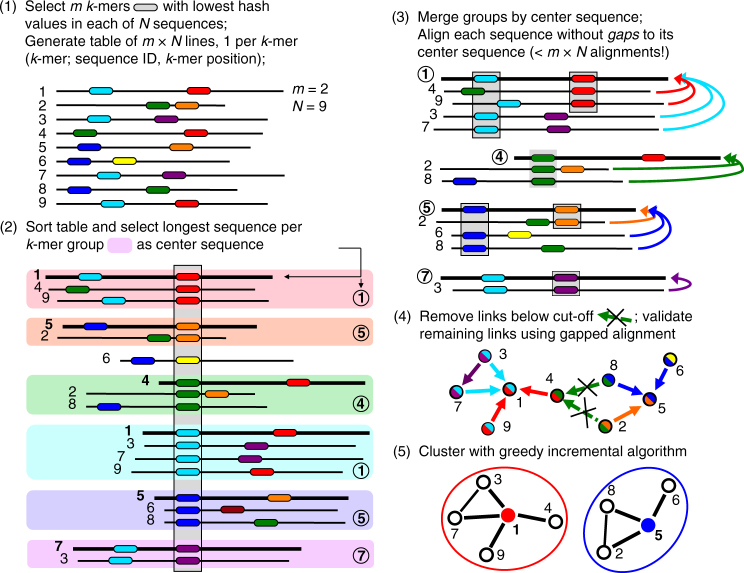
Metagenomic datasets contain billions of protein sequences that could greatly enhance large-scale functional annotation and structure prediction. Utilizing this enormous resource would require reducing its redundancy by similarity clustering. However, clustering hundreds of millions of sequences is impractical using current algorithms because their runtimes scale as the input set size N times the number of clusters K, which is typically of similar order as N, resulting in runtimes that increase almost quadratically with N. We developed Linclust, the first clustering algorithm whose runtime scales as N, independent of K. It can also cluster datasets several times larger than the available main memory. We cluster 1.6 billion metagenomic sequence fragments in 10 h on a single server to 50% sequence identity, >1000 times faster than has been possible before. Linclust will help to unlock the great wealth contained in metagenomic and genomic sequence databases.
Overview
The claims and statistics of this paper haven’t been checked yet.
Free: it reads the open-access text and checks the first 5 claims that cite a source we can check. Create a free account to check every claim.
Integrity signals
Registry
Cites
Statistics
Figures
Verification
Claims the paper makes
The claims and statistics of this paper haven’t been checked yet.
Free: it reads the open-access text and checks the first 5 claims that cite a source we can check. Create a free account to check every claim.
Self-check
Percentages, sums and reported differences re-computed from the paper’s own numbers.
The self-check needs the paper’s full text.
Citations
Cites
Basic local alignment search tool
Altschul, S. F., Gish, W., Miller, W., Myers, E. W., & Lipman, D. J. (1990) · Journal of Molecular Biology · doi:10.1006/jmbi.1990.9999 · Cited by 98,669 · cited 1×
“For each clustering run, we searched with BLAST [15] a random sample of 1 000 representative sequences against all representative sequences of the clustering.”
MethodSearch and clustering orders of magnitude faster than BLAST
Edgar, R. C. (2010) · Bioinformatics · doi:10.1093/bioinformatics/btq461 · Cited by 20,826
Fast and sensitive protein alignment using DIAMOND
Buchfink, B., Xie, C., & Huson, D. H. (2015) · Nature Methods · doi:10.1038/nmeth.3176 · Cited by 14,201 · cited 3×
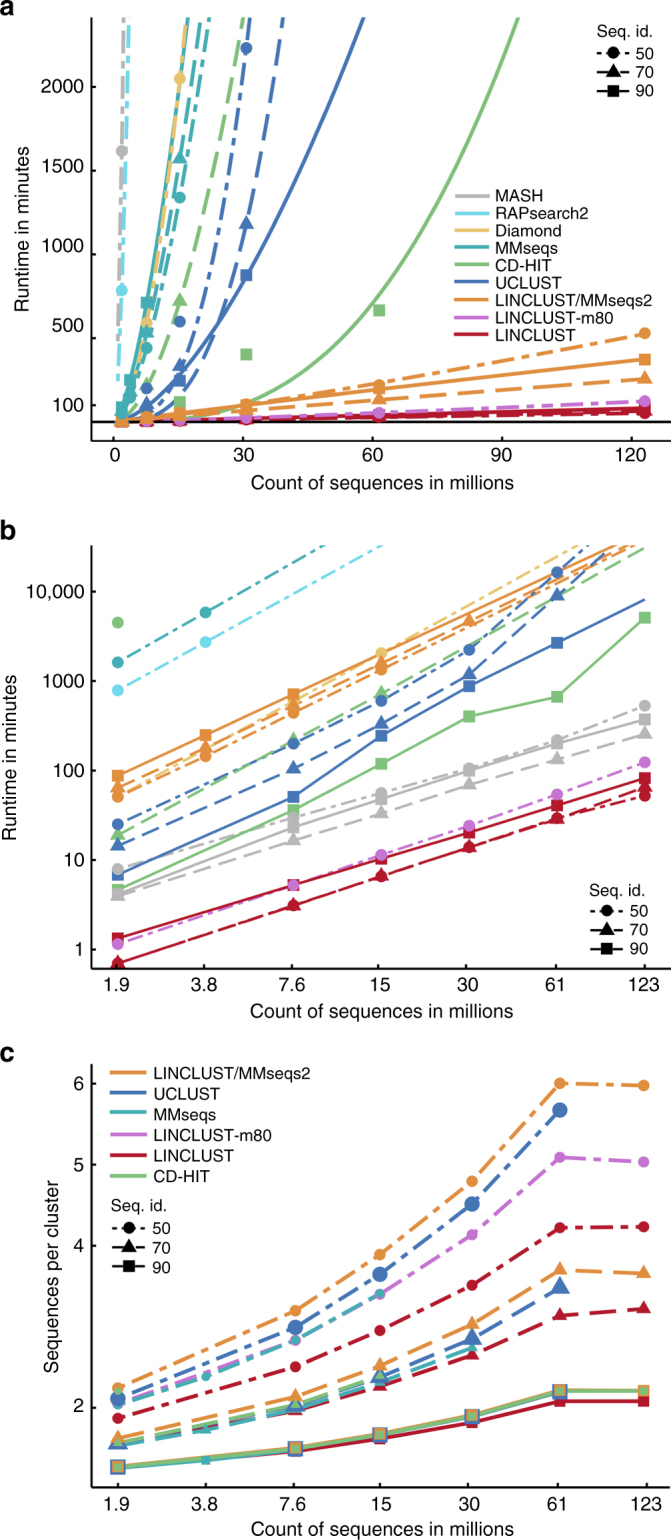
“At 50% identity, Linclust clusters the 123 million sequences 10 times faster than Linclust/MMseqs2 and, by extrapolation, 2300 times faster than UCLUST, 720 times faster than MMseqs, 4600 times faster than CD-HIT, 1600 times faster than DIAMOND [12], 69 000 times faster than MASH [13], and 26 000 times faster than RAP…”
BackgroundInfluentialProdigal: prokaryotic gene recognition and translation initiation site identification
Hyatt, D., Chen, G.-L., LoCascio, P. F., Land, M. L., Larimer, F. W., & Hauser, L. J. (2010) · BMC Bioinformatics · doi:10.1186/1471-2105-11-119 · Cited by 12,587
Cd-hit: a fast program for clustering and comparing large sets of protein or nucleotide sequences
Li, W., & Godzik, A. (2006) · Bioinformatics · doi:10.1093/bioinformatics/btl158 · Cited by 11,410 · cited 1×
“Similar to the k-mer prefilter used in CD-HIT, UCLUST, kclust and MMseqs [8, 11, 26, 27], the preclustering reduces the number of comparisons by a large factor F using the slow, exact measure, but the time complexity of the ex240 act distance calculation O(N(2)/F ) is still quadratic in N .”
MethodCd-hit: Accelerated for clustering the next-generation sequencing data
Fu, L., Niu, B., Zhu, Z., Wu, S., & Li, W. (2012) · Bioinformatics · doi:10.1093/bioinformatics/bts565 · Cited by 11,175 · cited 15×
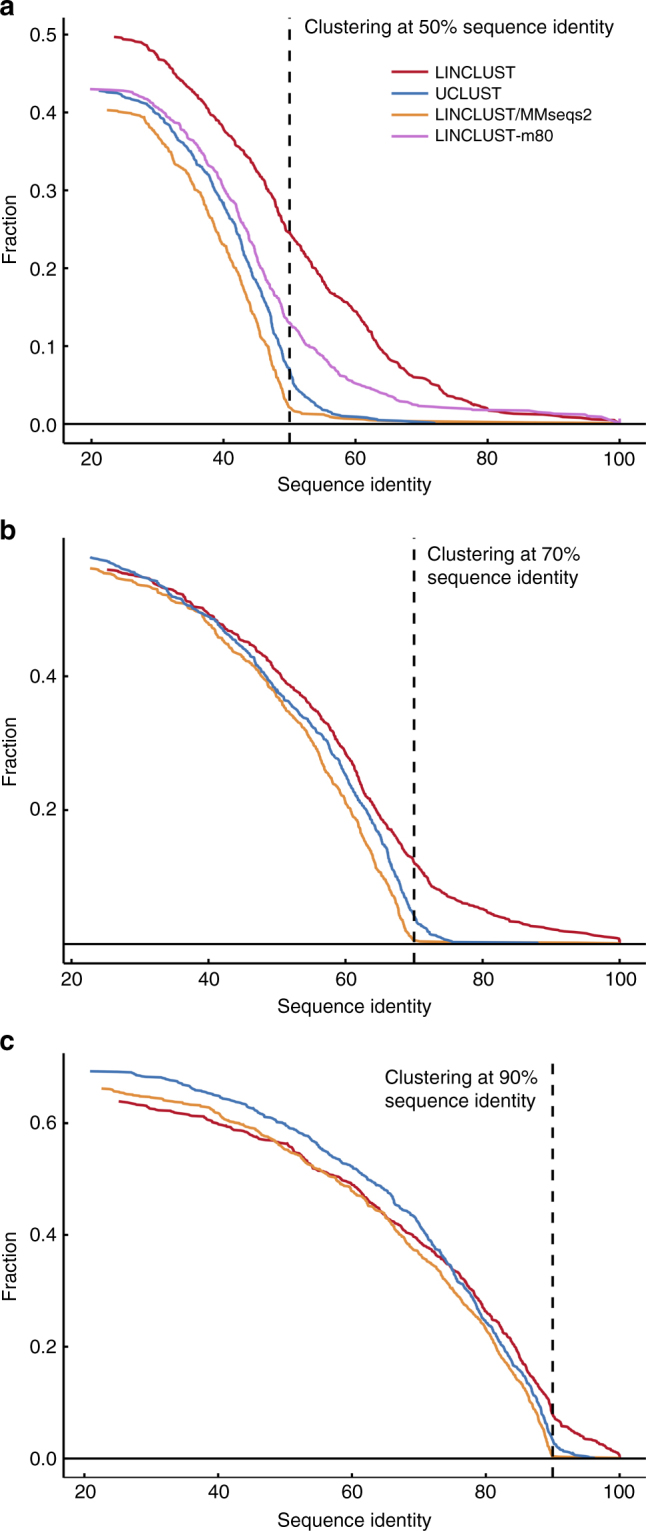
“By increasing m from 20 to 80, Linclust takes only 1.5 to 2 times longer but attains a sensitivity similar to UCLUST (pink in Fig.”
MethodInfluentialThe Pfam protein families database: towards a more sustainable future
Finn, R. D., Coggill, P., Eberhardt, R. Y., Eddy, S. R., Mistry, J., Mitchell, A. L., Potter, S. C., Punta, M., Qureshi, M., Sangrador-Vegas, A., et al. (2016) · Nucleic Acids Research · doi:10.1093/nar/gkv1344 · Cited by 5,975 · cited 1×
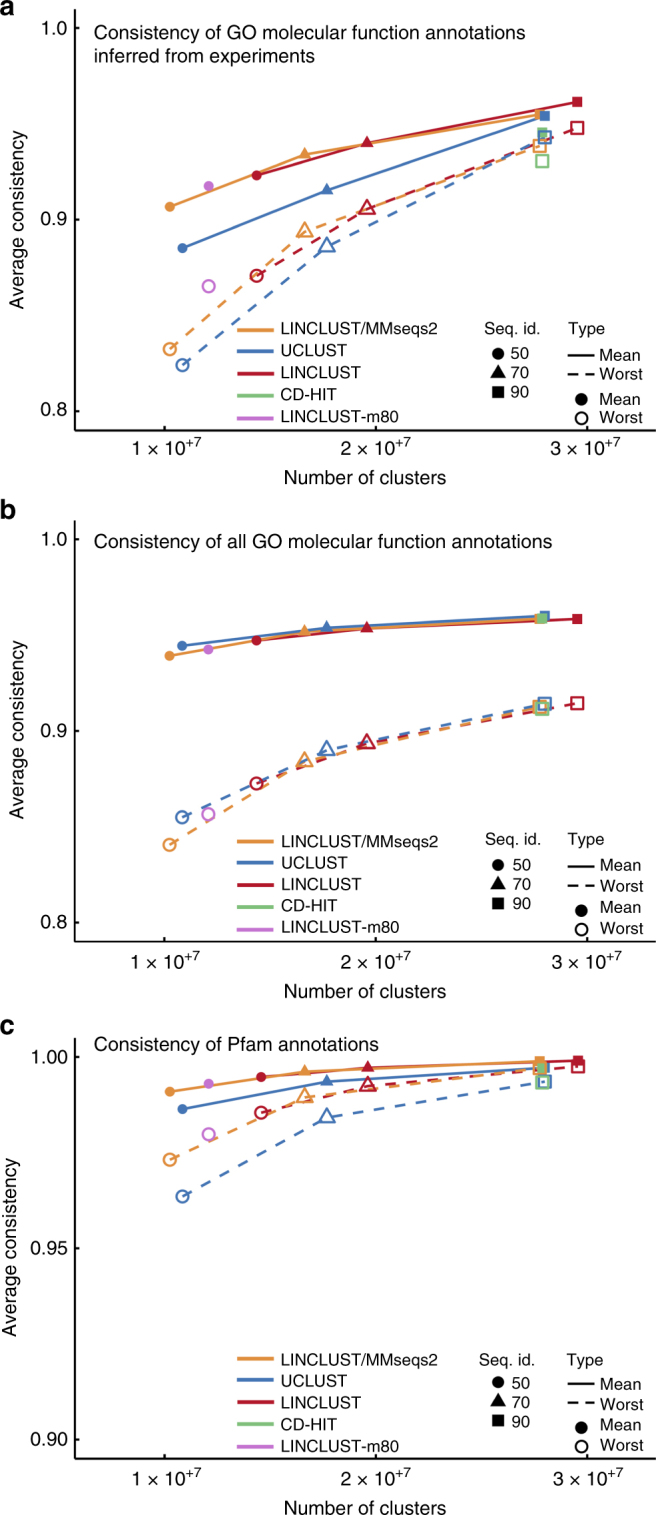
“4a,b) and Pfam domain annotations [18] (Fig.”
MMseqs2 enables sensitive protein sequence searching for the analysis of massive data sets
Steinegger, M., & Söding, J. (2017) · Nature Biotechnology · doi:10.1038/nbt.3988 · Cited by 4,840
Self-citationThe Universal Protein Resource (UniProt)
Bairoch, A. (2004) · Nucleic Acids Research · doi:10.1093/nar/gki070 · Cited by 3,774 · cited 1×
“, 100}, we determined these thresholds empirically on 4 million local alignments sampled from an all-against-all comparison of the UniProt database [31].”
MethodGene Ontology Consortium: going forward
The Gene Ontology Consortium (2015) · Nucleic Acids Research · doi:10.1093/nar/gku1179 · Cited by 3,492 · cited 2×
“We assess Gene Ontology (GO) annotations [17] (Fig.”
BackgroundMethod
Research works printed but not linked: 1
- Wang, J. Shen, H. T., Song, J. & Ji., J. Hashing for similarity search: a survey. Preprint at https://arxiv.org/abs/1408.2927 (2014). · arXiv
Cited by
Items 701–800 of 962
Redefining Protein Structure Prediction: Insights from AlphaFold’s Methodology and Applications
Abdallah, R., Alshumayri, S., & Bukassim, L. (2025) · Learning and Technology Conference (L&T) · doi:10.1109/lt64002.2025.10940997 · Cited by 1
“Input protein sequences were processed to generate multiple sequence alignments (MSAs) using Jackhmmer against databases like UniRef90, BFD, and MGnify [23], [24].”
Multi-proteins similarity-based sampling to select representative genomes from large databases
Coudert, R.-V., Charrier, J., Jauffrit, F., Flandrois, J., & Brochier‐Armanet, C. (2025) · BMC Bioinformatics · doi:10.1186/s12859-025-06095-3 · Cited by 1
“More precisely, within each protein family, sequences are clustered using Linclust of the MMseqs2 suite [17].”
InfluentialAFP-MCDF: Multi and cross-dimensional feature fusion methods for antifreeze protein prediction
Li, J., Zhang, F., Wen, Z., & Fang, C. (2025) · Analytical Biochemistry · doi:10.1016/j.ab.2025.115881 · Cited by 1
Facilitating Rapid Screening of Metaviral Data with the VERA Pipeline
Chudinov, I. K., & Speranskaya, A. S. (2025) · Mathematical Biology and Bioinformatics · doi:10.17537/2025.20.100 · Cited by 1
Daniels, P. W., Kelly, S., Tebbs, I. J., & Mitchell, P. (2025) · PLOS One · doi:10.1371/journal.pone.0321120 · Cited by 1
Harnessing native enzyme diversity for biocatalysis
Gamonet, C., Zaparucha, A., & Vergne‐Vaxelaire, C. (2025) · Comptes Rendus Chimie · doi:10.5802/crchim.409 · Cited by 1
Kujović, A., Kavkler, K., Wilson-Hernandez, M. A., Vittori, M., Zidar, L., Gostinčar, C., Sepčić, K., Pérez‐Llano, Y., Batista‐García, R. A., Gunde‐Cimerman, N., et al. (2025) · Journal of Fungi · doi:10.3390/jof11080568 · Cited by 2
Machine learning applied to biocatalysis research
Majda, B., Rebecca, B., Mazurenko, S., & Yang, Y. (2025) · Nature Communications · doi:10.1038/s41467-025-64510-y · Cited by 3
Ahmad, S., Schaduangrat, N., Chumnanpuen, P., Mahmud, S., Goh, M. K. O., & Shoombuatong, W. (2025) · PLoS ONE · doi:10.1371/journal.pone.0333614 · Cited by 1
“Since PLMs are pre-trained on extensive protein databases such as BFD [23,24], UniRef [25], and Pfam [26], which collectively contain over a billion protein sequences, they can extract comprehensive and valuable information.”
Germline-aware deep learning models and benchmarks for predicting antibody VH–VL pairing
Joubbi, S., D’Arco, E., Maccari, G., Milazzo, P., & Micheli, A. (2025) · mAbs · doi:10.1080/19420862.2025.2570749 · Cited by 2
Li, H., Wang, X., Zhang, X., Mu, H., Hao, R., Li, Y., Liu, Q., Chi, R., & Zhai, D. (2025) · Microbes and Infection · doi:10.1016/j.micinf.2025.105586 · Cited by 1
De-Bruijn graph partitioning for scalable and accurate DNA storage processing
Moor, F. D., Boullé, O., & Lavenier, D. D. (2025) · Bioinformatics · doi:10.1093/bioinformatics/btaf618 · Cited by 2
“Graph-based techniques, such as MMseqs2 [13], offer further strategies.”
Xia, Y., Guo, Q., & Liu, T. (2025) · International Journal of Biological Macromolecules · doi:10.1016/j.ijbiomac.2025.148947 · Cited by 2
Ustyantsev, K., Mouton, S., Stranges, M., Biryukov, M., Wudarski, J., Glazenburg, L., & Berezikov, E. (2025) · Mobile DNA · doi:10.1186/s13100-025-00391-8 · Cited by 1
Zhou, Z., Xu, M., Gao, C., Zheng, C., Bao, K., & Ma, J. (2025) · Environmental Research · doi:10.1016/j.envres.2025.123658 · Cited by 1
Ding, Y., Liu, B.-W., Wu, D., Li, H.-Z., Du, S., & Zhu, D. (2026) · Journal of Hazardous Materials · doi:10.1016/j.jhazmat.2026.141205 · Cited by 1
Specificity of DNA targeting by RNA-guided pAgo nucleases
Lisitskaya, L., Кузнецова, А. А., Petushkov, I., Alieva, M. K., Zaitseva, Y. S., Olina, A., Kropocheva, E., Lavrova, M. S., Musabirov, A. A., Kuznetsov, N. A., et al. (2026) · Nucleic Acids Research · doi:10.1093/nar/gkag077 · Cited by 1
“To build the tree, the MID and PIWI domains were extracted from the alignment and clustered with a 90% identity threshold with the MMseqs2 clustering algorithm [ 41 ] (-min-seq-id 0.9) resulting in 1415 non-redundant sequences.”
InfluentialIgPose: a generative data-augmented pipeline for robust immunoglobulin–antigen binding prediction
Bui, T.-C., Chung, I., Lee, W., Ko, J., & Lee, J. (2026) · Bioinformatics · doi:10.1093/bioinformatics/btag076 · Cited by 1
A deep learning framework for comprehensive prediction of human RNA G-quadruplex-binding proteins
Rosignoli, S., Taraglio, S., Luzio, F. D., Lustrino, E., Marzella, D. F., Elofsson, A., Panella, M., & Paiardini, A. (2026) · Bioinformatics · doi:10.1093/bioinformatics/btag088 · Cited by 1
“To achieve this, two rounds of homology analysis were performed using the Many-against-Many sequence searching (MMseqs2), a specialized tool for large-scale protein and nucleotide sequence clustering (Steinegger and S € oding 2018).”
Prokaryotic defense systems: Diversity and evolutionary adaptation
Yang, C., Gong, L., Guo, J., & Xiang, H. (2026) · mLife · doi:10.1002/mlf2.70068 · Cited by 1
“Approaches such as Evo genome ‐ scale modeling and deep learning ‐ guided inference of defense architectures 136,137 combined with high ‐ resolution structural biology 138 are expected to reveal cryptic or composite systems and illuminate their evolutionary logic.”
Guo, W., Santos, L. C., Koh, G. Y., Malamy, M. H., Hawley, A. J., Beachy, H., Whelpley, B., Wang, J., Dempsey, D. R., & Crott, J. W. (2026) · Gut Microbes · doi:10.1080/19490976.2026.2650007 · Cited by 2
LCPBert: ProtBERT-based early-stage lung cancer prediction from T cell receptor beta sequences
Yang, X., Zhou, Y., Zhang, Z., Luo, H., & Huang, J. H. (2026) · iScience · doi:10.1016/j.isci.2026.115581 · Cited by 1
Alkali–organic synergy rewires microbial acid tolerance to restore nitrogen cycling in acidic soils
Li, M., Yao, K., Harindintwali, J. D., Qian, M., Wu, N., Kan, Y., Song, Z., Xiao, X., Liu, P., & Zhao, Y. (2026) · Journal of Environmental Management · doi:10.1016/j.jenvman.2026.129619 · Cited by 1
A protein surface-aware multimodal framework for residue-level metal-binding site recognition
Shao, B., Li, P., & Liu, Z. (2026) · Cell Reports Methods · doi:10.1016/j.crmeth.2026.101414 · Cited by 1
D’Amico-Willman, K. M., Joglekar, P., Turner, D., Flaherty, M., Ritchie, D. F., & Huerta, A. I. (2026) · Frontiers in Microbiology · doi:10.3389/fmicb.2026.1779411 · Cited by 1
Wei, X., Bashir, K., Tian, X., Farooq, A., Olimi, E., Cernava, T., Zhang, L., Yu, X., Chen, Q., Penttinen, P., et al. (2026) · Communications Biology · doi:10.1038/s42003-026-10162-7 · Cited by 1
Multi-objective antibody design and optimization using machine learning
Kuo, Y., Brown, C. N., Akin, E., Xie, Y., & Tessier, P. M. (2026) · Nature Reviews Bioengineering · doi:10.1038/s44222-026-00444-4 · Cited by 4
Lu, R., Dumonceaux, T., Anzar, M., Zovoilis, A., Antonation, K. S., Barker, D. O. R., Corbett, C. R., Nadon, C. A., Robertson, J., Eagle, S. H. C., et al. (2026) · BMC Bioinformatics · doi:10.1186/s12859-026-06497-x · Cited by 1
Biological sequence clustering: A survey
Zhang, S., LIU, X., Lou, J., Jiang, M., Zou, Q., & He, Z. (2026) · Computer Science Review · doi:10.1016/j.cosrev.2026.101026 · Cited by 1
“Many methods, including CD-HIT [56] and Linclust [70], adopt representative-sequence–based incremental clustering precisely in response to this requirement.”
InfluentialChronic stress unleashes an intratumor phage-fibroblast-B cell circuit to promote tumor growth
Bashir, H., Sanidad, K. Z., Ravisankar, P., Banks, K. M., Bose, A., Yu, S., McGrath, J. J. C., Carrow, H. C., Kim, T. K., Troxell, C. A., et al. (2026) · Cancer Cell · doi:10.1016/j.ccell.2026.06.004 · Cited by 3
Arnoux, J., Mainguy, J., Bry, L., Grado, Q. F. D., Hoblos, Y., Vallenet, D., & Calteau, A. (2026) · PLoS Computational Biology · doi:10.1371/journal.pcbi.1013856 · Cited by 2
“These sequences are then clustered using the MMSeqs2 cluster command [41] to obtain GHGFs sharing at least 50% of amino acid identity ( –min-seq-id parameter) with an alignment coverage of 80% ( -c parameter) by default.”
Lin, S., Tan, H., Wang, K., Wang, R. L., Wang, H., Zhu, T., & Xiong, Y. (2026) · Genome biology · doi:10.1186/s13059-026-04203-x · Cited by 2
Antisense transcription reveals disease-associated adaptations in the human gut microbiome
Pust, M., Mohamed, A. M., Stražar, M., Arias-Rojas, A., Cunningham-Oakes, E., Brown, E., Bumber, A., Pishchany, G., Li, C., Ananthakrishnan, A. N., et al. (2026) · Nature Microbiology · doi:10.1038/s41564-026-02442-z · Cited by 1
“7.2.3) 27 from DNA contigs and clustered with mmseq2 on the basis of 95% sequence identity 45 .”
InfluentialMurakami, T., Hashidate, Y., & Matsunaga, Y. (2026) · Bioinformatics · doi:10.1093/bioinformatics/btag685 · Cited by 2
Soil microbial traits shift on contrasting timescales following restoration of former grazing lands
Ghaly, T. M., McPherson, V. J., Rajabal, V., Ghaly, M., Taws, N., Gallagher, R. V., Roux, J. J. L., & Tetu, S. G. (2026) · Journal of Environmental Management · doi:10.1016/j.jenvman.2026.131161 · Cited by 1
WasteFams: a database of protein families from global wastewater microbiomes
Γαλάρας, Α., Chasapi, I. N., Aplakidou, E., Chasapi, M. N., Lamari, E., Diplari, S., Georgakopoulos‐Soares, I., Karatzas, E., Baltoumas, F. A., Kyrpides, N. C., et al. (2026) · NAR Genomics and Bioinformatics · doi:10.1093/nargab/lqag127 · Cited by 1
“To minimize redundancy, protein sequences were derepli-cated using the MMseqs2 Linclust method with 100% sequence identity and coverage [ 38 , 39 ].”
Parallel and Scalable Precise Clustering
Byma, S., Dhasade, A., Altenhoff, A., Dessimoz, C., & Larus, J. R. (2020) · International Conference on Parallel Architectures and Compilation Techniques (PACT) · doi:10.1145/3410463.3414646 · Cited by 1
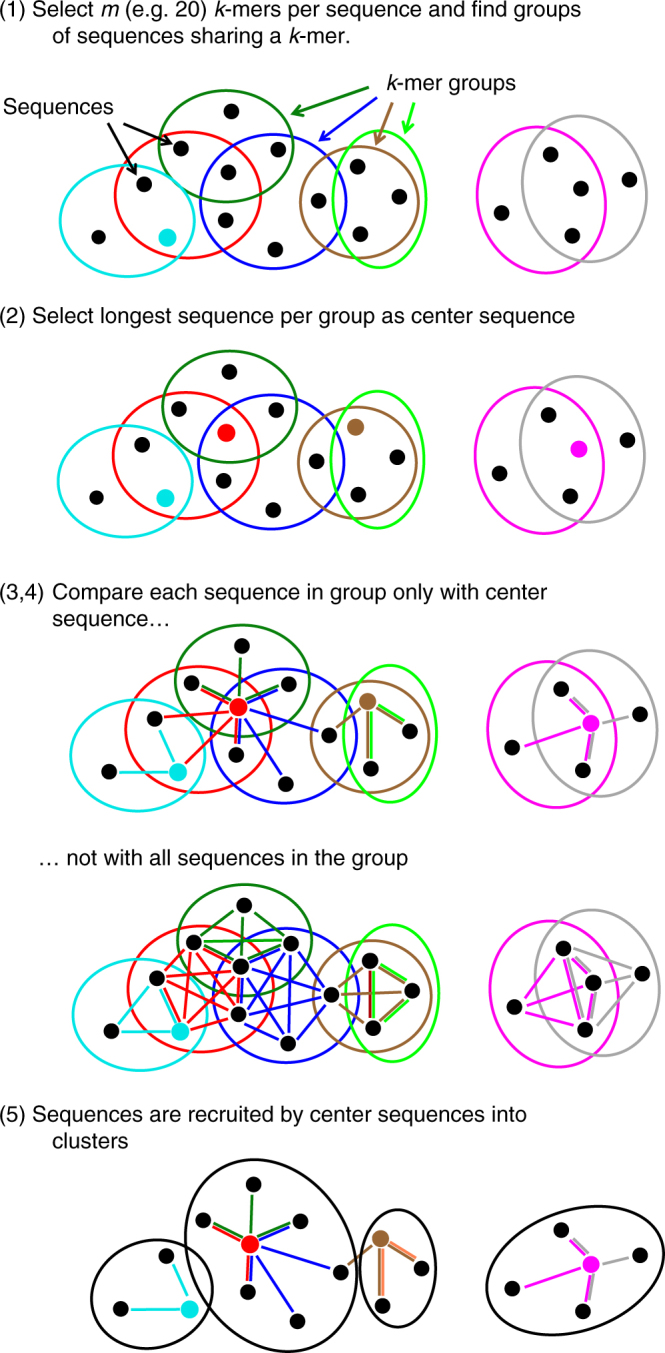
“Of note is Linclust [22], an approach that operates in linear time by selecting m k-mers from each sequence and grouping sequences that share a k-mer.”
BackgroundGodase, A., Rahman, M. K., & Azad, A. (2021) · ACM International Conference on Bioinformatics, Computational Biology, and Health Informatics (ACM-BCB) · doi:10.1145/3459930.3469538 · Cited by 1
“Recently, CD-HIT [18], UCLUST [6], and Linclust [27] became popular because of their speed and effectiveness in clustering and redundancy filtering of protein sequence sets.”
BackgroundSi, Y., Zhang, Y., & Yan, C. (2022) · Briefings in Bioinformatics · doi:10.1093/bib/bbab576 · Cited by 1
Improved Protein Real-Valued Distance Prediction Using Deep Residual Dense Network (DRDN)
Geethu, S., & Vimina, E. R. (2022) · The Protein Journal · doi:10.1007/s10930-022-10067-4 · Cited by 1
“The HHblits algorithm is applied to the BFD database in the second phase.”
MethodArab, I. (2023) · IEEE/ACM International Conference on Big Data Computing, Applications and Technologies (BDCAT) · doi:10.1145/3632366.3632384 · Cited by 2
“Those matches do not go beyond the number N, the maximum number of sequences to be retrieved by the module.”
BackgroundMethodTransAnnot—a fast transcriptome annotation pipeline
Zelenskaia, M., Arangasamy, Y., Mirdita, M., Söding, J., & Raghavan, V. (2024) · Bioinformatics Advances · doi:10.1093/bioadv/vbae152 · Cited by 1
“The default annotation process consists of three steps: (1) the input sequences are converted into MMseqs2 database format and clustered in linear time using the linclust module from MMseqs2 (Steinegger and S € oding 2018).”
MethodSelf-citationPonz‐Segrelles, G., Schulze, T., Oguchi, K., Sato, D. S., Nakamura, M., Hayashi, Y., Glasby, C. J., Miura, T., & Aguado, M. T. (2025) · BMC Genomics · doi:10.1186/s12864-025-11587-w · Cited by 1
“Clustering was carried out using the lin-clust workflow (https:// github. com/ soedi nglab/ mmseq s2/ wiki) with target coverage mode enabled, minimum coverage set to 80%, and minimum sequence identity set to 95% [45].”
Type IV minor pilin ComN predicted the USS-receptor in Pasteurellaceae
Helsem, S. A., Alfsnes, K., Frye, S. A., Løvestad, A. H., & Ambur, O. H. (2025) · Frontiers in Microbiology · doi:10.3389/fmicb.2025.1647523 · Cited by 1
“…differences between the local and AF3 web server 5 outputs and were able to reconcile these differences by locally running the jackhmmer, using v. 3.4 (Potter et al., 2018) and MSA search on the BFD database (Steinegger et al., 2019; Steinegger and Söding, 2018) using the parameter incdomE 0.01.”
InfluentialEnTrance: Exploration of Entropy Scaling Ball Cover Search in Protein SequencesPreprint
Kim, Y., Guo, Z. Y., Robertson, J. A., Reidys, B., Zhang, Z., & Heath, L. S. (2021) · bioRxiv (Cold Spring Harbor Laboratory) · doi:10.1101/2021.05.31.446458 · Cited by 1
“There are several sequence clusterization methods of UniRef(7) dataset for the Non-Redundant protein database which clusters and indexes similar sequences at varying levels of sequence identity such as CD-HIT(8) and LinClust(9).”
MethodCamargo, A. P., de Souza, R. S. C., José, J., Gerhardt, I. R., Dante, R. A., Mukherjee, S., Huntemann, M., Kyrpides, N. C., Carazzolle, M. F., & Arruda, P. (2021) · bioRxiv (Cold Spring Harbor Laboratory) · doi:10.1101/2021.07.30.454538 · Cited by 1
“Gene abundance estimation To quantify gene abundance across all samples, we first used Linclust to dereplicate nucleotide sequences of the genes predicted from the 16 assemblies by clustering them at 100% identity (‘--cluster-mode 2 --cov-mode 1 --min-seq-id 1.00 -c 0.9 --kmer-per-seq 80’).”
MethodInfluentialDesigning human Sphingosine-1-phosphate lyases using a temporal Dirichlet variational autoencoderPreprint
Lobzaev, E., Herrera, M. A., Campopiano, D. J., & Stracquadanio, G. (2022) · bioRxiv (Cold Spring Harbor Laboratory) · doi:10.1101/2022.02.14.480330 · Cited by 1
Filtered spaced-word matches: a novel approach to fast and accurate sequence comparison
Leimeister, C.-A. (2019) · eDiss (Georg-August-Universität Göttingen) · doi:10.53846/goediss-7229 · Cited by 2
Park, S., Steinegger, M., Cho, H.-S., & Chun, J. (2020) · Research Square · doi:10.21203/rs.3.rs-29452/v1 · Cited by 1
Self-citationChong, L. C., & Khan, A. M. (2022) · bioRxiv (Cold Spring Harbor Laboratory) · doi:10.1101/2022.08.09.503271 · Cited by 1
“com/soedinglab/MMseqs2) is an alternative to CD-HIT for big data, with an ultrafast execution time (Steinegger and Söding 2018).”
Chandola, U., Trottier, C., Gaudin, M., Manirakiza, E., Menicot, S., Louvet, I., Lacour, T., Chaumier, T., Tanaka, A., Chaffron, S., et al. (2023) · Research Square · doi:10.21203/rs.3.rs-2361194/v1 · Cited by 2
Evaluating Tuning Strategies for Sequence Generation with Protein Language ModelsPreprint
Nathansen, A., Klein, K., Renard, B. Y., Nowicka, M., & Bartoszewicz, J. M. (2023) · bioRxiv (Cold Spring Harbor Laboratory) · doi:10.1101/2023.02.28.530492 · Cited by 1
“We employ MMSeqs2 (Steinegger & Söding, 2017, 2018) to cluster the raw dataset by sequence identity, setting the thresholds between 0% and 100% with a step size of 1%.”
MethodInfluentialHuman O -linked Glycosylation Site Prediction Using Pretrained Protein Language ModelPreprint
Pakhrin, S. C., Chauhan, N., Khan, S., Upadhyaya, J., Keller, C., Neuman, L. N., Beck, M. R., & Blanco, E. (2023) · bioRxiv (Cold Spring Harbor Laboratory) · doi:10.1101/2023.10.23.563673 · Cited by 2
Integration of protein and coding sequences enables mutual augmentation of the language modelPreprint
Zhao, H.-R., Cheng, M., Jinhua, Z., Wang, H., Yang, X.-R., Wang, B., Sun, Y., Fang, M.-H., Chen, E., Li, H., et al. (2024) · bioRxiv (Cold Spring Harbor Laboratory) · doi:10.1101/2024.10.24.620004 · Cited by 1
Birkeland, E. E., Istvan, P., Avershina, E., Rognes, T., & Rounge, T. B. (2025) · bioRxiv (Cold Spring Harbor Laboratory) · doi:10.1101/2025.02.07.637044 · Cited by 1
The Genetic Basis of Bacterial Adaptation to HostsPreprint
Segev, O., Geller, A. M., Bez, C., Wang, P., Akerman-Arad, A., Nazaretyan, L., Chen, F., Venturi, V., & Levy, A. (2025) · bioRxiv (Cold Spring Harbor Laboratory) · doi:10.1101/2025.07.19.665706 · Cited by 2
Coche-Miranda, J., Arros, P., Canales, N., Berríos-Pastén, C., Lagos, R., Orlando, J., Chávez, F. P., & Marcoleta, A. E. (2025) · bioRxiv (Cold Spring Harbor Laboratory) · doi:10.1101/2025.09.30.679653 · Cited by 1
“6f452 (Steinegger and Söding, 2017) in Linclust mode (Steinegger and Söding, 2018) using sequence identity ≥ 0.99 and bidirectional coverage ≥ 0.99 thresholds (--alignment-mode 3 --cov-mode 0 --cluster- mode 2 --realign), only keeping the representative protein sequences for further steps.”
InfluentialTOM: Transformer Neural Network Optimization of mRNA initiator regionPreprint
Gupta, R. (2025) · bioRxiv (Cold Spring Harbor Laboratory) · doi:10.1101/2025.10.30.685412 · Cited by 1
“To address this, I clustered the nucleotide sequences with 90% similarity using the MMseq2 linclust tool [31].”
Ophiuchus-Ab: A Versatile Generative Foundation Model for Advanced Antibody-Based ImmunotherapyPreprint
Zhu, Y., Ma, J., Yin, M., Wu, J., Tang, L., Zhang, Z., Li, Q., Feng, S., Liu, H., Qin, T., et al. (2026) · bioRxiv (Cold Spring Harbor Laboratory) · doi:10.64898/2026.02.02.703197 · Cited by 1
“Within each CDR3 cluster, full-length variable domains were further clustered using Linclust at a 95% sequence identity threshold with cov-mode 1 [104].”
Reading TEA leaves for de novo protein designPreprint
Pantolini, L., & Durairaj, J. (2026) · bioRxiv (Cold Spring Harbor Laboratory) · doi:10.64898/2026.02.09.704813 · Cited by 1
Explicit representation of germline and non-germline residues improves antibody language modelingPreprint
Kim, J., Blalock, N., Kulkarni, A., Nakamura, K., & Romero, P. A. (2026) · bioRxiv (Cold Spring Harbor Laboratory) · doi:10.64898/2026.05.06.723387 · Cited by 1
Wiegand, S., & Kaster, A. (2026) · bioRxiv (Cold Spring Harbor Laboratory) · doi:10.64898/2026.05.29.728830 · Cited by 2
High-resolution dissection of concept acquisition in different families of protein language modelsPreprint
Whitfield, S., Marty, T., Vernon, R. M., LANGMEAD, C. J., Sridhar, D., & Fournier, Q. (2026) · bioRxiv (Cold Spring Harbor Laboratory) · doi:10.64898/2026.07.20.739599 · Cited by 2
RegimeFormer: A Large Protein Model of Global Perturbation RegimesPreprint
Ma, S., Chai, Y., Wu, Y., Zhang, Q., Yuan, Y., Zhao, K., Chen, Z., Wang, H., Cao, S., Yu, X., et al. (2026) · bioRxiv (Cold Spring Harbor Laboratory) · doi:10.64898/2026.08.26.747182 · Cited by 1
de Araujo, C. D. S., Rodrigues, A. C. S., de Souza, G. R., Nogueira, F. C. S., Valverde, A. L., & Junqueira, M. (2026) · bioRxiv (Cold Spring Harbor Laboratory) · doi:10.64898/2026.10.20.760564 · Cited by 1
(2022) · doi:10.1101/2022.11.03.515097 · Cited by 1
(2024) · doi:10.1101/2024.04.22.590624 · Cited by 1
Arnoux, J. (2026) · Thèse de doctorat, Université Paris-Saclay / PPanGGOLiN · doi:10.70675/eee354d9zf63dz48ebz9444zd1809f8fb74d
Protein language model-embedded geometric graphs power inter-protein contact prediction
Si, Y., & Yan, C. (2024) · eLife · doi:10.7554/elife.92184.3
“…of the contacts (top 50) predicted by PLMGraph-Inter on the HomoPDB and HeteroPDB when various sequence identity thresholds (with MMseq2 [ Steinegger and Söding, 2018 ]) and fold similarity thresholds (with TMalign [ Zhang and Skolnick, 2005 ]) were further used in the de-redundancy (see…”
MethodDirected Evolution of Enzymes Driving Innovation in API Manufacturing at GSK
Latham, J., Ollis, A. A., MacDermaid, C., Honicker, K., Fuerst, D. E., & Roiban, G. (2020) · Wiley eBooks · doi:10.1002/9781119487043.ch1
Machine Learning Approaches for Decoding Information in RNA Interactions and DNA sequences
이상선 (2020) · Seoul National University Open Repository (Seoul National University)
Mapping natural product diversity through genomics
Kautsar, S. A. (2021) · doi:10.18174/543999 · Cited by 1
Choudhary, A., Jha, P., Tiwari, A., Bharill, N., & Ratnaparkhe, M. B. (2021) · IEEE International Conference on Fuzzy Systems (FUZZ-IEEE) · doi:10.1109/fuzz45933.2021.9494447
Application progress of machine learning in point-of-care testing
Cao, C., Tian, M., Xu, X., Zhao, B., You, M., & Xu, F. (2021) · Scientia Sinica Chimica · doi:10.1360/ssc-2021-0048
The Gene and Repetitive Element Landscape of the Rye Genome
Vershinin, A. V., Lux, T. M., Gundlach, H., Elisafenko, E. A., Keilwagen, J., Mayer, K., & Spannagl, M. (2021) · Compendium of plant genomes · doi:10.1007/978-3-030-83383-1_8
MMEC: Multi-Modal Ensemble Classifier for Protein Secondary Structure Prediction
de Oliveira, G. B., Pedrini, H., & Dias, Z. (2021) · Lecture notes in computer science · doi:10.1007/978-3-030-89128-2_17
(2021) · Molecular Plant-Microbe Interactions · doi:10.1094/mpmi-34-11
Nester, G. (2020) · Faculty Opinions – Post-Publication Peer Review of the Biomedical Literature · doi:10.3410/f.738571281.793578388
Faculty Opinions recommendation of Highly accurate protein structure prediction with AlphaFold.
Arulanandam, A. J. (2021) · Faculty Opinions – Post-Publication Peer Review of the Biomedical Literature · doi:10.3410/f.740477161.793587548
Faculty Opinions recommendation of Highly accurate protein structure prediction with AlphaFold.
Chakraborty, S. (2021) · Faculty Opinions – Post-Publication Peer Review of the Biomedical Literature · doi:10.3410/f.740477161.793587538
Information Theory in Molecular Evolution: From Models to Structures and Dynamics
Morcos, F. (2021) · MDPI eBooks · doi:10.3390/books978-3-0365-1212-9
rrQNet : Protein contact map quality estimation by deep evolutionary reconciliation
(2022) · doi:10.1002/prot.26394
Extraction of CRISPR-targeted sequences from the metagenome
Sugimoto, R., Nishimura, L., Phuong, N. T., & Inoue, I. (2022) · STAR Protocols · doi:10.1016/j.xpro.2022.101525
Jochheim, A. (2022) · eDiss (Georg-August-Universität Göttingen) · doi:10.53846/goediss-9608
Protein tertiary structure prediction and refinement using deep learning
Wu, T. (2022) · MOspace Institutional Repository (University of Missouri) · doi:10.32469/10355/94100
Protein-DNA interaction prediction and protein structure modeling by machine learning
Chen, C. (2022) · MOspace Institutional Repository (University of Missouri) · doi:10.32469/10355/94056
Xing, Y., Clark, J. R., Chang, J. D., Zulk, J. J., Chirman, D. M., Piedra, F.-A., Patras, K. A., & Maresso, A. W. (2023) · bioRxiv (Cold Spring Harbor Laboratory) · doi:10.1101/2023.05.31.543151
Investigação metagenômica dos microbiomas de plantas adaptadas à limitação nutricional
Camargo, A. P. D. C. B. D. R. (2021) · doi:10.47749/t/unicamp.2021.1238926
Semi-Supervised and Incremental Sequence Analysis for Taxonomic Classification
Fasino, A., Ozdogan, E., Sokhansanj, B. A., ROSEN, G. L., & Robi Polikar, A. (2023) · IEEE Symposium Series on Computational Intelligence (SSCI) · doi:10.1109/ssci52147.2023.10371886
“MMseqs2 (many-against-many sequence searching 2) is a bioinformatics software suite known for its rapid and efficient sequence analysis and comparison capabilities [8] [16].”
BackgroundPEST: A General-Purpose Protein Embedding Model for Homology Search
Liu, Y., Li, P., Tu, S., & Xu, L. (2023) · IEEE International Conference on Bioinformatics and Biomedicine (BIBM) · doi:10.1109/bibm58861.2023.10385721
“ProtTrans provides state-of-the-art pre-trained protein language models, which are trained on data from UniRef [13] and BFD [14] containing 393 billion amino acids [10].”
MethodEdtClust: A fast homologous protein sequences clustering method based on edit distance
Xiang, Y., Gu, J., & Zhou, J. (2023) · IEEE International Conference on Bioinformatics and Biomedicine (BIBM) · doi:10.1109/bibm58861.2023.10385950
“For instance, Linclust [14] constructs a sequence similarity graph and then applies MinHash to achieve pre-clustering.”
MethodPandey, A., & Upadhyay, A. K. (2024) · Research Square · doi:10.21203/rs.3.rs-3946181/v1
Metadata
- Authors
- Steinegger, M., & Söding, J.
- Affiliations
- Seoul National University (KR)
- Max Planck Institute for Biophysical Chemistry (DE)
- Corresponding author
- Steinegger, Martin
- Söding, Johannes
- Venue
- Nature Communications
- Published
- 2018-06-29
- Volume
- 9
- Issue
- 1
- Pages
- 2542-2542
- ISSN
- 2041-1723 (ISSN-L)
- PMC
- PMC6026198
- OpenAlex
- W2953008890
- Cited by
- 875
- References
- 32
- Citations by year
- 2026: 110 · 2025: 154 · 2024: 168 · 2023: 123 · 2022: 111 · 2021: 129 · 2020: 52 · 2019: 28
- FWCI
- 18.49
- Type
- journal article
- Language
- en
- Open access
- gold
- doi.org
- Licence
- cc-by
- creativecommons.org/licenses/by/4.0 (tdm)
- creativecommons.org/licenses/by/4.0 (vor)
- Locations
- Nature Communications (publishedVersion, cc-by)
- Europe PMC (PubMed Central) (publishedVersion, cc-by)
- PubMed Central (publishedVersion, cc-by)
- PubMed (publishedVersion)
- OSTI OAI (U.S. Department of Energy Office of Scientific and Technical Information) (submittedVersion)
- DOAJ (DOAJ: Directory of Open Access Journals) (submittedVersion, cc-by-sa)
- DOAJ (DOAJ: Directory of Open Access Journals) (submittedVersion)
- mediaTUM (Technical University of Munich) (submittedVersion, other-oa)
- GoeScholar The Publication Server of the Georg-August-Universität Göttingen (Georg-August-Universität Göttingen) (submittedVersion, cc-by)
- Seoul National University Open Repository (Seoul National University) (submittedVersion)
- Funders
- U.S. Department of Energy
- Joint Genome Institute
- Seoul National University
- Horizon 2020 Framework Programme (685778)
- Topics
- Life Sciences › Biochemistry, Genetics and Molecular Biology › Molecular Biology › Genomics and Phylogenetic Studies
- Physical Sciences › Mathematics › Theoretical Computer Science › Algorithms and Data Compression
- Life Sciences › Biochemistry, Genetics and Molecular Biology › Molecular Biology › Fractal and DNA sequence analysis
- Keywords
- protein sequence clustering, metagenomics, functional annotation, memory-efficient clustering, sequence similarity
- MeSH terms
- Algorithms, Animals, DNA, Humans, Prokaryotic Cells, Proteins, Cluster Analysis, Genome, Sequence Analysis, DNA, Computational Biology, Databases, Nucleic Acid, Databases, Protein, Metagenomics, Datasets as Topic
About these checks
Registry, retraction, Cites and statistics results are computed, not judged, with one exception: a printed reference that no index lists is read once by a model before it counts as a citation error. Claims are extracted by a model and kept only when their quote appears verbatim in the text; each cited source is then checked, with a model’s help, for whether it says what the claim relies on. Those verdicts can be wrong — read the claim’s quote and the cited source before relying on one.
Statistics and arithmetic are recomputed, not judged.
Confidence bands are shown only for fields calibrated on our annotated test set. None is calibrated yet, so no band is shown.
What counts as a claim ›How we measure confidence ›How we check this ›
Are you an author, or do you see a problem with this page? Request a review
Data sources
Bibliographic data: Semantic Scholar, OpenAlex, Crossref.
Contains information from the Semantic Scholar Academic Graph Datasets, made available under the ODC Attribution License (ODC-BY 1.0).
Semantic Scholar’s data is described in: Kinney, R., et al. (2023). The Semantic Scholar Open Data Platform. arXiv:2301.10140.
