

Clustering huge protein sequence sets in linear time
Open accessPublished version of a preprint
The DOI matches its Crossref record; 33 of the 33 references it cites were found in a registry or an index.
Abstract
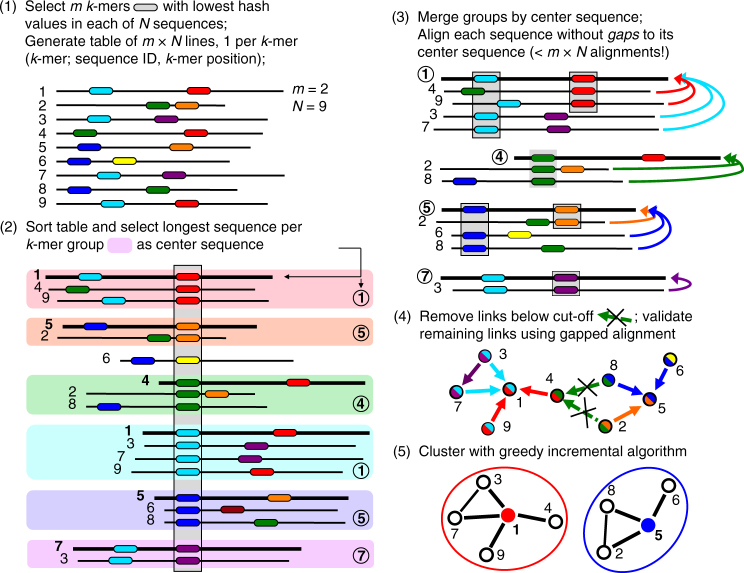
Metagenomic datasets contain billions of protein sequences that could greatly enhance large-scale functional annotation and structure prediction. Utilizing this enormous resource would require reducing its redundancy by similarity clustering. However, clustering hundreds of millions of sequences is impractical using current algorithms because their runtimes scale as the input set size N times the number of clusters K, which is typically of similar order as N, resulting in runtimes that increase almost quadratically with N. We developed Linclust, the first clustering algorithm whose runtime scales as N, independent of K. It can also cluster datasets several times larger than the available main memory. We cluster 1.6 billion metagenomic sequence fragments in 10 h on a single server to 50% sequence identity, >1000 times faster than has been possible before. Linclust will help to unlock the great wealth contained in metagenomic and genomic sequence databases.
Overview
The claims and statistics of this paper haven’t been checked yet.
Free: it reads the open-access text and checks the first 5 claims that cite a source we can check. Create a free account to check every claim.
Integrity signals
Registry
Cites
Statistics
Figures
Verification
Claims the paper makes
The claims and statistics of this paper haven’t been checked yet.
Free: it reads the open-access text and checks the first 5 claims that cite a source we can check. Create a free account to check every claim.
Self-check
Percentages, sums and reported differences re-computed from the paper’s own numbers.
The self-check needs the paper’s full text.
Citations
Cites
Basic local alignment search tool
Altschul, S. F., Gish, W., Miller, W., Myers, E. W., & Lipman, D. J. (1990) · Journal of Molecular Biology · doi:10.1006/jmbi.1990.9999 · Cited by 98,669 · cited 1×
“For each clustering run, we searched with BLAST [15] a random sample of 1 000 representative sequences against all representative sequences of the clustering.”
MethodSearch and clustering orders of magnitude faster than BLAST
Edgar, R. C. (2010) · Bioinformatics · doi:10.1093/bioinformatics/btq461 · Cited by 20,826
Fast and sensitive protein alignment using DIAMOND
Buchfink, B., Xie, C., & Huson, D. H. (2015) · Nature Methods · doi:10.1038/nmeth.3176 · Cited by 14,201 · cited 3×
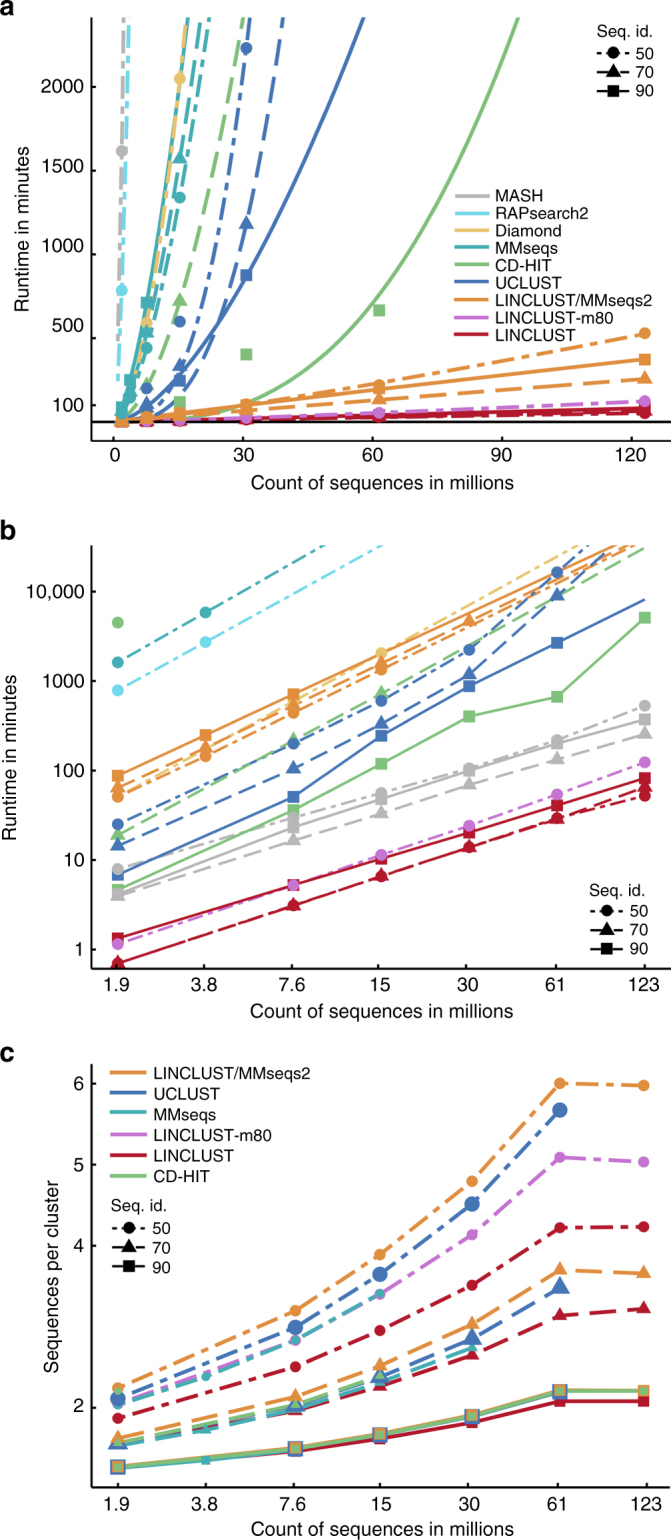
“At 50% identity, Linclust clusters the 123 million sequences 10 times faster than Linclust/MMseqs2 and, by extrapolation, 2300 times faster than UCLUST, 720 times faster than MMseqs, 4600 times faster than CD-HIT, 1600 times faster than DIAMOND [12], 69 000 times faster than MASH [13], and 26 000 times faster than RAP…”
BackgroundInfluentialProdigal: prokaryotic gene recognition and translation initiation site identification
Hyatt, D., Chen, G.-L., LoCascio, P. F., Land, M. L., Larimer, F. W., & Hauser, L. J. (2010) · BMC Bioinformatics · doi:10.1186/1471-2105-11-119 · Cited by 12,587
Cd-hit: a fast program for clustering and comparing large sets of protein or nucleotide sequences
Li, W., & Godzik, A. (2006) · Bioinformatics · doi:10.1093/bioinformatics/btl158 · Cited by 11,410 · cited 1×
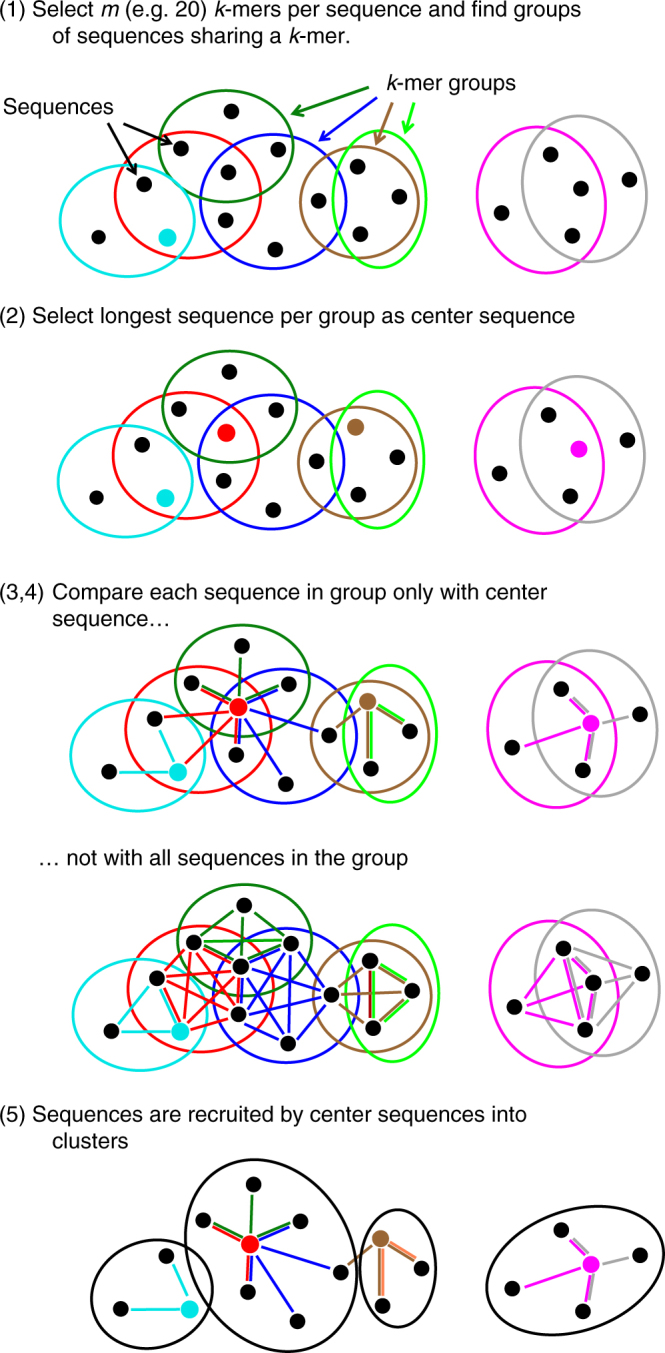
“Similar to the k-mer prefilter used in CD-HIT, UCLUST, kclust and MMseqs [8, 11, 26, 27], the preclustering reduces the number of comparisons by a large factor F using the slow, exact measure, but the time complexity of the ex240 act distance calculation O(N(2)/F ) is still quadratic in N .”
MethodCd-hit: Accelerated for clustering the next-generation sequencing data
Fu, L., Niu, B., Zhu, Z., Wu, S., & Li, W. (2012) · Bioinformatics · doi:10.1093/bioinformatics/bts565 · Cited by 11,175 · cited 15×
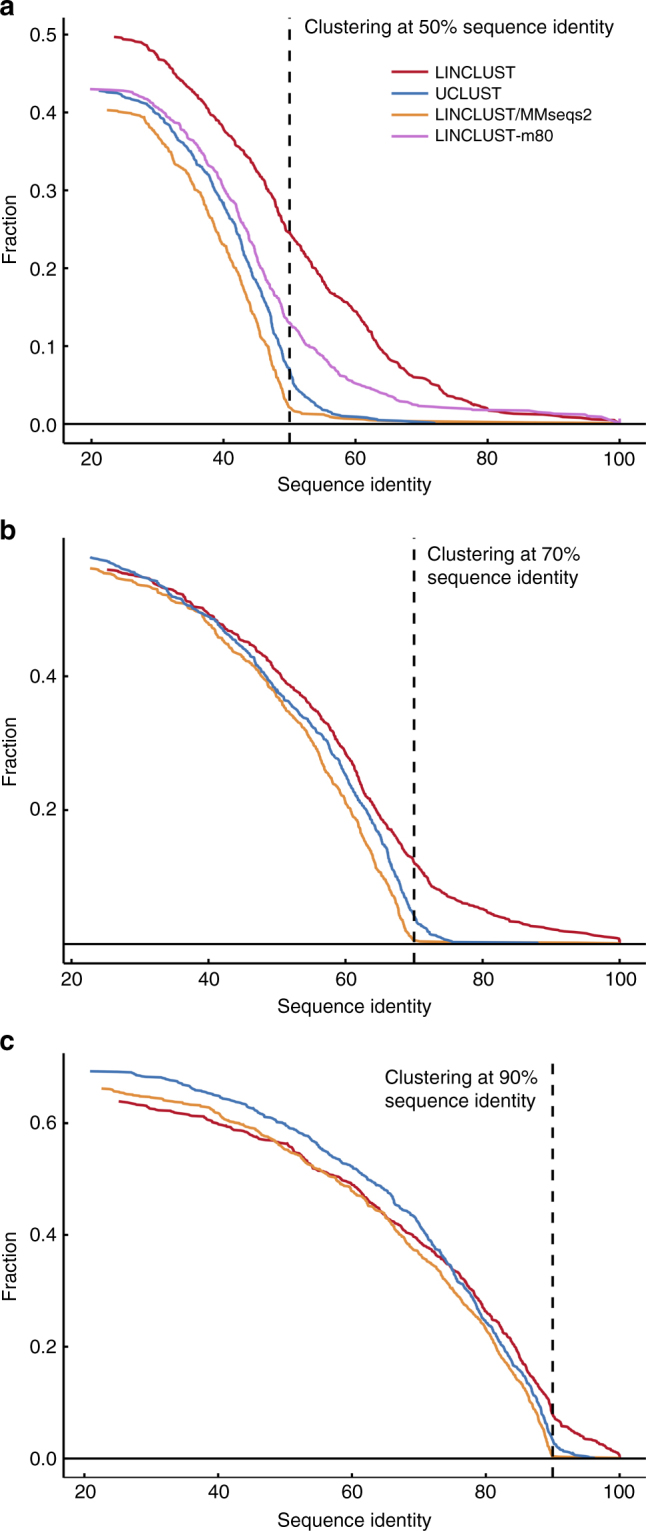
“By increasing m from 20 to 80, Linclust takes only 1.5 to 2 times longer but attains a sensitivity similar to UCLUST (pink in Fig.”
MethodInfluentialThe Pfam protein families database: towards a more sustainable future
Finn, R. D., Coggill, P., Eberhardt, R. Y., Eddy, S. R., Mistry, J., Mitchell, A. L., Potter, S. C., Punta, M., Qureshi, M., Sangrador-Vegas, A., et al. (2016) · Nucleic Acids Research · doi:10.1093/nar/gkv1344 · Cited by 5,975 · cited 1×
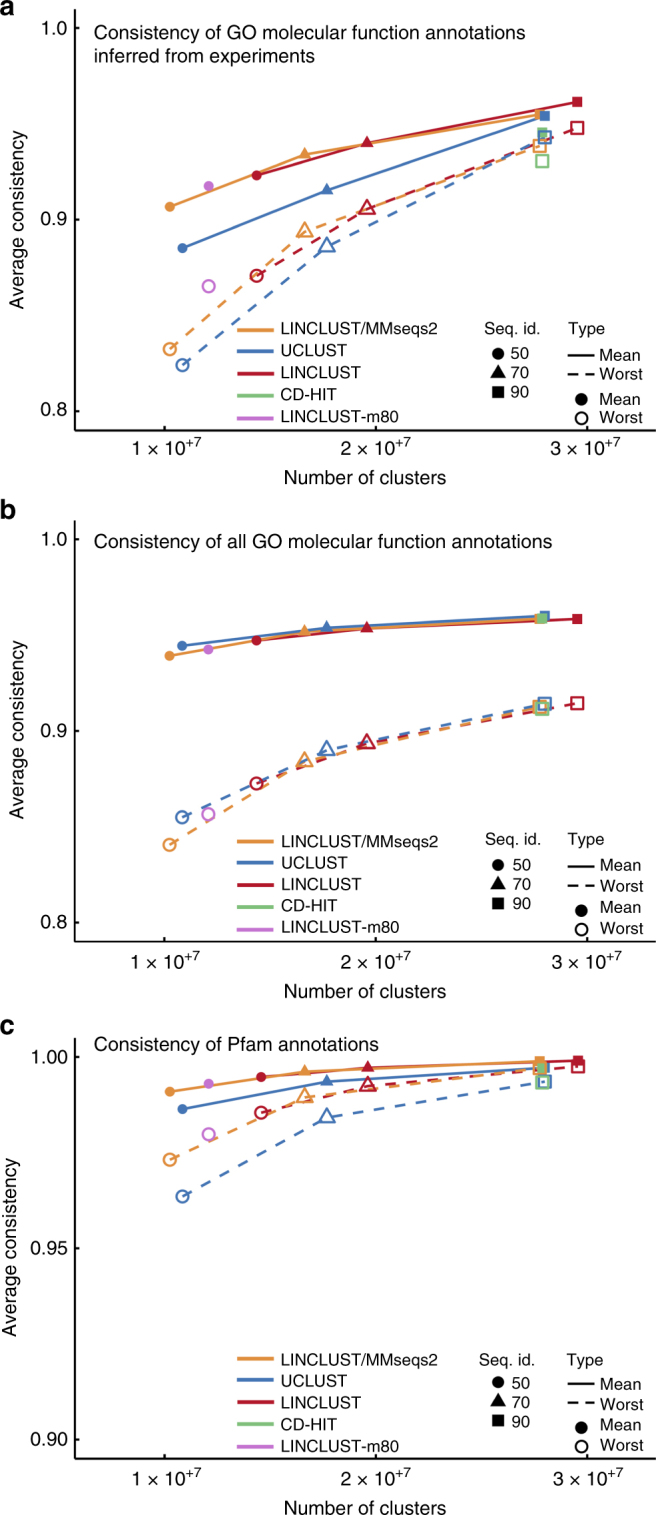
“4a,b) and Pfam domain annotations [18] (Fig.”
MMseqs2 enables sensitive protein sequence searching for the analysis of massive data sets
Steinegger, M., & Söding, J. (2017) · Nature Biotechnology · doi:10.1038/nbt.3988 · Cited by 4,840
Self-citationThe Universal Protein Resource (UniProt)
Bairoch, A. (2004) · Nucleic Acids Research · doi:10.1093/nar/gki070 · Cited by 3,774 · cited 1×
“, 100}, we determined these thresholds empirically on 4 million local alignments sampled from an all-against-all comparison of the UniProt database [31].”
MethodGene Ontology Consortium: going forward
The Gene Ontology Consortium (2015) · Nucleic Acids Research · doi:10.1093/nar/gku1179 · Cited by 3,492 · cited 2×
“We assess Gene Ontology (GO) annotations [17] (Fig.”
BackgroundMethod
Research works printed but not linked: 1
- Wang, J. Shen, H. T., Song, J. & Ji., J. Hashing for similarity search: a survey. Preprint at https://arxiv.org/abs/1408.2927 (2014). · arXiv
Cited by
Items 901–962 of 962
Ús d'Intel·ligència Artificial per a l'Anotació Funcional de Seqüències de Proteïnes a Fongs
Coll, A. S. (2025) · RiuNet (Universitat Politècnica de València)
Pseudoperplexity Probes Memorization in Protein Language ModelsPreprint
Alexander, P., PLONER, M., Sewald, Z., Senoner, T., Franz, S., Brenner, M., Heinzinger, M., & Rost, B. (2026) · bioRxiv (Cold Spring Harbor Laboratory) · doi:10.64898/2026.06.08.730685
“To ensure that the post-training dataset does not contain any data similar to either of these training sources, we removed all post-training sequences with more than 30% sequence identity and 90% coverage to any entry in the reduced BFD database30, which consists of the first non-consensus sequence from each BFD align…”
InfluentialWei, J., Yang, K., Liu, Y., Yin, Y., Wang, L., Zhang, E., Gong, Z., & Cai, Y. (2026) · Biogeosciences · doi:10.5194/bg-23-7545-2026
“001; Fig.”
A structural backbone with sequestered plasticity organizes the Escherichia coli pangenome
Lu, Y.-F., Zuo, G., & Zhi, X. (2026) · mSystems · doi:10.1128/msystems.00207-26
Adaptive microbial life-history strategies mediate soil nitrogen cycling across cropping systems
Wei, X., Wen, N., Guo, C., Xun, W., An, J., Ren, C., Wei, G., & Shu, D. (2026) · Agriculture Ecosystems & Environment · doi:10.1016/j.agee.2026.110608
ReSeT: a taxonomy-aware reference genome selection toolPreprint
van Bemmelen, J., & Baaijens, J. A. (2026) · bioRxiv (Cold Spring Harbor Laboratory) · doi:10.64898/2026.06.17.732946
Engineered chromogenic proteins with carbohydrate binding modules for advanced textile dyeing
Costa, A. F., Teixeira, F., Magalhães, P., Silva, C., & Ribeiro, A. T. (2026) · International Journal of Biological Macromolecules · doi:10.1016/j.ijbiomac.2026.153151
Rule-based interpretable sequence clustering
Liu, Y., Li, P., Dong, J., Jiang, M., Liu, X., Hu, L., & He, Z. (2026) · Knowledge and Information Systems · doi:10.1007/s10115-026-02815-0
“Pattern-based methods form initial clusters by mining sequential patterns and subsequently apply various optimization strategies to obtain the final clustering outcomes [32].”
Chudinov, I., Korneenko, E. V., Rog, I., Lukina-Gronskaya, A. V., Kovalenko, A. V., Gremyacheva, V., Butenko, I., Vasileva, E., Matyushkina, D., Litvinova, E. M., et al. (2026) · Frontiers in Cellular and Infection Microbiology · doi:10.3389/fcimb.2026.1814090
Warm‐wet transition restructures arid lake microbiomes and functional potential
Shen, Z., Li, X., Gong, Z., Hu, Y., Cai, Y., Shao, K., Gao, G., Martin, R. M., & Tang, X. (2026) · iMetaOmics. · doi:10.1002/imo2.70119
“Non ‐ redundant gene catalogues were generated using Linclust [77], selecting the longest sequence per cluster as the representative Unigenes.”
ArthroVerse: mapping protein family diversity across arthropod-associated microbiomes
Chasapi, I. N., Aplakidou, E., Chasapi, M. N., Lamari, E., Γαλάρας, Α., Diplari, S., Iliopoulos, I., Emiris, I. Z., Georgakopoulos‐Soares, I., Patalano, S., et al. (2026) · Nucleic Acids Research · doi:10.1093/nar/gkag1067
elDORS: An elevated Database Of RNA SequencesPreprint
Dutta, N., & Vicens, Q. (2026) · bioRxiv (Cold Spring Harbor Laboratory) · doi:10.64898/2026.07.10.737016
Xiao, J., Wang, W. B., Ma, Y. B., Dong, Z. Y., Li, J., Su, J. G., & Li, J. (2026) · Journal of Chemical Theory and Computation · doi:10.1021/acs.jctc.6c00754
A multi-tissue transcriptome and expression atlas of Astacus leptodactylus: assembly and annotationPreprint
Sağlam, B., Akgun, M., Ergin, B., & Puralı, N. (2026) · Research Square · doi:10.21203/rs.3.rs-10355696/v1
Amgarten, D., Schinaid, A. A., Malta, F. D. M., Marra, A. R., & Pinho, J. R. R. (2026) · bioRxiv (Cold Spring Harbor Laboratory) · doi:10.64898/2026.07.14.738542
“…inflated by near-identical genomes shared across cross-validation folds, we clustered every probed genome by sequence identity (MMseqs2 linclust (Steinegger and Söding, 2018); 95% identity, 85% coverage, greedy-set-cover mode — the same parameters pre-registered for corpus redundancy control)…”
A map of non canonical archaeal DNA binding domain familiesPreprint
Vellanki, A., & Dosapati, S. (2026) · Research Square · doi:10.21203/rs.3.rs-10395383/v1
Zubov, A., Vigre, H., Otani, S., Ling, M., Andersen, V. D., Steengaard, M., Geraldo, J. A., Aarestrup, F. M., Jahn, L. J., Santos, A., et al. (2026) · bioRxiv (Cold Spring Harbor Laboratory) · doi:10.64898/2026.07.24.740480
“Protein-level gene clusters were generated with MMseqs2 and annotated with eggNOG-mapper and RGI [34], [35], [36], [37], [38].”
Liu, B., Xu, Y., Wang, Y., Wu, Z., & Wang, R. (2026) · ACM International Conference on Bioinformatics, Computational Biology, and Health Informatics (ACM-BCB) · doi:10.1145/3807503.3820647
“0 Å, cluster sequences using MMseqs2 [16] at 30% identity with bidirectional coverage 0.”
Yoon, H., Han, R., Kim, J.-W., & Lee, Y. (2026) · Briefings in Bioinformatics · doi:10.1093/bib/bbag421 · Cited by 1
“PDB [ 35], Uniclust [ 52], BFD [ 163, 164], MGnify [ 165] Boltz-2 [ 98] 2025 • Introduces control features such as experimental conditioning, distance constraints, and multi-chain template integration for structure prediction.”
Carvalho, L. B., da Silva, G. R., Franzote, V. H. D. O., Lacerda-Júnior, G. V., Fernandes‐Júnior, P. I., de Oliveira, V. M., & Matteoli, F. P. (2026) · Microbiological Research · doi:10.1016/j.micres.2026.128660
TPT: a compact CNN-transformer encoder for efficient microbial small protein modeling
Sheng, F., Zhang, J., & Zhu, C. (2026) · Frontiers in Microbiology · doi:10.3389/fmicb.2026.1839420
“Second, near-identity search was conducted using MMseqs2 easy-search (Steinegger and Söding, 2018) at 90% sequence identity and 80% minimum coverage ( − -min-seq-id 0.90 -c 0.80 --cov-mode 0), corresponding to the redundancy threshold used in the original GMSC construction.”
InfluentialAccurate Identification of Covalently Ligandable Cysteines Using CCSite
Ren, Y., Mou, M., 朱怡淼, Pan, Z., Zhang, K., Qian, Y., Zhang, Y., Li, J., Fu, T., & Zhu, F. (2026) · Journal of Medicinal Chemistry · doi:10.1021/acs.jmedchem.6c01911
Protein language models and the long tail of functional diversityPreprint
Vinod, R., Char, S., Amini, A. P., Crawford, L. A., & Yang, K. (2026) · bioRxiv (Cold Spring Harbor Laboratory) · doi:10.64898/2026.08.14.744703
“To test this directly, we queried each dataset’s singletons against all of the sequences in the original dataset (prior to clustering) using linsearch [27].”
Wasswa, J., & Ramsundar, B. (2026) · ACS ES&T Engineering · doi:10.1021/acsestengg.6c00559
Multiomics Insights into Antimony Methylation Driven by Sulfate-Reducing Bacteria in Paddy Soil
Li, J., Yin, Z., Du, J., Wang, L., & Shi, J. (2026) · Environment & Health · doi:10.1021/envhealth.6c00362
Ebou, A., & Koua, D. (2026) · bioRxiv (Cold Spring Harbor Laboratory) · doi:10.64898/2026.08.15.744971
“Exact k -mer-based comparison scales poorly as sequence collections grow, since all-pairs comparison requires O ( N 2 ) operations on potentially large k -mer sets [Steinegger and Söding, 2018].”
Cáceres, I. F. (2026) · LA Referencia (Red Federada de Repositorios Institucionales de Publicaciones Científicas)
Prot-LAMBDA: Explicit Distance Learning Enhances Structural Reasoning in Protein Language ModelsPreprint
Ibtehaz, N., Zhang, Z., Kagaya, Y., Xu, M., Tomii, K., & Kihara, D. (2026) · bioRxiv (Cold Spring Harbor Laboratory) · doi:10.64898/2026.08.23.746565
“Following the AF2 template-search strategy, structural templates are retrieved from PDB70 using MMseqs2 [58] and refined with HHsearch [59] through the ColabFold pipeline [60] with strict temporal cutoffs to prevent data leakage (see Methods).”
Functional profiling of spacecraft cleanroom microbiomes through genome-wide phenotype predictionsPreprint
Mahnert, A., Medicus, T., Kumpitsch, C., Moissl‐Eichinger, C., Carter, J. N., Sephton, M. A., Sinibaldi, S., & Rettberg, P. (2026) · Research Square · doi:10.21203/rs.3.rs-10851050/v1
Zhan, Z., Chachar, S., Liu, J., Gul, S., Luo, K., Yang, Y., Zhong, C., Okda, T. M. K., Chachar, B., Hong, J., et al. (2026) · Scientific Reports · doi:10.1038/s41598-026-53802-y
Wei, P., Su, W., Qin, Q., Wei, C., Shi, Y., & Zhang, G. (2026) · International Journal of Molecular Sciences · doi:10.3390/ijms27177764
“ProtT5 [18] is a pretrained protein language model built upon the Transformer text-to-text transfer architecture [29] and trained on the large-scale BFD protein database [30].”
Global tree encoding of atlas-scale single-cell genomicsPreprint
Kiyota, B., Lee, C., Yao, H., & Yachie, N. (2026) · bioRxiv (Cold Spring Harbor Laboratory) · doi:10.64898/2026.08.31.747971
AtlasFold: Protein structure prediction with metagenomic-scale language modelsPreprint
Seo, S., Kim, H., Moon, S., Kim, W. Y., & Team KAIST (2026) · bioRxiv (Cold Spring Harbor Laboratory) · doi:10.64898/2026.09.04.749352
“Because reconstructing the two-billion-cluster JGI collection later reported for ESMC was impractical, we used the smaller MetaClust collection in its place.”
InfluentialVanhnollat, C., Димитрова, К., Vachouaxiong, L., Audet, J., Somlor, S., Medina, S. J., Bounmany, P., Lakeomany, K., Vungkyly, V., Wong, G., et al. (2026) · Journal of General Virology · doi:10.1099/jgv.0.002333
“First, adapters and low-quality bases were removed using fastp [39], host genomic sequences were filtered by minimap2 [40], and reads were clustered with MMseqs linclust [41, 42].”
ABCP_finder: A Transformer Embedding-Based Prediction of Anti-Breast Cancer PeptidesPreprint
Tripathi, P., Semwal, R., Arya, A., Sen, N., & Varadwaj, P. K. (2026) · bioRxiv (Cold Spring Harbor Laboratory) · doi:10.64898/2026.09.06.749767
“ProtBERT is pretrained on massive sequence databases such as Big Fantastic Database (BFD) [23, 24]and UniRef [25], which contains billions of amino acid sequences.”
Li, S., Zheng, H., Sun, L., Ding, S., Zhang, X., & Hu, W. (2026) · Chemical Engineering Journal · doi:10.1016/j.cej.2026.182067
BGC Atlas v2: biosynthetic gene clusters with taxonomic and environmental context at scalePreprint
Bağcı, C., Talamas-Tanner, A., & Ziemert, N. (2026) · bioRxiv (Cold Spring Harbor Laboratory) · doi:10.64898/2026.09.14.751540
“We removed exact duplicates using SHA-256 hashes and clustered the remaining seed regions at 95% sequence identity and 80% bi-directional coverage with MMseqs2 Linclust [35], yielding 1,038,059 representatives.”
Utgés, J. S., Jones, D. T., & Orengo, C. A. (2026) · bioRxiv (Cold Spring Harbor Laboratory) · doi:10.64898/2026.09.16.752029
Chatzigiannidou, I., Taparia, T., Johansen, P. L., Berzina, L., Nesme, J., Petersen, M., Sørensen, S. J., Brix, S., & Kristiansen, K. (2026) · ISME Communications · doi:10.1093/ismeco/ycag268
“…biologically relevant functional variation, all predicted ORFs across assemblies were combined and clustered by mmseqs linclust (Release 14-7e284) [ 43] on the nucleotide sequences with the following parameter “-c 0.9 –min-seq-id 0.95”, which removes redundancy and prevents fragmented genes to…”
InfluentialZhou, B., Liu, M., Curhan, G. C., Peck, G., Choi, H. K., Nazzal, L., & Li, H. (2026) · bioRxiv (Cold Spring Harbor Laboratory) · doi:10.64898/2026.09.17.752478
Chatterjee, S., Saha, T., & Bahadur, R. P. (2026) · Proteins Structure Function and Bioinformatics · doi:10.1002/prot.70180
Protein overlap inflates apparent generalization in aptamer-protein interaction benchmarks
Moreno, E., Moscatelli, J., & Heikenfeld, J. C. (2026) · Artificial Intelligence in the Life Sciences · doi:10.1016/j.ailsci.2026.100185
Chen, L., Zhu, X., Wang, X., Jin, Z., Zhou, B., & Zhou, Y. (2026) · International Journal of Biological Macromolecules · doi:10.1016/j.ijbiomac.2026.154783
Viral metagenomics reveals heterogeneity in mammalian virus hosting, sharing, and spillover
Yuhao, W. A. N. G., Qu, G., Huang, Z. Y. X., Zhang, X., Li, H., Wei, X., Hu, L., Xu, S., Becker, D. J., Wei, F., et al. (2026) · Proceedings of the National Academy of Sciences · doi:10.1073/pnas.2610672123
Treit, P. V., Rosenberger, F. A., Hartout, P., Lebedev, M., Xiao, J., Zwiebel, M., Geyer, P. E., Sinha, A., Wallmann, G., Brennsteiner, V., et al. (2026) · bioRxiv (Cold Spring Harbor Laboratory) · doi:10.64898/2026.10.08.757395
Ling, K., Zhang, Y., Zhang, Z., Nakamura, T., & Kihara, D. (2026) · bioRxiv (Cold Spring Harbor Laboratory) · doi:10.64898/2026.10.14.759232
“…construction for the protein chains by searching UniRef90 (UniProt, 2025), MGnify (Richardson et al., 2023), UniClust30 (Mirdita et al., 2017), BFD (Steinegger and Soding, 2018), and inter-chain pairing is performed by grouping sequences by species using labels from the UniProt (UniProt, 2025)…”
Csíkos, S., Merényi, Z., Knapp, D. G., Lipzen, A., LaButti, K. M., Pangilinan, J. L., Riley, R. W., Haridas, S., Salamov, A. A., Barry, K., et al. (2026) · New Phytologist · doi:10.1111/nph.71652
Systematic mapping of the prokaryotic noncoding sequence space with a genomic language modelPreprint
Sun, G., Hudelmaier, T., Gilligan, J. C., Gonzalez, G. A., Yin, P., Wan, F., Ma, Z. (., Durrant, M. G., Ricci-Tam, C., Pawluk, A., et al. (2026) · bioRxiv (Cold Spring Harbor Laboratory) · doi:10.64898/2026.10.21.760802
Straub, T. J., Nieto, P. A., Trachsel, J., Sturgeon, H., Edwards, S., Mayer, E. A., Mars, R. A. T., Hoy, C. S., & Sukhum, K. V. (2026) · bioRxiv (Cold Spring Harbor Laboratory) · doi:10.64898/2026.10.23.759375
Zhou, G., Yuan, K., Zu, C., Shang, R., Liu, X., Chen, L., Liang, L., & Ma, T. (2026) · Journal of Hydrology · doi:10.1016/j.jhydrol.2026.136626
FAIRsharing record for: MGnify
FAIRsharing Team (2015) · FAIRsharing.org · doi:10.25504/fairsharing.dxj07r
FAIRsharing record for: AlphaFold Protein Structure Database
FAIRsharing Team, & Liang, Y. (2025) · FAIRsharing.org · doi:10.25504/fairsharing.246086
Kim, S. (2026) · Management Science · doi:10.1287/mnsc.2023.04115 · Cited by 2
Galindo, M. E., Gong, S., Zhan, Y., Wang, S., Kong, L., & Lai, Y. (2026) · bioRxiv (Cold Spring Harbor Laboratory) · doi:10.64898/2026.10.24.761598
Multi-resolution humanness scoring of antibodies via a region-isolated language modelPreprint
Huaqing, L., Chen, P., Zhou, S., Wei, B., Deng, S., Zhang, L., Liu, X., Zhou, S., Han, L., & Ye, L. (2026) · bioRxiv (Cold Spring Harbor Laboratory) · doi:10.64898/2026.10.23.761395
“…VH; b, VL from HIS-Mouse (20,000) and HUGO-Mab (915), same references; c, HUGO-Nano VHHs (10,000), against natural human, mouse and camel VHHs; one platform, decomposed by the engineered camelid FERF tetrad (IMGT 42, 49, 50, 52; 25.2%), the remaining non-FERF chains carrying human-type tetrads.”
InfluentialGraseck, M., Pretorius, D., Edwards, S., Nikov, G. I., Hamm, J., Baum, B., Spang, A., Ovchinnikov, S., & Karlusich, J. J. P. (2026) · bioRxiv (Cold Spring Harbor Laboratory) · doi:10.64898/2026.10.28.762692
Venkatachalam, S., Granskog, M. A., Vipindas, P. V., Bratbak, G., Assmy, P., Vader, A., Gonçalves‐Araujo, R., Jabir, T., Müller, O., Chalari, A., et al. (2026) · Research Square · doi:10.21203/rs.3.rs-11511253/v1
Temperature effects on life history strategies for rapid growth potential of leaf epiphytic bacteria
Wang, Q., He, X., Han, B., Shi, L., Hu, H., Liu, F., Nie, J., Chen, Y., Zhou, J., Li, Y., et al. (2026) · The ISME Journal · doi:10.1093/ismejo/wrag281
Uncovering differential tolerance to deletions versus substitutions with a protein language model
Goldman, G., Chati, P., & Ntranos, V. (2024) · doi:10.1101/2024.06.27.601077
rrQNet: protein contact map quality estimation by deep evolutionary reconciliation
Roche, R., Bhattacharya, S., Shuvo, M. H., & Bhattacharya, D. (2022) · doi:10.1101/2022.01.20.477079
Metadata
- Authors
- Steinegger, M., & Söding, J.
- Affiliations
- Seoul National University (KR)
- Max Planck Institute for Biophysical Chemistry (DE)
- Corresponding author
- Steinegger, Martin
- Söding, Johannes
- Venue
- Nature Communications
- Published
- 2018-06-29
- Volume
- 9
- Issue
- 1
- Pages
- 2542-2542
- ISSN
- 2041-1723 (ISSN-L)
- PMC
- PMC6026198
- OpenAlex
- W2953008890
- Cited by
- 875
- References
- 32
- Citations by year
- 2026: 110 · 2025: 154 · 2024: 168 · 2023: 123 · 2022: 111 · 2021: 129 · 2020: 52 · 2019: 28
- FWCI
- 18.49
- Type
- journal article
- Language
- en
- Open access
- gold
- doi.org
- Licence
- cc-by
- creativecommons.org/licenses/by/4.0 (tdm)
- creativecommons.org/licenses/by/4.0 (vor)
- Locations
- Nature Communications (publishedVersion, cc-by)
- Europe PMC (PubMed Central) (publishedVersion, cc-by)
- PubMed Central (publishedVersion, cc-by)
- PubMed (publishedVersion)
- OSTI OAI (U.S. Department of Energy Office of Scientific and Technical Information) (submittedVersion)
- DOAJ (DOAJ: Directory of Open Access Journals) (submittedVersion, cc-by-sa)
- DOAJ (DOAJ: Directory of Open Access Journals) (submittedVersion)
- mediaTUM (Technical University of Munich) (submittedVersion, other-oa)
- GoeScholar The Publication Server of the Georg-August-Universität Göttingen (Georg-August-Universität Göttingen) (submittedVersion, cc-by)
- Seoul National University Open Repository (Seoul National University) (submittedVersion)
- Funders
- U.S. Department of Energy
- Joint Genome Institute
- Seoul National University
- Horizon 2020 Framework Programme (685778)
- Topics
- Life Sciences › Biochemistry, Genetics and Molecular Biology › Molecular Biology › Genomics and Phylogenetic Studies
- Physical Sciences › Mathematics › Theoretical Computer Science › Algorithms and Data Compression
- Life Sciences › Biochemistry, Genetics and Molecular Biology › Molecular Biology › Fractal and DNA sequence analysis
- Keywords
- protein sequence clustering, metagenomics, functional annotation, memory-efficient clustering, sequence similarity
- MeSH terms
- Algorithms, Animals, DNA, Humans, Prokaryotic Cells, Proteins, Cluster Analysis, Genome, Sequence Analysis, DNA, Computational Biology, Databases, Nucleic Acid, Databases, Protein, Metagenomics, Datasets as Topic
About these checks
Registry, retraction, Cites and statistics results are computed, not judged, with one exception: a printed reference that no index lists is read once by a model before it counts as a citation error. Claims are extracted by a model and kept only when their quote appears verbatim in the text; each cited source is then checked, with a model’s help, for whether it says what the claim relies on. Those verdicts can be wrong — read the claim’s quote and the cited source before relying on one.
Statistics and arithmetic are recomputed, not judged.
Confidence bands are shown only for fields calibrated on our annotated test set. None is calibrated yet, so no band is shown.
What counts as a claim ›How we measure confidence ›How we check this ›
Are you an author, or do you see a problem with this page? Request a review
Data sources
Bibliographic data: Semantic Scholar, OpenAlex, Crossref.
Contains information from the Semantic Scholar Academic Graph Datasets, made available under the ODC Attribution License (ODC-BY 1.0).
Semantic Scholar’s data is described in: Kinney, R., et al. (2023). The Semantic Scholar Open Data Platform. arXiv:2301.10140.
